Books That Changed My Life: Sean Crampton & Keeping The Love You Find
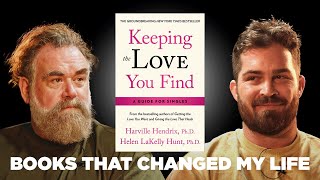
Interview (video) between Chris Collins and actor/creator Sean Crampton about how the book Keeping the Love You Find influenced his emotional growth. Sean describes childhood and adult experiences—growing up as the son of a U.S. Navy SEAL, relationship patterns, therapy and psychedelic work, a breakup that prompted deep self-work, and his father’s eventual suicide related to PTSD. He explains which exercises and concepts from the book helped him change relationship habits and reconnect with a long-term partner.
Questions this video answers
30 years
13 deployments
Command Master Chief of BUD/S (training facility)
Multiple combat ribbons and two Bronze Stars (as stated in transcript)
23 years old
Chapters
Maybe kind of give everybody context. So your dad was.
My dad was a U.S. navy SEAL for 30 years. He did 13 deployments, and we did not have a good relationship when I was growing up. It was only after he and my stepmother adopted my youngest brother that he saw what he missed with me growing up.
And so when I was 23, he came to LA and apologized to me and was like, I was a horrific father. And I did the math. And I've only been in your life two years total.
And then he shot himself two years ago. He shot himself two years ago from ptsd.
Welcome to the Syndicate X Library, where we love books. Today we have an incredible conversation with Sean Crampton. He originally grew up in San Diego, son of a Navy seal. So military kid, ended up in Los Angeles to act and kind of work in the industry. His story is incredible, but also the lessons that he shares are beautiful. In the book that we're talking about is keeping the love you find.
So the. The drink that you picked was a nitro coffee. So it was really hard for us to get nitro and all that, but we did it just for you.
So thank you so much.
Taste it and see. See if it's good, if there's the right amount of nitro.
Oh, it's perfect. Awesome. Thank you. No, it is very good. Thank you so much.
How many books a year do you read?
It fluctuates with my schedule because sometimes I'm more based from home and sometimes I'm more on set. But on average right now, like, three to five, maybe I get through. But I have a bunch of open ones. Like, I have, like, four open ones right now. Like an Oliver Stone book on the history of the United States. I have Ernest Hemingway's A Farewell to Arms. I just started reading the Norse Edda, which is the oldest poetic Nordic book, whatever Tarantino's cinema book is called.
That one's good. I listened to that one.
Yeah. I think they're making it into a show, actually, which is great.
Cinema speculation. Yeah. So those are the ones I have open. And then always some sort of writing or structure book.
You read fiction?
Yeah, yeah, yeah. My favorite fiction right now is probably Saga, which is a.
What's it called? What's Watchmen? It's like an artful comic, you know, it's like the next graphic novel. Yeah. And it's so adult. Like, the themes I'd never seen, and not in just a crude way, but, like the layered, nuanced way they were explaining relationships or love. I had never seen before, and it was stunning art. It takes them seven years to even do one. It's a long time. So, yeah, I'm all over the place. Red Rising is a great fiction series. I love. It's an LA author. He's like 37. He's pumping out like two books a year. And they're good. Yeah. So Harry Potter, Lord of the Rings.
What's your style at home? Do you have, like, all the books organized? Are there stacks? Do you have more books than you have places to put them?
So both. So in my living room, I have probably one of these and they're color coordinated because I got a little stone and just felt that was the best way to do it. And then in my room, there's like four. Just stacks of book. In my bathroom, there's like a 20 stack. And then next to my couch and at the foot of my bed. And then next to my bed.
Do you buy online or do you have a favorite bookstore? Is it a combination?
Mostly online. I wish I had a favorite bookstore. I guess the Iliad's the only thing close to me in North Hollywood, but it's.
It's hard to find newer things there. You know, I might. You stumble on things there. It's almost like a Goodwill of books instead of like. I don't even know if there's like a Dewey Decimal System type, you know, structure to it. So, yeah, I wish there was something more local I would go for sure. But right now it's probably Amazon mostly because it's so quick.
It is quick.
Yeah. It's like right there or on Audible. But I'm trying to keep it more tactile when I can. The books instead of just listening.
You know what I really love is when I listen to a book on Audible and it's so good, I buy the paper and then go back through and highlight.
I like that.
So sometimes I'll get a quarter away through the book and I'll stop. I go, no, I gotta get a physical copy. So if the book's really good, I end up with both.
Okay. I think I've done that in a way before where I felt like this is too important to listen to for me to go, that's one. This book is one of them for sure.
Okay. So this book was fascinating in my. In my research. So of their books, this is the most obscure because they had another one that was an Oprah book of the month. The way keep the love you find keeping. And they're a couple, right?
Yeah, yeah.
Harville, Hendricks and Helen Blakey Hunt.
Like, Kelly Hunt, I think.
How old are you when this book comes into your life?
34.
34. And so just kind of give me a deep understanding of where you were before that.
Yeah, I mean, it was a very emotional time in my life. Basically, the universe, or God or whatever you want to call it, gave me, like, my biggest fear in the feminine, and then the biggest fear I had in the masculine. And when what that means is I was a band, you know, broken up with by my girlfriend, who I was like, thinking, we're going to get married.
Was that the masculine or the feminine?
The feminine.
How's that the feminine. Just explain what you mean by masculine.
Feminine. Just like my relationship to the feminine, my relationship to the masculine. My biggest fear was my dad would die in war and he killed himself from ptsd. Like, right around this. And I broke up with my girlfriend, or she broke up with me right around this.
So it's like, how long had you been with her?
A year. A year? Yeah.
And you were. You were pretty in love.
Yeah. And it was unhealthy. And that's what this book. Like, it was the first time. And it wasn't just because of her, but she gave me this beautiful gift where she was basically the reason we broke up. And she was taking it all on like, it's my fault. You're the best. And there was something just ringing false about that where I was like, no, like, I'm responsible too, because I'm in the relationship. So that means I called in this type of behavior.
Okay, wait, let's back up just. Just a little bit. So at that point, you'd only been dating her a year, but did you feel, like a lot of pressure that you wanted to settle down?
Oh, yes. Self pressure.
What did your relationship's been like up until then with. With women.
All over the place, really. When I was a kid, in order to get love, I had to look out to other women in my life. My aunt, my stepmom, my grandmother, to try to get that love filled. It didn't work. So I carried that structure into adulthood and was dating multiple women to get that love, and it didn't work.
So it was quantity.
Yeah.
And what was it that you were looking for from the women? What was the imbalance, I guess, in what you were looking for?
I think to feel loved and safe and chosen, you know, it just.
But without committing deeper.
I had every variation. I dated long term, but it was the internal mechanisms. It was the way I responded. I was very codependent. You know, it was hard for me to take space without thinking or feeling like my world was gonna end. Sometimes I'd literally be days of just, like, psychosis, like, behavior with me. Like, nothing dangerous, but, like, almost like, obsessed, you know? And I'm like, gosh, what a waste of my precious life. You know, Ultimately, that's where I got to. But for years, I was so deep in it. And this book is, like, around the time where I was like. So when I broke up, we broke up. It was the first time in my life I realized I could be without a woman, whether it be my mom or the sort of sexual lily padding I had been doing my whole life.
So I got to imagine up until that point, you're, you know, you've been with many women and broken up with many women.
Yeah. What would make them break up with me? Really?
Really?
That you would manufacture it subconsciously, in retrospect.
How would you do it?
Distance, cheat.
You would sabotage. And so in a. If I was on the other side of that, I would describe that. Like a fear of success. Like, if it was good, you would blow it up.
It couldn't be good. You know, like, I couldn't be hugged. You know, like, my stuff from childhood was gnarly, and so, like, girls would hug me. And I didn't know this until I got into therapy, and I'm on a men's team now. I do psychedelic work. I've had a therapist for five years, group therapy. But, like, if someone hugged me, it was painful. I didn't have, like, you know, so that's where I was, like, overcoming.
Now that you understand it, what was that pain?
Just, it was the absence of familiarity to touch. So I didn't get hugged growing up, and so I just wasn't used to it. And so my body. I don't know. Have you ever met somebody who's, like, insanely reactive to tickling? I am. And that's because I wasn't touched as a kid. And. Yeah. And so, like, that's really important for children to be skin to skin with their parents. And. Yeah. I have no real memory of being hugged.
So. How did this one breakup crack you different than all the other ones did?
It's a great question. I was in therapy.
Before you broke. Before she broke up with you?
Yeah.
How did you get her to break up with you?
I didn't do this one, which was different too. And I didn't do everyone. Some of them, they just broke up with me. Cause it wasn't a fit, Right? Not That I'm like this omnipotent being, but this one.
You hadn't sabotaged it consciously or unconsciously.
Consciously or maybe like. Well, I know what happened is we went to a wedding, it was beautiful.
And she had never had safety before. And she, like, she would tell you this too. She had never had safety before. And then I was safe because I had been doing the work for the last year in therapy at this point. And she got scared and backed out. So it was actually, you know, so.
She had fear of success.
So she had it there. Yeah, yeah. It's funny you bring up fear of success because I actually just had a big download on it last week that was pretty emotional where I'm not afraid of success, but I know success well. What I knew, the childish thought rather that was like a thorn in my heart, was that success is massively disappointing because even when I had it, because I had it aplenty in my life, I was very good at several things because I was so driven to get the love from my parents and it never did. And so it was more not a fear of success, but a knowledge of like, it's not going to fix it. So why am I sacrificing so much.
The term for that, what, high performance trauma.
I never heard that.
Yeah, because we have trauma. We get addicted to, especially dudes. We get addicted to success, but it's never enough.
Yeah, yeah, it's never enough.
We can never be rich enough, admired enough, famous enough.
I was like a trophy kid. We're meaning, like, I think my parents got activated by being able to present me and my sister as a trophy rather than as a child.
Like, I'm on a men's team and it's a bunch of mostly of 50 to 60 year old really successful guys who were like, oh yeah, life's not about money. And so they're trying to get right in their souls. And like. Easy to say when you have money. Easy to say not all of them have money, but most of them. And I remember seeing one interacting with this kid and he was like, hey, you want to hang out? Like this all just happened in front of me and this kid is like, okay. And they like hung out for no reason. Like there was no sporting event, no school event. It was just because he loved his kid. And I just was like, wow, that's so foreign to me. It's kind of interesting when you realize the things you thought were normal. I know I'll like present things to my therapist or my men's team. Like it's normal. And they're like, whoa, you grew up like that. This book helped look at some of those things. Cause I told myself during that breakup that I'm gonna get a PhD on myself and that I'm not gonna text any women sexually. Gave myself some limiters that I had never had.
Did you put a timeframe on that?
I had actually talked to Jess Kamajic who recommended the book and she had recommended and she had just done like a six month very similar, like no men, no connecting. And so I was sort of taking her lead because she was looking really like in her power and of herself.
So how does she know to recommend this book to you?
She literally recommended a bunch and that's the one at order. I didn't have any high expectations. You know, it wasn't my first time reading or reading a book in the self help or spiritual world. It was just the timing of the breakup, my therapy, my exhaustion of my own limits. Like I had hit my limit. And now I think awareness without action is madness because you're kind of in a mental cage.
Awareness without action is like you're aware.
I need to change, but how do I change? I can't move, you know, and it's like that's where I was. And this book which has been revised since 90, 91 or whenever it was first written like a bunch which tells me like it's so timeless. And it just spoke to me in that. In that time. I don't know if it speak to me the same way today, but a lot of it I carried out like, or at least helped me like understand that past the honeymoon phase of every relationship is a hell phase. And that's where you learn how to fight as a couple or a friend or whatever it is. And most couples don't make it out of that. A lot of that's because they're not told there's a hell phase. That's just what they call it. We call it the phase after the honeymoon. You know, little things like that that seem obvious when you say it out loud but no one had ever told me. And lots of just simple exercises that I did and I took the time and it took me a month. But I think even the action of taking care of myself was more impactful than the book itself. It was just like happened to be this book that had a lot of beautiful structures because it helps me in therapy. Is sort of like an A plus B equals C. An architecture. Yeah, I like that architecture.
So you want to work on yourself. You're recommended. This book, you order it, book comes. How long until you start reading it?
Within a day.
Okay, and then what's the first. Aha. Okay, we're onto something here. This is giving me something good. I can. I can use that.
Well, one of the things I just mentioned about the heaven and hell was big and that just, like the frankness in which they spoke.
And up until that point, you were under the impression that relationships were always in that puppy love.
I hadn't thought about it ever in any terms. I hadn't really considered any trajectory of relationship in that sense.
More architecture of timelines.
Yeah. At my height of. I don't want to call it sexual addiction, it was more like a really bad habit I never addressed, but I'd be like, seeing seven people at a time. Like, it was just like, you can't even. That's so corrupted away from the relationship I have now. So I had no sense of.
Any healthy relationship. I never saw it modeled or anything.
So that's the first thing. And then what do you sort of learn about yourself in what you started to understand?
Well, one of the things that helped me was taking the. Took a lot of pressure off myself to be, like, perfect or to have it all figured out or let go of some of the shame I was feeling for being the way I am. Almost no one can relate to the way I was raised, especially in la. I was raised by a Spartan, like a killer in a killer environment.
Gangs and brutal stuff maybe kind of give everybody context. So your dad was.
Oh, yeah, my dad was a U.S. navy SEAL for 30 years. He did 13 deployments.
Multiple wars combat ribbon, two bronze stars. He's the commandmaster chief of Buds, which is the training facility. Did SEAL team 1, 3, 5 7.
Yeah. And then he shot himself two years ago. And he shot himself two years ago from ptsd. Yeah, there was the breakup, and that were, like, within two months. Three months.
I missed that.
Yeah.
Okay.
So.
Okay, so what are your thoughts of how your dad's relationship with himself was.
As a kid and as an adult pre him doing that?
Yeah, well, I knew. I knew, and it was not good. And so his mother, my grandmother, she was sort of. We're from Appalachia, so there's a lot of that, like, fire. That's like the story, you know, that sort of paints a picture of our family. Very fiery people. And so she's a brilliant woman. And in that time, she could only elevate status through marriage and had, like, you know, five marriages where she was sort of leapfrogging the next husband. And in that process, my dad got crushed and left and abandoned and had to see a World War II veteran, like, beat her into a coma. And so, like, at the age of eight, my dad's, like, pulling a loaded weapon on his stepfather point blank. You know, that's his childhood. You know, after he killed himself, I start looking at Special Forces operators more, and I'm like, oh, yeah, like.
Mostly a healthy person is not rushing to join the Special Forces. They're rushing to get away from something. And then when they have PTSD in the forces, they don't want to look at it because it's going to unravel what they've originally been hiding from. So that's what that compound thing is. And so I think it's like if.
You pull the string and then the whole thing comes crashing down.
You ran into the SEAL teams because you didn't want to deal with home.
But the SEAL teams is my identity, and now I can't undo my identity.
Yeah. And so. And we did not have a good relationship when I was growing up because he was gone so much when he was there.
What was your relationship?
Authoritarian.
My way or the highway?
Supportive, like, you know, financially, like, he paid child support, so I'm grateful for that. He showed up for things when he was in town. Sports.
In his way. It was only after he and my stepmother adopted my youngest brother that he saw what he missed with me growing up. And so when I was 23, he came to LA and apologized to me and was like, I was a horrific father. And I did the math, and I've only been in your life two years total, which is crazy to hear. I'm like, Whoa, I'm 23 and you've only been around two years.
How did that feel?
Sort of like a relief, because in our community, the SEAL teams are, like, seen as gods, so to speak. Ill of them is like blasphemy, and they can kill you.
So you had a fake idolization of him?
Well, it was. Oh, yeah, I wasn't fake. He was a God, you know, but he wasn't there to sort of get the holes poked in it. Right. Like, when someone's there, you see them be human, but when they show up, you know, a few months out of the year, you can. And we were divorced. Right. So I only saw him every other weekend or whatever it was.
Yeah. So it was. He tried his best with what he had, for sure.
Did you feel like at 23, you needed to forgive him when he's apologizing did you consider that before?
It took me about four years to even know what he was talking about. Wow. Yeah. And then it's been a long process of forgiveness. I had to take him off the pedestal, and I had to bring my mom up out of the trough.
Because my mom was right.
There was no straight line to that.
No. He told me, and I was like, yeah, dude, like, whatever. What are you talking about? Thanks. I had no idea the severity of it, you know?
And you probably loved him and he was still your dad, right?
Yeah. I mean, but we had blow. I mean, when I was 17, I remember being in his garage, like. Like, do you even want to be like my son? Or, like, you know, do you want me as your. Like, it was getting to that point where, yeah, we were. We had big, heated rows, but it was, like, it's obvious physical. No, he was good about that. I mean. Yeah, good. Pretty good. Yeah. It was more because I think he would show up, be dad, and I'd be like, who the fuck are you? Right. All subconsciously. And so, because I was no slouch, I was like, big wrestler, middle linebacker, starting sophomore on varsity. Like, you know, I was 5, 8 when I was 12 years old. So I was just like. I was very soft kid, but I was in a big gang environment. Like, my whole high school is like six pages of Garcia Lopez. You know, we used to joke around, but I remember the switch. I was on a Pop Warner football team. And this guy, I'll never forget it, he was dogging me. He was talking brutal shit. And I just turned around and I headbutted him. And I said, if you ever talk to me like that, I'll kill you. And I remember he was, like, the biggest gang member on the team. And he was like. And I was like, yeah, that works. And then it worked too well. And I became this, like, shielded guy. But before that, I was just a soft, goofy white boy in the South.
And so what made you. What do you think made you do that?
Was it an extension of your dad?
It was the fear that I was completely alone to defend myself.
So you needed to set a tone.
A marker, and to contextualize it more. This has been going on for, like, three months and bullying me. And so he's behind me and running, and he's, like, pushing me and shoving me, talking shit. Fucking light, boy. Fuck this. Yeah. And I just remember, like. And that was the first time I can really remember activating in that way.
And you think he saw it in your eyes and you weren't Joking around.
Oh, yeah. Everybody saw it for years after. Yeah.
And then. So after that you felt more alone.
Yeah, Yeah. I was isolating myself through aggression for sure. It was the only way I could communicate with men through aggression. In comedy. Yeah. Yeah.
When you would meet other men, would you always be sizing up what would happen in a fight? You would explain that to me why that happens?
Well, it's kind of the way I received the information in my neighborhood growing up.
That's the architecture.
Yeah.
Like my next dominance or submission. There's nothing in between. Collaboration doesn't exist.
It did, but it was like through brutal teamwork and like woodshedding. I'm like, you're either with me because you can sprint a hundred times or not. That's not.
But it's fragile because it can go away if you don't keep doing the thing. So it's really not collaboration.
It's fear based. Hostage. Yeah. I'm not sure. Yeah. But it was a scary place at the time. You know, my next door neighbor, like cut some guy's nose off with a butcher's knife. My other neighbor shot himself at his family reunion, like right there. You know, that's what I grew up around. It was a trap. It was a trip for sure.
I find that always interesting. I can always tell when a guy is trying to size up and it always feels like it comes from a lot of trauma because it lacks collaboration. Like.
Yeah.
The idea that I need to know if I can dominate something is an odd.
Yeah.
Perspective coming in. I guess.
Totally.
To me, it would make more sense in a situation where that applies, but to automatically apply it.
Yeah.
But I know a lot of people that think that way and they in the.
They always seem like they're burning more energy than they need to.
It's a great way to put it. And I can genuinely say I put that down like years ago. That sort of sizing up thing. It's like.
Well, you kind of notice the. The architecture and then once you shine a light on it.
Yeah.
You can start talking about.
It's like done a ton of work on a lot of forgiveness and love for everybody. I just mentioned.
Well, you know where the, the dad forgiveness thing is fascinating to me is. So I grew up in Mexico as a missionary skid. But I had a stepdad, so my dad left when I was two months when something happened when I was like 11 with my stepdad where him and I used to wrestle. But he was a little guy. He was short. He was shorter than my mom. And by 11. I could pin him because my dad was big. My dad was, like, 6:3. He was a big guy. So when I could pin him, he stopped playing with me. When he stopped playing with me, there were some other things going on where he was a hardcore Christian. So I wasn't allowed to listen to music. I couldn't watch tv. I couldn't go to the movies. But when I would go to school, so they would drive me to San Diego. I went to Chula Vista Christian School. So they drive me across the board every day on a motorcycle to cut the line, because I couldn't go to school in Mexico, and we didn't pay taxes in America for me to go to school in a state. But also, they wanted me to go to Christian school. It was part of that narrative, Right. But the kids at school would talk about the Cosby show, and they would talk about, you know, these. These albums and this music and Michael Jackson and all this. And I remember my mom snuck me out behind his back and took me to see the Karate Kid.
Cool.
Like, you know, because there was. There was such a gap. But my mom eventually, at some point during that, showed me a picture of my dad. Wow. And me as a little kid. And I would ask all the time. I'd be like, can I see the picture of my dad? And I created this fantasy. And the further my stepdad got away and the more detached. And then he eventually left us when I was 13. Like, literally just left us in the middle of the night with nothing.
Whoa.
And so then there was this hatred of him in this idolation of this dad that had left me also. But I created this fantasy of the parent that isn't there exactly. Right. So when my stepdad would be, you know, whatever it was, I created this fantasy of my dad wouldn't. And so we end up back in Washington state, where my father was, and I end up finding him and meeting him. Well, at the same time, he hadn't paid child support that whole time we were in Mexico, so support enforcement was coming after him because my mom and I had nothing. We were homeless, like, whatever. So I meet him, and his whole goal is to get me to get my mom to drop the child support because they were seizing his accounts and all that, or whatever. Long story short, maybe I've seen my real dad less than I can count on two hands in my life. Right. And I realized very quickly that, I mean, he made it very clear we had nothing in common. I was a city boy. He was a. He took me hunting. I didn't like it. Like, you know what?
I'll get it, whatever.
But on his dying bed, and he's, you know, he's dying of cancer way later in life, he wants to apologize to me, and I felt nothing. Like, I would just tell him, like, hey, you know, I turned out good. You don't owe me an apology. You. You know, you are who you are, and what. But he really wanted me to forgive him as he's dying. And I never knew how to. I never knew how to do it in a way that he felt I was sincere because I had. I felt nothing.
Yeah.
Like, in my head, I'm like, you weren't there. And frankly, I'm lucky I wasn't raised by you.
Like, you did the good work on yourself.
That apology was an odd situation for me. And I want to say I was like, 40 when it happened some. You know, I'm a little more developed too, at 20. I don't.
20?
Well, you said you were 23.
23, yeah.
I don't know how I would handle that.
Yeah, it was sort of, you know, like, okay. I mean, I had a similar experience to you and your dad at the end with my dad, which was.
And after 23, our relationship, amazing. Now you're buddies, now we're great. It's still, like, maybe not picturesque or stereotypical, but it's way better than it was. And he's not as active in the military anymore. He's still very active, but not what he was. And so towards the end that I didn't know was going to be the end, he stopped sleeping. And this is a guy who would fall asleep in the most annoying way. Like, you're like, I can't even get to sleep. And this guy's sleeping standing up, right? Like, he can sleep. So. And I'd been around death enough. I got the, like, I'm feeling something's up here. And it wasn't just casual. It was like weeks. Weeks. Like, my stepmom was finding him, like, in his chair at like, four in the morning every night, like, just awake, and he can't sleep a minute. And.
So after this is going on, I just get that feeling. And I act on things. So I call my siblings, and I'm like, hey, I feel something's up. You might want to call dad and, like, you know, make some amends. I don't know your relationships as well, but I'm not telling you to do anything, but I feel it. And so I called him and I said, hey, man, I don't know if you've ever heard this before, but I love you. I'm proud to be your son. You did a great job and glad you're my father. And he's like, I was horrendous. That was all he said. I was horrendous. He couldn't hear it, right? Just like your father couldn't hear that you were okay. And so that's how I leave it. That was more for me, because that wasn't true all the way. And that's not what it was about. It was about me ultimately being okay with it. And that's what I meant earlier, like, when my girlfriend was breaking up with me at the time, I was like, where's my responsibility in this? Whatever I'm feeling is me. Whatever I'm feeling. Nope, me. Nope, me. Because people think like, oh, they made me feel. No, no, no. You felt that. You feel it. They don't make you feel anything. So all those lessons were really powerful around that situation.
In the book, what are the exercises that you feel had the most impact? Or just one?
I mean, there's a bunch. And this was, you know, two and a half years ago, so I don't really recall. But I do remember that there was an exercise where you go through all your past relationships, and they sort of do, like, a little chart where, like, the names are here, and then they give you, like, a list, and you kind of write this way, and all of a sudden you see what shows up the most common, and you're like, holy shit. This showed up five times. Oh, my God.
Oh, that's a habit, right? Or whatever. And it sort of just was giving me more information on me. They're all sort of a building block. Like, they all built, right?
So it's not like, what are the options of what can show up over and over again.
Maybe something like, how did you typically respond in an argument? Who was masculine, who was feminine? Because, like, I've dated women where I've been the more feminine. I've realized, like, whoa. I really took, like, that feminine energy actually in the relationship because they're so masculine, and there can't be two masculines in a relationship for too long. So it gave me some real perspective and grace for my exes there and myself. Again, which is most important, how can I be easier on myself? Because if I am, then I'll inherently be easier on everybody. And so that.
Do you see that accepting of responsibility and that you can. If you own the responsibility, then now you can work on it and fix it? You're Not a victim to it anymore. Do you see that as a salvation?
You know, what I learned with my therapist is that I had been living in a lot of fantasy. And I used to think fantasy and reality were like so drastically different. But fantasy is just what I think the situation is or what I want it to be. And reality is. It is what it is. And so I was living in a lot of like twisting what you said to make it feel comfortable, safe, familiar. Because I realized through this book too, like.
Familiar doesn't mean good, it just means familiar. And so what can I start to get.
Unfamiliar with? Another thing that this book taught me was how everybody, including your platonic relationships, is most.
Probably an opposite of you in some way and you guys are bringing yourselves together to some middle. And I really, really enjoyed that concept because it allowed me to.
See traits in other people that trigger me or jar me or I don't like them and give them a fresh perspective, really check if that's mine or my parents viewpoint, things like that, which was cool again for me. I wanted to get to know me because I really didn't know me. I didn't even know what I liked beyond what I was pursuing as a career. Felt like even working out. I had worked out hard my whole life, since I was five. My dad had me in karate five days a week. I had a black belt by 13.
Thirteen year old is not kicking anybody's butt, but I had one. And so I realized like I put down fitness for a while because I was like, whoa, I don't even know if this is mine or my parents, even though it's good. And so just doing stuff like that in this book just helped me at that period. I almost looked at it like a workbook. I was reading this author's blue book.
As well at the same time, which was also helpful. I just like this because I think I could give this to anybody, therapy or not, and they'd get something out of it. And some books like the Body Keeps the Score, you know, they're a little heady where you're like, you really have to almost be a scholar to get through this because it's not written in a necessarily like a Steven Pressfield way where he's making non fiction interesting.
The Body Keeps the Score is a hard one.
Yeah, yeah.
And some of the stuff in there is hard.
Yeah. It taught me a lot about PTSD and I mean I do psychedelic work, ayahuasca, all that stuff and got to talk to my dad about some of that, which was cool. Towards the end.
Do you think that would have helped your dad?
For sure. He was close, but he was worried about his heart, and he wasn't himself. Like, he was mentally not sleeping will.
Make you not yourself.
Yeah. Yeah. Broke my heart. Just that, you know.
So if you were to recommend this book to somebody and you were going to summarize it, who would the. Who would the person be that you would recommend it for? And how would you tell them about it?
You can read this book if you're in a relationship or not.
It's more if you want to get to know yourself on the next level. Because I think wherever you're at, 10 years of therapy or no therapy, you'll get something that'll elevate you forward. There's a chapter on the seven stages of child development, how they break them up. Everybody's gonna break them up in their own way, I suppose, but just things like that.
And the outcome of the seven stages is you regress back to things that you hadn't thought of, and you start to realize that your creation and molding was more early on than later. And everything else after has been just perpetuating this experience.
Right. Yeah. And that information helps. I look at self work sometimes. Like, it's a big rock. I'm trying to get under the ground. If you ever lifted something heavy and you're like, I can't even get my fingers under it. This book gave me a little space to just, like, get right underneath and start.
Little leverage.
Yeah, a little leverage and. But I was obsessed, you know, Like I said, I was, like, disciplined for these two or three months because we ended up getting back together. We're still together to this day.
Oh, really?
Yeah. Yeah. It was the best thing that ever happened to us. Yeah.
Are you gonna marry her?
And it was big for her, too. It was really big. You know, it wasn't.
Did she read the book?
No. She had a total difference. Yeah. Yeah. And she's in the work. She does the work on herself. She may have listened to this book on tape. Actually, I did buy this for her, so she may have read. Actually.
Yeah. That was a pretty heavy few months between my dad and that.
Yeah, it was great.
I love the conversation. I appreciate you doing this. I know it's going to inspire others.
Oh, cool. Yeah.
Just your view on, you know, working on yourself and openness to it.
Yeah. I mean, I got this tattoo, men cry, a few years ago. That's my handwriting. It was just. I wanted to be a conversation starter, and I can't even Tell you how many strangers have hugged me over it. Like, over 30 people maybe have come up to me, mostly women, and have thanked me, because in some way, I don't feel like it's my responsibility.
To, like, change anybody because I think it's egotistical to try and change the world, but, like, I can change me, and maybe that'll ripple out and maybe inadvertently change some of the world. But I think someone from my past talking about this subject and doing the work.
Should.
Be born witness to for other men to be able to get something from it.
I mean, the. The beauty, I think, in it is that your willingness to be vulnerable and open shows other people that they're not alone and the things that they're feeling.
Yeah.
Are real. And then that inspires them to maybe look at it a little more.
Yeah.
Because, you know, a lot of us were just closed off, putting up this mask, and you're saying, hey, look behind the mask a little. There's this stuff is real.
Yeah.
And it's not easy.
No, no. I mean, I learned, like, how little military children are, like, even thought of in this country. And then Special Forces operators, children, like, you know, my dad retired in the back room of some place because he was like, I don't really want a public one. And I remember the Navy handed us a certificate, thank you for your service to us, the family. And I'm like, what? They're like, well, you served. You gave up your dad. And we're like, oh, I guess we did. And that was all. We really thought about it as a family, certainly never talked about it. And it's just like, wow, extrapolate that times the 1 million armed service members, families. There's a lot of children out there.
All of us, that.
You know, feel entitled to that thing that he was creating.
Right. Because there's a certain entitlement, but we don't often stop and think about and. Because it's uncomfortable and it's brutal, and, you know, he's doing things that we don't want to talk about.
Yeah.
To protect us so we can be entitled.
And. Yeah, he did big things. He helped start this program for the seals that took them from operators to instructors because they didn't have that before the last Afghanistan war. So guys are coming back with PTSD and just crushing cadets. And so he was like, well, that's not good or effective. And he built a school and ran it for 10 years. So he was very inspirational in that way. It was cool. Keeps going. Yeah.
Well, thank you.
Thanks, brother.







