Books That Changed My Life: Sophie Newman & Siddhartha
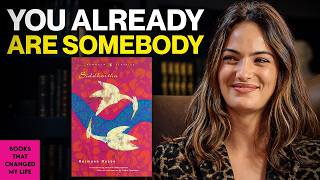
Sophie Newman talks about reading Hermann Hesse's Siddhartha at 15, a year after her father died, and how the book became a way to feel close to him. She traces how its themes of seeking and spiritual balance shaped her approach to grief, identity, and the risks she took in her writing career.
Questions this video answers
Siddhartha (Hermann Hesse)
14
About 15
On the marketing team for Brené Brown
The New York Times, Writer's Digest, The American Scholar, and The Saturday Evening Post
Chapters
Let's talk a little bit about where you were when the book came into your life.
I lost my dad right before I started high school. I initially read it as a way to feel close to him. Here's this artifact from your dad's life that was really important to him. Are you gonna understand it?
How old were you when your dad passed away?
Today we have a special guest, Sophie Newman. She began her writing career on the marketing team for Brene Brown. Her short stories and personal essays have appeared in outlets like the New York Times, Writer's Digest, the American Scholar, and the Saturday Evening Post. The book that changed her life is Siddhartha.
So Sophie's favorite drink is an old Fashioned. Cheers.
Cheers.
Let me know how you think we did.
All right, let's test this out.
Mmm.
That's perfect for me. That's very. Whiskey.
Forward.
Bitters.
Forward.
Not too sweet.
No cherry?
No cherry. Yum. Thank you.
Full disclosure, Sophie and I know each other pretty well, so a lot of the things.
That I would normally ask, like, what do you think of the library?
Irrelevant. Because you've played a part in all this.
Yeah.
So you would be, you know, you would be confirming your own contribution.
It's true. I'm a biased observer.
Before we talk about the book.
Let'S talk a little bit about where you were when the book came into your life. So how old?
So I was about 15, I want to say. So I was in high school.
What kind of a. What kind of a kid was Sophie?
Oh, gosh. I mean, I think, like, all teenagers, in a sense, that I was very lost, but thought that I had everything figured out at the same time. This book actually came into my life at a really difficult time, too, because I lost my dad right before I started high school. This book was one of my dad's favorite books. So I initially read it as a way to feel close to him. And I was just, you know, really heartened and, you know, surprised that it resonated with me as much as it did with him.
How old were you when your dad passed away?
14.
So.
So this was about a year later.
How do you come about the. The conversation to figure out that that was a book you liked? How does that happen?
Well.
It was recommended to me by my godfather. So basically his best friend knew that this was his favorite book. But, you know, at 14, you're not @ an age where you really. Or at least I wasn't at an age where I really understood my parents or thought of them as individuals outside of my life. And so I think it was hard for me at that time losing him, because I felt like I also was losing that opportunity to get to know him. And so my godfather recognized what I was going through and thought that this would be kind of a way to get to know him, which I think makes sense. Cause books are so personal to all of us, which is why we're here. And so I think, you know, it was kind of a way to get some insight into his character.
Really? How many books had you read up until.
Then? Oh, gosh. I mean.
Hundreds. I was by 14. You'd read hundreds of.
Books? Yeah, I mean, you know, short books. As a.
Kid. You're such an.
Overachiever. I mean, I would say, yes, overachiever is one way to put it. I was also, like, you know, kind of of a loner as a kid. Like, super.
Shy. Yeah, I take you as, like, class.
President. Oh, no, I was definitely not. I was definitely always, like, in the.
Shadows. Did you wear black all the.
Time? Not until high school, I would say. No. I was kind of. Well, did I even have a style? Like, I don't know. I wouldn't say I wore.
Black. Style wasn't.
Important. Not until high school, I would say. That's when I started to, like, you know, want to have an identity and want to project that.
Identity. The over a hundred books before you're 14, those books are.
Escapes. Yeah.
Definitely. So you're alone and you escape into those.
Books. Yeah, I think that was definitely what books were for me. You know, as a kid, I have memories of me, like, reading encyclopedias on the floor. I just. I. Yeah, anything I could get my hands on. But my mom was also a teacher for a really long time. She recently retired. And so we always had, like, a really full library of books, and especially books for kids in the house, because that was kind of her.
Specialty. So what did she.
Teach? She taught third grade for a really long time. And fourth grade. So elementary.
School. Oh, yeah. Was she your.
Teacher? No, she was not my teacher. That was not allowed at the.
School. Oh.
Really? Yeah. They thought it would create.
Conflict. Am I off in thinking that a girl that is a loner that uses books to escape.
Your father passes away, and then somebody brings you your father's favorite book. Yeah, it's more than.
Your father's favorite book because it's your inside and your father's.
Escape. 100%.
Yeah. Unpack.
That. I think with the case with Siddhartha is, you know, how he saw himself. This was definitely an age where I was getting into, like, real novels, you know, kind of like moving beyond children's literature and getting into some kind of heavier adult stuff. I remember specifically Siddhartha being part of kind of that transition. I was beginning to see not only his escape, but maybe how he saw himself through this character of Siddhartha, which I can talk about.
More. So the copy that you get, is it your dad's.
Copy? It was. Unfortunately, this one is not, because I. The other one is at my mom's house somewhere, but. But the copy that I had was his copy from.
His. Did he have notes in.
It? He didn't have notes in.
It. He didn't.
Highlight. He.
Didn'T. Are you a.
Highlighter? I'm a highlighter. I have some highlights in.
Here. You don't highlight as much as me, though.
Right? No, I don't highlight as much. I.
Like. Did you say I over.
Highlight? I wouldn't say. So you just personalize.
Yeah. Okay. So it's his.
Copy. Yeah, so it's.
His. How does that.
Feel? It had a lot of weight. Like, I think if I didn't like Siddhartha and if I didn't understand it, it would have been really disappointing because it's like, okay, here's this artifact from your dad's life that was really important to him. Are you gonna understand it? So, yeah, that's why I was sort of surprised and, you know, really grateful that I did, because I felt like, oh, I do have this insight and rereading it. You know, I reread it just this week and feel similarly attached to it. And I'm getting the same things that I, you know, got out of it at 14, obviously, from a very different perspective now. But.
Yeah, I think I still feel that connection to.
It. Okay, so you get his copy of it.
Do you talk to anybody about.
It? No, I was very private at the.
Time. Even your.
Mom. I might have talked to my mom about it at the.
Time. But this is.
Solely. Sophie, your dad in the book, it was very private. Just. Yeah, three of us. Yes.
Exactly. Okay. And so then you start reading the book. Do you know anything about the book beyond it's.
His? No, I have no idea. You know, I figured out pretty quickly that it's an older book. I mean, that's all relative. It's. I think it came out in the early 20th century. Siddhartha is one of the names of the Buddha. So it has this kind of influence of Buddhist philosophy, which is something that I. I'm still not sure, I guess, how much my dad was into that. But he was. He was into it enough to. To read Siddhartha, I guess. Although Siddhartha, I would say, is for everyone. It's not just for people who are interested in that, but it's definitely a part of.
It. But does it come from a spiritual.
Perspective? Definitely. Yeah. I would say it's definitely like, the ultimate melding of spiritual wisdom with human experience. Which is also kind of the message of the.
Book. Okay, so you start reading the book. Do you remember where you.
Were? I remember reading it in bed at night. I did a lot of, like. I mean, I read a lot for school because I was a, you know, a good student, a very dutiful student. But I did, like, read a little bit of my own stuff before I went to bed. So, yeah, I remember it was a very cozy, intimate space. Similarly to, like, when you wake up in the morning. I feel like when you go to sleep, you're almost already in, like, a dreamlike kind of space. Which I think is a good place to approach this book.
From. Do you remember the first part that connected with you or your first impression or what happens when you start reading.
It? I remember being surprised how relatable it was. You know, it takes place in 600 B.C. because it's actually at the same time as the Buddha. And the Buddha is actually a character in this book, but, like, a minor character, which is kind of funny. Like, he's just like a side character to Siddhartha's quest. But, yeah, I remember expecting it to be this really dense historical fiction that I wasn't gonna connect to at.
All.
Yeah, so that was surprising that you connected to it. And it was.
Easy. Yeah, it was easy. I mean.
He'S. You didn't have to work for.
It. I didn't have to work for it. It's very readable. It has, like, a kind of a sense of humor, I think, that you have to get into. Like, Siddhartha is from this priestly class in Indian society, in the society that he lives in. And he's super full of himself. Like, in the beginning, he's a man who, you know, thinks he knows what's up and how to get it. And that's kind of his attitude. And I think, you know, I think we're meant to see him as that. And not meant to see him as someone who really knows what he's talking about, at least in the beginning. Cause he kind of gets, you know, broken down over the course of the novel.
Then. Is that the first impression of the.
Book? Yeah, I would say so, yeah, just his.
Own. Is there any connection there between that and your.
Dad? I think maybe. I mean, based on what I know about my dad, like, again, you know, most of what I know about him is through stories of what other people have told me. I mean, when I look at their characters together, I can definitely see a resemblance in this desire to really be someone in the world and to figure out who you're supposed to be and to go out with a lot of confidence. I think my dad definitely embodied that. But I think he also struggled, like a lot of us do, with feeling like, you know, no matter what he was doing, it wasn't really. He wasn't finding out the meaning of life or he wasn't finding the identity he was supposed to find. He was a lawyer, but before that he was a teacher. And he was never really happy with being a lawyer. He wanted to.
You know, he wanted to be a sailor. He wanted to sail boats. He wanted to. Yeah, he. He wasn't really sure what he wanted. I think, like a lot of.
Us. But more, he wanted to be.
Free. Yeah, he wanted to be.
Free. And.
What. What. So it's 15. How does that affect.
You? Like, I feel like it made me grow up kind of fast because I think it made me realize, even though I was so young at the time and did not have.
The experience to even fully understand.
The message of Siddhartha, I think I still knew that the message was that, you know, WISD comes from experience. I kind of understood that on, like, an intellectual level. Even if I didn't have the life experience to fully understand that, I understood that it was going to be like a long journey ahead for me in finding my own.
Meaning. Does that make you take more chances? Is that the outcome.
Or. Yeah, I mean, I think it made me take more chances. I think it also made me realize that this. Because one of the ideas that's explored in it and is part of Buddhist philosophy is this idea of seeking versus finding. So there's the idea that those who are always seeking are kind of missing the meaning and finding what they already have. And so that's kind of. That's the.
Buddhist. Is that avoiding.
Finality? Yeah, it is avoiding finality, actually. Yeah. It's. It's the ultimate avoiding finality. No, you're 100%.
Right. Does it. Does it affect you being a loner? Like, do you decide to put yourself out there.
More? I don't know if I was ready to do that. I think maybe.
Later. You're still.
Grieving? Yeah, I was still grieving, and it was still hard for me to figure out how to put myself out there. I think I was not like Siddhartha in the sense that I was going around telling everyone that I knew what I was talking.
About. You were more of a voyeur, more.
Observant. Yeah.
Yes. At what age do you become the outgoing socialite that you are.
Today? I would say definitely towards the end of high school or in college. I feel like I was able to process my grief more and I was able to, yeah. Be more intellectually.
Daring. And you probably had some. You had some solid accomplishments that you felt.
Confident. Once I got to college, I was like, okay, yeah, I think what you're saying is true. It's like, I've made it this far, so I'm actually good at these.
Things, so I belong kind of a.
Thing. Yeah, it was definitely related to a sense of belonging. I feel like, you know, high school, we all go through the rigmarole of, like, not feeling like we belong. And I think.
Yeah, I went to a smaller college. I had close friends. I felt like everyone there was, you know, intellectually curate. We were all kind of of the same spirit, so it felt. It felt easier to. To be that.
Way. Okay, what are the. What are the other takeaways from the.
Book? This idea that wisdom comes from experience. So this is super important in Buddhism. It's super important to Siddhartha's path. Basically, the idea that no matter what experience you have in life, you can learn from them, depending on how you digest them and how you embody what you learn. So I think it's important to distinguish between knowledge and wisdom. Right. So knowledge is facts. It's what you learn in books, what other people tell you you should do. It's almost like an alchemical process that has to occur to move that knowledge from knowledge to wisdom, which is embodying.
Knowledge. Is the gap.
Application? Yeah, I think it's. It's application. It's. It's embodiment. It's understanding. It's knowing things. It's that moment. I. I really honestly think of that quote that's. I think it's wisdom that a wise man imparts always sounds like foolishness to someone else. I think about that all of the time. And it's always when I've had some kind of experience. Experience where something someone told me or I read about comes back to me and, like, slaps me in the face and is like, oh, of course. This is what this means. But, you know, sometimes you. You have to go through the experience yourself. To. To.
Know. That's gotta be a part of why you're such a good listener, too. You're a really good.
Listener. Thank.
You. And a very non. It's almost like you listen and then you process. You don't judge. Most people judge and don't.
Listen.
Yeah. Maybe that's a part of.
That. I appreciate that. Yeah. I think. Yeah. Well, because you have to listen to understand first. Right. Before you can.
Judge. We're not all that good. Not all of us are good at.
That. But, yeah, I've always been a listener, and I've always been. Or I've enjoyed being a witness to how people are versus making that.
Judgment. What's the. What are the other.
Takeaways? Another point is kind of this. This desire. Siddhartha has to be, like, spiritually enlightened is really strong. Like, in the begin, he's like, I'm gonna go out and I'm gonna be the best priest ever. My dad doesn't know anything about this. I'm gonna leave my family. They don't know anything. He goes with his best friend. And then he thinks that the priests don't know what they're talking about or that that's not really for him, so he leaves them. He falls in love with this woman. He ends up fathering a child. He goes through all these experiences, and he feels like he doesn't. He still hasn't found his place. And it's not until the very end, when he's kind of processed all those experiences, that he realizes that he had his place the whole time. Like, the meaning was right in front of him. It was what he was doing, and he was trying to find it somewhere else. So I see that as kind of this lesson in balancing our human experiences with this kind of. You could call it a spiritual realm or maybe, you know, if you're not a spiritual person, just like a realm of. Of knowledge or how you understand yourself or how you understand the meaning of life. I mean, that's something that all of us have to reckon with, I think. And so it's a balance between, you know, you have to live your human life. As much as you want to be a, you know, a spiritual person or an intellectual person or whatever it is you want to be, you have to live your human experiences.
Too. So how were you closer to your dad after reading it? Or did you feel closer? I.
Guess. Yeah. Well, I think I really. I assumed. I mean, one has to make assumptions, because I didn't. I wasn't able to Ask him what he got out of the book. But I assumed that what I got out of it, which was this desire to.
To be free, like you said earlier, or to find meaning or to find peace or however you want to put that, that was something that he was really struggling with and looking for some kind of guide for. And I felt, you know, the same way, even if I wasn't fully aware of it at the time. You know, you learn your parents are, like, grappling with the same questions that you are. It's like when you're a teenager, I feel like you think that everything is happening to you for the first time ever. And life is so hard and.
You know. Yeah. That no one has ever experienced that before. And then you realize it's literally a universal human experience. And your parents have gone through it, and they've been angsty, too, and they've wanted to, you know, be free. And so I think it was kind of like, fun, in a sense, to realize that my dad had grappled with those same questions because, like I said, I hadn't really thought of my parents as, you know, being that way, because Siddhartha's really like a young character for a lot of the novel. He's figuring it all out. So it was almost like I was able to see my dad's younger self, or maybe he was, you know, he was still grappling with those questions.
But in a sense, he humanized.
Him. It humanized him at an age where I was just starting to think of my parents as having, you know, the same experiences I was about to.
Have later on in life. Like, you share that same desire for freedom. Like, you wouldn't. You wouldn't like being a lawyer. You. You wouldn't like working in an office, in a cubicle.
Or. You don't think.
So. A ton of structure and. Yeah, yeah, just. I would just say a ton of structure wouldn't. Wouldn't serve you and your skill set, I don't.
Think.
Yeah. So you have that in.
Common. I think so. And I think it was. I think it was really hard for my dad. And, you know, in terms of having.
Feeling like he had to fulfill this obligation to be a certain type of person in society. I mean, being a lawyer generally, from. At least from my family perspective, is a very, you know, respected position. It's. It comes with a lot of kind of benefits in terms of how people see you. I mean, you say you're a lawyer, and people have certain things that they. Doctor, lawyer, doctor, lawyer. You know, and it's all kind of set up. It's like you go to school and then you are that thing, you get that title, you know. And I think that's something that I've struggled with at times too, is feeling like, yeah, you know, what's my, what's my role if I don't have this name of, you know, who I am? And that's, that's something that I think is a really important lesson from this book too, is that, you know, in trying to become somebody, you're missing that you already are somebody that you already are. Some you don't have to perform this kind of role in society. And I think, I mean, I say you don't have.
To. The, the hierarchy and the perception does.
Exist. It does exist. And that's the hard, that's the hard thing about it is like you can't even say, oh, well, it's not true. You know, people are more open than you think. No, like people are judgmental. But I think you have to have the, the self efficacy to say, well, I know how people see this and people need to feel like they belong because it feels safer. But there is a way to kind of exist outside of that. But it has to come from your own.
Experience. I think it can't come, it's not going to come from other people telling you that it's.
Okay. You know, the fact that you haven't put yourself in that box or in those roles, was that conscious or was that unconscious? As you went through school and started to decide what you were going to do, were you thinking about your dad or was it, did you end up there intentionally or.
Unintentionally? It's a really good.
Question. Maybe it's a.
Hybrid. I don't know. I have two things to say about it. Um, I think it was unintentional in a sense that while I was on the one hand not putting myself in that role, I felt really bad about that all the time. Like, I felt like, oh, I should be.
Yeah, you know, I should be an engineer or I should be a doctor. I should have this really specific title. And you know, I felt like people that I went to school with were doing that. And it was, you know, I went to like a science and engineering school. So that was on me for doing that. But. But yeah, I felt like I was like sort of being left behind as people were going into these specific roles and kind of settling into them and being like, this is my identity. And I was like, well, I'm not, you know, any of these Things. Am I ever gonna, you know, figure it out? So. So I was feeling that way, but at the same time, making choices where I was not putting myself neural. So I think there was, like, a little.
Bit. Would you feel claustrophobic when you would get close to.
That? Yeah.
Definitely. Is that how you describe it, as.
Claustrophobic? I think so, yeah. I felt really. I would say, maybe alienated. Like, I felt like I was missing this thing that everyone else was getting. Like, everyone else around me was, like, really happy and satisfied.
And.
And you thought that thing was the. The.
Title. Yeah, the title. The. The sense that you were at peace with what you were doing, and you were gonna just, you know, you'd found this very specific path, and you were just gonna stay on the path. And then that was for. It was all kind of laid out. The red carpet was just rolled out. It felt claustrophobic. It felt, like, alienating.
You know, at the same time. And this. I was conscious of, you know, having my dad die at that age gave me this. This sense of, oh, shit, like, we don't have forever to. To, you know, play around, to mess.
Around. Yeah. And I think it, like, makes everything.
Heavier. Yeah. And so I think, like, you know, people say, like, you know, carpe diem or, like, live every day like it's his last. But I think I really, like, internalized that from, like, that age onward where I was, like, anything could happen at any point. It's like, we can't mess around with what we're doing. So I think that gave me an even stronger desire to feel. To be intentional about what I'm.
Doing. Are you able to get past that now and accept.
The. The contributions that you make to the world? Like, do you. Are you comfortable with.
That? Yeah, I would say within the last couple of years, I've become more comfortable with it. And I don't know if that's. It's just getting older or what, but. Yeah, I think I finally settled down on that.
Front. You know, one thing that was interesting is when I was telling you about the person that introduced.
Us.
Yes. And how he described.
You.
Yes. And how surprised you.
Were. Yeah, I was.
Surprised. That's why I ask if you. If you're aware of your abilities and talent or if you.
Yeah, I mean, I guess you can't get. You can't get too excited about it. Nobody.
Should.
Yeah. That would be.
Unhealthy. Yeah. But, yeah, we can't be too.
Prideful. But you can also enjoy.
It. Yeah. And I think it's definitely a Balance, Like, I think, you know, it's. Are you being prideful or maybe on the other end of that spectrum is like low self esteem, which is not a good thing either. So I think it's, you know, it's a matter of knowing what you can contribute and, you know, trying to embody that as best you.
Can. Yeah. So the thing, the thing that Angus said was that you and I have that in common in the sense that people. He's not. He wasn't saying this directly, but the understanding is there is people have a hard time putting you or me in a.
Box.
Yeah. So they want to know what you do. They want. They want an easy. They want an easy answer that's like, oh.
Doctor.
Yeah. And if you're a bunch of things in. You're interested in a bunch of things and good at a bunch of things, that's not easy to put in a box.
Right. I'm curious what your experience has been with.
That. Oh, I think I struggle with it in the sense that if I give somebody an easy answer, they're.
Relaxed.
Yeah. So people genuinely want to know most of the time. And you. I think you know this firsthand. Maybe that people assume I'm an artist and they would have no idea that really I have. Business has been what I've done. Right. But it's not that I'm not an artist. It's that they have to. They have to pick one of the two and they can't imagine that I could be both and that they would be connected. But to me, they're very.
Connected. Yeah, of course they are. Yeah. Because you're a whole complete person.
Yeah.
Right. Yeah. No, it's. I mean, it's like the ultimate nightmare for me. Or used to be. Now I just, you know, I'm like, whatever is like. Yeah. You're at a party and someone says, what do you do? You know, which.
Is. I feel.
Bad.
Yeah. So I.
Yeah, I just feel bad because they just want an easy.
Answer.
Yeah. They don't really. It's all very. It's small.
Talk.
Yeah. And what happens is I go from small talk that they want the formality of the small talk. And I'm giving them, you know, I'm throwing books at. They're like, no, stop.
Just. No, I know. It's so.
True. Tell me you're a.
Waiter. Yeah, no, they're like waiting. Cause it's like waiting for the moment of recognition of like. Okay, I know what that is. And I can say like a specific thing in response to that, but yeah. It's funny to try to think about, like, mixing that up and just saying, like just telling someone you're an alchemist or something and they have no frame of.
Reference. Oh, let's come up with something like.
That. Yeah, that would be.
Funny. Maybe there's some obscure term. Maybe somebody can put something in the comments that would. That would.
Work. That would be.
Great. Yeah. It is.
Hard. It is.
Hard. And I always feel bad for the other person. I don't.
Care. Yeah. Well, that's the thing. That's what I'm talking about in terms of self efficacy. Because I think before I used to get really, like, you know, I would feel bad that I didn't have a specific answer and I would feel their judgment of that. And now I just feel like, you know, I'm not going to be able to explain to this person, and they're not. They don't want that anyway, and it's.
Okay. Yeah. Maybe is my mom. Because when she tells people things and I. It gets back to me. I'm always like, even my mom doesn't.
Know. Yeah. Yeah. And maybe she. I mean, maybe she doesn't. Maybe you don't even need.
To. Because when she tells people things and I. It gets back to me. I'm always like, my mom doesn't know.
Anything. Yeah. Yeah. And maybe she. I mean, maybe she doesn't. Maybe you don't even need to know. Like, maybe articulating it is like, you know, just decreasing its.
Potential. Anyway, the real question now for me is when you reread it recently, what. What about dad, now that you're more developed.
In. Well, I think. I guess what I would say is it really made me realize how long you can struggle with these kinds of questions. Like, I think Siddhartha doesn't come to his, you know, realizations until the end of his life. And, you know, I think a lot of us can. Can struggle and, you know, not to say that I have everything figured out, but I. I think like, in the last couple of years, I. I feel like I've overcome some. Some hurdles with this, you know, identity thing and this figuring out, like, who you're supposed to be in life, but I. I think those questions can really linger and, you know, makes me wonder if my dad was really struggling with that forever and just a lot of us can be struggling with that.
Forever. Well, I would imagine having the label of lawyer. Yeah, you can't veer far from.
That. Yeah, he couldn't veer far from that. And he. And you know, he really Wasn't like a. A buttoned up kind of. Kind of guy, I think. Yeah. I mean, maybe in another lifetime, he would have been like, a sailor or something, or a mystic, you know, but that was just, you know, in a lot of ways, what. His. What was expected of him. And I think that we all have to make a living. We have to figure that out. But beyond that, you know, there's this struggle of expectations, and I think they can really weigh on us more than we think, or at least they have for.
Me. You know what you should say when people ask you what you.
Do?
What? You should say.
Shaman. Shaman. Okay, I.
Will. And that's the cool thing right now, is to have a shaman. So people start adopting you, and they'll be like, oh, you got to meet my shaman.
Sophie. Yeah. No, it's true.
Yeah. She'll help.
You. Yeah, I'm actually. I have a shamanic session with someone on Sunday, so I have to tell you how that.
Goes. You're doing it for.
Them? No, they're. I'm learning from them because I'm still very much in the teach of learning. Yeah, they do. Although it is very much.
I wouldn't say guarded, but it's sort of. The knowledge is protected in a way, as it should be.
Yes. Well, if there's an opportunity for me to do that, I would love.
To. Sounds.
Good. That's fun. Okay. Of all the books that I've.
Given you, what's your favorite one that you have given.
Me?
Yeah. Oh, it's. I mean, it's gotta be.
Merloo.
So Rape of the Mind or the Delusions and Mass.
Delusions. Oh, gosh. I mean, they're both so good, I think. Yeah. Just his style of writing is so approachable, and yet he's saying the most profound thing. Yeah. It's. That's a book that I want to highlight every single line. Yeah. Because it's so good. It just hits you in the face, but it's so, like, quotable. So.
Yeah. And so.
True. So true.
Yeah. It's all the stuff that nobody.
Says.
Yeah. And said so.
Well. Yeah. And he. I mean, it's. You know, he's not necessarily obscure, but he kind of is. I mean, he never. Yeah. He's certainly not as popular as Freud, but I think he. He has a lot more insight. Yeah. I've also really enjoyed exploring some of Jung's works because I know I've. You know, when we were doing research on the shadow and. And that I've read a lot of Jung that I wouldn't have read otherwise. That has been really profound and interesting in terms of his study of story and myth and then also the.
Shadow work and the.
Integration. Yeah, the shadow integration we all have to go.
Through. He's touching on alchemy.
Too. Yeah.
Absolutely.
Yeah. Yeah. The power of the mind. It's all about that.
Actually. It's great. Well, thank you for doing this. I really appreciate it. This was so fun, and that was a good one. And I got to know a lot more about.
You. That.
Good. My new son, but I didn't know all.
That. Yeah. Well, this was great. Thank you.







