Books That Changed My Life: Sylas Converse & Give and Take
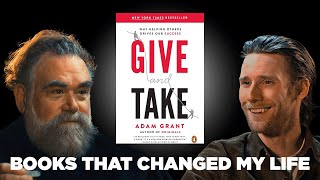
Sylas Converse discovered Adam Grant's Give and Take as a new retail manager in early 2021 and shifted from a self-focused approach to leading with curiosity and generosity. He learned to let go, ask questions, and influence rather than control.
Questions this video answers
Early 2021 (spring 2021).
Give and Take by Adam Grant.
Eric Ford, CEO of Buck Mason (fashion retailer).
Leavenworth, Washington; about 2,200 people.
Packing shipments for his father's Amazon business; working at a hat shop/wood shop; weekend work at Icicle Ridge Winery; selling cars in Wenatchee during senior year.
Chapters
Where are you in life when this book enters the picture?
I had just started my career as a manager. I had a unrealistic expectation of what leadership entails, what more responsibility entails. And so this book really broke those walls down of me being like, oh, wow. As a very ambitious person and starting to see that if I keep going down this path, I'm just going to drive people away from me.
Welcome to the Syndicate X Library. We love books and today we're talking about a book that changed somebody's life. Our guest today is Silas Converse. He, very much like myself, grew up in Washington state in a little town. He also is self made. He's worked in retail, done sales training, all kinds of things. Fascinating conversation generation. Incredible guy. And the book that changed his life is Give and Take by Adam Grant.
Jackie, Go.
Thank you so much.
Cheers.
Perfect, perfect way to start the day.
Try it. Make sure it's.
Oh, I'm sure.
Gracias.
Oh, yeah. Well, mixed.
Classic.
Yes. I'm a simple man after all.
Cheers.
Cheers to you.
Thank you. So you grew up in the spot that whenever I want to give my mom a gift, I give her the gift of a trip to Leavenworth during the winter because it's a Christmas. I don't know what you would call them.
The gift of Christmas. Yeah, 100%.
It is one of the parts of the US that you can imagine elves and Santa living during the winter.
Right. It's a very strange place. Very strange place to grow up. But it's also beautiful. You know, it really does look like it's plucked out of the dock. Shines in Austria, you know, or, or Bavaria and Northern Germany or whatever. It's, it's crazy. And in the summertime it's, it's hot like it is in la. Can float around the river and you know, so I grew up doing all that stuff. And then in the wintertime, of course, it, it gets 40,000 tourists on a weekend to see Christmas lights turn off and on, you know.
Yeah.
But yeah, there's 2200 people who live there and that's where I grew up. And honestly it was, it was magical in a lot of ways living in, in such a beautiful, beautiful place.
The economy there is fed by tourism, right?
100. Yes.
So when you're growing up there, what kind of jobs did you do? Like, were you.
Yeah.
Working. Something to do with tourism?
Yeah, absolutely. Yeah. So when I was, my dad actually had a business on Amazon. He was one of the first guys on Amazon. And so when I was growing up I was packing up shipments and. And helping him bring the boxes to the UPS guy and all that stuff. And then by the time I was about 13, I started working. I'm sure you've been there, the wood shop, hat shop, which is owned by the Reis, Still Shout out Reis. And I worked there for probably two years. And then I worked at a winery over the weekend called Icicle Ridge Winery. And then after that, like, let's see, senior year of high school, I went and sold cars in Wenatchee. So I just. I couldn't wait to get out, to be honest with you. It was time. Yeah, it's time to break the bubble.
So I grew up in Port Orchard.
Okay.
So Washington. Same. Same sort of size. So I think Port orchard was like 2200. Same sort of mentality that comes with that. Like, small town for me. I never felt like I fit in. And I couldn't wait to get out of there. Like, when I was 17 and a half, I moved to Seattle.
Yeah.
And even that was, like, too small kind of for me, in a sense. Is that how you, like, describe how you felt as a kid trying to get out?
Oh, man, I. You know, I relate to that a lot. For sure. I was not super popular in high school. I had, like, one really close friend named Nolan, who's. Who I'm still super close with. And he was a big jock and he was very popular. And I was a music nerd, so I was doing choir and I was doing piano. And I was good at it. I was doing all that stuff. But where I grew up, being part of the music crowd was kind of not frowned upon, but it was. It just wasn't very sociable, I guess. And so I felt a little bit of an outsider in that way. Plus, I was homeschooled up until my freshman year, so I didn't get the same, like, memories coming up to high school. So by the time I'm finally in high school and I had four older siblings, all who went through the system and then got the heck out as soon as they could, I was kind of alone, you know, And I was also. I had my own apartment when I was 15 years old. Going to community college and high school at the same time, I was just. I was already kind of clocked out. You know what I mean? So I definitely relate to that feeling of, like, this is. This bubble just is not it for me. And I. I couldn't really tell you exactly what pinpointed it for me, but from a very young age, I was Like I'm, I'm out of here, don't know where, but I'm, you know, high school, couldn't care less.
You know, I was Lenworth that everybody talked about. So for me in Port Orchard, everybody was like, you're going to get a job at the shipyard. And you knew somebody at the shipyard, they could give you an in. Everybody talked about the different parts of the shipyard, but everybody was kind of just planning on their trajectory. Was something around the shipyard and working for the government in a sense. And I ne like that was never an option for me.
Yep. I, I totally relate. For us it was being a fireman. It was being a fireman or, or working in construction. A lot of cats out there logging. Not really. No logging like Leavenworth, even though it was adjacent to it. Not, not really something we talked about logging funny enough. Um, but construction for sure. And being a fireman. There was a fireman school and a fireman station right across from the high school and they would have, they would do little curricular thing, extracurricular things for 15 year old guys were like, you want to do a week long training camp, become a fireman and then you know, by the time you graduate you can come in with a little extra. So it all about that, that very blue collar existence for sure. And I actually when I got to la, appreciated that a lot more when I got here, even though I was so not into it back in Washington.
Yeah. So kind of tell, tell me about that. Like when I. So I was in bands and we would come down here and showcase and then there was a point where I moved down here and I'd seen a lot of people come down here and come back kind of broken and like disenchanted. They, they kind of moved to LA for their dream and it didn't work. And there were a bunch of broken promises and you know, all kinds of hard luck stories. When I moved here I kind of very quickly and already kind of knew from showcasing down here that you kind of had to get the joke that there's, there's the idealized version of fame and who knows who and all that. And then there's the more Washington substance and it's hard to maintain the substance in this environment. What was your experience with that?
Yeah, you know, I, in hindsight, the way I kind of see it, I think Ernest Hemingway is the one who said you can't run away from yourself by moving from one place to another.
Yeah.
And so for me there was a lot of running involved for sure of.
Not where were you running from?
I was, I was running from trauma, basically family trauma. And I didn't know myself really at all, so I was just kind of like jumping from one identity to the next and LA was the next step in that identity. So I totally get what you mean by you gotta get the joke. I actually watched an interview of yours before where you hit on that a little bit. And I was totally bought into the joke, actually, in the way that I was, I was into the fake culture, I was into the clout chasing probably my first year and a half in la. And then I was fortunate enough to run into some very, very kind and real people who saw potential in me for whatever reason and saw the kindness and, and fortitude and patience to just kind of be like, no, no, no, no, no, no, no. Let me, let me actually show you what this city can be like. Don't, don't waste your time with that stuff. What makes you happy? What is it that you actually care about? And I remember the moment where it really changed for me is looking back, being here about four years from being here in like 2021. And I had, I was dating an amazing person at the time. I had a great friend group. Even though it was the middle of COVID I was kind of having the time of my life. I was fortunate. And I was thinking to myself, really the only thing that matters to me, I'm a simple man. It's the people in my life that's really the thing that matters the most. And so to your point, my experience has been a bit of a roller coaster ride, bit of both ends of the spectrum. And coming around now to the fact that it's. If you find your tribe, you can live anywhere. You really can. It's, it's, you know, the city doesn't have to be your, you don't have to adopt the identity of a city, you know, So I, I kind of, I, I totally get the legitimacy behind, you know, la. Is LA cooler than New York or Chicago? Absolutely not. Love both of those cities. But my people are here and I love it, you know, so it's my city and I.
Wait, you don't think LA is cooler than Chicago?
I don't. I love Chicago. Architecturally at least.
You live in Chicago?
No. No, I haven't.
So I've had a, I've had a house in Chicago.
You would know better.
Have you ever experienced their winters?
Good point. No, I've only been when the weather cold there.
It hurts your feelings?
Yeah, yeah. My sister.
There's a There's a grittiness to that. That isn't. I don't know, it isn't human. It's hard.
Yeah.
Well, I think New York is number one by far, but I think LA is second to me.
Yeah. Yeah.
And I get the identity of a city. But the thing that I love about here in New York is the diversity. Like, you just have the best food, you know, the best art, the, you know, just. You have so many different cultures all existing together, and, you know, in a sense, the best of all of it kind of rises to the top.
Yeah. And it doesn't really matter what you're into. You can kind of find that crowd in LA or in New York, even though they have, like, their, you know, whether it's fashion or entertainment or whatever, there's all these little niches that have their groups of people who are hardcore into that thing. For me, it's cars and, you know, there's so many of those people.
Oh, a lot of the car design happens here in Santa Monica.
Yep.
Yeah. For the world.
Yeah.
It's funny.
Yeah.
That's great. Okay, so the. The book that changed your life, it's.
Called Give and Take by Adam Grant.
And I. Adam Grant seems like a beautiful person.
I know, right? He's. Listen, I. I started re. Listening to Give and Take after. After y' all emailed me, and.
It'S one of the only books he didn't orate himself on audible. And I was missing his voice because he's got such a great speaking voice and such a great.
I mean, it's such a buzzword, but energy about him. He really does.
Yeah. He seems very kind, but very smart.
Yeah, yeah.
It's a great mix of both. Okay, so where are you in life when this book enters the. The picture?
What.
What year is it?
It's gotta be 2021. Early 2021. Spring. Spring of 20. Yep. Yep. And I had just started my career as a manager, basically a retail manager. So I'm leading people in a. In a store, essentially.
Going from leading yourself to leading people. Probably had some disappointments in the sense that when you're leading yourself, you just worry about yourself. Now you got to get others to follow, you know something, and they don't care. And you start to realize that there's different personality types and different motivations, and.
It is not easy. No. And it's really the thing I was running into and the biggest problem that I was having is as somebody who had always been kind of a solo performer, as a pianist and as a Singer and a wrestler. You know, those. Those were kind of my things, which are all individual. Individual. I had a lot of problems letting go, so it'd be like, okay, I need this thing done well. I'm not going to give it to this person because they don't know how to do it, so. But I don't have time to train them, so I'm just going to do it myself, which is the worst thing you can do.
You know what I mean? Creates two things. It creates a time management problem, and then it also creates a. After a while, not at first, but after a while, a little bitterness.
Totally. Yeah. Nobody can grow passive aggressive. Not giving them any opportunities to. To show, you know, that they have aptitude in other areas. There's a whole bunch of reasons why it doesn't work, and I was having a lot of trouble letting go of that. If I want it done right, I got to do it myself mentality. I was having a ton of trouble with that and running into walls. And I was fortunate enough that I had a team. Jerry, El, and Jess was the name of those folks who were so patient with me. And really, it's thanks to them that I was in a position where I could fail as a leader for them a ton of times, and they would give me chances to come back and kind of be like, okay, here's. Here's what I learned on my leadership journey now that I'm going to try to do better for y'. All. And this was in Covid, so that's why it was such a small team. And then eventually that team grew. And anyway, you probably had unique pressures.
Because of COVID Unique, sure.
Yeah. It was. It was definitely. Every day was kind of a. What are we going to deal with now? It was a strange time anyway, so that's kind of what the picture was of where I was at at that time. Who suggests the Eric Ford CEO of Buck Mason at the time, Because I was. I was.
What does Buck Mason do?
They're a fashion retailer. Okay. Yeah.
So they're their own or.
Yeah. Independent. Yeah. Great company. I mean, they make. They make really good stuff. They really do. I'm wearing a lot of it, actually, right now. I had a wonderful, wonderful time working with them for.
So do you tell him you're struggling, or does he see and suggest it? Or how does that.
You know. You know, what's funny is, like, looking back at it, he.
He's a really great listener, and I think he's able to see between the lines of what's being Said versus what is actually going on, going on. And he had a lot of patience for me and I think maybe a soft spot for me at the time too. And I'm down there kind of saying, oh, everything's going great. Crushing it. You know, here's where the numbers are, blah, blah, blah, blah, blah. And he goes, you should read this book, basically, is how it goes. Because he's, he's able to see through it. He's been there. One of the things I appreciated about working at Buck Mason is the people who were in charge all worked in the store level as, as either a leader or a stylist or whatever. So it's so rare to have a, a person in charge at a retail company who's actually done all of the jobs. So that was pretty cool. But anyway, I get my hands on this book and I start reading it and.
And you're reading a physical copy.
I was listening to it.
So you're listening to audible. So you go and did you sign up for Audible or you already had.
I did sign up for Audible with that book, I think.
Okay. And so did you instantly commit or did you like the 30 day trial or do you remember?
I, I have always loved reading and I was really getting into. I was biking to work at the time too, and, and, and spending a lot of time doing things with my hands that I was listening to music with. And so I was going to get the book, but then I was like, why don't I try listening instead? Because it would take me a long time to read through books, whether it was, you know, Lord of the Rings or the Witcher series or any other books that I had physical copies of. It would take me weeks, sometimes months to get through the whole book. But with audible, I listened to that whole book in less than, less than two weeks. And I, I retained more of it because I could take notes while I was listening. I love to, like, jot down on my phone stuff that I'm like, oh. And pause and then I write it down and then I listen to it again. So it was a very, like. It felt more tactile for me, ironically, than reading a physical book. And so, yeah, that's, that's what listening is for me. It allows me to engage in multiple levels.
So you start listening. Do you remember what the first, like, aha. Was that you're like, oh, okay, this, this is making sense.
Yeah. So in the beginning of the book, he, he talks about what, what he calls reciprocity styles of being either a giver or a Taker or a matcher.
So let's, let's go through those really quick. So a giver is somebody that gives without expecting anything in return.
Yep.
A matcher is somebody who wants equal equity.
It's, it's basically 50. 50. They can, they can, they will sometimes assimilate to the group. So if a group is full of takers, then a matcher will match and adopt that reciprocity style. Or if it's a room full of givers, they might adopt that kind of.
Reciprocity style, but they fall to average.
Exactly. They, they dabble in both. They don't really lean more one way or another.
And then you have a taker.
And then a taker is simply somebody who's not cruel. It's not, it's not a bad person. Even though it can have that kind of pejorative thought to it. When you think about it, it's just someone who's more cautious when they're engaging in like an approach with somebody else. They're going to be thinking about what value can, can I get from this interaction? Whereas a giver will be coming into the interaction with what value can I contribute in this interaction?
And so those are the three types.
Yeah, yeah. And that maybe. Yeah, I think we did a pretty good job explaining how it goes. And he's talking about it and he's, he's going down the line and he shares a couple of anecdotes.
About, you know, different people and, and how this has worked within their own lives. And he goes on about which of these three reciprocity styles is the least successful and most successful statistically based on a whole bunch of different studies across a ton of different industries, whether sales, engineering, medical school, whatever. Students, blah, blah, blah. Just dozens.
What style creates the best outcome monetarily but also just in life.
Yeah, yeah. In terms of like success through your career. What, what is, what is catapulting people? And he was like, overwhelmingly, givers are at the bottom. It's like the sale. The sales people are like two and a half times less revenue. And then engineers are like way less productive and, and medical students are, are not getting through medical college as quickly and blah, blah, blah. And he's like. So I went through and I looked at the data again and it turns out givers are also overwhelmingly at the top. So they're champs or chumps is what he calls them. And takers and matchers are all kind of in the middle. And so he.
So if you look at the book, if the average of the Groups, Yes. The givers averaged out to be on the bottom, success wise. But if you separated them, they. There was a section of givers that outperformed everybody.
It might have been that he didn't really explain exactly how the data correlates, but it was his out. His finding was simply that givers are either at the bottom or the top. They aren't really in the middle. So people who are givers at the top are like outperforming by a landslide too. And the givers at the bottom are only trailing behind by a small margin to the people in the middle. And so he. The whole book after that, like first chapter of kind of outlining. So this is what we found through the data. Now I'm going to try to figure out what is it that separates these successful givers from the not so successful givers and also why is it that it's on such different extremes. There's got to be a reason for.
That right now in understanding that. Where did you put yourself? Just hearing that first part at the time.
Yeah.
As being kind of a new, a new manager. Where did you put yourself in that? Were you a giver? Did you see yourself as a giver?
No.
What did you see yourself as?
I, as a person, I saw myself as a matcher and as a leader. I saw myself as a taker, for sure, of someone who was always trying to claim value and not necessarily from other people, but from any situation that I could. Which is why it was always like, I'm going to handle this myself so that I can, when it's successful, I can point back to it was me who did it.
So, so in a sense, is that tied, do you think, to the.
The need to balance out, that you're carrying more responsibility, so you should get more. Because when, when you're, when you're in leadership, you have more responsibility.
Totally.
So then you naturally think there should be more equity. Do you think? Is that a natural thing?
Maybe. I don't know if I even put that kind of thought process.
No, it could be unconscious.
It probably was unconscious that I, I had a.
Unrealistic expectation of what leadership entails, what more responsibility entails. I saw it, I think, very simply as more pay. Great kind of thing. More responsibility, more pay. But I didn't take any of those responsibilities on the people side.
And more power, right?
Sure, yeah, yeah, absolutely. And so this book really totally like broke those walls down of me being like, oh, wow. I, as a very ambitious person, am starting to see that if I keep going down this path I'm just going to drive people away from me rather than get people on my team. And the whole part of this book. And I completely, like swapped after I finished this book and while I was reading this book of, of becoming somebody who was so much more interested in being curious and being generous with others. And there was a. There, funny enough, in, in his newest book, Hidden Potential, he's talking about somebody who's going on about a mentor said to them that they can be a ball hog and if they're not careful, they can suck the air out of the room. And that resonated with me so much as well. And between that book and this book, that commitment to being curious about other people and their ideas instead of coming to the table always with, here's what my idea is and here's why it's great and blah, blah, blah, blah, blah. If somebody else comes up and I know they're interested in this, it'll be like, why don't you tell me about what your idea is, Chris? And that's how I would get my.
Talking out is by asking other people to talk and then I would ask them questions. Just, just switching and making it. You know, the, the thing I keep on saying to myself, and I've kept on saying to myself since I read that book is it's not about you.
Just remembering that, keeping that very, very prevalent in my mind of, of just reminding myself it's not about you. Silas.
What, what sort of things come into play that you have to remind yourself it's not about you? Like, what is. What are the specific situations?
You know, I'm a pretty sensitive guy. As an, as an artist, I think that I get.
If I see something that.
And it's not even about, oh, I wouldn't have done it that way. It's more like I don't see the values aligned with the actions. That kind of thing upsets me a lot of the time. There's no through line to the story here. And I'll get like, sometimes really annoyed by that. And whether that's happening in, like, the business side or whether that's happening when I'm watching a movie or whatever and things like that.
I take it personally. So for some reason. And so remembering that, it's like, don't take it personally. It has nothing to do with you. And you can still disagree with that thing and have like a reaction to it, but the only thing that you can control is your reactions. So when it comes to reminding myself it's not about you is remembering that people are all going through their own thing, and especially when you're in a leadership position, that someone might be coming in late or maybe they have a. Maybe their attitude is really off today and you can't really pinpoint it. You don't know why.
Having to distance yourself and making sure that you're not taking responsibility for their feelings, but that you're also having the courage to point it out. But not in a way of like, hey, you're up today. What's up with that? You're late. What's your problem? But more of a you good. I've just felt this energy from you today. I'm just making sure you're all right.
And then giving them the space to share or not share, and then recognizing whatever they do, you gave it your best shot to give them an opportunity to open up. And so.
To answer your question, I think that's best way I can describe it is just remembering to have the courage to step outside and have that third eye view, if you will, and remembering that.
So you. You said the only thing you could control is your response. Right?
Your reactions. Yeah.
Do you think you can control the situation?
No, no, I think you can control. You can influence people for sure. And you know, that's my. That's been my career for a long time in sales is you can. You can lead things to or. Or lead people down certain paths by doing your best to influence them, and not in manipulative ways, but simply in just clear communication. But I don't think that you can control situations fully, but I do think that you can influence them by making sure that you are in control of yourself.
So you gave the example of a movie that doesn't have a through line. Can you control whether you watch that movie or not?
Oh, totally. Yeah. But that would be controlling to exit the situation, which would be, I guess, reframing.
Well, you're not exiting if you never entered.
True. Yeah, good point.
So you just made the point that you can control the situation.
Yeah, yeah. You can. You can enter or exit the situation.
Now, in a sales scenario, can you control the situation?
No, no, no, no. Absolutely no. I think that it's a. It's a massive misconception in sales. Yeah.
Explain it.
Because people don't want to be controlled and people ultimately.
So I'm saying situation, not people.
Oh, okay. Yeah. So explain, like, what you mean by a sales situation.
Well, okay, I have a leadership book in the marketplace.
How can I control the situation that then controls the customer? That I get.
Right.
So just an example, the design of the book. How would that influence the situation?
So you're talking more about branding?
Well, I'm talking about the situation. You're using branding to control. Yeah, the situation. Can I control the situation by where I market it?
You can, you can certainly do, do better than that. Yeah.
What about the price?
The price is absolutely going to have an effect, for sure. I think all of those things are still not quite control as much as it is framing it in a way where you are most likely to have your desired outcome, but you still can't necessarily have full control over really anything. Right. You can only give it your best shot through the data that you accumulate and the time you spend studying exactly what it is you built and why, and then presenting it in the best possible way to the people who you think need it the most. And if you can get all those things and hit it all exactly right, there might still be something you missed that you would never think about. Right. So you can't control whether or not they spend the money, but you can control exactly how you present it. Is that what you're, is that what you mean?
If there was an element that snuck through, you would learn from it and you totally fix it next time, right?
Absolutely.
So it is kind of a feedback.
Totally. It's a loop. It's always a cyclical, Right? Yeah, yeah.
But I think there's more leverage in, in living under the premise that you're trying to design it.
Yeah.
That you control the situation.
I would agree with that. I would agree with the, the sentiment and the belief that you are fully responsible for your life and the outcomes that come from it.
Chicago would be a great example.
Yeah.
So whenever I go to Chicago, people are like, hey, I'm, you know, I got to leave. I'm catching a flight back home to California and then be like, oh, take me with you. I can't, I can't stand winter here. Yeah, you're like, you can move.
Yeah.
You want to control the weather.
Move. Yeah.
But you're like, oh, I can't. And it's like, no, you, you're not choosing. You're choosing.
Yeah, you can 100%. I, I, I, I think I, I, I really have. And I, I take issue with this, this, this sentiment that I think is very prevalent right now in, in all manner of people. Not, I'm not singling out anyone of this.
Victimhood. A little bit of, of having this, this feeling of, you know, oh, everything's, everything's going wrong in my life, and it's because of all of these things that happened outside of my control and the lack of responsibility for. Well, what are the, what are the actions that you took? You certainly. You had to have a part to play. Right. I mean, even there's, there's a song by like Post Malone and Morgan Wallen. I had some help. It's like, it's not sure. It's not 100% on you.
You mean the song of this summer?
Yeah, yeah, yeah. I don't know if you've heard that song.
Oh, yeah, it's my Jet Ski playlist.
Yeah. But I, I, and, and victimhood might be a strong word, but it's just this I for myself and, you know, heck, I've been going through it the last couple months, but at the end of the day, it's like I kind of only have myself to blame for a lot of these things. Not all of them, but for many of them. It's like if I had made a different choice, if I had maybe been a little more patient, if I had been a little more.
Kind.
These things would not have transpired the way that they had. And that's my fault. Sure. Did somebody else have a part to play? Absolutely. But at the end of the day, I'm taking responsibility for my part of it and not choosing to see it as like a. Ah, well, the system's against me. No, that's not the truth. You know what I mean?
Yeah. There's a, there, there's a freedom in that. Right. Like almost salvation in the, in the idea that you did play a part in it. You're not, you're not just a passenger.
No. Yes, I totally agree with that. I think that that must have been what you were, you were speaking to a little bit of that, that idea of being just a passenger on this flow through life is, is kind of flaccid, you know?
Well, there's, there's also, you know, at the higher level of leadership, there's, there's the ability to create a problem and solve a problem. And if you have a, if you have a group of people that are willing to externalize control, then it's really easy to monetize that. Right. Because you can monetize snacks, you can monetize fear, you can monetize different things. And so there is a level of leadership where you're creating the problem and solving the problem. And it's a, it's a little bit of a magic trick, right?
Yeah. Yeah. I think magic trick is a good.
Way to put it in, in those scenarios, you would, you would be controlling the situation. Yeah, but you wouldn't want anybody to know that.
Sure.
Because it ruins.
But I guess the illusion in some situations anymore, you don't even need the illusion. Like in politics now. They don't even, they don't even care about the illusion. They're like, no, we're lying to you and deal with it. We're gonna lie about lying. Like, yeah, yeah, we're gonna, we're not gonna answer that question and we're just gonna create a bigger problem that you didn't know you were worried about yet. And it's like that may or may not. I was still wondering about this. Over.
Yeah, they're like, what is the guy with the red flag in the bowl?
Yeah, the manager.
That's what I thought the word was. Yeah, I think.







