Books That Changed My Life: Tim Cummings & Watership Down
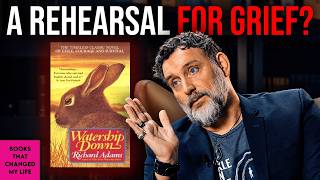
YouTube interview (Chris Collins with Tim Cummings) in which Cummings describes how Watership Down affected him after seeing the 1978 animated film and reading the novel around age 11. He connects the book's themes (leadership, visions, journey, death) to his own childhood—early love of reading, family challenges (brother with epilepsy, later death; mother later died of cancer), experiences of bullying, and finding community through theater. Cummings discusses his career as an actor, teacher (UCLA Extension; workshops), and author (first published book about death; upcoming novel about theater kids and epilepsy due next summer). The conversation emphasizes storytelling as solace, teaching as creating belonging, and Watership Down as an early doorway to understanding loss and leadership.
Questions this video answers
July 6, 2024
51
About 11 years old
Explores epilepsy and theater; due next summer
About $50,000
Chapters
After you read the book at that age, what changes?
I think this book opened a portal to the future.
So a few years later my mom got cancer and died.
And I can't help but feel like the book was some kind of doorway for me, letting me know that I was going to have this incredible loss at a young age and have to deal with it for the rest of my life.
Welcome to the Syndicatex Library where we love books.
And today we're going to be talking about books that changed your life. A book that once you read it, you were never the same. And our guest is incredible. This conversation was amazing. It's Tim Cummings, he's a very well known author of the best selling coming of age novel Alice the Cat.
He's written many other books. He has appeared in over 200 theater, film, television, voiceover and new media projects and he teaches writing at the UCLA Extension Writers Program. He runs private workshops and coaches authors. But more importantly, he is an incredible person and the book that changed his life is Watership down by Richard Adams.
Cheers.
Cheers.
That's my other favorite drink, tequila.
So growing up in Long island, that environment and being the youngest. Yeah. What were your interests?
Stories and reptiles?
Tell me about stories.
I just remember from an early age loving to read. I loved books. I loved to read. I always had a book in my hands. I was always going to the library with my dad. My dad was a very intimidating, tall, handsome New York City fire lieutenant, later chief. He wasn't around a lot because he was always. He worked in the South Bronx which is a pretty intense environment for the firemen. But he would be home on the weekends and he loved to read. So he would go to the public library and I would go with him. I felt like it was our only. Was like my only bridge to him because he was very kind of reticent and intimidating and we kind of butted heads even from an early age. He's like strong, quiet personalities. Anyway, I would go to the library with him and I would take out as many books as I could. I think the max was 8 but at the time those were like the Beverly Cleary books. I was so obsessed with all of those. There was this author named Ruth Chu and she wrote books about kids and families in Brooklyn who would have encounters with witches. They'd like go to the park and they'd find a hole in a tree and go in and there's like a coven underneath. So they were these kids books and they were so innocent but they had this mysterious magic to them.
Did Junior dad have the same taste in books?
No, he was more of a. Like, he loved mysteries, crime. I remember he was like a Nelson DeMille fan. I don't know in terms of classical literature, what he may have loved, but he did a lot of those sort of more popular crime. I actually read a couple of Nelson DeMille books. I remember because I was like, what's up with these books? He seems to really like them.
And I liked them, but not enough to read more.
I think I was just busy with my own kind of stuff. The books that I loved, do you.
Remember the first book you read?
So could have been Ralph and the motorcycle or Ramona Quimby, age 8. You know, one of those. There was a whole series of them. There's like dozens of those books. And I would go to the library and see what ones were in and take them out. Sometimes the only ones on the shelves were ones that I had already read. And the choose your own adventure books. I was obsessed with those. Remember those?
Yeah.
That was like, innovative at the time.
Cutting edge.
Yeah. She'd be like, if you choose this, jump to page 48. If you want to stay here, stay on this page. And you were always like, what if I screw this up? You know, like, there were like. There were high stakes about reading those books. And then you talk about them with your friends and be like, I chose this. So this was my experience of the story. Totally different from somebody else's.
Yeah, that's where I went.
Yeah.
And then in a weird way, that represented your identity.
Yeah, those were so cool. I found some, like, classic ones recently.
Choose your adventure.
Yeah, they still make them. They're like new editions of the old ones now. They're a little too polished, but I found some from the 80s. They were just on the shelf. And I was like, does anybody have any idea what these are worth? Hello. Here, you open them, they're like 50 cents. I was like, I'm taking these home. So that was a really amazing find.
What's your favorite bookstore?
Oh, gosh. In la. I love Chevalier.
Well, I said it vaguely because, I don't know, I didn't want to put you in the LA box.
But I love Chevalier's on Larchmont. It's where I did my book launch. I love them. That's the oldest indie bookstore in la. I love the last bookstore and I love the Village well, in Culver City. I've done a few events there and I'm going to be teaching some classes there next month.
What are the classes on?
Well, the Author Francesca Leah Block. She's probably most famous for the Weetsy Bat series. She writes about Los Angeles like nobody else. She's incredible. She was one of my mentors when I was getting my master's in writing and I just fell in love with her. She's got an incredible point of view about Los Angeles and she's also just kind of magical and gothy and dark, but in a beautiful kind of way. So she lives right near the Village well, which is a pretty new bookstore and she does a lot of events there, a lot of readings there. She's been building a lot of community there and has decided to start a series of classes. So I'm gonna teach like writing for young people.
Oh yeah. So the idea is that kids, young kids, like what age can come in.
And I don't know if it's that so much as it is writers who write in that genre can come. And I think my first class is on structure. So it's just going to be talking about some of the classic structures used in storytelling and then how they apply to a lot of well known like YA and middle grade books.
What are some books on story structure that you would recommend somebody to read?
I like the Save the Cat writes a novel that's a standard. It's a little dense, but I do like it. I loved a Swim in the Pond in the Rain, George Saunders book on craft that was pretty amazing. There's a book called Take off youf Pants by Libby Hawker, which is a really cool little book. You can read it in an afternoon. And that is about taking off your pants.
Spoiler.
It's about the more perverted side of literature. No, it's basically an argument for. There are people who are called pantsers and they sit down and just write by the seat of their pants. So if you're a pantser, you kind of sit down and you're like, I don't know what this book's gonna be. I'm just gonna write it. My subconscious is gonna take the wheel and then when this book is done, it'll tell me what it is. And that has worked well for millions of brilliant authors. And then there are people who are like, I'm gonna outline this thing to within an inch of its life and then all I need to do is sit down and write it. So it's an argument for doing that. And it uses incredible stories that we all know very well. Big stories in the world, right? Star wars, wizard of Oz, a lot of Hero's Journey types of books. Charlotte's web.
Is that your style? Do you outline it and then write it?
I'm a little bit of both.
I was going to ask, isn't the magic in the middle?
Yeah, the magic's in the middle. But for me, I found it also depends on what you're writing, because some stories need to be kind of worked out. They need to be outlined. And other stories are like, no, I'm gonna let the subconscious take the wheel here. So I've done both, and I've had success with both. But I really like the way she lays it all out in this book. When I read it, I was like, this is clear as a bell. Like, anybody can understand structure and what's happening in stories when they read this book. So that's a good one. Plot and structure is a really good one. Philip Pullman's Demon Voices, I'm a very big fan of his. He wrote the. His Dark Materials books. Do you know those?
No.
Oh, shit. We'll get them. Yeah. Those books kind of changed my life. There's an HBO series now which was good, came out in the last couple of years. It's a parallel universe very close to ours. The big difference is that people have animals as souls, and it's on the outside of them. So it's called a demon, and everybody has one, and it's an animal.
So the protagonist of Fascinating. Oh, my God. Just wait.
Read the book or watch the show.
I would say read the books.
Okay.
I remember a friend of mine gave me the book for Christmas, and I was like, a book? Thanks.
You know, because people always give me books. And I was like, a book? Great. Thank you. But then she was like, no, no, no. You just wait. So I was like, okay. So I remember I started reading the book on, like, a Friday night, and I had it done that morning. Then I went to the Barnes and Noble at Union Square. This is when I was living in New York City. Bought the two sequels and finished them that weekend.
Whoa.
And then I was not content to shut up about these books and how incredible they are. They're dealing with really profound, impactful issues, especially for books that are, you know, geared toward kids, though they are British.
So keep that upon it.
Yeah, different. Different. But also a different sense of, like, what's okay in a book for kids in the American market and the British market. So he is an incredible storyteller or where he's lectured. And this book, Demon Voices, is a collection of all of those essays and speeches. Mind blowing for me reading them. I was like, yes, yes. Yes, yes. So I love that as well.
Do you like teaching?
Yeah, I do.
What do you get out of it?
My head's full of a lot of information that I'm really passionate about in terms of storytelling and characters.
So is it just getting that information out or is it sharing it?
Sharing it, sharing it. There's something that happens in the exchange of information that I like. People, you know what I mean? When you see that you've reached them and also that they have something to share, and also that, you know, if you're a student, you're there because you want to learn, and if you're a teacher, you're there because you want to impart that learning. So I like the exchange of it, and I don't have a problem with it, probably because I started performing professionally as a kid. So I've just been used to, like, being in front of people, knowing how to talk in front of people, meeting people where they are. You know, theater people and actors are, like, really good at that. They're really good at just being collaborative. Not just in the theater, but in life and doing this thing that we all have to do, which is deal with one another. Right. So it's an extension of that in a way. But yeah. I teach a middle grade class for UCLA Writers Program, and it's a great opportunity for me to be like, let's talk about these books and why they're impactful and what they mean in the world and this whole notion of transformation, because that's what you're out for, right? It's who they are in the beginning of the story, what happens to them along the way, and who they are at the end. To me, that is fascinating because we can't really see that in our own lives. We won't know. We won't even know after we're dead. But we can watch other people in stories like live a full life or go through these transformations. And I love that.
What's the most rewarding part of teaching?
The most rewarding part of teaching is. Okay, I'll give you an example. Several students end up, like, finding you on social media and following you. Recently, my book won a few awards. So I was posting about it and one of the students chimed in and said, oh, congratulations. This is so great. I'm gonna tell the group. And I was like, the group. And then she wrote and said, well, after the class ended, we decided to keep going and stay together as a writing group. And we share pages every month and all we do is talk about you. Oh, what Would Tim say about this? Or. I know Tim would say this about this, or like, oh, how's Tim doing? And so the fact that they created. They created a community around it and taking some of the things I was trying to impart to them with them, and that made me feel really, really good. I made a difference. Yeah, you know, it's like you tell people like, oh, yeah, like I teach middle grade. First of all, people like, what's that? What's middle grade? It's like, well, it's an age group usually associated with junior high school or those years where some people would say the hardest years of your life because you're going through puberty and your innocence is ending and you're on the precipice of a lot of curious, interesting things. I remember how susceptible I was to stories at that time in my life, and I think that's why I want to try and get that across to people. Like when I was that age, some of the greatest stories came out, especially with movies, right? The Goonies. I was like, holy shit, seeing the Goonies. I spent that whole summer begging the adults in the neighborhood to make us maps.
So we could go on like, treasure hunts. The Goonies was really impactful.
Stand By Me, really impactful. I remember seeing that movie and I was that age at that time, 13, and being like, whoa, this is heavy.
Yeah. So what is your takeaway from Stand By Me at that age? So how old are you when that comes out?
I was 13. 13.
How old are you now?
51.
51. So you're a year younger than me.
Woohoo. Gen X.
You know why they called us Gen X?
I read about this recently and I can't remember what was it.
We're the first generation where the parents didn't care enough about us to stay together.
So the X is like severance.
They prioritize their feelings over family. Basically. Very Irish.
Very Irish indeed. I would say even worse than that is how. How so many parents who in like in my case, who were very Catholic, weren't together but didn't divorce, stayed together to wreak misery on your life. Even better, they decided not to separate, just live in the house together and hate one another, either quietly or through screaming matches when they would get drunk and you just had to kind of deal with that. My way of dealing with it, of course, was to memorize the Thriller Dance. Remember that? Oh, yeah. Remember how popular that was when we were 10 years old?
Well, not for me, no. I wasn't allowed to listen to secular music.
So My parents were missionaries in Mexico, and I had a stepdad that was very strict, so I wasn't allowed to list. The first time I listened to Thriller was way later, after it had been out a while.
And what'd you think?
And I wasn't watching the video. That wasn't even in the cards. What did I think?
Yeah.
Well, I guess the. The whole Vincent Price thing.
Yeah.
Maybe confirmed that it was the devil. I don't know. I don't remember thinking I was missing anything at the time. But the kids at school used to talk about, you know, music, and they would talk about the Cosby show, and I. I wasn't allowed to watch it, so. Remember, my mom snuck me out and took me to the Karate Kid.
Wow. That was a big one, too.
It was one of my first movies that. In Return of the Jedi.
Yep.
About that time. Yeah. So she snuck me out behind my stepdad's back.
Nice for me to see it because.
I would complain to her, like, hey, the kids are talking about this stuff. And, you know, I was in karate, so the Karate Kid kind of fit, you know, where I was at mentally.
Oh, nice. Did you relate to Daniel LaRusso or more to the. Like, his bullies or Elizabeth Shue?
In my head, I kind of had a single mom, anyways.
Yeah.
Like, that whole feeling like you didn't fit in. Yeah, I encountered lots of, you know, I never fit in. So I was a white kid in Mexico and I didn't fit in. And then in, I was the poor missionary kid in America, and I didn't fit in. So I was easy to pick on, you know? Yeah. So Water Ship Down. How old are you when you read it?
I must have been on the precipice of 11, I think. I was eating breakfast in the morning, getting ready for school, and it was on TV, the animated film. 1978 animated version of it, which we were talking about this a little earlier. Quite an experience, that film. It's incredibly violent and mysterious and really deep. And I caught a few minutes of it, and I was eating, like, Lucky Charms or something, I don't know. And it was somewhere in the middle toward the end, and I was riveted. And then I was hurried off to school, and I was like, this is a time when, you know, you missed.
It, you missed it, you missed it, you missed it. There was no DVR or, you know, App Store or whatever. Like, it was going to come on again in a year. Or. I remember they would play the Disney stuff in the theaters once a year. Yeah.
Like, I had no way of knowing what this was called, who did it, when it would be on again. But I ruminated about it, and I eventually was, like, just asking people. I saw this movie, and there were rabbits in it. And the rabbits, I think, were trying to get to, like, a safe place to live. And so much crazy stuff was happening to them. They were being attacked. There was, like, an evil rabbit, and he was really big and mean and ripping each other apart, and there was blood everywhere. And everyone was like, what? What are you talking about? And I was like, it's a movie. I swear I saw it. It's about rabbits. And I think eventually, maybe a couple weeks later, somebody else had seen it and said, I saw that movie you were talking about. It's called Watership Down. And I was like, watership Down? What is that? Sounds like a boat, right? The title. Sounds like a big boat is sinking or something. So that friend said, it's based on a book. So when I went to the library, I said, do you have Watership Down? And the woman said, yes, but that's not down here in the children's section. You can't read that book. That's an adult's book. And I was like, okay, where is it? And I got it out of the adult section.
And where are you at at this point? So you're 11?
Yeah, about 11 years old.
And what were your interests at that time?
I liked reading. I liked drawing. I was a super fast runner. I was on this track team, but I hated every minute of it. There's a lot of testosterone. There's a lot of cops and firemen and Irish, Italian, and every one of them has 19 sons. So it was hard growing up there. And I was different. I was, like, effeminate, or so they thought. You know, it was around the time that, like, AIDS made its way into the conversation. And so. So there was a lot of, like, harassment.
What age does the harassment start?
You know, around, like, third grade, I would say.
And does that push you more into books? Yeah, because books are kind of solitary.
Yeah. And because you can. A lot of books can help you figure out how to be strong and how to fight back.
Should you get in a lot of fights?
Yeah.
Yeah. What is. What is your thought on that?
My thought is, looking back on it, that what sucked the most was that every time there was a big fight or I was trying to defend myself, I was the one who would get in trouble because I was the one who was picked on or I was the one who was thought to be aberrant. Even though I was like a track star, it was weird because a lot of the guys who were like my bullies and my torturers had to have this smidgen of respect for the fact that I could outrace every one of them. So. Yeah, rough times.
Do you feel like you don't fit in?
Yeah. Oh, I love to write too. I was like, in a. Like an award winning, young. Like, I would write short stories and I would win contests and I had impeccable penmanship. Man, I would just like, write these stories, you know, I'd write these, like, scary stories about haunted houses and, like, kids getting stuck in haunted houses. And I remember once I, like, I won a contest, like an essay contest. I think I won, like, $50. And I was like, oh, my God. Oh, my God, $50. That was like a big deal. So a lot of writing, a lot of reading, running track, which I had mixed feelings about, and going to the woods for snakes and toads and turtles. I was obsessed. I still am, but at the time I would, like, take them home and make little terrariums for them in the backyard.
Little worlds.
Yeah.
Yeah. Did you daydream a lot?
Yeah, yeah, yeah.
And so when you win that writing contest, what happens? Like, what do you. What changes in you? I guess. Does it feel good to get that recognition?
It did feel good to get that recognition.
Did you feel understood?
I think it was a way for me to feel seen.
Did you want to be invisible up until then?
It's interesting. Yeah. On the one hand, so people would leave me alone.
Yeah.
On the other hand, I wanted to be seen so that I could, like, you know, feel that I had a place in the world. The family life was tricky. Like, my. My next eldest brother was severely epileptic. I had to contend with that, and that was really difficult. I shared a room with him and he would have grand mal seizures a lot, like in the middle of the night. It's interesting because the. This next book that I have coming out, that's coming out next summer, is an exploration of epilepsy. You know, I felt that I got to a place in my life where I could write about it in a transcendent way, because my experience of it was really painful and really violent. So he would have grandma seizures, he would fall out of bed, he would, like, convulse and.
And you were right there and you had to jump in, huh?
Yeah, but I.
Responsibility that, you know.
Yeah, yeah. And there was a lot of weird stuff that happened too. Like it always Felt like something was in the room, like a portal was opening to another world through his seizures. It's hard to describe, but there was just something going on.
Now, what do you think that is?
Well, I mean, there's a lot of theories about epilepsy. You know, I mean, Native American cultures used to think that epileptics were messengers from the gods. And other cultures thought that they were guarding evil from getting in. They were like the gateway so that evil couldn't pass through them. Right. This is during a time when they didn't quite know. They didn't have the scientific knowledge to know what was going on with the human brain. We know now that it's a malfunction in the way electricity passes through the brain and it causes convulsions. And they have all the medications in the world to try and stop it from happening. But with my brother, it was vivid and it was visceral, and it was, you know, like. I mean, because I was a pretty sensitive kid, you know, and I would, like, feel things, and that was like, no. You know, so I would talk. I would try to talk about it and be like, about the seizures, but my whole family was like, just deal with it. Timmy. Yeah. You know, he's got epilepsy. You know, just deal with it. You know, if he falls out of bed, make sure he doesn't swallow his tongue. If he pisses his pants, change his bed clothes. He said, get on with it. Like, that's how it was treated later on in life. I think about that, and I'm like, I don't know that that was the best way to have handled it or if it was the way that was the way. And, you know, my parents were very frustrated about it, so it was just kind of one of those situations where you just deal with it. But he had a tough time, too. He was severely learning disabled. I think he was on the spectrum as well. He always had to go to special schools. And then eventually he lost his battle and was killed by one of his seizures. When I was just getting out of college, pretty devastating journey of my experience with my brother. But it did also speak to my love of stories and kind of disappearing into.
So stories are an escape.
Yeah, yeah, yeah, yeah, yeah. A fantastical world, but also very real. Yeah. And how enamored I was of those stories, you know, like.
Yeah. I mean, it makes perfect sense now, right? In hindsight.
Yeah. Yeah. I mean, seeing, like, never ending story, being like, whoa. And then reading that book, which is so much deeper than the actual movie.
Okay. So you. You find water, ship down, you check it out. They let you check it out, and you take it home and then you read it in an hour.
Probably a little bit longer than that. I think I probably had to renew it. Remember when you had to renew a book? Yeah.
What did you have, like a week?
Probably two weeks.
Two weeks.
I remember where I would read. There was an area in my house in the mid den where there was, like, a couch underneath. There was a couch in the corner. And there was a little space between the edge of the couch and where the vent was in the winter. And so I would sit there in the early morning with the heat coming out. And I remember the smell of wax. Because when we were little kids, we used to take the crayons and put them against the vent so it would, like, melt. And so the vent was, like, all different colors. But I would sit there reading with this smell of wax.
Trying to figure out.
As a kid, you're basically following the story of the rabbits. They have a quest to get to a better place to live. But when you read it as an adult, you're like, oh, there's deep stuff going on here. This is a story about immigration, potentially. This is a story about leadership. This is a story about trusting your instincts. Because the premise of the book is that there's a small rabbit in this warren. He's small. He's kind of runty and tremulous and always looking around. And he's a seer. He has visions. And he tells his older brother Hazel, who's the protagonist of the story, we have to leave this warren. I'm having visions of blood come across the fields. And they try to get everybody to leave. And they're like, shut up. We're not going anywhere. Stupid little visionary, stupid little freak rabbit.
But they managed to get a small group of them to leave. And lo and behold, the men come in.
And they gas the warren. And everybody in the warren dies. They don't know this until later in the book because somebody survives and ends up, like, following them all the way across the English countryside. And says, pfeiffer, you were right.
So this whole. The foundation of it, which is that somebody's having visions, somebody's seeing things. And even though it's ridiculed, you know, his older brother, the protagonist believes him. Like, that's a quintessential aspect of that character, that he trusts and he follows his instincts. And I loved that about Hazel. So that, you know, I mean, I understood these things from, like, an. Like an innocent perspective. As a kid, right? Like, how cool it was. Like he had.
What did you think of visions? Did you have visions or dreaming or what?
I had. I had some clairvoyance growing up, definitely. Yeah. I was telling them earlier. I had an uncle who was very clairvoyant and he used to call my parents and say, Timothy has 10 of his 12 planets in one house. He's very clear because he would read charts. And my parents were like, we don't. We don't want to know about that shit. Well, Catholics here, you know, like, they didn't want any of that, like, pagany, sort of witchy, sort of diabolical stuff. So.
So it felt encouraging.
Yes.
And then the fact that he was validated by somebody else felt encouraging in a sense.
But I remember. I remember experiencing other stories where there were visions or there was magic and it was, in a way, not rewarded. Like, Carrie. Carrie scared the shit out of me when I was a little kid and I saw that I had older brothers and sisters, right? 10, 12, 14 years older than me. So when I was a little kid, they were teenagers and all of that incredible, like, horror was coming out in the late 70s, right? So I saw Carrie and I was like, oh, my God. Oh, my God. Because she has the telekinesis, but it's kind of a revenge story. And at the end, what happens? Her mother stabs her and they, like, go down in flames, right? Like, that's not the most positive message to be giving out about. About somebody who has visions. So that kind of scared me off to it. Whereas Watership down was like, oh. Or even seeing it the way that it was depicted in sci fi movies like Star wars, right? Like the Force. Right? Like. And I think these are all just. These are all just manifestations of knowing how to trust your intuition.
What about the journey part of it, though? Like, did you connect with that at an early age?
I did not.
Did you want to escape where you were?
I think it was more of like an inner journey, kind of. Like, I don't feel that at home in my environment, but there's someplace else that I might feel at home subsequently. I had a teacher, you know, not long after I read this book, I had a teacher at school. Mrs. Ciccarella, that was her name. She was the music teacher. And she came up to me one day and she was like, I want you to audition for the school play. We're going to do a play. And I was like, what's a play?
She's like, you don't know what a Play is. And I was like, no, what is that a play?
And she explained what it was, and I was like, oh, so it's kind of like.
It's just kind of like being the people in the books, except not on the pages, like, up in front of others. So they were doing this musical. It was about the life of Ben Franklin, who I share a birthday with, weirdly, and I guess cast as the lead. So it was like a musical about the life of Ben Franklin. And I didn't know that I had this incredible talent to get up in front of people and, like, speak with authority and, like, do accents and, like, use my body to, like, oh, I'm old now, or I'm fat now, or I'm little now. You know, I had magic and I discovered it. Or this teacher saw it and brought it out. And once that happened, everyone was like, oh, Timmy Cummings, he's not just this little freak, you know, that kind of set me on a pretty substantial journey of my life.
But in a weird kind of way, I felt like being an actor actually detoured me from writing. Even though I've always done it, I did it concurrently, will always do it. But I didn't really focus on it until years ago when I decided to go back and get my master's in it. Right? But, you know, storytelling. This is a different version of storytelling. But that was another aspect of feeling. Like.
The journey of the rabbits, to find a safe place for me, I guess I interpreted it as.
An inner journey to find that safe place. And then I felt kind of like I found it. But also, what was cool was that it felt very rebellious because a lot of people hated it. A lot of people hated theater. They thought it was gay, thought it was faggy. You know, it was just another reason for them to put me down. But I was up there in control, right? And I was, like, mastering this thing. And in a way, it felt like a great middle finger to all of them. Like, it was. It was, like, deeply rebellious. And that was also around the time that I started to find that music, right? It was like as soon as I found, like, goth music and, like, punk rock and post punk and new wave and all that stuff. Like, I was. I was on my journey.
What's the leadership lesson in there?
So I would say with Hazel that he trusts his intuition.
He's very likable.
He's very kind to people, and he can convince people. You know, he, like. He has a gentleness and, like, a gentle authority without having to prove it. He just is that and so when he goes to people and he asks them to do something or tells them to do something, they just listen. It's like they're drawn into him. It's like he has this natural quality. And the other rabbits that end up kind of coming up in rank to where he is are also.
I don't.
Know, worthy of some kind of respect without having to pound it into you. And so I think the lesson with the leadership for me at that time was you have to be likable and you have to know how to, like, approach people and people will listen to you if they like you.
I mean, that's logical.
Yeah. But also, rabbits, like, they're so lovable. So some of the themes inherent in the book that are very human were easier to take in because they were rabbits, even though technically it's not a kid's book. Right. But at that time, I mean, I was a very, very, very, very, very big admirer of Mrs. Frisby and the Rats of NIMH, which became the movie the Secret of NIMH. But again, like animals, that movie, to me, that. That blew my mind. That story of these rats who had been experimented on and then had human intelligence and built like a city with electricity under a rose bush. I was like, what? You know, that just blew my mind. I love that story. I teach that one, too, because I. I think it's so profound.
So after you read the book at that age, what changes?
I think this book kind of, sort of weirdly, like, opened a portal to the future because.
And you sense that at that age?
No, of course, I didn't know that until later, but, like. So in the end of this book. Spoiler.
Hazel, who has done all of his work and is now presiding in the new warren that he has helped find, gets a visit from what's called the Black Rabbit of Inlay. You know, the rabbits have a whole mythology, and the Black Rabbit of Inlay is kind of like their. Like their. Like their dark, mystical Grim Reaper. And they have EL Herrera, who is the trickster rabbit that they look to as a way to strengthen their resolve in terms of being tricksters and knowing how to escape and knowing how to evade predators, because rabbits have so many predators. And the Black Rabbit of Inlay comes down to Hazel and, you know, shimmers in front of him and says, you're tired and you've done all of your work. Look what you've done here. You've made this family.
Come with me. And Hazel's like. And kind of like, looks over to the rabbits. And he's like. The black rabbit says, don't worry about them. They're gonna be fine. You did your job. Come join my warren. And he lays down, and then, like, his spirit comes out of his body and flies away with the Black Rabbit of Inlay. And I was losing my mind over this. I don't know. I guess it was an experience of death that just really went in, like, very deeply. The way it was so creepy and scary. This, like, black rabbit with the red eyes. But he was very gentle, and he was like, just come with. Just come with me. It's okay. It was creepy and scary, but gentle and beautiful. And then you just. You just see them, like, flying through the sky together. And then, of course, I saw the depiction of it in the film when I watched the movie again and was like, wow. And I feel like I fell into a weird. I don't know if it was a depression, but it was definitely, like, I felt like things had changed for me. I didn't know why, but, like, a loss of innocence. It was more of, like, a knowing. So a few years later, my mom got cancer and died.
And I can't help but feel like the book was some kind of doorway for me, like a prophecy, like, letting me know that I was going to have this incredible loss at a young age and have to deal with it for the rest of my life.
That's the best way that I can describe it, that I had to have this experience of watching this beautiful creature die and go off as a way to, like, prep me, if that makes sense.
So that's why this book is, like, so deeply impactful.
If it's prepping you and then you're depressed when your mom dies, does the depression go away?
I mean, I think the depression wasn't. It wasn't something that kind of, like, stayed there or lingered for a very long time. But I just remember, like, you were affected. I was just. I remember just crying a lot. And I remember my. My siblings and other people being like, why are you so sad? And me not really knowing. But I would think about the rabbit dying. I would think about this. This visitation from this rabbit God, grim reaper, and it would make me so profoundly sad. And then I remember never feeling that kind of. That depth of sadness until my mother passed away and being like, oh, wow, this is. This is familiar.
So in your head, are you making the connection that your mom had done her work and she was going to a better place?
Sure. And so at that age. Sure.
So it helped.
Yeah, it helped. It helped greatly. Yeah. So in a way it was kind of like, thank you. Incredible story.
Yeah.
For coming into my life and like, teaching me something that I needed to know. I didn't know then that I needed to know it. But then when I was faced with that exact thing, I felt like I had a. I don't know, a reference point or something.
A story.
Yeah.
That you could lay over the top.
Yeah. Help.
Hope it makes sense.
And here we are this many years later.
Sitting, talking about it with you.
What, what do you think in the book was affecting your subconscious at a young age? That it wasn't conscious, but it was in there working.
They were like a, a group of friends who worked together and had a, had a quest and something that they needed to do. And I really liked that togetherness. I felt like I didn't have that, you know, I felt pretty lonely and like I just wanted to find friends and.
Not be made fun of and not be beat up and, you know, not be just like considered a pariah for. For reasons I didn't understand. Right. Even though I did start to realize that I had the feelings that they were saying I shouldn't have. I knew it. Like, I knew from, I don't know, around fourth or fifth grade, I was like, oh, yeah, I like the dudes. So in this weird kind of way, to my young mind, I was like, shit, they're right. They're right. Right. Like, and it's not like, especially back then, when you're young and you're dealing with those feelings, it's not like anybody comes along and says it's okay. No, you repress it. I repressed it until I got to college. So.
So unconsciously though, is it setting you on a journey to. Journey to find that tribe?
Yeah.
That then now you feel like you fit in or.
Yeah. Yeah.
And so you didn't find that until college or. When did you find it?
I felt like I found it a little bit once I started doing theater. Right. Because there were a lot of like minded individuals who, who loved storytelling and role playing and inhabiting characters and dressing up and impressing people out there. Right. So I joined some local theater troupes that were specifically for teenagers and that felt like community. Yeah. Because people started to see me. People were like, oh, like, he's talented. Like, like I could sing and I could dance and I could act and. And it helped me to like, get really cool roles in these, in these plays. And I ended up going to NYU for it, you know, studying it professionally. So I think that Was how. Definitely how I sort of found my tribe. Yeah. But this story definitely made me feel like, you know, that you can band together with like minded individuals and, you know, all have like a common quest for the greater good, as it were.
You don't think that the, the teaching has something to do with you helping younger kids understand that they're not alone, Especially kids that are writers, because they would tend to be a little more introverted and maybe not as social or maybe not have a big community.
That's really interesting. I don't teach actually young kids. I mean, middle grade and young adult authors are all adults. But if I had the opportunity to teach.
You still feel alone when you're an adult?
Yeah.
Because I mean, you got an incredible story that would inspire a lot of kids. Because I think a lot of. Especially kids that are drawn to, you know, some sort of artistic.
Yeah.
Expression.
Yeah.
Doubt themselves and feel alone and get ridiculed and bullied and. Yeah. Maybe not to the degree, but there's always an element of that. Like, I never felt like I fit in.
Yeah.
I couldn't wait to get out of, you know, my small town and go to the city.
It's been a recurrent theme in my life too. Like, no matter what tribe is there for me to sidle into and feel like I belong, I still still never feel like I fit in.
Yeah. But those kids starting that group is. It's bigger than belonging. You're inspiring other kids to belong, which.
Is a higher level of that. Yeah. The students in my writing group, that's.
A way higher level.
Yeah.
You're the creator of belonging.
Yeah. Yeah. Oh, I love that.
I mean, you, you don't need to look for it anymore because you're creating it.
Yeah. That's really cool. Yeah. That's probably what the aim was in my subconscious.
Yeah.
To kind of do something like that, you know, because when you get approached to like be a teacher, I think your mind runs through a lot of different things. Like. Well, okay. Well, sure. But like, like why would I do that? Okay. I guess I could. Yeah. You know, teachers don't get paid a lot like you, you run the gamut of all of the pros and cons of being a teacher. And this isn't by any means like a, like a full time gig. I don't teach full time. I teach classes for varying organizations and institutions and stuff like that. But I definitely get a lot out of it because it feels meaningful.
Well, yeah.
And with people who are our age, who writes middle grade and young Adult. And so many people who read middle grade and young adult, because there's a huge market for it. Huge. I think people who write these books and read these books who are around our age are yearning to have a conversation with their younger selves. And these books create a wormhole back to who you were at that age. And you get to kind of say something to your younger self, you know, like, don't worry, it's going to be okay.
Yeah.
You know, you get to go and you have. You get to be like a parent to that younger self that didn't fit in, that felt unseen, that felt lost, and trying to find him or herself. You get to go back and say, trust me, it's going to be okay. That's what I think anyway. I mean, I feel like, I think.
You'Re doing that by teaching too.
Yeah. Yeah. Because a lot of people end up saying that same kind of thing in one form or another at some point during. During the course.
It consistently blows me away. How many adults have gotten to the age that they are and somebody has not told them that they believe in them or hasn't, like, pointed out something that they're good at or, you know, just spend any time investing in encouraging them to go after the thing that is clearly to everybody else, their gift, you know, and it's sad. Yeah. Because.
You know, I don't know, it's just a. It's a, It's a failure of society in a way that we allow that we're so busy with whatever we're busy with that we can't stop long enough and, like, really, you know, pay attention to people a little bit. I really get the sense that that is your community, like, geez Louise. And all the, the value that you can add in helping them, you know.
Yeah.
Learn structure and story and. Yeah. But the real thing that you're teaching them is self esteem and confidence and belonging.
Yep. Yeah.
Really, to be a teacher, you have to raise self esteem.
Yeah.
Because if they don't have that, if they don't feel like they're worthy.
Yeah.
They won't.
Yeah.
They won't be the best version.
Yeah. You need to be reassured.
Yeah. I think that's beautiful.
And the, the. The way that you teach writing, interestingly enough, is. Is primarily set up as a writing workshop where everybody in the group reads your work and talks to you about it and tells you, this is what I love. This is what you're doing. That's amazing. These are the questions that I have for you about it. And here are some suggestions to maybe make it better when you do some revision. So you kind of run the gamut of hearing other people's thoughts and feelings about your work in a very open forum. And there's a lot of weird things about. I mean, this is a whole other thing, but about, like, writing workshop and where it comes from and how it needs to change. Definitely. But for the most part, you know, the communal aspect of, okay, here's my work. I'm like, bearing my soul to you, and other people are going to read it and. And talk to me, live about it. It's very reassuring. Yeah, yeah, yeah, yeah.
If you're the curator of that, who. Who better to be trusted with that than you?
Yeah.
Because, like, think about how many kids out there don't, you know, they don't have somebody that, you know, really cares.
Yeah.
You know, they're doing it and they're more worried about whatever they're doing in a sense. Right. But.
And, and also just how this plays out in your own work. Right.
Yeah.
The very first book I wrote was. I mean, I may not have known it so succinctly at the time because I was young. I was. I was in my. I was in my early and mid-20s, and I was working with this theater company with whom I toured the world. So I was traveling to all these incredible cities and I was doing a lot of writing in the. In between times. And I was writing a book about ultimately bullying, being bullied, about a kid being bullied.
What is that book called?
That book was called Jake Curve.
Is it out?
No, it's never been published.
I'd love to read it.
He swallows a spider, and the spider lives inside of him and has its own language and kind of helps him. So I wrote that as my first book. Oh, well, maybe it'll come out in the future because now that I'm publishing.
Books, let me know.
Yeah, maybe in the future it'll be sort of one of those books. Like, this is my eighth book, but actually the first one I ever wrote, you know, great story, but the first book was bullying. And then my first book to get published was about death because that's a story of a girl who's surviving loss of her mother and meets a ghost along the way who helps her understand death in the afterlife and how she comes into herself and meets all these weirdos in her neighborhood, none of whom would ever be friends with one another, who all become best friends by the end. So those are the themes inherent in that book. And the new book is about theater kids who put up a play to raise money for a seizure alert dog because the protagonist's younger brother is having horrible seizures and the play opens a portal to another world. I won't tell you more. I don't want to spoil it. But it took me a while to get to the point where I could know how to write. I mean, obviously I know how to write about theater. Jesus Christ.
But those are very idiosyncratic personalities.
How have people been affected by that book?
It comes out next summer. So, I mean, my writing buddies who have read it have been like. Like what? This is pure magic. Like, it's so assured, you know what you're talking about here. And also, there's not a lot of books, right, about theater or, like, understanding kind of what it is and what goes on behind the scenes. And there's not a lot of stories about epilepsy. To have found a way to mash these two things together and write something that was very transcendent meant a lot to me because I didn't know that I could do it. But I think my journey of all of these stories in my life, reading so much the story, storytelling, as an actor and teaching, I just sort of got to this point where I was like, I'm gonna do this because I need to transcend especially a lot of the pain that I have about losing my brother. It just feels so unfair. It really breaks my heart. And I don't want that. I don't want that anymore. I don't want that energy hanging over my life. But I also know that in my experience of, like.
Sharing a room with him when he was having these seizures, there was something going on.
I don't know what, but it's explored in this book. And I think when I was writing it, like, my subconscious was just opening up and maybe remembering things. And so all of that goes in there and it becomes this incredibly transcendent thing. And very simple. It's like seizure alert. Dogs cost, like, $50,000. They're expensive. So these kids who are just innocent and cool and interesting and really great.
Do this thing to get one. And that's it. That's the simple premise of the story. There's complicated things in it because they're dealing with growing up, the protagonist and his younger brother. Their parents have split. They have two dads, and they've split up. And there's, like, a mystery around why they've split up. And, you know, kids having crushes on one another and, you know, all the sort of complications of being A teenager. But I really wanted to push the envelope as far as how amazing can I make these kids without them being witches and wizards? They end up each having, like, intensely mad skills. They put up this little play in their backyard, but when people come to see it, they are blown away. Their theater leader guy, their mentor guy, comes and sees the play and is like, what did I just see? Everybody who sees it is blown away by what they're doing.
The play has this very profound message in it. It means a lot to me that I was able to utilize one side of my life, which is this love of storytelling, through the theater kids, and this other part of my life, which is some of the.
Tougher things that I've had to struggle with, and mash them together and make like a beautiful stew.
Yeah. And now looking back, like, how could you change the past? Right. Like, it made you who you are.
Yeah. Yeah, yeah. So this is something I encourage a lot in my classes. Somebody asked me once, like, what are you. What are you doing here? How are you writing this? What are you doing? And me being like, I don't know, take the most difficult stuff that's happened to you as an adult and give it to a 12 year old to deal with.
That's one way to do it. You don't have to dumb it down or make it innocent or fit it into that nice little box.
You know, kids books can contain more substantial material and themes. This one, obviously, was really big for me, even though it's technically not a kid's book. But in a way, it's the ultimate kids book for me because I found it when I was a kid.
Well, you were a little more mature, I guess. You had a little higher intellect.
Yeah, I guess.
I guess everybody's at a different.
Yeah.
Level.
Yeah.
Well, this was beautiful. I. I appreciate you doing this.
Thank you. I think. Absolutely incredible to be able to talk about this.







