Books That Changed My Life: Tony Weaver Jr. & Three Plays
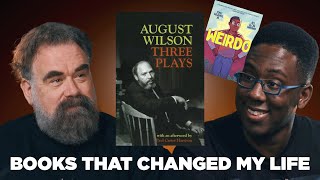
This is a YouTube video titled "Books That Changed My Life: Tony Weaver Jr. & Three Plays" created in July 2025. It features an in-depth interview with Tony Weaver Jr., an award-winning author and founder of Weird Enough Productions, discussing his personal journey, influences, and the creative process behind his middle grade book "Weirdo." The conversation covers topics such as his upbringing, experiences living in Japan, the publishing industry, artistic style, and the challenges and hopes tied to his work. The content is a one-on-one interview rather than a multi-speaker conversation involving Chris Collins.
There's this scene where the teacher thinks that you plagiarized.
Yeah. That lady almost derailed my life. She had no evidence that I had cheated on anything, but she so deeply believed that I had. The unspoken message that was communicated was, I don't think you are capable of creating what I just read. She had an idea in her head about acceptable sources of excellence, and I didn't fit that mold. And when that happened, the way that I processed that pain was. Was I was like, I am going to divorce myself from everything that you consider as the archetypical idea of what it means to be smart. And I'm going to be smart anyway. I'm going to go find my intelligence somewhere else. I held onto that for a really, really long time. Yeah. And what a mistake that.
Welcome to the Syndicate X Library, where we love books and we love talking about books that have changed people's lives. Please welcome to the Show Tony Weaver Jr. Award winning author of Weirdo Ted Talk presenters and founder of Weird Enough Productions. Tony here is to talk about a book that changed his life. August Wilson's three plays. How's it going?
Doing well. How are you?
You got a good handshake.
I'm trying.
We love books here.
I see.
At the library.
I see.
Excited to add your book to the library.
Grateful for it to be here.
I love the format of this and I will ask you later about it and how you. How it was created.
Yeah.
But pretty cool. Are you familiar with this one? Fun.
There's a musical after this. No, I haven't. I haven't engaged with this story. I've heard a lot of. About a lot of people that like it. I didn't even know it was based on a book. Oh. So I'm out of the loop. It's pretty great, huh? I didn't know that it was a comic. I need to give this a read.
Yeah, you would. I think you would like it. Let's. That's why I pulled it. Because I. Yeah, I was like, tony, I like this.
I need to give this a read. And then once I read it, I can go listen to the soundtrack. Even better.
I didn't know it was a soundtrack.
Well, because it's a. Because it's a musical. So like the original. The original cast recording is probably on Spotify somewhere because it was definitely Tony nominated. Definitely.
Yeah.
I remember when this came out, I was watching the Tonys that year. I feel like it's been out for a while. So there are a couple of ways I get to engage with this story. I'm excited about that.
There are a couple parts in here that would be pretty interesting to see acted out in a play.
Oh, yeah. How are you going to do that? Yeah, how you. Yeah, I don't know how you do that. Yeah, that'll do it.
But I would go.
So they got to put a disclaimer at the beginning. Yeah.
Not. Not for leaving.
This is not that type of fun.
Please welcome to the Show Tony Weaver, Jr. Award winning author of Weirdo Ted Talk, presenter as Ted Talk is really good and founder of Weird Enough Productions. Tony here is to talk about a book that changed his life, August Wilson's three plays. Welcome to the library of Coney. We are excited you are here.
Thank you for having me.
What did you order to drink?
I had. I ordered Pocari sweat. Thank you. Thank you.
What is Bacari sweat?
It is a Japanese, like, electrolyte hydration drink. I lived in Japan for a bit, and it was like my favorite thing while I was there. So I'm actually very surprised we all were able to find it.
This team we have here probably turned over a couple rocks to find it.
I'm grateful.
I love. Although if it's from Japan, there's a lot of good stores in Little Tokyo that probably had it.
Yeah, that's true. That's true.
Is it?
Yes.
It's exactly what you wanted. Yes. Perfect.
Thousand percent. I. I'm energized. I feel the electrolytes.
Does it take you back to your time in Japan?
Yes, it takes me back to the basement.
How do you. How did you end up in Japan?
So when I decided that I wanted to be a writer, I had a very limited view of the world and about literature in general. Because when I was in school, a lot of books that I had to read, I didn't like. The books that I did like were like manga, things that were written by people in Japan. So when I decided I wanted to be a writer as a teenager, I made the unwise decision to say, I care nothing of the Western canon. I am gonna go to the place where all the people who make the books that I actually like live so I can understand their culture and why they make the stories that they make. I think when I went, I had this misconception that, like, Japanese authors were just better writers. And what I learned was that it was extremely misguided and the Japanese writers are just writers like everybody else. People write based on their experiences. There's a different economic system over there that lets certain stories succeed. That Wouldn't inherently succeed in the West, But I had a great time. I ended up living in a Japanese family's basement. It was a whole thing. Wouldn't go back to the basement again, but would go back to Japan again. 10 out of 10, what are the.
Differences in the economics?
So in Japan, there are a lot more engaged comic readers. Manga in general, part of the reason it's in black and white isn't just because of a stylistic choice. It's because it's printed on very cheap paper. So they don't color it. It's printed on really, really low grade paper. And manga is like. It's like a consumable item. Some mangas are weekly. We're putting out something new every week. Some mangas are monthly. We're putting out a different volume every month. So if you look at a series like NARUTO that has 70 something volumes, that makes sense in a country where every month hundreds of thousands of people are showing up to buy a copy of the book on this cheaply printed paper. Now in the United States, if I went to a publisher and I said, I want to write a book that has 72 volumes, 176 pages per volume, they would laugh me out of the room. They'd be like, that is not. That is not what we do. That is not how things get printed. That is not how we make our money. There's no way we would make money off of that. Because the stories that people read in the west, but also the way that people read in the west is different than how they engage with media in Japan. So that was like the biggest thing.
How do we read here?
So for younger kids, majority of the books that they get their hands on are direct result of school and library markets. So I'll go to the library with my mom and she'll let me get a book. So if I'm trying to find success, I need a book that libraries are going to buy or I need a book that's going to get incorporated into school systems. So, like Holes by Louis Satcher. I love Holes. It was a great movie and I enjoyed the book a lot. But I was reading that book when I was in the fifth grade. And I visited a school recently and they're still reading that book in the fifth grade. It's a part of many county and statewide curriculums. Every fifth grader is reading Holes. So a lot of the way that western publishing works, if you're writing for kids like I do, is they're like, I'm trying to get you on that list. I get you on that list in like five states. That's 20 to 50,000 kids buying your book every year for the next 15 to 20 years. That's what scale looks like.
Almost becomes a catalog item in a way.
Exactly. What they say about middle grade is that it has a very long tail. So the book will come out and it'll make a splash when it appears. But the librarians that like it, the teachers that like it, they incorporate it into the curriculum and over the years and it kind of compounds. And you get kids consistently showing up every year to read the same book. Whereas in Japan, if you're a manga enthusiast, you're reading Naruto every week. When that chapter comes out, when the new one piece comes out, when the new Jujutsu Kaisen comes out, you're reading it immediately. And a lot of time you don't touch it again. That's why it's on such cheap paper. I read it, I got my chapter. Cool. What's happening next week? Whereas school and library markets are a little more cyclical, they rely on the same titles.
That's a great answer. Fascinating. Where did you grow up?
I grew up in Atlanta, Georgia.
Atlanta was a good time. Mom and dad.
So my mom and dad met in high school. They got married right after college, and they both grew up in poverty. Both of my parents dads passed away before they were at the age of three. So both my parents grew up in single parent households. And when they didn't have a lot of resources, so when they got married, they said, we want our kid to have a better life.
They planned on one kid?
Yep. They were like, we want our kid to have a better life. I hadn't come along, but they were like, if we're going to set up a family, one of us has to go to college. And my dad, who worked intense physical labor starting at the age of like 14, was like, not me. I'm not going. That's not for me. But he worked full time to put my mom to her undergrad, her master's and her PhD with the idea that their child, when said child came along, would have access to all of these amazing opportunities. So my mom got her PhD in education and when I was born, she was a math teacher. But ultimately, by the time I had like long term memory, my mom was a principal. So when I was a kid, my mom was a principal at a different school in the same school district that.
I went to school in, but not the same school.
I couldn't survive it, couldn't survive. I couldn't do it. Couldn't do it.
What did. What did dad end up doing?
So my dad delivered newspapers for a paper called the Atlanta Journal constitution for about 25 years. So if you think about old school newspaper stands, how, like, they would have, like, the little metal containers had to be filled to the brim with papers. My dad was carrying those giant stacks to. To commercial accounts and things like that. And then he ultimately transitioned, after layoffs happened, to delivering bread. So my dad would have a route in a part of town, like maybe an hour and a half from our house because he did not want to work near the house where every grocery store and fast food chain in that area, he was their bread supplier. So he'd go to the hub, stack these giant trays, like, 14, 15 high full of bread, load them onto the truck, drive the truck to each place, unload, set it up on the shelf, leave some in the back. So for majority of my life, my dad was waking up or leaving for work around 10 or 11pm and getting home around 7 or 8am oh, wow. Yeah.
So a graveyard shift.
Yeah. And he did that for a smooth 40 years. Wow. Which to me, I think that's why I do my best work at night. I think it's. I think it's in my bones. Hey, I do. I do my best work at night.
What would you say is the. Your biggest, I don't know, impression or what did you learn from your dad? The biggest lesson?
Yeah. My dad taught me that even though the world isn't fair, I still have to work hard to get what I want. He is an extremely hard worker in the literal and figurative sense. He spends very little time kind of pontificating about the state of what things are and why they are the way that they are. Because for him, it's a very little importance why it is the way that it is. This is the world that I have to live in. If I have something that I want to accomplish, there are steps that I need to take to get that thing. My mom is a systems person, and in some ways, I'm also a systems person. But my dad's like, you stare at it for too long, you're not going to get anything done. This is the state of the world. Do you want what you want or not? We gonna sit here and talk about why you don't have it, or are we gonna go get the thing?
It's a good mix.
Yeah. Yeah. I like to think that I inherited both of their strengths. My mom's really Analytical. And my dad knows how to apply some elbow grease and get the thing done.
He tries to find the leverage.
Exactly. Exactly.
Yeah. Well, are you aware of the fact that you're kind of talented in a way that most people aren't?
I have like a very distant awareness of it, I guess.
When was the first time, like how old?
I was in high school and my teacher, we had to do speeches on a book and I hadn't written my speech. I'd read the book, but I totally forgot that we were supposed to do a speech. And she said that we were allowed to use notes, but if we didn't have notes, we could just speak if we had our speech memorized. So I was like, you gotta go up there and give a speech that's so convincing that she thinks you memorized it even though you were doing all of this off the top of your head. And I did the speech and she was super impressed. And she was like, did you come up with all of that extemporaneously? And I was like, what's extemporaneously? Me, I hadn't heard that word before. And she said like, did you just fluently do that? And I said, yeah. And it was this interesting dynamic because she could tell that I hadn't pre prepared it. But the fact that I hadn't pre prepared it was more impressive to her than she would have been if I had just memorized it and came in and did it. And that was when the spark went off in my head to like, hey, maybe, maybe you, you can, you can weave something together. It might be something that you can do.
And was a part of that storytelling.
Yeah, I think like I see stories everywhere. I see stories in people, I see stories in objects, I see stories in locations. And when communicating information, really all I'm doing is arranging facts and a narrative. That's all. So for me, that speech was storytelling. That was one of my first kind of forays into, oh, I can, I can be a storyteller. That's really hard on myself. When I was younger than my parents had really high hopes for me. Like, for me, I was the culmination of my parents character arc. We grew up in single parent households. We escaped poverty, we established a foundation. We have a son and our son does. And I'm like, play Pokemon cards. And they're like, no. Our son goes to college and gets a really big scholarship and gets a great job. And that's what I was told when I was like five or six. So I've always been super super hard on myself in a way that made it difficult for me to look at myself as talented. I think I know how to do something. I think that's where I'm at right now. It's like, I can do a few things, but the idea of being talented is still something that I'm adjusting to.
The idea of how much of the thing that you bring into a situation is style, because you also have a style, and your style is something you project, but it's also your interest.
Yeah. So what you refer to as style, I call a point of view.
Yeah.
And I think for every author, for every creator, and I think for people in general, whether you're in a creative career or not, I think a point of view is extremely important. I think my point of view is 90% of what I do, because there's a lens through which I look at things, and it's through that lens that I'm able to identify details that make me feel something. So, for example, when talking about Weirdo, there are a lot of middle grade books that are memoir that talk about middle school, and there are a lot of middle grade books that talk about hard times that people have in middle school. But my point of view when looking at that subject matter was that the victory is not in the sadness. I don't need you to tell me how to be sad. I already know how to be sad. I'm sad right now. If I'm a sad middle schooler and I pick up your book about a sad middle schooler and I get 200 pages of a sad middle schooler, you haven't taught me anything. I already know how to be sad. That's not particularly helping me at all. What I don't know is how to improve. What I don't know is how to find happiness. And I approach weirdo with that point of view, and. And that influenced every artistic and writing decision that I made. So I think 90% of what I do is rooted in my point of view. That's what allows me to look at the same set of tools or resources or materials that anybody else would have and come back with something that makes them go, oh, I did not know that those pieces could fit together like that.
Yeah. But there's more. I don't know. To me, there's more. Right, because, like, you could do that in a different way than you did this.
Yeah.
Like, the way that this is told in the way that it's animated and, I mean, just the color choice, like, it's distinct.
Yeah.
And it's Familiar, but it doesn't look like anything I've seen before. That's. I guess that's kind of what I mean by style, in a sense, is, yeah, there's a perspective, right? But there's also a communication that isn't something you put into words because it says a whole. Your experience. Yeah, experience maybe is the word you're experiencing something that's a piece of art. Does that make sense?
I get exactly what you mean, so I understand. So to me, one of my deepest fears is being misunderstood. And as a young person that wasn't always confident enough to use my words. Like, frankly, the way that I describe it, I barely understand social norms now. But when I was younger, I didn't understand Understand social norms at all. I would observe people and how they behaved in an attempt to, like, mimic what it meant to be human so that I could get someone to understand me. So when I'm writing, I think about my audience and my readers, and that style, that aesthetic, the way information is communicated, is all me, like, yearning to be understood. So if you open Weirdo on the first page of the book, I'm in my room playing video games, but on my shelf, there's, like, a Pokemon reference and a Dragon Ball Z reference. Then you get to the next page, and there's a Super Smash Brothers reference. There's a Sailor Moon poster on the wall. There's a Naruto poster on the wall. To me, the reason that was there was because page one, I was like, there are more children's books about inanimate objects and animals than there are about black kids. There are going to be a lot of people who have not had to pick up a book with a black character and relate to that character. So off Rip I got to communicate to you, hey, we're more similar than we are different. You like this thing? I like this thing. You like this, I like this thing. You play this game, I play this game. It's all about how do I establish the connection so that you can hear this thing that I'm desperately trying to say.
Yeah, that's so cool. What about. What about the. The style of the animation or the drawing?
I was very particular about how I wanted it to look. I think middle grade has a very broad variety of aesthetics, but I wanted it to feel premium. The illustrators I work with, Justin Sin, I was really blown away when I saw their portfolio.
And so it's two people, right?
Yeah, they're twins.
They're twins.
Yeah, they're twins from Indonesia, and they're Both artists and they have this very kind of dynamic work process where they collaborate with one another. And for me, their style felt like what I was trying to communicate. But in the script I was very prescriptive about. This is the color for this chapter. This is the color for this chapter. These background objects need to be this color because it ties in with the theme. This way. I need you to make sure that this is in the back of this panel because in a few pages I'm going to do something. It's not going to make sense if we don't leave this little Easter egg right here. I'm a really big anime fan and I think there's something about leaning into that aesthetic that feels right to me. I'm like, this. This feels like the stories that I enjoy.
Yeah. That influence is there, but it's not. It's not overt in a sense.
Right, right. I mean, it goes back to that market. Right. If you want it to. If I wanted to make it like 100% manga, if I walked into a publisher's office with that, they'd be like, no, we do not do that here. But the, the thing about it also from a, from a market perspective is that I knew when a kid walks into a bookstore, it's going to be Pokemon Adventures. Naruto or Weirdo. If mom's like, you get one book and then we're leaving. 10 year old me, 11 year old me. You'd be hard pressed to get me out of the manga section. You'd be hard pressed to get me away from Naruto or to get me away from one piece. So with Weirdo, the. I wouldn't necessarily call it a gamble, but the thing that I was really intentional about was this needs to be able to compete. And since it's a western book, I have color and manga doesn't have color. So what can I use that manga doesn't have to communicate these different ideas and to make it feel more eye popping and catchy so that when readers. So for example, I talked to a kid, he literally said this to me. He said, normally I don't read stuff that's not by Japanese writers. And I'm like, oh, little one, I've been down this path before. He's like, normally I don't read stuff. Not by Japanese writers, but I like this. This is cool. Like, I know I was trying to get you. I was trying to drag you specifically out of your Japan obsession.
Cause he is you.
Yeah.
And so you use that as a driver to really up the Attention to detail up. The appeal in the content and the quality, of course.
I mean, it's gotta be competitive. I think one strength that I do have is that I'm able to creatively look at art as an expression of myself, but also look at art as like a commercial object. If this is going to exist in the world and get into the hands of all the kids that I wanted to get into the hands of, it has to be able to exist in this, like capitalist soup that is getting tossed in. It can't melt down, it can't wither, it can't wilt. It has to be able to establish itself and sustain and maintain so that the kid who's five years old right now that in nine years is going to be struggling with his mental health, is going to walk into a school where for the last nine years they've been using weirdo as a book in their curriculum because it was that good. I'm thinking about that kid almost a decade down the line when I make my design choices and think about what the aesthetic of the book needs to be. Because I'm desperately trying to get this message not to that kid.
Where do you think a lot of artists get that capitalism part wrong?
I think that artists believe that since they're artists, they're not beholden to the rules of literally anybody else that does anything for a living. So the joke that I tell is that I say if I worked at an Amazon warehouse and my job was to move boxes and fulfill orders all day, and I walked into the, into the office and I said, hey, boss, I know that I got some boxes to move, but the muse isn't really inspiring me today. I got box blocked today. I can't do it today. Now I know I can't do it today. I can't guarantee you I'm going to be able to do it tomorrow or next week or next month. I don't really know what's causing this box block, but, like, give me some time and maybe in like four months I'll come back and I'll be able to move boxes again. I'd be fired. They'd be like, go. If I said, I got grocery bag block. When I'm sitting at the cash register at a Publix or a Kroger, it's like, okay, you're not doing the thing that you're here to do. I think art is a very powerful thing for personal creation and personal enrichment. I think it's possible to create outside of the context of any monetary models. But the Moment you decide that you want to be a professional and you want to stake your livelihood and the way that you bring money into your household on your ability to create art, there's a specific level of discipline that you have to apply. And a part of that discipline is understanding the market and the industry that your work has to live in. A lot of artists don't do that.
I don't think, in challenging yourself to be better than what else is out there.
Exactly.
And different.
Exactly. That's the joke that I tell. I'm like, weirdo has to exist in the context of every book in its space. I do a lot of guessing and book signings and stuff at anime conventions. And I inevitably meet young black artists that are like, I want to be a mangaka. I want to make my own thing. And I go, cool. Can you name the big five publishers in the United States? No. Okay, so you want to make a book and you want to get your book published, but you don't know the five largest companies publishing books in the country where you live. But you can tell me young black artists that are like, I want to be a mangaka. I want to make my own thing. And I go, cool. Can you name the big five publishers in the United States? No. Okay, so you want to make a book and you want to get your book published, but you don't know the five largest companies publishing books in the country where you live. But you can tell me everything that's on Shonen jump's roster and what viz just licensed from Japan. But you can't tell me everything that's on Shonen jump's roster and what viz just licensed from Japan. But you can't tell me what's happening here, the people that you're actually going to have meetings with and that are actually going to take the call and stuff like that. Like you. That's a muscle you got to build. You got to do that.
It's great. Like, let's say the week before this.
Came out, what's happening here? The people that you're actually gonna have meetings with and that are actually gonna take the call and stuff like that. Like, you. That's a muscle you gotta build. You gotta do that.
It's great. Like, let's say the week before this came out, but it's done. How vulnerable do you feel?
I'm crying. I'm crying. Week before weirdo drops, I'm sweating bullets. I've got a virtual tour set up where I say, okay, you're talking to these people. You're Talking to these people. I did a three week tour right after Weirdo launch. So from the day that launch happened, uh huh.
But it's done. How vulnerable do you feel?
I was on the road and moving and I'm crying because number one, the book is about to enter the world. This is years of work that's been invested. I'm crying, I'm crying week before Weirdo drops, I'm sweating bullets and this. But number two, there are expectations that are on this thing. Like my dreams in many ways are staked on how does this do? Because if it doesn't do well, then when I go to the film, I've got a virtual tour set up where I say, okay, you're talking to these people. You're talking to these people. I did a three week tour right after Weirdo launched. So from the day that launch happened, I'm a TV company and say, hey, we should make a show out of this. They're going to go, why would we do that? The book didn't do well. When I go to sell another book and I'm like, hey, I have another idea. Why would we want that? The book didn't do well. But as a debut author, especially in a time where a lot of the major bookstores are kind of de risking themselves stocking fewer debut books and I was on the road and moving and I'm crying because number one, the book is about to enter the world. This is years of work that's been invested. Middle grade is kind of shrinking a little bit. There were so many industry forces that were outside of my control that could have buried this book. Even if it was the best book in the world, even if it was 10 times better than what it currently is. But number two, there are expectations that are on this thing. Like my dreams in many ways are staked on how does this do? Because if it doesn't do well, then when I go to the film, there are a variety of things that are completely outside of my control that could have just been like, sorry, no. If the book buyers at major regional bookstore chains said no. If the indie booksellers were like, oh, I don't know how I feel about this guy. Or all these things that have nothing to do with the quality of the thing that I made, could have tanked it. And I'm a TV company and say, hey, we should make a show out of this, they're going to go, why would we do that? The book didn't do well. That's where my mind was. That's, that's that. That's where my focus was very vulnerable. Yeah. When I go to sell another book and I'm like, hey, I have another idea. Why would we want that? The book didn't do well. But as a debut authority, especially in a time where a lot of the major bookstores are kind of de. Risking themselves stocking fewer debut books. Extremely.
And then. So then when it comes out and you start seeing people in person and their reaction, how did that feel?
It made me feel like everything was worth it. I think my thing, or my belief is that as long as what I'm building on is a strong foundation, which with time, I will find the success that I need. Middle grade is kind of shrinking a little bit. There were so many industry for you. So I'm like, listen, I'm taking over the world. The answer is, is it today? Is it tomorrow? Is it next week? Is it next month? When I think about the stories that I have to tell and specifically my goal of supporting young people in their mental health, I'm like, oh, I'm inevitable. Forces that were outside of my control that could have buried. You're not gonna stop me from being able to uplift these kids. I don't care how many means I gotta go through. I don't care how many. This book, even if it was the best book in the world, even if it was 10 times better than what it currently is, there are a variety of things that are completely outside of my control that could have just been like, sorry, any gatekeepers I gotta sidestep. I don't care how many boundaries I gotta pole vault over. I need every kid to look in the mirror and love what they see, because I know how painful it is to not have that. And every day, that's what keeps me going. But what I needed to know was no. If the book buyers at major regional bookstore chain said, no, weirdo is a tool that you're going to use to do that. Is it a strong tool? Is your sword sharp enough? Do they relate to it? Do they like it? Do they? Is it good? And as the reviews started coming in and I started getting those candid reactions from kids, I said, okay, I've won already. I'm not at the top of the mountain yet, but I've won already. Because the base, the indie booksellers were like, oh, I don't know how I feel about this guy. All these things that have nothing to do with the quality of the thing that I made could have tanked it. And that's where my mind was. That's That's. That. That's where my focus was very vulnerable. Yeah, book is good. As long as the base is good, I can build whatever I need to, no matter what you put in front of me.
So they're on page 19 in here. There's a. There's an interaction between you and your dad. And he says, I didn't send you to that school to be challenged. I sent you there because I wanted you to challenge them.
And you said, extremely.
And then. So then when it comes out and you start seeing people in person, I wish I believed in myself like my dad does. And he said, instead of adjusting who you are to the situation, I need you to show the situation who you are. How much of that was this?
100%. That scene was very important, I think. When we were doing thumbnails and their.
Reaction, how did that feel?
It made me feel like everything was worth it. I think my thing, or my belief is that as long as what I'm building on is a strong foundation, with time, I will find the success that I need. We came back to that page a lot because I didn't like the composition. Because what I explained to the twins was I said, it's very important that when he says that, his face is in frame and my face is in frame. And they're like, he's in the front of the car looking at the road. You're in the back seat. We could, like, shoot from the front of the car and draw it that way, like through the window. But so I'm like, listen, I'm taking over the world. The answer is, is it today? Is it tomorrow? The screen's gonna be there. You're gonna get the rest of the car. The background's gonna dilute it. But the shot that they decided to go with is one. Where is it next week? Is it next month? When I think about the stories that I have to tell. And he's looking up at the rear view, and you see me in the rear view, and you get this juxtaposition of my dad, who's, like, super cool, man. My dad's just cool. When I was younger, he would pick me up from school. They called him the Terminator. Because specifically, my goal of supporting young people in their mental health. I'm like, oh, I'm inevitable. You're not gonna stop me from being able to uplift these kids. I don't care how many meetings I gotta go through. I don't care how many. Cause he has chronically dry eyes. He wears sunglasses indoors. He had to use eye drops for a while. So this, like, brolic dude in a black T shirt, his, like, biceps are rippling out with sunglasses on, is just standing there silently. And everybody's like, who's what? What child are you? Who are you here for? And he's like, the one with the Pokemon cards. That one's mine. Gatekeepers. I got a sidestep. I don't care how many boundaries I got a pole vault over. I need every kid to look in the mirror and love what they see because I know how painful it is to so, like, my dad's super cool not have that. And every day, that's what keeps me going. But what I needed to know was, Weirdo is a tool that you're going to use to do that. Is it a strong tool? Is your sword sharp enough? And him believing in me as deeply as he does is something that consistently moves me forward. Prior to writing Weirdo, I was working on a series called the Uncommons. And I was really frustrated because the Uncommons felt like a really good story, and I still feel like it is. The people that have read it like it, but it wasn't. Do they relate to it? Do they like it? Is it good? And as the reviews started coming in, picking up seem in the way that I wanted it to, and I was kind of sitting and grappling with this idea of, well, what do I do? Do I keep writing if people aren't gonna appreciate the story? Then, like, I started getting those candid reactions from kids. I said, okay, I've won already. I'm not at the top of the mountain yet, but I've won already because the base book is good. As long as the base is good, I can build whatever I need to, no matter what. What's even the point of doing all of this? But Weirdo was really my way of saying, oh, you all aren't seeing what I'm attempting to do because you're looking over here. Weirdo was the Uncommons was on Webtoon. Webtoon is a virtual app schools and libraries aren't looking at online. Webcom actually put in front of me.
So they're on page 19 in here. There's.
Remember what I said earlier about the economic stuff? When they send out their school supply resource list, they're not saying, and make sure Webtoon is downloaded to your student's Chromebook so that they can read the Uncommons by Tony Weaver. I said, oh, you all have such a limited view of stories and where good stories can come from that your.
Entire infrastructure is there's an interaction between you and your dad. And he says, I didn't send you to that school to be challenged. I sent you there because I wanted you to challenge them. And you said, I wish I believed in myself like my dad does. And he said, instead of adjusting, built.
On the, like, 2 to 5% of authors that manage to figure out how the traditional publishing system works in order to get in your system in the first place. Like when we did a print version of the Uncommons, and even though I had an ISBN number, schools couldn't even get copies of it because since it was published by my organization, who you.
Are to the situation. I need you to show the situation.
We weren't an approved vendor in their procurement system. Just to get in one school, I would have to do, like, mountains and mountains of paperwork. Whereas when Penguin Random House or McMillan or Harper Collins, it was the front door right there. And I said, I don't like that. Because you know that traditional publishing is a system where diverse voices aren't always able to be heard.
And yet you've gateway who you are. How much of that was this?
100%. That scene was very important. I think when we were doing thumbnails, we came back to that page a lot because I didn't like the composition, because what I explained kept access to some of the most vulnerable populations in these stories behind this dang obstacle course. So me showing the situation who I am was me going. And you think doing that gonna keep me out, huh? Nah. But I don't play about these kids. I got a story that I need to. The twins was. I said, it's very important that. That when he says that his face is in frame and my towel and weirdo was kind of my way of saying, I'm going to navigate this system, but I'm going to maintain my soul while I do it. And y' all are going to be forced to see it. You're going to be faces in frame, and they're like, he's in the front of the car looking at the road. You're in the back seat. We could, like, shoot from the front of the car and draw it that way, like through the window. But that forced to hear the story.
Instead of adjusting who you are to the situation, I need you to show the situation who you are.
Screen's gonna be there. You're gonna get the rest of the car. The background's gonna dilute it. But the shot that they decided to go with is one where.
Yeah, it's exactly what you did?
Yeah.
I mean, it's. It. You know, it sits in a different place. Yeah, it's pretty cool.
He's looking up at the rear view, and you see me in the rear view. It's humbling.
That. That. I don't know. That connection I thought was pretty cool. There's a couple cool parts in here that we. We marked. Oh, actually, somebody who works here said this happened to them.
And you get this juxtaposition of my dad, who's, like, super cool. Man. My dad's just cool. When I was younger, he would pick me up from school. They called him the Terminator.
But this scene where the teacher thinks he plagiarized.
Yeah.
So you say, I'm not lying.
And because he has chronically dry eyes, he wears sunglasses indoors. He had to use eye drops for a while.
The teacher says, I will not tolerate plagiarism in my class. And you said, but I wrote it. It's mine. I didn't. And the teacher says, it's disrespectful to me and your classmates.
So this, like, brolic dude in a black T shirt, his, like, biceps are.
Rippling out with cheat like this.
Yeah. I think that lady almost derailed my life a little bit, because when I was younger, I was really impulsive, and I was really stubborn. And that interaction with her completely shifted the way that I treat storytelling and the way that I treat stories. Because, remember, part of the reason I moved to Japan, Sunglasses on. Is just standing there silently. And everybody's like, who's what? What child are you? Who are you here for? And he's like, the one with the Pokemon cards. That one's mine. Come on. So, like, my dad's super cool pan was because I was like, Japanese authors make the stuff that I like. Prior to that experience with her, I was a huge Greek mythology person. I love Greek mythology so much. And Orpheus specifically was my guide. Like, I love that story. I love that character. I love that archetype. And in that part of the book, in the book itself, and him believing in me as deeply as he does is some elf. I believe that the prompt is that I have to write about someone who's like a hero to me. But in real life, when I did that assignment, the assignment was about, like, you could pick a character from Greek mythology that consistently moves me forward. Prior to writing Weirdo, I was working on a theology, and I wrote about Orpheus and how he was sad and processing his sadness through his music and art creation periods called the Uncommons. And I Was really frustrated because the Uncommons felt like a really good story. And I still feel like it is. The people that have read it like it, but it wasn't how I was sad and trying to process what I was experiencing at the time through art. It was a very open thing for me and vulnerable in a sense. Yes, extremely. I felt like I was putting myself in jeopardy. I was really putting myself out there, especially because picking up seam in the way that I wanted it to. And no one had really read my writing before. I used to fill up compositions, spiral notebooks my parents asked to read. And I'd be like, no, no, no, no. Don't read. Don't look, don't look, don't look, don't look. And this lady was one of the first people that I actually let read something that I wrote. And she read it and didn't think that I wrote it. Like, bro, I was kind of sitting and grappling with this idea of, well, what do I do? Oh, come on. What? Like chat GP chatgpt didn't even do. I keep writing. If people aren't gonna appreciate the story, then, like, what's even the point of doing all of this? But weirdo was resist. Like I could. It's not like I could type in a prompt and get a paper like that.
Even if it did. Yeah, it would. It does.
She had no evidence that I had cheated on anything. But she so deeply believed that I had. Which to me the unspoken masterly. My way of saying, oh, you all aren't seeing what I'm attempted to was communicated was, I don't think that you are capable of creating what I just read. She had an idea in her head about acceptable thing to do because you're looking over here. Weirdo was the Uncommons was on webtoon sources of excellence. And I didn't fit that mold. And when that happened, my rebellion, like the way that I processed that pain was I was like, webtoon is a virtual app. Schools and libraries aren't looking at online webcomic. I don't want to be near anything European. I don't care. I don't want to be anything European. I don't want anything Roman. Remember what I said earlier about the economic stuff when they send out their school supply resources. I don't want anything Greek. I don't want Shakespeare. I don't want any of it. And not specifically because it's European list. They're not saying. And make sure webtoon is downloaded to your student's Chromebook so that but because it is put up on a pedestal as academic and intellectual. My way of like, getting back at my teacher was, I am going to divorce myself from everything that you consider as the archetypical idea of what it means to be smart. And I'm going to be smart anyway. Without your stuff, they can read the Uncommons by Tony Weaver. I said, oh, you all have set out your references without your idioms, without your Romeo and Juliet, without your classics, without your canon. I am going to be smart, smarter than everybody else. And I'm not using a limited view of stories and where good stories can come from. But your entire infrastructure is built on the like 2 to 5% of authors that manage to figure out how to traditional publishing any of your stuff to do it. And I held onto that for a really, really long time. There was a point in time where I didn't even want to read that much. Publishing system works in order to get in your system in the first place. Like when we. Because I was like, most people that are in the literature are really self imported. We did a print version of the Uncommons, and even though I had an ISBN number, schools couldn't even get copies of it because since it was published by my organization, we weren't an approved vendor in their procurement system. Just to get in one school, I would have to do like, and just use it as an excuse to look down on people. I'm going to go find my intelligence somewhere else. And what a mistake that was for me to step away from, from so much. But that moment was like, really pivotal for me. Crazy part, I don't remember that lady's name. People ask me, they're like, do you know where she is now? I'm like, I don't even remember her name. I'm not going to lie to you. But I did go on a journey as a. As a result of. Of. Of that doubt, like mountains and mountains of paperwork. Whereas when Penguin Random House or McMillan or Harper Caught.
I mean, I asked you this question earlier, about the week before this came out. But in a sense, when you're young like that, and you. I mean, whether it's conscious or not, you are vulnerable.
Yeah.
And you put that on paper and there's a difference when you're vulnerable.
Right there. And I said, I don't like that.
Because, you know, and it's just a conversation in your mind, but when you actually put it on paper and then.
Somebody judges the traditional publishing is a system where diverse voices aren't always able to be heard. And yet You've gatekept access to some of the most vulnerable populations. And these stories behind this. Dang. Yep.
And then they judge it in a way you didn't expect. That almost gives you, like, a ptsd, in a sense, is like you stepped on a landmine. You didn't expect to be obstacle course.
So me showing the situation who I am was me going. And you think. Exactly.
In that place. Like, there shouldn't be a landmine in a. You know, on a playground or whatever. And that's the. You know, the hard thing about being an artist.
Yeah.
Sometimes is you have to deal. It was she. You know, in a sense, she's not even the target of the thing that you're doing.
Right.
But she's in a position of authority.
Doing that gonna keep me out, huh?
No.
But I don't play about these kids. I got a story that I need to tell. And weirdo was kind of my way of saying, I'm gonna navigate this system, but I'm gonna maintain my soul while I do it. And y' all are gonna be forced to see it.
You're gonna be 40. So do you, in a sense, come away from that with a little bit of a disdain for authority?
I think that, for me, it wasn't the same for authority because, remember, my mom was a principal, so I have examples of.
See, I'm trying to project my disdain for authority on you.
Well, as well. Forced to hear the story.
Instead of adjusting who's.
Like, I might have had a disdain, but my.
My.
My dad wouldn't let that ride for a while.
My mom was not a princess.
Like, what'd you say to your mama? I think that for me, the disdain wasn't for authority. It was a disdain for performed intellectualism is the way that I would describe it.
Who you are to the situation. I need you to show the situation who you are. Yeah. It's exactly what you did.
Yeah.
I mean, it's. It. You know, it sits in a different place.
Yeah. That's pretty cool to me, what I took away from that situation. And even today and stuff that I. It's humbling that.
That. I don't know. That connection, I thought was pretty cool.
Encounter in my everyday life is very often it is not about what you say or what you do or what you make. It's about how the person engaging with you feels about what you did or what you made. So the con. The content of the paper. Thank you. Didn't inherently matter. What mattered was, how do I feel about Tony. Because if I felt that Tony was smart. I would look at this paper and I go, wow, what a great paper. But I don't think Tony's smart. So when I look at this paper and I see a smart paper, I'm.
Like, there's a couple cool parts in here that we. We marked. Oh, actually, somebody who works here said, this happened to them. But this scene where you, the teacher, thinks he plagiarized.
Yeah.
So you say, I'm not lying and incongruent.
Something must have went wrong. Something must be off. He must have cheated. Because I don't feel that Tony is smart. Even though I'm sitting in the front of class and I'm not talking and I'm taking my notes, I'm not being disruptive. I'm performing intellect in the way that you told me I'm supposed to. I'm doing what the good kids do. But despite that performance and me masking, you still don't think I fit that criteria. It's a subject that gets addressed with another character in Weirdo Courtney, for whom he is a great student and he's an artist. But what he says is, he's literally like, the most excellent. Things can go unnoticed.
When the teacher says, I will not tolerate plagiarism in my class, and you said, but I wrote it. It's mine. I didn't. And the teacher says, it's disrespectful to me and your classmates to cheat like this.
Yeah. I think that lady almost derailed my life a little bit, because when I was younger, I was really impulsive. When nobody's paying attention, when people don't respect the source that it comes from. I think that's the complex that I have. It's what I wrestle with in my writing and in a lot of stuff that I make and, like, my general relationship with literature. I think most literature is influenced by how we feel about the author or the source. Someone asked me at a panel, what was the. What's the most painful thing about being a writer? I was really stubborn. And that interaction with her completely shifted the way that I treat storytelling, in the way that I treat stories. Because, remember, part of the reason I moved to Japan, and I said, the most painful thing about being a writer is that the name that's on the front and the logo that's on the spine matters more than the words that are in. In between the front and back covers. I can write a book that's the most amazing book in the world. And if it was published by Pan, was because I was like, Japanese authors make the stuff that I like. Prior to that experience with her, I was a huge Greek mythology person. I love Greek mythology so much. And Orpheus specifically was Scholastic. And in the Scholastic Book Fair, it'll be a New York Times bestseller like that. But if it's published by a kid in Atlanta calling mixum to do 100 to 200 book print orders that he throws in his trunk and takes to a convention at the World Congress center, it's not going hit. People ain't gonna look at it the same. We like to think that we're objective. But, my God, like, I love that story. I love that character. I love that archetype. And in that part of the book, in the book itself, I believe that the prompt is that I have to write about someone who's like a hero to me. But in my experience, it just hasn't been the case.
You know, it's interesting hearing your perspective on that, because I have a totally different point of view.
Oh, I'm into it.
So I would never. Well, I don't think you should. I shouldn't say never. But I would be inclined to not have a publisher. Like, I sell a lot of books. Like, if I told you how much I make on the books that I've.
Written, I love this for you.
My friends that have book deals don't even. Like, I know guys that have to buy their own real life.
When I did that assignment, the assignment was about, like, you could pick a character from Greek mythology. And I wrote about Orpheus and how he was sad and processing his sadness through his music and art creation and how I was sad and trying to process what I was experiencing at the time through art. It was a very open thing for me.
And vulnerable, in a sense.
Yes, extremely vulnerable.
Books, when they speak at events from, like, they, you know, they don't control their own thing.
Right.
For me, if I, like, if I made this. This piece of art that you made, there's no way that I'm, you know, I'm just not like. And I can sell direct to the consumer.
Yeah.
And so I sell tons of books. I mean, I sell a book that's 250 bucks, and we sell tons of them, and it's to a specific, you know, market. But the idea of a publisher and I get, like, that. This helps with being a New York Times bestseller. And people judge it that way, but the people that judge it that way are my audience.
Yeah.
They're not the.
I was. I felt like I was putting myself in jeopardy. I was really Putting myself out there, especially because no one had really read my writing before. I used to fill up compositions, spiral notebooks my parents asked to read, and I'd be like, no, no, no, no, don't read. Don't look, don't look, don't look, don't look. And this lady is one of the first people that I actually let read something that I wrote, and she read it and didn't think that I wrote it.
Like, bro, People that I'm looking for.
Yeah.
And I get this. I understand this game, bro.
Come on. What? Like the chat. Gp Chat. GPT didn't even exist. Like, I couldn't. Not like I could type in a prompt and get a paper like that.
Even if it did. Yeah, it would. It does.
Huh? It. She had no evidence that I had cheated on anything, but she so deeply believed that I had. Which to me, the. The unspoken message.
But it's not, I guess, my disdain for authority that I would have somebody else tell me. Like, it was interesting when Kelsey Grammar was in here, and we were talking about his book because he wrote a book about his sister who was raped and murdered when he was really young. And so just think about. You're writing this book about an experience you had. And now a publisher's like, okay, we want it to be 80,000 words, and it's got to be 12 chapters. And so he wrote it linearly in a way that jumps around, but it's not. And he said the publisher didn't know what to do with it because it doesn't. It's not this many chapters with this many words. And it's an incredible piece of art, but they don't see the art. And the idea that the form equals function in the sense that the experience.
It was communicated was. I don't think that you are capable of creating what I experience.
He went through can't be told in 12 chapters that are night. There's no chapters like it just go.
Just red. She had an idea in her head about acceptable sources of excellence, and I didn't fit that mold. And when that happened, my rebellion, like, the way that I processed that pain.
Was I was like, sort of a thing, right? To me, I. I would go crazy if I had. If I was working on this thing, and then some kid in the marketing department. Why I experienced this when I was in the music business, where I grew up in Seattle. And every time we come down here to showcase, everybody go, you guys are grunge. And we'd be like, we're not grunge. Like, come to Seattle. We'll show you grunge. It's almost unlistenable. It's tuned down, and it's like, no, we're not grunge. But because we're from Seattle, you have to call.
I don't want to be near anything European. I don't care. I don't want to be near anything European. I don't want anything Roman. I don't want anything Greek. I don't want Shakespeare. I don't want any of it. And not specifically because it's European, but because it is put up on a pedestal as academic and intellectual. My way of, like, getting back at my teacher was, I am going to divorce myself a scrunch.
And then you realize it's easier to say what people want to do is they want to put you in a category, and if they can put you in the category, it's checked off, and they don't have to really. Like, you're saying, read what's in between the pages, right? And I want them to read what's in between the pages, too. And so you end up saying, yeah, okay, we're grunge. And you don't contest that. But then they're like, okay, they're grunge. And then what? You're grunge, but you're. That wasn't what you were. That isn't what you were making. That wasn't the art you were making or the way you were trying to communicate. Nobody's listening to the words or the song or, you know, that sort of thing. And so for me, that box.
Yeah.
Feels like.
Feels very claustrophobic from everything that you consider as the archetypical idea of what it means to be smart. And I'm going to be smart anyway without your stuff, without your references, without your idioms, without your Romeo and Juliet, without your classics, without your canon. I am going to be smart, smarter than everybody else.
And I'm not using, in a sense of. I want to connect in a way that I can do it, and I don't have to. I don't have to use this limited set of tools and do it in a way that also the idea. If I went to a publisher and I'm like, hey, this is going to be two books with a book inside of each one that are kind of Easter eggs, and we're going to charge 250 bucks for it, any of your.
Stuff to do it. And I held onto that for a really, really long time. There was a point in time where I didn't even want to read that much.
They wouldn't even talk to me.
Well, I think what you bring up, I think number one, lets me know that I should be more specific in my explanations. But number two, I think, well, I.
Would think that it's just we've had different life experiences and my disdain for.
Authority because I was like, most people that are in the literature are really self important and just use it as an excuse to look down on people. I'm gonna go find my intelligence somewhere else.
When you're embracing it and at the end of the day, you'll be more successful than me because you have the right idea. So don't.
No, I don't.
Don't take it for anything else but that. Because that's really what I mean.
I love it when people disagree. I think it like, it helps me kind of color my, my point of view. Like I'm receiving more information based on people's experiences. I think the difference is. And what a mistake that was for me to step away from so much that from what I understand, the people that read your books that are like, I want this, it's like $250 for it. But that moment was like really pivotal for me. Crazy part. I don't remember that lady's name. People ask me, they're like, do you know where she is now? I'm like, I don't even remember her name. I'm not gonna lie to you. But I did go on a journey as a result of that. Doubt they have the agency to do that. The like 8 year old that I'm trying to get a book in the hands of, they don't inherently have that agency. What, what most kids receive is controlled by a variety of institutions that they don't get to influence. So mom and dad might give them something, but what mom and dad are going to give them is probably influenced by what their friends are giving their kids or what their parents gave them. And that stuff is influenced by like mommy bloggers, what they read in school. And what they read in school was just which publisher paid to send their author to that state's librarian conference to shake.
I mean, I asked you this question earlier about the week before this came out. But in a sense, when you're young like that and you, I mean, whether it's conscious or not, you are vulnerable.
Cans and say hi to all the librarians. And all librarians go, I met this nice young man at the.
And you put that on paper. And there's a difference. When you're vulnerable, library Conference.
We should order 20 class sets of his book, and that's how it'll get read, I think, like, in children specifically, cutting it as indie is much harder. I think once kids are removed from the equation, there's like a bunch of cool stuff that you can do with indie, but the. The specific audience that I'm trying to engage, they have less agency and ability to discover things that aren't put in front of them, I guess.
Yeah. No, it makes total sense.
Yeah. See, I'm not trying to get like you. I like the indie stuff. Indie requires taking a bet on yourself. Sometimes I do, sometimes I don't. It depends.
And it's just a conversation in your mind, but when you actually put it on paper and then somebody judges it. Yep. And then they judge it in a way you didn't expect. That almost gives you, like a ptsd, in a sense, is like you stepped on a landmine. You didn't expect to be exactly in that place. Like, there shouldn't be a landmine in a. You know. Yeah, there's a place for both. And also, like, as you keep doing stuff like this, your. Your choices just get bigger. If you're delivering, you. You can't hide, you know, you can't hide the connection.
Yeah.
If that makes sense. It gives you a lot of freedom.
You get. Get a few books under my belt, then I can go pull a Brandon Sanderson, just Kickstarter, like $40 million. People are like, I'm here for the book. I want to see what's going on.
Is there a. A reaction that somebody has had from the book that you didn't expect?
I think the reactions I get from parents are the. Are the things that really get on.
A playground or whatever. And that's the, you know, the hard thing about being an artist.
Yeah.
Sometimes is you have to deal it. She, you know, in a sense, she's not even the target of the thing that you're doing.
Right.
But she's in a position of authority. So do you, in a sense, come away from that with a little me?
Because when I think about it, I think about the kids. I'm writing for the kids, but my parents are central characters in the book. But when I wrote it like that, it was because, well, that's my life. That's how it happened. My parents were there. I was dealing with mental health stuff, but it's not like they abandoned me. They were trying to help, too. But I spent so much time thinking about the kid who's struggling with a.
Bit of a disdain for authority.
I think that for me it was a seam or the kid who's suicidal that I didn't think about like the dad. The same for authority. Because remember my mom was a principal, so I have examples of.
See, I'm trying to project my understanding for authority on you.
Well, it's what I was saying. It's like I might have had. But my, my. My dad wouldn't let that ride for a while.
My mom was not a princess dad.
Who has to get up and go to work every day knowing that his child is suicidal. Knowing that like I got to keep an eye on him because I'm. This is the person that I love most in the entire world. And for whatever reason, they don't want to be here. And I gotta deal with that. I gotta do something to help. So there have been parents that come speak to me and even though their words are limited, the words that they do use speak volumes because they'll never outright say it. What'd you say to your mama? I think that for me the dissaying wasn't for authority. It was a disdain for performed intellectualism is the way that I would describe it to me what I took away from that situation. And even today in stuff that I. They'll say my son moved to a new school, my son was dealing with bullying. One parent that I spoke to in New York, the way that he framed it was. This year has been a really hard year for us. This new school has been a struggle for us. This has been a really difficult time for us. And I've been trying to help. And your book. Thank you. And your book was really, really helpful for me and I want to thank you for that encounter in my everyday life is very often it is not about what you say or what you do or what you make. It's about how the person. And there's something very humbling about that if you think about a parent. It's like your kid is like should treasure. Like this is my child. I love engaging with you feels about what you did or what you made. So the content of the paper. Thank you. Didn't inherently matter of my child. And my child is struggling and I want to help and I don't know how to help. I don't know what to do.
This is.
This is the top of my priority list. I deeply need to help this person that I love more than anybody in the world. And if in that moment you reach for something that has my name on says Tony Weaver Jr. On the front and you're able to find healing in that. If I'm supporting that. Whoa, man. That, like, that humbles me every time.
Yeah.
What mattered was how do I feel about Tony? Because if I felt that Tony was smart, I would look at this paper and I'd go, wow, what a great paper. But I don't think Tony's smart. So when I look at this paper and I see a smart paper, I'm like, incongruent. Something must have went wrong. Something must be off. He must have cheated. Yeah.
That's beautiful. Had you thought about your parents point of view before that?
I didn't think about my parents point of view when I was writing the book. But the older I get, the more I start to look at things from my parents pov. Like a very. What I feel like is universal, but maybe universal in Atlanta, Even though I feel like everybody experiences this. When you were younger, your parents ever tell you to, like, take the ground beef out the fridge, out the freezer before so it'll be thawed by the time they get home? Like, and because I don't feel that Tony is smart, even though I'm sitting in the front of class and I'm not talking and I'm taking my notes and I'm not being disruptive. I'm performing intellect in the way that you told me. Your parents, on the way home and they call you to say, I'm on the way home, and you think like, ooh, I didn't take that ground beef out the freezer. I'm supposed to. I'm doing what the good kids do. But despite that performance and me masking, you still don't think I fit that criteria. You run downstairs and you take it out, you run water over it real quick to try and make it seem like it was actually out all day and it was thawed all day. Right. When I was younger and my mom would get upset about that stuff, I'd be like, okay. But I thought it, though. I ran the water over it. Now I'm 31, I don't have kids, but sometimes when I gotta cook, I'd be like, man, if I was at work working all day, and I told that little boy to take the meat out the freezer, and he don't pay no bills and he ain't got no job, and he'll take that meat out the freezer, ooh, I would be upset right now. It's a subject that gets addressed with another character in Weirdo Courtney, for whom he is a great student and he's an artist. I start to look at things through that point of view. So, like, even after weirdo came out, I end up re. But what he says is he's literally like, the most excellent. Things can go unnoticed when nobody. When nobody's paying attention, when people don't respect the source, that it comes from reading it a lot. Because I'm always looking for, like, how do you feel about this? You still feel like this is strong. Is there something you would have. Is there something you would have shifted? Is there something that you would have changed? And I see a lot of moments in the book where I go, man, that must have been really hard for my mom. I was going through it. I was upset with my mom. I wasn't trying to talk. I think that's the complex that I have. It's what I wrestle with in my writing and in a lot of stuff that I make and, like, my general relationship with literature. I think most literature is influenced by how we feel about the author or the source. Someone asked me at a panel, what's the most painful thing about being a writer? My mom. I didn't want to share anything with my mom. There was a point in time where she would, like, wait until I was asleep and come and grab my notebooks out of my book bag so that she could read the new stuff that I had been writing. That was the only way she could get some insight into what was going on. Or, like, what would happen at school. And if she read something that was concerning for her, she'd bring it up in later conversation. I'd be so upset. Like, I didn't tell you that I didn't want you to read that. Like, why are you talking about that? You invaded my privacy. But now as an adult, I'm like, that must have been so hard for her and so hard for my dad, because, remember, he works graveyard shifts. So he's getting up and leaving to go to work knowing that, like, it's nighttime if something happens at night. And I said, the most painful thing about being a writer is that the name that's on the front in the logo, and he needs me. I'm not here. I think that stuff was like, oh, that's on. The spine matters more than the words that are in between the front and back covers. I can write a book that's the most amazing book in the world, and if it was published by Scholastic and in the Scholastic Book Fair, it'll be a New York Times bestseller like that. Super, super stressful for them, But I have a deep appreciation for them. For them. Both for being there for me in the way that they were and also charting a path that they didn't really have a blueprint for. Like. Like I said, neither of my parents grew up with their fathers in their lives. So for my dad, it's like.
How.
Am I to be a father? I don't know. I don't have a blueprint for this. I don't necessarily have any way to look. I certainly don't have a blueprint for how to be a father to a suicidal child. How am I supposed to do. But if it's published by a kid in Atlanta calling mixum to do 100 to 200 book print orders that he throws in his trunk and takes to a convention at the World Congress center, it's not going to hit with this. But they leaned into, like, they sought to understand in order to help instead of saying, I don't understand it, so I'm not going to do. People ain't going to look at it the same. We like to think that we're objective. But anything.
Yeah.
Too.
Like, the stakes were kind of high. Right. Because you were the only kid. Like, you were the.
Yeah.
There was a lot of intention in having you.
And I think that's why I kept stuff from them. It's like, it felt like I couldn't hold up my part of the deal. You guys did your part. You went to school, you did your thing, you got the money, you got the fancy house, you set everything up. You got them. In my experience, it just hasn't been the case.
You know, it's. It's interesting hearing your perspective on that, because I have a totally different point of view.
Oh. I'm into it.
So I would never. Well, I don't think you should be. I shouldn't say no. But I would be inclined to not have a.
The super advanced school. You got him all the school supplies and the graphing calculator, and you send them to school and the boy can't go to school. What? Huh. I was super hard on myself, but I think that they noticed how the way that they were communicating their expectations for me was creating a lot of difficult pressure. And they shifted.
Beautiful. Incredible piece of art.
Thank you.
Okay, now let's go to this book. Three plays by August Wilson. So kind of set the scene for me. Where you at in life? How old are you? What's. Like, I sell a lot of books. Like, if I told you how much I make on the books that I've written, I love this for you, my friends, that going on what are you feeling at the time?
So based on the experience that I.
Have, book deals don't even, like, I know guys that have to buy their own books when they speak at events from like, they, you know, they don't control their own thing.
Right. With that teacher and weirdo. I hate Greek mythology. I hate Roman mythology. I am starting high school. We're talking about plays and they're talking a bunch about Shakespeare. And I hate Shakespeare. I'm like, I hate this guy. I don't want anything to do with this. This play is trash. This play is trash. And I find out for me, if.
I like, if I made this. This piece of art that you made, there's no way.
Hear from my teacher about a playwright known as the Black Shakespeare. And I hear it and I get a little like, my ear perks up a little bit. I'm like, what you mean, like Black Shakespeare? Like, explain. And they're like that.
You know, I'm just not like. And I can sell direct to the consumer.
Yeah.
And so I sell tons of books.
Like, he wrote these 10 plays and they're all about black people.
I mean, I sell a book that's 250 bucks and we sell tons of them. And it's to a specific in the.
Same location in the Hill district of Pittsburgh from 1900 all the way through 2010. And I go, oh, I'm curious because, like, you look at Shakespeare, it's like, unless it's Othello or like there's a more somewhere, I don't really see myself that much. But the concept of their, you know.
Market, but the idea of a publisher. And I get like, that this helps with being a New York Times bestseller. And people judge it that way, but the people that judge it that way are my audience.
Yeah.
They're not.
The being a black playwright that has spent so much time on black life, that's very intriguing to me. And for. As a part of our great. We had to participate in something called the August Wilson Monologue Competition. So I had to find a monologue.
Within those people that I'm looking for.
Yeah.
And I get this. I understand this game.
10 plays to do for this competition. And the one that I started in was Fences, which is one of the three plays that's in three plays.
And so that. Let me see if I can find that monologue. What is it? What is your favorite of these three, by the way? It's hard, but it's not, I guess, my disdain for authority that I would have somebody else tell me like, it was interesting when Kelsey Grammer was in here and we were talking about his book because he wrote a book about his sister who was raped and murdered when he was really young.
So here's what I'll say. It's not Joe Turner's come and gone. No disrespect to Joe Turner's come and gone, but it's like neck and neck between Fences and Ma Rainey's Black Bottom. Because Fences chronicles this very tense relationship between black and.
So just think about. You're writing this book about an experience you had and now a public father and son.
And Ma Rainey's Black Bottom chronicles how you reconcile your artistry with a world that doesn't respect you. They want your rich, but they don't want you. And as technology is creeping up and.
Advancing, she was like, okay, we want it to be 80,000 words and it's got to be 12 chapters. And so he.
There are ways that we can get your art without you, and yet you're not.
Wrote it linearly in a way that jumps around, but it's not. And he said the publisher didn't know what to do with it because it doesn't. It's not this many chapters with.
They're gonna stop creating. So what do you do? They tackle distinctly different subjects. So I. I gravitate. I gravitate towards them for. For different reasons. I don't think I've come to the era of my life where Joe Turner's come and gone is my like, wow.
I really need this many words. And it's an incredible piece of art, but they don't see the art.
I really needed this part. Like, I read the play. I enjoy it. I think it's like very quality writing. But Fences and Ma Rainey's Black Bottom are like. They're in my veins a little bit more. I feel like I've sit in those characters shoes more.
So kind of like give for the audience, just kind of explain Ma Rainey's Black Bottom.
So Ma Rainey. Ma Rainey's Black Bottom and the idea.
That the form equals function in the sense that the experience he went through can't be told in 12 chapters that are night. There's no chapters. Like, it just goes sort of a thing right to me. I. I would go crazy if I had the.
Our.
Our.
Our title character. Ma Rainey is a real musician. So Ma Rainey is a musician.
If I was working on this thing. And then some kid in the marketing.
Department and August Wilson loves to do these one act Plays so not one act plays. He's one. Location plays. So for the most part, there aren't really, like, location changes in Ma Rainey's Black Bottom. Ma Rainey and her band are getting together to record her song, the Black Bottom. Like, so Ma Rainey's a musician and her song is like the main. Yep.
Well, I experienced this when I was in the music business where I grew up in Seattle. And every time we come down here to showcase, everybody go, you guys are grunge. And we'd be like, we're at like, bottom.
There's a dance, and they're in this studio ready to record this song. And what we see are a variety of conversations kind of back and forth and prepping while we're getting ready to record grunge.
Like, come to Seattle, we'll show you grunge. It's like almost unlistenable.
Like, it's too worth this dang song. And some of it is Ma Rainey being a diva. When you look at it, it starts with, like, down.
And it's like, no, we're not grunt. But because we're from Seattle, you have to call.
She's kind of. She's being a little dramatic. But as we get through the play, we find out kind of why she feels that way. And we also find out a little bit of the story about all of her bandmates, what brought them to music, what music is to them, and the role that it kind of plays in them.
Oh, scrunch. And then you realize it's easier to say what people want to do is they want to put you in a category. And if they can put you in the category, it's checked off and they don't have to really. Like, you're saying, read what's in between the pages. Right. And I want them to read what's in between the pages too. And so you end up saying, yeah, okay, we're grunge, and you don't contest that.
But then, like, really self actualizing.
And so what about the. The tension between her and the engineers?
Yeah, there's this. There's a line that I didn't do in the monologue competition. So I don't have it direct. I don't have it directly memorized. But what Ma Rainey basically says, then.
They'Re like, okay, they're grunge. And then what? You're grunge, but you're. That wasn't what you were. That isn't what you were. That wasn't the art you were making or the way you were trying to.
Communicate, it's like she's getting rushed and she's like, I know all you want to do is take my voice and put it on the, on those recording machines so that you can take it and play it everywhere and sell it everywhere without me. And I know that you're going to do that. But if you want my song, I'm going to take my sweet time.
And I think nobody's listening to the words or the song or, you know, that sort of thing. And so for me, that box feels like. Feels very claustrophobic.
That was something that I found compelling when I read it when I was younger. But if you think about today in the context of AI or even. Cause I do a lot of, I do a lot of influencer stuff. I have over a million followers online. And a trend that I've been noticing recently is there are black AI influencers. So if you look there will be.
Extremely convincing in a sense of I want to connect in a way that I can do it and I don't have to use this limited set of tools and, you know, do it in.
A way that seeing videos of black like AI generated people speaking in a very stereotypical tone, saying very stereotypical things. But you really gotta squint at it to realize that it's AI. It's like they want the sauce, they want the culture, they want the drip, they want the slang, they want the comedy, but they don't want, you know.
Also like the idea if I went to a publisher and I'm like, hey, this is gonna be two books with a book and the people.
And that is like the most compelling element of Ma Rainey's Black Bottom to me, because that was one of the key things in August Wilson's career. That was something that he was always like kind of, kind of thinking about a thing that I would have had as a book by August Wilson. But it's not a book, it's a speech. Technically it was bound and printed, but it's, it's like less than like 50.
Pages side of each one that are kind of Easter eggs and we're going to charge 250 bucks for it. They wouldn't even talk to me.
Well, I think what you bring up, I think number one lets me know that I should be more specific in my explanations. But number two, I think he did a speech, that's a speech at the National Theater Conference called the Ground on which I Stand. And in that speech, he had been nominated for a Tony already. He had won A Pulitzer. And the theater community was starting to get a little upset with him. I think he had won the Pulitzer, four fences, the theater community, he was starting to get a little upset with.
Him because, well, I would think that it's just we've had different life experiences. And my disdain for authority, when you're embracing it, and at the end of the day, you'll be more successful than me because you have the right idea. So don't us.
He kept making blackity Black place. Like the first play with black people. Oh, August, that's nice. Second play with black people. Oh, August, that, that's nice. You start making all these other plays of black people. They're like, why is he making so many black plays? They felt no one had really been doing that to the level that he had been doing it.
I like, no, I think don't take it for anything else but that, because that's really what I mean.
I love it when people disagree. I think it, like, it helps me kind of color my point of view. Like I'm receiving more information based on people's experiences. I think the difference is there were obviously other black playwrights that had found success, but the way that he had infiltrated the theater industry, it was starting to make people uncomfortable. And what he said when he got on stage was, I am a writer and I write from my culture and my past experiences in the same way that every other writer does. My thing is you all have created an economic space in the theater community where people from zat from what I understand, the people that read your books that are like, I want this. It's like $250 for my culture. And my experiences don't get to tell their stories very often. So when I tell mine, it feels novel and it feels different and it feels new because it is. Because you guys created a space where stories like mine are now in low supply. So now there's a high demand. Don't get offended at the fact that I call myself a black playwright and that I make black playbook. Right? They have the agency to do that. The like 8 year old that I'm trying to get a book in the hands of, they don't inherently have that agency. What most kids receive is controlled by a variety of institutions that they don't get to influence. So mom and dad, if you don't want my plays to be as. As unique and it's novel, you gonna need a lot more black folk in here. But I know that none of you are actually gonna do any work to make that Happen. So you just gonna have to deal with me. And, like, you can feel that defiance and rebellion a little bit, even in Ma Rainey.
There's one line I high might give.
Them something, but what mom and dad are gonna give them is probably invalided in here.
Kind of going back to a question I had earlier. So Toledo says, everybody got style. Style ain't nothing but keeping the same idea from beginning to end. Everybody got it.
Yep. Yep. I love August Wilson's style of writing. It was. It was interesting because, like I said, I had spent so much time with Shakespeare influenced by what their friends are giving their kids or what their parents gave them. And that stuff is influenced by, like, mommy bloggers. What they read in school. And what they read in school was just which publisher paid to send their author to that state's librarian conference? The Shakespeare. When I had to memorize Shakespeare, it was very difficult for me. Like, one of my degrees is in acting, so I had to spend a whole semester with that man. I really didn't want to. And when memorizing Shakespeare, I'd always have to go back and, like, what did he say? Why did he say it like that? But then I read August Wilson and hands and say hi to all the librarians. And all librarians go, I met this nice young man at the library conference. We should order 20 class sets of his book. And that's how it'll. And the way that his characters speak. I'm like, oh, no. That's how I talk. This isn't difficult to memorize. This actually feels exactly how I talk. All this to say, I feel the style. He's. He's certainly got it.
There's a cool scene in here, too, where this kid is read, reading an intro for the song, and he stutters.
How it'll get read. I think, like, in children specifically, cutting it as indie is much harder. I think once kids are removed from the equation, there's like, a bunch of cool stuff that you can do.
Yep. And the engineers are like, you know, let's just do the song without the intro. Because the kid stutters, and she's like, no, we're. And then, you know, she shows him a little confidence, and then he reads it and it goes. Yeah, that was kind of. I don't know. I like that somebody believed in him.
It's a little drag, right? Am I remembering the right character that sutters with indie? But the. The specific audience that I'm trying to engage, they have less agency and ability to discover things. They aren't put in Front of them, I guess.
Yeah. No, it makes total sense.
Yeah. See, I'm not trying to get. Okay. Okay. Cutler is a very interesting individual. I know he's not the one that says, but Cutler's a very interesting individual. But I think him already is like, bottom. Levy is like. He's very dynamic. Levy is extremely dynamic. And for the film adaptation, that was one of Chadwick Boseman's last roles. Like you, I like the indie stuff. Indie requires taking a bet on yourself. Sometimes I do, sometimes I don't. It depends.
Yeah, there's a place for both. And also, like, as you keep doing stuff like this, your choice as Levy.
And my Rainy as black Bottom.
So big question. Does it just get bigger if you're delivering? You can't hide, you know? How did three plays by August Wilson change your life?
Three plays by August Wilson changed my life because it helped me understand that the unique eccentricities of my culture that make up my point of view are things that are valuable that can. Let me tell.
Can't hide the connection.
Yeah.
If that makes sense. It gives you a lot of freedom.
Stories that change the world.
Which play in here Influenced Weirdo.
You get. Get a few books under my belt, then I can go pull a. A Brandon Sanderson. Just go. The most definitely Fences. Fences definitely influenced Weirdo the most because there's this tension between Troy Maxson and his son. But there's also this deep resentment that Troy Maxson has in FINN, Kickstarter, like $40 million. People are like, I'm here for the book. I want to see what's going on. Says because he's a baseball player, and according to him, he was better than Jackie Robinson.
But is there a. A reaction that somebody has had?
He was out of his prime when they decided that they were going to integrate baseball. So he's looking at all these people kind of making all this money playing baseball, all these people getting this adoration playing baseball. And he's like, me and the other guys that were in the Negro Leagues.
Ad from the book that you didn't expect.
I think the reactions I get from parents are the. Are the things that really get. We were so much better than that. And yet for circumstances and situations that were completely out of our control, we don't get the opportunity to reap those benefits. We don't get to receive our flowers in that way. And it made him very pensive and angry and difficult person to be around in a way that literally deteriorates almost every relationship that he cares about. Because when I think about It I think about the kids. I'm writing for the kids. My parents are central characters in the book. But when I wrote it like that, it was because, well, that's my life. That's how I have been. And when I was writing Weirdo, that father and son influence was very strong. But also there was a very deep resentment that I was harboring for publishing as a whole because of the Uncommons, the series that I wrote prior and because of this feeling that my parents were there. I was dealing with mental health stuff, but it's not like they abandoned me. They were trying to help too. But I spent so much time thinking about the kid who's struggling with self. I wrote this thing that's really good and really valuable and people aren't giving it the same. Or the kid who's suicidal that I didn't think about, like the dad love that I feel like it should have. And I think Troy is a cautionary tale for how resentment can, like, darken and create atrophy in all of the places where you should be loving. I don't want to add, who has to get up and go to work every day knowing that his child is suicidal, end up like Troy Maxson. And that's something that I think about a lot.
Yeah, the shit.
Knowing that, like, I gotta keep an eye on him because I'm. This is the person that I love most in the entire world. And for whatever reason, in a sense.
He was the shadow.
Yeah.
Yeah. That's great. Well, I could talk to you all day, but they say you have a heart out at 2:40. So I just got a note. But incredible, like, incredible work. I love the energy, everything about it. And. Yeah. Is there anything else you want to say?
No, I mean, I'm really grateful for your time. They don't want to be here, and I got to deal with that. What I'll say my last thing about August Wilson is that I get offended when people call August Wilson the Black Shakespeare. That's how I heard about him. But after I figured out who he was, I said, you can't call August Wilson the Black Shakespeare because I gotta do something to help. So there have been parents that comes. Shakespeare couldn't do August Wilson. Shakespeare couldn't write August Wilson, but speak to me. And even though their words are limited, the words that they do use speak volumes because they'll never outright say it. The way that I describe it is that when Shakespeare passed away, they erected entire institutions to keep him alive. When English evolved beyond the way that he wrote school Systems changed the way that they taught English so that kids would still get Shakespeare and understand Shakespeare and know Shakespeare. They'll say, my son moved to a new school. My son was dealing with bullying. One parent that I spoke to in New York, the way that he framed it was, this year has been a real year. August Wilson never had that benefit. His voice was always fighting against the current, and yet he was still able to gain prominence and significance. And as a result, I don't think August Wilson is the black Shakespeare. I think Shakespeare is the white August Wilson.
I love that. That's great.
It's a hard year for us. This new school has been a struggle for us. This has been a really difficult time for us. And I've been trying to help. And your book. Thank you. And your book was really, really helpful for me, and I want to thank you for that. And there's something very humbling about that. If you think about a parent, it's like your kid is like, should treasure. Like, this is my child. I love my child, and my child is struggling, and I want to help, and I don't know how to help, but I don't know what to do.
This is.
This is the top of my priority list. I deeply need to help this person that I love more than anybody in the world. And if in that moment, you reach for something that has my name on. Says Tony Weaver Jr. On the front, and you're able to find healing in that and find support in that. Whoa, man. That, like, that humbles me every time.
Yeah.
Yeah.
That's beautiful. Had you thought about your parents point of view before that?
I didn't think about my parents point of view when I was writing the book, but the older I get, the more I start to look at things from my parents pov. Like a very. What I feel like is universal, but maybe universal in Atlanta, even though I feel like everybody experiences this. When you were younger, your parents ever tell you to, like, take the ground beef out the fridge, out the freezer before, so it'll be thawed by the time they get home? Like, and your parents on the way home, and they call you to say, I'm on the way home, and you think, like, ooh, I didn't take that ground beef out the freezer. You run downstairs and you take it out, you run water over it real quick to try and make it seem like it was actually out all day and it was thawed all day. Right. When I was younger and my mom would get upset about that stuff, I'd be like, okay. But I thawed it, though. I ran the water over it. Now I'm 31. I don't have kids, but sometimes when I gotta cook, I'd be like, man, if I was at work, working all day, and I told that little boy to take the meat out the freezer, and he don't pay no bills, he ain't got no job, and he ain't take that meat out the freezer, ooh, I would be upset right now. I start to look at things through that point of view. So, like, even after weirdo came out, I end up rereading it a lot because I'm always looking for, like, how do you feel about the. You still feel like, this is strong? Is there something you would have. Is there something you would have shifted? Is there something that you would have changed? And I see a lot of moments in the book where I go, man, that must have been really hard for my mom. I was going through it. I was upset with my mom. I wasn't trying to talk to my mom. I didn't want to share anything with my mom. There was a point in time where she would, like, wait until I was asleep and come and grab my notebooks out of my book bag so that she could read the new stuff that I had been writing. That was the only way she could get some insight into what was going on or, like, what would happen at school. And if she read something that was concerning for her, she'd bring it up in later conversation. I'd be so upset. Like, I didn't tell you that I didn't want you to read that. Like, why are you talking about that? You invaded my privacy. But now as an adult, I'm like, that must have been so hard for her. It's so hard for my dad because, remember, he works graveyard shifts. So he's getting up and leaving to go to work knowing that, like, it's nighttime. If something happens at night and he needs me, I'm not here. I think that stuff was, like, super, super stressful for them. But I have a deep appreciation for them, for them both for being there for me in the way that they were and also charting a path that they didn't really have a blueprint for. Like, Like I said, neither of my parents grew up with their fathers in their lives. So for my dad, it's like.
How.
Am I to be a father? I don't know. I don't have a blueprint for this. I don't necessarily have any way to look. I certainly don't have A blueprint for how to be a father to a suicidal child. How am I supposed to deal with this? But they leaned into, like, they sought to understand in order to help instead of saying, I don't understand it, so I'm not going to do anything.
Yeah. See, like, the stakes were kind of high, right. Because you were the only kid. Like, you were the.
Yeah.
There was a lot of intention in having you, and I think that's why.
I kept stuff from them. It's like, it felt like I couldn't hold up my part of the deal. You guys did your part. You went to school, you did your thing, you got the money, you got the fancy house, you set everything up. You got them in the super advanced school. You got them all the school supplies and the graphing calculator, and you send them to school, and the boy can't go to school. Huh. I was super hard on myself, but I think that they noticed how the way that they were communicating their expectations for me was creating a lot of difficult pressure, and they shifted.
Beautiful. Incredible piece of art. Thank you. Okay, now let's go to this book. Three plays by August Wilson. So kind of set the scene for me. Where are you at in life? How old are you? What's going on? What are you feeling at the time?
So based on the experience that I had with that teacher and weirdo. I hate Greek mythology. I hate Roman mythology. I am starting high school. We're talking about plays, and they're talking a bunch about Shakespeare. And I hate Shakespeare. I'm like, I hate this guy. I don't want anything to do with this. This play is trash. This play is trash. And I find out, I hear from my teacher about a playwright known as the Black Shakespeare. And I hear it, and I get a little, like, my ear perks up a little bit. I'm like, what you mean, like black Shakespeare? Like, explain. And they're like, he wrote these 10 plays, and they're all about black people in the same location in the Hill district of Pittsburgh from 1900 all the way through 2010. And I go, oh, I'm curious. Because, like, you look at Shakespeare, it's like, unless it's Othello or, like, there's a Moor somewhere, I don't really see myself that much. But the concept of there being a black playwright that has spent so much time on black life is very intriguing to me. And for. As a part of our grade, we had to participate in something called the August Wilson Monologue Competition. So I had to find a monologue within those 10 plays to do for this competition. And the one that I started in was Fences, which is one of the three plays that's in three plays.
And so that. Let me see if I can find that monologue. What is it? What is your favorite of these three, by the way?
It's hard. So here's what I'll say. It's not Joe Turner's come and gone. No disrespect to Joe Turner's come and gone, but it's like neck and neck between Fences and Ma Rainey's Black Bottom. Because Fences chronicles this very tense relationship between black father and son. And Ma Rainey's Black Bottom chronicles how you reconcile your artistry with a world that doesn't respect you. They want your art, but they don't want you. And as technology is creeping up and advancing, there are ways that we can get your art without you. And yet you're not going to stop creating. So what do you do? They tackle distinctly different subjects. So I gravitate. I gravitate towards them for different reasons. I don't think I've come to the era of my life where Joe Turner's come and gone is my, like, wow, I really need it. I really needed this part. Like, I read the play. I enjoy it. I think it's like, very quality writing. But Fences and Ma Rainey's Black Bottom are like, They're. They're in my veins a little bit more. I feel like I've sit in those characters shoes more.
So kind of like, give for the audience, just kind of explain Ma Rainey's Black Bottom.
So Ma Rainey. Ma Rainey's Black Bottom. Our title character, Ma Rainey, is a real musician. So Ma Rainey, he's a musician. And August Wilson loves to do these one act plays. So not one act plays these one location plays. So for the most part, there aren't really, like, location changes in Ma Rainey's Black Bottom. Ma Rainey and her band are getting together to record her song, the Black Bottom. Like, so Ma Rainey's a musician, and her song is like, the Black Bottom. There's her dance, and they're in this studio ready to record this song. And what we see are a variety of conversations kind of back and forth and prepping while we're getting ready to record this dang song. And some of it is Ma Rainey being a diva. When you look at it, it starts with like, wow, she's kind of. She's being a little dramatic. But as we get through the Play. We find out kind of why she feels that way. And we also find out a little bit of the story about all of her bandmates, what brought them to music, what music is to them, and the role that it kind of plays in them, like really self actualizing.
And so what about the tension between her and the engineers?
Yeah, there's this. There's a line that I didn't do in the monologue competition. So I don't have it direct, I don't have it directly memorized. But what Ma Rainey basically says is like, she's getting rushed. And she's like, I know all you want to do is take my voice and put it on those recording machines so that you can take it and play it everywhere and sell it everywhere without me. And I know that you're going to do that, but if you want my song, I'm going to take my sweet time. And I think that was something that I found compelling when I read it when I was younger. But if you think about today in the context of AI or even because I do a lot of. I do a lot of influencer stuff. I have over a million followers online and a trend that I've been noticing recently is there are black AI influencers. So if you look, there will be extremely convincing videos of black. Like AI generated people speaking in a very stereotypical tone, saying very stereotypical things. But you really gotta squint at it to realize that it's AI it's like they want the sauce, they want the culture, they want the drip, they want the slang, they want the comedy, but they don't want the people. And that is like the most compelling element of Ma Rainey's Black Bottom to me, because that was one of the key things in August Wilson's career. That was something that he was always like, kind of, kind of thinking about a thing that I would have had as a book by August Wilson. But it's not a book, it's a speech. Technically it was bound and printed, but it's like less than like 50 pages. He did a. A speech at the National Theater Conference called the Ground on which I Stand. And in that speech, he had been nominated for a Tony already. He had won a Pulitzer. And the theater community was starting to get a little upset with him. I think he had won the Pulitzer, Four Fences. The theater community, they were starting to get a little upset with him because he kept making Blackity Black Place. Like the first play with black people. Oh, August, that's nice. Second play with black people. Oh, August. That. That's nice. You start making all these other plays of black people. They're like, why is he making so many black plays? They felt no one had really been doing that to the level that he had been doing it. Like, there were obviously other black playwrights that had found success. But the way that he had infiltrated the theater industry, it was starting to make people uncomfortable. And what he said when he got on stage was, I am a writer, and I write from my culture and my past experiences in the same way that every other writer does. The thing is, you all have created an economic space in the theater community where people from my culture and my experiences don't get to tell their stories very often. So when I tell mine, it feels novel, and it feels different and it feels new. Because it is. Is because you guys created a space where stories like mine are now in low supply. So now there's a high demand. Don't get offended at the fact that I call myself a black playwright and that I make black plays. If you don't want my plays to be as. As unique and as novel, you're gonna need a lot more black folk in here. But I know that none of you are actually gonna do any work to make that happen. So you just gonna have to deal with me. And, like, you can feel that defiance and rebellion a little bit. Even in my rainy.
There's one line I highlighted in here, kind of going back to a question I had earlier. So Toledo says, everybody got style. Style ain't nothing but keeping the same idea from beginning to end. Everybody got it.
Yep. Yep. I love August Wilson's style of writing. It was interesting because, like I said, I had spent so much time with Shakespeare, and when I had to memorize Shakespeare, it was very difficult for me. Like, one of my degrees is in acting, so I had to spend a whole semester with that man. I really didn't want to. And when memorizing Shakespeare, I always have to go back and, like, what did he say? Why did he say it like that? But then I read. I read August Wilson and the way that his characters speak. I'm like, oh, no, that's how I talk. This isn't difficult to memorize. This actually feels exactly how I talk. All this to say, I feel the style. He's certainly got it.
There's a cool scene in here, too, where this kid is reading an intro for the song, and he stutters. Yep. And the engineers are like, you know, let's just do the song without the intro, because the kid stutters and she's like, no, we're good. And then, you know, she shows him a little confidence, and then he reads it and goes, yeah, that was kind of. I don't know. I like that somebody believed in him.
It's a little drag, right? Am I remembering the right character that sutters. Okay, okay. Cutler is a very interesting individual. I know he's not the one that says, but Cutler's a very interesting individual. I think him. Maurani's like, bottom. Levy is like. He's very dynamic. Levy is extremely dynamic. And for the. For the film adaptation, that was one of Chadwick Boseman's last roles as Levy and my Rainy is black bottom.
So, big question. How did three plays by August Wilson change your life?
Three plays by August Wilson changed my life because it helped me understand that the unique eccentricities of my culture that make up my point of view are things that are valuable, that can let me tell stories that change the world.
Which play in here influenced Weirdo the most?
Definitely. Fences. Fences definitely influenced Weirdo the most because there's this tension between Troy Maxson and his son. But there's also this deep resentment that Troy Maxson has in Fences because he's a baseball player. And according to him, he was better than Jackie Robinson, but he was out of his prime when they decided that they were going to integrate baseball. So he's looking at all these people kind of making all this money playing baseball, all these people getting this adoration playing baseball. And he's like me and the other guys that were in the Negro leagues. We were so much better than that. And yet, for circumstances and situations that were completely out of our control, we don't get the opportunity to reap those benefits. We don't get to receive our flowers in that way. And it made him very pensive and angry and difficult person to be around in a way that literally deteriorates almost every relationship that he cares about. And when I was writing Weirdo, that father and son influence was very strong. But also there was a very deep resentment that I was harboring for publishing as a whole because of the Uncommons, the series that I wrote prior, and because of this feeling that I wrote this thing that's really good and really valuable, and people aren't giving it the love that I feel like it should have. And I think Troy is a cautionary tale for how resentment can, like, darken and create atrophy in all of the places where you should be loving. I don't want to end up like Troy Maxa. And that's something I think about a lot.
Yeah. In a sense, he was the shadow.
Yeah.
Yeah. That's great. Well, I could talk to you all day, but they say you have a heart out at 2:40, so I just got to know. But incredible, like, incredible work. I love the energy, everything about it and. Yeah. Is there anything else you want to say?
No, I mean, I'm really grateful for your time. What I'll say my last thing about August Wilson is that I get offended when people call August Wilson the Black Shakespeare. That's how I heard about him. But after I figured out who he was, I said, you can't call August Wilson the Black Shakespeare because Shakespeare couldn't do August Wilson. Shakespeare couldn't write August Wilson. But the way that I describe it is that when Shakespeare passed away, they erected entire institutions to keep him alive. When English evolved beyond the way that he wrote, school systems changed the way that they taught English so that kids would still get Shakespeare and understand Shakespeare and know Shakespeare. Shakespeare. August Wilson never had that benefit. His voice was always fighting against the current. And yet he was still able to gain prominence and significance. And as a result, I don't think August Wilson is the black Shakespeare. I think Shakespeare is the white August Wilson.
I love that. That's.







