Books That Changed My Life: Winning The War In Your Mind Paige Audrey-Marie Hurd
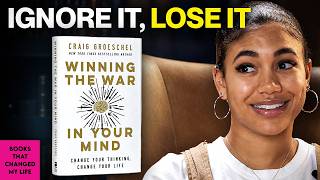
Actress Paige Audrey-Marie Hurd talks about how Winning the War in Your Mind helped her tackle negative self-talk from childhood acting and a draining friendship. She reads a chapter a day and deliberately hasn't finished because she wants to keep working through it slowly. The book's core idea: you can't conquer what you don't confront.
Questions this video answers
She read it last year.
She ordered it online.
She reads about a chapter a day and has not finished it because she doesn't want to.
She is one of five; second oldest of her mother's children.
She has been working since age 4.
Chapters
How old are we? When winning the war in your mind comes into our life.
So I just read this book last year.
Oh, so this is very fresh.
Yeah.
Now of all the guests we've had on the show, nobody has ever ordered just straight vodka, no ice.
Well, cheers, because that's me.
What do you think of the library?
Oh my gosh.
Oh my gosh.
Is that Abraham Lincoln?
Yeah.
I have the biggest crush on him. Oh my gosh, this is gorgeous. Yes.
What about being a child actor makes you want to please?
Well, cuz we're kind of told to do that. It's always like we're always having to perform to make people happy and we always just have to do everything the right way.
We love talking about books that have changed people's lives. Like had such an impact that they are different. After reading the book.
Today, we. Welcome to the library Page heard.
So how did winning the war in your mind change your life?
I think.
Now of all the guests we've had on the show, nobody has ever ordered just straight vodka. Noise.
Well, cheers.
Cheers.
You know those girls from Dallas, you never know.
So dad is still there and do you go see him often?
Kinda. Not too often, kinda.
Did they remarry?
My mom did. So my mom's been married now for 15 years and my dad did not ever remarry.
Now do you talk to him a lot?
Not too much, no. He's really quiet, to himself, reserved. So I think he has like a girlfriend on and off girlfriend that I've known.
You don't tease him about that or.
I mean, I do. Oh yeah. I tease him and her about it because I'm now in my 30s and I'm like, I've known her since I was eight. I'm like, so what are you guys doing?
They're still feeling it out.
Yeah, I guess so. I don't know what their problem is.
Do you have siblings?
I do. I'm one of five.
Yeah. And then I have two.
Where? In the order.
I'm the second oldest of my mom's children.
What does that mean?
So I have two sisters on my dad's side.
Before you?
Yes, yes, before me. And then. So if we're talking all of us.
I would fall second youngest, right?
Four. There's three girls, so I have. So from my mom, I just usually talk about my mom's children. Like I love my sisters from my dad's side, don't get me wrong, but from mom, it's my older sister. Me, I have a younger brother. Younger sister, younger brother.
So we all grew up in the same house.
Are they here? Are they all over?
Me and the youngest brother are here. My two sisters are on the east coast. And then my younger brother's in Texas right now with my dad.
So were you a reader as a kid? Did you read a lot of books?
I read a lot of scripts, but not too. Too many books.
How do you read a script? Like, what is your approach? Do you ever. Do you have somebody screen them or you just read them?
I just read them. Yeah. To me, it's like if I get to the 25th page and I'm not feeling it, then I usually will just stop. But for the most part, I just try to read it through, see if there's a character that I like. It's kind of hard now not to act it out, but I try to just read it and not act it. But for the most part, it kind of happens like that.
What do you mean? Like, you're in your office reading it and you just stand up and start performing it.
No, no, no. Like, I can see the movie and how it's going to go, and I can just kind of see how each character is supposed to be. And so it's kind of like that, if that makes sense.
Yeah. Do you think you'll evolve into directing and writing?
I would love to direct. When I step, like, behind the camera, I definitely would love to direct. And then writing, not so much. I used to write stories when I was younger, but I don't really have that right now.
So have you directed or are you still waiting for it?
Still waiting for it. Still just in front of the camera, acting.
Are you always paying attention to what the directors are doing? Kind of like, as an observer?
Yeah. And then sometimes what they're not. And I notice, like, a lot of times directors don't necessarily pay too. Too much attention to background. Sometimes the background doesn't really know what's going on, and their reactions are different than, like, your principal cast reactions. So I think it was on a show that I was doing that I noticed that, and I had told the background, like, hey, this is what's going on in this scene. Like, so you're supposed to be shocked because this wasn't supposed to be our class assignment. And so you guys are supposed to be freaking out. And I think it was at that moment I was like, oh, you kind of direct. And then a few people were like, you have a good eye. And I was like, so now I just got to go take the courses to really know exactly, like, everything that goes into directing, but for the most part I think that's something I would want to do.
That's great. So you. So you're not a big book reader? More scripts and.
Well, now I like to read books. Like in my twenties I wasn't allowed to really like go out to much. My mom's pretty strict, so I read a lot of books.
Like she would lock you in the basement strips?
No, no, I just kind of like had a curfew. I wasn't allowed to spend the night at people's houses.
This is in your twenties?
Kinda. Yeah, kinda.
Wait, how does, how does mom get away with that much power?
Well, okay, so. Excuse me. That's like 18, 19, 20. Let's. We'll stop it at 20. So not in my 20s, but like.
17 and a half. I was.
I hear you, I hear you. And it's crazy because I've been working since I was 4, so you would think I had more freedom than I did. But because I'm the second oldest, I was also helping out, take care of kids and all the things, so. And she was a single mom, so it was almost as if like we could have friends over because then that means I'm home to help watch the kids. So it was more of like that. Like I had a fun childhood. Don't get me wrong.
It wasn't like it's a tight family.
Yeah. It just wasn't strict. Yeah. So I started picking up books and reading them again when I was like 18 because I just wasn't a partier. Cause I never got that experience.
So how old are we when the book comes into our life?
So I just read this book last year.
Oh, so this is very fresh.
Yeah, this is fresh. I chose to choose a fresh book. I had some other books that I like had in mind, but I was like, this one was really. It really kind of helped me. I think I saw a video on like Instagram or something and I think that's how I found the book. I just picked it up because I was like winning the war in your mind. I've always struggled with that.
Are you in a bookstore when you pick it up?
No, I ordered it.
Oh, so you're online, clicking around.
I ordered it.
And was it just the title or did you read the reviews? Was there anything that went into it.
Was like the comments. There were a lot of good comments on it.
What were they saying?
How it just kind of changed people's lives and it really helped people like conquer those thoughts and help them get out of Their head and quiet the lies that they believe about themselves. And so I was like, oh, I need this book. And I had just went through something just like wasn't anything crazy, but I thought like, I had a friend of mine who I thought was a friend. Just kind of take years of friendship and kind of throw back.
Experiences and things in my face and kind of like projected some like really nasty things that were. That I had shared but like told about me in this weird way. And so I felt really less than of a person. And I was like. And I really valued this person's opinion.
Is the. Is this person older or younger than you?
We're the same age.
Same age. And how long had you been friends?
About 16 years.
Oh yeah?
Yeah. So like a friend, right?
You have some experience with.
Yeah.
Is it him or him? And so you were vulnerable. Am I reading this right? You were vulnerable in some areas of your life. And then how does it come about that? That turns. What happens?
So we grew up together, so it was almost like one of those things where there's things that, you know, we had sat and talked about, especially once we got older, we would like do catch ups and we would just sit and kind of just talk about our lives. And then growing up, we were around each other a lot. So it was just like things that we had just experienced and we kind of just got into like a fight.
What triggered the.
I don't even remember, but it just got like, you know, heated. And it was just like one of those things where it's like, wait, you.
Gotta give me more than that. That doesn't even make sense.
I really don't remember, like why it was triggered. It just. Was that because we had never fought before, ever, in all our years of friendship, we had never fought before. And we started talking about, you know, the energy that was like amongst us. And then from there we kind of started talking about like our parents and our siblings. And then I think that just brought up things where it was like.
Well, this. Is this a romantic relationship or a platonic relationship?
Platonic. You know, like when you grow up with somebody and you feel really close to them. So like, like I have best friends that I would share how I feel about them and how they're acting, but it was just the way it was done. It just got to a point where I was like, oh, is that how you've been feeling about me our whole lives? And it almost felt like maybe he was better than me our whole lives and I was here and maybe that's how he seen me all this time.
How did. How did he misunderstand you?
How did he. I have. I don't know. I don't know how. I have no idea. I don't try to figure out anymore. But, like, for months, I did try to figure it out, but that's when I picked up this and, like, just went to my therapist and I was so confused.
What happens with your therapist? Like, what are you. What are you saying to them?
I shared with her that I just feel like, because we both have done.
Like, similar. Similar jobs growing up, I feel like as a child actor, like, I'm very prone to caring about what other people think. And I'm used to being, like, directed and told what to do and how to do it and just, like, pleasing somebody or something. So I just kind of shared with her that I felt like, because this was my friend for so long and they knew me, that they must be right about the things that they said to me. Not realizing that people do project their own issues and hurt onto you when they're maybe going through something, but because I looked at my friend as such, like, almost like a perfect individual.
You idolized him a little bit.
Held.
Them in high esteem.
I did. I held him on a pedestal for sure.
Back up one second. What about being a child actor makes you want to please?
Well, because we're kind of told to do that. It's almost like it's always, like, we're always having to perform to.
To make people happy, and we always just have to do everything the right way.
Is that natural for you, or is that something you had to learn?
I feel like, because I started at 4, it's natural. And if I did have to learn it, I don't realize I was learning it at the time, if that makes sense.
Do you think it's healthy?
No, no, no, no, no, not at all.
No.
I don't. I don't advise people to put their children in the industry.
So you. So you feel when. When you have this interaction with this person that you're idolizing. Can we call him Joe?
Yeah, Joe.
You feel vulnerable, and your nature is to please. And so this is kind of a disruption in that. And so then why does it make you feel less than?
Just. Because, like, I had always felt like his family dynamic was pretty, like, perfect. Like, you know, he had mom, dad. I just had my mom.
He was very, like. He's very good at seeming like everything is all put together. I'm not sure if it is that way for sure or if there's something that maybe, I don't know, that is not there. But for me, I've always seen the positive and the very like, wow. Like I'm gonna be like my friend. And so I'd always go to my friend for advice and for the things and stuff because he's just so smart and just, you know, all these things. So I just, yeah, I kind of always. Me and my therapist decided that. I think that's really just what it was, is that I had him on this pedestal and I really valued his friendship and opinion because I just thought he was clearly fully put together.
How much of your energy did this feeling consume?
After the fact, you mean or when it happened?
Yeah, before the book.
It took me like a few days. A few days.
To really like sit in it and be really, really sad about it. And then when I saw my therapist, I want to say like maybe a few months to kind of just be like, no, that's not true. You know what I mean? That's not who I am. And then like really reading this book, I was like, oh, okay.
Do you read it right away?
Uh huh. I read a chapter a day and then it's funny because I actually haven't finished it because I don't want to. Does that make sense?
Let's come back to that. Okay, what's the. So when you get the book and, and you start it, what's the first thing that you were like? Okay, this is.
For me, this resonates probably the man's introduction. Just like his, his story. Like he talks a lot about him and his wife and then like the things that he felt that he couldn't do because he's a pastor. So it's like the, the thoughts that would come to him when he was trying to like, you know, share the word of God and like the, the way he didn't feel worthy. I was like, okay, this, this probably is for me. And honestly, anything that has to do with conquering those negative thoughts or anything that always catches my attention because I feel like that's probably the thing I've struggled with the most in life is like my own inner thoughts. So I'll pick up anything that has to do with that.
What are the causes of him not feeling worthy as a pastor?
He never gives like specifics, I guess typical human stuff where it's just like, we just don't like sometimes like right now I'm like, oh, this is, I'm very honored to be sitting here. Thank you. Why do you want me to be here? You know Just anything like that.
You think that right now?
Yeah.
Like, you don't think there's a value to you telling the story, that it will help other people and maybe make them feel like, oh, I'm not so different.
I do. But I feel like.
So, like, I have times where I go speak to organizations or schools, and so I'll tell my story, but I feel like there's, like, parts that I won't speak about just because it's not time yet. So I feel like my entire story is definitely valuable, but I feel like it's not time to tell the entire story. I think maybe I'm just cautious and, you know, cautious of sharing too.
Too much.
I'll write it in a book one day.
I would just encourage you to think about it more about them, I guess. You're. You're a natural leader, and you have an experience, and you don't have to give the whole experience away, even if you're just giving a part of it. But you sharing that experience in an intentional way can help a lot of people that are having a hard time. And you come from a position of authority and influence. Right. And so that's special. I mean, that's a special gift that you can give without having to give the whole story.
Yeah.
But it is being vulnerable. Like, you gotta. I think the more vulnerable I am, and the more I tell the truth about my story, the more people I help. But it's hard. Like, I don't know. It's hard just because I don't even like talking about my own stuff.
Yeah.
You gotta relive it.
Yep.
And I don't like reliving it in that way. Okay, so back to the. Back to the book. What was the big takeaway after his opening story for you?
Honestly, there's just. The reason why I brought it. Right. Is because there's just so many. Like.
Are your highlights in there?
Yeah.
Can I see it?
Yeah. Yeah. And I. I'm actually gonna.
This is my favorite thing, is to see other people's highlights.
Oh, yeah. Go for it. I'm gonna get you one to put in your library. I would give you this one. Oh, well, I kind of wanted to get it, so. But. Go for it. But this one has, like, my notes.
In there, and this is the original one that you. That you did.
Yeah. So it's like, he'll tell his stories, but there's just so many good, like, quotes that he has. Right. And so there's one that he says, like, you can't conquer the things that you don't confront. And I thought that was huge for me.
There's just so many things in there that I just. I just like. And I highlighted. And it's almost kind of like when I read my Bible and I just kind of highlight certain verses because those stick out to me. Because sometimes I may not remember the whole story, but I'll remember, like, the little things that I highlight. And then I'll try to just, like, meditate on that or study that. You know what I mean? So I'm not the best with my memory as far as a whole, but that's why I highlight myself.
Oh, I'm the same way.
Okay, good. I can't give you a whole book, but I can help you with my highlighted stuff.
Okay, let me read this to you. And then you tell me what it. What it makes you think about. So we don't think about the power of our thoughts, which only make them that much more powerful. We don't think about the power of our thoughts, which only make them that much more powerful.
So that for me was like, that makes sense. Because there's a lot of things that I'll say that are negative. And I don't even realize that that has been brewing in my head. And, you know, going back to. Because reading that, I was also reading my Bible and. And that goes back to there being power in the tongue. And just like, whatever I say, I'm pretty much manifesting.
And then there's a Bible verse highlighted, Proverbs 23:7. For as he thinks in his heart, so is he.
Yes.
Which just kind of complements that.
Yeah, that was one of those things where I was like, okay, if you continue to think you are less than, or if you continue to take on the negative things that people do say about you, then you'll become that you.
Cannot change, what you cannot confront. If you ignore the battle, you lose the battle. Let's go.
Yeah, that was really good.
Okay, here's Satan. Satan doesn't want you to believe in him, so he works subtly. He knows that if you ignore him, he can invade your mind with impunity. He can plant seeds of doubt, confusion, worry, depression, and anxiety that will continue to grow.
I think really what it was about this book as you start reading those things back, was it's like, I never realized that all those things were happening, and all that was true. And so it was finally a. A turning point for me to be like, oh, my gosh, yes, your mind has been killing you because you're not even realizing how a It's working overtime. You know what I mean? Like, there was times I just couldn't sleep and anxious, and this is not even due to, like, me and my friend's fight, but just always. And just growing up as a child actor and taking on whatever somebody would say about me, I'm like, okay, then that must be how I am, thinking that they were smarter than me or they knew more than me. You know what I mean? So this. This book was really just helpful. That's why I got to keep reading it.
So you highlighted Satan.
Yeah.
Wants to keep you from intimate relationships with those you love most.
And that was profound for me because I keep myself very isolated. I don't like to get too close to people.
Why do you think that is?
I feel like I had a phase in life where that's, like, what I was doing. And then, you know, you just kind of always backfired. And then. So now I got to this point where I'm just kind of, like, very into my space. Very. Just here, and it feels really good.
Ooh, this is intense. Tell me what this means.
Okay.
You highlighted this on page 31.
Okay.
The days of being neutral must be over.
That's it. The days of being neutral must be over.
Do you want me to read you the part before?
Sure.
To win the battle for our minds, we must engage, because there is no other way for us to defeat evil. The days of being neutral must be over.
That was just one of those things where it was like, I really needed to put in the work. And then not only do I need to, like, say, okay, yes, I have this problem. Problem with, like, believing the lies of my mind, but.
So uncomfortable. But I really had to start getting in the mirror and, like, talking to myself and affirming myself. And that was. That was a bit much for me. But that's what I felt like I was doing by being neutral was like. I'd read this book, and I'd say, yeah, okay, you have a problem. Put the book down. And then maybe you're thinking some more negative things. And I was like, okay, no, we actually have to start writing them out. Or now I do. Really good. I'm like, I'll say something negative to myself or about. And I'm like, no, that's not nice. Like, say. Say you're sorry. And I feel crazy. I'm like, I'm sorry. I'm just talking to myself. But I'm like, yes, you have to speak.
I like that. I've never heard anybody say that before.
Oh, yeah.
I Never say sorry to myself. I beat myself up pretty hard. I call myself a. Oh, yeah.
I go crazy.
Like, I know there's people that, when they were kids, they were called stuff like that, so it triggers them, but I wasn't. So for me to call myself a moron or whatever feels natural. Like, I've never heard of anybody apologizing. That's genius.
Yeah. You should tell yourself to do it.
When you're. When you're looking in the mirror, are you trying to talk through the negative stuff?
Like, reprogram?
Yeah, try to, like, reprogram the context, I guess. Yeah. So, like, if I had went on an audition and I thought I did great and I didn't get it, you know, I'm just like, it's not about you. It's very specific. That doesn't mean you're not a good actor. Like, just. You gotta keep going. You know what I mean? Like, you can't just keep giving up. Or it could be anything. Like, today's gonna be a good day. Even though it's already started and it's been rough, it's still gonna be a good day. It's just little stuff like that. And maybe it doesn't even have to be in the mirror. Sometimes you can just talk to yourself.
Okay, you gotta help me with this one. It says, you cannot defeat what you cannot define.
Yeah.
Okay. So for me, I translated that as, like, if I can't fully understand what. What's going on, then I can't. I can't even try to start to battle it. So then, like, with stuff like that, I would take in maybe a thought or a feeling into my therapist's office. She would help me break it down. And then now I would start to try and work on how to, like, get through that.
So the defining of it then helps you navigate it. Breaking it down and defining it.
Yeah. And a lot of this, too. For me, outside of the industry, I feel like being raised in the church and, like, being a Christian, there were a lot of things that I felt like when I started growing up and I was still in this business when I was in la, that, like, I was just like, this sinner or just, like, not this great person of God. And then I would see other people who had this relationship with God and I was like, well, I want that. And they're like, God spoke to me and told me. And I'm like, I've read the Bible now, like, twice, and I'm trying to hear God's voice, and he's not speaking to me, I'm like, I must be doing something bad. So I feel like I've always.
Felt like I wasn't doing the right thing, which then caused a lot of negative thoughts.
So that also helped me with that. Like, just kind of my relationship with God and realizing that, okay, it's not as complicated and complex as I think it is. And that's still a work in progress. But, yeah.
Okay. So you said earlier that you like not having.
Well, I don't know. I guess the way I interpret it is you like being more introverted. So you highlighted this.
Okay.
You crave close relationships, but are paralyzed by the fear of rejection.
How do those two live together?
It's kind of like anything in life where you could, like, be told no so many times where you're just like, okay. I think that not every relationship I was rejected, but there were parts of relationships where maybe I felt like I couldn't fully be my authentic self. Kind of always felt like relationships and friendships that I was in when I did, like, mess up or if I made a mistake, I felt like it was under such a microscope versus, like, if my friend or family member or whomever made that same mistake. Like, sure, you're going to be upset, but then you forgive. And I think that by the word rejection, that kind of started happening. And over time, I just was like, you know what? I really like just being by myself because I feel more comfortable with myself. And then I started to feel like I couldn't even be my true self around the people that I felt like I was close to. But that's funny that you read that, because when I opened the book today on my way here to kind of, like, go through it, that was the first thing I read.
Do you think that you're kind of an empath? Like, you feel things deeper than most people?
Yeah. The other book that I was like, you know, was the Survival's Guide to Being an Empath. I was gonna bring that one. What? Yeah. So it was between this book and that book.
You think I'm psychic?
Yeah. But I haven't got through that book. I always stop, like, right. Not even in the middle. Maybe, like, a quarter into it.







