A short conversational interview in which Chris Collins and two guests discuss childhood discomfort with ethnic identity, the process of healing and reclaiming pride (one guest calling herself a "born again Chinese woman"), and how unaddressed wounds can resurface later to affect relationships and parenting. The exchange uses personal anecdotes and metaphors (e.g., a wound closing over, a boy holding water with his thumb) to describe suppressed pain and later consequences.
Chapters
Do you feel like you had any trauma growing up?
I mean, of course my identity was an issue. I wouldn't say I was traumatized by it. I was uncomfortable with it, I was embarrassed of it. I just wanted to be blonde and blue eyed.
You know, I would try to pinch.
My nose to make it more pointy, but I don't think it caused me deep rooted trauma.
I mean, trauma to me seems, you know, really severe. I think I have been able to.
Heal whatever insecurities I had about being uncomfortable with being Chinese.
And I've really fully grown into my Chineseness. And I call myself a born again Chinese woman. Forget the born again Christian. I'm a born again Chinese woman because.
I really feel like I can't believe this is my culture. And I'm so proud of what my great grandfather did when he came here and what my grandfather did and my parents. And I'm so proud of what we've.
Done, what we've accomplished and what I have done here. And the community that I've been able to connect with in New York.
And then the authors that I've met along, all the Asian American authors I've met along the way, it's really, it's really.
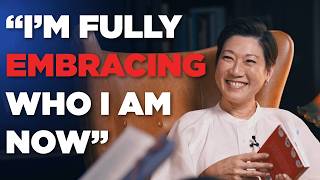
It'S really incredible. And I feel like I've healed many, many times over from whatever insecurities I had and I'm fully embracing who I am now.
There's a great, great kind of.
Perspective on it. Just trauma in general. In here it says that is the way it is with a wound. The wound begins to close in on itself to protect what is hurting so much. And once it is closed, you no longer see what is underneath, what started the pain.
And that's what a lot of, not just immigrants, but a lot of people do. They just tuck it under and then ignore it. And then, guess what? 30 years later, they're in therapy about it. Like, I don't understand why I feel this way. Oh, way back then when I didn't address these pains or humiliation or trauma, they come out.
I feel like it's like the boy that stuck his thumb in the wall holding the water in.
Eventually it starts coming out in all these different ways and you can't really.
Figure out why or how it's coming out.
But things do start to materialize as.
You get older, and especially with relationships. Not just with your kids, but, you.
Know, with partners, even with girlfriends and parents.
Gosh, there's so much to unpack about relationships and how they evolve and how.