Can Leaders Be Friends With Their Employees?
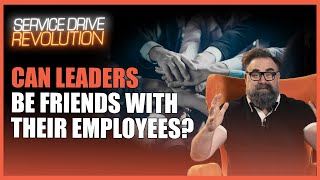
A Service Drive Revolution YouTube episode hosted by Chris Collins (with Christian) featuring guest Ryan Mutalib, fixtops director at Wyler Honda of Colerain. The conversation mixes light banter and jokes with substantive discussion about leadership: approachability, 'extreme ownership', locus of control, evolving into being friends with employees, practical changes (seat/bay moves), and advice for a burnt-out service advisor (pet the dog, create repeat customers, self-care). The episode ends with promotional CTAs for leadership training and a listener hotline.
Chapters
Today on Service Drive Revolution, we talk to a service advisor with burnout. I meet Christian at 70 years old in a time machine and we have a special guest and we talk about leadership and how important it is and much more. Coming up today on Service Drive Revolution.
Welcome everybody, to Service Drive Revolution.
How you doing, Christian?
Better than ever.
We have a special guest today, Ryan Mutalib, fixtops director at Wyler Honda of Colerain. Say hello to everybody, Ryan.
How's everybody doing today?
Pretty good. Now, Ryan is in our elite group and we are going to talk about leadership in a couple minutes. But there's a couple things at the top of the show I want to talk about. So, Ryan, I met the future Christian, like Christian in 30 years I met the other day.
Oh yeah.
This should be interesting.
So I. I've been trying to lose weight and my trainer has me hiking a lot. So I've been hiking here in la and there's this one place you can hike where you go up to the observatory and then you're almost up by the Hollywood sign, but at some point it's like straight up. So, like I have hiking shoes, it's all very serious. And a couple weeks ago I'm on my way to meet him to hike and he sends me a text and he says, I can't make it. I was out drinking last night, whatever, And I was like, okay, well, I'm just gonna hike by myself. So I hike up to the observatory and I get up there and all of a sudden everybody's giving me dirty looks and I'm like, what's going on? Like, and then a guy says, where's your mask? And I was like, oh, I didn't have my mask on. I just totally forgot, like. And so I didn't go the extra, like, because from the observatory you can go on another little hike up, right? I just went back to my truck and you know, whatever. So then the next weekend I, I went with him and my fiance and we're hiking. It's early on a Saturday morning. We get to the observatory and I have my mask in my pocket. So at the observatory I put it on. But then when we're up on the trail, like, you know, I take it off, but there are people wearing, wearing masks for sure. So I'm where I'm actually coming down from that second part and you know, you're kind of looking down and it's kind of steep and all of a sudden this like 70 year old guy with a mask on goes.
And I instantly think, oh, he's yelling at me because I don't have the mask on.
And so then I say like, kind of like, you know, I don't care, but okay. I said, what? And he goes.
And then I look at my fiance and I go, did you hear what he said? And she goes, what did you say? And she's like really sweet, right? And he goes. And she goes, he said, why don't bears wear shoes?
Like this random guy, just like Christian always does on a trail, just like runs up and yells a joke. Why don't bears wear shoes?
So what was your response?
I. I still didn't understand what was going on. So she says why?
Or whatever.
And he says because they're barefoot, of course. But we were going, we, we left. And I'm like, can you explain what did he say again? And then she told me and I'm like, that was Christian. That's what I said. Instantly I go, that was Christian at 70 years old, just running up to people with a joke that isn't even funny. Yelling with a mask on.
That's even better. That like it didn't, it wasn't, it wasn't legible.
Like you couldn't hear, not even close. But I. My guilty conscience. I thought he was yelling at me because I didn't have a mask on. So this is pretty funny.
They're a little militant about that on that hill. They care about the mask thing. Even though you're like 20ft away from somebody else. It's really weird.
I'm over it. I'm ready to fight. Next. Next 70 year old guy that says that I'm punching him. Right.
Next 70 year old guy that tells you a bad joke. Thank Goodness I'm not 70 yet.
It's funny. So one thing that does happen when I come your way and actually you've never done this Ryan, but some of your counterparts have tried to get me to drink moonshine.
Now you were saying that your go to this evening is bourbon. When is it appropriate for local customs? What's the local custom? When is it appropriate to pull out the moonshine? Is it like special occasions? You've had a really, really bad day?
You know, I think we do it a lot when you do parties. So you pull out the moonshine where you're doing a backyard party and it's a good go to drink right there. Drinking the sunshine and have a good time.
What? And why is it always apple?
Apple?
I don't know specifically. I said the stuff I'm drinking tastes like peaches right now.
Who's that critter behind you?
Yeah, that's. That's my dog.
That's.
That's Hermosa.
Hermosa.
So that's great.
What's going on, Hermosa? Oh, so cute. That's awesome. So I was. I was thinking about a story, Ryan, when we were talking about this is. Have you read Jocko's book, Extreme Ownership?
Yep.
And so, you know the story he. He tells in there about how. I think it's during Bud's training, and I. I could mess this story up. But I'll get the spirit of the story, right, that there were, like, six teams, and there were teams of three, and they were racing. Like, you had to carry, like, a canoe or something and then paddle, and it was like a race. And, you know, one team clearly won, and Jocko went and was asking the other guys that were, like, lagging behind and in last place, like, what, you know, why did you do so bad? And the guy who was the leader was like, oh, my team sucks. And so he thought to just change leaders, you know, the story that. That I'm talking about. So all he did is change the leader, and then the leader that had won previously then eventually won with the team that had been in last place. And the point being that it's really just mostly about the leader, because leaders can get people engaged. They can get more out of people than they know that they're capable of. And so I was thinking about you and that story.
Thank you.
And so what do you think as far as leadership goes? And I do want to get your feedback from the leadership training that I did there a little while ago. But what do you think the important characteristics are of a leader?
I think one of the main things is being able to be approachable.
I mean, my team knows that they can come to me with anything, and I'm there to help them. I've built some really good relationships with my staff, and so much so that we're able to go out on a personal level as well and talk to each other on personal levels.
I think they see me working for them. So, you know, that extreme ownership aspect is, you know, not necessarily a servant leader, but having extreme ownership of the team and that I've never asked them to do something that I wasn't willing to do, and I think they see that in me, and they see that I want to work hard to achieve more, and they just want to follow that.
Yeah. Yeah, that's great. Do you have a joke for right here, Christian?
Well, I was gonna make a Quick. You like wine, right?
Yeah.
Yeah. So what did the green grape say to the purple grape?
What did the green grape say to the purple grape? What?
Breathe. Dammit.
He laughed.
Thank you, Ryan.
I don't get it.
So the reason that the grape is purple is because it's not breathing.
Oh. Instead of red wine. It's suffocating.
This was a home run. This is better than the bear joke. I felt like I had to outdo the guy on the hill.
You did. Don't worry. You got it.
So when I came out there and we did a little day and a half leadership workshop, which, by the way, I worked really hard on that because I, you know, I really felt like that was something that.
Well, I just really wanted to make a difference in that room.
What were.
What were your, you know, big takeaways from that?
Well, I mean, first and foremost, you definitely made a difference. I've been hearing it just a lot from the other service coaches that really were involved in it, and.
We kind of talked about it after the fact and. And how we went back to our staff and talked to them about what we learned and locus of control and feathers and everything. And.
We'Ve all noticed just differences. So I guess that was my biggest takeaway was the locus of control, that internal versus external. Are you. Are you a person that you control everything that happens to you, you control your destiny? Are you a person that lets the world run over you and, you know, you're a feather in the wind? I went back and it was funny, the. The day after, I was talking to one of my technicians and he had a lot of personal stuff going on, and he was telling me, oh, you know, it's their fault and this is happening to me, and. And I heard that, and I was like, man, you're a feather. And he was like, what?
I was like, yeah, you're a feather. You know, and he was like, what do you mean? I was like, well, you're just letting the wind take you where it wants to, man. You're just. You're just letting the world happen to you instead of controlling what you do. And we ended up going to lunch that day and we talked about it. And he came back later that day and he was like, man, the next day, and he said, man, you know, I went home and I told my roommate this and, you know, I'm moving out and I got a good place and I'm ready for it. And, you know, I really appreciate you talking to me, and it was just so interesting to just pass on that little Bit of information, you know, like you did for us and how we were able to use it. That was a huge tip. I really appreciated it.
The thing that really moved me about it was that two of the managers went home the first night and told their kids.
Which, you know, it was meant to be a leadership thing, but it really is way more than that. Right. It's way bigger than just leadership. It's very personal.
Because it's a mirror, in a sense.
And that you have to do a little inventory on yourself, right?
Yeah, I did. And that's it. As soon as you said it, right, we were talking, you introduced and you said, you know, the locus of control. You have internal, you have external. As soon as you explained what those were, I immediately started taking inventory of my employees and myself and kind of saying, where am I and where are they and who are my people that control things and who are my feathers that are just blowing away?
Yeah, that's. That's awesome. I. I love what you said a minute ago about, you know, being friends with your employees. Like, has that always been something that you've believed in, or is that something you evolved to over time?
I think it's something I evolved to. Coming into the industry, it was, yeah, you can be friendly, but it was more, you know, especially as a manager, you know, keep it to yourself and. And, you know, your life is your life and their life is their life. And it got to a point where I was working with these same guys every single day, and they'd be in my office and we'd just be talking about life and what's happening. And it got to a point where I wanted to hang out with them outside of work. I wanted to go get dinner with them or take them to a ball game or whatever it was. You know, we're having a big party barbecue with everybody coming up here soon at Jeff Weiler Honda Cool Range. So you guys are invited if you want to come, but just do like an after work Saturday funct. You know what I mean? Just something with the entire crew. We all enjoy hanging out with each other. We're all good people. We all like each other, which is really nice, Especially in a workplace you don't get that too often.
Well, I think you're being super modest, Ryan. So just a little bit of a background. Like, I've actually worked with Ryan since he started back at Coleraine Honda. And it was like early 2019, if I remember correctly. And he actually came into the industry, this part of the industry from Powersports. So it was A little bit of a different thing. And I would say that dealerships are a fraternity of sorts. Ryan came in and just kind of correct me if I'm wrong on any of this. Okay. But Ryan came in. He was a little bit of an outsider to that group. And there were some people. There are some people at that store that had been there for a really, really long time. And we've seen that before, where a new manager comes in and it's like, oh, you're just the next one. That kind of thing. And Ryan's done a good job of breaking down that barrier. I don't think that it's not. It's hard work and it's a lot of time. Right. So I think that that's a big thing. But I would say that you didn't just walk into that situation and everybody was giving hugs. It was definitely some work that had to be done and everything like that. And you've had a little bit of turnover. But I think that keeping everything in mind, the thing that I've noticed over the last few weeks since you were in that thing is that you're not leaving anything to chance. And then you're understanding that how your store goes has a lot to do with how you're thinking.
You know, that's just kind of. The thing is, I would say that it's definitely an evolution, but hopefully that training has put you on steroids a little bit.
It has, yeah. I moved some advisor seats around. I moved some technician bays, and they said, why are you moving us? I was like, I don't know. Just because.
I bet he was really popular that day.
That pattern disrupt, that was another big one. I liked it.
Yeah, it works, right?
It does.
It's funny. I remember. I mean, this goes way back, but I used to own a flower shop, and when it would be slow, I would send the girls out there just to take the flowers out, cut them and put them in different buckets. And just that activity of moving things around brought people in, and it wouldn't be that long. There'd be a line of four or five people just from, you know, just moving stuff around, rearranging, recut, you know, it's funny. So, yeah, just moving a desk, moving a stall makes a big difference sometimes. That's awesome. Well, thanks for coming on, Ryan. You know, you're a leader amongst a bunch of great leaders there and a lot of talent. I hope you're having fun. I hope you be really careful this Saturday with the moonshine.
Peach, apple, or otherwise, whatever. Please be Careful.
Are you.
One question is, when you do that, are you inviting the spouses?
Yeah. I mean, it's usually a friendly gathering. Everybody's included. It's been tough with COVID We've been doing it around like. Like 20 people around a campfire or something like that, you know, to keep social. Social distancing.
Yeah, well, pre Covid, I found that having the spouses there is even better.
Like, you know, just say, for example, you have like your lowest performing advisor and you go to their wife and you're like, hey, I'm really trying to understand Christian and why he's not more motivated.
And then get the wife on him or the spouse.
Then I walk in on Monday morning with a broken arm.
Can I. Can I take more customers?
I can write 14.
It's great. Cool. Thanks. Thanks for coming on, Ryan. We appreciate it.
Thanks for having me. Appreciate it, guys. Thanks for everything.
That was great of Ryan to come on and do that. So if you guys want to go through the leadership training, it's new to our on demand platform, but I promise you, it's the best leadership training out there. It's different than anything you've ever been through. Completely different approach. This isn't your grandpa's leadership training. Take care of your employees. They'll take care of your customers. Leaders eat last. It's not that this is real transformational leadership. That is, it's going to come from the inside out. It's not an outside in sort of thing. So if you're looking to perform at a high level and really have an advantage in the marketplace and become IRreplaceable, go to ChrisCollinsInc.com and sign up for our on demand. And it's in there. It's called the 17 Laws of Leadership. And when you do that, email me and let me know your thoughts. Yeah, the feedback has been incredible.
Yeah, Stellar. I think there's no way it doesn't change you a little bit when you go in and watch it. Like, you have to be introspect.
It is interesting to hear which One of the 17 are favorites. Like Victoria. Her favorite was one I would have never imagined.
Yeah. And I think that.
And they are in the order of importance to me. But.
But to her, hers is number six or number seven. Right.
It's way down the list.
Down the list a little ways. Well, I think 5 is one of my favorites too. Like there's. I think you have to have the progression. It starts with one. Once you get one, then you can probably interchange some of them.
But you know, what's interesting of putting them in the order of importance is how do you keep it interesting when you're saying, like, 15 isn't as important.
As one that's fair.
How do you keep, you know, that was a part of the challenge in creating that series, but I think we, you know, we pulled it off. Yeah, kudos to the team here too, because I helped a lot with that. But, yeah, go get that. Check it out and then let me know what your favorite one is. But it's. It's fun stuff. So before we go, let's take one call. If you have a question for the show that you want Christian and I to answer, remember the number is 8333-ask-SDR. So that's 8333 ask SDR. And if we play your question on the show, we'll send you some swag and you get to be on the show.
Win. Win.
Yeah, you'll just be walking on the street and people be like, hey, are you the guy from sdr? Right.
That happens every once in a while, doesn't it?
Hey, Chris. My name is Peyton.
Longtime listener, first time caller, and my question is this. Been an advisor for about two years now, and I'm starting to feel a little burnt out. And I'm really questioning if this is something I want to keep doing or not. But I don't know how to bring up the conversation with my service manager and talk about it, and I don't know how to have the conversation with myself.
Be helpful with anything or any kind of help you can give would be much appreciated.
So, Peyton, I get the sense that there's a little something else going on there that, that you're struggling with besides writing service, because it sounds like it was some sort of. Some sort of struggle there. And so let's talk about the advisor part, and then hopefully that will bleed over to the other part that you're struggling with. But I want to send you a book.
The Millionaire Service Advisor, and I want you to just read the first couple chapters. But in there, the thing that I found as a service advisor is that after about three years, so you're almost there, you're two years in, but after about three years, if you try every day to connect with one customer, and I say one, but really, if you're good at this, you'll connect with five.
But if you just connect with one or two new customers every day, after three years, you will have so many key throwers that your job should get tremendously better. If you're petting the dog and you're building rapport with your customers, really being a trusted advisor, forgetting about the commodity, which is the car, and talking about their kids, their work, their vacation plans, how, you know, how they've navigated Covid, working from home, school, all of the things that are important to them. And you update them, you really, really take care of them over time. It's like a bank. They're just going to come in and throw the keys. And your. Your job gets so much easier. So much easier.
It's. It's really interesting. So I was, I was out over the last month or so. I've been pretty fortunate. I got to do some advisor training, and I was really, really lucky to have somebody in the class that had been a service advisor in the same dealership 37 years. Now, I don't know if I'd ever seen that before, but talking to him, like, you could just tell that he was a customer collector. And he'd kind of said the same thing is like those first two, three years were really, really hard. And since the 30, it just keeps getting a little bit easier every year. And that's what he said. He's like, I'm so glad that I didn't go to 10 different dealerships and I stayed at the same place. And he was kind of telling me he's like, he's outlasted ownership in a lot of cases. I think there was like two or three buy sells that he'd been through, but his customers just come to him and he doesn't take fresh customers anymore. It's just a matter of he's just at that point. And I think that at two years, first off, I would say one is I understand the burnout because I think that this job, it's physically demanding, it's mentally demanding, and at two years is where it hasn't gotten to the part where it's easier yet because you're still trying to figure out, like, there are certain problems that maybe you're dealing with for the first time, but after two years, you've about seen and done it all in terms of comebacks. I think Chris always says that at six months is when the magic. That you haven't heard any new problems, but at two to three years, you really hit your stride. So if you do that conversation with yourself and you decide this is the industry, just know that the easier portion of the business is coming to you. And man, three years is a magic time.
Yeah. And so another thing that, that I did is I used to Go work out at lunch. So I had a deal with my manager that I took a little longer than an hour and I forced myself to go work out at lunch because, you know, you're. I was there trying to get the night drops at 5, 5:30. I wasn't leaving until 5 or 6 every day. So that little time in the middle of the day where I actually ate a lunch and I actually worked out made a huge difference for me. And so you want to make sure you're taking a lunch, you want to make sure that you're taking care of yourself. And I mean, I don't, I don't really think that I.
Knew myself when I was an advisor. I definitely didn't love myself. I probably hated myself, to be honest. But I'll. I'll tell you the one place that I found satisfaction and I found something bigger than myself and something that fed me in a way that was rewarding, and that was that I took really good care of my customers. I put my customers first. I really wanted to know about them. I really cared about them. And by making them my, my focus and not worrying about myself, it was rewarding. And, you know, I would literally go home and think, like, hey, like I, you know, I, I saved these customers from all kinds of issues, even to the point that I genuinely believed that customers should pay more to have me as an advisor. Like, I wasn't discounting anything. Like, I genuinely believe that. And because I believe that, I don't, I don't think I was asked that many times if I could cut the price on something just because of my presence and my mindset and what I was projecting that I, you know, I was projecting that authority. I'm in control. I'm, I'm the person here that if I don't know the answer, I'm going to find out, but I'm working for you, then I don't know. That's very rewarding. It's rewarding to be the, the person that somebody can depend on. In an industry where, let's be honest, most advisors don't call people back. They're writing 25 to 30 customers a day that the customers are just another number. You know, they walk out. Well, the customer probably comes into them and they're like, did you have an appointment? What, you know, what's wrong with your car truck? There's, there's very little banter or human connection. I wanted to be different in that scenario. I wanted to be a pattern interrupt. And that was very rewarding to me. Putting the Customers before myself helped me get through that period when I didn't really know myself, if that makes sense because I was young.
Oh, yeah.
Wow.
Yeah, that's pretty insightful.
So pet the dog and understand that you're, you're at the point where you know two things. One is you should be creating key throwers. Now if you're two years in and you haven't been petting the dog and creating key throwers, you need to start that tomorrow. And then the second part, and to Christian's point, like, take care of yourself. Take a lunch.
You know?
Yeah. As coaches, as we go into the stores, we don't even need to ask at 3 o' clock who's taking a lunch, because you can physically see it on the people. Right. The advisors that haven't taken a break, they look beat down.
I know, I know probably 90% of the people listening to this are going to think I'm crazy. But I'm just going to also tell you the truth is if I could go back and talk to my 19 year old, know it all advisor self or whatever, I would, I would tell myself to go do transcendental meditation right away.
Wow.
Because I ate bad, I drank too much. Like I would have started transcendental meditation way back then. So I don't know, look up videos on YouTube, on Howard Stern, transcendental meditation or Oprah and look into that too, because that might be something that'll help you. I know it definitely helped me, but pet the dog. We're gonna send you the book. And then, you know, if you read those first two chapters, let us know, let us know your thoughts on that.
But I think you would also tell your 19 year old self to invest in Google. Jeez.
Yeah, Google. It'd be a list.
Yeah, you'd have a long conversation with you.
I made some money in Microsoft back then.
Did you really?
Well, Microsoft used to split constantly, so it's kind of like bitcoin now. Like everybody was making money.
You know what? I would guess in your area that everyone was willing to take a chance because the local.
We used to call them Microsoft millionaires. A lot of people that worked at Microsoft that had got stock were all of a sudden really, really like stories.
Of janitors driving Ferraris. Yeah, like that. Right?
That's so cool. We used, I used to ride them up, you know.
Yeah.
That's neat.
It's fun. So thanks for the question, you know, hope that that helps. And we're, we're sending our, you know, love and good vibes. Your way, but make it about the customer. Be a customer, collector, key throwers and that. That should all work out. But good show.
That's fun.
So thanks, everybody, and we'll see you next time on Service Drive Revolution.
Thanks so much for watching this episode of Service Job Revolution. We're uploading new stuff every day, so make sure you subscribe and click the bell icon so you don't miss out. If you have a question you'd like us to answer on the show, call 8333-ASK SDR and we'll answer your question on the show. That's 8333-ASK SDR. For special deals on our books and training, head over to offers.chris collinsinc.com now that's offers.chriscollinsinc.com I'm Chris Collins, and I'll see you in the next video.







