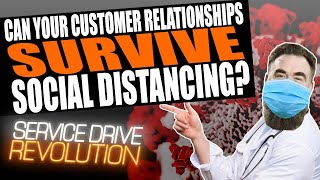
Chris Collins and Jeremy discuss how service departments can preserve and deepen customer relationships during COVID-19 social distancing. They emphasize the "pet the dog" metaphor (prioritizing empathy and human connection over pure transactions), give frontline examples (a stranded customer call, grocery-store plexiglass discouraging visits), and offer practical tactics: pre-appointment rapport-building calls or texts, clear safety/disinfection procedures on vehicle intake, paperless/digital approvals, and small thoughtful gestures (e.g., giving customers a roll of toilet paper). The overall argument: the dealership's primary marketplace asset is trust and connection, so processes must be adapted to protect both safety and relationship value.
Questions this video answers
June 18, 2020.
7:00 AM (every morning).
5:30 AM.
They went 100% paperless (digital approvals via text/email).
Two cases.
Chapters
So now let's, let's talk about how we can pet the dog in an environment where customers are dropping off their cars and running. We have dealerships building plastic barricades between the advisors and customers. It's all very off putting, right, because everybody's worried about social distancing, not touching. In the spirit of petting the dog is to get to know customers in a deeper way. If you're new to our, to our show here or just our terminology, there's a video online called Pet the Dog. If you just go to YouTube and type in Chris Collins, pet the dog. And it's a story about me taking in my dog to get a surgery that was life or death and not wanting to have the surgery done because of the way the doctor treated us. And you know, petting the dog is a metaphor for connecting deeper with the customer. And our asset today in the marketplace is not the brand we sell. It's not our, you know, if you have an independent shop, it's not your shop. People, people aren't buying fe, you know, features and benefits. They're buying a relationship, they're buying a connection. They're buying the empathy and you caring about them more than anything else. And that's what pet the dog represents is. Our asset in the marketplace is our connection with our customer base. The trust, the, you know, the just the overall investment in that relationship is what we have as an, as our biggest asset moving forward.
And so, Chris, if I comment on that, you're right. You know, it's interesting. I went into the grocery store on Sunday and they had the plexiglass built on the check stand.
Everybody's got to understand we're in a shift right now. This is a major shift with the shutdown and everything that's going on with how consumers interact with brands. And my experience at the grocery store was I never wanted to go back. I didn't, you know, regardless, that plastic wall, I'm just like, forget it. I'm gonna order all my groceries online and have them delivered. I don't want to go through the grocery store experience anymore. Whereas before I used to like going to the store and spending more money than I would, you know, just shopping online. So the same thing. If service departments are putting Plexiglas barriers up at the counter, we're losing that connection. And, you know, I've got some more things to talk about a little bit later on about how we can deepen that connection with our customer. But we got to be very careful, careful right now because the customers may want to extract themselves from coming into our facility, and that can definitely damage the relationship and make it just strictly transactional, which is not good for. For the future.
Yeah, we. And so we have. During this crisis, we've been having a team call on Zoom every morning at 7am and Vicki, one of our coaches, was talking about how she has a story. We should have had her on to tell it because I might mess it up. But she was talking about how there was this longtime customer that had an X5 when she was a service manager, and the customer got stuck on the freeway going into San Francisco in her X5. She had her dog in the X5, and she had her kids, and it stalled, and she was stuck kind of like on the side of the freeway without a lot of room, cars whizzing by, nowhere to go, couldn't get out. And she called Vicki. And Vicki, you know, her first thought was, well, you know, it's not. It's not my fault. And it's, you know, we'll get a tow truck out there or whatever. But it was more about the transaction. At some point, the customer who knew Vicky.
Just stopped and said, like, hey, don't. Don't you. Don't you want to know how I'm doing and how I feel? And, like, Vicki stopped in her tracks, and she was so worried about the tow truck and the thing and the thing. She never took the time to be like, hey, are you okay? How are you? How do you feel? Cause the dog was freaking out. The kids are freaking out, like. And so I think that that's the key here to petting the dog. And connecting with customers is just like, with a toe in or a night drop.
We don't want to skip the part of, you know, connecting with the customer. So the way that I would do it is every customer that was coming in, I would call them beforehand, and I would say, like, hey, here. You know, so if, you know, if Christian was a customer coming in, I'd be like, christian, this is Chris from Bulldog Motors. I know you're coming in today. How are you doing? And then I'd say, how are you handling this crisis? And I would use that as an entry point. Oh, so the customer is going to talk about work, they're going to talk about kids, and I'm going to listen to them, and I'm probably going to spend 15 minutes on the call with the customer talking about how they're handling this crisis. And then once I've dug really deep and I've asked a lot of questions and I haven't talked about the car yet. Then I'm going to flip it and I'm going to say, okay, now when you come in, we're trying to keep you safe and we're practicing social distancing. And I would frame it from the point of view of we're trying to protect you. So when you come in, we're not going to get a lot of time to spend together. But here's what I'm going to do is once you drop it off, I'm going to grab the car, I'm going to put a steering wheel cover on it, I'm going to put seat covers, we're going to disinfect it. Then I'm going to do, I'm going to do a walk around on it, I'm going to measure your tires, I'm going to check it out and then I'm going to call you and we're going to go through everything. And so you're going to have to do a two call process where you're building rapport before they come in and you're asking them, how are you doing? How are you dealing with this? Right? So there's people out there, there's customers that you have that have family members that have Corona. You might even have a customer who's had somebody pass away or know somebody who's passed away. It's not about the car all the time. This is a time for us to be kind of like therapists in a lot of way and really connect and show empathy. But empathy is a secret right now. Understanding that we're all human and this crisis brings us together, right? We're all on the same page now. It doesn't matter if you're a Democrat or a Republican. It doesn't. Your, your political views don't matter right now. This is an equalizer. And so I would, I would spend 10 or 15 minutes with the customer before they come in and then I would wrap the call up with, well, here's the process. And it's, you know, it's not going to be what you're used to, but just drop it off, I will go through it. I'm going to, you know, I'm going to do this and this and this and, and then I'm going to call you and we're going to talk about it. And you will build, you know, you really will create a deeper connection with your customers by doing that. But that's what I did when I was an advisor with Night Drops is I was Building the same rapport on the phone. I remember I'd call customers at 5:30 in the morning and wake them up and I'd be like, hey, I have your Vanagon here. It says that it was leaking coolant. How are you doing? Are you okay? Did you get stuck? Was it towed in? Or did you drop it off and then, you know, start to build rapport? So are you going to be okay without it? Are you going to rent a car? What are you going to do, you know, and really open up the door to some conversations and the more personal the conversations, the better that we're going to do. Do you, what do you think about that, Jeremy?
Absolutely. You know, it's interesting. I remember about three weeks ago I handed a pin to a customer to sign a repair order and he wouldn't touch it. And that was kind of eye opening for me because that, you know, this shift that is happening is here and I love, you know, I brought my, my face plate here like right. So I'll just talk to you guys, you know.
So he's holding up a sign that says, we appreciate your business. It's been a pleasure serving you. Please drive carefully with a big happy.
You know, so, yeah, and you know, the, the steering wheel covers, the booties your technicians can wear. All those things are awesome. And then don't forget this right now, that human connection is there's this feeling that customers have where everybody's locked down, they're feeling isolated. And you could be the one bright spot in their life that changes things for them moving forward. And it could be as simple as a warm smile and making eye contact. And yes, we're supposed to stay six feet away from each other. But Kris, all these things are critical when you're petting the dog, when they're actually there at the service drive. Making eye contact is key right now. And then, you know, doing all the transactional stuff, putting the plastic down in their car. Don't forget about personal clues. And then the word that's sticking with me right now is a four letter word. It starts with, I mean H E, L, P. It's help. It's be helpful right now. How can I help you? You know, I have cases of toilet paper. Two cases that I bought. I'm not over hoarding. But every customer that leaves, they leave with a roll of toilet paper. It's just one of those things that we're just adding to right now to kind of lighten things up and make people feel welcome. The other side of it, that's really helped us out is digital transaction. Customers don't have to sign the repair order. We've gone 100% paperless. We're texting them, we're emailing them and they were able to approve the estimate with the push of a button. So if your shop doesn't have that set up, make sure you get it because it's a game changer. You, it works out wonderfully well leading us towards this digital transaction. So, yeah, absolutely. Petting the dog. And then if you don't get a response on that call that Kris talked about, what do you guys do? How do you get in touch with that customer? Send them a text. Let's get permission to text our customers. And you can do all that conversation that Kris just talked about during a text if you can't reach the person on the phone. So definitely texting. Being prepared before they arrive, making eye contact, being that warm, friendly, you know, personality delight in the storm that's going to guide them to where they need to be to help them protect their car and keep it running in the most affordable way. That's what we're here for.
Yeah, that's good. So, yeah, pet the dog with the customers more than anything else. Really pet the dog on the phone. It's not just in person that can work on the phone.
It would.
It's harder over text, but even in text it's just like, hey, how are you? How are you dealing with this? Right. Open ended questions that then lead you to where the customer wants to go. They'll lead you if you ask questions the right way. Thank you so much for watching this clip of Service Drive Revolution. Now you can catch the full episode on YouTube, iTunes or Spotify or wherever you consume your podcast. If you have any questions, go ahead and post them in the comments below. Make sure you subscribe and hit the bell icon so you're notified when we post new episodes. I'm Chris Collins and you can find me on Facebook and Instagram at Chris Bulldog Collins and I'll see you again on the next episode.