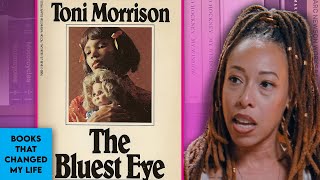
CC Rice explains colorism as the belief that lighter skin is superior, rooted in slavery's house slave versus field slave divide. She traces how proximity to whiteness created privilege within Black communities, sharing how her grandfather was treated differently when he could pass for white.
This time on books that changed my life. So colorism is essentially.
Either the practice or, you know, the idea that lighter skin is superior to darker skin. And it's, you know, based in some facets of the overall structure of colonialism and white supremacy that in many cultures, you know, as with any caste system, there has to be a way to separate people and to break people down into groups. And in the south in particular, you know, the one drop rule was the thing. If you had one drop of black blood, you were considered black. But what that did within black communities is it deposited anyone who was not fully white into the black community. And so then there were all of these layers of color and proximity to whiteness. And even during slavery, house slaves were fair skinned because they could more easily assimilate into the master's world. So if guests came over, they were less offensive to the guests because they didn't have skin that drew attention to them. They weren't working in the field, out in the hot sun, and therefore their skin stayed lighter. Those, you know, house enslaved people. And so from that into the modern context, there has been a big, you know, I shouldn't say big, but there is a dividing line between the experiences of privilege or perceived privilege based on your proximity to whiteness and the oppression that you face the further away from whiteness you are and the ability or inability to pass or to seem like you don't stick out is privileged in predominantly white spaces. And that gets internalized within the black community. And sometimes lighter skinned people are going to experience the result of what it feels like for dark skinned black people to be ostracized. Right? You're, am I going to welcome you with open arms and treat your experience as though it's exactly the same as mine when we both know that it's different because we inhabit spaces differently.
My grandfather, who could pass for white, though I don't know that he knew he could. Like he was a bit sort of naive about it as he would tell me this story. And he was in the army and he was in an all black regiment. And when he was in Texas, he was stationed in Texas, he went to a lunch counter somewhere and he walks in, he's in his uniform and the person comes up and says, oh, you don't have to pay, it's on the house. He thinks, oh my gosh, wow, this place is amazing. And he goes back to his all black regiment and he tells, everybody found this great place. If we go and we're in uniform, they'll give us free food. And so the next day he shows up with all of his friends and they don't serve him. And so it was this.
Way for him to see for the first time that who he had aligned himself with in his own mind and in his own culture and in his own upbringing, when he was on his own, the world didn't see him that way. And he could assimilate, he could pass. And so for me, even as a kid, I took note of that and I took it as a way to recognize when I have privilege. How can I use it to uplift darker skinned people who I know don't have the same privilege that I do? How can I balance spaces when I see, oh, there are black people here, but by the numbers, we're all light skinned black people. And what does that mean? And what does that say about what, what it is that we're actually doing here and how do we call that out in such a way that moves things forward?