CES 2020... Sony Making A Car? (Service Drive Revolution)
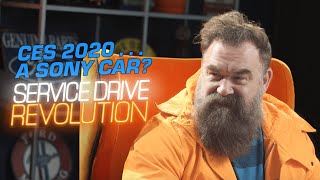
Chris Collins and a guest break down CES 2020 automotive tech, including Sony's concept car and Fisker Ocean pricing. They discuss Collins' dog's mango seed surgery and share early Tesla field technician stories about the company's culture and management.
Questions this video answers
January 20, 2020.
Price: $37,500; lease: $379/month with 35,000–30,000 mile limit (speaker's transcription).
200 mile range and 200 miles per hour top speed.
A mango seed (surgically removed).
Chapters
Foreign.
Welcome to Service Drive Revolution. We start the show off today talking about the consumer electronic show that just happened in Vegas. CP Es. Have you ever been to cs?
I have not, no.
So it's basically the electronic show where it's like sex toys, the cars, everything in between. Cell phones, computers, the whole thing. Some interesting car stuff happened, but some, some other stuff too. Like Impossible Pork, the plant based meat.
Yeah.
Now is doing pork, not just beef. Have you ever had the beef one? Yeah, me neither. Like everybody's excited. I don't understand why I'd want to eat fake beef.
Yeah, I've seen there's a fast food restaurant that has one out there.
Gotta be something wrong with that. Burger King has it.
The Whopper.
Yeah, the Impossible Whopper.
Yep.
I'm not. So I was, I was vegetarian for a year and it's the heaviest I've ever been. I was like £300.
Didn't work out.
Well, you just never get any protein. Like you're just eating carbs all the time. Right. Then they had Genie, the robotic lap dog. She doesn't walk around like Sony's aibo, but what she lacks in mobility she makes up for in a coat of fuzzy synthetic fur and expressive comforting personality. The product is a partnership between a robot start off Tombot and Jim Henson. The Muppets. Genie is designed primarily as a soothing companion for seniors suffering with cognitive ailments. But the company says it has received interest from those suffering with ptsd, autism and other conditions. It's kind of interesting. The robot thing is kind of creepy. Those robot dogs. And then the Y brush. This is not a toothbrush, it's more like a mouthpiece with little brushes. And saves you time by turning two minutes into 10 seconds. So it can brush your teeth in 10 seconds. What would you do without that other minute and 50 seconds in a day? Read a book. Advisor training.
I don't know, say 15% on my car insurance.
Call your wife and tell you maybe something like that. Then Fisker has the Fisker Ocean, their electronic SUV. It's going to be $37,500 or it's going to have a lease of 379amonth with 35, 30,000 mile limit on the lease for the year. Tesla's 10,000 mile.
A year lease option is 535. So they're going at Tesla on price. But I mean Fisker needs to figure out if they can make the cars first. Right, because last time. Yeah, they couldn't even get them off the lot before the trainings were falling out.
Yeah. Yeah. It'll be interesting to see what their second swing.
Also when you're Fisker and you hired all those people because I know a lot of people that got hired by Fisker. They hired a lot of BMW people.
Yeah.
Remember?
Yeah.
And then who's gonna want to take that chance again?
Right.
Because they ended up. All those people ended up with, you know, out jobs. Right.
Yeah.
Let me see.
Okay, so Ben's had the vision avtr, the new concept car, not only detects your pulse, but also your breathing. It's basically so that Ben's car was the theme of. It was Avatar, the movie. Avatar looks kind of like that, a futuristic version of that. But the whole thing is kind of about. You're in this cocoon and it's about your experience inside of it. It's not about driving, which is a stretch for German car companies. Right. Because they're all about the experience of driving.
Right.
And now they're trying to change it into the experience inside the car.
What you think of the way that one looks?
Yeah, that thing was crazy. Yeah, it was. I still don't even being a. I consider myself a. In the automotive realm, a pretty, technically, you know, minded person. But that one, there's a. There's so much about it that just seems that I don't understand. Yeah. But yeah, that was a. That was a crazy, crazy deal. The way it recognizes the driver and everything. That multi function control deal that like comes up inside your palm and detects your fingerprints. All that's crazy.
The one thing, the commonality there though is like they're worried about how you feel. The car is now worried about how you feel. Visa and Sirius XM.
Came up with this idea. They're proposing this idea of automated payments. So they must be using Sirius satellites, satellite technology and Visas using their technology so you can pay for tolls, gas, food, right from the car so you don't have to pull out your wallet. It's just automatic. Right. I like that idea. Especially with tolls and parking. So you wouldn't have to go to a parking meter. So Bosch is making a virtual visor that uses a transparent LCD screen, but it has these sensors that read the sun and it can block out like 90% of the light, which is kind of cool.
Yeah, that. That seems like something that they probably should have even already had by now. Like, I think that's going to be something.
BMW is getting it right too. They have a thing called the zero G lounger they announced, which is a chair that can recline up to 60 degrees and the seat belt moves along with the passenger. But once you go back and you lean back, the headliner has a TV that comes out. So it's almost like. Have you ever had it at the dentist's office where. Yeah, you're watching Netflix? Yeah, I had that once at the dentist office where they like give you the remote to Netflix. Like the Apple tv.
Yeah.
And then they're like, yeah, watch whatever you want. I'm watching this show and there was nudity in it or whatever. And the dentist kid was there that day. I don't want to bring your kid to work day or something. And he's like, whoa, whoa, whoa, whoa. Like, I'm like, I didn't know. Like when I clicked on it doesn't say Netflix. Doesn't really say, like print.
Yeah, no, they definitely don't.
But that's like a real.
You know, you're, you're not driving anymore. It's all about checking your email and watching Netflix, right?
Yeah.
I wonder how much the content companies are planning on that content is going to be consumed in vehicles in the next 10 years. Like, is Netflix and Hulu and Disney plus talking about that, do you think?
Yeah, you're gonna have to want it.
You're gonna want Disney plus in your car, right?
Yeah. Yeah.
That's a whole nother way to monetize.
Yeah, I bet they are. I bet they are. I bet they're onto that.
And then Sony had a car. Now we don't know that Sony's gonna make a car. That really wasn't their point, but their point was to show off the technology inside of the car. Like a dashboard that's, you know, six screens and has the same thing, like all the entertainment in the screens and then audio in the seats.
That, you know, they're, they're trying to.
They'Re trying to show that off and probably get car companies to want to put that stuff in there from the beginning.
Yeah. And, and this Sony car makes me think that, you know, Disney plus and everybody else is thinking about what's going to happen in the car. So you got Sony making a car. You got a flood of Tesla executives and employees that went back to Apple this last year working on their autonomous driving program. So it's like everybody's kind of trying to jump into this and they see, you know, see the writing on the wall.
And then Damon's electric motorcycle, which has a 200 mile range and it goes 200 miles an hour with a 200 mile range, which Is crazy. And then this one is the software, which is kind of confused me, is ran by BlackBerry. So I guess BlackBerry has software that they're using their operating system for this bike, which I thought was kind of weird. I didn't even know that BlackBerry was still around. I thought it was done. Yeah, I thought like somebody, no idea Microsoft or somebody owned them and closed them down. But.
Maybe we should go to CVS next year.
Yeah, yeah, that'd be cool.
I've always wanted to go. I don't know how you get in, but it's kind of fun. My.
My dog Tequila went to the hospital.
Oh really?
So he. On Thursday he was acting weird all night. He's throwing up. He just like was lethargic. By Friday morning he wouldn't walk anymore. So to carry him outside and so we took him to the animal hospital. Have you ever been to an animal hospital?
Yeah.
It's so sad. Like so you talk about the thing that happens, right Is people go in there with their dogs or cats and it's like an emergency situation. Like this one guy's holding his pit bull and the things like basically dying or something really bad is happening and they got to stop you and qualify you that you understand you're going to pay.
So it's like a two part system and it's really interesting to watch as sad as it is because, you know, I'm such a sucker for dogs. Like, you know, it's really hard. But so same thing with Tequila. They get him in there and then they, they do a picture of his body, like a scan and they're like, well, we see something in there and at first they thought it was like a towel or something, like a wadded up towel. Then they did an ultrasound and they're like it's almost in his intestine. Like it's right about to his intestine. But we can try to go through his throat and pull it out. And I'm worried about, about them putting him under because you know, bulldogs are different. You can't put them under the same way.
There's.
You have to have some sort of counter.
Thing when you put them under for their breathing. There's a lot of them die under the anesthesia. And you know, it's not like in a hospital with humans where there's somebody separate that does the anesthesia. Yeah, it's like the same doctor, the whole thing. So they went in through his throat, pulled, tried to pull it out, didn't come out. So then they had to cut him open while he was under, so he's got a big cut on his belly, but it was a mango seed. That's what that little son of a bitch swallowed, man. I don't know where he's eating a mango. I think in the office, maybe, like one of the girls threw away, because I don't know where else he would get a mongo seed, but in the office.
Yeah.
But he loves to go around the trash cans in the office.
Yeah.
And look. So that's my best guess.
Yeah. Poor guy.
Yeah. He's high as can be now, though, so he can't jump on anything. He can't do anything. But he's home, and just getting him discharged was. It was a huge deal. So. Poor Tequila. Tequila. That shot the. The hell out of my weekend, though.
Yeah.
Like, you spend all day there, like, waiting. Oh, you know, when you're so worried, like, you don't. Especially when they put them under. I was, like, waiting every minute for some sort of answer, you know, it's crazy.
Yeah.
Next thing we have is we have questions from the audience. Remember, if you submit a question, we're going to send you some swag. So who's this question from?
This question is from Janae Goodbrand.
So, Janae, we're going to send you a service Drive Revolution package with a shirt and a mug and some other fun stuff. So what is. What is her question?
So, Janae says, I work in an independent auto shop in a small town in Alberta, Canada. I got hired to be the service advisor and partsman for the automotive side of the business. But when I got hired, I had zero experience as a service advisor. I know it's my job to be 100% attentive to the customer, but between running to my techs for information, parts runs, and answering the phones and calling customers with quotes, et cetera, I find that I'm not giving my customer the attention they need. How can I effectively balance everything so that I can be there for the customer, create a trusting environment and connect with them while fulfilling my other responsibilities. My boss has left the whole department to me with only the expectation to upsell, expect success with little guidance. And my heart aches for the customer because I know we can do better for them.
Good question. So, I mean, there's a. There's probably a bunch of answers to that.
And.
Probably one is being honest with your customers up front and telling them, like, the truth. Right. Like, we're gonna check it out, then we're gonna need parts and, like, just telling them the process and what happened so we're gonna check it out and figure out what's wrong with it. Then we're gonna have to source the parts, sometimes sourcing the parts. They have them locally, they don't. We have to go get them. But that takes a little. And just at the time of write up, going through the steps of the process, like when I was an advisor, I used to do that. But my intention behind doing it was getting the customers to pick up the phone when I called. Because, you know, 100 years ago when I was an advisor, the thing was, if the tech still had it in the bay, because our dispatch where I worked was such a disaster that if the tech pulled it out, it might be the next day before it went back in. Yeah, because, you know, it was one of those places where it was so disorganized that by two o' clock you were calling all the customers you wrote up to tell them it would be tomorrow. And they'd be like, but I make it an appointment a week ago. You're like, yeah, well, the ownership here just doesn't care. That was my, my experience. So what I would tell them is like, here's the process. It's gonna get dispatched to a tech. Once the tech has it in their stall, they're going to check it out and they're gonna tell me what's wrong with it. I'm gonna call you right then, and if we can get your authorization and you pick up the phone, so what's your day like? And I would be like, are you gonna be in meetings today? What's the best number to call? Like, I would go through all these things, but the customer then knew to be ready for my call because it could mean the car staying another day if they didn't. And it wasn't, it wasn't a bad thing to tell them that it didn't. It never turned them off. It actually kind of pulled them in closer to me because it was like, we're part of this together and here's how this works and you have to do your part, I have to do my part. But if you're not available for your part, I can't do my part.
Right.
Telling them the truth. I used to always say to the other advisors I worked around, why don't you tell the customers the truth? The, you know, the truth is once it gets in, you know, we got to say yes or no. Or the other thing with that is I would get an authorization up front too. So I'd say, hey, I'm going to give myself $2,000 to work with. Because if it's in there, we want to fix it, right?
Yeah.
We don't want to pull it in and out, so I help with that. So I would say, like, having some sort of thing that you test out in the beginning to tell customers, okay, here's the process. Once it gets in the shop to attack, we're going to check it out, then I'm going to call you, you're going to okay the work, and then we're going to have to source the parts. And depending on if the parts are local or not, it could take a day or two to get the parts and just walking them through what the timeline to repair is.
Yeah, right. Yeah. Setting the expectation, Anticipating needs. I think the. The key thing with all of that that you're saying there is finding a way to be proactive. Anything you can do to be proactive and anticipate their needs and your own, and. And have a true goal, you know, of. Of getting the customer back in their car in a timely manner.
And yeah, if you're saying that you feel bad that you're not meeting their expectations, you might not be able to change what you do. So change their expectations. Change the narrative. Right. Change what their expectations are. Yeah, like. Yeah, set them straight.
Yep.
So that would be one. Another one that I thought when. When you were reading that is, like, I know a lot of independent shops where the parts get delivered two times a day. Like, there's vendors out there that'll deliver. And I don't know, Alberta's pretty big. Like, that's not a small town.
Yeah.
There's got to be parts vendors that will deliver to you that you don't have to go pick them up. Now, I know there's going to be weird situations like maybe you have to go to a dealership or something like that. But there's also. There's also parts runners, too. So a lot of times you can hire somebody that will go run parts for you. There's apps out there for TaskRabbit, things like that, where you could pay somebody 20 bucks to go pick up the part and pass that along to the customer. So when you quote on the alternator, add in the $20 for the TaskRabbit. There's ways, you know, you got to test these systems and figure out a good one. But I know in a lot of parts departments, you can't afford a driver full time, but you can pass along the cost to the customer, so you can add in a task rabbit or something like that. To get the parts picked up because you can't leave.
Yeah.
And so thinking a little bit more outside the box that way, with what sort of systems could I put in place that, hey, the customer might pay another 20 bucks, or you might just quote them another 20 bucks and they don't know the difference. But you're not having to leave to go pick up a part. So getting vendors that will deliver the parts to you, and in the weird situations where you can't have another solution that you're passing that on to the customer, you know, when you're sourcing the part, whether they're going to deliver or not. So, you know, if you should pack in 20, 30 bucks for that.
Yeah.
So that would be one, right?
Yeah, definitely. Definitely. Yeah. And I think when you look at some of these things, a lot of them you think are outside of your control when they're really not.
More.
More things that you have to do with this are you're in control of. Right.
Yeah. Because I can tell you, when I wrote service, a lot of the advisors felt like victims, and I knew that the system sucked, but I wasn't going to let that stop me from controlling the narrative.
Yeah.
I was going to control the narrative because, let's face it, there's no perfect system. No. No matter what, it's never perfect. Good question. Thank you. Who's it?
Janae.
Janae. Thanks for the question, Janae. We'll get your info and send you some swag.
So not just being a badass country boy, do you consider yourself a country boy?
Yeah, I think so.
I mean, you kind of hesitated, though. You don't.
Yeah, I mean, it's a. It's a little bit of a range, but I grew up in Kansas, you know, kind of outside of town on.
Siri was trying to jump in on our conversation.
She.
Yeah, she does that sometimes, being from out of town. What do you mean?
Yeah, I mean, like, I grew up outside of Wichita, Kansas, a little bit. So the. The. Where I went to high school, it wasn't a small school. Like, we had like, 2,000 students. Students, I think something like that. But. But, you know, I grew up on, like, 10 or 12. Procreate. Yeah. Yeah, they do.
A lot of kids.
Yeah, yeah, there was probably quite a few.
You need to procreate.
Yeah. Yeah. So I guess a little bit.
A little bit of a country.
A little bit of a country boy. Yeah.
Do you listen to country music?
Yeah, so.
So Chris is out there fixing stores for us. He's a coach, so he's Coaching, and then he's traveling a lot fixing, fixing stores. But one of the things that he brings to the table is he's kind of on our team. He's one of the, the guys that can kind of think of ways to do things. He definitely sees the opportunity before he sees the obstacle. Like he sees an obstacle as an opportunity a lot of times. And one of his experiences in his career was he was employee. Was it 460?
Yeah, something like that.
460 for Tesla. So at the very beginning of Tesla launching and trying to have a network across the country. Yeah, you, you were, you were a part of that. So what made you, you were a tech at the time, right?
Correct.
So you were your BMW tech. Yes, BMW tech. And then Tesla recruited you. How did they find out about you?
You know, I don't know exactly how they, how they found out about me. They got a few BMW techs kind of in the area because I knew other BMW techs that had also been approached by him. Yeah, yeah, so they were.
So they approach you and they say, we have this position. What was the position called?
Regional Technician to Regional Technician 2.
What does it stand for?
You had to be a certified Master tech for that position. So to be in the field, you had to have a certain level of credentials already.
So they didn't care that you were a master BMW tech?
No.
Just as long as you'd been a master. Then you.
Yeah. And you had to, if I remember right, you had to have all your ases also. So I think it was also probably because I was the ASE Master tech as well as a BMW. So certified. So.
So they, they recruit you How. Are you married at the time?
Yeah.
You're married. So what do you tell your wife when you're making that decision? Like this new company, Tesla, that, you know, could have made it or not made it. Right. You didn't know.
Yeah, yeah, it was probably a good thing. She didn't probably know a whole lot about Tesla at that.
She wasn't reading the news.
No, no, I don't, I don't think so. I don't think it was on, on her radar at all. Now there was a lot of people that were telling me, you know, you're, you're crazy. Like they've, you know, they've made 150 cars and, and good luck. Yeah, they're, you know, they're hemorrhaging money, all of that. But, but no, I mean, I, I jumped in with both feet. Just thought it was something neat, something Different. I was kind of, you know, looking for a new challenge and, you know, I of course knew a lot about Tesla and read about them, but they weren't on my radar at all as far as me seeking them out to go get a job with them.
So if they wouldn't have headhunted you, you would have never, you were, you would have never made the change. Okay, so then you, you decide to take it and then what, what happens? They do they fly you to Silicon Valley?
Yeah. Yeah. So I, I go out there and it's kind of a funny story. Yeah, it was strange because I'm working one Friday and then, you know, I was like, you know, when do you want me to start? And they're of course, like, you know, yesterday. And so I'm working at BMW one Friday and then the next Monday I'm, you know, flying out for new hire orientation.
And I get there and I got hired on in like May, June. So my orientation, I walk in and there's other people there and I don't think anything about it, you know, and I'm a little bit more of a reserved personality. So where do I sit?
In the back.
In the back. Right. And so the first thing we do is their cto. Jb introduces himself and like welcomes us all in and everything.
Now is he doing the orientation or he just comes in?
No, no, there's like HR people and stuff doing the orientation, but he's kind of like the, the keynote rah rah guy, like launches and it off and.
And he's kind of the systems guy for Elon. Elon's the visionary.
Yeah, for sure, for sure. So he's one of the founders and, and really, you know, behind the scenes and a lot of the nuts and bolts on the engineering side and, and really is the one accountable for, you know, all that stuff, making it to market and working properly and all that stuff. So for sure. But yeah, it was funny. So he has everybody go around the room and introduce themselves and, you know, where they're from and all that stuff. And I had no idea. But the time of year I was hired, like I said, was like late May, early June. And so this whole new hire orientation is full of summer interns for the, for the various engineering departments within Tesla, which of course at this time they're kind of up and coming, you know, cutting edge company. So it's a really highly sought after internship. So they're going around the room and it's like, you know, somebody from a master's program at mit And Stanford and like, you know, all this stuff, and then they make it all the way back to me back in the corner. And, you know, I'm like, I'm a mechanic from Oklahoma, you know, and, like.
I went to step.
Yeah. Yeah. I went, you know, BMW step, class of 2000. Yeah, it was. It was. It was kind of entertaining, but, you know, sobering at the same time. Like, here I am, you know, taking this new adventure with a whole different group of people. So that was kind of like my first introduction to Tesla. And so there's this element of excitement, a little bit of fear of, I don't belong here. You know, like, this is, you know, above.
You felt like you were in over your head a little bit.
Yeah, yeah. In that setting, especially with all these, you know, really intelligent people in. In there and. But. But I was excited to be there nonetheless, and. And, you know, kind of figure it out.
So then what. What's the role that you're doing then? So you're. You're a tech, but you're kind of a mobile tech, right?
Yeah, yeah. So at the time, there was like eight of us or so for the whole country. Across the country. Yeah. So there's, you know, there's a couple dealerships. So the dealership that I kind of. I guess you could call my home store was in Chicago, and. And that's where my direct report was. And then there was, you know, one in Menlo park, just a few miles from the Palo Alto headquarters.
And, you know, just a. Just a handful of other.
So how many units are they selling a month then?
I don't know. A month.
Worldwide. I think they had like 23 or 2400 cars on the ground. Roadsters, something like that. Not.
They're selling 100amonth. National.
Yeah.
Or something. Right?
Yeah.
Maybe they can't make that. They couldn't make that many at that point.
No, no. And I think there was big ebbs and flows with that with production. Right. And. And all the challenges they had with that.
So would you have guessed back then that they would be selling as many cars as they are now? No, you wouldn't have.
No, I don't think so.
Did you think it was gonna tank?
Yeah, I didn't. I didn't think it was gonna tank. I thought at that time, you know, you had Daimler and Toyota, like, $55 million at a time. Yeah, yeah. Putting money in and, you know, and so I. I thought at that time that it would end up with all the manufacturers that seem to be, you know, Jumping in and, and particularly Toyota, you know, was heavily involved in getting the, having Tesla get the RAV4 electric up and going and all that, that.
It would end is the RAV4 have the Tesla technology.
I don't think it ultimately did. I think they helped develop some of it and I know there was a prototype with, you know, with Tesla stuff in it. But, you know, since then it's kind of, it's kind of interesting because since then the manufacturers now that Tesla has kind of sprouted into their own, they've all backed away. So Tesla, as of a year or two ago, Tesla and Toyota are completely separated. Toyota sold off all their ownership.
Funny, right?
Yeah. Okay.
So for sure, one thing that you, you've said to me when we've talked about this, because I've, I've picked Chris's brain many times, is that Elon's management style is more like he will ask forgiveness, not permission.
Right? Yeah.
And so a lot of the stuff that he's doing, like downloading data from cars and just the driverless part and all that, like, he's just doing it. Yeah, he, he doesn't. And there is a little bit of arrogance there too, Right. Where he just believes in it and so he can't see it any other way.
Right, Right. Yeah. I think he, you know, is just hyper focused. You know, it's.
Whether it's, you know, like, like you said, I was told multiple times when I was there that, you know, in the car there's a way to turn off the data to where you can't pull, supposedly pull logs from the car, but they're like, oh, well, it's really sending, you know, it's really sending information, you know, whether they like it or not. Like he, if, if they, if they need it, if it, you know, helps push forward. Like you said, he just kind of asked for forgiveness instead of permission.
Yeah, he's pulling the data from the cars in the way.
Right, yeah.
So the one thing that I, that I didn't know talking to you is that a lot of Apple execs came over and were founders of Tesla, but they all died in an airplane crash.
Well, there was a, there was several people. I don't know if they were the ones that, that died in the plane crash, but there were, yeah, there was, there was some key people and, and it was not too long before, before I went to work there, if I remember. I'd have to look up the exact dates, but yeah, they had some key engineering people die in a plane crash there in Palo Alto. And yeah, it caused a power outage in, in, you know, near the, near Tesla's headquarters there. But yeah, there, there was, you know, a lot of Apple influence and Apple employees that I came across, you know, while I was there. And you know, since that's another interesting thing, like I mentioned when we were talking about the Sony car.
If Apple will have a car sometime, because there's this flood of people that, you know, now are going from Tesla over to Apple. Yeah.
So they kind of traded employees, right?
Yeah, yeah.
Well, I mean, they're working on something for sure, but I don't know, it could be like Sony where they're working on the stuff inside of a car and they don't want to make their own car.
Yeah.
I don't know. I think now seeing what Elon's doing and seeing what he's doing in China, Apple might think that there's a way. Right?
Yeah.
I don't know.
Yeah, yeah. The autonomous driving is where everybody's focus is with that stuff. Right. Okay.
So one thing that I did not know.
Is that what you said, that in the beginning, the execs asked Toyota and Mercedes Benz for advice and they're like, if you had to do this, we're starting a car company. If you had to do it all over again, what would you do different? And what did they say?
That they wouldn't have a dealer network.
Is that crazy?
Yeah, it really is.
And so do you think that there's a possibility. I'm not a conspiracy guy whatsoever, but if I was them, wouldn't you put money into the guy that's going to break the dealer network? Because Tesla basically is broken. They've definitely put a crack in the system. Right?
Yeah.
Because we, you know, the, the show we did, Tesla's unfair advantage. One of the advantages is that they don't have a dealer network. So that margin, that direct to consumer thing that when I talk to, to executives and a lot of the manufacturers, they hate the dealers. They think the dealers are slow, they're third generation, they don't invest.
Yeah.
They don't get it. Right, Right. And then the dealers think the manufacturers just change all the time and don't know what they're doing. And if you knew how to sell cars, you'd be doing it.
Right?
Yeah.
So it's an interesting thing. Cuz both sides kind of don't like each other.
Yeah, yeah.
Like you can talk to like arguably, like it's funny in our position. Right. Because we deal with so many different brands, you can Talk to a BMW dealer and he hates the manufacturer and you're sitting there the whole time going, well, you wouldn't want a Chrysler store, you know. Yeah, like, yeah, what? Like, let's talk about as far as brands go, like the better manufacturers. It seems like those dealers are the ones that hate their brand the most. Yeah, right. It's funny, for sure. So is it possible that Toyota and Benz were funding them in the beginning to get them to crack the system?
Yeah, maybe. I mean, it's an interesting conversation for sure, because like you said, the, the manufacturers definitely feel that way, that the, you know, the dealerships are lazy and, you know, and then the, this same is true of, from the other side of it where, you know, the people at the dealer think the manufacturer is crazy and all that stuff. So. Yeah, maybe, I mean, because it's really interesting, like I mentioned earlier, so you had all this heavy involvement in the beginning, and then as these, you know, manufacturers start their own electric car programs, you know, Elon's the first one to go out publicly and say how stupid they are and, you know, they're never going to be able to do it. And he's not afraid. No, he just lays it all out there, you know, and then as we've seen the last couple years, like Toyota's the perfect example. They're, they're completely, you know, removed from, from Tesla.
You know, probably at the time you're working at Tesla, I'm sitting in a BMW meeting and they're like, hydrogen is the future.
Yeah, yeah, yeah. The whole hydrogen seven and yeah, like it's coming around. Yeah.
And I think to some degree they, they still think that, or Toyota still thinks that too. Right? Yeah, they, but they can't catch up to Elon at this point. Like, he's got too much momentum. Right.
And I, yeah, I, I, I personally don't think so. Like, my, my view on it is that he's consistently one step ahead of them.
What's unique about the Tesla battery that it's better than everybody else?
You know, I'm, I'm, I'm not an engineer. I'm a technician that's had a lot of training on this. Right. So what I, what I see from the people that I've talked to and engineers that I've talked to on this subject at Tesla and elsewhere is Tesla's unique ability to create range. Right. Like a lot of these other, you know, manufacturers will say, you know, it gets 100 miles of range or whatever, and, and nobody's quite caught up to Them in, in that respect. And, you know, they.
But why is that? What's different about the battery?
The Tesla's ability to take a big battery pack and, and balance it to where they can get a lot of range out of it. When you have a battery that big, it can have a lot of inefficiency. And basically the efficiency of that battery equals your range.
Is there efficiency, the different sale cells?
Yeah, yeah. So the, the, you know, yeah, there.
Has to be software, something that's managing.
Yeah, they definitely have that figured out. So, you know, a lot of people will talk about Tesla as a computer company that makes cars, Right. So they mastered that side of it long before getting in the, you know, in the car business.
What did you learn working at Tesla? What did you personally learn? Because it definitely made you better, right?
Yeah, for sure. For sure. You know, there was, there was a ton of stuff, but I, I would have to say.
The greatest lesson I learned would have been.
Decisiveness, probably, I would say.
What do you mean by that?
Well, you're out there, you're out there working on cars on the road, right? And a lot of times you're put in some, some, you know, pretty heavy situations. Like a lot of those early adopters.
They call them the Founder series cars. Right. So, you know, you might be like, I had found myself at George Foreman's house in his garage working.
What's the Founder series, though?
A Founder series was the first. I don't know how many hundreds of the first few hundred VINs or something. I don't know exactly the number, but yeah, those, those people.
Were you buying into the company?
I don't think you were buying into the company. You bought those, you bought those first cars for like a crazy amount of money, like a half million dollars or something. I don't know what the number was, but they paid a ton of money for to have a Founder series car. And, you know, a lot of the people that had Founder series car would share with me that the, you know, they had made substantial investments, personal investments in their company.
So you get called out to fix George Foreman. So where is George Foreman?
Houston.
So you got to fly from Oklahoma to Houston. So you're flying all over to fix these cars?
Yeah, all over.
How did it pencil for them to pay you to fly all over to fix cars? It wasn't about it penciling, right? No, it was just about having a network and testing the system. It wasn't about making a profit.
Yeah. So with, you know, with, with not how that, you know, nothing's Done Conventional. Right. Everything's from scratch. And you're making it up as you go along. Yeah. What's the best way you can do it? And then trying to.
So do they get you a hotel in Houston and you're traveling with all your tools? How many tools did you have?
You had this tool kit that you, you know, that. That you carried with you. You just checked.
You carried. You checked it or you carried it on?
Checked it.
Checked it.
Yeah, it was way too big to carry on.
And that's it.
That's all you had? That was it.
Everything you need is in there for the.
For the most part. I mean, there was a lot of situations, especially with parts, where you'd FedEx them to meet you there. Or, you know, one thing that it would also.
Taught me in being decisive and figuring it out and. And all that stuff was when you went to go fix a car, one, A lot of times I had something lined up after that. So whatever I had to do, I had to figure it out now. So that's where the decisiveness came in.
Do you have another appointment that day?
Possibly, or maybe the next day. But the next appointment the next day might be in Austin and I'm in Houston or might be catch another plane, New Orleans or drive or whatever. Like, you just figured it out, Right? So you're making decisions on the fly all the time, sizing up an opportunity and having to pick the best one. To me, that was really valuable to me for. For several. For several reasons. But the other thing with that decisiveness is, you know, there's a resiliency that comes with that also because you're, you know, if you're sent to fix a car, you're plan A, B and C. Right. Like, there's no. There's not a lot of backup.
So you kind of figure out big parts inventory.
No, no, for sure. And. And that might mess up the whole rest of, you know, your week and leave you on the road a day longer or a week longer if you.
Don'T figure out whatever it is.
Yeah, it just messes everything up. And so you learn to be very decisive. And like, I feel like, you know, you always use the analogy putting another tool in your toolbox. Right. Like that time I worked at Tesla, I feel. Felt that my toolbox just got huge. Like.
You know, you just figured it out whether it was, you know, trying to make a part, like put together two bad parts to make one good part or source it locally or, you know, whatever you had to do. You just learned to be super how.
Messed up were those first couple hundred cars?
Oh, I mean, we ran into lots of stuff, you know, and, and one of the things I will say about that is I think Tesla's taken a bad rap for some of that sometimes. But really, the one that was so terrible was the, the body and some of the wiring and like fuse blocks and stuff. We had a lot of problems with. Came from Lotus. Right. Which was garbage. Yeah. I never went to the Lotus factory, but I worked with several people that did, and they went to the Lotus factory as representatives for Tesla. And where was the little main.
In Italy?
England.
England.
Yeah.
Well, they can't make car like.
Yeah, that like, supposedly at this Lotus factory you could get like beer out of the vending machines and stuff. So you got like drunk Englishmen, you know, putting cars halfway together and sending them to California. Yeah, yeah, for sure. So there was a lot of. Yeah, there was definitely a lot of issues with, with some of that stuff.
But so then the decision at Tesla was make your own stuff.
Yeah. Well, figure it out, because I know.
When I went into the factory or whatever, they make their own seats. They do, they make everything. Right.
Yeah.
Okay, so what was, what was it like working for Elon? Like, what was Elon's management style? And I believe that part of Tesla's advantage is the culture. Their culture is better than Ford because they believe they're doing something new and cool. Right. Like, if you work at Ford and you're in charge of making the new Mustang, you're pretty excited because you feel like you're part of a legacy, but everybody else there doesn't feel like that.
Yeah.
You know what I mean? Well, with Tesla, you feel like you're a part of a legacy. You feel like you're a part of the cutting edge new way of doing things.
Yeah.
So that automatically creates a culture of change and ingenuity and think on your feet where in other companies are like, I don't want change. Why can't we go back to the old way? You know what I mean?
Yeah.
So what was it like working for him?
Yeah, I mean, it's definitely.
You know, I get that question a lot. Like, what was the. What was the biggest difference going from working to BMW, working on BMWs to going and working on Teslas? And I mean, that's like, you know, I don't even.
It's not Coca Cola.
Like, it's, it's not. Yeah, it's apples and oranges for sure. Like, it's, it's way far apart. It's Just, it's just completely different. But yeah, the, the, the mindset.
Wasn'T, you know, what's my lane? What do I do, anything like that. The mindset's way more, you know, if you see a hat you can wear, wear it. Like, it doesn't matter how many hats you're currently wearing. You know, one more. If it pushes the ultimate goal forward for your department, like, that's what, that's what the expectation is.
Get it done. What about. So when you went to the headquarters in Silicon Valley, was it like your dry cleaning was picked up, you got free lunch, everybody's playing ping pong, like, what, what is the culture like?
Yeah, so it was interesting. So like after new hire orientation, they take us up and you know, our respective managers came and got us and we like get our laptop checked out and we're going to do that and we go up this flight of stairs and we like round this corner and it's just this huge room.
And our manager starts taking us around and introducing us to different people, you know, that we might be working with or be in communication with or whatever. And so I'd met a lot of these people and it was interesting because especially in the engineering departments, you know, everybody had like an Elon story or something of where they had some project or deadline or something and they were behind or whatever. And all of a sudden like, maybe they had never met Elon before, never been, had a lot of FaceTime with him or anything like that. And then all of a sudden he's like in their department.
They're on the radar.
Yeah, like, and you know, and he just gets hyper, hyper focused on that. But it's interesting because it did have this, you know, kind of Silicon Valley feel to it.
You know, where it was kind of relaxed and chill and there'd be these like mass group emails. And I felt like I had an interesting view of it too, because I'm a remote employee, right. So I'm there every once in a while, but I don't work there every day or anything like that. And so I kind of got this outsider's view.
And you know, these, these emails would go around for like, like the ping pong club or whatever it was. I don't remember exactly what it was. And you know, Elon would jump on some of those and reply to all to the whole company and like shut those things down and refocus on like.
No ping pong tournament.
Yeah, like, you guys are worried about this and we have this deadline going on, you know, so the Culture is definitely to. Like, any strayed conversation comes back to the performance objective at hand. Like they had a good environment. Like it was. It was fun and. And people liked what they were a part of and they're selling the future and you felt a part of that and all that stuff.
But were they nine to five, though?
No, you were nine to. Whenever it got done right. And. And you figure out the best way.
Yeah, they were killing that part.
Whether it's fixing a car or.
Did you feel like an outsider being a car guy?
It's an interesting question.
I've heard that before that people coming in from. From.
The car side feel like an outsider.
Yeah, I mean, at new hire orientation, I felt like an outsider because I was, you know, sitting in there with a bunch of MIT students and, you know, my knuckles are still busted from the last car I fixed Friday. So there's a disconnect with that for sure. But. But yeah, no, I think that's a.
Yeah, I think that's a fair assessment.
That's. It's fascinating to me.
How many people break.
At Tesla. Did you ever see anybody break?
Yeah.
Corner shivering, like I can't take the pressure anymore.
Yeah.
So I've seen that over the years where people just quit.
Yeah.
Big public quit. You know, executives quit on Elon because they can't handle it a lot like people did with Steve Jobs.
Yeah. Yeah. So I think turnover is definitely a thing. But. Yeah, just you asking that question. There was, you know, one guy that I didn't work with directly, but worked with him quite a bit. You know, that was that the. The job just was so taxing that he couldn't find a balance between it. And, you know, he was like, hey, it's gonna cost me my personal life or my job. One of the two. I gotta make a decision. And. Yeah, he chose personal life.
I think he ultimately did. I think he ultimately did. I think he ultimately ended up quitting.
Yeah. The dedication is insane. It's fun. Cool. Well, that was. That was a fun show. Fascinating to me to talk more about Tesla and just that, like, I feel like I've been to Tesla and I've been to Detroit and I feel like Detroit's fat and slow.
Yeah.
And Tesla is quick and nimble. Yeah, that's what I feel like.
Yeah.
I mean, I don't know any other way to describe it, and I don't mean to offend anybody in Detroit, but it feels slow.
Yeah.
Like there's a lot of. Well, you can't do that and you can't do this and Right, right at Tesla. If it makes sense, they're doing it today. Yeah, it's not. Well, we're going to talk about it or have a meeting about it. They're like, no, that makes sense. Do that.
Yeah, yeah, there's. There's definitely not any. That's the way we've always done it.
Yeah. And you just talk about an industry where managers aren't trained, advisors aren't trained. Like you're doing things the same way you've been doing them since 1930. Mm. Right.
Yeah.
And there's a better way. But nobody wants. Nobody's talking about it because they're too stuck in their, their way of doing it the way it's always been.
For sure.
It's interesting. Cool. Thanks everybody. We will see you again next time on Service Drive Revolution.
Or like, like the ping pong club or whatever it was. I don't remember exactly what it was. And you know, Elon would jump on some of those and reply to all. To the whole company and like shut those things down and refocus on like.
No ping pong tournament.
Yeah. Like you guys are worried about this and we have this deadline going on, you know, so the culture is definitely to like any strayed conversation comes back to the performance objective at hand. Like they had a good environment. Like it was, it was fun and, and people liked what they were a part of and they're selling the future and you felt a part of that and all that stuff.
But were they nine to five, though?
No, you were nine to. Whenever it got done right. And, and you figure out the best way.
Yeah, they were killing that part.
Whether it's fixing a car or.
Did you feel like an outsider being a car guy?
It's an interesting question.
I've heard that before that people coming in from. From.
The car side feel like an outsider.
Yeah. I mean, at new hire orientation I felt like an outsider because I was sitting in there with a bunch of MIT students and you know, my knuckles are still busted from the last car I fixed Friday. So there's a disconnect with that for sure. But. But yeah, no, I think that's a.
Yeah, I think that's a fair assessment.
That's. It's fascinating to me.
How many people break.
At Tesla. Did you ever see anybody break? Yeah, Corner shivering. Like I can't take the pressure anymore.
Yeah.
So I've seen that over the years where people just quit.
Yeah.
Big public quit. You know, executives quit on Elon.
Yeah.
They can't handle it a lot like people did with Steve Jobs.
Yeah. Yeah. So I think turnover is definitely a thing. But, yeah, just you asking that question. There was, you know, one guy that I didn't work with directly, but worked with him quite a bit. You know, that was that the. The job just was so taxing that he couldn't find a balance between it. And, you know, he was like, hey, it's gonna cost me my personal life or my job. One of the two. I got to make a decision and. Yeah, you chose personal life.
I think he ultimately did. I think he ultimately did. He'll ultimately ended up quitting.
Yeah. The dedication is insane. It's fun. Cool. Well, that was. That was a fun show. Fascinating to me to talk more about Tesla and just that, like, I feel like I've been to Tesla and I've been to Detroit, and I feel like Detroit's fat and slow.
Yeah.
And Tesla is quick and nimble. Yeah, that's what I feel like.
Yeah.
I mean, I don't know any other way to describe it, and I don't mean to offend anybody in Detroit, but it feels slow.
Yeah.
Like, there's a lot of. Well, you can't do that and you can't do this and.
Right, Right.
A Tesla. If it makes sense, they're doing it today.
Yeah.
It's not. Well, we're gonna talk about it or have a meeting about it. They're like, no, that makes sense. Do that.
Yeah. Yeah, there's. There's definitely not any. That's the way we've always done it.
Yeah. And you just talk about an industry where managers aren't trained, advisors aren't trained. Like, you're doing things the same way you've been doing them since 1930. Mm. Right.
Yeah.
And there's a better way, but nobody wants. Nobody's talking about it because they're too stuck in their. Their way of doing it, the way it's always been.
For sure.
It's interesting. Cool. Thanks, everybody. We will see you again next time on Service Drive Revolution.







