Charlie Cox on "The Razor's Edge" || Books That Changed My Life
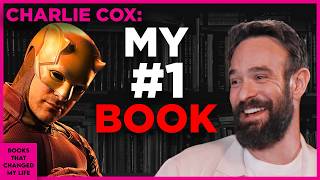
In this interview from the "Books That Changed My Life" series, actor Charlie Cox discusses how W. Somerset Maugham's novel The Razor's Edge profoundly impacted his life. He explores the paradox of making friends with pain and loneliness, contrasting Western reliance on medication with Eastern philosophies that advocate acceptance of suffering. Cox reflects on the novel's themes—characters pursuing wealth, prestige, love, and spiritual truth—and how the book offered him courage, a sense of belonging, and authenticity during a period of disconnection. He delves into the "Golden Key" mental technique for halting worry by shifting focus to a higher concept of God or universal energy, and shares his complex relationship with Christianity, humanism, and the need for tolerance across belief systems. The conversation also touches on his acting career, especially portraying American characters as a Brit, his upcoming work on Daredevil: Born Again, and his hesitations about writing a book despite feeling his story could help others. Throughout, Cox emphasizes the importance of confronting discomfort, processing experiences, and living authentically.
Chapters
if there was a horrible car accident, right? And a bunch of people perished this morning, but you never heard that there was this big awful car crash outside, right? And then I come in at the end of the day and I say to you, oh my God, isn't it awful about that car crash? And you feel bad. You go, oh my God, the poor people, the families, right? What made you feel bad? Because if it was the car crash, why did it wait 12 hours to affect you?
So the big question, how did The Razor's Edge change your life?
Oh, that's a question.
That's the title of the show, right? Yeah.
I should have seen that coming.
One more time.
Wait, wait, wait, wait. Hang on. Give me a minute.
How did The Razor's Edge by Sunset Mom change your life?
I think The Razor's Edge by Sunset Mom changed my life because—
welcome to Books That Changed My Life, New York City edition. Like Huck Finn before us, we're going on an adventure in search of fellow book lovers. It's brought us all the way to the beautiful House of the Redeemer Library here in the heart of Manhattan, and we're joined by the brilliant actor and conversationalist Charlie Cox. He's here to talk about the book that changed his life, The Razor's Edge by Somerset Maugham.
My best friend, also called Charlie, known him my whole life. We had our first playdate together, I think, when we were a couple of weeks old. And he's still my best friend. And he, I'm a slow reader, you know, so I live with books for a month, months at a time sometimes, depending on obviously the size of the book. And he inhales books. And I remember when we were young and we were at school, I was convinced he was cheating. Like he was skipping pages. He just couldn't, there was no feasible way that he could read that quickly. But, um, uh, we actually lived together in our, um, in our adulthood for a brief period of time. And, um, I had this book that I was meaning to get to. It was a William Boyd book and I had it on my shelf and just by chance, it was the only book on the shelf. Um, I went to bed one night and I just kind of clocked it. I was like, I gotta get to that. It was quite a big book. And it was, I remember it was leaning against the left-hand side of the bookcase. And a couple nights later, two nights max, two or three nights, right? I was going back into bed. I laid down and the book was on the other side of this bookshelf. It was the only book on the bookshelf and it was leaning against the other side of the bookshelf and it kind of gave me a shock. I was like freaky. And I I called Charlie, I was like, oh my God, dude, something really creepy has just happened. He's like, what? And I was like, I went to sleep like two nights ago. I saw the book was leaning against, it was like a 600, 700 page book leaning against that side. And I could swear it was on the left. It's now on the right. And he went, oh yeah, sorry, dude, I read that. He just read it in like, you know, in the space of probably over lunch. It's so depressing. And that book, when I ended up reading it, it was called, uh, and ended up being one of my favorite books of all time, Any Human Heart. Beautiful, beautiful book that I actually considered, but I thought probably had already been done here. Um, you know, I probably lived with that, with that book for 3 or 4 months. But I always wonder, I wonder what my relationship to the characters in books is relative to his. Because obviously he's reading it, the book so much quicker that he's living with those characters for such a shorter period of time. Whereas I'm living with characters for months at a time. I feel like there's a chance, you know, the one thing I, I mean, obviously he consumes a lot more books than I do, but, um, I always wonder if like my relationship to some important characters in literature are kind of deeply embedded in my soul. In a different way because I've lived with them for longer.
Yeah. Do you ever too, like when you're reading a really good book, do you ever just stop and think about it?
Yeah.
Like I, yeah, I just like, I've, yeah, I usually like to stop and think about it and absorb it a little bit before I keep going or I will go back and read the part right before where I left off.
Yes, I've done that a lot of times, often because life gets in the way, maybe.
Yeah.
But I've also had a couple of experiences where I've been reading a book, I've got deep into it, you know, maybe a couple hundred pages and not really been, not, I haven't got that, found that kind of like excitement and desire to get back to it. And then I've kind of fallen out of the habit of reading it and I've put it on the side and not got to it. Cause I wasn't seemingly really enjoying it. And then like a couple of months later, I found myself still thinking about it a little bit and still thinking about the characters and feeling like there's a, I want some resolution around it and going back and finishing the book months later. Um, and, and really, really enjoying it. Yeah.
Isn't it funny how time, even like, let's say you read a book when you were younger and you really enjoyed it and then you read it later. And it has a completely different context. Well, like this book probably has that for you, right?
I mean, this is crazy because I read this when I was in my early 20s. And when I was asked for this podcast to submit a book, I, you know, this is on that list, but it's a funny book. I, it had a huge impact on my life. I remember the main, the central character, Larry, really, really well. But I remembered very little else about the book. I didn't remember the plot really at all. And so, you know, I really had no recollection of what happened and who the other characters were. But of course, when I read it, I was the same age as Larry. But then the other central character in the book, who's the narrator, Somerset Maugham, presumably, or kind of an amalgamation of him and people he knew, is with whom he has all the conversations with Larry. Is, I guess he was born in 1860-something, so he would have been about 40 or 50 when he, in the book, so, which is the age I am now. So I read it just by complete chance. I didn't know that when I chose the book, but I read it. I read it the first time when I was the same age as Larry, and I just reread it this last month at the same age as the narrator. So it was a really interesting experience.
And does it have a different context? Yeah, because you're in a different place in life.
Yeah. And whereas, um, although I still very much kind of like admired Larry and kind of, and his, the journey that he embarks on, um, I think when I read it initially, I was, I was probably less understanding of the people who kind of conform to social norms in the book, which is kind of one of the main themes of it. Whereas reading it now, I kind of understand the pressures that come with that a little bit more. And although obviously you still can't help but root for Larry and the journey that he goes on, um, I did find myself kind of understanding more some of the narrator's arguments as to why one might choose a kind of a more conventional life.
Yeah. And so kind of for the audience, like, explain what the book is about.
So, um, the book is about A young man named Larry, who was a fighter pilot in World War I. He went through a traumatic experience. We don't learn much about that experience, but we understand it to be— because he— because primarily because he doesn't like to talk about it. And the narrator kind of often reminds us that it's very difficult to get information out of Larry because he is kind of reluctant to speak about it. His personal life. But he's had some sort of traumatic experience. He comes back to America after the war and is reluctant to get involved in kind of life. And he wants to do what's referred to in the book as loaf. He wants to read and think about life and think about what he wants to do. And he kind of turns down very good job offers, the opportunity to make a lot of money. He won't marry the woman he loves, Isabel. And then kind of rejects all of the opportunities, all of the social norms that you'd expect the other characters to take, that you'd expect one to take, that makes sense for you to take in that moment in your life.
Like get married, get a job.
Yeah. And often with a lot of prospects for him. It just seems to so many of the other characters, and I guess to the reader, makes so much sense in many ways. And he rejects all of that and he kind of goes on a lifelong pilgrimage to kind of, to find, I guess, the meaning of life. He goes on a very deep spiritual journey. And it takes him to all different parts of the world, every continent at different times, some very successful trips, others where he kind of leaves feeling like he's no better off or no more knowledgeable. Um, until he eventually— and we, and we, we find out the information of his life through these moments in time where the narrator meets up with him, mostly in Paris. Um, so a lot of the time Larry is missing from the narrative, and then we find out what he was doing during that time. He was in Germany, he was working in a coal mine, he was in the south of France, he was in India, he was in the Far East and those kind of places. So, and, you know, he, the implication towards the end of the book is that, that he had a, you know, a transformative experience is probably not doing it justice. He had an enlightening experience.
Yeah, we debated whether he was pursuing salvation or enlightenment.
I think enlightenment. I think enlightenment. They talk in the book, it's referred to as they talk about, um, what's the word they use in the book? It's, um, I can't remember. There's a different word that you use. They don't quite— I don't think they— I'm not sure they quite use enlightenment, but there is a different word.
But they start off the, the quote at the beginning is, the sharp edge of a razor is difficult to pass over. Thus the wise say the path to salvation is hard.
So that's from a, uh, from an a Hindu text that the author, Somerset Maugham, I think, learned when he— because he himself went on a pilgrimage to India and met various religious leaders and gurus of sorts while he was over there. And so I think a part of him is in Larry, the character as well, whereas in the book, the narrator is kind of more questioning Larry and finding out from him. And he says in the book that he hasn't been to India, which I think we know he had. So yeah, he goes on this spiritual journey. The— did you ever read— I read this years, years later after I read this book, but did you ever read the Eckhart Tolle book, The Power of Now, I think it's called? Yeah. You heard of it? Yeah. So the introduction to that book Eckhart Tolle describes what happened to him in great detail. And it kind of like, I think he almost describes going through, like achieving like a form of enlightenment initially in the course of one night of a very, very painful night of great despair. He kind of had a moment where the pain was so great that he was kind of like pulled out of the bondage of self or whatever you might call it. And, um, anyway, that description of what he went through, how he describes the feelings afterwards and what he believes happened to him, is very similar to what Larry describes in the book when he's— when he kind of relates it to, um, to the narrator.
The, the fascinating part of this to me, as far as your relationship with the book, is that your father gave this to you.
Yeah. Yeah.
So that's, that's such a cool thing.
So cool.
But, um, well, maybe just tell me a little bit about how you grew up. Like, where did you grow up?
Um, so I grew up in England.
Um, I thought your accent was from Texas.
Yeah, I just put it on. Um, yeah, I grew up in England. Um, I kind of, my, I lived in London most of my life. I went to boarding school.
Um, question really quick. What's better, London or New York?
That's too, that's too different. They're too different. So, you know, London's my hometown and, but New York is New York, you know, can you say, um, so, um, yeah, I could never compare the two, but I've had one, you know, amazing, wonderful experiences in both. Um, I went to boarding school, um, and which is a, in, it's a private school in the UK.
So you're sent away?
Yeah, actually, I asked to go.
Why?
I wanted to go because I had visited a boarding school. I was at a day school in London, and we had a concrete playground, not much bigger than this room. And that's where we had our breaks, you know, from lessons.
Did it feel like a prison?
No, no, but it was all I knew. I had good friends, I had a good time. But then one weekend, I was staying with a friend over the weekend and he went to look at a school that his parents were thinking of sending him to. It was a boarding school. And I was staying with him for the weekend, so I had to go. And we showed up at this school in East Sussex, which is just a couple of hours outside London. And there were like endless fields and they had soccer pitch, football pitch, soccer pitches and rugby pitches and cricket greens and a golf course and tennis courts. And I just was blown away. I was, you know, my whole life was at that age was outdoor play and sport. I was obsessed with sport. Still am. And I just couldn't fathom that that was a boarding school. And I went home and I said, I want to go to that school. How old? So I went up, I think 8. I was 8.
Wow.
Yeah. My father actually went to boarding school at 4, and I loved it. I loved every minute of it.
So just for us that have never been to boarding school, you're away. So you're hours away from your parents.
Yeah.
For long periods of time, right?
Yeah. So you typically, you have a weekend home every 3 weeks, um, and then you'll have a half term, and then you have, and then you have, you know, we, the school year is slightly different in the UK where you do have 3 separate, the summer holiday I don't think is as long, but you do have 3 separate proper holiday breaks. So you get like 2 or 3 weeks for Christmas and Easter and then the summer as well.
So you come home for, so you come home for those.
Yeah.
And what did your parents do?
My father was a publisher.
Oh, really?
Yeah.
So you had books around?
Yeah. Yeah. He published, um, he published a parliamentary book called Dodds. So it was basically an autobiography of everyone involved in, in the British Parliament. Um, so he didn't, I don't think he published any fiction. It was all, it was like a manual. Um, but he, you know, he was a publisher and he's an avid reader, always has been. Um, I was not. That was something that I, that was a tough journey for me.
Can your father read books quickly?
Yeah, I think he's a smart reader and a quick reader, but also he's got like, um, a very calm disposition, my father, and he can sit and he can sit to this day. I mean, he's in his 80s now, but he can sit and read for hours. Whereas I can't. I never have been able to do that. I have to do it in small chunks. My mind is very busy. And in a weird way, becoming someone— I don't read as much as a lot of people do. I kind of go through periods while I read a lot of books, but I probably average, I don't know, 10 books a year. It's not a huge amount, but becoming someone who does read is weirdly a big— has been a big achievement for me in a funny way, because it was really difficult. You know, I'm dyslexic and I would get so frustrated when I was a boy at school reading because I would sit down to read a book and, you know, I would blink and half an hour had gone by. I'd read 5, 10 pages and I had no recollection of any of it. I just, my mind, I'd just gone off in my head, just completely disappeared. And, and, and so it was really it was really difficult. And I kind of wanted, you know, obviously my best friend was such an avid reader and he always had books around him and I was always so kind of impressed by that. And I admired it and I wanted to be someone who could share that joy with him. And for a lot of my early childhood, that was really, really tough.
Were you diagnosed?
Yeah, I had, yeah. I mean, I was in, I mean, it was different in the '80s.
Yeah, because a lot of times they would just label you as not being as smart or, you know, they weren't as great at diagnosing seeing it back then.
Yeah, there was, it's funny, it's kind of vaguely connected. There was one point where I was in a class, I remember this really well. I was in a class, I was in an English class when I was about 9. And, um, the teacher asked me something. I said, what? I said, what? And he said, can you go and see the nurse? I put, this is at the boarding school. Can you go and see the nurse? I said, what? He said, can you go, go and see, I can't remember her name, Mrs. Hudson, I think her name was. Go and see Miss Hudson. I was like, I feel fine. He said, just go and speak to her. So I walk up to the main part of the school. I go and see the nurse. And the next thing I'm in a car and they're taking me to the town, the local town, to have my ears tested. And they had wondered if I might have hearing issues because evidently I was being spoken to and ask questions, and I was constantly not present, just either not responding or saying, what? What? And looking back on it, I think I was just like, you know, I was in my mind, in my head, just gone.
Did you daydream a lot?
Yeah, and still do.
You know, just when you were a kid, what would you daydream about?
God, I don't know. Just everything. Just off with the fairies, man. Just imagination. You know, thinking about—
I would daydream a lot, but I would daydream about running companies. Or like being in charge of a fire department. Like, I was always, yeah, like we were going to do something. Yeah. In my daydreams most of the time.
Wow. I don't know.
I would never be able to daydream just like sitting in a meadow or like it was always very active.
Oh yeah, I think that's true for me. It was definitely, and again, in a weird way, it's probably some form of escapism from the quiet and the stillness of the moment. You know, I, so I read a lot with my children. Because I really want to get them in the habit of reading young because it's become something that's of such joy to me, but I had to work so hard at it. And I notice in my children that they probably have, you know, a little bit of, certainly my daughter has a little bit of the, I don't want to label it because it's so easy to label things now, but that she certainly struggles to maintain focus in the same way I do. But what I notice is when we read together, she moves so much as she's reading. And it's difficult for me because I want to make sure that she's reading the right words and, you know, that I can help her or correct her if there's a long word or whatever. But I actually think it's helping her. The movement is kind of really helping her. And so I even suggested the other day that maybe she could walk while she reads a little bit.
I do that.
Yeah.
I walk while I read.
Yeah, because I've done that in the past and felt it helpful. So I'm not sure, you know.
But then you get tired and you sit down.
Yeah. But like say children often, and I've read this somewhere as well, that, you know, sitting behind desks all day is not very conducive to learning when you're 6, 7, 8, or 9, you know.
No, the school system was developed to create factory workers, not creative, you know, entrepreneurial types for sure.
Yeah. So no, I had to work really, really hard to develop a love.
So when were you diagnosed? When did they diagnose the dyslexia?
I just remember about that same age, I started being taken out of classes and gone with another group. To have special help with that stuff, you know, like spelling and reading and, you know, whatever, that kind of stuff.
Did you have siblings?
Yeah, older, much older.
So you were the kid?
Yeah, so my closest sibling is 10 years older than me, so I kind of weirdly felt like an only child in a, in a, because I was at my, from 5, 6, 7 onwards, I was, whenever I went home, my, my siblings had left, so it was just me and my parents.
So did you love boarding school?
Loved it.
Loved it.
Loved it. Yeah. But it was like, you know, sleepovers every night with your mates. And it's not for everyone. Like, that was very clear to me from the day I got there. You know, I'm very close with my mum and dad. Very, very loving home. Very, kind of beautiful childhood. And so going away to boarding school wasn't difficult for me. I got really excited to go home. I got really excited to see them, but I wasn't, I wasn't paradoxically, I wasn't homesick. I felt secure. Not saying that people who do get so homesick unnecessarily have coming from unloving families, but for me, you know, I didn't find it difficult. From the first night I got to boarding school, I was like, this is great, you know. And then of course, you know, my— I was just— it was just playing nonstop play. Whenever you got a break from lessons, we were outside in the fresh air and it was amazing.
So did you want to be an athlete?
I think I did in a childlike kind of way. I think by the time I was good, I was never that good.
So then when you were like—
Yes, I dreamed of being a cricket player or a football player or something like that, for sure.
Yeah. Like, yeah, 16, 17, what did you want to do?
Um, not— I don't think I'd really— well, I know it was around about then I started thinking about acting for the first time. I didn't know any actors, and so it wasn't on my radar. Well, this is the thing I was saying earlier on, like, going back to a little bit about what you asked earlier on, is going to private school, which is very expensive, especially a boarding school, it's a lot of money. That your parents have to pay and they're paying for, you know, an education. It's not, it's kind of frowned upon both from most parents and the faculty to go and do something that isn't, that doesn't require a college degree. So when we—
Something in the arts.
Yeah. Well, it's, I mean, obviously if you are successful in that, they love it. Oh yeah. But when you are thinking about leaving school, the school and your parents want you to go to university. Um, it's, it's, that's the, that has historically always been the way to, you know, to build a great life and to make money and to have.
So was there pressure for you to do something?
There was pressure from the school, but what were those options? Well, you know, we had a career, like a, that we had this day in the, like, when you're about 17 where you do this 3-hour form and you answer a million questions. And then at the end, they send them off to some company that specializes in this. And then it comes back and it gives you like what you are most, um, you're going to be the most likely to be successful in. And it came back for me. It said hotel or leisure management.
Yeah.
And so they were like, then they started saying, well, there's a great university in Leicester. In the north of England that has hotel and leisure management. And I had, so what had happened is for me is I got into acting because I had really bad skin. So when I went through puberty, I suddenly had, we in the UK, we say zits.
Yeah.
I had spots everywhere.
In the US we say zits.
You say zits as well? Okay. Oh no, in the UK we say spots.
Spots.
You guys don't say that, right? We say zits. You say zits. So we had spots. Because I've said that.
Spot is so much softer.
Yeah, but it's also nicer. Yeah, but it also kind of sounds like a disease. It's like, well, it's— yes, I've said that to people in the US and they'd be like, you had spot? What is that? You know? No. So I had terrible skin and I was really embarrassed and shy about it. And on the weekends at boarding school, what do you do? But you go to the girls' school and you meet girls. And I didn't want to go. I was too ashamed. To, you know, show up. And so I, but I couldn't tell my friends I didn't want to go and meet the girls with them. So I got involved in theater because we would rehearse on the weekends. And that's how that started. That's really how that started. To escape. Yeah. And then of course the irony is I met all the coolest girls in the theater class. And so then all my friends would be like, can you introduce me to Daisy? So yeah, that's how that started. And then I was doing it. And again, for me, that was— I didn't know any actors. I didn't really ever consider it as a profession. I didn't really— just my mind hadn't thought that way. And then I was doing a play, a Patrick Marber play, towards the end of my school career. I was probably 17 or 18. I'd had a slightly strange experience where a teacher who was not loved by the pupils because he was quite strict, and I was in his English class and his theater class. And because I wasn't a great student necessarily, I had this kind of weird paradoxical experience with him because I'd be in English class with him and I'd be like a letdown. But then I'd be in the theater class with him and I was one of the favorites. And he was very excited about me. He put me in a play and then he, for the final year, he cast me in the lead of the final year play. And then he died in the summer before we did it. He had a heart attack and died. And kind of always vaguely felt like he's been watching over me a little bit. But we ended up putting the play on with a different teacher who I'm still very close with and in contact with. And someone, we put the play on in his honor. Someone came to see the play and the school that I went to was in a town, so tickets were sold. It wasn't just the kids and the faculty. It was, you could buy tickets if you lived in the town, anyone could buy tickets. So it was a very good standard of theater. It's proper theater. We put the play on, someone came to see it, and then she was waiting for me in the lobby afterwards. And she said, I work at LAMDA, which is a drama school in London. I think you should consider applying. It was the first time I'd even considered it. And what was really cool was a few of my friends at school wanted to be actors and their parents had said, no, you can, if you want to be an actor, you go to university first, you get your degree and then we'll talk. And my parents said, do what you want, go and do it.
Oh, that's great.
Well, they had, what I found out years later is they, before he died, they'd had sat down with Mr. Hargreaves, this teacher who'd passed away. And he said to them, "I shouldn't be saying this, but maybe don't send Charlie to university. He'll just— he'll probably just piss it away a little bit." Because I was, you know, I was part— you know, having a party and having a lot of fun, as it were. And he said, "Look, he's got a talent for acting. It's not going to look good with the school's statistics necessarily, but—" you know, and I was lucky enough that I had very open-minded parents who were just like, do what makes you happy. So that's great. Yeah.
So you're 18 or 19 when dad tells you to read this?
No. So now, so then, so then, okay, so I go to drama school. I'm, I have a lot of luck, right place, right time. I'm, I'm making it, I get, make it, I get an agent. I did a movie before I went to drama school. I then did go to drama school and then I was taken out to do another movie, a Shakespeare film. Um, which is kind of my first big break, and, um, everything was kind of going really well. I got my first lead in a kind of a big studio picture, which was, um, fantasy film from 2007 called Stardust. And Robert De Niro, Michelle Pfeiffer, Claire Danes, Peter O'Toole, huge cast. I was the lead in that really lovely film. I just actually showed my kids for the first time. It's very, very sweet film. Really enjoyable to make, did not make any money when it came out in the US. And despite having very nice reviews, didn't do very well. And I suddenly found myself in a very odd place where I was probably 23. I was not being given opportunities at the level I had been at before. The kind of the slow trajectory because no one has, everyone assumed I was now off doing big Hollywood movies, but the movie had not done well and I wasn't getting offers on big films either. And I suddenly, I blinked and then a year had gone by and I'd stopped working and I was really, it was shocking and very frightening. I did not have a degree. And I was living with a girlfriend in Los Angeles, but I couldn't, I had an O-1 visa for my acting. But I was running out, I had no money, I'd run out of money. And I couldn't get a job. I wanted to stay with my girlfriend. I wanted to keep trying to get work and go to castings and you know, try to keep making it as an actor, but I needed to pay rent. I needed money and I couldn't go to Starbucks. I tried to get a job on a construction site and I couldn't, um, because I didn't, the visa wouldn't allow me. So I tried to go to a construction site so I could get, you know, cash in hand. I just, and I couldn't do it. And I had to go back to England and, and, uh, uh, try and get it, you know, a job that way. So I'd kind of had this huge, like, um, like very fast meteoric rise, as it were, as a very young man to the lead of a huge studio movie with the likes of De Niro and etc. And then within a year, I remember I had 3 recalls for a small-ish supporting, a small supporting role in a BBC drama. And I didn't get it. And I remember just thinking, oh, I have to rethink this. This is not going to work out for me. It was really scary. And I, of course, have no qualifications and no idea what I'm going to do. So I go back to England and my agent suggested I go on stage for the first time. And I was terrified of that because I hadn't finished my training, and I believed that I'd need— I should— if I'd have finished my 3-year training course, I would be better equipped to be a theater actor. And I met with the director, and he— Jamie Lloyd, who's a huge, huge, amazing director I've worked with multiple times since then, but he was quite young and just starting at the time. And met with him, we had a lovely chat, and he convinced me to do this Harold Pinter play. Harold Pinter was still alive, and he was going to be involved in the production. I was terrified and I initially said no. And my agent called me up and said, you're making the mistake. She was like, it doesn't matter how the play goes. It doesn't matter if it's good or bad. At the end of the play, you will feel like you're an actor in a way that you need to feel in order to go on and make a career for yourself. You will feel like in some way you've started the journey towards quote unquote earning your stripes. And I didn't really know what she meant, but I knew. Did it resonate? Yeah, I didn't know what she meant, but I knew she was right in a weird way, if that makes sense. Yeah. And she was right. And I did this play, and it was during the play that my father gave me the book.
So had your father given you books before this?
Yes, a couple. Like what? He'd given me a book that I'd loved, a Kingsley Amis book called Lucky Jim. He gave me the book Lucky Jim and I loved it so much. And it was the first book I wanted to recommend to my friend Charlie. And he was working in Afghanistan at the time for the Red Cross. And so I mailed it to him. And the funny thing is he told me when he got it, he's like, I never, you can't, mail doesn't reach me. I tell everyone, don't send me any mail because it will not get to me because of how complicated. But he got the book. Yeah. So Lucky Jim was the book my dad had given me. And I, then I asked him for another recommendation and he always took his time. I would say, have you got a recommendation? And he'd say, well, what do you like? And I'd say, well, you know, I like a bit of this and that something. And then a few days later, he'd call me and say, and he said, Somerset Maugham, The Razor's Edge. I had already read Of Human Bondage. So I knew I liked the author.
Um, what did you, what did you tell him that you were looking for?
Well, with Lucky Jim, I remember saying, I like a little bit of romance. I like a deeper meaning to the book, as in I'm sure that's true of almost every book, but like, you know, feeling a sense of, you know, there's an important element to it that's like, you know, a life lesson of some sort. And I also like a bit of humor. And I remember when I read Lucky Jim, I was like, wow. I mean, like, I almost felt like I was asking him for an impossible task and he gave me exactly what I was looking for. But, you know, so, but I'm getting on the bus from Chelsea every day to the theater. And having had this moment, this is a big, I'm feeling like I'm now trying to rebuild ironically, even at the age of that tender age of 23, I'd had this, you know, this pinnacle of success and then it'll all come crashing down in my mind. And probably felt a lot worse than it was realistically. But at the time, I was really, really terrified. And I'd also spent all my money. I didn't have, you know, I didn't know how I was going to pay rent and stuff. And so now I was kind of going back to my roots, as it were, and learning my trade on the stage, doing this play with amazing, wonderful British actors who'd been legends of British film and television and theater. And, um, and reading this book on the bus, reading this book about choosing an unconventional life, choosing the different path. Because remember, all of my friends now had left college. By now, starting to see success. They were in the banks or they were in the, you know, and they were doing whatever they were doing and, and, um, you know, buying houses and things like that. And, um, and, um, you know, so I'm reading this book about, you know, the courage that it takes to recognize when something, just because it's normal, doesn't mean it's normal. Do you know what I mean by that? Yeah, like, just because it's conventional doesn't mean it's right. Um, and I remember the feelings on the bus of like, because I would, you know, I was, I was dealing with quite a bit of anxiety at the time and I remember like being on the bus and reading chapters of the book, especially the conversations that Elliot, not Elliot, that the narrator and Larry have together and feeling a deep sense of kind of calm, a deep sense of it's going to be okay. Like even if it's not okay, it's going to be okay. Even if I'm not going to be an actor and I'm going to find something else. It's going to be okay. And I remember thinking, I've got to go to India. I've got to go to India and spend some time there as a matter of utmost importance, because that's where his, you know. Did you? Yeah, many times. Yeah.
Yeah. What did you experience in India? Or what did you learn, I guess is the question.
Well, I made a decision around about that time. Which was, ended up being a really good decision and a really important decision, which kind of, kind of answers your question, which was when you're an actor, a young actor, you either need a job, so you have to be around when your agent calls, there's an audition tomorrow, right? Or you have a job that hasn't started. And so you're preparing for that work. Or you're working. You're only in one of those three states. And because you're only in one of those three states, you never have time to go and do anything, right? You can't. There's never a moment, really, especially if you're a young actor and you're starting out, there's never a moment where you can— it's not like a regular job where you get a two-week holiday period where you think, all right, I've got to take my two weeks vacation. What am I going to do? There's never a reason to leave. And I remember thinking around this age, like, my life's going to whiz by me and I'm going to have done nothing interesting other than be an actor, if I'm lucky. And I really, I had brothers. My older brother Toby had spent a lot of his life traveling and been to all cool parts of the world. And every time he came, he'd be missing for years at a time when I was a kid. And he'd be in, you know, Israel and Africa and India. He'd be all in and then he'd come back and I'd hear all these amazing stories. And I really remember feeling a sense of like, fear that I wasn't going to have that experience at all. So I made a— around exactly around about this time, I made a promise to myself that after every job, before I started panicking about the next job, I would take a period of time and I would go somewhere I'd never been. And I did it, religiously did it for— and still until I had kids. And even now I'll find a way, like, you know, I finished a job recently. I'd never been to New Orleans. So I took my children to New Orleans for a long weekend. But like, I went to Africa for a month. For 2 months to almost 3 months. Went to India for a few months. I spent probably 2 months driving from Panama to Guatemala. All after I finished a job, I made sure I took that time. I told my agent I'm going and I went. I did a motorcycle trip all around Europe over a month by myself. Like really, really drove across this country from twice from going both directions. Um, and, and I also kind of think a part of me knew that if I wanted to be a good actor, I'd probably, you know, you have to have those experiences. You have to see different parts of the world. You have to experience other cultures and, and, um, um, yeah, I mean, ended up having, you know, the, you know, making the best memories probably of my life, um, in some of these places. But India, I went to on 3 occasions. One of them was because I was reading another book and I was in, and it takes place mostly in India. In fact, the whole thing takes place in India. I was enjoying it so much and it was a big book. And again, I'm a slow reader. I was enjoying it so much and I wasn't working. And I thought, I'm going to go and finish it in India. So I literally, 2 days later, I got on a plane to India and finished the book in, in, in a Mumbai and Goa. Or is it?
That's pretty cool. That's amazing. So even if you didn't have enough money or whatever, you still just went?
Yeah, I mean, when I did that, I had a— but I went on shoestrings. So when I was in Africa, I don't think I spent a single night in a hotel or a hostel. I was in a tent every night. In India, it was slightly different, obviously, because it was very, very cheap. And I went with a friend on that occasion, on the occasion where I was with the book, I went with a friend and we shared a, like a, you know, a tiny mud hut room with two beds. Um, you obviously, you would save money because it's much cheaper than being in England, you know, so it was actually cheaper to go away, just the cost of getting there. Yeah.
Do you think Larry in the book is selfish?
No, no, no, I don't. I don't know what, what else one would expect of him though. I think it would be, I think it's an example of, it would be selfish to, in that situation, it would be selfish to not, to not be authentic, you know. And actually the conversation that he has, so at the beginning of the book quite near the beginning of the book. He's with his fiancée, Isabel, and they're engaged to be married. They don't have a date. And one of the reasons they don't have a date is because Larry is not ready for that commitment and he needs to spend some time loafing and he wants to see a part of the world. So he goes over to Europe by himself. Meanwhile, Isabel wants to get on with her life and she, but she's on, she loves Larry and she understands and she wants to give him that space, but there is a sense that at some point they need to figure out what they're going to do. About 2 years passes and she goes to visit him in Paris and they have this conversation. It's a very long conversation in the book where, and it ends with them deciding not to get married. And it's kind of heartbreaking because they both love each other and they both want to get married. But they don't want to live the same married life. So he wants to marry her and go off around the world and see all parts of Europe and the Far East, etc. And she wants him to take a job and make a good living and have children and make them comfortable and, you know, own a home and nice furniture and nice art and those kind of things. Um, so it's a kind of a devastating, you know, it's, it's a kind of a bizarre, weird experience, example of two people separating, but not because they don't love each other. No, you don't hear that very often. You know what I mean? I think it's probably more common, you know, in the earlier, you know, years ago in the turn of the century. But so is that the conversation you had with your girlfriend in Los Angeles? No, no, I mean, I just had my, my plan at that point was to go and get a job and come back. And then we didn't survive the distance. But I don't think he's selfish because I don't, you know, I don't, I think if you have that yearning, if you have that, that suspicion that there is a deeper meaning to your life or to everyone's life, to one's existence, it's impossible to conform to, to you know, a normal way of life if, if you just have this sense that there's, there's more to life.
I know this is like a big kind of question, but I'm just curious your thoughts. What, what, what do you think the difference is between people that have that calling and people that conform and kind of follow the rules and do the thing that everybody wants them to do? Like, what do you think the difference is? Because it's a, it's a small percentage. That just doesn't fit in, right? Like, I never felt like I fit in. Yeah. To those rules. I always had a little bit of a suspicious feeling about authority and sit at the desk, line up, like, wait in line, do this, do that. And I don't know, I could always see that everybody was miserable. Yeah. I'm like, why would I want to do that? You guys all are miserable. Yeah. You're, you're biased. Like, you're saying you're not, but I can tell you are. Like, you're miserable. You want to kill yourself. Like, you're just doing this thing every day redundantly, professing that that's the answer.
It's a very difficult question for me to answer because you just were always that way. Yes. But also, I'm conscious of the fact that it's easy for me to say because So far I've been very fortunate and my life wasn't it 23. Sure. It took a risk. It took courage at that age. Could have conformed. No, I could. Yeah, but I couldn't.
Yeah. So it's just, I couldn't.
It was, it is in retrospect. I couldn't.
It's innate. Like, yeah, it's not.
And then, but the funny thing is that there is a hybrid. I do believe there's a hybrid. What's the hybrid? Well, I think I'm a version, I'm an example of the hybrid now because, because You know, I have become someone who has enjoyed conforming to more social norms now, later on in life. I do not feel like I'm in a rat race. I do not feel like it's, um, I'm compromising those earlier ideals. Um, I'm, I'm really enjoying a period of my life where I have you know, I live in a house, you know, I own a home with my wife and we have two children and they go to school and we go on holidays. Whereas there was a period of time where I couldn't go on holiday. I had to go on like a trip. I had to go on a, I couldn't go to a beach resort. Do you know what I mean? I had to go to somewhere I'd never been to before and get involved in the culture and the life and live in a, you know, you know, when I went to Africa in 2010, I went to Africa indefinitely until I had to come back, run out of money. I didn't take a phone. And we had phones back then in 2010. Like I had a phone, I didn't take it with me. So I was, you know, and as I said, I slept in a tent almost every night. And I traveled from Cape Town through South Africa and then up all the way, uh, all the way up to Kenya. So I was like, I went Mozambique and then back into Botswana, Zambia, Malawi, Tanzania, went over to Zanzibar, Kenya, um, by road, by bus.
Um, but don't you think that the difference now is you're choosing it versus it being forced on you?
Yeah, but I'm also but I also found not— I don't want to compare myself to the likes of like Larry in the book. I want to be careful not to do that, but I found some peace. I did find like over time I found— yeah, again, I'd be really reluctant to put like to label it anything that's like that, but because— but I found I found a way to be happy. Almost all, you know, like I'm a very, you know, I'm kind of marveled at the fact that I'm, you know, I'm a happy person. I went through a period in my 20s where I found my 20s really tough. Despite having a beautiful childhood and beautiful home and no major traumas or anything like that, for whatever reason, I was a very anxious, frightened 20-year-old plus that didn't feel like I fit in, didn't know what my path was going to be, didn't feel good enough, you know, massive approval seeker, um, you know, massive imposter syndrome to this day, to be honest. Like, there's still— I'm not sure you ever recover from that, but, you know, what do you mean by imposter syndrome? I'm just always having an inkling that you're just blagging it. Really? Yeah. Yeah. I mean, I've said this and I've joked about this in the past, but it's true. Like, I kind of feel like in some ways, like, I exist in this kind of odd paradoxical state where I can feel like a good actor and trained and have done good work and proud of the work and successful in those things and feel like I've earned my right to be here. And in the same breath, I can feel like I've fooled everyone and I'm a, you know, I'm the most embarrassing thing on the set or on the stage or something like that. You know, when we did, I did a few years ago, I did Betrayal, Harold Pinter's Betrayal on Broadway. And I would just laugh on the subway on the way home because there were nights where I walked off stage and I felt like a million bucks. Felt like I'm a, I'm a real actor. I just did Harold Pinter's Betrayal. The New York Times said it was a critic's pick, you know, like just so proud of myself. And then, and like feeling really like I'd, like I'm doing it. And then the next night I would, uh, I'd be like cap down, hood over, like don't want to make anyone, you know, and just like embarrassed. Like I let the cast down. And the only thing that gives me solace around that is I've heard so many actors who I love and admire say the same thing. I heard Christopher Walken say every time he finishes a movie, he's convinced no one's going to hire him again. So I just try to use that as a source of strength rather than weakness, I guess.
So just back to happiness for a second. What did you figure out about that? What is the recipe to happiness? How would you explain it to your kids?
I think you have to go on your own journey with it. I don't think there's a shortcut. I think you have to—
so I'm not—
I just, I'm really conscious. I'm not— I don't want to preach in any way. I'm just— I'd be very careful not to suggest that I have any answers or anything like that. No, but you have your experience.
My experience— I'm just asking about your experience.
My experience was I leaned into pain. That's what I think it was. Give me an example. I became unafraid of being in pain, of being uncomfortable. So you would do the thing that scared you. I remember having a night in— I had a really bad night in Argentina. I was doing a movie in Argentina and I was in Buenos Aires and I had a really bad night. I was also, it turned out afterwards, I also had bird flu. So I was sick as well. But I didn't know that at the time. I thought I was just having like an existential crisis. I was really, really I was just in a lot of pain. And it kind of feels ridiculous to say that because, you know, look at the circumstance of my life, didn't equate. You know, it was just, I was just struggling emotionally for whatever reason, you know, there was nothing in particular that was going on. And I remember that being kind of a shocking realization. And I remember thinking, having this thought, which was, if I'm not injured, I'm uninjured, I haven't fallen over and hurt myself, and yet I can identify physical pain. So it's not just in my head, if that makes sense. You know, like, the manifestation of the fear that I'm feeling is in my body as well. And I couldn't sleep. And I, I just, I, and I'd been doing a lot of reading. I'd been doing a lot of, I'd read Eckhart Tolle, I'd read Bhagavan Das books, I'd read Krishna Das books, I'd read The Road Less Traveled, and I mean, you know, The Four Agreements. Uh, so many, I can't remember anyone I got hold of, someone given me, I'd read it, you know. And so I had a lot of words and vocabulary that related to all this. And you know, you do start to see that they're all kind of saying the same thing. Like I said, Larry's description of his experience is like Eckhart Tolle at the beginning of The Power of Now. And so I had a lot of these words and I remember just having a sense of like, well, where, okay, so if I'm in, if there's physical pain, where is it? I like identify it, point out where it is. And then so you start focusing, I've started to focus on this feeling. The physical feeling of the pain rather than— and suddenly I'm not in my head anymore. I'm trying to identify the physical feeling of it. And then the next thought I had was, oh, it's not there. It's not really there. It's not there. And it's not attached to any circumstance. It's not attached to life, to my physical circumstance, not attached to my love life or my bank account or my career. It's just a physical, it's just a feeling in here and it's actually nothing. It's actually pretty mild. Um, it felt like what, what it felt like what was this, Eckhart Tolle talks about that, this, the, and again, I'm not equating myself to someone like him, just small experiences in the same kind of area maybe. He talks about like having the separation, being the watcher, right? Someone who can— if you can, I think he says in the book, if you can say to yourself, I am proud of myself, or I am disappointed with myself, or I'm so mad at myself, you're identifying two elements to yourself.
It's a form of dissociation. The self and the I, right?
I think it was like in that moment I had a form of dissociation from myself. I became the watcher. Yeah.
And as you're watching You're like, well, it just becomes not—
it just dissipates into nothing. It isn't there. It's not there.
Which then gives you a power. You learned a new trick.
And, and the— but the trick is you, you become unafraid of being uncomfortable. And when you become unafraid of being uncomfortable, you cease to become uncomfortable.
So then from there, you develop the habit of pushing into the pain.
Yeah. So go— going deeper into it, leaning rather than avoiding it. Leaning into it, I guess. Leaning up, leaning into the pain, the physical feeling of it, not your interpretation of it, the actual physical feeling, leaning into it.
These things are very hard to describe, but you're really good at it. Oh, I'm not sure about that, because a lot of this stuff, like, you experience, but it's hard to put into words.
Yeah. Yeah. So I think there's a kind of an oxymoron that I'm trying to articulate, which is that if you lean, if you make friends with the pain, Bhagavan Das says, um, Chris Collins, um, in one of his books, he says, you know, make, make friends with the loneliness and the shame. You can make friends with the loneliness and shame. I think it's the same idea of like leaning into that feeling and allowing it. The irony, the irony is it ceases to be painful. Weirdly, because you've accepted it. And you, I guess you, because there's, that's a form of acceptance. And if, and if there's a form of acceptance, there's no, there's no resistance. And I think often feeling deeply uncomfortable, feeling very fearful is just resistance. It's a resistance to the present moment. Does that, I think, does that make any sense?
Yeah. Well, in, in kind of too, like in Western philosophy, we kind of tend to talk more about it and label it and give it this, like, power. But in Eastern philosophy, if you acknowledge it, you control it. Yeah, like the, the solution is the problem. Yeah, they're one and the same. Yeah, right. So if you know that you have a problem, then you could figure out the solution, right? Right, right, right. We're here, we tend to put the problem on a pedestal.
Yes. And probably try to solve most problems externally. We get into it, especially in the West. I think we get into a habit of trying to fix problems, particularly in the West, where there's— in my country as well, over here, but where there's a pill for every pain, right? Yeah. Every problem, there's to take a pill for it. But, you know, and I'm not— medication is one of the great you know, events of modern life is thank God for medicine, modern medicine. Um, but it is, I think it's widely understood it's overused.
Medicine fixes stuff, but if it becomes the, if it's an addiction or it, it doesn't actually fix anything, it just numbs you.
No, but it also has, it has you from a mental and a spiritual standpoint, it has you coming at the problem from the other way. Yeah. Backwards. You're trying, you're trying to put something on top of it to fix it rather than, you know, looking at it the other way around and seeing, you know, look, finding, you know, the, the, um, the source of it.
Like, I, um, I'm not making light of this in any way. I'm only talking about my experience. But like, when somebody talks about, oh, I have anxiety, I'm, I always think like, well, when I was your age, I had anxiety too. Just nobody cared. Like, I had panic attacks. I was scared to death. Yeah. About how it was going to turn out and you know, what, what should I do next? Or what? But nobody cared. Yeah. Now we put it on a pedestal and it's like, it's all kind of like here. It's like, it's a part of, it's a journey.
And there's something amazing about that. And there's something potentially quite detrimental about that. Yeah. It's kind of both. Right.
So, so because, you know, we've gone too far.
You can go too far with it. You know, you can go too far with it because there's a middle there.
Yeah. Where you could help guide through?
You can. I think it's really important to identify, expose things that are worrying to you, things that are painful to you, things that are unprocessed that you need to, you know, talk about things, expose them, see them for what they are, shed light on them, share them. You know, there's immense healing in those activities. At the same time, if you don't then shut the door on it and get on with your life, you will— there's a tendency to just wallow. In the fear and the worry and the pain. And then you do, you know, that— what's that great expression? You know, worrying is praying for what you don't want. You know, so if, you know, stop praying for the things you don't want to happen. That's what— that's all worry is, you know, is like praying.
Well, yeah, and in a sense, this book for you was, uh, you know, a relief in a way of, oh, there's another way. Like, listen, this, this story here is a different path. That you might relate to. Yeah.
Right? Yeah. And I think there's something in the idea that sometimes you can, even if you don't understand something, you can hear the truth beneath it. And I think with that book, it was a really good example. I was like, it's quite dense at times. And the stuff that Larry's saying, especially for a 22-year-old, you know, my first introduction to any of these ideas, you know, some of the ideas, you know, it's quite, I remember having to kind of go back and reread it and try and understand it and pick it apart and try and try to get to the root of it. I didn't understand it all and still don't, but I, what I was, the, I, I, what I knew what I was reading was like that there was truth in it and the truth was making me feel safe. It was making me feel held by something and that, that was probably why it was such a powerful book to me in that moment, that it was, it felt, it just was getting me out, out of the the conventional way of thinking and the kind of surface level of life into the idea that there's deeper meaning, there's deeper truth here, and there's a, you know, there's a path that is probably more, there's a path that is probably more conducive to who I am. Yeah.
Let's, can we go through the book? Yeah, please. So, um, I'll kind of like guide you through the highlights and then you can pick the ones that, that resonate. So 4 is, is just kind of about where you grew up creates your context and your, you know, your biases in a way. So it says, another reason that has caused me to embark upon this work with appreciation is that the person I have chiefly to deal with are American. The persons I have chiefly to deal with are American. It is very difficult to know people, and I don't think one can ever really know any but one's own countrymen. For men and women are not only themselves, they are also the region in which they were born, the city, apartment, or the farm in which they learned to walk, the games they played as children, the old wives' tales they overheard, the food they ate, the schools they attended, the sports they followed, the poets they read, and the god they believed in.
I mean, that's, um, that's like, that's a very confronting thing to read when I, when you, I think about my job, you know, because I play a lot of Americans, you know, and I've felt this exact thing. I felt like You know, I did a film at the end of last year and I played a Brit who went to a public school in the UK. Public school is private school, right? A Brit who went to a kind of a posh school. And it was just, it was stark how how easy it was for me. It felt how easy it was for me to feel like that person, as opposed to what I do over here on a daily basis, which is like, you know, you're acting. I'm really acting, and I'm trying to get as close to not acting as possible because you're changing your voice, your everything, everything. Yeah, like, so there's so many elements to the, the character I play in Daredevil. There's so many elements to him that I don't that I don't identify with. But anyway, I mean, I think it's a really, really interesting, um, honest thing for a, for an artist to say here about that.
And then the, then the next one on page 29 is, you know, kind of talking about France. And so you've been away from, from America so long, Elliot said Mr. Bradley with the dry smile. You've forgotten that in this country girls don't marry because their mothers and their uncles are in favor of of it. That is nothing to be proud of, Louisa, said Elliot sharply. As a result of 30 years' experience, I may tell you that a marriage arranged with proper regard to position, fortune, and community of circumstances has every advantage over a love match. In France, which after all is the only civilized country in the world, Isabelle would marry Gray without thinking twice nice about it. Then after a year or two, if she wanted, she'd take Larry as her lover. Gray would install a prominent actress in a luxurious apartment, and everyone would be perfectly happy.
Yeah, they should just do that. Forget, forget everything I said. That sounds, that sounds like the answer there. Um, yeah, I mean, so look, the, one of the clever things about this book is that, um, you know, you've got all these characters who are after different things Larry obviously is searching for a deeper meaning to life. He's searching for a connection with the absolute. That was the word I couldn't remember early on. The absolute, right? You've got Elliot, Isabel, Gray, and then the narrator. And all of them, other than the narrator, the other three in some way are searching, seeking for I guess, fulfillment or peace through conventional norms. So Gray wants wealth. He just wants money. Isabel wants the trap, the kind of the facade of a wealthy, grand life with everything that that comes with and, you know, beautiful furniture and houses and children and all that kind of stuff. And Elliot wants prestige. He cares about whatever, he wants to be invited to all the best parties. He wants to be, you know, mixing with all the well-to-do and the royal families and the wealthy families and all of those kinds of things. What's very clever about the book is, and I think he actually says this at the end, at the very end, that everyone actually in the end gets what they want. They all end up, you know, to greater or less degrees, they end up getting what they want. And then therefore it's kind of the reader's job to decide how well that worked out for them. And were the means, did the means of achieving the things they want, were the compromises worth it?
Yeah. So in a sense, even if you're passive in your journey in life and you conform, you got what you wanted, right? What you wanted was to be passive. Yeah. And so you don't have much say in the outcome. Sure. But that's what you wanted, right?
Yeah. And if you have the awareness to know what it is you really want, and you're clear-minded about that, then you've got to also therefore be willing to take on the consequences of the risks involved. So Gray, for example, you know, he wants, he wants to be wealthy and thought of as very successful. And he goes and makes a huge amount of money. But then the, the, the, the financial crisis of 1929, when the crash of 1929 happened, he loses everything. And it takes him a decade, if not more, to kind of get back to a place where he can actually earn money again. And so that's, you know, that is, that's, you got to, you kind of got to, I think what the book's asking you to consider that, consider what you must sacrifice and potentially risk in order to have what you think you want.
So I personally like that narrative more than the fate narrative where a lot of people are like, well, life is what it is. You can't fight it, you got to accept it in a sense which lacks agency, right? Yeah. Because if you are intentional and you want to create a certain type of life, you're challenging fate in the way they describe it. Yes. Yes. And saying like, hey, you're going to, you're going to live the life that you wanted to live, even if you're passive. Yes. Is— makes more sense to me than the, hey, don't try to fight fate. It's like I always think like that part of self-help is a little weird. Yeah, yeah, yeah. Because it's trying to get us to conform in a way of like, well, accept it. And it's like, no, it's hard. Like, I'm okay if it's hard. I'm okay if it doesn't go my way. Yeah. It's also like how people will, will, you know, I've been talking about this a lot lately. Like, people look at parts of their life that they consider a failure And then I try to pull that up in my head and I'm like, well, those were lessons. Yeah, they weren't. But whatever side you fall on, if you fall on the fate side, then things that happen to you that are bad end up having more meaning and you hold on to them longer than if they were a lesson. Yes.
I mean, that's—
it goes back to what you were saying earlier about embracing the pain. Yeah. Like if you can see it as a lesson and you can push into to it, it makes you stronger, where the other way it makes you weaker.
One of the things that Larry talks about at the end of the book, when you get to learn about his whole journey, which is really interesting, is whilst in India, whilst studying Hindu texts and learning from his guru out there, he comes to the understanding where he believes— I'm kind of butchering this a little bit, but he basically believes that suffering, which is, I think, a very Hindu belief system, which is kind of a version of like past lives impacting the current life that you're living, so that if you're suffering in your current life, it is because of wrongs or immoral behavior in past lives, right? And he talks a little bit about like, and it kind of relates a little bit to what you're saying about agency because, because he said that he found that his, his ability to withstand suffering in the belief that it was some form of learning lesson from a previous life actually made it much more tolerable. Whereas when he believed it was just unnecessary, a cruel God, just like a complete fate, and you know, some people are lucky, some people are unlucky, that was intolerable.
Because that's learned helplessness. Like, what do you do?
Then what's the point? You're just— it's all, you know.
It's funny how just your change in perspective gives you power.
But it is. But that's the thing. That's the amazing thing about everything. And again, it's so easy to say this, and it can come across as so trite. And you say this to someone who is truly suffering, it's probably the most annoying, like, potentially unkind thing to say. But it is how you process, right? It's not what happens. It's how you process it. You're talking about such a, like, if you, if there was a horrible car accident, right? And a bunch of people, like, perished, right? This morning. But you came in here because you had this full day of work. You did 3 of these. I'm the 4th, whatever. You've been here all day talking to people. So you didn't know about it. You never heard that there was this big awful car crash outside, right? And then I come in at the end of the day and I say to you, oh my God, isn't it awful about that car crash? What made you— and you feel bad. You go, oh my God, the poor people, the families, right? What made you feel bad? Because if it was the car crash, why did it wait 12 hours to affect you? Do you know what I mean? There's something in— there's something— I'm not saying you shouldn't feel compassion and, and, and pain for a tragic situation that has hurt people, whether you know them or not. Of course, that's a completely normal human reaction. But this— but it— but when you take that and you put it in a smaller scale, it's not what happened that caused you the pain, it's your processing of it, you know. So if you can take that information into smaller areas of your life I didn't get a job, you know, if I can change the way I process that information, I can have a completely different experience of my life. If I can find a way for that not to mean anything, not tell me anything about myself, not tell me anything about my relationship to my family or my friends, not tell me anything about my relationship to God, if I believe in God, or, you know, the, you know, the universe or whatever you want to call that. If I cannot have that, those small things in life somehow disproportionately affect the way that, you know, my place on this planet and this earth in this life, then it, you, then your whole, you can change your experience of life in small pieces. Does that make, am I making any sense?
Yeah. And then you live the life that you wanted.
We can get closer to it, I think. Yeah. You can, you can brush stuff off much easier. Yeah. And by the way, you know, I'm, I'm, you know, I'm not—
yeah, we're two dopes trying to figure it out.
I'm also one of those people, I don't know about you, but I'm one of those people like, if you put me in a, in a crisis, I'm, I'm a, I'm really good in a, in a crisis. Some things go bad, wrong, quickly. I am active, I'm helpful, I'm clear-minded and level-headed and all of those things. Great. But if I need, if I'm walking down the street on a regular day and I'm trying to send you a message, a text message, and I don't get cell reception, I can behave like a baby. You know, it's like you can totally like lose it, you know.
You know where I'm, I'm terrible is when I go into a restaurant and they make me wait and I have a reservation. Like it happened to us last night. Like I'm sitting in this crowded entry, people are bumping me or whatever. Yeah, we have a reservation. It's 5 minutes past the time. I just want the table, right? And you like, you tell me I gotta wait for my other people to show up and That's it. I just want to sit down. Something in this country we don't— I want to fight so bad.
They don't do that in the UK as much, but in this country they say to you, it's all of your party here.
Oh, yeah, it's the worst.
And everyone's got one guy in their party who's like 20.
The whole group was— they're all right there. But yeah, it makes no sense. And I want to fight.
It's complete. It's disproportionate. Yeah.
So true. Yeah, it is. It's funny. Okay, page 88. What's the good of knowledge if you're not going to do anything with it? Perhaps he is. Perhaps it will be sufficient satisfaction merely to know, and it's sufficient satisfaction to an artist to produce a work of art, and perhaps it's only a step towards something further.
Is it sufficient just to know? No. I don't think so.
I think you have to apply it. You have to test it out in real life situations to understand it. Yeah, you can't even take other people's advice really fully. You have to apply it to really understand.
Yeah, I think that's right. And I think that— I think it depends on your kind of interpretation of knowledge as well.
Yeah, that, that can be like—
I because there's like head knowledge and there's heart knowledge. You know, like, you, you, if you've, if you've never ridden a bike, a bicycle, you've never ridden a bike, and I show you how to ride a bike, I display it for you, I explain to you the laws of balance and dynamics, and, um, you know, you, you spend time with me explaining to you how to ride a bike, you could probably say Yeah, I know how to ride a bike. There's a form of knowledge that you can, but you, you don't know you can ride a bike until you've ridden a bike. And I think that's, you know, that, uh, that's like that transference of knowledge from up here into here. That's a big part of like the journey is like not just knowing it up here, but knowing it in here where you don't have to, you don't have to trust that, you know, you just know it. Yeah.
And experience over time.
Yeah. It's experience. It's a different time. It's a different form of knowledge.
Let's skip that one. Let's go to 162. Oh, I love this. Yeah, it's so funny. Have you ever thought of divorcing Gray? I've got no reason for divorcing him. That doesn't prevent your countrywomen from divorcing their husbands when they have a mind to. She laughed. Why do you suppose they do it? Don't you know? Because American women expect to find in their husbands a perfection that English women only hope to find in their butlers.
So funny. Yeah.
Did you marry an American or an Englishman?
An American. Yeah. Yeah. So we're talking to her. Yeah. It's one of the things when I was rereading it, I told you I had forgotten what happened. I'd forgotten the plot, but I just remembered the sentiment of the book when I was reading it. And I got to this point in the book, I really felt a part of me I really wanted, in an awful way, I really wanted Isabelle and Larry to get back together, even though they were never together. And it's funny that, like, there's a part of me that— There is a sense that certainly for Isabelle, Larry is her great love. And I think for Larry as well. I think that's definitely possible. And there was a— Despite the fact that everyone gets what they want, as we discussed, I had a yearning for them to find each other despite the fact that it would cause great harm.
Yeah, that's kind of what this next one is about. Isabel is reflecting on her relationship with Larry. Yeah. I pity any woman who falls in love with him. Ooh la la. Why do you say that? She looked at me for a minute with the seriousness I had often not seen in her. I very nearly fell in love with him myself once. You might as well fall in love with a reflection in the water or a tray of sunshine or a cloud in the sky. I had a narrow escape. Even now, when I think of it, I tremble at the danger I ran.
Yeah. So this is not Isabel. This is Suzanne. So this is a very interesting character in the book that comes up sporadically. But yeah, but it's a great description of what it must feel of. She really nails what it must feel like or what it would look like to fall in love with someone like Larry.
And then page 200. Though I have a bad verbal memory, the poem is very short and I was able to repeat it. I strove with none, for none was worth my strife. Nature I loved, and the next to nature art. I warmed both hands before the fire of life. It sinks, and I am ready to depart.
Yeah, that's beautiful. I don't know. I don't know who that is.
It's the English poet Walter Savage Lander.
Yeah, I don't know that. Okay, my question here.
So this is 207. My question is, how did you feel the first time you read this? But Jesus said, 'Get thee hence, Satan.' That's the end of the story according to the good simple Matthew. But it wasn't. The devil was sly, and he came to Jesus once more and said, 'If thou wilt accept shame and disgrace, scourging, a crown of thorns, and death On the cross thou shalt save the human race. For greater love hath no man than this, that a man lay down his life for his friends. Jesus fell, the devil laughed till his sides ached, for he knew the evil men would commit in the name of the Redeemer.
What's deep? Yeah, um, Yeah, it's a true, you know, it's, um, I have a complicated, you know, relationship with my Christianity. Um, and, uh, I find, um, I find that I, I enjoy it. Um, and it's quite hypocritical, but I find I enjoy elements of my faith. And I'm very resistant to other parts of it. So it's always complicated. Anything I, if I read any kind of religious text, Christian texts, I find it, I find it just very confronting. I have to kind of work very hard to be open-minded about it. But when I am, I'm often surprised at how I feel and surprised at how I don't really I don't, I'm not a very good Christian, as in I don't, I have, I kind of stopped going to church many years ago and think of myself as more of a humanist and have not felt compelled to re-engage in any meaningful sense with my faith. It just doesn't quite a lot of it just doesn't quite make sense to me. And that's the truth. And I have explored it. Having said that, one of the most important books up here, up there with this one, probably the book I've read the most of all, like, reread, and of whom I named my son after, the author, is a book called The Sermon on the Mount. By Emmet Fox. So my son is Emmet Cox, and, you know, we— I mean, he's named after, kind of after Emmet Fox. Emmet Fox wrote— it's not in the book. The book is called The Sermon on the Mount, and it's a breakdown of, you know, the Sermon on the Mount. And at the end of it, the last 50 pages is a line-by-line breakdown of the Lord's Prayer. It's shocking to me how important that book is to me and how helpful I found it and how meaningful I found it and how much it changed, revolutionized my life at a time when I really needed it. I've probably read it 7 or 8 times. And yet I don't identify in a real sense with the religion. Isn't that an odd thing? I find that to be kind of bizarre. That's a human experience. But he wrote, Emmet Fox wrote an essay, it's not in the book, but he wrote an essay called The Golden Key. And it's something I think about on a daily basis, the Golden Key. It's a very short essay, but I think about it probably every day.
What is the Golden Key?
You should read it. It's, well, I don't want to undermine it, but it is like a little mental trick, a spiritual mental trick. I think the idea, as I understand it, and I'm probably butchering it, and someone who's Chris Collins, who knows it better than I do, will have a field day blogging about this moment. But the idea is that you identify, if you have worry and concern, if you are struggling with something, you, in the moment that you recognize it happening, the moment you become aware that you're like just spiraling in your head about something, you're really struggling with an idea or concept or a worry or whatever it is, right? A person, situational person, doesn't matter. The moment that you recognize it, you take your mind away from the problem. That's the key part. You take your mind away from the problem. But the only way you can do that is you have to focus on something that isn't the problem. So you can't look at an elephant and say, don't think about an elephant. Right? So if the problem is the elephant, you have to look over here. And over here is any version of God that works for you. Now again, I'm not religious. I don't think of myself as religious, but I believe in something bigger. I believe in the, I, you know, like, I believe in the concept of a, of, of even if it's just the concept of like, of community. Is bigger than me, you know, you know what I'm saying, right? Yeah. So there's a, there's a, there's an, you know, there's an energy, a life force amongst us, you know, this planet is flourishing with life. Um, that for me can be God, right? That's like, the idea is God, that, that, that idea. If I just focus on that idea mentally for a brief moment, it just is a really, it's a really good habit forming of allowing yourself to cease Worry, cease problems, cease concern, and focus on something that is ultimately a positive influence on your life and others' lives. That's all the golden key is. But I think about it all the time.
Yeah, that's interesting that you struggle with that. I think the world would be a better place if we were Christians. Like, it's just a— even if it's not real. Yeah, it's a better way to live.
That's a very good point.
But the problem is it's ran by humans and it's a monetary system. It's a business. Yeah. And it's control. And when you give people power and control, you know, it's weaponized. And so we'd be much better if we loved and like forgave and turn the other cheek and that sort of thing.
I 100% agree. But like with all religions and also with all, you know, with politics or whatever, it requires conviction. And the problem with conviction is when there's conviction, there's no space for tolerance. Because if you believe something that wholeheartedly, other people have to be wrong. Yeah, judgment is like a knife. The thing that is needed in every area of life, in every family, in every household, in every in every democracy, in every country in the world is more tolerance. We've got to be allowed to feel differently from one another. It's got to be okay. Yeah.
So I grew up a pastor's kid and a missionary's kid in church. And I remember when I was very young, I lived in Mexico and I had these two brothers that I played with. They were my best friends. And I don't know, I want to say I'm like 8 or 9.
Same to me, by the way. Two brothers.
And one day my mom just casually says, you know, you should pray for Caesar and Abel. That was their name because they're going to go to hell. And I was like, well, no, they're Catholic. And she goes, yeah, but— and she, you know, convinced me that Catholics were going to hell because they weren't Christians in the way we were Christians. And I was so sad for so long thinking they were going to go to hell. Yeah. And, and I would say like, but they believe in Jesus. But she's like, yeah, but they go through Mary and it's, you know, it's— and it was so upsetting. And I was like, oh, really? We can't just all— we can't just all get along. Like, it has to be them versus us. Yeah. And they're going to hell forever in a lake of fire. They're going to be in a lake of fire forever. I almost wanted to go with them. Yeah. Like, I wanted to be with my buddies. Like, that's so sad. Yeah, and it— that's not—
that's not okay. It's that— it's that stuff that I can't get. Yeah, I can't— I can't get— and to me, that's a priority to it, right?
It's like I'm superior because my God is better. Yeah, it's like, well, you've never met him. Yeah, like, we haven't had him over to dinner. Yeah, like, there is a suspension of belief. There's a little Disney to this where we're believing that, you know, Mickey Mouse is real or whatever.
Yeah. The, um, do you know who Wayne Dyer is? Have you heard of Wayne Dyer? Wayne Dyer. I heard this thing, and again, I can't write it. I heard an audiobook of his once, and he said, and I just thought it was just so cool, and it kind of simplifies it enough for me that I can get on board with that. I don't know if it's true, but I'm quoting him. He said that in his research of all, of all like forms of early civilization, whether it's the Aztecs or the Incas or the, you know, like tribes in Africa or whatever, if you, you know, if you break down their philosophies to the simplest forms, the simplest ideas, and these are people and communities that never met, had never had any contact, right? There's 3 things that are consistent with all of them. Right? One is, I hope I remember 3 of them now. One is that there is something out there, in there, out there amongst us everywhere. There is something. There's a force at work, an energy at work, a love at work, a God of some sort, something. There's something. Right? And you can call it what you— it's not what you can call it, Ralph. It doesn't matter what you call it. It's not the label. It's the feeling. It's the idea of it. It's the concept of it, right? It's the experience of it. Okay. There is something. They all believe there's something. Communities that never met, right? The second thing is it excludes no one. Excludes no one and nothing. They all believe this. There is no exclusion. Everyone is part of it. It's all, we are all, we are all of it and we are none of it. It's, there's, everyone's involved. And the third thing was the purpose of life is to, to the best of your ability, get to know, get to know that thing, that idea, make friends with that, whatever that is. Now what that moves me, I find that, I find that comforting and moving. And that explains why, to me, why it doesn't matter what— you're right to say, I think you're right to say that if everyone adhered to a set of principles that stem from a religion, the world would be a better place. But yeah, but it also— I'm all— I'm also of the belief that it doesn't, you know, they're all coming from a similar place and idea.
Yeah, I mean, the idea that Jesus died for us And, you know, we never, we never gave anything. We never met. Like, it was unconditional. Like, that idea of unconditional love, nobody experiences, right? Because your father might love you, but if you were a murderer and went to jail or something, there's gonna be some sort of disconnection. Yeah, there. But the idea that there's somebody that unconditionally loved you enough to die. Yeah. Is it is a beautiful thought.
Yeah. And that's what I think, that, you know, you're touching on something that I thought— I think the first line of the Lord's Prayer is one of the most moving things in religious literature. Our Father. It tells you everything you need to know in those two words. I mean, that is so— I find that so profound. Our Father. It tells you what your relationship is to God. Again, I'm not religious, but that— those words, it tells you what your relationship is to God. It's a father figure. It's a loving father, right? And it tells you what your relationship is to everyone else. They're your brothers and your sisters. Yeah. They're your family. I find that to be like, we need more of that.
Yeah. Yeah. We need more love, more, yeah, more tolerance, more acceptance to understand that we're more similar than we are different. Yeah. Yeah. Instead of kind of this like pick a side. Yeah. It's interesting. Okay. So the big question.
Can I say one more thing?
Yeah.
This is the bit that I wanted, that I love the most in the book. So, and it kind of comes in two parts. I'll be really quick. So, here it is. So, at the end, at the beginning, the book's in 8 parts, 7 parts, 8 parts, I can't remember. But at the beginning of part 7, I just need to find it where it starts. So I just think this is a really interesting thing to put in a book that you've written, right? This is right towards the end of the book, and he's written here at the beginning of chapter— well, it's here, it's part 6, but I thought it was part 7, whatever. It says here, I feel it right to warn the reader that he can very well skip this chapter without losing the thread of such story. As I have to tell, since for the most part, it is nothing more than an account of a conversation that I had with Larry. I should add, however, that except for this conversation, I should perhaps not have thought it worthwhile to write this book. So can you imagine reading this book up to page 260 and then reading that paragraph and thinking, oh, I won't bother then with this chapter. Anyway, I just thought that to be a really amusing thing to say. Anyway, okay, here, this is the bit I picked out is because when I said I was going to do this podcast, I got a list of questions. And one of them was, is there a paragraph that you found particularly moving? And I found this to be really, and so this is the paragraph, right? So it's at the end of this conversation where Larry has detailed the journey that he went on. Both geographically, physically, and also spiritually, right? And how he came to where he currently is physically and emotionally. And he's trying to, I think, I guess he's trying to explain to the narrator who's questioning him about it and kind of lovingly wondering how much of it is real. Because if you haven't experienced yourself, they're just words that you're listening to. And often the way he presents himself in the book, the way Larry lives, is like a nomad. He's like a madman at times. So it would be very easy to dismiss him as someone who has not had any profound experience in their life, right? So he's trying to explain to the narrator why, you know, why this way of life he believes is so important, not just for him, but for others, right? And he's talking about evolution, the idea of evolution and the opposable thumb, right? So I'll just read it. Are you aware? He says, can you touch your little finger with your thumb? He asked. Of course, I said with a laugh, proving it with the appropriate action. Are you aware that that's something only man and the primates can do? It's because the thumb is opposable to the other digits and the hand is the admirable instrument it is. Sorry, it's because the thumb is opposable to the other digits that the hand is the admirable instrument it is. Isn't it possible that the opposable thumb, doubtless in a rudimentary form, was developed in the remote ancestor of man and the gorilla in certain individuals and was a characteristic that only became common to all after innumerable generations? Isn't it at least possible that these experiences of oneness with reality that so many diverse persons have had have had point to a development in the human consciousness of a sixth sense, which is in the far, far future, will be common to all men so that they may have as direct a perception of the absolute as we have now of the objects of sense. I love the idea, right, that this journey that Larry goes on, that for the reader feels like so different from the life that they're likely living. Most people who read this book, have read this book, are probably living more conventional lives than someone like Larry. The idea that what he's saying is this evolution, it's almost like an evolution of spirituality. It's an evolution of psychic disposition. So that in the same way that the opposable thumb evolved over millions of years to be something that we all now enjoy.
But was a huge advantage.
But was a huge advantage. The spiritual growth is on a similar trajectory and is the same idea. The same thing can happen with your development of the soul as with the body. Do you know what I'm saying? Yeah. I just think that's, um, I find that to be quite, um, comforting. Yeah, it's great.
So the big question, how did The Razor's Edge change your life? Oh, that's a question. That's the title of the show, right?
Yeah. I should have seen that coming. One more time. Wait, hang on. Give me a minute. How did it change my life?
How did The Razor's Edge by Sunset Mom change your life?
I think The Razor's Edge by Somerset Maugham changed my life because it instilled in me a courage and a sense of belonging at a time when I felt very disconnected from myself and the world and could have taken a very different path. And I think it kept me on a path that ultimately was authentic.
Authentic to you, right?
But that's what authenticity is. Yeah. To oneself. Yeah. It has to be. That's, I think, the greatest attribute you can— my favorite attribute of any person is if there is authenticity.
Did you ever tell your dad how good of a prescription this was?
Oh, many times. And we both reread it this last month. We both reread it at the same time. And he took down his copy from his bookshelf, which is the original copy that he bought when he first read it in probably the '50s or '60s. And on the front is the price tag and it says 39 pence on the book. And actually, I spoke to him before I came on the podcast. I said, I'm coming on today. And we both just finished the book. And he said he was going to give me his copy.
Oh, wow. Pretty cool, huh? We'd love a picture of it. Yeah. Okay, great. Yeah, that would be fun. Does your dad have a pretty big library?
No, not anymore. They've downsized. And so they live in a one bed in London. But it's quality, not quantity. You know, it's a really good, you know, he can reach in and grab any number of kind of his absolute faves.
So what are you working on now?
So I am doing, we have season 2 of Daredevil: Born Again coming out, which of course to the fans is season 4 or 5. So we've got that coming out March 24th. And then I just started this week shooting season 3. So yeah, this is a very exciting time. I'm really proud of the new season. You know, I've been playing this character now for 12 years, which is, you know, absolutely kind of mind-blowing. And it's the gift that keeps on giving. I love it. I love every day on set. Obviously, we've become a very beautiful family that make the show. And hopefully, the new season will continue to live up to expectations.
What will surprise us about the new season?
Um, there's a— it's a big ending. It's a— so it kind of— it's a bit of a— I think it's potentially a slightly slower build this year. Like, it takes its time just to kind of set the scene and build the narrative. But it is a really big ending. Really explosive ending. Vincent D'Onofrio, who plays the Kingpin, obviously, he is one of the great New York actors, one of the great actors of his generation. I'm still pinching myself that I get to share the screen with him on a daily basis. His performance at the end of season 2 is one for the ages. Like, it is really, really cool and very— scary. So yeah, you know, he, I think it's, I think it's gonna be fun.
Have you ever considered writing a book?
Not good enough. I'm not, I'm not, yeah, I'm not, I'm not, I'm not smart enough or, or, you know, my, my Charlie, my best friend is a writer and I've, and he's written a couple of books and, and I've seen the work that goes into that and the the level of talent and expertise and brilliance that is required, and I don't have that.
I don't think a good book is about that. A good book is about being vulnerable and sharing.
That might be true. And actually Somerset Maugham was widely kind of critiqued as being mediocre in his time. And it's only after his death that a few, you know, pretty well-regarded critics and other authors have called a couple of his works masterpieces. I think Fuma Bondage is a bit of a masterpiece. Did you see that new film with Ethan Hawke, Blue Moon? Seen that?
No, but my fiancée did.
Yeah, it's a wonderful, it's an unbelievable performance, a wonderful film. But in it, he takes out a copy of Human Bondage by Somerset Maugham, and it's a gift for his muse of the moment. So yeah, no, I don't know. I mean, maybe, but I'm not. Yeah, you're right. It's about being vulnerable. I think I'm probably, I'm probably, I have resistance. I'm probably afraid to try.
Yeah, you're not ready. Yeah. Maybe someday. Maybe. Because you have a fascinating story. I think a lot of people would relate to it.
Really? Okay, maybe. Yeah, yeah, it's uncomfortable.
Oh yeah, for sure, it's really uncomfortable. Remember, you were the one that taught me the key to happiness is pushing into it.
I gotta, I gotta lean into the uncomfortable and then it ceases to become uncomfortable. There you go, solved it.
Well, I mean, you taught me that, so there you go.
It's bloody— there you go, what goes around comes around.
Cool. Thanks for doing this. Thank you. This is great. We are so excited to announce the Books That Changed My Life website. We made a way for you to show your book pride and that you love books. Hats, tees, hoodies. Check it out. Link in the description. Everybody needs a self-help hat.







