Chris Answers Your Questions and Talks About Why People Think He’s a Sugar Daddy (Service Drive Rev)
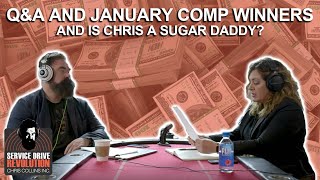
YouTube episode of Service Drive Revolution (host Chris Collins with Sylvia) answering viewer questions about automotive fixed operations, service advisor training, and industry trends. They announce winners of a monthly service-advisor competition, critique industry narratives (arguing fixed ops is increasingly vital vs. emphasis on new-car sales), share anecdotes about difficult customers and changing veteran-advisor behavior, and briefly address personal rumors about Chris buying gifts for Sylvia.
Chapters
Foreign.
Welcome everybody, to Service Drive Revolution.
We have an exciting show for you today and we have a very special guest, the head of our salvation department here at our little company, Chris Collins Inc. The beautiful Ms. Sylvia.
Good morning.
How are you?
Fantastic. How are you?
I'm great. So today we are going to answer your questions. I don't really ever look at the comments on YouTube or Facebook. I am on Instagram more than anything else. But people do post questions on there quite often and so Sylvia has gone to the trouble of pulling those questions and we're going to answer those today. I'm assuming some of them are pretty good. I don't really know much about them, but you seem pretty excited, so. Yeah, they're good questions.
I think that the folks that are asking the questions are gonna be excited that you're answering them.
Yeah. And you're gonna give them a little shout out to for sure. And then maybe we'll go back in and tell them in there that we answered the questions on Surface Drive Revolution.
So that is going to be our big topic today. We have a couple other things that, that we want to get to. I saw an interview last month with Roger Penske at the Detroit Auto show that just made my sk. And I want to talk about that. Although Roger is an icon in his industry, I have a bone to pick with him and we're going to address that. We're also going to talk about why people think that I'm your sugar daddy.
Yeah. All the time.
Is it your sugar daddy or your daddy?
The number one question I get from friends on social is, are, do you date Chris? Like, is he your husband? Why is he buying you nice things?
Why is he buying you a car?
Yeah, car handbag.
Louis Vuitton.
We're gonna Dr. Yeah, we got to clear the air.
Well, it's not really clearing the air.
The real, the real truth.
There's a. There's a reason for everything. Everything has intention. But first, let's start off with the winners of our comp. So we have a competition that we do every month. It's tracked by this fancy software we built. And we call it the Top Dog Underground. And it charts service advisors across different makes and service managers. And so the service advisors are graded on five or six different categories or total sales, their csi, their customer pay sales, how many wild cards they sell, which is alignments and different things. And then managers are graded on their average performance of their advisors in, in the overall competition. It's very fun and we want to give shout outs to the Winners. Now, the advisors have aliases in there and so they have nicknames, which makes it even a little more fun. And there's a little psychology to that. So I think one of the funniest names in there is late for lunch. Yeah, yeah. So they get to pick their. Their nicknames in there. And we have an American group, we have a high line group, we have an import group, different groups. So it's fair because, you know, a Ford dealership wouldn't compete with a Mercedes dealership.
Right.
And on and on. So at the top of our list in the winners for last month, who do we have? Vann Sylvia.
Very, very exciting. So we have the American group. And no surprise here, King Joe from Florida, Joe Mack took first as you.
Hard to beat.
Hard, Hard to beat. He's been service manager a few for you years in a row. And number one advisor for the American comp is Uncle Rich. I think he's from.
Uncle Rich.
Yeah. Get it. Uncle Rich going after those top dog advisors and beating them out. And I think he's relatively new to the group.
Wow. Coming in strong.
Yeah. Seriously, given that's no, that's no joke.
Because there's hundreds of advisors in there. So if you're coming in and winning, that's some skills.
Especially in the American comp. That's a big group. And in the Japanese comp, we have a female manager taking it. Heindell from Pennsylvania.
Congratulations.
That I said her nickname. Right, Miss Holly. And the number one advisor there is J. Willie. And you know where you're from.
And then in the high line competition, which is what? BMW, Mercedes, NAT Group, we have our top dogs from Chicago, Monster. And Monster's assistant manager's nickname is checked out.
I just saw one with that.
We just started giving the managers nicknames.
There's got to be a psychological effect to having your nickname being checked out late for lunch. I understand, but check down.
So I don't know if we need to have an intervention in Chicago.
What's Eric's nickname? Monster. Yeah, maybe, maybe. I know, but maybe Monster gave him the nickname because he's not very fast like he's checked out.
Well, if he's not drinking Monster like monster. You know why he has that nickname? Because he drinks a ton of Monster.
Well, congratulations, Monster. And checked out. Great win.
And at the same store, killing it. Owning first in all areas. They actually hustlebucks the advisors from that same store in Illinois dominating the comp. And I'm just going to skip right.
Over to hitters row of advisors.
There there's some talent. Seriously. Seriously. They work really hard there. And then so on the. I'm going to jump down to import because Monster and checked out also took first for the mini category. So they won in the import high line too.
The first place advisor in the import high line category is New Spock down from San Diego. And then we have last. Actually, not last but not least. So we have the European comp, first place, also from Chicago. Same dealer group, kind of killing it. Mr. Vector.
Good job, Mr. Vector.
Seriously hard to beat too. He kind of dominates that. That group all the time. And first place advisor from the same store is Hailstorm. I like that. And she's a she.
Coming in.
Okay.
Hailstorm.
Yeah. And last but not least, our friends up north of the border, we have Maverick from Alberta taking first and service Advisor from a Honda store up in that area, Roadrunner. That's exciting. Congratulations. All the winners.
Kind of fun of the comp.
Yeah.
That was going you guys. So we will. We will keep that going. We'll announce the winners every month. So next month we'll announce the winners from February, which is kind of wrapping up. Right. Okay. So Roger Penske. What do you think about Roger Pinsky? Never mind. It doesn't matter.
No, no. I. I'm a little nervous that we're going to go here because we, we work with this group.
Oh. Yeah. I don't. Doesn't mean we can't tell the truth.
Okay.
Does it?
That's true.
Okay. What is the climate right now, Sylvia, in the automotive industry?
It's changing. It's changing faster than.
No kidding.
Yeah.
It's changing. Really. Is our car sales down?
Yeah.
Our inventories piling up?
Yes.
Yeah. Is the most important department in the dealership service?
I would, I would say so.
Why doesn't Roger say that? So here's. Here's an interview that was on Bloomberg that we're going to play. He doesn't say anything about service. The future of the automotive industry is fixed ops. We're going to go into a recession pretty soon. I don't know. I don't know if it's going to be in a week. I don't know if it's going to be in two years. But we're going to go into a recession.
Right.
And what happens when we go into a recession? After years and years of economic growth and, you know, success and big egos and the whole thing, what happens? Vic stops. Becomes the most important thing that there is. But he doesn't say that.
We get really busy.
I Feel like, I feel like he's, he's, he's talking about stock prices here and he's, he's pumping that up, but he's, he's losing perspective on what really is important. Can you tell us about the state of the US Consumer when it comes to buying automobiles?
But I think when I look at the consumer today, and we were coming off a 17.3 million saar in the automobile business, which is a strong year, and we felt that momentum already going into the first quarter. But the economy, we have different economists saying good or bad. I think particularly we have low unemployment, we certainly have strong credit availability, and with all the new models coming out, I think is very positive for us. I think electrification, though, is really the buzz here at the show. Maybe not autonomous as far as I'm concerned.
Well, it is the buzz without a question. Every is talking about electric vehicles and in part, how much money has to best in order to make that conversion. Talk to gm, you talk to Ford. Does the consumer want electric vehicles or.
Are we really sort of foisting it on them? I think you're seeing the electrification going to be at the premium luxury side. When you look at E Tron coming from Audi, you got nothing.
And the interview goes on and on, and he's the, you know, we're going to buy more stores. And he, he's very excited about the automotive industry as a whole. Nothing about the fact that the most important thing is your, your fixed stops and how that's running. The most important thing is fixed absorption. And everybody I'm talking to, that's what they're worried about. All the, all the dealers that grew and have been growing, the most important thing to them right now is fixed absorption. They're planning for that rainy day that's coming. But, no, that. That isn't what the PR is. It. It's amazing to me. I don't understand why we're telling a different narrative. And I know you're really nervous because you're like, I want to sell pen service advisor training.
I'm gonna get a phone call after this.
No, it's true, though. I don't, I don't understand, like, the. If, if anybody wants to argue that the most important thing. With inventories piling up in car sales, we're estimated to lose almost a million units a year. There's this perfect storm of millennials aren't buying cars, but millennials are coming into their, Their, you know, biggest spending years. They're affluent, they have money to spend. You have, you have People moving to cities, so Uber, you know, those sort of solutions. There's all these things that are going on in our industry that, you know, tell you that the future is not new car sales. The future is fixed ops and servicing because cars are still going to break, but it's just not sexy.
Right.
For some reason, nobody's making service sexy. How can we make service sexy, Sylvia? We need to make it sexy.
I don't know. I think it'd be fantastic if Roger would come on and let us interview him for this show.
What if we did a calendar of service managers in like tool belts on toolboxes?
I have a couple that would volunteer.
Yeah. What if we, what if we took the winners from our comp every month and we did a pin up calendar of our service managers? Would that make it sexy?
I think so. No. I think I can think of a few very trim service managers.
By the way, everybody sold me a single, so.
Yes, single and ready to mingle.
Don't. You're not allowed to date our customers.
I know.
Yeah. So I have some facts here that.
Only 24% of 16 year olds are getting licenses compared to when we were kids.
Right?
46%. It's down half dropping every year driving.
When I was 16.
Kids are saying they don't have time for driver's ed. It's two expensive to own an insurer car and it's too easy to just get a ride. Isn't that crazy?
That's nuts.
Why aren't we talking about that, you guys? The industry is going to change and fixed ops needs to be the most important thing. And so you got to learn how to have high fixed absorption. You got to learn pricing strategies. You got to have the best advisors that are trained on how to connect with customers. Your asset as service department is your relationship with your customers.
Absolutely.
Because the, you know, customers aren't loyal anymore if they're not loyal to the service department and if your advisors aren't connecting with them on a deeper level, then that's where you're going to come into. Not being able to obtain the fixed absorption that you need to have. I know people say that we have the new stuff when it comes to service advisor training, but the truth is our stuff is the. It's the old stuff wrapped in a new package. Because it's about people. It's about connecting with people, treating them like humans, not like a number. Not running people through like Southwest Airlines in a big cattle call. And so you got to work on your systems and we have the best Advisor training and service manager training out there. And I, you know, we're in an industry where service managers don't get training. They're. They're handed down bad habits from the manager they worked for. But there's no, you know, university for service managers. We call our manager. We have service manager university, but there, you know, there isn't. You can't go to a major college. And Matt, you know, major in service manager.
Right, right. And I think you say it a lot and we talk about it a lot when we work with advisors, that it's their job to hold on to the customers. And what is the life cycle of a customer? Every five years they're buying a new car. Is that still an accurate stat?
You think I should look, but I don't, I don't. I don't know that it was quite five years, but it was five years. But the average car on the road is. Is 10 plus years and growing.
Yeah.
So that grows all the time. Okay, before we talk about me being your sugar daddy, do you want to ask me one of those questions?
Okay, so I have. Our first question is from YouTube that came in off of one of your videos and it says, I'd like to hear some stories of customers that are just insane and there is no way to talk them down. I have a few. And one on with one of them. I had to call the cops.
Sounds exciting.
That's less of a question and more of a statement, really.
Really.
But if so is the spirit of the question. He says, I like difficult customers.
I think so. But he's also wanting just some stories of customers that are insane. Do you have any?
The customers are the advisors most of the time in. I don't know, I come from a world of the customer's always right. And so, you know, there's ways to handle customers. We have a whole module in our advisor training on how to handle difficult customers. So you should send this person an email and they should get on our advisor training. But I don't know. I've seen advisors throw customers into windows. I've seen them get in physical fights with customers, but never. I've never gotten to that. That point. But I think the mistake that advisors make is that they want to be right.
Right.
And so there's no award for being right, but there are awards for listening and making the customer feel heard and understood more, you know, more than anything. But I had an advisor that I used to work with who's a big boy too, and he actually threw a customer into a window and broke the window. The customer didn't go through the window, but like, you know, the window shattered, but it had heavy, like, plastic on it, so it broke into a thousand pieces. But yeah. And he didn't get fired for it either. That's the kind of place I was working at.
That's insane.
I would have fired him on the spot.
Yeah. What? Why did he have naked pictures of someone?
Why do you assume they had naked pictures?
It's the only reason why someone doesn't get fired when they should.
Oh, maybe. Yeah, he had naked pictures of the boss. Yeah, maybe. But he eventually got fired for something else. But I don't know. I think that when they just. They wrote him up, but yeah, I don't know.
That's nuts.
Okay, so that's one I've seen customers drive their cars through. When I saw a customer drive a car through the front of a dealership once.
On purpose?
No. Oh, was it accident? Actually was a brand new building and they hadn't put in the. What do you call those?
The blockers.
The blockers yet. And so went right through the front of the building, which is interesting. But that isn't a difficult customer. I've seen customers throw stuff.
Peel out, things like that, but I don't know. I don't. I think that really the topic that would interest me is how you took a difficult customer and what you did to turn them around. That's the magic. Like, we're. We're in the business of collecting customers. And I know that when I was an advisor, the customers that nobody wanted to deal with, like, you know, like when the customer pulls in and all the advisors disappear or on the phone. Yeah.
They're all down.
They're all invisible. Yeah, that. That's the customer you. Actually, I learned very early on that you want because they become the most loyal. They're a little more work right in the beginning, and they're a pain in the ass, but if you can get control of them and they know nobody likes dealing with them. Like, they come in and they're like, I know I complain a lot, but the thing is, it's still rattling again. And you're actually like, oh, I'm so sorry. And, you know, there's. There's a system on how to turn them, turn them around. They end up being the customers that do everything you say, throw you the keys.
Right.
And will only ask for you because nobody else would pay attention to them. So I look at difficult customers different than. Than I think the spirit of that question is it's a chance to have a really loyal customer. And, you know, we. We come from an environment like you worked at Nordstrom's and. And the. The dealership that. Where we met and we worked together, where we just didn't say no to customers. We didn't like the customers, was always right, and maybe we gave a little bit too much away. But at the end of the day, our reputation was bigger than.
Whatever you wrote off to policy. It was more important to have friends and.
Customers. Perception is the most important thing. There's that Maya Angelou quote that says, they'll forget what you did, they'll forget what you said, but they'll never forget how you made them feel so difficult. Customers are an opportunity more than anything else. What's the next question?
Are you ready for the next question? The next question is from Ryan Sigmund. And it's a little bit long, so just stay with me. Since I started this job, I've noticed it's very difficult to take veteran advisors in a new direction.
Stop falling asleep.
No, you're not. That's so.
Get to the point, Ryan.
They seem so entrenched. Wait, did you hear the first part? Don't you say it again.
No, I'm with you. Go ahead.
Huh?
Veteran advisors in a new direction. They seem so entrenched and comfortable in their ways that they fight change at every step. Oh, this is a good question for Chris. Even though they. They're fighting against themselves, themselves better, and making themselves better at their jobs, which ultimately makes them more money, I refuse to believe that they're all untrainable. I don't want to give up on anyone. What is. Here's the question. Are you ready?
Yeah. There's a lot of statement. People on. On social media are narcissistic. They make a statement. And now here comes the question.
Kris, how do you motivate a veteran advisor that doesn't want to change?
Okay, so here's what I spent a lot of the beginning of my career trying to do. Change advisors change people that didn't want to be changed. Then one day I'm like, hey, maybe. Maybe, you know, like, you know how when you hire a new advisor that doesn't know better and they outperform everybody? Kind of like that advisor in the comp that just came in and is beating hundreds of advisors because they don't know any better. And granted, in our comp, there's advisors in. In towns going, oh, I can't beat somebody in Canada because, you know, it's different. They have snow In Canada. And that makes their labor different in Canada. Yeah, customers are nice in Canada. You know, so there's, there's a million excuses. But the thing that I have learned is that sometimes you can't change people that don't want to be changed. Like, there's that saying that sometimes the wolf is the wolf, right? Like.
And so I have a system. We, we have a system with training advisors, gamification, putting structure in place. It makes the advisor's job easy, makes it so they can spend more time with customers. But then after all that, it's up to the advisor to perform. And you're going to have a hard time as a manager changing people that don't want to be changed. So my advice would be to re, you know, ask a different question. That's maybe not the right question to ask. Because if people don't want to be changed, you can't change them or you'll spend your lifetime doing it. And at the end they'll hate you. I mean, really, if people don't want to be changed and you change them, they're bitter at you anyways because they didn't want to change. So you changed them, you forced them into changing. But that isn't who they are. They don't want to be that person. They don't want to be a high performer.
But sometimes on the flip side of that, I've seen us go into stores, you specifically, I remember when we did those stores in Chicago, some of the veteran advisors weren't all that excited about change and they got won over by the games and the fun.
But there's more to that story, right? They weren't that excited about change because the change that had happened before we got there, every change was to cut back and make their jobs harder.
Right.
And so they were buried. But you know, you're taking away cashiers because the service department's losing money. You're cutting. You know, we're not doing car washes anymore. You know, you're taking away all the things and now all of a sudden they got to pull up cars because we got to porters. And so what we did is we, there was change. Like we're, we're making them connect with customers, we're making them follow up, we're making them do two hour calls. We're making them do things that, that are important to the customer experience. But we're also those veteran advisors, they appreciate the fact that we're taking away, that they have to pull up their own cars or that we're not Going to wash a car for a customer, whatever it is, we're, we're going to create an environment where their job as an advisor is to make friends with the customer and make the process easier. I mean, you think about in the early days of our industry, customers would pull into the shop and talk right. Directly with the tech. And then we've added this layer of advisors. Right? And so the layer of advisors is to make the process better, not to keep it the same. And I, if we could sell more by having customers choose on an iPad or customers drive right in the shop and talk to the tech, what do we need? This huge layer of personnel. Right. And so I think in the, in those situations, the fact of the matter is the advisors were scared of change because all of the change they'd had up until that point was negative and made their jobs harder. And so, you know, people by nature are scared of change. The. But you kind of have to trick them into it. So we use gamification to trick them into it. But at the end of all that, at the end of all that, they have to perform. I'm not trying to change them. I'm trying to create an environment. So I'll change the environment. I'll make the environment where it supports them, where it supports the customer experience. But at the end of the day, they have to show up and, and do it, and they have to show up and perform their job. And so if, if you have the systems in place, if it's set up for the advisors to succeed and they're not succeeding and performing, you can't change them. They'll hate you in the end for changing them anyways.
Right.
They don't want to be changed. They're probably better doing something else, like being an insurance adjuster.
We have one more question.
Okay. Do you want to talk about why I'm your sugar daddy?
Let's do that. Yeah.
Okay. So are any of your friends that ask this single that wonder why I'm buying you a car?
Sometimes it's like everybody I'll run into someone.
So this is going to hurt your dating, right?







