Chris Colfer Wasn’t Ready for Fame. Carrie Fisher Saved Him.
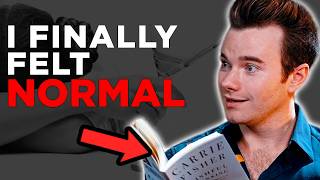
Chris Colfer grew up closeted in a small farming town, booked Glee at 18, and was blindsided by global fame after the 2009 pilot aired. Carrie Fisher's memoir Wishful Drinking showed him how to survive it through humor and radical honesty.
Questions this video answers
December 2008
19
18 (had just turned 18)
May 2009
First draft at 19, finished at 20, published at 21
Chapters
A lot of us have suffered from crippling social anxiety. It can ruin your confidence and keep you from experiencing opportunities that move you forward in your personal life and career, not to mention your love life. And today, we're sitting down with a special guest who knows exactly what social anxiety feels like. At his lowest, he reached for a book from a galaxy not so far away. I seem to have found it.
General Kenobi.
This is our most desperate hour. Stick with us as we take a deep dive into how he overcame it. It will inspire you to push through anxiety, laugh at it, and finally join the party. In other words, may the force be with you. Please welcome actor, singer, and author Chris Colfer in the book that changed his life, Wishful Drinking by Carrie Fisher.
Thank you. Thank you so much for having me.
We have a lot of notes on this.
Oh, good. So do I. Great.
This book could have been called Wishful Drinking and Pills.
It could have. It could have. There's a lot of funny things that she could have called it, but I think Wishful Drinking is a great name.
So this came out in December of 2008, was a number one bestseller, Amazon top 10 for a long time, written by Carrie Fisher, who was Princess Leia in Star Wars. Right. And would you call it a book about addiction? How would you describe the book?
I would call it a painfully honest and humorous autobiography. Yeah, but addiction and mental health and fame are the three subjects that she focuses on the most in the book.
Yeah. Okay, so let's talk about you for a second.
Okay.
Where did you grow up?
I grew up in Columbus, California, which is a small town outside of Fresno, California, which is right in the center of California in the San Joaquin Valley.
Farming town.
Farming town, yeah. Yeah. I always joke at parties that it's where the grapes of wrath gave up.
That's funny. And so what did your parents do?
My dad was. My dad had many jobs. He was a carpenter. He was a custodian, and now he's still an electrician. And my mom had various jobs in the medical industry. She was a nurse. She was a phlebotomist. She was an office manager. And she was also, at one point, the anesthesia scheduler of Fresno County. So no one had surgery without her knowing about it. And she had a very big mouth about it, really. So I knew every person that we knew. I knew when they were having surgery, and I knew what they were having done. And usually it was very gross. And she loved to talk about it over dinner.
Yeah. Do you. Are you the kind of person that can watch those surgery shows.
No, no, no. This apple rolled very far away from that.
Yeah, me neither. I. I don't like blood.
The exact opposite. I get very. I get squeamish now just thinking about it.
So how is that information useful, knowing who's having surgery?
You know, I never used it to my advantage, and I really wish I had because, you know, sometimes my teachers would have things done that I shouldn't have known about. Things getting tightened.
Maybe a C goes to A. A minus.
Yeah, I mean, that was nothing compared to some of the stuff that was going on. But I really. If I could go back in time, I would definitely blackmail a lot more people.
That's funny. So how would you describe your childhood?
It was tough. We were lower income household. I had a sister who had very severe special needs. She had epilepsy. She had at one point, 50 seizures an hour. And it was a very conservative area. So I was closeted the first half of my life just out of safety alone. So there was a lot of love in my family and in my household, but it was a tough upbringing.
How old were you when you experienced that with your sister?
She was diagnosed when she was 2 and I was 7.
So how did that affect you watching that? It was scary.
Yeah, it was really scary. I remember feeling very helpless as a kid. I remember thinking that our family was cursed. And it was a hard thing for other people to understand and relate to. It was a very religious town. So it really made me at odds with religion itself because we had a lot of religious people just saying that we could just pray it away, which was not the case.
Did you try?
Oh, yeah, we tried. Oh, yeah? Yeah. We were very active in the church for a while.
What denomination?
Evangelical Christian. Yeah. So that was tough, but it really. It made me a very good writer because writing was the only form of escape that I had. Writing and acting. Cause I would do school plays and I was active in the community theater. And there was no Netflix back then, so I had to find something besides meth, you know, to entertain myself with. And I'm glad I went down those. Those. Those roads.
Did you ever try meth?
Cause not yet. No.
I feel like you're not giving it a fair shot.
No, no. Maybe if you have some. No, I'm.
No, I've never tried.
No. No, I. I can't even do cannabis because I. I see dead people, so I just. I stick to my tequila sodas. That's my. My vice of choice.
Oh, that's pretty clean.
Yeah. Smart.
Yeah. So you always kind of felt like you were different?
Yeah, yeah, absolutely. Yeah. And like felt different, but also just looked and sounded different. I had a very effeminate, high pitched voice growing up, which was not an easy thing to have in that area. And another reason why I fell in love with writing is it was the only way that I could get people to listen to me without wondering what was wrong with me.
Did you have close friends?
Not many, no. A lot of my close friends were adults in high school. I hung out with the lunch ladies. I also worked in the kitchens before school started. That was one of my first jobs. And my grandparents, those were kind of my friends.
That was your crew?
Yeah, that was my posse.
Was drama class a community for you?
It was, yeah. Yeah. But I think it was hard for all of us to get close with one another because so many of us were so closeted that we had this guard up. And it's funny, cause most of my friends that I had in drama class, they're all flaming queers now, but we were very scared and closeted and guarded at the time.
What effect does that have on them or even you later on in life when you feel like you can't really be yourself and there's biases and prejudices that you're fighting, how does that affect you later on?
I find a lot of us have a lot of anger about it because I do think we were robbed of our adolescent experiences. Like we couldn't have crushes, we couldn't, you know, we couldn't have schoolyard romances. We had to hide so much of ourselves just for safety and for approval that we didn't get a full life experience. So I think especially me and a lot of people in my generation I know are very, still very angry about that.
So does that make you then not hold back now? Like you're gonna express yourself now?
I mean, I feel like I have very little of filter now. I can't imagine, like when I'm older, I, I think, I mean if I. I think I might go to prison at some point.
Yeah. It's funny, like my grandpa at the end, like he would just tell people, yeah, like grandpa, come on.
I think I might be there now. I, I'm. I'm doing my best to hold it, hold it back.
So do you think that's an outcome of that?
I think so. Yeah, I think so. I think, I think when you. I think any minority, especially in this country, you are forced to grow up much faster than someone who's not. And that can be A good thing. I think growing up early is a good thing sometimes. I think it made me prepare earlier and really set goals earlier.
And so the first book you read was Harry Potter. You said eight.
I was about seven or eight, yeah.
And then how young were you when you figured out you had dyslexia?
I was in my late 20s.
You were in your late 20s?
Yeah. That's how long it took.
So you didn't know?
No, I.
You just were fighting through it.
I just thought everyone read a sentence three or four times to get it. I was a late bloomer when it came to being diagnosed with dyslexia and adhd. And when I was in middle school is when I found out that I was farsighted and needed glasses to read. And anytime I'd see a book, I would, like, almost have an instant pain because it was so painful and uncomfortable to read.
How do you deal with dyslexia if you're not diagnosed?
I just read things over and over and over again until I figured it out. But I also had this thing, which I actually found out this year, that I had this thing called. I'm going to pronounce it wrong because I'm dyslexic, but I want to say synespia, but that's the movie screenings in the graveyard. So I know it's not sinespia, but. But it sounds like sinespia. It's like synesia or something. It's where someone's senses get crossed. So a lot of people, sometimes they will hear color or they will see music. And I don't have either of those things. That sounds amazing and kind of cool, but I. From a very, very young age, whenever I would see any object, I would assign an emotion, a personality, and a gender to that object and including letters and numbers. So it was very difficult to read because I was seeing, like, many families and many dynamics with these letters and what I thought, these letters and numbers and how they felt about each other. And I found that out. I discovered this about myself this year and did some research because I thought I was the only person in the world that did it. But it's actually more common than I thought. And once I made that discovery, it went away and it cleared up a lot of headspace. Stopped. It just stopped.
So give me an example of how that works.
Like, I would say, like abc, right? I always thought, A is a woman, B is a boy, C is a boy. A doesn't like C. C really likes A. B's in the middle. Right? Wow.
The drama, you're thinking. I know.
I mean, I was so bored as a kid. We didn't have any Netflix or anything, but. Yeah, And I did that for numbers, too. And so it was.
Okay, so what is one a boy or a girl?
To me, one was a boy, two is a girl, three is a girl, four is. Which. I don't even know what that meant back then, but that's what I thought. Five male, six is female, seven is male, eight is male. And nine is female. And 10 is male. Wow. Yeah. And they all had relationships with each other.
So does who. Who doesn't get along in one through ten.
Okay, so seven really likes nine, but nine doesn't like seven. Eight is neutral to both of them. Six.
Seven's a female. Right.
Seven's a male. Male.
Nine, six.
I know. This is absolutely. This is bonkers. But this is why I was such a bad student. Because I had all this going on in my head.
That's why you're a good writer.
Yeah. Yeah.
I guess because you're creating drama out of numbers.
But it wasn't just number and letters. It was lamp posts, it was cars. It was just something I couldn't turn off. But once I discovered I was doing this. Cause I was so subconscious, it stopped. And it's been very pleasant not having to add souls to everything that I see.
Yeah. That's interesting, too, that the knowing neutralizes it.
Yeah.
I think that happens with a lot of stuff.
I think so, too.
I think, too, in, like, our society, like, we think about going to therapy for 10 years about something, but in Eastern philosophy, it's like, if you know there's a problem, you automatically know the fix.
Yeah. Yeah.
And I. I think there's. There's something in there.
Oh, absolutely.
I don't have it figured out.
But the best therapy is when someone helps me realize what the problem actually is. And, you know, the.
Instead of treating the symptom.
Right, Right.
I always find it interesting when people apply gender to things.
Yeah. Yeah.
Because I always will stop people and go, why?
Why? Yeah, why? Yeah.
The only time I do that is my car.
Your car? Yeah. Yeah.
Well, and I just. I named my car Winston because it's English. And then it had to be male. Right.
Perfectly sane and perfectly normal. Not. Not what I've been doing.
No. But I. I find that fascinating because to me, I. You know, it doesn't make sense.
Yeah.
But I love that. Yeah. You're just creating drama.
Just drama.
Who likes who and who doesn't.
Yeah. And then that's why I could never pass algebra, because I was just. There's this too much going on.
You were dealing with a lifetime of backstories.
Yeah. And grudges. Yeah.
That's hilarious. So did you get good grades?
No, no, no. I was a great kid and I was a very smart kid, but I got horrible grades mostly. I think, looking back, my learning disabilities did not help. I also just didn't care. And really just much would have rather been at home writing my own stories and having to. I loved history. History was my favorite. My favorite course. And I loved all the electives like drama and the performance and speech and debate. I was a speech and debate champion. But no, my grades got really, really, really bad. I barely graduated high school. I actually borderline blackmailed one of my teachers into passing me the surgery thing. No, no, no. I wish I used that ammo. I had perfectly good ammo. But no, no, it was just. It was. Yeah. It's a long story.
So did you have, like a default thought of that everything's gonna be okay, even when you weren't succeeding at the things they tell us we need to succeed at as kids?
Yeah. You know, I always had very strong intuition, and I did just have this feeling that something would come about. I mean, and it was a very fluid feeling. Sometimes I would give up completely. Sometimes I would think, okay, maybe something will. Something good will come my way. But the feeling, it was like a little whisper in the back of my head that something would work out for me despite my bad grades and despite.
The adults making whatever it was an indictment of. You're not gonna amount to anything.
Right, Right.
Basically.
Right? Yeah. I mean, it was. Looking back, it was definitely. That little whisper was my survival and my saving grace.
And so does the religious experience give you an anti authority point of view kind of later on or how does that affect you?
I like authority when authority promotes organization. But I don't like authority when authority is about control. I have a horrible. I have a very low tolerance for people that use authority as for control or for attention or for personal gain. But I have nothing but respect for authority when it comes to organization.
Like a good director or a good producer.
Exactly. Good director or. I mean, like a good city organizer, I have mad respect for.
Can you point one out here?
Like I said, a good city organizer. No, can't.
But someday.
Someday Ho Hopi will get.
I'm optimistic. Yeah, that's. That's funny. Okay, so you're acting in drama. When does that kind of become more so?
When I turned 10. I went from school plays, and I got very involved in my community theater in Fresno. It's called Roger Raka's Dinner Theater. And they taught me everything I know about acting. It was an incredible experience, an incredible group of people. Audra McDonald, the Broadway singer, also grew up in this theater in Fresno. And I was every little boy known to man in every show at that theater and got better and better and better. And then a friend of a family friend happened to be an agent in la, and I got hooked up with her and she started representing me. Her name was Meredith Fine at Coast To Coast Talent. She had a roster of very impressive clients. So I was just over the moon that she wanted to represent me.
Had you done anything up until that point?
Nothing. Nothing.
Just the theater.
Just theater. And then I auditioned for four years, got absolutely nothing. And then Glee.
How old are you when she signs you?
I was. I think I was 11.
Oh, wow.
No, I'm sorry. No, I was 14. I was 14.
14.
14, yeah.
And you didn't get commercials or anything?
Nothing. Absolutely nothing. Did nothing.
And how often would you come to LA to audition?
I would come down maybe once a month at most. And it was a really tough time because every time I get an audition, I thought it was an opportunity for my dreams to come true and an opportunity for me to get out of my hometown. That was so tough to be in. So every time I didn't get something, it was crushing. And then at the end of my senior year of high school, I got the audition for the show Glee, and that was the first thing that I ever booked.
So you came down for the audition?
Yeah.
How soon after the audition do you that you get it?
So I walked into Robert Ulrich's office, who was the casting director, and for that audition, I had to prepare like eight bars to sing as well as some. The script I had to read for them as well. And as soon as I got done singing, he said, thank you so much. The callback is tomorrow. So we had to go to Target and get a new outfit and then book a hotel room so we could be back. We could stay in LA and be at the callback the next day.
And then at the callback, what happens?
They send you away for a couple weeks and then they call you back out.
For in that couple weeks, you forget about it?
No, no, you're thinking about it nonstop because you know you're gonna get called back. So they said, we'll call you back when the network test is. So I came down for the network test. And then went back home and then came back for the studio test. And then on my way home from the studio test is when I got the call that I had booked it.
From your agent?
From my agent, yeah. Wow. And it's crazy. I just started. I was in my first and second week of college during all this time too.
So you 18?
I was 18, yeah.
Wow.
Yeah. Had just turned 18.
And so then is the thing you have to do is move here?
Yes, yes. I moved here for about a month to shoot the pilot and then moved back home.
And then what was that like when you went back home after being here a month?
Torture. Torture. Because you don't know if the show's gonna get picked up. And the producers and the rest of the cast were very optimistic because the I. The screenings of the pilot had gone very well, but you still, you never know. And also just thinking about what I was gonna do with the rest of my life if this didn't work out. I didn't have any luck getting work down here. So I was really excited. But I was also trying to think of, do I go back to school? Like, what do I do? And so luckily then in January, we shot the pilot in October, November. And then in January, it got picked up and I moved. I moved here and been here since.
So when you were here for the month and you go back home, do you also kind of have some sort of feeling of you wish you could live here?
Yeah, of course. Yeah.
Doesn't it feel.
Yeah. And I also made friends that lived here and it was just more exciting here. There was more things to do. There weren't people like me, you know, people weren't as. Weren't as harsh to me because I had a high pitched voice. So it was more comfortable here. So having to go back was really tough. And I will say, since the show's aired and since I've been outspoken, apparently my hometown has gotten much, much kinder over the years, which I'm proud of.
But it's funny how fame will do that.
It is, it is. But I can't lie and say that I had a great experience growing up there when it was very, very tough. Yeah.
Yeah. I would imagine. Like, I grew up in a small town in Washington and I couldn't wait to get out of there.
Yeah.
And even Seattle felt too small for me. It was New York or la.
Yeah. I'm so glad my town was small and conservative. But if it had not been for that amazing community theater, I don't know what would have become of Me, I probably would have taken a very dark path.
I remember just counting the days to be on my own, basically. So then the show hits, and what was it like when it actually is consumable for the public? And it goes, how does your life change?
I'll never forget when the pilot aired. The first pilot. It aired after an episode of American Idol in May of 2009, and then the rest of the season was going to air in September, four months later. And I remember when. Cause Idol. It was back when, like, you know, 30 million people were watching Idol. Like, the numbers were nuts. And I think about half of those people stayed tuned to watch the pilot of Glee. And I remember we were all actually. The cast. We were actually on a plane while the episode was airing. And I remember we got on the plane, and then as soon as the plane landed. Life has never been the same since. We all got recognized as soon as that plane landed. And I've been recognized every single place I've ever been since. And it's been almost 20 years. So life changed completely in a second.
Now, was that something you dreamed about?
No. No, no, no.
You were doing it for the craft.
I loved pretending. I loved intimidating other people. I loved creating other people. I loved creating characters. I loved storytelling. I never in a million years thought that I. That fame would have any part of my career at all.
So was it welcomed, or was it something you didn't want?
It got really scary really fast. And I was playing an openly gay teenager at a time when it was. People did not like seeing openly gay teenagers on the television.
When you say American Idol. The last time I watched American Idol is when Adam didn't win.
And that. That was. That was.
I never watched it again. I'm like, the people in the Midwest, like, I was so upset.
Yeah. Yeah.
And can you name the person that beat him?
I can, because I can't, because I was there when it happened. It was Chris Allen, I think.
But who cares?
But, I mean, Adam's a dear friend, so. Yeah, he was wrong.
Well, he was, like, beyond gifted.
He's a demigod.
Yeah.
God among men.
No sense.
Yeah. No, it didn't. No.
I had such a hard time with that.
Yeah. But I think being runner up might have been the best thing that ever happened to him because he didn't get stuck in that contract that Chris Allen did, I think. I don't know.
Yeah, maybe. But it wasn't. It wasn't. Okay.
Yeah. Yeah. But that was the same season that Glee aired for the first time.
Yeah. I remember. And everybody was talking about Glee and just. What kind of. Just shift in style it was. Yeah, I mean, Glee, it was just that it was a shining light.
Yeah. And I mean, I knew that there was. Because I was one of those kids growing up. I knew for sure there was an audience for it, But I had no idea how big of an audience and how global that audience would be.
So you're all of a sudden famous. You're getting recognized everywhere you go. When you're alone, what's going on in your head?
Well, I rarely had time to be alone because we worked so much. It was like that show. It was like putting on a new Broadway musical every single episode. And we shot 24 episodes a season. So we would be working from 4 in the morning on Monday to 4 in the morning, Saturday, almost nonstop for 10 months out of the year. And then we would go on tours, music tours, concert tours, on our hiatuses. So there really was not much time to be alone.
But when you were.
Yeah, but when I was. It was terrifying because of who I was playing, who I was and what I was playing at the time. That it was. It was not welcome. And the death threats and the security arrests started almost immediately.
Okay, well, tell me about that part.
Yeah, that was. I became very agoraphobic people, you know, it's hard to explain now because the world has changed for the better so much that sometimes people don't really believe me because they just have bad memories. But it was not okay to be gay back then. In the early 2000s, talk show hosts, late night talk show hosts would take cracks at me. And it was perfectly fine because I was the gay kid. Politicians would say things about me publicly. Perfectly fine because I was the gay kid. And pastors of megachurches would call me the Antichrist. And it was perfectly accepted because I was the gay kid. There was no one defending me. There was no one coming to my rescue. When I would talk about it with people, they'd say, well, what do you expect? You're the gay kid on Glee. This is just what's gonna happen. And so I really, really kind of fell into myself and became too afraid to leave my house.
So when you would leave, you had to have security?
Mostly, yeah. If I went to a place where people knew that I would be there, then I had to have security, which ate up a lot of money because we weren't making much money. Cause we were all just newbies in this brand new show.
I have a friend with security. It's expensive.
It's Very expensive. Yeah. And so when I would leave the house, I would make sure it was at midnight. And if I had to go grocery shopping or whatnot, I would do it at midnight when the store was as empty as possible. And on top of that, you also had all these young fans, too, that loved us. It wasn't all scary. Yeah.
You were a voice for the people that felt like they were not given a voice.
Yeah. You know, it's so interesting because there are so many of us in the show, and every single one of us had a different experience on the same exact show. For me, it was equally parts scary and also Beatlemania. You know, if we went anywhere during the day, we would get mobbed. There are times I would go to a movie theater or I'd go to a mall because I had to and would have to call the police because people would just surround you and you couldn't get out on your own. Well, I mean, it was great. It was a sign that the show was successful and people were responding to the material and to you as a performer. But it had a lot of consequences that I never in a million years could have predicted or prepared for.
Did you experience people not really knowing you as a person, but assuming who you were as a person because of the fame?
Yeah. And that was probably the most frustrating part, was I never in a million years thought how many people would think Glee was a documentary. They just thought we were who we were playing. They thought that they would call us by our character names, and then they would get mad at us when we weren't the characters that they thought we were. They'd get really upset when we would, like, talk about ourselves or have an opinion or a trait that was different from the characters we were playing. Yeah.
There's people out there that think George Clooney's a doctor. Yeah.
Yeah. Literally. Literally, though you see that as a joke, but there are literally people who believe that. I mean, I was a huge fan of a lot of shows growing up. I never once thought Lucy Law was actually Xena, warrior Princess. I knew she was a talented actress on a set, and there was cameras, but, yeah, that was the most surprising part about being on a TV show.
Yeah. There's a power in what happens here in Hollywood that grabs people and they get a little delusional. And fame. You add fame in there. It's a crazy recipe.
Yeah. The psychology of also being in someone's home every week, that was a real trip, seeing that unfold before our eyes.
And I bet you met People, and they felt like they knew you.
Like, oh, yeah, oh, yeah. People. And they would project so much onto you, and they would make assumptions just based on what they saw on the show. And if your character did something bad that week or did something selfish, you got the stink eye about it.
That's gotta be really hard because the fans of the show are trying to put you in one place, and then the haters are putting you in another place. And where do you find authenticity or yourself in all of that?
That was the biggest struggle of my late teens.
Did you have anybody you could talk to or not?
You know, we really bonded with each other because, like I said, none of us were going through the same. Same experience, but we were all on the same experience. You were on the Beatles, we were all the Beatles. And we were all different. You know, sometimes one of us would be. Would be John, and sometimes one of us would be Yoko. I mean, it just depended on the day, but. So we really bonded with each other. But it's really hard to find someone that gets it, that understands what it.
Does, because that doesn't happen.
Right. And that's also why, for this interview, I thought of many, many books that I could bring to here today and talk about. I thought of really pretentious answers to make myself seem really smart, but I couldn't. I always came back to Wishful Drinking by Carrie Fisher because if it had not been for her and for that book, I think I would have gone crazy from that experience.
So this comes into your life. How old are you?
I was 19 when I found it at the bookstore.
And so you were in the bookstore and is this during Beatlemania?
Yes. Yeah. Hat, sunglasses, just.
You're in disguise.
In disguise looking for something to read on set to, you know, during light setups and whatnot.
Do you read a little bit in the bookstore?
Well, I've always been a big Star wars fan. I am a Carrie Fisher fan first, a Star wars fan second. So I had heard about it, and I knew that she was doing a stage show that sounded hilarious. And then I was very excited when I found the book in the store and realized that she had created a book about it, too.
Yeah. And the book is an adaptation of the stage show, right?
Exactly. Yeah.
Okay, so you take the book home. Do you start reading it right away?
Yeah, I read it in one sitting. What? One sitting, two cups of coffee. I don't think I even had coffee. I think I was enjoying it so much. It was my coffee. And it's so funny because she was 19 when Star wars started. I was 18 when Glee started. I almost felt like she wrote the book for me because she taught me how to laugh at it all and how to not take it so seriously and to just take the piss out of all the tough stuff. The book changed my life. But there's actually one sentence in particular that I would be happy to read that really changed me forever. I can pull that up if you'd like.
Yeah.
Okay, so this is on page 84, but she's talking about George Lucas. But she says. She says the man has transported audiences the world over and has provided Mark and Harrison and myself with enough fan mail and even a small, merry band of stalkers keeping us entertained for the rest of our unnatural lives. Not to mention identities that will follow us to our respective graves like a vague, exotic smell. And I remember when I read that line, I laughed for probably an hour straight because no one had summarized what I was experiencing so well. And with such humor before, she really taught me. I mean, I was so young when I wrote it, but she was really one of the first authors to teach me how humor can be used as a weapon and protection and just how important humor is to use in really tough situations.
Is that something that you're good at?
I like to think so, yeah. I like to think that I can humor my way out of any dark event. One of my biggest pet peeves in literature and in films is when there is no levity, because I think levity is one of the most human experiences ever. So I get quite upset when I'm watching a drama and there's, you know, no one cracking a joke in. In a. In a tough situation.
Yeah. You know what's funny is in high school, I was voted funniest.
Oh, yeah? Yeah.
Like the class clown, kind of. And when that was told to me that I was voted that I. I was like, I'm not funny. Like, it's not. That's my mask. Like, I'm trying to survive here. Like, it was so odd to me because I didn't see myself as a comedian.
Yeah, yeah. You weren't doing it to be funny.
It was a protection mechanism, is what it was. Or a deflection. Yeah, maybe more deflection. But, yeah, it is interesting, like, because there is a sadness to this. Also because of addiction and just kind of, you know, carrying a weight.
Yeah, absolutely. Yeah.
And feeling kind of like. I think a lot of times with addiction, the addiction wouldn't exist if the person felt like they were enough.
Right. Exactly.
Yeah. I Mean, she even says it in here. She's trying to numb herself.
Yeah, I just. Actually, one of the reasons I wrote this book is because I've lost so many people to addiction. I did not handle those situations well because I blame myself. I didn't fully understand it as the disease that it actually was. And it wasn't until a few years ago that I had a conversation with one of my friends who's in recovery, who really told me what it was and told me that I was doing it all wrong. Like, it wasn't about me. It wasn't. These people that I lost hadn't chosen a substance over me. These people were in a really unfortunate mindset where they had lost all control and perspective. And once he put that into perspective for me, I was able to heal from the losses that I had had. I tried to put it into perspective for my young readers. So just in case that they ever go through something like that, hopefully they'll have better tools to. To handle it than I did. And I learned a lot that. A lot of that from. From Carrie.
But you've never had an addiction like that?
No, no. I mean, I'm addicted to, like, social media and Diet Coke, but that. That's. That's far as I've gone, luckily, in.
Understanding and having empathy for others who do have an addiction. What is it you think that made you different, that you never fell into that?
I think I thought people were in the same mind space that I was choosing this, choosing it, making a choice, making a conscious choice. And that conversation I mentioned is when my friend said, when you have an addiction, it's like you lose control over your body, and there is no choice. There is only the addiction. There is only the substance. I guess I just had never thought of it that way. And once he taught me that, it was like I was able to realize that it wasn't about me. The losses that I had. It was not about me. It wasn't that I wasn't doing enough. It wasn't that I wasn't good enough. It was just these people that had a disease that had nothing to do with me. And I did everything I could, and they did everything they could, but they just had a little piece of themselves that was broken that they were desperate to fill. And the substance was doing that. Yeah.
Do you have any more parts that you highlighted in the book?
Oh, my gosh. I have a bunch that I love.
Is that your original one?
No, no, this is a new one. I think I loaned my original one to somebody who Never gave it back.
Oh, you're one of those.
Yeah.
I'll buy it for them, but I don't loan them.
Yeah, that's smart. Yeah. One thing that I loved, that this book really taught me was how much I respect and seek honesty from people. Like, I think that is the best quality in a person is when they are honest and. And confident about their issues or the mistakes that they've made. And now I will not read an audio book or I will not read an autobiography or listen to an audiobook unless I know the person has lived through some shit and is honest about it. It's also a trait that I seek with my friendships, too. But here's a quote that she says about her mental illness, which I thought was just. It says so much without saying much, which is. My diagnosis was manic depression. I think today they call it bipolar. So you might say I swing both ways, but unless you say it really, really loud, I probably won't hear you. Like, I just love it when people can say so much with so little. It's so meaningful and humorous. Not many people can do that.
Yeah. And vulnerable.
And vulnerable. Right. Yeah.
I hate small talk.
Yeah, me too.
But you get stuck in these conversations where certain things are off limits. And it's also. It is telegraphing. I'm not looking for connection.
Yeah.
I'm not open.
Right.
So don't poke around over there, because I don't want anybody coming in here. I don't feel safe, basically, is what it is.
I'm a Pez dispenser and I'm in the abnormal psychology textbook. Who says you can't have it all?
God, she's funny.
So funny. So I married Paul at 26. We divorced when I was 28, and at 29, I went into rehab, not because I needed it, but because I was doing research for my novel Postcards from the Edge, and I needed to meet some real drug addicts and alcoholics to give the book some veracity. Yeah. Ferocity.
Then read the next that you showed to the next chapter.
Right. Okay, have it your way. I'm a drug addict.
It wasn't research.
This is one of my favorite quotes of her all time. You know how they say that religion is the opiate. Opioid. Opiate of the masses? Well, I took masses of opiates religiously. I mean, it's just like.
It's just so fun.
Genius. It's just the way that she can just write something that is, like you said, so vulnerable, so funny and just so honest. I think Is just. It's a gift that not many people have and really, really changed for me. Changed the type of people and the type of language that I. That I look for and that I. That I seek.
Yeah, me too. And I don't know what that is, but that isn't everybody. No, most people don't want that.
Yeah, it's very Dorothy Parker. It's a very special gift that not everyone has.
Yeah. But it is kind of like David Sedaris had this short story where he talked about kind of like traveling. And, like, you get in the Uber and they're like, how are you doing today? But then. And then you get to the airplane, and then you get to the hotel, and everybody's like, how's your day? Where are you in? And it's like just small talk over and over and over again. And I. I seek a life that is not that.
Yeah. I fear small talk. Like, it's Covid.
Yeah.
I hate it so much that when I meet people, there are three questions I ask just right off the bat. Have you ever seen a ghost? I guess that's the only question I ask. And that usually gets people going.
What's the best answer you've had from that?
Well, the best answer is no. Have you? So I can just talk about what I want to talk about.
Oh, it's actually a boomerang trick.
Yes. Yeah. Do you believe in aliens? And what's your favorite dinosaur that usually. If one of those usually will work, and it'll give you. It'll spare you about five minutes.
Yeah, aliens. I've never seen one, so I'm open to it, but I've never seen one.
Yeah.
I don't know.
Some people have crazy stories, and I'd rather talk about that than weather.
Do you believe you can talk to the dead?
You know, I don't know if I can, but I do believe some of my loved ones can. I have a lot of friends that are very clairvoyant and have proven it to me from what I've seen and heard. I can't come with any other explanation than they have a sixth sense.
Do you think it's a gift that you're born with, or do you think it comes out of some sort of experience or trauma?
I think both. I think it's like any other talent. I think you can develop it or you're just born with more of it.
I thought this was funny. Is when. So it's page 125, and she says, now come back with me to when I Was first told that I was an alcoholic, which greatly relieved me, by the way, because I knew something was the matter with me. So I thought, great, that's it. That's what I've been struggling with all this time. Fantastic. But what they further do to, I think, soften the blow, this arguably awkward new way of looking at yourself. The entire enumerate number of other famous and accomplished folks who have also struggled with and enjoyed alcoholism. Like, her wording is crazy.
And then her lips.
She says a couple times, if you understood that, you're crazy, too. But then she goes, there was Scott Fitzgerald, Mel Gibson, Dylan Thomas, Ireland. I'm Irish. Rush Limbaugh, Lindsay Lohan, Russia, and George Bush.
George Bush, yeah.
So funny.
So good.
Countries. I thought her little thing on 122 about a personality test. And she's like, so here are some of the things that they ask.
I love this right here to determine.
If you're mentally disordered. If you say yes to any number of these questions, you two could be insane.
Yeah.
So let me ask you, Chris. Number one, in the last week, have you been feeling irritable? Yes. Number two, in the last week, have you gained a little weight?
Probably.
Number three, in the last week, have you felt like not talking to people?
Oh, yes.
Number four, do you no longer get as much pleasure doing certain things as you used to?
I do not. Yes.
Number five, in the last week, have you felt fatigued?
Yeah, I would say so, yes.
Six, do you think about sex a lot?
I'm alive, so yes. Yeah.
So you're certifiable.
Yeah. I mean, I think everyone is on a spectrum between batshit and crazy, so I know I land there somewhere.
So funny. Okay, so then, ending of the book. How great is this ending?
Let me see. Oh, yeah, yeah. So fantastic. Anyway, the following is the something that I have stuck in my brain, which I go about trying to systematically forget publicly here in these pages. And if you understood that, if you understood that you're in desperate need of medication. It's a poem. Yes, as you probably guessed, a poem by George Lucas. General Kenobi, years ago, you served my father in the Clone Wars. Now he begs you to help him in his struggle against the Empire. I regret that I'm unable to present my father's request to you in person. But my ship has fallen under attack, and my mission is to bring you to Alderaan has failed. I have placed information vital to this of the rebellion into the memory systems of this R2 unit. Proper copper coffee pot. My father will Know how to retrieve it. You must see this droid safely delivered to him. To Alderaan. This is our most desperate hour. Help me, Obi Wan Kenobi. You're my only hope. I can't forget that stupid fucking hologram speech. That's why I did dope so good.
What's even funnier, she says a poem. That's not a poem. That's dialogue.
Yeah, a haiku, maybe.
How is that a poem? That's dialogue. So funny.
So funny.
So the big question.
I hope someday that I am considered the Carrie Fisher of Glee. But I got some more life experience I gotta go through.
Yeah, you probably need a little more craziness and chaos in your life.
Which I think if I don't get there myself, the world will hand to me. It's coming.
So, big question. How did wishful drinking by the late Carrie Fisher change your life?
Oh, my gosh. I wrote a list. Can I read the list? Yeah. It taught me how to laugh at a crazy situation. It made me fall in love with witty language. It made me respect and seek honest people. And it helped me understand that perfection, especially in the entertainment industry, is just not possible.
Incredible.
And one of my favorite quotes. I don't think it's in this book, but one of my favorite Carrie Fisher quotes of all time is, there's no room for demons in the self possessed. And my favorite quote from this book is, if my life weren't funny, it would just be true. And that is unacceptable.
That's so good. Oh, well, I'm so glad you picked this. What book could you have picked that would have made you seem more intellectual?
I was thinking about the Velvet Rage because that book has helped me a lot as a gay man. As I get older, I was thinking about maybe Utopia or the Prince. Machiavelli's the Prince, because I really enjoyed those as a teenager. Oh, my gosh. I actually made a list of this, too. Let me see. I adore the Turning of a Screw by Henry James. Haunting of Hill House, absolutely love. I was gonna. I was thinking about Harry Potter because it was the first book that I read on my own. And it made me fall in love with reading and also inspired me to become a writer myself. But I very much Disagree with what J.K. rowling is doing these days. So I decided not to do that one. I also love this book by Shirley MacLaine called Saging While Aging. She's another Carrie Fisher esque kind of person that I really love to read about. And I was lucky enough to work with her on Glee for a couple episodes. But I just love how confident she is in all her beliefs and how much she loves to share her unique life experiences with people.
Did you learn anything specific from her when you worked with her?
You know, I just kind of picked her brain about extraterrestrials. We had this amazing talk that was like, three hours long while we were waiting for a lighting setup where she just told me everything that she thinks they might be or they are or where they are. And she actually inspired me to go to Peru. She told me if I found extraterrestrials fascinating, that I should check out Peru because it's a hot spot. So I ended up going to Peru for two weeks because Shirley MacLaine told me to.
Did you meet any extraterrestrials?
Not one. Not one. But I went hiking at 13,000ft and up on this cliff, it was so crazy. I saw the name Shirley carved into a rock, so I thought that was pretty coincidental. That's good. Yeah.
So how young were you when you wrote your first book?
I was. Let me see. I was 19 when I wrote the first draft, 20 when I finished it, and then it came out when I was 21, I believe.
And so you've written 21?
I've written 21 books, yeah.
And what is your process for writing?
It's more like a cry for help than a process.
But how is the cry for help?
What does that look like? Well, I. The older I get, the more of a procrastinator I become. I have. I know a lot of healthy writers. They, like. They wake up, they'll, like, light a candle. They'll do, like, diary pages. I have to get up. I have to turn on the news. I have to argue with people on the news.
I have to watch you talk to the tv.
I talk to the tv. Then I have to. Back when Wendy Williams was on, I'd have to turn her on for a little bit and argue with her. And then usually around 2 in the afternoon is when I would start writing.
Do you have pets?
I do have two pets.
What are they?
Two dogs? They're both mutts. Fitzgerald is a very distinguished Shi Shih Tzu. He literally could probably be a professor of a university. He just needs the pipe. And Maggie, she's brand new. We rescued her last year. She is a Chihuahua poodle werewolf, I believe. And she has destroyed our home. But we love her very much.
Oh, that's sweet. So what time do you usually get up?
I usually get. I'm a night Owl. So I probably go to bed around four in the morning every night. And then I'll wake up around 10 or 11. Okay. On a good day, unless I have something.
So you'll yell at the TV or coffee.
I was, but then I fell off the wagon now. So now it's a Diet Coke as soon as I wake up.
So you get the caffeine?
Yeah.
Do you eat?
Yes. Yes, I will eat leftovers. That's my favorite breakfast.
So whatever you had for dinner.
Whatever I had for dinner the night before will be my breakfast the following morning. Yeah.
Really?
But I love it. I love that because I hate breakfast food.
Okay. And then you'll kind of like play around and then around 2, you start working aside. Like, what is the. What's the. Crossing the abyss there. That goes from procrastinating to sitting in front of a screen.
Well, it's always so nice when the muse hits you and you get really excited to write a sentence. And then. So I'll run upstairs to my office and I'll jot it down. And then I'm hooked. And then I'm in the zone. But sometimes the muse doesn't come. So you really gotta go up and you gotta force it out of you. But usually if you just force a little bit out, the rest starts coming too. But that moment, like where you go up and it's a blank page and you don't know what you're gonna say, it can be excruciating.
Are you writing on a Mac? A PC?
Yeah, Mac. Yeah, Mac.
And is it Word, or do you write Word?
Yeah, word.
So you just open a Word doc.
Open a Word document.
You create a different document for each chapter. Or do you just have it all running in one?
Yes, I have one document that's a outline for the whole book. That's all in bullet points. And that changes constantly. I'm never faithful to that.
But you start with one.
I start with one general idea. Yeah. This seems like a good idea. This seems like a good roadmap. But then as I get there, I change a lot. And then I do one document per chapter.
And then do you make yourself write so many words a day or two? Are you disconnected from.
No, no. I will write until I think about jumping out the window, which is usually around.
What time?
Usually around after five hours.
Five hours is kind of the.
Yeah, that's where I hit my limit. And I know I've hit my limit because I'm eyeing the window.
How many times do you hit a vein and you just go in past five hours, you can't stop, you know?
That is the best. And I kind of feel like I'm always trying to chase, like, what's the longest. The original high, the longest I've ever gone was 15 hours, and I didn't even get up to use the rest.
Mine's 12.
Wow. Yeah. Yeah. You know, it's like.
Yeah, yeah, it's. That's the best. And it's hard to get it back.
Yeah, it's really hard when you hit it. Yeah. And, like, you don't want to leave when it. Once. Once it's going. And you'll cancel your forms. Yeah. Euphoric. It's like a drug. Absolutely.
Yeah. So five hours is kind of the grind.
Yeah. Yeah. But I will say when I get on those. Those. Those stretches, it is the best dopamine release I've ever had.
And then. Is there lunch?
Yeah, usually I'll eat while I'm writing or eat while I'm editing. Yeah.
And then once you're done, then it's off to.
It's off to my publisher.
No, in the day. Once you're done writing that five hours, then you just. What do you go work out? What do you.
I'll work out. I'll watch tv. I'll go play with my dogs. I'll go check and make sure my boyfriend is still with me.
Do you let it go? Do you let it go?
No, No, I never let it go. It's always. But what's so interesting is I have such a horrible memory for everything else but creativity. Like, if I think of something, if I think of an idea for a book, it never leaves my mind. I can't remember on my dad's birthday. I can't remember my anniversary. I can't remember anything. But if it exists in a fantasy world, I remember every single minute detail.
Does your boyfriend just disappear randomly?
No. And I got him airtagged now, so it's good.
Where's the airtag plan?
You don't want to YouTube. Ola.
So then, what was the original outline for this?
The original outline? Actually, I had about three extra chapters in the original outline that I decided to cut because it was stalling. The story. It has a kind of a heavy story. Like I said, it's inspired by addiction. And I kind of expose and explain to kids what addiction is just in case they ever have to go through it themselves later. So I didn't want the story to stall. I wanted to get to the good stuff sooner. So I think it's the shortest book I've ever written.
How long did it take you from conception to turning it in?
Nine months? I'd say nine, 10 months.
And is that about the average or.
Does it seem this one was tough because it was heavy subject matter and usually the heavier the subject matter, the longer it takes me to spit it out.
Did you do any specific research for this?
A lot. It's also about quantum physics. So I did a lot of research about quantum physics and that I am not qualified to be writing about quantum physics, let alone teaching kids about quantum physics. So that was a challenge.
So what, what is the. The takeaway from Roswell Johnson Saves the Galaxy?
My. My. My number one priority, especially with the Roswell Johnson series, because this is the second one in the series, is just for kids to have an amazing adventure with some funny, wacky characters in space. I hope they walk away with a love and curiosity for science. For this one in particular, I hope they realize that sometimes in life there are people you just have to let go. And it doesn't mean you don't love them. It doesn't mean that you're a bad person. It doesn't mean that they're a bad person. There are just people you have to let go and it's okay.
Yeah. That's beautiful. Yeah, that's awesome. Well, thank you for doing this. I love the book you picked.
Thank you so much.
So funny. And that would not be a book I would think you would pick.
Oh, good, good. I'm glad I surprised you.
Yeah, it was great.
Yeah, I really appreciate it.
We are so excited to announce the books that changed My Life website. We made a way for you to show your book pride and that you love books. Hats, tees, hoodies. Check it out. Link in the description. Everybody needs a self help hat.







