Chris Collins Spotlight Series: Joe Macdonald of Cox Automotive
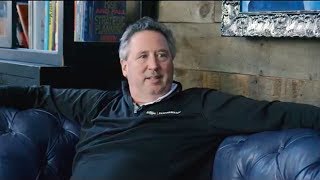
Joe MacDonald spent 25 years in dealerships before joining Chris Collins' coaching program in 2013. He transformed his shop by using compensation as a coaching tool and empowering advisors, growing from 1.1 hours per RO to over 2 hours, and ELR from $78 to $110-$115.
Questions this video answers
Bradenton, Florida
16 years
2013
17 years old at a family-owned Dodge dealership
1972 Plymouth Fury, two-door (painted black with gold metal flake, Cragar Super Sports, lacquer paint job)
Chapters
All right, here we are. Another spotlight with Mr. Joe McDonald.
Joe here. How are you?
How you doing, buddy?
Good. Great.
Automotive in Florida.
Yep. Bradenton, Florida.
Bradenton, Florida.
Wow.
How long have you been there, buddy?
16 years. 16 years?
Yes. So how did you get into the automotive industry?
My dad was an auto technician, and we started fixing cars in the driveway. And it was just something that I really enjoyed. And.
First job 17 at a Dodge dealership, family owned. Worked there for, I don't know, 25 years and moved to Florida and took this job. So two jobs.
You know what? I'm going to ask something a little bit different because I want to know about you. And it's something I'm going to start asking when I have the spotlight is what was your first car and what was your favorite car?
My favorite car was my first car. It was a 72 Plymouth Fury, two door.
Wow.
Painted it black with gold metal, flake metallic. So this is in the 70s. Cragar Super Sports jacked it up 364 barrel. It was a nice car. Wow. It's nice. Yeah. Lacquer paint job. Nobody was allowed to touch it, Couldn't lean on it. You know, this who. But it was good. That, I guess, was my first car. I don't think it was my favorite. I got to take that back. I had a 2005 Chevy SSR.
Wow.
And it was one. One of the ones with the Corvette powertrain.
Oh, wow.
It was very quick. Slingshot yellow. It was pretty. A little too flashy, but it was. It was fun.
Now, that's the one that has a retractable top.
Yeah. Pickup truck with the retractable hard top.
Man, those things are sharp.
Yeah.
I don't see them too often anymore.
Not a lot around. No, not a lot around.
Wow. So, Joe, you've been in the program for quite a long time.
Started in 2013. Wow. Yep.
And how's your journey been?
Good. Very good. It was.
Scary at first. I remember the first meeting and.
Chris having us stand up and take ownership of our numbers and write them on a whiteboard. You know, he didn't know what to expect or what to think.
What I thought I needed help with wasn't really even something that I should be concerned about. So pretty big learning curve in the beginning. Once you realized why you're here and what you're doing, it started to become easier. Be more open, more honest, be more upfront, and, you know, own your department.
Was there any moment in time where you felt like something clicked for you? Like you're like oh. Or when you realize something you applied actually started giving you some kind of result.
That aha moment for me was when I realized that there was a problem.
And I was the problem. Wow. So the saying is, the problem is between your ears, Joe. I was a low effective labor rate person forever. And, man, I had all the excuses, excuse number 312, whatever. I had them all, you know, and someone called me out on it and said, you know, that's bullshit. That's in your head. That's in your head. And I went back and I took that to heart. And.
Then it all just started to happen. So I was my own worst enemy.
And I bet you that's very common with so many other managers. Right. I mean, you've been.
You hear the same story.
Yeah, you hear the same story over and over and over again. But it's funny because as a coach, to me, it never gets old. I love hearing people's stories. I love how not only about being in the program, but just people's personal experiences in the business.
Yeah.
You know, how they've seen it change. I mean, tell me something that you were accustomed to when you first began, you know, back when it was your family, you know, dealership, to how you see things here today and how dramatically different they are.
Right. I mean, if you look at it from the technical standpoint, we actually used to repair parts, you know, rebuild an alternator, rebuild the starter, rebuild the carburetor. So that part of the business has changed so much. And then computers and then competition, and then learning the financial aspect of the business and seeing how all these numbers came together and what it really means. It's just been. It's been a nice ride. It's a long sleigh ride. It's good.
Now, Joe, you've been successful for quite a long time. And I got to ask you the million dollar question, because I get it all the time, is how in the world does Joe win the GM or the Chevy competition every month? And they all want to know what your secret sauce is.
Okay, I'm going to tell them. I never told anybody before. So the problems between your ears, you have to own it and fix it and want to win. Motivate your people and share with them what's going on. I mean, I have the greatest team that nobody wants to be second. Everybody wants to win. And when you get your team all on that same page and you have a common goal and they all know what we're working for.
For a while, no one was allowed to come into my Office. Unless you're going to mark on the board. Then you could ask a free question, but otherwise you pretty much know the answer. You don't have to come in and get my approval. You know what to do. Come in and mark on the board. We'll talk all day. What do you want to talk about? Cool. So it was just that, discipline to finally say, I'm going to do this, I'm going to win, I can win. I have the right people and we win a lot.
Do you have any story you can share with our audience members about.
A way you impacted, let's say a particular employee?
Yes.
That didn't seem to like, get it, but they found they saw the light.
Yes. I have a advisor. His name is. His comp name is Once in a. Yeah, it's a kind of an odd name, but, you know, it's every once in a while his last name is Wild. So once a. Once in a. So he started with me and he really loves cars. He was a young guy. We gave him an opportunity. He worked really hard and he just was struggling, you know, struggling, struggling, struggling. Just last week he put his.
Advisor goal sheet on my desk that we filled out in 2012.
Wow.
And his improved goal was to get to 1.1 hours per repair order and to get, you know, $78 in ELR. So this guy's in first place in the comp this month.
Wow, that's great.
Yeah, he's the number one in the American group. So, you know, two plus hours, $115, $110. So we recognized, we trained, we coached. He saw another advisor that was doing good and he's just come that far. So that's a great thing that we have this young guy that we give the ability to make a great living and take care of his family.
As we all grow and get better. So it's a great success story. And, you know, I'm sure there goes in every dealer, there's somebody like that and.
They gotta have the drive. You know, we can't teach that. Either you're motivated or you're not. But if you're motivated, we'll teach you the rest.
Do you think that the comp is a good influencer?
Absolutely.
To motivate your people. I mean, what. What have you seen? I mean, we always talk about it, right? To us it's like second nature. But we have so many clients that are coming in that have come into the program and go, what is this comp? What does it mean? I don't know if I'M ready. I don't know what to do. You know, and we try to guide them and push them kind of off the ledge to get in there. You know.
What can you recommend? You know, what recommendations can you give managers that are really, you know, they're afraid or they want to know or, you know, it really exposes you.
The comp is a tool. And you will see how good or how bad you are. I mean, because there's winners and losers. Right? Right. My people are to the point now that they're like, hey, why didn't you print the comp for us? Why don't I know where I am? Where, you know, they're. That. They're that interested that, you know, on.
Wednesday morning or Tuesday at noon, they want to know, hey, where are we? What's going on? What's it, you know, what's it all about? So. And they've used that to make themselves better. They find that person ahead of them, and then they'll figure out how to get ahead of that person. And it's really a tool. It's a coaching tool, right?
Yeah, it definitely is.
That's what it's made for.
Yeah.
And if you use it as that, it'll do you good. It'll do you good.
You know, a lot of times I talk to so many of our clients and I say, you know, we're trying to help you become an efficiency expert, have a system in place, a process in place, and let things just kind of run. And, you know, Joe, you're a perfect example of that. You kind of sort of, you can leave, like, right now, you're not even in, you know, you're in downtown la, and we can check into your store in Florida randomly, and things are happening.
Right.
How do you do that?
This is the third week in a row I'm out of the store because I have the right people and the right process, and it can run without me. One of the biggest things that I was afraid of, and I would have bet most every other manager, is is that get better, right? Yeah, just like you'll get better.
Yeah, of course.
So I have the right people in place, the processes are there. I won't say the place will run by itself because, you know, maybe my dealer will be listening to this and think that's not a great idea, maybe get rid of me, whatever. But it really has to run when you're not there. It has to have enough structure. You know, you'll have to go back and, you know, maybe tweak something or change Something. But the structure is what keeps it going, and everybody knows what the next step is to do.
Yeah, I mean, I've surrounded myself with so. So many times with your advisors. I come to the Top Dog event. I've known him personally. And.
The people that work for you just. They love your leadership. You know, they love the way that you embrace them, but you're firm with them. You show the same amount of respect to them as you would anybody else and go, look, I know that we're a team. I'm your team leader. These are the expectations. If you deliver, then we can make it happen. Just like your example there. Hey, put something on the board. We can talk all day long, but come on in and let's give me something. I'll give you something.
Exactly.
And that's. That's an incredible, you know, the empowering.
Your advisor will set you free. I mean, that's crazy. Coach them. Coach them if the decision isn't what you would normally do, but empower them to make a decision, because even a bad one is better than no decision.
Yeah, that's one of the. Probably one of the biggest struggles for managers is that we want to hold close and tight to what we have and monitor.
Like.
Like, not let it go because we think that if. If I don't do it myself, it's not going to be done right. But then if you never give your people the opportunity or the empowerment, they'll.
Never get it right because they never had a chance. Yeah. Yeah, that's great.
Well, you know, for our audience members, what would be one piece of advice that you would give anyone out there?
Join this group. Okay.
This is not a promotional video. You're already in it.
No, but I got to tell you, you know, I've improved so much since I've come to this. You know, I was one of those guys that thought I was already there, and, you know, it was all happening, and I wasn't even scratching the surface. And there's still so much more above that. Surround yourself with good people that are there for you for good or bad times. You know, there's people in this group that know all of my personal, you know, struggles that I'm going through, and I know theirs. But we help each other, not only at work, but at home. And it's a big deal to have a group that you can rely on for that support. And the level of support here is. It's just tremendous. I don't call Chris my trainer. I call him my coach.
Yeah.
And why are you going to California. I'm going to meet with my coach. What are you guys going to do? We're going to get better. We're going to talk about what we can do to be better every single day. So.
It'S a great journey, and I'm glad I'm on it.
That's awesome. We were talking about being authentic, and you truly are authentic, Joe, and I commend you for that. But it's incredible how.
We accept our faults and our failures, whatever. But we also embrace our humility to make us even stronger.
Yes.
You know, there's so many times. You're right. I've seen so many people in the group that have been in for such a long time, and they go through their ups and downs, but for some reason or some way, shape or form, every time their hand goes up, somebody's grabbing them. Yeah, somebody's gonna grab you.
Yep. So true. It's so true.
And it's just been an incredible experience, even for myself, you know, and me being a coach now, it's just. It really is a touching thing. And I thank you so much for sharing your story with us, Joe.
You're welcome. Glad to be here. Oh, yeah.
I love it. And I just want everybody to know that we're going to be giving you guys, every so often some special spotlights for service managers. So please tune in, especially on our webcast, and we'll. We'll probably share this in other outlets. But again, Joe McDonald, Cox Automotive buddy, thank you so much for joining us, man. It's a pleasure. Absolutely.
Yeah.
Thank you.







