Chyler Leigh on "In the Shadow of a Rainbow" || Books That Changed My Life
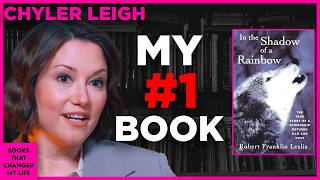
Actress Chyler Leigh credits Robert Franklin Leslie's In the Shadow of a Rainbow with shaping how she leads and communicates. The novel's lessons on authenticity and pack leadership changed her approach to set dynamics, and she shares how witnessing her ex-father-in-law's death taught her the power of presence over words.
Chapters
And I was so afraid to talk to him because I didn't know what to say. And I kind of, like, avoided it.
And then I kept thinking, "Kyleigh, you are going to regret this for the rest of your life." So the big question: How did In the Shadow of a Rainbow by Robert Franklin Leslie change your life?
I think it changed my life today more than it changed my life at 15.
I'm Chris Collins, and you're watching Books That Changed My Life. This week, we're joined by actress and book lover Kyler Lee, and she's here to talk about the book that changed her life, In the Shadow of a Rainbow by Robert Franklin Leslie. What do you think of the library?
I think this is wicked. Like, so, so cool. It is definitely hard for me to pick, like, one thing to think about, but— oh, I didn't even see that guy.
The minotaur?
Yeah. Oh, I love Greek mythology.
I love that story.
Oh man, yeah, this is awesome. So if my eyes wander, it's really not— it's not you.
Oh no, it's, it's built for that. That's the intention.
And the colors, it's so— yeah.
What's your library situation like at home?
I'll be honest, like a lot of cookbooks. I love cooking. I love cooking, um, like older cookbooks and that kind of stuff. And then I have a lot of, um, Books about like, well, we were saying alchemy and like kind of witchy woo-woo kind of stuff and whatnot. I love that. I love anything about like spirituality and like tarot and all those fun things. And then a lot of, because of my job, all 3 of my kids love manga and anime. So we have a lot of that. In the house as well, graphic novels and, and whatnot. Um, so it's kind of like there's not really one particular theme, I would say. Shel Silverstein, of course, one of my favorite books is, you know, The Giving Tree. Um, and, um, a book, The Melancholy Death of Oysterboy and Other Stories.
I've never heard of that.
It's wild. Yeah, it's like, it's Tim Burton, and so it's, it's very Tim Burton. Um, so that one, I, I would— it's a quick read. It's kind of like, um, they're just mini stories that are super dark and super weird but like fascinating. So cool. So it's a lot of a mishmash of a whole bunch of stuff.
What, what is your cookbook that you go to the most, that you actually use Um, to be honest, the joy of cooking.
And really because I like to put my own spin on it. So like, whatever the recipes are, I'll look at the recipes and kind of go, okay, um, from my own experience of things that I like, things that I know that my kids like— they're older, so it's not like I have to worry about they'll only want chicken nuggets if they don't like the pasta I'm making— but I try to go back to like older recipes and see what I— how I could change it for today. So that's kind of— yeah, I kind of just mess around.
Each one of your kids, like, if it's their birthday, what's the thing that you make that they would request?
For my son, it's a roasted lemon chicken, um, which— thank you so much— which I'm no longer allowed to make, uh, turkey on Thanksgiving because they only want two of the chickens.
Oh, wow.
I don't know. I guess I got the touch on that one. And we would do roast potatoes. So this would be, my son would be the chicken, roast potatoes, and sautéed broccolini. My middle is baked salmon, artichokes, and couscous. And my youngest, gosh, what would she be? Oh, spaghetti. Like a real classic, like with pancetta and ground beef and like all the onions.
Does that take you all day?
It, yeah. But again, like also with ADHD, I'm just like, I really need to have everything in place because like looking at the recipe, I already know that it needs 2 tablespoons of brown sugar in this recipe, but if I don't see it, 17 times and I forget that I have to put it in. So it— yeah, I'm gonna, I'm gonna come up with the, with a show sometime because I think you all would have a blast watching me cook, take 5 hours to do spaghetti. That's great though, I love it. It's my therapy.
Do you, do you, uh, have any understanding of how powerful of a connection that is for your kids? Like, for the rest of their lives, they're going to want mom's chicken, or—
totally, like, so then they're stuck with me. It's like I, I actually— no, I'm just kidding.
It's not stuck. Like, yeah, they, they, uh, they hold it in very high regard. They do, unconsciously.
They, they do. And they love to be a part of it as well. So my— I say youngest, she's 16. My kids are— my daughters are 16, 19, and then my son is 22. And so they're all part of it in one way or another, even if it's just the eating part of it and appreciating the part of it. But no, they help. And I love that because that was like what I took from my mother, even after like, not to get all sad about it or whatever, it's like been 22 years since I've spoken to or had anything to do with her. But the cooking, That went with me, that stuck with me. So there's things, you know, sometimes that I'll still make now that allows me to have a fond memory and then be able to share those things with my kids. So I love it. It's, for me, it's like being a little girl again. And instead of wanting to play with the Barbies and the dolls and all that kind of stuff, I'm the little girl who wants to be out with the cauldron and putting in, you know, making mud pies and like, you know, just hands-on and creating. And that part has always stuck with me. So I think it's kind of always been there, and I appreciate that. I really do.
Yeah, cookbooks are magical in, in that way. I think music probably is magical, but the music isn't always as communal as food.
Yeah.
And healing, I guess. Food can be very healing.
Yes, it can, especially your intention when you're cooking. It's like to be able to have that passion, that love, like I know who I'm cooking for. If it's my first time cooking for somebody, I know I'm gonna put a little extra, you know, what is Emeril, the thing, bam. It's just a different way of approaching it that I feel. And I've, and you know, my kids have told me this and friends and family have just been like, I can tell that you put love in what you do when you're feeding people, because it's just a way to care for people. Like, if there's something— like, if I'm not great at something around my house, there might be— well, there's plenty of things that I'm not, like, great at. But if I'm great at this one thing, then I want to do my best and share it with you so that you get a better sense of who I am and understand how I feel about you.
Yeah, that thing you're talking about, you can't put into words.
Yeah.
And I love things like that, that you have to experience it to understand it because you can't really explain it.
Totally. And that's like when you try— but music is a universal language. You don't even have to know what the language is that someone's singing of music, but it's when the heart is there, you know? And it may not even be the genre of music that you normally like, but if you connect to the words, if you connect to the melody, if you connect to something just harmonically in the song, like, it all of a sudden, it really can transport you and take you somewhere and make you feel something without almost even knowing it's happening in the moment. Like, it's like almost an extra sensory kind of thing. When I know for me, when I listen to some music, like goosebumps, like hitting a particular note or a tone or something in there, it's just like what it can do to you. Like even just like on a vibrational level, emotional level is so powerful. And to find those ways that when you can share that stuff with, with other people, I think is like, it's such a gift for, for the others, but it's such a gift for yourself too.
Yeah. And you're, you're in the moment.
Totally. Yeah.
Moment.
Yeah. You're like in a little time warp.
The, the best part when somebody's really intentional about what they're making and they serve it and everybody gets quiet because that moment is like magic.
It's, it's almost like sometimes for myself I'll go, okay, is this— you love it though, right? Like, you love it, right? That's a long pause. Yeah, but so I know the better— yeah, that's a great way to look at it because sometimes I do panic.
Yeah, I, I know this kind of, you know, very accomplished chef And that's how he says he judges it, is by the silence.
Yeah.
The more silent and the more people are in the moment, the closer he is to what he is trying to do.
That's a great way to look at it. Yeah. Like when on the other side of it would be going to someone's house or going to a restaurant or whatever the environment is, eating it and just going, shh, just gimme a second. There's a place that, I, one of my favorite documentaries I've ever watched is called Hito Dreams of Sushi. Have you seen it?
I haven't. I've heard of it though.
Phenomenal. I know everything that happens in it and I've still watched it like 4 or 5 times.
Oh wow.
Because it's the appreciation of food and what somebody puts into it. And it's this whole story about this man named Hito and I won't go into it, but it's just like a generational thing about him passing on his passion, his love, and his, um, excellence and like what it takes. It takes like 10 years for you to actually, you know, move past the rice portion if you're working with him. And then you go to the egg when they make the egg and like all that stuff. It's intense. But you can just see that, that passion and that love for something. And his restaurant is in the subway, like down below in a subway, total like dodgy looking. And there's still, 'cause his son, one of his sons took it over, there's still 6-month waitlist to get in there. He's got Michelin stars. Like just so cool to see someone who really genuinely loves what they do and be so successful. And, and all you do is you see people that just take those moments, each, each piece of sushi or sashimi or whatever he puts in front of you, you just, you, you get it and you eat it right away. And if he puts a sauce on it, you do it. Otherwise, if you were to try to ask for a sauce or dip, bye. You know what I mean? Like, dishonor on you, dishonor on you. Um, so it's really, it's, it's, I don't know, I, I, I love that aspect and I, and I will definitely keep that with me about the moments of silence. I'll, I'll take, I'll take your, your advice on that.
I love people that control every aspect of an experience. Like, I love an architect that makes the furniture. Yeah, because they would never trust that to an interior designer, right? Because they designed this view to be experienced in a certain way. Yeah, I love chefs that control the environment and the experience and the sauce, and like, you know, you're doing it this— I love when you go into a restaurant and they don't— they won't change things on the menu, right?
They don't do substitute unless it's like an absolute allergy or something, like—
but then they're like, don't order that.
Yeah, like, oh, you can't be in the room if there's a peanuts been here in the last 4 weeks.
Some for you.
Sorry.
Yeah. Because they're just very—
They have a vision.
Yeah.
Like The Bear. I love that show so much. I love it. I guess we're getting very thematic here as far as that goes. Yeah.
Where did you grow up?
Kind of all over the place. Not a military family, but just like a lot of pivoting through hardships in life. So I was born in Charlotte, North Carolina. Grew up in Virginia Beach, Virginia. Parents split, moved to—
How old when they split?
I was 12.
12. What did dad do?
He had quite a few different jobs. At one point, he and my mother had their own like weight loss nutritional business and it was incredible, like huge success. Really did wonders for people, you know, in the, in the community and everything. And then, um, so the components were he would go over like the full fitness routine. And so he had all of this equipment, all the stuff, take people through and almost like circuit training in a sense. Um, uh, and then my mother would do the nutrition part of it. So she'd help with supplements, she'd go through meal plans, she'd go through, um, kind of empowering people to really take ownership of ownership of it, right? And then, I don't know, a couple years into it, Weight Watchers moved into the same plaza. And this is nothing against anybody, but people started to go, oh, well, if I can just eat and lose weight and don't have to do all of this stuff over here, then I'm gonna— I'm gonna choose this. And this is in late '80s. So like, people were kind of like, oh, this is a simpler solution, then I'm going to do that. So they lost their business. We lost everything.
Lost, um, like overnight?
Um, within, within a few weeks. It happened very quickly. And this is when we were living in Virginia. And so we lost our house, lost our cars. Um, I like, I we did like a massive estate sale essentially. And I was, I could see how devastated, you know, my parents were obviously. And I'm just trying to gather anything that I can to put on this table so that we can just like, I'm selling all my stuffed animals, you know what I mean? Like just to try to, and, and I'm 8 at this point. And so it's like trying to take this ownership and trying to be part of, you know, something in some way to give back. And my mom actually had like a, um, it's when she found out that she was diagnosed— well, it was called manic depression at the time, now it's bipolar disorder— she had her first like full-on hospitalized episode induced by that stress. Yeah, yeah.
Did you have siblings?
Uh, an older brother. Yeah.
How much older?
4 years. 4. So I'm 43, so he's at this point— I'll be about to be 44, so he's, yeah, 48. I haven't spoken to him in a very long time either. Lots of stuff. But, um, so then it was kind of like they picked up whatever they could. Um, my mom started, um, uh, cleaning houses, and so I would go with her on some of the days if she had a really big house and she needed help. Like, I was kind of her— like, I had things that I loved to do. I would vacuum because then I would try to match my tone to the sound of the vacuum, and there was something like therapeutic for, for some reason.
Was that the vibration?
It was the sound, like the— like, like whenever you hear like a lawnmower, you hear something like that. I would just try to like kind of zone out by matching that. Um, so in some ways it was like, it was fine. And plus I didn't have to go to school. Um, so she did that. She was like telemarketing. Um, And then my dad started working. He was selling cars. He was, like, selling steaks, like, you know, almost like an Omaha's, like, kind of thing. Basically anything, anything that they could do. We hit a point where we were on food stamps. We were getting food from the church. Like, it was— devastation hit. And so I'm kind of setting the stage. My mother had another really bad episode, was hospitalized, and was going to take her life, told me. And while she was in the hospital, and this is when I was 12, and then while she was in the hospital, she ended up calling her first husband, to say goodbye, and her first husband was like, get out of there. So there was a lot of abuse and stuff going on in the house, but he's like, get out of there, um, bring your kids, and you come and you stay with me. So all of a sudden it's like, well, I guess we're leaving Virginia Beach, Virginia. And then my mom and I drove down to Miami when you were 12. Wildest culture shock. I— and we ended up moving in with her first husband. That's wild.
That is wild. What was he like?
Oh, I loved that man so much. He, he actually worked at Madison Square Garden. He was the main stagehand for the Rat Pack, Judy Garland, like anybody you could think of at that time. He was the man. And so I got to hear all of the stories about that time, and you know, the and like how wild the performers were. And he was just like, he was just a boss. Like, and he and my mom, when they were first married, he had a huge sailboat. So they would go sailing all over the place. And when, so when we moved back down with him, he had a sailboat, not the same one, but he had a sailboat. And I spent basically my first year there on and off that boat. And we sailed, throughout like the Bahamas. We at one point went all the way out to Belize, um, through Mexico. And I read a ton because I was doing homeschooling. And so, you know, I just found this love for the ocean, love for sailing, love for the water, but just like simplicity. Because I didn't have phone, I didn't have any of that stuff. All the time.
Yeah, you're— the recipe that you just, uh, said is like daydreaming and imagination.
And oh, 100%. I, I was like, I was always in— ever since I was little though, I was— I've always had really vivid, weird dreams and like daydream constantly. And when I was on the boat, I would go out at the bow and just sit there, and I was the only kid and there was like 10 adults all lovely people, like good, funny, you know, but still being, you know, 12, 13 years old, I would be up at the bow of the boat and just sing. Like just sit there and just sing anything, everything. We'd have dolphins coming and I was just like, I would just pat the boat so that they could hear. And I would like, you know, I just, I don't even know what songs they would be anymore. Oh, except from, Oh my God. An American Tale, Fievel. Like, somewhere out there beneath the pavement. I just sit there and sing it on the bow, just like my Jack and Rose moment, but it's just me. I'm like, so I loved it. Imagination.
And what kind of books would you read?
You know, I read a lot of Goosebumps, actually. I loved Goosebumps. I loved anything that was thriller, kind of mystery, kind of whodunit. I loved the choose-your-own-adventure books. I loved anything that kind of allowed me to be part of the process of telling the story too. And then I try to think, I know I had a favorite book when I was really little, but I have to think about it other than The Giving Tree. But because I was also doing homeschooling, I had a lot of like books that they would assign and whatnot, like, um, Catcher in the Rye, um, The Giver, um, you know, I don't know if we can have like read those books anymore. I don't know like where we are in the state of the world as it is now if kids are still reading the kind of books that we might have read.
State to state, I've, I've gone down that rabbit hole with those banned books and all that.
And yeah, that's, that's what I mean, it's different everywhere and It's, it's interesting. It is very interesting. Um, but, uh, and I also have a really hard time reading nonfiction, um, because it's hard for me to stay on track. And I kind of like, I'm not, I'm not a, um, I'm a kinetic learner. I have to do it to learn it. I'm not a visual learner because I'm just like, it just looks like gobbledygook, you know, to me.
And so nonfiction doesn't spark your imagination?
I, I wish it did more, um, except if I'm reading something that I am really genuinely curious about, like if it's something about, let's say, astrology or, you know, things, or cooking or something like that. Because they're also hands-on, you know. It's something that I can make sense of, um, because I'm not a visual, I'm not an audio, you know, an auditory learner. It's just, woo, gone. So fiction was always such an incredible way for me to be able to, um, kind of transport, even if it was like an emotional, psychological— like, yeah, we've all been through so much, you know, shit in life. Like, we all have our stories and we all have different ways to escape, and that was a healthier version of escaping. So, um, yeah, I just felt like I could— I see it like a movie when I'm reading. I can— it's such a strange sensation because I hear myself narrating it, but then I can hear the voices of the characters And I can, I can see. Okay, you remember the little things, um, God, what were they called?
With the slides?
Yeah, yeah. It's like where you could see through it. You see the image, but you could see through it. Yeah, it's the same thing. It's like I can see the image but read the page. I don't know if that makes sense, but, um, For me, there's just something about that. Then it makes it like a, like a fully immersive experience.
Did you talk to yourself?
Do I now?
No, then.
Oh yeah. Oh yeah.
Did you create worlds?
Yeah, 100%.
You still talk to yourself?
Oh yeah, all the time. All the time. To the point where I'm like, I must look completely insane to people because even if I'm just in the— I'm constantly narrating. Yeah, I'm narrating. Like Stranger Than Fiction. Did you see— did you ever see that with Will Ferrell, Emma Thompson? Brilliant movie. Brilliant. If you ever want to— and it's not Will Ferrell like, you know, the yuck yuck Will Ferrell. He's incredible in it. But it's constantly like— it is a— it's a narration. And so I'll be walking down like the grocery store aisle and just literally narrating what I'm getting or doing and saying like, you know what, out loud, right? Just like, you know what, I feel like I already have an A1 sauce. Please, Kyler, don't buy another A1 sauce. I don't think we need that. Okay, I am going to do the chicken tonight. Or maybe I'm gonna like, um, I really feel like steak and baked potato. I'm out loud and people will just—
going to the wrong grocery store. I want to go to your—
you want to go shopping with me to be a fly on the wall in my life?
I would love that. People are boring in the grocery store, right?
But, and sometimes it's like, I think sometimes people find it kind of funny because like, I'll just look at them and say, sorry, you probably thought I was asking your opinion, but I am fully up in here right now. And they'll just be like, oh, I do that too. Or, or just kind of give me the side eye and just walk away. And then I'm like, well, you're no fun.
But they're probably also looking for the little buds in your ear that you're talking on the phone, right?
Yeah. Maybe I should do that. No, screw it. Nah.
What was your— so when you were a teenager, what was your general sense of self?
That's a, that's a question and a half. Um, I— well, when I'm So when I had moved from Virginia to Miami, I did that first year at homeschool and then I went to like public school. And to be very honest, I mean, like I grew up in Virginia, like the vast majority of people I was around were white country folk, right? And so, but my mom was from, she was born in Teaneck, New Jersey, raised in Manhattan. So for her, there was no difference in anybody, you know what I mean? And she always taught my brother and I the same thing. And so it's kind of like, you know, it didn't matter what your ethnicity was. I didn't care. Are you cool to hang with? Like, are you fun to play with? Are you weird like I am? Sweet. Like, we're good. But going to Miami, it was like I was— my mind was blown because I'd never been around such a diverse group of people. And so when I got there on my first day of school, I was like, you know, I walked up and I'm like, hi, my name is Kylar. It's so nice to meet you. You know, I, I came from Virginia and now I'm here and like telling this whole story in my full accent. And everybody's looking at me like, what is happening? And rightfully so. They're teenagers and kids can be, you know, assholes. Um, and they were. And so I got made fun of a lot, like a whole lot. And so then I started to pull back and do the, well, if this is me, this is who I am, and people are like picking at me and making fun of me, then I need to lessen who I am. And be what they want me to be. And then I get into modeling, which I wanted nothing to do with because then all of the eyes are on me. And I'm getting into acting and doing all this stuff, wanted nothing to do with it because all you get told at these young ages is you're not thin enough, you're not pretty enough to your face. Like, you're not thin enough, you're not pretty enough. Uh, no, you're never going to be tall enough for this, you know, and just breaking you down. So it's constantly embedded, embedded, embedded. You're not enough, you're not enough, this, that, that. So my sense of self was so like kind of non-existent in a lot of ways.
You just existed.
I existed and I performed, is what I did.
Big mask.
Oh, 100%. 100%. But it's also like why I worked a lot. And why I kept getting jobs, because I was so good at being what others wanted me to be. And I had such a deep sense of, if I don't do this, I'm a disappointment. And that was always in my head, was, you're a disappointment because you're not living up to what these people are expecting. So it's been like, I mean, years and years and years of trying to take that mask off, um, and to try to be an example for my— to my kids.
Was that the flip when you had your first kid?
Um, that was terrifying actually when I had my son Noah because I— hey, I was 21. I had no relationship with anybody in my own family. Um, my ex-husband's family was absolutely wonderful, so I did score there, which was great. Um, but his mom lived really far away, so we were with a bunch of, like, our peer groups were— they didn't have kids, you know, they weren't getting married. So we were the ones like— and I'm working in the industry and he was working in the industry, and so it was kind of like wildly overwhelming. Um, but like, even being young like that and having to learn things really, really like the hard way— wouldn't trade it for the world. But we didn't. But then our son, um, later after years of like, what is happening? I don't understand, gets diagnosed with Asperger's and ADHD. And so it was like, even when our friends did start having kids, it was like, mine is not like that one. Like, mine is chucking cars at kids' heads because he can't speak yet, but, and he's frustrated. Not because he's being mean or he wants to hurt somebody. He just can't speak yet. And so we went through a lot. My middle, um, she's also high-functioning autistic, has anxiety, some OCD. My kids are so bright and they are so empathetic and loving. And my, my youngest has epilepsy, ADHD, and like a generalized mood disorder. I ended up with bipolar disorder and also ADHD. So we're, we're chock full of nuts. Like, really, truly, our house is wild, but it's awesome.
And but it requires a lot more attention from Mom.
A lot more. Yeah, a lot more. And patience is an understatement. Um, and, and, you know, you go through the blame game like, maybe had I healed more, or maybe had I, you know, done a better job, maybe I would have been a better mom, maybe this wouldn't have happened to them. But then you get into, like, the genetics and the, you know, that kind of stuff, and it's very real. That, that part of it is very real. So you have to stop, like, beating yourself up. But I hadn't even gotten to a place where, like, my mask was fully back on, and I was scared to ask for help all the way up until Like, um, probably like 5 years ago.
What was that? What was that event that put you face to face with your mask?
Hmm, great question. I think having to— getting, getting to a point where my relationship with my ex had reached a point where it was just time. It was time to let it go. Even after such a long time we'd been together, it would be 26 years this year.
So then you had to, you had to look at yourself in the mirror, kind of?
Yeah, I had to. Yeah, we, we both have. Um, and you know, it's amicable and we're, we're co-parenting, we're doing all the things that we can, but just just hit a point where it was like, okay, you, what you want and what I want aren't really lining up anymore. And I'd rather us be on good terms and us not harbor the resentment and the anger and the—
Passive aggressive.
All that stuff.
Yeah.
It's not worth it. And so, and when it becomes so abundantly apparent and the kids are picking up on it and like the whole family, it just, shifts the mood and the dynamic of everything.
Energy is bad.
And he— yeah, exactly. And he went through a lot of trauma with his family. I went through a lot of trauma with my family. So we're just perpetuating that cycle. And so it was like, okay, we have to make a choice. We have to make a decision.
What sign are you?
Aries.
Aries.
Yeah. Um, and he's a Libra.
Can't make a decision.
Yep.
Um, So I'll be damned if I'm gonna stand in front of a menu in a restaurant for an hour while a Libra makes a decision. Oh, what to order.
What are you?
Capricorn.
Capricorn. Okay. Uh, yeah, no, well, I have Libra rising, so a lot of times I'm like, oh no, you can't make a decision. Yep. I'm Aries, Scorpio, Libra. The Aries, Scorpio for sure. Um, but yeah, with the Libra, that definitely kicks into, oh no, what do you want for dinner? No, what do you want for dinner? No, it's okay, anything you want for dinner. It's that kind of stuff. So yeah, I'd probably drive you crazy.
So In the Shadow of a Rainbow, when did this come into your life?
In high school, I would've been in 10th grade. And it was, it was a, like basically a book report. And it was like, you guys—
This was assigned as a book report?
No, I picked it.
Oh.
And so it was like—
Choose your own adventure.
Yeah, choose your own book. You're gonna do a book report on it. And I was like, okay. I didn't know what I wanted to do. And at the time I was like, I was an interesting teenager, but like really into it at the time, like oceanography and zoology. I've always, since I was super duper duper little, loved animals. Tried to sign up for Greenpeace when I was like 5 'cause they came to the door. Always wanted to go to Alaska growing up, Africa, Egypt. I had all these things in my mind and always had a fascination with wolves, wolves, cats, and ravens.
So by cats, you don't mean house cats?
I do mean house cats, um, because I always had a very strong connection with house cats. But if we're going to talk about like what kind of big cat I am, I'm for sure a snow leopard because they're goofy as hell and they are— I don't even think they know that they're a big cat.
But is that your spirit animal?
I think the wolf would be.
Really? Okay.
Yeah. Um, it's always been— it's always been that, which the irony of it is— well, I guess it's not ironic because there— it's a pack mentality, right? And so it's like the, the alpha, and particularly in, in the pack in this book, is it's the alpha is a female, and she is like, watches over everybody and is very much like, you're doing this, you're doing that, this is where you belong, that kind of feeling. And I'm fiercely protective of the people that I love. Fiercely.
So you see yourself as the pack leader? Well, let's go back to what grade are you in when you do this?
Is it 10th?
Had you read the book already? So what attracted you to this book to do the book report?
I loved that it had to deal with like, um, the indigenous people. Um, I, I had always grown up with a fascination of like Native American culture as well. Um, Egyptology. I'm like, I don't know, I'm super duper random. But, um, and I also saw the COVID the original cover which had a man in a hat. It was like very much like just a sketch. There was a wolf, there was the rainbow, and this man who was kind of just like crouched down. And something about it kind of just caught my eye. And then I picked it up and was like, "Ooh, something about this I feel like is kind of calling to me." It was always very spiritual. So that kind of like was a ding, ding, ding, ding, pick this one.
And you just followed that voice?
Loved it. Yes, loved it.
Okay, so for somebody who, who doesn't know the book, just kind of what, what is the premise of the book?
The premise of the book is a, uh, it takes place in British Columbia and where the, um, like native tribes were. And, um, so this man decides to go kind of like, I guess, on a walkabout and, um has always had this, like, desire to find this particular wolf, that she's sort of been like the, the mystery almost like around her, if she's real, if she's not real. Um, and so it's kind of like the, the book just— it's a true story, but the reason why I was able to read it and loved it so much was that it reads like a novel when you read it. It doesn't It doesn't read like, "And then this happened." It kind of narrates his thoughts, his process of what he was going through, the fact that he could feel the emotions of the wolves and he could— It kind of was all-encompassing with those things that I was talking about earlier because it had to be like a true story. And I was like, "If I'm going to do it, boom, that's the one." And so it's about his passion and dedication coming up against so so many different stumbling blocks to try to track her, to follow her. And him, once he understood this, the alpha— I never remember if I say it right, if it's Nahanni or Nahanni. Sorry. But who she was, he connected with her. And you just see everything that he had to go through. And when he was trying to find her, she and her pack left for quite some time. And at that point, hunters were going out because it was that time of the year. It was like hunting season in the winter. And so he knew that she was like seemingly this elusive thing, but now that he had spoken about her, she was real. So then it's, everybody's gonna try to get after her. So he's trying to find her through the story. And I just find it like the compassion in it, but the dedication and the silence, the way that they communicated, in silence but with such deep understanding was so beautiful to me. And, and I kind of had that, that connection, you know. If we ever went to like a zoo, let's say, on field trips or just with the family, my very first attract— not attraction, God, that sounds terrible— but my very first place to go was the wolves. Always.
You always felt a connection?
I always felt the connection. And I would go and I would sit and I would just, we would just stare and like have a, what felt like a silent conversation. And it was just that energy, the feeling, it's like almost like a transfer of energy in a sense. But I was always very respectful. And you'd have kids that go up and they're kids, whatever, like hit the glass or like, you know, try to do the howling and, and all that stuff.
And it was different for you.
Oh yeah, yeah. No, no, no, it was just quiet.
So what do you, what do you learn from this book at that age?
At that age, it really, it helped me kind of find the little pieces of myself that figuring out what, what I connect to might not be the same thing as what somebody else connects to. And there was, there was an energy of like a sense of almost self-healing where I could focus on something energetically. And this— I don't know if this is like a really weird way to put it, but based on all the crap that was going on in my life, because it got very, very traumatic, this was an escape for me, leaning towards something that I really understood, and, um, kind of gave me a motivation to want to explore, want to just get out and go find something. Yeah, journey.
Yeah. Um, by the way, we're all weird, so don't feel weird. I'm probably weirder than you. Do you remember what grade you got on the book report?
Oh, I got an A, man.
Were you an A student? Oh, you got an A on this because you're passionate about it?
I love to write, um, and like, that's my— that's always been my best subject was English language arts. Um, I'm science only if I was really interested. Um, social studies, absolute dreadful. Um, math, don't even— don't— why? You know what I mean?
Like, everything's math. Look at that wall, it's all math.
Listen, settle down. I'm not looking at that wall, okay? I'm going back to the comics over there. Um, no, I, um, no, I was not— I was not a good student because of where I was here.
Yeah.
Um, but again, when I found something that I really loved, like writing— I loved writing poetry— I stopped like actually handing in assignments, um, that were supposed to be like very particular, and I would just write prose and hand that in. And of course I would fail, but I kind of based it on the subject. And it's funny because 10th grade. 10th grade was apparently like a really big year. Um, I was in, um, no, 9th grade. I was in English, my English class, and I kept handing in these, um, uh, poetry pieces or just stories. And the teacher came up to me and she was like— and it was a class because I wasn't good at school. I didn't ever push myself for anything. Um, so it was kind of like the bad kids class. And so at the end of the year, she's like, listen, Kyler, you failed my class. I was like, I'm sure, I'm sure I did. She goes, but your writing is brilliant. So what's gonna happen is you're going to go to summer school. I said, okay. She goes, but now I'm putting you in such and such class, who was the hardest teacher in the entire school for the past like 20 years. And it was essentially like an AP class. And she was like, get ready to be humbled. And I was like, this is fine. So I go into that class and nobody's ever gotten straight A's. No one's ever gotten A's on the midterms or anything like that. This guy was an asshole, um, just like intentionally mean. And, um, I remember the very first day he put out an assignment to write an essay, like 3-page essay on some sort of subject that I happen to be really, really interested in. And I'm like, all day. I got this all day. We hand it in. Next day he hands them back. I had a big fat red F on that page. Everything X'd out, underlined, like, and I'm just looking at it and I was astounded. So, excuse me, sir, did we, did we read the same paper? And he was like, you know, he'd be berating everybody in the class and this whole thing. But he looked at my paper and he said, "It was almost good." And I was like, gauntlet thrown. And after that, day one, I literally got A's on every single thing because it got pushed in a way that pissed me off. But also something about something that I was really inherently good at, but passionate about. And so, yeah, it was kind of all part of it. It was that, that was a very like—
Around the same time?
Yeah, yeah, yeah, yeah. And I ended up getting, yeah, I got A's on the midterms. And then actually ended up leaving school because I ended up getting an acting job that went out in California. So it— I was like, ah, I was just on a roll. It was the only class I was passing, but it just— it was just what I loved. And so this was all kind of part of it. Yeah.
A theme in here is kind of the connection to the environment.
Is that something that you practice, like, or Yes, even if it's just like, go outside. Just like, go outside. And where I live, I live, um, in Nashville, Tennessee, and, um, I have like 5 acres of land. And it's not the most glorious, like, you know, we see everything is perfectly like, you know, mowed and all that kind of stuff, but it's, it's mine. And it's— we're like right up towards a nature reserve. So, um, I have neighbors, you can see the neighbors, but it's just the space. And just even just going outside and kind of standing there for a second, it's almost like a recharge. It's like, it's like photosynthesis, right? So it's like sometimes I just go outside and I just don't have my shoes on, stand there, get a little bit of sun. Go back in. It's appreciating the land that we have. Um, and we did have chickens for a while and 2 ducks, but we also live in an area that's up against the nature reserve, so we have all sorts of predators and whatnot. So that was— yeah, it wasn't great. But even that, just getting outside like I would spend hours in the kitchen and just chop up food, take them out, and walk around the yard with the ducks and the chickens following me. It was great. Um, I love it. Any chance I can just to kind of be outside, absolutely.
Do you feel like you can communicate with animals?
Absolutely.
Explain it to me.
It's not a language, it's a feeling. Um, I can communicate with— I have to— okay, so I—
at one point, is it an exchange of energy?
It's like a knowing. It's definitely an exchange of energy, but to— it's if someone were to speak to you in a different language, a language like we talked about that with music. If it's a language that you don't speak, but you're speaking that same, like you're speaking a language at the same time, it's like if you could have a conversation, maybe I don't know what you're saying per se, but I understand the intent behind what you're saying. Um, so it's almost like that. It's like an invisible language. I don't know. I don't know how to explain. I don't know if that makes any sense, but I have 2 cats, um, and a bunny. So at one point we had 6 chickens, 2 ducks, uh, a cat and a bunny. Now we have 2 cats. But I know that I know that I know my cat Link. Yes, from Zelda. Um, thank you. Uh, he's like— we're, we're like soulmates. And I had a cat like that when I was young as well. Her name was Stormy.
Do we know that Zink wasn't a part of the chickens disappearing?
Oh, Link. Link. Absolutely not, because he's an indoor cat. They're indoor cats. But I had a cat, Stormy, when I was young, and we were— she would follow me to the bus stop. She'd wait for me after school. If I had friends sleep over and she didn't like the friends, she'd either try to sleep on their face or she would vomit on them. Um, she was amazing. Uh, so it's always, it's always been there. Bees will come randomly land on me. Um, I can just kind of feel— maybe it's just an empathy thing.
Yeah, I was gonna ask, how much of that is, is because of your childhood? That you are more connected to that source?
I think so.
Do you think it's a source?
For sure. Yeah, for sure. And that's been a learned thing. I've been in a lot of different environments, and I don't— I would never, you know, like, you believe whatever you want to believe, that's absolutely fine.
Um, what do you mean believe whatever you want to believe?
Well, if we're going from source, or like, you know, like, if we're, if we're talking about things like that, like, I spend time in, in church for a long time, and, and we won't go into this whole thing, but No, let's do it. When you— well, when you see what happens behind the scenes.
Oh, I grew up a pastor kid, missionary kid, so. Oh, I know behind the scenes, dude.
Then, okay, yeah, all right, yeah, got it. Then you find source and you're kind of like, okay, this makes sense, this makes a little more sense to me. Yeah, I've always been that way.
Not a monetary system. No, no, it's not, not a control thing.
No, sir.
Yeah.
Uh-uh.
Okay, it opens with this little poem by Lord Byron. Will you read it?
Yes. There is a pleasure in the pathless woods. There is rapture in the lonely shore. There's society where none intrudes. I love not man less, but nature more. Yeah. That's essentially our conversation. I love people, can't stand people.
Same.
Love animals, love nature.
You just lose me on the cat thing. I'm a dog dude. But cats are too indifferent. So funny that, uh, one of our employees here was staying at a— in an apartment we have down the street. For a little while and she had her cat and everybody was like, oh, her cat's like a dog. And I went over there, met the cat. I'm like, no, the cat's like a cat. Walks away, does this thing with its tail and then does circles around the room like a shark. For sure.
For sure.
Oh, my dogs don't do that. My dogs would sit here and they'd be like, who are you?
I think it's also an energetic kind of thing too, you know what I mean?
Because like, I'm just not on that energy.
Me. That's— and that's super cool.
Yeah, there's no right or wrong.
No, absolutely not.
I mean, I love all animals.
Yes, as, as do I.
Um, cats usually drive by, but it's rare that they hang out. Yeah, like hanging out.
Well, but like, your protector, that soul, that spirit, comes from a dog. They, they are different, you know what I mean? My protector, that soul, that spirit, is a cat. But it doesn't mean, like you're saying, for you to have a dog is, is better or less than me having my cat. It's kind of like that's who your, like, your little soulmate is. So maybe you, you know, not all dogs are gonna be as, as loving and, you know, nurturing as your dog, or maybe gets along with you. That's like when people get married sometimes, or whatever, if they're in a relationship, the cat might hate one of the partners and it takes a really long time to warm up. Or vice versa, you know what I mean? It's, it's an energetic thing, I think. Um, I love dogs. I love dogs. I just gravitate towards cats.
But, you know, yeah, no, I understand. Okay, I was surprised when I asked you the question if you see yourself as a pack leader, but can we go to page 29?
Sure. That's 75. Skipped way ahead. Oh, okay. I've got a hunch Nahanni holds on to her subjects because she personifies everything a wolf respects.
So if, if I understand this right, her subjects follow her? Yeah, not she's keeping them captive, like she holds on to them, they follow her as a leader. Yeah, because she leads by example. She personifies what a leader would be. You don't— you know, that's you.
Yeah, for sure.
But why don't you see yourself as a leader?
It's a lot.
Is it just humility?
I— so when I'm on set, when I'm working, the Aries in me is like— I mean, I, I am absolutely a leader because I love everybody. I love storytelling, and every single person, cast, crew, and the like, every single person is incredibly important. And it is, it is my passion to let them know that, to, when you, when you can encourage people and you can get people excited about what they're doing, even in the most mundane things, like I find everybody feels better, everybody works better. Like it's just a, it's, it's a collective thing, becomes a family. And I always try to—
so, okay, but that energy starts with somebody. Yeah, it's a force multiplier, but it starts with you.
Yeah.
And then it's contagious, but the leader is the one that opens the can and pours the thing out, right?
Yeah.
But so one more time, why don't you see it? Or why don't you want to admit to it? I guess you probably see it, you just don't—
I definitely see it. You don't want— I see it, I know it. I'm still getting to the point of— I'm still healing from a lot of things, and that is definitely part of my healing. And it's funny because I was going over the book again, and then I was kind of just looking at the spiritual significance of a wolf again last night. And like, I'm just going through it, and, you know, we're just left the year of the snake. Now yesterday was day one of the Year of the Fire Horse. It's all about moving forward, forward energy, forward movement. That was your time.
Progress, right?
That was your time to let all that stuff go. It's so wildly symbolic in my life right now.
Do you feel it?
Oh, why? Yes, like to the points where, you know, um, I was, I was like doing a tarot read last night and the lights were flickering. And not in a scary way, just in a confirmation kind of way where you're just like, for me, I could take all of this stuff and it was so empowering, but not in a way where, I don't know what the dynamic, the shift was, but not in a way where it's like, oh, okay, I have to get there. I have to transition into that. But more of like, no, like, girl, you're already there. Like you just did all of this right now, and you're standing in that today. So I think it's hard for me to say it because it's the first time I'm actually really saying it, if that makes sense. Yeah, like out loud. Yeah, it's coming on camera. Hello, go to—
go to 75, page 75.
Okay. The next day, as they crunched along the frosty trail up the Kispiax River Valley, Greg felt momentarily sorry for Charlie, an Indian so little at peace with himself and the Earth Mother. He had hated the carrier after seeing him at Tats— I don't want to butcher these names— Tatslatui Lake, and knowing the extensive lies he had circulated in order to get the bounty raised. But now he recognized him for what he was: a captive of negative appetites, none of which he could control—rum, greed, and a passion to be someone he was not and never could be.
The question is, like, why, why are some people passionate about being somebody they're not?
Masking. It's about— I, I think it's about approval. I think it's about being afraid to be authentically yourself because of the criticism, because of, you know, um, that disappointment factor that if you don't live up to someone's standards, it's like, it's, it's like shape-shifting, right? So it's like, uh, Strange segment segue, but narcissists can completely change their entire personality, mannerisms, uh, dialect, everything, to become the most charming person in the room, the most powerful through charm, because they can adapt to be exactly what they think will be most powerful to you. That's a narcissist, right? I mean, and so much more. But like, I think when you're doing that, where are you in all of that? Like, as the narcissist, where is the narcissist in all that? Like, are you hiding something? Are you just want to manipulate? Like, or control your environments. Power. Yeah. And control. Yeah. And so, but if you can so easily become a chameleon like that, you, you are altering whatever it is inside of you that you don't like. You're changing that because you want to have power and control over somebody else, right?
I don't know if this is an option. They're dissociated from that.
Yes. They can't even see it. Yeah, yeah, that's— I, I've, I've, uh—
but you work in an industry full of nurses.
Oh yeah, absolutely.
You're surrounded by cobras. Absolutely. You like that?
No, but I have a very big— I have an absolute no BS policy, um, especially in the industry. Don't, like, just shoot me straight. You know, even if it's something that I might not want to hear, shoot me straight. I'd rather have the conversation. I'd rather talk it out, agree to disagree, or like say bye, right? Whatever it might be. But I don't have time for BS. So people in the industry— and I'm not here to manipulate anybody else. What's the point? Like, that's just bad, like, juju, if you will. Like, I'm not here to do that. What I really would want to do is see the best in you, even if it's just a little teeny iota.
Yeah, you wanna, you wanna collaborate.
I wanna collaborate. And, and I've worked with people many, many, many times where they come across as a particular way, but I see it in there. I see you got a little fleck of something in there and I want to help you find that because I treat my sets as if we're family. We're absolutely family. We're all here for 16, 18 hours a day, right? You got, you got people in transport who are here 3 hours before you are, they'll leave 3 hours after you do. Like, don't, don't be an asshole. You know what I mean? Like, just let's be on the same page. Let's have as good a time as we can within being stuck together and, and make great work. And they are everywhere, all over the industry. Ego is— it's like currency, you know? And we see it all the time. We're seeing it more and more now, like currently in 2026.
And well, the more you, uh, the more you confuse everybody the quicker the narcissist rises to the top. 100%. So the more people externalize control, the more you gaslight them and confuse them, the more, the more culty they are. Mm-hmm. It's a recipe. I got books over there. Oh, really? We could do it if you want. Dude, yeah, I'm gonna take over the world. Absolutely. Okay, go to 174.
I don't know if that would be a good idea.
Come on, we just established your You're, uh, a pack leader. Fair. Start a cult for you. Can you imagine?
No. When you've been— you gotta keep doubling down. No thanks. Okay, 174. He wrote, it was Nahanni's superb control of the pack She had the whole thing planned last night when she came into camp. Every wolf knew what was going to happen. Nahanni now has shown me how a wolf thinks. In Young Pine's native Penuchin legend, there is an old saw that explains witch doctors' magic. When anything strengthens a bond of friendship, Shmee-shins? They say the friends have walked in the shadow of a rainbow. Witch doctor's magic when anything strengthens a bond of friendship. They say the friends have walked in the shadow of a rainbow. You know what's really weird? Super random. Driving yesterday with the rain has been so, like, kind of cuckoo, which I'm sorry, I might have brought it from Tennessee. My friend and stylist Gabriel and I were driving, and I saw the biggest rainbow I have ever seen in my life. We're driving, we both see it, we're like, oh my God, like, that is— that's what magic is right there. So vivid, every color, like, gorgeous. We both looked forward real quick Turn to the side, gone. It was gone. And it was like, we were both tripping. Like, I was tripping. I was tripping, especially because it's like, you know, things like this, the little synchronicities, right? The little things that pop up. It was gone. And it kind of like, okay, if I want to take it to like, um, a philosophical thing, it's like, it's so fleeting. Beauty and the things that, you know, are inspiring and things that are just like unbelievable. If you don't appreciate it in that moment, even if it's just a quick glance of like, let's say when I would sit and see Wolf, right? And I could connect. And then 2 seconds later, something snaps over there, that wolf is gone. But I can still have that moment. I can still remember that moment. I can remember what that feels like. And it was the same thing. It was kind of like just this, this second. It was so weird. It was gone in a second. And I was like, okay, little life lesson. Dink. Okay. I think, I don't know. I think it all coincides. I don't. I don't believe in, in accidents, and I don't believe, you know, I think everything really is connected. And at least that's what gets me up in the morning, besides my children, naturally. Oh, that sounds funny. That could be like a double, double entendre. Um, no, I have to wake up in the morning. Um, yeah, it's, it's what drives me to do what I do, like in a career, like connection, um, and giving people a sense of, hey, I hear you, I see you, I hear you. And if you want to sit in the room and you don't want to say anything It's totally fine, but I get you. When my ex's father passed away, he got cancer and it developed very quickly. And so he was on hospice for, I don't know, I think it was like a month or something. Within the couple days right before he passed, he started to not be able to really communicate vocally. And, you know, but you could say things and then you could see the little twinkle in his eye, you know, like play a rock song and like, you know, Stairway to Heaven. And you could see him kind of like, at one point he just went like this, like that. And you're just like, you know, And I was so afraid to talk to him because I didn't know what to say. And I was just like, I don't know that any of the words that come out of my mouth are gonna— like, I was scared because I didn't know what to say. And I kind of like avoided it. And then I kept thinking, Kyler, you are, you are going to regret this for the rest of your life if you don't have a moment with him. He deserves it and you deserve it. And it's like, it's just that, that thought in my mind. It's like, just, it doesn't matter what you say, just be there. And so I, I sat on the side next to him and I don't know if you've seen somebody in transition of, of life to after. It is incredible. Like he was, he was older, had, had lots of wrinkles. They disappeared. It was like he, it's like a, he Benjamin buttoned, you know what I mean? Like it just disappeared. And And I looked at him. At this point, he was completely nonverbal. And I sat next to him and I didn't say a word. I just sat and I held his hand and we just looked at each other. And I knew he was there, but he'd look past me and then he'd look at me. So I think he was in and out, but I just, we just looked at each other. For like a minute and a half, no words, and said absolutely everything that we needed to say. And I knew it, and I could see it in him because more and more of us were also letting, letting him go. Because that's why he was told, I'm sure, as you know, like things in your past, like especially from Pastor, you know, a PK, right? Yeah. Um, when you see those things, it was a lot of times we're holding on to them or they're holding on because we're still, you know what I mean? So it's like, it was, it was another kind of like moment for him to let go. But it was almost like it, it was just, it was a completely silent conversation, fully spoken from love and respect and, you know, that, that kind of energy. He was, he was an amazing dad to me, so it was an incredibly powerful example of what I think we're all meant to do. But, you know, to each his own, I guess. Yeah. So the big question. Yes.
How did In the Shadow of a Rainbow by Robert Franklin Leslie change your life?
Well, I'm— I think it changed my life today more than it changed my life at 15, to be honest. This conversation and, ugh, being that 15-year-old and saying, I see that one day. Maybe I can do that one day. Maybe I can be that one day in the future. And now I'm that, and I get to see that. As you helped with me say, well, how, how do you not see yourself as pack leader? I didn't get it. I think I get it.
Yeah. That's planting the seed. Mm-hmm. Yeah. Yeah. You know, it's interesting is like when you go through what you've gone through, the empathy you develop ends up being a superpower. Yeah, but you went through it, so it's hard, but yeah, later on it's— it, uh, it has the ability to heal. 100%. 100%. I agree. Yeah, it's very special.
Yeah, I'm, uh, I really appreciate that. I think I love the simplicity of it and yet the profundity. And I would say if somebody wants to have like that kind of experience of reading something that you can see feel and learn from, but in a novel kind of way, and to see where, what kind of like pack leader you are. I'd say read it. I'd say dive right into that one. Yeah.
It also is kind of an invitation to an adventure in a way. Right. Have you ever read The Alchemist?
So long ago.
Yeah, but it's kind of similar in that way. Yeah. Yeah, I—
maybe I need to read that one again. I want to go back to all the high school books and The Melancholy Death of Oyster Boy and Other Stories. You're gonna have to— you're gonna have to check that one out.
Get that.
Let's just say I was the only kid that had it.
The one thing I want to point out, the magic of books is like You read this book when you're 15 and it has one effect, and you read it later on and it's the same book, but because you're in a different place in life, yeah, it has a completely different outcome.
Yeah, absolutely.
It's amazing. Well, I love it that you picked this book and that we got to learn about it because we didn't know about this book. Really? Yeah. So it's fun. It makes me happy to share things that are so good that, you know, we— I don't know about. Um, tell me about your TV show, The Way Home. Oh, The Way Home.
It is a time travel show. So, um, do you believe in time travel?
100%. How do we do it?
Dude, astral projection, man. It happens when we're not even conscious. Okay, I'm not mad at that idea, actually. 88 miles an hour. I'm sure we can, we can, we can find that around here, you know what I mean? Um, uh, wait, what was your question? I just went into the future. Um, yes, yes I do.
Um, shopping for a DeLorean, dude.
It was— I saw the whole thing in my mind right then. Um, so my, my television show, um, yeah, it's called The Way Home. Um, It's on Hallmark. We just finished the series, and so season 4 hasn't come out yet. It'll be our final series— or sorry, season. That show, on a personal level, and I won't go into it because, dear God, I should be paying you by now, changed my life in so many different ways and quite cathartic going through a divorce of a long time. Having a teenage daughter, um, starting a whole new journey in, in life. Um, like, there were a lot of synchronicities, too many to kind of like recall. But oh, not having a relationship with her mother for 20 years, like, it was— it's wild, like, all the stuff. But it's like a multi-generation mother-daughter and then daughter/grandmother. Um, Andie MacDowell plays my mother. Who is one of the wildest, like, coolest, funniest women who is so like, talk about unfiltered, amazing. I learned so much from her, um, just about even just technique and just, you know, little things. But she, she was a great mother to me through all this stuff, like, Everything happening in my life was the same time happening on the show. Super weird, except the time travel part, because we time travel through a pond that's been on the family's land, uh, for hundreds of hundreds of years.
Um, that's how— that's the gateway.
That's the gateway. That's the portal. Um, what's really cool about that is, um, because it's a natural— well, it's a man-made pond, but I learned the entire life cycle of a frog. Tadpole. Well, egg, tadpole, nasty little squiggly thing in between becoming a frog. And then we'd be in the middle of our dialogue and then just two frogs are getting after it over there. And we'd have to stop our dialogue because they were so loud.
Like bunnies? Like they— Oh. Like bunnies, but it's like frogs.
You hear like, bow, bow, bow, bow, bow, like all around. We literally, I had to do like, ADR recording. It was an orgy. It was a frorgy. And it was insane. But it taught me a lot about myself. I love the show. There is a lot of mystery to it. It's a Hallmark show, but it's like Hallmark elevated, where we have— we worked very hard to make it as real and raw feeling as possible, um, in a way that I think really, really surprised, like, people that are, are the regular Hallmark watchers that tune in. Original premise.
It is. It doesn't just follow that boy meets girl.
Yeah, no, this is, this is incredibly unformulic, um, and I loved it, um I wish we could have gone a little bit further, but we went back to the— basically, it's like part of the logline was my daughter in the show falls accidentally into this pond, and when she comes out of it, she has a hand reach down and pulls her out of the pond, and it's myself, it's my character at my daughter's age. And it's kind of like, if you met your parent at the age that you are right now, what do you think? Like, would you— what kind of relationship would you have with them? Like, if you could meet your parent, would you want to? And why? Is essentially what it was. Because in the present day, our two characters were at odds. So now she goes in into this pond, pops up, and meets who becomes her— who ultimately becomes like her best friend. So she gets to see my character, her mother, before all the things like happen. There's family tragedy, um, like her little brother goes missing, her father ends up dying. This isn't super spoilery because it happens like in the very beginning of the show, but It's like, how did my mom get to where she is? And now I understand why. And then my character travels, and then we see each other in the past. Then I get to go to, um, 1814, which was so rad. Oh my gosh, it was so much fun. Um, and like this past season went to 1925, so in the Prohibition. It was so cool. Uh, yeah, so we just get to— we got to have so much fun, but like really hit it home for people to, to think about what fam— family means in the midst of tragedy and grief and loss. And, you know, kind of just letting ourselves just be unleashed and bringing families that would never sit together together on a weeknight. And not to sound like sexist or anything like that, 'cause I definitely don't want it to do that, but like, men coming in who always make fun of their wives or vice versa, whatever, um, for watching these Hallmark movies and all this kind of stuff. And then all of a sudden they're sitting on the couch and they're fully invested, and kids coming in and being invested, and family members. Like, we had so much, um, season 1, there was a whole storyline where I go back and end up seeing my father the night that he gets killed, and I try to stop it, but it's inevitable. So you see that whole sequence go down. And so before that, like, she goes back again, and she goes back a little bit earlier where she gets to actually talk to her dad. And because her little brother had gone missing, her dad had gone into this deep stage of utter grief, and she gets to see him and what he went through and talk in that real— like, this dialogue was actual, like, grief. And people— like, we had so many people, um, online that were saying, hey, I'm a therapist and I just played this clip to my group. Because that is like the most realistic depiction that if you're gonna watch, yeah, sure, let's put on a Hallmark show and you get to see that. And they would share that with people. And that's— what's that? Who wrote it? Um, so, uh, it was originally developed— it was actually developed for Netflix, and then, um, a woman who had it there ended up moving to Hallmark, so brought it with her. Um, Marley Reed was the, um, so it's Canadian, like, Canadian show, um, that obviously in tandem with, um, the States and whatnot. Um, but, um, Alex— Alexandra Clark, Heather Conkie, who are a mother-daughter duo, they were the showrunners, writers. Wow. Producers. Like, so amazing.
Okay, can I ask you a question about your kids? So did you kind of raise your kids that they didn't experience the things that you experienced when you were a kid that were negative? Like, did you protect them?
I did my absolute best.
So then that time travel thing, in a sense, is kind of weird, right? Because them going back to see what you went through, because you're protecting them from that.
Whoa. Yeah, yeah, yeah.
How does that— did you ever think about that in relation to your own kids? Because most parents like raise their kids not to go through what they went through. Like, you go to a lot of work to protect them. Yeah, but that thing is what made you, right? Yeah, it's just a funny— it is such a great premise. It's like, yeah, there you go.
It— yeah, absolutely. Um, that's like Matrix inside the Matrix.
Yeah, no, it is.
Yeah. Genius. Yeah, it was— I didn't expect that from Hallmark. No, it's brilliant. And all of our cast is phenomenal. Yeah, it was a life-changing experience. It brought me here because it also taught me who I am and as a leader. On the set. I got to exec produce as well, so I loved being part of that. The whole pre-production part of it, like production, post-production, like blew my mind, and I loved every second of it. And so I got to be part of the development, part of the, the concepts, the writing, the cooking. Yes, it's great. I got to be—
so what does that inspire for the future?
Well, I, I, I was on a show, um, Supergirl, and I directed an episode, and I fell in love with directing. And it was like during COVID I got the craziest stuff handed to me. Like, during COVID we only had 10 hours to shoot a day. Every— you had the, the 6-foot stick in between people. Everybody had to wear the face shields, the PPE, the whole thing. Everybody had that. I had, um, one of the most technically difficult episodes of the series. I was— and we went 6 seasons— I was the second part of a two-parter, so I was very limited to the sets. It, like, it had to— everything had to match, but I had a whole different dynamic. And the woman who directed before me was great, But I had wildly different ideas. They let me run with it. I had worked out to a T with my first AD and my DP because we had 8 days out of 10 on the road in new locations. It was raining. This is Vancouver. Worked with my first AD. The Saturday before we started, on the Monday, he broke his foot, so he couldn't be on set. So now our second AD has to jump in and learn everything right then to start on that Monday. My— the lead actress who played the younger version of my character also funny, threw her back out. Nope, sorry, she got sick for 3 days. The girl that played my character, my younger character, threw her back out. Everything was stunts. It was— it— I had to take a $1.2 million special effects budget and cut it to $600,000. I'm telling you, it was And you love— I loved every second of that chaos, every second of it, because I was like, that's not gonna work. All right, cool, let's do this over here. And I had so much in my mind, and I could see it, the story, like, like reading a novel. There are certain days that we wrapped 4 hours early because I was able to, like, communicate that— talk about, like, communication. And you have to, you have to mind read with these people, especially under such crazy circumstances. Like, the shorthand has got to be like that. And I trusted every single person there. And dude, stop! Oh my God, that's what you're saying? Yeah, I want to direct. I want to keep producing.
Um, have you written anything that you want to direct?
No, I had a concept a long time ago, but, um, I don't know where I stand with it. I probably will. I will. Just curious. Yeah.
Well, thank you for doing this. We appreciate it.
I think this is like my favorite talk ever. Yeah. Ah, thank you.
We are so excited to announce the Books That Changed My Life website. We made a way for you to show your book pride and that you love books. Hats, tees, hoodies. Check it out, link in the description. Everybody needs a self-help hat.







