Danielle Campbell on "The Pillars of the Earth" || Books That Changed My Life
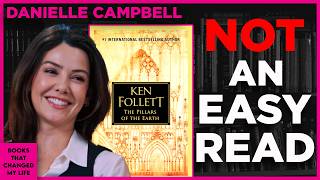
In this YouTube interview, host Chris Collins talks with actress and avid reader Danielle Campbell about how Ken Follett's novel The Pillars of the Earth shaped her outlook. The conversation begins with Campbell describing the novel’s themes—massive world‑building, resilience in the face of disaster, class dynamics, trauma, and the process of rebuilding—while highlighting key characters such as Aliena and Tom. Campbell shares her personal reading habits, how she discovered the book, and how its lessons echo in her acting career and life experiences, including her upbringing, travel, and the discipline required for performance. Mid‑interview the dialogue shifts to a surprising tangent about a mysterious CIA‑related book titled Shadow Cell and an accompanying “Ellipsis Manual.” Campbell learns that the manual teaches “confusion statements,” a counter‑intuitive psychological technique that can compel a person to obey or say anything. Chris explains that mastering these statements is difficult because they require the user to apply the trick on themselves, emphasizing the manual’s dense, disorienting nature. Campbell reacts with excitement and curiosity, thanking Chris for the insight. The interview wraps up with Campbell expressing enthusiasm for both the historical epic and the odd spy‑training material, underscoring her love for stories that explore human behavior, power structures, and the ways narratives can reshape perception.
Chapters
It's a hard thing to experience somebody that you, you despise and you know isn't worthy of it. I, I think it's just life. Life is not always fair.
Sometimes the narcissists rise to the top.
Sometimes they do.
Mostly they do.
No, there was no hunting today, so the young man at Earl Castle played one of William's favorite games, stoning the cat. It's a perfect quote. He's such a foul character. Gross. I don't even want to talk about him. He just makes me angry.
Okay, so the big question, how Did The Pillars of the Earth by Ken Follett change your life? I, I'm Chris Collins and you're watching Books That Changed My Life. This week we're joined by actress and book lover Danielle Campbell, and she's here to talk about the book that changed her life, The Pillars of Earth by Ken Follett. The book we're here to talk about today is The Pillars of the Earth by Ken Follett.
Yes.
And that's your copy?
This is my copy. It's been very loved. It's been handed by a lot of people.
How many times have you read it, do you think?
I've only read this book once, but this book came from my family. And so my, my husband's family, my husband's, um, or my niece is actually named after one of the characters in the book, Alena, which is really cool. But so this has been a book in the family for a minute, and you can tell.
So this book has sold over 200 million copies worldwide.
Has it really?
Yeah.
Wow. I mean, I know the author, I know Ken Follett, but I actually didn't know that about this book specifically.
And so he was more of a thriller writer, right?
Yeah, he had a lot of spy novels, which I love. I love spy novels too. I think that's actually how I discovered him originally.
And when this came out, it was a slow burner.
Meaning like it didn't hit with people immediately? Oh, I wonder what changed that. That's so interesting.
Word of mouth. Oh, wow. It just started to go word of mouth, but I think it was different than what people expected from him.
Yeah, that makes sense to me.
Do you get a little bit of that in the book, in his writing?
Yeah, I mean, this is a completely different— it's very different. It's told over 4 decades and it follows all of these different characters back in the 12th century, I think. So it's It takes you back in time. And I think the world building in this book is so much, at least for me, was a huge reason that it was so important to me. Like it was really a beautiful way to tell a story. And you really felt like you were placed into that time, into that world with these characters and kind of experiencing their moments in their life with them.
And it covers like, was it 40 years?
Yeah, 40 different years of, a lot happens, but you get, you see them, they all interact with each other and through different moments in the book. And it's, It's such a ride. It was, it's a long, it's a thick book, but it's, it felt like a fast read for me.
So for somebody who hasn't read the book, how, how would you explain it?
Um, it's, it follows the people in, um, in this town building. It follows the building of a cathedral. So Tom Builder is one of the main characters that we start with, and he and his family are looking for work, looking to build. He's an architect, and his purpose in life is to build the greatest cathedral. And through different trials and tribulations and heartbreak and different moments, you kind of watch him finding this, this town and then the people in it that he ends up starting to build this cathedral. But there are so many I think there are so many trials along the way that make it very difficult. You meet other characters that continue to help him along in his journey. And then it's also not only his story, it's his son, Tom, who he meets through a woman on the road after losing his first wife. You meet Eliana, who is a former— not a former princess, but a former lady who gets dethroned essentially by someone else opposing power. And you watch how she ends up into this other— I don't want to give it away entirely, but you watch all of their characters kind of interacting with each other throughout the story and falling in love and heartbreak and overcoming traumas.
And it's just, it's a very full of life All the things in a great book.
All the things in a great book.
Are there characters in the book that you relate to more than others?
I think Aliéna was a really special character to me. You watch a young woman who goes through a lot of hardship early on in her life, and she, she overcomes it again and again. And you kind of watch this woman get pushed down, and every time she comes up, she comes up stronger. And she's so passionate and she's so motivated. And I think I really found I found so much strength in getting to watch, or like, not watch, but read what she does next. And I think I just, I love characters like that that just kind of invigorate you and just give you that extra energy to, you know, relate it back to your own life.
When you read, are you visual?
Like, I'm so visual.
I used to read when I was, um, to the point where you describe reading as watching.
I do, exactly. Well, and it makes sense for me in my world, but I, I think I always, when I was a kid, I envisioned myself as the main character whenever whatever the main female character was, I envisioned myself as her. And I would stay under with my little like lamplight, I would stay under my covers and I would read till way too late in the night or the morning. And, but I would get so immersed in these stories. And I think that's why storytelling is such an important part to me. And I think a book is the greatest way to imaginative, to put yourself in these places and these worlds that are different from what your reality is.
Yeah, it's so fun. Where did you grow up?
I moved quite a bit, um, but I'd say my formative years were in Chicago.
Why did you move?
My parents both worked in commercial real estate, so my— I was born in Oregon. I'll give you the rundown. I was born in Oregon, moved to Chicago. Brother was born there. We moved.
What age did you go to Chicago?
Um, 1 when I first moved to Chicago.
So you don't remember?
I don't remember that part. I remember like young couple, young ages. And then when I was 6, moving to Singapore. I remember Singapore from 6, 7, and 8. And then we moved to New Jersey briefly back when SARS hit in Asia. Ironically, we moved back to the States and then we moved, um, from New Jersey back to Chicago. And I went and finished high school in Chicago.
How old were you in Singapore?
6, 7, and 8.
Do you remember that?
I do.
What was that like?
It was great. It was, it was more interesting, I think, because those years were so young for me. It was a stranger transition moving back to the States after, because those were the years that I started to have more memory and those were more grounding years for me, I think. And then moving back to the States felt like I didn't know what was going on and it felt a little bit more fish outta water. But, you know, I spent the rest of those years in the States and remember those fondly as well. Singapore was, was great. We had great friends, but I remember being young, so I can't remember it entirely. But we did a ton of travel in Asia during that time. So a lot of kind of special trips that I did with my family are within those years.
So you had access to a lot of culture.
Yeah. Similarly also to, I think, how Europe is, is you try— you can travel so interchangeably. I think Singapore is such a— it's so well located and is such a hub in Asia for kind of It's so international, you can get everywhere. And my dad's family or my dad's company was— his properties were scattered throughout Southeast Asia, so we would go with him a lot for work. So it was a really cool way to see the world.
How do you think that experience affected you or molded you?
Oh, I love that question. I think it made me really curious. I, I think it's something— it's one of my favorite things about myself. I think to this day, I, I I'm endlessly kind of asking people questions because I genuinely want to know. There's, I think that's why books have been so important to me is because I get, I wanna know these things that someone else can teach me. Yeah, so I think I just, when you're shown something you've never seen before, you can either lean into it or you can run away from it. And I think I don't know how to run away. I'm very curious and wanna know more.
And your brother was younger?
Yes, he's 2 years younger.
One sibling?
Just one sibling. We're very close. He's awesome. He lives in Atlanta.
Did that experience affect him in the same way?
Totally. Yeah. And it's interesting too because both my parents are in real estate. My brother and I are both artists. So he works in music and I obviously found film and TV and I just, I wouldn't change what I do for the world. But it was something that our whole family kind of had to discover of how to do it because my parents, didn't know this world at all. So it was, it's been a lot of learning for all of us.
Any idea why you didn't follow the real estate and you ended up an artist? Was there something in your parents' parenting or?
You know, my parents very much, and I think honestly, I, I think traveling had a lot to do with it. My parents are very free-spirited. They want, they're very curious themselves. And it's something that I think is really beautiful about the two of them. They always encouraged us to, uh, to, to want to know more, including that about ourselves. And, um, you know, I think when I was 10, I walked into a hair salon and was very outgoing and talking about how I wanted my hair done. And I just— I fell into the industry through someone approaching my mom that day and asking if I would take a meeting with their agency. So I think I just— I, I think I just was going to discover it in some way. And, uh, my passion for acting I think developed as I started to learn about the world. I don't think I ever saw acting as a job. I don't think I ever knew that at 10 either. At 10, I was thinking I was gonna be a spy. So that was a very different trajectory.
But would you have made a good spy?
I mean, I think so. I have to play pretend a lot, so I would, I would hope I would've been pretty good, at least from that perspective. There's a lot that goes into it, I know, but I've actually done a lot of looking into it.
Like what?
Well, I'd like to play one one day. So I've been, um, in, in writing, I've been kind of trying to understand the whole process of how— and I've watched a lot of things about how someone becomes a spy or what, you know, it's not— you're not just a spy, it's all the training that goes into it before, and then you end up in a different— on a different trajectory course based on your skill set. And it's, it's really intriguing to me.
Me too. Like, I've been through a lot of that training.
Have you?
But the, yeah, but it fascinates me to understand human behavior more than anything.
Like, well, and I honestly, I think it's probably one of the greatest, some of the greatest tactics that you can learn into reading people would most likely be from the courses that they teach you in that. And I mean, if, if you've done some of these courses, I can imagine that you have that. And that makes sense why you'd also be a really good interviewer.
Yeah, you know what's interesting though is you learn more about yourself because you're like, oh, I do that. Oh, like you, you kind of, uh, start to understand that you really have to shed your biases in order to engage others. Because if you're imposing that energy or you're imposing that on them, then that's what it will become. And if you're trying to spy or trying to get them to open up to you You have to be blank, and that's really hard to do because it makes somebody reveal more of themselves to you. It has to be similar to acting in a way. You have to come to a character kind of blank, right? You start that way, but then you find similarities.
Well, it's either you find similarities within yourself as to what brings that character to life, because ultimately, if you're playing it, it's a part of you that is, that is emanating from you as you play this character. And so I think what I really enjoy about it is then the research that goes into building the world that my character has been living in or came from and who would've been important to me. So it's all the imaginative parts that I think start to build the character for myself. But then layering in all of what makes a human tick, or why would this trigger somebody, or looking into the— that's where the dialogue becomes so important. And you can tear it apart in so many different ways. Like, there's 100 ways to say, "I love you." You can say it with pure hatred. You can say it with— giddiness. You can say it with frustration and angst. And I think that is what is so— there's so much musicality in language, and I think that's what makes it so much fun to me to just pick apart and put back together.
Yeah, that's great. I think you learn in that intelligence community training that people are more similar than they are different. That we've been running the same software for a long time. We like to think that we've evolved and we're different, but at the heart of everything, what we really want is meaning and belonging.
Do you think that people sometimes spend too much time wanting to separate themselves that they then lose sight of the fact that we're all very similar?
Well, I think in the pursuit of meaning and belonging, people attach themselves to different things. Like, say for example, I was told when I was a kid I'm good at math, then I'm going to be more attracted to doing things that are involving math because I'm, I'm perceiving that I'm good at it whether I am or I'm not. Or say like kids that get in trouble early on and end up going to juvenile detention end up finding their community in juvenile detention, they dress different, they get like totally community. So we find like maybe when you were young you found community in modeling or acting, but then that you adopt the persona and the habits that come from that community. And same thing with politics. People like even now, like politics are crazy that you, if you have an issue you want to talk about, it now gets lumped in with a bunch of other stuff.
Totally.
And it's like, you're— oh no, you're this or you're that. And it's like, no, I, I just want to talk about that. Like, I— you can't— like, you can't lump me in because I'm undecided on a lot of that. I just am very concerned about this thing. But the way that it separates people and the way they attach it to their identity, it's all or nothing, which is very effective in a leadership kind of, you know, sense to get people to follow and do what you want, but it's not collaborative, right? And it doesn't solve a lot of problems. It actually creates a lot of problems. Does that make sense?
No, it totally does. Jumping all over, but no, but I, I'm with you. And I—
meaning and belonging at the heart of it.
Yeah. And that makes total sense. I guess for me, I sometimes— you see people who want to drill in a point about themselves that they're, they're wanting to see in themselves, even if it's not something that they're fully present with yet. And sometimes they spend so much time telling you like, well, this is who I am. And ultimately I might see a different version of you, but you may not be ready to hear that. And so I think I always find that interesting, but I ultimately think it actually goes back to what you were just saying of it's, it's still somebody wanting to belong. It's like they're, they're, they're searching for their meaning.
And so if you're a spy, and you probably understand this, the thing you want to do is get to that place that they don't share with anybody else. So we have a mask. Yeah, there's like 3 masks. You have the one that the world sees, the one that very close friends see.
Yeah.
And then the one nobody sees. You want to get to the one nobody sees. So, wow. Like, let's say I'm trying to get somebody to flip in another country. I already know a lot about them, right? Yeah, because of the research. So I might know that he's having an affair on his wife, and so I will confess to him that I'm having an affair with my wife.
Hmm.
Now we're intimate. If he tells me that he's having an affair, I've got to that place where nobody else— yeah, and now there's meaning and belonging, and he— now I, I have an intimacy with him that is special, and he— I'm accepting him, I'm not judging him because he's cheating on his wife, right? And so then that's how you flip them.
And so, but what if you're trying to get information? Like, what if you don't know?
That's the way to get the information.
Even if you don't know where the starting point is, like if you don't know that he's cheated on his wife already, when the research—
you're looking for that point, you're trying— before I would approach you, I need to understand where the buttons are.
Oh, I see.
The amount of research that goes in before somebody bumps somebody in that way is, is pretty thorough.
Pretty grand.
Yeah, they, they know what they're doing before they're doing it. Does that make sense?
Totally. Yeah, totally. No, I mean, it makes total sense.
But we're playing with that intimacy of meaning and belonging and like where I'm trying to go where you wouldn't normally go with others, because then I, I have a direct path, right? Wow.
Yeah. So that's something that I think would be really fun to explore at some point. Yeah, that's amazing.
And people are oddly simple. Like, oddly, we all have that. We're all, you know, we all have things that nobody knows. We have things that our friends know, and then we have this persona that every, you know, that we put on to the world. And I think that— I think just in my journey, the closer those three things become, the more authentic you become. Because if your mask is so far away from who you really are, you're living—
you're juggling too much lives. Yeah. Oh, that's beautiful.
Yeah, but it's hard because people judge you and you want to belong.
Well, and you're trying to discover those parts of yourselves to begin with. So sometimes you have to explore what maybe you're too far away from yourself feels like in order to recognize, well, that's not me at all.
Yeah. Have you ever struggled with that, like the being famous and having the persona and then feeling misunderstood for who you really are?
There's definitely been personas of myself that I, I don't feel I'm— I put out there, but have been maybe placed for me. And I, you know, I think that's where maybe more imposter syndrome comes in, is like I don't view myself that way. Or I also think that wording is so interesting to me because I interpret it so many different ways. But I think, um, I think my biggest— or what I try to do the most is if I can remind myself who I am, then ultimately everyone else's, or the noise surrounding me, doesn't matter. But I think needing to remind yourself of that as a constant practice. It's not something that you can just do once. I don't think I've struggled with it, which is good.
But do you think that comes from good parenting? Like, you had good self-esteem growing up?
I— my parents are amazing, so I, I would, I would love to give them the credit for that. But I also, I also think that it, it's taken— I, I recognize for myself that it's taken a lot of work to just make sure that I hold that for myself too, in that container. And, but I, I think it definitely starts with your family. I, for me it did.
Yeah. I mean, it is funny how much of this comes down to parenting.
Yeah. But there's so many people that I, I don't think even had an experience with family and they've been able to create a world for themself that feels grounded and strong. And so I, that's where it's, I don't know if that's what it is for everybody. But I, I, I know for me, I think it started there.
I just think it's usually harder.
Yeah, I do think so too.
You had to put in the work.
Mm-hmm.
But yeah, people figured, I mean, I think I've kind of figured it out, but you gotta put in the work. So when did this come into your life? What, what, what was the setting?
Um, during the pandemic I read this book and I think honestly the, the period of time that I read it was really special to me because it was when the, the world paused. There was so much uncertainty. And, you know, for me, getting lost in a book and a story is a great way to take myself out of that world or something that I think may be scary. I like when I need a distraction, I like to read because I think it's, it's me in the book. You can watch something with other people, but you can have your own soul experience inside of a story. And so the book was— it had a special place in my heart because the characters that were struggling with different things, I think, took me outside of my own head. And also at the same time, it's a book that I think about a lot.
Did somebody introduce it to you or did you find it?
My, my husband, uh, introduced it to me. He had read it just before me and he's like, you can't read your next book, you have to read this one first. And I was like, okay.
Oh, that's great.
Yeah.
What did he tell you? Anything else?
Yeah, he told me that it was about the building of a cathedral and I was like, like, is it like an architecture book? And he's like, no, it's Ken Follett. And I'm like, Okay. And I knew, I knew Ken Follett had written the spy novel, so I was very intrigued, to be honest with you. But it wasn't a story that I was expecting at all.
Does your husband read a different style of books than you do?
That's a good question.
I mean, a good book transcends.
A good book transcends. I don't know. I wonder how he would answer that question. I read a lot of different styles, and I think he definitely, He definitely— I wouldn't say historical fiction is his book of choice either. I think this is one that was important to his family, um, but I think he enjoys fiction. Yeah, but I, I enjoy fiction too, so I think we match on that.
Okay, so, um, what is your understanding or feeling on the overarching message of this book?
That's a great question. I think time changes what our original perception is. I think if I take the cathedral as a character in the story, the building of it itself, this cathedral's built, it takes decades and decades. I never thought about how long it takes to build something so grand and beautiful to stand over long, long periods of time until reading this book and recognizing everything that goes into building it. Especially back in the day when there wasn't tools the way that we have them now. But this, this cathedral was burned down, and then it comes— then it's built back up, and they have to change the way that they're building it to make it withstand the winds and weather and time. And different architects take over when someone dies, and so it then, it changes the original idea and the original concept of the of the cathedral is completely different when it's finished. And I think all these characters that you follow and their stories, and you watch them get attacked and their livelihoods taken from them when some things burn down, or when the, the main earner in the family is killed suddenly, it's like you have to watch these people rebuild themselves over and over and over again. And I think so, to me, the, the The theme in the book is really just kind of what you start with may not be what it's meant to be until it's finished. And there's so much change over that course of time that develops something into what it's supposed to be.
Were you affected at all by the different classes of people?
Yes. Aliéna started in one of the higher-class families, and then she's— She's taken out of it by another family that comes in wanting to rule. And you watch her and her brother struggle to try to bring back what their father owned. And she tries to help her brother earn the title for the family again. And so you watch this woman being the brains behind everything that's getting him his knighthood in order to earn back the title for his family. And she's entirely the powerhouse of the two of them, doing this solely by herself. And I found her really powerful because she does it over and over and over again because she doesn't— she runs through so many issues throughout her years and she needs to keep making the hard choice over and over and over again. And it keeps making her stronger. And I just, I really admired her.
Do you think you could summarize the book in one sentence?
Not well.
Yeah, it's too much, right?
Yeah, I would say it's about the building of a cathedral, but I don't think anyone would wanna read it just like me.
We should probably mention too that it is a dark book, right? Like there's—
Yeah, because that's a huge part of it for Alina. That's why I kept stumbling over how she gets to where she is. Like she's assaulted brutally by the William character. And to watch her go through something that traumatic and come back stronger at the end and need to face him different moments throughout the story over the years is like needing to face that person to you is Heartbreaking. And, and I'm just, I just, I, I admire her so much.
Kind of unpack that a little bit. Like, what do you think about that? Like, would you be able to do that?
I would like to say that I'd be able to do that, but I don't think I could. For someone who is as brutal to her in the way that he, he hurt her. And I think he, his sole mission in his life, I think, was really to just to, to take her and to destroy her.
And doesn't even do it in front of her brother once.
He does it in front of her brother. Um, he, he threatens with his, um, uh, his partner essentially holds his brother down and says that he's going to kill her brother if she doesn't just like stop screaming. And she's, she's, it's the most disgusting thing to witness or to imagine a human being doing to somebody, but to watch him do it, uh, or to watch him for him to do it to her over and over, and then to see them have interactions over the next years, I think is what is really shocking to me as to how she's able to continue to stand her ground.
Yeah, it would be really hard not to disassociate.
Entirely. And she doesn't just not disassociate, she continues to rebuild herself, her life over and over and over again. I mean, she's brilliant.
So there's war, famine, rape, murder, on and on and on, right?
Everything for a great meaty story. Yeah.
So let's go through this and I'll just— we'll just kind of talk about different quotes that we've highlighted in there.
Starting with the first one.
Yeah. So page 81.
Should I read it out loud?
Yeah. And the premise is that books are kind of special and most people in this time couldn't read.
Mm. Tom was flabbergasted. He had never seen books in a house. Let alone a cave. Books belonged in a church. Tom, Tom the Builder, is the one who start— began the architecture of the book, or of the, um, of the cathedral. And Tom is a part of a low-class family. He grew up only knowing how to use his hands to build. And, um, you know, I think the idea back all these centuries ago, only the high class, um, our highborn, were taught to read. And so I can imagine the, you know, storytelling was told by people physically performing a story or telling it by word of mouth. And back then when there was nothing happening, I can imagine stories were how people kind of lived and breathed because that was the thing that took them out of their regular day-to-day life. Back then it being that much worse when there was famine and crazy weathers where people were never going to be warm enough, lack of firewood, like things like that were what their normal day-to-day was that they struggled with. I can imagine for somebody getting to see all of those books, and I can— they also, I know books back then were a part of a church. Like they were typically, that was where you could go to read.
And that, and in a sense, the church could control then what we were reading, right? Because I, I think about that in just relation to my journey and what it would be like without books. Mm.
And I can't even imagine it.
Yeah. Books introduce you to things, you know, ideas, and they open your mind. I mean, they're magical in so many ways.
Yeah. I mean, I think what's also really powerful about books is when it's different from how you watch something because you get to kind of essentially choose more so what you're seeing. A book because of its length of pages and it's through someone's specific voice and tone. They're exposing you to different parts of the world. They're introducing new ideas and concepts that you wouldn't have ever crossed— it would never have crossed your path based on whoever is in your immediate circle. It's, it's beautiful. I—
yeah, books are important.
Yeah.
Okay, 291. The question is kind of how does this capture the feeling of taking on a big artistic project.
He thought what a thrill it would be to create something from nothing, to see one day in the future a new church here where now there was nothing but rubble, and to say, "I made this." Oh yeah, I think that's really, that's really powerful. I mean, just for me, acting, like anytime I'm given a character or I have the privilege of getting to actually play this character and experience her on, on a stage or in a film and connect with another person, I'm solely getting that experience. And the audience is going to watch whatever that their story is, whoever those characters are on that screen. And I think making something, there's so much pride that's in that because it's something that comes from you. And I wonder, I can imagine building something back years ago and watching or acknowledging that this is going to outlive me. Like, I can imagine just how, how legendary that feels. And to know that you, you built it, like you put blood, sweat, and tears into something.
And do you think about that with, with your work, that it's going to outlive you and it's in a sense timeless?
I don't think I've given enough thought to that because for me I think part of the, um, the challenge in our industry is getting to be present enough with something and acknowledge how special it is because our work is fleeting and the characters that we play, they do come to an end. But so often you're looking for that next part and, you know, it's a freelance space, so you're looking to continue to create that next character. And I, I almost wish that I, um, Or I do try to presently put in more work into staying present with the character when I'm getting to play it, because in my mind, once I'm done playing it, it is— it's over. And yes, there is that remaining piece that lives on, but that's such a small fraction of what the experience is. Getting to work with the people that are making the film, it goes beyond just who you see on set every day. Which is far more than just the actors. It's everyone who wrote it, who wasn't even present with you. It's everyone who's editing and adding sound afterwards. It's such a community-driven industry. And so the experience of just filming something is magical in itself. And so then what's made after it is a beautiful reminder of what that experience was, but it's still worth getting to kind of hang onto the moment of building it because that's where the joy is. Created.
Is there a character you've played that you miss the most?
Yeah, I miss all of them, but, um, I think I— my favorite project tends to be what I just played because I, I still don't feel I ever get enough time with that character. Um, I played a character named Peyton on The Waterfront, and I've had the privilege of working with this creator multiple times, and he I love the way that he writes his stories, and I knew this character immediately when I read her on the page. I immediately felt her, and I haven't always had that same discovery with some of these characters that I've played. And so I was really excited about getting to see where that went and to discover more of her in another season. So that's a character that I miss for sure right now.
That's fun. Okay, 294. And this is just talking to why building a cathedral, why making anything at all.
Tom had not expected that question. There were so many reasons. Because I've seen it done badly, I know I could do it well, he thought. Because there is nothing more satisfying to master, to a master craftsman, than to exercise his skill, except perhaps 'to make love to a beautiful woman, because something in this gives meaning to a man's life.' Which answer did Philip want? The prior would probably like him to say something pious. Recklessly, he decided to tell the real truth. 'Because it will be beautiful,' he said. I actually really, I really love that because I think sometimes, I know for myself, I'm constantly looking for the right words to say something with. But ultimately, sometimes the feelings that you, you want to do something because you know it feels good, because it's special, because it's beautiful— sometimes it's literally that simple. And I think sometimes we complicate it with trying to find the right wording. And that's such a loaded statement, because it will be beautiful. I think that's— that is— there is so much loaded in that.
Yeah. Would you say too that like the best cathedrals, the best art has to be experienced? You You struggle to explain it in words anyways.
Yeah. I mean, the, the thought of describing something that you thought was beautiful on a trip is never gonna be taken, captured correctly in a picture. Just like a sunset, you can't ever get that the same way. You have to experience it in order for it to have that lasting effect on you.
Like, I, I saw a art installation at LACMA the other day. and I came back and I told the team, I'm like, we just gotta go. Like, I can't— if I try to explain it, I'll ruin it. Yeah, we just have to go experience it. And then once we got there, it was like, oh yeah, no, this is special. Like, this is different. But it's hard to put really great art that, you know, an architecture also— like, you can just tell somebody cared about what they were doing.
Yeah.
And wanted to create a better place for us, or a, you know, a better experience, or write a better book, whatever it is. But it's hard to put into words what that experience is, just like people can't describe what love is. Or—
I know, because it's such a loaded experience and it's so personal to whoever it is that's experiencing it in the moment. Yeah, I totally agree. It's beautiful.
I also like the, uh, the kind of the other side of that is sometimes we create things just because they need to exist.
Well, yeah, but that would also mean that it needs to exist to us.
Yeah, but we can, we can see it.
Yeah.
And then once you see it, you can't, you can't unsee it.
It's there.
It's done.
Yeah, yeah.
And it doesn't really matter why or how, you just have to figure it out.
Oh my gosh, I totally agree.
I love that part of art.
There's something lasting about art too, though. Like, art's presence lasts and affects so many people so differently. And I think that's something that I really appreciate about it, the same way that books do. But art is— it's so personal, yet it's so universal at the same time because it can mean so many different things to one person, or it could mean something different to 6 different people.
Yeah. And I love too how it will change in the context of the time you're in. So yes, the first time I read The Alchemist, it was a different experience than reading it not that long ago, and which characters I relate to, it all changes.
Oh, that makes time— that's beautiful. I haven't read it yet. Yeah. And different, different chapters of your life, certain things resonate more. I need to reread The Alchemist too.
That's great. Okay, 409, and this is just summing up William.
"There was no hunting today, so the young man at Earl Castle played one of William's favorite games, stoning the cat." Yeah, I mean, it's a perfect quote. He's such a foul character. Gross. I don't even want to talk about him. He just makes me angry.
Let's go to 421 and talk about the contrast between Warren and Philip.
Warren seemed to think that he was entitled to use people any way he chose in the service of God. Philip believed that caring for people was the service of God. That was what salvation was about. Yet they were— Warren and Philip, um, two priests, high-up priests of, um, the church. And I, I, I think the quote sums up perfectly the way that they saw, um, what they were doing, their acts of service. And Walleran was very self-serving. He was— Walleran didn't seem like he should be a priest at all, frankly. Um, Philip cared so much for the people, and they— the two of them consistently were at battle with one another. Over how to go about anything that was getting done. Warren was obsessed with power, and ultimately, um, it was, it was so clear throughout the book.
How do you see that in, in your life? Like, there's people that are very successful, but it's all about power, and they maybe don't care about the people. And then there's other ones that care about the people, but they're not successful. Because they're missing that thing where they, they need to, uh, still get things done and still be honest and truthful. And so, yeah, it's a, it's a hard thing sometimes.
Yeah, it's a hard, it's a hard, it's a hard thing to experience somebody that you, you despise and you know isn't worthy of it and is clearly doing something that's allowing them to have the experience that they are when you know that— or even if you don't know that you'd be so deserving, you probably, or somebody who's working at it from other angles. But yeah, it's, it's a strange— I don't even— I don't really— I, I think it's just life. Life is not always fair. And I think that's—
sometimes the narcissists rise to the top.
Sometimes they do.
Mostly they do. Especially in Hollywood.
I hope that's changing. I really do. Yeah, there's too much talent out there, you know.
But it is, it is an interesting dilemma.
Absolutely. And I— you have to be someone in power to make those decisions. And the people who are in power in most industries, I don't know if they are, if they should be.
Most of the time the motivation for power is wrong. It may have started from a good place, but it They want to maintain it for the wrong reason. Yeah, yeah, it's— yeah. Okay, 465. This kind of sums up Walron.
The only thing you need to know about Walron Bygod, she said, is that everything he does is carefully calculated. Nothing spontaneous, nothing careless, nothing casual, nothing superfluous. Probably said that word wrong. Um, above all, nothing generous. Yeah, I think that also just— that perfectly describes what we were just talking about. I think Walron's trajectory and his purpose was power, and so therefore he was very calculated, actually quite brilliantly so, throughout the book. And he was actually very good at pivoting too. When something that wasn't going according to plan happened, he was very good at calculating and changing, changing angles, which I think a lot of smart people are in power and that's why they're able to do it.
Okay, 582. What's the most satisfying thing you've ever done?
Me personally, um, I think it was 2022, I did a Broadway play called Trouble in Mind, and that was so incredibly rewarding to me just as, as a person, as an actor. When I started acting I had a— I was able to— I consistently worked through those early years. And I think the bigger thing that I did when I was younger was a Disney movie called Starstruck when I was 13. And I remember coming into my high school year, my freshman year halfway in because I'd been filming the first half. And I went to the theater orientation because I thought this is where I'll find friends 'cause I was entering halfway in. And I wasn't able— I was told that I wasn't going to be able to make the commitment to the school and to the team, so I wasn't going to be able to join the theater. And I remember being really disappointed and overhearing that I'm only, like, good for movies or something like that. Not from one of the teachers, but I remember it got in my head and I thought that that was all I was worth and that I wasn't actually an actor. I just got lucky because I was pretty or because I— was in the right place at the right time. And getting the audition for the play during the pandemic was a fascinating experience because I hadn't had a lot of auditions, obviously, because it was such a strange time in our industry and the world. But getting to audition for it, I remember getting called back and just getting to have a conversation with the director. I sobbed. Like, I sobbed just getting— called back, and that hadn't happened to me before. And, um, the experience filming— or not filming, performing this play, um, in New York was, was one of the greatest accomplishments to me because it was me kind of proving that younger story wrong, and it was really rewarding.
What else did you learn about yourself in that process?
Oh my gosh, I fell in love with my craft in such a different way. I was standing on a stage with a live audience And getting to be— it just grounded me in the present moment so much more. I think it's a gift to any actor to get to perform on stage because of what it teaches you, the purpose it gives you. My cast was so fantastic and so talented, and I just was a sponge. I soaked up everything, any advice. They were so loving. And I mean, you listen more, I think. My favorite thing that I just want to continue to contribute to all of my characters from now on is, um, it's easy to manufacture listening when you know what the line is going to be. And I almost think like it's difficult to remain surprised at what the person is about to say to you when you, when you know what it is coming. So like when you— to be on stage and hear somebody say the same line to me feels different every night on stage because they might have a slightly flirtier in, uh, way of saying it that night, or, you know, it's something that always kept you on your toes. And I think for me that we can do that on— in, uh, film and TV too. And so I think any character I play now, my, my goal first and foremost is just to be present, because that's where you're going to get the best performance regardless.
Were there any moments where you, where you messed up?
Oh my gosh, opening, opening night I was late to my entrance because I didn't hear— I had a wig, so we were getting my wig on. And the— I don't know what the reasoning was, but I was late to entering. And it ended up being actually a really great way to enter because my character was so much more flustered that night. And it felt very accurate too for me performing live for an audience for the first time. So it was really— It was— it actually added to it in a way that was perfect. And if I was present, it worked out great.
How many performances did you do of the play?
I think we did about 6 weeks, um, so that's like 7 or that's like 8 shows a week.
And so from the first few to the last, say, 3, how did you change as an actress? Like What was—
My confidence grew with the character. And I think there's something really special about getting to see the first week and maybe getting to see the last week of a play too, or something in between, because you're watching these people who have lived with these characters and they're living with them offstage as well, because you can't help but think about it. And yeah, I think my character felt more lived in. And it's, again, it's something I want to bring to any characters that I play now because it's such a— they feel like real people. The way that they walk are really specific. The way that they pause when they're thinking. I mean, people have so many different mannerisms and so many different things that make them tick, that make them function, that make them get flabbergasted or confused. Just the little isms, I think, are what bring a character to life so much because that's what makes us all human.
Yeah. Also, it's when you're doing a play, like, there's no net. You can't hit cut and do it again. Like, that's it, right?
I think some of the most fun moments are when somebody loses a line and the whole cast collectively has to figure out how to get back to the script. And that happened maybe twice on stage for us, and they were some of the most fun moments that we all had together.
That's awesome.
Yeah.
Okay, 696. How did you feel when Alina and Jack were finally reunited in the book?
Oh my gosh, I love this part in the book. One of the many moments that I cried in this book, but these were happy tears. Uh, Jack walked all the way around the half circle and then turned and came back, still marveling. He returned to his starting point. There he saw a woman. He recognized her. She smiled, and his heart stood still. You watch Jack adore Eliana from when they were kids. All throughout these stories, through these 4 decades, you watch him and her slowly fall in love, and you watch him recognize her strength. You watch her battling parts of herself as she's discovering who she is. And I think his love for her was so beautiful to read and such a special experience getting to watch the 2 of them almost get together, not get together, the angst, like all of it was what you, was what you love in a story. And so this moment was really special because it was the moment that she finally, she finally went to him after he'd been pining away for her.
9:26: What do you think compels religious leaders to wind up like this? Is it power? What is it?
Archdeacon Peter's face was like stone. He was the worst kind of Christian Philip realized. He embraced all of the negatives, enforced every, uh, prescription, insisted on all forms of denial, and demanded strict punishment for every offense. Yet he ignored all the compassion of Christianity, denied its mercy, disobeyed its ethnic love, and openly flouted the gentle laws of Jesus. That's what Uh, that's what they were like, Philip thought. No wonder the Lord preferred to eat with publicans and sinners. Yeah, I, I think it was power. I think power hungry, a power hungry man. And I, I think he wasn't at that point too. I think it was, he was so driven by that he wasn't afraid to step on anybody in order to achieve it.
Let's go to 9:72. And just kind of continuing on the theme of power, is the power of a king constrained by the people? And how do you think this applies to, to the day we live, you know, the time we live in now?
For Philip, the importance of the whole phenomenon lay in what it demonstrated about the power of the state. The death of Thomas had shown that in conflict between the church and the crown, the monarch could always prevail by the use of brute force. But the cult of Saint Thomas proved that such a victory would always be a hollow one. The power of a king was not absolute after all. It could be restrained by the will of the people. This change had taken place with Philip's lifetime. He had not merely witnessed it, he had helped bring it about. I think our world is no different from so many previous generations in the fact that I think when people come together, they recognize how powerful they are. And I think unfortunately it's the people who decide that they want to solely bring more power to themself. They become the kind of like the kings that people want to destroy and take down. And I, I think the power lies within community, within people, within helping your neighbor. I think all these, these morals and these values that you're taught from a young age, I think there's reason for it. I think it's It's definitely how you build a better lasting community together.
Do you feel like we're getting away from that?
I do. I do. I, I think that throughout centuries though, there's been— I just, I think that we haven't figured out how to do it yet, how to, how to correctly all come together. I think certain groups of people come together and then certain groups of people want to stay separate from one another or want to bring themselves soul power on their own. I don't, I think that this is— we're in a pattern of consistent trials over and over and over again from years ago. Any battle that you have, it's the same thing. It's people fighting over land. Right now we're in a consistent cycle. I think we're just in a cycle that we haven't figured out how to change or break up.
Do you have any insight in how we could change it?
No. And I think that's part of the problem is I think everyone has different opinions and ultimately you need to get everyone on the same page in order for that opinion to, to have any leverage, um, or to be— for you have to get enough people willing to try it. With global warming, you need to get enough people acknowledging something and, and wanting to make an effort to make a change. Crossing into politics, it's the same thing. You have to get enough people willing to try the same. Like, everyone just has too many conflicting opinions, and I feel like no one's listening to each other anymore. People are sharing their opinion left and right, but no one's listening. No one's taking in that information and being brave enough to ask themselves the question of, could I be wrong here? And I think until we start listening to one another, I don't think anything's going to change. We'll continue in the same cycle.
That's very well said. And I think we have more— we don't focus on how much we have in common. We only focus on what we don't agree about. I think we agree about 90% of the stuff that's important.
Yeah, and it goes back to what you said about community from the beginning of our conversation, of how at the heart of it everyone wants the same thing. Everyone wants to be heard. Everyone wants to, to feel important. Everyone wants to be a part of something.
Okay, so the big question: how did The Pillars of the Earth by Ken Follett change your life?
I think it was the time that I read it. It was the time of Quiet and— not Quiet necessarily, but it changed my life because I think it allowed me to see my life personally as decades long, not just following a specific moment. I think it helped me recognize how much I get to continue to change and to evolve as a person, just like the characters and watching their arcs as as people, I have my own as a person. And yeah, I enjoyed the story and getting lost in other people's lives, but it's so reflective for me on mine.
That's great.
It's just, it's a really beautiful story and it follows people through so many dark moments, but you watch them come out on the other side and see the light and it's really beautiful.
It's fun. What are you reading now?
I'm reading, it's Butter. It's a book about a serial killer, a woman who kills men in order to, it's really good. I just started it. Chris Collins. No, well, I just started it.
She kills men for what?
She kills men in order to get the, to pay for butter. She has this obsession with butter. There's a butter famine in Japan. It's— I'm, I'm still at the beginning of it, but it's for a book club with some of my girlfriends, but it's, it's a fun read.
How does, how does your book club work? Who picks the books?
Oh, it's like we, we pick a book and then it's kind of like everyone picks a book and then it's voted on whoever gets the most votes. Sometimes they're great, sometimes they're terrible, which is unfortunate. I usually read like 3 or 4 books at a time though, which is interesting. Do you do that? Do you read or do you read one?
I probably have 5 going right now.
Do you?
Yeah.
See, I like that. I, I enjoy doing that myself.
I also never feel obligated to finish a book that I don't connect with. Like, I'm not finishing a book just because I started it. If I'm in a third of the way, even maybe a little less, and it's like, you know, there's been books that I didn't connect with and 10 years later I was like, why didn't I connect with this? It's so good.
Really? But that's good that you would go back for it a second time. Some people won't even try it again.
Oh yeah, I'm open to that I might change.
I agree with you that like, I, if I'm not enjoying a book, I don't need to finish it. But if it's a book club book, I need to be able to talk about it. So those are the ones that I, I continue to read it. Oh cool.
What books do you give away the most? You said you lent this one to a couple people.
No, I haven't lent this one out. Um, I think people see how big it is and they say no. Trying to remember the last one I lent out. Oh, uh, The Women by Kristin Hannah. I loved that book. That was, I think, one of the most important ones to me 2 years ago. And then I read The Nightingale, which is also by her. Beautiful, beautiful stories. Historical fiction. This one I think got me on a historical fiction kick for a while. Um, but yeah, I love those books. Those are just— they're about— they follow really powerful women in different chapters of time through wars and heartbreak and all the— it's so good. I enjoy them.
Do you have a top 5? If this is number 1, what was the runner-up?
Hmm, well, I approached it from— I, I have to think about it. I love— I, I really just— I just finished a Dan Brown book that I really enjoyed. I think it'd be mostly— I love The Alchemist, but it's so long ago, I'd have to reread that one. Have you read The Untethered Soul? That's a beautiful book by Michael Singer. That one's far more philosophical. So I think it depends on the department. This I thought was fun because character-wise, I really just loved her, loved the characters. Yeah, I'd say The Nightingale was really beautiful and the women was really important to me. At least recently, those are the ones that jump out.
It's a great conversation. Super fun.
Yeah, thank you. I appreciate you sharing. And yeah, I would love to snag that book from you. That sounds awesome.
Yeah. I, yeah, I can make you a list too.
Yeah, I would love that.
Books. But most of mine are like, you know, this is how you do it kind of a thing.
They're important though. I, so I want to, I want to write a book, or I, not to write a book, I want to, I would love to perform a character that is in the espionage world. And I think, you know, for me, studying characters, if I got to play one, for example, all of the how-to would be everything I need to be looking into.
So we did an episode here with my friend and his wife. Uh, have you heard of Andrew Bustamante?
Yes, but I don't know why.
He's a famous spy from the CIA. His wife and him were undercover and they wrote a book.
Did he do like a series of classes at any time? Because there's— there's—
he does classes.
Yeah, I wonder if I've seen one of them.
But it's called Shadow Cell. Yeah, so we have a copy of that. And then let's give her the Ellipsis Manual.
Thank you.
So it's dense.
Great.
The best part of that book is confusion statements.
Oh, is that how they trip people up with—
I can get you to do almost anything with a confusion statement.
To do or to say anything?
Do.
Wow.
And you know what's really hard? Learning a confusion statement, memorizing it, because it's counterintuitive and you're doing it to yourself. But he talks about confusion statements in there.
It's in this one.
Yeah.
Wow. Oh, that's so cool. Thank you so much.
Yeah, you'll have fun.
I'm so excited. Ah, thank you.
We are so excited to announce the Books That Changed My Life website. We made a way for you to show your book pride and that you love books. Hats, tees, hoodies. Check it out. Link in the description. Everybody needs a self-help app.







