David Archuleta: The Alchemist Saved My Life
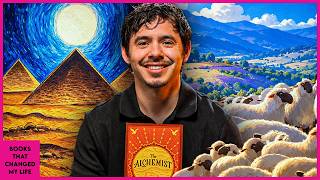
David Archuleta credits Paulo Coelho's The Alchemist with helping him break free from his Mormon upbringing and confront his queer identity. He describes a pivotal conversation with an LDS apostle about homosexuality, the therapeutic work that unpacked childhood trauma, and why he titled his memoir Devout.
Chapters
What's the world's greatest lie? The boy asked that at a certain point in our lives, we lose control of what's happening to us, and our lives become controlled by fate. That's the world's greatest lie.
That's what's so great about the book you picked. The Alchemist is it's about the journey, not the destination. Right.
When I was 17, just off of the American Idol tour, and I kept getting this book from fans in my head, I'm like, there's no way I'm going to make it on this show.
People think the story is being written for them. And really, you write your own story.
I thought I was done. I thought my story was going to end 15 steps ago, and I'm still here.
Whenever you dedicate yourself to a craft or dedicate yourself to a mission, you learn who you are, what you're made of, what you're capable of.
You have to allow yourself to think the unthinkable. In my little Mormon head, it was impossible to be happy and to feel a connection with God and accept that you're gay just by stepping out past the line of limitation. The second I realized, oh, it is possible, and then it's like, oh, what else can I challenge? I had to test your courage. The stranger said, courage is the quality most essential to understanding the language of the world.
Final question. Okay. How did the Alchemist by Paulo Coelho change your life?
O, the alchemist changed my life because he.
Please welcome to the show David Archuleta. What do you think of the library?
It's beautiful. I. I was saying, I. It reminded me of the. I think it's called the Page Master, the Turn. There's a movie that I watched as a kid, and it was in the library, and it gives me this, like. This gives me that vibe, like, I'm back and watching that movie as a kid.
Oh, that's fun. Yeah. Libraries kind of have the same relationship in our unconscious as, like, a museum or a church, kind of similar. It has that kind of calming vibe. Like, it's peaceful.
Why is that?
I don't know, but I like it.
Yeah, I do, too. I feel like it's a place of where people are. It brings this energy of being intrigued, curiosity, learning, like diving into another world, getting lost into it, and just being more introspective and reflective. So I guess that makes sense that it'd be more like a. Like a church, because people go there to absorb and take in and, like, fill their minds, fill their souls. So it's. Yeah. It's just. I think it's just a different energy of people. I just went to the Getty, which, like, when was that? A week and a half ago. And it was. It was just that vibe. I'm like, everyone here. It just like, feels like people are here to observe, to appreciate, and to, you know, just reflect on, you know, someone else's expression of life, of. Of emotions, of a moment that they captured. And it's like the energy is so fun to. It's just so nice. Especially, like, being in la, where it's so crazy. It's just like constant stimulation being thrown at you. To be in a place where all the people there are there for a different intention. Different intention than where you go elsewhere in the city, at least where I'm usually going in the city.
Yeah. People tend to be more open and then you feel that vibe. Right. Like, people are curious and open when they go. Art gallery, probably similar when you play, too. Like, people are coming to a show and they. They're open to an experience. They. They're excited about it. Yeah. In a way. It's a cousin, I think, to that.
Yeah. It can change, though. Like, performances and shows. Some people go because they want to hear a story. They want to be a part of your journey. Other people go because they just want to be entertained. And depending on what the audience's expectation is, the experience for everybody and for me as a performer changes, too. And sometimes it's good. Like, I want people to just be entertained, but other times I want them to be listening to the message or the story. And there are places where the audience is totally in tune with that, and it's like, everyone's connected and it's really cool. Other times there's like a disconnect because I'm trying to get more serious or deep. And the audience is just like, we just want to be entertained. We don't want to think. We don't want to think too deep. And there's. I did some holiday shows last month, and there was like, a conflict at one of the shows because there's some people who just clearly didn't want to deep dive and didn't want to listen and have a moment of stillness. They were just, like, being a little rambunctious and a little irreverent. And I'm like, hey, I'm trying to have a. Like a more quiet, subtle moment of. In this show. And some people. Yeah. More intimate and like, still, sometimes you try to create stillness. Thank you. You try to create stillness for people to Sit in. And some people, I think, are uncomfortable with that.
Oh, yeah.
And. But I was just like, oh, my God. I'm like, y' all be so. Are being so disrespectful because I'm like, I. I verbally had to say in the mic, like, hey, I want. And some people just don't care. They don't want to. And I. And I think it's because they're uncomfortable with it. So they make noise and distract and try to bring attention to themselves. Catcalling and stuff. I'm like, brad, this is not the time to do that. Like, thank you. That's a cool mug.
Local artist, Peter. Peter Shire.
Peter Shire.
I think Shire. We actually went to his studio, he's over in Silver Lake, and he makes. And yeah, it's. It's fun.
That's cool.
Cuz each one's like its own little art piece, you know, like. Oh, and he had. He. He gets pretty creative with them, too.
Well, I love how much of the world of art you're in. Like, I feel like I've stepped into another dimension almost.
Yeah, we. We like to surround ourselves with stuff that inspires us or, you know, challenges us.
Nice. It challenges you. Please do elaborate because. What do you mean?
We have a picture next to our bed in our bedroom that I was scared to buy, but so, like, transfixed by it. But it's this. This Italian couple painted it. It's a beautiful painting. And there's no way I'll be able to describe it, but I'm just going to try. Is there's a Rothko in a bedroom where you can see outside, and then there's a naked woman hanging from a noose and it's, like, disturbing. Wow. But, like, I don't know, I like to play with, like, you know, your biases, like, why. Why do I not like something? Or why am I so judgmental so quick? And, you know, I'm sure you've had in your life where you thought one way and then you heard the actual real story and you were like, oh, I had this wrong in a sense.
Right.
That's part of the. The reason why I have such a large Duchamp collection is that was kind of what he was about, was challenging authority in that way of, like, who are you to say what art is? The artist that puts it out is the one. And if I go to a hardware store and buy a shovel and I call it, you know, broken arm or whatever, and it's in an art gallery. You came to an art gallery it's art.
Interesting.
And so, I don't know, I just. I like the psychology of that. I like trying to challenge why we think the way we think.
I like that.
Yeah. So. But that's a lifelong journey because, you know, we all have our biases and that, that sort of thing. But back to the entertaining thing. Were you more of an entertainer when you were younger and now you're feeling like you want intimacy from the crowd? Has that changed over time?
No, I feel like, if anything, it's the opposite. Like, I think I've become an entertainer. I've become more of a, like a people pleaser in my art because I feel like I. That's the expectation I've learned that has been placed on me by people. So I'm like, okay, I wanna, I want to meet people's expectations as a people pleaser. Whereas when I was little, I felt. And I would just let it come out of me and connect to whatever called. Called to me and sing. And I didn't care who was listening to me, I didn't care who was watching. Like, I. I just liked how I felt. So I feel like it was a lot more loose on how, like, I let myself connect to whatever I wanted. And I didn't care what other people thought. I didn't find, like, identity with it. I didn't try to fit in through it. And as I got older, it then I did care more of, like, how people's interpretation of me by what I chose to express myself with. Like, this is what I listen to, this is what I wear. And as I've gotten older now it's like, okay, I don't. I've relaxed a little more now I'm like, okay, I want to find who I relate to, who I connect with. And so it's like, oh, I like to entertain people. I like to give them like a little bit of a rush or adrenaline. But I also like them to listen and hopefully they'll understand why I want to create a moment here, stillness, or why I wrote these lyrics and wanted to tell this story. So it's. I feel like I'm finding a better medium between people pleasing, which, you know, you don't want to do too much of. But also it's like, it's fun to entertain people and give them little surprises and like, oh, like, I wasn't expecting that. Or. And then moments where it lets them dive into their soul and like, have them be introspective and you're just providing that opportunity for them. So I, like, I Hope my audiences, for the. And for the most part, they. I feel like audiences are usually are receptive to both. I just learned the hard way that that Christmas show that I did that sometimes the audience doesn't. Isn't in tune with that, and maybe they've been drinking too much. So they're more disrespect. They're more out of. Out of it and disruptive. But for the most part, it's. It's a happy medium.
Yeah. I mean, that's what's so great about the book you picked. The Alchemist is it's about the journey, not the destination, right?
Yes.
Is this your original copy?
No, I've lost my original copy.
Oh, how did you.
I'm so bad. I lose things all the time. I've had to buy multiple sunglasses. I've had to buy multiple shirts. I don't know. I don't know how, like, you lose a shirt. That's what I'd like to know.
Like, you're in the grocery store and then you end up outside and you're like, where's my shirt?
No, like, I. I, like, put stuff in my backpack and take that with me and traveling a lot. Like, I'll put stuff. And I'll leave my AirPods. I'll leave, like, my phone charger. I've left my phone before. I've left shirts and shorts. Like, my favorite workout shorts. I don't know where they went. I don't know where they go, but I've. You know, this is probably, like, the fourth or fifth copy I bought. Yeah.
Have you given any to somebody?
Yeah, yeah, yeah.
I've given this book away a lot.
It's a good. It's a good book to give away.
Oh, yeah, it's great.
What's your reasoning behind giving this away? Like.
Well, you know what's interesting is I had a couple people tell me to read this book, and I never did. And then I had somebody who I really respected went on a vacation, and he goes, oh, I read the Alchemist on vacation. You got to read that book. And I don't know, for some reason I was like, okay, I'm going to give it a try. And it is a little. It is a little tough in the beginning. Like, it starts slow, and then it kind of picks up. Yeah. And, yeah, I just. It just really resonated with me. And I. I felt like I needed it when. When I read it. And then I've read it probably three or four times since because it's easy. It's like a Two cup of coffee book. You can read it pretty quick.
You're a fast reader, then.
No.
Two cups of coffee, you said.
No, I have to re. Like, I have to read pages twice sometimes. Like, I. I'm not a speed reader.
Okay.
And I also will go back and read my highlights to remember where I was. I enjoy. I enjoy reading, but I don't.
I can tell. Yeah, right.
But how would you. So how would you describe the book?
I. How I describe it is. It's. It's easily digestible. It's not long. It's. It doesn't require too much brain power that it loses you. And as someone who has a hard time concentrating and focusing the way Paulo. Paulo Coelho writes. I don't know how to say his last name. Paolo Coelho, but he. The way he writes is. It, like, keeps my distracted mind. It, like, he, like, distracts you enough in the read to keep you going. Like, keep you going along with his. His journey. Like, his storytelling, his message, like, feels a little, like. Like jumps around. And I like that a lot about his writing. I've actually. There aren't really authors that I've like, said I need to read more of his. Read more of their books. But Paolo, I have. I was just like, I need to see more of his stories. I need to see more of how he thinks, and I love it. And I. I think I said a quote from one of his books and on Twitter one time, like, back over a decade ago. And he messaged me back and he said, I didn't know you were on here. He's like, I'm going to follow you now, too. And I just said, oh, my gosh, I'm such a fan of you. And he said. He said I was. He's like, I take walks out in the woods. And he's like, I was listening to your Christmas album on one of my nature walks the other just recently. And he's like, it's so fun to connect with you here. And he got my address and has. He had sent me a couple of his books, like, Aleph and I think one about, like, Love Amorous. So I was just like, oh, my gosh. Like, like to be impacted by an author and then to just like, connect with them on a personal level and to know that your art benefited them, even if it was just a moment, like, in their life. I'm like, that is so cool.
Like, that's the beautiful thing about art, right, Is that it can. That you can exchange it like that.
Yeah, it was really cool. Like, I guess I didn't think of my art as something that was beneficial enough to someone who benefited me, you know, so. Because I just look at. I was like, you know, I recorded songs and whatever, but to know that maybe it helped him escape into a moment of reflection or ideas, like, it's just so exciting. It's, like, really exciting. But I've also read the Witch of Portobello from him, which I loved, and Aleph and the Zahir. I don't know how to say the names. Zahir. And then Veronica decides to die. Like, I've. I feel like most of the books I've read were his books because.
Oh, really?
Yeah.
He has another one about the. The trail. Oh, yeah. The Pilgrimage.
Yeah.
I loved that book.
I feel like I read that as well. But. But yeah, I. The way he writes, it's like, for, like an ADHD distracted mind. I. At least for me, it keeps me engaged. Like, I keep reading and I. I don't know. It's like, it. It's kind of like. I don't know how he helps you focus it, but the way he says things and the way he, like, keeps it breaking up enough with, like, interesting things.
He's a great storyteller.
Yeah, yeah, yeah.
It's good. So the. The book kind of talks about a personal legend, right? Do you have a personal legend?
A personal legend. I feel like, for me, personal legend, I would say connection is my personal legend. I love just connecting with other people, whether it's through a meal, whether it's through a conversation, whether it's through a song, or, like, even a music festival or a rave. Like, I like feeling connected, and especially when normally you would think that you're supposed to not be connected because there's so many things that make us different from each other or our ways of life or whatever. But then we find a way to all drop the differences about us and just feel, like. Feel like you're one. It's like, I think it's so cool and so connection. And I would also say curiosity. Curiosity is another thing that is a personal legend. Like, curiosity that leads to new experiences and learning something new. Observing. All for me stems from. From curiosity and wanting to know more about someone or wanting to know more about another culture or another way of thinking. I. That's. And that's. That's why I really like the Alchemist as well. Like, not just with the fact of, like, trying to look for what your purpose is or what your treasure is when you don't even know it's like, what is. How do you find your treasure when you don't even know what that is yet? Like, I love that. I love that thought and idea that it plants into your head and. But I feel like a lot of the characters, like in his plots and in his stories are led by curiosity. They don't really know what they're getting themselves into. They don't really know, but they just kind of let them each moment. Like, okay, let's see what's through this door, and let's see where this takes us. I feel like he tends to do that a lot in his books, and I like that. I like to see where I'm like, okay, take me, take me. I don't know where I'm going either. It doesn't seem like either of us. It feels like neither of us know where we're going, but we're going. And I like that.
Have you always been that way?
I wouldn't say always. I grew up very worried and mindful about being obedient. I was a very obedient kid. I wanted to be a good boy. And where naturally you have curiosity, if you feel like it, the curiosity leads you astray or into a.
Like, outside of the authority that has knighted you, the good boy, then you can get in trouble. Yeah, yeah.
And growing up religious, my family grew up as Latter Day Saints, Mormons.
That's a strict one.
Yeah. And so you're rewarded when you are obedient. And not only that, you're, like, empowered. Like, obedience gives you power is what I was always raised on. So I was like, well, and you're like, you receive more light and knowledge and strength is what I was told. When you follow God. And by the way, this is what God said you need to do. These are his commandments. These are his rules. And it's. The path is straight and narrow. You're not supposed to deviate from it. So I think just being trained, like, taught to think that way and to live that way made me afraid to be curious because I'm like, well, if I get too curious, I might lose my soul. I might lose myself. I. And you get scared of messing up. So a big theme of my life now that I've. I value a lot of the things I was raised with, with the Mormon culture, Latter Day Saint culture, like, a sense of community, a sense of. I feel like a sense of being one. I got a lot of that, like, going to church and singing hymns as a congregation. Like, to me, it was so cool that all these people came from whatever they were doing and are put into a room and start singing these hymns. And you're united in a cause, you're united in voice, and you're united in purpose. So I liked a lot of those things about it, but I wanted to learn how to, like, unprogram the strictness of, like, you have to be strict, you have to be obedient, and you have to be afraid of messing up, and you have to be afraid of sin is how the. And, yeah, there's a lot of fear. Yeah.
Well, I mean, the fear starts with, you're gonna burn in a lake of fire forever.
Right.
Like, hell is a. Is a crazy motivator.
Yeah. With Mormons, they don't. It's not so much this idea of hell and lake of fire. It's more a fear of separation. So you are cut off from God's presence, you are cut off from being with your family, you are cut off from being united with your tribe, community. Yeah. If you. If you stray, if you disobey, you are no longer in sync with the rest of us. And so that was more the threat. It's like, well, I don't. It's like, do you want to be with your family forever? Well, then you've got to obey, otherwise you could lose your family. And it's like, oh, my God, Like, I don't want to lose my family. I want to be with them. I want to, and I want to receive the blessings. It's like, if you don't obey, you will receive a lesser portion of what God has to offer. And so it's like, for me, it was like a fear of missing out. Like, oh, my God, I would get such FOMO if I'm not obedient, because I'm not going to get the blessings. I'm not going to get my mansion in heaven. I'm not going to get. And with Mormon culture, like they're taught, as it says in the Bible, we are embryos of God. And Mormons take that literally. Latter Day Saints, because they're trying to rebrand from the Mormon. I try to be respectful, but Latter Day Saints try to. They believe that you can become as God is if you are obedient. And the more exact you are with your obedience, the greater of a vessel you are to receive everything God has of his inheritance to you. So Latter Day Saints believe that once you receive, like, once you enter heaven in God's presence, that you. If you. If you qualify for the highest tier of heaven, because there are different tiers, like levels of heaven. According to your obedience or what you're comfortable with the highest one, you can create like worlds and universes and have the power that God has to do everything he can do. Because you're a child of God, so when you grow up, you can become just like him is the mentality. So it's like, okay, why would I want to mess that up? So, yeah, I was, I was scared to mess up because I'm like, I. I don't want to miss out on my.
There's something I've always wondered. What is the deal with the underwear?
The underwear. Okay, so the underwear, the garments.
Oh, they're called garments.
Yeah, Garments. Yeah.
And you buy them from the church?
Yeah. You buy them from a distribution center.
I wish I could get all my employees to buy their clothes from me. Just as a monetary thing. It would be great. Oh.
Oh, yeah. I guess I didn't think of it that way because it's affordable. It's actually like, compared to other underwear, it's. They make it pretty affordable. But I guess you also have to pay 10% of your. Your like 10% in tithings. And you really can only wear them and buy them when you are full tithe pair in the church. So I guess it does. It's cheap underwear, but you're also having to give 10% of what you make in order to buy it in the first place. Yeah.
So how does it work? You do you wear it all the time?
I mean, I don't wear it anymore, but when I did. Yeah, you wear it all the time. And that's like, hot. Yeah, yeah. Because it's your covenant that you've made with God. So when you wear the garment, it's a reference that's made in again, the old. The Old Testament where it's like, I don't. It's in Exodus. It's in like those chapters. I got Exodus, Leviticus, Deuteronomy, and all those places where like Moses with his people, when he had like the tribe of Israel, they would make covenants to be the covenant people of God. And they would have like the ark and they had the temple and they had the ox. And like, all the symbolism and it talks about like, the clothing that they would wear in their rituals, that they would do in their ceremonies. And so with Latter Day Saints, they interpreted that as best as they could to and be like, okay, this, we're gonna revive that and practice it again and do those temple ceremonies because that's what the people of God did back in the day. And it like Gives description of like, these caps that they wore and the robes and Latter Day Saints. When you go into a temple, there's like meeting houses that you go every Sunday to that anyone can go to. But then there are temples that are closed on Sundays. And you go there to do temple ceremonies and like, work. And like, when you go to the temple, you put on that like, Old Testament clothing, like the robes and stuff, and do the rituals and ceremonies. And when you go through your first time into the temple, before you do all the ceremonies, you put the garment on first. And the garment is basically like symbolism that you have God covering you. So there's symbolism like in Genesis with Adam and Eve, like when God first created the world and created man and woman, they were naked and they didn't know any better. They didn't know really good from evil. They didn't. They were like children with their. Their knowledge. And then they partook of the fruit of knowledge of good and evil that they weren't supposed to, but when they did, they. They became like, knowledgeable. They're able to have discernment. And they realized that they were naked. So they covered themselves with like fig leaves or with leaves. And when God was like, hey, what are you doing? Where did you go? And why. Why are you covering yourselves? And they're like, oh, because I was naked. And so then God covers them with like, animal skins. And so the garment represents, like when you're not wearing the garment, it's like you're trying to. You cover yourself, but when you put the garment on, it's like, oh, God has covered us. Just like how Adam and Eve were covered by God when he made them their garments of like, animals skin or whatever it was. And it's. There's a lot of symbolism. There's like markings on the garments that symbolize the covenants you've made with God in the temple. About like dedic. Essentially, it's long. It's. You are committing your life to God and in return he covers you and blesses you and protects you. And so the garment is like you are taking. It means that you're always honoring your covenants to God. And the symbolism. He's always going to protect you, like, endow you with his power and protection. But it is. It is interesting. It's kind of. Yeah, it's.
Yeah, it's in. The temples are beautiful too. Like, the Mormon temples are crazy.
Yeah, yeah. They go all out with. With them sometimes. Sometimes they're really small. Sometimes they're like the size of like a. A Big house. Like, I used to live in Tennessee, in Nashville, and we have a small temple. But I used to go every week. Sometimes I go several times a week. I was like, really? I was really devout up until one age. Until like four years ago.
Oh, really? Yeah. So a long time.
Yeah. Who.
Who. So who introduced you to this book?
I don't remember, actually.
No.
How long ago was it? It was when I was 17. I was just off of the American Idol tour and I kept getting this book from fans. People would just say, hey, you need to read this book. We think you'd really like it. And I got like three copies from different fans and I was just like, you know what? I'm gonna start reading it. I was on the American Idol tour on the tour bus, so I had time. And you know, it was before we had like Instagram and TikTok. So you didn't. You didn't have scroll. You couldn't doom scroll so you'd have time. Okay, let me. I picked up a book and I was so fascinated by it.
Why do you think they thought you would like it?
I think because I was a young. I was a. A young guy, 17, and I think people could tell, like, I was this shy boy who. It was like, I was very innocent. I was very. It was like big eyed. Just like, wow, this is so exciting. I'm in a completely new world and I think a lot of people could probably sense that I didn't know what I was doing and I didn't really know what to do with the opportunity I was given. Like, I was just catapulted into this huge TV show competition with everyone watching. I'd gained this massive fan base and following people were voting for me every week. But I didn't really know what to do with that. I was just like, I was like, I like to sing, but I don't really know what I want to do with all. Like, I was so intimidated and scared by the attention because I was just like, I didn't have in my mind, like, yes, this is the artist I want to be. I want to make this kind of music. I want to change the world like this. I was just like, I don't even know what I want. Like, and they're like, you want to win? You want to do this? Like you want to. I'm like, I, like, like, not like, I don't. Not really, like, I don't. I wasn't prepared for this. So I think people could see maybe like the lack of direction, but also that I was still excited to experience new things. And thus the alchemist was recommended to me several times over.
Yeah, that makes sense. Let's. Let's go through it. So can I give you my copy with the tabs and we're going to look at some specific parts of it.
Oh, my gosh. Yes. Wow, you are structured. You've done this before.
Okay, let's go to page 20.
Page 20. Okay. What's the world's greatest lie? The boy asked, completely surprised. What's the world's greatest lie? The boy asked, completely surprised. It's this. That at a certain point in our lives, we lose control of what's happening to us and our lives become controlled by fate. That's the world's greatest lie.
What do you think about that?
That's a great line that we. That we think the external factors around us and how they affect us determine what happens to us. And that's not the case. Yeah, yeah, they may. Yeah, they may have, like, influence. You may. But I feel like it's more like you can pull from the external factors to your benefit if you know how to.
But I mean, in a sense, people think the story is being written for them. And really, you write your own story if you want.
Right.
You can let other people write your story, but you also have the power, the ability to. To do it yourself if you choose. Right.
That's fantastic. Yeah.
I mean, you were asking me earlier what some of my favorite books are.
Yeah.
And I. I pulled some. One of them is Locus of Control that just talks about your location of control. Like, where do you attribute control of your life to external factors like luck, God, fate.
I'm gonna write that down because.
Or is it inside you? And it ends up. The people that locate the control inside of them end up being happier, more successful, more fulfilled because you're not a victim to other people's decisions. You're writing your own story versus living somebody else's, basically, in a. You know, to summarize.
But that is fantastic.
That's kind of what that line reminds me of.
I think that's what I like about this book, too. It questions the track that you've been placed on. Kind of like this. Like this camera, the steady camera that it's, like, on a track and it's. And this kind of, like, allows you. It gives you permission to go off the rails and kind of create your own path when you were once believed that, no, this is the path. And there's. I'm not to question it, it just is what it is. And I think as. Especially growing up as a Mormon and very influenced by my parents, especially, like my dad, him telling me, like, I grew up, my dad always tell me, like, that he knew what was best for me better than I did for myself. And I was kind of just trained to believe that, like, okay, I don't really know what's best for me, so I can't really make my own decisions. And when you read books like this or like what you were saying about locus of control, I love it when it challenges you and it's like, oh, well, think twice about that. You really think, or that your life is determined for you, or this is the path that you have to follow. These are the perimeters you have to be in. Because let's see what happens if you challenge that.
Well, I mean, even in a sense, like, just abstract, like when you're on American Idol and there's a bunch of people at home watching, and those people at home are like, I could do that. But they didn't. They didn't go. They didn't try out. They didn't do it right. And so it isn't fate that got you there. It was that you went and took a chance and did it and then tried to do your best. And, you know, whatever the stages are of that show, you got better and learned. And it's easy to think, oh, well, he got lucky. But it's like, no, he showed up. Like, nobody engineered that for you. It wasn't a. You know, there wasn't somebody in the back going, hey, let's, you know, get this kid right?
I mean, I don't know, because I. I still have a hard time with that time of life because I have some in my throat. Hold on. It's. It's tricky for me to look at that life and believe what I wasn't told that my dad. I went on audition because a lot of people wanted me to. I wanted to as well. But I think more than what I wanted was my dad wanted it really bad. And that's why I talk about a lot in my book, actually. In devout is. I was devout to wanting to please my dad, you know, be a good son for him. And he really wanted me to audition for American Idol. He wanted me to make it big. And he always said, like, David, you don't see how good you are. He's like, you do not see the talent. He's like, you have something that other people don't have. And I was just like, okay. Like, I didn't think too much of it. And my dad was kind of like, no. It's like, I want to prove to you that you have something special. And thank you. He wanted me to. So I went. He took me down there to audition. And when I was down there during the auditions, one of the people. Literally, the guy in front of me that was singing, I was like, this guy has one of the best voices I've ever heard in my life. I was like, he could easily be in the top 24. And they said no to him. He didn't even make the first round. I was like, oh, my gosh. I'm like, it must be really tough this year. And then I sang. And in the beginning, someone went up to my dad while I was, like, filling out the. Because I made it through the next round, and I was filling out, and one of the people who worked there went up to my dad, and they're like, you know, your son could win this whole thing. And this was at the first audition that I went to. Like, there were 15,000 people at that first audition. It was at Qualcomm Stadium in San Diego. It's not. It's no longer there, but it was in a stadium. And so I was just like, how. How on earth? Like, how the hell am I going to stand out? I'm like, I had no idea. And so for me, I guess I thought it was God. I thought it was like, this is God's path for me, and he's predetermined it for me because I had no idea, like, how the hell did I make it past this round when there's so many talented people? So I think I was constantly questioning and doubting myself. And my dad was like. I guess in my head, my dad was the one who had the belief in me and the confidence that I did because I didn't have it. But I think I also always passed it to him. Like, I gave him the authority in my life. I gave him the confidence, and really didn't give myself credit for what was happening. It was like, it's God. It's all God. Or it's. It's my dad. And so I guess that's what's odd for me with that experience is I wasn't driven by my own motivation. It was kind of like I was dragged through this experience that I had no ide how it was happening, but I was just like, okay, I'm still gonna give my best. And so it's. It's a really odd thing for me to look back and be like, did I do that? Did I do that?
There's a switch though, right? Like, there is a point when we're kids where our parents control everything.
Yeah.
And we don't really have that much free will. But as you get older, you have more free will, Right. In a sense. And the, you know, just the thing for me or the way that I kind of like look at it is whether it was your dad that influenced you. You still went and you still did it. And there's a lot of people out there that never went. They never got off the couch.
Right.
And they're saying like, oh, it's fate or it's luck or whatever. And it's like, well, the, the. The big part of it is showing up, showing up on time, ready to work. You know, those little decisions have more of an effect on your long term success than, Than anything else. And we control those things. You know, you controlled showing up with a good attitude, trying, and, you know, American Idol isn't about the best singer. It's about the best story.
Right.
And, you know, people are voting just as much because of your story. They do a really good job of telling a story.
They do. Yeah. They really do. And I guess, you know, I think that is something I, My dad did teach me. It's like, if you don't do anything, you're not going to see results. You've got to be willing to put effort in and take action. And even though I was great parenting, really, it is, it is the other things that he did that weren't so great that I do talk about in my book. But yeah, it was helpful that there was someone in my life saying, you may feel uncomfortable doing it, but don't. Your discomfort is not the all tell. Like, don't let that be your God. You're uncomfortable because it's like sometimes you're overly programmed to be like that. This is. This feels unsafe. I don't know about this. I'm very hesitant. I feel uncomfortable. And you think, oh, no, that means it's dangerous. I should stay away from it. That's not always the case. A lot of times you have to do what's uncomfortable. You have to feel like you're gonna humiliate yourself. You have to feel like, okay, I might fail, but I won't know if I don't try. And that's exactly how I felt. I was like, in my head, I'm like, there's no way I'm gonna make it on this show. There's no way that I'm better than any of these people. But it was just like, I'm not going to know what I'm capable of if I don't allow myself to even try. And then I was like, whoa. I completely exceeded my own expectations, and I thought these were my limits, and they clearly weren't that. So that was always my. That was my theme when I was on the show was I thought I was done. I thought my story was going to end, like, 15 steps ago, and I'm still here. So I was like, I think that was the biggest lesson was just like, oh. Moral of the story is I'm capable of a lot more than I thought I was. So, still. Still scary. I was still intimidated, but I kept saying I was. I, like, kept. You know, I was very religious at the time, so I'm like, hey, God. Like, hey, what? How much more am I. How much longer am I supposed to be here? Because I. This is going a lot longer than I thought it was. And I just like, okay, I'm just going to trust. I'm just going to trust in you and trust that wherever I end up is where I'm supposed to be. But I was just like, I'm not ready for. I kept going. Like, another month went by. I'm like, I'm not ready for this. I wasn't prepared. Like, I do not have the proper tools. I do not have the proper mindset. It's like, okay, well, you're still here, aren't you? I'm like, yeah, I guess I am.
You didn't quit.
Didn't quit. I wanted to many times. I was like, I'm just gonna run away and hide, and they won't know where I am. Like, they don't have a tracking device on me. I don't have to show up to rehearsal. I don't have to show up for this live taping. But I was just like, nah. I was like, I would. Then I would be like, Then I would be really disappointed in myself for running away before I even knew if, you know, determining that I was gonna. My journey was gonna end there when it could have continued, you know, Like, I didn't want it to be. And it's hard sometimes. You have to really fight your mental blocks and your mental, like, set limits. Like, saying, oh, I can't do that. Oh, I'm not that. I don't. I'm not ready for that. I don't have what it takes. I. I don't know how to get through that phase and say, you just kind of have to fight it. It's like, Pushing against the current where it's pushing you back. And you want to just go along with it. You want to go with the flow and say, I guess you're right. I'm just going to flow back down and back away from this opportunity. And you just have to go anyway. And you're like. You feel like for me, it's like jumping into, like, a cold bath, like into ice or something. It's like your body is in shock because it's like, I wasn't ready for this. And you just like, okay, just stay anyway. And then you. And that's how being on the show felt for me. It was just like, I'm not ready for this. This is like being in cold water. My body's constantly telling me, get out, get out, get out. And you stay in anyway. And it's like you're like, freaking out. And then. And then you're end. It ends. And you ended up. It's like, oh, I. I made it through.
So, I mean, that's a very inspirational story for a lot of people. And, you know, people need to hear that because a lot of people give up when they want to run and hide, you know, and you stuck to it. That's a big deal. It's. It's not easy to do. A lot of people, too, don't have a support system or a dad that believes in them, you know, it's hard.
That's right. Yeah.
Let's go to 35.
35.
Secret to.
Yeah, I want to see this. I have the worst memory, which is why I've had to read this book so many times, because I was like, I love this book. Why did I love it so much? So it's great to see little highlights. Well, there is only one piece of advice I can give you. Said, the wisest of wise men, the secret of happiness is to see all the marvels of the world and never to forget the drops of oil on the spoon. Oh, I remember this part. Yeah.
So it's the king, right? Told to go out and experience things, but have the spoon with oil in it and not drop the oil.
Yeah.
And then he came back and he said, what did you see? And he goes, I didn't see anything. I was worried about the spoon and the oil. And he goes, go back out and do it again. And then he spilled the oil. But he experienced things. And it's about that balance, I think. Right.
Yeah.
How do you achieve that balance of keeping?
I feel like I should ask you that. How do you keep the balance of
both I think I'm trying to figure it out. I mean, I think it comes in seasons. I think there's certain times where you got to do the thing, and then there's other times where you can experience. And sometimes you just gotta work, you just gotta show up, you gotta go, you know, you got to go to the gym, you got to do the thing you don't want to do.
I like that. Can we see what's the next one on here?
Yeah. 60.
60. Because you have so many tabs here, I'm like, I do not want to miss out on any of these.
This is about blessings. Bec could be a curse.
You have been a real blessing to me today. I understand something I didn't see before. Every blessing ignored becomes a curse. I don't want anything else in life. But you are forcing me to look at wealth and at horizons I have never known. Now that I have seen them and now that I see and now that I see how immense my possibilities are, I'm going to feel worse than I did before you arrived. Because I know the things I should be able to accomplish and I don't want to do. So, yeah, this one hits hard. Why? Ooh. Because you can be completely content with life and where you are and where
you're at,
but when you're shown what more you're capable of, or you're also reminded of the dreams you once had, and they were always, like, an impossible thing, but it was nice to fantasize about them. But then you're shown that what if it's like. What if you can reach them and you've already, like, gained your habits? Like, like in. I think in this part of the book, he was like. Like, you had a dream, and it. And it propelled you forward to move, move. And you get. You get in a routine, and in a moment that was originally inspired by your dream, but you never got to your dream, but activated what you're in right now. But then someone comes along and says, hey, that dream that you had, it's still possible. But then you're, like, uncomfortable because it's like, well, I already have my. What I'm in works for me. It's. It's my life. I know how to do it. And don't. Like. Like, if you show me what is still capable, I'm still capable of reaching in my horizons. If I leave out of my comfort zone, it's heartbreaking because it's like, oh, I could do that. But I'm also content where I am. So he's Saying, I know the things I should be able to accomplish and I don't want to do so. So he's like, no, I need you to get out of my head and out of here because you're challenging my comfort zone. So. But the. The main. The main character, the young man continues. He was like, you know, yeah, like, this works for me and I'm able to continue. He's like, but I have my treasure to find. Like, I have my legend to fulfill. So, yeah, it's great. Okay.
81.
81.
The soul of the world.
81. In alchemy, it's called the soul of the world. When you want something with all your heart, that's when you are closest to the soul of the world. It's always a positive force. Everything on earth is being continuously transformed because the earth is alive and it has a soul. We are part of that soul, so we rarely recognize that it is working for us.
When do you feel like you're the closest to the soul of the world? Like you're the most connected?
I feel like when I do not have expectations that I'm trying to live by and I'm not worried about them, I am in a place of curiosity again. And when you're curious, you're willing, you're more experimental, which allows you to be more creative, and creating is a lot more fulfilling. When you do not let anything have any reservations with it. It's. You just let it come out. You. And you're just like. You don't judge it. You don't. You don't second guess it. You just let it be and you let it come out and let. Allow yourself to experiment. And. I feel like my most exciting ideas come from that place. And then I feel most confident as well, because I just. It just feels good. Like, you're not letting the driving force be, well, what do other people think of this? What do people think of me? Or. Oh, but what if I mess up, like, all these limitations that you place on yourself, disconnect you from that soul of the world is how I feel. So when you're in tune, like. Like you're. You're not hesitating. You're not. You're allowing yourself to connect and reach into that soul that connects to everyone else.
How many times have you been in that place? And because you're not afraid to make a mistake, you make a mistake, and it's like a happy mistake, it actually takes you somewhere else.
Yeah. Yeah. And it's so. It's so great when you experience that.
Okay. 83.
83. Next page. It's not easy to find the philosopher's stone, said the Englishman. The alchemists spent years in their laboratories observing the fire that purified the metals. They spent so much time close to the fire that gradually they gave up the vanities of the world. They discovered that the purification of the metals had led to a purification of themselves. They discovered that the purification of the metals had learned. Led to a purification of themselves. Trying to remember the context that this was in.
Well, I'll kind of. I'll tell you what I think it means, and maybe that'll inspire something. But like, the idea of an alchemist is you're taking a metal of no value, lead, and you're turning it into the metal of most value, which is gold, and you're transforming it. And to do that work is impossible. Like you're doing something that's impossible. It's magic, in a sense, because it doesn't. It doesn't make sense. Like it shouldn't be able to happen. And you commit yourself to this thing and you're over a fire, your fingers are burned, you're, you know, you're. It's. You're obsessed. Like, if, you know, in real alchemy, like it was a lifetime journey trying to do this thing and learn this thing. And through that process, through the process of turning lead and purifying lead into gold, you learn about yourself. Whenever you dedicate yourself to a craft or dedicate yourself to a mission, you learn just as much about yourself as you do about the mission. You learn who you are, what you're made of, what you're capable of. And you can't really learn that by sitting doing nothing. You have to have a mission or a purpose in order to figure out who you are. Because if you're not challenged and you're not striving for something, you never really know what you're capable of. Does that make sense?
Yeah.
Yeah.
It's like being I. Being told something is unrealistic or out of reach or impossible, allows you to say, well, let's see how far we. How close we can get to, like, how far. And that's where the stretching comes. That's where improvement can. Comes and just growth. Because by not just. But by not just following, like, your typical routine and like, typical limit, like, you're allowing yourself to push the limits. You're allowing yourself to just.
But that shapes you in the process.
Yeah, yeah. You becomes. You become more than you would have.
Yeah. And then you gain a confidence and you know A knowledge or a wisdom that you didn't have before. It's great. Let's go to 115.
115.
We're skipping over the fear of failure part.
Okay. Even though that sounds good too. Fear of failure. We've talked enough about that, huh? I had to test your courage. The stranger said, courage is the quality most essential to understanding the language of the world.
I mean, writing this had to have taken a lot of courage.
Yeah. Because it's like, I think the biggest. The biggest hang up I get on is what will people think of me?
Yeah. You're vulnerable.
Yeah.
You're putting yourself out there.
Especially like your old community that it's like you've now like grown out of what they are about. And for them it's like you've changed. Like you've veered off. You've gone astray away from what you should be doing. But like when you do that, it's also, it's. I mean that it's what made life the most exciting for me ever. Like deciding to just like, you know, I'm gonna go against what I was told to do. I'm gonna go against the mold and, you know, discover what life is like when you don't live in the parameters that you once were told you have to live in. And I mean, like, life is so exciting. After that I was just like, oh my gosh, like, there's so much you can do in life and.
But it requires some courage.
It does, yeah. Yeah.
You have to stand up for something that's good. 118.
118. When a person really desires something, all the universe conspires to help that person to realize his dream.
The most quoted part of the book, like, you see this quote everywhere, right?
Yeah. Amen.
Yeah. I think that the world will test you, but if you prove that you're serious about it, it'll. It'll conspire in your favor. But it tests you at first.
It's a great line. Most people give up and like having, learning to have faith in, in that. That the universe conspires to help that person. It's like the more you believe in it and the more you think about it and the more you imagine it, the more the universe helps you to realize that into reality.
Yeah. And when you wouldn't, you say there's a magic in the positive outlook. Like, because if you believe the world's conspiring against you, that'll be come real too. It's a choice if you aim for something more Positive. That will. That will be the story that you write.
Very nice.
Okay. 129.
129. There is only one way to learn, the alchemist answered. It's through action. Everything you need to know, you have learned through your journey. You need to learn only one thing more. The boy wanted to know what that was. But the Alchemist was searching the horizon, looking for the falcon. Why are you called the Alchemist? Because that's what I am.
That's my favorite part of the book.
Do share. Why? Like what? What is. Why is this your favorite part?
Because, like, in a. In a sense, like, nobody knighted him. The Alchemist. He did. Like, unite yourself. Like, nobody can define who you are. You define who you are. And I'm the Alchemist because I'm the Alchemist, not because anybody else said I was, or the Queen knighted me, or the president gave me a ribbon, or I got this diploma from this college. Like, that doesn't define you. You define who you are. It's not external, it's internal. I find that part of the book very empowering. Right. Like you decide.
I like that.
Okay. 133.
133.
Keep your heart quiet.
My heart is a traitor. The boy said to the Alchemist when they had paused to rest the horses. It doesn't want me to go on. That makes sense, the alchemist answered. Naturally. It's afraid that in pursuing your dream, you might lose everything you've won. Well then, why should I listen to my heart? Because you will never again be able to keep it quiet. Even if you pretend not to have heard what it tells you, it will always be there inside you, repeating to you what you're thinking about life and about the world. Interesting. I want to keep reading to see what it keeps saying. Because you'll know it's dreams and wishes, and we'll know how to do escape. You'll never be able to escape from your heart, so it's better to listen to what it has to say. That way, you'll never have to fear an unanticipated blow. He came to understand. The boy continued to listen to his heart as they crossed the desert. He came to understand its dodges and tricks, and to accept it as it was. He lost his fear and forgot about his need to go back to the oasis. Because one afternoon, his heart told him that it was happy. Even though I complained sometimes. It said it's because I'm the heart of a person, and the people's hearts are that way. So cool. I love how he writes I love it's so interesting. So it's like, listen to your heart. Even though sometimes it can be deceptive with the fear that's in there. How do you take this?
There's this great Jordan Peterson lecture where he talks about how when he was younger he kind of separated himself a little bit in the sense that one part of him became this like skeptic, became kind of a rational eye on things. And I think that's how I see it is you got to have both. Like you got to, you got to be unbiased because your heart is biased towards yourself. And if you just follow that all the time, then it's kind of self serving and you're not looking at the global like, how am I helping others versus just protecting myself or you know, just serving myself. And so I think you have to have both. You have to have a balance, but you also have to have this unbiased lens that can also challenge yourself or criticize yourself or be honest. You know, that's one thing I run into a lot, especially doing this shows. Like a lot of people are doing this thing where they're trying to love themselves. Like people be like, I'm just working on loving myself. And I was like, it always sounds so desperate. And then I'll, I'll say like, well, what is love? And they don't know. They can't explain what love is. And I'm like, why don't you just like yourself? Like, let's, let's pull it down a little bit. Because if our goal is to love ourselves, then we're a little biased to how good we really are. And learning and growing happens more in the ham, rooting for myself. But I also know I'm impressed.
Perfect.
I also know there's a lot of room for me to get better. There's a lot of room for me to learn. And so it's in the middle, I think. And that's kind of what that is saying is it's like it's in the middle. You can't ignore it, you got to accept it. But it also can't be everything. I don't know. That's what I think. What do you think?
I think that's interesting. I, because I, I think I am one of those people who, like, one of the things I've tried to learn is to love myself. But I, I think it is important because you've got to believe in yourself. And so for me, like, like what is love for me is I is believing in myself. And what that I'm capable of more that than what I previously believed. And also I think from a religious standpoint, like being told that if you're this, this or this or this, you're bad and you've got to repent, you've got to ask God for forgiveness or if you've done this. So for me, like it was being like being queer, being bisexual, or just like, oh, like I'm designed in a way that is flawed. And I was told God rebukes that and doesn't want someone like you with these traits in his presence. So I was told to abhor what was in me, which became a self hatred because I thought I was supposed to. I thought I was doing the right thing by hating what I was. But I, it was kind of like throwing the baby with the bath water with that approach. So I had to learn that even if this was bad, how can I still see the good things that I have to offer? And I was looking at, through, you know, I was, I was looking at, at it through a lens of religion and, and my religion, like the Mormon religion before. So I was like, well, I, I was, I was like, well, if I want to love myself, I've got to find a way to cleanse myself. But I was like, well, if I can't cleanse myself from this, how can I make up for it? Like, I was like, I've gotta, there's gotta be other qualities. But then I finally came to the conclusion of, you know what? Maybe like God keeps, you know, if there is a God, maybe he keeps designing people like you because he doesn't think that it's a bad creation. Like, if he's the creator of all things and everything that he creates is good, like they're, Maybe there's, it's. Because if he creates gay people or queer people, there's a beauty in that. And I just had to learn how to find the beauty, even though the environment I was in didn't see that beauty. So I had to challenge what I was taught and raised to believe and say, actually I can appreciate the beauty in myself even if other people in my community don't. And if anything, they're trying to discourage me from doing it. When I, when I openly came out and I was still going to church and people in my community, it was like, I got mixed reactions. Some people were like, hey, like, wow, like, I'm surprised that you did that because you're not supposed to, but I am admire that you did it anyway. And it was kind of cool to see how inspire. Inspiring it is to other people. When you challenge the, the narrative, it's like, you're not supposed to do that. Why do I feel so inspired that you did it anyway? Like, I like that. But I also had some other people who were saying, like, you're not supposed to do this. I rebuke what you're doing in the name of God. I'm trying to call you back because I love you. And I was like, I was talking to one of my friends. I talk about it in my book. I was like, hey, I feel like this is my path that God is taking me on. And they're just like, well, the devil appears to people as an angel of light and deceives them. And I was like, that may be what you're interpreting this as, but I feel God. I feel God guided me. And if you say I'm wrong, I'm not going to know unless I experience it myself. So you have to, like, you have to be willing to fail. You have to be willing to make mistakes, to find out for yourself sometimes if what you were told is true or not and make that choice for yourself. And in my case, I felt like, oh, what I was told all my life I had to challenge. And turns out, from my perspective and my experience, they were misinformed, they were wrong. They told me that this was the truth, this was the way. This is how you've got it. And I'm like, actually, no, that's. That wasn't my way. That wasn't the way I was supposed to go. And, yeah, I guess, anyway, that was like a long divergence. But I think it was, like, interesting to me that people told me, you shouldn't love yourself because of what you're doing now. And saying that I was going to screw up my life because. Because of the decision I was making. And maybe in their mind and in their head, I am messing up my life still. But from my own experience, I'm like, no, I'm. I'm. I've gained more insight. I feel like I'm more educated about what it means to be. To be gay, what it means to be queer or bisexual. And, And I, like, part of. There's a part in the book where I'm having a conversation with one of the apostles in my church. Like, apostles in the Mormon Church are like prophets. They can see things that other people can't see. Like, they're like, whoa. Like, they're on another level of humans for, for Mormons. And so I was talking to one of them and he was kind of like, well, because he kept saying. I was like, well, why don't you just date a girl again? Like, why don't you just, you know, we just need to find you a girl to marry? And I was challenging him. I'm like, well, what if there's. You're trying to fix me? What if there isn't anything to fix about this? Like, what if I end up loving a man and that's what I want to marry? And what if, what if there isn't anything wrong with that? Like, I'm not hurting anybody. If we're two adults that are consenting in the relationship, like, how is this going to hurt anybody if we're only found someone to care about and nurture and they happen to be the same sex, like, is that going to affect you? And getting into deep conversation with him, he was just like, huh? He's like, he's like, you still got a light in you. He's like, you're still a child of God, just like I am. And I was just like, yeah, did you think I was supposed to not have light in me anymore just because I came out of the closet and he's, you know, and I thought this guy, like, spoke to God. I thought he already knew everything I was supposed to know because that's how it was. Yeah, like, I was raised to believe perception. These men are holy and they've seen. Like, we were taught that these men had seen Jesus Christ. Like, Jesus had come down and like, met with them face to face. And so we don't comprehend what these men do. And this apostle, like, he was like the third highest ranking man in the world in our church. And in our head, he third highest ranking man in the world because we thought they were the highest, closest to God that you could get on earth. And he said to me, he's like, you know, I've never spoken this in depth with a gay person before. He's like, I didn't know what, how y' all think and what y' all believe and your experience. And I was just like, well, it's. I'm like, it sounds like this conversation was overdue. I'm like, because you're making decisions for people like me on behalf of God, but you don't even know what our experience is. And we're, and we're expected to follow you because we think you know better than we do how to live our lives. And I was just like, man, I was like, I've been giving my life. I've been handing over My life and my will to people like this, who don't even get me. Like, they don't even know what it's like to be me. But I. I always grew up believing that they knew what was best for me. And now here he is telling. And now he started asking me questions about what it was like to be gay. And I was just like, oh. And I was telling. And so. And that's when he came to the conclusion. He's like, wait, but you're still a good person. I was like, yeah, because gay people can still be a good person.
You still have a light.
Yeah, because up, you know, growing up, it's like they thought, if you're gay, you're supposed to be excommunicated. You're supposed to. Like, they believed you are supposed to be cut off from God's presence because you're gay and you're living in a way you're not. You're not supposed to. And you know better. But here I was challenging what his beliefs were that he was teaching other people all around the world. And then he asked me, he was like, how many gay people do you think are in the church? I was like, I'm telling you, I'm like, a lot more than. A lot more than. We'll tell you to your face, because they're too scared. They're too scared to tell you. I'm like, But I'm telling you, I'm like, I'll be in church and they'll come up to me and they'll be like. Like, they're. They're married and have kids, but they'll be like, I'm like you. I'm like you. And they're like, I thank you. I feel seen just because you're living your life. But what was unfortunate is that apostle was too scared to continue the conversation because it challenged his beliefs. What was unfortunate for me was that him not challenging his beliefs was coming at a price of a lot of other. Like, hundreds of, you know, probably thousands. Hundreds of thousands of people in his. Under his watch that were being affected because they were putting all of their trust and faith in what men like him were saying and teaching them. It's like, I'm gay, but if this guy tells me I'm not supposed to, and I'm supposed to pretend, I'm supposed to hide it, I'm going to believe him and I'm going to follow that. So it was unfortunate, but that's my goal. My goal with the book is, with this book, is to keep the curiosity and the question, it's like, hey, what if. What if it, you know, it isn't the way that you always thought it was and you need to ask more questions to. And. And he even said. He was like, well, he's like, I believe that you can. You gain understanding, more understanding by asking questions. I was like, I agree. I agree. So, yeah, but then he goes to me, so.
Well, yeah, you're challenging. Yeah, you're challenging a lot of things. Okay, the last one.158.158.
Thank you, said the boy. You taught me the language of the world. I only invoked what you already knew.
Do you believe that it's already inside of us? Like, we already really know?
I believe it. I think sometimes you just. It's. There are things along the way that help you to connect with that, to access it.
Yeah. And you gain the confidence to really be yourself. And the more you're yourself, the more you live your real truth, I guess. Right? Yeah. It's a beautiful book.
It is
beautiful.
I love it. For me, it, like, it awakens reading through these pages. It does that for every. Everybody who gets to that point. Like, you. You learn the language of the world and you realize that it was already, like, it was already in you. Like, and it's like. And it's so empowering. It's, like, so exciting because you. You finish the book being like, oh, my gosh, like, what am I going to allow, like, experience now? Like, what. How am I going to take action? How am I going to, you know, steer my life the way I want it to? And what's great is at the beginning, you don't even know what it is. And you don't have to know. You don't have to know what that is at the start.
So devout.
Your book, devout.
Why the title devout?
The title, devout. So it was actually suggested to me by one of my friends, John. His name's John Hoffman. John Hoffman. And he is a writer himself. He was one of the creators of this show on Hulu called Only Murders in the Building. And he let me stay with him for a year because he was like, I'm just filming. He's like, I'm. He's like. And so I was there, what. While I wrote almost the whole book, I was staying at his place, like, in, like, his guest. His guest house. And he has his peloton bike there every that he would work out in. So when he was in town, he was, like, always gone. He would come in and he'd be like, hey, okay, if I come work out on the peloton, and we would catch up, and I'd be like, I'm so frustrated writing. I'm like, I've never written a book. Like, I don't know how to. Like, I don't know how to do this. And, like, what do I talk about? And, like, how do I add the details and how do I make it interesting? Because in my head, I just want to get to the facts. And he. He started talking to me and. And giving me ideas of how to live in the moment and, like, how to just be myself. As I wrote the book, really, that's what he encouraged me. He's like, you don't have to be someone else. Just tell a story how David would tell it and let people enter your world and your mind and how you remember things. And it was really encouraging, but, like, devout, because I was a very devout person. But also, you'll notice the shading is different because it's also about the experience of coming out. So it isn't just coming out of the closet. It was also coming out of my religion. It was getting out of unhealthy attachment styles that I kept falling into. I had a really bad habit of getting unhealthily attached and codependent to authority figures in my life, and I would completely submit my life to them. I was like, you make the decisions. I don't know how to make decisions for myself. And so it was like being devoted to people who I thought had all the answers to my life, that if I put all the responsibility on their heads, I wouldn't have. I wouldn't. Oh, well, that wasn't my fault. Well, I didn't know. Or, like, I was just following orders. I was just telling. Doing what you told me, and I was just being a good, obedient boy, but I was taking out all accountability for my own actions and. And the fact that I was the one deciding to let them control my life, let them decide for me. And so it was learning how to get out, how being devout blessed my life in a lot of ways, but also how I needed to learn how to get out of my unhealthy environments that I kept getting into cycle of. I'm like, get out of. Fall right back into it because I'm like, I'm missing this. Who's going to tell me what to do? You will. Okay, so, yeah. So that's why. Devout.
It's great. Yeah, it's great how that worked, too.
Yeah. Thank you. Thank you.
What did you learn in the process
of writing it, I learned that. It made sense of my life. So there are a lot of things that I was still hanging on to, like, beliefs that I had as a kid that I was still holding onto as if I were a kid. And I just needed a little more insight, a little more outside perspective to see the fuller picture and also to get out of the limitations I had as, like, my childhood fears. I'm like, oh, my gosh. I'm still fearing this in the way I was as a kid. And it triggered a lot of things in me, which helped me understand. I'm like, well, why is this triggered? I'm like, there are moments where I was writing stories in the book, and I would just, like, completely feel frozen and panicking. I'd feel like I had to run and hide as if I were a kid. And I would, like, go lay down and be like, okay, I'm trying to calm down. And I'm like, like, why are simply remembering these things making me feel that, like, react this way? And I. It gave me time to reflect. I try to, like, sit through it, like, do, like, some somatic, like, breathing and just, like, be present with my emotions. I didn't know how to handle all of it. So I went back to therapy. Like, I took a little break, met with a psychologist to understand better why these memories were causing me to revert into certain ways of thinking. That was really helpful. It helped me look at family dynamics, family trauma, and family beliefs that I always thought, I've got to honor it because that's my family, and that's how we work. That's how we. How things are. And I was able to challenge them and say, like, hey, why do we believe this as a family? Why don't we challenge this? Because clearly, this is holding all of us back. And it was very uncomfortable for my family. Like, my parents a lot of times were just like, why are you talking? Like, why are we talking about this? Like, but seeing the benefits of having hard conversations and asking questions, like, getting answers sometimes, I learned also that some people aren't ready to. Sometimes it's not better for them to revisit their path past. It was kind of like that in the book, where it's like, don't remind me, because I'm already good where I'm at in my life. Like, I'm coping now with how my life is today. And you bringing. Having me have to question this makes me challenge how, like, the foundation my life is on right now. And if you make me question this, I have to Rebuild. And some of the people, they're like, I'm too old for this. Like, I. I'm gonna have to start over, and it's gonna take me too long. I don't have time. I don't have enough life to really go back into this. And I had to learn how to honor people where they're at and, you know, cut, you know, break off relationships. I need to. Yeah. But it was great that my mom was willing to. My. My. My sisters were like, thank you. I think it also, like, helped me realize, man, like, I thought that that was the end, and then I thought this was the end. And I thought that was the end for me. And it's like, oh, it keeps going. Like, that in itself for me was like, man. And I thought that was game over for me. Like, there's like, a part where I almost was like, oh. I thought for just one example, like, the Mormon Church says, if you can't do this, you. You will. Like, or. And I was like, if I can't get rid of, like, this sin in me, then I've. I guess it's better for me not to. To not be here. Like. So I was like, you know, I think the best decision I have and to have my best shot in heaven with God is if I just cut my life short and end it that way. It'll be a lesser sin to end my life than it is to live a sinful life, like a sinful gay life. But. And I. There. There was a moment where I came to peace with that. I was like, that's the decision I'm making. But when I challenged that belief and I questioned, I was like, well, what if. What if you have more in life? Like, what if life is more than just. You couldn't live a heterosexual life and marry, you know, be the perfect Mormon boy? What if. What if you could try something else? What if you could live your life differently? Or what if you could challenge the quota that you were given and still be happy? And for me, I was like, no, like, I can't be happy any other way. And it's like, you have to give yourself a moment. I was like, but what if you could. You've got to, like, give yourself. You have to allow yourself to think the unthinkable again, like, what you were saying, you have to allow yourself to think the impossible. Because in my head, in my little Mormon head, it was impossible to be happy, to feel and to feel a connection with God and accept that you're gay. I just thought that was Impossible. But I gave my. And just by stepping out of, like, the. Like, past the line of limitation. The second I passed that, the second I realized, oh, it is possible, and then it's like, oh, what else can I challenge? What else? I was like, this is amazing. What else can I challenge? Because I was told so many other things that I. That you can't do and is impossible. So it just, it. It was like I felt like I was born again. Like, literally, I felt like I was getting to live life for the first time, for the second time. And it. It made life so exciting. That's why, like, it goes back to that.
That way you were describing. When you're. When you feel like you're connected to the world is when you're the most creative and free and you don't have that judgment or that worry when you tip that over. That's what happened. Right. You challenged that, and it didn't exist anymore.
Yeah. And what's interesting is some. There are people who got mad because you weren't proving their narrative in their head. Right. It's like, you're supposed to be sad. You're supposed to be miserable because you're not following what we were told. It reminds me of that Dr. Seuss book where it's like, they. Or it was a doctor. No, it was not. Not Dr. Seuss. I'm thinking. I'm getting. But that story where it's like, people kept trying to put, like, the little dots on the little wooden thing. It's like you keep messing up. Like, this is. And like, it's interesting. And that's when I realized, too, I'm like, I can't let other people's expectations in my life because they basically want me to be unhappy.
Yeah.
They want me to be miserable because they don't want to think that happiness is possible like this. And I saw that. I was like, people are. And I let. And for a while, I let them get to me. I was like, oh, I don't want them to think I'm. I'm sad and miserable. Like, they wanted to say, like, you're miserable. Sucks to be you. What a pity he's going to lose everything that he had for him in heaven because he chose to be what he is and he wasn't supposed to. And it's like, well, you know what, fool?
You know what?
I'm happy. I'm the happiest I've ever been. Like, I didn't even know being this happy was even possible. And you want me to be sad about It.
Yeah.
So, like, it made me realize. That's when I realized I have to change my environment because I was trying to still go to church, but all these people kept trying to. I literally, like, there was, like, a moment in a beautiful thing in church where every first Sunday of the month is fast Sunday, where everyone's like, fast for two meals or 24 hours or whatever you're capable of. And they let anyone in the congregation go up and just express their testimony, like, speak from their heart. And I decided to go up one time, and this was after I came out, I was still going to church. And I was telling people. I was like, y'. All. Like, I. I was told. I. I was always told to believe that I couldn't be happy being a queer person and that I would lose God's light and God's love. I was like, I've never felt it stronger than I have. And I was like. I realized, like, God loves me no matter how I am. And I tried so much. I tried most of my life, almost all my life, trying to change who I am, thinking, refusing to be happy until I could change myself. And I realized I was like, I can be happy as I am and make. Still make the most of it. And when I got back down, the leader of that congregation got up and he basically tried to take back what I said for me and tell the congregation basically, like, don't believe what he said. And that was like, a big moment, was like, why am I here with these people? Like, they want me to not be happy. They want me to suffer because of who I am? Because it was. It didn't go with the narrative that they had. No. You're supposed to be unhappy if you're like him, but he's happy. Oh, don't. Don't look at. Don't see that. I was like, why? Like, aren't we supposed to. Like, isn't the point to feel happy and to find joy in this life and to feel closer to God or to, like, the thing that can ties us all together, but you don't want that for me because I'm different? Like, okay. And after I did that, I had four people in that congregation come up to me and say, oh, my gosh, thank you. I'm gay. But I. I just don't want to tell people. And I was just like. So it's just, again, I'm like, why am I in this? Why am I in such a limiting place? That's why I. You know, I left. I left my religion, too, because I was like, I don't want them to keep telling me I don't deserve to be happy when I know I do so. And I deserve to be whoever I am.
Well, I think your story is going to inspire a lot of people. How did the Alchemist by Paulo Coelho change your life?
Oh, the Alchemist changed my life and Paulo Coelho in general because he taught me how to loosen the boundaries. He taught. He taught me how to jump over the walls of limitations, to see what was on the other side, to explore what the world, what more of the world had to offer. Like, I thought the world was within the walls. And he taught me how to expand my horizon. And he taught me how to seek out for more and to find fun in it. Like, to find the fun in just being curious and to explore the world and the mind and the people around you and to. To learn from the people around you too. Like, it's so that's why it's like, it's always a great reminder for me to read this book or other books of his because he teaches me, like, life is worth living. Just as you explore it. Like that in itself. Exploring life makes it worth living. You don't have to just do what you're told all the time, you know, and say, this is the path you must follow. It's like, no, like, exploring, adventuring out is what makes life itself is how I feel.
So it's great. Well, thank you. Thank you for picking this book.
Thank you, thank you. Thanks for having me.
We are so excited to announce the Books that Change My Life website. We made a way to for you to show your book pride and that you love books. Hats, tees, hoodies. Check it out. Link in the description. Everybody needs a self help hat.







