David Joseph Craig & The Book That Changed His Life: How To Survive A Plague
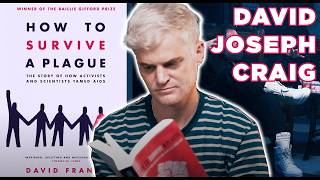
This content was created by Chris Collins. This content was uploaded by Chris Collins. This is a YouTube video titled "David Joseph Craig & The Book That Changed His Life: How To Survive A Plague" created on August 13, 2025. It features a conversation between Chris Collins and David Joseph Craig, discussing various topics including influential books, cults, personal experiences, and creative processes. The discussion is part of the Syndicate X Library series, focusing on books that have impacted lives, with David Joseph Craig sharing insights on the book "How to Survive a Plague" by David France.
Chapters
This time on books that changed my life.
There was one very, very vibrant queer kid in our school, and I hated him.
There's a whole group of people that were very talented and influential that were.
Wiped out in the midst of it. We lost, I think, 4 million people.
There's probably nothing you can do to a human more than make them irrelevant.
And then the answer just being change your actions. Don't have sex.
Don't be you.
Don't be you.
That's the thing about religion and politics and all that, is that we forget that we're more the same than we are different.
I don't know how any human being could see a whole group of people with lesions on their body begging for help.
It's inhuman.
It's so inhuman.
So big question. How did how to survive a plague change your life?
Foreign.
Welcome to the Syndicate X Library, where we love books and especially books that have changed lives. Our guest today is David Joseph Craig. He's a professional filmmaker and he dabbles in ceramics. His latest film, I Don't Understand you'd, is available on streaming platforms. Now he's joining us to talk about the book that changed his life, how to Survive a Plague by David France.
I'm so into a cult.
We're trying to start one.
Honestly, sign me up. Don't know if I'd be good in one, but I think I'm fascinated by them.
Well, do you think you'd make a better leader than a follower? Yeah.
So you could start one, but I'd probably get nervous the second that. Because they always start not as an occult. Right. And then they turn into it. Oh, lovely.
No, part of it is you have to go crazy as the leader. You have to get paranoid.
Yes.
Yeah. No, that's part of what has to happen.
Paranoia probably comes in. Is when I would. I'm too. Thank you so much. I'm too logical that I think I'd pull myself out of it and be like, no, no, no, stop this. Maybe. Yeah. Or maybe.
Maybe just burn it down.
Burn the whole thing down. Yeah, do it, do it, do it. Crash style.
Do you have a favorite cult, I.
Would say, of recent. Nexium really got me. Like, I was really dumbfounded by it. Do you know the Nexium cult? Oh, yeah, yeah, yeah, yeah. I was really like, how did it get this far? And then did you hear about the. It was like a smaller cult, but it was the woman who.
Was medicating herself with silver and her whole. Like, they all thought she was the next coming of a God. And so she was self diagnosing, self medicating herself with silver. And then at one point she dies, but because the silver is in her body, it is still offering up a pulse. They kept her body around because they thought she was still living. Like, literally drove her four or five states for like nearly six months with a dead body. Just still referring to her as their God and. Yeah. Wow.
Yeah, I love that.
Yeah.
My favorite one's Heaven's Gate.
Heaven's Gate.
The fashion. The Nikes.
I mean, the uniform is die for.
And then that they killed themselves. Nexium is amateur hour.
The. The poisonous applesauce and that they so kindly, like, went around five by five and like, killed each other so caringly.
And. Have you ever watched these? Right. Yeah, they were wearing like, Air Jordans.
Oh, yeah. With the. The. The whole thing. Have you ever watched the. The pre interview? They did like an interview of like two of them at a time before they. Before they caught the comment to the. Whatever. But it's so weird that they're so happy and they've. They're so. Also that they're not a bunch of. I mean, a lot of them are just very successful. They were successful. They were professors and, you know, doctors. Like people that you wouldn't expect.
No, they weren't like the.
Those. That's the kind of cult. I want. I want like some accomplished people in my cults.
Well, that. That's what was so fascinating to me about Nexium. Is almost everybody there? Because they were.
Well, it was a leadership seminar, I think, but they were all business.
They were all paying an arm and a leg to be a part of this cult. So they were all very successful in their everyday life. And you're like, how did. Like, like.
Yeah. How are you so easy to manipulate?
Yeah. That you. You are able to be this.
And the other thing about. Have you ever looked at the Heaven's Gate guy?
I'm sure I have.
Well, just like the Nexium guy, you look at him and you go, if I met this guy in a party, there's no way. I think he's got hundreds of people willing to kill for him or whatever. Like, I don't think he could manage a personal assistant. Like, just on the surface, it's like. And these people are just like, worshiping this guy. And you're like. Cause he can play piano.
Like, what? Yeah. Welcome to Catholic.
Anybody check the background? Okay. You ordered Negronis?
Cheers.
Let's see. We need your. Your analysis. Yeah.
Of.
That's a good gin. Negroni. Thank you.
How is writing and directing a movie.
With your husband quite amazing? Honestly? It was the first one we did together, and we did it in the Pandemic. It kind of was a weirdly slow time for everything else, and so it was a way for us to connect. And then in actually directing the movie together, it was so. You know, I think you sat with him, and I'm sure he probably shared a similar reaction, but he says something all the time where it's. It's. You're so often not able to see. You often see your partner's accomplishments at the finish line when something is complete and you're able to see the final product of it, and you kind of get the secondhand hearsay when. During the process. And being able to see him every day succeed in the thing that he loves to do made me. You know, it just made me much more. Even more attracted and even more in love. Just getting to witness his successes versus just hearing about them.
That's beautiful. A lot of times those sort of things can have the opposite effect too. So the fact that it brought you closer is really cool.
I think we have also. Creatively. We have very creatively. We have very similar ideas, yet we operate exactly oppositely. So he's very much zoned in. Can just write down the line, and we'll write 30 pages.
In a day. And I'm someone who has to meticulously think about the idea, form it in my head, make sure it feels right before I even get into it. I was listening to. I don't know if you've heard any of Amy Poehler's podcast, but I used to do improv at ucb and there was Upright Citizens Brigade, and there's improv and sketch people. And improv people tend to always take the first idea and run with it. Right. And the term is. Yes. And. And you. Yes. And from that. And just keep going off that idea where sketch people will sit there and matriculate and kind of like really think about the idea before they even get started and make sure it's a good idea. They write it. And I feel like that's the way I am in my writing process. And he's much more an improviser who will just like. And fly it out so it works.
Have you seen Amy's masterclass?
I haven't, no. It's great. Yeah.
Really good.
Yeah. What was her master class on?
It's improv. But there's way more there. Yeah, there's way more layers to it. It's not just, you know, improv, but man, she's super talented. It's crazy.
Super smart too. Yeah.
You both share the same sense of humor because there's a, there's an energy to that.
Yeah, we're, we, we are in our own personal lives are the funniest we are with anybody. And like we're just bit queens. Like we will just do bits with each other endlessly and like it's, it's something that's so I feel like if we lost our bit work, we probably would lose our relationship because we just make each other laugh all the time. And so we're just at, at a root, just really silly people. And we do share a same dark humor that we've sort of bestowed on our 5 year old son as well.
I was gonna ask, has that caught on with him?
He has my. So his new thing is he'll start doing the looks. Like I always do the, like this kind of look when I'm like, really? And he has started doing that. And the funniest thing happened the other day. It was the 4th of July weekend and the resort we went to started doing a drone show and words started coming up in the drone show. And he's like, hey, they know I can't read. And he just screamed out loud to the whole crowd, hey, they know I can't read. Did they snort? Huh?
Did they snort? Like it was so funny?
Yeah, yeah, yeah, yeah. Like he's got great comedy timing already.
Does he like the reaction?
Oh, he is. It's so weird for both of us. Cause we both weren't popular kids and we can already tell he's like the popular kid. He's going to be like the straight popular jock. And we're both like kind of. We were both like very like in the closet. Very, you know, stick to our own lane kind of people. And so it's a very interesting thing to, as of now, we're not defining that for him, but to raise a child who's most likely going to be a youthful eccentric and extrovert. So it's kind of.
Yeah, I bet it'll be interesting for you to witness the.
Burden that is for him because it's probably a burden he wouldn't have expected being on the other side.
Yeah, probably.
I mean, it's, you know, I like.
I always admired popular kid.
No, I didn't fit in. Like, I didn't know. But you know, when you look at the popular kids, you think like, oh, I wish I could be that. And then at some point later on when you see them managing a Home.
Depot, you're like, here's my, here's my thing with him is he does like drag queens. So like, he does have that side of himself where he's like, he's interested in art too. Well, we'll give him a little bit of eccentricity to add on to that. So hopefully he's, he, he sees both sides of the coin. But yeah, I can definitely see like.
I think that that probably comes from good parenting though, because I think a lot of the kids that don't have that probably were raised in households where things were a little more military or it just wasn't allowed. Right? Yeah, I think because a lot of what happens comes from our parenting, of course. And if you're encouraged to be yourself and if you're accepted for your weird quirks and not reprimanded, then you're more likely to be yourself, I think.
But then the flip side of that is the parenting. Who is that military sort of parenting as well, where you're not prone to being. Where you are still an eccentric kid. Because that's kind of what I was. Where I was like, I was very eccentric. I didn't know who I was yet. I still had the parents who didn't try to like, be like, hey, be who you want to be. Be eccentric if you want to be eccentric. It was like very militant and Christian and like, so that's on the flip side of it too is like, at least if I was born to be the person that, that they militarized, then it would have been a different situation. But I also had the parents who weren't like, yeah, do whatever you want. Do theater, be, be, you know, be whoever you want to be. So I think there's that flip side too.
Yeah, I mean, I grew up in that, the Christian thing. So I grew up actually in Mexico as a missionaries kid. So my parents were missionaries and it was, you know, church three times a week. And my stepdad, what's funny is he was a pastor, ended up leaving my mom and I for a 21 year old girl in the church when I was 13. But he was very strict. I wasn't allowed to watch tv, listen to music. Like, I remember my mom snuck me to see Karate Kid because kids at school would talk about the Cosby show and she snuck me to see that. And if he would have found out, he would have freaked out. Movies or the, you know, that contradiction was always very, you know, front and center for me of do what I say, but not what I do. And if you follow Christ and do all these rules, you'll. You'll be happy, but everybody's miserable. Like, everybody's judgmental, and they're. They're saying one thing and doing something else. I could see that, like, when I was five.
You understood that when you were five?
Yeah.
Like, really?
And also, like, the idea that you can't ask questions. Yeah. Like, it's just no blind faith. And it's like, well, but you could get a job. We don't have to, like, you know, like, there's other ways to do this. Like, we don't have to suffer.
Yeah, that was. That was a big part of growing up was. Was like, accepting that you had to.
Suffer and guilt and like. Yeah. And it's like, well, really, I don't know. Like, I don't. I just, you know, maybe it's easier than the way what you guys are saying.
Yeah. And also, like, I was an only child, too.
I remember this when I was like.
I'm gonna say I was 9 or 10, but I got really upset because I had these two. So I lived in Mexico, and I had these two kids that were kind of my best friends. Abel and Caesar. They were brothers. And I wasn't allowed to watch TV or whatever, so we'd play soccer. That's all we did is play soccer in the street. And one day my mom told me that they were going to go to hell because they were Catholic. And I was like, yeah, but they believe in Jesus. And she was like, yeah, but it's not the right. You know, it's not the right monetary system. That's what she said. But, you know, it's a different system, and they haven't actually accepted Christ into their heart. And I was crying. I was like, I don't want him to go to hell. And it's like, you know, just eventually I figured out this is all like, how can somebody believe in Jesus and go to hell? Because it's a different door on the front of the church. Like, just none of that made sense to me.
I think it didn't make sense to me either. I don't know. I. And I. You know, whatever. It didn't make sense to me yet. That part of you can't question anything.
Was sort of the cult sensibility that I bought into, which was the safety of not questioning anything. So I just didn't question anything about anybody.
When you start a cult, you need to make sure that one of the rules is they can't ask questions, isolate them from all of Their friends with common sense and don't let them ask questions.
Chastise them when they do gaslight them.
Like, whatever it takes. Like, yeah, only idiots ask questions. You know, Ridiculous. What are you going to, moron? Ask questions? You're going to go to hell forever in a lake of fire.
Oh, what is. What is. What is any of that without the lake of fire forever. Did you ever try to wrap your head around that kid?
Mother wants. I remember it was older than when you had a revelation. I go, do you really believe there was a lake on fire? And she was like, well, some things are exasperated also. And then anytime you would ask any questions about actual things. I would have to go to church every week. I would actually listen to the sermons. I would actually listen to be like, why am I here? What am I listening to? And I'd go home and I'd be like, can we talk about it? Can I ask questions? And she'd be like, why are you gonna ask questions? Like, it wasn't even something you could talk about. It was something we just had to blindly follow. And then putting on top of that, my queerness, I wasn't ever allowed to even think about that. Like, that wasn't even an option for me. There was one very, very vibrant queer kid in our school who didn't come out until after school, but he was very okay with himself. And I'm sure to his closest friends, they knew, but he didn't come out until after school. And I hated him. Like, I just. I hated him because looking back on it, I couldn't be who I wanted to be.
Right.
So I chose to make him my mortal enemy because I wasn't allowed to even choose to be that happy. And that sort of.
That is human nature.
That is human nature.
Yeah. The things that we hate in others usually are the. What's that? Fingers are pointing back at us.
Right. That's why. That's why I say being queer saved my life because it made me move to New York.
Yeah, I was very sensitive. So I. I took that stuff very seriously. Like, I would have nightmares and cry and, like, worry about going to hell. Like, and I think out of that I had to question it because I was going crazy. Like, I was so scared. I just didn't want to be scared all the time. Yeah, I remember I would have nightmares. And then it was during the time when they would have you get under your desk in prevention of a nuclear attack.
Oh, my God.
And so it's like, hell, nuclear war. Like, everything was doom and gloom and I. I don't know. I'm a sense. I'm sensitive. So I, like, took that stuff very seriously. And at some point it had to be like, okay, I need a new architecture for this, because I can't just believe everything that everybody's saying. I'm going to go crazy. I'm just going to be afraid all the time.
What did you do? How did you decide you needed a new architecture? And like, what. What choice did you make?
Those sort of things happen over time. But when my stepdad left, like, he was the guy that you can't watch tv. He was super judgmental of everybody else. And they were all sinners and, you know, everybody was going to hell. When he left, my mom and I basically homeless and for a, you know, chick in the. Well, actually kind of happened a little bit before that. So in Mexico, one of the things when I was like 12 and he left when I was 13. But one thing that started happening is these girls would just show up at our house and their dads would make them come. But at that time, like, if they could either marry me or get pregnant by me or whatever, then they would become citizens. And so I told him that these girls are offering to have sex with me, understanding that I'm gonna go to hell if I have premarital sex, right? And his answer to me was, you think they don't try to have sex with me?
I'm 12.
And I was like, what the. You. Like, you're my. You're supposed to be my dad. Like, I'm not talking about. And what they. What? Like, you know. And then I caught him with the girl he ended up leaving with, and I told on him. So I told my mom and him and this, this other pastor had this meeting, and they come out of the meeting and I was like, hey, what happened? And my mom was like, he's not having an affair. He's. It's all misunderstanding. And I'm like, no, it's not. Are you guys like, I'm the only. I'm. I'm the adult here. You guys are non adults. Like, whatever it is you guys have going on is just so far from reality. At a very early age, I was like, authority is bullshit. I don't believe any of it. Which is why I'll make a great cult leader someday, because I understand.
How.
This works and how easy it is to get people to believe a certain way because they don't question it. They're too polite. Yeah, people are very polite.
See, I think that that's why I. I would probably be a good cult leader, but I'd question myself too much. I'd be like, why are you doing this? What is it like, because those make.
The best cult leaders? Cause you'd overreact.
Okay, fine. You know, I'll be a great cult leader.
You would get up.
Like, I'd be a great cult leader.
And people would just be enamored because you're so, like, you know, twisted. They'd be like, oh, he's the God's talking to him. Like he's getting a message. Meanwhile, you're, like, freaking out, breaking out at hives.
I bring everything up. I'm like, literally.
Because it is funny that cult leaders end up imploding in the end. It happens almost every time or get caught.
And that's an inversion of implosion. Yeah, yeah, yeah.
Because they go too far.
Yeah. They.
You have to keep going.
No. A limit. And also, I feel like that's the point. Like, that's why. Because Google's a cult. Yeah.
I mean, there's a lot of Colts that are okay. They don't, you know that nobody's putting on matching Nikes and killing themselves. Like, there's a line.
Yeah, yeah.
Like, if you're running a company, you want your people to be kind of culty about it.
Of course. I mean, look at. Look at, like, most companies just think about uniforms. Like, the fact that you wear uniforms. You are. And you are listed to rules, and you sort of follow those, then you implement those into your everyday lives and all of that. That is why the human species is. Is flawed in a real big way. Is that is, like, is free thought isn't something that most people are willing to give themselves because they'd rather someone else tell them what to do.
What would be the uniform for your cult?
Who design, like, what designer would you pick to design your uniform? Mine would be Rick Owens.
Okay. I mean, I. I have a slender frame, so I'd either. I'd either go for, like, Izzy Miyake or, like. Or go just straight Prada. Like, I think, I think, I think very uniform, very crisp.
Line, you know?
Yeah.
And also show some worth. Right?
Mm. Prada is a good choice. Yeah, I can see that.
Yeah. Maybe I'll make up Cult with Prada and have them sponsor it.
Yeah. Because the better you do, the more they're going to sell, Correct? Yeah.
Yeah.
Because if they, like, any new members coming into the cult have to buy, what, 10 sets of whatever it is.
You need more than one outfit.
And I mean, Prada shoes are a grand. Just. They gotta have a couple pairs of.
Shoes and we'd give a discount. But, like. But as you were going up. Right. Like as you grew.
Yeah. The more you believe.
So it's not only less questions you.
Ask and the more you believe, the bigger cult.
It's an mlm.
Yeah.
Yeah.
Genius. It's all how you monetize.
Are we done here? I think we can go start.
No, we gotta talk about your book. You're excited.
I need to start the cult.
Where did you grow up?
Cleveland.
Browns.
That is a team. Yes.
When's the last time they won a Super Bowl?
They have never. I don't believe. No, I don't believe they have.
This is the year, I think.
Is it okay?
I don't think so.
No.
You're not in a football.
I have no idea. I know there's a player on the Browns. I believe that was a problematic player that came in.
They paid a lot of money for.
Okay. It is Browns.
And it didn't. Yeah.
Okay. I knew it was a Cleveland team. I just didn't remember if it was baseball or football.
They bet the farm on one guy.
And then like he got me to. Right.
Yeah.
Yeah.
And hurt.
And hurt.
So he came back from that and then got hurt. And then he's so.
He's always hurt. A big financial disappointment.
Yeah. And they. Yeah, they guaranteed him all kinds of stuff. It's. It's a. There's a lesson in there.
Join a culture.
So what did dad do?
Dad was an electrical contractor. Started as an electrician. He grew up in Gastonia, North Carolina, which is where he and my mother met. And then my mother brought him back to Cleveland and that's where they got married. And my mother was a. She went to school for medicine, but then when she moved back, she started a job that she ended up retiring, out of which she was. She was the vice president of a like high end car parts dealership. So. Not dealership. Exporting company. Oh, yeah. Very niche. Yeah, very like. Like sort of a concierge for rare car parts, which makes sense in Cleveland because car. You know, Detroit and Cleveland are very car oriented.
Places.
Yeah, it's the heart.
Heart part of it.
Yeah.
Yep.
Siblings?
Nope.
No. Only child.
Only child. Wow. Yeah, My husband was too. And so you guys don't share French fries?
We share French fries.
Oh, no, we share.
Oh, you do?
Yeah.
I'm an only child. I'm not good at.
You're not a good sharer.
No, I'm.
I. I'm. I'M a pretty good sharer. Wow. Yeah.
Your parents raised you better than mine, I guess.
I wouldn't say that, but I'm a people pleaser. The big difference between our raising practice, like Brian's my husband. He had a lifestyle in which his parents showed him the world, right? Like he went to 16 different countries in cities before he was, you know, before he was even in high school. I didn't get my passport until I was 21 years old. Like, I just, I was very, like, I didn't leave Cleveland very often and if we went on a vacation it was to North Carolina. So I didn't really see much of the world. I was very.
White bred.
And so what interest did you have early on as a kid?
I was a competitive gymnast for about nine years growing up.
Goal of going to the Olympics kind of a thing?
No, I mean, in the beginning I thought that that could be fun and would be a goal. Then the training process for me, I just, I clearly wasn't great and it wasn't gonna go that way. And then one year I grew about, I wanna say like 9 or 10 inches over the span of one year. And it kind of pulled me out of doing any of it at all. Like, I just couldn't. Like I was like almost. I was like 5 foot 1 and I grew to almost 6ft tall within the spurt of a year. Which was like when I was like 14 years old. And so I like cold turkey stop. And then really found community and a home in like community theater. So I would do that until I left. That was like my main thing until I went to college.
And what'd you go to college for?
Theater.
Theater, where?
Marymount, Manhattan.
So you go to New York. How does that feel?
Literally like a breath of fresh air. So this is why I say going to New York, being queer kind of saved my life. Cause I had a girlfriend from high school that I sort of still had. And I was still. I had no idea who I was. I didn't even. I feel like in a way I had because I wasn't. But I had sort of adapted an asexual lifestyle where I just was like nothing. Like, no. Like I'm not. I'm too nervous to even think about any of this. The first half of the year at college was really weird and tough for me because I was in a brand new space, all alone, had no idea what I was doing, didn't even have a roommate right away. Cause we had like single rooms in our dorm rooms and I still had a girlfriend. I was contemplating moving back home, and she let me know that she had started dating one of my friends from home. Instead of me being sad, it was the most relief I've ever had in my life. Cause I literally, in that moment, went like, oh, maybe now I can start being the person who I want to be.
Wow.
And that's when I. That's when I accepted New York as my home. That's when I started, like, it flipped at that moment. It took a bit. I always call it my Armani exchange moment because I literally went to an Armani exchange on Fifth Avenue and bought the most heinous outfits I've ever worn in my entire life. Like, I had like a. I. I bought like a pleather red vest and I was like, I am going to change everything about myself. I probably look like a hooker down on, like, 8th Street. But I definitely started finding out who I was and never looked back. That was kind of. And that's why I say both that moment and then being in New York allowed me to figure out who I wanted to be and where I wanted to be.
And so are you writing and acting at that point?
I was just acting at that point.
When do you start writing?
Right after college, I started taking classes at Upright Citizens Brigade. I started. I realized comedy was kind of a real. Like, I loved it. I just thought it was. It was such an extension of myself. It was something I always used to deflect and now I could use it for fun. Where it was before, I was like, I was using comedy and jokes to be like, don't talk to me about the real stuff. And now I could use it, like, to actually have fun. And so I started getting into sketch groups and that's where I started writing. So I would write, like, short form sketch work and all while, like, acting was paying the bills. So I was. I was. But. But ucb. I was like learning how to write and learning how to produce and all of that. And then I moved out to California and that's about the time I met my husband. And I also didn't really understand what the business was or what anybody else did on sets or what anybody. Like, it was like, oh, I just show up on set and an assistant director comes and tells me where to stand. Um, so I really wanted to learn what the business was. And so I was talking to a producer friend of Brian's and she was like, oh, these Australians have just moved to town and they just made a movie called Animal Kingdom and they're looking for people to help them out break into the business in. In la. Do you want to meet with them? And it was Joel Edgerton. He needed an assistant at the time. I was like, fuck, yeah. So I. I started working with him and I worked with him for 10 years as his, like, producing with him and learning the entire business, all while writing a bunch of things on my own and with Brian. And so they all just kind of. I just was accepting new jobs to allow myself to understand how to break through and get to that place.
How did you meet Brian?
He got set up on a blind date.
By who?
By. At the time, she was my manager, but she previously was an agent at a company where she did. She helped find money to build projects. And he was building a project right before, like six months before that she was at the agency and then she got fired and started becoming a manager, which is when I met her. He was on like a long hike with her at one point, like six months prior to me working with her, and described his perfect person. And when she met me, I was that perfect person. And she. Instead, it was like the second meeting we had, and she was like, I know you are a client of mine and I know we are working together, but I have to ask you, and please tell me if I'm overstepping bounds, but I think I might have the perfect guy for you. And she literally goes. She goes, and if it doesn't work out, he's a director, maybe he'll get you a job.
And I was like, okay. I was very hesitant to go because I thought I had never been on a blind date before. But.
So how does that work? Does she give you his number? Does he call you? How does that.
Well, that was. The thing is, it was pre. It was really pre smartphone. So this was like 15, 16 years ago. It was pre smartphone. And she.
She's like, show up in this alley.
She. She. She sent a pigeon to pick me up. She said to me, she was like, I'll send you each an email with a picture of each other. And then if you decide you want to go out, then I'll set you guys up. And instead of sending one to each of us, she sent us a email message to both of us with both of our pictures in the email. So I was kind of committed immediately to the date he started planning it.
And so you guys cut her out and start emailing.
I don't remember exactly how that. I'm sure he probably got my phone number and then we talked on the phone.
So where's the first date? Where do you guys go?
We went to restaurant in Los Villas.
Was it his choice?
Because I was.
Because he lived here.
He knows he was on the east side, and I was living in, like, West Hollywood adjacent at the time, and so I didn't really know the east side much, and so he picked the place.
So you meet him, and then.
It was the worst first date on.
Oh, really?
Oh, my God.
I thought you were gonna say the opposite, like, right away.
First of all, he says I should. So I had, like. What do you call it? Like, an infinity scarf on, because it was. It was in November. It wasn't freezing, but, like, I just thought it was fashionable to wear 68. Yeah, probably. I thought it was fashionable to wear a scarf. And he said I showed up wearing 19 scarves. Like, he little. He will. He will anecdotally say that I showed up wearing 19 scarves, even though it was just an infinity scarf that I still own and is probably only, like, two circles. He was in the midst of editing his first feature at the time, and so he always says that he wasn't around any. Anybody else at that moment. Like, no real people except for his editor and his producer. And so he was. He was, like, overly excited to see another human being. He was very eager to share with me a lot of name drops, which was a huge turnoff at the. You know, I just was like, I don't need to know who you know and what. And it just. There wasn't a mesh, and it just felt like we weren't in the same date.
But two days later, he called me and apologized because he goes, I think I didn't act the way I actually am. I think I was really nervous, and I think you took my breath away. And I would like to make it up to you and go on another date. And the second date was a lot better. We went. You know how they had the outdoor golf range in Koreatown? I think it's gone now, but we went there and we did an activity instead of just sitting down and having dinner. And we laughed the whole time and that, like, I think that that's where we established that we both loved doing bits. Because after that, like, it was just kind of history.
Were you inseparable after that?
Pretty much. I think I moved in a year later. Oh, yeah. Cause he had his place already. Yeah, I think after a year, I moved in.
Did you call the manager after the first date and be like, what are you doing?
I don't actually think I did. She might have texted me or being like, how'd it go? And I probably was very generous and was like, because I'm a people pleaser. I was probably like. I was like, oh, it went really nicely. Thank you. Also, it was a new relationship with her. Probably didn't want to upset her.
So, yeah, yeah, you kind of got to play. You got to be Sweden.
But she's not really in our lives anymore. But we're still sort of connected and so we like, anytime either of us post something, she's like, oh, look at what I did. So she knows that. She's really happy about that.
That's fun. So how does this book come into your life? How to Survive a Plague.
So the documentary of it actually came around in 2012 prior to the book being written. One of Brian's producer friends produced the documentary. And while we were in New York, we got to go see the premiere of it. And a lot of the subjects that are in the book who are thankfully still with us were at the premiere and spoke afterwards. And I think it was the first time in my life that I felt ancestors. Growing up, I was never educated or interested or asked questions about who came before me. And when I did, in the very infrequent times that I did, I was met with, oh, yeah, we're from somewhere in Germany. So I never really had a connection to anything. Even. Even my, like, extended family, none of us were very close. I didn't really know personally about any of their lives. I didn't know much about my parents besides what they did and what. Because like you said, you don't ask questions and you talk about the weather and gas prices. So like, I never had. I never had a real.
Gas prices is a real thing. It is like when I was just up at home, people like, so what? What's gas there?
It's like until.
So funny.
Until my grandmother passed away, whenever we were driving down the street, she and my mother would be in the front seats because my mother separated from my father when we were like when I was maybe 22 years old. But they would just be driving and one of them, it would be. No matter what street we were crossing, she'd be like, it's $0.03 cheaper here.
Oh, yeah, yeah. Drive across town for.
Yeah, you spend. Literally go. I would say to them, you're spending more money to get to the gas station. It's cheaper than the one that you could have just gotten gas at. And so like, I've always felt like the. Before me never had roots. Like, I've always felt like I've always Been searching for roots. I've always been searching for something that I could say came before me, that I relate to. And when I watched the documentary, there wasn't a single person documented that I didn't feel a kinship to. And even though they came from a different walk and it was a cultural kinship, it made me feel whole and it made me feel appreciative, and it made me feel loved. Since that. Because I think the book came out, like, five years later after the documentary came out, I've sort of followed all of their lives. And in a way, like you would maybe an uncle or an aunt. And you're getting like. Like certain tidbits of information from Peter Staley. Like, I would see Peter Staley go on a vacation and be like, oh, it's almost like. It's almost like my extended family. Somebody who I. Even though I don't know them really personally, they did something for me so that I could have a better life. Which I believe is what ancestors are typically meant to do, is to fortify the next generation. And so I've consumed this book numerous times just to kind of. It's almost like. It's kind of cultural ancestry.
It's almost kind of that where I'm like. I'm like. It's like Larry Kramer, both. Because as a wonderful writer and an activist, is like. Feels like inside me is somebody I am. I'm very brass. I'm very direct. I'm very. And I see elements of myself in each of these people. And what I find sort of connected to this is the whole crisis in New York sort of began when I was born and sort of was relieved in a way where they actually won some things right before I moved to New York. This whole plague and their fight happened while I was in my adolescence, which gave me the availability to, in 2000, you know, David Craig, go to Armani Exchange and put on the most hideous outfit possible and learn who I am. And so that's sort of why this book has meant so much to me.
Just kind of talk about.
The plague and what happened and how it affected things at the time.
Yeah. So 1981 was sort of the start of it, specifically where cases started showing up in New York City. And they thought it was a rare form of cancer. And by 1982, it grew exponentially, which is when I was born, because they were already understanding that it was affecting mostly queer people. The government wasn't analyzing it because the government still had very religious motives. Wasn't connecting to it in a way where they Were putting money towards any sort of research. And so the disease was growing and growing and growing and. And nobody was really talking about it. Nobody was. I just think about when Covid started. Within three days of COVID the entire fucking world shut down. Right? Like, we. We. We were told to stay in our houses because it was affecting a marginalized community. People weren't recognizing it. So within two or three years, while it kept growing and growing, A group of activists, queer activists in New York, created a act up which they started aligning themselves with certain scientists who were willing to participate in the research of this. And they became their own activist and their own scientists and learned more about this disease than any other doctor that was out there who was doing any cancer research. And as the plague was growing, because it was still a marginalized, affected illness.
When you were able to get drugs, insurance wouldn't cover it. So it was costing $10,000 a year just to maintain some sort of semblance of health. And so people were just dying. And that's why they were calling it a plague, was because.
People were just letting other people die of what I can only relate to as leprosy, right? Which is like skin lesions were killing the inside of your body and allowing people to die. So a group of scientists, including Fauci, actually did the research. And what could have probably been maybe a year and a half to two years of finding something that could calm this took 12 years.
Well, yeah. How long did it take for the vaccine for Covid?
A year, year and a half?
Yeah, yeah, yeah. Pre AIDS talk about the culture and the people and the talent. Because there's a. There's a whole group of people that were very talented and influential that were wiped out.
Like, I mean, aids, aids, HIV and AIDS took. You know, it affected the arts community. It affected the novelists, thinkers, philosophers, I.
Think, just smart, important people because they.
Because the smart, important people were part of the community, part of the fray. And I can only imagine what this world would be like.
Yeah, that's what I think about is like.
Because I think about the ones we did get to keep, right? The ones that are still like. Larry Kramer lived a long life, and we still got to hear him for 30 more years, 40 more years after the AIDS crisis, You know, out of it, we got Peter Staley, who was in Wall street and is now one of the biggest activists alive, who still is doing the work if people were dying. And it only happened in a year and a half. And then some, you know, some sort of AIDS research happened a Lot quicker how many more people we would have been able to see, have longer lives and inspire me and inspire us to keep going and to have a much more rich, fulfilling life. Cause also the people who did survive have survival's guilt, you know, have survivor's guilt. And we have several friends who are of the age that was just before us. They weren't fully immersed in the AIDS movement, but were right after it. And even they have survivor's guilt where they go like, oh, we got AZT the second that we, you know, became promiscuous because it was available to us now because that was the mid-90s and, you know, we can, we. We now have access to it because there's. Because by the time they found the actual code that would, that would calm the lesions, calm the, The T cell count, it was like a three different thing cocktail in which would actually effectively not cure because there's still not a cure, but would. Would leave you undetectable for a huge amount of time. So even those people who are just a decade before me are feel survivor's guilt for all the people that. That left before them. So, yeah, we lost a lot of great ones.
What would the world be like if we would have attacked it sooner? Or is that even a fair question to ask to me?
I don't know if it's fair to ask because selfishly, I probably would have a lot more mentors, especially going to New York. I'd have a lot more reference to what differences queer people had. I mean, in the midst of it, we lost, I think, 4 million people.
It's crazy.
Crazy.
I mean, right.
Right under our eyes, like right in front of us.
Yeah, yeah. And it's interesting you bring it up now too, because I'm like. Because like, I, It's. It's the people pleaser in me, right where I go, like I go, I go, oh, all the people in this book are my ancestors, in a way, my cultural ancestors. And yet now I'm having the thought of. I could have had 100 books that weren't about the plague. I could have had a hundred books about what it means to be me as a queer person from one of the people that died. I could have had an entire shelf life of queer 80s that isn't about the plague. I could have had it about art. I could have had it about queer nightlife. I could have had it about music and not even just queer, but because everybody, not everybody who passed away, incredible.
Stuff that matters, like, affects people, books that affect people, music, ideas that affect People.
Yeah. I have 30 people who I get to go like, oh, I'm. I'm. I'm. I'm a cultural descendant of a lot of these people, and thank goodness I relate to a lot of these people, because it gives. But, like, what if. What if a queer person reads this and doesn't relate to one of these people? It's like we could have had something for everyone, you know? And I think. I do think a lot of this homogenized queer culture, where everybody felt like they had to be one thing, because there is a lot of that still to this day, where people tend to emulate each other at that time.
Like, people felt like they were irrelevant, like they weren't seen, that they didn't matter. And when you do that to people, that's the worst. Like, you're all. You're almost better just shooting somebody, because there's probably nothing you can do to a human more than make them irrelevant. It's inhuman.
It's so inhuman.
That's the thing about religion and politics and all that is. Like, the flaw is that we can be so affected by these ideas that we forget that we're more the same.
Than we are different 100%. I mean, I don't know how any human being could see.
Another human being throwing their partner's ashes or their family member's ashes onto the White House lawn and not feel a thing. Not see a whole group of people laying on the ground with lesions on their body begging for help and not go, oh, I should help them. And then the answer just being, change your actions. Don't have sex.
Yeah.
Like, that was that.
Don't be. Don't be you.
Don't be you.
Yeah.
Be the version of you that I'm telling you to be.
Right.
Or else I'm not gonna help you.
We'll ignore you, and you're irrelevant. You don't exist.
Yeah. And. And I think that that's. There is part of that. Like. And I'm not saying I was led to feel irrelevant when I was a child, but, like, there is so much of that that I feel connected to, of not being allowed to be myself, to having to follow religion, to having to, like, not ask questions. And, like, the people in this book, the people in the documentary, the people who I look up to are the people who ask questions. Just the fact that poets and writers and PR people and Wall street people were the people who were doing the research, who did all of the research, pretty much who looked through research paperwork and went to scientists and go Hey, I saw this on this. Can you try this in your lab and see if this works? That is hero to me. That is hero. I'm a filmmaker and I go, if somebody said, hey, go figure out how to build a high rise apartment, I'd be like, no, thanks. But like, but like their only option was to do that or they would die. And like, I'm like, fucking hero. Shit.
Have you ever been to Alaska?
I haven't.
In Alaska, they have a rule because the weather is so brutal in the winter that if somebody's broke down on the side of the road and you don't stop, stop and help them, I think you go to jail.
Good, but.
Good go to jail. You should.
Yeah, you should.
But.
But we sat by and watched. Yeah, yeah. And ignored it. What is the lesson?
I think what you said, I think I truthfully think the lesson is like us sitting here, we are the exact same person with different needs and desires and they are all equal. And I think for me, the personal lesson is that ancestry doesn't need to come from blood, that you are allowed. I do something with my therapist in which I recreate family in my head in order for my inner child to like, feel comfortable in certain situations. I can build different people and somehow I always end up putting like women in dress suits in there. Like very tough women with short bob hair and dress suits. And they somehow become the family that like, makes me feel tough and strong and everything. But I'm always like, I'm like, oh, the things you are given don't need to be the things you accept as your own. You get to choose your roots, you get to choose your path. And when you choose your roots, when you allow yourself to really feel like who really has made your life, who it is, is when you can accept other people and when you can be a better person.
I mean, I do think on a positive note that your son is going to grow up in a better world. That there's a good chance that.
We see people more for who they are versus who we want them to be or the thing we want them to fit in.
I definitely do see young people in a way that I wish I had, which is really great. I think you're right. People accepting other kids for who they are. Like just even seeing him as a five year old versus what I was as a five year old and him like he would run up to, if he all knocks somebody over, he goes and lends a hand to them and then picks up their hand and goes, hey, I'm just checking in with you. Are you okay? And I know we live in Los Angeles and that's, you know, he was sent to a preschool that like really entertain that and allowed that to happen. I do think we are raising a generation of carers.
Yeah. And that's. I don't know. That's a positive thing.
I hope so.
So, big question. How did how to survive a plague change your life?
It gave me a history.
Ancestors.
Ancestors. For 30 years of my life, I was very lost, trying to find what I wanted and needed because I didn't have the roots that secured me. Like, I always think about like big families. Like, no matter what, you go home to your family and you have, like, even if you got broken up with, you go home to your family and you have. You have people who will embrace you and love you and hold you. And I feel like queer ancestors that came before me have given me some of that in order to develop into the person I am now.
It's great.







