DOUBLE Your Sales in 90 DAYS!
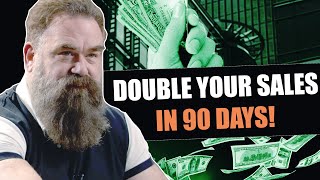
Chris Collins discusses how managers can double sales in 90 days through systematic behavior change, not shortcuts. The approach requires building systems that remove friction and force consistent action, like hiring trainers or meal prep routines, to stick with new habits.
Chapters
Okay. The subject that we wanted to talk about today, and we probably could have come up with a better name for this, but I, I was asking Chris, I was like, what do you, what are, what are you seeing out there when you're coaching managers? What is, you know, what is the thing that you're having the most difficulty with? And, and he said that they, they just, everybody just wants a cheat code. They don't want to do the work.
Yeah, right.
Explain kind of your.
Yeah, I think a lot of people appreciate and see the value in different parts of our system and, you know, want to jump on board, but, you know, they never get past the good intentions. Right. And.
And they never change their behavior.
Yeah, yeah. And. And make it, you know, make it a habit and truly implement a system and execute it. Maybe they, they might dip their toes in the water and even see some success from it for a little bit, but there's always reasons that keep it from doing it consistently. And yeah, ultimately, you know, don't make the necessary behavior changes to, to push it, you know, cross that abyss and push it past the finish line to where it's a new norm.
So would we agree with the statement that in most scenarios, somebody coming into coaching, we could double their sales?
Oh, yeah.
Like many times I'm way more than doubled somebody's sales within 90 days. Right. So you could double your sales. So you're sitting here listening to this and you're doing half a million a month in sales, and you could do a million dollars a month in sales. Now think about that. Now you're doing 70,000 in sales, and you could do 140,000. How life changing is that for any department?
Right.
And so you look at doubling what you're doing now, what behaviors would have to change? And I liken it to weight loss. So let's say you're £300, we'll go the other way. And you want to weigh 150 pounds. Now, there's no magic pill for that. Right. So you have to do a lot of different things. And the thing I would say to that is you have to embrace complexity. Everybody wants it to be easy. They want there to be a magic pill. But. But in the marketplace, how strong are you if you double your sales? Like, can you have the best techs in the market? Can you have the best advisors in the market?
Absolutely, you can, right?
You can dominate the market. Can you have one more car washer than anybody else? You can have one more driver, shuttle driver than anybody else. Right. Like, you're not you're not getting micromanaged to the point that you got to run it right. In a deficit because you have abundance.
Yeah, yeah. There's a lot of freedom that comes with that success, for sure.
Okay. So it's life changing to have that sort of freedom. Now talk about with weight loss, like if you weigh 300 pounds and you should weigh 150 pounds, what is that going to do for your. Your health and. I don't know, just quality of life.
I don't know. The more you talk about this, I find myself sucking.
But what's the difference in quality of life? It's huge.
Yeah, for sure.
Like, you got at 300 pounds, your knees hurt. Like, I've been 300 pounds before. Like I mentioned before when I was a vegetarian. Like, your knees hurt, you're lethargic, you don't have energy, and in 150, you have energy. Like.
Right.
So as a tech, we call it consequential damage.
What's that mean?
Like something. Something wears out and it causes something else to wear out. Right?
Yeah.
So like a oil leaking onto a coolant hose makes it soft and then goes. The coolant hose would be consequential damage. I like that.
Consequential damage.
Yeah. That term right there will get some warranty claims paid.
Really?
Yeah.
Okay. Consequential damage. I love that. So let's talk about what complexity you would have to embrace. But understand that in the marketplace, when you're dominating, people are going to want to know what you did.
Yeah.
So you want it to be a magic pill in the beginning, but when you don't want it to be a magic pill is when everybody else notices you're dominating and they're chasing you.
Yeah.
Then you want it to be complex.
Right, right, right.
So the truth of the matter is, is you want it to be complex.
Yeah.
Because if it wasn't complex, everybody could do it.
Yeah.
And not everybody's going to pay that price.
Right, right.
So when we talk about of all the managers you're coaching, only three of them you think can actually win the service manager challenge. Yeah, all of them can win it.
Right.
Just all of them won't embrace it. They won't get out of their own way. They won't change their thinking, their behavior to do it.
Right.
So you want to embrace complexity. You think you don't, but don't you really want to embrace complexity? Because otherwise everybody can do it. If there's a magic pill, everybody takes the magic pill. And then you have no advantage in the Marketplace, you're not any better than anybody else. It creates average.
Right.
So if I had to go from £300 to £150, I would have to embrace complexity. So the first thing there, obviously you got to work out.
Yeah.
But I know that I won't work out unless I pay a trainer. Unless I pay a trainer, I won't show up all the time. I'll be inconsistent.
Yeah.
Right.
So.
If I pay a trainer, I'm. I'm going to go. So I got to pay a trainer. So that's the thing. I have to like, I know I have to do that.
Right.
In order to work out all the time.
Yeah.
So right now I have two trainers. I have a trainer that I lift weights with and a trainer that I box with. So I have cardio and weights, but I have to go six days a week. When I'm in town, they, we have a time we meet at 5:30 in the morning and we work out.
Right.
And I pay them. And when I'm paying them, it's like, I know that it's expensive, but I'm investing in the, the fact that I'll be there if I pay him.
Yeah.
Because I won't waste that money.
Right.
So that's complex in a way. It's like. Yeah, it's a. You got to trick yourself, Right?
Yeah.
Okay. The other thing is then with the food. The food is the hardest part for me. They say that abs are made in the kitchen, but that's the hardest part. So if you were going to figure out a food thing, once again, it's complex. You got to trick yourself. So the first thing on the food is, is you. And I've done this a couple times where my trainer comes in with a garbage bag and goes through the cupboards and throws away the cereal, the cookies, all the stuff that shouldn't be there. Now I've had a couple glasses of tequila at 9 o' clock at night and I know there's cookies in there. I'm gonna eat them. If they're not there, I'm not gonna get in the car and go to the grocery store to get cookies.
Yeah.
So I can't have it there. I gotta throw it away.
Right, right, right.
Now the second thing is.
I like to eat for entertainment. So I like to, I like the conversation. What do we want for lunch? Oh, what's the best thing we could have for lunch right now? That's a mistake. Because you're eating for entertainment, you're not eating for fuel.
Yeah.
So if I Have to make the decision what I'm going to eat, then I'm going to make the wrong decision. So I got to put myself in a scenario where I'm not making a decision. Which means you have to meal prep.
Yeah.
You have to have meals done beforehand that. No, I'm eating chicken. What did we have for lunch today? We had a chicken salad. It showed up. Nobody asked me what I wanted for lunch. It just showed up.
Right.
And we ate and we were working while we ate, but we were done.
Right.
So if you don't meal prep and you wait and you eat for entertainment, I will always make the wrong decision. But if the meals are pre planned, like you cook them on Sunday or you have a service that delivers them, or you know what, however you do it, you have to trick yourself into not making a decision because you'll end up getting the burger and fries or whatever it is. If you're eating from what you want or what you feel like instead of just having it there, eating it and you're done. Because it was fuel.
Yeah.
Right, right.
That's kind of complex, isn't it?
For sure. But it's a system, I think.
Yeah. So how is it any different for managers if you want to double your sales?
Right.
You have to trick yourself into some things.
Yeah.
You have to set up a system where you. It's okay that you procrastinate. I procrastinate?
Yeah.
It's okay that I will eat the cookies if they're there. So I got to create a system where the cookies aren't there.
Right.
Does that make sense?
Yeah, yeah. For sure. Yeah. And it's. And I think that's one thing that, you know, we get lost in a lot is the we say internally a lot, you know, facts over feelings.
Yeah.
And having a system that we know will get us the results and being results oriented. And if you truly have the goal of losing weight or doubling yourselves or.
Whatever it is just being profitable in your department.
Yeah, yeah. Turning it over to a system that you know will get you the results instead of, you know, the feelings of why you can or can't do something.
Yeah. Because the same thing that makes you lose weight, the working out and the eating. Right. There's like two things, but there's a lot of things that make you do those two things like paying a trainer or meal prepping, whatever. There's two or three things that make a department profitable. It just. We don't do those two or three things. And you got to trick yourself into that.
Yeah.
Yeah, that's the, that's the secret. So everybody wants a cheat code, but what we're trying to say is really, you don't. You want complexity, complex because you want to own the market and you want nobody else to be able to figure out what you're doing in order to keep them from being better than you. Right?
Yeah.
Yeah, that's, that's the secret. That's good stuff. Thank you so much for watching this clip of Service Drive Revolution. Now you can catch the full episode on YouTube, iTunes or Spotify or wherever you consume your podcast. If you have any questions, go ahead and post them in the comments below. Make sure you subscribe and hit the bell icon so you're notified when we post new episodes. I'm Chris Collins and you can find me on Facebook and Instagram at Chris Bulldog Collins. And I'll see you again on the next episode.







