Drew Tarvin on Using Humor to Improve Employee Morale (SERVICE DRIVE REVOLUTION)
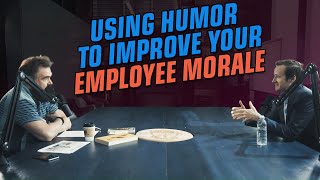
Drew Tarvin, a humor engineer and author of Humor That Works, explains how laughter reduces workplace stress and improves morale. He argues social skills can be learned through improv and standup, and that highly stressed employees cost companies roughly $7,500 annually in lost productivity and absences.
Questions this video answers
October 8, 2019
35,000 people at 250 organizations
Over 4 million views
About $7,500 (American Psychological Association aggregate estimate)
Chapters
Foreign.
Welcome everybody to Service Drive Revolution. Today's guest is Andrew Tarvin, but he goes by Drew, so we're gonna call him Drew today. But is the world's first humor engineer, teaching people how to get better results while having more fun. He has worked with 35,000 people at 250 organizations, including Microsoft, the FBI and the International association of Canine Professionals. And maybe you will have some recommendations for me there, Drew, because I have four bulldogs that could use some training. He's combining his background as a project manager at Procter and Gamble with his experience as an international comedian. Andrew reverse engineers a skill of humor in a way that is practical, actionable and gets results in the workplace. He's a best selling author and has been featured in the Wall Street Journal, Forbes and Fast company. And his TED talk has over 4 million views. His most recent book, Humor that Works. The Missing Skill for Success and Happiness at Work. Everybody make sure you pick up this book. The thing, Drew, that that fascinates me about this and that I love is that you really come more from an engineering background. So you're more of an introvert, but you have developed the skills to perform like an extrovert, right?
Yeah, absolutely. Well, I think that, I mean, a lot of times people think of introversion and they immediately associate that with being quiet or being socially awkward or not being in the limelight at all. And introversion is really just about how you think and how you recharge and, and love speaking with people. I love networking and chatting with people and then I'm very happy when I don't have to see any of them later. Right. And so the, the social stuff is just. They're all skills, conversation, networking, humor. They're all things that we can learn through practice and repetition. I've been fortunate enough to, to be able to learn that through improv and stand up comedy. I.
So for me, because I'm, I'm an introvert for sure, is what I enjoy is taking information in and processing it. Where people want you to take information in and then give you a comment or give you, you know, your opinion on it. And usually I'm slow to an opinion because I don't know all the facts. I like to know all the facts before I give my opinion. But people love to talk about Trump and love to talk about everything else. And I always say, like, unless I'm in the room at the White House and the CIA is briefing me and the FBI, like I don't know what you know, I don't know the real story I only know what they want us to know.
Yeah. One, and I think, I mean it's also how like that's one of the big differences with extroverts is that they tend to think out loud. And so you hear from extroverts more often. Like long story short, you don't hear that from introverts that much because they've thought about it and then they've like, they've been quiet for a long time and then boom, they just share the like small piece of information that they wanted to share. So it's just fascinating the different kind of styles and personalities. But one of the things that I've realized is that, you know, things like personality assessments, they're just an assessment, right? They don't dictate our behavior, they don't define who we are. Instead we're defined by our actions. And, and that's what, you know, what surprises people because I'm a, if you want your personality assessments, I'm a type A blue square conscientious INTJ with a sign of Aquarius. That means and I am a stubborn, ambitious introvert who likes long walks on the beach.
And you're single, right?
Yeah, single.
And so the idea is that, you know, but that might say, oh, I should do one thing, but if I start doing something differently, right? So intg. INTJ says, oh, I should be a computer scientist, right? That's the. Or a scientist. And that's what I started to do. But if I start to do other things, if my actions start to become, I'm doing stand up comedy, I'm doing improv, I'm no longer defined by this personality assessment, but instead I'm defined by what it is that I'm actually doing. The action that I am taking.
Yeah, yeah. So that's kind of what's fascinating though is like, so take for example.
Me being an introvert and going into a business of sales. And like when I was, I think I was 19 when I became a service advisor at a car dealership, which is customer interfacing. And you have to get customers to like you and then also you want customers to spend money. Right. And so the extrovert, which I was, you know, in the beginning I would be jealous of, they were naturally outgoing, they naturally could just talk where I'm a little more shy. And so the outcome of that for me and why I think that I became so good at training things was the way that I had to figure it out. And I'm curious if this applied to you in comedy. Was I had to figure out a system. I couldn't walk up there like Dave Chappelle. And comedy can walk up there and just start talking and kind of work it out where you probably have to have more of a system, you have to understand the architecture of it before you can go up there and do it. You have to study it more, you have to work a little harder at it. But then when you have a system, you end up being better than most at it because you had to develop a system instead of being able to get by in the moment. Does that make sense?
Absolutely. Right. I think you're exactly spot on that if something is quote unquote natural, which I, you know, we can certainly talk about what makes something natural. Because I think that a lot of times people think of extroverts as, say, naturally conversational. And I don't know if that's always the case. I just think that like, if you're a little kid and you recharge by being in front of people, then you're going to hang out with friends a little bit more, you're going to maybe even hang out with your parents friends, you're going to be around people a lot more, you're going to have a lot more conversations than if you're an introvert as a kid and you go off and you're, oh, I'm going to read a book and recharge my own or play a video game. But I. By the time you hit your, say, mid-20s, the sheer number of conversations that an extrovert has had is exponentially higher than the number of conversations an introvert has had. So I don't know that it's necessarily quote unquote natural. It's just how many reps they've gotten. And so as an introvert, this is what improv did for me was that it increased the number of reps that I had of doing things like having a conversation, of having to think on my feet, of having to react in the moment. But I think you're exactly right that what people have learned, say early on, they can't always kind of put together like, oh, no, I'm just naturally funny, people kind of laugh all the time. Or I can naturally, you know, walk into a room and work the entire room. No, for me, it has been something that I have had to like. I have a three step process for networking because I had to figure out mentally how do I get over this fear of walking into a room of strangers? What do I actually talk about in a way that I'M not awkward. And because of that, to your point, I can now train other people in that because I've had to go through it. If it was just something that I've always been able to do. It's hard to be like, well, I kind of do this, and I think I do this. No, because I had to fail a lot of times to get there. I'm a lot more clear on what it takes.
Yeah, no, I've had. So, you know, specifically, I've had a couple people come work for me that are naturally better public speakers than me by a mile. They naturally are better in front of a room. They have a bigger presence when they walk in a room. They can command an audience and. And none of them are ever as good as me in front of a crowd because they won't put in the work. I want to sit down with them and talk to them about NLP and how to structure something. They just get by. And so it's very inconsistent because they can get by on their natural skills, but at the end of the day, they don't have anything that's scalable because they don't know what they're doing. They don't understand what it is they're doing when it goes good or when it goes bad. So they have no toolbox to go to to change it and create more of a consistent outcome. Does that make sense?
Yeah, it makes a lot of sense. And I think that, you know, there's a great speaker named Alan Stein who talks about how to raise your game, and he.
So he's worked with a lot of different basketball players at a lot of different levels, and he talks about the unseen hours. Like, we think about Kevin Durant and LeBron James and James Harden is all these people that are like, yeah, LeBron James is, like, genetically gifted to the point that, like, one of my favorite conspiracy theories is that he's actually like, a secret soldier, kind of, like, prototype, and that, like, because he's. He's genetically very gifted to play a sport like basketball. But he doesn't become the king, he doesn't become LeBron James if he's not putting in thousands upon thousands of unseen hours that we never see appear. And so I think, to your point, like, some people, like, rest on the naturalness. They're like, oh, yeah, I'm already comfortable on stage. And so that's good enough. And they're only going to get to a certain point where it's the people who are putting in, you know, say, Malcolm Gladwell's 10,000 hours for that mastery. It's why you see, like, even what we see, say, of Chris Rock or Dave Chappelle, who I think is at the top of the game right now. Dave Chappelle is. He's done thousands upon thousands of shows. What we see is, like, him just getting on stage and talking. If you watch his shows, like, if you go and see him live night after night after night, you realize the work that he's actually putting in, the tweaking that he's doing. And it's like, okay, if I pause a little bit longer, does this get a bigger laugh if I move or rearrange the order? Like, I don't think it's at a conscious level anymore for him, but it is the type of work that he's doing. So that that practice, that willingness to commit, the working harder, is absolutely crucial to any of this stuff.
Yeah. Have you seen that documentary by Seinfeld? It's called, like, comedian or something. It's fascinating, right, because he works for a year, 10 or 15 minutes at a time, to come up with an hour for an HBO special or Netflix special, whatever it is. But the amount of work is. Is crazy.
And. And my favorite part of that, that documentary. It's a fantastic documentary that I think if people are interested in comedy, should. Should definitely watch.
No, just work. If you're interested in understanding how to be good at anything.
Yeah.
Because I think people think that it's easy, for sure.
And I love that because there in. There's this moment in the documentary where there's a woman who is from outside of the US had never heard of Seinfeld. And this was after he had made probably close to a billion dollars after Seinfeld was like the TV show, which he got because he was a good comedian, asked him if it was his first time doing stand up because he was still working on material. And Seinfeld's interesting because he talks a tremendous amount about the work, but he also thinks that comedy is something that is somewhat innate. And he. And he's recently linked it to his daughter, who he says is very, very funny. And, you know, my. My point of view on that is, don't you think if you grew up with a dad like Seinfeld, don't you think you would probably pick up things? And it's not necessarily, say, an innate genetic thing, but it's more of a thing that we learn through partially osmosis, that we learn from people being around us. And if. If comedy was innate, if it was something that you were Just either born able to do or not. Comedians wouldn't have to work as hard as they do to become famous to become very funny. The fact that they have to put that much work in, I think, suggests that it is partially, at least in large part, a skill that can be learned.
Yeah, yeah, it's. I would recommend everybody watch that documentary. It's fascinating. Yeah, it's fascinating, too, because like you said, he comes out of a huge TV series, and that's, you know, after he shut it down, and then he's going out doing 10 minutes in front of a couple hundred people. And doesn't he say in there something to the effect of, you know, yeah, I'm Jerry. That gets me by for the first five minutes.
Right.
And then I got to make him laugh. So he still bombs like. It's still. He still feels nervous. He still feels pressure. Yeah. So kind of one last thing on the introvert thing, and I hope the message that people take away from this is you got to put in the. The work. But the thing I think, as an introvert is a lot of times I will see something online, like somebody's course on something like, learn how to sell more or whatever. And there are these extroverts that are really good at talking, and they're really good at marketing and convincing you to buy their thing, but when you buy their product, there's really nothing you can implement. They really just agitate the question, and they talk about it, and they're good at talking about the enemy and the struggle, but they don't give you tools. But I remember when I was, like, 20, this consulting company that had been working in the dealership I was in, the guy came to me and he said, I want you to come talk to these other service advisors at this Ford dealership in North Seattle, because I'm having a hard time with them. And. And I thought he wanted me to do, like, an hour training. And so for. For a week or so, whatever. All I did. And this is the introvert in me is I just paid attention to what's the difference between what I do and what everybody else does? So, like, when somebody would walk up to a car, they would be like, do you have an appointment? When I walked up to a car, I would be like, hey, how are you today? Like, just little things. But because of being an introvert and being able to take in the information, I could tell the difference between what worked and what didn't. And I. You know, it was. I wasn't in. I wasn't performing in the moment. I was paying attention in the moment, if that makes sense. Yeah.
And I think that's one of the things that makes, you know, introverts great comedians or great salespeople or that is that they're. They're so focused on observing. They're so focused on taking things in. Like, a good friend of mine who's based here in LA now is one of those people where if you're out with a group of people, he's not going to talk all that much. But, like, the three things that he says at night are going to be the three funniest things that have happened the entire night because he's just observing, taking things in. And then boom, when he speaks, it like, speaks volumes because he's very much kind of like taking it all. And I think you're exactly right that that level of observation is. Is key. And I think what's interesting. So I was recently at an event where Shonda Rhimes was speaking, and she, you know, created all types of shows, Scandal and all that kind of stuff. Huge billion dollar deal, basically with. With Netflix. And what, what slightly irks me is that sometimes people who have gotten to a certain level of success say that they did it almost in spite of being an introvert. They're like, you know, I had to recover, you know, also I'm almost. I'm almost a recovering introvert. And I think that we want to shift the focus of where it's not a bad thing to be an introvert, it's not overcoming introvertedness, but rather embracing it and taking it for our skill of observation, our skill of breaking things down and explaining in a way that people understand. And so I think I want people to kind of walk away with that feeling as well, is that it's not try to be more extroverted and pretend, but more of leverage the strengths that you have as an introvert, bring in some of these additional skills and marry the two together.
Yeah, I see, I see it as an advantage because I see that I'll put in the work and then I have a system where an extrovert shows up. And like I was saying before, they're good in the moment and they can wing it, but at the end of the day, they don't have anything solid. So, you know, a bulk of the audience for the show is service managers. Right. And so if you think about service managers, most of the time they're introverts. They started off thinking, you know, with more of an engineering type background. They were technicians most of the time. So they worked in the shop and then they worked their way up. And then one day they're like, hey, you're the service manager. You know, you're a leader, or whatever qualities they have, they become the service manager. But then when we go in, and that's, that's one commonality between your approach in your book that between, you know, what we do is gamification. And a lot of what you're doing is creating fun in the workplace. But service managers will say, and it'll be interesting when you, when you talk in our event this, this weekend, the service manager will be, well, I'm not good at that. I don't know how to throw a shift meeting. I don't know how to motivate my people. And then it ends up like, jump ahead 90 days or, you know, four months. They end up being better than an extrovert at it because they had to work at it. They got out of their comfort zone and once they kind of understood how to do it and they had, they created a system for it, they end up being really, really good at gamification. But in the beginning they're scared and they're like, you know, it's way outside of their comfort zone. But the thing I, I would say to, to introverts is that's, that's the easy part. Like, enjoy the process, enjoy the journey. Like, I, I, I'm, now that I'm older, like, I wish when I looked back at those situations, I would have enjoyed the process and the learning of it more, not been so scared.
Yeah.
When I got outside of my comfort zone, if that makes sense.
Yeah, I think, I think one of the things that, you know, if we can instill in general in more people is, is a curiosity is, and that's key to humor. It's key to a lot of things of, like, okay, let me explore this. Let me be comfortable with not being good at it, but let me just like, open it up and see how it works. And this is, I think, is why I feel very fortunate that I have an engineering mindset, is I've always looked at things like, okay, how do we take this apart? If you think of even something like abstract, like happiness, what is actually happiness? How can we break that apart? Take it apart like it's a clock, look at all of its component parts, and then can we put it together again, back together again, like, in an interesting way? That's the reverse engineering kind of thing. And I think, you know, yeah. If people take that approach to whatever they're learning whatever they're doing in a new way of, like, let me just be curious and discover things. I think hopefully they'll enjoy the process a little bit more.
I think too that, you know, one thing when you were saying that that comes to mind is a lot of times, like, I had this happen just last week where I was talking about writing how I had taken a gym and I had written there.
Well, there's this thing with gyms, right, where they, where they will get customers off a Groupon or Instagram for like a, you know, so many training sessions for 29.95. And then the goal is when they get in the gym is to sell them on buying a personal training package, which is obviously way more than $29. Right. And so, you know, this somebody I worked with that had a gym, I think we got our closing ratio close to 80%.
Wow.
On that. And because it was a system. Right. And in the, the type of questions that we asked and. But the, the comment from my client was there's no commonality between gyms in the auto industry. And I'm like, I can't even process that. Like, I just love. I'm just curious. I'm curious what works. How can you say that won't apply to the car industry, right? Like, how can you say that? Different industries. And I think that's part of the advantage of being an introvert is we're curious and we'll look at anything. Like, we're not prejudging. You can pick something from, you can learn something from a gym business as much as from a restaurant, for sure.
Well, and I think one of the, I mean, the commonality between those two things is humans. And I think what, what behavior? Yeah, behavior. What, what you're learning what you do and what you train or what we do with. With humor that works is it's about working with humans. It's about finding what makes things work. And that's what, like what you talked about of, like gamification and making it fun. Is that a very simple thing that part of my work is predicated on is a very dumb question. And the dumb question is, would you rather do something that is fun or not fun? That basic question drives a lot of behavior where it's like, oh, yeah, if you were to make, say, this process of going through this kind of upsell to a personal trainer a little bit more fun or a little bit more interesting, maybe people are more willing to listen if you're to make your meetings a little bit more fun. Maybe people would be a little bit more likely to attend. It's like, it goes back to, like you said. Yeah. Behavior. It's simply human behavior that we're interacting with, whether that is through gym memberships, whether it's through car dealerships, whether it's through canine professionals.
So what happens in a company when they're not having fun and then you teach them how to have fun and they're having fun? What are. What are the characteristical changes in that company that happened?
Yeah, I think that, you know, from a. From like an outside perspective, what you see is an increase in employee productivity. You see a decrease in disengagement. You see a decrease in turnover. You see a decrease in stress. You see ultimately within organizations, a more positive workplace culture. And you see in a lot of cases, an increase in profit because of all of these different factors that are. That are changing. But what you see from a more human or behavioral perspective is you do see and hear. Hear laughter a lot more. You see people kind of showing up a little bit more on time. You see a general looking forward to going to work. I think it's crazy that we live in a society that more people. So I recently discovered this. More people believe in ghosts than, like, what they do for a living.
Okay.
Yeah.
So the. What's the percentage of people that don't like what they're doing for a living? 60.
It's a. I think it's like 55%. Okay. 55% are unsatisfied with their percentage of.
People believe in goals.
I think it's like 60 or 65. I don't remember the exact number. I just remember that it was more than that. Don't like what they're doing.
Yeah, that's fascinating.
Yeah. Which is just like, crazy to me. So that means the average person, if you're talking to the average person about work, they're going to be like, God, I want to kill my boss, but I can't, because then you come back as a ghost.
55% of people want to kill their boss.
Okay, so some fascinating things in your book. In my notes here. So the first one is the cost of a stressed employee is $7,500.
That's what the American, I think, Psychological association says that the direct cost is around $700. So if you think in terms of just the increased cost in healthcare, like, they've done studies and it's about $700 for a high stressed employee. But when you factor in things like presenteeism or absenteeism, which a lot of people know and that's people just not showing up to work. Presenteeism, which is where people show up to work but they're not fully there, they're not showing up to work, they're not actually showing up physically there. Yeah, they're physically there, but not mentally disengagement like you factor all of those things in and it's about $7,500 per high stressed employee.
It's in.
How much of the, the illness in our country do you think is related to stress and being unhappy?
I think, I mean there's a, there's a huge, I think it's what, $68 billion in terms of the actual like numbers for it. But I think like if, if you, we live in a world where, and people understand this, that if you have a bad day at work, it impacts how you behave at home. If you have a bad day at home, it impacts how you do things at work. And so if a majority of the workplace is stressed, I think 83% of Americans are stressed out at work, then of course that's going to have an impact on how they treat their family, how they treat their neighbors, how they interact within their community. Because the interesting thing is like a lot of times within productivity, I love productivity. We talk a lot about time management and I don't know if you've ever had this like let's say you have a three day weekend, right? And you're, you're thinking about all the things you want to do over that three day weekend. Maybe it's kind of chores around the house, you create your, your to do list or whatever and it gets to like Monday of the three day weekend and you look back and you realize like the only thing you completed was like season three of Stranger Things. Like the problem with time management is that it doesn't matter how much time you have if you don't have the energy to do anything with that time. And so people think about work and it's like, oh, I'm only working 40 hours a week or 60 hours a week or 80 hours a week, whatever it is, there's still technically time left in the week to do stuff. But if you're going home and you don't have the energy or the mental capacity to do any of those things to go out and volunteer in your community or to, to have greater conversations with the people around you, I think it has a big impact. I don't know what the like metrics are. I don't know what the actual like say quantified amount is. But I would say it has a huge impact on what happens.
Okay, so what do you, what do you think the key to happiness is like? Because there's. Especially with the younger generation, right? There's this, this thing of, well, I just want to be happy. People say, I just want to be happy. People say things like work, life, balance, things like that. What do you, what do you personally think the key to happiness is?
Well, I'll start first by saying, I think one of the challenges, the reason why people don't reach happiness is that there's a misconception that success precedes happiness. There's a lot of people who think that, oh, once I get this job, I'll be happy, or once I buy that car, I'll be happier, or once I attain blank, I'll be happy. But the problem is that we as humans.
Have hedonic adaptation, or the. What they call the hedonic treadmill. And that's basically that every base human has like a base happiness set point. And when something bad happens to them, they'll be affected by it for a period of time, but then they'll return back to that base. That's a great thing. That's called resilience, Right? Positive thing. However, the same is true for positive things that happen to us. When something good happens to us, we'll increase our happiness.
You buy the new car.
Exactly. You buy the new car, you're super happy about it, you're feeling comfortable with it, but then that becomes the norm, you return back to that base and becomes almost a sense of entitlement, where it's like, oh, well, of course I should have this nice car that I always have. And now I'm used to the fact that I have heated seats and all of this. And my brother is going through this recently because he got a car with some of the newer things attached to it, like the heated seats and great iPhone, interconnectivity and cruise control and all that. And then my mom got a different car, and that car has cruise control, but in addition to it, it has the. I don't know what the feature is where it automatically adjusts the speed based on the car in front of you, active cruise control. And now my brother's like, well, now I want a car with active cruise control. Right? Like we see, we. That's. I think the other challenge with happiness is our comparison game, right? We compare ourselves to other people. And so one. I think people have to understand this hedonic adaptation and recognize that the way to increase that Base level of happiness is. They say 50% of it is genetic. 50% you can't control. 10% of it is what happens to you. And 40% is how you choose to react to things. And in that 40%, the way that you increase that 40%, based on the studies that they've done, one number one is gratitude. Gratitude is like. It's very difficult to be simultaneously upset and grateful at the same time.
It's impossible.
Yeah, I would say. Yeah, I'd say it's very, very, like, impossible, or at least very, very difficult to do. So gratitude.
Let's try it.
Try to be like, I'm so grateful for.
But, yeah, you can't. I mean, I don't know.
Yeah, it's tough to do. And obviously this is outside of, you know, chemical imbalances and. And things like that, but in kind of. In general, but I think with. With gratitude, a lot of people have this. This belief that gratitude has to be something huge. And that's why there's this. There's this great kind of improv, not even necessarily exercise, and I'd love to do it with it. Here is. I just want to ask you a simple question. You answer very basically. What's not wrong with your life? Just one thing that's not wrong with your life.
Career.
Okay. What's not wrong with your life? Just something else.
My pets.
Okay. What's not wrong with your life?
My relationships.
Okay. What's not wrong with your life?
Friends.
What's not wrong with your life?
Freedom.
Yeah. Right. I think that's great. So now ask me a couple of things. We'll see what I come up with.
What's not wrong with your life?
I would say, yeah, for sure. My. My career. I get to do what I love.
What's not wrong with your life?
I am currently in LA having a fantastic conversation.
What's not wrong with your life?
I am gonna get a Neapolitan shake from in and Out a little bit later. Right. So I think.
What's not healthy.
Yeah. What's not healthy about your life? Yeah. Accordingly, based on our previous conversation, Bacon apparently isn't. But like. So this idea of the question of what's not wrong with your life changes the bar for what we have to be grateful for. A lot of times when people think of gratitude or, oh, I have to be grateful, it's like, oh, but I have to like. Yeah, but Chris is lucky. Yeah. Of course. He has a career that's really cool, and he has this company that's great. And he's like got, you know, these cool dogs that he has, and he had fantastic family. So we think this bar is all the way up here. But we think of with the question of what's not wrong with your life, as opposed to, say, what's right with your life. Something that's not wrong with their life can be something very, very small. It can be, what am I doing today? I woke up today. That's a pretty good thing. I woke up well rested. That's even better. I had food this morning. Oh, I'm grateful for that. So I think we change what we, we see that we have to be grateful for by asking and changing our perspective a little bit. Asking a simpler question. Yeah.
And so I think that there was a study that was completed recently. I think it was done by Oxford, but I could get that part wrong. But the basic of the study was what you just said in that the key to happiness is low expectations. And it really is, it's true. Right. So the thing that I, that I find with clients especially, right. Is that their expectations for how easy things should be, their expectations for they had this idea, they went out and raised money and they're starting this new business and they expect that they're not going to run out of money or they aren't underfunded, or there isn't going to be a competitor to come in. It's like their expectations for what's going to happen are, are unrealistic. It's going to be competitive. It's going to be harder than you think. And so, you know, that's one of the things that I always try to, to help people with is it's your expectations that are wrong. You expect it to be easier than it is. It's going to be harder. And if you expect it to be harder, then you'll be fine. But because you didn't, because you didn't, like, if you and I went into business doing something, I would just immediately, six months in, right, we're going to run out of money. We're going to get in a fight here, like.
Right.
And so we know, because I, you know, I've done it. I know that there's going to be issues. And so if my expectations going in aren't that it's going to be perfect or it's going to be easy then to. I think your point is, then, you know, hey, we're starting a business. We're. We're taking on a new adventure. We have a. We wake up every day with a new challenge, right? And so The. The journey becomes the fun, not the destination.
Right? Yeah. And that, I think, is a big key of that idea of success before happiness is we think, okay, once we achieve this. But it's partially that journey. And there's a. I don't know if you read Tim Urban at all. He's got a great blog, did a great TED Talk on procrastination. That's very funny. But he has this fantastic post about.
Happiness and why millennials are the most depressed generation. And it's exactly to. What you speak about is that one, expectations for millennials were way higher than any other previous generation. Because if you think about the generation coming out of World War II, expectation was just survival. Success was just living.
Right.
Right. And so then that led to a generation where that was the mindset. And so then it was like, okay, the next mindset was if you work really hard your entire career, by the time you retire, you'll be comfortable and okay, right. Then the next generation, there's a huge economic boom. So the expectation of, oh, you're going to work in your entire career and then be okay, they achieve right away. They're, you know, in their mid-20s, retired a house, retire by 45, and all set. So they raise a generation of, you can set your. You can be. You can do whatever you set your mind to. Right. And that's what millennials leave college with. And so their expectation is that the job market is going to be great. I have a college degree. That means instantly going to have money and going. Be able to be able to afford a house and all that, the environment change, so that's no longer the reality. So reality is lower than expectation. And in addition to that, you have social media where you're looking at the other people around you. And because only people only post their highlight reel because you're only, you know, people only Instagram the great dinner that they're having at the trendy new restaurant. They're not Instagramming like, hey, look, I had ramen noodles again. Right? People don't do that. So you're looking at other people's social media feeds a highlight reel. And now not only is your reality lower than your own expectation, it's lower than what you perceive other people's reality to be. It's going to.
Comparing yourself to.
Yeah, exactly.
And what do you. What do you think about that as far as it seems like mostly men or boys in, you know, the millennials? And then what's the Generation Y, Gen Z or Globe?
Yeah, so it's Gen Y Slash millennial. Is this kind of the same? And then the next, the following generation is Gen Z slash global.
What's going to come after Zeke?
That's. I know, exactly. So that, so it's either kind of predicting the end of the human race or I think that's why people are starting to shift to other words like globals or Gen AA maybe. I don't know.
Yeah, so the outcome of that, you know, the parents did it to them. Right. I mean I always feel that, that the parents were the ones that caused this. You can have anything you want and we, you know, made it easy. But the, the overwhelming common characteristic is the boys don't wake up to hunt. They don't like, they don't wake up to go make something happen. They're sitting around waiting for something to happen. I don't know how many, how many kids like parents send to me. And the, the boy is like, well, I'm gonna start a brand. I'm like, what does that mean? Because you opened an Instagram account with a brand name, didn't start a brand. Like, you know, they just, they, they're, they, they expect it. Like we were talking about, they expect it to be easy that you just show up and you know it's gonna happen and they don't understand that it's a fight and you gotta wake up to hunt. And you know, we're kind of as men, we're wired to hunt, we're wired to wake up and go kill stuff and make things happen and they just don't. That's like inconceivable to them that it would be that hard.
Yeah, well, I think it's, it's partially like a shift in, in society of how things change and also a parenting because you have that combination of being told that because I, you know, oh, you can do anything that you set your mind to. And I recognize that I, I am steeped in privilege. Like I am a straight white male in the United States. The only minority thing about me is I'm left handed, right. Which like, okay, so I can't cut with right handed scissors and my like handwriting smears. Overall, not very difficult things to like have to overcome. And so part of like, you know, that became empowering for me. But you're right to some people and you have a shift in parenting where you have helicopter parenting, right? Where people know like kids no longer have to struggle. Where I have friends who are teachers and they had, they deal with it constantly. Where it used to be that if kids got a bad grade that the parents would then reprimand the kid and be like, what are you doing? You need to work a little bit harder. Let me help you with their homework. That kind of stuff. Work harder. Now, if kids get a bad grade, some parents are rep. Trying to reprimand the teachers. They're saying that it's a teacher's fault that the kid hasn't done these things. And that leads to, oh, my parents or the people around me are going to do a lot more for me than once you get into the real world actually happens. And that takes away, like you said, that kind of ambition or that level of like going after something. And in those terms of like hunting for something, being ambitious, being proactive, as opposed to being like, no, if I build it, they'll come. Right. And, you know, great for the field of dreams movie. Not accurate for how business works.
Yeah. Are you a fan of Jordan Peterson?
I'm not familiar. Too familiar with his work. I know the name exists, but that's about the extent of it.
I think you would love him. I'll have to, I'll have to give you a couple links to watch, but he, he did this one podcast on the fact that fathers are the most important parent and that the thing is the, the mothers are raising more and more of the kids and the fathers are gone in in certain demographics.
Right.
Maybe not Latin or Asian families, but definitely in, in other, you know, classes. And so the thing that he, the point that he makes in there that I never thought about, and by the way, I was raised by a single mom, so my dad wasn't, wasn't around, is that the dads are the ones that toughen kids up because, you know, let's say you come home and you tell mom. You're like, mom, they're, you know, they're not going to let me start as goalie. And so, you know, I'm going to sit the bench, so I don't want to play soccer. Mom runs down and tells the coach, why isn't my little Chrissy starting his goalie right? Where, what does dad say?
Yeah, he's like, go in the backyard.
Let me shoot balls at your head because you suck as a goalie. Dad tells you the truth. And so dad ends up being this counterbalance of real world truth and, and hard lessons where mom is more the nurturer, but kids get more of the nurturing and not enough of, of the dad, if that makes sense.
Yeah, and I think, I think it's a society shift overall of just kind of how Parenting has changed. And. And that focus of the. I mean, you see it sometimes with immune systems as well. It's like, I know parents who are like, no, like, if something drops on the floor and then like, they have to wash it off with soap and everything that before the kid is allowed to play with again, it's like, no, there's like, we need exposure to germs and things like that. That's how we start to build our immune system. It's not to say that we should seek out adversity, but adversity does lead to strength. And to tie it back to this idea of stress is that stress is not a bad thing by itself, right? Stress is how we grow. When we work out, we are literally breaking down muscle fibers so that it comes back and grows stronger. But chronic stress is bad, right? We know that when we build muscle, it's not when we're actually working out, it's when we are resting and when we are fueling our body. So stress by itself, not a bad. It's how we increase capacity. In fact, when I was at. So I got a degree in computer science and engineering and then started working at Proctor and Gamble. And I remember having this moment where I was a few months into, probably close to a year in at P and G, and I finally had had enough. I went to my manager and I was like, listen, I can't. You keep giving me projects I can't do anymore. I've like, I'm. I'm freaking out here. I'm highly stressed. And he was like, okay, good, now we know your limit. And I was like, what? And he's like, listen, we at P and G hire very type A people. We have no idea what their actual capacity is. If you are good at what you do, we're going to continue to give you work until you say you can't anymore, because otherwise you're not working as hard as. Or in quite the same kind of mindset.
They want to know where the benchmark is.
Exactly what's the benchmark? And then now, okay, let's manage that. And so when we have those stressful moments, over time, we improve our capacity. The problem is chronic stress is when we don't relieve that stress, when we don't actually have a chance to relieve that tension and to laugh a little bit or to just take a break, to refresh, to recharge. And that's one of the benefits of humor, is that it allows people to basically counteract the negative effects of laughter, of stress. Because when we have Chronic stress. We see an increase in blood pressure, we see an increase in muscle tension, we see a decrease in the immune system. Laughter counteracts all of those things. When we laugh, we increase blood and oxygen in the blood, we decrease our blood pressure, we increase our immune system, we decrease muscle tension. Like if you laugh, the muscle tension that you have from that laughter lasts for 45 minutes after the laughter has subsided. There's physiological benefits to it. So I don't think that stress, certainly stress and too much stress is a challenge in today's world. But part of it is also that we're not taking the chance to actually relieve that stress, to find that balance. Say, okay, let's have some adversity so that we grow, but let's have a way to mentally manage that adversity and recharge from it. It as well.
Yeah. Do you. Are you a believer in meditation?
I am because. And the reason why I started meditating was I remember this was a couple years ago, I was going to the bank and I accidentally left my phone in my apartment. And I'm like walking down the steps and I'm like, you know what, I'm just going to the bank. I can survive without my phone. I know where it is and all that. I stood in line at the bank and I had no idea what to do. I was like, do I do I look at my hands? Do I look what. I'm just here alone in my thoughts and like the fact that I couldn't survive a five minute errand without my phone and having email to check or social media to go into, I was like, I need to take a step back. I need to get comfortable again being just with my thoughts. And so that's when I started. Dawn. I'm still. I'm not great at meditation. It's more of a like I try.
To sort of meditation. Are you doing?
I'm doing just basically in the moment when I can. Counting my breath and kind of trying to stay focused and when something comes up, getting better at kind of letting it go and then coming back to it. So it's very kind of very, very basic. Not using an app or anything like that. Just trying to sit and be a little bit still.
Have you looked into tm?
I have not.
So look into tm.
This is transcendental. Trans. Is that the right something? Yeah.
So I went through an interesting time where I got served divorce papers that I didn't know were coming. I lost a business and my dog died. All kind of like in a little period of Time, and I went. So I had an apartment in the city and I had a house out in Orange county, and obviously my ex wife was staying in the house and I was staying in the apartment, but I went to get some stuff out of the house and I was coming back and I just pulled off to avoid traffic to get dinner in like, a little Rubio's Baja fresh place. And I was sitting there and I got a bloody nose and I go in the bathroom and it wouldn't stop. I drove myself to the hospital. They, you know, took them a long time to get it to stop. The next day, my. My personal physician said, you know, if you didn't have a deviated septum, because I gotten a few fights when I was younger, and so my nose was broken. If you didn't have a deviated septum, you would have had a stroke. And I'm like, I'm in my early 30s, right? I would have had a stroke. And so he said, I'm going to put you on this blood pressure medicine. It was called core egg cr. So I take the blood pressure medicine, and I feel like I'm falling all the time, like. And I hated it. I. I called him and I said, I feel like I'm falling. He goes, well, when you feel that, just squeeze the chair you're in. And that didn't work. And, and just the idea that I had to be on something for the rest of my life bothered me. Like, in your 30s, like, it just seemed. Seemed like a. A big failure. So I was listening to Howard Stern and Russell Simmons one day, and they were talking about TM and about the benefits and blood pressure and all the stuff. And so I looked it up, and it ends up, Oprah Seinfeld is a huge TM guy.
I think that's where I heard it.
From all of the, you know, another. Another guy, Ray Dalio.
Is one. Like the, you know, the list of people that do TM is crazy. So I went and I did it. And so I. It's really easy because you just get a mantra. You know, the Beatles did it, Paul McCartney. I watched the video, Paul McCartney explaining it. There's all kinds of great stuff online. So I went, I learned how to do it. I did it. Six months later, I'm in that same doctor's office, and he says, you can quit the medication. And I said. He goes, how did you do it? Or whatever. And I told him TM and meditation. And he said, oh, I've been reading more about that. I was at a conference. They they were talking about the benefits of meditation and how it fixes blood pressure. And I said, oh, would you ever tell clients instead of prescribing and what do you think?
He said, absolutely not. Probably not, right?
No, but it's, you know, that's, that's our, that's our medical system. But the, the other benefits are insane. Like, you know, with my. What is your stress hormone when they do your blood test?
Cortisol.
Yeah. It's like I was always like 12. I'm never past 5 when I do it now. Like, it, you know, just the, your concentration level. But the thing about TM is just so easy because I'm like ADD and I'm not good at sitting there. I do the breath one too sometimes, but I'm not as good at it as the mantra. There's just something about it. So you might, you might like.
Absolutely. No, I'm a commercial for tm. No. And, and, and I'll admit, like, as, as an engineer, I've always been kind of resistant to anything that feels touchy feely. And this is true in my programs of like, I'm not a, like, we're not going to do trust falls. We're not like holding hands. We're not like, I'm like, does it work? But I'm also a very curious person. So it's like. And for anyone out there, I'm a big believer in like trying stuff, experimenting, being like, all right, yeah, like, I'm up for it. If you say this is something that works, it's something that, like, is worth doing. I don't really lose anything if I'm like, all right, let me give it 30 days. Let me do a 30 day challenge of can I do practice TM or, you know, whatever that looks like. I'll do the research on it for this period of time and try it out. And do I notice a difference? And that's what I would encourage a lot of people to do because, you know, it's sometimes hard to separate, you know, what is actually valuable versus what is something that people are trying to sell versus what is like an introduction into a cult versus what it like not saying that is any of these things, but I'm thinking in general, when you hear something, it goes back to that idea that we talked about of being curious. Right? Just go back and like, put in the work a little bit and see. And not only will you maybe learn something, I'm doing this with intermittent fasting right now is like, do I have more energy? Does it work better? If not, I'll let it go. If so, then it's something that I can easily keep. But it's a, you know, it's an experimentation and that's what I love about, you know, just trying a bunch of different things. So I'm definitely going to.
Do you have more energy on intermittent fasting?
I think that I do. I think the benefit of what it does is I'm. I'm not a morning person. I'm more of a late person. And it prevents me from eating an entire bag of Doritos at 11pm when it, you know, when I'm just like browsing through Reddit or watching videos or whatever because I'm like, oh, my window has ended. So I'm not. So it's kind of saved me that. And I do think there's probably something to the fact that, oh, when I'm sleeping, because I stopped eating at 8 and went to bed at like 11 or 12, my body is done digesting food for the most part. It's done the hard work of digesting so I can actually rest, rest as opposed to partially sleep while my body is digesting. And so I think that it's had some impact. We're still early enough on that. I'm like, I don't know, 100%. I'm not super strict about it. Any of the experiments that I do. I'm not like. I think one of the other things that when we try to incorporate change, we have this all or nothing mentality where it's like, okay, if I'm going to start a new diet, it's January 1st, it's a brand new resolution. You get to, you know, January 6th, something happens and you, like, you break that resolution. You're like, well, I guess I'm done, right? As opposed to, all right, I failed one day. So then let me get up again. And this actually builds off of Seinfeld talks about as a writing technique, don't break the chain. Where he would have a calendar that every day that he wrote on this big calendar on his wall, he'd put a big X to say, okay, I wrote that day. And then what happens is as that chain of X's of consecutive days in a row gets longer and longer, it provides additional motivation because you're like, I don't want to. I don't want to start over again at streak zero, right? So let me, you know, make sure that I do it. But the key is not perfection, right? It's persistence and recognizing that if you do take a day off if something does change that at least tomorrow you try again.
So I've tried intermittent fasting twice and I definitely have more energy and I sleep less. So like I was waking up at 4 in the morning, but I don't enjoy it.
Yeah.
Because I really like, like I like to work out early and it's really hard for me to work out really, really hard and lift weights and then not eat until noon.
Yeah. Because I mean, they've done studies of the immediacy that you need to get protein in the body for, to actually then synthesize or, you know, I'm, I'm talking out of something that I don't know. But they have the speed to which you then fuel after working out is important. Yeah.
And I missed that. But I had way more energy and I would sleep less. So there is something to it. But you know, I'm kind of like you. I like, I like knowing that I don't. Maybe it's not for me, but I like that I tried it and I know that there is something there later in life or something I might, I might want it. Okay, so you're at Procter and Gamble because this is fascinating to me. And when do you decide to do comedy?
So I started doing improv in college. So my best friend who lives here in la, so I'm super excited. One of the things that's not wrong in my life is I'm seeing him do a show a little bit later tonight. He is my best friend in college. He wanted to start an improv comedy group. He needed people and forced me to join. And so we started this improv group at Ohio State. And what I didn't have in comedy skill, which I had very little of, I made up for in comedy project management. I was like, all right, we're going to practice three times a week. We're going to have a show. We're going to tape like all of our shows and go back and watch it as if we can. We're going to have a business meeting where we talk about how do we grow the group and do more shows as well. And so I took this very project management approach to it. But as I started doing improv, I fell in love with it. And then a year after that, we did there's a stand up comedy competition at Ohio State. And a bunch of people in the group were like, okay, if we can do, if we can be funny while we're making it up, we've got to be able to be funny while, you know, when we plan it Ahead of times. And turns out, at least for me, that stand up is way harder than improv. And.
But stand up, the thing with improv is you're there with friends, you're there with people, you're not alone.
Exactly. You're doing it as a group and it's all complete. You get a suggestion from the audience and it's made up on the spot. And we, we didn't know. Yeah, we feed off each other. We didn't know what we're doing. So we watched Whose Line Is It Anyway? And repeated what we saw. And short form can be a little bit easier to get into because they play games and then there's rules within those games that also help to create the comedy. And so, yeah, and then I do stand up. So stand up was the first time that I, that I. That I could confirm that I. In fact.
So how long after doing the improv group did you stand up on stage alone with a microphone?
It was about.
It was about a year.
A year. So what was that? Walk me through that. Like, is it an open mic night? What. What is it?
It's a stand up comedy competition. So it's with competition.
So you hadn't done. You hadn't done it until then, had.
We had. So when we decided to do it, we then started to do. There would be like eight or nine of us that would get together and at the end of improv practice, we would then all work on our bits a little bit. We would like doing two, but it's still friendly. It's two friends and stuff like that. We're helping each other kind of. Right? No, like try this and tweak that and all that. So I had some, some practice of it, but it's still a rehearsal. So then. Yeah, standing up on stage, I think there's probably like 40 people or so there.
And how long do you have to go for?
And you've got five minutes. Five minutes survive.
So what is that, what is that feeling or what? Reality sinks in when you're going to do that? Because I would contest and tell me if I'm wrong. That is the. There's probably two things in life that are the hardest. One is stand up comedy. And the other would be boxing because it's just you.
Right.
And they're similar in ways, I think too. But it's just you and your opponent in comedy, it's just you and the crowd. But you have, you really have very little props. You have nothing to hide behind.
Yeah.
You know, I was a drummer coming up in Bands. But I'm hiding behind a drum set, right?
Yeah.
Like, to me, comedy is like, there's nowhere to hide. And it's like, okay, make me laugh, funny man.
Go. And that's what's interesting is the perspective of an improv show of the audience is different. Improv shows, like, what's going to happen? We're on board with this. But you're right, like, the, the mentality sometimes of a standup show is like, all right, you think you're funny, prove it. Yeah, like, the bar is a little bit higher. And so, like, I didn't eat anything the entire day. I was like, nervous. Anytime I started thinking about the fact that we're going to do it, I started to get nervous. I would like, you know, I, you just, I had that feeling inside. And there is something transformational about getting your first laugh on stage. And I'll say that I like, I feel very fortunate that I was with an improv group. So I got some suggestions. The people that, like the guy, you know, the, the Nate, the guy who got me into comedy is, is hilarious. And so he gave me great, you know, tips and helped me to, to massage it. And the fact that I had done some improv shows certainly helped, but it was still incredibly nerve wracking. But as soon as I got that first laugh, like, things became. I relaxed a little bit more. I still was nervous and I still got nervous doing standup after that. But that first laugh gave me proof to say no. Like, okay, some of the things that you think are funny, this works. In fact, you see it. There's a, There's a great guy named David Nyhill who teaches people how to add humor to their speeches. And he chose this video where he's like, you can see presenters, you see their demeanor change once they get a laugh. Oh, yeah. And the example that he uses for me, yeah, he uses Amy Cuddy's TED Talk, which is all about the power of body language. Right. She knows that. She studied this. She looked at the physiological level of it, and you still see it in her talk where she looks a little bit nervous and she gets that first laugh and her demeanor changes. Changes. And that's like. And it's, it's a incredible. It's also an addicting experience where it's like, once I did that, I'm like.
Okay, you're going up there. Do you remember your first joke?
I don't. What was.
I have it on video. I don't. I remember the, the content, the overall content of the set. I don't remember the first.
Do you get a laugh on your first joke?
Not the very first thing that I say. I think so.
Do you have sentences inside?
No, not. Not yet. I'm still. I'm still so nervous that any level of additional panic wouldn't feel any different. Right. It's like I'm already at peak kind of panic nervousness. But I think it, you know, in the. The audience was very warm. What we'll see. You know, in comedy, there can be a warm audience, which means that they're more willing to laugh at things that aren't necessarily the funniest. Or it can be a cold audience where even if you say something funny, they still don't quite laugh. It was a very warm audience because a lot of people were there to see their friends. It was a comedy competition. All college students in the competition. All college students in the audience. We had the improv group itself, probably had, like, 30 people in the audience to come and check it out, because different friends and things like that. So it was a warm audience and didn't feel like, you know, it didn't feel as. As standoffish. But I think around the first laugh was I started talking about. Because at the time, it was before I had.







