Emily Silva on "The Wild Edge of Sorrow" || Books That Changed My Life
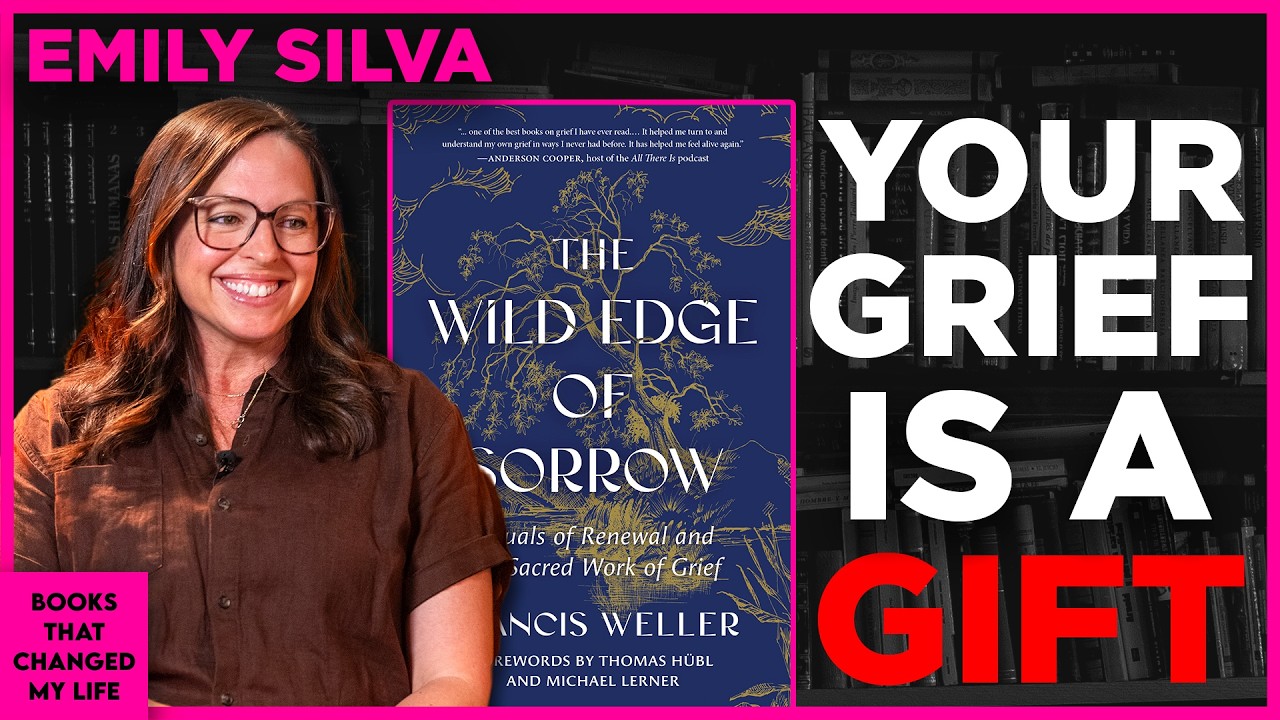
Emily Silva discusses how Francis Weller's The Wild Edge of Sorrow taught her that grief can be messy and joyful at once. She practices daily gratitude as a "spiritual muscle" to manage anxiety, and her new edition of Find Your Glow, Feed Your Soul adds 13 chapters on perimenopause and gratitude.
Chapters
So this is the first time we've ever had somebody as a guest that wrote a book that changed somebody else's life, which—
crazy—
is really crazy. So Susan Lucci went through a very traumatic time where her husband of 52 years, best friend, father to her children, like, passed away.
It gave me hope. It gave me the confidence to know that, yes, I was right to know that there was resilience in me and that I could find it again. And I could find it again. I got tools here to help me find it again and to find confidence again, to find that light.
Great job, Emily.
Yes, Emily, thank you so much.
Great job.
Really?
So good. Okay, the big question: how did The Wild Edge of Sorrow by Francis Weller change your life?
This book let me—
I'm Chris Collins, and you're watching Books That Changed My Life. This week, we're joined by author and book lover Emily Silva. She's here to talk about the book that changed her life The Wild Edge of Sorrow by Francis Weller. We talked about Emily's book Find Your Glow, Feed Your Soul with Susan Lucci, and it changed her life. And she just released an updated edition of the book. If you haven't read it yet, you're in luck because we have a handful of copies to give away. Now to claim yours, just subscribe, like, comment, and hit the link in the video description. But move quickly because these are in short supply. Now Sit back and enjoy the conversation. We're here to talk about the book that changed your life, The Wild Edge of Sorrow. But before that, so this is the first time we've ever had somebody as a guest that wrote a book that changed somebody else's life, which is crazy. Is really crazy. So Susan Lucci went through a very traumatic time where her husband of, I think, 52 years, best friend, father to her children, like, passed away. And she was in a really dark place and having a hard time. And your books— it was two books, but we kind of forced her to land on one, which is funny because both of your books were instrumental. But Find Your Glow, Feed Your Soul was the book that changed her life. How did you feel when you saw that?
I had butterflies in my stomach and my mind was blown. I couldn't believe that these books that I write are reaching people the way that they reached her. And hearing her talk about it was just really fascinating to me, 'cause you write, you write in isolation and you never know who's gonna read your book. And so when you hear from someone that reads your book, it's every single time, whether it's Susan Lucci or my next door neighbor, it just like blows my mind that the words that are inside of me me reach someone's soul.
Emily Silva, change your life.
It gave me hope.
It gave me the confidence to know that, yes, I was right to know that there was resilience in me and that I could find it again. And I could find it again. I got tools here to help me find it again and to find to find confidence again, to find that light.
Great job, Emily.
Yes, Emily, thank you so much. Great job.
Really so good. Okay, let's talk. Isn't that amazing?
I mean, I could have never even dreamed of that. So thank you.
What's crazy, though, is Susan Lucci is a big celebrity, and that's a big deal. But just all of the people that you've impacted that are just in their, you know, just normal people going to work, trying to figure it out or survive. That's a big deal.
It's weird. I will get messages and somebody will read one of the days and they'll say, how did you know that I needed to hear this today? And I'm like, I didn't. But I'm glad that that book was on your bedside table.
Yeah, it's beautiful, isn't it? Is there anything more rewarding than that? That you affected somebody in such a positive way? Like, no, that you helped them through something remotely?
It's like a dream come true.
The power of words and books. Yeah, yeah, books are magical. They're so magical. Like, she like has it next to her bed, like, and references it constantly. Did anything that she said change your perception of your books?
Yeah, the fact that she did not feel that she had a light inside of her really struck me because she's very famous, she has this charmed life, and this book that I actually wrote for my nieces so they would never forget their light reached somebody older than my nieces to remind them of their light. And that really struck me.
So you had a target audience when you were writing it.
Yeah.
And so tell me a little bit about your nieces.
I have a lot of nieces and they run from the ages of 1 year to 32, and I just love them all dearly. I think there's 7 of them now, and I just never want them to go through the anxiety and fears that I went through as a younger woman. And so I wrote this book as like a handbook for them. Like if you're dealing with forgiveness, 'cause I know they will, or if they're dealing with needing to find stillness, I wanted them just to have a few pages and an exercise. To take themselves through. And I was a coach for 12 years, and I took a lot of the information from coaching and my experience there. But really, I thought about my nieces when I wrote this book.
That's so cool. How would you describe your style of writing?
Spiritual and practical.
Who, who did this cover?
So my publisher, Cordo, has the most beautiful illustrated books, and that cover was Meredith Hart. She's a book designer.
Yeah. So a couple things I love about this book is the, the COVID but also that it's square and the way that it feels in your hand. Then it's one of those books that you can literally just open up to any spot and there's something relevant. Uh, it's an experience as much as a book.
Well, I like hearing that.
Not meant so much just to be read cover to cover, but to be referenced, to make you pause and think.
Mm-hmm.
It's not about the amount of words, it's about the weight of the words.
Yeah, and I really think it's a journey for the reader because not every single, it's an A to Z guide, so not every letter's gonna pertain to that person. Maybe they just need a couple of the letters. So it's like, go to, take what you need and leave the rest. I don't think everything I write is gonna hit with people. So I hope that one of the letters will hit with people when they pick up that book.
Yeah, check this out.
That's beautiful.
So Susan Lucci wrote in there, "This book changed my life." It's amazing. I have a gift for you, which is her— so this is signed by her. Oh, which is her book. Oh.
That's so wonderful.
Yeah. There's probably— I mean, in the world we live in today with all the chaos and political things or whatever, we need more of this. We need more love, more connection, more healing in that way. And it's a beautiful thing what you do.
Thank you. Thank you so much.
So when we asked you to pick a book, how hard was it to pick one?
Very. I mean, I was even, when I was in your library, I'm like, oh, I almost picked a Hemingway book when I saw your beautiful Hemingway collection. So yeah, it was very, very hard, but I wanted to think of a book that impacted me most recently. So this book, "The Gifts of Imperfection," was something that impacted me 14 years ago.
The most recent book was "The Wild Edge of Sorrow." So what other books besides The Gift were on your list?
The only other one would have been Hemingway's A Moveable Feast.
Hmm.
Those are different.
They're very different. But that book made me realize that you could say so much with so little words.
Oh, I get it. Yeah, because that's what you're doing.
Yeah, I would love to be like Hemingway.
No, but you're doing it in your way.
Yeah, absolutely. Like, in a very feminine way.
Yeah, no, but that's— that makes perfect sense. I'm connecting dots as we go here. Um, that's great. Where— so where did you grow up?
In the San Francisco Bay Area.
And where do you live now?
San Diego.
San Diego. And so, uh, what did Mom and Dad do?
My dad was a bread truck driver, so he delivered pita bread and Oro Wheat and Entenmann's. And my mom was a stay-at-home mom. She homeschooled us.
Do you have siblings?
I do. I have 4 siblings.
She homeschooled you all the way through 12?
Well, my little sister and I were the ones that were most homeschooled. I was 5th through 12th. My older brother was an athlete, so he went to public high school, played basketball. And my little brother came when I was 15 years old. So I didn't really grow up with him.
Yeah, there's a big gap.
Very big gap.
You were too cool for him, probably.
I mean, he was like my little baby doll.
Yeah. So really, like, homeschooled you through that? Do you, in like looking back, was, was that an advantage, or do you think you missed out on the social elements?
I definitely missed out on all the awkwardness that I hear people talk about in junior high. I didn't have to deal with any of that, um, so I'm glad because I don't feel like I was bullied, and I feel like I been bullied if I would have gone to real school because I was such an avid reader and my nose was always in a book. I was very shy, so the advantage was I had all day to read.
Hmm.
And is that what you did?
Oh yeah, I wrote stories and I read books.
What was, what was the philosophy of your parents growing up, like politically? Like, what was their general outlook on life?
So I grew up in a fundamental Baptist church Got you. So it was very different from the way I live now, but yeah, it was very—
you're a hedonist now, you're just crazy and wild.
I'm balanced. Um, yeah, it was very strict, religious, um, Project 2025-esque, just very Republican. Women stayed home.
You were in church 3 times a week.
Yeah. Were you?
Yeah.
Oh, yeah.
Okay.
So I was a missionary's kid and a pastor's kid.
Oh, yeah.
I was an MKPK. Yeah. Which I was the troublemaker for sure. Yeah, I got in a lot of trouble, but yeah, no, I wasn't allowed to listen to music either.
Anything contemporary.
I remember begging my mom to let me watch The Cosby Show because all the kids at school would talk about The Cosby Show.
I get it.
And evidently I would have gone straight to hell if I watched Family Ties for some reason.
Especially Family Ties.
Yeah, wasn't allowed.
Yeah, when I was 15, or actually I was 13, my dad moved us up to a Christian conference center in Northern California, and we lived in this like Shining-esque castle, and we like served the Lord and cleaned rooms and served meals, and then we left when my little brother was born, and that was my first like, I don't think I want to do this for the rest of my life. I don't think I believe this.
How old were you when you had that thought?
15.
15. I think I was 8.
Wow, that's amazing.
Yeah, I just remember just thinking like, they say, like, everybody says to do this, but everybody's miserable.
Mm-hmm.
Everybody was so miserable. Yeah, there was more jealousy and like, I don't know, it was just so weird. And then we lived on faith, right? Because we were missionaries. And so I was always like, you could get a job. Like, this doesn't make any sense that we're praying. Like, yeah, it was so— the agency was so external. Like, you were just leaving everything to chance, which is probably why I like to control things, is because that just didn't serve me as a kid. I couldn't, couldn't add it up.
I definitely wanted control as a child, and then as an early adult, still deal with letting go, which is why I have a chapter called Let go. Yeah, I get it.
So your social group was church because you didn't have school, right?
And the kids on the block.
Kids on the block. And so you finished high school. Do you go to college?
I did.
Where'd you go to college?
Chico State.
And for what?
History.
Oh wow.
How— so how did you, uh, decide that was what you wanted to do?
So with all the reading I did as a child, I became fascinated with the Holocaust. And I wanted to study Holocaust studies and war. So I went to Chico State, got my degree in history. I was gonna get my PhD in Holocaust studies, but I had all this student debt. So I went into banking to pay off my student loans. That was my first job out of college.
Was banking?
Banking, yeah.
With a history?
Yeah.
Degree?
Yeah, exactly.
What did you do in banking?
I was a licensed personal financial representative. So I was, I was a li— I had licenses for securities and I was kind of like the associate to the financial advisor.
Oh, oh, so you were, yeah, you were swinging some pretty big sticks then.
I guess.
When you, so when you went to college, how hard was it for you to adjust to that coming from being homeschooled?
It was so hard. It was very hard. I, I luckily met some really great friends in, my English class, my writing class. And I— they liked reading, they liked writing, and that was where I just stayed. I didn't try and like— I wasn't in a sorority. I worked through college because I had to pay for it. So I just had my few friends and my— yeah, and my drinking, because I was letting loose for the first time.
Were you rebelling?
Very rebellious.
So what were you— what were you drinking? What was the go-to?
I don't think you have a go-to in college. No, no.
Isn't it whatever's cheap?
Yeah, I mean, and I was also a girl, so you get a lot of drinks. Yeah.
How long did that period last?
I'm gonna say probably until I was like 24.
And then what happens?
And then I got my real job and I buckled down. I was still drinking, but it wasn't like partying. Um, moved down to San Diego. That was really fun.
What was your overall perspective on money?
Oh, it was the root of all evil. I didn't like my— I didn't like my job, but I knew it was what I needed to do to pay off my student loans. So it's like earn, earn, earn, save, save, save.
But the root of all evil.
Absolutely.
What— at what age did you figure that out?
That it wasn't?
Or just— yeah, that it was irrelevant.
I started therapy when I was 27, so I started unpacking a lot of this stuff.
That was the beginning.
Mm-hmm. That was the beginning of the unpacking.
What's your view on money now?
It is a lot more healthy. I feel safe and secure.
The way you said that makes me think you would like to shop.
I don't really love shopping, but my husband does. So I enjoy shopping with him because he gets really excited when I find things that I like, and that's fun to see his light— him light up. But I'm learning through him to like shopping.
What would be a day of shopping with him? Like, where would you go?
So just recently we went down to Claire V in LA and I bought a bag and that was really exciting for me. And that was a big purchase for me.
Claire, is that like a famous—
It's like a purse place.
Is it like the it girl kind of like—
I guess. I mean, I don't know if I'm an it girl, but yeah. Yeah, girls are carrying her.
And was that fun for you or—
It was fun for me. Yeah, I thought about it.
Where's the bag?
It's at home.
You don't use it?
I do.
Oh yeah.
But it didn't match my outfit, so I'm not carrying it today. Okay.
That makes perfect sense.
Yeah.
But so he— it was his idea for you to do that?
No, no, no. I had been thinking about this bag. We had come up here for a Lakers-Warriors game and I was like, hey, you know what? I think I want to get my bag. And then, and then we went.
You made it into an event.
We made it into an event.
Does the bag symbolize anything? Like, is it a reward for something?
No, I don't feel like I have to reward myself to buy something. I think I was just excited to have it. I thought about it. If I make a big, big purchase, I usually think about them for a while.
Yeah, I kind of do the same.
Unless it's books. We just had Independent Bookstore Day, and I definitely went to a lot of them in San Diego and made sure I bought something in each bookstore.
How many books did you buy?
I think 7.
So you're, you're doing banking and then what happens? You don't like it.
I—
so it was 2007, 2008 and the market was crashing and I was only 27 years old and I— it was the first time I had a panic attack and I didn't know what that was. I thought I was having a heart attack and I thought, oh my goodness, I'm so young and I'm going to get a heart attack from a banking job. Just to pay off my student loans is stupid.
Were you at work when you had the panic attack?
Yeah, I was actually parked in the garage freaking out.
Going to work or going to work?
And then I called my manager.
Was it the fact that the market was crashing?
That it was just every single day someone was coming in and screaming like in my face about losing their money, losing their homes. And I was like, not doing the loans. I was just the first desk. So I called my manager and I said, I think I need to take a leave. I found a therapist. I learned about anxiety and panic. My grandfather had passed away at the same time. I didn't know anything about grief. I was just kind of like, oh, my grandpa died. That's sad. I bet I should like put my nose down and keep working. So I went back to work It got worse. I went on a medical leave, decided—
Worse as in then you had more panic attacks?
Mm-hmm.
How often were you having them?
Once a week. But it—
Did you learn how to control 'em or were they—
No. So the doctor wanted to put me on medication and I didn't want medication. So that's where—
Did you try the medication?
No.
That's where I, that's where I found meditation.
So what kind of meditation did you do?
Just a in-your-ear guided meditation. I had a friend tell me about it. I asked my therapist, they're like, okay, if you're not gonna do this medication, then you need to also move your body. And so I started doing yoga again, and then I quit my job. So I took my 401k before the market crashed, cashed it out, and then with the boyfriend at that time, we moved up to Seattle for a few months just to like reset. And then we broke up and I got into the wine industry in Northern California.
You broke up in Seattle.
Mm-hmm.
And so then how do we get into wine? Well, do you have a lot of money at that point? Was the 401 pretty big?
I had cashed out my 401, so I was living on savings.
How long could you have lived on that?
It was a year.
A year.
Mm-hmm.
And so a couple of months in Seattle, breakup. And then how do you land on wine?
So I went to Australia. I liked wine. My best friend was living in Australia, so I went and stayed with her for a little bit. We went wine tasting and a winemaker said, you have a very interesting palate. You're picking up things that a lot of people don't pick up. Have you ever thought being in the wine industry? And I thought, well, I'm from Northern California, I'll try it. So I became a courier for this winemaking company and I was delivering yeast to wineries all over Sonoma and Napa County. And I'm like, I wanna be in your sales force. Put me in your sales force. And so they eventually gave, they gave me that job. I was traveling all over the world to wineries. It was amazing. It was a beautiful job.
What are you selling? Are you selling yeast?
Wine making products, yeah.
Okay.
And also services. So I would go and taste the wine and see if anything was off, help them figure that out. But the whole time I'm doing this amazing job, I'm feeling like something is off inside of me. I'm thinking, why am I so unhappy if I'm doing the travel that I've always wanted to do? I'm making good money, I'm seeing these places that I probably never would've been able to take myself. So I took a vacation to Costa Rica. It was the first vacation I took. It was by myself. It was 2 weeks. I did an intuitive painting course and this woman said, I'm gonna give you a word and it's brave. And I'm like, I don't feel like I'm brave. I, and she's like, why don't you feel like you're brave? And I said, because I feel like I need to quit my job and I'm afraid to do it.
Are you having panic attacks? No, no more panic attacks. So you just don't feel authentic to yourself?
Something felt off.
Okay.
And I didn't know what it was. So the—
so why do you think she came up with the word brave?
I don't know. I was painting with my hands and she, like, I think she's magical, so she just gave me this word and I said Okay, I'm gonna quit my job. And the reason I did, she said, why do you wanna quit your job? And I'm like, because I wanna be an author and I can't focus on writing if I'm traveling all over the world. And there's no time to write.
Had you written anything up until that point?
Oh yeah, I had been writing my whole life. So I had started a travel blog. I had tried to fits and starts on books, but just really no focus. I was exhausted, I was jet lagged, I'd come home, do my laundry, get on another trip. So there's just no time. And I thought, okay, I have been saving money again. And I thought, okay, this is your chance to really get serious about making your dream come true. So are you gonna do it? So it took me about 5 months. I quit my job and I booked a one-way ticket to Bali and I brought my laptop and I started writing.
One-way ticket. So no timeframe. And what was the book you wanted to write?
The next Eat, Pray, Love.
Oh, interesting.
Yeah.
Unpack that for me.
Well, I loved Eat, Pray, Love, and I wanted to figure out what my soul believed in. I wanted to— I knew that there was something bigger than me, but I didn't know what to call it because of what I grew up with. So I wanted to do some of that praying or that exploring different religions. I desperately wanted to get married and fall in love with somebody because I just really always knew that I wanted to be in a partnership, and then I wanted to like not think about my body and weight. I just kind of wanted to be gluttonous and, and just eat, pray, love. And so I thought, oh, I can do the modern version of it, even though it was only like 5 years later. So I was in Bali and I was Why Bali? Because of Eat, Pray, Love.
Okay.
Yeah. And Bali, I had gone for my 32nd birthday with a friend and it's beautiful. Like this was 2012. So this, I mean, I think it's changed a lot since then, but it was beautiful. It was rugged. We were staying on the rice fields. So I went back to the same little place and I stayed there for a month.
So did you stay in a hotel there?
No, it's just this like little hut place. That was on the rice fields and just rowing and your computer and— yep, computer, yoga.
And what happens?
And so then, um, I had some family issues happen back home in America, so I took one more flight to Australia to see my friend at the time to get— because I was over there in that side of the world, I'm like, I might as well go to Australia before I go home. I came home to San Diego. I'm so great.
Wait, how long were you in Bali?
I was there for a month.
Oh, okay.
And then I went to Australia for 10 days, came home, really grateful I kept my apartment, went back to my little beachside apartment and just started like writing and started pitching to agents and publishers and got rejection after rejection after rejection.
And what is, what was the pitch?
The pitch was A travel memoir where someone finds her way after corporate America.
Had you found your way?
Well, I thought I did. So thank goodness that—
What did you think you'd discovered?
That you need to come home to yourself.
What does that mean?
You need to listen to your soul. You can do all these things that society thinks you need to do, like have a big job, like travel the world. But if you're feeling uncomfortable inside, it's not actually your answer.
And why do you think most people struggle with that? Because of outside expectations?
Yeah. And it's also really scary to listen to yourself because a lot of us second-guess ourselves. So it's like, is that really what I'm supposed to be doing?
Yeah.
And we also have to figure out what the voice of our intuition is because it's not— it's not what's going on in your brain. It's not the voices in your head that are like saying mean things to you. It's the intuition that's like steering you, saying, hey, this doesn't feel right.
So you're going around pitching it. Do you have an agent or are you—
I was trying to find an agent, but I was rejected. Just lots of rejections. So I decided on January 1st, 2015, that I wasn't going to try and get published anymore, that I was going to just focus on my coaching company, continue to build it.
So what's the coaching company?
Souls Adventures.
And you started that in What was, what was it doing for people?
I was— well, at first I wanted to help people leave their religious trauma, so I went and got my spiritual life coaching certification, but it turned into career coaching because everyone's like, you've changed jobs twice, how did you do it? So I was helping people change their jobs or get their promotion.
So you would coach them through it? And how many clients were you balancing at a time, probably 10. 10? Was that the—
that was like my peak.
And do you feel— did you feel good about that? Like, was there—
loved it.
So you're like, okay, this is— I'm meant to help people.
Yeah, I really, really liked it. Um, so I just was focusing on that January 1st. 27 days later, and I was also writing on my Soul's Adventures blog, just writing lessons that I had been learning, things that were coming up in coaching. Trying to help people through writing that way. And on January 27th, 2015, I got an email from my now publisher asking if I wanted to write a book on gratitude. And I thought it was a joke because I had just dealt with all this rejection before. And I—
So much rejection that you'd kind of given up on the idea?
Oh yeah, I was like, I'm just gonna do my business, it's fine.
And had they read your blog? Is that—
She found me on Instagram. I mean, this is like Instagram when I had like 100 followers. Found my Instagram, was always posting about gratitude and just like self-helpy type stuff. And that led to my blog. Read my blog and she liked my gratitude blog post and was like, something like this. And I looked them up. They're legitimately a publisher. And I said yes. And then later that night I had my first date with my husband.
Yeah. How did that happen?
Bumble.
Okay, so you meet on Bumble and then you decide to go on a date?
Yeah, so our first date was set for that night.
Where did he pick the place or did you pick the place?
I think I picked the place because it was in my neighborhood and I didn't have a car anymore, so I was like, I need a place I can walk home to.
Okay, so what was the place?
World Famous in Pacific Beach.
And how— tell me about your first impression of your husband.
Oh, I knew I was gonna marry him.
What?
He made me feel so safe because I had been dating and I was like, oh, maybe I'm just supposed to be single.
What about him made you feel safe?
My husband is the most grounded person I've ever met. He has kind eyes. He walked in, he had this big smile. We had been talking. The other thing is he had called me on the phone and I was getting like, no man wants to call anymore. So I was very impressed that he was calling me. So I had heard his voice already. We had had a few conversations. But I felt very safe with him. And then when we were having our dinner, he had just had his first niece born and he was so excited about it. And I'm like, oh, this is somebody that loves their nieces and nephews just as much as I do. And I love that because they were like the most— they're like the most important thing in my life. And so I wanted somebody that could be a good uncle.
How old are you when you meet your husband?
34.
34. And what is your thought on children?
Oh, I love children, but I was like, actually I was 35, 'cause I was like, I'm 35, this is like geriatric pregnancy area. So he, on our first date, he's like, I want 6 kids. And I'm like, oh boy. I'm like, well, I'm 35, I don't know about that. But yeah, I, so he's from Michigan. I went to his family's lake house, I saw him with his nephews and I'm like, I wanna have 6 kids with this guy. He is amazing.
Okay, so then you sign a book deal.
Yeah, I signed a book deal.
How many books? The first deal, was it for one?
For one book.
Yeah, one book. And how long did it take you to write the book?
I had a 4-month deadline.
Deadline. How long from that first date until when you got married?
A year and a half.
Okay, a little longer than the book. And so the first book comes out, what happens?
I mean, I feel like I was in shock and in love at the same time because holding my book with my name on it for the first time, I mean, I was this little 9-year-old girl in a library, like just looking at all the books, like someday I'm going to have a book with my name on the spine and like turning the spine and seeing Silva, it was amazing. It was, yeah, mind-blowing.
And so then the book comes out and people start experiencing it. How vulnerable did you feel in that?
It was very scary. So there's something that happens to me every time a book comes out. I'm very excited, but I'm very nervous at the same time because I'm like, they're going to hate this one.
Yeah. The worst thing is that you've turned it in and you know it's coming out and that in-between purgatory It's torture, right?
Mm-hmm. Mm-hmm.
What kind of things do you do to keep yourself stable during that period?
Yoga, meditation, time with friends, trying to write other things because I want to tell myself this isn't the last thing I'm going to write. Because sometimes in my head, my brain will say, this is the last time you get to write something. It's just that anxiety that comes up, right?
That's so fun. And then, um, you're never the same after that.
I call them my daughters.
Is it a— is it— would you call it a reinvention?
Maybe. I think it's just another sharing, another like deeper part of myself, which I think is why it's so scary. Because especially in the last book that came out in 2024, it was my grief book, and I'm like, wow, This is basically my grief journal made into meditations. So it's super personal and I just, I knew I had to share it. It was one of those things where it's like, you have to get this out of you. Maya Angelou says, "There's no greater agony than an untold story inside of you." And I feel that every single time I write a book, it's like an agony, like get this out of me, I have to tell this.
For somebody who wants to write a book who hasn't, explain to them how much you have to give of yourself to finish a book. Like, you give a piece of your soul every time, right?
Yeah, it's—
explain how hard that is.
Well, it can be really, really hard unless you have that audience in mind, that audience of one or a few, because then you know that you're trying to reach one person. Because if I'm sitting here reading thinking the entire world is going to read my book and love it, then I'm setting myself up for failure and I'm gonna be really upset with that expectation. But if I think about my nieces and I think this, one of these chapters is gonna help her, then I feel better about writing. But yeah, it is bleeding on the page to quote Hemingway. Like you are putting yourself on there, which is why I think in the age of AI, you can feel books that were written by humans. You can feel things that are coming off the page, even small things. You're like, oh, they've really hurt there, or they're actually really happy about that.
Yeah. So for somebody who hasn't written a book before, the hardest part probably is being vulnerable.
I say start sharing. Like, if it's in your captions on social media, just see what it feels like to share a little bit about of you, and then share a little bit more.
Have you gone too far?
I think I think that's very possible.
No, have you though?
No, no. Thank you, therapy.
Yeah. Okay.
So when does The Wild Edge of Sorrow come into your life?
That book came into my life in 2023. I was going through infertility and it was really, really hard.
So you had this moment in Michigan— is it Michigan?
Mm-hmm.
Where you're like, okay, I want to have 6 kids with this man. And then what happens?
Then we get married and I can't get pregnant. And we tried for a year. The doctors say, try for a year. If you don't get pregnant, come see us. I think they tell all women that, especially after 35, because it takes a little bit longer. So they just thought, mm, it's your age. I was 37 when we got married. And I saw a naturopath. They gave me all these supplements. They're like, you're healthy. And I did, I felt healthy. But I also knew that there was something like— I wasn't— I was starting to not feel like myself, but I didn't know. I didn't have any words for it. So then finally I found a doctor that was willing to go a little bit deeper, do some more tests. And in 2020, in January, I was 39, and she found that my ovaries, my reserves were gone and diminished, and I probably had a 1% chance of conceiving naturally with my husband. So then they take me to, that takes me down the route of IVF clinics and reproductive endocrinologists. And again, they confirm that it's not gonna happen for me naturally. And we had a few choices. We could try IVF just to say that we did it, but that would be putting money down the drain basically. And you know, we've talked about how I feel about money and I'm like, no, I don't wanna do that to my body if it's not gonna happen. Egg donorship, which I couldn't wrap my mind around at that time because I was like, it was so fast learning all of this 'cause I was also learning that I was in perimenopause at the same time. So I'm like, wait, what? I'm so young.
Was that like early menopause?
So perimenopause is the phase of life that women go through 7 to 10 years before they have menopause, which is their last period. And it usually starts in your mid-40s, and I was 39, so I was not prepared for this. And I did— I had all the symptoms, the hot flashes, all these things happening. And I'm like, wait a second, I thought I was young and really, really healthy, and there's this one organ in my body that's like Well, I'm not gonna work anymore. So that diminished parenthood for us. And then COVID happened 2 months later, and I'm grieving. Like, I am, it felt wild, and I was angry and sad and disillusioned, and I really didn't understand it. I'm like, what? How is this possible? Like, no one talks about this. Halle Berry was pregnant when she was 52. Like, I thought I still had that choice. So I had to learn a lot about like my reproductive system at 40. I was like, what, how does this work? So yeah, Wild Edge of Sorrow, I felt wild. I felt like this is the most feral thing I've ever felt in my life. I don't, I mean, I can't focus. I had to stop working. All my writing was so sad. And so I was turning, I was trying to find, a grief book that would meet me where I was at. And there are amazing grief books out there. This one just so happened to, to really touch me.
Did somebody tell you about it?
No, I liked the title.
Just on Amazon or in a bookstore?
I was just looking up grief books online and yes, like I said, there's a lot of them. And then I saw this title and I'm like, oh, that's how I feel. I feel like this wild It was very edgy. I mean, it was like up in the middle of the night sobbing, and I'm like, what is wrong with me?
How, how was your husband during all this?
So patient and loving.
But you, you in a sense felt like you were letting him down?
Oh yeah, I was like, go find somebody younger. He's like, no.
You said that?
Oh yeah, he's probably said it like 10 times.
Oh my gosh.
Because that's what you I feel when you are young, you're still age young, you think, oh, this was like your dream on our, and I told him on our first date, you said you wanted 6 kids. He's like, I don't even remember saying that. And so we found a couples therapist that really helped us work through that because I wanted him to have a wild edge of sorrow, but it was different for him because it was not his body. And he's just this, like I said, he's a very grounded, safe place for me. So it was this place where I could have— I'm sure he didn't love all the emotions. It was a lot. And it was like they're tidal waves. It's like it comes and it crashes over you. And there were days that I was great. There were days where— weeks where I was like, I don't want to do anything. I don't care.
You were depressed?
Oh, yeah.
Yeah. That's terrible. That's rough.
But this book helped. I mean, it showed me— it was like a mirror. It's like, yeah, you're not alone.
So for somebody who hasn't read the book, just kind of give us the synopsis.
It talks about how grief and gratitude can coexist, and also the importance of having rituals to Grieve. Because I think our society, if you've never looked at grief books before, it's like, oh, I have to keep, I have to tidy this up. I don't wanna be messy. And so this book is like, it's good to grieve in community. It's good to have grief witnessed because that is actually part of the healing process. And so it helped me tell people I'm not doing okay. I need you to come over and sit with me. Can we go for a walk? Instead of feeling guilty for needing, it empowered me to figure it out. Like, what, what do I actually need? Because a lot of people, when you're grieving, they're like, is there anything I can do? Let me know if there's anything I can do. And that's very well-meaning, but when you're grieving, you're like, I don't even know what I need.
I'm curious what you're going to think of the highlights that we've made in this. So let's just kind of go through some spots. Okay, so talking about grief as a positive force, did this kind of reframe things for you? And maybe if you would just read that highlight on 9.
I am an advocate for grief. I see many ways it gifts us. While it is difficult to embrace grief and may— while it While it's difficult to embrace grief and be moved by its muscular demands, without it, we would not know the heartening quality of compassion, could not experience the full breadth of love, the surprise of joy. We could not celebrate the sheer beauty of the world. Grief fosters each of these capabilities, deepening them by bringing gravity to the moment. Grief is the dark color that adds depth to the canvas providing contrast and texture. Without these tones, our lives would be flat and uninteresting. 100%. I feel that my joy now is even greater after grief. I think I see things like how impermanent life is, and it's like, oh my, like the jacarandas right now, they're so purple and beautiful. They're only here for a month, and I, and I have a lot of them on down my street, and I just make sure that every single day I'm like, these are so beautiful today because I'm not going to see them in June.
Yeah.
What—
where do you think most of us get stuck when it comes to this and grief, in the sense that being an advocate for grief is a complete flip of how we would normally process grief? We would try to avoid it.
Yeah. I think to be an advocate for grief is to say let's grieve, let's talk about it, let's get this out here. Because I think if we don't grieve, it comes out in other ways later on. So if we're grieving when it's happening and we embrace that someone is grieving and we allow them that space, that's actually where the healing is. It's not, can you just go do that in your room?
Also too, like, I think our bodies like end up— have you ever read the book The Body Keeps the Score?
Oh yeah. I found that also during this time.
That's a hard book to read.
It's really hard, but it's so important.
Yeah, but that's the outcome, right? As our bodies then start to handle it for us in ways that you don't want.
Mm-hmm.
Yeah.
Okay.
The next one is on page 19. It goes from 19 to 20. I'll read this one.
Okay.
How is it that we have attempted to keep grief separated from our lives and only begrudgingly acknowledged its presence at the most obvious of times, such as a funeral. If sequestered pain made a sound, the atmosphere would be humming all the time.
I agree.
I just think about, like, when you're in the city, do you ever hear, like, that electric buzz? But once you hear it, you can't unhear it. Yeah, it's kind of like that.
Yeah, I think when you— if when grief has visited you, it's also easy to notice it in others because that buzzing never actually goes away inside of you.
Do you think you're an empath?
I know I'm an empath. Yeah.
Yeah. Do you feel other people's pain? Like if somebody stubs their toe, do you feel it?
Mm-hmm. It was actually something that I had to learn when I was in coaching. To like, like I'd have to sit back from my calls because I would feel all their pain. I'm like, this isn't helping them. So I would actually physically move myself back to separate myself from the person on the call so they could have their pain.
So evidently that's really rare. And I learned that in the conversation I had right before you got here.
Okay.
That he, he said that most people don't experience that, but I totally experienced that. But it's that empath thing, I think.
Mm-hmm.
Okay. This next one I want you to read because it's a poem.
Okay.
And it's— how are we doing so far with our highlights?
Great. Good. Yeah.
So on page 24, for those who have died.
Ayla Ezkira. Those— these we remember. Tis a fearful thing to love what death can touch. To love, to hope, to dream, and oh, to lose. A thing for fools, this love, but a holy thing to love what death can touch. For your life has lived in me. Your laugh once lifted me. Your word was gift to me. To remember this brings painful joy. Tis a human thing, love, a holy thing to love what death can touch.
It's beautiful.
So infertility is disenfranchised grief. It's something that a lot of people, it's hard for them to understand because there is no person that passed.
Mm-hmm.
But for a woman who wanted to have a child, you actually, or I at least thought about this child that I was gonna give birth to. And I, this, this reads to me like thinking of that baby. That I would've had with my husband because it is disenfranchised. It's not actually something that passed. It was an idea, but it's still as palpable of a grief.
And then it's a death.
It's absolutely, it's a death of a dream. It's a death of an idea. It's a death of an identity of becoming a mother.
Yeah. So my question to you is, why do so many people feel empty today?
Okay.
To be empty, to feel empty, is to live in the wasteland near the gates of death. This is intolerable to the soul. We were not meant to live such shallow lives.
I mean, I think that says a lot right there with the way that we live in our phones, our comparisons, our we're not going deep into ourselves. If you're constantly— we're hyperconnected. If we're hyperconnected all the time via a device, we're not connecting with ourselves. And I think when you don't have that time to actually be alone, unplugged, you feel empty. You can be connected all day long and still feel empty.
So what do you personally do to combat that?
Oh, I put my phone away. I have a lot of alone time.
Like, from what time to what time, or how do you do it?
So in the morning I wake up and I get my cup of coffee and I read for an hour. I journal, and then I probably pick up my phone when it's time to go to the gym. So I have that morning time to be with just me and the words I'm reading.
Where's the phone during all this?
It's on my desk. It's plugged in on my desk. So I go to bed and it's in another room.
So you don't take it in your bedroom?
No.
So you're not doomscrolling in bed?
No.
That's— that separation, I think, is really important. So then the first time you look at it is like what time in the morning?
I mean, it just depends on what time. It may be like 7 to 9.
7 to 9. So you go to the gym and then when do you put it down?
Throughout the day. So like right now I'm working on writing something. It's definitely not near me during that time. I'm in a creative space right now and I want to create. So I know that the phone drains me. And I think you have to know that. You have to figure out what it is that's draining you and causing you to feel empty and put that away.
Why does the phone drain us?
Well, for me it's plugging into other people's lives. It's plugging into news. It's like too much information. Like I can get anything I want. And I remember when I was in college, I had to get books to figure out what I was going to say in a paper. And now I can just like really quick, yeah. And even that act of like having to look something up in a book, you're kind of with yourself. Like, what should I, where should I go in the index? What am I looking up?
Well, also you find all kinds of other things on that journey that you didn't expect too.
Yeah, and I'm not like a technology hater. I just think like you have to know the boundaries you need to put around it.
Yeah, so it's about boundaries and then being intentional about how you interact with it.
And I think like asking yourself like, why do I feel so empty? And then you figure out the things that are making you feel empty and putting those to the side.
Yeah, it's different for everybody. But there is one commonality, I think, is everybody is more alone and more connected than we've ever been.
I agree.
So this is about the gap and asking for help. Frequently in my practice, patients tell me that they often cry in private. I ask them whether at some point in this process they ever allow their grief to be witnessed and shared with others. There is usually a quick retort of, 'No, I couldn't do that. I don't want to be a burden to anyone else.' When I push it a little further and ask them how it would feel if a friend came to them with their sorrows and pain, they respond that they would feel honored to sit with their friend and offer support. The disconnection between what we would offer others and what we feel we can ask for is extreme.
I have a friend that would just sit with me and in my grief. And I just thought, oh, this is what I need. Like she's sitting here not watching me cry, but letting me cry and release. And it was like, that's what I need to ask for. Can you come over and sit with me? Can you come? That's how I learned to ask for coffee dates and walks because I didn't even realize that I needed that witness. And so when I read this, I'm like, I remember writing on the margin, grief needs a witness, like exclamation mark. Like, how brilliant is it to actually say that out loud and give a griever permission to be seen? Yeah.
And then the flip side of that is if you weren't asking, you're stealing something from the other person because it feels so good to give to others.
Yes.
Like, that maybe is the meaning of life, right? Like, just the fact that you write this book and it touches so many people is the greatest thing ever. Like, there's nothing better than that. And it's the same thing as not asking is stealing that from the other person too.
Yeah.
Yeah, it's hard to ask though.
Also, if you don't know that that's what you need. Yeah, I think it's good to, to realize it.
Well, I actually, like, going through this, I never, uh, I never thought of even thinking to do that. Like, I would never think to ask on my own.
Yeah, I just wouldn't have somebody come be with you.
Yeah, I wouldn't want to bother anybody. Like, I just kind of like it says, I just wouldn't.
But you would be with somebody that you love?
In a second. Why? Do it for people all the time. Like, no, I care deeply. And you know, even I think it's important too when you're that person that does it for others is you, you don't really need to fix it. You just need to be there and listen. That's it.
So who would you ask?
That's a good question. I mean, I have a friend I would ask. I think my, uh, my partner in crime, my fiancée, I would ask. She's really good and she has like that sweet thing about her too. She's easy to talk to. So maybe those two.
I'm happy you have two people.
I shared with her a line from the poet Rilke: I am too alone in the world and not alone enough to make every minute holy. I am too alone in the world and not alone enough to make every minute holy.
I mean, that could be written today, which is crazy.
Yeah, it transcends. What does that mean to you?
It makes me think about how much we fill our time with things that don't matter. And so the glorification of busy, like, "I'm so busy, I have all these things I need to do," but then you're exhausted, you're not fulfilled, you don't feel connected. I think that can happen in even close relationships, right? Two people can be very, very busy and not even connecting. It's just going through the motions. And so I think like when I read that, it's like, Am I spending the time to appreciate? Like gratitude, that's where gratitude comes in. Like that's where the holiness comes in. It's like, oh, driving down to LA, oh, there's jacarandas on the freeway. Or I'm in this beautiful library and I like the color dark blue you've painted your shelves, 'cause I could just sit here and not even notice the blue of your shelves. I'd be too busy. On to the next thing.
What do people have to do to get to that point where they can sit still with themselves? Because I, I think people stay busy because they're afraid to be still, and when they're still, everything starts to spin. And so being busy is a distraction from themselves.
Oh, absolutely. Yeah, I think you got to start small. Can I sit with myself for a minute in my breath and just be alone for a minute, not looking at my phone? Maybe you get a timer on your oven or your microwave and just set it for a minute and see and like work up. We have— it's a muscle you have to build. You're not going to the gym and benching 250 pounds. You have to like work up to it. Same with stillness. It's like, can I be alone for 5 minutes? Because it's not comfortable if you've never done it before. And if we're constantly distracted and you can pick something up really quickly and find any information you want, that's going to scratch that itch. So you're not gonna be comfortable in silence and solitude in the beginning. So I always tell people, can you do a minute? Then try 5, maybe work your way up to 20 and do it in the morning before you pick anything up, because it's the easiest then. You're still kind of tired.
You did it for a month and by yourself.
Yeah, but I wanted that, so I was ready for that. And I think people— that's the other thing, it's like you have to want it.
Yeah, I guess. But also I think you have to notice the imbalance of that. Like, you have to notice that if you're running from something you're gonna wear yourself out. Like, you, you have to learn how to sit in silence and learn how to be comfortable with yourself.
But I don't think that's like— I don't think that's celebrated, and I don't think we're really teaching, especially kids, like, to be still. And what—
no, they're dopamine addicts.
Yeah. So it's like, what— you have to understand the beauty of stillness. You have to understand the loveliness of solitude without anything. And I think we're just damping down the voice of our intuition. We don't even know what it sounds like.
Yeah. My personal context for this is Rothko. Are you familiar with Rothko paintings?
The paintings? Yeah.
So there's this chapel in Houston called the Rothko Chapel. He designed it before he committed suicide. But it's these huge, like, kind of purple Rothkos in this chapel with benches.
And the—
every time I'm in Houston, I'll go there. But the thing about Rothko is Rothko doesn't meet you. You have to meet Rothko. And so it takes you 20 minutes of staring at one of these paintings to get past yourself to then appreciate a Rothko. And to me, that's always the exercise of can you let yourself go and all that noise and distractions and really meet Rothko? Because he's not going to meet you.
Yeah.
And then the other one is then the reason why I asked you what meditation is. I did Transcendental Meditation, and you have a mantra. And what happens is when you're saying the mantra, in your head, thoughts come in and it's okay. Just as soon as you notice that you're not doing your mantra anymore, go back to your mantra. But what happens invariably over time is it teaches— it gives you control of your mind versus random thoughts because you don't meet them with resistance. You allow them in and then shift back to the mantra. And over time, your mind kind of stops doing that.
Yeah.
Which then allows you to have peace. But those two things kind of, for me, speak to that part of being still and quieting that thing that happens, that noise.
Yeah. I mean, it's in the New York Times. They'll have that 10 Minute with a Painting, and every— I think it's every week they give a new painting and it's like, can you stare at this for 10 minutes and see what you can see? And it's like going to an art museum or, yeah, just there's so much we're missing in the world.
Just trees or flowers or the horizon or the passing of seasons even.
It's like, oh wait, it's May already?
Mm-hmm.
And so I think it's very interesting that the gift that mindfulness, meditation, stillness, and solitude gives us is we're more available for living.
Oh, that's so good. We're more available for living. And so when you, when you give somebody the tool of doing it for a minute and then 5 minutes, what is their, their feedback most of the time? What do they say?
I mean, for 12 years I was coaching, and I— that's what I would do. And people would be like, oh, now I know what my intuition actually sounds like. It's not the voice in my head. It's not the roommate that's beating me up all the time. It's this like lighthouse, or I've heard like a best friend inside because it's just trying to lead you. Some people believe like, you know, growing up it was the Holy Spirit, but it's like there's something inside of us that is universally connected and already knows our path, but we're up here trying to control and understand and make meaning when it's really like not that hard. Hundreds of times in my practice as a therapist, I have heard how fearful people are of dropping into the well of grief. The most frequent comment is, if I go there, I'll never return. What I found myself saying one day was rather surprising. If you don't go there, you'll never return.
Yeah, yeah. You're carrying it around, and like you kind of mentioned earlier, you can just tell. You can tell when people have trauma. In that book, they— she says, um, like 30% of people have like real trauma.
Yeah.
In The Body Keeps the Score.
Yeah.
Like when you start to see it that way, you have a lot more empathy for people. Like a lot of people really hurt, and a lot of it happened in childhood. Like they had no control of it.
Yeah.
They, they just experienced it and then it did what it did. But it's very common. And so I love that line. If you don't go there, you'll never return.
Yeah.
And I think grief, as terrible as it is, it can also be a homecoming because you go deeper into yourself and your heart and you see what's really important to you because you're grieving something that was important, something that you cared for. And it's almost like you get to know yourself a little bit better. Maybe you didn't realize that you cared that deeply, or you had the capacity to care that deeply, or get in touch with sorrow that could show this part of you that I'm not as hardcore as I thought I was, or my shell isn't, is permeable. Like something can get in. And actually it was really nice that that person came and, was there for me. I actually like being witnessed. That's okay.
In the process, when did you realize that?
I think it was when I realized that people that I thought were really close to me kind of just dropped off. And then I realized the people that wanted to stay with my messiness, because I was always the—
they were more real.
Yeah, because I think I was always the big sister or the friend that was always there. And then I had no capacity. And so when I wasn't playing that role anymore, and I think it's natural, I think that some people just can't be with grief and that's okay. But when I noticed the people that let me be messy and I was like, oh no, I'm always the, I'm always the together one. And they're like, no, you're not actually. Yeah. That's when I was like, oh, I don't have to be together all the time. Like, oh, it's like a breath of fresh air. Grief taught me that I can be messy. That's amazing. Grief taught me I can let go.
When you face it, it no longer has the power over you that it had before. But when you run from it or ignore it, it still has— it's like the shadow, right? It has a tremendous amount of power over you.
It's the monster in the closet. Yeah. It's gonna get you.
How important are expectations to expect both joy and suffering?
It is indeed the mark of the mature adult to be able to carry these two-thirds simultaneously. Life is hard, filled with loss and suffering. Life is glorious, stunning, and incomparable. To deny either truth is to live in some fantasy of the ideal or to be crushed by the weight of pain. Instead, both are true, and it requires a familiarity with both sorrow and joy to fully encompass the full range of being human. He's such a beautiful writer. Any—
anything else from this book that sticks out?
I think the gratitude part was really what helped me because all my work was about gratitude. Like practice gratitude and life is fuller. And in grief it's like, I'm not practicing gratitude, life sucks. But it really was this spiritual muscle that I practice and he reinforces it, that gratitude and grief go hand in hand. And I think that when we can pick ourselves off the floor in the midst of grief and be grateful for that person that showed up or that meal that someone brought over. It can still be a moment of gratitude in the midst of grief. And those two are very beautiful together and they're impossible to live without.
How do you practice gratitude?
In my journal or when I'm driving and I see something beautiful or if something wonderful happens, I'm, I'm just effusive with gratitude every day. Mm-hmm.
So would you say that you've done that so much that it's your context?
I think so.
And how does that change you as a person when your context is gratitude and love? How does that change you as you interact with the world and others?
I think for me, because I lived with some, or I live with anxiety, is gratitude brings me back to my center. So it's like the negative bias is really, is easy to live in because we are wired for that. Like that doesn't feel good, that wasn't great. But when you can pause and maybe that thing doesn't have something for gratitude, but this thing over here does, you can realize that Life doesn't suck. That thing sucked, but life is beautiful. There's all this other stuff. And for me, that's really helped with anxiety. It's helped with the grief. It's helped with changing my brain to look for the beauty.
That's so good. Okay, the big question: how did The Wild Edge of Sorrow by Francis Weller change your life?
This book let me be wild and crazy in my grief and know that I was okay and I wasn't an anomaly.
That's beautiful. It's good. Well, thank you for introducing us to this book.
Thank you.
Um, let's talk a little bit about what you're working on now.
Well, Find Your Glow, Feed Your Souls second edition is coming out. So I just— that's coming out, like, I'm working on all of that right now. The new book, I'm playing around with perimenopause and gratitude.
Oh wow.
What's going to change about the book?
I added 13 chapters.
Oh wow. Same— is it going to be square, the same?
Nope.
Oh wow. That's great. I love it. So you added 13 chapters?
Added 13 chapters. Um, I expanded on some of the exercises that are in there, like the values exercise. Um, that's yours.
Thank you.
Mhm.
I love it. Do you have a favorite book of the books you've written?
Mm-hmm.
Which one?
My first one.
Which is which one?
Moonlight Gratitude. 'Cause it's the one that made my dreams come true. It's the first one I saw Silva on.
Yeah.
And it's so pretty. But yeah, this is the first time I—
Your publisher's so great.
I know, they're amazing. Yeah, this book stretched me because I was writing long form And I had to say everything in 85 words or less. And so I had to really, I mean, this was me, this was Hemingway, right? I had to figure out how to say something in 85 words really quickly. So yeah, I mean, I love them all. They're all my daughters.
Yeah, I love how the graphics, and it makes you slow down. And sit with it. Like, there's a rhythm to your books that is really cool.
Yeah, I wanted something super mindful.
Yeah, it has that effect. Well executed. And the fact that it's in color, like, there's so many cool things that you don't normally see that are, you know, people take shortcuts, but then there aren't a lot of shortcuts.
It's funny because I always thought my books were going to be in black and white. Like you go to a self-help section and everything's black and white. And it's funny because I have these 5 books and they're in full color and it's not what I expected. And that's just like, let go of your expectations. You have no idea how your dreams are going to come true, but they, they can and they will.
Yeah, it's great.
Thank you so much for doing this show, and I'm so happy that I found it. Through just finding a link for my book to share with somebody. Yeah, well, I think your show is amazing.
Thank you for doing it. And I mean, books are magical and, you know, this is just a testament to how it connects us and it spreads love. Like, you're spreading a lot of love and joy and it's a big deal. So we appreciate what you're doing.
Thank you.
Thank you. We are so excited to announce The Books That Changed My Life website. We made a way for you to show your book pride and that you love books. Hats, tees, hoodies. Check it out. Link in the description. Everybody needs a self-help hat.







