From Dance Moms to Finding Her Truth: Nia Sioux on ‘Untamed'
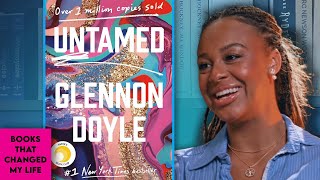
Nia Sioux talks about growing up on Dance Moms as often the only girl of color in her troupe, and how Glennon Doyle's Untamed, gifted by Chloe Lukasiak at 21, helped her set boundaries and write her memoir Bottom of the Pyramid. She reflects on people-pleasing, identity, and reframing pain as growth.
Questions this video answers
From about 9 to about 16 years old.
She started the process in her junior year of college; the book took almost three years by release.
Chloe Lukasiak gifted Nia Untamed for her 21st birthday.
Chapters
This time on books that changed my life.
Pain is not tragic. Pain is magic. Suffering is tragic. Suffering is what happens when we avoid pain and consequently miss our becoming. I resonate with that.
This book is kind of a shift in perspective, for sure. Permission to write your own story.
I was on a show called dance moms. From 9 to basically like 16 years old. I endured a lot of pain, like physically, mentally.
You really gave a piece of your soul riding bottom of the pyramid.
Y, being young, being on a reality show in the public eye, the only girl of color really in her dance troupe. Majority of the seasons I've had people tell me, like, it was really hard for them to watch certain things that happened to me. Some of those things that I lived through were hard. But all those challenges made me who I am today. It made me stronger, it made me work harder.
And it didn't kill you.
It made me want it more.
So big question. How did Untamed by gorgeous Glennon Doyle changed your life?
It changed my life because it got me.
To.
Welcome to the Syndicate X Library, where we love books, especially books that have changed lives. We're joined by a very special guest today. She's been entertaining since she was nine years old. She starred in movies, documentaries, and even published a children's book. Today I Dance. Her latest book, Bottom of the Pyramid, is out. Now she's here to talk about the book that's changed her life. Untamed by Glennon Doyle.
Please welcome to the show. Nia Su.
Did you give a piece of your soul writing this?
Oh, my gosh. Yeah.
It's harder than everybody thinks, right?
Yes, it really is. And there's so much that has happened in my lifetime. I'm only 24 years old, but I feel like I've lived. Like.
Yeah, you kind of commenting that you, you seem like you're like an old soul.
Oh, yeah, I do think I'm kind of like an old soul for sure. Like, like, yes, I'm young, but I, I feel like I've always just kind of felt like an old soul. Not necessarily like, or like, I guess mature, but not always like in a rush to grow up. I don't know.
It's kind of the perfect balance.
Yeah, it's kind of like the perfect balance. I think I get it from my mom and my nana. They're just like very wise people. But, yeah, so the creation of the book was a lot of fun, but also, again, like, heart wrenching at times because I had to figure out what parts I wanted to keep in the book. And what parts I wanted to take out. And what parts?
What parts did you take out?
Oh, my gosh. What parts did I take out? Some stuff that, like, I felt like wasn't as significant. Or maybe for a part two, one day, I feel like I could write so many books about my life, which is interesting. Like, yes, that's a piece of it. But I feel like I can still write so much more.
Was there a part that you cut out that you didn't want to cut out?
Not necessarily. No, not necessarily. I think that, like, this book is very cohesive, and it flows really well.
I spent a lot of time kind of, like, going back to certain moments. So I was on a show called Dance moms for, like, seven years, from nine to basically, like, 16 years old. And I.
A lot of those experiences or, like, how I felt during that show run. A lot of those feelings are in this book.
Pretty vulnerable.
Yes. So it's pretty vulnerable. I talk about things that happened on the show, but then also off of the show as well. And just, like, where I was at at the time. Because, again, I was a child growing up in the public eye, and now I'm an adult. And now I'm looking back at these experiences with a different lens, like, with an adult point of view. So it's kind of going back and forth between how I felt then, how I feel about things now.
And just kind of like diving into all of it, like, the mess, the pretty. The pretty side, the dark side, everything.
Was it your idea to write it, or did they approach you?
No, it was my idea. I'm sure a lot of people did not want me to write.
Really?
Yes.
Is there stuff in there that people are going to be like.
I'm sure. I'm sure. Yeah.
Not because.
Did you send them all a copy before it came out?
Not really. I mean, I've had great support with the book, but I also know that there's gonna be some people that are not going to love it. But that's not necessarily because such is life, right? Such is life. It's not necessarily because it's your book. Yeah, it's my book. I'm not. I'm not really, like, a confrontational person. I don't like drama. I don't. I. I'm not trying to say things, to paint people, like, in a negative light. That's, like, not my agenda. I just wanted to tell my side of the story and, like, how I felt when certain things happened and to bring light to my story. Because on the show, I was on for a majority of the show. One, I was the only black girl for a majority of the showrun.
But not only that, like, little white girls could dance.
Yeah.
There was like, a show. Yeah.
Which is. Honestly. That's amazing. Yeah. So there was like a group of us. I feel like you'd be a great dancer. No, no. Okay. I'll take your word for it.
I mean, you know, you have to put work into it.
Yeah, for sure. But yeah. So I've had, like, a lot of experiences during this show that I felt like I. To share.
Being young, being on a reality show.
In the public eye, being the only girl of color, really, in her dance troupe majority of the seasons. There's so many layers to it. There's just. There's so much to it where I want to dive in that I dove into. And back to my point, some people, they're gonna be annoyed about some things I bring up, but at the end of the day, it's my truth.
Who's going to be the most annoyed? Read. I mean, chapter to us. Just open up to that part and read that excerpt for us.
It's. It's throughout the whole book, if I'm being honest.
Your favorite.
I can't do it. I can't do it. I can't do it. Because honestly, it's. It's throughout the book. It's throughout the book.
When I read the book, I'll be like, oh, yeah, that was probably.
Yeah, yeah, I think. I think you're going to be like, oh, I see a pattern.
How long did it take you to write it?
I started the process my. My junior year of college. So by the time it's like, officially out, like, almost three years.
Three years. What was your process for writing? Did you have, like a time set aside and a place you would go write?
Not really. I didn't really have, like, a place I would go to write. A lot of the times I would write, like, in my bed. I'd bring my laptop into my. Into my bed and I'd write in the morning or like at night before I go to bed. Because also, I'm just like a really busy person. And also.
Because of school. I was also writing sometimes while I was still in college. So I didn't have, like.
I should have been paying attention in class.
Exactly, exactly. So I had a lot of stuff to do during this time. So I think that's part of the reason why it took so long. And also, too, I wanted to take my time with it because I knew that, like, I Kind of have one shot to kind of get this right, get this how I feel. You know, I was very cautious about the wording of everything. Cause, you know, I dive into some, like, serious topics and I wanted to make sure that I articulate everything the way I really want it to be. I don't want anything to kind of get twisted or lost. Yeah, yeah.
That's the. That's the right way to do it.
Yeah, of course. Yeah.
How do you feel in this moment right now before it's released?
I'm very excited. I'm ready for. I'm really ready for people to read it. I think it's gonna resonate with a lot of people. Honestly. I've had some. I've had such an amazing fan base over the years, and I've always gotten so many questions about my experience on the show and, like, how I felt about certain things. So now that I actually have this platform to share my experiences, share my journey, it feels like a full circle moment. And I know people have been, like, waiting for this, even if they didn't know was happening for a while. Like, they've been waiting for me to kind of like, say something.
Because mom read it.
Yes, my mom has read it.
What did she say?
She loves it. I mean, she's so proud. Both of my parents have read it. They're. They're super proud.
No, it's a big deal. Congratulations.
Thank you.
Not too many people can do that.
Thanks.
It's hard.
Yeah, it is. Yeah. I knew it wasn't going to be an easy process, but it's been so rewarding already and hasn't even, like, come out yet.
Do you have thoughts about what the next one will be?
I'm not sure. I definitely want to write again in the future. I just don't know if I want it to be a novel. I don't know if I want to do maybe a self help book because I talk a lot about overcome obstacles and to persevere and just keeping your head up even when you're being knocked down. So I don't exactly know which way I want to go, but definitely more to come eventually.
Yeah. When you have the idea you'll have it.
Yeah.
You could do a self help novel.
True. Honestly. Yeah. Yeah. There's so many ways to kind of like blend it together and. Yeah.
Publishers don't like that though.
I'm sure they don't.
They want the straight, easy.
Right, right. But something different can always shake things up too.
Yeah. So you. You grow up in Pittsburgh.
Yeah.
And how do you. How do you end up being. Is it competitive dance?
Is that what you would call it?
Your mom? Clearly, the show is driven by moms, right?
Yes, it is. Yeah. My mom, technically was, like, the voice of reason on the show. Like, again, she doesn't necessarily like drama.
But, like, from what age were you dancing on the table as a family holiday?
I was 2 when I started dance classes. But, like, my whole life, I've always loved a stage. Always loved to perform, always loved a stage. My dad would go to events, always the time. And sometimes when we'd go to events with him and he'd, like, do a speech or accept an award or something, and I'd always want to go up on stage with him and, like, want to take the mic and want to say something, but always. What did that do? That's a great question. Does anyone really know what their dad does for work?
LeBron James's kids know what their dad does for work.
He wore a suit, went downtown every day. I'm joking. I know what he did. He worked at a nonprofit in Pittsburgh for a long time.
She had to raise money.
Yes, exactly.
So the speeches were to move people to support.
Exactly. Yeah. Yeah. So he would raise money for. It was the Hill District in Pittsburgh. It was called the Hill House. When I was younger, he worked there, and then now. And then he worked for an insurance company, but now he actually has his own nonprofit now that basically, like, I think it's through CMU as well, or they partner with cmu, but they help black people in Pittsburgh, or just, like, it doesn't have. They don't have to be black, but, like, just people in Pittsburgh in general, like, get executive leadership roles because it's really hard. You see that there's, like, a disparity between the rate that black people, like, make money and then their counterparts. So he's kind of, like, bridging that gap, and he has, like, a program, and it's really awesome. It's really cool. I love what he does. He helps a lot of people, and I feel like I get that side from him a lot, like philanthropy and just, like, kind of being a leader and helping people in, like, any way that they can. Like, that man is always, like, on the phone with someone, like, trying to help them out with something. Yeah, he's that kind of guy where people are like, evan, like, I have this event happening, and I really would love your help. And he's that guy. He's like, yes. I got you.
That's great. What is the recipe to Bridging that gap.
A lot of it, I think, has to do with, like, mentorship and meeting the right people and being in the right rooms. So getting people to.
Maybe one, like, getting not just higher education, but like, a master's or whatever. They need to go to the next step, but then also connecting people with the right people. Because it's hard. It's. It's. It's hard. It's a network.
Yeah. And then I guess maybe in a sense, they. They see an example.
Exactly. Yeah. Yeah. So people basically passing on a torch and people helping and lift. Lifting each up. Oh, my gosh. And lifting each other up. Yeah.
That's great. So what does mom do?
My mom. So she was an educator when I was younger.
What grade?
Oh, my gosh. She did a lot. She. She was actually my principal for a long time.
Did you get in trouble?
No, I didn't get in trouble. I think my older brother may have gotten in trouble once, but I didn't get in trouble.
Oh, that would be your worst nightmare. His. Go to the principal's office.
It really would. It really would be my worst nightmare. You do not want to be on Dr. Holly's bad side.
It's so funny. You've called your dad by his first name.
Yeah.
Your mom's Dr. Holly.
Yes. Yeah. You don't.
Yeah. No, no, you do. Yeah. No, because she will set the record straight. Okay. She's not afraid to tell you she's from the Bronx. Okay. So she was the principal of elementary school and middle school for a while in Pittsburgh, and then even that. I think she taught, like, history, English, social studies, that sort of thing. But, yeah, she's.
She's going to heaven, for sure. Anybody that will.
She's amazing. She's amazing. Yeah, she's a. Like, she's a great teacher. Because when I was homeschooled, seventh and eighth grade, she was, like, my humanities teacher, and she's. She's great.
Wait, were you homeschooled because you were on a TV show?
Exactly. Yeah.
Yeah. Because you seem like you probably would have preferred the social side of.
I loved school.
Yeah. Yeah, you probably were pretty popular.
Well, I don't know if I was really popular. High school is when I really started making friends. But I wouldn't say the same for, like, elementary school. Really? Not really. I mean, my mom was the principal. I don't think people really scared maybe. I don't know.
Tell me what's going on in your life when this book comes into play.
Yeah. I was 21 when I first got introduced to the book. One of my good friends, Chloe Lukasiak, actually gifted it to me for my 21st birthday. And then she wrote, like, a little note in it, and she was like, this book. I think, like, she loves that book and it changed her life and, like, her perspective. Perspective on things. So she gave it to me because.
What do you think she.
I think because she's gone through a lot, and she knows that I've gone through a lot. We have similar journeys and the place that we were at in our life at this point, we were both living in la and we're in college and just trying to kind of, like, figure things out. Yeah, I think that's kind of like the place. I feel like that's how you always just feel in your 20s. Just like you're figuring stuff out and you're sometimes scared of being perfect all the time. And as someone who's like, a people pleaser, I struggle with trying to be perfect all the time, which I've been doing a better job of not doing that. But I still, like. I'm still that person. So I think she probably kind of sensed that in me. And we're very similar in a lot of ways.
Is there an element of being competitive, too, that feeds into that?
Maybe. Maybe it's competitiveness. I think for me, like, I'm just very competitive with myself. So, like, if I achieve something, I'm like, okay, well, I can do more now. Like, once I achieve something, I'm like, okay, what can I do now? Like, I always, like, set the bar a little higher after, like, each.
I mean, that's. That's pretty healthy, isn't it?
Yeah, it is. Yeah. So, nothing. Nothing.
So what is it you're trying to figure out at 21?
I don't know.
You don't know?
No, I don't.
What do you think you're gonna do with your life at 21?
That's the thing. Like, I. I don't know. At 21, I feel like I see so many opportunities and there's so much I want to do. But you can't necessarily do it all at the same time, because I act, you know, I'm a dancer. I sing as well. I wrote a book, I've directed, I've produced. So, like, I have, like, my hand in, like, a. I was a college student, so, like, I have, like, my hands on a lot of different things. So it's kind of hard to kind of, like, stay focused and also just kind of prioritize yourself and make sure that what you're doing is your vision and no one's. You're not doing something to please someone else or to. I guess, because this book.
Somebody else's life.
Yeah, yeah. You just want to make sure that you have your priorities straight. And as you're taking on all these new avenues, like, yes, there are things that are interesting, but I guess that's part of being. You're in your 20s as well. Like, you try different things and see if they're for you and if you. If you like them. Yeah, yeah. Like, just kind of, like, figuring things out in that way where it's like, trying new things, maybe seeing if that's for you or if it's not for you.
Yeah. A lot of people don't approach it that way. Like, they put too much pressure on themselves.
Yeah, for sure. Absolutely. And, I mean, the whole point of Untamed is, like, to figure out who you were before the world told you who you were supposed to be. That that person inside is like, what do you want to do? And not, like, have these other pressures of the world telling you what you should be doing. You know what I mean?
Yeah. You know what's funny is this has never happened before, but, you know, the guest earlier today did the same book.
Oh, my gosh. Wait, today? Oh, I didn't realize that that was today. Wow. Are you tired of talking about it?
No.
Okay, good.
No, not at all.
Okay, good.
But it. That's never happened. We've had the same book, you know, before, but never in the same day.
It's really impactful book. I remember after I was done reading it, there was a shift, like, my mind. Like, I. I felt it. Like something clicked a little bit more, you know, when people. People have been telling me recently that when you're 25, you feel like your frontal lobe develop and not. My frontal lobe has not technically developed yet, but I feel like I got closer after that.
It expanded a little.
Yeah, it expanded for sure. For sure. Yeah.
So. So she gives it to you for your 21st birthday, writes you a note.
Mm.
And then how long until you start reading it?
I think I started reading it, like, immediately.
And how long did it take you to finish it?
I don't remember. It didn't take long. It didn't take long? Yeah. Yeah. Probably like, a couple weeks.
Do you remember the first thing that, like, clicked, where you're like, oh, this is good.
I. It's been so long since I read it, but I think it was just, like, her writing and how honest she was. She talks about a lot of different things. And the thing is, like, I'm not like Glennon Doyle in, like the slightest bit. Like, we're very different people. But her, her journey and the way she talks about her journey makes me feel really connected to it and makes me see, like, similarities in kind of like how. How our brains work. I feel more than like our human. Just human. Yeah, just being human and like, very unfiltered. Very unfiltered.
Yeah. Okay, let's. Let's go through some of them.
Okay, let's do it.
So grab the, the first tab there.
Okay.
And then read it. And then. So it should be page six. Did you, by the way, quick question. Did you read your. Your Audible book for this?
I did.
Oh, that's so great.
Yeah, I did.
That was really cool, actually. Yeah.
Oh, it's so much better when it's the author.
Yeah. It felt so good to read it, like, out.
Did it change your relationship with it?
For sure. It always felt like my story, but after reading it out loud, like the whole thing, front to back credits and everything. Wow. I'm like, that's there. There's a lot of stuff here. Here, girl. Like.
Even as I was reading it, like, I would get emotional. Like, there are parts where I was starting to kind of get choked up because I was like, wow. Like, it's so powerful. But I'm like, it's literally me. Like, it's crazy. It's a very surreal experience to kind of do that. And then because also you're. You're listening to yourself while you're recording it. So if you actually hear my voice while I'm saying it, it's very.
It's very interesting. Yeah. Yeah.
So now you're gonna, you're gonna be Doyle.
Okay, I'll try my best. Okay. I looked hard at my faith, my friendships, my work, my sexuality, my entire life, and asked how much of this was my idea? Do I truly want any of this? Or is this what I was conditioned to want? Which of my beliefs are of my own creation, in which were programmed into me? Yeah, I think that's. Because that's literally page six. And I feel like that quote kind of like really sets this book up because I had no idea what this kind of book was going to be. And although, yes, it's her story, but it is like a self help book as well. I think it kind of. I think it's both. Honestly. I feel like a lot of the times, especially at 21, I had not really thought about. I haven't really, I hadn't really thought about like my faith, friendships, work, even sexuality, like any of those aspects as being something that like someone told me I had to do. Like I hadn't realized, like, oh, well, let me make sure that all of these things are truly me and not someone just like forcing certain beliefs or traditions or whatever onto me. So yeah, I think that was kind of like the first time where I realized, wow, I actually don't have to, I don't have to do what everyone else is doing and I don't have to like conform to.
Yeah, I think she calls them cages, right?
Yeah, I think so, yeah. Because it's called like untamed. So. Yeah, yeah, yeah.
So what were there specific things that came to mind when you, when you were reading that that was like, oh, maybe those beliefs aren't really mine.
I've always been very in tuned with who I am and like my identity, but I think I just learned a lot about not.
Putting that pressure on myself to know everything.
All at once. Kind of giving myself that freedom to explore, explore and just like not have everything figured out. I think that was like another thing. Especially because I went to school and for me, I didn't necessarily have to go to college for what I want to do. I did, I did not have to go to college. Of course my parents wanted me to go, but it was a personal choice of mine that I felt like I wanted to do. And even making that choice was very nerve wracking for me because in my head I was like, if I go to college, am I going to stunt my growth in other areas like my career? Because I had been acting, I had been doing some public speaking, I had been like, I had been doing a lot of stuff within the entertainment industry and I'm like, am I going to slow down my momentum and is that something I want to do? So I guess like having that, you're just like not sure that this is the right decision. Like it feels like the right decision, but you don't know it's the right decision until you kind of like follow through with it. And I can say now that yes, that's like the best decision I've ever made. But at the time, you know, when I'm surrounded by my peers and they're doing great things as well and you know, they didn't have to go to college, they're not paying tuition, they're getting to do all these other things which are amazing and you just realize like, okay, well, I didn't necessarily have to go down this route. But I'm happy I did. I learned so much about myself and I think I really needed it too. I needed that kind of normalcy in that space, in that environment to actually kind of like grow into myself and figure out what I really wanted to do as well. Because I always wanted to write a book about my journey on dance moms. But since going to college and learning really how to write, how to think critically, how, you know, I learned that I think writing is another path of mine. Not just for this book, but for other things as well, which I wasn't really thinking about before. Cause I think a lot of people, especially like in entertainment, a lot of people didn't understand why I went to college. A lot of them were like, yeah girl, like I don't know how or why you're really doing that, cause you don't need to. But it was a personal choice. And also it was, it made me just like a really well rounded person. And I figured out things that I really love to do, I think figured out things that I don't like to do. One of them is writing and another one is like even my relationship with dance. Like I figured out that I love dancing still. And like my relationship post dance moms has been very like kind of back and forth. It's kind of like ebbs and flows. But when I went to college, I realized, oh, I still love to dance, even if I'm not dancing on like a professional stage, you know. And having like that piece for myself was really nice. Sorry, that was like such a long winded answer. But like this connects with so many things for me. Just figuring out what really is for me and what's not. What choices are mine and what choices are other people's.
Okay, 12, page 12.
I picked up a red bottle from what was clearly my son's side. It was tall, rectangular, bulky. It yelled at me in bold red, white and blue letters. 3x bigger doesn't rob you of your dignity. Armor up in man scent. Drop kick dirt, then slam odor with a folding chair. I thought, what the hell? Is my son taking a shower or preparing for war in here? I picked up one of the girl's slim metallic pink bottles instead of barking marching orders at me. That bottle in cursive flowy font, whispered disconnected adjectives. Alluring, radiant, gentle, pure, illuminating, enticing, touchable, light, creamy. Not a verb to be found. Nothing to do here, just a list of things to be. I think that's speaks to a lot of different things. Honestly. I know that For a lot of, like, gendered items. Like, even when you're like, a little kid, like, a lot of the toys you see for girls are, like, cooking, cleaning, all those. And then for the boys, it's like, trucks or sharks or, like, you know, I guess some. And sometimes violence. Like, sometimes they have, like, little, like.
Army stuff. It's like, are you going to war like you're a child.
Yeah. I think that we. From these quotes, you kind of just take how the world works a little bit and you kind of see clearly these. These differences of these gender norms and these gender roles that even from a young age we have. We are told that we have. Have to be a certain way.
Yeah, there's a little bit too, of, like, on the female side, it's like the marketing, if you call that marketing, is like, to be seen but not heard.
Right.
With the boys, it's like, to be heard.
Yeah. To be heard, to be seen.
Folding chair.
Yeah, yeah, for sure. For sure. Definitely makes an impact. And I mean, even if you look at the writing like this, the boy part isn't bold. And then even when she talks, it's screaming. And then when you talk about the girl part, it's like, it's quiet, it's tame.
Yeah. It's funny. Let's go to 34.
Okay. I need an excuse to be there. So I ask, anybody hungry? What comes next seems to unfold in slow motion. Every single boy keeps his eyes on the TV and says yes. The girls are silent at first. Then each girl diverts her eyes from the television screen and scans the faces of the other girls. Each looks to a friend's face to discover if she herself is hungry. Yeah, I feel like this is very. I think this one is interesting because I feel like, as women, we do that a lot. It's like, well, are you hungry? Like, oh, like, I'll be hungry if you're hungry. Or, like, I'll eat if you're. It's. We're always thinking about other people's feelings and how they feel. And for me, personally, I kind of put other people's, like, needs above mine working on that. But I do. It's just naturally who I am when I'm with, like, friends, family, I'm like, I just want. I want them to be happy. Or. I mean, maybe you're conditioned like that. And I think for me, growing up in a. In a space where I was, like, always trying to, like, teach. Please. One person in particular, which was, like, my dance teacher, because she was really hard on us. Anyway, that's. There's a lot of that in the book, but I feel like I was always seeking validation or even doing anything to kind of, like, make any, like, people happy, you know? And I feel like this quote can kind of. I can kind of relate to it in a way where it's like, oh, like, I don't have to be hungry if, like, other people aren't hungry. I can just. I can keep playing or, like, I can keep doing whatever I'm doing. Yeah.
Yeah. It's funny, too. You know what I thought of when you were reading that is how many times I've been at dinner and all the women go to the bathroom together.
Yeah.
Like, I always want to go and see what's going on, because it's not like, do you have to go? Do you have to go? They're just like, right, I'm going to the bath. And then they all just stand up and leave.
Yes.
What are they doing in there for, like, why? Guys don't do that.
Yeah, guys don't do that.
I would feel so weird to, like, take a pack of guys to the bathroom. I just want to get back.
Yeah.
It's not an event. It's kind of like, my parents live in the country, and whenever I'm there, it's like, you know, we're going into town. Like, you ask the neighbors, like, we're going into town. It's an event.
Yeah.
You want us to get you something at the store? Yes.
It's an exciting experience. It's. It's.
It's what's going on in there.
You know, it's kind of like, part of girlhood in a way. And that's one thing where it's like, you're not really taught that, but, like, for some reason, it's just. Yeah, because also, I feel like a lot of the times it's kind of like your checkup session with the girls. You know, sometimes the ladies will go together because it's like. Like, girl, I'm like, I'm not feeling well. Or it's like, you, like, do you have X, Y, and Z? Do you. Are you feeling this dinner? Like, I don't know. It's kind of like maybe like a wellness check or like a check in almost, and sometimes moral support. I don't know.
Yeah, but, like, if I was at dinner and wasn't feeling it, I would just, like, figure out how to get out of there. Like, I wouldn't. I wouldn't. I wouldn't look for validation.
Right. And I guess we Definitely do. Yeah. It's like. Well, it's like. Did you catch that? Maybe. I don't know.
It's more tribal.
Yes, for sure. For sure.
How about 52?
Pain is not tragic. Pain is magic. Suffering is tragic. Suffering is what happens when we avoid pain and consequently miss our becoming. I think that's really good. I agree. And I think, like, this resonates a lot with me. Related in relation to my book as well, or just like, my life story, because I endured a lot of pain, like, physically, mentally, during those periods in my life. And I know a lot of people are like, that's, like, that's so sad. That's so tragic. I've had people tell me, like, it was really hard for them to watch certain things that happen to me at certain points, which, yes, some of those things that I lived through were hard, really challenging, and were painful and hurtful, you know, But I also believe at the same time that all those challenges made me who I am today. And without some of those challenges, I wouldn't have been able to, like, learn the lessons I learned. And I've grown so much, and so, like, pain is not tragic. I resonate with that. Like, pain doesn't have to be tragic, but suffering is, because you don't have to. Even if things are painful, you don't always have to, like, suffer through it. Through it all the way. It's kind of like reframing your. Your brain to take certain moments in your life where you feel defeated and. And turn it into a positive. It's like what you make. I mean, people say, like, you know, like, you make lemonade out of lemons. You know, you have what you have, and you make the most of what you have. And that's definitely my experience. I felt like I made the most of what I had, even though some of those things were painful.
I mean, in a sense, this book is kind of a shift in perspective.
Yes. Yeah, for sure.
And permission to write your own story.
Yes, exactly.
Because you can. You can see it as suffering, but in a lot of situations, not all situations, not yet, but in a lot, it is a choice.
Yeah, of course. And I think it's good to kind of, like, reframe things in that way, because you miss out. I mean, if everyone was happy and won everything all the time and got everything they wanted all the time, they miss out on the whole journey. They miss out on all those steps, all those lessons.
Well, also, the wins don't mean as much.
Exactly. You have never lost.
You gotta lose to really appreciate A win.
Exactly, exactly. And that's been my story. I mean, I've won in a lot of different ways, but growing up and not really like winning at dance competitions a lot or getting as many opportunities as other people, like, it is sometimes painful and it hurts, but also at the same time, it made me stronger, it made me work harder, it made me think more critically, it made me want it more.
In that process, you probably knew yourself better too.
Absolutely.
Because you learn a lot about yourself when you go to war.
Yes, exactly. Yeah, yeah. Learned a lot about myself. Even if some of those thoughts didn't fully form or like, if I didn't quite understand them back then, I still had kind of like this underlying, like, knowing of like, who I was and this understanding of me.
Do you have any sense of where you got your positive outlook? Like, was it something your parents did or.
I think it's really my parents, yeah. They both have just been through a lot. You know, my grandparents, I come from a family of really amazing people who have done extraordinary things. Having them kind of just like always remind me. I mean, my name is Nia, and in Swahili it means purpose. Like, my parents would always remind me that you have purpose. And anytime I would feel down, my parents would always lift me up and tell me to look at things like the bright side of things, or if there was something that I, you know, if I. If I was in the wrong or if something happened where other people have hurt me. You know, they tell me to either one, brush it off if it's not. If it's something that's like, little. But in other cases when these issues are large, they tell it to me how it is and we work through it together and we figure out a way to combat this issue. They've always been the people to tell me, like, don't back down from a fight. I think I've always just taken that with me. I feel like, yeah, like I'm a very optimistic person. I really am. And for how many times I've been like, beaten down or like people have truly tried to bring me down and have like, tried to dim my light, I keep coming back. And even if that light gets dim and it has, it's gotten dim, it's gotten non existent. But at the same time, I've had people in my life lift me back up. And just also for myself, I've taken the time because I wanted to get back to the place where I'm my optimistic self again.
Sounds like I've always had a finding even Ground.
Yeah, exactly. It's gonna be different in different phases of your life. And in this phase of my life, I'm very happy, I'm very confident, I'm very optimistic and positive. But I think it's also because I've seen everything that I've gone through, and every single time, I've conquered it. Every single time I've gotten over that hump. And it didn't kill you, and it didn't kill me, and I've been okay.
Something, even if it didn't go the way.
Yeah. It's like all this stuff happened, but I can. I still have been able to come out whole and like this.
So in a sense, you've seen that seeing the positive thing or reframing the positive thing works, and so you've patterned that.
Yeah.
And it's become a habit. It's become a habit or like your natural default setting.
Yeah, of course. And I think also just most people don't. I know. Yeah, I know. It's like not the north.
Sit in it.
Yeah, yeah. It's the.
The suffering. Right.
Yeah. And. And that was.
Like, some people, the suffering is home.
Yes.
Don't you have friends like that?
Yeah. Even for me, I do think some. We all have a little bit of that in us. I do. I mean, sometimes I do complain. Sometimes I'm like, oh, but at the end of the day, I'm still going to get back up and I'm going to do it again. I'm going to try it again and I'm going to keep.
No, I'm. I'm referencing. Like, that's the default.
Oh, like the default.
Like, that feels like home to some people.
It does. It does feel like home to some people. But I think that's another reason why I try to kind of, like, share my optimism and positivity with everyone else, because I want everyone to kind of feel this way. You know, I want everyone to. To feel confident and comfortable and happy in their own skin. And I know for, like, this book because there are parts that are really heavy. I didn't want it to be a sob story. That was like, the last thing I wanted it to be. But, like, it easily could have been a sob story and be like, feel bad for me. This happened to me, and I'm hurt. It's like, okay, all those things are important, and that's part of my story. And that's. And I want to get that out. But at the same time, I don't want people to think that, like, you can't come Back up from that. That just because that happened to you, it defines you for the rest of your life. Like, it doesn't. And life does move on and life does get better, and you are in control of your future and in your path and the way you react to things and what you exude into the world. You know, like, you're in charge of yourself. You know, you can't control what other people do, but you can control what you do.
And to the point where you can control your attitude.
Exactly.
Your thoughts, like.
Exactly. And I mean, we're all human, so.
Yeah, but.
But, yeah, but you. You can control all of that.
You can control how you show up to a situation.
Exactly. I mean, and I'm gonna get way more out of it if I turn these experiences into a positive instead of, like, harping on it all the time or not even harping on it. Just like, if. If you let that take over your life, it's very draining.
So one thing she talks about in the book, and I'm curious because you're a people pleaser, or you describe yourself as a people pleaser. She talks in there quite a bit about prioritizing yourself. And even to the point, like, if you're not disappointing other people, you're not doing it right, basically. In a sense, being a people pleaser, do you think, well, there's two kinds of people pleasers. There's the ones that just are okay with the idea that their gift is to take care of others. And in a sense, it's like a leadership position.
Yeah.
And then there's other people that see being a people pleaser as being subservient.
Right? Yeah. Yeah.
What are your thoughts on. On that?
Well, I think. I think it's. I think it's a little bit of both for me. I think just like, as women, we are just kind of, again, conditioned to people please and to make others happy and to find solutions to everyone's problems and to do all of that. But also I know that, like, just for myself, I am just that way. Like, I like to help people. And sometimes it's hard to, like, differentiate the two because they are different. They are different. And I think more now what I'm working towards is to make sure that when I'm trying to go out of my way and do something for someone that maybe isn't the easiest for me, but I still do it. I still bend in half to try and make something work. I don't think that that's like, an awful trait to have. I think you just Kind of have to make it work for you and learn what's too much and what's. You know, you have to have those boundaries. And that's something that I'm, like, literally still working on today, like, to this day. Because as a people pleaser, I don't think you're ever not going to be one. Because I just. I don't like seeing people in pain or, like, I don't, like, if I know I can help someone. Like, I want. I want to help that person, you know, especially if it's someone I love. But I do recognize that, like, there is.
That. There is that difference. But I think it can be a superpower, too, I guess, maybe.
Yeah. No, like, yeah, it's magic.
Yeah.
Like, it could be your magic. So how do you rationalize or work through the boundary part? And let me just kind of set it up a little bit is so you could invest in somebody, and let's just say that person is just generally bad. Like, let's say you have a habit of dating people.
Yeah.
Because you're gonna fix them. But they don't want to be fixed.
They don't want to be fixed. Yeah.
So that can be a. That can be a bad.
Yeah. And then you have to learn, like, okay, boundaries. And you have to kind of.
Let's not recruit fixer uppers.
Yes.
Let's fix somebody who shares my same sensibility. So that would be a healthy.
Yeah.
Boundary.
For sure. For sure. Yeah.
But then there's also the people that say, oh, I'm. I'm a people pleaser. I give, I give, I give. But what they really mean is it's a ransom note, and they're giving is with an expectation.
Right.
That isn't met on the other end. So, like, oh, I've given so much. And then I text you, and you don't text me right back, and it's like, well, I was working, like. Like, hold on. I appreciate what you did, but I didn't know that I was supposed to stand with my phone and immediately.
Yeah, for sure.
You know what I mean? It's like a ransom.
Yeah.
It's like, no, really, I'm giving this because I want to control you.
Right? Yeah, in a sense.
And so that comes in all kinds of different.
Right. Because you're trying to, like, get control over. It's. It's sometimes a control thing.
Yeah. So, like, people like, oh, I always. I'm such a good friend. I always get taken. And you're like, okay, you're keeping square yours. Your ideal Friendship is trading.
Yeah.
And so you give something, but there was never any sort of conversation that it came with hooks.
Yeah. And at the same time, more friendships should be both ways. But like any kind of relationships. Yes, it should be like, it should be coming from, like, two people, like the same. But also it's not going to be that way all the time because we're human.
When. Also a good friend doesn't keep score.
And also a good friend does not keep score. Does not keep score. I'm definitely more like the first one. So, you know, not like in that scenario. Okay. Like, not the scenario with the guy thing, but I'm more of.
Tried to save them, like, fix them.
What?
Like in dating. Like, dating.
I don't think I've dated enough people to answer that question.
You don't have time to date?
I've dated. I have dated. But I feel like, like in this phase of my life, I cannot do that right now.
No time.
No time, no time. And like, with. With so much happening, like, all of my energy has been. Which has been so nice, kind of like just on me and having these moments where I can just take care of myself and that's. I'm trying. Trying to people please myself now and trying to take better care of myself because the only way I can.
High bar. I know you're high maintenance.
I know.
I'm pleasing yourself.
The only way. What I'm learning, what I'm learning from my therapist has been I can't really take care of other people until I, like, actually take care of myself. Like, I can't pour into people if I have. If I have nothing, you know? And so I'm trying to, like, go off of that.
I'm curious how that works out.
No, yeah, it's actually. It's been working out better. It's been good. It's been good. I've been taking more time for myself in, like, you know, evenings, mornings, having a little bit of time for myself. Even if it's just like waking up a little earlier to work out by myself. Waking up a little earlier so I can have a few minutes to read and drink my tea before I start my day. It's little things like that that actually do add up and make an impact on my day where I feel like I can actually pour into other people because I've given that time and space for myself.
Yeah. It makes you more creative too, right?
It does. Yes, absolutely. Absolutely.
What do you think about the love yourself thing?
The love myself thing?
Do you think you need to love Yourself.
I, I do love myself. Yeah. Wait, what do you mean by love yourself?
I just, people are always like, oh, I'm just trying to. I'm working on loving myself. And I'm not. I always like think that's like too high of a bar.
Yeah.
Like then you're gonna break up with yourself. No, I think just like yourself. Root cause.
No, I think, I think it is good to love yourself. I am that kind of person.
You know, I don't think I love love myself. I'm. I like myself.
I feel like you should. I think you should like and love yourself.
I feel like love is too high of a bar for yourself. Yeah. I need to be more self critical.
Like I, like I can still love, I can still love myself and have tough love for myself.
Well, yeah, I agree with that.
Yeah.
Cuz the people that I love seems like another. It seems easier in the middle than.
Yeah, but that's why it's easy. We strive. You see how I am? I'm always striving. Like I'm just.
That's great.
I'm an overachiever. Loki.
Yeah. Like I'm still learning too, but I've just found that and too like when I've done workshops and I've said that a few times, like the whole room is like, oh, thank you. Like. Cause they're like so caught up in this idea that they gotta love themselves. And I'm like, just like yourself. Like, you're not. Nobody's so special.
Well, I do believe in that too. Like, oh, thank you.
Like, okay, yeah, like let's bring it down a little. We're not all so great lit.
I think it's, I think it's good to have to love yourself and to also realize that like. Okay, you're not that special too. That's good.
What's love?
What's love?
Does anyone know yourself? You gotta know what it is.
Okay. What love is to me is like taking care. Like, love is in my opinion more like an action or like a verb. Like you're taking care or like you. It's a lot about caring and making sure that you're okay. So when I say like I love myself, that just means that like I, like I, you know, I respect the way I feel. I respect even the way like I feel. Even if I'm feeling something weird or not that great or like being very in tuned with yourself and knowing kind of like what you need as well. Yeah.
But most people love is an external thing. Like they fall into love, they trip into like It's, I have a lot.
Of love in me for myself and other people.
Yeah. But I think that's a default setting too.
Yeah.
Like, yeah, it's like, it's empathy and like.
Yeah, it's, it's, it's a lot of that.
Yeah. Not, you know, being less judgmental and accepting people for who they are.
For who they are. Yeah. And I think that that's important. And I think like, no one's perfect. No one's perfect. But that doesn't mean that you can't love someone even if they're not that great of a person.
Made me care about them.
Care. But like, I still like. Yeah. Like, there's some people that I love, but I like, I love them, but I'm not necessarily like caring about like what they're doing in life, but like, I have love for them. I extend like that from afar.
Yeah. Like I have that crazy uncle.
Yeah. It's like, I, I love you.
Yeah. But let's not talk about that.
Yeah.
Yeah.
It's a great question though. Like, what is love? But I've been, I'm actually reading this.
Well, I think it's funny when people are like, love yourself. Then I'm like, what is love? And they're like, oh, well.
And then, well, loving yourself just isn't being like, it's good to be harder. I don't know, it's.
It's a balance for a lot of people like you. You kind of have a different disposition than most people.
Yeah.
But for a lot of people, it's like, they say this thing like, I'm just working on loving myself. And you're like.
Hold on, let's pull, let's just pull it down a little. Like, yeah, you're okay.
Yeah.
Like, you don't have to, like, let's just like, let's just talk about where we're at right now and let's make a plan with what we control.
Yeah.
And let's, let's manufacture some windows.
Yeah.
But it's a self esteem thing in a sense.
Yeah.
I think it's more important to have high self esteem.
Yeah.
To love yourself, to believe in yourself.
Don't they kind of go hand in hand though? No.
I don't know. Maybe I'm broken. I don't know. I just don't broke it. I don't feel, I don't feel any need to love myself. I like myself, but I don't think that I'm so great that. I mean, I admire other people way more than I admire Myself, I think that's common, though. Well, I think if I loved myself, it would, it would be the other way. Like, I'm still trying to learn.
Yeah. Yeah. I admire, like, I admire a lot of people and I look up to a lot of people who I feel like are doing like amazing things, who, like, there's always going to be someone better at something. Always.
Everybody is better at one thing, you know?
Yeah.
There's something they're good at.
Exactly. But I think like, that idea of like loving yourself is just like at the end of the day, like, no matter what happens, like, knowing that like, like liking yourself and loving yourself, I. I get it. But like, I get the difference. But also they, they do kind of go hand in hand. Like, I like myself, but I also, like, I really love the kind of like who I am as a person, you know, because I, I try my best to do my best.
Yeah, no, but I do. But like, you radiate that.
Yeah. But I get what you're saying, though.
I could describe it as really good parenting and self esteem also.
Yeah, maybe, Maybe. But yeah, I don't know.
So you're not gonna buy my book? For the love of God, stop trying to love yourself.
I absolutely will.
Because it's good to have perspective on. On these things. Absolutely.
I just think a lot of people have. Have a. You know, they've been through some stuff, especially as kids, and then they're trying the. Everybody talks about loving yourself and they're trying to do this thing that it's too. It's too far.
Yeah.
Out and too un. Unexplainable. They don't understand what love is. They've never even been in a healthy relationship.
Yeah, but I think that's part of. I think that's of part. That's part of just.
Well, that's another thing. Okay. What you're gonna say. But I think you have to give love to get love. And if you're just loving yourself, it makes you miserable.
Oh, yeah, for sure.
You have to give.
Yeah, I'm not. Yeah, for sure.
You're way better off giving. Like if you're like, there's that. Who was it? Great quote of. Basically, if you're miserable, drop everything and go volunteer helping other people. And it will instantly fix that.
Yeah, it helps. For sure. Absolutely.
So provide some value for others.
Yeah.
And in that you kind of learn about yourself, I think. But if you do. Just trying to please yourself. No, that's hard.
No, I feel like people just have to have more love in general.
Just More validation.
Yeah, just like, more love in general. Like, yes, for yourself, but then also for other people. And, like, I get, like, for me again, like, loving myself is like learning to know when something's, like, good for you and, like, when something's not good for you. Like, loving yourself is. You're bringing up about the point about being with, like, dating guys that, you know, you're trying to fix. Okay, well, I love myself enough to not get into a relationship like that because I know that that's not good for me. It's like having that.
Yeah, that's very healthy.
It's. Yeah. That's what I see as loving yourself. I'm not. I don't. Yeah. And I know you don't think this, but to make it very clear, I don't mean loving yourself in a way to, like, boost, like, your ego and, like, make you feel like you're better than everyone else. Because that's not the point of love. It's just love is meant to be shared as well. But just because you're. You feel like other people deserve to be loved doesn't mean that you don't also.
Deserve love. And also, if you're not in a relationship or if you're not dating or you don't have, like, a ton of friends that are, like, always, you know, giving you love, like, then who were you getting this love from? You need some kind of love. Gotta love yourself.
Just my personal experience is, like, if you don't have a lot of friends, you got to learn how to be a friend.
Okay, true.
And so if you don't have a lot of love, you got to start loving others.
Yeah.
But you won't love yourself into having good friends. Like, it's the other way around. You gotta give.
Depends. It depends. Because sometimes people don't love themselves enough. And that's really hard to be around when people, like, when people don't like and love themselves. That's. That's. That's a lot too.
Yeah. But I would contend that the thing that will help them the most is to have a friend.
Yes. But what if it's hard to get friends because they don't love themselves?
Yeah, you gotta give to get. That's what I'm saying. That's my perspective.
We. The point is we all need love.
For sure.
Yeah. Cause I've been through periods of my life where I. I don't. I didn't have that many friends. And it's not necessarily because of anything, really. Like, I was working so much of my childhood, and Then, like, I wasn't. Like, I wasn't. I didn't have a traditional childhood where I could have, like, a lot of friends at school. I was like, in this one environment where only I was here, you know?
So it's like when you don't have that, like, yes, I have my mom, but it's like you also need.
You kind of have to, like, build yourself up. And that's part of having that love for yourself. Like, I love myself enough where I'm gonna reach out to other people. I'm gonna do what I can for myself so that I can give to other people. But I know, like, love is so broad. It's so broad. And I get it. But. Yeah. Anyway, I forgot where we were going with this.
You gotta love yourself.
Gotta love yourself.
Yeah. Page 117.
Okay.
What does self love mean to you?
Self love means that I have a relationship with myself built on trust and loyalty. I trust myself to have my own back. So my allegiance is to the voice within. I'll abandon everyone else's expectations of me before I'll abandon myself. I'll disappoint everyone else before I'll disappoint myself. I'll forsake all others before I'll forsake myself. Me and myself, we are till death do us part.
I agree. Because it's like if you don't have your own back, if you don't trust yourself to make good choices for yourself, if you don't. If you don't have that trust. It's also. Yeah, it's also about trust. Love is a lot of different things. It's a lot of different things. And the thing is, like, as a people pleaser, like, I don't ever want to disappoint other people. But also at the same time, I know that if something's good for me and better for me and something that I like, I actually need. Sometimes it's okay to disappoint people. And having that love for myself, to not overextend or to not share my story. Like, I love myself too much to not share my story. I know there's a lot of people that I'm going to make mad with this book. I know that I'm probably going to lose friends over it. I'm probably like. I understand that. But I also like. I like. And if that's selfish, so be it. But I do think that because I love myself so much, I'm able to share my story where it's like, if I didn't love myself If I wasn't in tune with myself like that I'd be so scared of what other people would think and like try and like hold back. But.
Yeah. And I think if you just shift that to other parts of life is if you're not true to yourself and.
Yeah.
Truthful. You lose somebody. It's not somebody else's intentionally.
Yeah. And it's not intentionally hurting.
No. You know, being authentic to yourself.
Yeah. Yeah. And I think shifting it that way has helped me a lot where it's like maybe I've had a really long week, zero sleep, the brink of getting sick. You know what I mean? And you know, maybe it's like my friends are all hanging out and we had this date set. But like I'm genuinely like almost ill. It's like my friends will be upset if I cancel. Well, my friends probably wouldn't be. Cause they're good friends.
I understand.
But like, if I had to cancel because I'm physically almost ill, then I'm gonna have to do that. Like I'm going to do that because I, like, I love myself enough to give myself the space to heal before I go do that. Because if I go and do that, I'm gonna get. I'm actually probably going to get sick and then I'm not going to be a good time because I have no energy. Yeah. It's like reframing it. I think self love is truly reframing your perspective on things too.
Yeah.
To make things.
I mean, it's partially telling you. Right. And being authentic to who you are and.
Yeah, yeah, yeah.
So on 145, she talks about touch tree. Like your core belief.
Core belief is like, you have to. We should be kinder to one another. Or like, you know, it's again like the love thing.
Like, but especially today when everybody's so polarized.
Yeah. Like we just have to have.
We're human first.
We're human first.
We have more in common than we have differences.
Yeah. Yeah. And I think that's. That's a true, like a core belief of mine to have purpose and to be of service. It's a core belief of mine to always try and do the right thing. You know, try not to intentionally hurt other people.
Yeah.
Some core ones.
Those are great.
Yeah.
Okay. 254. Unless you find something that you want.
To read, there comes a point where we need to stop just pulling people out of the river. We need to go upstream and find out why they're falling in. Yeah, that's a good one.
Like I Think a lot of what we do is treating the symptoms, not the cause.
Yeah. Like, you gotta get to the core of it.
Yeah.
Like, we'd rather prescribe and monetize something and keep them on the medication, then, hey, you should stop eating that way and go for a walk every once in a while or. Yeah, I know that simplifies it, but I understand.
Yeah, for sure.
With our, you know, our investments in schools. Like, we don't prioritize school schools.
No.
And it's a completely different, you know, experience for kids in different areas that you live in and the like. And then those kids come out and feel disenchanted and then we treat them for anxiety and all this other stuff when, hey, maybe it was having two parents at home and investing more in schools with smaller class sizes, better after school programs.
Yeah, I agree. I think that a lot of times we're just retreating things, but not actually getting down to the core thing. Like you said. It's. I feel like that speaks to a lot of what's happening right now into. We're putting a band aid over things. But these, some of these systems are broken.
Yeah. And we use those symptoms to divide us and when we really want the same thing.
Yeah, for sure. So it's a powerful quote.
It's good.
So, big question. How did Untamed by Glennon Doyle change your life?
It changed my life because it got me to think critically. But, like, about when it comes to myself. I think of myself as a pretty critical thinker, but I think a lot of the times I kind of just.
Did what not. That sounds so, like, ridiculous, but like, not did what people told me to do, but like, just going with the motions because maybe everyone else is doing it. But it taught me how to kind of like, think critically for myself. And yes, to put myself first, taught me about self love. I think that's probably not the start of my self love journey. I started a long time ago, but it definitely helped me just think about what I truly needed and less about what other people would think of me. Yeah. And to also, like, the title's untamed, but yeah, like, to. To not hold yourself back, to kind of be whatever you you want to be. Like. I know that sounds so, like, cliche, but it's true. Like, I feel like a lot of the times, like, like for me, I always try to be like, put together my friends, like, they all think of me as like the strong put together friend. Like, so whenever I do have a time where I'm like, low key, losing It. They're always like, this is so, like, so unlike you. Like, this isn't really, like, part. But it's like it is. But it is me. It is me. I'm not always perfect. I'm not always put together. I'm messy. But I also am all those things. Like, I can. I can be all those things, and that's okay. I don't always have to be okay.
You don't always have to fit into a cage.
I don't always have to fit into a cage. Don't always have to fit into a box. I can make my own, My own path, my own. My own box. But I probably won't even make my own box because I'm just gonna step out of it.
Yeah, it's great. What advice would you give somebody younger on just how to be authentic and whatever, you know, definition someone have of success?
Yeah.
Not necessarily just money, but just.
Yeah.
Feeling successful.
Yeah, for sure. Like, one of my favorite, like, one of my kind of like, quotes that I tell people is, start in your own life. That's kind of like the subtitle to it. Starring in my own life. I think that it's really important for people to realize that, like, they. They are important. I think a lot of people don't think that they're important or just because they're not the lead in something or because they feel overshadowed or like the underdog, that.
They'Re not successful, that they're not capable of.
Doing amazing things. And it's not true. You have to stand in your light. And also, at the same time, you have the power to dictate your life. Like, no one gets to tell you how to live your life, even if they try to. At the end of the day, that is your job, and it's your journey. You have to start in your own life. Don't let someone else be the center of your life, because it's not their life. So no matter what you do, whatever you're going through, for me, a lot of our dances, I was in the back of the dance. And people are always trying to hide me, trying to dim my light, trying to tell me I'm not important. And you have to know that that's all just. You have to just know that all of that is just noise. And you have to stay true to yourself and understand that they don't get to. They don't get to decide what you do in your life. That's. That's meant for you.
What are your top five books? Is this number one?
I think that would be number one for me.
What would be two?
Number two. Token Black Girl by Danielle Prescod. Fabulous book. That's a memoir as well. I do love a memoir because I am a romance girly. I would say instructions for dancing. That's a Nicola Yoon book. I also love. It's called the Gunkle. I forgot who it's by though. I forgot who it's by. It's so good. I just love a fun little story. And a new favorite of mine is Emily Henry. I've read like four of her books now and the last one I read was Happy Plays and I'll put that one on the list right now. I'm definitely missing. I'm definitely missing some as well. But that's a really great book. Oh also Life in Motion by Misty Copeland. That's a. That's a memoir. Incredible. It's her journey is incredible.
Was great.
Amazing, super fun.
We are so excited to announce the books that change my life website. We made a way for you to show your book pride and that you love books. Hats t hoodies. Check it out. Link in the description. Everybody needs a self help hat.







