Gavin Rossdale on "Moon Palace" || Books That Changed My Life
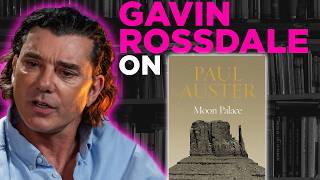
In this extended interview for the "Books That Changed My Life" series, host Chris Collins (referred to as Speaker B) talks with musician Gavin Rossdale about how Paul Auster's Moon Palace shaped his worldview and career. Rossdale reflects on his artistic influences—from painters Francis Bacon and Lucian Freud to musicians like Bowie and punk icons—highlighting a work‑aholic ethos inspired by their relentless studio routines. He shares a vivid passage from Moon Palace describing love as a force that can halt a fall, using it to illustrate his own understanding of love and mortality. The conversation turns to cynicism and societal violence, referencing historical anecdotes about electric chairs and a 19‑year‑old wrestler executed in Iran, underscoring his belief that morality is complex and not black‑and‑white. Rossdale delves into his creative process, emphasizing authenticity over chasing hits, recounting his record The Art of Survival and the importance of writing from personal experience. He describes live performance as "magic," likening the stage to a sacred space that creates a kinetic force field for the audience. Vulnerability surfaces as he admits a deep need for approval, especially from his father, and discusses mental‑health openness in his songwriting. The core of the interview is how Moon Palace helped him realize he was not alone in his struggles, prompting a personal turning point that led to forming Bush after shedding commercial ambitions. He outlines his current work on a new record and an extensive world tour, and concludes with a playful "F, Marry, Kill" game involving books, choosing Patti Smith’s Book of Days as the one‑night stand, Camus’s The Myth of Sisyphus as the marriage, and a handmade pop‑up book as the one to discard. Throughout, Rossdale’s tone oscillates between reflective, candid, and enthusiastic, revealing his philosophy on art, life, and perseverance.
Chapters
People push you to a point where you're just forced to stand up and represent yourself and become who you are.
It's like if you're not afraid of dying, then you can live.
Absolutely.
If you've looked death in the eyes.
Once you've experienced true malevolence, you're free.
How many moments like that have you had in your life?
You only need it one time. If somebody is really trying to take your life, you wake up different the next day.
Who was trying to take your life? So the big question, how did Moon Palace by Paul Auster change your life? I'm Chris Collins and you're watching Books That Changed My Life. Today we're joined by musician and book lover Gavin Rossdale, and he's here to talk about the book that changed his life, Moon Palace by Paul Auster.
What a fantastic place, Chris. Wow. Amazing. I love books. I love books too.
What's your library at home look like?
Nothing as spectacular as this. And I have, in London, I have a lot of books. Um, but I have a, I, I have a pretty nice library here, but I actually reflect on it all the time. I need to update it whenever I'm starting new songs, new records. I'm always, I stand in front of it. So there's a large bookcase and, um, scan many different things. Lots of, um, novelists, a lot of, um, kind of, um, poetry stuff and, uh, and trying to, interesting book, a lot of art books. I see you have a lot of art books. I, you know, love art books and a lot of cookery books. I like cookery books.
Oh, are you, are you a cook?
Yeah, I like to cook.
Oh, that's fun. So what, are you trying to surround yourself with inspiration?
Is that the goal?
Do you ever move them in and out?
Yeah, I move them in and around and around my bed as well. So I have sort of a stack of different things that I may read and different things I'm passing through and then things that I just keep wanting to finish. Usually Harari, Sapiens or whatever, I'll dip in certain books and then other books I'll reread. And I mean, And this was fantastic because I had a chance to dip back into that. And it's amazing, reading a book again is like— thank you— is like seeing another movie you've seen before because you see different angles and you see different things.
Yeah, I would imagine. So we're here to talk about Moon Palace by Paul Auster.
Yeah.
And I would imagine that this book would have a completely different meaning when you were younger than it would now. And it would have two lives, basically. Is that accurate?
It's extremely accurate. And it was funny because it was so poignant to pick it. And the question was asked, like, when did you get this in your life? And I realized that it was such a pivotal, important time in my life, just before I had any degree of success while I was still majorly struggling as such, you know? And reading that story just It just gave me something to identify with, something to hold on to. And the way that he writes, I think he's my favorite author.
Some of the writing and some of the quotes in here is just incredible.
Yeah, he's— you know, at that point I was really trying to get going as a writer myself, you know, of songs, but you know, the words have to be just as good. And his way that he writes and the way that so much ground is covered in the shortest time. Someone with attention span like mine, that just, he just, even when I'm reading, you know, rereading these last few days, I was mesmerized. I was annoyed I had to work because I sort of would sit in the morning and start reading it and be like, I gotta go, but this is just amazing. And I began to dip in and out of it and I thought, no, I don't want to do that. So I went back to the beginning. And so I read the passage about being an insufferable 18-year-old and like, it just, there's just so many parallels that I didn't realize at the time. It's now that I have that perspective that I realize the reasons why I connected to it so much.
Yeah, I'm so curious to, uh, to understand the meaning behind some of it because there's a lot of depth in the, in the book and it could mean different things depending on your perspective.
Yeah, for me it was the searching. It was the, you know, so many parallels because, and the sadness and, you know, reading about, you know, he has this uncle he moves in with, Uncle Victor, he's in a band, so they have to part ways. I was reading this morning, this like devastating moment where they've been up, you know, for a few hours drinking or spent a few hours drinking. And they spent a few hours drinking and then he says, shakes his hand and says farewell. And this is a goodbye, a handshake to suit the farewells. You know, like, it's just like, how could you say that to a young kid? And it had parallels in my own life. I could really identify with that.
And, um, let's start there. Yeah, where did you grow up?
Uh, in London. Swiss Cottage, London.
London. What did, what did your parents do?
Uh, my mom was sort of— didn't, you know, worked in a couple of shops, didn't do much, I think, when she was married. Like, was a mom, stay-at-home mom. And then she— I, I lived with her until I was 12, and then from 12 onwards She moved away, so I lived with my father. So all that kind of unresolved, unrequited, fleeting, wondering where someone is, not knowing, the unknown. That coupled with this young man falling apart, you know, and then the most powerful thing to me was always the memory of when Victor leaves to go on his world tour with his band as a clarinetist. He leaves him all of his books. There's like, I think, 1,439 books or something, there's a specific number. And I don't know if you've read all the book, but he bequeathed him the books. But those books he used as furniture in his apartment. So he would make jokes about going to sleep on the history of the Renaissance. And slowly but surely, as his funds dwindled because he was a drinker and a wannabe intellectual, he was an intellectual, just an outsider, just all these things that I totally identified with. You know, I was in love with André Gide and Jean-Paul Sartre, and we wanted to be existentialists and smoke red Marlboros. Was really at 18, 19, was like, smoke what? Red Marlboro. Yeah, I didn't even like smoking, but I just did it because it just felt writerly and sort of thought-provoking. You could furrow your brow. So I was into that. So I had so many parallels of that.
Um, but back to you as a child. So, uh, what did Dad do?
Dad was a, was a doctor.
He was a doctor. And were Mom and Dad together when you were young?
Yes, until I was 12.
Do you have any siblings?
Yeah, I had a sister, two sisters.
Older or younger?
One older, one younger.
So you're the middle?
Middle.
You're the middle child. Okay. And so at what age does Mom move away?
12.
12. And then you go to live with Dad.
Well, I stayed living with my dad.
Just stayed living with your dad. Did you know where your mom went?
She went to Belgium for a couple of years, then she moved back, and I would have contact with her at times. Um, she moved back a few years later, and I reconnected with her fully when I was like mid-20s.
Why did she leave?
Uh, that would be an interview of her. You were there though.
What's your perception?
I wasn't. That's the point. She left. So those are, those are the—
were you close to her?
Of course, she's my mum.
I know, that's my mum.
Yeah, so of course I was.
Um, that had to be traumatic.
Yeah, when I think of it now, I have a 12-year-old son, just celebrated his 12-year-old birthday. If I was to sort of bid him farewell and see you in 10 years, what's he worried about over there? What is it that's moving? Excuse me. Maybe you've got a small rodent. Do you know Paul Arden? He writes these incredible books. They're sort of like lines of wisdom. I think he began them in his mid-70s for his grandkids and then he turned to this thing. And one of the aphorisms or sentences he writes is, if you think you saw a mouse, you did. And that means there's more of them.
You know, whenever I come in here and there's a stranger in here, it's the pest control.
You spray them down.
There's traps. Yeah, it's a thing.
No, you'd be fine.
Um, so it—
but yeah, so he was— so, so I was 12.
What kind of kid were you?
Well, I was like, um, an art jock, you know. I was really good at soccer. I loved playing.
You were popular.
So I was like— I played a lot of, um football, we called it, you know. And I loved that. But I also had a, um, a secret— because it was not— I had a secret love for Bowie and T-Rex and all these kind of more off-kilter bands that none of my friends where we grew up, none of them were into. So if you— you'd be called a weirdo if you were like getting into stuff that's too different. So I had this kind of secret world of music and all these like you know, sort of kids on housing estates whose like brothers were armed robbers. And I just thought they were brilliant. I thought it was like— I was enamored of that life of like a sort of a semi-gangster's life. I thought it was kind of fun. And, um, so were you popular?
Did you have a lot of friends?
Well, no, because then what I did is then I went— I— my dad— I went to a really good school. And so I had this like twisted thing of like leaving all my local kids going to the local school, going to the one thing that my dad thought was really important was to go to somewhere that could educate you.
Like a boarding school?
Well, they had a boarding school facility, but no, I went as a day boy, which of course in those days was called a gay boy, because, you know, everything was like, you know, you get beaten up for everything. So gay day boy became a gay boy, of course.
And, um, but you're having a different experience than the kids that are born.
Yeah, that's so—
that's because you had to go home.
So what I did, yeah. But what I did in those 3 years, I really rejected it. When my mom had left, I was quite a bit of a young tearaway, you know what I mean? It was like playing truant, wouldn't go to school, was quite difficult.
Did you isolate?
Pretty isolated, um, because so much was going on and no one could explain it. And so that just didn't feel good. And then I'd go hang out with my friends, like on the estates, and go around and smoke cigarettes and play football and just do all that life. So when I'd go to school, I'd be— I'd sort of find them really— I thought they were all too fancy, didn't really like them. So I had this inverted snobbery about it. And then when I'd get home, I'd get slapped around for like, uh, going to that school. So I was caught in the middle of two worlds. But then, then in England you have, um, you do 3 years of O-level, the first exams, and you do multiple exams, all your subjects. and you're like at the school, always like 30 kids, you're like called by your surname. You're just, there's no care, concern, there's not much TLC, not much about feelings, you know, you just like doing your work. And then when you, the last 2 years you go into A-levels we have, and I did English, French, and Spanish. And that's where I fell in love with all the literature, 'cause I learned, I wrote a lot of, you know, a lot of French literature, Spanish literature, and then of course English. And so that's what really led me onto a world of words. And that's what gave me the, the courage to sort of be as dumb to think I could have a life as a writer of my own songs, you know, so put words in music.
Was that kind of an escape?
It's escape, it's escape from getting a job. I was like—
Yeah, so what did you think when you were, you know, 15 or 16? What did you— were you going to be a doctor? Was that the expectation?
No, no, I was lost. Just lost. Just lost. I was just lost, no idea what I was going to do.
I felt this pressure to have a plan.
It's a funny question, I never thought about it.
I just, well, I felt guilty of, you gotta have a plan, like what are you gonna do, who are you gonna be?
Yeah, I didn't have a dad, I had a single father, workaholic, so didn't see him for those kind of conversations, you know, just were left alone. His whole thing was, he's a lovely man, His whole thing was, they'll be fine, you'll be fine.
How did your sisters do?
Uh, good. Like, my older sister, she— yeah, they're very accomplished, like, really hardworking and accomplished, sort of MBAs and in business and doing kind of cool stuff. My sister runs, I think, Westminster Abbey, so she runs it and like runs all the royal events and all those sort of things. So she's She does really well. But yeah, you know, those were tough years because also that was at a time when nobody gave a shit about it and like you just had to grin and bear it and like whatever it did to your character, the next people around you had to suffer it. There's no resolving anything. So you gotta suffer the blows of the fortune that was dealt to you, you know?
As a parent now, that kind of like colder English buttoned-up way of approaching pain and feelings versus the American just lay it all out there, I wear it on my chest, I have anxiety, you know.
Yeah.
Where do you fall as a parent with that?
Super empathetic, you know, like I'm just like, that's a good word. I'm just, I'm just, I'm there for them and I think it's, um, the most magical journey, you know, being a parent, just watching the evolution of your kids. And the only thing I've— it's that feeling of you, you just want them to be likable, you know, they've gotta be likable. Kids have to be likable. And, um, and then it's just staggering the kind of differences between them. Apparently there's like 400 character traits you arrive in your DNA. At birth. So, all these kind of tiger parents who are sort of trying to mold their kids into the— wherever they weren't or whatever they want to be is tricky because they come out how they come out, who they are. And I find that fascinating.
So, are you saying in a sense what you want to do is enhance the good traits in them versus trying to change them?
Of course.
Yeah, yeah, yeah.
Yeah, yeah, yeah. I mean, if I could, If I could have molded my kids, they'd do all my hobbies so I could do, you know what I mean? They don't do anything that I love to do, which is a drag, you know? So, but we find a lot of stuff to do, but I don't want to golf. Two of them want to go golfing, you know? And it's just like, it's not really my, yeah, not my thing.
That's funny. So did you get your work ethic from your dad?
I think so. I have an inexhaustible passion for life. And in reading Seneca the other day, I noticed a line which I nicked for a song. I've sort of paraphrased, and I think the copyright's gone a long time ago. It's like, life is long, so don't waste it. And I just, I love that thing. I just think that a day well lived is what it's all about, you know, like I regret a bad meal or something. That. That to me is like the worst. That's a crime, you know what I mean? It's everything should be saved and enjoyed and, and, and lived. And so I don't care if it's a, a street stand or a nice white tablecloth, it's just a good time, you know, going somewhere that's just like fueling me. Just feels depressing, you know?
Yeah. So you, you're putting a lot of effort into surrounding yourself with things that inspire you or feed you all the time. Are you in a sense kind of paying attention to the energy of all that?
Is it an energy thing? Yeah, I mean, I've surrounded my kids. I haven't bombarded them with what I think they should, who I think they should be. Two of them are quite religious, they're sort of following them with their mother's instruction of religion, and they're both fully aware that I'm an atheist. And I say, well, it's really cool because you kind of get both perspectives and you really, that gives you a really great ground to, to, um, figure out the choice to make your choices, you know, in life. And the eldest is, has completely broken away from that concept and the other two are still, um, following it. So they just evolve as they evolve. Um, and I just try and respect them and, uh, listen to them. You know, the main thing I felt being young is no one would listen to me. You know, uh, and so I found the most powerful tool is to just stop and listen to what they're saying because it's, uh, usually it's going to tell you everything you need to know as opposed to force-feed people ideas.
Yeah, you know, there's kind of a part of the book actually that we're going to talk about that talks about that a little bit.
I can't wait. I'm traveling from next week. I'm taking it with me and rereading again. I read it maybe 10 years ago, 5 years ago, but I read it when it first came out and it's always been with me. I have the hardcover in London, but not here.
Yeah, we can only find one hard copy because I prefer hard copies.
Yeah, they're beautiful. Me too.
We can only find one. One more question and then we'll get to the book is, what other things have you surrounded yourself with besides books that inspire you? What art do you have that you love?
Um, I have a lot of art that I love. I, I don't— yeah, so I used to be slightly more active in that, I suppose. Um, but I— yeah, so I think it's really important for the kids to be around that, for me to be around that. So I have lots of artists. I, I have, um, I have some— I've got the Chapman Brothers, I have a bit of Banksy, I have, um, Gilbert and George, lovely Gilbert and George piece.
I have a ton of their books and love them.
I have, I wanted to get the piss paintings, the shit and piss paintings with the red, but I got the Cocky Patriot, which was 1981's really nice large piece. I have some Sarah Lucas, I have Cleon Peterson, Henry Cow, it goes on. I really loved Chas Guest, I have a large piece of his. I just like the idea that ideas are on the wall. You know, I noticed it when I was in Europe on tour and really enjoying it. And I was realizing what I like most about major cities. And it's like being in this room. You're just surrounded by ideas. It's just ideas are everywhere. And so you just can channel them and appropriate them and dive into them and feed off of them. I mean, this is like cultural nourishment. And so to have art that's on the walls, I always felt, gave my kids a sense of feeling, a sense of creativity, a sense of wonder, mystery, intrigue. I have, you know, I like a lot of figurative stuff, you know, mystical figures, you know, Ken Currie, who's a Glaswegian painter. I have an incredible piece of his. I went to see him, I was on tour in Glasgow and I hadn't seen him for a long time. Got in contact with him, went and had a visit, studio visit. It was brilliant. It was so intellectual because we just stood there in his studio and talked for 2 hours. It was like, so amazing just standing there in his kind of cold studio with the art and one wall is just all the paint, the thick paint is like, you know, mounds of paint he works from. I mean, you should look him up, Ken Currie, he's the most phenomenal artist. And it's in the Glasgow Museum of Modern Art. You know, it's a museum level.
What did you take away from that conversation?
I, it's the same with chefs. I just want to stand there and talk to them all day about their process.
The process.
The process. Because that's what I care about most because I'm in it and I want to be inspired more and more. So if I go to write songs, nothing is better than spending 2 hours in a studio talking creativity with someone who I think is just a most extraordinary painter. I mean, Velázquez level of painting. I mean, like really, you see his paintings, it's like Velázquez, modern Velázquez from the Gaubles or whatever, you know, in, there he is in Glasgow. And it's brilliant, you know. I got dropped off there in the Uber and he dropped me miles away, got me the address wrong. I'm like, in the outskirts of Glasgow, going to see him on a day off. It's just so fun. That's funny.
Do you have a pretty, pretty strong process for writing?
Um, yeah, just full immersion. I mean, I'm just, uh, immerse myself in my studio. I find that, um, does that mean blocking out outside contact? I wish I try. Doesn't really work.
Do you have your phone next to you? Or—
yeah, yeah, yeah. I don't like it. Um, you know, I always have— I've got so many kids, I have to be available for them, so I will always stop. But, um, for me, I— it's, it's the greatest freedom because it's the, it's the, it's my kryptonite. It's the source of everything for me. I have an amazing life, amazing touring, travel opportunities, interviews, but it's sustained by, um, being interesting and by doing creative work that just keeps it all bubbling, you know. And, uh, you know, I, I, I take time to like reflect on, on my life and think about it, where I've got— when especially I'm going to make a new record, like I'm starting a new record now. So it's like you take stock of yourself, you see where you are, and, um, I realized that I do have perspective, good perspective, you know. I find think that I work a lot like a writer. You know, there is, you just have to be, put yourself away by putting yourself in your seat. I'm fascinated by this idea, right? They're all creative, they're all creative acts are one-offs in the sense that if I come up with a line in a song, that's the only one time I'm going to think of that line. It's not going to come to me at any other time. And it's just a series of all these details, all these lines, and whether it's some musical lines, chords, or whether for me writing words and how they fit together and their function. And, uh, it's kind of make or break with me because I have already a body of work that really works. And so to supplant anything with a new song and kick it off on the setlist any night, it has to be of a certain standard. So I just feel like my editing has got better, you know. I used to let things go and think, ah, he'll solve it when he plays on it. Wait till that fucker plays on it, he's gonna turn around Then I realized that it just has to be great all the way. In the same way that when you read Auster, it's just edited. There's no gaps. It's just nutrition. It's the most nutritious writer I've ever experienced.
It is so interesting how things can inspire you because living here in Los Angeles, the art here isn't that good. I mean, there's good graffiti and the food is better than the art. But New York has great art. But I had a couple of magical experiences in London just at the National Gallery.
Right.
Just blown away. So I took the whole team to, to London because I'm like, you just got— you guys have to stand in front of a Caravaggio. Yeah, I can't explain it. No picture will ever describe it. And, you know, the Rothkos at Tate Britain and the Turners. Just insane how you can go from the Turners into the Rothkos. And I'll tell you, like, as a team, not only did our work get better, but it just— everybody changed, right? Like, it just changed them. Like, they connected to something that they hadn't connected to before.
That's incredible.
And London is— the art in London is—
it's phenomenal.
Yeah. I mean, I know a lot of work has been put into curating some of those museums, but the priority that is put on art there is different than here.
Yeah. And then when you go to Europe or Germany and stuff, it's even more, you know, even more pronounced. The funding of the arts, looking after arts, like at the street level, the ground level. It's pretty impressive.
If there was one city in all of your travels that, that if you really needed inspiration, art-wise, what would be the city that you would pick if you could only pick one?
Paris.
You know, how long have you spent at the Louvre?
I mean, it's just enough times, but you know, the funny thing is, is often just being around it, you know, walking the Tuileries, walking those gardens. Again, the architecture. I'm obsessed with architecture. So you, I, I, I just much like walking around cities. You know, I like modern architecture. Zaha Hadid, Frank Gehry, those buildings. To me, architecture is just the most noble art form that's gonna last hopefully lifetimes. And the way people think about buildings, the way they imagine buildings, imagine spaces. I never thought I'd think about these things, but now I think about that. Urban development can be a real turn-on when they get it really right and they understand how people want to live. They understand what will bring the best out of people. Those are the kind of— I find that really amazing to think about.
Yeah. It's rare though to find an architect that has the combination of empathy for the person who's going to experience the environment and then the talent to create it.
Right. Of course. Because it, it, it, uh, I'm always trying to hit a bullseye from a long way away. That's my, that's my, is my jam.
Yeah, but there are some architects that have achieved that, and you know, most of the time those architects control the whole process. Like, they build their own furniture, right? They're not, you know, letting an interior designer come in and, uh, ruin what their idea was. So they're control freaks too, which is something that fascinates me about the, the more accomplished architects. Like, right, I suppose you have to be.
Yeah, I mean, they have to be the, the captain of so many details. It's quite— from functionality through to aesthetic. Yeah, yeah, yeah.
And then dealing with the cities and, you know, there's politics, all of that.
Yeah.
And funding, money, right? Yeah, it's, it's a fascinating art, the, the architecture.
Yeah, that's good.
Just out of curiosity, what other books were on your list when you, when you were asked to pick one that had changed your Was there a two-piece?
Well, there was probably Howl, there was a poem, Allen Ginsberg's Howl probably changed my life. There's Bukowski, not so much the novels as the kind of couple of poetry books that I got again at a time. I never could appropriate him in the way that I felt a kinship with Ginsberg and was inspired to because the way that Bukowski wrote, I just felt I wasn't old enough. And I hadn't drunk enough and lost enough women. Do you know? He just, he just hated it.
Maybe not American enough.
Just, it was like any time I tried to like, you know, slide a bit of Bukowski into my own writing, it just was like, sir, that does not belong in there. It looks like someone else's. Just was not. Him on his own, him doing it. Sometimes you get alone.
Did you read the Bukowski section?
No. I mean—
I have quite a bit of Bukowski.
Oh, I love it.
My favorite book is Women.
Yeah.
Whenever I go to write, I will read a couple chapters of Women just to get that cadence.
For me, it was Sometimes You Get So Alone, It Just Makes Sense, that book. And because I like that, I got a Black Sparrow Press. I'm sure you have all the Black Sparrow Press. The beautiful prints of his, and then the John Fante that he got me into John Fante, because he said John Fante was his favorite author. And of course, it's all downtown, Bandini Street. You see these Bukowski references. I drove the other day somewhere and I saw Bandini Boulevard, and I was like, "That's Bukowski, Buck." Oh yeah.
Okay, so for somebody who hasn't read this book, can you just kind of give the audience the basic premise? Of the book?
Okay, so the basic premise of the main character, M.S. Fogg, and he, his journey through his life from a young boy growing up with his mother, he doesn't know his father, loses his mother in an automobile accident, lives with his uncle Victor. He then leaves him He disappears. So it's this novel of coming of age, of the elements of chance, which is all through Auster's work. Because I first read the New York Trilogy. So it's just this young man's journey to finding clarity. By the end of it, he sits on the West Coast again, which is another similarity for me. And it's a sort of almost a setting down of things as opposed to a resolution and acceptance of things and it leaves you quite open into the future. And I got it at a time when it came out and I was at such a formative time of my life. How old were you? I think 24, 25. So it was before, it was just before I started getting my shit together. And so I'd been on a steady diet of failure and rejection. That's why the Bukowski, I fed into the Bukowski. I wasn't working in the factories, but I just felt that much rejection with everything I was trying to do artistically. You know, I'd been in two bands, and it started to get serious, um, when I came on a trip. And I think I was— stayed in New York a while. I had a lead on a dodgy lawyer, and I came there. The portfolio I had, a guy had, he lost. I arrived in New York, no money, stayed in my friend's brownstone that was empty. And it was very creepy. So East 33rd, um, I can still see it between 8th and 9th, I think. And, uh, so he had brownstone, I could stay, was on the 3rd floor, but every apartment was open. So you could go up as high as you like, up to the, you know, whatever, 10th floor and, uh, or 7th, 8th, and all the apartments were just doors open. So it's kind of creepy and scary. So going up home every night, And that was where a time in my life I'd been the arrogant kid thinking I'm going to make it through. And that was the first time when I felt suddenly I got really worried. I felt like my youth was disappearing and like these opportunities were going to go, dwindle. I'd given everything I had and I'd made sure that I had nothing else to fall back on. I had nothing else. Every way I made money, was painting, painting and decorating, or working on a couple of building sites, just manual labor so that nobody needed me. I didn't want to be anywhere I could be of any use to anyone. They might tempt me away with a salary or something like that. You know, I want to just live hand to mouth and do music. And when I got this book, you know, with the separation from my own mother, who I did then reunite with, But that separation really resonated in the way that he got left. I just couldn't believe that his Uncle Victor, he's going on tour. So fucking go on tour and then I'll see you when I come back. Why it had to be the end of things. And so I got really caught up in that and the way that he writes, he doesn't let you go. So you're covering so much ground that you can't leave it. And so I just went on this journey with him and then he goes to work for this his character, the interview where he meets Effing, who turns out to be his father, and he reads to this man who's blind. And when he's in the interview, I was reading yesterday, it's so good. He makes this observation that he's wearing two black eye patches and he's trying to wonder if he's blind. He goes, but surely if he's blind, why would he need the eye patches to cover his eyes? Because he can't see anyway. It's all these like amazing, just amazing writing.
Were you aware of those kind of contradictions in life at a young age?
Yes, because I sort of was in, you know, we'd go to sing Latin hymns every day thinking, or go to, you know, why people can't seriously believe in God. I mean, like, come on, you can't seriously.
Gavin, there's a lot of people that believe in God.
But I'd be like, even when I was a kid, I'd be like, come on. I mean, I understand we've got to be reverential, but really? I didn't understand it because it could never be explained to me. It was just sort of forced on me. And I think that I was a sort of a natural kind of a bit of a punk, you know? And so I just needed some degree of burden of proof of something about it, not just sort of—
Leap of faith.
Yeah, extreme, like a jump of faith. So I thought everyone, I didn't realize that there were people who were taking it seriously, you know, when I was a kid, you know? I didn't relate to it. I was worried about it, and then I figured out that I had a lot of inner voices. You know, I'd speak to my inner voices, but I would speak to myself. So I did have a conscience, and that conscience, I would say, would suffice as my concept of what God was. I understand what they're talking about. They're talking about conscience. So I had conversations with someone, but that's sort of, then after a while, I was just like, you're really having conversations with someone. I think you're just reflecting. And I think that's good to do. So what it is, is I was very shy and reserved, but I kind of knew, I felt like I could smell the bullshit. I mean, I obviously couldn't, but I felt like I could.
You could notice the contradictions.
Yeah, so therefore when things were open to, where things are vulnerable, or you could say, oh, you have to believe in this, Wah! You know, really? And so I think that I felt like that about a lot of things. I just, you know, I grew up just loving punk records. I mean, my mom had left and then punk began. It's genius. It's amazing for sort of nowhere to put the rage, nowhere to put the pain, you know, except in music, in solace in music. You know, I was the perfect, I'm like a Malcolm Gladwell project. Like perfect storm for what's happened to me in my life. Grew up, there's a records store at the top of my street. You know, that's just happenstance. So when I'd go spend my pocket money and I'd get singles, punk singles, they'd be like, you know, try The Doors. Have you heard of Lou Reed? You know, do you want to try this? Have you heard of Television? So they would give me this education I never would have got otherwise. And still I never had the courage to think that I could ever make music at that point. I just was like into music. Music. And it's only when I was about 17 or 18 that I thought, you know, you wanted to be in a band, right? Well, why don't you just try being in a band and just write songs? And then you never have to go to college, you don't have to get a job, you have to do anything you don't want. You can be your own boss, you have to answer to anyone, get up when you like, don't have to set an alarm. And here I am in this chair. Got me to this chair.
Perfect storm of experiences and environments.
Yeah. And then this, this book was so massive to me.
Okay, let's kind of go through some. I love just the way this book opens. I mean, the very first— So it opens, it says, "It was the summer that men first walked on the moon. I was very young back then, but I did not believe there would ever be a future. I wanted to live dangerously, to push myself as far as I could go, and then, see what happens to me when I got there.
Mic drop. Yeah. Mic drop. The only other mic drop was when my father was alive. And I hope I don't get this wrong, but I got my dad a new book when he's recovering from heart surgery. And I gave it to him as something to do in the thing. And then when I went to see him later, I picked up the book and noticed that I think it was Ian, is it Ian McKinnon? Fuck. Because I was looking for a quiet place to die. The opening of the book. So, but this is really good.
It's really good.
Well, that to me, I mean, like for a young man, like, come on. I wanted to live dangerously, push myself as far as I could go and then see what happened to when I got there. And that's what it, we used to have this thing, what would Jim do? When I lived in a, you know, when I was like that age, this age, I was living with like 4 or 5 people, 4 roommates, and everything that we did, we'd say— if we didn't know what to do, we'd say, what would Jim do? It's all about Jim Morrison. We say, what, what would Jim do? And so we lived dangerously. I feel bad now. Kids can't live dangerously in the way that we live dangerously. We seriously live dangerously. It doesn't matter what's going on, what's going on.
So also like the title of the book being Moon Palace, which is a Chinese restaurant, right? But there's also this Tesla quote that's referenced, "The sun is the past, the earth is the present, and the moon is the future." Nice. Then the next part is— You kind of referenced this a little bit earlier, but I love the the rubber chicken line in here. So you mentioned before, so Uncle Victor is going on tour and he's kind of decided— and this reminds me of bands that like start off as a cover band and then at some point they have to decide, are you going to be a real band or are you going to keep doing this in the rubber chicken circuit? Is the way it's described. So it's what's written is, no more old favorites. Victor announced to me when I arrived. No more dance tunes, no more drunken weddings. We quit the rubber chicken circuit for a run at the big time. Did you ever go through a point where you had to kind of decide? You said you burned your ships and you didn't leave yourself any options.
No, I was always wanting to do it. I mean, the best part is that is that is the brilliant ignorance of youth. You know, I wanted to do it, but I didn't really know what that meant. I meant I'd wanted to immerse myself in it, but I didn't have any, any idea of what I was talking about or what, what the potential was. You know, the potentials of being in a band in England seemed quite limited in comparison to, um, the potentials for tour. You know, in England, you tour England in like 7 shows, you know, and here you can tour, you know, you could, you could stay in one state and play 7 shows. So the size of it, but I just, you know, you thought the state of mind, more than just you, the correct state of mind is to be always forging forward and it's impossible to know what will happen. This is the whole section where I just found it so, this is the bit that got me this morning. They're talking through the night and explaining he's leaving to go on tour to leave him. For good, leave him. And he goes, come give me your hand. Yes, that's right. A good firm grip like so. And now shake. That's right. A shake of farewell. A shake to last us to the end of time. And like when I read that, when I read it this morning, when I read it, when I first read it, I was like, no, don't leave him. Don't leave him. And then there's this sort of drawn out process where the communication dwindles and then it ends with He's coming back, but he gets found. Um, he's, he, he, he, he, the band breaks up. So he, he wires him some money and he says, I'm coming back. Uh, I'll come back. So he surmised to be back by Wednesday, Tuesday, Wednesday, then he wasn't back. So he got the police to look for him and they went to his lodgings and found that he'd passed away in a chair, fully dressed to go with his bags. And this is so Austen. 'Cause look at me, I just read it this morning, but I'm full of like detail. The two bags, packed bags by the door and he's asleep in the chair. I mean, that kills me. That's just, there's no one that does that to me who can write like that and just create that feeling. I'm like, I'm wounded. I feel wounded because of those words. And I know those wounds. I know those wounds. And so, um, that's why he's just staggering.
This, this next part I think is fascinating because as a, as a kid or as a young person trying to make it, you want to fit in. But I never felt like I fit in. And I think, like, you know, one of the, the, the greatest marketing things in music that maybe started with rock and roll, but like KISS did it like, hey, your parents don't understand you. Join the KISS Army. You fit in over here. Taylor Swift does it on stage, like, oh, I didn't fit in. I was picked on. You know, you're—
so she was—
well, it seems like every big artist does some sort of— Lady Gaga has her little monsters, right? Which is just another version of you don't fit in, but you fit in here sort of a thing. And there's always that desire to fit in. And so he wrote, looking back on it now, I realize what a curious figure I must have cut. Gone, disheveled, intense, a young man clearly out of step with the rest of the world. But the fact was that I had no desire to fit in. If my fellow students pegged me as an oddball, that was not my problem. I was the sublime intellectual and oppositionate future genius, the sculling Milova who stood apart from the herd.
The skulking. It's so brilliant. Like, as I give, I gave my life to words, right? You know, I mean, that's how I see the basis of, of everything that I do comes, starts with words and I just, this is so good. I don't know why I'm not reading all the time. It's so good. It's so good. And it's not like every book does that. Like, I mean, you're obviously incredibly bookish. My problem is that I read this book, I mean, love it, love with it. And then I want to read, but then I read a crappy book and then I'm like, don't finish it. And I don't read for 2 months. And it puts me off. Standards got to be high. Well, a little bit. Yeah. You know, when you read a good book, like what gets what? Great Books make you want to read great more.
Have you ever just gone back and read it again?
This book?
No, a good book. Yeah, sometimes that's how I avoid that.
Oh, right, right, right, right.
Just stay there. But also, I don't like giving up on books, so I'll have 3 going at the same time. So that also protects me because if one isn't good, I still am in the middle of a couple other ones. Yeah, but so back to, to the fitting in part. Did you ever wish when you were younger that you weren't different and that you fit in, that you had a normal existence?
Well, I didn't have the choice because, I mean, I don't think anybody's existence is that, um, straightforward, but mine was all over the place and chaotic, and that, that, that provided, like, gave me I don't know, compartments where I was forced to put things and work things out in my life and emotionally. And there was no one to do sort of therapy, so you couldn't sort of dissect things. There's a lot going on. And it pushed me kind of inwards, you know, it pushed me inwards. But I was always quite a bit of a loner. I still am a little bit, like I sort of, I knew a lot of people, but it wasn't like a lot. I do have the same crew I've had for a long time. Three, my three best friends, uh, from London. They were on a group chat and hang out and, and sort of see each other a lot. But, you know, I chose— it's quite a lonely profession, um, you know. I saw, I noticed that at my mum's funeral when I saw up on the, at the, at the church, they did a whole montage of her life and her good times and all that stuff. And I saw that everyone— and I'm was really close with her, you know, very close to her, rang her every day, you know, adored her. And seeing her through the years at all these different events, parties, weddings, Christmas parties, birthdays, I noticed that the pictures of me were always either at her house or at the restaurant we'd go together, all the restaurants. And I realized how much I missed out on because I'm always away. So all these things happened through my life And that erodes friendships, that erodes connections to not show up at things, you know, because then 2, 3 years in, you're not getting the invite to go there anyway. You know, so that sense of alienation has never left me. And again, you know, everything we read is a further sort of indication of why I'm so connected to this book. And there's been tons of books I love and feel deeply about, but But my question is, do you ever wish it was different? Do I ever wish it was different for me? Yeah. That I could fit in and do that? Yeah, of course.
Um, what age did you come to terms with that, do you think?
There was a one time I was walking down, I went to this place in Costa Brava, used to go on this holiday place, this sort of like package resort. And, uh, I remember walking down the, this long crunchy gravel path, this club called Chez Henry. And I wanted to get in so bad because the Spanish girls are so pretty. And I went and they wouldn't let me in. I was too young, you know, and they turned me away. And I just walked back down the gravel and I said, don't worry, your time will come. I know your time will come. So I was full of like moments of wisdom for myself. It's a funny memory.
Did you ever start to see, or can you remember when you started to see being different as an advantage?
When I started to write words and I started to be in a band and I saw that you were supposed to be more singular, or the more singular you were the better. Then you read, you know, you all read the eulogies of all these different, uh, acts in NME and Melody Maker, the way that they would write about them. Was way more, almost way more than music, you know, so sort of, I couldn't even understand how you could make music that could make someone say the things they would say about the bands that I'd read about, if that makes sense. Yeah, it makes perfect sense. I was like, but there's only these chords and I'm singing these songs, how am I going to move someone to write like that? And so I just learned or saw that the weirder you were or the more individual you were, the better it could suit you to have a different perspective than other people. And when I'd read the interviews with actors I liked, if I liked an actor, read it and be like, what are they like in an interview? Who are they? What are they like? And so it's more desiring to want to fit into being in an entity that someone would write about to that extent. That's what it was probably more about. Like, how do you— by the way, I never graduated to that. They never wrote about me that well. But I always wondered about that. So that's where I wanted to— the sense of fitting in. Because I had arrived on the music scene. I was really successful doing good. From the get-go. So I felt like vindicated, like I was doing the right thing. But you know, um, sometimes that sort of, that praise of those big journalists at the time was really hard to get. Pretty hard to get. You know, David Frick, Rolling Stone, those kind of like major writers. Um, doesn't matter now, it's all over now. Yeah, the war's over.
Did you go through, uh, by the way, his biography He's interesting.
Um, you know, it's a good read. Rolling Stone. What's his fate? Yeah, yeah. I didn't quite realize that he was such an intellectual. He is such an intellectual.
I don't know why it had such an effect, like it transcended music.
Yeah, I, I mean, my bad on me, but I, it, when I read the book, I mean, it's hilarious. He's very, he's, he's very, he's, um He's very confident. He's a confident man. Yeah. Which is a thing, good or bad. Confident book. So, you know, a little bit funny, you know, like you got to take the piss about some bits were funny for all the wrong reasons, but really a brilliant read. Really enjoyed that. I love biographies.
So just back to what you were saying a minute ago about trying to achieve that level of, I guess you would call it success, but Was there a fight internally with you being more vulnerable and authentic in your writing? Was there some sort of connection between the more vulnerable and authentic you were, the more it resonated with others?
Yeah, that's an interesting point. And right up to now, I've made points about this most recent record of ours called I Beat Loneliness. The irony of that writing was that I thought the most interesting thing I could do is like, say goodbye to everyone else and take a deep dive into myself and bring out some sort of pearls of perspective, you know, pearls of time spent. And I thought that could be the most interesting way I could make a record, you know, something that would have value. And it's when you dive so far away into yourself. That you find you actually, you, you come across universal truths. And that's the power of saying something in a singular way that actually reveals a universal truth. And that's how I believe, um, songs connect with people because they're saying something that a lot of people can connect to, a universal truth.
Can you give me an example?
Well, example, um, I Beat Loneliness is that song, um, and it's as the night came in, I beat loneliness, um, I'm a silhouette, uh, it just, um, I've had quite a hard time quoting my lyrics, I have to think about how I sing them, but in that song I Beat Loneliness, uh, it's, it's a feast for anyone who has vulnerability and is working on themselves, and it's so inadvertently, um, full of hope because it just shows that I beat loneliness. You know, you come through it, you feel good, and of course you return back. It, it, it comes in and out of focus, so to speak, you know, the loneliness, uh, or the disconnection from people. But I just believe that's a very universal, uh, concept. Um, I have a song, Everyone Is Broken, Uh, and that was really just trying to get to like what was bothering me the most. And when it came to kind of, we do choruses are like the sort of the summary of the verses. It's like the summary, like the conclusion almost. Um, and I do believe that everyone is broken and that it's, it's, it's a miracle that we get along as we do. And. There've been such cruelties laid upon people that haven't turned that into being terrible people and have managed to overcome that. And I, you know, that's my gang. There's people that have just sort of lived and still found a way to get up each day and make the best of it. And I think that's such a powerful way of life because it's so easy to give up. And so easy to become bitter, so easy to sort of lose your way, lose your focus and turn it into attention onto negative things that just don't help anyone. I think that we all have a duty to contribute to society, you know. People that like behave in a shitty way or uncivilized way, they erode society. Society is about sort of giving to each other and creating a a community of like-minded people with different interests.
Collaboration.
Yeah. Well, I mean, you don't even have to collaborate, just like be connected, be around, you know, I love that you're in the world. Look, all you do is bring great things in the world. You have this Pian to all these great works. That's a great thing, you know. And there's some people who go around burning things, you know, and that's the opposite. So I just like to side with I like being here. I don't want to burn anything.
Yeah. So in that process of writing songs that are more vulnerable, what do you have to do or change in the steps or the process to get to that point?
Um, just start, just start. And sometimes I luck out and I start with something that's valuable. And sometimes I might start something that's only as valuable because it gets me to say, that's terrible, and force me to do something good. But it just still has value. Like, I, I haven't had it for a while, luckily, but often, you know, if I'm in a writing mode and I'm not doing well, not thinking of anything, I'll intentionally— I'll be like, right, write something bad, just let go of it. Who cares? Write a bad song and burn it. Who gives a fuck? Just do it. And it's by doing it, you know, that I've heard a lot of writers talk about, you know, novelists, and, and put a new bum in the seat. Putting your butt in the chair is like the hardest part of creative life, you know?
Yeah, they say the hardest part of working out is putting on your tennis shoes, right?
And it's the same way that I love Francis Bacon, Lucian Freud, two of my favorite artists. Incredible inspiration. And what I like most about them, two very different lives. Lucian Freud was just like busy fucking everyone when he wasn't painting, and so was Francis Bacon, but he was gambling as well. And I, funny enough, used to like, I liked Frost Spring so much. I'd get the suits. I'd go down to Wheeler's for lunch when I first got money. I'd drink the fine wine. I'd go to the French house pub, following his footsteps of these legendary Soho haunts he'd go to. And what I liked about him and Lucien Freud is no matter what they did and the life they led, Every morning, 6 AM to 12, they'd paint. So 6 days a week, they're just that vocation. So I always found that whatever I did, if I stayed out, all the time I stayed out all night, you know, I was young and having so much fun. So we were out all night, always, you know, come back at 10 in the morning, 7 in the morning, sleep a bit. But every day I would try and do some work. And that's what I liked about those painters. So I based my life off of that. So I'm like annoying to my girlfriend, you know, like I just want to, if I'm not on the road, I just want to be in the studio a lot. I just like it.
Kind of like your dad, a workaholic.
Yeah, I guess. Yes, yes, definitely. And my sister does that too. But if it's fulfilling, I mean, it's not like, luckily it's not drudgery. And everything's work, you know, going to a gallery to see a Caravaggio. That's work because it connects, especially taking these savages. Yeah, I love all that. You know, a couple of them had grown up in California.
They didn't even have a jacket for one. Like, they experienced London cold.
You got to be ready.
I, I'm always curious about love, and oftentimes I'll ask people like, what's the meaning of love? But the way that this next one is written here is pretty incredible. You want to read it? It's on page 50.
Oh yeah. Ah, okay. Okay. I had jumped off the edge of a cliff and then just as I was about to hit bottom, an extraordinary event took place. I learned that there were people who loved me. To be loved like that makes all the difference. It does not lessen the terror of the fall, but it gives a new perspective on what that terror means. I had jumped off the edge, and then at the very last moment, something reached out and caught me in midair. That something is what I define as love. It is the one thing that can stop a man from falling, the one thing powerful enough to negate the laws of gravity. Like just pops off the best description of love just on page 50. And then just on this book, there's like hundreds of pages.
Yeah, we were, we just kept reading this yesterday. It's so good.
Yeah, it was hard to put down. I literally was frustrating to have to go to do all the things I had to do yesterday.
This next one is, and you kind of touched on it earlier about being a cynic. They'd bring up animals onto the stage and electrocute them. Dogs, pigs, even cows. They'd kill them right before your eyes. That's how the electric chair got invented. Edison cooked it up to show the dangers of alternating current, and then he sold it to Sing Sing Prison, where they're still using it to this day. Lovely, isn't it? If the world weren't such a beautiful place, we might all turn into s— And so he's referencing his, you know, the AC/DC fight with Tesla of currents, but the way that he describes that's pretty incredible. And that juxtaposition that we were talking about earlier of being able to kind of see both sides of something.
Yeah. And kind of having an innate sense of knowing what's right. And just. And people are cynical and the world is scary because you want it to be straightforward, but nobody deals in any kind of straightforward way.
So, I mean, it's fascinating to me that in society, like, people want to go see the beheading. People want to go see the animal shocked to death and killed. And I could never, I could never.
Do you see that? Do you see, and talking about, do you see that 19-year-old wrestler they hung in Iran? They hung this 19-year-old. I have a 19-year-old son, so for me it just was very hard to watch. Yeah, for protesting, for being, you know, against the government, whatever, protesting. Just barbaric. Barbaric.
Yeah. Also, just how handsome young guy are we? Oh, so this one's on 146. The part that isn't highlighted before that. But so he meets Tesla. So Effing meets Tesla and there's this line in here. He says, when Tesla's eyes went through me, I experienced my first taste of death. Like just making eye contact. And so then it says, I was 17 years old, and all of a sudden, without the slightest flicker of a doubt, I understood that my life was my own, that it belonged to me and no one else. I'm talking about freedom fog, a sense of despair that becomes so great, so crushing, so catastrophic that you have no choice but to be liberated by it. That's the only choice, or else you crawl into a corner and die. Tesla gave me my death, and at that moment I knew I was going to become a painter. What's that make you think of?
People push you to a point where the real, you know, where you're just forced to stand up. And represent yourself and become who you are. And people can push you down, but that moment, it feels like there's that moment of becoming yourself and holding on to who you are and your values and stuff like that in the face of an adversary is just the power of the beginning of adulthood. You know, this is sort of a coming-of-age-ness to this, you know? Yeah, quite incredible.
There's also like a little part of it too that's like, if you're not afraid of dying, then you can live.
Absolutely.
Like if you've looked death in the eyes.
Mm-hmm. Once you've experienced true malevolence, you're free. Yeah. Yes, I know that.
How many moments like that have you had in your life?
You only need one. You only need one. Um, I've experienced true malevolence. Um, you only need one. I did a record called The Art of Survival based on that. So, uh, you only need it one time and that will make you an artist for the rest of your life because you see everything differently. If somebody is really trying to take your life, you wake up different the next day.
Who is trying to take your life?
Different story, different podcast. Fair enough.
Okay, this one is, you know, it's just that sense of also when you stop trying so hard, you can really do the work, but it's going away in a sense, even though he's kind of forced in the book to go away.
But everyone's always leaving. The book is all about departures, arrivals, happenstance, luck. Even Kitty Wu, he meets her, then loses her. Falls in love with the girl and he forgets about her. All she's doing in that meantime is worrying about him and her and his friend were looking for him all that time when they finally found him, find him in the cave in Central Park where he thinks he's near death.
So this one's where Effing goes and he's hiding out in the cave for a while.
Right.
You want to read, so it's on 170 if you want to read this one.
For the first time in his life, he stopped worrying about results. And as a consequence, the terms success and failure suddenly lost their meaning for him. The true purpose of art was not to create beautiful objects, he discovered. It was a method of understanding, a way of penetrating the world and finding one's place in it. And whatever aesthetic qualities an individual canvas might have were almost an incidental byproduct of the effort to engage oneself in this struggle. To enter into the thick of things. That's my life.
Okay. So can I, can I, that's my life. Can I propose a scenario as if you went to work this afternoon to write a song and you said, I, I need to write a hit. Then you would be serving something that wasn't authentic. To the art in a sense, right? Trying to write a hit is almost an impossibility.
Yes. I mean, you know, you have a concept. I mean, similarly, if I had attempted to write a universal record, I would have floundered. It was only by writing expressly about myself, deep down, as far as I could go, that it became universal because I'm just another idiot human. And so there's a shared experience for all of us, more so than we probably can imagine. And so yeah, that— so I totally get that. And, um, I tell you, even I'll worse you on that one. I've had people say to me in the studio, what's the best arrangement for the algorithm? I'm just like, are you kidding me? You're killing me. You're just killing me.
Can you imagine if Bowie said that?
Um, Yeah, he'd just put it in a song, wouldn't he? But, um, I, yeah, that, I, I have, that was said, and I, it was, I found it really upsetting actually. I found it really upsetting that someone would say that in a creative environment. So I did my best English, um, trick of ignoring it, compartmentalizing it, and never thinking of it ever again. Just, you know.
But I, so I've, I've just experience this with people who like, they, they're like, oh, I need a, I need to write a bestseller. Yeah, I need to write a hit. And my thought is always, you need to write more.
Yeah, you just need to write more.
You're not a very good writer.
That's okay.
And you don't know enough about history. You haven't read other authors. You don't understand enough about music. Or, you know, you have to go back and learn about the past and Just like yourself, it's not by chance that you appreciate the process in other art forms and architecture. It's like you can't be linear and you can't just be about this destination that you want that'll make you popular. You actually have to understand and the art has to be a part of you and you got to pay the price. And you'll never learn how to resonate with others until you learn how to resonate with yourself, I guess.
I don't know.
I know there's a lot there, but that always fascinates me, how people are like, oh, I need a hit. And you're like, that probably—
I've never done that. And, and I've written loads of songs that have become hits, but I never— those in vitro songs I thought weren't even as good as other songs. So I thought, well, if you're looking for a single, surely that's the one. And be like, no, it's that one. So I never got that stuff right. Um, but it's fun to, um, it's, it's just, it's just the, the bottom line is the way I see it now is, is that, is it, does it communicate? Will it? And I, I don't— spoken a lot about how you write just for yourself, you don't think of your audience. And I, it's slightly different for me, um, because there is a sort of a core audience and there's a sort of a almost a model in my mind of someone who loves the band that I see at shows. Um, they're quite multi-generational now. I, I can't help but imagine the joy of people that have believed in the band at this point. If I write a good song, I think of them. I'm like, that'll tickle them. That'll— if they, if they got off on this, they'll definitely get on with often this. And so in that sense I do like it when I see the people who come to me for years and have been to see so many shows. I love it when a new record is, um, is not letting them down. It's funny because people say— I have loads of kids— people say, uh, so when he first had kids, have you ever written any songs about your kids? But like, oh my God, what a terrible idea. No, no, I haven't done anything like that. I said, but I, because I can't think of a good one, but I said what they do is they've, they just, they force me now, especially they're older. I just can't suck because I don't want to be the, the dad with who's got a new cut out that their friends say Dazney's record sucks. I just wanted to be really impressed and be sort of be cool about it, you know. So I do think of other people, and that's not thinking of a hit. This is not because I, I don't know what that means anymore. It's a bit of a— now with streaming, there are songs that get streamed a lot because they maybe get a good sync or something. But hits, we have them at radio, but I don't know who— do you know, I said to son, he killed me because I had a number one record, um, last year. I said, number one. He goes, where? Just destroyed me with 2026, 19-year-old Logic. I was like, rock radio, dude. You know, it's where it's at. It's so good. Where?
The other part of this, so that's the chasing success, right? Like if you said, I'm gonna write a hit, it probably wouldn't work. But then the flip side is and failure. He's— he says, you know, you got to come to terms with success and failure, and the fear of failure is almost more dangerous than wanting to be successful.
I'll give you a funny and interesting quick, uh, story. When I first began Bush, and I'd been in two other bands and everyone else had left, packed off, and I was like left standing, and when I was looking for my third band, which became Bush, I was looking for people to work with and I, uh, was looking for guitar players in London, and I met a couple of people. But I was— I suddenly was— I sat down, I was like, you know, 24 or something. I was like, what a loser! You say you write songs, but why have you got to find someone to write a song? I mean, look, play these Busker songs. It's like 4 chords. What? So I pushed myself to go to write songs on my own, and that's how it all began. And had I not been pushed into that, um, it wouldn't have— I wouldn't have gone into that process. And so it is all about often what you lose that can put you in places where you find things to win. The guy in the band before, for example, was a really great guitar player, so it made perfect sense that when we were writing songs, I should not play the guitar, even because I was terrible. But I wasn't terrible with ideas. I couldn't execute maybe that well, but so he That was a mistake for, you know, and, and I found out what kind of band I didn't want to be in. It's very blues rock band. And so since then I've never played the blues in my band. Yeah, it's great.
Our host's name was Orlando. He was a gifted comedian, tiptoeing nimbly around imaginary puddles. Okay, so this is where he's, uh, they're handing out the $50 bills and there's a guy that has an umbrella but it doesn't have anything on it. It's just like the skeleton of an umbrella, and he's walking around pretending like it's raining and get out of the rain.
You remember that part? He gives us— so he effing gives him the money to give out onto the street.
Yeah, yeah, because he realizes he's gonna die, right? So he's giving out his money, but they meet this guy Orlando. Our host's name was Orlando, and he was a gifted comedian, tiptoeing nimbly around and around imaginary puddles. Warding off raindrops by tilting the umbrella at different angles and chattering on the whole way in a rapid-fire monologue of ridiculous associations and puns. This was imagination in its purest form, the act of bringing nonexistent things into life, of persuading others to accept the world that was not really there. How important is that in the creative process?
It's all about the magic. And I often think about being on stage as like, it's so sacred, the stage. And so, you know, when you see breakdancers, right, and they'll stand and they'll start doing the kind of swivel thing and suddenly they're in this propulsion, this movement, kinetic energy, and they just create this force field. And I believe that that being on stage is you have to conjure a force field and it is a form of magic. And we are just wandering medicine men from the bygone days with a tune and a sort of elixir to, you know, and it's a very ancient job. I see it as an ancient job. Rabble rousing, you know, coming into a town and playing for people, getting drunk, dancing with the wenches and then leaving.
Yeah, that's so fun. I kind of— this part kind of made me think of Walt Disney too.
It makes me think of, um, the opening of, uh, of, um, Willy Wonka. Do you know that, uh, do you know Gene Wilder? That's an incredible book as well, his life. Gene Wilder? No. Oh, it's a phenomenal read. Oh, his book is incredible. And did you know that, um, he only agreed to do Willy Wonka, if he was allowed to, I don't even remember the beginning where he's walking, he's walking all frail. When he first comes out, the kids come to meet him. He walks out all frail and he does a somersault, rolls forward and pops up.
Yeah.
He said he'd only agree to do the movie if he was allowed to do that in the opening scene. And so there you go. He didn't, you know, he wanted to sell the magic. He was selling the magic. And illusions. And, and, uh, unfortunately with magic, it sort of always comes down to its magic, and it's not, you know, it can't be anything but magic. So, but I do think that with art, it reveals something real in there. Do you know what I mean? It's, yeah, magic is aware of that.
Are you in the sense like, you know, kids go to Disneyland and they, and there's a suspension of belief and they let go for a time and they imagine these other worlds.
But that—
there's a, you know, there's a magic in that, but it also inspires them that there's more, you know, just like landing on the moon, like there's more out there in a sense. How aware of that are you when you go and play shows and people come for a couple hours? You're, you're in a sense sharing this magic with them, but they leave different than when it started.
Well, that's the goal. You know, that's the goal.
You're inspiring them to think different.
Of course. And you're just, you know, try to connect with people, look, try, you know, sing in people's eyes, uh, physically go out, go out into the crowd, break that fourth wall. Um, it's, it's all about, um, just create an experience. You know, I've given— at this point, there's not much else I can do There's a couple of things, but generally I love to perform and make songs. So I figured I might as well do it the best I can. And then, because I'm away so much, I have this sort of perspective on it that you have to just be incredible and try to be incredible, your version of incredible. I have to be my version of incredible. And then it justifies being away because anything else and phoning it in just makes a mockery of the absences, the cost of the absences. The disconnect with people, um, and then not doing a job out there. So, and I'm so lucky to have 3 other people, as in the rest of my band, that also want to do it because it's an incredible life, but there's so many sacrifices every, you know, days spent wandering like South Dakota, you know, looking for something to eat. It's, it can wear on your spirit, you know. Yeah, nothing wrong with South Dakota.
No, incredible frozen breakfast burritos are not the best. Um, but do you, do you, do you tune into that idea that like somebody comes to a concert and just like you surround yourself with things that inspire you, they're, they're leaving inspired?
Yeah, in a different way. That's what I want.
So there's a positivity to that. You're, you're making the world a better place in a sense by that sacrifice.
Yeah, I always had this really strange thing. I think we just have this innate thing, or I have it, of somehow wanting to be liked. Like, I love my dad, but he's quite— I wanted to make sure, sometimes I wasn't sure if he liked me at certain times when I was growing up, you know? And I was like, am I a good son? Am I what he did? Is he impressed by me? And so there's always that sense. I think that anyone who's— I mean, I'm in a band singing about standing on stage talking about my feelings. It's still like I'm obviously really needy. I'm a needy person. I think anyone that chooses to sing to people, whether they like it or not, they're showing extreme signs of need and a connection.
Vulnerability. If you're vulnerable, then other people see that in themselves, right?
Yeah, well, I've always been really open about sort of mental health struggles, or, you know, my songs speak for themselves with that stuff, all kind of human mental landscape from the get-go. So, um, it's just been my thing. I tried, I tried doing the story, the story one. I once had this song called, um, Johnny and Mary. Guys, it's terrible. It's just awful. Just, it's not my, not my thing to do the stories like the kind of John Cougar Mellencamp. Yeah, the country song. Just because it's like quasi-Bukowski, I suppose. He would be, you know, he had stories, poems. But me, I was just horrible at that.
It's like, yeah, but like, I don't know, a big percentage of what you're doing is, is, uh, in the way you're doing it, less than the story too, you know.
There are sort of, I just suggest it's more like haiku. I'm more like a series of haiku. That's what it is, you know. And I used to get in trouble when I first began about being, you know, it's too cut up and it's too, and there's all the Burroughs, you know, I love William Burroughs, of course, Naked Lunch. So that whole Burroughs technique, Bowie was famous for using that, the kind of word switching, phrase switching. It just, it's all creativity and it just, it's electric and it doesn't matter. There are no, it's funny, the better you get at making things, the more you realize the freer you are. And there's literally any combination of any system is relevant. And there's no one way to get to the end of where you want to be to a song. And in fact, the more varied the ways, way more interesting you can be. And I write with different people or collaborate. I don't— I write a lot of songs on my own. That brings a different thing out. But I also— something valuable about going to write with other people, sort of, that makes, you know, sort of like it's hard. Yes, it's, it's kind of scary, you know. I don't want to suck. I want to have a good idea. They've got a good idea. I want to have a good idea. I don't want to sit there like a like a frozen burrito.
Yeah. Your style though, in a sense, is more like a Francis Bacon where there's a semblance of something there, but you can't take your eyes off of it because it's his interpretation of that.
He's my greatest painter, my finest painter. I read every—
It scares you, but it pulls you in.
Yeah, it's incredible.
You can experience a lifetime of emotion staring at one of his paintings.
Yeah, he's incredible.
This next one on page 217, I was thinking about having it framed here in the library. So it says, "It's hard to see you as a librarian, Fogg. I admit it's strange, but I think I might be suited for it. Libraries aren't in the real world after all. They're places apart, sanctuaries of pure thought. In that way, I can go on living on the moon for the rest of my life." Isn't that great?
That's amazing. I mean, everything— as we sit in a library, as we sit in a library, in a spectacular library. Um, I did Bill Maher's podcast and he's awesome, but he's got a stripper pole, so it's the thing, it's the one thing you're missing.
Stripper pole?
Yeah, you never know.
It's funny.
Henry Miller had a, um, used to have a, uh, table tennis table because he liked the idea that people would come around and it would avoid intellectual debate, they just start playing ping pong, which is kind of broken.
I am, Kevin. I bought a house that had a stripper pole once and I took it out. But if I had a stripper pole, it'd be more like a sculpture. There would never be strippers on it. It would be like some Duchamp.
It'd be like a corkscrew.
I would name it something else. I love that about Duchamp. I just saw the snow shovel that he calls Broken Arm. Because he said 50% of art is what you name it.
Yeah.
And so you're wondering like, who broke their arm shoveling snow? But I'd have to come up with a name for the stripper.
That's so good.
Something—
Duchamp was the king with me. Just irreverence.
How many strippers did you date when you were in bands?
Not enough.
So we used to strip— strippers used to feed us and clothe us when I was younger, right? That was—
well, you talk about— I tell you what, that can be some inspiration from time to time. I have been, you know, please forgive me for constructing a song thinking, oh my God, this would be amazing in a strip club. You know, when you get like Nine Inch Nails, you know, and they do like incredible dark atmospheric music, you know, so that's way more worthy than shooting for number one, you know.
So I'll tell you a funny story really quick. I was dating this stripper and then the first thing, I was young, I'm like 19, 20. The first thing was I couldn't go to the strip club anymore because I didn't want to see her, right?
What?
You know, the whole thing. But she asked me once, she said, I've worked out a new routine and I want you to come see it. So I went in to see her, her routine, and she did it, you know, or whatever. And she goes, well, what do you think? And I go, I don't know.
It's—
you're a stripper. Like, I don't— yeah, it's great. You stripped. Like, and she was so upset because she paid a choreographer and spent all this time working on it. And I mean, it was a lesson for me to understand that, like, she was taking it very seriously and I was very shallow and dumb in that. And I learned, like, you got to pay attention. Like, right, she's—
she— well, come on, there's a lot of—
a lot of choreographed—
it's hard. It's a lot of— there's a lot of, uh, distractions in the strip club for an 18-year-old guy.
Yeah, for sure. But I didn't— I didn't understand how, you know, how much work she was actually you're putting into it.
Right.
Little life lesson.
Great.
Okay. This is the ending of the book, the very last one, and I'll let you read it.
Okay.
Once I reached the end of the continent.
It's always so sad at the end of a book. Once I reached the end of the continent, I felt that some important question would be resolved for me. I had no idea what that question was. But the answer had already been formed in my steps, and I had only to keep walking to know that I had left myself behind, and I was no longer the person I had once been. Whole book's a mic drop.
It's the perfect ending to the beginning. It was the summer that men first walked on the moon.
Thank you for asking me to do this because it really, um, has been a fun journey to to understand it's what I thought was subconscious, but now conscious impact and the comfort that it gave me and the sadness that it gave me, but I understood the sadness. And thank you so much, because I'm going to read it again. I kind of can't wait to read it fully because there's just no wasted space. That's the best thing about him. And like, he's actually the best for people that don't even like books. Because some people, you know, if you don't, you have to work books, you have to work harder on or wait for things to resolve, you know, this guy just won't let you go. It's just such an action-packed, it's like full of shorts, all the shorts, everyone looks on their phone. These are the words like that. I mean, you have not extracted a bad quote. And yet I believe that you could have almost done it in a random fashion. Absolutely, because he's just the master of words. That's why I love him so much.
So for somebody who hasn't read the book, what would you say the takeaway is from this?
Oh, the takeaway is that you're not alone. The takeaway is that you, your journey, your squirrely journey of intense loneliness and desperation and struggle will be resolved and there are a great many things in store for you and never count yourself out.
That's great. So the big question, how did Moon Palace by Paul Auster change your life?
It made me realize that I was not alone and that the struggle is real for everybody and it's often a case of just finding a way to A journey of a thousand steps is one foot after the other, and life is like that. I was at such a forlorn place when I read this book, like I had nothing, I had no money, I had no future, I had no band, I had nothing. And then just after this book, I formed, I'm not saying it's a direct link, but ironically at that time, that's when I got my shit together. That's the story I forgot to tell you. When I was lying in Bath one time, two bands had failed. I was thinking, what? I didn't finish that point. When I was lying in the bath, I heard one of the demos of the first song that I'd written. So I met a guy who would do my demos, but he didn't want to be in the band with me because he was too busy getting paid for things I couldn't pay him. I didn't have any money. So I said, could you just record these songs? He goes, I'll demo these songs for you. He's actually a master musician at recording songs. He became the guitar player. And when I was lying in the bath one night and I heard the song Come Down, which is the first song I wrote on my own, which is a big song for us. First song I wrote on my own. I heard— and a bass line is a Billy Cobham bass line, Massive Attack were using it— and I thought you go in there. And now's the first time where I let free of the commercial shackles, because before then, the other two bands, I had definitely tried— we'd all tried to concoct something to be successful, something that would get us noticed. The whole thing, writing was around what could we do to be noticed, what could we do to be successful. And we, whilst we did get a record deal really quickly, it floundered and never worked. And it was only when I let go of my trying to be commercial and trying to be successful that I began Bush. That's when I really truly found myself.
Yeah, the letting go, right?
The letting go, tuning into what you like and yeah, yeah. You know, it sounds very basic, but the best person you can be is the best version of yourself.
Yeah.
Not anyone else. And when you're young, you know, of course you approximate other people, loads of people. I wanted to be so many people for so long. I thought they were great, you know, from Johnny Lydon, the Sex Pistols were huge for me, Bob Marley, Marquis Smith, all these people I just wanted to have bits of their character to be as interesting as them. And I just sort of gave up. I realized that I was no good at that. I was just much better at being myself.
Yeah, but I think a lot of people struggle with that. They need to hear that.
Yeah, it's inevitable though. It's part of it, and there's nothing wrong with it. It's scaffolding, and it's a relay race. Life is a relay race. There's no shame in basing yourself off of someone else's aesthetic ideas, but it's from there that's where you blossom. And then you discard that like a, like a sort of a caterpillar.
It's great. What are you working on now?
I am working on a new record, so I'm in the thick of new songs, but I'm also about to go away on tour. I just know that I don't like the pressure of being asked in 3 months where the new song— so I just got together a body of work before we leave, and then I do that. So when I come back, I've already got a nice fat bed of songs, good creative bed. Um, and, and then, um, yeah, that's it. My, my life is like a mouse on a great wheel.
How long are you going to be on tour?
Um, till December, more or less. I mean, I've August off. Yeah, but I mean, it's different continents. It's North America with him, and then it's Europe. That's kind of fun. Then I'm back in England, um, and then a few nice big festivals in, in July in America here. And then, uh, August off. We're gonna be with my kids and him, so we'll be off. And then September I go to Australia and New Zealand, and then a couple of shows are bubbling after that, and then I'm done. But so it's incredible continents, incredible gift of opportunities, you know. It's like, I can't, I can't knock it. My kids are happy, they're at school, they don't need me every day. It's fine. I mean, just think how many people are going to leave different Yeah, I'm excited, you know. I love it.
That's it. I'm gonna do it for great energy kind of a thing.
Yes, it's incredible. I love it.
Okay, before we go, I want to play a game with you. Have you ever played F, Marry, Kill?
Nope.
So F, Marry, Kill is like, I would pick 3 women and then you, you would, you would F one, so you'd have a one-night stand with one, you would marry one, and you would kill one.
Wow.
Does that make sense? It's a very hard thing to figure out, especially if you—
thank you for asking that. I appreciate you asking me that on camera as well. Yeah.
So we're gonna play F, Marry, Kill with books.
Okay.
So I have 3 books here.
Okay.
And so you have to have a one-night stand with one, which means you'd read it once. You're gonna keep one, and then the other one you're gonna throw out the window of the car going 80 miles an hour on the freeway.
Okay.
The first one is A Book of Days by Patti Smith.
Oh, okay. So would that be Mary for an interesting life?
Don't you want to hear the other ones?
Yes. Sorry, I thought you meant each book I had to give you one.
No, no, no. You're going to choose between the three.
Oh, my bad.
Albert Camus, The Myth of Sisyphus. Bought that in London, actually. It's a first edition.
Wow.
And then this one, L'Étranger, yeah, is a one-of-a-kind handmade book that I, that I got in London by this guy that has a little bookstore that specializes in kind of special books. And I asked him, the owner, he's an older guy, probably in his 70s. I said, what's your favorite book in here? And he went and he goes, whenever I'm blue, I go to this book. And he pulls it off. And he goes, it just cheers me up. And actually when I, I said, oh, I want to buy it. He didn't want to sell it to me. So it's a one of a kind handmade book called Plunge by Chrisato Tamabayashi.
Okay.
And here, I'll take these two back and you can experience this book.
Oh, it's been some time since I had these pop-up books. Used to get them for my kids all the time. Then they'd get, 4 days later, they'd be beaten up.
That one you kind of hold it, yeah.
Oh, that's amazing.
Isn't that beautiful?
That's a beautiful book.
So you have a book with no words that's just an experience. You have a book with a lot of words.
That's the Mary one.
And then you have pictures and words. Which, which one do you marry? You're gonna marry that one?
That's the marriage material.
Wow, that's, that's amazing. Okay, which one are you, are you gonna have a one-night stand with? You're just gonna read it once and the other one is kill. Throwing it out the window. Kill.
Oh, well, you know, I love Patti Smith. I— this is, this is the new one, Book of Days. This is the brand new one. So it's quite new. Yeah, I began reading it. Yeah, Albert Camus, you know.
Out the Window?
Yeah, Out the Window, Patty, One Night Stand, Mary. Awesome.
Well, thank you for doing this. That was fun.
Thank you.
We are so excited to announce the Books That Changed My Life website. We made a way for you to show your book pride and that you love books. Hats, tees, hoodies— check it out, link in the description. Everybody needs a self-help hat.







