Gina Gershon on "The Hero With a Thousand Faces" || Books That Changed My Life
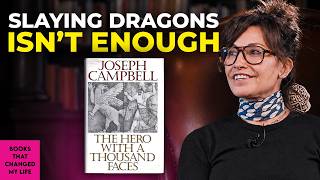
Gina Gershon credits Joseph Campbell's The Hero with a Thousand Faces for inspiring her memoir Alpha Pussy, though she rewrote his male-centered hero model for women. She started the book during COVID lockdown, weaving in dreams, career stories from Showgirls and the Playboy Mansion, and a term she coined: "alpha pussy" means standing up with steady eye contact.
Chapters
The Hero with a Thousand Faces was a super important book to me because I remember I had a really incredible professor who was teaching mythology. I love the idea that structurally, we see it in films, we see it everywhere, the structure of the hero's journey from Star Wars to Back to the Future, Hunger Games. But I said to him, you know, these are all male stories, like where's the female hero story? Joseph Campbell basically said she doesn't have to go on the journey, she's kind of the destination. And honestly, I just, I thought That was bullshit.
Okay, so the big question: how did A Hero with a Thousand Faces by Joseph Campbell change your life?
I mean, it— I think it changed my life because it—
Welcome to Books That Changed My Life, the New York City edition. In the spirit of Jack Kerouac, we're on the road hunting for fellow book lovers. It's taken us all the way to the beautiful House of the Redeemer Library here in the heart of Manhattan. We're joined by actress and author Gina Gershon, and she's here to talk about the book that changed her life, The Hero with a Thousand Faces by Joseph Campbell. Hey, while I got you here, do you want to be an alpha pussy? We've got 50 signed copies of Gina's latest book and we want to give them to you. Here's how you claim yours: hit the link in the description, subscribe, like, and comment. Enjoy the conversation. So tell me about your library at home.
Very eclectic. Um, I, it goes a lot of, uh, a lot of art books, a lot of therapy books, a lot of mythological, you know, myths and, um, witches and vampires and, um, lots of Greek dramas. Lots of weird. I have a lot of weird niche things like sexual, whole section of sexual stuff, all different kinds of that. A lot of fairy tales.
Is it organized like in a room or are they all over the place?
It started off organized and then I had too many books. So now some of them are in my office and now some have gone into my bedroom. I need to, you know, a friend of mine came over, she's like, you have to get rid of some of these books. Like, How do you do that? But I don't have enough space, so I'm not, I have to figure it out.
Do you have a favorite bookstore?
Oh gosh. I have different bookstores in different cities, I guess. Here in this, in New York, I mean, I love The Strand. It's always such a great place. You know, there's that place in Paris. Oh my God, what's it called? It's my favorite bookstore on the Left Bank and it's got so many cool books. I also like that bookstore on Bond Street, you know, the one you walk downstairs. I'm really doing great. I can't remember the name of anything.
Do you have a favorite one in LA?
You know, I like Book Soup. You know, I've gone there for so long. Um, and it's kind of like one of the old little bookstores that's still standing.
So yeah, it's iconic.
Yeah.
I like supporting the small little bookstores because I miss the that Tower Records used to be across the street and now it's right gone.
I know.
That was kind of a thing. You could go back and forth.
Yeah. And Tower Records, it's Supreme now. Yeah, I know.
A little different. Times have changed. So when we asked you to pick a book, how many other books came into your mind?
This is really— I feel like I failed this test because it was like, 'Pick one book.' I'm like, 'Well, you have to like, like, favorite or how it changed my life in what way, do you know?' And I think I was in middle of still like, uh, tweaking some stuff. Um, yes, thank you so much. Oh my God, you're the best. Um, yeah, I thought about 5 different books like right off the top of my head.
What were the contenders?
Well, I've obsessively been listening, but I just, because I love the narrator and I've been doing an Audible, I'm not joking, I maybe have just listened to it maybe 10 times already. Circe by Madeline Miller just recently, which is the retold, not even a retold story, it's like the untold story because you only have little snippets of her, which will relate to The Hero with a Thousand Faces of Circe. Who was the witch who, you know, when in the Homer and in, during the Odyssey, oh my God, what's his name? Odysseus, like went on the island and she supposedly made him, you know, stay there. But, you know, she was, it's, she's a witch that she was part of a god. And it's her story from her point of view, which you're seeing a lot of, which I'm really into. You know, all of a sudden you're seeing all these, myths of, you know, Clytemnestra or Medusa, Circe, Pandora, they're being told from the female's point of view, which I think Hero with a Thousand Faces was really, it was a super important book to me. I think it did change my life. I don't know if it changed my life, it changed my perspective and it, set me on like a journey of questioning because I remember I had a really incredible professor who was teaching mythology. That was one of the books we were reading, "The Hero with a Thousand Faces," you know, Joseph Campbell, you know, blah, blah, blah. And as, I mean, I love the idea that structurally we see it in films, we see it everywhere, the structure of the hero's journey, right? And it's from, you know, You know, from Star Wars to—
Back to the Future.
Back to the Future.
Lord of the Rings.
To, you know, The Hunger Games to, you know, whatever. It's any story, Wizard of Oz, you know, although that deters a little bit. But I said to him, you know, at the time in the book, I said, these are all male stories. Like, where's the female hero story? You know? And I guess there was some sort of, And he said, well, it's interesting 'cause Joseph Campbell basically said the female, and I'm super paraphrasing, she doesn't have to go on the journey, she's kind of the destination, you know? And yet she's always the goddess, she's always the one with the wisdom. She's, you know, the man has to go and find himself and slay dragons and blah, blah, blah. And the woman's always like there, just like taking care of him or, you know, giving advice. And honestly, I just, I thought that was bullshit. You know, I said, well, that doesn't make any sense. Like, why aren't there female stories in here like that I can identify with? And he said, well, you know, I guess you just have to write 'em because they're not here. And it is a big, you know, question. And then I had, and I don't know if I was lazy or if it was cool. I mean, it's a little bit of both, but I had a, I think one of the reasons that I got so interested in myths and stories 'Cause when I was younger, especially like 14 and 15, when you're kind of, your body's changing and you're, I was going into a new world. I had, I used to dream a lot, like very visual dreams, like movies that I'd be like, whoa, these mean something to me. And I'd write it down. And there was one, the first real crazy dream that was like watching this epic movie was, you know, obviously I'm the, the star of it, you know, but it structurally, It's exactly like the hero's journey. And so I wrote that as my, you know, final thesis or, you know, and I ended up getting an A. I said, listen, here's my hero's story, here's a heroine's journey. And he really liked that. He goes, oh, good for you. 'Cause structurally it did make sense. But I was just annoyed that I couldn't find stories like that. And then over the years, It's been interesting because the heroine, the question of the heroine's journey has come up.
Well, can we talk a little bit about when you were 15?
Yeah.
What do you think made you have those vivid dreams?
Because I think I was going through, I mean, obviously probably going, I was going through puberty, you know, your body's changing. So your own landscape's changing. I was moving into a new school, right?
So, so you grew up in the Valley?
I grew up in the Valley, which is like the San Fernando Valley.
For people that aren't from LA, it's the outskirts of LA.
The San Fernando Valley is, you know, it's like the basin, and then you go over the hill into like Hollywood and Beverly Hills. And the Valley was like, oh, the Valley, you know, you watch Paul Thomas Anderson movies like Licorice Pizza or Boogie Nights. That's the valley I grew up in. Remember that song Valley Girl? Valley Girl, like, oh my God, like I used to totally talk like that. That was like the way it was. It's a real, it's a real thing.
What did your parents do?
My mom was an, she was an interior decorator. She had a company called MG Interiors. And my dad was kind of like a traveling salesman in an import-export business.
Did you have any siblings?
I had an older brother and an older sister.
So you're the baby?
I was the baby. I was like so the baby. Like, I was alone a lot. They were close in age, but 7 years older, 5 years older. So, you know, when you're that age, you know, they're doing their thing. They don't want anything to do with me. And my dad was traveling a lot. My mom was working.
And you were, when you were younger, you were kind of a tomboy, right?
Yeah, I was a tomboy.
So when you're 15, that starts to kind of change? Is that about the age?
No, I'm still kind of a tomboy.
Well, boys' perception.
Oh yeah. No, I realize, you know, I mean, I start the book, I think, how boobs changed my life. And I think they did because, you know, I was such a tomboy then and all my really good friends were like, you know, the guys I played baseball with and football with. And all of a sudden you start, you know, my chest started growing and my mom's like, oh, you've got to get a bra. And I'm like, what? Like, No, the guys are not going to take me seriously. Like, these are my teammates. Like, this is not going to work. And she's like, well, you're getting one. And I realized when all of a sudden it became apparent that, you know, I had breasts and like my— unless I was wearing a really big shirt, like, you know, guys, they treat you differently. They act differently towards you. And it's like, bro, like, I was the same person on your team. And then it was really— it was interesting, you know, being in the Valley also, you know, It was a time where porn was showing up in my local theater, which I used to sneak into because I was a bit of a juvenile delinquent and not allowed to do, you know, I was like, I'm going to go to the movies again. I'd sneak in and one day I sneak in and it's a porn house, right? So there was that toxic energy everywhere. And, you know, it wasn't the days of the helicopter parent. It was just like, all right, be home before 6. Get A's, you know, don't be late. So you're kind of left on your own devices walking around in kind of gnarly territory.
Yeah. And so the dreams in a sense are probably your unconscious mind trying to figure out some stuff.
Well, the dreams are always definitely, it's like your own personal story. It's your, I think dreams are incredible. They're kind of like, you know, surrealism, right? Like you look at something, everything has a symbol. And I think in dreams, which I've used in my acting, I've used in everything, you know, there's all these little, there's a universality, there's a collective unconscious thing that goes on. There's little symbols, but you know, when people are going through puberty, right? Or a certain age, everyone has that, oh, they're naked in front of a class or they have some sort of like, they're aware of their body and they're shamed and, or whatever, embarrassed. And, but this dream was really, really intense and long. And it was like I woke up exhausted, like I had gone on a total hero's journey. You know, it started off me, I have, you know, people were trying to kill me, men were trying to kill me. And I was running, running, running. And I finally had to escape my homeland and go and do battle. And which was interesting at the very end, returning to home when there were, there were, people were coming to kill me and I'd jump off a cliff, right? And once I jumped off, it was like, whoa, I should have died. But I landed and I was in, in a completely different territory. And then people started coming up and giving me gifts. You know, I was in this other land, but I knew it was my new family. And instead of stopping there, see, if it was a hero's story, right? It would end like, I came to my new home and now I'm the conquering hero. Like, and people are giving me gifts and I'm the ruler of the land and the end. But I think the heroine's journey, it has to go the next step. It's not about slaying and you slay dragons, which is your ego, or, you know, you have to face your own personal demons. And then in the hero's journey, like Luke Skywalker, whatever, you have to kill the father. You literally have to kill someone off in order to become whole, I guess, or a hero. But I think with the heroine's journey, it's really a reconciliation, I think, between the daughter and the mother, or it's reclaiming the feminine. So there's a— the next level is compassion. You don't have to kill anyone, but it's more of a communal thing and it's more of having compassion. And I really hope like our world starts going into that story 'cause we stay in the hero's Typical story, we're dead. It's not working. It's like a patriarchal society. This is more nurturing and inclusive and compassionate, I guess, is the next ingredient for the heroine's journey.
So in your dream, what happened?
So in the dream, so all of a sudden I jump off and people are bringing me stuff and I'm kind of like the queen of this new land, you know? And instead of it ending there, all of a sudden I had this ring on, a jade round ring. Which has other meanings, which I, but then I looked and there was an older woman there. I think she was my grandmother or someone. And I just took it off and I gave it to her. So like joining like old worlds and new worlds, but it was an inclusive thing. And I didn't understand it at the time. I just thought this all means something. I don't know what, but I looking at it, I think structurally. So the hero's journey was like a really incredible thing 'cause it helped me like, as a jumping point. Do you know what I mean? And it is in every story. It's definitely the structure. So no, I think it's interesting to look at your life and—
And you got in the habit of writing your dreams down?
Oh my God. Forever.
Who taught you that? Or how did you come up with that?
I just did it because they were so— I would wake up and I'm like, wow, this, like, some of them were so intense that I thought, this means something and I don't know what it is. But I'd write it down and then I guess in my own little way, I would kind of analyze it to understand it. 'Cause it made me feel so crazy and it was like, you better look at this. And then later on I took a lot of psychology and I took a lot of dream psychology. And then I found a teacher, my acting teacher who uses dreams as a jumping point for acting. And so I'm like, okay, that is definitely my teacher. Because it's like, it's like what's truthful in you, you know?
Yeah.
And so if you could bring it to light, you know, a cigar doesn't just mean a cigar. It means different things to different people, you know? And when you figure it out, it's like little clues into your psyche of what's really going on. So I personally have found it really helpful.
When you look back on that time in your life, you were going through a lot, like you were processing a lot and that's what created those vivid dreams?
I mean, I think everyone processes a lot going through.
It's a hard time.
12, 13, 14, 15, you know, it's a tricky time. I mean, especially for girls, you know, when they're dealing with all the, you know, the bitchiness of the other girls. I mean, when I see the girls at, you know, 12, 13, 14 and they start to go through this and the other women and the other girls around them, It's like no joke. I mean, when I met Bill Friedkin, William Friedkin, to do Killer Joe, I was so excited 'cause I'm like obsessed with The Exorcist. And then at the time I was, I kind of had a stepdaughter, you know, I was living, I was in a new relationship and the girl was 14, really going through it. And she had a lot of other issues that were going on, you know, but she was just like, "Ahh!" And living with this demon. I'm like, "Oh my God, I get it. The Exorcist, you're such a genius. It's about a hormonal girl." Like so smart. And I'm going on and on and on, and he's just like, nope, it's about a girl who's possessed by the devil. I'm like, same thing.
That's funny.
Yeah.
So for somebody who hasn't read The Hero with a Thousand Faces, just kind of describe it. What's the book about?
I think it's really— it's very when I started looking at it again, 'cause I hadn't looked at it for so long.
Well, it's very dense.
It's a hard read. It's a hard read. And I'm like, oh my God, would I make it through this today? But I, you know, I had my own version with like tons of notes 'cause I was taking the class. So I had to read it. But it really is an exploration of the hero's journey of, you know, leaving the home of structurally how, and it's interesting 'cause in all these different myths, what I liked it's all the same. I like anything that connects us all, you know? Like there's, you know, the Buddha story, or there could be, I mean, oh my God, a zillion stories, but they're all similar as far as like becoming who you are, right? And in this case, it's just a little too male-centered for me. Like if I read it today, I'd be like, this is, it would be annoying. But I think it's important as a template to understand.
And so if we just kind of go through what the hero's journey is on, it's on, I think, 210, this black tab. So for me, what's interesting about this is that a lot of religious stories, like the story of Jesus, is the same as the story of Star Wars.
Exactly.
Seven Samurais.
That's exactly— that's what's cool about it.
Game of Thrones. Oh, Brother, Where Art Thou? I mean, Narnia. You just go on and on.
Yeah, it's a real, you know, consciously or unconsciously, I'm sure consciously they're like, okay, let's, you know, you leave the home, you feel antsy, you have to, you have a call of the wild, which we all do. I certainly did, right? I was where I was in the valley. I was like, I gotta get outta here. There's gotta be something more. Like I just had this need to leave, which according to this is very male, but sorry, it's not just male. And then you go out into the world and you know, you literally are tap, you have to face challenges. Ultimately you have to slay a dragon, like literally in some stories.
Slay the Minotaur.
Right.
Die on the cross. Or whatever.
Yeah. Like whatever it is. And then you become, you take that knowledge and you bring it back home. So you return home a hero, right?
Yeah.
And, but I think in a lot of these stories, these men lose their soul. So I think the heroine's journey also is like reclaiming the feminine, and it could be for men too, but we have to get our soul back too. 'Cause you know, you see these, you know, all these heroes who come back and they're just completely depleted and they're not very happy. You know, even look at, The Sopranos, right? I mean, you know, what's the other one? Walter White, you know.
Breaking Bad.
Breaking Bad. Like he starts with the good intentions and the more he gets into it, the bigger he becomes, the less he, like he loses himself more and more. In Hunger Games, right? She's, it's totally that. And at some point she's completely depleted even when she's become famous and she's become the hero and she's gotta reclaim herself again. I just think we— I'm just right now, I'm personally into the idea we need to go into the heroine's journey right now in this today's world, you know. Squid Games. I don't know. I mean, it's funny because until this morning when I thought, oh my God, we're going to talk about this, I've never really thought about this as far as a hero's journey.
So we're talking about your book Alpha Pussy.
Yeah.
But there has to be a little bit of that in there.
But you know what I thought about just this morning. I think unconsciously it's all there because for whatever reason at the end, 'cause I was dealing with my mom, here's like funny stories, but then the valley really became the setup of like a birthing ground of learning with how to deal with toxicity. And yet I wanted to leave. I was, and then we left. And then I—
That's like the call to adventure.
Call to adventure. Although we, Went to Beverly High. I was like, hardly, I wasn't quite far enough for me. But then I left as soon as I could leave. I went to New York, definitely slayed a lot of dragons, you know, I mean, had to fight off weird battles. And then I came home, I started working. So, and some people would say, oh, so then you came home a hero. But what's interesting, and I didn't think about it until this morning, is, and when I was writing the book, I didn't plan on this. This is the only part I didn't plan on, but my mom was, you know, not well for the last 3 years and she was slowly, you know, dying and, you know, she was older, but she was also ill. And so much of my journey and a lot of the valley stories, I remembered them because I really did a deep dive into my mom and like trying, I wasn't intentionally trying to heal stuff with us, but I was trying to remember like, how come, You know, I found out I was, she was 6 months pregnant with me and she didn't even know it. I didn't, I found out through therapy. She's like, you know, something's going on when you were in the womb. What happened? I'm like, really? How am I supposed to know that? She's like, ask your mom. And when I found out that one thing leads to the other, so it became my own personal exploration. And at the very end, it was almost like healing her helped heal me. And there was a release and that's, You know, and it hopefully then it helps you integrate and embrace your femininity. 'Cause you know, as a, as a woman, you have to be tough in the world and that's embracing the masculine, the heroes. You have to be that. But I think the next step is to, whether you're a man or a woman, is to then embrace the feminine side again to be whole. And so I think with my mom unconsciously, like that's what I was doing. So, I mean, if I were to not, you know, it's so weird when you write it 'cause you're so in it. But then if I step back and analyze it, I could like go, oh yeah, it kind of weirdly follows that.
Do you, I guess, like in your dreams when you were a kid, were you always the hero of the dream? Have you always seen yourself as the hero?
I mean, I was definitely the protagonist, you know, 'cause in some of these dreams I wasn't heroic. It was, it was, like cries for help. It was really crazy, you know. I mean, the one I told you about, that definitely had a hero's vibe to it. No, but I've had a zillion dreams where, you know, I also, where it's not heroic, it's just, it's trying to figure out a piece of, it's like my psyche saying, hey, this is what's going on, you better look at it. 'Cause I wasn't, you know, even this, writing these stories, I'm like, oh yeah, I remember that. And it's not until you really examine it, I thought, oh wow, I was really scared there. I didn't know it. I was just like trying to survive. So I was just moving like this. And it wasn't until looking back and I thought, huh, that was intense. I was scared and I was kind of running and I was just in survival mode. But what part of me did I detach from? I went really, had to become very male, right? So maybe some of this is like trying to reclaim some of the femininity again.
Is there a specific story that you had to detach?
Oh, can I look at the books? I forget what stories they are. Where I had to detach?
Yeah.
I think all of the Valley stories, um, except for, well, the setup, Danger in the Trees for sure. A little bit, you know, I think when you're younger, I was just, I think I was just surviving. And I think I was just like not really, you know, I wasn't going, what does this mean? I would be 7 or 10, but I definitely had an antenna of what felt good or what felt bad or what felt dangerous, you know. And it kept me out of trouble. It kept me out of a lot of trouble, serious trouble, you know. I think a lot of this stuff I just wasn't conscious of. And I was just kind of even in to the schooling part, you know, doing, I, you know, it's only in the last few years that I've really become very analytical and very aware. I always knew, okay, this me, you know, and also with acting, you know, you get to explore certain, it's like a real tool. And I use that a lot. And here just, you know, you have, I've been trained in memory really, you know, 'cause you have to go in and remember things and bring them up and blah, blah, blah. But it's not until I've like really reflected back that I kind of understood, oh, whoa, this was going on. Does that make sense? Mm-hmm. This looks cute there.
So a couple things I thought was interesting in the book is, is the idea of heroism. And so page 14, he kind of describes what a hero is.
Oh, really? Okay, let's see. I know I have to say, when I started reading it, I'm like, why did I choose this book? But it's, it's more of the idea of it than the actual You know, yeah.
And the, and the, the thing about this book is it kind of is a outline for life really.
Well, I think it's, it's interesting to understand what you're doing, you know, and why you're doing it.
It gives context to our, our experience.
Yeah. I mean, we all wanna become, I guess, the heroes of our own story.
Mm-hmm.
You know, and we all want to individuate.
We all want to write our own. Well, we don't all want to write our own story, but we should. A lot of people are passive and they let somebody else write their story.
Oh, God.
Yeah, that's a deeper conversation.
But yeah, that's a deeper— I'm way too confident.
You would want to write your own story and live a life that you were proud of at the end, that you were the author of whatever happened.
You know, the other day I was thinking, you know, it would be really cool, like, Like, you know how they say at the very end of your life, you're like, your life flashes back. And you know, Alan Watts, who I think is really great, Alan Watts.
I love Alan Watts.
And it's like, I was listening to something that he was saying. I'm totally paraphrasing, but it's the idea like you don't really know what your story is or why you did this. I could say, oh my God, why did I turn this down? Why didn't I do that? We live in so much regret. And really at the end of the moment, you know, you could look back and go, oh, like, everything happened in the time it was supposed to happen. And now you have a, you know, a bird's eye view of your whole life. So it makes more sense, right? And hopefully you don't have regrets. I mean, are you like, oh, that was a little weird. But you know what, for whatever reason, if you believe in destiny or things like that, it led me along this path. And I just thought, oh my God, you know what would be so cool is like to pretend you're dying and hopefully, like, if you could— let's really pretend you're dying, but you got a flash of what your life was and how it made sense, and then you could work backwards. Do you know what I mean? So you don't have so much like, oh, like, oh, how am I— am I making this decision? It's like, I don't know, it'd be interesting.
Yeah, it is interesting to me. The, um, the regrets usually are something that people who don't have agency have. Because if you have agency and you're writing your own story, then they're lessons. They're not regrets, because you would get better from them. You would learn versus being a victim.
Yeah. I mean, yeah. Who wants to be a victim? That's just horrible. Also, it's just looking at things in a different way. Which I think—
The hero, therefore, is the man or woman who has been able to battle past his personal and local historical limitations to generally valid, normally human forms, such as one's visions, ideas, inspirations come from, or come pristine from the primary spring of human life and thought. Hence, They are eloquent not of the present disintegrating society and psyche, but of the unquenched source through which society is reborn.
I mean, it's— yeah.
But to you, what is a hero?
You know, this is what I've become obsessed with. I'm going to give you a physical show. I've just been reading, Tracy Emin has become a friend of mine. This book to me is the modern heroine's journey, and I don't think she meant to write it that way. She's a hero to me. Do you know Tracy Emin, the artist? She's a really, this book Strangeland is really amazing. This is, it's in its 20th edition, but I started reading it the other day and I've just like, and she's a friend of mine. Like we've become friends because I instinctively thought, who is this woman? We're supposed to be friends. I bought a piece of art a long time ago when I could barely, for dinner, but I was like, I have to have it. It was from her first show. Now I have to say, God, I wish I'd bought a lot of them because, you know, she just had a big retrospective at the Tate. This is a woman, in short, she grew up in Margate, which is like outside of London, dirt poor. Mother wasn't really around, father wasn't really around. A lot of trauma, no accountability, just like kind of, in super survival mode. And yet what she does in her life, she doesn't, you know, all these guys were like, oh, you're a slag, slag, like slut. When she was trying to like win money, you know, to, so she can go to art school. She did this whole piece that I was so blown away by. Like, this is why I dance. I think I'm saying it wrong. It's a little short film about telling the story of her life. And at the end she goes, this is for all you guys. And she just dances. She takes her sexuality She takes all the things that people have tried to shame her for and she makes it into her art. And because of that, she's just, she's one of my heroes. She's taken her own life. She's taking, instead of having shame, she's made it her vision and her calling. And it's so honest and raw. And now of course, you know, she's a Dame. By the way, now she's a dame. She lives back in Margate where she's buying up half of Margate. She has a school there teaching art. She's taken her own life and used her own body, which has been like a battleground, as a source of art and inspiration. She's a hero to me, right? That's reclaiming your own, not letting people make you feel ashamed, which they wanna do. You know who's a hero here? It's like, I'll totally digress for a second, but it's not, it's a hero who I thought the other day, I'm like, she is a motherfucking hero. Is, have you been following that horrible, horrible story? Which is Gisele Pellicot, you know, the woman whose husband had her raped by zillions of men in France. Do you guys know what that story I'm talking about? No.
Sounds terrible.
It's brutal. It's, and she didn't know, she didn't know at all. And then the police, they brought her in 'cause they found all these videos and basically this man that she thought she thought was her husband, her partner. They had kids. I mean, she's what, in her 70s now? Um, anyways, like 200 men he let come in and he would drug her and they would rape her, right? Brutal. And instead of like—
and they videotaped it?
Yeah, he videotaped it. And she was just—
so she was unconscious for all of it?
Yes.
But later on she saw—
she saw videos.
She saw after he died or what?
No, no, he's in jail.
Oh.
Now this just happened in the last 4 months, something. But what's important, and I could attach it to Medusa, I'll attach it to Medusa, I'll attach it to the heroine's journey. The thing that she did that was so incredible, like really incredible, is, you know, when she went to go testify and usually because she was the one, you know, the victim, you know, they have so much shame. And they're saying, well, of course you want a closed, you know, jury. 'Cause they're all the men are gonna be there. She's like, no, I would like it to be public. And everyone was like, what? She's like, yes, I'm not the victim here. Why do I feel shame? They should all be ashamed. Mm-hmm. Right? And there was this one, I was reading this the other day and there was this one guy before he was gonna go testify who raped her, like when she was unconscious, he knew what he was doing and he just stared at her. He was trying to stare her down. Right? And instead, she goes, instead of looking away, and here's a total alpha pussy move, she just, she goes, I just stared at them and I stared at them until he looked away. She becomes, she's like, why should I be shamed? He's full of shame. And obviously we're seeing that a lot today, but like, you think about the alpha pussy, I talk about that a lot, like, like saying, like not like not averting your gaze. And when I was revisiting—
Is that what alpha pussy means?
Alpha pussy was born from, I mean, literally it was born from when I train my male kittens. I have like male cats who are usually kind of wild and two really in particular. I'm kind of a one cat gal. But in the last how many years I've had a cat, cat, But what they do is, you know, a little male cat, they will wreak havoc on your life. You know, they'll bite you, they'll claw at you, they'll ruin your furniture. So at a very early age, I made up this game where I would stare at them and they would stare at me, and we'd just have this staring contest. And I'm telling you, if I looked away, they would attack me for real. And they're strong. And you know, but you don't look away. You stare, stare. And after a while they'll go, and they roll on their back.
Therefore they submit.
And then I've become the alpha pussy. So you must become the alpha pussy else you'll be victimized. Right. And then I—
Does that work on men?
Yes.
How?
The first story I talk about in my— I remember when I did Showgirls, when I got Showgirls and I was very excited, you know, it was a big break for me. And I was like, oh my God, I'm doing Showgirls. This would be so cool. Like Paul Verhoeven and you know, blah, blah, blah. And these men, I remember executive types or agent types or whatever, they'd be like, "Oh, so I hear you're doing Showgirls," you know? And they'd blatantly stare at my chest and like kind of go down my body. And the first times I'd find myself going, "Oh yes, you know, Paul is such a brilliant filmmaker. His Dutch films," you know? And I'd like talk and intellectualize myself trying to like, and I'm like thinking, "What am I doing?" You know? And I find myself covering up and walking away and talking like this, but I felt uncomfortable. And about the fourth time that happened, I'm like, what is going on? This is insane. I'm really excited about this. Why am I being, feeling so icky? And I thought about my cats. And so I thought the next time, so some guy said, oh, so I hear you're a showgirl, you know this. And I just stared him right in the eyes. I said, oh yeah, I'm kissing guys, I'm kissing girls, I'm dancing naked. It's gonna be so much fun. And I kept that look. Stare, stare. And I kid you not, he just went, "Oh, that's interesting." And he backed away.
Submitted.
I guess, yeah, submitted. I don't know, that's a strong word. He acquiesced. I was the alpha pussy and he—
You controlled the frame.
I controlled the frame. I was not victimized. I was not.
But by the same way, by embracing it.
By, you know, just staring at him. There's something about the gaze. I was thinking about this with Medusa, 'cause then I was thinking, oh my God, what are we gonna talk about? I've gotta really back this up. But you know, there's, as I said earlier, there's all these, um, it's just interesting at this point of time that all these books are coming out now in the last few years about the female version, right? We have all the male version of, and Medusa, everyone's like, oh, she was a monster. She was a gorgon, or, you know, she had to be killed. How did she become that way? Right? She was like a virgin, like praying to Athena and like in the temple. And then Poseidon's like, oh, that's, a hot piece of shit, so I'm gonna fuck her, right? Anyway, he rapes her. And then Athena, who should have— she's like, how dare you? Poseidon is my guy, or whatever she says. And she punishes her, right? Instead of putting the blame on Poseidon, Athena, you know, or was she— so she turned her head into snakes, and if she looked at a man long enough, she would turn him into stone. So certainly it's a deterrent. She's not going to get raped again. But why is she not—
I never thought of that connection.
Yeah.
You're turning a cat into stone.
I'm not turning the cat into stone. It's not that intense.
No, it's aversion.
It's the gaze. If you look strong enough and if you look away, if the man looks away, else he'll be turned into stone. So is that emasculated? Is that— but it's a way of protection. At this point, it's a little different because it was thrust upon her, you know, and then think about it later on, her head gets cut off by Perseus and the two gods come out of it. Which one? Intellect and intuition. Like, well, that, that's going deeper down. So, but there's a connection to all of it. It's just about having agency and sovereignty.
And so how did that moment change you?
When I looked at the guy and I said, "I'm dancing," and he backed away, I realized, oh, this works on humans too, right?
Yeah.
And I like, why should I be made to feel uncomfortable doing something I'm happy doing just because the male is deciding to sexually objectify me at that moment? Fuck him. I'm just gonna look him in the eye and say, and like speak my truth. I'm telling you, 9 times out of 10, they back away and they look away. I have this story of the Playboy Mansion in there. You know, I wasn't like consciously doing it, but when the guy is like, hey, let's go to the grotto. I mean, I was 15 years old. I shouldn't have been there, but I was there. And when it occurred to my naive little brain, like, oh wow, this guy's like totally hitting on me. I'm like, dude, I'm 15. You can get in so much trouble. And he looks at me, he's like, what do you got, 23, 24? I'm like, no dude, I'm 15 years old. Like, you seriously get in trouble. And I was just laughing. That guy looked at me, went, and he ran. I wasn't— I was just like telling the truth.
So when you left that meeting, instead of like feeling small and covering up, did you feel more open?
And it was it was just more like, huh, interesting.
Did you feel more aligned with yourself?
Yeah, I felt like I didn't betray myself. I didn't feel like, why should I be uncomfortable saying excited about doing what I was gonna do? You know, just because the guy is like, ugh, like boobs, like, oh, I'm gonna objectify you. It's like, Don't do that to me, pal. That's your problem, you know.
Yeah, that's great.
Anyone can do it. You could do it with people. I'm sure when you've been in an argument or someone's trying to bully you— it happens in men too. Men can be alpha pussies too. It's just a state of mind. It's like— and you know, if you really are present, someone's gonna give at some point if you're just speaking your truth and standing on your own ground, your own two feet.
Yeah, I do think my experience is probably different though, because for me, I probably have to let people, uh, feel more comfortable because I can be very intimidating. I'm very big and like, people are intimidated, so I have to try to—
you're like Santa Claus. You seem so sweet and not intimidating. You have Because you're a big guy with a beard.
Well, I mean, you know, there's situations where people will be intimidated and I can see it, and I don't feel that. I don't feel like, like that inside. I feel like a teddy bear inside. Yeah, but my physical appearance and, you know, my energy can, can intimidate people, especially if they are in a different mindset or they feel insecure.
Yeah.
So I have to be aware of that. And play with that. So sometimes I have to go the other way.
I always find— this is my own little theory— like, men who are like big guys, because my dad was a big guy, big beard, mustache, you know, my nephew, they're always so nice because they are fighting. They're like fighting against the people's opinion of them that are like, I'm not intimidating, I'm actually nice. So they're much kinder.
Yeah, like I've had when I was young, I I had an experience where I was interviewing somebody. I was running a big company and I was interviewing them for a job and they cried. Why? I felt so bad just because I was intimidating. I asked them, what's wrong?
What were you doing? Were you intimidating?
Well, clearly their experience was I was. It doesn't really matter if I feel like I am or not. It's the experience of the other person that matters.
Were you trying to intimidate them?
I wasn't even in until they cried. I wasn't even aware that that was a possibility.
So between them and them, they were feeling insecure and anxious.
But over time, I kind of learned how to just smile and trying to make people feel welcome and being aware of their experience. I can change how I'm acting, but I think it's a different experience for me than it was for you because I wasn't being objectified, right?
And you're also trying not to be intimidating because you're— this is your job, is to try to have a conversation with someone. So you don't want to be intimidating to them. Or you think in real life too.
Yeah, like, I don't— it's never my intention to make somebody feel that way, right?
But sometimes it's, it's not your fault. It's— that's between them and them. As long as you're like, yeah, but I still care about their experience. That's very nice.
It isn't just my experience.
So you feel obligated to make them— put them in ease?
I don't feel obligated. I, I feel like, uh, that's human, I guess.
Yeah, that's very— that's— it's— so you're like an empath for sure. Yeah, me too.
And then I have to fight the other side of being an empath, right? Because I can get taken advantage of and I can end up going down roads that are just a waste of time because of that. So you, as you get older, you figure that part out too, because you have to find out your boundaries.
You have to realize your boundaries.
And actually, yeah, boundaries is where it starts. And then I, then I've kind of learned that it's just energy.
Yeah.
Like, I, I can tell by somebody's energy that they're not for me.
Yeah.
That they're a user. They, you know, right? If there's somebody who just has to win, that means I have to lose. And I, I don't like that. Like, I feel like everybody could win.
Yeah.
Or it's a collaboration, or it's an interesting thing just to observe it, right?
So when they're like, have to win, it's just like, I wonder— I always go like, I wonder why they have to win. Like, then I start analyzing, like, I wonder if they were at 8 years old. Like, I see their whole lives, you know, like, oh, they have father issues.
Yeah, for sure.
Interesting, interesting. Because, you know, it's, it's such— I mean, I sit down, there's nothing intimidating to you about me. You just seem like a sweetie. I see the teddy bear guy. Right. But that's because I'm feeling, you know, I'm in—
Well, this is a lifelong of experience so far. I'm 50-something. So you're meeting me after I've messed that up a bunch of times.
Yeah. But I also grew up with a dad, big beard, big mustache, 6'5", huge. And everyone thought like he was gonna kill them and he couldn't have been sweeter.
Yeah.
So I always thought that's so interesting. You know? Yeah.
Yeah, it's funny. Okay. One other part of the book that I think is fascinating, I'm curious what you think, is killing yourself. And you kind of mentioned it before.
In my book or—
No.
Oh, we're going Campbell. Oh, God. Where's that? That sounds good.
So page 77.
Okay. I brought my old version. I was like, why did I talk about that? It's so interesting to read back on your books. To see what made sense to you.
Are you, do you highlight?
Oh my God. My book's written all over the place 'cause I was in school, so I was taking notes. I highlight, I take, I write notes on the side and I think more like that. Wait, so the highlighter, no creature writes Ananda Kumaraswamy can attain a higher grade of nature without ceasing to exist. Can attain a higher— well, yeah, that's interesting. Indeed, the physical— he— I think they're talking about no creature can attain a higher grade of nature. It's like, that's— I think that's like a death of the ego. Yeah, right.
So when did you experience that in life?
You know, uh, I definitely— when I've done journeys, you know, with drugs, like on Like, that's it. That's— I think that's the reason you do, like, certain journeys, because you become nothing and you could see a bird's eye view. Um, I went to the dentist once, again drugs, um, you know, the gas, and I left my body and I went into the ethers and I saw what the world was supposed to be like. So I had a detachment, you know, because, you know, we're just whatever, right? I mean, the ego, you know, we're always battling the ego. Like, it's always kind of— I still do it all the time when I like, why am I getting so like this? It's like, oh, it's my ego somehow. You know, as you get older, it's like, hopefully you don't react so quickly. You can kind of look at it and say, oh, this is so interesting. But I'm still trying to learn, you know.
How would you describe ego?
I think the ego is, you know, look at our government, pure ego, right? Ego is like, well, let me, it's like physical, it's like I'm gonna make money. I'm gonna, it's all external. It's like what seems good. It's like, this is what makes me great. You know, I have riches, I have this, I have that. Oh, they're looking at me weird, like I'm gonna kill them. You know, that's all ego mind instead of, you know, uh, so when you say government, I think the need for power and control.
A lot of those people need power and control.
Power, control.
But is that visuals? Is that like when you, when you meet somebody who needs to control a situation, usually that's because when they were younger they didn't feel safe, and control is what makes them feel safe.
Yeah, bullies bully.
And so is that the ego, that need for control, that need—
I mean, I don't know what the actual definition of ego is that we're thinking about, but I think it is, it's, it's for, yes, the need of control of like what makes me feel safe. It's like, you know, it's not the bigger picture, that's for sure. Um, it's limiting and it's very physical, you know. Anything else you want to No, I think this is just an interesting idea for like, it really, oh, look at, see George Lucas. I mean, if you're into films, if you're into, you know, mythology, it's just interesting to, to see the hero's journey, you know, like to structurally it's everywhere. And it, for me it was important cuz then I could jump. It was like a jumping off point of, you know, specifically like I didn't like it that there weren't females there. I think it's time for the heroine's journey. And this woman, God, what's her name? I wrote it down 'cause I started reading it and I thought, oh my God, Maureen Murdock. She wrote a book that I'm gonna read 'cause I kept, I instinctively want the, she wrote a book called "The Heroine's Journey," which I'm, I can't wait to read. But I think it talks about the same idea. I just think as the worlds change, our story has to change. And we have to have compassion at the end. Right? Yeah. And some stories have it, uh, like, it's so interesting. Did you watch Squid Game? I was really into this heroine's journey. I started writing something about just structurally, and the Squid Game, it's so violent, and it's so— this guy's so sweet, and he's so good with his mom, and he's got this— he's really in touch with his feminine side, but by the end, he's becoming a monster. And as he goes home, I'm like, It's coming, it's coming. And of course, his mother died, so the female died, and that's what allowed him to be this. And I'm like, God, I hope he gets back to the feminine, because I think Squid Game on some weird level became so huge. It's because maybe they were attempting that. I mean, it's very violent and all that, but I think it's just an interesting way to look at society because it— all the myths, which I think is interesting, is that they're all the same. So it connects us all, whether You're in India or in, you know, Japan or China. Like everyone's got their own story, but it's all kind of the same story, you know, Kuan Yin, Jesus, you know?
Yeah.
So I think that's very, it's good to remember that, you know, how we're all connected and how we have a similar collective unconscious. And we're, I think we're all striving when it says you have to have death, you know what you were saying? I think once we get out of our smaller self into the bigger self, I think then we're evolving, and maybe that's what we're supposed to be doing. And then that with that is like more compassion and more kindness. And maybe that's what we need to do, especially now.
Okay, so the big question, how did A Hero with a Thousand Faces by Joseph Campbell change your life?
I mean, it, it, it, I think it changed my life because it opened up a door to thinking about things differently. You know, like, like I said, it made me think, why aren't there more female heroes in this story? I think that took me on a certain trajectory.
Yeah, it's good. Okay, let's talk about Alpha Pussy: How I Survived the Valley and Learned to Love My boobs.
Yep, that's it.
How long did this take you to write?
I don't know.
Oh, how long ago did you come up with the idea of writing it?
I started it during lockdown, during COVID because my book agent said just write stories. He wanted me to do a whole Showgirls thing, which I could write a whole book on. And then right as I was writing all these stories, and I started throwing in other stories, I'm like, oh, I might as well tell the Prince story, that's fun. Just stories that before I forgot. And then right as he was gonna send it out saying, okay, this is gonna be about, I thought, I don't wanna write a book just about like, oh, movies I've done. Or like, I'm not a tell-all sort of gal. I like, I don't know. I said there's an interesting book here. I don't know what it is. And I just wanted to find it. And then somehow as my mom, I think I was thinking about the Showgirls story and the alpha pussy moment came up. And I thought, sometimes when I say, oh God, I'm gonna, I've gotta be an alpha pussy in this situation, people were like, what are you talking about? I realized it was a made-up word, but it like, it meant something to me. And once I connected that, I thought, oh, maybe. And you know, it was, and some girl I met, I'm really terrible with time, but some girl I met, you know, she had just come from some spiritual retreat and she was all freaked out that the guru tried, to sexually harass her and hit on her. I'm like, dude, he's a guru. Like, gotta be aware of those gurus, you know. But I just said, oh, so what did you do? She goes, well, I told everyone. I told the director, I told my friends, I told everyone, watch out for that guy, you know. But I said, oh, did you ever like look at the guru who meant so much to you in the eye and say, hey, you know, you're making me really uncomfortable, you know, I like, please don't do that? She's like, I could never do that. Like, are you insane? I'm like, why? She goes, oh, I couldn't do that. I said, well, you're never gonna be free until you could do that. Look at yours, you're so tense right now. You know? And she's, well, you can do that because you're so tough. And I'm like, I was not always tough. I was like—
Yeah, you can do it 'cause you figured it out.
Yeah. And so I think that was the birth of that story.
But that was a special moment.
It was a seed of like, and then I started thinking about it and like stories like the bowling alley would come to mind or little moments that I had totally forgotten about. Out that I just started writing it. So it, you know, and then in between I'd get an acting gig and I have to totally stop because I can't write when I'm doing that, you know. Um, and then little by little I was like, it was very interesting how many stories in the Valley that actually happened, which I hadn't really thought about.
Was it easy for you to tell the stories or did it feel vulnerable?
Certain, some felt very vulnerable.
Did you leave any out?
Oh yeah, I left a lot out.
Really?
Well, just if they didn't— yeah, if they didn't—
Did you leave any out because they were too vulnerable?
Uh, no. I mean, I think I left some out if, A, you know, I really, um, value discretion, and certain people don't want to be really talked about, and it would be too obvious who I was talking about. So out of respect to someone like that, Or if it didn't fit, you know, obviously this, obviously I had nice times in the Valley too, you know, I mean I had. Yeah. But if the story didn't deal with some sort of survival or manipulation or navigating it, then it just took it out. So I really wanted it to have a theme, right? So I just, if not, the book would've been that big and I never would've finished it.
Now that it's done, how do you feel about it?
I'm happy I wrote it. I look at it now and I think there are things, I read certain sentences and I'm like, ah, I wish I could add this. Like I see little things here and there, you know, when is it ever done? And every now and then something will come up and I'm like, oh yeah, I forgot about that. Oh, that should have been in the book. I'm not a very disciplined writer. I'm like a storyteller. So the story is what they, like the dreams, they'll come up and I'll be like, what's there? And I'll lay down and I remember the whole thing. I'm like, oh wow. Then I just try to write down exactly what I saw, you know? So I'm just trying to tell this story honestly.
Were you writing it to a specific demographic? Did you have anybody in mind?
No. No. I know I'm supposed to think of those things. People say, well, I, at some point I said to my friend, I said, why am I writing this? Like, really? And she's, she's like my guru person. Like, I, I love her. She's like, I said, really seriously, who cares? She said, Nobody cares. I went, what do you mean? She goes, nobody cares. You're just writing this for you. And I went, oh, that's interesting.
Yeah, that's great advice.
Kind of freed me up.
And the other thing that you'll realize when you write a book is nobody reads it. People buy it and you'll meet 'em and they'll go, I bought your book. You go, what'd you think? And they'll be like, I haven't read it yet. It'll drive you crazy.
You know what's been really interesting? I mean, the few people I've talked to, 'cause I've been doing interviews and stuff, And a few people have written to me. When they do write it, read it, like, I think I'm just surprised, like, people seem to really be enjoying it, but everyone kind of comes at it from their own perspective.
They impose their story on it.
Yeah. Like, "Oh my God, I totally went through this sort of thing." Or, you know, the mother things, you know, at the end was very personal. And so people have just lost a mother, they kind of navigate towards that story or, you know, So it's interesting. It's almost like I could tell the person what they were like by the story they're relating, you know, what they respond to.
So last question, what do you hope people take away from it?
Um, I hope they enjoy it. I think some of the stories are really funny, and I hope that if they take away— if they take away, I mean, secretly, God, it would be great if they took away, like, I'm gonna be an alpha pussy in this situation, like, and and being true and knowing who they are and standing up for themselves.
Giving them permission or courage in a sense?
Huh?
Giving them permission or courage to stand up?
I don't have to give, I can't give anyone permission or I can't give anyone. The only advice I give in the book is like, figure out who your parents were and what their parents were to them. 'Cause I think it helps free you. You know, I mean, this is just my personal journey. It is definitely not a how-to book or like, do this. If, if people get something out of it that way, amazing. But I, I didn't, I mean, who am I to tell someone what to do? Everyone's story is so personal.
Well, you're somebody pretty talented that's had a lot of life experience that people can learn from.
Well, that would be great. I mean, I would love that, but it's not why— oh, you said, what do I hope people get out of the book? I hope they enjoy it, and if they get some things out of it, amazing. I mean, I don't know.
I love the title. I love the story of the cat.
Yeah, it's a good story. Yeah. Thank you. Thank you.
We are so excited to announce the Books That Changed My Life website. We made a way for you to show your book pride and that you love books. Hats, tees, hoodies. Check it out. Link in the description. Everybody needs a self-help hat.







