Harper Simon on "The Electric Kool-Aid Acid Test" || Books That Changed My Life
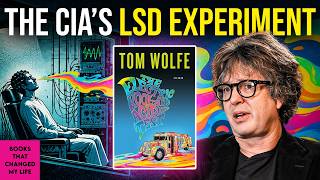
Harper Simon discusses Tom Wolfe's The Electric Kool-Aid Acid Test and how reading it as a teenager shaped his artistic life. He traces Wolfe's New Journalism, Ken Kesey's Merry Pranksters, their painted school bus, and the acid tests that sparked the Grateful Dead's early shows. Simon reflects on the book's influence on his current work in music, documentaries, and publishing.
Chapters
When I first read it when I was a teenager, at that time I feel like everybody knew this book. If you were a young countercultural type, you sort of had to know this book.
So what came first? Did you try LSD or did you read the book first? I mean, okay, so then the big question: how did The Electric Kool-Aid and Acid Test by Tom Wolfe change your life? Well, it changed my life, um, because Welcome to Books That Changed My Life, New York City Edition. Like Bilbo Baggins, we're going there and back again in the hunt for fellow book lovers. We're in the beautiful House of the Redeemer Library here in the heart of Manhattan, and we're joined by author and artist Harper Simon. And he's here to talk about the book that changed his life, The Electric Kool-Aid Acid Test by Tom Wolfe. Do you read a lot of books?
Not as many as I used to, you know.
At the height of your book love affair, how many were you reading a year?
I don't know, that's a good question. I, I don't know, you know.
You weren't counting, you were just reading?
No, I never counted. Well, one thing is I just got glasses a few weeks ago, and I, I came to realize, like, I can't read anymore. I wasn't reading, and I realized I needed glasses. I need reading glasses.
How long do you think that was going on?
A long time, I think.
Yeah, that would slow you down.
It did. And I just— because it just didn't occur to me that I needed glasses. And I was like, I don't know, I can't— the light by my bed, I'm like, uh. And then I was like, I need— oh, I've crossed the line. I need glasses. And now I have glasses. I'm like, oh, I can read. It's like, it's kind of great. So hopefully that's going to make my book consumption go up and tick up. Yeah. And then I do sometimes read, listen to an audiobook because I live in LA, you know, like in the car. It's just good, you know. But I didn't like— that's kind of a new thing for me. I didn't like— I haven't had years and years of being like an audiobook guy. Also, I, I find, I don't know, getting older, I, I'm like, I have a lot of friends who I just write, but, you know, I'm always like, oh, I want to read my friend's book, or I feel I need to read my friend's book, uh, and I'm behind and I feel guilty I didn't read my friend's book, you know. And, uh, that takes up more of my time than, uh, like just, uh, oh, I heard about this book, this— I'm interested in this new— or a writer I like, uh, that's a new book and I'm interested in it, you know.
Do you feel obligated to finish a book when you start it?
No.
No, that's good. I don't either, but some people do.
Life's too short.
Yeah, the book works for us.
Life's too short to read a book that you're not gripped by, I think. Or a movie. I turn them off all the time.
How long do you give it? 20 minutes?
Sometimes 2 minutes. What about you? You feel compelled to finish a book? No. If you're reading a classic, then you're like, "Oh, this is too embarrassing to not finish the book." No, I don't care. You don't care.
I feel like the whole, like, status pressure thing of books is— it's not my thing. Like, I'm reading it for me. I really want to learn and understand. And so if it's not teaching me something, or if it's just not written in a way that connects with me, like sometimes just a style thing, I might come back to it years later.
I totally agree.
But there's no pressure.
And also, it's such a pleasurable thing when you do lock into a book that you're really enjoying, and then you're into it, and you go out, and then you're like, ah, there's some— I really want— I can't wait I get home and get back to my book, you know. It's just such a pleasurable thing, you know. And if you're not that into it and you're like, ah, kind of feel like I better keep reading this, you know, I mean, no. I think I felt more that way maybe when I was younger and I felt like, well, I really have to read this book. One has to read this book. One has to know it. It's just, you know. But no, no.
Yeah, it's funny, you know, I was thinking when you said the same thing with movies I forget the name of the show, but the Kevin Costner cowboy show in Montana.
Yes. I haven't seen it, but I know what you mean.
Well, two times people have told me, you got to watch it. You got to watch it. I turned it on and kind of spoiler, but at the very beginning of the show, they kill a horse. And every time I'm like, ah, that's it. I can't get past the first 2 minutes. Don't kill a horse. Don't kill a dog. I don't know.
I'm just right.
I'm too sensitive. So it doesn't work for me, and I'm sure it's a great show, but I can't get past that.
I'm sensitive to, to stuff now more, but I actually— but I, I like a— I do like a downer though. I like a bum trip. I like a bleak—
what's the last like bleak movie?
I don't know, I just like bleak.
I just, you know, do you like bleak music?
Yeah, like what?
I'll tell you one that people will walk in the room, they'll be like, oh, what, this is depressing, is Afghan Whigs. I mean, to me it's not depressing.
I never really listened to them. They weren't part of my 90s, uh, experience.
I grew up in Seattle, so it was part of my thing.
I sort of remember that. Greg Dooley, is that his name? Yeah. No, that sort of passed me by. Should I go back?
Oh, I don't know if you missed it. I don't know that it would connect with you now either. I know, but for me, like, people walk in the room, they'll be like, oh, that's the— and I don't— to me, I don't perceive it as depressing, but I get it that they think that.
But more depressing, the better.
Yeah, I like sad music. I like a good ballad. So the book we're here to talk about is The Electric Kool-Aid Acid Test by Tom Wolfe.
I'm not depressing. Not depressing.
Not depressing at all. I'm curious what other books were on the list.
I thought for a second I might try to take on Infinite Jest, but I mean, there's been a lot of pieces lately because I guess it's an anniversary of its publication. So I've really loved that book at the time, and that really did change my, uh, how I thought about modern prose writing. Um, but that's a big book to take on, and, uh, I don't know, I chickened out. I chickened out. But I love that book by David Foster Wallace, and many of his books I really loved. Um, I thought I might do Money by Martin Amis, which was one of my sort of defining books of the '80s for me. Yeah, those were the other two I was considering. And then I landed on this one because this book, I feel, I thought when I first read it and when I was a teenager, I probably read it when I was a teenager. And at that time, I feel like it was very, everybody knew this book. And you know, if you were a young countercultural type person, um, who was into hippie culture or taking psychedelics or smoking dope, you sort of had to know this book just to sort of hang, just to sort of be— I mean, everybody knew this book. It was sort of, um, compulsory reading. And, uh, just to know sort of the— if, if only just to know the origin story of American counterculture. And I was starting to wonder if now generations, you know, now it's a long time back there. You know, I wonder if the younger generation sort of coming into that kind of consciousness still read this book. I suspect they don't. So I thought maybe it would be interesting to talk about. And also I never have talked about it before, and I love the book.
How would you describe Tom Wolfe's writing?
So Tom Wolfe's writing, well, Tom Wolfe came out of magazine writing in the, he gets lumped in with what they came to be called New Journalism in the '60s. And he was out of that great period of writing for Esquire and So I think he, in my recollection, sort of first came into prominence through some very, um, well-regarded magazine pieces, like one on, uh, he did a famous one on Phil Spector. He did a famous one on, uh, like profiles. He did profiles. Um, and, uh, uh, he, he's first, they, they made a collection of his magazine, right? There's a book that's a collection of those pieces. I think it's called The Candy-Colored Tangerine Flake Dream Baby. That's a collection of all his early magazine pieces. And he, yeah, he was in there with a group of people like, you know, Hunter S. Thompson was the sort of him and Hunter S. Thompson and also Gay Talese sort of. And maybe you would put in Joan Didion in there too, maybe. But it was, New Journalism to me was always, I always really loved New Journalism. It was a sort of new idea of writing reportage or nonfiction, but sort of placing yourself in the story. So it's some, it's kind of like, it's, I mean, I guess you would also connect it in a way to Truman Capote, sort of, I guess people consider In Cold Blood the first nonfiction novel. So it's, it's, it's, it, this Electrical Acidosis is nonfiction, but it's written like a novel. And he went on to write in that style, you know, write many interesting books in that style and sort of innovated that and sort of defined it really.
Yeah, they were kind of characters, right? There are personalities in and of themselves, the writers.
They were. They sort of placed themselves as a— Yeah. Well—
They had a style.
They had a literary style, both of those guys, all of those people. But yeah, it was interesting that the '60s generation and the chronicling of '60s culture that they took on, it was not the novel that defined the era. It was this new journalism, this kind of nonfiction novel, which they, they took on to, to really write about what was going on in the '60s. And I always found that very romantic and always sort of wanted to, one day sort of hoped that I could perhaps be, do something in the style of New Journalism, which I've yet to do.
Tom is kind of a striking figure 'cause he always kind of wears the white suit and he, He like commands your attention. You can't take your eyes off of him in a way. And, um, just like Hunter, like they're just interesting characters.
They are charismatic figures and they became sort of like stars in their own right. They were sort of, you know, they were charismatic literary stars and in very different ways really. Um, very different kind of very different people and different in the end, sort of different politics really. Yeah. Tom Wolfe in his white suit, that's sort of later, that's him as a sort of in New York society. He became a real New York society person. And Hunter Thompson, obviously, very different kind of person.
So how old were you when this book came into your life?
I want to say I was probably like 15. 15?
Yeah. And so were you here in New York?
I was here in New York.
What kind of kid were you?
At that time, yeah, it came into my life when I first started to get interested and, you know, in kind of the '60s and hippie culture, you know, old records, rock and roll records, and was starting to take psychedelics, explore film and books and writers from that time.
Yeah, was it exploring creativity, or what was your context?
Well, I was a teenager, so I don't know that I was exploring creativity. I mean, I was in high school. Um, I suppose it had something to do with exploring creativity, a very early form of creativity. I don't think my creative mind had been really developed so much. I think I was just sort of fascinated with, uh, you know, a, a door into this kind of consciousness and this part of history, which is before my time.
Was it, uh, when you're a teenager and you kind of embrace rebellion and counterculture, was it kind of that also?
Yeah, yeah, yeah, it was. I mean, I actually went a funny way. Um, uh, like the first stuff I liked, um, was like punk rock music. And punk culture. Like when I would, that was sort of the first thing I grasped onto when I was maybe like 12, 13. I was really into punk culture and, you know, I used to go down to, they'd have these hard, like hardcore matinee shows at CBGBs on Sundays for all ages, that were all ages. And I was like a certain bunch, kind of person, you know, ended up down there. I used to sort of sneak down there. I mean, I didn't sneak, but nobody, I didn't tell my parents I was going. So I'd end up sort of at CBGB's at that time. And I knew, you know, I got really into all those records from that time. And that was sort of the first subculture that I gravitated towards. And then I sort of got into the hippie thing like a little bit later. I sort of phased out of that and then I was sort of like, you know, even though the two were kind of— they didn't really mix so much at the time.
You were a little more advanced than me because I think I was hitting the punk about 15. So this is—
I was precocious.
Yeah, this is a little more, uh, friendly.
Yeah, I think I just—
I got more inclusive.
I don't know. And there were also girls, you know, who I think I was just— yeah, I was— I got into these, like, uh, you know, I wanted to, uh, to meet these slightly older hippie Chicks. I don't know, I got a little burnt out of like, you know, just listening to hardcore punk all every day. And I was like, and I started looking through the record collection that I had at home and I was like, oh, I don't know, I'll listen to Jimi Hendrix Electric Ladyland or something, you know, I like this, I like that. And so then I like kind of got into my hippie phase a little bit after. I mean, I suppose in the trajectory of The world, you know, the '60s and the hippie thing gave birth. The punk thing was a reaction to that later. But so what came first for me?
Did you try LSD or did you read the book first?
I'm sure I tried LSD first.
And what was that first time like?
I don't know. That's first time, uh, it was a kind of a mild experience actually the first time. But yeah, I'm sure I had taken a number of acid trips before I read the book. But you know, I, so I was very lucky. It's funny, I guess I've never talked about this. There was a family friend named Michiko Kakutani, who was the senior literary critic at the New York Times. And she was friends with my dad and she sort of took me under her wing very early. And when I was about 13, I met her and she used to take me after school sometimes. She would take me down to Allen Ginsberg. He taught a class at Brooklyn College on the history of beat literature and also it sort of went into '60s stuff and Tom Wolfe and Hunter Thompson, new journalism, Ken Kesey and that stuff was sort of at the end. It was sort of, you know, '50s and '60s stuff. And I just got to go and sit in on the class sometimes. And, but I, you know, I got the syllabus and I sort of would read stuff and got to know Alan a little bit as a very young person. I might've come across the book that way through that syllabus.
Yeah. And I guess so for context for people that aren't familiar with this time, and please correct me if I'm off, the hippie culture kind of came out of the buttoned-up culture of Vietnam, right? And it was very like kind of like a rebellion against that sort of mindset, that sort of Nixon-like conservative thing. And there were a lot of things going on in literature, but there were also things going on in psychology, where people were experimenting and, you know, challenging authority in a way, but also be trying to be inclusive.
It might be worth giving a little bit more context to the book and for your people watching this or listening to this. The Electric Kool-Aid Acid Test is really the story of Ken Kesey and the Merry Pranksters, which was sort of his inner circle of friends. It sort of documents a period of a couple years. It's a sort of origin story of, you know, in a way that they're the pioneers of the first American cultural scene that was experimenting with psychedelics in California, in Northern California. And then over here, well, at Harvard, there was another group of people. There was Timothy Leary and Richard Alpert who would go on to become Ram Dass. And they, you know, were Harvard professors and psychiatrists, and they began doing experiments with psychedelics. This is in the early '60s. So it's— and they kind of came at it from another much more academic, buttoned-up kind of place. But Ken Kesey, who was already a literary star because he had written One Flew Over the Cuckoo's Nest. So he was already a kind of famous writer. And I believe Ken Kesey was somehow conscripted. He was enlisted or he volunteered to be a part of some kind of government-sponsored experiments with— I mean, the government was interested in— they were researching and experimenting on people with the CIA specifically, right? Correct. Yes, the CIA. They, they thought, oh, this could be used in some kind of— they didn't know— combat operations. Maybe they would be able to use it to confuse the enemy or mind control people, program people to do— program people in a kind of way, or whatever. They didn't they had on their hands really, or what could be done. But I mean, really what happened, Ken Kesey then was one of these early people who was experimented on. I mean, he volunteered and I am not sure, but I feel like he then absconded with a lot of LSD, perhaps from the experiment. By the way, it was legal at that time too. I think they could still order it from Sandoz in Switzerland or something. He had such a positive experience in this sterile government-controlled environment, but that he sort of took LSD outside of that and began to— he went rogue with it essentially and began to seed it throughout his friend group and different artists and thinkers and musicians and people started to gravitate towards him and his group of friends who they they, he dubbed, they dubbed the Merry Pranksters. So this was a chronicle of this period. The book is really before, or just as it emerges into the beginning of the subculture, the beginning of the counterculture, um, but really kind of before it blows up into a big American cultural youth, youth culture movement.
And they're also filming at the same time, right? They're taping and filming, documenting, and, uh, hours and hours of, yeah, of it, right?
Yeah. There's a very famous mythological— a big part of the book in the middle, the middle of the book is they take this— now it's a sort of mythological journey across America. They come up with the idea to— they buy an old 1939 Harvester school bus And they paint the school bus psychedelic colors and they put bunks in there and they put cameras and music and speakers and they kit it out and they decide they're going to cross country from Northern California to, well, they want to go to the World's Fair, but they also want to go meet Timothy Leary for the first time who's at this point had been fired from Harvard and was camped out in a rather large mansion in upstate New York. So they take this trip across America and back. That's a big part of the book. And also, I will note that there's a very, very good documentary by Alex Gibney called Magic Trip, which came out, I don't know, 5 years ago or something like that. But it's kind of astonishing. I had seen some of the footage of the— I saw it once, like, it was at the Museum of Modern Art. They had some footage of the cross-country trip, and I had seen some. But when I saw the documentary, I mean, they, they really went back, and like, I had no idea they had so much documentation of the— the film is a brilliant film, and you see the whole thing. And they, they, they end up in New York, they meet Jack Kerouac, they go up to Leary. The whole trip is— there's so much amazing amazing footage of them. Uh, and, uh, so as a— on a side note, the film, you know, there's a— there's a very good documentary on it by Alex.
Yeah, we were pulling clips up on YouTube and we saw Stark naked. Like, we saw a lot of the characters. It's good. Okay, let's go through. So let's just start on, uh, let's start on page 8, the first tab there.
Yeah, this is a famous quote, Ken Kesey quote, and he says "I'd rather be a lightning rod than a seismograph." And that became a famous quote. And what he was referring to was because he was a literary star, and I think he probably was also feeling a lot of pressure to— He had written two books, Sometimes a Great Notion and One Flew Over the Cuckoo's Nest, and You know, he was feeling, I imagine, pressure to follow that up and also play the kind of straight literary world game or literary career game. I think he was then so, um, got so involved with sort of this new idea and psychedelics and being in this experience and spreading this sensibility and all the things going on that he sort of maybe questioned what was the point of writing and maybe that just, you know, living was as important. So he made it— this quote, "I'd rather be a lightning rod than a seismograph," I think refers to that in my recollection. Yeah.
I mean, I would've liked that quote when I was 15 too.
It's a great quote. Yeah, it's really good. I should say though, on the other side though, on the flip side, I don't know. I think it's a mixed bag in a way because I, I don't think he, he didn't ever really, I mean, some people might view him as a bit of a literary disappointment, uh, after this because he never really wrote a substantial work really after after this period. I mean, he became more of a figurehead and a kind of icon, and he did write after, but I don't know, it's a question about, you know, in a way there's some, one feels some disappointment that somebody so promising in the literary world might not have topped himself and continued to write and have a body of work that might have been more substantial. And I don't know that, you know, I can't fault his experiences with LSD or also just he became the attention that he became a figurehead and an icon in a movement that sort of overwhelmed, you know, he became much more to a lot of people than just a novelist.
Also, what's interesting too about books, music, anything is your context of it changes over time. So you read this book when you're 15 and you read it now and it hits different. So that quote hits different now than it would've when you were younger.
Sure, sure. And not only when you're— not only about being older, just also looking back at the last 50 years and on what happened to all these people and what happened to, uh, the '60s generation, uh, and where the whole world went. I mean, we now, we, we look back from a very different point of view. Yeah, I mean, for lots of reasons, but also maybe, yes, I'm not a teenager anymore, but it doesn't affect my, uh, warm feelings for the book or, or what happened.
So let's go to page 59, and he's, he's kind of describing LSD. And I would be curious before we read it, if— because I've never tried LSD— if you could explain to me—
get on it right away—
what, uh, what would I learn from it? Or what, you know, what would change from me doing it?
I mean, I don't think— I don't know that I can answer that for you.
Well, Steve Jobs used to have this saying to people who got stuck in a certain process at Apple, that he, he would be like, oh, you've never done LSD. Like, you're missing a little— you're missing another dimension, basically, is what I interpret that to mean.
I don't know that much about Steve Jobs, but I do know that he was— felt indebted to LSD, as you know.
But is it a key or access to another dimension?
Oh, absolutely.
And what is that other dimension? Is it beyond words?
Uh, it is beyond words. It actually is beyond words. Words are insufficient, I think. It's very hard for anyone to put that experience into words, especially and try to describe it to somebody who hasn't had that experience. I think words fail. But that said, there are plenty of people who have tried, but I don't think I should necessarily— I'm qualified. I mean, you can read the works of, I don't know, Aldous Huxley, for instance, and probably get a better understanding of that. Other people have spent a lot of time and written a lot of trying to articulate that, but I don't know that I'm the best person to do that.
So he writes, golden particles, brilliant forest green particles, each one picking up the light and all shimmering and flowing like electronic mosaic, pure California neon dust. This is no way to describe how beautiful this discovery is. To actually see the atmosphere, you have to lived it for years for the first time and to feel that it is inside of you too, flowing up from the heart, the torso into the brain, an electric fountain.
Yeah, it sounds rather flowery. And I mean, I, I feel like Tom Wolfe wrote this book. I don't know if at the end He did try LSD, but I don't think Tom Wolfe had taken LSD when he wrote the book. I mean, he was just there as a chronicler of the pranksters in Kesey and was a very, very good writer. But I don't, he wasn't, he was really an outsider. And I don't think he even had experimented with LSD when he wrote that book, when he wrote the book.
I don't know if by the end they were like, come on, Tom, like, You know, yeah, I mean, it's more, it's more fascinating to, uh, you know, know how it changed you.
Yeah, but yeah, I mean, Tom Wolfe came— this is, this is a work of journalism, you know, and he, he came, he came to this as a journalist, you know, not as a hippie insider. He's not a Merry Prankster himself. He's an outsider journalist.
Yeah, so the, the next one on page 87 is just interesting, like So there's a character in here, a girl that's always naked that they call Stark Naked. And she kind of—
they get to unravel.
Yeah, she unravels. And it's kind of interesting. Like, is it the girl or is it the drugs?
Like, it's always a question. I think maybe she got to where it's starting when they were on the school bus and they were cruising down the highway. She was gorgeous, by the way, too. And she She'd get on the— they had like a little balcony on the back of the bus, and she'd get on the back of the bus while they're cruising down the highway, just naked, like, you know, to everyone on the highway or whatever. Like, um, I think that's where Stark Naked came from. Um, she's on the bus, they start to notice that she's becoming less and less coherent. And seeming to become unhinged. And she has some kind of a breakdown of some kind. But first, they go to Texas to visit the novelist Larry McMurtry, who is an old friend of Kesey's. And they pull into Larry McMurtry's house and they stay there a couple nights or something. I think what happened was And she wandered out barefoot, you know, whatever. She just wandered out in the middle of the night and was picked up by police. They thought she was insane and she— they took her to a psych ward and she got committed to a psych ward. And the pranksters leave her there. They have to continue on on their journey. So, which is, uh, there's a— which is kind of brutal in a way. But I don't know that they had any choice or that they could have done anything differently.
Then the next one that I highlighted in here is like, so it's page 126. I don't know, you know, there's, there's kind of an element of things unraveling and no intentionality. And he writes, there was no goal of an improved moral order in the world or an improved social order. Nothing about salvation and certainly nothing about immortality. Or the life thereafter.
I think they're talking, it seems to be as I looked at the page that they're talking about Zen Buddhism. You know, they keep coming up with these phrases and these sort of like little pearls of wisdom, these little like phrases and things like I see on, nothing lasts was one. You're either on the bus or off the bus. They're like little, they keep coming up with these little like Zen koans kind of pearls of acid wisdom. Says, for that matter, there was no theology to it, no philosophy, at least not in the sense of an ism. I think they were trying to throw off the shackles of— I, I, you know, I don't think they wanted their psychedelic experience to be compartmentalized into, uh, theological or philosophical frameworks. I think they were interested in creating a new kind of framework And if you impose the old framework, then you poison the well. I don't know, you know, I mean, uh, certainly they didn't— certainly they did, um, I wouldn't say impose a framework, but certainly they incorporated other kinds of frameworks into their general philosophies. I mean, you know, I think, I think Eastern philosophy becomes to play a pretty big part in their in their thinking. I think it, uh, it coalesced into— there's— into all the different aspects that we think about when we think about hippie culture or the psychedelic movement. Permeated all, all sorts of areas of contemporary life, right? I mean, spiritual, political, even the environmental movement, I think what you would say would be indebted to it. Feminism, uh, thoughts about racism, feminism, uh, social constructs. All these movements dovetail in some kind of way with this early psychedelic thinking that, that sort of— and, and a lot of it was very much influenced by this original group of pioneers, at least on the cultural side of things, uh, by this group, by Kesey and his group, sort of the original thinkers. And then they were before You know, they're just a couple years before it really, like, and then there's what happened in England and all a bunch of other people over there, and then it sort of spreads throughout the world and takes on a life of its own. And, you know, and then of course there were also the more academic side of things that came out of Tim Leary and Ram Dass and Harvard and all those people, you know.
So the next part on 136 that I'm curious your opinion. And he's just kind of touching on the fact that they're filming everything and they've got all of this footage. And like, I always wonder, like, how does that change the experience in the sense when people are being filmed, they tend to be more performative?
Hmm. Well, I think when you're on LSD, you're a little bit beyond being able to think about being performative or non-performative. Uh, you're probably— the idea of the camera becomes sort of more of an absurdity. I think they were just really having fun. They just got into documentation. I think they were just grooving on and also just probably felt that it was important. But I don't think they were thinking— I don't know how much they were thinking about, you know, a record of their experience would become, you know, historic, which it is. I think they were more grooving on just like the cameras and documenting and how it looked and recording things and recorded music, conversation, words, images, uh, you know, I think they were just into documentation. And luckily then for them, they also had an incredible writer, Tom Wolfe, write this definitive brilliant book. I don't think any other subculture has a comparable book or film of, of a moment like this book. I think it probably is in a class by itself.
Let's go to 264.
Choose 64. Jeez, I feel like I'm in class.
Oh, sorry.
No, no, no, I'm just joking. If society wants me to be an outlaw, said Keesy, then I'll be an outlaw and a damn good one. That's something people need. People at all times need outlaws. So he did become an outlaw, uh, so at a certain point, uh He gets busted for marijuana, Ken Kesey, and he's awaiting trial. This is after, I believe, after they come back from the bus trip. He gets busted and, you know, marijuana laws were quite draconian in those days, and he's facing some real prison time. And he's also, you know, kind of the head of this this, you know, kind of star of this, this, this, this moment. And he's certainly the most charismatic sort of leader.
He's—
I wouldn't think he wouldn't want to think of himself as a leader. And so the pranksters go on the lam, they go on the run, and they go to Mexico. They take the bus and they, they cross the border to escape prison. And then eventually they do come back and Ken Kesey does end up going to prison. I think he was in prison for a year or something like that. That quote is probably in reference to him sort of embracing this new outlaw status which has been imposed upon him.
Do we as society, do we need an outlaw?
Wow, that's a really good question.
I mean, wrestling doesn't work without the bad guy.
That's right.
Boxing doesn't work without the bad guy.
Well, I don't think he thought of himself as that kind of outlaw. I don't think he thought of himself as a bad guy. I think he thought of himself as as a good guy in an unjust system.
I mean, that's a deeper conversation because I don't think the outlaw ever thinks of themselves as the bad guy. It's imposed on them most of the time.
Very true. But, you know, there are bad outlaws.
Does society need an outlaw?
Society needs rebellion against unjust systems and unjust laws. And if that makes someone an outlaw, It depends on what the cause is and what the— you know, it depends on a lot of factors here. I'm not sure, you know.
Yeah, but the news of the bad guy always travels faster than the news about the good guy.
Also, America has a deep romantic notion of the outlaw, right? America loves the outlaw. It's part of the American mythology, isn't it? But I don't view it as the bad guy, you see. It's only a bad guy if you're on the side of the law. I mean, it's only a bad guy if you're on the side of the people who are attempting to maintain power. It's about power structures, isn't it? Yeah. Yeah.
And challenging authority.
And challenging authority.
Or challenging the norms.
Which he did. And which, he came to represent, especially as he became more and more a kind of a youth culture hero, you know, suddenly, and as LSD spread through youth culture, the people who were the figureheads of the movement like Kesey, like Timothy Leary, you know, I mean, soon Timothy Leary would be on Nixon's radar and Nixon would describe Timothy Leary as the most dangerous man in America, you know? So, I mean, because the, the rebellion of the, of, of the hippie culture and the youth culture was suddenly deemed very, very threatening to the establishment.
What do you, what do you think the, the overall deeper messages from the book?
I don't know that it's about a message, uh, exactly. I, I, I mean, do you mean Tom Wolfe's message, like his own or the message of what actually happened to this country. And I mean, you know, this is a document, a non-fiction document, uh, a very creative, artistic one, a very artistically well-written sort of fabulous art piece, but also a, a non-fiction document of real people, of certain people. It's about sort of the origin story, the creation myth of this whole movement, which, you know, in my mind, I think anybody who aligns themselves or is moved by any subsequent subculture is indebted in a way to these people because this group of people and this kind of thinking set off an incredible ping pong, many reactions, cultural, political, you know, I don't think they're, you know, the punk movement was a reaction, you know, if you like, you know, to this in a way and more a style reaction perhaps than a, but, you know, I think anybody who is, you know, ever loved any band or any little movement, whether you're into punk or goth or this or any art movement, all these subsequent things, all subcultures in a way were part of this sort of this incredible cultural reactions that in some ways stems back to this book, these people, the people in this book, at least in America. That's why I think it's sort of important and interesting for people or young people now to still read this book or why I think it is still relevant. And I think a lot of people don't know. I think it's also, you know, it's 60 years ago now, so it's a far way back. As I said, when I first read it as a teenager, which was in the late '80s, you know, it was still only 20 years earlier, you know, um, and everybody knew, you know, um, now, uh, I don't, you know, this is still going on, you know. I mean, you know, kids are going to a geese show or something and, uh, uh, you know, I mean, or they're still taking psychedelics or they're still exploring or they're still smoking dope or still, uh, all these ideas are still— or they're still engaging in political thought or political protests, or they're still any number of things. Um, this is still— this is a big part of— this is American youth culture. This is, you know, it's, uh, gripped us all in some way. It's affected us all in some way. Even if you have never taken LSD, you are still the beneficiary of, of this. So I think, um, yeah, I think that's— it's partly why I want to talk about the book. I think it's still a great book for, for any, any young person who's getting into that kind of thinking or being a fan of whatever it is you're into. You know, you would— it's, it's interesting to know the origin story.
Okay, so then the big question How did The Electric Kool-Aid and Acid Test by Tom Wolfe change your life?
Well, it changed my life, um, because, uh, I, I think just, um, getting a window into this, into this very real American story, uh, and becoming aware of these people and this mythology and this real story changed my life. It also— he, as a writer, he was influential to me. I think he's a great writer. But the story and this group of people are, you know, I mean, and I grew up in New York. I did end up, you know, knowing some of these people tangentially. So it changed my life. I mean, I ended up having some direct friendships and alliances with these people and their kids and whatnot. I mean, and also it should be said for anyone who might not know, you know, an interesting, you know, the Grateful Dead are the—
they—
sorry, the reason that the book is called The Electrolyte Acid Test is because I believe after they get back from the bus trip, They start to have these big parties which they call acid tests, and they put up flyers and they say, can you pass the acid test? And they'd have these big parties. They'd take over halls or different, or sometimes they're out in the woods or whatever, and they'd have these big psychedelic parties. And, you know, kids would start to flock to these parties and they called them acid tests, but really they were, and And then, uh, and the Grateful Dead were like the house band. I mean, they were just kids. They were, um, they were called the Warlocks at that time. And basically they were— they, they found those kids and were like, yeah, you can set up your amps, you know, you can set up your stuff and you can play or you cannot play. You can trip on acid, you know, if you feel too freaked out, don't worry, you don't have to play, you know. It's like, it's not for money or anything, it's just for, uh, you know. And so then they'd get up and like get into it. They'd start to play, you know, some songs. They'd start to— and they learned how to improvise on psychedelics and become a band at the acid test. I mean, and I guess I would say that knowing that the window that it opened to me, um, culturally— music, uh, literature, film, art— and, uh, my sense of humor, my political leanings, all very much affected by my formative years, uh, experimenting with psychedelics and, and absorbing this kind of culture. So I mean, no question that that changed my life.
Well, thank you for, uh, picking this one.
Thanks, I enjoyed talking about it. I never have before, and it's been a long, long time, and now I'm gonna have to go back and reread it, which I should have done before I came and talked about it.
What are you working on now?
I have a book out now, which is a collection of interviews called Thinking Out Loud, and it just came out last week. And it's a collection of interviews with all sorts of different people from music and politics and technology, show business. So yeah, Thinking Out Loud. I have another album out now called Butterfly. The project's called Butterfly. It's out Vinyl only, uh, but it can be, uh, ordered. And I'm just— I'm working on another album, and I'm, I'm actually producing another documentary, uh, producing some documentaries, um, one that's about to— is finished on the band Pulp, and another one actually on, uh, is in development on Ram Dass, actually. Uh, oh wow. Yeah, definitive, uh story of Ram Dass, who's, uh, in the book but as Richard Alpert, because this is before he had his spiritual transformation to, uh, to Ram Dass. So that's some of the things. I don't know, projects. What are you working on? Um, this.
Oh yeah, you came to New York to do this.
What a great gig you got, man. You just get to— this is what is a great gig. You get to talk to people about books and sit in this amazing room.
Yeah, it's fun. We've had some fun conversations. So your book, The Interviews, like what, what, what is the takeaway or what sort of messages in there? What would I get from it? What's the intention of it, I guess?
Well, it's a funny thing. I had this weird little year in my life where I was asked to do this little internet chat show. Um, this is about 10 years ago, and, uh, they were like, oh yeah, we'll just pay you and you can talk to whoever you want. Kind of like this. But you know what, this is like kind of before like there was so many podcasts and whatnot, you know. I mean, there's— there was, but it wasn't like now. I feel like, you know, anyway, yeah, it was sort of pre the big podcast era. And, um, so now maybe doesn't seem so special, but, uh, yeah, it was just a year that they— I took to, to do this, and I just went and interviewed. They were like, you can interview whoever you want. So I, I interviewed, um, some friends, some family friends whose work I admired, uh, some people I didn't know. I just had to kind of find people to do it like once a week. And, uh, you know, yeah, it lasted for like about a year. Then I kind of forgot about it and the, the years went by and then these friends of mine who run this, uh, little culture magazine called Otra Magazine in, in Los Angeles, you know, I didn't think— I was like, nobody watched the show. I was like the least popular internet chat person, like, in the history of the internet. They were like, oh, well, we watched it, we loved that, and, uh, we would like— would you like to compile us to help transcribe it and compile it and edit it down into a book? And I thought Yeah, if you want to do that work, go ahead. So, um, when I saw it on the page, I quite liked it. Everything seems a little bit more dignified on the page as a book. And I actually thought that there was interesting stuff that was said, and it's a little time capsule. And that's how it came about.
So did you edit it down?
Yeah, we edited it down.
I mean, there were many themes going through it.
I probably are themes, but, um, we edited it for, uh, you know, um, there were like 70 of them and we edited them down to 30. And I just kind of— we went and I just chose people who to kind of keep it diverse, you know. Um, oh, like, oh, like for instance, by Jaron Lanier, who's a writer, author, and scientist, is, uh often thought of as— he's the inventor of virtual reality. He's a kind of tech, uh, philosopher. Um, you know, I didn't have anybody like him, you know. He, you know, talk about technology with him. And then I interviewed the former head of the CIA, Jim Woolsey, about politics. And then there's music people like Mark Mothersbaugh from Devo and David Gilmour from Pink Floyd and Lee Ving from Fear, all sorts of weird. And, and, um, there's comedy people, Fred Armisen and Natasha Lyonne, and a scope of different kinds of interviews about different subjects. So it's more about, um, yeah, it's a kind of a diverse collection.
When you were interviewing them back then, was there, um something you were trying to learn from them or anything specific?
Not really.
You were just talking?
Yeah, they were more like conversations, like in Andy Warhol's interview or something, you know what I mean? Sometimes I, you know, I knew them, so they ended up just being kind of nice documents of our friendship. But we talked about their work or whatever their new project was or something like that. But, um, and then I just let— try to let them just turn into conversations and see where they— see where it went. Not so much about plugging shit or whatever. Yeah.
And I love it that you put your— the album out only on vinyl.
Yeah, no, I'm trying to get it now out digitally. Hopefully it'll be out digitally soon, but, um, yeah, at the moment vinyl only.
I love that. Things sound better on vinyl.
I agree.
What's your favorite bookstore in New York?
Yeah, you know, I haven't lived in New York for so long. I'm from New York, but I, I live in LA, so I— my, what— my favorite bookstore in New York What's your favorite bookstore in LA? I guess maybe Book Soup, or, um, yeah, Book Soup or Stories, Skylight. I like all those bookstores.
Do you go often to a bookstore and just look?
Uh, sometimes. I like to go to bookstores. I like bookstores. I like record stores. I like, uh, physical, you know, I like, uh, you know, um, I like books. I like people who make and publish books. I want, you know, I think, I hope people, you know, support independent publishing, you know, go buy a book. And if not mine, somebody else's, you know, buy a book. It's fun. Go to a bookstore, you know, they're, they've been encroached upon by the digital world. You know, I still very much in favor of, I don't know, I don't think the world got very much. I don't think the world got better. You know, I mean, I, I didn't have a problem with how it was before. Like, what was the matter with going to a record store or going to a bookstore? I liked it.
You know, I mean, yeah, the fun thing about privately owned record stores or bookstores is there's somebody in there that cares. Like, there's a certain energy and a curation to it and a love of it that you miss in these volume—
yeah, and everybody's now just on their phones, you know, and it's a bummer.
Do you have a vinyl collection?
I have a pretty large classical vinyl collection now that was sort of, um, helped us, a friend, uh, helped me curate. Um, I don't have a huge vinyl collection. I grew up, I'm, you know, my, my parents had one and I did grow up listening to records, but I don't have a, I don't have, I'm not a, I'm not like a collector really. I wouldn't say I have, I have some vinyl, but I'm not like not like some people I know who are really deep collectors.
What are the— what are the records that you find yourself putting on more than others?
I like putting on a classical record. Um, I'd like, um, I don't know, I like jazz. Um, you know, sometimes like mono recordings are good on vinyl.
I haven't gone into anything yet.
Everything, anything. It's just fun to put on a record, you know, like go, you put it on, you flip it over. You know, um, you listen. It's not just a wall, you know, it's not just wallpaper, just background stuff. People used to really, you know, listen to music, you know. I still like to listen to albums like in the same way that I watch a movie. I, you know, I, I really, uh, admire the art form of the long-playing album. Yeah, me too.
Thank you for doing this.
My pleasure. I really enjoyed it. Thanks a lot.
We are so excited to announce the Books That Changed My Life website. We made a way for you to show your book pride and that you love books. Hats, tees, hoodies. Check it out. Link in the description. Everybody needs a self-help hat.







