“He Made a Drum Machine Sound Human” || Morgan Stevenson Cooper on Dilla Time
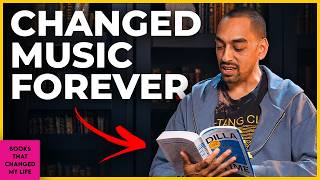
Morgan Stevenson Cooper discusses how J Dilla's humanized approach to drum machines shaped his creative philosophy. After his Bel Air short caught Will Smith's company's attention in 48 hours, Cooper found in Dilla Time a blueprint for artistic risk-taking and embracing happy mistakes over commercial polish.
Questions this video answers
The short was released March 10, 2019; Will Smith's company reached out within 48 hours.
32 years old.
Dilla Time by Dan Charnes.
Chapters
This time on books that changed my life.
You know, Dilla was somebody who reconciled, swung time with straight time to create a whole new time fill. And he did it with an NPC drum machine, and he made a drum machine sound human.
There's guys like Dilla that approach music as an expression of art, not trying to write a hit.
And it changed my programming, especially at the time I read it, coming off the heels of season one of Bel Air, it's like I needed that reminder. And I think, as artists, it's our job to make things that we feel are worth existing and living with the result.
So that feeling led you to write I Can Make a Movie.
This, to me, is more than a children's book. What I hope to achieve while I'm on this earth is to build bridges through this art that I love.
Big question. How did Dilla Time by Dan Charnes change your life?
Mm.
It's a book that.
Welcome to the Syndicatex Library, where we love books, especially books that have changed lives. We have a very special guest with us today. He's the writer, director, and creator behind Bel Air, a reimagination of the Fresh Prince of Bel Air. He's also a passionate reader and most recently, the author of I Can Make a Movie, which is a available now. He's here to talk about the book that changed his life, Dilla Time by Dan Charleston. Please welcome to the show. Morgan Stevenson Cooper. How would you describe the book?
Magical.
Magical.
I would describe the book Innovative, I think, is one word that comes to mind. Dan just does such a good job in the book of reconciling, like, what Dilla's innovation was to music, what James DeWitt Yancey's contribution to music as a whole. But also, there's incredible Detroit history in it. There's incredible black music history in the book that, you know, contextualizes Dilla's contribution to music and art as a whole. And, you know, Dilla was somebody who reconciled, swung time with straight time to create a whole new time feel. And he did it with an NPC drum machine, and he made a drum machine sound human. And he was just being himself. And little did he realize that he changed music forever. And all of a sudden, he's. He's innovating this in Conan Gardens in Detroit in his basement, and half the industry, you know, was using his sound. And it's still, you know. Oh, thank you. I appreciate it.
Would you order a latte?
Yeah, yeah. Thank you.
Cheers.
It's a big latte.
It will be the best latte you've ever had.
Listen, with a cup like this, I have no doubt. I'm just appreciative because I haven't had coffee today.
Anyway. I was getting off on, like, this.
Whole, like, how would you rate the latter?
Mm.
Damn good.
Okay, that's enough.
Oh, thank you. I appreciate it.
You're talking about somebody who broke the mold and followed their own path in a sense, even when it came to.
J. Dilla's, like, reaction or approach to record companies and suits and that sort of thing.
Yeah, I think so. I think, like. Well, maybe I should describe it through the lens of, like, how it affected me. Right. You know, Dilla grew up in Conan Gardens, Detroit, and so he has all this Motown influence. His father was in the music scene in Detroit. DeWitt Yancey, Beverly Duitt Yancey. His father and his mother was an opera singer, Maureen Yancey. And, you know, so he's growing up around all these different influences. You know, he's got. He steps outside and it's like, you're here in Motown, you know, everywhere you go, but in the house, they're playing all kinds of music. They're playing Miles Davis. This is what Dan talks about in the book. And by the way, big shout out to Dan Charnis, like, this is like, master level journalism. And just, like, it's just exceptionally well written. And so, like, I think the inspiration just behind the quality of his work is also something that has had a big impact on me. So I just wanted to.
Yeah, and it's a dense book, written in a cool style.
Yeah. So you've read it.
It's rhythmic, really, Kind of in the style. Right? It's rhythmic, don't you think?
1000%. It's funny, I just went off on a whole thing and you. You summed it up in one word, rhythmic. It's got a pulse to it, but.
It'S rare that a writer can use a style that represents the subject in that way. Right.
Well, and that's the magic of Dan's work, is Dan is a beat maker too. And I've had a chance to.
Spend time with Dan, and we've become friends, you know, since the book's publication and learning more about him. He's like a music historian, and he, again, he makes beats. He made beats. He's been in the music business for so long that only a guy like that, with that deep of an appreciation can take a book like this and, like you said, give it a pulse, you know? So, yeah, it's a great word for it.
Did he Tell you what his inspiration was, like, why he decided to write it, because he clearly put. Was this years of his life.
Yeah, yeah, years.
It's a lot of work like these. These sort of books don't happen by accident. Like. Yeah, there's a certain commitment and a lot of, you know, dedication and work that goes into it.
Yeah, for sure. And, you know, I don't want to speak for Dan, but I will say just in the conversations that we've, you know, he met Dilla. Like, he actually, like, went to the basement. And anybody who's ever, like, from based off. And it's in the book and Dan talks about it, but it's like. It's like visiting, you know, like Mecca, you know, for, like, these people. And you had to go to Dilla. You had to go. And he would make his beats and you would wait for him to finish what he was cooking. And as Dan describes it in the book, so, well, like, he let out a whoop, and that's when, you know, Dilla would have be ready to share something with you. And, like, Dan got to experience that. And I think Dan told me that he went to Mongolian barbecue with him. Like, he spent time with Dilla and Conan Gardens. And so, like, he got the firsthand account of his brilliance of seeing the mastery in which he used the machine. Like he was there. And, you know, I've always loved Dilla since I first started listening to his music in high school or as a teenager, as, you know, really, when I was 12, is when I was first introduced to Dilla sound. But it's really hard. It was really hard to find information on Dilla before this book. He was always kind of this.
Mystery man, you know, this genius. And, you know, there'd be interviews. There are a couple of interviews online, but it's really. It was hard to, like, understand, you know, understand, like, his life and, like, give context to, like, this incredible music he was making. And, you know, Dan just through incredible journalism and a commitment to making sure that. That Dilla's legacy was respected and upheld at the. You know, he's like Mozart, like, for real, like Miles Mozart. All these people who changed music. It's like, James Yancy deserves to be held in that regard. And Dan is a big part of why people today understand that sound. So.
So when was the. The first time you, like, were aware of Dilla Donuts?
You know, I. When I was. My brother came back from college when I was 12, and he played me two records. He played me mad villainy. Do you know about that record. So that's MF Doom and Mad Lib, you know, formed a group together.
Called Mad Villain and they released Mad Villainy on Stone's Throw. I think it was in either 2003 or 2004. But he comes back from college with this old ass ipod. Yo, Morgan, listen to this. I put it in and it changed my programming. Like I said, is this. You know, it's like incredible. And what.
What is it that. What about it changed your programming?
You know, growing up in Kansas City, it's like you're exposed to like a lot of local. Right. And so you growing up listening to like Rich the Factor and like all these like local rappers, but we're also listening to like Dipset. You know, Jeezy was huge. When I was in middle school, young Jeezy, you know.
Clap like all those sounds like we're getting that in the middle of the map. And on the outside of that, you had the underground. And Dilla was a part of that. And when he played me Mad Villainy, it was the first time I. I remember the first time I heard it. I didn't necessarily like it, but.
Yes, I did. I really, really liked it, but I didn't understand it because it was so foreign. I'm like, this breaks all format of the stuff that I heard on 106 and park after School Every Day. The first song, like the intro is just like a collage of different sounds. And like, you know, it was just so animated and it was. It didn't take itself too seriously, but it was so elite with the lyricism of Doom on that record and Mad Lib's production and sequencing on that record. And I'm 12 years old. I'm not like, I couldn't break it down at the time, but I knew it was something different. And I found myself listening to it every day and falling deeper and deeper in love with that record. And till this day, I have to listen to that record once a month. It's like required because it was so honest. It. Yeah.
So I'm not. I'm not trying to put words in your mouth, but I'm going to take a shot at trying to kind of describe the differences. In a sense, a lot of music, although it's art, is more formulaic. And as music became digital and drum machines were introduced, things became a little more perfect and kind of predictable.
Yeah.
And then there's guys like Dilla that approach music as an expression of art, not trying to write a hit.
Yeah, that's.
Would that be a Good way to kind of try to explain it.
Yeah, I think so.
It's art.
Yeah. And I think, like, record companies certainly didn't help that, right? No.
They want to hit.
Yeah, they want to hit and they.
Want it predictable and formulaic.
Yeah, that's exactly right. But I don't think everything has to be for everyone. And I think that's coming back to, like, why this book has such a big impact is like, Dilla made the music that he felt. And I think as artists, it's our job to make things that we feel are worth existing and living with the result. And reading that, I think, especially at the time I read it, coming off the heels of season one of Bel Air, it's like I needed that reminder stepping into this, you know, this different. This new chapter of my career and these last three years and especially the last, like 18 months, you know, and this is a book that I keep. Always go back to now. It's a big part of.
Is that your original copy?
Yeah.
Can I.
It's kind of up.
No.
At the top of the years, you know, when. Yeah, yeah, I know, but I love it. Yeah.
Are you. Do you highlight?
Yeah, yeah. There's some highlighting in there.
Do you feel like I'm intruding on.
No, it's all good. This is too insane. That's cool. Do you think? I just didn't want Dan to see this cover all up, but, like, it was a mad scramble when the fires were going on because they were encroaching on my crib.
And this is what you took?
Well, yeah. It was one of the first things I grabbed and I'm like, packing frantically in, like the. The front cover. You can see it got a little. A little ripped.
Yeah.
But it's hanging on. Yeah.
You know, you could.
I know, yeah.
Yeah, I'm sure you will.
Yeah.
So you highlight. We're very similar.
Yeah.
In the style. That's amazing.
Yeah. Thanks, man.
And this is my children's book. Well, just the. The COVID I did want to share this with you, though.
Because Dan was a. You know, it's not a one to one, obviously. This is about J. Dilla, but, you know, it was inspiring. So I wanted to step into telling stories through literature this way.
What's the. What's the intention? So your book is. I can make a movie.
Yeah.
And it's a children's book. What is the intention of the book?
I'm so glad you asked. The intention. Well, it's just a context. It's about a young girl named Nora Rose, who is on a quest to make her first movie in Kansas City with the help of her brother, her mom and her two cousins. And they go on this movie making adventure. But underneath the surface, the intention behind it is to communicate to kids to be decision makers.
Especially at a time when they're bombarded with media telling them what to think, what to wear, how to look. Everything is all about messaging, messaging, messaging, messaging. Be more like this, be more like this, be more like this. But the act of making a movie is an act of decision making. Right. So this is my way, this is my offering to tell kids to think critically, learn to problem solve and make decisions. Because when you're making a movie, it's, you know that that's my day job. Right. When you're sitting in that director's chair, you're making thousands of micro decisions a day. Thousands. And they all affect this bigger idea. And you be you, you, you, you really learn to think for yourself. And you have to be able to block out the noise and say, this is what I want to do. And I want all kids to know that, like, make decisions for yourself. Believe in what you have to say. And this is my offering. And how to communicate that.
That's beautiful.
Thank you.
So in that, in that creative process, Dilla has been a huge influence on you when you were looking for some sort of guidance.
Yeah. Just to context even more, you know, it came on the heels of. Of season one of my show, Bel Air.
And so maybe let's go through the story of that. So the way, the way that I've heard the story, and please correct me if I'm wrong, you made a short of the Fresh Prince of Bel Air that was more on the serious side.
Yeah. Reimagined as a, as a drama, a modern day drama. Yeah.
And so it was kind of your expression of it, in a sense.
Yeah.
Right. And what was the inspiration behind that?
It's just something I felt.
And so you put it out and then it got noticed, right?
Yeah, just. I'll give you a quick snapshot and then we'll pick right up where you're going. So I was driving, I was in Kansas City. This was late 2017. And at the time I was working as a professional cinematographer, but I wanted to pivot into writing, directing. And so I was taking commercial money and funding my own short films because I wanted to break in and amplify my voice at the highest level. And one of the downloads I got, when I was driving down the road in Kansas City, I was on 71 highway and drove under this bridge, and boom. I get hit with this vision to reimagine the Flesh Prince as this drama. I have no idea why this vision hit me, but I had the idea and I was really compelled and I decided, I felt in my heart, you know, this is what I need to do. And so we. We make the short film, we drop it. March 10, 2019, in less than 48 hours, Will Smith's company reaches out and says, we love this and we want to talk to you about it. So I go to Calabasas the next day, and will is on FaceTime. He was down in Miami doing Bad Boys 3 at the time. He had, like, prosthetics and shit on his face, and he was like, yo, man, like, I love this. What do you want to do with it? And I pitched him my vision. I was ready to share this idea of adapting it into a one hour drama and the rest is history. We started developing it, we got into a deal, and we just wrapped season four. So we're in post on that right now.
So coming off of season one, how are. How are you feeling?
That this. That this.
Yeah, the highest of highs and the lowest of lows explained. You know, it was a dream come true to, you know, have created a show with somebody I've looked up to for so long, you know, and Will. But also, like, you know, I'm an artist, man. You know, it's like, I'm an artist and like, like, success is great and everybody wants success in whatever you're doing, but, like, a big part of success to me is, like, feeling creatively challenged and creatively fulfilled. And, you know, this was 2022, late 2021 when we released or. Yeah, 2022, top of Q1, 2022 when we dropped season one. And it does very well. And. But by that point, man, 2022, I told you I had this idea in 2017, right? That's four years of my life committed to this idea and, like, carrying that weight, you know, my cousin Charlie had just passed, you know.
Yeah.
Yeah.
I'm gonna hold it. Appreciate it, man.
Yeah, man.
When we shot it, the short.
You know, the very first location was at my cousin Charlie's house, you know, and he let me use his space, you know, to shoot a scene in there. And I was so excited about Charlie coming out, visiting set once the show got set up. And, you know, he died.
Two weeks before I shot the pilot. And it. It really left a big hole in my heart.
How did he die?
Pancreatic cancer.
Yeah. That's tough.
Yeah. And he was battling it for, you know, eight months. And I was out in la. He was back in Kansas City, and we're developing this show, like. And, you know, I wrote and directed the pilot. You know, it's like, there's so much to do in that job that I couldn't. It was so hard to break away, and I felt so much guilt for so long because, like, as my dream is coming true, it's like, that's my guy, you know, and he's dying, and it's just. Anyway, so we get to the end of. Of season one, and it comes out, and, you know, I'm still carrying that, obviously.
And also, are you kind of doing it for him in a way, or. He's in there.
Yeah. Yeah, he is. In fact, Jazz's record store in the show is called Charlie's Vinyl, and we named it after my cousin, so. That's awesome. Yes. My. It's my guy.
So you finished season one?
Yeah, so.
And you have that in your head, and then there's. Is there, like, a feeling of accomplishment, but also a feeling of, like, emptiness, because now it's done.
Yeah. So I guess from a creative perspective, it's like Bel Air wasn't my only idea. You know, I've always been an ideas guy, and all of these ideas are like, you know, they're like my children. Right. So to speak. You know, you love them all, and you want to see them all grow, but, like, I've got this big piece of business through Bel Air, and I've invested so much time into this project, and, you know, I'm ready to do these other things. And at that. At that time, it's like, you know, I'm going back and forth with my reps of, like, should I really double down on, like, television and, like, you know, doing the things that, like, other people think I should do now that I have a successful show, or should I invest in these other ideas, you know?
And do you have enough money to make that choice, or was this more of a labor of love?
What do you mean?
Doing the Fresh Prince. Like, did. Do you have enough money now to go do other stuff when you were done with it, or.
Yeah, it was. Yeah, it wasn't about money. It was just about what felt right in. And not being pressured to do things just because everybody else thinks you should do it or. You're the Bel Air guy.
Right.
You know, it's like Bel Air is one of many ideas. I'm so proud of that Show. I'm so proud of it. I'm proud of the work that we've done, and I love that show, and I'm so proud of it. But it's not the only idea I have, you know, And I think I'm somebody that's called to bring a lot of ideas into the world and inspire others through my ideas and tell stories that make people look at the world differently and hopefully for the better and empower my community through it. And I didn't want to be tied down to one thing. And so reading about Dilla and just how prolific he was and how he broke the mold and was willing to bet on himself and bet on new ideas and reinvent himself and challenge himself.
To stretch both from a creative standpoint and with his career was. I needed to read it at that time. I'll just put it that way.
And so then what is the outcome of it or how does it affect your creativity? Does it give you confidence to do things the way you want to do them or.
Absolutely, absolutely. And that's. I think that's the essential ingredient for creative to really express themselves honestly is confidence. It's a forever journey, and I don't think it's like, oh, you have confidence, and it just stays there. Sometimes that confidence could get knocked down, but you have these things that put that battery in your back that remind you. It's like, nah, man, fuck that.
Dilla, my heroes, they took risks and they bet on themselves. And I've always been. That's always been. My thing is, like, trust your gut, dude. And it's not about another thing. I love about Dilla and his sound and him reconciling swung time and straight time is like leaning into the imperfection, you know, and. Right.
The humanity.
Yeah, that's. That's. That's the word. Leaning into the humanity and the art.
And, like, there's an empathy with the humanity in a sense. Right?
Yeah. Yeah. You're spot on. And an audience feels that it really translates. And again, I want to be very clear, like, I'm not saying any of this to, like. Like, I really love Bel Air. I'm so proud of what we've made, but there were just other things I wanted to do. You know, I was in such a different place in my life when the Bel Air idea hit me. And, you know, that span of five years, it's like, you're ready to do other things and you're ready to grow and spread your wings and explore these other textures and, you know, and it feels like you're suffocating. When you can't get those ideas out, you know, it really does. It's like oxygen.
Okay, let's go. Let's go into the book a little bit.
Okay, sure. Yeah.
Can I. Can I hand you this copy and we'll.
It's in much better shape. Okay.
Page 12.
Our music.
Our musical expectations are governed by where we're from. Pitting twos against threes in this manner was foreign to the European practice. What the Africans heard is music Europeans heard as wrong, alien, uncivilized. When the Europeans came to impose their will upon the Africans, these cultural biases played no small part in their justification for what would become the most atrocious imposition in human history, the transatlantic slave trade.
I wasn't aware of this, but that they. They controlled what kind of music they could play.
Right.
They censored. They didn't want African music. They wanted two, four, basically, instead of the threes.
Yeah.
And we're talking about tempos.
Yeah, right.
Or sick. Time signatures.
Well, yeah, but also, like, feel like time. Feel right. Because you can have something. You talk about time signatures. Were you. Did you, like. Were you a music kid?
Yeah, I played drums.
Okay. Okay, great.
So my first drum machine wasn't. Was the 909.
Nice.
And I. I learned it, but I really used it as a click.
Okay. I love that, man.
I wasn't getting replaced by a drum machine. Like, to me.
What kind of music did you play? Like, what. What sound? Rap. Like, what within rap?
Well, I mean, like, I grew up playing in the church, so praise and then rock and, you know, I could play. I could drop a beat.
Nice. And. But within that question, like, it wasn't. It was just more like that. The feeling, you know, that was. And I think still to this day, like, you play some, like, funky shit for certain people and, you know, it's like.
Well, yeah, but there's a bigger evil hand in keeping somebody from feeling that a thousand percent.
Because music speaks to our spirit. Music motivates people. Music is like freedom, you know, it really is. Like, when you listen to something that just makes you feel like you can, like, do more than the world expected of you. Expected of you. You do something that you feel so connected to your community, your culture. It's like community as well. Right.
Go to 23. So this is about Motown, and I've studied Motown. I didn't know this.
Barry Gordy II and his wife Bertha, followers of Booker T. Washington's philosophy of self reliance, opened a grocery store in Black Bottom that bore Washington's name and other businesses too, instilling in their eight children a similar entrepreneurial spirit. Burberry was the name of the family fund into which all of the Gordy's adults and children were required to deposit regularly a modest reserve of capital, out of which the children could draw a loan for any venture approved by the family members. In 1959, the Gordy son, Barry III, applied for a loan to start a record company. And after much debate, he was given $800.
Isn't that incredible? Yeah, that a, that a family has an entrepreneurial fund and the kids pitch their business plan and that, that was how Motown started.
Love that though, man.
And like, that's good parenting.
It's very good parenting. And there's like a lot of foresight involved in that and belief in what you, you know, what your family could accomplish. Right?
Yeah, I would love to hear all the ideas that got kicked. Kicked away.
Yeah, yeah. It makes you wonder, right? Like, you know, who had that, like, way outward idea, you know?
Okay, page 45. And so he's talking about programming.
Yeah. All right. DeWitt and Maureen had programmed James with the music of their lives. Jazz, soul, Gospel, Classical. His 10 year old body contained at least 50 years worth of code. Bass lines and drum riffs, melodies and cadences. But as he got older, James began to program himself.
And so his dad kind of programmed music into him by exposing it, exposing him to it very young. But then there's just a point where he has to then create his own music.
He has to go off on his own path. Yeah, yeah.
When did that happen for you?
Yeah, you know, I felt such a kinship to that experience for James because that was very similar to my dad. My dad was a much older dad when I was born. My dad was 50. Right. And so you can imagine being, you know, 10 years old in the car with my 60 year old dad. He drove this Cadillac and he had the seat way back with these like round front sunglasses, one hand on the wheel, whipping it hard, you know, through Kansas City, you know, driving downtown and we'd be playing Frankie Beverly and Mays, Miles Coltrane, Cannonball, like all the jazz greats. And so I'm 10 years old, you know, getting this download and finding an appreciation for these sounds like I, I love those records. And like, you take all of that and eventually two years later you hear mad villainy and you start to recognize these through lines. And then you get older and you turn 18 and it's like you're off on your own path. But you still have that coding. That code is like, download it. It's part of your programming now, right?
What age were you when. When you felt like, now, I'm. I'm gonna. I'm gonna express myself.
You know, I only give pause because I feel like every year I feel I step into that even deeper.
You think there's levels to it?
Absolutely, I think. I think it's lifelong. I really do. You know, the world changes every day. We change every day as humans. And I think it's a lifelong venture to express yourself in the most honest way and shedding all insecurity about what somebody's going to think about it, what somebody may criticize you about, and just in that freedom. But I'm really proud to say I feel like I'm going in the right direction every year. I feel like I get closer and closer to that place. And I have a deep desire and hunger to.
You know, to continue to go deeper into that journey. So.
Page 77.
Man, you guys are so on it, man. But those mistakes man made, machine made mistakes were thrilling to James. They reminded him of messy house parties and the interminable rehearsals of his childhood and the discord of music, of musical devotion in the sanctuary of Vernon Chapel. The unity made from the chaos of humans interacting to Natalics. The interacting part, the sound of air, stayed with him. It remained until he found a way to make those errors on purpose.
Ah.
Dilla. Man, I wish I could have met Dilla. Man, I wish I could have met Dilla.
Can you think of an example of something that you were creating that in the moment, felt like a mistake, and then when you watched it back, it was like, oh, that's magic.
What do they call? They call those, like, happy mistakes.
Happy mistakes. I'll be honest with you, man. It's like I'm at the point creatively where if it doesn't have a happy mistake, it's not right.
So your default setting is kind of like more jazz than quantanized drum machines. Quantized drum machines, absolutely.
So, like, I'll give you an example. It's like, you know, when we rehearse a scene and I want to be very clear with you, like, I'm very specific as a director. Very, very specific about what I want. But within that, within this vision, you know, for a sequencer, a scene or a line of dialogue, it's very important that an actor has authorship over what they do. And oftentimes I'm looking for the thing that augments this idea and that takes it to the Next level. And usually the most interesting choice is a little left of center. And so that when I'm behind Monitor, we're the first audience right behind Monitor. And I get that feeling of surprise and honesty in it that elevates this piece of direction. That's when I know I have it. And so that's what I look for. And my job as a director is to put an actor or my ensemble right in a position to capture those happy accidents. Right.
And that's the humanity.
Yes.
Yeah. Okay. Page 170.
Yeah.
One evening, James felt like catching a movie instead of working. I love this part. One evening, James felt like catching a movie instead of working. They went to see a new action film starring Keanu Reeves and Laurence Fishburne. A science fiction dystopia about a future in which machines declare war on humans. The concept wasn't foreign to an audience of Detroiters. In the film, a gifted computer hacker is told by a strange new friend that he and all humanity are imprisoned in a grid they cannot see called the Matrix, and that his destiny is to free everyone from it. He doesn't believe them. Their reverence for him makes him uncomfortable. They call him the One. He replies, I'm just another guy. The hacker acquires some skill jumping in and out of that grid, from the world of humans into the world of machines. In the end, he becomes a master. He can bend the grid to his will. Everything and everyone in it. The machine world becomes just a cascade of readable ones and zeros to our hero, Neo. When they emerged from the theater, Common could see that his friend was having a moment. James couldn't get the words out to describe how he felt. And so to hear that, you know, Dilla loved the Matrix, man, that was always a movie you watched growing up too. So like. And that's what he was doing is like, you know, like taking a machine and making it, like the interaction between humans and machines and what he was doing, you know, it's. I always love that part. And it's Dan, like, we've talked about that moment several times and yeah, it's a great, great passage.
194.
The significant women in James's life, whether in the professional or personal realms, were more caregivers than partners, as it was for many men. In a circle of family and friends, women were either objects of desire to be chased or kept, or figures to worship and protect. Women who knew James casually experienced him as shy, sweet and polite. And he was shy, sweet and polite. But in his adulthood, James's main Interaction with women happened in the controlled environment of the strip club, where the relationship between men and women was strictly transactional and the power of choice resided in the men with the most money. James leveraged his clout to maintain his control or to escape consequences. Yeah, the realness in it too is like, sometimes in these books, like, they can get a little, like, puff piecey, you know, And I really appreciate Dan, like, you know, exploring the complexity of Dilla.
And I think the way he describes it is really, like, right on.
Yeah, like, no, it's. It's very. Is very honest and, you know, it just speaks to the complexity of, you know, this guy who's just such a brilliant artist and human, but also he loved the strip club and just like opposites, you know, these things that you wouldn't expect, but it was all a part of who he was and the perspective in which he created. Yeah, yeah.
How about 233?
Halston would later speak on the moment as the most humiliating of his professional life. The Roots in Common ultimately made the cut with words whispered from producer Dr. Dre into Iovine's ear. But nothing was more indicative of their diminished horizons than when Jimmy Iovine, in a meeting with Harlston Questlove Black Thought and Richard Nichols was, professed his admiration for the Roots, but blithely suggested that the best course of action for them would be to be the backing band behind his shinier star, Eminem, now the leading man of an autobiography of an autobiographical hit movie, 8 Mile. The suits ran the table. The soulquarian got the scraps.
Have you experienced that?
What do you mean?
Just where the business people had a different opinion than the art.
Oh, absolutely. I mean, listen.
That'S the battle of working in any industry, any creative industry is like, you've got the artists, then you have the people running the numbers, and you have to reconcile both sides and come out with a result that is favorable for both sides. But I find that to be a great challenge. I actually happen to enjoy that. The reason why is because, like, I think about, like, Quincy Jones, you know, I think Quincy is somebody who, like, I mean, just.
So high level of an artist, but understood how to take high level artistry and make it commercial for the masses to enjoy. And I think both sides can exist together in harmony. But so often I think you have on one side of the table, it's like the art that is like, super Sundancey, you know. No, no disrespect to a Sundance movie, but something that, like, isn't really accessible for A lot of people, right? And it doesn't do well. The movie bombs or whatever, doesn't make its money back. And it kind of hurts the ecosystem in a way, of people not wanting to invest in those types of movies. The flip side of that coin, you have people, you know, the suits, that want something so commercial, there's no soul in it, there's no heart in it. And people watching don't give a fuck because they can't feel it, they can't connect with it. There's no humanity. That's the word he used earlier. But then you have that sweet spot where it's like, super thoughtful art, driven, inspired. But it's something that can speak to a lot of different types of people. That's the art I'm interested in making. I think that's the art that can change the world. Because if I'm just making and preaching in the choir, how is that going to actually have an impact at scale? The idea is to create incredible art that's thoughtful, that isn't pandering. But it's fly. It's fucking fly and interesting and compelling and inspiring. But do it in a way that. I'll give you an example. It's like we kind of sit at these different tables, right? You go to the lunchroom I heard this once of just like you sit at a different lunch table and oh, man, you got the art kids over there, black people over there, white people over there, Latino kids over there, misfits there, jocks over there, and everybody, like, segregated. Then you have people who can sit at all those different tables and have an authentic conversation. And I consider myself one of those people because my grandfather was a harpsichord maker, because my dad grew up on 12th street and was 50 when I was born, right? So I have all of that DNA within me to be able to sit with the Jacks because I played AAU basketball growing up. So I can sit with the Jacks. I can sit with the art kids because I'm an artist. I can sit with black people because I'm black. I can sit with white people because half my family's white. You see what I'm saying? And have that authentic conversation and be able to sit there and say, you know what? Maybe we should be sitting at the same table because here's all of the reasons and through lines, why our experience is similar.
That's a great answer. It's a great answer. I think most people think that they're in conflict with each other.
It's bullshit.
Yeah, it is. Usually it's usually not good art.
A thousand percent. All those things can exist. And it's like.
I'm so. Like, I'm so excited about this next chapter, you know, of the work. I'll give you an example, you know, and then we can go right back to these passages. So when we were talking, my publisher, the PR lady, in the press release, they wrote a story about a black girl making a movie. And I sat there and I said, like, why can't it just be a girl who happens to be black? Like, why do we have to say black girl and put it in this box and make anybody who isn't black feel like, well, damn, maybe that isn't for me. This is for all people. You see what I'm saying, right? And that's the lens in which I want to create in these, like, labels. I want to, like, start like, there happens to be a young black girl, and it's about her family, who's black, but it shouldn't be labeled as a young black girl making a movie. If it was a white girl, they wouldn't say, a young white girl making her first film. Right? And so what I hope to offer is these bridges into people realizing, like, I want a young Latino child, a young Asian child, a young white child to look at this and find inspiration from Nora's story the same way a black child would. And I'm committed to putting black people at the forefront of those stories, but also recognizing that I want all people to be able to read this story and feel they can see themselves in her and her motivation. You see what I'm saying?
Yeah.
It's like, I think that is so important for us to be able to move forward from so much of the bullshit that we experience. And all this divisiveness, it's bullshit, man. It's fucking bullshit. And I'm tired of it. I'm tired of the divisiveness. I'm tired of people sitting at different tables pointing the finger at each other. Like, we haven't even scratched the surface in terms of human collaboration because we're afraid of each other.
My message and what I hope to achieve while I'm on this earth is to build bridges through this art that I love. And I know we'll go right back to Dilla, man, but, like, this is more than a children's book. This, to me, is a bridge of communication. And that's what I hope to achieve.
I mean, that's, in a sense, the power of art.
I'm gonna set this right here so y' all can get is it in the white chat.
286 I just want your take on this. So ODB had passed away like 6 months earlier. And he woke up and said he'd been talking to him, right?
Yeah.
And he was telling him not to. What is it? Not to get on the red bus or something like that.
I'll read this passage. James began laughing.
So just for context, whoever's watching, you know, Dilla was sick and.
He was basically murmuring and asleep in the middle of the night and he kept saying o D O D. And his mother Maureen was in the hospital watching him as he's, you know, he's basically hallucinating and he wakes up and she asked him about it. Right. So James began laughing. So she said, so who is. So who is od? James looked at her. Why you asking? She told James about his delirious one sided conversation. James began laughing. Odb, he told her Old Dirty Bastard, the rapper who died a few months ago. James gave her ODB's side of the dialogue. And that's Old Dirty Bastard from Wu Tang Clan. ODB said don't get on the rebus. He said to stay where I was and he'd come back for me. And when he came back, he said I could have any kind of ride I wanted. Anything you want, you'll have it. Don't worry about it. He said to stay where I was. And Dilla was dying at this time. He was. He was in the hospital at Cedars Sinai.
That's a best man.
Have you ever talked to anybody on the other side?
I have.
Twice. I guess I'll share a little bit. I did not expect to talk about this, but I'm glad we are.
Yeah, I actually, you know.
Connected with Charlie on the other side and on the other side of. Because I carried a lot of guilt for not, you know, I literally had to choose between like directing this pilot and going to visit Charlie before he died. You know, I was, I was really close to getting on a plane. I was. But then I, you know, I talked to my family and they're like, you know, Charlie would want you to do that. Like, you know, Charlie would strangle you if you didn't. And that's true. Like Charlie wanted me to, you know.
But anyway, to make a long story short, had the opportunity to connect with him and put that to rest. And I've found peace with that situation, which I'm really thankful for.
Anything else in here that sticks out?
No, I just think everybody should know about James DeWitt Yancy I really do. It's like, you know, he's somebody who isn't really well known in mainstream. In the mainstream context. And if you know Dilla, you know him and you respect him and you respect his contribution.
His influence is everywhere. It's everywhere. Your favorite producer is influenced by Dilla, no question. And I just think even if you're not a beat maker, you're not in rap. You know, if you're an artist and you care about culture and you care about.
Artistry.
You need to know about Dilla and his impact and his life. And, you know, he's a guy from the Midwest who bet on himself and was a dreamer and changed music forever. And it's really unfortunate that he didn't. I don't. I don't think based off. I've never met him, of course, but, like, didn't fully feel, like, appreciated, and I think that's such a shame. And he died at the age of 32. He's only 32 just at the beginning and did so much, was so prolific. And so I would just say it's very important that James gets his flowers. And so it's just great to be talking to you about this book, and I appreciate this opportunity to talk about it.
Big question. How did Dilla Time by Dan Charnes change your life?
Mm.
It's a book that made me more fearless as an artist, as a person.
That's awesome. That's great. You brought some other books.
Yeah, I did.
You know. Have you heard the Duchamp lecture the Creative Act?
No, I haven't.
So this is. This is named after a lecture by Marcel Duchamp that he did in Houston. That's like 14 minutes.
You'd probably like it.
I'd love to. Could you send it to me after this?
Yeah.
Thank you. Yeah, I just bought some random things. You know, a lot of this is like.
We have some very similar tastes, you and me.
Yeah, I think so.
I mean, especially with this.
Yeah. Yeah.
And then you brought me a gift, which I'm very grateful for.
Yeah, of course.
Which is Kansas City, An American Story.
Yeah, just some. Some, you know, early history of. Of Kansas City. That's where I'm from. I'm very proud to be from Kansas City, and some of the most brilliant artists I know are from my hometown. And I'm very proud to be from Kansas City, and I'm excited for. There's so many great voices that I'm excited to continue to emerge, but that's just like.
A good kind of glimpse into you know, it doesn't have all the history, you know, but I thought you'd find it interesting. So cool.
Well, thank you. Thanks for doing this.
You're welcome. Yeah, it was awesome. Pleasure to connect.
We are so excited to announce the Books that Change My Life website. We made a way for you to show your book pride and that you love books. Hats, tees, hoodies. Check it out. Link in the description. Everybody needs a self help hat.







