Hiring Crisis! Why Dealerships Can't Find Advisors | SDR #292
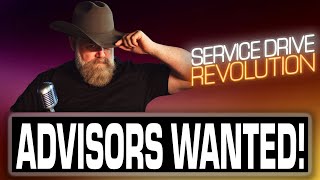
YouTube episode (Service Drive Revolution #292) hosted by Chris Collins with Christian and a guest (Chris/“Hoagie”), recorded around June 24, 2024. After light banter and announcements about Chris Collins' leadership book and community, the hosts discuss current industry trends (consumers keeping cars longer — average vehicle age cited as 14 years — and high new-vehicle prices) and a reliability/brands list. The core of the episode outlines five reasons technicians and service advisors will join a dealership: (1) the shop is busy, (2) strong culture, (3) work is fun, (4) performance is rewarded, and (5) clear career path with examples. The hosts emphasize that attracting high performers requires visible systems, performance-aligned pay/training, and growth opportunities. Closing includes CTAs (subscribe, call-in number for questions, offers link).
Questions this video answers
June 24, 2024 (episode metadata/transcript reference)
14 years (average age of cars owned, cited from Wall Street Journal)
$47,000 (average transaction price cited by the hosts)
8333 Ask SDR (spoken: '8333 Ask SDR')
Chapters
Welcome everybody to the big show. We're back. We have a great show for you today. We're going to talk about the five reasons techs and advisors will come work for you and catch you up on everything that's been going on and much, much more coming up right now in service Drive revolution.
Believe it or not, people missed us.
That's a word on the street.
We have a special guest today, Hoagie. Actually his name is Chris, but I call him Hoagie. It's very confusing. All the Chris's and Christians around here.
Should be a hiring thing that. Yeah, nobody else named Chris. Can we, can we institute that?
It feels like we're gonna do a flip because for a while it was all we hired and now we're like, okay, we did, we got, we got a little out of control here.
It was fun for a second.
So we've been, we've been pretty, pretty busy. New leadership book is out. The community that comes with it, the app and all the training is coming right behind it. And the thing is selling pretty good. It's crazy.
It's fun. We get the notifications every time one sells and it feels like an angel's getting its way.
I'm gonna, I'm about to turn it off. Like it's. It was fun in the beginning, but now it's kind of annoying. The other thing is people are buying more than one now, which is odd for the price point. If, if you don't have the, the leadership book. And I don't know, for some of you, this probably isn't a book that you should get. I don't know how we tell them who's who, but if you're not serious about being a leader and you're just a middle manager, this isn't a book for you.
Yeah.
Because it's not a fluff, not one.
You pick up to check out.
Yeah. It's a book that you would have forever and kind of reference. And it's a book that's going to be a journey, not a, not a destination. But it is. I am LeaderBook.com, right?
Yep.
If you want to get it. I am leader book dot com. And then it comes with some online training and a community and some fun stuff that we've been doing. So we've done that. I'm wearing the cowboy hat because one, you're here. But is that a Resist? What's that? No, it's a Stetson.
It's a brand. Oh, it's a Stetson.
Is a Resist all a brand?
Better than the Stetson brand.
Is that what yours is?
I wouldn't say. I. I have a Resistal. Yeah.
How many camel hats do you have?
Probably like three or four.
Is that low for Oklahoma?
Probably.
Probably it's two. Yukon, Oklahoma, where I'm at in Oklahoma. It's probably a little low, but.
Do you have more shoes or hats?
Shoes.
Okay.
Shoes, but. But yeah, sometime we'll have to get you out to Oklahoma City. We'll have to go to Shorty's Hattery in the stockyards, and we can have some fun getting some cowboy hats. She's the cat's meow when it comes.
We did our coaching calls.
Yeah.
Was that yesterday?
Yeah. Yes.
That's so funny. You did them from home yesterday and now you're here, Right. In the communist country of Los Angeles. You were so funny that on one of the calls you worked in a Dallas Cowboys.
Oh, yeah.
Mag.
Yeah.
That's a negative association to Dallas Cowboys.
I mean, sometimes they kind of do it to themselves, but I wanted to.
Jump in, but it worked. It was funny. I don't know why that came to mind, but it cracked me up. No, we took everybody to. To a Zach Bryan concert. I actually went twice and. Incredible.
The.
You know, a lot of people here don't listen to country music. And by here I mean the office, but I also mean LA in general.
Yeah.
Like, people will fly from other parts of the country because you can get the tickets to Morgan or Zach or whatever, man. He put on a great. A great concert. He's from. From your neck of the woods, right?
Yeah, yeah, yeah, yeah. That's. Yeah. It's kind of funny. Like, I don't think of country music in. In la, but. But I guess there was a good turnout. It was.
It was sold out all three nights. And the.
They.
So it's where the Lakers and the Clippers and the Kings play. So. It used to be called Staples. Now it's called crypto center, crypto.com arena. Yeah, I still call it Staples, but.
The crowd was singing louder than him. In a lot of. A lot of songs, it's supposed to.
Be a hot ticket like it's supposed to be.
He just comes out and plays brave about it. It's not. There's no pyro. There's, you know, it's not a big production. It's just all about the songs.
He took no breaks. He literally just went through his set and.
Well, he does an encore.
Yeah. But in general, there was no.
You know, what's funny is so he Plays in the round for the encore. He's got to walk all the way out, come back. When they come back, they almost run because it's like a. An entrance for a fight kind of a thing. Actually, it's set up like a fight. He's in. He's in the. The middle. It's hilarious. Christian wars cowboy boots.
Oh, yeah.
Yeah.
What do you think about the cowboy boots that are pointy versus the ones that are flat squared?
I don't know. I think it's just, you know, personal. Personal preference. I don't. I don't know that I have opinion, and I think it's just the. The style, the material, the color, just everything you're kind of going for.
Doesn't say anything about somebody when they wear pointy.
Well, I mean, like, if you were to analyze them, like, like, would a.
Cowboys fan be more likely to wear pointy or square?
America's team.
I don't know. I don't know. Because some of the points.
By the way, you guys, he's a Chiefs fan.
Yeah.
If you don't know that.
I am a Chiefs fan.
Die hard your whole life.
Hard to be hard to be a Chiefs fan.
Not really. It was. It was for a while, but it's getting. It's getting easier. But it hasn't always been that way, right?
Like, no. They had a.
All the fair weather Patriots fans are Chiefs fans.
Yeah, yeah, yeah.
That actually kind of reminds me. We got this for you.
Oh, thank you.
You should see what this. What this is.
So should I open this?
Christian actually. Actually had that wrapped for you this morning. It was a whole production.
I think it. The conversation is something like, I'm mentally challenged when it comes to wrapping gifts. Can you help me? And I think that's how it kind of went.
She helped you?
She did. She did a great job.
You might need a pen. Yeah. I figured since you're a technician that you would have no problems opening up.
What else, Christian? What else has.
Man, we've had some crazy results. I've never seen.
Profitability.
Like we're seeing. Yeah, big stops is definitely the focus right now.
Well, the funny thing is I think that there's a great divide. It's. I'm seeing more people at the top, and then I'm also doing some strategy sessions where I'm seeing a lot of people at the bottom, too. But we did a group call yesterday where out of, let's say, 20 dealers, the fourth place team in net to gross was still at 50%.
Was the fourth place like that Crazy.
That's people getting it done efficiently.
And I thought that. And we had a record.
My people too. From the state of Washington.
Yes.
Record. To elite group. So we. If you're not familiar with how our. Our program works is we have competition that's managed by the software that Christian's in charge of.
Do you like how he just laughed? He couldn't even make it through the fact. It works, though. And I might be in charge.
It does work. Oh, look at this.
That's awesome.
Tell everybody what it is.
So it's afl to arrowhead.
Four decades of chief's history and trivia. And then it's autographed. One of them is Lynn Dawson. This is cool. Thanks, guys.
Couldn't pass it up for your library?
Yeah, absolutely. That's really cool. Sweet.
Thank you. We have this software that the advisors compete against each other in different categories, the categories being kind of the brands. And.
That'S the. When you come into our. To our group to become elite and be a part of the elite group, you have to win that thing. And so you have to have a certain net to gross. You have to have a certain customer satisfaction, but you got to win that. And that's the hardest thing for everybody. And so we had somebody come in and in record time made it to elite, which is great. And a sweet guy.
He's really sweet. It was about as fast as. That'll be a tough record to break.
Yeah.
So I don't know how it could go much faster.
You could tie it. You could tie it, but it would be hard to.
Yeah.
Because it's one month, basically.
Yeah.
Which is how long it takes to win the comp.
Yeah.
But congrats.
But most of the time people don't want to be in the comp yet. Like, they want to delay it.
Yeah. Yeah.
And so great overall for that. So fun stuff. Anything else I'm missing to update? People have been calling, asking when the show's gonna come back.
Yeah, we've had. We've had. We appreciate the love emails and questions and call ins about what's going on and finding comments in the weirdest places. Like, there was a. There's a comment that I responded to on Facebook where we were talking about the. The book and they're like, when are you guys coming back? And I'm like, soon, brother. Just wait a little bit longer. And it was really, really fun. Another thing about the group that got to elite, that I think that this is really important and just kind of. It talks a little bit about the magic that can happen when we're in those stores is that he had an advisor starting out and she was just. She wasn't super sure. Like, all the stuff that we're doing with the, you know, with the changes that we make when we go into a store. And she went from not believing to. She also won the comp as an individual in the same month that they wanted as a store. And. And I just think that that's the thing is. Is that really, really high performance is contagious.
If you're talking about the owner.
No, I'm talking about the advisor that won the comp. When going into it, she wasn't sure what the heck we were doing. Yeah, like, it's even. It's great. It couldn't have been a. It was a storybook kind of a month. It was really fun. Like. Like Dallas last year.
Like who.
You know, the. The other fun one for me because I have a lot of friends that are Bears fans. Yeah, I would call him a fair weather Bears fan.
Yeah.
Like, he doesn't know. He couldn't. Can you name the quarterback of the Bears?
Caleb Williams. And it used to be Justin Fields.
Okay. Okay, that's good.
Who's the left tackle? Bill Smitherman.
But I. I have a couple people that are like crazy fans. Like, every year it's the year, whatever.
Yeah.
And then this year, it's the year too.
I get it. I've been there. I used to think the same thing.
It's funny. Okay, what's. Well, what's in the news? Should we go to that.
The sky is falling.
It is falling.
Let me summarize the news for you. The sky is falling. Armageddon, all is lost.
So the first thing I'd like to talk about is the fact that.
People aren't buying new cars at the rate that they used to. And when they're not buying new cars, what do they do to their current cars?
They keep them.
They keep them. And according to the Wall Street Journal, the average age of a car that someone owns is now 14 years.
Can you believe that?
14 years. Which means the average car is a 2010. Right. Like, what was going on in the world in 2010?
I had less gray.
I might not have had any gray, but way more hair.
You think you're losing your hair?
Oh, yeah. It's color for sure.
Pretty sure I had the same amount.
Like, you've been consistent. But yeah. So part of it, I think, is that the fact that it's really hard for someone to buy a new car, which the Average transaction price of a new vehicle, $47,000 is an average car. That's pretty insane. I think I reported on a previous that the average car payment was a thousand bucks. Yeah, like it's just insane to me. But essentially at the end of the day, like get ready because people are holding onto their cars and then there's just a bunch of like, you know, there's a ton of Toyotas that kind of Top the list. F150s on the list of people that just kind of keep for a really, really long time. So that's a, that's a ton of fun. But yeah, so it seems like the.
Perfect storm with that. With interest rates, reasons, credit scores, people, negative equity. And also the fact that I think a lot of the cars that are sitting on the lot are 80,000 bucks. Like some of these trucks, like, you know, people are looking for a $40,000 truck that doesn't exist.
It's a $70,000 truck. So.
So they're over equipped and.
I think that'll shift a little bit.
But that is a thing with trucks. Like what was that five or six years ago where they started to make them luxury and not truck. You can get some crazy stuff in those things.
Yeah, well, yeah, like when I, I was looking at one for my parents, like I ended up getting them a used Dodge. You know.
Everything on the lot is, was just crazy.
Yeah.
Way over equipped.
Yeah.
Yeah. If they just, if they, if they had a couple of models that were more like a base model, I think they might sell more units. And then since people are keeping their cars for 14 years, I thought I would also share this information. I'm gonna see if the boys can, can guess some of this brands that are going to be on this. But we've got the 12 car brands that will break down twice as fast as the average vehicle. So I thought you guys would be.
I bet mine on there. Winston is on there, isn't he?
All right, so there are 12 of them.
Where's Winston on the list?
And this is probably the thing that might shock you the most.
Winston did not make the list.
That doesn't shock me because I've had no issues with Winston.
Everyone thinks that they do. And I, I've seen.
All of my issues with Winston have been self imposed, like tires and stuff like that.
Yeah. Which I think is not a. That's not a, that's not a breakdown. That's just regular maintenance. Right. Okay, so start spouting out ones that you think might be on the list.
What is the Criteria, it is the.
12 worst brands that break down.
Mini.
No.
Chevrolet.
Yes. Number 11. Good job, Hoagie.
Number 11 out of 12?
Yeah. Oh, wow.
I thought that would be.
Just read it because I don't know.
Yeah, okay, so number 12, Audi.
Okay.
Number 11, Chevrolet. 10, Dodge. 9, Ford.
Eight, Lincoln. Gmc. And then these started to get a little surprising on me, except number one didn't surprise me. Volvo, Jeep, vw, Mercedes Benz. And the most breaking down vehicle, a Chrysler, as they say in Canada.
So let's talk about today's subject. The five reasons techs and advisors will come work for you. So the one thing that we're seeing out in the field more than anything else is not that it's hard to hire technicians as much as finding good advisors. And so text is still hard to hire, but good advisors are more the topic lately. Why do you think that is?
I don't know. That was interesting. It's definitely something. Like you mentioned earlier, we're doing a lot of our calls yesterday and way more often it seemed like in, you know, over the last couple years, it's been text, text, text, and everybody's short on text. Everybody's numbers say they're short on text. And yeah, for the first time in a while that I can remember yesterday a bunch of those numbers were showing people short on advisors and having to hire advisors. So I don't know. I don't know if it's a time I've been here, but yeah, it's out there right now for sure.
So the five reasons why text or advisors will come work for you. Now, this could be will or won't either, you know, could be either way. But number one is that you're busy. Right? Because if you're busy, what does that tell somebody about.
That being a good place to work?
You're doing some of the right things. Right. Like if I'm a tech, if you're busy, you got advisors that can sell. You got, you know, customers want to come back. Yeah, yeah.
You're absolutely. You're selling cars on the front like you're running a good business. If you're busy, you're running a good business. It's healthy, it's growing. It's not contracting. Nobody wants to be a part of something that's shrinking.
Yeah.
You don't want to be the new guy in a sinking ship.
Yeah, yeah. I think any top performer is just looking for opportunity. And when they see a lot of opportunity, they know they can do their part.
Yeah, I've seen a lot of Times where advisors or technicians are, they're, they're looking to see what kind of numbers that a dealership has. Like, they're looking to see advisor performance report or tech reports and stuff like that. Like, they're getting pretty keen into trying to control the situation that they're walking into. At least the best ones are. So it's funny, I would say that the, they're, they're better interviewers than they used to be.
Yeah, I agree with that.
It used to be the shoe was on the other foot, but I think it's shifting.
Number two is the culture that you have. And the culture.
Is. Is measured kind of in a few ways. One is just how the place feels, right. Like, we can walk into any sort of dealership or business for that matter. It's, it's not a culture isn't unique to automotive. But, you know, is it chaotic? Is it calm? Do people seem happy to help you? Are they attentive? You know, is. Is it laid out intuitively for you? Like, just. Is it easy to interact with this part of the culture and how people are behaving, but also, like, you can also tell, like a business that is trying to be the best, like, they're trying to win, they're trying for something bigger. They're not just maintaining. Like, I think you find in a lot of the publicly traded dealerships that most of the time they kind of feel like you're going into a Best Buy. It doesn't feel welcoming. It feels like you got to find somebody to help you. They're running it as tight as they can. On the personnel side. Yeah, just the culture is that it's, it's, it's barely got a heartbeat. Barely got a heartbeat. And you as the consumer have to do the work in order to get help to get what you need. A lot of it's on you because they're not overly attentive to the processes or to the people that are helping you.
And a lot of times too, I think, telltale sign that more people are recognizing, like forever. I feel like in the car business, we, we always like to brag somehow about it being controlled, chaos. And.
Like, it's not true. It's like the chaotic. I'm on fire, you're on fire. We're all like, there's no, there's nothing worse. Yeah. And a high performer doesn't want that. Like, a lot of them are kind of calm, cool and collected. They manage to the middle. They come in, they're going to do their thing, you know, and and they don't want a part of that. And I don't know that they all know maybe that it's culture, but they know the chaos is what they don't want. And so, like, when there's a lack of system and structure and stuff like that, like a lot of high performers, maybe to not anybody's credit but their own, but they still have a system where they can produce those outcomes. And, you know, when it's not there, it's pretty easy to see. And I think you see it like you say, just not only in dealerships, but I was just in this new coffee shop the other morning in Oklahoma City, and like, the. The. You know, it was new, so it was. There may have been something to that with the. With the chaos, but you ever walk into a place and you can feel the tension between the employees, and they're not even saying anything to each other like that. That was it.
Like, they just had a blowout in the back, and now they're gonna come out and act.
Yeah, yeah. And like.
You know. And so was the coffee good? The coffee was good. It was pretty good. Wasn't bad at all. One bad at all, but.
Except that Marguerite spit it.
Yeah, that's how Christian thinks.
Something to it that. Just the extra touch.
Oh, that's funny. But, yeah, like the feeling.
I think, yeah, you can feel culture, for sure. And I. I think one of the cultures that we run up against that were we're always trying to undo is the culture of making excuses, like blaming the market, blaming that it's higher, it's hard to hire the right people. Oh, you know, the economy. This generation is stupid. Like, the. The one thing that never, never makes you better is making excuses. Because when you make an excuse, it's final. It's like, oh, well, this young generation, they don't want to work. They're dumb. And then you're done. So now what? Now what do we do? Yeah, so we just. Now we've. We've set our destiny to below average or average at best. And so that is a culture. A culture of making excuses does kind of reverberate through the whole business.
Yeah, it is funny. We're talking about all those calls that we were on yesterday, and it's. It's such an interesting shift because how we kind of will talk to.
Certain groups, and we kind of rank everybody by performance, and you physically feel the shift between the people that are at the bottom.
And then on one of those calls yesterday, I wanted to play that. Did I ever play that? For you, the. The F1, the very first race of the year. And the audio recording of the drivers as they finished.
I faintly remember it. Yes.
Remember me playing it?
Yeah.
And so you start with Max, who won the race, and he's like, well, we could have done this better, whatever, but good job, boys. And then by the time he got to Hamilton at, like, fifth, it's just excuse. And then it's just excuse after excuse me. And the guy at the top isn't happy. Like, you know, he's saying, like, we could have done a couple things better or whatever. But just the tone of. By the time you're at fifth place, nobody's talking about they could have done better. They're just. They're resolved to their destiny. It's like the learned helplessness is kicked in, and that controls them.
Like, fifth is better than we thought we'd do. Like, that kind of stuff. Like, they start the race trying to get six, seventh.
Three years ago, we were in sixth. But we.
So, you know, slowly but surely, fifth is great.
Okay. Number three is fun. And I think fun comes in many different forms. I think that you can. You can make it fun to work, you can make it fun to learn, you can make it fun to help people. And I think that that is part of how the leadership sets an example, but it's also how you hire. Like, there's just certain people out there that shouldn't be in customer service that are allowed to interact with customers. And they will tell you, like, how many times have you been in a dealership? And they will tell you, oh, well, Christian doesn't like people.
Yeah.
And you're like, well, why isn't he advising?
Let's put him in front of 20 people a day.
Yeah.
Have him write 20 a day. And he hates people to be the.
Advisor closest to the door.
That's not fun. Like, it's not fun for Christian in that scenario.
Yeah.
It's not fun for the customer. It's not fun for the co workers. You know, it's contagious.
Yeah.
The fun is contagious.
Yeah. Yeah.
And then number four is performance is rewarded. So when we're talking about, you know, recruiting the best techs and the best advisors.
The. The ones that really look at it as a career, not as a. As an exit or a rest stop in their, you know, career. No, it's actually. This is what I do. Like, I'm. I'm attacker. I'm an advisor. The good ones are. Are thinking about performance. They're thinking about how good they can be how they can be more efficient, how they can, you know, flag more.
Right.
More. They're always trying to find that edge. And so what happens is a lot of times the way that dealerships are ran is most of the attention is on the negative stuff and is on, you know, just getting by or just maintaining it's not on performance. And so somebody who's a performer comes into that and they quickly are, you know, are swallowed up by everybody else because you got to have that same mindset from the text to the advisors to the, like, everybody has to be thinking that way in order for it to work. If like, I'm sure when you were attack, you worked in departments where the advisors were terrible. It didn't matter how motivated you were. Yeah, right.
Yeah, like, absolutely.
It didn't matter at all.
Yeah.
So the overall focus has to be on performance. And if it's not you, if the pay plans, the, the meetings, the training, everything isn't on performance, then it won't be.
Yeah. If we were doing an episode on how to hire slobs, lazy people and thieves, what we would say is do everything on a pool or group kind of situation.
Communism.
Yeah, communism. So like for the tax, we would just pool the hours together and divide by the amount of tax. For the advisors, we take all the sales and divide by the amount of advisors. Like that's the one way to guarantee that you won't have performance. And I've never met a performing person, tech or advisor that was attracted to that kind of thing.
You can, you can tell like when somebody asks, you know, we were thinking about, they do that weird thing where they know that they shouldn't be saying what they're saying, but they're going to say it anyways. We were thinking about what if we paid the advisors on a pool so they would help each other and cover each other, whatever it is, you know, that sort of thing.
Yeah.
And that in and of itself just tells you that they're not focused on performance. Because nobody, nobody that's focused on performance says, how do I make my people happy?
Yeah.
Because people that perform aren't worried about being happy, they're worried about performing. And you understand that to perform sometimes you have to sacrifice.
Sure.
Something. And it's just very easy to tell the culture by the way that people talk and think that way. So an environment of performance and then five is having a clear career path with examples of people who have gone like, the best thing ever was going to a job fair. When I was younger in Enterprise Next to us talking about how the CEO of the company started off.
At the counter, like, went from the counter to CEO, like having examples of employees that went from starting, you know, on the front lines and became something more.
Yeah, yeah, absolutely. It's like, you know, just using the technician as an example.
We're having to grow more of our own technicians more and more now. Right. Like, that's just a. That's just a thing. And I've seen it. It's starting to get a little bit more common now, but it's really important. Like, you bring a technician in, there should be a pathway, and techs love this. As far as recruiting techs, whoever you're talking to, they love to see that pathway. But there should be something that says within 30 days, you should be able to do these things. Within 60 days, you should be able to do these things and different levels to that. And then as you go through those levels, as you kind of get out of the lube tech apprentice levels, production's tied to it, and then you move on to these levels, and you can have hourly rates tied to it, along with the manufacturer's certifications or if you're independent, ASE certifications can play into that. But a clear pathway just within their own world of what's their path forward. What does that look like?
You know, I think it's. I think it's really important. And one of the ones I really liked was in that pathway, one of the things they scored them on, they called it citizenship. So just were they on time? Do they have good attitudes? Like, they could actually get more per hour as a tech just for being a good citizen? Like, you know, but. But there was a clear, you know, a clear pathway. I've seen similar ones for advisors where, hey, you know, I know you're a tenured advisor. I know you're a top performer. Just so you know, you can run our system, run our playbook in the first amount of time. Here's where you should be at 60 days, you know, you should be able to do these things. If for any reason you're not going to, you know, be able to get to those things, like, come let me know. We'll, you know, go over it at lunch, stay late, come in early, like, whatever we got to do, but a clear pathway to what a good job looks like. And then I think, like you said, examples too, of, you know, people that have come before that, you know, kind of had the story of starting out as the porter, and now they're the. They're the Whatever, you know. So I think with Pathway, I think that's, you know, I think there's a.
Lot there, but it feels personal to somebody, like, oh, there's a plan for me, you know.
Yeah, I think, don't you think a lot of service managers, when they're doing those interviews, they discount their own journey? Like, they don't even talk about that. And I was just thinking, as you were saying, that we've got a couple of clients where the GMs used to be techs.
Yeah.
And I'd be talking about that, you know, whether you're hiring an advisor or a technician, the fact that somebody from Fix is all the way up to the top and we've had a bunch of times where clients have become GMs, but you can go from tech to GM if you believe that there's a possibility. But most people don't naturally think of it.
The American dream. It's America. Totally work hard. There's a path for you. But a lot of people just feel lost and, okay, I'm going to do this. And then what? You know.
Also the companies that are growing, that are expanding usually are the best ones at showing career paths because they want to have service managers that become general managers on deck. They want to have techs that can become managers. So they're already thinking about having a bench. And you know, you're, you're thinking like, hey, I could buy that dealership. Who would I put in there to run it? If you know that you have somebody that you can put in there, you're gonna, you're gonna be more apt to, to buy it, you know, so they're, they're thinking that way. So five reasons texting advisors will come work for you. Number one is that you're busy. Number two is your culture. Number three is that you're having fun. Four is that it's a performance based environment. And number five is that there's a career path that we can show clear examples of a career path and that there's somewhere to go.
Love it.
Awesome. Well, thanks, you guys. Thanks for sticking around with us and we'll see you next time on Service Driver Revolution. Thanks so much for watching this episode of Service Drive Revolution. We're uploading new stuff every day, so make sure you subscribe and click the bell icon so you don't miss out. If you have a question you'd like us to answer on the show, call 8333 Ask SDR and we'll answer your question on the show. That's 8333 Ask SDR for special deals on our books and training. Head over to offers.chriscollinsinc.com now it's offers. Dr. Chris collinsinc.com I'm Chris Collins and I'll see you in the next video.







