How I Got Into The Industry & Created The Best Training!
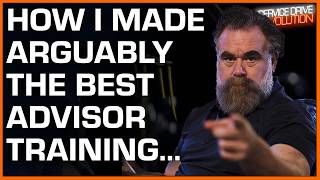
Chris Collins went from Seattle grunge musician to top service advisor, then built a training program after getting frustrated with dealership chaos. He hit #2 national Volkswagen CSI and earned $60k+ his first year as an advisor. His 12-point training focuses on customer interaction, proper systems, and what he calls Service Drive Judo.
Chapters
Welcome everybody to the big show. I'm Chris Collins. Hoagie's here. Adam's here. Today we are going to talk about how I created the best service advisor training ever. And it's an interesting story with lots of twists and turns, death and love, redemption.
And Thomas, if you hear this, no.
Yeah, I hate you, Thomas. That and much, much more coming up right now on Service Drive Revolution. If you haven't heard, at the beginning of June, we are starting a live series, Service Drive Revolution Live, where we are going to teach how to be an irreplaceable service manager, parts manager. I mean, really, you could be in any business and learn pricing strategies and how the financials work, marketing, all of it.
Yeah.
Yeah. One thing too, we're going to talk a lot about is marketing, which is something that most people don't, don't understand. But it's, it's going to be fun. It's going to be a community. We're going to do it live together. And, uh, sign up for our on-demand. You can go to chriscollinsinc.com and just sign up for that, and that will be the part of it. Um, but it's coming quicker than you think, and we'll figure out something special for the people that are early adopters. Yeah, those are always the best people. Yeah, usually drive for the quickest results. Back to the story. The one thing that I kind of always had going for me, like, early on, is that I knew I could outwork anybody. Like, I would work. Like, I would work hard. And so I decided the music was the path. Interestingly enough, my timing was pretty good because Seattle was blowing up. Yeah, the music scene in Seattle was becoming something. No, I didn't know this yet when I was 17 and 18, but as soon as the whole high school experience was over, I was trying to figure out how to get to Seattle and I joined a band. We would practice in Tacoma, so I worked at a gas station video store. Imagine that for a second. In Gorst, Washington, there was a convenience store next door. It wasn't part of the gas station. I'm in this cage. It was literally a cage. And there was a video store that you walk down these stairs and you would check out videos and then you would do the gas. And people had to prepay for the gas. Can't trust people. I think when I first started, it wasn't prepaid. And, you know, it was just— Gorst is in between Bremerton and Port Orchard on this highway. And so people were gone. I would work the graveyard shift, so I would have band practice from 5 until 7 or something, and then I would show up for work at 9. I would sleep all day. On the weekends, it was kind of off, but I worked Sunday through Thursday, so Friday and Saturday I could play. So my band, we would go play anywhere we could play. Tacoma, we ended up playing in Seattle. And eventually we would practice in Tacoma, which was about a 30-minute drive for me. Seattle was like a little over an hour from, from where I was. We played a couple shows, somebody saw us and we got a manager, and then we got some better shows. And back then I would play and you would get wristband, and they would write a big M on your hand to say you were a minor. So you couldn't drink, but you could play. You just had to go in and play and leave. You weren't allowed to hang out in the bar. And I mean, we would play the worst show. Like, you had to work your way up. But we were always playing. We were always flyering, always practicing. Then this guy who owned this practice facility in West Seattle, which was called NAF, and his name was Mark Nafsy. That was where Alice in Chains, Soundgarden, like a lot of the big bands practiced. And we got invited to practice there, which was a big deal. You know, now looking back, NAF was just trying to fill his place. But to us it was like, oh, we're good enough to be invited to practice at this place. So, you know, we had a band meeting about it because we had to figure out we were paying $200 a month for our band room and this was like $500 a month for the band room at NAF. And it was in Seattle. And so, um, we were like, we gotta do it, like, we have to figure it out, we have to do it. So everybody was responsible for their $100, and then you had to, you know, you had to get there. And instantly when we started practicing there, we started getting better shows because, like, the bands in there would be like— we'd make friends and they'd be like, hey, you want to play with us at this upcoming show? And so You know, we were playing better shows. And this is when now, at the beginning of this, Mother Love Bone signs kind of the biggest record deal that had ever been signed at the time. They record their debut album, and 2 weeks before it comes out, the singer Andrew Wood dies of a heroin overdose. In the city, just like shut down, like It was devastating because they were, you know, they were the darlings. You had Soundgarden. Soundgarden had been nominated for a Grammy for their album before Loud Love, and they'd come out with their album Loud Love. Nirvana had done Bleach, and they were— they weren't Nirvana like we know them today, but they, they were popular. But you had a bunch of other bands that were really popular. And the scene was just really kind of popping off. Now, Mother Love Bone ends up becoming Pearl Jam, you know, a little bit later. But we were— so the thing was, is I'm working this graveyard shift job an hour away, and then I have band practice in Seattle. Didn't— I couldn't make it anymore. I needed to move to Seattle. And it was kind of like this thing, like, we're committed. To this music thing. We're a band, we're a gang. We got to do this. So we decided that we would get an apartment, but we all needed jobs. And there was this girl that our singer was dating that worked at a car dealership, and she said she could get us a job. So my singer was looking for a job also. He lasted like a week. He quit. He quit. But she got me a job working from noon to 5 as a porter. I was a part-time lot attendant at this dealership. I quit my gas station job and I didn't— I still— we still didn't have an apartment or anywhere to live because we didn't have enough money. So I would sleep on our manager's floor of her office in like Federal Way, which is like a little out of Seattle, or sometimes I would sleep in the car. Most of the time, though, I drive back to my mom's, right? But I don't know. I don't think I was working at the dealership more than a month, and they made me full-time. And then I had enough to pay my part of both rents, and it was tight, but we were playing better shows, so we'd make a little— the band was making enough money to pay for our band rent. Drumsticks and stuff like that, you know, pretty, pretty quick. And we'd sell t-shirts and hats and that sort of stuff. And so the dealership thing was kind of an interesting world for me because I, you know, I just started off part-time. My job mostly was bringing up cars. So what would happen is we had this keyboard with 0, 1, 2, 3, 4, 5, 9. And that was the last number of the tag is the hook you put it on. And there'd be like 5 keys on a hook and you'd have to go find it. But they would just call over the PA, please bring up 7258. You would run to the keyboard to 8, you would find 7258, you would go out. And so they would write the number of the stall it was in Okay. And then you would go get the car, pull it up for the customers. And that, you know, sometimes they were washed, sometimes they weren't. The, the full-time porters were the kind of the ones washing mostly. When I came in, people were starting to pick up their car. So I didn't spend a ton of time in the wash rack in the beginning, but then when I was full-time, I was in the wash rack like you. And this is Seattle, Washington. You're always wet, you're always cold. And like, we had a steam cleaner, so we would put hot water in the bucket with the soap, but you're freezing. Like, it's just— there's no way around it. You're always, you're always cold. The, um, the way that we would warm up is we would go to the vacuum cleaner and get the change that would get vacuumed up in cars. And you know, you could come up with enough money for coffee and go to Starbucks, which was a new thing, but there was a Starbucks there in the University District. And you'd get— I mean, Starbucks only had two sizes back then. It was a short and a tall, and they didn't even have grande yet. So they were little like this. Yeah, this was a tall. So a short was like a buck and a tall was like a buck 35. So you could get a tall and it would just save your life. Like you would just put your hands on that thing, put it around the fire. Oh, it was the best. Um, just to— it was just such an interesting world. Like I noticed right away that the customers were miserable because you would bring the car up and then the customer would be like, hey, wait, hold on, come, come back. And you go back and they'd be like, they didn't fix the thing I brought it in for. And I'd be like, okay, let me get you a service advisor. And then they were busy or gone and you could never get anybody to help them. And that was just constant. Like, it was just a constant thing. And I remember thinking, man, like, these service advisors don't know what they're doing. Like, they really don't know what they're doing. Ends up it was the dealership, not the service advisors. Like, they, uh, but they had constant turnover in service advisors. The techs were a pretty tight-knit group. So you had Audi, Subaru, and Volkswagen, and they all were in a different shop. So the Audi guys were in the main building, and the, the Subaru guys were in the same building, just a step down. And then the Volkswagen guys were across the alley in like this kind of barn thing. There were more Volkswagen techs than anything, and, um, that shop was the bigger shop. So maybe there were like— I'm guessing there were 12 stalls in there. There were 6 Audi stalls and maybe like 10 Subaru stalls. And the dealership had previously had Porsche and then sold Porsche. So it was Audi, Volkswagen, Subaru. There's an alley going through the, the middle of the dealership washing cars, pulling cars up. I could have cared less about anything else because I was in a band. Like, my, my goal was to make it in music, not to be an employee at a car dealership. So I wasn't, you know, super connected to whatever was going on. But over time, you know, you get called in and you're like, hey, Chris, you're doing a good job. We're going to give you a raise. And now you're making $8 an hour. You know, whatever. And you, you know, you start to make friends, you get to know the service advisors. And, you know, I was kind of popular in the sense that I was in a pretty happening band. So people wanted to come to our shows, they wanted to be on the guest list, they would support us and buy our t-shirts. And, you know, they would hear us on the radio because they would play us on the radio and people like, oh, you were on the radio last night. Or I would tell everybody, hey, listen tonight to KSW you were going to be on, you know, Local Heroes or whatever it is. And, uh, so, you know, it was a— and I had huge hair, by the way. You guys have seen pictures of me with long hair, right? Yeah, yeah. Like, I have not. So I put my hair in a— I would put my hair in a ponytail, but, uh, yeah, I, I had big hair. No man bun though? You didn't? No, I never even thought about a man bun. Okay, that would just make it— even today, like, that seems weird to me. Um, I didn't want to have it in a ponytail, it just would, you know, yeah, just got in the way. So, um, I'm eventually— what happens is the lady who hired me quits and I am offered to be in charge of the lot attendants, and I'm 19, I think. Yeah, probably 19. And that was a— that was an eye-opening experience. All of a sudden being in charge. Mm-hmm. Yeah. I mean, there's so many things that go through my head with that, that, you know, you're friends with these guys and we used to call ourselves the lot lizards and, you know, we were the lowest on the totem pole and we knew it and it was what it was. But now I was in charge of these guys and the relationship changed. Yeah, because I needed them to work and I needed them to show up on time and be there and not call in sick and whatever, you know, bring up cars, not lose keys. Like, that was the thing. Like, my whole life at that dealership revolved around a technician went home with the keys in their pocket and you can't find the keys and the customer's here to pick up the car. That would happen every day. Like, I— when I— what happened is when I was in charge of the porters, whenever there were lost keys, I was the one that had to deal with it.
Yeah.
So that basically was— felt like that was my job. But I, I was in charge of hiring, so I would interview and hire. I hired all my friends, guys from other bands that needed jobs, that sort of thing. Um, and then one day my boss, the service manager— so let me try to, uh, In the book, I change his name to Dick because I just thought it was funny, but that's not his real name. But when I was a porter, everybody would talk about how he was a stoner. And when you would vacuum his demo, like, there was weed. He'd blow— like, he was— he would show up like at 10:00 and leave at 3:00 because he lived like 2 hours away. And he was the, you know, the understanding to us dumb Lot Lizards was he was really good friends with the owner and that's why he was there, because he wasn't much of a manager and he was high all the time, which is so funny. He, he calls me into his office and he goes, I bought you something. I was like, okay, it's this tackle box. And I was like, oh, are we going fishing? Like, you bought me a tackle box? He opens it up and it's a window repair kit. He'd bought it NADA. And he basically says, uh, I bought this for you. I'm going to let you do it. What I want you to do is I want you to go around and write down all the cars in the lot that have window dings, give them to the advisors, have them sell them. You know, I want you to sell them for $29.95, and every time you sell one, I'll give you $5, and you got to do it, right? And this first window ding machine literally was like this ashtray. It had three You would put that thing on the window and it would break it. I was going to say, isn't that the apparatus that would break the windows? Yeah, it was the worst. Sells itself. So of course I break a couple of windshields just by putting the suction cups on. The thing splits. And I remember the body shop manager, his name was Andrew. I think he was a really good guy. And I was telling him like this, whatever, keeps breaking. And he had a friend who did mobile window repair, and the guy came in, he goes, no, you don't want that machine. He goes, you want this one. And it was just a little, like, almost like a metal vial with one suction cup. And he showed me how to do it. Like, you heat up the wind— the inside with a lighter. And so those things were like $100. I don't know, he paid like $3,000 for that stupid thing. And these things, like, I bought a bunch of them. The same resin works. But it, you know, it just had a little O-ring and it didn't put a lot of pressure on the window, but you could get the fluid in there. So if you heated it up, put the fluid in there and put some pressure, as it cooled down, it would, it would pull in the resin and it would fix it. And so I got pretty good at fixing them. And I don't know, I started off, I would do 2 a day and then I was doing 5 a day. And then Andrew, that same body shop manager goes, I did, I did you a favor. I'm like, what did you do, Andrew? And he goes, I got you on the insurance list. He made me a DRP for window repair. So all of a sudden what starts happening is there's a Toyota in the drive and the advisors, none of them wanted to touch a Toyota because it wasn't a Subaru or whatever, right? It was like leprosy for them. But they'd be like, my insurance company told me to come here and you'll fix my window. And so I— that was kind of when I had to start writing my own repair orders because nobody wanted to write it. So I remember I got an advisor number and I, uh, there was this advisor there. Her name was Dawn Sly. She was the best. She taught me how to write repair orders. She, she just like would help me with anything. I remember when I was trying to learn and be a backup advisor, she would let me write her internals and then she would check them and make sure, you know, cause there's one thing to write them, but then you had to know how to close them. And this is Reynolds and Reynolds back when it would crash once a month and you'd go back to handwrites. Like, it was, you know, the wild, wild west. But I start doing these window dings and now all of a sudden maybe I'm making $12 an hour being the lot manager and I'm making another $20 an hour doing these window dings. Like, because we went from $29 to $49.99 'cause the insurance company's paid $4,995. So why aren't we charging that to everybody? And, um, I'm doing like 10 or 12 of these a day. I had my own stall in the shop. Like I was, I was doing them. And then what would happen is, uh, I would write the internals, that sort of thing. I was still in charge of the porters. And, um, when an advisor would go on vacation or call in sick, I would get to be the backup advisor. And so I would, you know, write 4 or 5 tickets. It wasn't a lot, but I'd write, you know, write a few and follow them through. And, um, then I would get paid on that too. So like, I remember I get this check and it's like, I don't know, an extra $300 or something for these ROs that I wrote for a week covering for this guy that was out. And I was like, wow, like, this is great. Like, I'm, you know, I'm, um, also I got overtime, so I had work Like every once in a while they'd call me in and they'd be like, hey, you got to cut back on the overtime. I was like, okay. Like, and then that would last like a couple of months and then they would need me and I would have to, you know, work overtime. So then I throw my hat in the ring to be a service advisor because I found out how much they make and I get passed over. I think I counted, I got passed over 7 times. The last time I got passed over, was when the dealer's friend from his 20 group son moved to Washington for a girl or something. I don't know. He was this mid-20-year-old dealer kid. I remember he had a Rolex, which was nuts, like an advisor with a Rolex. And he, he was the worst service advisor ever. Like, and I went into my boss and I was like, hey, Are you going to keep— like, why do you keep passing me over? Like, you got to— you got to let me do this or whatever. And so he goes, okay, I'm going to make you a service advisor, but if you drop below 2.5 hours per hour, you're fired. And I'm like, deal. I walk out to Dawn's side, I go, what are hours per hour? She's like, I don't know. Nobody knew what hours per hour. She's like, it's the average you sell on each ticket. I was like, and meanwhile, this, this, uh, terrible boss that I had, he didn't let us run the advisor report. So, uh, Don and I eventually had his login and password to the DMS, and when he would leave, we would run the advisor report so we could see where we were at. But, uh, he would never let us know where we were at until the end of the month, and even then, like, nothing ever made any sense, you know, but I become an advisor and then my, my friend takes over my position with the window dings and he's in charge of the, the porters. And I'm now a full-time advisor. And it's just super funny because when the, when those customers come up and they're like, you didn't fix the thing, now I'm the one going out there. And the, the, uh, the shop was a mess. Like, the dispatcher at that point was this guy that was just a drunk. Like, literally one time he threw my repair orders in the alley, just took them and hucked them in the alley. Because like, I'm trying to get these cars done for customers. The way that they ran the service department was they did, for some reason they had this number in their head that there were Uh, we were going to bring in 70 appointments. And so people would call in to make an appointment and there was this clipboard with 70 slots on it. And you would just write people's name and not even a time. You would just write their name in it. You could say like, hey, I'm Chris, ask for me. But it was an open floor. Nobody, unless they asked for you that, you know, and, um, you know, most the advisors on the end of the counter were notorious for sneaking in the back when a new Subaru showed up or a new Volkswagen, or, you know, they knew it was an oil change and they didn't want to hurt their hours per row, that sort of thing. And so I'm in the— I'm next to Dawn Sly, so I'm the second spot in front of the door. So she's the, the front slot, and then I'm second next to, uh, next to her. And, uh, Yeah, you just like— it's like that thing, like, here you go, here's your desk and your computer, good luck. Like, I've, um, I gained so much weight. Like, I used to just leave that place and go drink. Like, it was so stressful and so disorganized. So that we would bring in 70 cars and then there'd be another 20 that would show up. I'd write like 25 customers and by 2:30, you could go back into dispatch and look and see, and you would ask the dispatcher like, what isn't going to make it in? And then start calling those customers. We were booked out a couple weeks, so you would call the customer and be like, hey, uh, Hoagie, I'm sorry, your car's not going to make it in the shop today. And then you'd be like, I made my appointment 2 weeks ago, but— and you're just like, I know, like, believe me, I know, like What do you want? And by the way, this is, this is when CSI came out.
Mm-hmm.
This, like, when I became an advisor, I remember I got an award because I was number 2 in the country for Volkswagen CSI, and I had no idea how that happened. No idea. I didn't know how they were serving. I just was called in and told by the factory rep like, hey, you're number 2 in CSI. And I was like, What is that like? How does that— but CSI was becoming a thing for manufacturers at that time. And so you couldn't, you couldn't run things that way for much longer. Like it was a dinosaur. That dealership was a dinosaur in the way that it was just throw it against the wall and see what sticks. Customers are going to take it or leave it. It is what it is. The we're about selling cars is basically what it was. It was a mess, an absolute mess. And I mean, there's just so many, so many stories of, uh, yeah, just nuts. So a couple of things happened to me when I was an advisor that I, that I think are, are pretty funny is the, uh, the other advisors didn't like it that I'm like 19, 20, and I'm, I'm, you know, doing the numbers that I'm doing and I'm number one in a lot of categories. Pretty quickly. And I think Don Sly would still beat me in total dollars for a while, but I was number one in hours per hour. I was number one in, you know, and I was making money. Like, I couldn't believe how much money I was making. Like, I went and bought a new car. I bought a Nissan Pathfinder. You guys have no idea when you're a drummer how nice it is to have your drums inside and not in the back of a pickup truck in the rain in Washington. Like I could put my drums inside and keep them warm. Like, it messes up drums. They warp. Like the whole thing. Brand— I went and leased like $399 a month, brand new Pathfinder. I had my own apartment on Capitol Hill all to myself, had money left over, like bought a new drum set. Like things were pretty good. Like, so that first year being an advisor, I made like $60-something thousand, which equivalent today has to be over like $100 grand.
Oh, way over.
It was, it was, it was incredible. So, um, the older advisors didn't like that, you know, I was pointed out to be the one selling, the one doing all the stuff. So, uh, what happens is the narrative is that I was avoiding oil changes. That was the narrative. And so it was said to me that they were going to audit all the repair orders because I'm avoiding oil changes or whatever. And I'm thinking in my head, like, I don't avoid anything. Like, I'm the one riding them. You guys all disappear in the back, but whatever. So this is like a 2-week thing or whatever. Nothing happens. Nothing said. Like, 3 weeks later, I go, I go to my boss. I'm like, hey, what happened with that audit? And he goes, oh, whatever. And I go, no, like, what happened? Oh, you're fine. And I go, well, I want to see, like, you know, it ends up I'd written more oil changes than anybody, like by a mile. So that was, that was a funny little thing. Another funny thing was I would come in on Sunday and write the night drops because I just couldn't believe— I would talk to people, I'd be like, have you ever been commissioned before? Like, I didn't understand. Commission. Like, I— everybody in my family worked for an hourly wage. I could, like, I would figure out how much I made an hour and I would be like, holy cow, like, I'm making $50 an hour. Like, that is insane, right? Like, think about, you know, technicians and they drive everything, but they're making $30 an hour and they got $10,000 worth of tools. I'm just some schmuck showing up in a ponytail And I'm, you know, I'm making that, that sort of money. So they, the advisors like say, oh, the reason why he's writing the numbers because he's stealing all the night drops or whatever. So then a new rule comes out and I remember for a little while they promoted this warranty administrator we had. Her name was Terry, I think, and she, she was kind of an odd duck, but she was the warranty administrator. Now she was the assistant manager because our stoner manager dropped the ball a lot. Let's say. So she was, she was the, the, you know, she was the one that was going to hold it all together. And I remember she was a big driver of this, that I wasn't going to, you know, I couldn't write the night drops. So what would happen is she would come in at 8:00 or whenever she would come in on Monday and she would get the night drops and then she would set them on the advisors' desks randomly, like, you know, trying to spread them out evenly. Customers would start calling during the rush at 9:00 to check on their car. Nobody could find the keys or the car or anything. And then, you know, that, that charade lasted a couple of weeks. And they're like, Chris, you can come in on Sunday and write the night travel. Because I would call the customers on Sunday and I'd be like, hey, I see your Vanagon was towed in. Can you tell me what happened? And I would do the repair authorization. I'd be like, hey, I need some money to work with. Like, we got to diagnose it. If it was out of warranty, I'd be like, we got to diagnose it. So, you know, I need $500. Back then I was just kind of quoting diagnosis, I think. And, um, so the customer one knew that I had it. They knew that there was a plan and I would kind of tell them like, hey, we're pretty busy, but, uh, you know, we should be able to look at it by the end of the day, or we won't look at it today, but by tomorrow, whatever I would tell them. And they were— they knew the plan. And I would say like, don't call me, I'll call you. Like, you know, and, and it worked like in, I was commissioned. I was happy to come in on Sunday and write the night drops or get there at 4 in the morning and write the night drops, whatever it was. Like, the more— like, the connection I made is the more ups, the more opportunity, the more I made. Like, you know, I would just luck into stuff. Like, you would just luck into these huge jobs sometimes. Like, I remember when it, it snowed once and there was like all these puddles and there were these two Jettas that wouldn't start or wouldn't run. There were night drops and I write them up and they'd hydrolocked. Oh, and there were engines. Like, stuff like that would just happen, right? Like, you just, you would get, you would get lucky. So, um, the, uh, the dealership, I don't think the service department made money. I'm pretty sure it didn't because it was a mess. Yeah. And everybody always talked about how we didn't make money, and they changed our pay plan, and like different stuff would happen. But they hire this consulting company that comes in, and everybody's like, oh, they're gonna change our pay plan. You know, there's this whole upheaval about these consultants, and they were consultants. Like, they did all the consultant stuff, looked like consultants, communicated as bad as consultants do, like everything about it. But they changed my pay plan, but they oddly made stuff better. They hired techs. They did some stuff that made my job of taking care of customers better, you know, in that, in that sense. And they kind of left me alone besides changing my pay plan. They would talk to me and they were always very encouraging and nice to me. Nobody after that. I— one thing that I noticed when those guys came in is I was treated more like the star advisor because of my numbers than I was before. It was like I was just lucky and everybody's trying to figure out a reason why I was doing what I was doing. But it couldn't have been that I was working harder than anybody else or that I had a system that was ridiculous because these guys have been writing service 10 years or, you know, they not be doing it, whatever. And so one of these consultants kind of traveled in a pack and one of the consultants one day says to me, I just started up with North County Ford in Seattle and would you come up and talk to the service advisors up there? And I was like, yeah, sure. And I think— I don't— maybe it's a week, it's 2 weeks out, I don't know. I had a little notice. And so then I was like, man, what would I talk to him about? Like, what do I do? What am I— and so there was this advisor there that was always hiding, and he was the favorite of that warranty administrator. Uh, his name was Thomas Kemper. and he was the worst advisor. Couldn't write more than 4 ROs without getting overwhelmed. Just always was an issue. Like, uh, and I was like, maybe the thing to do here is to think about what does Thomas Kemper do and what do I do? Like, what is the gap between me Because if, like, Dawn, Dawn was really good, but if I modeled, compared what I did to her, it would— there would— there wouldn't be much contrast because she was— a lot of what I did I learned from her in a sense. And we kind of, like, she was very passionate about taking care of customers. She worked really hard. She had a huge clientele. And so, um, I, uh, I was like, what does Thomas Kemper do? So I remember the very first thing, and I think maybe that thought and this happened like within seconds of each other, is he walks out to a car and he goes, did you have an appointment? And I'm just like, man, like, ooh, like, you know, you see yourself as the customer and you're like, ah, it's cringy. That's weird.
Yeah.
Like, and then I'm like, well, what do I do? Well, I'm like, hey, how are you today? And so I started keeping this little like yellow legal pad of like how you greet customers. And then the other thing that was interesting for me is I knew nothing about cars. Like when I was general manager, people expected me to like be a car guy because I came from service and then I was overhauling engines like you on my weekends. No, I didn't. My favorite car was the one that was selling. Like I didn't know anything about cars. I'm not I didn't have posters of cars. I had a poster of Tommy Lee and Anthrax on my wall. Like, I was, you know, I was a drummer, so that wasn't, that wasn't my thing. I wanted a car that could get my drums somewhere. I, you know, I just wasn't a car enthusiast that way. So the worst thing that could happen to me was a customer want to talk about something technical on a car. So when I would go greet a customer, I would try to talk about where do you work? What are you doing? What do you think about the Seahawks or, you know, the Mariners, whatever it is. But the car was the last thing that I wanted. Cause I didn't, you know, I didn't know what I was over time as I was an advisor, I learned about stuff, but in the beginning I talked about their work and that sort of thing. So that's the other thing, like Thomas Kemper would be at the car and he'd be like, okay, your check engine light's on. And that was it. And then you go back and you write the RO. I wouldn't ask them what was wrong until I was creating the RO. I'd be like, okay, what are you in here for today? Like that sort of thing. And then I always— so here's another thing. The technicians loved it when they got one of my ROs. Guess why? Why? When you were a tech, why did you love certain advisors over other ones?
Yeah, they had work on it.
They were going to sell it. Yeah, right. So the techs knew that if they got my RO, I was going to try to sell it. Like, and if I didn't sell it, I would go tell them that the customer doesn't have it or whatever it is. But I, I respected the fact that they'd invested in the inspection and I wanted to encourage the inspection because that was enough for me, right? It gave me an opportunity to make more. So the technicians would complain about Kemper and like, oh, you know, they wouldn't even— like, if I had to clean up one of Thomas's ROs, the inspection Like, I would look at this car and be like, it's got 120,000 miles on it. Nothing's wrong with it. What ends up— the tech knows that Thomas isn't going to call, right? He's not going to push it. Yeah. Why? Why do it? Sort of a thing. So the, the one of the things I wrote down on that pad is don't prejudge. Don't prejudge customers. Because what would happen is when you're in the university district, you get a lot of poor college kids and poor college girls in Volkswagens. When you tell them their car needs a lot of work, what do they do? They call their parents. They cry. They cry first, then they call their parents. It's very uncomfortable. I would tell them anyways, and then Dad would call and, you know, authorize. Yeah. And I would go show him like, hey, this is your GTI 16-valve is leaking. You can't keep putting more oil in it because it's just leaking on the ground. Like, you got it. It's got to have seals or, you know, whatever it is. So, um, the don't prejudge, how you greet them, always call on the inspection— like, I came up with 12 different things that were the difference between me and Thomas Kemper. And then I went— so I was the one in the band that made the flyers, and back then you would rent a word processor at Kinko's by 15-minute blocks. And so So I think maybe I took me an hour. I rented the processor at Kinko's for an hour and I wrote out my 12 things and, uh, I printed 10 of them, I think, because maybe there were 8 advisors. I printed 12 of them and there were 10 advisors, one for me and one for the consultant Wayne. So I show up to North County Ford with my workbooks, with the little thing on the side, you know, I went to the office. Supply store. I don't think there was Office Depot back then, but had the little slider. And I have these and I'm super excited. And I show up and, uh, he'd ordered pizza for everybody. It's like one of those 5 o'clock in the afternoon advisor training things. And so they're eating pizza. Then the reason why we're laughing at that is you don't— when you're doing training, you don't feed them pizza because they fall asleep. Uh, Those little things matter because they can't pay attention when they're in a food coma. So I hand Wayne one and I'm super proud and he goes, what is this? And I'm like, well, I came up with an outline for what I'm going to talk to them about. And he's like, no, I just wanted you to tell them to do what I say. And then you've had a lot of success in our program or whatever. And I'm like, what? Wayne, you tell me nothing. What are you talking about? I don't even know what you do. Like, what? You change my pay plan and I make you a lot. You guys tell me I make you a lot of money, but I don't know. Like, what? What? Like, I was just in shock. I'm like, I thought you wanted me to tell them because you don't know. Like, I'm pretty sure you're not as good as I am. Like, I knew that. I knew because he wasn't— like, a lot of— isn't it funny? Like, in our business, a lot of these guys are, uh, they're not likable. Yeah, they're not friendly. They don't like people. How many times does somebody say, well, I don't like people, and you're He shouldn't be. Yeah, don't be in the— it's called service because we serve other people. Like, we're in the service of others. Like, it's just so funny. But he was one of those guys. Like, he wasn't, you know. So he lets me do my thing, and I do— I don't— maybe I go like 2 hours. It, you know, remember the first time you did training and you, you work so hard to prepare this thing and you run out of time? Yeah, like you're halfway through your thing and it's like spend 2 hours. Like, I didn't know what I was doing, but I felt so good after. And it was that high that I had from being on stage, being a drummer. But now I'm the singer. I'm in the front of the band. Like, and what happens is a couple of these advisors, like, they were all very enthusiastic about what I was saying and the conversations we were having and all that. And then a couple of them came and came to watch me work. and like we became friends and their numbers went up and they did better, you know. And I, I was convinced that the reason why they did better is because I was an advisor teaching them. Like I thought like a lot of this stuff that sales training, like I'd bought sales books and like they talk about ask 5 times and all this stuff and you're like, maybe in car sales that works or selling suits or furniture, but you can't do that in service. The trust line is so delicate, man. You just can't— you just— it doesn't work that way. It's all about connection and trust and speed, really, is what it is. And so then, um, I have something nobody else has. Advisor training is simple. 12 points that I came up with just comparing me to Thomas Kemper. I've got advisor training and this consulting company is all over the state of Washington and a little bit in Oregon. And they're like, hey, you want to do advice? And I'm like, well, how much will you pay me? And so then, no joke, I'm in a band playing all over the place. We would play. So at that point, we were only allowed to play one show in Seattle a month and it had to be a huge show. So we would play Portland, we'd play Spokane, we'd play Moscow, Idaho, like we would tour. And then these guys would be like, can you do advisor training in, you know, Olympia or whatever? And they would pay like they would pay me $1,000, $1,500 to go do this, this training. And every time I got better and every time I would add something to it, and then I, I'm in the drive every day. So I'm thinking about how does this like this thing fell flat when I was doing the training and they didn't really connect with that. Should— how can I rethink this sort of thing? And then I would ask Don and other advisors like, how do you do this? And I just started like building this like kind of mental database. And then I would go to Kinko's, write up the thing again, you know, at a floppy and save whatever's going on in there. Yeah, please don't rip it up. Please work. Please work. You just put that thing in there. You're hoping it's still there because you don't want to type it out again. Actually give it back.
Yeah.
Like, so funny. And it just made a difference. Like, it was so funny, like, how these consultants that knew how to fix the thing, they, they didn't understand the thing in the front, the front lines, like, and that's the thing that I think a lot of people miss when you get promoted and you start to move up and you're in this glass box in management is you forget that the war is won or lost on the front lines. That interaction with customers, how you answer the phone, how you greet people, how you follow up with people, isn't happening in the office. It's happening on the front lines. And I was on the front lines. So my advisor training was better. And I, I would contend that our advisor training is better than anything else out there. Because it comes from advisors. Most advisor training out there, I hate to say it, but the bigger ones, they're sales trainers that, yeah, laid something over advisor training, but they— it's different. It's a different language. It's a different mindset. It's a different relationship with the customer than a sales environment. Yeah, the sales are the easiest part. Now, the flip side of that that I would say is when eventually— and we'll talk about this in the next next episode, when I started fixing service departments, the other passion that I had was how do I put systems in place that make the advisors be able to do the job they're supposed to do? Because so much of my time as an advisor was spent washing a car because it wasn't washed, running back to parts because the thing wasn't, you know, going and picking up a car myself because something didn't happen. Um, maybe sometimes 50% of your time as an advisor is fading heat for broken systems and things that don't work, calling customers to tell them that the car won't be done because there aren't enough technicians in the shop. Like, so the, the combination of really understanding that the war is won or lost on the front lines and that the systems around that, and that really the only thing that drives that is the capacity in the shop. If you don't have enough technicians, you don't have the ability to take care of your customers. If you don't have enough technicians, you don't have the ability to sell additional work, to recommend additional work. And so many shops, you know, the constraint is getting the work done. Like, um, how many times do people hire us and they're like, we just need advisor training, and we're like, No, it's not. You do not. Advisor training is though. What you need is to hire 8 techs and then we will put some systems in place. But I would, I would, I would tell everybody that our system of Service Drive Judo, when somebody does it right, sells more work than any advisor training out there. When you put customers at ease and you take away decision fatigue and they feel important and like they matter, they buy more and spend more than any script, any asking them 3 times, any overcoming objections that you could ever do. Um, it's, you know, it's a, it's a complicated thing that actually at the end of the day is very simple and intuitive, but it's just different than the way everybody else does it. But the, my whole passion from the very beginning is this advisor that worked at a dealership that was a disaster. That didn't have enough techs, that just brought in appointments randomly, threw it against the wall and saw what stuck. And I actually cared about customers and wanted to take care of them. And I was a victim of the system. I wasn't allowed to take care of customers in the way that I knew was possible because everybody else didn't care about service in the, you know, my, my service managers showing up at 10, high as a kite and leaving at 3, like It was just such an afterthought in the dealership. And I knew it mattered. I knew it was important, but it seemed like nobody else did. Um, so that's how I created the best advisor training ever, understanding that now that's evolved into the best systems that support advisors to do what they're supposed to do ever with a focus on the battles won or lost in the front lines.
Yeah.
How'd I do? I feel like I'm losing my voice. I'm talking so much. It's great.
That's so Thomas Kemper.
Um, by the way, there was a root beer called Thomas Kemper when I was a kid.
Oh, really?
Yeah.
Does he get royalties off of Millionaire Service Advisor?
Who knows? I mean, it'd be so funny. Are you guys still—
are you Facebook friends with him?
We were never friends. Never friends. I hated that guy. That guy would disappear. I'm telling you, if he wrote 4 ROs, he was overwhelmed. I couldn't believe that that guy had a job.
You know, when you were— when you were talking about that, there was a story years, years and years ago, but there was an advisor that was describing another advisor similar with your relationship with Thomas. And in, in our program there's an advisor competition and the advisors get to pick an alias. Right. And this advisor has the best alias ever because they pick ones and we have fun with it, right? Like we got—
Yeah, late for lunch.
Yeah, we got a store in California and everybody, they made a team of Care Bear characters one time and like they have fun with it and do different things.
You can be Kobe Bryant, whoever you want to be. Tom Grady.
So this advisor that works next to this other advisor, that guy's name was Josh, and Josh was never anywhere to be found. So he made his alias in the comp, Josh Customer at Your Desk, because no less than 20 times a day he had to get on the PA, Josh Customer at Your Desk, Josh Customer at Your Desk. And Josh wasn't happy when Josh saw the rankings the first time we put numbers in the comp and I saw it and I just lost it. Like, literally, like, was having trouble breathing. I was laughing so hard.
Yeah, that was Thomas Kemper for sure. That guy, the only reason he was there is because that, that assistant manager, he must have had pictures of her or something. I don't know, because it made no sense. Nobody understood it. So there were two advisors. That helped me. Dawn Sly was— she, she was incredible. Her husband owned a tow truck company and they were just the neatest people ever. And then there was an advisor named Bill Wooten who had been there a long time, and he was just a stand-up guy. Like, he, he, he didn't write the biggest numbers, but he was just steady Eddie. He took care of his customers and he would, you know, a young kid coming up, he, he helped me. He never sabotaged me like the other advisors and all that. And he just— he was one of those guys that did what he said he was going to do and lived a pretty, you know, happy life and had a lot of friends. And he was great. But Thomas Kemper, man, that guy, I can't even imagine where— you know, it is funny, like at the Cadillac store I work at, that one advisor, he's a manager at a store. The guy that like told me like, hey, I hope you never leave here because you make me a lot of money. When I figured out that the pay plan was a government— and he was another guy that's like, where are you, your customer at your desk? Like, he, he was terrible. And he's a manager now. Like, it's just funny. Yeah, in the book I change all the names.
Yeah, but not here.
Well, I'm only, I'm only telling— well, Thomas Kemper, yeah, but I I can't believe that Thomas Kemper is still in the car business. Yeah, that he would ever hear this because there's no way anybody hired him.
Hey, you're going to walk in to get the Rover.
You know what, that guy was more suited for like motorsports. There you go. Something a little more casual. But Dawn Slye, I'm sure she's around and she was, she was the best. And Bill, Bill Wooten was— those two were the the OGs at that dealership.
Yeah.
So funny.
Yeah. But it is, it is still interesting to this day how many places you go and, you know, whether it's as bad as the Thomas Kemper or not, it seems like it happens over and over again where they're like, hey, that, that advisor right there, like, he has pretty good sales. We don't like him sitting next to the door. He likes sitting next to the door because he can and, you know, pick off the most amount of customers, but he struggles with CSI because he doesn't like people.
Yeah, yeah, put him in front.
What are we doing? You know, um, but yeah, it's, uh, make him an internal advisor. Yeah, some something, something parts. Put him at the counter.
So fun. Well, that was, that was fun. Yeah, we'll see you guys next time. Next time We're going to talk about how I learned financial statements, which I knew very early on was the secret to everything because nobody understood them. Nobody could explain anything. Nobody knew what anything meant, but everybody threw the numbers around. Oh, your ELR. What is that? Well, I don't know, but it's 85. Well, how do I— how do I fix it? It's so funny. So I literally traded my services to learn how to read the financial, which began, began the, the path to understanding how to fix stuff. You can't fix something if you don't know what the numbers mean. So many people try to do that and you just, you end up doing a lot of work for not much.
Yeah.
So we'll see you next time on Service Drive Revolution. Thanks so much for watching this episode of Service Drive Revolution. We're uploading new stuff every day, so make sure you subscribe and click the bell icon so you don't miss out. If you have a question you'd like us to answer on the show, call 8333-ASK-SDR and we'll answer your question on the show. That's 8333-ASK-SDR. For special deals on our books and training, head over to offers.chriscollinsinc.com. Now that's offers.chriscollinsinc.com. I'm Chris Collins, and I'll see you in the next video.







