How Service Advisors Can Become General Manager
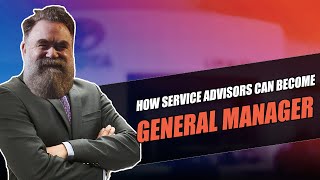
This YouTube clip (Chris Collins, posted Oct 7, 2020) is a conversational interview in which a caller asks how Collins became a general manager. Collins describes his progression: service advisor → advisor trainer → consultant/turnaround specialist (commission-based) → general manager → dealership owner, noting he learned to read financial statements, built Excel projections for dealerships, and used repair orders/deal jackets as diagnostic tools. The hosts also emphasize that systems precede people in fixing business problems. The segment includes light banter and a hotline invitation.
Questions this video answers
8333 ASK SDR (spoken as 833-327-5737)
2009 (during the downturn)
Chapters
So, questions from the audience. I have kind of bad news. The voice of God. I think we're going to retire the voice of God.
Is it appropriate for us to genuflect when that.
What does that mean?
Christian just did the sign that Catholics do like the Spirit, Holy Ghost and whatever.
Father, Son, Holy Ghost.
What do you call that?
Genuflect.
I believe that's what it's called.
I think so.
I've always just said it's the thing that the Catholics do. Yeah, I didn't know that it had a term.
Yeah, usually they know what you're talking about when you say that, though, so.
So that's your way of saying goodbye to the voice of God, is doing.
The Bless his soul.
Bless his soul. Okay, so now we kind of want to try something else because we get so many questions, it's getting hard to navigate. So we set up a hotline and we'll put this in the description also. But if you want to ask a question, we would love if you would call in and ask your question on the voicemail and then we'll play it on the show. And same thing. If, if your question makes it on the show, we'll send you some swag. Coffee mug, sticker, T shirts, notebooks, some service Drive Revolution stuff. But the number is 18333, ask SDR. We got our own phone number.
How about that?
8333 ask SDR. Or if you can't spell and you want me to do it for you, it's 833-327-5737. But call, ask your question on there. That would be fun. And if you make it on the show, we will love you and send you swag.
Swag.
Just like more than anything else. So what are the questions that we have this week? Let's go to question number one.
Hey there, Chris. Longtime listener, first time caller. I just wanted to know, how did you become a general manager? Wow. It's one of my favorite stories.
What part of the story?
Pretty much the whole thing. I don't want to spoil it because it's your story, but I'll tell you what my favorite part is when you're done.
Should I tell the whole story? Do we have time for that?
Let me see.
You know, today was leg day and I am starving.
Oh, I love the food after the workout.
Oh, I'm so hungry on leg day. Do you notice my legs are getting bigger?
I feel like.
I might be on the verge of being in the best shape I've ever been in my life.
I feel the same way. That's really interesting. I think your legs are looking bigger. This part's looking bigger, and this part's looking smaller. Yeah, you're doing a lot of things right, which is really cool.
Pretty soon, I'm just gonna start walking around the office with my shirt off.
I don't blame you. I don't know why we don't do it now.
How funny would that be? That would be just walking around with your shirt off. Yeah. People. It's always funny when people do that. Okay, so, man, I don't know. That's a great question. So how did I become a general manager? So.
The funny thing is about this story is I was never a service manager. People assume I was a service manager. I never was. So I went from being a service advisor to working for a consulting company as an advisor trainer. And then I became a consultant. And for most of my early 20s, I would go into service departments on commission and turn them around. So I would get a percentage of the new sales that I would create.
And I had a lot of clients doing that. Most of my clients were in California, But, I mean, I was going all over the country doing it. And I could only do, like, three new clients a year because it was. It was a lot of work and intensive. And I. I eventually had a couple people under me that were working for me. My deal with the consulting company was I got a percentage, and they took a. A little bit, but I had to get my own clients, that sort of thing. And so one thing that I did early on, I knew the key to my success early on, even when I was a service advisor, was that mysterious thing called the financial statement. I remember it would be sitting on the dealer's desk. It was in the service manager's office. Sometimes if I was in there, and I would kind of look at it and try to understand it. But I always understood that the key to understanding how to make a dealership go was that. Right. The financial statement. So when I went to work for the consulting company, I actually traded advisor training for them to train me on the financial. So I would get, like, $1,500 for a couple days of advisor training in a service drive. Sometimes it was like $2,000 for a week or whatever. I would tell them, and trust me, like, I needed the money, but I would tell them, like, hey, I'll go do this advisor training for free if you'll train me on. On financials. And so they. They took it seriously, and they trained me on the Whole financial, every department. And what would happen is as I would go into a dealership and fix the service department. I'd become friends with the dealers because I was kind of the only person they could talk to, Right? Like that happens to us. Like, especially when you start to get them results and you take. So you take an asset. Like, let's say they have a department that's making zero and you take them and now they're making three or four million a year. That's life changing money even for a dealer. And they invite you over, you meet their spouse, you become friends. Then what they do is they see you as an expert on the financial statement, which I kind of was. And they will say, like, hey, I'm thinking about buying this dealership. Would you, would you look at it? Tell me what you can do with it. Mostly they're referencing the service department, but I would look at F and I, I would look at their front end. Like, I would look at all of it. Because I don't. I still to this day, when somebody hands me a financial, I get excited like I want to, because the financial is the story.
Like, you can tell what's going on in a business with the financial. I can tell if the culture is broken. I can tell if the leaders are good or not. I can tell if they have systems in place. Like, you just. You can tell, right?
Yep. It's a puzzle.
Yeah. And so one of my clients that I had done a pretty good job for and became friends and would see socially and hang out with was thinking about buying. This is funny, it was a SOB bunch of Saab dealerships that this guy here in Southern California owned. And he became a.
Senator or something. And he, he wanted to get rid of him. You just think about Saab, like, imagine if that would have happened, right? So I did a projection. I did a projection on the front. I built this Excel spreadsheet and I would project car sales f and I used service parts, the whole thing. And I would say, like, this is what I think we, you know, we could do with the back end. And I would give them a kind of an analysis of the financial statement and what I would look for.
And I knew, because my goal was always to be a dealer, I knew that to be a dealer I had to do one of two things. Be a general manager or I had to go to the dealer academy, the mysterious nada academy. Now, I didn't work for a dealership, so I needed somebody to sponsor me to go to the nada academy, right? So this Client and I. And it would happen with, with quite a few clients, but I really like this client. And we became friends. Would, would ask me consistently, I'm thinking about buying this Audi store I'm thinking about. And one, one day.
He. Well, it's funny, there's a little bit of a backstory to it is he wanted to hire a general manager and kind of get out of it. And so he hired his friend whose dad had just sold his dealer group. And I remember the first time I met that guy, I was in the service department. I was there doing my visit or whatever, and the guy came back and he, you know, introduced myself to him. He was the new general manager. He came back and he said, there's some customers out there that need help. Why don't you go out there and help them? And I go, oh, I'm, you know, I'm the consultant. I'm not a service advisor. And he goes, I don't care. Those customers not getting help. You go help them. And I was kind of like. And the guy was really short, so he had like a little Napoleon complex. And I was kind of like, okay. And then him. And I just didn't. That guy. Him. And I just didn't get along. So I went to my client and I told him, I said, hey, you know, you know, you need to tell that guy to get like, you need to tell him to be nice or run with him for a while and I'll come back when it doesn't work out. Kind of what I said, because I knew it wasn't going to work out. And it didn't work out. It only lasted a little while. But after that, that client said, hey, I know you want me to sponsor you going to the dealer academy. Because I'd say, hey, I'll pay for it, but just, I need you to sponsor me to go. I need to use your dealership's name. And he said, well, instead of going to the dealer academy right now, why don't you come run my stores as the general manager and then you can go to the dealer academy. Well, it ends up that if I was running stores and I was the operator of record, I no longer needed the dealer academy.
Yep.
And so that's what I did. And so I went from service advisor to service advisor trainer, to kind of turnaround specialist to general manager was my career path.
Yeah.
And then, and then I bought my, my own dealerships and then those one. Those went away. The dealership that I bought went away in 2009 during the, you know, Downturn or whatever. But that's the story. Did I tell the part that you like?
No, but I'm going to tell it for you because it's now my favorite part.
I knew I was gonna leave that out.
That's okay. But a couple of things. One is you alluded to the fast lane earlier. You took the fast lane. So two things, actually. I have two favorite parts now. One is that when did you start thinking about when you wanted to own a dealership?
When I was a lot attendant.
Right.
Yeah. I remember looking at that dealership in Seattle. It was Volkswagen, Audi, Subaru. And I just remember thinking like, I don't know, what is this thing? 7 million. I remember asking like the general manager, like, what does it cost to buy this? Like 7 million? And he's like, yeah, probably 7 or 8. I'm like, I could find 7 or 8 million. I just always thought that way.
I had no idea how. Right. But you knew that there was a way. And I think that that's the thing, is that you had your trajectory from a pretty young age, which I think is a very special thing. But it isn't something that's impossible to do. You just have to choose what your path is going to be. Right. We're going to get to that in a little bit. But my other favorite thing about you is one is that you walked into a general manager position. Never dusk and deal before. You've never been in F. And I like, you'd not done any of those things. But you're like, wait a minute. If something's broken, I'm going to be able to fix it if I look at the deals. So just like when you went into a service department, you're like, the ros are going to tell me the story. The deal jackets told you the story of what the sales were like and what were the processes that were missing and everything. So you took it as one of our parts of our motto is that the way that ros look are a direct correlation with our results. And you said the way that our deal bags look is a direct correlation with our results. And that's how you fix the sales part.
Yeah. It's funny, but fixing gyms or a doctor's office, any restaurant, any sort of business to me always goes back to the repair orders in a. I'm always looking for where the repair orders because if I wanted to know what was going on with the service department, the first thing I would do is go to the repair orders. I could tell if they were inspecting them. I could look at history and see if they were recommending work. I could tell the quality in the culture by phone numbers being there, email addresses. Yeah. Like, you can tell a lot. And so when. When I went to run the dealership, the. My goal was I wanted to be number one in the country in new car sales. That was the goal. And that was a common goal and kind of maybe why I was brought in to some degree. But I didn't have a lot of experience. I'd set up a couple Internet departments for sales. I'd done that. But that's all the experience I had in. In sales besides selling cars when I was an advisor. So I.
Was looking for where in my system do I go in the deal. Jackets were the ro.
Yep.
Yeah. And I think that that's. It's funny, but if you have a system, that system probably would apply almost in any. Like, I bet when you were a sales manager, you brought over things in your system as a sales manager to service. In fact, I know that to be true because we've talked about it.
Right. So I think that that's the big thing, is that. That I appreciate it so much because the system is what is the star of the show.
Yeah.
And I think people hate to hear that.
They think, oh, the people are the most important, but the system first, people second.
Yeah. How'd I do it, telling that part of the story?
Oh, it's great.
Yeah.
Yeah. No.
You'Re totally right. It was all about the system. If you have a system, you can do anything.
Yeah. You know what else I know I learned is that you hear a lot about people picking their nose. I don't remember ever picking mine. I just had the nose that I was born with.
It always catches me off guard when you do that.
Thanks so much for watching this clip of Service Driving Revolution. We're uploading new stuff every day, so make sure you subscribe and click the bell icon so you don't miss out. If you have a question you'd like us to answer on the show, call 8333 Ask SDR and we'll answer your question on the show. That's 83333 Ask SDR. For special deals on our books and training, head over to offers.chriscollinsinc.com that's offers.chriscollinsInc.com I'm Chris Collins and I'll see you in the next video.







