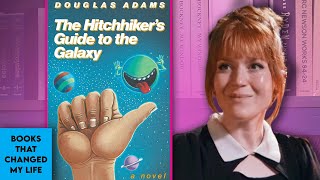
A conversational interview between host Chris Collins and director Mercedes Bryce Morgan about how books and films shaped her childhood and creative life. Mercedes describes using reading as an escape from a small-town, closed-minded environment (mentions Coraline and Wicked), her later attraction to horror, and the drive to leave for Los Angeles to find like-minded, high-caliber peers. The exchange also foregrounds storytelling as play (Star Wars toys), deep empathy (the term 'sonder'), and a desire to 'heart hold' others through work.
Chapters
This time on books that changed my life.
Oh, I was an incredibly lonely kid and so I think that's kind of where I found solace is to know, okay, there's more ideas out here instead of just this very small town with this closed mindedness. And it made me feel a relief to know that there was other people out there thinking these grand things that there was more to escape to.
So you spent a lot of time alone reading or watching movies?
Yeah.
How early was the horror movie?
I actually, I came onto horror movies later because I wasn't allowed to watch them. But my parents didn't know what types of books that I was reading. And so I actually read more R rated books as a kid than movies.
Aren't books almost scarier?
Oh, because you're creating your own images. I mean I read Coraline when I was in third grade and it gave me nightmares for two years. And that's kids horror.
And you like that?
I loved it. I mean now I do. I think when I was in third grade I didn't, but. But I also read Wicked when I was a kid and I think most people don't realize that the original Wicked is very spicy and like there's a lot of politics and gender dynamics and sexuality in there and I learned a lot from that. That is not included in the movie or the play. But I recommend for reading as a.
Seventh grader and did you always have the sense, like I grew up in a small town and I like knew like I was getting out of there the second I, in fact I was 17 and I left like I couldn't wait to get out of there.
Yeah.
And so did you always know that the second the door opened you were.
Yes.
You were out?
Yes. I so relate to that. I feel like it's the biggest motivator where I'm like, if I do well, I can leave here and go find like minded people. And look at us now, we're in Los Angeles. I would ask 17 year old selves.
Mike, my cousins who I love dearly, but they're still there. One time asked me, they go, why, you know, why didn't you work in the shipyard or whatever? And I was just like, I had to think for a second because I was like that was never an option. Like I never thought. No, like I, I was gone.
Yeah.
Like I was just like, man, yeah, if I could turn 18. Yeah, I won't, you know, back then, like you think I'll never come back. Now I go back and I'm, I'm nostalgic A little bit.
But what do you think that was for?
It was the close mindedness and.
The. I always have had like a distrust for authority. And in small towns the hierarchy and the authority in the good old boys club is pretty rigid.
Yeah.
And people's thinking is very rigid. And I've always wanted to experience other opinions and other cultures and be surrounded by. That's probably another thing is there isn't a lot of talent.
Yes. Yeah.
And the talent that's there is kind of squelched.
Yes.
And there is like here in la, like in every different category. Like just think about food. Like you could go out to a restaurant where there's a chef doing something that nobody else is doing or just doing it at a really high level almost every night of the week.
Yeah.
And then the writers and like the music, everything.
Yes.
Is. Is inspirational because you just.
Yeah.
You know, you're surrounded by people who are doing incredible stuff at a high level.
I think a lot of his other people who left their small towns and went, oh my God, I have to go do this. And I have to be the best at it. And I like it because at. In a small town it's very easy to be the best at something. And here I feel, I look around at my peers and I go, everyone's fucking amazing. You got to keep up. And I love that feeling.
All my friends are from the Midwest.
Yeah.
That moved here.
Yeah. Yeah.
It's rare that somebody is actually from here.
Yeah.
And actually this is a generalization that probably isn't fair. But most of the people that are from here are kind of jaded and weird in a way. But. Right. If you went to Hollywood high school.
Yeah.
You're a little more jaded than the average bear.
It seems a lot of people I know like that had to leave and then choose to come back. And I go, okay, I can understand that choice because you need to own your decision of what you're doing.
It is funny though that like people that grew up here that have never experienced the Midwest.
Yes.
Or other parts of the country and they think this is America.
Oh, totally. Yeah. It's a culture shock.
This is not America.
No.
At all. It's not even close.
Yeah. But I always love people calling something a real life experience because everything's a real life experience. Life being hard is a real life experience. But also being in a place where you are just kind of given everything back to that person's real life experience. And I just think it's really interesting how we call something Real or not, based on the suffering, which I think is very relatable for all people. But I just think it's fascinating that we call it that.
So at an early age, were you fascinated by storytelling?
Yeah. Yeah, definitely. I mean, I would play with my Star wars action figures and make these whole worlds from them. And I would get very upset sometimes. Cause I go, this person just died. Died. Or this person just had a kid and they didn't know this was going to happen. I got. I would get very caught up in it.
Are you very, very empathetic?
Yes.
Do you feel things very deep?
Yes, I do. Yeah. I mean, one of my favorite words ever is sonder, which is realizing that you're experiencing other people's stories and that you can relate to everyone as kind of the protagonist in their own stories. And I feel like that kind of captures how I feel is just kind of. I love seeing other people and being able to empathize with that and then wanting to show that to other people and tell them about it.
What's the energy exchange in that?
I think it's kind of like being in an interviewer in a way. Like, you're very good at it. Just from me talking to you is. It's kind of relating to people on something you share and kind of what I call heart holding, where you can kind of tell someone, you can tell me anything, and it's okay. I'm not going to judge you. I just kind of want to listen to what you're saying. And I think that's kind of the recipe.
Yeah. And in a sense, who am I to judge? Like, I'm a mess.
No, exactly. Yeah. But a lot of people do judge, but it's probably related to themselves a lot.