How to be a Professional Service Advisor (Service Drive Revolution)
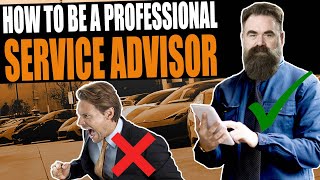
Chris Collins explains what separates professional service advisors from amateurs in automotive service. The key: obsess over details like staging, wipers, cleanliness, and disinfecting before returning vehicles, practice your pitch constantly, and track daily KPIs to change behavior and hit goals.
Chapters
Okay, so now we're going to talk about the difference between professionals and amateurs. And you were all fired up about this?
Yeah, I gotta tell you, I was pissed off today. And you know, there's a couple, excuse my language and the frankness of it, but you've done on site visits, you've been to shops and dealerships and you know, just observing a couple minor things. You can tell the difference from an amateur and a professional. And, you know, so one of the things that I'm a strong believer in is our service team has to have its own final quality check. So before we give a car back to the customer, we've got to make sure that everything is right. And the things that I see on that will tell me whether I'm dealing with an amateur, you know, or a professional. So just a couple things that set me off. When technicians focus on a repair, customer brings a car in for a certain concern and they fix a cooling system issue. Well, the rest of the car matters. And there's so much opportunity on these cars today. But when I'll look at a vehicle that's supposedly ready for delivery, this is just one example. You go on your final road test route and you notice the little oil light is on. So you stop, you open the hood, you check the oil, and there's no oil on the dipstick. Well, the car was just in the shop. What's wrong with that picture? That's what consumers are driven crazy about with automotive repair from day one. The professional technician, service advisor, the professional in our field, they genuinely care about the customer and the financial well being of that vehicle. And they want to make sure that it's perfect when it leaves. And just doing the job that's on the repair door is not enough. You've got to go beyond that and take pride in what we do, that when the customer gets their car back, it's like magic. It feels different, it sounds different. It is different because you took care of that car and did the right thing and you paid attention to the details. So that just really hit me today as I was going over some stuff in the past and some notes and, you know, looking at some of the cars that we were getting ready to deliver. I think it's something that we need to shake our industry up a little bit and really take our profession as a profession and not be an amateur. What are your thoughts on that?
No, I agree. And it's little things like wipers or washer fluid, like you, you, you have to think of yourself a little bit different and Understand the, the depth and the amount that you have to care about something in order for it to really be special and it to be a career. Right?
Absolutely. You know, it's your, your story of buying the Jet Skis. Two completely different, you know, scenarios. Two different businesses driven by two different things. The dealership that's going to get your sale is going to make the money. The one that didn't, unfortunately, their focus is primarily only on making money and not really serving people. So it's everywhere you go in every industry, especially in service. You've got to provide that service experience.
The next one is attention to details.
Yeah. So, you know, it's funny, one of the number one things I'll see when a car is ready for delivery is it's not staged. And then the rear wiper blade is the first thing I'll look at. Because if that wiper blade's hanging down, I can guarantee you that that store CSI scores are a lot lower than the ones that they actually take care of that. That rear wiper is just a key signal if they pay attention to detail or not.
Yeah. And fingerprints. Like how many times have we done, you know, $5,000 worth of work on a customer's car and all of it has been done Right. And great. And the car runs better and the whole thing. And the customer comes back in and points out that there's, you know, greasy thumbprints on the headliner or whatever.
Yeah. And that's one of the things I recommend that all advisors do is sit in the customer's driver's seat when the car's ready and just look around. Just be observant of the car, the condition, especially right now. And in today's age, you've got to make sure that the eyes are dotted, the T's are crossed. Don't forget to get your disinfectant. Spray that around. Yeah.
Radio stations too, Right. Like customer gets in the car and it's heavy metal or it's mariachi music.
Well, come on. That's a systems issue right there. You shouldn't touch the radio when you're serving.
Still, attention to details alone.
Yeah, absolutely. Details for sure. Yeah. So mask. The attention to detail is definitely critical.
Now the next one on the difference between a professional and an amateur is practice. Professionals practice.
Yes. The Seattle Seahawks do this very well. Practice at a game time level, but they do practice all the time. It's interesting. How many times do you see service advisors practicing in our field outside of working hours?
Rarely.
Rarely. We practice on our customers. How do you ever expect to push your skill set further? And you know, Chris, I'm on the front lines every day. So I'm a shop owner and I work with my customers and I can tell when I get out of practice and things kind of start to get away from me on the sales side of it a little bit or my presentations. And when I start to feel that I will literally go and practice an hour to two hours a day to re hone my craft and get, you know, the ums and the ahs and the pauses out, make sure I'm prepared and make sure that that delivery is there because you've got to practice. I got another one for you. And keep your skill set at a very high level. I don't. Talking about professionals, there's some feedback in. I can tell. I can see it in your eyes. Why did the donut maker retire?
I don't know. Why did the donut maker retire? He was tired of the whole business.
Okay.
Going at the stop at Krispy Kremes on the way home. Now. There we go.
Okay, next one on the list is no coach in no training. They don't train. So what books are you reading? What training have you done to get better? Whether you're an advisor, a manager, a tech, it doesn't matter.
Reading books, right?
Yeah. There's so many different areas that you can learn in that there's always something for you to learn. I would say turn your car into a university on wheels. You know, you've heard that before. Listen to the podcast and. But definitely take your training seriously. And coaching is just. Coaching is amazing. It just helps you get to where you want to go so much faster and eliminate the potholes in the road.
The next one we have is you make money instead of earning money.
Tell me more about that. What exactly do you mean?
Well, it's, you know, it's a job that you're doing, exchanging time for money versus a job you do. And you're exchanging results for money, you're exchanging passion for money. You actually really care about what you're doing and then the money takes care of itself. But it's kind of the difference between a salary or hourly employee versus somebody who's actually vested in the result and their outcome.
You know.
You love art and you know, the artist that becomes a world renowned artist really has a passion for being creative and putting his heart and soul into that. And it's no different in any job that you do if you're just focused on doing the job and making money. The customers are going to be able to tell that experience from somebody who really is trying to make a remarkable experience for the customer every time. And that's their focus. So that's true. You earn it by performing and executing every single day with every customer. Yeah.
And then the last one that we have on here is professionals track their results. They know their numbers. They're looking at the measurables all the time. They know if they're winning or losing.
Scorecard. You have to have a daily scorecard to know if you're winning or losing. Where are you at every moment of the day? Do you need more cars? How is your gross profit? Are you on track for the month end numbers? You know, you don't fall short of your sales goal the last day of the month. You fell short on it 10% a day during the 20 days leading up to the last day of the month. And same thing with annual sales goal. So tracking keeps. You know what Kris, what I really love about tracking your numbers is it changes your behavior. And getting your personal human behavior changed is a skill that you can do by learning how to track the KPIs that are important to you on a moment by moment basis as well.
Yeah, it's good. Thank you so much for watching this clip of Service Drive Revolution. Now you can catch the full episode on YouTube, iTunes or Spotify or wherever you consume your podcast. If you have any questions, go ahead and post them in the comments below. Make sure you subscribe and hit the bell icon so you're notified when we post new episodes. I'm Chris Collins and you can find me on Facebook and Instagram at Chris Bulldog Collins and I'll see you again on the next episode.







