How to Work With Technicians
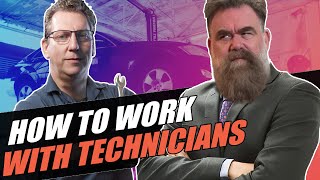
Kelly from Louisiana got sold an unnecessary turbo after a mistaken diagnosis. Chris Collins explains how to question technicians without offending them: ask them to show and explain their work, frame it as protecting their time, and stay humble. Call out genuinely unethical stuff, but most mistakes come from rushing.
Chapters
Let's go to your questions. Remember the number if you have a question. It doesn't have to just be about service or parts. It could be anything, marriage advice, whatever. 8:3, 3:3 Ask SDR. Let's go to the question.
Hey, Chris. My name is Kelly. I work here in southern Louisiana. My question for you was working with technicians. I don't want to overstep and make a technician feel like I'm second guessing his diagnosis. He is the technician. He's had the training. But dealing with techs and just knowing that they either didn't take the time to diagnose it and it seems like we're throwing parts at something or.
Them, basically saying that a part failed a certain way and then either by knowledge or doing my own research, talking to other technicians, knowing that that's not how that part operates. I've actually sold a job on a car where he told me the turbo was leaking, need to be replaced, only to find out. And my customer didn't actually have a turbocharged car. So that was my fault partly too because I didn't actually go out there and put my eyes on it being busy in the front. But I just, I feel like my customers lose their faith in me. Makes me feel like a liar. And I don't know how to approach a technician that way without ruffling some feathers in the shop. Or if I need to ruffle feathers, that's fine too. I just try to keep the peace when possible.
Ouch.
What would you say to that?
Well, I think that there's a couple of things going on there. I'll let you address what you would do with the technician that told you that it needed a turbo. But in general, I think that this is something that as an advisor that I actually had to get really, really good at because I don't know anything about fixing cars. So when I went from sales back.
To sales, so no matter what you said, it was an insult to the tech ye.
So what I did is I went back into the shop and I really asked them for a show and tell. What I did is I fell on my sword. I said, you know what, guys, I'm sorry, I don't know anything about fixing cars. And the more that you help me explain this to someone, the better off I'm going to be able to sell it for you. But in the meantime, when they're showing me the thing, it's also kind of confirming their diagnosis a little bit too. Right? Because they've got to show me whatever the thing is that's broken. But the whole tech telling you about something that's needed that's not on the car, that's a difference scenario, don't you think?
Do you think that the tech was messing with her, or do you think that the tech.
That. That was real?
So what I think happens in some cases is technicians. You know, when you figure you've been working on the car for 20, 30 years, you get an RO, it's got a certain complaint on it, and in your head, you automatically go to, oh, it needs a turbo because of the description of the issue. And then you give it back to the. To the advisor, say, calm, tell them it's going to need a turbo. Like, you don't look at the car or anything like that. So that probably works in 95% of the cases where they're right because of their experience. But in those 5% of the cases, like, I don't know, it's unacceptable to call somebody and tell them that they need a part that they don't own.
I think there's a term for this in psychology. But before we talk about that, I think in that situation, I would go back to the tech and I would like, let's say the tech's name's John or whatever, and I'd be like, you know, John.
You know, your parents did a terrible job raising.
Go right to the parents.
Yeah. Like, just ethically like you. They raised a savage. Like, what.
It'S bad parenting or something. But I don't think you can let that slide. No, you're going to make a big deal out of that. But in psychology, they kind of call this process versus content or process or content. And so let's say, for example, like, have you ever been in a situation where you're with your significant other and they ask you, like, honey, do. Do I look fat in these jeans?
Yes. Trick question.
You said yes or you've been in that situation?
I've been in that situation. And yes, I said no.
You said no?
I did.
So why did you say no?
Because yes is what they.
Don'T want to hear.
But the truth is that maybe it did look big. So the content. The truth is the content, right? The truth is the actual yes. You do look kind of thick, which now is kind of a cool thing.
Yeah. It's funny how that. Oh, yeah, right. Yep.
But the process is where people get messed up. So in that situation, like, oftentimes you're arguing with somebody and.
You'Re right in the point that you're making, but they don't like the way you said it, or they don't like the way it makes them feel.
Right.
And so the process is the problem, not the content. Does that make sense?
Yeah.
So it's how the information is being exchanged and how the other person feels about that exchange. Really, it has nothing to do with the actual conversation.
Okay.
So you got to understand that in that scenario, you're. You're kind of alluding to this. They don't really want the truth.
No.
And so I think when you're dealing with technicians, you got to understand that it's the process, not the content. And so how you approach the technician and what you're doing for them. So say, for example, if I go to a technician and I'm like, hey, I don't. I don't understand that, but I want to make sure that I get you as much time as I can. It's all about them now. I flip the process and the content is important.
Yeah.
But if they don't appreciate the content and they think I'm just wasting their time, or they have an ego and they're kind of a pain in the ass, then the content doesn't matter. Right?
Yeah.
Does that make sense?
They're just fighting to win at that point.
And so it's very much in the frame and how you handle the process and so making it to their benefit and that you're trying to protect them or trying to save them time. So say you go to a technician and you're like, hey, I want to understand this because I don't want to right this wrong. Or I want to make sure that you get paid under warranty for this. Or those little things I found, make them open up and they're your best friend. But if you just come to them and you're like, hey, show me that. Yeah, a lot of them are super insecure. And it's like, well, why? You don't trust me?
Right.
So you have to manage the process with technicians often and make them feel like it's to their benefit.
Yeah. So maybe it's kind of like saying, instead of saying, yes, those jeans make you look fat. I want to make sure these jeans fit you. Right.
Or saying like, what are you trying to have a big butt like Kim Kardashian or.
Right. Which is the end thing.
Yeah. So you can manage the process.
Definitely manage the process. And coming at it in an accusatory manner. I've never seen that really work with technicians. I think that's the thing. As an advisor, like, you have to be the Technician has to be your biggest fan in order for the thing to work really, really well.
I mean, I often thought, like, thank God these, these techs don't talk to customers because they're mean. Like, they were very mean, you know.
But the, you know, the thing is, is I, like, I'm sure they see, like when I was an advisor, a young kid, and I'm making money and like all, you know, um, there's maybe more glory in being an advisor sometimes. Like, the techs don't get enough credit. Even though they should get all the credit. They don't. And so just the, the way the process is in a service department, they're in the back, you know. Yeah, they get blamed for a lot of stuff. And so it's just the nature of the business that we should be aware of and try to. Try to change that.
Yeah, for sure. Showing gratitude to technicians is a really, really good way to kind of get little things like this solved.
In answer to your question, Kelly, is manage that, manage their feelings. But get to the point, like, that's unethical. And I'd be very clear that that's unethical and it's not something that should be allowed. And I mean, I hope that you don't work for a place that that's okay.
Yeah. And I don't think most places are okay with that. I feel like what happens is sometimes we, we'll sweep it under the rug and it doesn't get to the right people.
Thanks so much for watching this clip of Service Driver Revolution. We're uploading new stuff every day, so make sure you subscribe and click the bell icon so you don't miss out. If you have a question you'd like us to answer on the show, call 8333-AT-ASK SDR and we'll answer your question on the show. That's 8333-ASK SDR. For special deals on our books and training, head over to offers.chris collins inc.com that's offers.chriscollinsinc.com I'm Chris Collins, and I'll see you in the next video.







