I Would Pay $100,000 For a Personal Assistant, if.... (Service Drive Revolution)
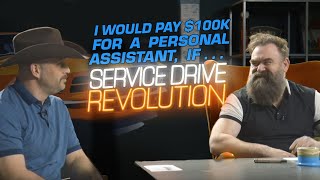
Chris Collins says he'd pay $100,000 a year for a personal assistant who actually executes. The problem isn't finding someone smart, it's building systems that work: Trello follow-ups that stick, packaging that ships on time, travel logistics that don't fall apart. Success means embracing the complexity, not dodging it.
Chapters
Foreign.
Welcome everybody, to service Drive Revolution.
How you doing, Christopher?
I'm doing good. How are you?
Good. We're going to try to have as many Chris's work here as possible. So it's you, Russo. His first name is Chris? Yeah, me. Everybody now coming in has to have the name Chris.
What if it's a version like Chris Jean?
Yeah, it's okay.
Counts.
We have that. We have a Christian. A Christina is okay. That's kind of it. Right. Are there any other versions?
Probably.
We begin the show today talking about the service manager challenge. So we have a challenge where I'm giving away my jeep pickup truck. I bought one of those fancy jeep gladiators. I'm tricking it out. It's all jacked up, wrapped. I still need to put a gun rack in it. It's coming. But basically anybody in our on demand system or in our coaching program, it's a competition of you versus you. So anybody can win. It's if you take our strategies, increase your net to gross in your department, your effective labor rate and your customer satisfaction. Basically the. A little different for truck franchises and independents, but they have different categories. But it's the same basic idea. And then you kind of, you know, tell us your journey. But the thing I was wondering is what's better to be the manager that wins the service manager challenge or be the coach.
That has the manager that wins the challenge?
Yeah. It's interesting, you being a coach.
You're supposed to say being a coach, but you didn't say that.
No, I mean, I don't know. There's a. It'd be pretty cool to be the manager to win.
Do you have any managers that you're coaching that you feel like could win it?
Absolutely. And I've told them.
How many do you think you have that. That are front runners that can win it?
That can win it.
Oh, you've seen the winners before?
Oh, yeah. I mean.
Probably there's a dozen or so that could win it that you're coaching. Yeah, absolutely. 100%.
But they won't.
I don't know. We'll see. There's a couple that I don't think will. That could.
Why won't they if they could?
One, they don't believe it themselves. So my.
So it's their self image.
Yeah.
Their self image of themselves is, oh, I could never win.
Yeah. Yeah. It's too. Too many things stacked against them.
My market.
Yeah. Just not that.
Meanwhile, everybody who's won it was in like a smaller market. Right. Think.
Yeah.
Trying to Think, but close, Right?
Yeah.
Okay. So the self image, their vision of themselves. Yeah, what else? Why else wouldn't they want it?
So confidence, mindset.
Execution.
Like, don't execute.
Yeah.
Because they're too busy doing everything that doesn't make a money.
Yeah. Yep.
Scatterbrained. So you think that's bad parenting? That? Bad parenting?
No.
Throwing it out there. That's my question. Service manager challenge. Would it be better to win the challenge or be the coach? Because I. We have a prize internally for the coach.
The Jeep. No one told us that part. Oh.
But it's monetary. And also it's just the pride of doing it right.
Yeah, for sure. Yeah.
It's funny, I was thinking.
About this a lot lately because, like, I have so many things that I need to get done and I have nobody that I can hand it to to get it done. Like, there, there. It's. It's just. It's so frustrating. Like, I hand. I'm literally now I'm keeping a list in Trello. So do you use Trello?
Yeah.
Do you use our Trello?
Yep.
Is it our Trello? You have your own Trello?
No, no, it's.
You're in. You're in ours. Do you have your own personal page that nobody else can see? So I created a personal page that nobody else can see, and I created a list of stuff I've had to ask about more than three times. How long do you think that list is? So think about this. I hand somebody something and I say, I need this done. I even assign it to them in Trello, and then a week later, guess what I have to do.
Assign it to them again.
No, go back and go, hey, what's going on with that? Like, right? So I would pay a personal assistant a hundred thousand dollars a year if they would just do the stuff that I need them to do.
$100,000 a year.
I'm telling you.
Personal assistant.
I think it would be worth it. I would pay $100,000 if I could get somebody in this office. Then when I gave them something, they did it.
I don't know, bro. I think LA here is lined the streets with tents full of people that do that job for $25,000 a year.
Like. Like homeless people.
Yeah, somebody. Anyway, I don't think it pays 100 grand a year.
Just think about if I. So, like. Okay, let me give you some examples of what I'm talking about. So what if the Service Advisor competition software. Some people listening to this are gonna have no idea what I'm talking About. So to give you context, we have software that benchmarks advisors and service managers against each other. And we give away, I don't like, $8,000 worth of prizes every month, and we probably could do away with the money. It's the bulldog that they get, a bobblehead bulldog that means the most. But if that software integrated with social media and integrated with our on demand platform, and so they got the badges were posted on social media and in their profile on our on demand, how much more would that be? How much more would that add to the interactivity between the advisors?
A lot for sure.
Okay. There's nobody that. Nobody could figure, figure that, figure that out. Okay, what about this? So when, when people join coaching, we send out a series of things to them.
Right.
So have you seen how it comes?
Yeah.
So first they get their workbook for service manager university. They get that in the mail. It's in a regular cardboard box. Not an orange box, not a printed box. It's not cool whatsoever. And so I want that to be like a cool orange box with a logo and in a sleeve. Like, I want there to be some sort of presentation when they get it. Like, hey, this is a big deal. You're a part of our family. Like that attention to detail, I think matters. It shouldn't just be in a cardboard box, right?
Yeah.
And then a little bit later we send them, I want to send them swag from sdr. I want them to get a T shirt, a mug, all that same thing, cool box, right. Everything should look like it shouldn't be a mug thrown in a box with then a T shirt holding it together from rattling around. Like, that's what we're doing now. Like, shouldn't there be like a place with a mug?
Yeah.
Like, it isn't hard to do that stuff nowadays.
Right.
It just takes a little bit of time. Right. And then they get the gamification box. And oddly the gamification box, because we sell those when people buy gamification as a separate product. Those look pretty cool. That box does. But none of the other stuff matches. It's been two months. Nothing. I'm like, I want options. Nothing. So if I paid somebody 100 grand, do you think I could get that?
Yeah. I still don't think you have to pay him 100 grand though. But yeah, I'm sure you could get it.
Okay, here's one thing that I threw out there that I wanted. Charlie Rose's address.
Yeah.
Because I wanted to write him a personal letter. So for 100 grand, you think Somebody could find me Charlie Rose's home address?
I would think so.
What do you think happened here when I asked for Charlie Rose's address?
Gonna venture to say you didn't get it?
I got. He's not very popular right now because of the me too movement. Blah, blah, blah, blah, blah. Did I ask? Did I ask? Did I say, hey, I know Charlie has a habit of walking around naked in front of interns or whatever. Did I ask that? No, I wanted his address.
Yeah.
I didn't need the. Do I need the rest of it?
No, no.
Is there anything wrong with me? Like I think Charlie Rose has got a bunch of downtime. Right. He's not doing anything and he's arguably the best interviewer ever.
Yeah.
And so if I could get him to mentor me on how to interview and learn some things from him about doing shows and how he approaches things or whatever, I want to do that. I want to write him a letter. I know his address is available.
$100,000 assistant. Whenever I travel, I want something waiting for me in the hotel room. I want essential water. I want snacks.
Yeah.
I don't want to have to go look for that when I land. I just want it there because I drink a lot of water. You know what? You know what else I would love? And I bet what if when you're on the road, I have my assistant send a care package. My hundred thousand dollar assistant send. You get what you like.
Yeah.
And then have. Would you want essential water? What would you want in your room?
Yeah, yeah, water. Like breakfast items. In fact, I, I end up doing that a lot because I don't want.
You land and then you gotta go find a grocery store.
Yeah. Cuz you don't want to have, you know, microwaved eggs and all the.
Yeah.
Like holiday inner kills you. Yeah.
Okay. Okay. So what would you want on your list?
So I would want like some, some kind bars.
Yeah. Bottled water for sure.
Maybe a couple of my energy drinks.
So could not a hundred thousand dollar assistant do that for all the coaches?
Yeah. Like order it to where it met you there.
How much would that mean to you if we did that when you travel? Like you landed and it was there at the front. Like cuz they do it for me sometimes. Like but mostly Patricia does it right?
Yeah.
But it's there waiting for me. Like they're like, oh, somebody sent you this and you got this shopping bag with water and all this stuff. What. How would that make your day? After a long day of traveling, flight delays, all the stuff that you have to deal with. What would that mean?
Yeah, Sounded like a hundred thousand dollar job. Maybe.
I don't know.
Now you're. Now you like it?
Yeah, maybe a little bit.
What about like, the other thing? I want somebody to find me a gym.
Yeah.
Like, I hate it when I'm so, like, I'm going on this two week tour, right, Coming up next week, where I'm gonna be gone, speaking all over the place and, like, I want a gym. Like, how hard is it for somebody to find me a gym? The hotel gyms suck. I can never work out in a hotel gym for sure, but just a gym within, you know, a certain area.
Right.
Also, like, check the reviews of the hotels I'm staying in. Like, whenever I see. I go on and I check the reviews. But literally there was a hotel that the reviews said that a lot of people get bedbugs there.
Yeah. Yeah.
Would a. Would a good assistant check that and not send me to you a hotel that has bedbugs?
Yeah, I think so, yeah. If it's got more than one review that says the carpet's crunchy, like, let's move on to the next one.
The carpet's crunchy. What does that mean?
What makes the carpet crunchy?
I don't know what's happening that makes the carpet.
I think a lot of stuff.
But don't you think, like, when you travel as much as we do that those little things.
No, no question, no question.
But for me, like, I literally, I just need somebody in the office that I can give projects to that are bulldogs like me. Like, don't take no for an answer. Right. Like, I'll give you an example of a crazy one. So I was in Chicago speaking, and I had a day layover kind of there where I was stuck there before I flew to the next thing. And so I went to the. The big art gallery there downtown. I forget what it's called, the Museum of Modern Art. No, it's. It's called something else in Chicago, the Art Institute, I think, down there. But huge gallery. And there was an artist there. I saw his installation and one part of his installation, they were playing these little short films that he did. And there was this 20 minute short film called Something in Trousers. It's irrelevant what it was, but I was like, I was blown away by it. It was crazy. I wanted to show the team, the video team here, that. And so when I get back, I go on this website and I order a DVD of it. And it was crazy expensive, but I ordered it because he's an artist, and it's one off or whatever. And then they call me the next day, and they say, hey, are you a library or a school? And I'm like, no, I'm Chris Collins. I'm kind of a training company. Well, you have to be a library, a school in order to buy this. And I was like, oh, come on. Like, sell it to me. There's got to be a way. And she's like, well, here's the thing you should probably do is just go to your local library and tell them you'll donate it. They'll order it from us, and then you can check it out.
So I asked somebody here.
Yeah.
To do that. And guess what happened. Tell me, what do you think? If I'm telling the story, do you think that they did it?
No.
So I say, well, what did you say? And they go. I went to the library down the street, the Los Angeles library. And I walked. I asked the person at the front if I could do that, and they said no. And I said, okay. Did you ask anybody else? No. I'm like, okay. So I pick up the phone and I call and I ask for the person who's in charge of ordering stuff, and guess what?
They let you donate it.
Well, what library wouldn't let you donate something of value?
Right?
But how much time does that take? How much time does it take for me to keep a list of the things I've asked for more than three times? How much money could. Could I make? Like, I have two books that are almost done, right? So if I finish the pet the dog book and if I finish the leadership book, which I'm thinking about calling. I'm thinking today after we talked about changing the name, because I was going to call the book I lead, you follow. That was gonna be the name of my leadership book. But what about I lead, you follow? Because all the books that are selling have the F word.
Yeah. Yeah.
I wouldn't do it, but it's funny.
Yeah.
What if it was like, pet the dog. Hey, pet the dog. We'd have to redo the COVID in that case. Would that be funny? So do you. Do you slightly understand that I need a. An assassin?
Yeah.
There's got to be a level. There's got to be a level. Now I have a couple friends that are really affluent, and their sis. Their rock star assistants are making like 70 or 80. So I don't know, but I would pay 100 grand if somebody could get. If I could just give something to somebody, and it was done.
Yeah.
What Would that be worth. It's worth 200 grand. Honestly, there's so much stuff going on around here. Right?
Yeah.
Like the, those little things, those little edges are what make the difference. That attention to detail of what something looks like when they get it in the mail or, you know, research that we can do on something.
Yeah, yeah. The little stuff matters for sure.
You know, you don't seem impressed.
You're like, no, 200,000 is a lot of money.
Well, I just think 100,000.
Okay. Like maybe a hundred.
Oh, also, do you think for a hundred thousand dollars they don't like, clock out at 4:30?
I don't know.
Do you think that maybe they'd like, answer a text at 7 at night if there was something that needed.
Yeah, probably.
Like, if there was a lot of stuff going on, like, would they work more than eight hours a day?
Yeah, yeah, I would think.
Where's the level that you have to pay somebody?
I think you're getting there. I think once you get to six figures, like the, the balance and reciprocity moves to your favor quite a bit.
It'd be good for you. You'd have water and stuff. They could find your gym.
Yeah. I mean, that totally makes it worth it.
Do you like the gyms?
No, no, I've had, See, I've had plenty of bad experiences there, for sure.
It's terrible. If anybody would like to apply for that position, I know there's some, there's some badass service managers out there that don't make that.
Yeah, right.
That would be assassins, for sure.
Okay, the subject that we wanted to talk about today, and we probably could have come up with a better name for this, but I, I was asking Chris, I was like, what do you, what are, what are you seeing out there when you're coaching managers? What is, you know, what is the thing that you're having the most difficulty with? And he said that they, they just, everybody just wants a cheat code. They don't want to do the work.
Yeah, right.
Explain kind of.
Yeah, I think, I think a lot of people appreciate and see the value in different parts of our system and, you know, want to jump on board, but, you know, they never get past the good intentions. Right. And, and they never change their behavior. Yeah, yeah. And, and make it, you know, make it a habit and truly implement a system and execute it. Maybe they, they might dip their toes in the water and even see some success from it for a little bit, but there's always reasons that keep it from doing it consistently. And yeah, ultimately you know, don't make the necessary behavior changes to push it, you know, cross that abyss and push it past the finish line to where it's the new norm.
So would we agree with the statement that in most scenarios, somebody coming into coaching, we could double their sales?
Oh, yeah.
Like many times I'm way more than doubled somebody's sales within 90 days. Right. You could double your sales. So you're sitting here listening to this, and you're doing half a million a month in sales, and you could do a million dollars a month in sales. Now think about that. Now you're doing 70,000 in sales, and you could do 140,000. How life changing is that for any department?
Right.
And so you look at doubling what you're doing now, what behaviors would have to change, And I liken it to weight loss. So let's say you're £300, we'll go the other way. And you want to weigh 150 pounds. Now, there's no magic pill for that.
Right.
So you have to do a lot of different things. And the thing I would say to that is you have to embrace complexity. Everybody wants it to be easy. They want there to be a magic pill. But in the marketplace, how strong are one more car washer than anybody else? You can have one more driver, shuttle driver than anybody else. Right. Like, you're not, you're not getting micromanaged to the point that you got to run it right. In a deficit because you have abundance.
Yeah. There's a lot of freedom that comes with that success, for sure.
Okay, so it's life changing to have that sort of freedom. Now talk about with weight loss, like, if you weigh 300 pounds and you should weigh 150 pounds, what is that gonna do for your, your health and. I don't know, just quality of life.
I don't know. The more you talk about this, I find myself sucking.
But what's the difference in quality of life? It's huge.
Yeah, for sure.
Like, you got at 300 pounds, your knees hurt. Like, I've been 300 pounds before. Like I mentioned before when I was a vegetarian. Like, your knees hurt, you're lethargic, you don't have energy, and in 150, you have energy. Like. Right.
So as a tech, we call it consequential damage.
What's that mean?
Like something, something wears out and it causes something else to wear out. Right? Yeah. So like oil leaking onto a coolant hose makes it soft and then goes. The coolant hose would be consequential. Damage.
I like that. Consequential damage.
Yeah. That term right there will get some warranty claims paid.
Really?
Yeah.
Okay. Consequential damage. I love that. So let's talk about what complexity you would have to embrace. But understand that in the marketplace, when you're dominating, people are going to want to know what you did.
Yeah.
So you want it to be a magic pill in the beginning, but when you don't want it to be a magic pill is when everybody else notices you're dominating and they're chasing you.
Yeah.
Then you want it to be complex. Complex, Right, right, right. So the truth of the matter is, is you want it to be complex.
Yeah.
Because if it wasn't complex, everybody could do it.
Yeah.
And not everybody's gonna pay that price.
Right, right.
So when we talk about. Of all the managers you're coaching, only three of them, you think can actually win the service manager challenge. Yeah, all of them can win it.
Right.
Just all of them won't embrace it. They won't get out of their own way. They won't change their thinking, they. Their behavior to do it. Right.
Yeah.
So you want to embrace complexity. You think you don't, but don't you really want to embrace complexity? Because otherwise everybody can do it. If there's a magic pill, everybody takes the magic pill. And then you have no advantage in the marketplace. You're not any better than anybody else. It creates average. Right. So if I had to go from £300 to £150, I would have to embrace complexity. So the first thing there, obviously you got to work out.
Yeah.
But I know that I won't work out unless I pay a trainer. Unless I pay a trainer, I won't show up all the time. I'll be inconsistent.
Yeah. Right.
So.
If I pay a trainer, I'm. I'm gonna go. So I gotta pay a trainer. So that's the thing. I have to, like, I know I have to do that.
Right.
In order to work out all the time.
Yeah.
So right now I have two trainers. I have a trainer that I lift weights with and a trainer that I box with. So I have cardio and weights, but I have to go six days a week. When I'm in town, they. We have a time. We meet at 5:30 in the morning and we work out. Right. And I pay him. And when I'm paying them, it's like, I know that it's expensive, but I'm investing in the fact that I'll be there if I pay him.
Yeah.
Because I won't waste that money.
Right.
So that's complex in a way. It's like. Yeah, it's a. You got to trick yourself, right?
Yeah.
Okay. The other thing is then with the food. The food is the hardest part for me. They say that abs are made in the kitchen, but that's the hardest part. So if you were going to figure out a food thing, once again, it's complex. You got to trick yourself. So the first thing on the food is. Is you. And I've done this a couple times where my trainer comes in with a garbage bag and goes through the cupboards and throws away the cereal, the cookies, all the stuff that shouldn't be there. Now I've had a couple glasses of tequila at 9 o' clock at night and I know there's cookies in there, I'm gonna eat them. If they're not there, I'm not gonna get in the car and go to the grocery store to get cookies.
Yeah.
So I can't have it there. I gotta throw it away.
Right, right, right.
Now the second thing is.
I like to eat for entertainment. So I like to. I like the conversation. What do we want for lunch? Oh, what's the best thing we could have for lunch? Right now? That's a mistake because you're eating for entertainment, you're not eating for fuel.
Yeah.
So if I have to make the decision what I'm going to eat, then I'm going to make the wrong decision. So I got to put myself in a scenario where I'm not making a decision. Which means you have to meal prep.
Yeah.
You have to have meals done beforehand that. No, I'm eating chicken. What did we have for lunch today? We had a chicken salad. It showed up. Nobody asked me what I wanted for lunch. It just showed up.
Right.
And we ate and we were working while we ate, but we were done.
Right.
So if you don't meal prep and you wait and you eat for entertainment, I will always make the wrong decision. But if the meals are pre planned, like you cook them on Sunday or you have a service that delivers them, or you know what, however you do it, you have to trick yourself into not making a decision because you'll end up getting the burger and fries or whatever it is. If you're eating from what you want or what you feel like instead of just having it there, eating it and you're done. Because it was fuel.
Yeah. Right, right.
That's kind of complex, isn't it?
For sure. But it's a system, I think.
Yeah. So how is it Any different for managers if you want to double your sales.
Right, right.
You have to trick yourself into some things.
Yeah.
You have to set up a system where you. It's okay that you procrastinate. I procrastinate?
Yeah.
It's okay that I will eat the cookies if they're there. So I got to create a system where the cookies aren't there.
Right.
Does that make sense?
Yeah, yeah, for sure. Yeah. And it's. And I think that's one thing that you, you know, we get lost in a lot is the we say internally a lot, you know, facts over feelings.
Yeah.
And having a system that we know will get us the results and being results oriented and if you truly have the goal of losing weight or doubling yourselves or whatever, it is just being.
Profitable in your department.
Yeah, yeah. Turning it over to a system that, you know will get you the results instead of, you know, the feelings of why you can or can't do something.
Yeah. Because the same thing that makes you lose weight, the working out and the eating. Right. There's like two things, but there's a lot of things that make you do those two things, like paying a trainer or meal prepping, whatever. There's two or three things that make a department profitable. It just. We don't do those two or three things. And you got to trick yourself into that.
Yeah, yeah.
That's the. That's the secret. So everybody wants a cheat code, but what we're trying to say is really, you don't. You want complexity. Cause you want to own the market and you want nobody else to be able to figure out what you're doing in order to keep them from being better than you.
Right? Yeah. Yeah.
That's the secret. That's good stuff. So what did we learn today? We want complexity. I'm getting $100,000 a year personal assistant that's going to send you gummy bears, cookies.
And all this stuff you shouldn't eat.
Yeah.
And not find you a gym.
Help me gain more weight on the road.
300 pound pounds. It's hard on the road.
It is, man.
It's tough.
So it's so easy.
Salty.
Yeah.
You don't drink as much as I drink, but the alcohol too gets you.
Yeah, those are.
Those are empty calories, Chris. Yeah, they're empty calories. Well, thanks, you guys. We will see you again on Service Drive Revolution.
Thanks for watching this episode of Service Drive Revolution. If you have any questions, go ahead and post them in the comments below. Make sure you subscribe and hit the bell. Icon, so you're notified when we post new episodes. I'm Chris Collins, and you can find me on Facebook and Instagram at Chris Bulldog Collins. And I'll see you again on the next episode.







