Independent Contractor Sees The Light Through Rich Dad Poor Dad, Jeff Bezos, and Kathleen Zellner
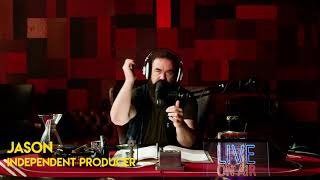
Jason, an independent contractor in reality TV production, learns from host Chris Collins how incorporating his business could lower his taxes and help him buy assets. Collins cites Rich Dad Poor Dad and Jeff Bezos's reinvestment strategy as models, and recommends Jason talk to a CPA about S-Corps, C-Corps, and LLCs.
Chapters
Let's go to our first caller here right out of the gate.
Jason. How are you doing?
Hey, how's it going, Chris?
I'm amazing.
That's great, man. Happy Tuesday to you.
Thank you. You know you have big Halloween plans.
Oh, man, it's my friend's birthday, so I'm gonna go up to her house and actually have to buy a costume today because I'm that guy. I have to buy a costume a day before Halloween.
Wait, let's back up before we talk about that. So your friend is Satan.
She has the devil's birthday.
What.
What is Satan's. What is Satan's first name?
I had no idea that my friend Sarah from Minnesota was Satan. But. But yeah, make sure the nice people, you know, the nice Minnesotans that are actually Satan underneath that veil of, of happiness and smiles.
Does she say. Yeah, a lot. Have you, have you watched the Making of a Murderer?
Oh, yeah, absolutely.
That.
Yeah, yeah, it's all making sense now. Yeah, it's all making sense.
I'm obsessed. My new celebrity crush. I want everybody to understand this. Kathleen Zellner, the lawyer on the second season of Making of a Murder is my new celebrity crush. I'm going to be sending her flowers. Somehow I have to get her to take me to a business lunch. But she is unbelievable. Like how she figures things out in her. She just really has a system. Have you seen it?
Oh, man, you know what? I've seen bits and pieces of it, but I haven't seen the whole thing.
Oh, it's amazing. Okay, so tell me your business, Jason, and, and how can I help you? What's your question?
Well, Chris, so I'm an independent contractor and I produce and direct reality shows. I do unscript. It is the, is the nicer term, but. But let's call it what it is. It's a reality show. So I've been doing that for well over 15 years. It's my trade, it's what I do. And every time I work for different production companies and I file all my W9 as an independent contractor, sometimes people ask me, hey, are you incorporated? And my answer is, no, I'm not incorporated because I have no idea what that even entails. I've had my own production company before, but it was on a pretty small scale level. So my question is to you, is it beneficial for me as an independent contractor working in the entertainment industry to be incorporated?
Yes, it is. And so would there be any difference if they wrote a check to your company or wrote a check to you personally? They don't really care. Right?
Yeah, they don't. Yeah.
So the, the best analogy I've, I've ever heard to explain this and you, you want to talk to an accountant to, you know, get a clear picture because I'm not an accountant, but I do understand and I have accountants that work for me. In the book Rich Dad, Poor dad, he explains it like this. When you're an employee or an independent contractor, you pay taxes off of the top. When you're a corporation, you pay taxes after your expenses. And so you would be able to lower your taxable income and have additional write offs by being a corporation.
Got it. So that being said, you know what, what's the first step of getting incorporated? I mean, is there some sort of like fee? Because I remember when I had my production company, which is a very small one, for a show that I had for about three years, you know, I had to get, you know, I had to pay 600 bucks a year to the state of California to be a tab and llp. Is it something similar to that?
It is, but there's different. So you have a C Corp and S Corp, an LLC and I think like a dba, right. You can, you, you want to talk to an accountant and ask them what the best one would be for, for what you're doing, I'm gonna guess it's gonna be an S. But the, I don't believe that it's as much as $600 a year, but you'd have to talk to a CPA for that. But I don't think I pay that for my corporations. I have a bunch of them. But it's still, you're, you're gonna be able to write off more stuff and you also have that layer of protection and liability also, which I don't know is a huge deal for you, but you, you'll have, you'll have better write offs. But I would ask a cpa and I can recommend one off air too if you want. That'll, and you know, just answer a couple questions.
That would be amazing. I thought that's the kind of thing that, you know, I could always use a little bit of guidance as to like what the, the right financial moves are in my life because it's, you know, it's never been my, my trade, you know, my trade is I know cameras, I know film, I know how to make a television show. But, but as far as like the business of keeping things afloat, I could definitely always use a guiding hand and a guiding brain to help me figure those Things out.
What sort of things are you doing to set up for retirement? And you probably have lapses in between gigs, right? So like do you have a gig for a while and then you'll be off for three or four months kind of looking for another gig?
Yeah, it's something like that. And so, you know, sometimes the time period is less than three and four months, you know, which keeps me, you know, afloat for the year for sure. But, but that's the kind of thing that as far as retirement plan goes, you know, I mean, I mean I have a 401k set up but, but you know, that's, you know, that's through, you know, do the, through the payroll companies. But if there's anything that I should be doing that's, that's, that's smarter, I'm all ears, of course.
Well, just if you have a corporation and you, and you're buying other things though, that's a write off, right? So like think about, and I'm just planting these seeds for you down the road. But as you kind of, as you evolve in the, in the industry, having a production company and buying other, other assets is a, is a huge benefit. So take for example Amazon. So Amazon spends more money on their programming for Prime TV or video. Prime Video, is that what it's called, Prime Video? Than NBC or ABC or CBS spend on their content. And Amazon isn't even in the content business. They give it away with Prime. And so they, you know, they are always complaining that Amazon doesn't pay enough in taxes. But what he, what he's doing is he's spreading out and acquiring more assets. So he's acquiring more assets instead of paying taxes. So if you were, we're going to spend $6 billion on taxes or you could give prime members free video and keep more prime members. And there's more prime members now than there are people that have a telephone, a landline. Which would you do? You would do the prime, right? You would invest in content. And so it's the same thing for you is once you have a corporation established, if you're bringing in money and you're kind of planning for the future, you can, you know, you can buy assets for that corporation that lower your tax liability now but become valuable down the road. So like for example, I just bought part of a hair salon. I'm looking into opening some coffee shops. So I want to take instead of paying taxes, especially in California where Trump did us no favors, I'm looking for ways to add assets to my portfolio and Lower my tax liability, and so I can invest in. In things that maybe aren't making money in the beginning, but they offset my tax liability, and I'm growing assets for the future. So, like, if you wanted to invest in a coin, laundry matter, you know, a rental property, properties a little different, but you can still, you know, do Airbnb and do different things with them. But that's, that's a thing that you might want to think about for the future, especially being in an industry that's so volatile. And, you know, right now, everybody's buying content, but there's going to be a correction on that. And so, you know, Hollywood always kind of goes through these cycles, right, where everybody's buying content and then everybody's frozen and they don't know what to do. You might want to start thinking about what could I do with my corporation to add assets that are positive cash flow and lower my tax liability now in good times. So when you have surplus, try to add things that, that do that.
Man, you are a guru. Like, this is like, you know, like it, like, literally, while you were talking, like, it's literally like the light bulb went off.
So what could you invest in? I'm curious. Like, what assets could you buy?
Well, I, you know what, I have friends that have small businesses. I have friends that have cafes. And, you know, I have a friend that wants to invest in, like, a parking lot, you know, kind of a deal to, you know, parking lot near, near like a sports venue kind of a deal. I mean, these are the kind of things that I'm starting to entertain now and starting to say maybe I can, you know, add to my assets by, by investing, you know, and going in on some of these business ventures with some of my friends.
Yeah, no, that's exactly it. Because you'll. If your corporation is investing in those and they're, you know, a sub of that corporation, you know, the accountant can explain to you how to set it up. But, like, for example, my corporation here in America owns a company in Canada, and so my tax liability in Canada is a lot less. I can leave money up there, have expenses against the money up there, but I don't get double taxed. And so I'm taxed 25% up there, where here in California, I might be taxed 40. So there's, you know, there's just a lot of different things that you, you can do that way to add positive cash flow. And then if you want to call back another time and, and ask me about how you set up those deals, with your friends when you're going to invest in them. That's another conversation, because you want to make sure you have the, the real conversations up front with your friends to preserve your friendship. There's some things that you want to. You want to establish up front, like, you know, just how does it end, how does it work? How do I get money out, that sort of thing. You always got to plan for what happens if it doesn't go right.
You want to have that?
I would love to call you back sometime and discuss that.
Awesome. Well, thank you, Jason. That was a great call. And yeah, call back and I'd be curious what other ideas you come up with. Just, you know, you'll have. Your subconscious will go to work the next couple days and you might wake up with some ideas or have an idea in the shower and then have an idea for us to have a reality show, too.
I love it, man. And like, literally, like, you know, hopefully there could be some sort of a timeline with, with me as, you know, sort of the litmus test. It's like, you know, he took this call in October of 2018, and by, you know, July of 2019, you know, he was doing this with his money.
He's a billionaire.
Good thing. Yeah, he's a billionaire.
Parking lots, reality shows and, and cafes.
There you go. I love it. Well, thanks, Jason. Have a great week.
Yeah, I appreciate you, Chris, man. Have a good one.
Bye. Yeah, that's the, that's the Amazon lesson is Jeff Bezos is one smart dude. He's created among Monopoly by doubling down and reinvesting in his business over and over again and finding new ways to offer services and spending the money he would be paying taxes on to go go wide and deep instead of paying taxes. So I, I think it's unbelievable how he's pulled that off. And, you know, if you're pro tax, I guess you don't like that. But I'm, I'm. I want to pay my fair share of taxes, but I'm definitely paying more than my fair share of taxes. I, I feel like.







