Jay Mewes on "Deadshot: Beginnings" || Books That Changed My Life
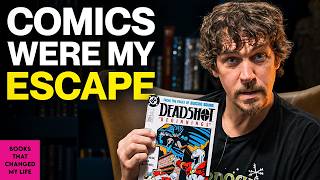
In this candid interview, host Chris Collins talks with Jay Mewes about the comic series Deadshot: Beginnings and how the story’s themes of trauma, violence, and redemption resonated with his own turbulent life. Mewes explains how the gritty anti‑heroes Deadshot and Vigilante, who rely on technology rather than superpowers, mirrored his teenage desire for escape and empowerment. He recounts his chaotic childhood in Highlands, New Jersey— a mother battling addiction and incarceration, early brushes with the law, and the emotional fallout of abuse and loss. The conversation shifts to his own descent into heroin, crack, and OxyContin addiction, the relentless cycle of scoring, relapses, and the pivotal moment when he decided to turn himself in, endure six months of rehab, and confront the physical and psychological challenges of withdrawal. Mewes reflects on the philosophical quotes that open each issue of Deadshot (Thomas Chatterton, Rollo May, Dostoevsky, Samuel Beckett) and how they shaped his worldview about mortality, suffering, and moral ambiguity. He discusses the duality of good and evil in both comics and addiction, the importance of a support network— especially his long‑time friend Kevin— and how those relationships helped him rebuild his life. Finally, Mewes shares his current creative ventures, including the “5 Things with Jay Muse” interview series and a guest‑spot‑turned‑podcast on the Canadian show Murdoch Mysteries, illustrating his ongoing commitment to storytelling and community. Throughout, the tone is informal, reflective, and at times raw, revealing a journey from despair to a cautious optimism about recovery and purpose.
Chapters
At 12, I almost got arrested. That's sort of when my mom went to jail for a long time, is she gave me this. She said, hey, will you bring this down to so-and-so? He's with his uncle and he owes me money. I bring this envelope, as it was like a manila envelope, gave it to him. He gave me money. And then like 2 months later, my brother picks me up. He goes, hey man, I gotta tell you something. He's like, do you remember meeting so-and-so at the beach? I go, yeah. He goes, you gave him drugs and that he gave you money and it wasn't his uncle, it was an undercover cop with them. And so I sold drugs to an undercover cop.
I'm Chris Collins and you're watching Books That Changed My Life. This week we're joined by actor, comedian, and host of Five Things, Jay Muse. He's here to talk about the book that changed his life, Deadshot Beginnings by Kim Yale and John Osterberg. Interesting, right?
Yes, it's very cool. I love— again, I, uh, love the idea to take pieces for— to hold the big giant books, but you can also use it as a table or an art stand and such. So yeah, you're—
are you referring to the Dolly Bibles?
Yes, yes, yeah. And then over here you have the art piece, uh, and then And then at the bottom, I guess it's the book you wrote.
Oh yeah, for the special editions.
Yes, yes. I think it's very cool.
Yeah, we like making stuff around here. We're having fun.
Very cool.
What's your, what's your library situation at home?
Oh, my library is, is minimal. So my— I used to have tons of comics. Are we getting right into it? Are we like— because I have— so my comics, I used to have tons of comics. I used to have bookshelves and I collect comics. So I've only read one real— I guess, I guess comics are real, but only one book that wasn't a graphic novel or comic, which was, uh, The Red Dragon. Kevin gave it to me, uh, to read. I think I was probably about 15, 16 years old. So I read it and I really enjoyed it, but I realized my brain— it was hard for my brain to keep up because I realized I would read you know, whatever amount of pages, and then I would like put it down because I was like, all right, I can't read anymore, I have to go do something. And my brain doesn't soak in the information enough that when I go to open up, I'm like, wait a sec, where am I? Like, I forgot. Like, they start talking about a character and I'm like, wait a sec, where is this? What is this character? Is she the mom or the, the daughter? I can't remember. So I'd have to flip back. So I, I realized in that, uh, moment reading that book, I finished it and I really enjoyed it, but it took a lot It wasn't just like I could sit down, read half of it, put it down, come back, and then keep reading without being like, wait a sec, who is Thomas again? They keep mentioning Thomas. I know they mentioned him before, but I can't remember if he's the lawyer or the neighbor or, you know. So, yeah, so yeah, but then I had a lot of comics. Sorry, I was about to say, but then, uh, I got—
like, when you say a lot, how many?
I would probably— I would say probably be able to fill up this, just this back bookshelf here. I could probably fill up that with graphic novels and the comic books. I had them in, uh, uh, the boxes. He had thousands of books. Um, and then I, I was in New Jersey and I live with my mom, which I'll get into that stuff too later. Thank you. Um, but my mom passed away and my sister and I were strung out on drugs. I went to LA to do some press for Jay and Silent Bob Strikes Back, and I was strung out and I was a mess. And I was— Kevin was like, hey, I want to help you. I'm going to put you in a rehab, or you can go back home. And I like, like, you got to figure it out. So I didn't go back home. I went to rehab for months. And while I was in rehab, my sister put everything in storage, and I was sending money home for her to pay for it, and she never paid for it. So they like auctioned it off. So someone out there got to buy a storage area full of that. And I had about 20 25 gas-powered RC cars. So I used to read comics, and then I used to build these RC cars. You buy the motor and the shocks, and they go like 60 miles an hour. They're amazing. Um, very expensive though. So, but yeah, all that stuff is gone. It's, it's a real bummer. Um, but I guess I do have a huge book collection because I do own, with Kevin, a comic book store in New Jersey called Jan, Sal, and Bob's Secret Stash. So, you know, we have a whole store full of comics right now. But yeah, regular books. My wife has some books, but yeah, I just— again, I'm not a big book reader. So—
but do you now currently have a collection of comic books at home?
I do. I do. I don't have a whole bunch, but at home I have a tub full of the whole series of the Justice League of America. I went back and bought Vigilante. Issues 1 through 50, and there's a couple like annuals. So I do have a couple, but not a whole lot.
What would be the most valuable one that you have?
Oh, I don't have— I don't think I have any that's worth money. No, I don't have any that I've collected. That's not true. Sorry. I do have a nice big— there was a Marvel book that they put together. It's almost like a briefcase. It's that big. But Stan Lee signed it. Yeah, he wrote "to my friend Jason Muse, your pal Stan Lee." So it's really sweet. So I have that. So I feel like it might be worth money because Stan—
But it's sentimental more than anything.
It is sentimental, exactly. So it's more worth something to me because he signed it. And I even had him sign my last name because, I don't know, I just thought if he just wrote— He signed a Wolverine comic to me as well, and he just wrote, "To my pal J," and then he wrote "Stan Lee." And I was like, oh, you know, there's many Js out there. I want this to— I want people to know it's me, Jason. So again, he was such a great, great dude, Stanley.
So anyway, do you still go to comic conventions?
I do, I do.
How involved in the store are you?
I'm, I'm pretty involved. I mean, we have a guy who orders, like, to see, keep up with what we should buy, how many, and all that.
You put your hands in that?
I—
no, I don't do that because I don't like getting guys into comics that you're not into.
Oh no, well, it's because it's a business still, right?
So we, we're hoping, you know, it's more about people buying them in the turn than to keep it going. It's not really about the style.
No, we definitely have that. We have our section. The great thing about the store— it's been open 26 years, I think 27— is we have like memorabilia from all of the movies, um, and we have our own comics. Kevin's written a bunch of comic books. We have like— Kevin's writing the Quick Stop. There's Quick Stop issues that are stories, side stories of like in the movies. Uh, there's a story about, uh, in Mallrats, Jeremy London says, oh my God, so-and-so also died in the pool. So there's the whole side story Kevin wrote, um, in Quick Stop issues 1. And then there's another issue, Quick Stop 4, where Dante in Clerks 3 dies, um, and Jay and— Jay and Saul and Bob are trying to resurrect him, Brian, back from the dead. Um, and Metatron from Dogma, Alan Rickman, comes back to like intervene and be like, oh, what are you doing? Like, you You're not doing it right. Um, so just cool comics like that. So we have those sections that are, uh, you know, our books— well, Kevin's books that he wrote. He wrote some Green Arrow books and Batman books, but most of it we, we leave up to Mike Zapkick, and he's the one who orders statues, toys, things that he thinks. But I do, I do put my two cents in. I told him to start buying Legos because I'm into Legos, and I feel like some of the Legos are— get really pricey because they sell out and you can't find them. So started getting him that I was like, you got to buy Legos and put them in our toy section and or hold on to them and then put them out and stuff like that. So I have a little bit of say in that, like what to buy and stuff like that. But mainly we put our trust in Mike Zapkick.
So does it make a profit? Is it a labor of love?
It's a labor of love. Definitely. There's, there's been a couple, there's been a couple of years that it's made some profit, but I think there's been the years like COVID and like, you know, I mean, so there's been a bunch of years that we lost money and then we've like had a really good year that sort of like broke us even. And then so I would say we're definitely not making money and getting rich off of it. I don't think I ever see a check like, hey, all the bills are paid and here's a check for $50 grand. It's, it's really like the, the money it makes keeps the store open and pays the employees. And it's a labor of love. Like you said, it's been— it's just a great place. We'll hold events there. We'll do stuff like for Christmas, Kevin and I will get in our Jay and Silent Bob costumes and people come, like, we'll do like 400 people and they'll come get pictures with for Christmas cards. We've been doing that for like since after COVID. So whatever, that's been 2 years, 3 years. It's been great. For me, it's great because I'm hoping down the road I could pass it on to my kids. I got 2 kids, so one of them will get it.
Are young kids today into comics like we were?
Oh yeah, I definitely— yeah. And there's a kid. So I also stream on Twitch. I was telling them earlier, playing video games for like 6 years now. And there's a kid there, uh, from New Jersey who's been following my stream because he goes to the comic book store and he loves comics, and he goes in every week to get new comics and stuff with his mom. And I have my Twitch sign in the store, and he started following my Twitch because he also likes Fortnite and I play Fortnite. Um, but anyway, that— he was 10 then, he's 16 now. So he's been following the stream and he goes in the store for the last 6 years and he buys comics since he was 10. And so I definitely think that there's kids come in the store to buy comics, and then there's the collectors, the old— like, we have our pull list every week. Um, but again, it's, it's tough with the— I still love— I just been trying to read— it's been a while since I've read Vigilante. Um, and I was on my iPad reading it, and I realized how much better it is to read the books. The smell.
Yeah, it's like, oh yeah, it's tactile.
Yeah, when I, when I crack open— I cracked open one of the issues I have, I still have the comics, cracked it up, and just the smell, it's such a— I know it's sort of weird to say, I guess it's not weird to say, but I don't know how to articulate, but like smelling that like brought back like sensory memory of me as a kid reading comics. Like, um, it was pretty awesome actually. It was like getting high but not getting using anything analog, vinyl.
Yeah, all of that. Like, I, I would never read a on an iPad. Yeah, that makes no sense to me.
You know, it's not the same. I, again, I, I only get to highlight and— yeah, yeah, yeah. So at first I was like, I couldn't— I was gonna go pull out some books and I was like, oh, let me just recap and stuff on the iPad. And I was like, it ain't the same. So I had to go grab it and it is a— it is so different to me.
Um, then you can like— I, I forget which companies, but like maybe it's Marvel or whatever— you can download their app and subscribe and have access to tons of comics, but it's not the It's not the same. And I've done that. Like, I'll subscribe and then I'm like, yeah, I just don't like it.
Yeah. Because it's like the night— it's nice that you get the ease of like, hey, I don't have this issue and it's probably $400 or something and I have to go search it out, but I can read it right now if I really want to read it. But it's not the same. It really— same thing with music.
Like, just listening to an album is different than having access to everything. Yes. It's crazy. What did you think of our comic section? Did you look at it at all?
Yeah, I did. It's awesome. I love— I love— you have the all the hardcovers of the Neil Gaiman Sandman, which is great. Um, we, you know, we— I got to meet him with Kevin. Kevin did an event at— Kevin has a movie theater in New Jersey, and he did an event there, and I got to meet Neil. And again, nice guy. What's great is over the years, again, we got to meet Stan Lee, Neil Gaiman, and everyone's been so pleasant. It's so cool. Like, I've just got— I feel lucky that I've been able to— I didn't plan on it, but I've just been lucky to like get to meet Stan Lee and him sign something to me and like see him throughout the years. We did a commercial with them, and I don't know, it's just for me growing up as a kid at 12 reading comic books, and then at like, I guess it was 19 when I did Mallrats, meeting Stan Lee, I was like, it like blew my mind. Like, it was so— it was really cool. But yeah, these are—
so I pulled these, but But, um, I love these, and I, I don't remember how I fell on them.
Oh, nice. From the '50s. Wow.
But they're basically about a housewife going to a psychiatrist, and then it kind of builds off of that. But they're so well done, and the storyline, like, you just don't expect the twists and, like, and how close to reality it really is.
If— yeah, no, I, I love about it. I was I was telling my wife about— I was saying, I was trying to explain to her, like, I remember, I mean, now it's more— I feel like more people, because of all the movies, The Avengers and, and Iron Man and all that come out, like, more people are into comics and superheroes and all that. But I remember when I was younger, people like, you read comics? That's for kids, and those are silly books. But I told her, like, when I was reading at 13, 14, it's like where I would see I want to say they're big words. I always call them big words, but when you're reading, they're not for kids to me. It's like they're not just like, you know, Batman punches that. It's like Batman goes through the dark and he sees the ostentatious building across, you know, I mean, like, so this is where I like started learning to read like and figure out big words. And then I would go ask Kevin, I'd be like, what's this word mean? Or something like that. Um, but I It was a big escape for me as a kid reading comics. Twofold, I think when I was talking about coming here to talk to you, you know, I was saying, look, I don't read books, you know, like the, you know, like a lot of these books I don't read. But comics were a big part of my life because twofold, one is my mom passed away from HIV. She was a dope fiend and she got HIV. And I took care of her at this point, at one point before she passed. And it was really hard. And I would escape by just taking walks to the store to get her stuff. And I would literally fill a backpack full of comics and just read comics, like, the whole time and just escape in there. And Vigilante is a big, big one for me because he was a lawyer whose family got killed, and he went on a spree where he was killing tons of drug dealers. And of course, as a kid, it was like I hated heroin. I mean, years later, I wind up trying heroin and become— but up to 21, I hated heroin and I hated drugs. I never tried— I mean, besides, I smoked marijuana and drank, but I didn't consider them drugs, you know? But hardcore drugs is my point. And so you imagined being that hero and killing the drug He was a lawyer by day but vigilante at night, and he would go, like, if someone got off on a technicality, a drug— big drug dealer, I would, like, imagine, like, this— I wish I could go do this. I wish I could rid, you know, the city or the world of heroin and hardcore drugs because my, my sister at the time was a dope fiend. My mom was a dope fiend. My sister's 5 years older than me, um, and my brother too. He's 8 years older than me. They're drug addicts, and I hated it. So it was, you know, that was their— that was a big part of it for me, um, as well as bonding with Kevin, who was older than me. Um, he worked at the community center, and him and Walt Flanagan gave me old comic books, and that's what— how him and I started talking. Because he was like, oh, you're a little kid, I'm 18, you're 13. But because of the comics, we would go on rides to comic book stores and comic conventions in New York, and that's where— how Kevin and I started hanging out and sort of getting to know know each other and stuff. So it's like a twofold thing, the comic book thing, on how it changed, uh, you know, things for me.
Yeah, it's about escaping into it, but it's also about the community and the friendships that you built from it.
100%.
Yeah. So the, so the series you picked was Deadshot: Beginnings, right?
Yes.
By Ostrander, Yale, and McDonnell. Yeah, you say the first one right. I, I mean, and so there's some fascinating things about this that we'll get into. But let's just start a little bit with you, with your background. So you grew up where?
So I grew up in Highlands, New Jersey. Yeah, on the East Coast.
And what, what did mom do? What did dad do?
So never met my dad.
Never. Do you know anything about him?
Well, this is going to be the first time I talk about this, but so I didn't— I haven't— we've been trying to figure out how to I can go on about this. So this is going to be the first place I talk about this, being that you asked.
So my dad left when I was 2 months, and so I met him later, but no relationship whatsoever. So it fascinates me.
No, 100%. So I never met my dad. So me, my brother and sister— my brother is 8 years older. My mom had him when she was young. My aunt adopted him after like 3 months. And so he was in my my life because he lived down the street from me. But another woman raised them. My aunt, she's still family. But yeah, my sister and I were together growing up till she moved out at 18.
But same dad?
That's what I was saying. No, all different dads.
Okay.
And none of us met our dads. All like one-night stands, as far as I know. My mom told me for years that my dad was a biker and he was married. And he had 3 kids and he couldn't have anything to do with us. So that's it. Like, years went on. My mom went to jail. I didn't really ever get to sit and talk to her, like, hey, which— until she was sick and she got out of jail. I took care of her, but I was a mess myself later on. So I never sat with her being like, hey, I want to know the truth, which I kick myself for, but I never asked her. But my wife, a couple of years ago, We did the 23andMe, and we saw we had a cousin or something. And my wife started doing detective work. Long story short, my wife found this girl who she's like, I think this is your sister. And she wound up talking to her and talking to her, talking to her. We found— she found my father. He passed away, though. This is only like 2 years ago. So I'm 51. So I didn't even know who my father was, his name, where he grew up or anything. But he was— he grew up like 20 minutes from where I lived in New Jersey, and he winded up— so he was married when my mom met him, had an affair, then he left her, had married this other woman, had a son who I've now reached out to, and we, we talk. And he is a couple years younger than me, right? Younger, yes. But then my dad left him at 3 or 4 years old, met another woman, left the woman and married another woman, had 2 kids with her and stayed with her until he passed away.
You've got 5 kids?
Yeah, 4, right? 4, I think, because he had one with the first married woman or the second married woman, left him for another woman, stayed with her and had 2 kids. So I'm 4, but 3 of them he was married. So there's 3. So I have 2 brothers and another sister. By the same dad. And we've now gotten in touch and we talk. I mean, I haven't got to spend a whole lot of time with them. They all live in Jersey. They all grew up, like, literally 20, 30 minutes from me, which blows me away. Like, I might have passed them in the mall for all I know. But yeah, the bummer is he passed away. But I've gotten to see some pictures. They have pictures, luckily. But same boat as my one brother. Same boat. His dad, our dad, left him at like 3 years old, so he didn't have a relationship with him either. Um, you know what he did? I don't know what he did. I don't know. Yeah, like, I know they said he drank a lot. Um, I, I don't know what he did for a living. Um, they don't even know. The weird thing is my mom said he was a biker. Um, and even my mom's friend said, now that you mention who this guy was, I think I remember seeing him pick your mom up on a motorcycle. But then the other kids don't remember him. But they also— this was years later. I feel like it has to be, you know, by the time they were old enough, let's say they were even 8 or 9 to remember, um, that was like 12 years after— it would be after my mom or whatever. Um, but I haven't told this yet because it's such a cool story, and we've been trying to say like, oh my gosh, because most people, you know, I've been doing podcasts and Kevin and I do live podcasts anyway. Jay and Sal and Pop get old. We went on the road for years doing it, and we've done Q&As and all that. So I've talked about it a lot about people like, hey, I never met my dad. And we're like, oh my God, now I know who he is and I know his name, but I don't—
I—
we haven't told anyone. So I don't know. This is— this is the first time I've talked about it and mentioned it. And yeah, so I don't know how much, you know, I don't know how much detail to go into, but that's a lot of the details.
Are you curious about— well, like growing up not knowing my dad, I was always curious and I had a picture of him.
Oh, you did?
And then people would talk about him.
Yeah.
But, you know, I don't know, you create fantasies in your head, like you think, oh, someday my dad's going to come.
Yes.
He'll be successful and get me out of this poor situation I'm in.
Or I, you know, I never dreamt like that. I know what you're saying. I definitely thought about a lot. For me, I think it was more, I wonder, like, am I going to lose my hair? And, you know, or is it more about like his health and what was he like and stuff? I just— yeah, I was more curious about him and that. But I feel like when I was younger, it was It really wasn't something I thought of a lot because my mom— in my head, I sort of put it out there because she was like, he's married. She told me he had, again, 3 daughters and was married and had a couple, whatever. They had a fling and he lived in Florida. And again, back then there was no way to find him. I mean, you look in there and she told me his name was a whole total name. For years I thought his name was John Stanka. And he was Polish, my mom told me when I was younger anyway. And I guess that was just to make sure I had no way off the track. Yeah, way off the track because he wasn't. He's Italian, like full Italian. And his name is not that at all. His name. Yeah, I don't know if I guess I could say his name, but I know that there's other kids, but I don't think they care. But his name was Frank. So way off of And he was Italian. And he was Italian. Frank, and he was Italian and grew up. So, but yeah, I don't know. I think I was already like with my mom. My mom was again really into drugs and me and my sister lived with her from, you know, I think kindergarten to like maybe second grade. And then she like disappeared, went to jail for a couple years and I lived with my aunt and then I lived with my aunt for 3 years and then my mom got outta jail and she'd be sober. She'd take me and my sister back. We lived with her in Kingsburg for 3 years. She gets strung out again, and then we would live with this random family for 2 years. Then I lived with my grandma and then my mom. It was like— so I already feel like I was already being juggled between families.
So the dad was just out of your—
yeah, yeah.
Like, you don't think about what you would ask him if you met him or anything? I mean, you just kind of put it away?
Yeah, I sort of did at that point. I think as time went on, yeah, I definitely was curious And I think that's why my, my wife did sort of try to hunt it. Did work. She wasn't just like, oh, I think this is your sister and we could try to find your father and see what's going on. Um, it was more like, that would be great. And she wanted to like surprise me for my 50th birthday and she did. It was like she went through— so I have a great wife at home. She took the— like, she really like reached out and there was another guy that was a cousin because at first the sister was like, this is a prank. Like, they thought like she was like messing with them and stuff because then, of course, not at first, but later on they were like, wait, is this the guy that grew up in New Jersey that does movies now and has a store in Red Bank that's 20 minutes from us? And, you know, so they thought it was some kind of scam or whatever.
But also the wife was like, yes, send me $10,000.
Exactly, exactly, exactly. So it was an interesting process. But yeah, I got to go meet them all in person at one point, but I was only in Jersey for like a day, so I didn't really get to spend a whole lot of time with them.
What was that like?
It was cool.
Do they look like you?
I don't think either one— I look like either one of them or they're like me. But the great thing is my sister is the oldest. Of them. Well, sorry, I saw them separately. It's weird because again, the kid, the oldest brother, my dad left when he was 3 as well, like 3 years old. So he don't really remember much of them. But the sister was in his life her whole life and she was older. But I think he passed away when she was like 13 or 14. I don't remember the age, but she remembers him. And she kept saying like she started crying at one point because she's like, oh my God, when you talk, talk, your mannerisms and expressions remind me so much of, of him. And you look like my forehead and my eyes and stuff. Um, it was interesting, it was cool. And I'm hoping to get to spend more time— like, we, again, we text holidays, so since I've met them, holidays. But I just haven't been back to Jersey, uh, and got to spend— and I want to spend more time with them because I have like, uh, nieces and nephews and all of that, but And luckily they're not. It's interesting because they didn't get, I guess, my mom's side of the— because my sister and brother— well, my brother wasn't raised actually by my mom, but he's a drug addict. My sister's in jail. She's a drug addict. And I became a drug addict later on, but they're not. So that's cool. Like, they all— they both work construction and, and the one works for like boats and stuff, like parts for boats. And because they're on the shore in Jersey. So yeah, it's, it's very— it's interesting things. So I'm hoping that— yeah, I'm hoping to see them when I go to Jersey again.
But yeah, so, so having, having no dad and your mom being an addict and in and out of jail, and would she go to jail for drugs?
Yes.
What, what kind of kid were you?
Um, I know I feel like I was a pretty decent kid.
Like, you wanted to be good? You wanted to be perceived as Good.
Yes, I was good, but obnoxious.
But why were you obnoxious?
I don't know why. I don't know. I think— I don't know. I think because I was insecure and I wanted to relate and fit in with people, especially because most of the kids I think had— where I grew up had at least their mother's— a stable home. And like, and I sort of looked up to that, like, oh, wow, you have both your parents and you live in a house, you own a house. And stuff like that. So I feel like I would try to be funny to, you know, just sort of fit in with them. When I wasn't a sports person, I wasn't into chess or, you know, the groups, but everyone liked me, which was great in school anyway.
Because you were funny.
Yeah, I think everyone sort of let me into their circle because they're like, oh, Jay's funny and he's, you know, a little— so when I say obnoxious, I think there were times where I'd think I was funny, but they'd be like, whoa. But I started feeling that out because I also hung out with a dude who I remember they'd be like, hey, you can come to our party. Like some of the soccer players, you can come to our house to the party, but don't bring so-and-so. Like the guys I hung out with. So I hung out, my close friends were, I mean, I guess I could say it was Stinkweed and Nene Balls. That was their nicknames. No lie.
Stinkweed?
Stinkweed, because his mom, but everyone thought it was because he stank, which he did, but it was because his grandma said, he lived with his grandma, said, you're growing like a stinkweed. And then that sort of stuck. Nene Balls was my friend who passed at 21 from cancer. But these are the kids that were my actual friends.
Wait, how did he get his nickname?
So he got his nickname because he used to always go up to animals and go, hi, Nene Balls. Hi, Nene Balls. Which is such a weird thing. But as a kid, we were like, Nene Balls. We'd be like, come here. But yes, that was his nickname.
So they didn't get invited to the party.
They didn't get invited to the party because they just didn't— I don't know what it was. They just weren't in— they weren't into sports either. And they didn't— they— I guess they weren't cool. I don't know. It's funny to go back and think about it and stuff, but they just weren't— they weren't welcome into like that, the thing. And I wanted to go to those parties even though they weren't my friends necessarily, the cool kids, if you will. But of course, I wanted to sort of fit in. But yeah, so I think I— yeah, but I was good. I didn't really get in trouble. I didn't like drugs. Because of everything that went on with my mom. Even at one point, at 12, I almost got arrested. That's sort of when my mom went to jail for a long time, is she gave me this. She said, hey— and my older brother's friend was at the beach, and she said, hey, will you bring this down to so-and-so? He's with his uncle and he owes me money. And this is just— I got to give this to him. And I was like, I don't want— I'm going to my buddy's house. She's like, no, no, bring it to him. I can't go because I have something to do. So I bring this envelope. It was like a manila envelope. Gave it to him. He gave me money. And then like 2 months later, my brother picks me up. He goes, hey, man, I got to tell you something. He's like, do you remember meeting so-and-so at the beach? I go, yeah. He goes, you gave him drugs and that he gave you money. And it wasn't his uncle. It was an undercover cop with them. And so I sold drugs to an undercover cop, but I didn't know it was drugs. But I had to go to court and all this, and they were like, look, we know you didn't understand and you're a kid, but if your mom don't turn herself in and say he didn't know, we're gonna charge you. And so like my mom was on the run in New York for like a year. Finally they told her that— like she called my grandma's house, my grandma said, you got to come turn yourself in or they're going to charge him and he's gonna be in trouble. And so she did, she turned herself in, went to jail. But of course in town at that point it was in the newspaper, so all the cops were like, you know, they're like, oh, there's that Muse kid, you know, I mean, he does bad stuff. And like, they would stop and harass me. We lived in a small town, so everyone knew everybody. So I'd be walking down the town, through town with my friends, and cop would pull them like, yo, you like to carry, you know, bad stuff on you? And they'd pat, like, just weird stuff. So it was sort of a bummer because from there it sort of shifted people's perception of me in town, like I was the bad kid who sold drugs and stuff. Even Neeney Ball's mom, I remember didn't want him to bring me around anymore, even though he was like, Mom, he— this is what happened. Um, yeah, it was a bummer, but so that's that.
Did that make you more popular or less popular?
Less. But I don't know, you know, I don't know. I don't remember the school popularity. I just know for the kids I hung out with, my friends, their parents were a little—
parents were down on it.
Yeah, they were a little weary, which makes sense.
They, you know, you don't want your kids hanging out Somebody's selling drugs.
No, for sure.
So your mom disappears into New York for a year.
Yes.
How does all that instability and—
well, you know, I mean, again, I think it bothered me, but at the same time, thankfully, my grandma, who was like the core person who raised me, I love her to death. Her name is Alice. She raised me a bunch. Until I was 14. But I think it was pretty stable in the sense of that, again, things were still not right because my mom would, like, before she, like, took off to hide, she would come to the house and I'd be like, my mom's here, bring me home. And she'd be like, no, no. And she'd disappear for weeks. And I— but again, luckily, my grandma I cared a lot about, and I had that stability with her temporarily for years. I mean, I guess it was good enough at times, but then my grandma got too old and sick, so then Then I had to, like, move in with this other family that, like, I didn't know. They were from my grandma's church. They were like, we'll take them for a little bit. And then did they have kids? They did. They had a boy and a girl. And we actually— it wasn't just me. There was my sister. So my sister and I would sleep in the boys' room and the girls' room. We had bunk beds. It's a weird thing that I remember. I don't remember their names because, again, I don't know my— what age this is, but I think it was like 9, 10. I don't remember their names. I don't remember the family's name or anything, but I remember the house and I remember where it is in Highlands. And I remember bunk bedding with the boy, and my sister lived with the girl in a bunk bed in their room. And we used to do this thing in Highlands. There's the highway. Everyone always says New Jersey, they're like, what exit? So there's this Highway 36. So the house was right on the highway, and we would go, and people had to make this jug handle to go into Highlands. And we'd sit on the, on the, on the U-turn, and we'd like sing and try to get people to give us money and stuff. And we would do weird— I don't know, it's just a weird thing that it's like, I don't remember much, but I remember dancing for money on the U-turn. Sometimes we were like moon them and do weird shit, but And I remember staying in the bunk beds and that it was that. But, and then after that, my grandma was feeling better. So we moved back in with my grandma. And then I think my mom came back. We lived with her for a couple of years. And this is all before 12. Again, it was like I'm sort of scattered in telling you many things, but—
You must have had to grow up quick.
Yeah. I mean, I think, I think again, I think I sort of trying to like I started figuring out how to be like, sort of what I needed to, who I needed to not open my mouth before I think about what I'm saying and sort of be nice to people again. I think I was nice anyway, I think.
But it was more survival.
Survival. Yeah. I think I figured out I had to be nice to people unless they weren't nice to me, of course. But I'm just saying, I think there was a point where I was a kid and doing whatever I want to, like, wow, I need to survive, so I'm gonna be nice to this, this, this family that I don't know. I don't want to go to church, but I'm going to church because the family wants me to go and I need to do this, or they're gonna be like, get out, get out of here. Like, you know what I mean? So yeah, I think there was all of that. Uh, but again, my grandma was a sweet woman and It's most of where I feel like the kindness comes from. She, every Sunday, went to church, and she was great.
So your grandma lived through the Depression, right?
My grandma? Yeah. She was 80 when she passed. She was 85. And I mean, she passed when I was, I think, 15 or 14, because when she passed, I moved with her daughter, which was Alice, little Alice. Um, and when I was 14 till I was 17, then I moved out on my own. Um, but yeah, I did. I moved in with my buddy. I started roofing when I graduated high school. I started putting roofs on houses. I worked, started working right away.
Um, what a crazy job that is.
Oh yeah.
And did you ever fall off the roof?
I, I didn't. I didn't. But it was, uh, But it was, yeah, it was no fun. But especially because in the summer it was really hot and humid. I always— it was the benefit was I'd always have a tan way before anyone else in the summer. And, and my legs, I like, was solid because I would lift like 80-pound rolls of rubber up like 3 flights on a ladder. So my legs were solid and I sort of was in shape. Now I can barely lift a, you know, an apple box. Um, you've gotten soft. Yeah, totally, totally. Call it. Um, but it was, it was hard work. It wasn't— it was early, like 6 in the morning. Then it would be winter, and you know, you got to hold nails and, and putting it— and so you couldn't wear finger gloves. You got to wear— so your fingertips would be freezing. But again, it was a good job for, for a while. I got paid cash, and I lived with my boss. He was the foreman, not the guy who owned the company, but a foreman. Um, and the dude named Keith, really good dude. But yeah, I moved out at 17 because again, my Alice started getting older too, and, you know, she was, uh, yeah. So, but it was not— it was—
so having that experience, how does that affect your parenting style now that you have your own kids?
You know, the main thing I, I— for me was I never wanted to have kids while I was struggling with drugs, um, and/or didn't feel like I financially stable. Like, that's the main thing. I don't, I don't know about my parenting, like, hey, here's a lollipop, sugar is bad, but take one, um, type of thing. I, my, I spoil my kids, I think, because I didn't get— you know, my mom used to steal mail and buy my presents with stolen credit cards, you know. So I didn't want, I didn't want it to be like that for me, but It definitely was like, look, I'm not gonna have kids until I'm with someone, married, and feel sort of somewhat secure financially. And that's why, again, I, I'm, I'm 51, I have an 11-year-old. So I wasn't— I was 40 when I finally was like, oh wow, I'm in a good place, um, and I want to have kids now before I get too old. Uh, so I was 40 years— I remember it was my 40th birthday, I was with my wife, probably We've been together almost 20 years. So we were together about 8 years, 9 years before I was like, okay, now I feel like we've been together a while and we're good. Let's start trying to have kids. I'm 40. So yeah, but that's the main thing I'm saying I took away from the chaos, which was my upbringing. You know, even though I had this loving grandma and my aunt, but my mom and like going home from home, it was like, I don't want to I don't want to be like in a two-family. I don't want my wife and I not to be together and be like, hey, you got them for two this weekend, I got them next weekend. And I know it could happen, of course, you never know. But I still was waiting to be like, 8 years, I think hopefully we're going to be together for a long time. Um, and of course I was working and we like bought our first house and we own like that type of thing.
That was my So you're more intentional about it?
100%. 100%.
Do you spoil them?
I will definitely more. Yeah, both of them even. I'm trying not to. I get it when I go into my son's closet and he literally has 100 Hot Wheels cars because, you know, I go in the store and he's like, just can I just get one or two? And at first I'm always like, well, they're $2. I was like, we can get a $2 Hot Wheels. But then he's like, can I get 3? And then I'm like, all right, there's $6. It's not too much. And he's got 3 cars. But then I realized we did it like 4 days in a row, and then I go, then his birthday just happened, and all— so yes, I spoil them more. So my— I think I learned from my daughter with a lot of stuff, um, like things not to do, and I still struggle with— it's like me and my wife been together 20 years, and we only still butt heads mainly over our only fights usually, or arguments, debating, is about the kids because, you know, I struggle sometimes. I'll be like, she'll be like, hey, remember, no TV in the morning, not till they get home from school and if they have to do their homework type of thing. And then sometimes I'm like, you know, if I wake up at— if I get home from 2 in the morning from a flight from being somewhere, and then the kid wakes me up at 6 in the morning, I'm like, man, I need to lay down for another hour. I'll put the TV on, you know. And she gets it. I'm just saying, these are sort the things I'm trying to be like, well, I need to just wake up and stick it out. Even though I'm tired, I got to wake up and give them breakfast and get them ready for school and not just put the TV on so the TV can babysit them for an hour while I sleep more. I'm just saying. And I know that's not spoiling, but I'm just saying I'm learning from what I used to do. My daughter, I really spoiled. It was our first kid.
But there's a tendency to try to give them the thing that you didn't have. Even though the joke is you turned out pretty great.
Yeah.
Because of the things you went through. And so it's a hard balance.
I think it really is. And I feel like it's also not only— it's like a subconscious thing too at times.
I feel like you might raise these soft, not street-smart kids.
Yes. 100%. 100%.
And you're street smart and you intuitively understand things because what you've been through.
Yes.
That they, they will never experience. But then at some point they might need that.
Yeah. No. And I, and, and the bummer is, is like, I know that and I still wind up doing things.
Yeah.
That I'm like, this isn't going to be good long term. But I tell her all the time, like, my daughter, honestly, is that is actually really funny, but she'll continue to do stuff. And I told her something I remember learning when I was younger is like doing something that might make someone laugh, but then you got to quit while you're ahead. But she'll keep doing it to where it starts to annoy that person. Or the parents might be different. Like, some parents might be like, it's funny if— I don't know a good example, but like, she might do something funny that one parent will laugh at, but the other parent might be like, I don't find that funny. And I was like, you have to read people's faces and see and try to feel it out. And I'm trying to teach her that. But I know exactly what you're saying, like me giving her stuff. And definitely helicopter. Like, she's afraid. She says it now. She's like afraid of elevators because I'm afraid of elevators. And I'm like, we shouldn't go in the elevator because the elevator could break down. And like, even though I should just be like, let's tough it out. Like, I don't want her to vibe that off me. But stuff like that, it's definitely interesting.
I understand the elevator thing. They get very claustrophobic.
Yeah. Yeah. Oh my gosh. Have you ever been stuck in one? I have twice. Twice. And it's weird because I feel like it gets worse for me because when I was stuck the first time, I remember we were in an apartment. There was only 2 floors, so we were like stuck in between. But it wasn't like— I'm like, all right, we're on the second floor. Like, they're going to be able to get to us very easy. And there was a bunch of people in there and we were joking and there we were talking and sort of distracting me. But the second time we were in Florida and we were on like the 22nd floor and it opened like this much and stopped. And I was like, get me out. And I like started freaking out. And it probably was only about 3 minutes, but it was like 3 minutes. Like I panicked. My buddy was in there, he was like, dude, calm down. We could see the guy. He's going to get the maintenance man right now. He'll get the key and unlock it. I was like, no. And like, so I panicked. But again, it was long enough in the panic. And my biggest fear is like, I just was in Vegas like last year, and they had me on like the 50th floor at the casino. And I was like, if I get stuck between like 48 and 49, like, you know, it's going to be really hard for them to get to you, I feel like. And that's like— anyway, I overthink way too much. It scares me, Chris. It scares me. Yeah, really cool.
Wait, I understand it.
Wow, that's like all cool. All right.
Okay, so how old were you when Deadshot came into your life?
So Deadshot, I feel like Kevin gave that to me probably when I was like 14, 15 is right around the Deadshot.
Did he give you all 4?
He did give me all 4.
And what did he say?
He just said that he thought I'd like this series. It's a character from Batman. Kevin's a huge Batman fan. And he just thought I would dig this character and this series. He thought it was a really good book, especially— again, he's in Suicide Squad, and there's a lot to it. But this series right here was one of my favorites. So much so that— let me see, is this the leg? I don't even know the leg. There it is.
Oh, wow.
Yeah. So I don't know if you can see that. So yeah, so it's one— it was one of my favorite series. And then I went back and started trying to find Suicide Squad issues so I can read more Deadshot. I know it's funny because more people know him more now because I know he was in the, you know, he was in the Suicide Squad movie. Will Smith played him, but it was like they didn't even have that cool helmet. And anyway, but yeah, so he, he just knew I would dig the actual miniseries.
So you, you kind of explained, but Deadshot is a lawyer that fights crime. What is his superpower?
Sorry, no, no, no, uh, Vigilante is— so I, I had— sorry, I'd given two books. Vigilante is the lawyer. Deadshot, um, is, is a, a guy who grew up like, um, wealthy, like Bruce Wayne's family is. He was, uh, the, uh, in the wealthier family growing up, and his mom's crazy and wanted— his dad was abusive, and she wanted his brother and him to kill their father. Um, he refused to do it, but he winded up killing his brother on accident. Um, and it's cool because they go through this whole thing, they explain, but technically he's an assassin. And he— same thing, both of them, I realized going back and refreshing, they're both both guys who aren't really villains. They're killing the, the criminals that get away with stuff, like, but they go on rampages and they're just killing a bunch of people. So much so that he cripples his mom. Uh, Deadshot winds up crippling his mom because the dad's crippled. Um, sorry, the dad was in a wheelchair before, so he winds up later crippling his mom, not killing her. But, um, the vigilante's the lawyer who's Adrian Chase. Um, but this is my favorite character. But the Vigilante book is the one that, uh, I had put down because that's the one I started reading right when my mom was sick, um, and stuff. And also the one that Kevin and I would chase. So the cool thing is Kevin gave me all 4 of these, but Vigilante, he gave me like 4 or 5 of them, but there's 50 issues. So him and I would go trying to find other issues of Vigilante because, again, yeah, yeah, because it's like this store might have issues 10 and 11, but damn, all I need is number 13, 14, 15. So then we'd go to another comic book store and then comic book shows. And him and I spent a lot of time trying to hunt down the complete series of 50. And it's sort of how Kevin and I started to get to know each other. And I feel like Kevin, of course, is a big part of my life. Life, being that, you know, he put me in the first movie Clerks, which sort of changed my life. I didn't roof anymore and stuff like that. But also my mom— again, I feel like it's twofold. My, you know, I read books, um, to escape the chaos, which was my mom sick, dwindling away from AIDS, um, and me going to the store constantly trying to get her, getting her prescriptions and all that. And I would sit and read the vigilante books and Dead too, but just comics in general, like I sort of used as an escape. And like I said, both of them go out and kill drug dealers and they just go around on rampages killing, murdering like tons and tons of drug dealers and mobsters and all that fun stuff.
So which you related to?
Yes, 100%. You know, it's that thing where it's like, oh, if only I had the tech, you know, like both of them have these high-tech Vigilante has high-tech motorcycle, and Deadshot has the eye, never misses, and the machine guns on his wrist, which I found really cool.
Is that his superpower?
Yeah, neither one of them have superpowers. They're almost like Batman in the sense both of them use tech, and he's just a really good shot. Deadshot has the tech to make him— he never misses, they say. And Vigilante has a lot of high-tech stuff too. He has a friend, guy who builds him a motorcycle that, you know, won't tip over because he— the guy was able to build something that makes it balance even if he's like, you know, fighting and shooting and doing stuff. And it shoots missiles out of it and stuff like that. So yeah, it was just a cool thing where it's like, if only I could throw on a cool uniform and get away with maybe taking out some drug dealers around.
So yeah, it fed to your imagination 100%. And so it's kind of dark.
Yeah.
And it deals with trauma.
Yeah.
Right in there. There's, uh, family strife, child abuse, death.
Yeah. Yeah. Like, this is, uh, so Deadshot, he goes on this rampage because his, uh, wife and kid gets killed. And his son not only gets killed, his son gets gets kidnapped by a— and they show like, you know, again, as a kid I'm reading, I'm like, holy crap, because they don't show the business, but you could see that like trying to do something to the boy and then winds up killing him because he like says like hits him and stuff. And then Deadshot winds up like taking him out. But anyway, but it's heavy. It's heavy. It really was. And then Vigilante in the last issue winds up taking him. Himself out. He like does commit suicide because he winds up killing some cops, and he was like, he didn't want to ever draw that line. Like, he's like, I'm gonna kill, kill everyone that's bad, but I never will shoot at a cop, you know? And he winds up getting one and winds up anyway. So it's— they're dark. They are dark in there. But again, I totally— I just felt like I related to the thing, and it was a great escape.
So, uh, Deadshot has a therapist in here, Marnie. And she's kind of a major player in the whole thing, too, right? And she's trying to cure him.
Yes. She thinks she could cure him and try to put him on the right path.
But does he want to be cured?
He doesn't. I think he says he's like, Deadshot's not suicidal, but he's like, I don't care if I die. So he's like, it's that sort of—
he's indifferent.
Yeah. He's like, I'll do what I— he's not afraid. I feel like, what did you think of that? I mean, I felt the same way, I think, as a kid. You know, it's interesting. I mean, I want to say as a kid, I feel like I felt that way until I had kids. You know what I mean? It makes changes so much. Like, I remember going on airplanes in the beginning and like, not being afraid at all because I'm like, look, if it's meant to be, it's meant to be. Like, the plane will go down or I'm going to get hit by a car. I really had that, that mindset of like, when it's my time, I'll go. But now I'm like terrified. Like, I'm like, oh my God, I have to see my kids graduate. I need to see them. I need to be there and stuff. Um, it really does change everything, children. So, but yeah, I really felt that way. I mean, and not again, I didn't want to necessarily die, but it wasn't something I was afraid of. So, except I was afraid of— I don't know if I've ever told anyone this. So I remember going to my— my grandma brought me to this Bible— this woman, she used to go to Bible study. We used to do Bible study and stuff, and they used to watch movies. And there was a movie, and I don't remember what it was, the entire movie, but there was a part of the movie where someone got buried alive. And for years I was so afraid I'd get buried alive, and I couldn't comprehend. My grandma was like, you get— you get like— they embalm you and you're done. Like, you can't be buried alive. But in my head I kept thinking, like, what if when I die they think I'm dead and they bury me alive. And I'm like, and it was such a weird thing, but I don't, I don't know.
You know, it's a lot like a casket is an elevator.
It really is to me. It really is.
That's, that's a form of being buried alive.
I try to get on lower floors so I could take the stairs up and down, um, because I'm so— it's such a—
and my wife thinks I'm crazy, but I'm like, no, like, no, I will wait Like, if I'm in a place where the elevators are busy and it's full of people, I'll just wait.
Yeah, me too.
I've waited 20 minutes before peak time, or I'll start hiking the stairs, but I'm not getting on an elevator where I barely fit in.
No. And it bums me.
I never ride the train in New York. No, none of that is for me.
It's so funny because recently I got stuck on— and I didn't think this would bother me because I never thought before, but but you know when you got to take the rental car train to the airport? It got stuck, and I started freaking out for a minute, and I didn't realize it because I'm like, I'm on the train, I got the windows, I could see, and I know they're gonna fix it. But I didn't— until that moment, I was like, oh my God, I'm stuck on this train, I can't open the doors. Because, you know, of course we were on the tracks that's really like far, so it's not like I could like pry it open and step out. Um, but yeah, I'll wait too. And the worst to me is like when you're on and there's like 3 people in there, and then the doors are closing. I hate when like a group of people will put their hands in, open it, and then like 9 people will step on. I'm like, no, we don't need to squeeze in here. You can wait. Especially when there's like 12. Oh, I've done it too. And people will make comments too. They'll be like, oh, I guess they use that, you know, like they'll say something.
Yeah, I could care less. Yeah, I'm not going— I'm not dying with you.
No, no, definitely not.
What's really interesting about these is that each one of them starts with a pretty heavy quote, like Dostoevsky. Like, they're pretty heavy. And so can we just kind of read them and then tell me what you think? So here's the first one. This quote is by Thomas Chatterton.
So right here, you want me to read it? Yeah.
So it's the very first thing.
My eyes are so bad. Since we can die but once, what matters if My God, I might need glasses, I think.
Well, here's what I did, so you can do this. I just put that up to it and then read it.
All right, here we go. Since we can die but once, what matter it if rope or garter, poison, pistol, sword, curtail the misery of human life? Who varied is the case, the effects the same. From all to one common dissolution tends. Thomas Chatterton. And I don't know if I did that justice. I realize sometimes I read too fast and I don't give the punctuation or the question, you know, but it is. So there is— there's— so, and there's another— you said you saw another quote.
Each one of them starts with a quote. So what do you— read it again. You don't have to read it out loud. Just think about it.
Yes. Oh, let me see. I love that. I'm gonna see.
They really do.
Well, since we can die but once, what matter it if rope or garter, poison, pistol, sword, curtail the misery of human life? Though varied is the case, the effect's the same, all to one common dissolution. 10. Thomas Chatterton. So, wow. That's like, since we can die but once, what matter it if rope or garter, poison or pistol?
Because you're still dead. It doesn't matter how you die.
You're dead.
It's over.
But it says curtail the misery. And this is again what I was saying earlier. It's like I was telling my wife, like, again, I'm 12 years old and I'm reading this, like, curtail. Like, I would never use that in a sentence, but I'm like these are words I've sort of read as a thing, and that I feel like as a 12-year-old gave me a little bit more vocabulary than the other 12-year-olds. And even though people were like, comics are silly books. Um, curtail the misery of human life, though varied is the case, the effect's the same. The effect's the same no matter what. Yeah, you're all, all to one common dissolution tends. Yeah. So no matter which way you die— well, I might— it looks like I need reading glasses. Thank you, Joey.
So this one is by Rollo May. Same thing. It's the very top of the second one.
When inward life dries up, when feeling decreases and apathy increases, when one cannot affect or even generally touch another person, violence flares up as a a demonic necessity for contact, a mad drive forcing touch in the most direct way possible. Rollo May, Love and Will.
So the way that I understand that is the— when we are to the point with apathy or learned helplessness that we feel like we don't matter, like the one thing that humans need is validation and touch.
Yes.
And when you don't have that thing, you resort to violence because you no longer have a value of life. It doesn't matter.
Oh, wow. Yeah, that's deep. And do you know this? Is this Rollo May? Is that saying— is that a person that—
I mean, these are all kind of philosophers.
Yeah, no, it's amazing.
Isn't that great? So, I mean, just think you're reading this at 12.
Yeah, that's what I mean. It's great.
So here's Dostoevsky. Dostoevsky, which is a Russian author, widely considered one of the best writers ever. And he has a crazy backstory, but a philosopher that's quoted, and this is an excerpt from his book Brothers Karamazov, or whatever, which I've read that book.
Listen, if all have to suffer so as to buy eternal harmony, by their suffering, what have the children to do with it? Tell me, please. If the suffering of children go to make up the sum of sufferings which is necessary for the purchase of truth, then I say beforehand that the entire truth is not worth such a price. Wow. Listen, if all have to suffer so as to buy eternal harmony, by their suffering, what have the children to do with it? Tell me, please. If the suffering of children go to make up the sum of sufferings which is necessary for the purchase of truth, then I say beforehand that the entire truth is not worth such a price.
So my, my kind of understanding, and we talked about this as a team earlier, here is in religion.
Okay.
In most religions, the premise is that you need to suffer to have eternal life.
Okay.
Right. You need to pay a price.
Yes.
To then earn eternal life.
Yeah.
And there's a lot of guilt and shame in that suffering.
But what about the children? They're saying, right, but the children are innocent. Yeah.
So what price do the children have to pay And is it worth it to impose that guilt and shame on them?
Yeah. Yeah. Wow.
And I could be totally wrong.
No, that's not— No, it makes sense. And it sounds deep. It's really deep, right? Because it is. And I remember you think about that growing up. Like, that's why they say, right, you babies get baptized. And but then it's like, it's to clear them up there. But they like babies, especially not even children, but babies. Something happens, you think they would get eternal life, go. To heaven, if you will, um, because they haven't done anything. It's really interesting. Yeah, yeah.
And I think the way that's handled, or the way I was raised, is that you— your parents then determine if you go to heaven or not.
Oh, okay.
So if your parents are sinners, yeah, then you're a sin.
Yeah. Wow.
And if your parents are good—
wow.
One more. So right there. All right, this is by Samuel Beckett.
They give birth astride a grave. The light gleams an instant and then it's night once more. They give birth astride a grave. The light gleams an instant and then it's night once more. Yeah, so astride, aside, is it like considered—
it's like, it's like when, when you're, when you're born, there's a light.
Yes. Okay.
Life is very short.
Thank you so much, brother.
Right? And then you're in the grave.
Yes. Like, it's instantly. Yes. They're just saying overall, even though it's— even though you could live 100 years, but it's still like an instant. Yes. It's some deep stuff. See, some deep stuff. And again, I feel like, again, none of that occurred to me reading it when I was younger, like reading that and being like, oh, wow, this is what it means. And that's deep. But I knew in a whole, like, it wasn't— and again, I keep repeating, but I remember how much I would get slack as a 12, 13-year-old from other kids being like, I can't believe you read comic books. Like, oh, my— ew. And I'd be like, well, you don't know. They're not— you know, it's not like Marmaduke. I'm not reading Marmaduke cartoons from the newspaper.
Can you grab 4? And just, uh, I'm curious about what you think about the ending of 4. Do you remember the ending?
Yeah, so that— yeah, he comes in, so the— so he winds up paralyzing his mom, right? And then she's talking again about The— so he's with the psychiatrist again, right? And she's like, I don't understand. She wants to see about him getting fixed. He's like, no, maybe I can't be fixed, right? Be safe. Shoot that. They should say this. Yeah. So let me go back here for a minute. So this is what they were— self-defense because they shot— he winds up shooting the mom, crippling her. And the woman even said she was there. There. Uh, the psychiatrist was there even though she was lurking at the house, right? So yeah, so she's talking about him killing all the people for his son, and what does he say? He says, I was just protecting my rep. But I don't remember what their last page— the actual last page is. So all this is dead, and like you and me are a dead end because there's, uh, really no place for anything to go. You don't risk it. Well, you that you're wrong about yourself, which you might have to change. I, I am who I am and I am what I am. Let him lie. Yeah, he doesn't want— she wants to try to save him, right? Is what— so he keeps seeing her and it seems like he just doesn't care. But I do remember, this is, this is what you can't deal with, is maybe, just maybe, some people can't be cured. She feels like she could save him, but he's like, no, No, I don't want to be saved, and you can't be. Like, you just got to deal with it, right?
And isn't the lesson that you can't save somebody that doesn't want to save themselves?
Yeah, yeah, 100%.
You can't want it more than they want it.
No, 100%. And I feel like it, it has to do with— same with, like, again, this is deeper, but sobriety. I feel like for me, it was like years and years struggling. And even my mom, I— again, I always, when I was younger, was such a big deal. Like, why can't she just stop. When she has kids, she should be taking care of us, but she can't. She'd rather do drugs and deal with that than deal with us, which blew my mind as a kid. But I realized later on when I got strung out how, how much, uh, how hard it is. Like, how much— until I was ready to stop, um, I kept like relapsing and relapsing and relapsing, um, until I was ready. Like, even though I went to rehab like 5 times, let's say, maybe more. But it was always like Kevin being like, hey, we're going to do another movie. You need to get sober if you want to do it. Or something else would be, you need to do it because of this. And I would go in, but when I'd get out— but it wasn't until I was like, wow, I can't live like this anymore. Like, I'm done. So again, I'm just saying it's true. Unless you want to be saved You— it's— you can't. You just can't do it.
So there's a— there's this, uh, great book called, uh, Sing Backwards and Weep by Mark Lanegan. Do you know Mark Lanegan was?
No.
He was a singer for the Screaming Trees, but he also was the guy that would score heroin from— for Layne from Alice in Chains and Kurt from Nirvana.
Oh wow.
And he was part of that Seattle scene. One of the best voices ever, but, uh, you know, an addict.
Yeah.
And in, in the book— he's an incredible writer— and in the book He talks about how he's going to quit heroin and every day he wakes up, he's going to quit. He's just got to score so he doesn't get sick.
Yeah.
And that's every day.
Yes.
Every day he's going to quit, but he's got to score so he doesn't get sick.
Yeah.
And it's this constant loop that it controls him. And so what is that moment where you decide, no matter what it takes, how sick you get, whatever price you have to pay, you're not going to let this control you anymore?
I mean, for me, I think it was a bunch of things.
But does that describe what it's like?
100%. 100%. That's what I mean. Even, for example, something again with my mom, and I don't— again, I feel like I've never shared this before either, is because my mom died from AIDS and from sharing needles. I was like, no matter what, no matter how bad. So first it was like, I won't do drugs. I met this girl, I did heroin, but I would only sniff it. I'm not going to use needles. My mom used needles and she died from it. So then eventually you can't— didn't have enough money to buy it. But if you use a needle, it's— you only need— you need less. Then that builds up, of course.
But I'm not going to share needles.
But I'm not going to share needles.
You had your standard ever, ever—
only if they're brand new sealed in bag. And it went like that for years. But then one day I was so sick, and this dude I met was like, bro, I got some, come. Me, I took a bus, like 2 buses from Santa Monica, uh, to downtown. And I met him and I was like, bro, where you got that? And I had like my own brand new needle. And he's like, bro, he's like, I only got enough for this much. He's like— and I couldn't wait. He's like, I already used it. So he shot half of it, and in there was blood and heroin. And I was so sick, and I was like, I can't do this, I can't, I can't do this. What if he has AIDS? What if he has HIV? Hep C, anything. But I wound up doing it. I wind up knowing there was blood in there and everything. I wind up shooting that up and was terrified forever because of it. But at that moment, I was so sick, sweating, and it like just felt that I wound it up, uh, winded up doing it. So, but yeah, it was like that every day, like waking up going, oh. And then always a big thing too would be, for me, would be like I'd get And like, you finally get it and you're like, yes, I'm not going to be sick. And you have some more and you're like, I'm going to save this for tomorrow so tomorrow I can wake up used, not be sick, and then I can really come up with a plan. But then like 4 hours later, I would do it again. It'd be midnight and then I'd fall asleep and nod out. And then I'd wake up at 8, be sick, and then have to go through the whole thing. So it's a perfect explanation of that. You wake up, I'm going to stop today, but I can't think straight and I can't feel right. So I'm going to go go, I'm gonna get— score some and figure out my plan for the next. But then by the time you get it and score and use, and that it's nighttime and you're like, nah, tomorrow.
So, so what was that final thing, that final combination that you broke the cycle?
So for me, it was that there was a couple things. It's like, I was living with this girl in, in Huntington Beach, um, and we had no rent, we had no money to pay the rent, the heat, and any of that stuff. But also, so first it was Kevin. I went to Kevin's house, and every year, even when I was a mess— Kevin and I are close for many years— I would eat Thanksgiving at his house. And I remember going to his house, but his daughter was older, and I was such a mess. I had a tank top and track marks. And he's like, bro, I can't have you come in and her see you. She's going to ask what's going on. And she's older now and all that. And I was like, yeah, but I always had Thanksgiving. He's like, no, no. You can't come in. So there was that. And then soon after that was—
so that, like, that's— that was reality.
Yeah, that was real.
You're like, whoa, like, this is—
this is one constant.
Yeah. And also, like, from, from being a kid, probably not having a constant home, like, that appointment with Kevin was a security blanket in a way.
Yeah. And again, Kevin, at this point, we've known him for so long and he was older than me even back then. He was always like an older brother. Father figure.
Yeah.
So I always had him as sort of a security blanket and stuff. So that was like, oh my God, I can't even. And I was like, well, maybe you can bring me out some food or something. And he's like, ah, you know, they're up there waiting. So that was a big kick in the butt. And then I went home to where I was staying with this girl, and we had no electric, no heat, and it was nighttime. So we would burn candles at night. And I remember it was getting closer to— it was a couple weeks later and it was getting close to Christmas. And I remember us sitting out there and burning stuff, and the bathroom was upstairs and there was no lights. So I would pee in this bucket, this big bucket. I would pee in the kitchen in the bucket. And we both, like, we wind up going down, we get up enough money to get a little bit of drugs. And the craziest thing is the dealer— we had enough. I was like, oh, we won't be sick, but we won't be high. We'll get— won't get sick. But the guy that we dealt with all the time was like, Merry Christmas! And he gave us a bunch of— not a bunch, much, but he gave us like $20 worth of free crack and like $30 worth of free heroin. And then we had money to buy a little bit. So, and I remember it being like the best moment ever. I'm like, Merry Christmas! And it was so sad, but I was like, oh my God. So we went home and got really high, is my point. And her and I both nodded out on the couch. The candles burnt down and set the couch on fire. So I woke up to the smoke and the fires burning. I'm like, wake up, wake up! And I didn't know what to do, so I grabbed the bucket of piss and threw it on the thing, and it got like put out the fire. And me and her look in there, and we're like— she's crying and I'm crying, and I'm like, oh, this is disgusting. There's piss, there's needles, and there's a big fire. It smelled. And I'm like, I need to go turn— I need to stop and turn myself in. I had a warrant. I was in Huntington Beach. I had a warrant in New Jersey, and I was like, I need to get to New Jersey and turn myself in because then they'll force me. I can't make excuses. They're gonna either force me to rehab or jail. And even though I was afraid to death of jail, I was like, I need, I need to stop, and one of these two things will force me to do it. And so my buddy, uh, that I was hanging out at the time was like, had a car, and he's like, bro, I got 3 grand saved, we'll drive. Because I couldn't fly, I had no IDs, no nothing, I lost everything. So he's like, I'll drive you to New Jersey and we'll turn yourself in. And long— and I wound up doing that. It took us a long time to get to Jersey New Jersey. We wind up making pit stops and stuff, and I be— it got worse.
But did you get there by Christmas?
This is after Christmas. After Christmas, because Thanksgiving was Kevin. But then it took me weeks to like get in. Like, that was the start.
Are you still scoring on your way to New Jersey?
Well, not— we wind up making it to Tennessee, but I brought drugs with me to not be sick. We get to Tennessee, I meet some girls, I start doing OxyContin friends and crystal meth, which I'd never done, because crystal meth's huge there. I meet this girl and she like sells it, and we're doing crystal meth and staying— it was a mess. I got worse almost than better because it took— we just were trying to get to New Jersey, and my buddy— there's another guy took a road trip with us, and he took the car and it started snowing, he crashed it. So our— we had no car, we're stuck in Tennessee, and it took like weeks to get money together because whenever we'd ask someone for money to fix the radiator and the parts to get the car running. We'd wind up buying drugs with it. We finally, like, someone came and like gave us money and paid for the car to get fixed. We drove to Jersey. I turned myself in and they sentenced me to 6 months in rehab. Uh, and then I stayed in there because I knew if I— they said if you leave 6 months— the great thing was like, look, thank goodness I didn't have to go to jail, but they're like, if you leave the rehab in this 6 months, you have to go to jail. And not only for like a year, for the full 4 years they had over my head because I had a warrant and stuff.
So do you do it right before you go into rehab?
Yeah, I actually did it. That's a whole nother story. So, yes, this dude wound up scoring for me because this other guy that paid for the lawyer to turn myself in, I wind up getting really messed up and going in and stuff because it's sort of the deal, right? You're like, this is my last time. Yeah, so I wind up getting high and going in, but I did stay sober for—
so do they give you something when you get in to help with the withdrawals?
Well, and yeah, in the morning usually they wind up giving you like Klonopin, clonidine, and all this stuff. Not nothing great though, you know what I mean?
You still have to sweat it out.
Yeah, you sweat it out, but they give you stuff to try to help you sleep and all that.
How long is that process?
I mean, that was a couple weeks. I feel like—
is it— do you feel like you're coming out of a cloud once that starts to go?
Yes. I feel like it took— so first I feel like it's like you can't sleep because you're like, body's shaking and you're sweating and you're like sneezing and you can't eat and throwing up and everything. So there's a good probably 5, then you're committed during all that.
At any point did you think about running out?
Oh, I mean, of course, sometimes.
But you would stop yourself?
Yeah, because I didn't want to go to jail. But this is how powerful just even addiction— there was one time in that time that I almost got myself in trouble is I smoked cigarettes this whole time. So I was smoking cigarettes and there's cigarette breaks. You could smoke in the rehab, but I wanted a cigarette so bad because someone got in trouble and they're like, no cigarette breaks now for 4 hours. And after like 3 hours, I was like, I need a cigarette. And they're like, if you go out and smoke, you're like We're saying you're out and you're going to go back to jail. And I winded up going out and smoking a cigarette and they kicked me out. But luckily my PO guy was like, please let him back in and stuff. And they did. But even nicotine addiction, that's how strong it was.
Because you were trading one thing for another.
Yeah. I smoked already, but I'm just saying, even cigarettes were like, when I get— my mind was so fixated on that. Nicotine, and I'm just— the withdrawal from it and the, like, needing it, I, like, stepped out. But out of that whole time, it was the only time that I did, because I did— I was ready to stop the drugs and the craziness. Like, again, pissing on my, you know, pissing in a bucket, and then, you know, just the craziness that was involved with that. Like, luckily I never got arrested, like, using and stuff, because— and getting in more trouble. Like, for example, my sister right now, you know, like I said, she went to go try to pass, uh, I think— I don't know details because I was— she told me and I sort of didn't listen because I was frustrated with her. But I think she got someone's ID and their checks and tried to go to like Wisconsin or some shit to, to cash this check. Got busted, went to jail for a year and a half, gets out, and no By after a year and a half, she, they, you know, she stopped smoking, she stopped using drugs or nothing. 2 months into being out, and she's older than me, she's 55, she gets out 2 months later, she does the same exact thing in a different state though with someone else's ID. And that, I'm like, why would you try the same thing again? Like, I guess I don't— not saying it's okay to do something else, like try to like steal cigarette cats and sell them somewhere or something. But I'm like, why would you do the same exact thing?
Like, it's the power of the addiction.
Yeah, it's like you can't— especially now, like, with, with all the fraud and the debit and the internet and all that. Like, you're not going to get away with showing them an ID and passing off a bad check, and it didn't work last time. What— anyway, but my point is, yes, it's— that's how— and now she's back in jail, and I can't imagine— I talked to her, like, she calls me once a month but I can't imagine they're going to let her out anytime soon.
But yeah, but she has to want it.
Yeah, yeah, she needs to stop.
Yeah, because you, you went down that path and you finally wanted it, right?
Yes, 100%.
So this is going to be a deep question, and, and maybe I'm overshooting it here, but when, when we talk about Deadshot—
yep—
and that, you know, the, the vigilante also, like the contradiction of good and evil is like you could be evil doing good and you could be good doing evil. Right. And like, okay, so they're drug dealers, so it's okay for me to kill them. But you're still murdering somebody. Yeah, right. There is a duality there in a sense. Yes. Like two opposing forces, but they're also two truths.
Yeah.
Is there a similarity to addiction with that where you want to get well, but you just got a score in that duality of justifying it? Even when you were explaining, like, okay, I'm never going to do this, but then I did that, and I'm never going to do needles, but then I did needle. I'm never going to share a needle, but then—
Yes.
Those contradictions, do they give you a different view on life in the world? When people get super upset about politics or other things, do you have a different sensibility or a different empathy for that because of what you've been through?
I feel like I try not to get involved in that, like politics and stuff. Definitely. I feel like it's got me to a place where I don't care about these things. I sort of care about myself, but I don't know if that's me being selfish. Even with the drugs, it's like I feel like right now, if I somehow slipped up, even with my kids and all that. It's like I never understood with my mom. But for me, it's like the weakness of the physical part of it and the mindset of being numb. But I realize I don't want to be numb anymore.
So I don't know if I'm answering your question, but even that's a contradiction in that your mom loved you.
Yeah, definitely.
But the drugs— yeah, she served the drugs. Yes, they were the priority.
They totally were. Yes.
And that's a contradiction, but both can be true. She still loved you?
No, 100%. And even like now, it's like, I feel like I love my kids and that's why I don't want to use drugs. But I, I know for a fact it could happen easily. Like, let's say tomorrow I broke my leg and they gave me morphine. Like, if I didn't treat it the right way, it could— but that's what happened with me last time. I had that whole story I told you when I turned myself in. I had almost 5 years sober. I got kidney stones. I wasn't going to meetings, I wasn't sharing, and I didn't have anybody accountable. And they gave me, uh, Demerol, and it sort of sparked that beast again. And they gave me Vicodin to go home with, and I took them, and I was like, oh, I remember this feeling, I feel good. But next thing you know, it was like up 2 months later, and I'm like, oh my God, I'm like, physically, when I stop, I can't sleep now, and I feel irritable, and I'm not feeling good. So I'm gonna ask the doctor to prescribe me another month's and he did. And then it was 2 more months, and then he was like, no more. But then I didn't feel right. So my buddy's like, oh my God, I got my wisdom teeth pulled, I have a prescription. I'm like, yeah, but they're not prescribed to me. So technically it's relapse. And I'm like, but it's Vicodin, it's not heroin, so not really. And then I start doing that, and next thing you know, a year and a half in, I'm taking like, you know, 20, 30 Vicodins a day. And I'm lying to my wife at the— like, we were dating at the time, and I was lying to her. And now That, that messed me up. And then it's— but again, it was so hard physically and mentally to stop that thing, even though I knew I didn't want to be there again, and I had this wife now, and I was doing so good. Um, I'm just saying, I know it's, it's— so yes, I'm saying I understand where my mom did love me, but she like was in a, in a spiral, like she just couldn't get out of it, it seems like, until she got out of jail. And then she was— she was sick already But then we lived together and she loved me to death. Yeah, I don't know.
Okay, so the big question.
Yes.
14-year-old you, how did Deadshot, the comic book series, change your life?
So it changed my life by being able to escape I feel like it really helped me escape from what was going on in my surroundings with my mom and her being sick and just sort of falling apart in front of me, like really getting thin and sick, but also getting me to meet Kevin and bonding over with someone who's 5 years older than me almost. Is relating with a 13-year-old with an 18-year-old over these comic books. Deadshot especially, being able to be like, hey, let's go to comic store. So which then Kevin, meeting Kevin and getting the bond with him and getting this friend that we've been best friends for 35 years almost, and him being like, I'm writing a movie and put me in it. So I went from like planning on hopefully owning my own roofing business to doing what I'm doing now. And then it helped me escape from my mom in that place where I don't know, maybe maybe I would have used before then. I don't know if I didn't have an escape then, if I would have used sooner than I did. I feel like I really hated it. And all it took was a girl I started dating that was like, hey, man, let's use together. It's great. And I was like, no, I don't do that. And she's like, well, then I'm going to go hang out with my other friends. I'm like, no, I'll do it then. And it was one time and we sat and cuddled and I was like, oh, this is what it feels Anyway, yeah. So yeah, I think, again, comics really changed my whole— and not to mention little bits. Like I said, it really, I feel like, helped me learn other— and again, I'm not saying I used that vocabulary or those words, but it really was like it helped me get to read better because in school I didn't pay attention because, again, I was that, you know, certain years I was with my mom, and I remember I missed 35 days of school in 6th grade. I lived with my mom. She didn't care. I'd wake up and she'd be in the living room with all these— it was back when big tube TVs were around, so they used to rip tube TVs off the wall from hotels under fake names and they'd sell them. And so I'd wake up in the middle of the night and they'd be like her and 3 of her friends, and there'd be all these TVs, and she'd be like, go back to bed. So my point is I didn't pay attention in school and I really felt like this helped me continue to read and be able to get through reading and stuff. Because who knows? I feel like if not, who knows? I might be like, the dog jumped over barely, you know, maybe. So it's great.
It's a great answer.
Thank you.
Tell me about 5 Things with Jay Muse.
Yes. So 5 Things with Jay Muse. I'm super stoked. You know, a friend of mine, Jeff Vespa. And so it's this tie-in. It's like Jeff, I knew from years ago, we worked somewhere. And now his kid goes to my daughter's school. And one of the other dads, they started this company. He was like, hey, do you want to do this show we're doing? It's called Five Things. And we go and we're going to pick 5 things from the convenience store and we're going to have guests and they could tell us 5 things, pick 5 things and then tell stories about whether it means something from their childhood or something like, you know, from more recent. And so it's been a lot of fun. We've had a lot of cool guests and hopefully it'll be available soon. We've done Steve-O and Logic and Danny Trejo and Adam Pally and Kevin was on there and a bunch of cool guests. And they pick 5 things and they're like, hey, you know, these peanuts remind me of when I was I was 7 and I used to go to my grandma's. They only had these peanuts at this city that she lived in or something, you know, and tell really cool stories. And it's, it's been a lot of fun. So there's that. But I also want to mention this shirt I have on. One of the coolest things— other cool things I, I've done, which I'm so excited about, is there's a show I love called The Murdoch Mysteries. It's a Canadian show and it's got on its 20th season, and it's really cool. Yet again, my wife saw that this guy we know from Degrassi way back is taking pictures, has a couple pictures on his Instagram of, uh, the guy who plays Murdoch, Yannick Bassin, and some other thing. And she goes, hey, she reaches out, hey, do you work on that show or did you just run into that guy? And he's like, oh no, I work on the show. She's like, oh my gosh, Jay's such a huge fan. And her reaching out, the guy's like, oh my God, let me tell my bosses And he reached out to his bosses, and next thing you know, they're like, hey, Jay, come out and do an episode. They would love for you to do a guest spot. And I got to go on and be an actor in one of the episodes called Slippery Bill Watson was my character. But while we were up there, I was sort of joking. I'm like, 19 seasons, what a great— like, look how many seasons we could do. Like a Talkville, like a walkthrough, like each episode podcast. And they're like, that's a great idea. And that ain't what exactly we did, but they flew us out and we wound up doing a Murdoch Mysteries podcast, uh, 14 episodes, and season 1 should be out soon. But I'm hoping, you know, if it goes well, we'll do another, uh, another season 2 podcast of this Murdoch Mysteries.
Is it going to be available everywhere? iTunes, Spotify?
Yeah, yeah, yeah. So they're all working on that and that, and hopefully all this will— this and the 5 Things will be available. We'll put those links in the description I love that. Thank you.
Was a great conversation.
Thank you. Yes.
We are so excited to announce the Books That Changed My Life website. We made a way for you to show your book pride and that you love books. Hats, tees, hoodies.
Check it out.
Link in the description. Everybody needs a self-help hat.







