Jena Malone on "The Flowering Wand" || Books That Changed My Life
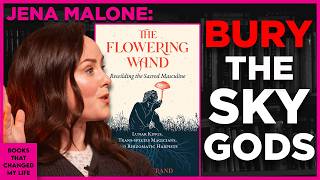
Jena Malone talks about Sophie Strand's The Flowering Wand, which replaced the sword as a symbol of masculine power with a healing wand and used fungal networks as a metaphor for interconnected impact. The book sparked her curiosity about myth and shaped her music, parenting, and approach to leadership.
Chapters
I read this, and I think it's in the book, where it talks about how one single footstep in the dirt can affect 300 miles underground of an inner network of all of the mycelial dirt earth beings and creatures and life and forms. Here's a living example as well of like how one small thing— I mean, that's time travel in some, you know, that's real travel. You can really make a change by just doing something right in your own backyard. I think that's so revolutionary.
Okay, so the big question Okay. How did The Flowering Wand by Sophie Strand change your life?
She—
I'm Chris Collins, and you're watching Books That Changed My Life. This week, we're joined by actress and artist Jenna Malone, and she's here to talk about the book that changed her life, The Flowering Wand by Sophie Strand. Before we talk about the book, Okay, we were sent a preview of your album that's gonna come out in May.
Oh cool, yeah.
Tell me a little bit about that. It felt very vulnerable to me, like it feels like you're being very vulnerable and really going somewhere that maybe you don't normally go. I don't know, is that accurate?
Yeah, yeah. I mean, I don't know how to make music that isn't vulnerable in some way. It's such a— it's such a, um, you know, all of the veils are kind of removed kind of architecture of storytelling that it gives you a lot of space to reveal very complex, deep, potentially risky things in a way that isn't a face-to-face conversation with a stranger. You know, it gives you layers to sort of hide behind. And I don't know, I find that I started making music when I was in like a, when I was a teenager and it was at a point that I, was pretty far along in my acting career. And I found that when I first started making music, I realized that it was very much like doing a play where every night an actor gets to build an entire house all to themselves. You know, you're doing the roof and the plumbing and the toilets and the hallways. And when you get on stage, nothing is there and you get to sort of build it from the ground up and then it disappears when you leave. And with filmmaking, I find that it's very, structured and it's sort of lily pad work where I don't really build the story. I just sort of come in and get to enhance it in some ways. And so music gave me this really interesting risk opportunity with character work, you know, where I could be a 4-year-old girl or an 80-year-old man or a leaf that's falling from a tree. And you can sort of As you can hide behind these perspectives, they're also wildly freeing to be able to explore different truths and perspectives from a way that's not so deeply personal, but rather, you know, I think everything is a universal story that you're just experiencing. So I'm always in awe of what you can explore with music. But yeah, it does tend to be very, personal and vulnerable regardless, 'cause I just like that risk, you know?
So this album, what are you communicating and where were you emotionally or mentally when you did it?
Well, I haven't really been able to complete a record since I became a mother, like entering into my parenting journey. It's been about, you know, 10 years, but I was able to, you know, write a lot and I was still making music, but sort of the finishing of it was wildly complex and seemed to always just be right out of my reach in the sense of time and dedication. And so this was kind of, these songs were written over the course of 10 years. And so it was all through that really beautiful, through the fire, everything burns, you become a parent, it's all from the ground up, all of your ideals, It's sort of a happy death in a way. Your ideals need to die to be able for you to love what's real, you know, what's real for you, what's real for your child. And I found it to be a wildly liberating process. And it was just a great time of revision. I was looking at how I was dating, how I was giving love. I was looking at my own inner politics governments, how to live on the land, how to demonstrate compassion. I just feel like everything was on the table for me to reeducate myself. And so yeah, I think a lot of these songs are about that reclamation of who you want to be in the world if given a chance to reframe it or relense it.
What is the song "Fuckboy" about?
What do you think it's about?
Well, it's when I saw the title and then I listened to it, I listen to it, it doesn't have the feeling that I thought it was about, right?
Because fuckboy tends to be a very violent terminology.
Yeah. Um, or the song is very, um, mature isn't the word. The song is, um, it's not one-dimensional. Like, fuckboy seems very one-dimensional, right? The song isn't one-dimensional, if that makes sense.
Yeah, no, I appreciate that. I think a lot of the catchphrases of our society tend to sort of— they're always too small of words And I do hope that most people don't stop there, but they keep digging, you know, because I think under that phrase is 1,000 other words that offer far more, you know, different perspectives and different takes. But for whatever reason, when I was coming up with the chorus, it was flowers are deadly and fuckboys are free. And so it just felt like that was the right way to celebrate this moment of, longing and also kind of a calling in, like asking people to look at how they're showing up in relationships and how they're showing up for themselves. And I think the fuckboy category has a lot of room for reclamation for how to best show up and treat each other with respect and just be your best self. Yeah, so it felt like a good evocative term, but then the song asks for more reclamation instead of, you know, a slap in the face.
Are you gonna put it out on vinyl?
I just received the vinyl on Monday.
Are the lyrics in there?
Uh, no, no, wait, are they? I don't think so.
I really wanted to like sit down with it and read the lyrics as I was listening to it. I kind of wanted to experience it that way because it seems very vulnerable.
I think I did write them down. I'm not— I don't think I did that once for a record, and I found that the printing of all the lyrics just makes them so small, and it was that much more expensive to get the leaflet or whatever. But definitely all the lyrics will be online, and I could send you—
I'll buy the vinyl.
Okay, sweet.
As soon as it comes out. It comes out on May 1st. Yeah. Incredible. It's so crazy how talented you are.
Oh, thank you.
Different areas.
It's fun to just keep playing.
You're an artist. Okay, let's talk about The Flowering Wand.
Yes.
This is, I think, by far and away the most elevated book we've ever done on here.
Really?
I think that's the consensus. Yeah.
Oh, cool.
And I'm excited to get into this and hear your perspective on it. But for somebody who's never heard of or read the book, just kind of explain what it's about.
So The Flowering Wand is, it's an invitation to reclaim or redefine myths, ancient myths about masculinity and to not stop there. It sort of allows a space for us to examine myth in a very curious and kind and almost childlike way. And it invites, I think, the reader into the process of looking at their own myths or stories that they tell themselves. And I think celebrates revision in a way that feels very sovereign and grounded in the earth and where we are, instead of saying that there's like an absolute truth for what every masculine energy should be. It's saying that it's from the ground up, it's from where you're raised, it's circumstantial, there's societal understandings that are worth cultivating and potentially relooking at to come up with some new myths, some new stories for ourselves.
So would you say it's an invitation?
Yes. I think it's— I've never—
It's not judgmental and it doesn't have a lot of conclusions. It's more inviting the exploration.
Yeah, I think that Sophie does a really amazing job at framing the lack of answers as with the preface of saying, "An answer often ends a story, and so I want to offer you questions because the story has not been told yet in a lot of ways." And that these are, Yeah, invitations to questions that everyone can have different answers to.
Yeah, which is a unique style.
Yes, different.
Because most books are very much like, here's the answer, here's how you should see it, or here's the 10 steps.
Right.
Where this is more fluid.
Yeah, there's a fluidity to it as well. I mean, I love those books as well that are like, you must do this and it has to be like that, or it's it's so definitive that it really helps you paint that world. I just think that potentially we're at a time in society where we need to kind of elevate things that have previous understandings. And I think instead of beating ourselves up that we don't have the best way to describe things, it's sort of saying, let's get dirty with the decay. Let's make some mud baths with the revision. Let's honor what was there by looking at it again. And I love that, you know?
So where were you in life when this came into focus?
Gosh, I— where was I? I should have tried to remember this before this book or before this interview. I mean, it only came out, I think, 5 years ago, and I ordered it right away. I was a fan of Sophie Strand's writings on the internet. She had done some really interesting You know, where you're sort of, it's an ecological somatic journey of humanity. It's sort of some of my favorite writers where it's like a Jared Diamond or something where it's like Guns, Germs, and Steel, where you're looking at the history of something from every perspective to really help you understand what happened. I think another book that I loved was Sapiens. It just really gave me such a wider perspective when I wasn't just looking at the artifacts, but I was actually looking at the, ecological journey of what was happening at that time for cave people and not just what they left behind, but rather really trying to reimagine their somatic experience. And I think she does a really great job of that. I think I was in like dating hell. I was sort of like, maybe that's when, you know, the sort of fuckboy word was potentially being used quite often in my experience. And the title alone of like Rewilding the Sacred Masculine, I feel like instantly I was like, yes, 'cause it's not a bad thing 'cause we need more stories to help us, you know, bring up new myths and new understandings of it. So I just, I was hungry, I was hungry for that. I feel like I had been hearing a lot of like anti, 'Cause you know, it's really hard to, in this day and age, to hold the sacred masculine, you know, sort of aloft in some ways. 'Cause I think it gets attacked in so many ways. And so I was really, and I'm raising a boy, so I'm always trying to find ways to sort of, you know, raise him up and lift him up and show how his instincts are divine. And natural and beautiful. So yeah, I was very hungry for more work around the masculine and also for myself. I think as a woman, the more you start doing inner work of like figuring out who you are in this world, you really do have to have a hard look at your own polarity between my feminine and masculine and the toxicity of both. Both. And I felt like no one had really talked about the sacred masculine. I had heard so much talked about the toxic masculine.
Where do you think we get that wrong?
Where do we get what wrong?
The difference between the two and that we label it toxic or not.
Well, I don't know. I think every society tends to just take take on familiar corners. And for whatever reason, we are in a society where toxicity is very familiar and sellable, and it builds momentum with the sort of, you know, brush fire of the internet. I think that positive stories and talking about what's sacred about that type of polarity often get lost in a lot of, gobbledygook, you know? It's like, why are we obsessed with reality? You know, reality TV is such a giant thing and it's, they're not all like knitting and doing book circles, you know? It's like they're fighting and like pulling each other's hair and like spitting each other's faces. And it's like we have an obsession with the toxicity, which potentially is a good thing. I think it's so cool when we wanna look at something so much because If you look under that, there's a need there. There's an interest in looking at it to examine it further, you know?
What is the problem she's trying to solve with this, do you think?
I think some of the solutions that she's offering is saying that she offers permission to reexamine myth and change it, you know, and change the ideas and look deeper. And for whatever reason, I always felt like myth was this inherited, you know, like something that's unchangeable. I don't know, like it's an inherited structure that you can't really change. It's like we have this myth and this is what it was, and you can't really, now we have to just find a new myth. But really underneath those stories that we tell ourselves of Hercules and, you know, Arthur and the Round Table of like, you know, Pulling the sword from the stone. Why do we focus on these myths and what's underneath them? And let's look deeper, not only to the myths that we know, but where the myths emerged. I think that was my biggest like aha solution of like, wow, it's so true because we are atmospheric creatures, right? I mean, I'm a different person in the desert in midwinter than I am in summer. You know, it's sort of, it brings, it asks different questions of you. It builds different rituals. It's, your body feels different. And so I liked the idea of trying to cultivate new myths that didn't have to have a universal color, but rather it could be a deeply personal temporal of the space that we're in. And I think that that for me is really exciting 'cause I love the idea of, more sovereign understandings of power and government. And I think mythmaking is such, you know, a smaller word would be propaganda. You know, it's like, how do we tell people to like what we're doing is we have to sell them stories, you know? And I think in filmmaking, that's what we've been doing for so long is that we're interested in stories that maybe haven't been told or, you know, I mean, it's so, interesting propaganda in filmmaking where it's like how cigarettes funded so many of the films in the beginning of the, you know, in filmmaking in Hollywood and to be able to sell it as this product and that it was these things. But really that was just a myth, you know, it was just an idea that was bought and sold and it looked really great. And so I think what's really cool about this book is that it doesn't just stop at, for me when I read it, that it was not just about the myth of the masculine, but rather all of the stories that I tell myself and the stories that the government tells me and the stories that my society tells me. And even just the myth of income tax, sort of like where did that story come from? What does it mean to me? How is it working for me? How is it working for my neighbors? How does it work for this neighborhood and how does it work for this neighborhood? And is it okay to have different rules or stories for two different places?
That's funny that you say income tax. I'd love to talk about that.
The name of income tax.
Let's talk about income tax.
I know, I'm ready. Property tax, what you want, let's do it.
So she uses tarot as a metaphor throughout this.
Mm-hmm.
What are your thoughts on tarot?
I like it. I think it's really— I mean, just because I'm an actor, I tend to love archetypes. I think it's a really wonderful place to kind of begin sometimes, particularly ancient archetypes that for whatever reason through the history of millennia, we've chosen these specific figures of the Hermit and the Hangman and the Princess and the Priestess, and not the Princess, the Priestess, and that they exist, that they're these figures that we needed to create because it's real. It's a real, it's a real part of the palette of where you go as a human. And, and I love that it's been the same, you know, that the very similar images have been used from the beginning of time. And so it almost feels like it's an inherited language, even though it's mostly based on images. Yeah, I find it really cool. I feel like it's a cool way into storytelling is seeing what sort of is universal or archetypical.
Okay, explain for the audience the flowering wind versus the sword distinction.
Mm, yeah, I love this one. I love the, so the book kind of opens in this really, you know, you're kind of, it's almost, she's painting this picture of how we imagine men, the sort of archetypical classic, you know, like who's gonna come and save you. As a young girl, in the way that I alchemized this was sort of like your knight in shining armor, right? And it's this armor and the sword, and there's just like nothing in some ways more masculine than that of like coming in to fight this battle and it feels, in some ways a lot very noble and kind of, you know, a beautiful fight. But of course, the way that she's able to describe what a sword does versus what other images that have been passed down through millennia of what men had carried, which was more wands. Wands was something that was always deep in myth, deep in writings, very ancient in the way that it was used for medicine, for uniting, for protection. Whereas a sword, it can't heal, right? It can only divide. It can only slice through. A wand is not interested in dividing a body or cutting up a body to get to know it. A wand is interested in healing healing it from the outside in, the holistic body. And I just loved that. I loved that it really helped me reexamine what this sort of, you know, very masculine kind of, you know, protective image of a sword and replacing it with something that was also part of masculinity, was also the shepherd and how you protect your flock and Even just the walking stick of sort of like not needing to carry a weapon, but knowing that it also represents wisdom and culture and protection. It just felt like such a wonderful way to twist that, you know? Because if we want our sons to inherit the earth, then potentially, you know, I don't wanna give him sword myths, you know? I'd like to potentially give him more wand myths.
She uses fungus in the book. Kind of explain that a little bit.
It's a great place to start. I mean, I feel like everything could go back to fungus. I mean, there's within my cilia networks and just how we're discovering how the earth works and how basically we started even just with the beginning of our creation story of we had water and we had plants, and it was basically through fungus that taught plants how to grow root systems, that potentially it was just a lot of air plants and plants that didn't have much grounding, and it was through fungus that sort of built these connections. Also, there's so many cool things in what we're discovering about soil and just how complex it is and how the smallest thing. And, you know, destroying the soil really leads to just catastrophic ramifications for years and years and years. And that really it's all built to this tiny little thing that you can't even see, you know. I mean, I'm not a great, you know, I'm not a scientist, but I love geeking out about like quantum physics and quantum theory. And I think it's I think it's so cool that we can discover something that's already existing, has already created all of these systems, is already deeply tied to potentially interconnected to the entire living world, but it's invisible, mostly invisible and deeply unknown. And so I think she uses fungus and different mushroom networks to help us understand like, There's something very masculine about how a fungus is able to regenerate, produce, and protect and penetrate through the soil that feels very fatherly in a way. Like, it's a really interesting— like, the more I look into it, I'm like, it's a really— where we have Mother Earth, you know, Where is the father figure? You know, he's sort of potentially always been cast as this sky god, you know, this thing from another place. And we might need a hero of our own place, you know, something that's ours. That's, I mean, we're earth creatures, we're from the dirt, you know, we need a king of the dirt. The king of the dirt is the mushroom, you know?
Also just the kind of the connection to myth-making with all of that too, right?
This sort of example of saying that myth emerges from a certain place in time and not necessarily myth coming down like an idea that everyone has, but rather this myth could only emerge in the Grand Canyon and the people that lived in that area because it's so deeply tied to the ecology and the rituals of the people. And so it's so interesting that mushrooms also have a similar thing, that they're tying ecologies and places together where I read this, and I think it's in the book where it talks about how one single footstep in the dirt can affect 300 miles underground of an inner network of all of the mycelial dirt, earth beings and creatures and life and forms. And that's so interesting, you know, that really like all of those things where they're like, you know, the butterfly theory of like, you know, one tiny thing affects change. Here's a living example as well of like how one small thing I mean, that's time travel in some, you know, that's real travel. That's real. You can really make a change by just doing something right in your own backyard. And I think that's so revolutionary. I think that's a real tool set. It's a skill. It could set people free in a lot of ways. You know, I think that knowing that it doesn't have to come from another, you know, that change is not out there or some untouchable place. It's actually through the dirt and the soil and our connection to it and our relationship to it.
Yeah. Would you say that that's another dimension that we don't either understand or pay attention to?
I mean, yeah. Don't you feel like that? I mean, how many—
I feel like we don't understand it.
How many earthen buildings do we— I mean, how much time are we actually spending walking around in the dirt? You know, like, I just feel like we're so disconnected. And yet again, science keeps showing us that all of those spores and those funguses and everything that's in a very like healthy soil helps our bodies. We instantly do better. Like there's all of these crazy studies about just kids that have more forest time, like barefoot in the forest, and just like how well their bodies are able to acclimate and fight diseases and navigate genetic changes. And I mean, it seems almost too simple to feel like, how did we miss it? But we're from the dirt. How could it not be in some ways, like, so sacred, you know? And it's where we're all going back to.
Okay, let's go through the book, if that's okay.
Okay.
So let's go to page 41. Now, we kind of broke this up into categories.
Okay, so So cute. And I forgot my copy, just so everyone knows. So this is the reader's copy, which I love. I love this.
Yeah. Do you highlight?
I don't.
No?
I wish I was this person, but no, I just use a pencil.
Why do you wish you were this person?
'Cause I think it's so cute. And then, 'cause also I have a friend who's a poet and I always go and see her readings and she does this. And so that in the reading she can just flip exactly to the place. You know, it makes it efficient. 41, you said?
And then, so this is kind of under the category of men.
Uh-huh.
Will you read that highlighted part?
Sure. Let us give masculinity back its flowering wand of reciprocal relationship with the natural world. Let us call Dionysus to the gates of our cities and homes. A man who can dance with plants and honor beasts. A man who can be a woman and an androgyne And an animal is more than a gender. He's a celebration, a hive of hummingbees, a secret network of fungus ready to erupt as the air moistens, a murmuration of birds, a cluster of grapes, a throng of singing women, a magician.
What are your thoughts on that?
It's just so beautiful. I feel like, again, I think I'm— I can't help but frame it from the lens of raising a boy. You know? And just allowing him to breathe that in. I try to picture myself as like, you know, 9 and trying to figure out what it is to be in this world and what's expected of me and the lanes that are acceptable and the things that I see on television. And I just feel like this offers so much spaciousness to a young man's heart. To develop potentially languages that we haven't even written yet. You know, that I just, I love the, again, the invitation for figuring out what's there, 'cause there's a lush world that potentially has, I mean, maybe those books were just, you know, burned or those are the ones that we don't get.
So I wrote a book on leadership a couple years ago and I have a whole section in there on androgyny And to me, that speaks to the fact that you, you can't be an effective leader if you have biases. And it says in the, in the Bible, neither man nor woman will enter the gates of heaven, like that you have to shed that in a sense. And so, you know, part of being a leader is being effective, and to be effective, you have to see things from all sides. And if you're just the masculine, you're one-dimensional. And if you're both, you're two-dimensional. But if you're neither, yeah, you've got many dimensions.
Yeah.
And one of the covers I did was Churchill in a wedding dress.
Oh, amazing.
Just to make the point that like you have to do the thing that you feel, you know, that is like feels like you're betraying yourself in order to shed those biases in that context.
Yeah, it's like contrary action. They teach that a lot where it's like, even with my kid, it's like, you know, he doesn't wanna brush his teeth, he doesn't wanna, you know, wear the right shoes. But it's like when you start encountering doing something that you may not really want to do, at the end of it, you'll realize that there's something really good for you there. You know, that it's actually like you have to kind of, the first instinct sometimes always takes us to familiarity and comfort. And those are not spaces of growth, you know? And really where growth is, that's where the river is running the wildest. That's where there's most diversity. That's where the plants are growing the best. And—
Well, you said something a moment ago about trying to imagine where your son is and what it's like. So that is leadership in a sense, because you're not doing it from your perspective, right? You're trying to understand his perspective in order to be a better parent and curate, you know, something that's more effective for him versus imposing your, your life experience on him.
Yeah, I love that. I love that you mention that in your book. I think that's such a cool thing to be talking about.
Counterintuitive most people. They, they, you know, people want— the gender thing is, is, uh, you know, can be nuclear to some people because they hear one thing.
It's a hot topic.
Yeah, but this conversation's been going on forever. Like, there's symbols I talk about in the book that are all about androgyny. Like, a lot of the symbols that people don't understand, that's what they are. They're about being indifferent to your biases in, in your gender and paying attention to all of it. Mm-hmm. And that's, that's, I mean, she says it in a way, uh, well, very poetic and beautiful, beautiful. Yeah.
Yeah. But I think, but that's what I took away from it. That's so cool. That's so cool. I can't wait to read, read your book. I wanna, I wanna read it so I can digest it for my son. I think that's awesome.
Oh yeah. I mean, parenting is the hardest leadership role there is. Yeah.
Yeah.
Whenever I've interacted with people on the book, most of the time they think of parenting in context because that's really— yeah, that's what it is.
Well, yeah, you're faced with being a hypocrite 90% of the day where you're just trying to teach these lessons that you yourself are not embodying.
And you also remember what you were like.
Yeah, totally. And how you learned. I mean, it's It's like, for me, it's like I've been trying to get my son into reading. And so just last year he was starting to have more like homework for, you know, like 30 minutes of reading. And it was always like, it was like pulling teeth, you know? It was like he didn't wanna do it. He didn't want, he didn't understand it. And I was like, okay, you don't have to do it. And so I was like, what I've failed, 'cause none of his stuff is failures for him. It's all me, right? So like if he doesn't, if he hasn't seen a love of reading being demonstrated in his home, he's not gonna learn it in school. You know? And so I literally spent the entire summer with my nose in a book and I would be cooking and I'd be like, just hold on, hold on one second, hold on. I just, you know, and I, as I was sitting, when I would be reading, like I would drive in places and I'm like, hold on, I just wanna finish this one little thing really quick 'cause I just love this part. And he became, he's like, what are you reading, mom? What are you doing? And now he's like, you know, he's going into my library and he's like picking up little things and I'm like, no, you wouldn't, You wouldn't, this is not for you. This is like an adult thing. And he's like, no, no, I can handle it. And so then I would get to start reading him passages from random things. And he's like, yeah, I understand that. And it's just so funny that like literally you can't lead by instruction. You have to lead through demonstration, you know?
That's so great. You should win an award for that acting. That's your best acting of your life.
I know, but that's the thing is then, and also you're, not only are you, encountering hypocrisy, but then manipulation where it's just like, oh yeah, you're Machiavellian.
Yeah, all of it.
Totally. But there has to be other words for it, right? I wanna take that word manipulation and I wanna eat it and I wanna ingest it and I wanna figure out another way to interpret that because it's so negative.
No, no, what you're doing is selfless.
No, but I'm just saying, but there's no word for it. You know what I mean?
Well, it's sacrifice and it's selflessness, for his better good.
Yeah, it's—
that's what it is. Yeah, you're sacrificing— you're putting your undivided attention on an outcome that only, like, at the end of the day benefits him way more than it does you. And at some point he's going to be 13 and he's going to know it all and tell you that he hates you.
I know, I know.
You know what I mean? Like, it's a very selfless act. Like, that—
and it doesn't always stick. I tried it with broccoli and it didn't work.
Manipulation is a very—
just, this 'Broccoli, it's so good.' Like, 'No, no, you can't have any.' And I was like, 'No, it didn't work. It didn't work.' Well, that's funny.
Okay, how about page 98?
Oh, okay. Let's see. So this one's from— oh, okay, right. What is the masculine allowed? King, warrior, magician, lover. I am, of course, referring to the popular book by Jungian analyst Robert Moore and Douglas Gillette: King, Warrior, Magician, Lover, whereas the authors argue that to be an integrated man, you must master these archetypes. Little surprise then that when confronted with such an impoverished selection, men are often easily shoved into the unspoken fifth and sixth options, The villain and the fool. Yeah, I mean, I don't think it's sort of, it's, I can't help but think of it from my perspective where it's like as a young girl being given, it's like you're a mother or you're a lover, you know, potentially, you know, men had an impoverished selection, but maybe there was 4 options, you know. I feel like with women, I, or being a young feminine, there wasn't that many options either. And I think even just saying that there's options is saying that there's finite answers, right? These are your options. Instead of saying, what do you want? What do you see? What do you feel? What do you choose? You know, I think that, I don't know, it's not necessarily about the definition or categorization of what we should be, but rather the cultivating our journey, you know? Because I know that the tiny femme that I was at 7 is such a different human than when I was 16. And then the human that I am now is such a different category, you know, that it would have only harmed me to say, this is my lane at 7 and stay on that lane.
Yeah, like the Cinderella story defines me and then that's where I'm going.
Then what a disappointment, because the expectation of an inherited map, it gives you no room to explore or define yourself. Yeah. And I think it's funny, we focus so much on like kids or young people in the defining yourself. And I think there's so many books and, you know, the ideas of mentorship and guidance for a young age of like, let them discover themselves. But really the journey doesn't stop there. You know, like I'm 41 and I'm still in the discovery lane of like, maybe it's this, maybe it's that, maybe this thing that I thought was really valid and important actually has no merit or meaning or abundance. In my life, you know. I think the ability or potentially the possibility to have more mentors at all ages, you know, and inter, you know, non-discriminatory, like a 7-year-old can mentor a 41-year-old, you know. I feel like, I feel that so much in my journey with parenting that it's so non-linear that he's teaching me things, I'm teaching things. We're both making mistakes. We're both, you know, in the dunce cap often, you know? But it's cool. I think it's nice to know that scientifically it's also, we're at a similar paradigm where the, I know this is the, you know, the sort of the age of industry of like, finite is sort of dying, you know, because of the gifts of the paradigm of quantum theory and quantum physics and the discovery of that. And now we really can't say I am, you know, because it's, we don't know, we don't know what that I is. And so the only thing we can say is that I don't know, you know, or I'm curious, or, to be determined, you know?
Yeah, that's a hard thing for a lot of people to experience though. Yeah, because a lot of people just want it to be simple and defined. Yeah, like a lot of times when people ask me like, what do you do, it would be easier for me to say I'm a plumber because then that's what they want.
Well, you can't say that.
They want me to say I'm a plumber, then they know what a plumber is, they know how to categorize it's easy.
I know, right?
And a lot of people want it to be easy instead of having imagination and curiosity and not always having the answer. Not having the answer sometimes is very unsettling.
It's unsettling if you're isolated in that, but I don't think it's as unsettling when you're held in a community of the unknown. I think that as I traversed through parenthood, it was a very similar thing where it was like, you're isolated, you're alone, you don't know anything. But the more you build that community of people that are also in transition and learning and sharing together, you're like, oh, we all don't know what we're doing. It's so much easier to hold the dunce cap because then it's kind of a celebration. Whereas I think there's just so much isolation these days, that, and lack of real community, that you can't hold. We're not meant to hold that unknown alone. You know, it drives people to caves, it drives people to madness. Potentially it brings out really beautiful writings and really interesting poems, but it does not give you rest in being a human. You know, you have to be able to rest in that unknown 'cause it's a lot to carry. You know? Yeah. You can't swim in that forever.
I love that. Okay, now let's go to the anti-abstraction part. Let's go to page 11.
Jumping around. Okay, let's do it. Oh, I love this chapter. Sky gods, on the other hand, are fully evaporated and unanchored. Storm gods, predating monotheism, don't They do not start as sky gods, but they quickly become them. Sky gods are not made of water and sand and fire and wind. They cannot even be imagined. They are separate from the world and its chaotic weather. This spiritual distancing opens up a space for the very abstraction that will let humans understand themselves as separate from their ecosystems. Gosh, doesn't it make you wanna time travel back to like before, like early like Judeo-Christianity when they were taking all of the pagan things and sort of turning them up on the side and just being like, who was in that book club where they're like, you can't take my pagan things. And you know, I don't know, I just wish that, I don't know, it's just, it's interesting inheriting a world that's already so formatted, you know, it's hard to remember that, it's still precarious, you know. Thank you for cognitive dissonance. Thank you that we cannot hold delineating truths, that that's our only real hope for changing how we live in this world today.
So once we categorize someone in the category of poetry, so Page 32.
Okay.
I'm just curious how you felt the first time you read this, because she does kind of go between poetry— like, her writing style is unique in that way.
It is unique. There's a lot of floral things that you kind of want to savor on your tongue, and then sometimes it's very direct and to the point. Um, the alternative to patriarchy and the sky gods is not equal and opposite. It is not a patriarchy with women seated on a throne. The sacred masculine isn't a horned warrior bowing down to his impressive Empress. The Divine, although it includes us, is mostly inhuman, mutable, Mostly green, often microscopic, microscopic. And it is everything in between. Interstitial and relational. The light and the dark. Moonlight on moving water. The lunar bowl where we all mix and love and change. I love that.
The moonlight on moving water.
Yeah, it's funny. It's like, it's that feeling of Have you ever experienced like a flow state or when you're really deep into something you're creating or working on and it's sort of almost like an out-of-body experience? It's one of my favorite things to experience and I feel like it's so, it's so genderless. It's like this time where it's like, I'm not me, I'm not my inner critic, I'm not, you know, my grind culture recovery patriarchy, you know, masculine. I'm something completely different, you know? I'm not even a body anymore. I'm just in time, in space, in purpose. And it's such a rare thing. It's such a holy thing. It's sort of that whirling dervish thing where it's like, Certain circumstances have to mix to be able to fill that. And that chapter reminds me of that other that we're all trying to find, that we can find and cultivate, but it's just such a rare event.
Yeah, it's interesting when you're in that state. And there's probably more people that haven't experienced that than have, I'm assuming.
I think more people, yeah, have experienced it.
But it's funny, the things that start to pull you out of that. Like, say for example, you're, you're in that state and you're writing and you go for 10 hours, and then you realize, I haven't eaten. But you weren't hungry.
I know.
And then that pulls you out, and then you start to think, like, I don't know, I, I'm always curious about that and what starts to pull you out if you wanted to stay there longer.
Yeah.
Like, how do you block those things from coming in eventually?
Yeah.
Like, the real world eventually penetrates.
It's so cool. It's— it, it instantly opens up. You're like, oh, that's how religion was formed. And that's sort of like, uh, fasting and going to, you know, more sort of the culture of being a monk and stepping away from the so that you can try to cultivate that flow space without the interruption of the messiness of humanity, you know, of just like the shit, shower, and shave, you know?
Yeah, no clocks.
Yeah.
'Cause looking at the clock will pull you out of it, right?
Yeah.
No time.
And our bellies, it's like so temporal. It's like 3:00 PM, we gotta eat, or this, you know, it's sort of, it really ties us back to that thing. And it's kind of sweet that that's, That's our boundary world, you know, that like we can't live in a constant flow space. That's not actually how we were made, you know, that we have to battle both, that both roads potentially maybe offer us new perspectives, you know, because even the having to eat and it's pulled away and sometimes you can have really interesting, like that, like the bathtub moment, you know, where you set everything down and you're not in a flow space and you're just, you know, cleaning yourself. And then all of a sudden, aha, you know, a new thing emerges when you weren't hunting for it. You know, it's cool. I think we're such a, such a cool, interesting creature, you know.
113.
Okay, let's do it.
What does the disintegration of opposites look like?
Although I began my studies through the lens of the Divine Feminine, I find it is no longer big enough for me. The opposite of patriarchy is not matriarchy. The opposite of civilization is not an idealized return to Paleolithic hunting and gathering. The opposite of a human is not an animal or a rock or a blade of grass. The opposite of our current predicament climate collapse, social unrest, extinction, mass migration. Oh, what's this word? I forget this one.
Yeah.
Come on, bring your glasses up. Let's do it together.
Solastigia? Genocide?
Do you think that that's something about the decay of knowledge?
I don't know.
We'd have to look it up. Yeah, we'll have to. Solasgia genocide is in fact the disintegration of opposites altogether. Everything is both and more, and everything is penetratingly, painfully, wildly alive.
What I love about that is she's dismissing her own structure and premise.
Yeah.
Which is kind of what the book is about, right? Like, she's turning on her own idea in a way.
Mm-hmm. Yeah, there's a line in here that says, "Revision is decay." And what are we but in constantly a state of decay as humans? That's all we're doing, right? In some way or another, that's what we're leading towards.
Okay, just one more because I love the Minotaur story. You see the Minotaur up there?
Oh yeah. Amazing. Yeah, let's do it.
So page 26.
Okay.
And she does a flip on this story.
Okay. I also, for wildly, as I pulled it up, solastalgia is a new word for a new type of heartbreak. The term was coined by scholar Glenn Albrecht to describe a form of emotional distress caused by environmental change. So we got to answer our own question. Okay, 28, here we go.
That was one of the highlights, right?
It was, yeah. That's how I was able to find it. Wait, what was the number again?
Page 26.
Okay.
The Minotaur.
Um, and I'm not sure how to pronounce his name. Um, a side note is I am wildly self-taught and uneducated, so sometimes I only went to—
Theseus.
Theseus. Okay, great. I just wanted to make sure. When Theseus slays the Minotaur, he is not slaying a monster. He is slaying an entire culture, a Cretan culture dominated by the image of a feminine divinity flanked by lions and bulls, celebrating epiphanic communion with the natural world. Yeah, that, that chapter was wild.
And so I think in the premises in pre-Minotaur, the island of Crete, they worshiped bulls. It was like, it was more than just the Minotaur, it was the, their whole you know, structure and what they worshiped and what they cared about, in a way. And Theseus, by the way, is kind of the founder of democracy. So he was the first king to institute a democracy.
Fun.
When he went back home. Do you know that The Hunger Games is based on the Minotaur story?
No, I didn't. Yeah. Wow, that's amazing. Where did you read that?
Well, it just, it is.
Oh, it just is, right. You're like, it's, uh, it's there, it's in the writing.
But what they, um, yeah, it's, it's cool. I want to look at your story. But, um, yeah, I love that part.
Yeah, I mean, it's really, it's hard to wrap our brains around the idea that pre-modern thinking and separatism and, you know, democracy in a lot of ways, the beginnings of it was sort of only able to be built by dismissing a culture that wildly valued the natural world. And that somehow this sort of like intelligence of thought couldn't couldn't dream big enough that you could have both in some ways, that something about savoring and making sacred and praying to nature and its rhythms and its divine chaos had to be punished and swept away for us to be able to see the world in a different way. You know, it's just so weird. Like, I just, it's such an interesting, I mean, of course, because every time a new idea emerges, we're only toddlers at it. And so it just seems like a very toddler perspective. It's like, well, you know, if I can't do this, then I have to do that instead of being like, well, You know, maybe it's this and that, and maybe it's the road between that's more interesting, you know? Yeah, that's so cool. Yeah.
Okay, so the big question.
Okay.
How did The Flowering Wand by Sophie Strand change your life?
She, she revitalized a language that I potentially had forgotten or never inherited of giving me the confidence to break down myth, story, belief, and structure that I had inherited. And I had never, it was such a candy-like invitation that I just felt like it didn't stop, it didn't stop at just the book. Like I just kept wanting to sort of break things apart, you know, and just see where they came from. And I just think it really, put me into this very childlike body of curiosity where there is no wrong answer, you know, and that it's sort of needing to explore more. And it just came at, you know, the right time for me.
How many times when you were reading it did you stop and have to like—
Well, it's a pretty short book, and I remember I think I reread each chapter like 3 times before I went forward because they're, you know, they're dense and they're small. And you could read it in one sitting. I mean, it's not a massive book, but I feel like it's such a lovely, there's so many things, you know, I actually contacted her after I read the book and I was like, I wanna build this into like an immersive theater piece. Like I want people to be able to have a little bit of somatic interaction with some of these questions, you know? So yeah, it was really powerful to me. Really made me want to create in such a different way.
I think most people think that if they have to read a chapter 2 or 3 times that they don't get it, but I'm exactly the opposite. Like, I love a book that, that makes me either think or challenges me where I have to sit with it for a while.
That's—
I'm not rushing through a book.
It's like when you want to remake a recipe, you know, where it's like no one would say, oh, well, just because you want to remake that recipe, it must be bad. It's like, no, you want to remake it because it tastes so good.
Yeah.
And you want the experience of being like, oh, now I know how much salt, and now I know how much this, and then potentially do a little variations, you know, and see different things. And yeah, I think it's— a reread is really spectacular, not necessarily in an educational space, because then I think that's that's when it, you know, when they, you're sort of forced to do it. I think when it's from your own passion, I think is more pleasurable.
Well, thank you for bringing this book into our lives.
Yeah, thank you for, this was so cool.
That's the fun part of the show is you get to experience books that you might not have heard of or—
I know, I wanna, there's so many episodes that I'm so interested and I have them all on cue. I can't wait to dive in.
What would be book number 2 for you?
Gosh, that's a really good question.
Or what were the books that you were thinking about when you decided on this one?
I mean, I thought about— I thought about the books more from when I was a child. And Their Eyes Were Watching God was one of the very first books, with Zora Neale Hurston. When I was in 9th grade, I was asked to read that in high school. And I just remember just being like blown away that those kind of books even existed. And it was just so vulnerable and so beautiful. And I think it was the first book that I read, I was 13, where I would reread the sentence again and again just 'cause it felt so beautiful, like in my mouth, you know? I thought about that one, but it's just, you know, so long ago. I feel like the books that really change your life are the ones that you're reading right now 'cause your life is in front of you.
You know, that's great. Thank you. Thanks for doing this.
Thank you. Yeah, super sweet.
We are so excited to announce the Books That Changed My Life website. We made a way for you to show your book pride and that you love books. Hats, tees, hoodies— check it out, link in the description. Everybody needs a self-help hat.







