Jennie Garth on "Jonathan Livingston Seagull" || Books That Changed My Life
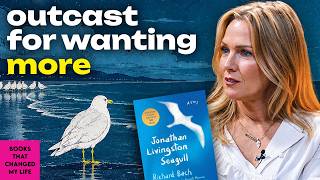
In this YouTube interview, host Chris Collins talks with actress‑author Jennie Garth about the book that changed her life, Richard Bach’s Jonathan Livingston Seagull. The conversation weaves through Jennie’s personal history—growing up in central Illinois in a blended family of educators, moving to Arizona for her father’s health, and her lifelong love of architecture and hands‑on home renovation. She describes the challenges of decision fatigue, especially as a mother, and reflects on her spiritual evolution from a childhood Bible school background, through agnosticism, a brief Catholic conversion, to a present‑day identification with Buddhist teachings. Jennie explains the core narrative of Jonathan Livingston Seagull—a seagull who refuses to conform, pursues mastery of flight, and ultimately returns to teach his flock—and draws direct parallels to her own journey of breaking away from expectations, seeking purpose, and embracing authenticity. The interview delves into themes of self‑love, vulnerability, and reinvention, including her recent memoir I Choose Me, the hardest story she’s told (a past suicidal episode), and the importance of sharing honest stories to help others. She discusses her supportive husband Dave, the role of honesty in personal growth, and how her podcast explores why people are the way they are. Jennie shares insights from people‑watching with her dad at malls, her curiosity about lives behind façades, and a relationship model she calls “circle‑square‑circle” that balances individuality with partnership. The conversation also highlights her children’s involvement in her book—her eldest daughter Luca’s detailed feedback and middle daughter Lola’s role as chief creative officer—illustrating family collaboration in her creative process. Throughout, she references related books (The Four Agreements, The Alchemist), the “fake it till you make it” debate, and her view of heaven as a state of kindness and presence. The dialogue is conversational, reflective, and at times philosophical, offering insight into Jennie’s mindset, values, and the ways the seagull story has informed her personal and creative evolution.
Chapters
I was at a point in my life at 50 where I didn't know what was next. I felt lost. Yeah, I'm an actress. I've helped people disassociate from their lives. I've given them entertainment. I don't know, I felt like there was more to give people. We all have our mission in life, what we are here to do.
Okay, the big question. How did Jonathan Livingston Seagull by Richard Bach change your life? I think Jonathan Livingston Seagull I'm Chris Collins and you're watching Books That Changed My Life. This week we're joined by actress and author Jenny Garth, and she's here to talk about the book that changed her life, Jonathan Livingston Seagull by Richard Bach. What is your home library like?
Well, my house is under construction, so it's a little, little, everything's everywhere right now. I just put a big bookshelf in a little room. And it's just going to be the reading room.
What kind of furniture are you going to put in there?
I don't know yet. Chairs.
How big is the bookshelf?
A comfy chair. It's like this size.
Will it hold all your books or will there be ones that are— Yeah, in storage.
There'll be ones that don't make the cut, probably.
How do you go through that process?
One by one.
It's fun. I'm due to do that in here. Yeah, actually, that's why there's stacks everywhere.
We need to purge them. What are you going to pur— How do you purge? What do you do?
But we have a building down the street that's full of books too, and there's books there that we want to have here. And so it's just going to be order of importance.
Oh, it's like a rotation.
We have a big architecture collection that I really want to put here.
I saw that. That was the one book that I landed on over there. I closed my eyes and picked one book, and it was an architecture book.
Are you into architecture?
I love architecture. Yeah, I love design, architecture, building things. I've I don't think I've ever lived in a house that I haven't knocked completely down and rebuilt or completely remodeled it. So I love that.
You love the process?
I love the design process. Right now we're living through the construction with like plywood walls and jackhammering on the other side of the plywood. So it's a little intense right now. But I've done that before. Like, there must be something about that that I enjoy, like some sort of punishment for doing it. You have to live through it. Like, it makes you stronger, it makes you appreciate it more.
Yeah. Did you consider go moving somewhere else in the time being? No, you just—
you're in it.
How hands-on are you with picking everything?
Every— everything. I'm very hands-on. Like, I want to know, I want to know everything. I want to make sure that stone is turned the right way, you know? And then there's sometimes when I reach my limit of decisions and I just kind of go blank. And that's when my daughter Lola steps in 'cause she has kind of the same vision. She understands what I explain it to her and then she really understands it. So she helps me execute it.
You know, there's a term for that.
What is it? Nepotism?
No, decision fatigue.
Decision fatigue. This is, you know, you can add fatigue to anything. And then it'll be so like caregiving fatigue. I think they call that caregiver's burnout. But yeah, decision fatigue is real.
Yeah. So I have some books on that in the sense that there's all these studies that judges give harder sentences in the afternoon, like, like it really does wear on you throughout the day. The more decisions you have to make, the less equity you have.
Yes, yes. It makes perfect sense. Like, even with my daughters, I have 3, and the first 2, I was much more, you know, specific about things that I would— Oh, thank you. You're welcome. That's so nice of you. I have a little— but yeah, so— Oh, that's good. Thanks.
What did you order?
Honey water. Oh, can't go wrong with that. Yeah. So my oldest 2 daughters are always complaining that, um, my youngest daughter, of course the baby, gets away with everything. And I think that's just how it goes. Yeah. And yeah, they always resent the baby of the family. I was the baby of the family.
You were? And weren't you spoiled? You got away with everything. Yeah. But to the decision fatigue, is it seems like parents are kind of like over it. Like, you're really strict with the first one, and you— that's like, it's so important to be good.
Schedule. Yeah, what they eat.
Then the baby's like, oh yeah, she's not home, it's one morning, whatever.
Then the baby, yeah, the baby's like, you just, you pick that, the whole, I remember picking up the pacifier off the dirty restaurant floor and just giving it a suck and popping it back in the mouth. You know, the other, the other one I would've been like, oh, we, we have to sanitize that.
That's funny. That's great. So where, where did you grow up?
I grew up in the Midwest in Illinois.
Oh, really?
Yeah.
Wow.
In central Illinois.
I would never guess that.
No? Really?
What did your parents do?
My parents were both educators.
Oh, wow.
My dad taught adult education. He actually formed and founded the first education, adult education center in the state of Illinois. And it was in Urbana, Illinois. And he was, you know, And that was big work for a normal, you know, teacher. So he really took what he loved to do and made it his passion, made it more important, you know, because he felt like he had seen so many parents not be able to read to their children. And that was at a time when, you know, literacy was not the most important thing happening on the planet. So he loved teaching adults how to, read so they could, you know, function better in their lives and ultimately have more success in their lives.
And then Mom was a teacher?
Mom was a teacher. She taught high school, but she also taught— what did she call it? Something advanced. It's weird because she had a mixture of kids that were troubled and then kids that were advanced thinkers. So I'm not sure what it was called. Isn't that funny that there's probably— they're probably the same Close.
Yeah, you got to be a little crazy to be advanced.
You sure do.
Yeah, that's, that's fun. And so how many siblings?
Okay, I'm his, hers, and I'm the ours. His has 3 and hers had 3 also. And I'm, I'm ours. So I have 4 half sisters and I have 2 half brothers.
Oh, wow. And then you're the baby.
The baby.
So how would you describe the household, the, like, growing up?
Well, my older siblings were from my father's previous marriage. So they were, they had grown up mostly and were more based around their mom. One of my brothers was adopted by a friend of my dad's, friend passed away and his son, you know, needed a father. So my dad took him in. And then my mom had 3 girls with a guy, a man who didn't turn out to be the greatest. And my mom bravely got a divorce as a young woman with 3 little girls in the, you know, that was in the in the late '60s. Yeah, the '60s. And you know, that was very edgy for her at that time. And she got a job as a secretary for my father in his adult education center. And that was that. They fell in love. And he then adopted my sisters too. Like legally adopted them, so.
Kind of an incredible man, huh?
Mm. He was great. John Morris Garth.
And so what was the relationship with books in the household?
Well, we had encyclopedias when I was little. You remember that?
You have to explain that to the audience because— Yeah, I remember.
No Googling. I remember it. Turning the pages. Yeah, I loved encyclopedias. I remember having those when I was younger, and I don't remember a lot More than that. Oh, my oldest sister had her collection of Star Trek books. It was the books from the show. So every page was like, what's his name? Captain Kirk, you know? And but it was the guy that played it. It was Leonard Nimoy as the other guy. And Captain Kirk was—
William Shatner.
William Shatner. And so you would turn and you would get to see William Shatner and Leonard Nimoy on every page, like frames from the show. He had a whole collection of those. My mom tried to burn them once because she thought they were junk. But I don't know how they got out. We had a burn hole. We lived way in the, in the, out, out in the boonies. We lived in the woods and there was a hole that we would burn our trash in.
We had a burn barrel.
A burn barrel. Well, this was a big hole in the ground. And she tried to dump, I think, those books in the burn hole. But my sister got in there and got them out. She's like, not my Star Trek books. But yeah, so then as I got older, we moved from the Midwest to Arizona. And that's where, that was in, you know, mid-'70s, late '70s where I really remember books starting to like, starting to notice the books.
How old are you?
I was probably 12, 13, 14 in there.
Why did you move?
Well, we moved from the harsh climate of Illinois. The winters are really rough there.
Hard to explain if you haven't experienced it. Oh yeah, you gotta have grit. So cold it hurts your feelings.
Oh God, it's so cold it hurts your feelings. You gotta have grit to live in the Midwest. And we did, and that's where I was raised. But my dad got sick. He had heart disease and he was really struggling. With that climate. So we moved to Arizona, the suggestion of his doctor, his cardiologist, because the weather was mild and the climate was dry, was better for his heart.
And so you had to switch schools.
Yeah, we picked up, we had a big family farm where, you know, my dad, my father had built that house from the ground up. We left that farm. We left one of my sisters behind, actually. She was married. She was very young when she got married, and she stayed behind with her husband. And that was like tough to leave her. I was very attached to her. We slept in the same room. She kind of was like my mom.
Oh, wow.
Yeah. So I left Cami. Her name is Cami. And we It was like a caravan, like, you know, trucks, horse trailers, one big moving truck, U-Haul thing, and then cars. Everybody's, my sisters both had cars. So we had animals in the horse trailer and we took, it was crazy. We took everything across the country to Arizona.
And so then how do books, how does the focus on books change in Arizona?
It was probably like the unpacking and the settling in of a new space where I really started to notice them. And my mom had this, my mom had this big room because one of the things that she did too was, do you know what is Shaklee? It's like a multi-level sort of supplement selling, it's a brand, a supplement brand. So we had, she had this big room, which was her office that she had all her supplies in. And I always loved helping her set up all of her vitamins and turn them, the labels out, like very good at marketing, you know, and organizing. And then she also had a big bookshelf, and I noticed that every book on the bookshelf was self-help. And that was the first time I kind of thought like, hmm, wow, wonder why. And then I would be embarrassed by it, and I would say, Mom, like, I don't really want to have people come in this room because they're going to think something's wrong with you or us. All we have is self-help books. But I— it was interesting because I flipped through them and I stumbled upon what still to this day has had such a huge impact on my life.
And you were 10 or 12, right? Yeah, that's so young.
13 maybe at that point.
Yeah. And so the book you're here to talk about, the book that changed your life, Jonathan Livingston Seagull. By Richard Bach. And so for the audience that hasn't read the book, just kind of explain what the book's about.
Well, it's about a seagull, and most people are like, oh, that sounds interesting. But it's about Jonathan Seagull, who doesn't want to conform. He has bigger thoughts, and he thinks there's more to his boring seagull life of just searching for food in the shallow water. And he wants to fly higher and faster and dive deeper. And he makes that his sort of mission in life. And he is then outcast by his flock, the other seagulls. And they think he's crazy. And why does he have to think so differently than every other seagull. And he ultimately gets to the point where he transcends to another space, another level, I guess. He thought it was heaven. I thought it was heaven when I was reading it. I thought, you know, he was flying so high and dove so deep that he died. But now I can kind of see it as another plane of consciousness and He learns there that he's not alone in his thinking and that there is more to life for those of us that want to search for it and practice it. And so he commits his life to doing that, not just for himself, but for— he goes back to his flock and his main goal is to help his seagull friends find more meaning in life. And that's what the book is about.
It is kind of interesting the way it parallels your journey a little bit in the sense that you, you kind of break from the mold and do things that most people wouldn't be able to do and endure things, but then you come back and teach by writing a book.
Yeah. Isn't it weird?
It is kind of full circle. There's, there's some commonalities there. I didn't— I can't wait to get to talk about your book too. But yeah, it's a, there's a parallel, I think.
It's crazy. And I never, I never knew what an impact that book had on me, like really understood it. I never really analyzed it. I just remember reading it once and obviously it had such a profound effect on me at some level in my body that it stuck with me. And now I can say that, oh yeah, that's one of the books. I haven't read it since then. Interestingly enough, it was written by Bach, in the late '60s, published in 1970, and I think it was a bestseller in 1972, which was the year I was born.
Me too. What sign are you?
Aries.
Capricorn. That's awesome. So it came out in '72?
Yeah, no, it came out in '70, but it became a bestseller in '72.
Yeah, yeah, that's fun. There's, um, there's kind of some spiritual themes in the book. What is— what is your view on that?
Interestingly enough, started out as a Christian, went to Bible school, you know, like everybody else.
Bible school?
Yeah, like for fun, like Vacation Bible School when summer was out. That was what you did when you lived in the Midwest. That's the religion that you were. And especially at that time, and sort of fell away from the church when we moved. Really didn't find the right fit. My parents didn't find the right fit for them. And subsequently I didn't either. Sort of stepped away from religion altogether. Self-proclaimed, what's the word when you don't believe in anyone? Agnostic.
Agnostic.
Atheist is when you don't believe in God, but when you don't believe in anything, 'cause you, and I said, I must be an agnostic 'cause I just don't, I don't know. I don't wanna believe one word over another just because someone tells me to. And so that's when I started to really explore different religions and kind of, I converted to Catholicism when I was married to my second husband for our children, for his parents actually. So that our illegitimate child would feel less illegitimate, I guess.
That's very kind of you.
Uh-huh, yeah. It was a fun course. I learned a lot about Catholicism. I got baptized. It was really, I had my first communion. It was really interesting. But then I kind of strayed away from that too and then started to develop my own spirituality. Outside of any religion.
And so what is it now? Like, what is your, your perspective?
I lean more towards really sort of identifying with Buddhism, the teachings of Buddha, more than anything else.
That's a good place to be, I think. Yeah. So you recently reread the book, right? Mm-hmm. How was it different rereading it than how you remember it when you were younger?
I mean, I, I, I don't think I was able to really grasp the concepts in it as a young person. Maybe I, I did on some level. I just didn't really unders— like wasn't able to articulate it or even share it with other people because it was inside of me and I didn't have the words. To share it. But now it's like, it's so profound. Like, I understand why it had such an impact on me because, yeah, it's about a bird and it's a very short book and there are lots of pictures in it, at least in the copy that I have, a lot of illustrations of birds.
That's one interesting part of it. It's just the birds.
Just, you'll be like, oh, finish one page and then you'll turn and be like, oh, a bird. Okay. You turn again. There's like, oh, a bird.
It's almost like giving you space.
It's giving you space to like, think. Let it settle in. And it's done in 3 parts. 3 parts? Yeah. Yeah. And I don't know, it just, it was really interesting how real and accurate that book has been for my journey. It's just wild when I haven't read it since I originally read it. And then visiting it again this last week, like, it's so profound. It really is.
Do you think that a lot of it just went in your subconscious?
Mm-hmm. Yeah, I think I absorbed it. And I think that's so fascinating about the way we learn, because when something really resonates with you on a vibration or like energetically, you hold onto it, like you keep it. In your body, whether you are using it or actively practicing it. But it's, I believe that it's in there. And I think that that book really stuck with me still, still to this day.
So what are some of the lessons in the book that affected you that you weren't aware of as you kind of went through life? Like what parallels are there?
I think I'm, I most, could identify with the aspect of him. Not only was he, you know, different, he didn't wanna conform to society. He thought there was more for a seeker.
He wanted to pursue full potential. He wanted— Or discover what full potential might be.
He knew he had more to offer, to discover, to share. And I think that what, you know, at the end, he comes back to his flock and that's when he starts teaching them by choice because he could have just hung out out in this alternate universe of peace and freedom and not having to face these seagulls that were, you know, um, shunning him, throwing, you know, that he was an outcast. But he chose to go back to that environment so that he could share what he learned with other people, even in the face of the fear of, of not fitting in.
So when did you experience that? The breaking away from the flock?
I think I've experienced it a little bit here and there over the whole course of my life, whether it was in moments of conflict with my friend groups, young girls, it's tricky, and then breaking free from that and going my own way. And having that something inside of me that made me strong enough to do that, to not conform. I think that later in my life, after hardships of, you know, loss and grief, I think normally we are, you know, it's very easy, I should say, to like get pulled into this darkness of sadness and fear and anxiousness. And I had to pull myself out of that to sort of an alternate reality because the reality that my body wanted and that society kind of thought seemed normal was to stay in that dark place and sort of become a bitter person, like a person that's holding onto anger and fear and not accepting forgiveness. And so I think at the moment that I decided to forgive people, experiences that had happened in my life, that was the moment that I felt freedom. So that must have been the moment that I decided to not conform. And whether that was something from society, that feeling that I needed to stay the same, or whether it was just my own fear, whatever it was that was keeping me in a, you know, for quite a long period of time stuck in a very just bad headspace, holding onto anger and becoming a different person. Like I felt like I didn't know who I was anymore in that environment, similar to how probably Jonathan felt. Like he couldn't survive in that world.
And if he conformed to that world, he wouldn't be true to himself, right? Yeah.
He wouldn't be reaching his, his highest potential that he knew was in him. And I've always known that there's, there's, there's more for me. I've always known that I was— not that I'm a chosen person or any different than anyone else, it's that within myself, I know that there's a drive, that there is, um, curiosity to find out what, what that more is. Like, what is there that's more for me? I want to know.
For me, when I was pretty young, I started, uh, having some success in making some money, and it was really hard for me to come to terms with the fact that my friends weren't rooting for me. That if, if I was successful, they saw that as failure on their part.
Yeah. Isn't that interesting?
So I had to find new friends, which was really hard because you, you don't expect that, I guess. You think that your friends are going to root for you. But what really ends up happening is if you're having success and they're not, they they have to figure out a way to minimize it or try to pull you back down to where they are. And that was— I mean, that's something that this book kind of like reminds me of, just for my personal experience, that, uh, took me a little while to figure that out.
Yeah. And it's scary because you want to stick with your friends. It's all you know. And you want to be a good friend. Fulfill that role that society sort of tells you you need to fulfill. And it's hard to break out on your own and go searching for a different group of friends, a different experience, you know, a different life. It's really scary. Take a break.
Yeah, I remember my friends like saying like, oh, you've changed, you're different. I'm like, I haven't changed.
Well, I would hope so.
You just start rooting for me.
No, I think you have changed though. I think if maybe you look at that a little differently, you probably have changed. I mean, I believe that we change every single minute. Like, I think that our lives are just constantly changing and evolving. And I mean, it's Buddha's teaching, like the last moment doesn't exist anymore. What is this moment? And so we're making it up. And similar to the theme in this book, you're making up your experience. Based on what you want and what you think.
Yeah, I guess the part that I'm speaking to is what hadn't changed is my care for my friends. I didn't— they weren't my friends because they were more or less successful than me. They were my friends because they were my friends. They were the ones doing this weird inventory. So to me, that hadn't changed.
They always love to say, you've changed.
Yeah.
And to that I just say, yeah, I have. I hope you do too.
Yeah, it's funny. Let's kind of get into it a little bit. Let's get into the book. There's so many great quotes in here.
It's a beloved classic for more than 50 years right here. And it's so little.
Look at it. Yeah, it's an easy read.
Tiny. Easy is an understatement.
Okay, let's go to the first one that's on page 14. This kind of sets up the contrast between Jonathan and the other seagulls.
Yeah.
What makes pursuing passion so unpopular?
You're going to read it? Yeah.
Okay. Most gulls don't bother to learn more than the simplest facts of flight. How to get from shore to food and back again. For most gulls, it is not flying that matters, but eating. For the gull, though, it's not about eating that mattered, but flight. More than anything, Jonathan Livingston Seagull loved to fly. The kind of thinking he found is not the way to make oneself popular with the other birds.
Well, that's kind of like what we were just talking about, isn't it?
Mm-hmm.
He had to let go of his need to be popular with the other birds because right there, yeah, he— his goal was not to just eat like everybody else. He— it was the flying.
Yeah. The potential.
The excitement.
What's possible.
Yeah. Pushing himself to limits, like testing himself, seeing how much, how— what he could achieve.
Then this next one on page 36: What he had once hoped for the flock, he now gained for himself alone. He learned to fly and was not sorry for the price that he had paid. Jonathan Siegel discovered that boredom and fear and anger are the reasons that a gull's life is so short, and with these gone from his thought, he lived a long, fine life indeed.
He had to let go of his, like, comfortability because he says what he had once hoped for, for the flock, he had to take as just his own.
As humans, like, the thing that makes us human is that need for belonging, that need to get validation from others. And so sacrificing that thing that we need most is really hard. Yeah, it's why most people conform, right?
Because too, we don't know what's around the corner, and that's scary.
Yeah, it takes a lot of courage. So this one kind of reminded me a little bit about this Bukowski quote where he says, you can't beat death, but you can beat death in life.
You can beat death in life. I love that. Yeah, you can't beat—
you could be living and be dead, right?
Which so many people are.
Just going through the motions on automatic pilot.
Yeah, I've been there for sure.
Me too. Not very long though.
It's not fun.
No, I like to cause a little more trouble than that. Okay, this next one. Will you read this one on page 51?
Yes. So this is heaven, he thought, and he had a smile at himself. It was hardly respectful to analyze heaven in the very moment that one flies up to enter it. But wouldn't you?
I don't— I, I think it's kind of funny because it speaks to human nature to want to analyze instead of just accept, right?
But when you like look around and be like, huh, so this is heaven.
Yeah, but then how much more do you analyze it after that?
I guess not. I guess at that point then you kind of let go of your assumptions and experience what is in front of your eyes.
And I think like sometimes something that we have to learn, or I had to learn, is how to be okay with heaven, how to feel like you deserve it or that it's meant to be. Like, fear of success sometimes is worse than fear of failure.
Let me think about that for a second. Fear of success is sometimes worse than fear of failure. I don't have that feeling.
No, but people do.
You people do. Not me.
Do you? I, I think early on I had to come to grips with that. Yeah, like, why are you working so hard and then sabotaging it? Like, people do that in relationships. I noticed, like, I would date a girl and then as soon as it was good, they would sabotage it some way because they didn't either feel like they deserved a healthy relationship or they'd never experienced it and it was unfamiliar. But you could almost see it coming.
Yeah, I've been that girl.
And you have to figure that out. You have to. And then also, like, you play a part in that.
So I guess I have feared success more than failure. Interesting. Huh. I learned something here today about myself.
There's this line in Paradise Lost too, that kind of It says, the mind is its own place and in itself can make a heaven of hell and a hell of heaven.
Yes, that's true. You can do whatever you want with your mind. Like you could— you make your own experience no matter where you are.
Yeah, but you're in heaven. You don't need to analyze it. Like, you don't got to play all these games. Just be in heaven. Be in heaven.
Just be happy for a second. Do you believe in heaven?
Oh man, I'm like, I think I'm like you where I wish, but I don't know. I have no proof. Nobody sent pictures.
You don't know about those pearly gates?
Yeah, I have a hard time with the judgment and the pearly gates. And I was raised Christian too, and I was a pastor's kid. Ooh. Missionary's kid.
That's making sense.
Yeah. I don't know. Like, I would love there to be a heaven, but Yeah, that'd be nice. I don't know. I couldn't say that there is to anybody with conviction because I—
Right.
It's too much of a leap of faith.
Instead of living in that fear of the unknown or even just that questioning mind, it makes sense that we create heaven here while we're here, wherever we are.
Talking about books with somebody is heaven to me.
There you go.
You believe in learning, like, you know, it's fun being curious, discovering things. I don't know. Yeah, we create our own heaven.
Yeah. For me, it's nature, being with animals.
I love it. Tearing down and rebuilding a house.
The sound of the hammer and jackhammers.
Yeah, it's good. Okay, the next one on 55. So I think this might be the most important quote in the book, but it's advice from the elder goal—
seagull that he found in heaven.
And he says, uh, this world isn't heaven at all, is it? The elder smiled in the moonlight. You are learning again, Jonathan Seagull, he said. Well, what happens from here? Where are we going? Is there no such place as heaven? No, Jonathan, there is no such place. Heaven is not a place. It is not a time. Heaven is being perfect.
But what's perfection?
Well, I mean, there's so many things that are perfect.
Like what?
Like the beach in Malibu, the sky, the sunset.
Yeah.
My fiancée's cooking.
Oh yeah. I mean, it's—
this Todd Hido print we just got.
Yeah. I think it's just a matter of like being— making your heaven wherever you are.
You ever stood in front of a Caravaggio?
No.
Heaven? Yeah. I think you have to be open to it to experience it.
But it's so interesting because my perfect is not your perfect and your perfect is not my perfect. So how is it then perfect?
I don't know that— why does my perfect have to be your perfect?
It doesn't have to be. It's just interesting.
Yeah, but you're unique. Like, you've had a set of experiences that I haven't had, and I've had a set that you haven't had. So we could learn from each other. We could celebrate each other.
Mm-hmm.
But I think that— I don't know, we learn a lot. I mean, this conversation, we're learning a lot.
Mm-hmm.
And I think that's perfection.
I kind of agree.
It's all about intention, really.
Yeah.
If your goal is to make things better and to learn and to be curious, instead of imposing or trying to control something.
Yeah, that's not perfect.
Yeah, no, that's a different thing. That's a little more dark. Yeah. What is heaven for you?
Heaven is kind. Just kindness, peace, beautiful, like nature.
When you're closing your eyes like that, where are you going?
I was going under a shady tree, like a willow tree.
What's it smell like?
Like fresh-cut grass and wildflowers, and there's just like a gentle breeze.
And then if you could have any snack and drink under the tree, what would it be?
My God, any snack or drink? I mean, if I— I've always said if I was like put on a deserted island, the food I would take would be rice. I love rice. Is that boring or what?
I don't know, like rice is in a way the perfect food. I— you can do so much with it too.
Yeah, but I would need a little bit of, um, butter and salt. Butter and salt. I'm a vegan, so I would need some vegan butter and salt.
Your kids, uh, if they had a choice of you preparing their favorite meal for them, what is the thing that you make that they like the most?
Well, it's always changing because, like, one thing will be their favorite and then maybe they throw it up and then they're like, I'm never eating that again. You ever had that happen?
You love something that my mom cooked?
No, no. Okay, guess it's with me. Um, I'm a good cook, but you know, um, I think they would say rice cakes.
Oh wow, rice cakes.
Yes, this is something that I learned as a Midwestern. We didn't have a lot of money, we had a lot of rice, and we had chickens and they laid eggs, so my mom would mix the rice and the eggs together and fry it up in a pan. And then you put a little butter, maple syrup, some salt on it, and that's a rice cake. Hmm.
So a little sweet, a little salt.
Yeah. Little protein.
Okay. Back under the tree.
Okay.
You're eating rice. Yes, sir.
What are you drinking? Oh, man. It used to have been like a soda. Like, gimme a Coke. But not anymore. Once you stop drinking soda, you really can't go back.
It almost gives you a headache.
It's so sweet. I would have to say like good ice water, like tap water. Mm.
Are you sitting on the ground or are you sitting in a chair?
On the ground.
On the ground. Shoes or no shoes?
No shoes.
Yeah, I like that. That's, that's heaven. Heaven. Okay, let's go to page 58. Going past these pictures. Oh yes, take a little time too.
You found somebody.
Enjoy the pictures.
They're interestingly— the pictures are sort of go with the storytelling. Like, he was a— in the beginning he was just a bird. It's just one bird solo in flight.
Chang is teaching Jonathan to fly at the speed of thought. And I'm just curious how this moment made you feel when you read it.
Chang spoke slowly and watched the younger goal ever so carefully. "To fly as fast as thought, to anywhere that is," he said, "you must begin by knowing that you have already arrived." That, I think as a young person, I didn't get that at all.
Do you get it now?
Yeah, I get it. But it's a little hard to wrap your mind around when you read it on a page. Like you have to kind of turn the page and look at the seagull for a minute.
What do you, what do you think about when you think about that? Like, what comes to mind?
You must begin by knowing that you have already arrived. I feel like that's acceptance of any experience and your feeling of love for yourself. That it doesn't matter what happens in this moment. I'm fine. I'm here with me. I'm good. That's— for me, it feels like that's the knowing that you belong everywhere.
I'm just curious, like, have there been times in your life where you, like, are in a situation where you feel like, oh wow, this is new, this is big, and Like, I think a lot of people have that term in their mind, you gotta fake it until you make it, which to me always feels like I gotta lie until it's truth, which never really—
I used to say that a lot, you gotta fake it till you make it. And I always wondered, am I gonna make it? What's gonna— is it gonna feel differently when I make it?
Can you think of a time where you were battling that or trying to navigate it?
I mean, so many times in my life.
Tell me the stories.
I mean, just leaving the, you know, the Midwest and going and living in the big city of Arizona and then moving to Los Angeles amidst like people that were actors. And I just kind of bounced into that world not knowing a thing. I mean, I moved to LA and got a show pretty quickly, and I think 3 or 4 months later I got cast on 90210. And that was in 1990. And I think I didn't even know anybody from— I was playing this girl from Beverly Hills, this rich kind of socialite, snobby girl, typical teenage Beverly Hills girl that they had written on the paper. And I didn't know anybody like that. I'd never met anybody from Beverly Hills. I had no idea how that person would be. Or behave or walk or talk. So I certainly felt that right out of the gate in the industry. Then I guess there was something I liked about that feeling of not knowing and just making it up as I went along because I kept doing it. But I've, even as a mom, you don't know what you're doing. Nobody gives you instructions. You know, maybe there's like one book, "What to Expect When You're Expecting." Now there are other mom, momming, parenting books. But when you have a kid, you don't know what to do with it. You're just a kid yourself, you know? So I think I've experienced that a lot. And that notion of like, fake it till you make it, for me, you know, have you ever heard that expression, act as if? Which kind of goes even further into like this whole curiosity or comprehension of manifesting the life that you want. It's kind of the same thing. I think fake it gives it a bad kind of connotation. Mm-hmm.
But— 'Cause fake it seems deceitful.
Right, it feels like you're doing something that you're not. But that there is no truth in that because there is nothing that we are not. Like, we can be anything we want to be with practice, just like Jonathan. Like, if I wanted to know as much about art and literature as you do, I could study it and practice it and learn it, and that would be my reality. But that's just not kind of like what, you know, where I am in my life right now. But I think like Saying you're faking it till you make it is kind of a disservice. Yeah. And then living, you know, when you come to like the manifesting the life you want, even the word manifestation can kind of get a bad rap. It gets, it's like a little bit like, oh, okay, manifest.
Well, it almost dismisses the work and sacrifice you have to do to.
Yeah. It's not like I'm just gonna think of it and it's gonna happen.
Yeah. Takes a lot of work.
Takes practice. Yeah.
A lot of focus, like sacrifice, intention. Yeah. To fly as fast as thought to anywhere that is, he said, you must begin by knowing that you have already arrived. Yeah. And so looking back on those moments, do you think there were— there was a moment where you just accepted that it was No, not until recently in my life.
Not until I felt— I've always had this kind of under— this like undercurrent of feeling like I didn't belong there, like in this experience or wherever I had arrived, like I didn't belong there and somebody was gonna call me out for that. Somebody was gonna say something to make other people think that they were right and I don't belong there and outcast me. You know, that's that mind, that critical mind, that negative thinking of the mind that's so tricky and so powerful. But it wasn't until I was able to like understand that that's just some thoughts in my mind, they're not real. It's just thoughts. And then I realized that what made me feel better in that moment was knowing that I wasn't alone. And whether that feeling— I remember in a Buddhist class, I take classes at a temple. I remember they sing a song at this particular temple to open the, The lesson, and it's such a beautiful song and everybody sings along with it. And the more you practice it, then you start to learn the words. And once you start to learn the words, you really start to understand them on a different level. And there's one line that's something like, I can't remember specifically, but it's like, when you're standing there, you feel the presence of Buddha with you and you know you're not alone. You, it is, You say, "My everlasting friend, everlasting friend." And I've never had an everlasting friend until that moment. And I remember singing the song in that class, and this big, like, smile came from within me and came on my face. No one's looking. Everyone's eyes are closed. And I was sitting there just smiling and tears rolling down my face, feeling like I feel that connection, that everlasting friend. And whether it's with Buddha— I believe we all have— we are all Buddhas, we all have that potential. And I felt that in that moment, that I am my everlasting friend. And I— that was the moment where I didn't feel alone. I didn't— no longer felt like I was faking anything. I just felt like it, it was right. It was— I was there.
And so in a sense, like letting go and just accepting things as they are?
Yes, radical acceptance of whatever is, for sure. I mean, that's what people love about having faith, faith in a religion or a God or, or something. I feel like I found faith in myself. To some might sound weird, but to me it opened up just a comfortability on this earth that I never had. Yeah.
Yeah, it makes sense. Okay, let's go to the last part, 91. This is where he comes back, and this is the segue to your book in a sense, comes back to teach. By morning, the flock had forgotten its insanity, but Fletcher had not. Jonathan, remember what you said a long time ago about loving the flock enough to return to it and help it learn? Sure. I don't understand how you manage to love a mob of birds that has just tried to kill you. Oh, Fletch, you don't love that. You don't love hatred and evil. Of course, you have to practice and see the real goal, the good in every one of them. And to help them see it in themselves. That's what I mean by love. It's fun when you get the knack of it.
It's fun. Love is fun when you get the knack of it. I remember reading that and thinking, that's kind of cute.
Yeah, it has a different energy.
Mm-hmm. It was a little more playful. I spent a lot of time thinking, I don't know how to love.
Really?
Yeah. So therefore I must be unlovable.
That would be a, that would be a conclusion that would be easy to come to. Yeah. How did you figure that out?
What do you mean? How did I figure out that?
That you're lovable.
That I'm lovable?
How did you figure out how to love?
When I loved myself, honestly. When I figured out how to love myself, that's when I was able to love fully. Other than my children, you know, mom love, like unconditional love.
Mom love is different than other love?
Self-love. Yeah. Mom love is different than self-love.
How did you figure that out? How old were you when you figured that out?
50 years old.
So not that long ago. No. Really?
Mm-hmm.
And how did you figure it out?
Honestly, just in finding that faith in myself. And I, you know, really connecting with like the little kid in me, the little scared girl that felt abandoned or misunderstood or sad. I was sad a lot when I was a little girl. And the moment I could really see her, identify her, and wrap her up in my arms and assure her that you're not on your own, I'm right here with you, I got you. I think in being a mom, I learned that I am that for my children. And I was really good at it. And I, I'm a really good mom. I know that I make mistakes, of course, but in my heart I know that's, you know, something I'm really good at. And I think through living that, practicing that, being a good mom— also look like getting through the times when I made mistake, cleaning them up, learning from them, moving on— that That is when I figured out what that kind of love felt like. And then I, it took me a while to turn that inward onto myself, but it wasn't until I was really able to identify that little person inside of me. And you know, we all have that little person, so anybody can achieve this. Just takes work.
Did it happen in a moment or did it happen over time?
It happened over time. So the work, the work, yeah, it takes work, the work, yeah.
Okay, the big question: how did Jonathan Livingston Seagull by Richard Bach change your life?
I think Jonathan Livingston Seagull opened my eyes to somebody who wanted more, who knew there was more.
Great answer.
It's a good book, y'all. It's about a bird.
Have you had your kids read it?
No, but I'm going to because I had forgotten about it until you asked me, what is the one book that changed your life? And I could— I was like, oh, this book, that book, that book. And then I settled on this book, and it just was like, of course it's that book.
What were those other books that were contenders?
The Four Agreements.
It's a good one.
It's a good book. Such— and also another easy read. I don't like a lot of words, so big books are— I mean, I, I read Atlas Shrugged, but big books are hard for me.
It's funny, uh, when we were talking about this book yesterday, I said it's kind of like The Four Agreements, like those sort of books that are like parables.
Yeah, like fables that make it just so like understandable and relatable.
Have you ever read The Alchemist?
I have, but I've forgotten it. I have a bad Memory Issues. I have it on my shelf. I know I've read it, but I need to revisit it. Is it good? Should I read it again?
Yeah, I mean, it's similar. Yeah. Well, I mean, my favorite line in The Alchemist is the kid asks the alchemist, like, how are you the alchemist? And he says, well, I'm the alchemist because I'm the alchemist. Like, I decided. Like, snow.
Nobody told me.
No. Nobody knighted me. I didn't get a degree. I decided because I say I'm the Alchemist. Like, that's it.
That's great.
Because being the Alchemist is the pursuit of turning lead into gold. It's a lifetime thing, you know. But you're, you're taking, you're taking that on. And so you decide to take it on. And I decided I'm the Alchemist because I decided, like, right? There's no school. There's no—
no, I love that.
There's no award. It's a lonely, you know, journey. But I don't know, that's my favorite part of that book is that little flip where, you know, it's that simple. Yeah. And this is— this book's kind of similar in that way, is you unite yourself.
Yeah, we try to make it so hard, like us humans, and with, you know, different levels of degrees and education and society's differences, like we try to make everything so hard. But it's not hard. It's actually one thing, all the same. We're all doing the same thing, no matter what degree we hold or how much we've traveled or how many books we've read. It's all the same thing.
We're funny humans.
Yeah, aren't we funny?
Haha. Okay, you just put this new book out. It's already a New York Times bestseller, I Choose Me, which is a line from 90210, right? So what was the inspiration, or what made you decide to write it?
Well, like you said, it's a line that has, you know, stuck with a lot of people. A line that Kelly said in the moment when she was asked to choose between Brandon and Dylan. If you watch the show, you know what I'm talking about. But she didn't choose either of them in that moment. She chose herself. And I said that line in 1995. I had no idea of what it really meant. I was just being an actress, doing my job, you know, hoping that the director liked it. And somehow giving true meaning to something, even though I didn't really fully understand it. Maybe something inside of me really did. But I look back now and I'm like, I don't think I really understood what I was saying. But since then, I've met so many women who, you know, fans of the show, that have grown up with me, you know, they were watching the show when they were that age. And then they're women now, moms, women's wives, divorced, all the things. And they've told me like, "I remember that line. I never knew I had a choice. I never knew I could choose myself in any given situation." And I thought, "Oh my gosh, this is something that we have to keep talking about. This is something that we have to remember." And it's so important. Certainly something that I had lived to the truth, finding that choosing of yourself, finding solace in yourself. Like I said before, finding that faith in yourself. So that's why I chose to write the book.
Yeah, it's a great title. Who took this picture?
That picture was taken by my friend, photographer Garrett LeBeau. It was a picture that was actually taken of me in the '90s. And I remember that photo. I don't know, like, some things just fall into place and there's no explanation. I said, I want to replicate that photo. We couldn't find that photo anywhere. We couldn't find the photographer, so we couldn't use it. So I decided to replicate it.
It has an energy to it, like the— just the smile. It's very inviting and very happy.
Oh yeah. I don't know.
It has a glow.
It was a moment.
Mm-hmm. Yeah, it's a great picture.
Thank you.
It's really good. Okay, so you kind of have 3— I don't know if we call them categories or subheadings in there. You have chasing joy, finding purpose, and reinvention, right? The one that I'm the most curious about is reinvention. How do you reinvent yourself?
I mean, that's kind of a loose term for finding yourself. Your true self, coming back to yourself or sort of realigning with what you've always known, what you've always wanted. So I guess reinvention is a way to say that. But I think reinvention, just like manifestation, can get like a little wobbly in people's comprehension of it because ultimately we don't need to reinvent ourselves. Our, ourselves. It's just thinking and focusing our energy in a different way on, on the parts of us that embody who we want to be moving forward in life and, and learning to let go of the parts of us that have already served their purpose.
Yeah, I like that. Did you have somebody in mind when you wrote this?
What do you mean?
Like, who did you wanna help with that? Or who, what was the intention?
I helped myself by writing it. Like, there was just self, it was just self, really just like a lot of self-reflection. I decided that I was at a point in my life at 50 where I didn't know what was next. My kids were at college or on their own. I've felt lost. Like, I've done all this and now what? Like, why? And I was just in kind of that place of like contemplation about what's it all about? What's my purpose? I don't know my purpose. Yeah, I'm an actress. I've helped people like disassociate from their lives. I've given them entertainment, whatever, told some stories. But I don't know, I felt like there was more, there was more for me to give people. I've always known that I'm, that I, and I hope other people feel this way too, we all have, our mission in life, like what we are here to do. And I think it takes a real strong connection with yourself and tapping back into who it is you are, have been, and want to be. And that's where we find our purpose. And in doing that, in order to move forward, I really thought I need to go back. I can't move forward unless I go back. And really, 'cause life is a whirlwind, you know, and you're experiencing things, you're learning things, there's positive outcomes, negative outcomes, and you're just going through it all and surviving it. And I don't think I ever had the opportunity to really absorb any of it or like analyze it or like hold myself accountable for some things, you know, and learn from my mistakes, but also learn from, learn to appreciate and have pride in the things that were triumphs in my life. So in order to move forward, I really started to look back and I looked at all the parts of my life and those were the most of them I, well, some of them I write about in this book. And that got me to finding my purpose in life.
Is that the most vulnerable you've ever been? Writing this? Mm-hmm. Yeah. How does it feel now that it's out in the world?
It feels a little raw. It feels a little— I feel a little exposed, but I had to face that. I knew that my husband kept saying, write the truth, like don't sugarcoat things, let them see the real you. And I've been trained to be politically correct in interviews and, you know, really control the narrative. Yeah, control a narrative. And I don't wanna control it anymore. A, because I didn't have any control over it. And B, because it just didn't feel authentic, you know, like, and I know that the way, the best way you can help other people is by telling your own story, your truth, so that other people can see themselves in your life, the choices that you've made in your life, and identify with those, good and bad. And that's how we share like this common thread of humanness. So I really, I wanted to just be a human.
When you're vulnerable like that, it oddly like makes other people feel comfortable to share their story. Have you had feedback that made you feel like, oh yeah, this was the right thing?
Yeah, yeah, right away. I hadn't heard from anybody. I had written the book, it was being printed. I hadn't started press on it. And the first, I think maybe it was the second interview I did, I felt like they got it, they understood, they saw it. And that was a great feeling. But also I've heard from, So many women, you know, in my, over the many years, even before I understood myself or my journey, other women identifying themselves in my journey or even just saying like, yeah, I'm going through that too. Or hearing the words, this book came to me at just the right time in my life. Like, I'm like, thank you. Like, that's all I want.
That's heaven, isn't it? Yeah. When you've helped somebody else.
It's heaven. Yeah, it really is.
And that vulnerability, I mean, it takes a lot of courage to be vulnerable and, you know, put it out there and let other people interpret it.
Mm-hmm. And also, you know, when you're telling your story, you're undoubtedly sharing some other people's or your experience of other people's journeys that have had an impact on your life. And there are a lot of feelings and emotions and, you know, fear around doing that because it's not my place to tell someone else's story. And I really tried at every turn to just tell my story in every experience and accept the fact that my story, my journey is not theirs. And it doesn't make it right. It doesn't make it like it is, you know, it doesn't make it like the Bible. It makes it, my, my experience. And, you know, if you want to tell your story, go tell your story. I'm here to hear it, you know. But it's hard to tell your story fully when other people might not want to hear, or have other people hear, your version of your story.
You know, you said something a minute ago about you had to take responsibility. I'm I'm just kind of connecting dots, but if you're taking responsibility when you're telling the story, you're not blaming others. You're just taking your experience and trying to own your part of that. Yeah, right. And that's a very healthy thing for everybody.
I think so. But some people aren't healthy like that.
No, I mean, a lot of books are like blaming and victimizing, you know. Yeah, that sort of thing. But Was that healing to analyze some of your experiences and take responsibility?
Yeah, it was just part of my work to still be here. You know, it was part of what I had to do because I'm just not— I'm a very real person. I'm a very—
You're from the Midwest.
Yeah, like, this is it. And I can't live in authenticity. Like, I don't survive well in that lane. I can't really tolerate to be around it. So, you know, this book is authentic, I guess.
What was the hardest story in here? To tell, to share?
I think the hardest story was probably, um, the episode of, um, wanting to end my life.
Did you tell your husband, like, I wrote this and I, I don't know if I should share it kind of a thing?
Yeah, yeah. My, my husband Dave is, um, just very supportive of loving yourself, flaws and all, and And then, you know, that was what's so great about meeting somebody that can love you for exactly who you are and not need you to be anything else, or not need you to hide certain parts of you to make them more comfortable. And, um, I think like in exposing, I guess, or just telling the honest story about myself, that was how I've supported myself to live another day, you know, living in honesty and living in the fact that, yeah, I've made mistakes, I've acted in ways that I didn't feel good about, but I can look back on those moments in my life now and see why, you know. I love talking to people. I do that a lot on my podcast about, like, I want to know why you are the way you are. Like, what, what happened to you in your life that got you here? And how did you survive that? And how are you moving forward with that?
That's why we're sitting here right now. Fascinating.
It's fascinating.
It's fascinating to me that you're from the Midwest and you played that part on that show. It's completely the opposite.
It's so crazy. Yeah.
No, people are fascinating.
They are.
It's fun.
It's fun because there's so many people.
What have you learned about people from your podcast?
Like, I've learned that there's, there's a common thread in people who have to live in their truth. Like, they can't accept other people's version of them, and they have to tell their truth to survive. And I've learned that we all have this just incredible well of strength that somehow you know, for most of us will be there to support us. I've had so many great guests on and it's just, it warms my curious mind to know that the other people are curious too and other people are figuring it out as they go too.
Yeah, it's always funny. You always, sometimes you think, oh, they haven't figured out. And then you start to scratch the surface and you're like, oh no, no, no.
That's the thing. Like nobody has it figured out. I always thought, oh, they haven't figured out. Oh, Instagram, she hasn't figured out. Like, What's the secret? I don't know. I'll never know. But when— that's the thing. Like sometimes I drive by houses. I love to go for drives and I look at other people's houses and I think, that's a beautiful house. It's so pretty the way they have it painted and decorated. And then I think like, what's going on inside that house? Like what's really going on?
Yeah.
And then what's going on in— like that's when I look at other people like, what's going on inside of you? Is it similar to what's going on inside of me? And usually it is.
You like to people watch?
Yeah. My dad and I used to go to the mall because he had— he couldn't physically exercise, so he would just go walk the mall when he was sick. And, um, we would— this was before I got famous— and we would just sit on a bench in the mall and watch people for like an hour. And we never talk to each other. Best. We just watch people.
People are fascinating.
Yeah, they are.
My favorite place to people watch is Vegas.
Oh, you're brave.
Well, yeah, but you, you also just see, you know, from everywhere. It's like every country, every part of the US. It's fascinating.
Everybody goes to Vegas at some point.
And then you wonder like, what's going on there?
Like And then the people that stay in Vegas, ah, I'm really curious about that.
Yeah, I mean, I, I like to play this game when we go to restaurants. It's like first date or married 10 years. You look at couples. Oh, it's kind of funny.
I get— I bet— I'm— my money says a lot of them look like they've been married for 10 years.
Yeah, but sometimes it's hard because body language— people that have been married for 10 years actually don't know each other. It's the funniest thing.
I mean, do you ever really know somebody?
Yeah, I think so. I try.
Yeah, but what if it's like you're both changing?
If you give, you get.
Yeah.
You have to let yourself be known to be— to know somebody else.
Mm-hmm.
Very similar to this. Like, your vulnerability is going to allow other people to then open up about things that they were ashamed of or embarrassed or narratives they're trying to control.
When you take the lid off, It leads by example.
Other people feel comfortable.
It's like a normalization.
And but isn't it the same in a relationship? I guess if you're authentic, then they'll be authentic, and then you know them.
I mean, yeah, but it's also relationships are challenging because there's two people living two lives, you know, as it should be. And I talk about in my book, uh, Circle Square Circle, something that I learned because I was like, I don't think I can have a relationship. I'm no good at this thing called love. I suck at it. It's, I just should give up. And then I started doing more work around specifically that relationships. And I learned the circle square circle where you're a circle, your partner's a circle, and there's a square in the middle. And you put into that square whatever you want in order to make it complete and whole on its own, but never losing sight that we're each individual circles.
I like that analogy.
Yeah, it helped me because when they say like you get married, you become one, or you're like infinity or whatever, I just— I never really— that never really worked for me.
Yeah, that makes sense.
Yeah.
Okay, last question.
Okay.
Did your kids read your book? How was that?
My kids read, um, every draft. My oldest daughter Luca read it. I value her intelligence and her opinion greatly. She gave me a long list of notes and I read them through and I sent them to my editor and I said, we need to incorporate every one of these. It's a better book because of it.
Was— were her notes punching it up or like what?
Some were dialing things back a little bit here and there, like just just in telling your truth, sometimes you can get messy. Get messy. And I— my intention with this book was not to get messy for anyone else, only for myself. And she really understood that.
That's great. Yeah. What did Lola think?
Lola loved it. Lola, my middle daughter, she, um, she went with me on every step of my book tour. She is my chief creative officer for my brand. She fully understands and embraces the I Choose Me idea and the why behind I'm doing everything that I'm doing right now.
That's great. Well, we appreciate you doing this. Is there anything else you want to talk about?
No, I've talked too much.
Not, not even. That was great. Well, thank you so much.
Thank you. Thank you so much.
We are so excited to announce The Books That Changed My Life website. We made a way for you to show your book pride and that you love books. Hats, tees, hoodies. Check it out, link in the description. Everybody needs a self-help hat.







