Joey Graceffa on "The Subtle Knife" || Books That Changed My Life
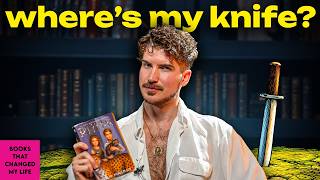
Joey Graceffa talks about how Philip Pullman's The Subtle Knife became the first fiction that made him love reading, shaped by a difficult childhood with his parents' divorce and his mother's alcoholism. He discusses his creative process for his YA witch series The Twelve, his belief in manifestation and energy, and how a school play versus a vocational trade fork in the road led him to YouTube and publishing.
Chapters
In Pullman's world, humans have an animal manifestation of their soul.
Yeah, they all have these what they call demons. They're these animals that up until like 12 years old or something, your, your demon can shapeshift, but then it picks a final form once they mature. And if the demon dies, it kills them. The church is trying to split that connection.
And what do you think that means?
It definitely has a lot of like church, anti-Christian.
I mean, isn't the premise that they're trying to kill God?
Yeah.
Yeah. Explain that. Like, that's a lofty goal. Okay, so the big question: how did The Subtle Knife by Philip Pullman change your life?
Oh, well, it changed my life because it—
I'm Chris Collins, and you're watching Books That Changed My Life. This week, we're joined by YouTuber and author Joey Graceffa, and he's here to talk about the book that changed his life, The Subtle Knife by Philip Pullman. Hey, while I got you here, I have 25 signed copies of Joey Graceffa's new book, The Twelve, and I want to give them to you. Here's how you claim yours. Hit the link in the description, subscribe, like, and comment, and that's it. We'll cover the shipping and everything else and get it out to you right away. Enjoy the conversation. So we're here today to talk about The Subtle Knife by Philip Pullman. I'm curious what other books were on your list that could have been ones that changed your life.
No, truly, this was the one and only one. When I got the, like, you know, the premise of this podcast, I was like, oh, does it have to be like a fiction or nonfiction? Because it seems like a lot of people would talk about like a book that changed their life and like a self-help book. But I've always been a huge fan of fiction books and this was the first book that got me into reading. I hated reading growing up. I thought it was the most boring thing in the entire world and like I hated English class. I thought like there's no way in hell you're ever gonna get me to read a book. I, I just didn't like it and this one got me into reading, so I have to, I have to choose this one.
That's great. I mean, that, that's the, uh, that's the ideal situation.
Yeah.
Is that there's only one and that it really had an effect on you.
And it's funny because this is the second book in the series. But of three, right? Of three.
Yeah.
And I started with the second one. I didn't even read the first one when I first got into the—
Then did you do three or one next?
I did three and then I went back to one.
How was that?
It actually worked and I kind of recommend it to be honest.
Because there's a cut, right? In the series, kind of?
Yeah. This one actually follows Will's perspective. The first book follows Lyra's. And then the third one's both of theirs. So it totally works. You can start with this one. And yeah, I mean, you're kind of a little— you figure things out. There's some stuff that you are a little confused about, but I was a teenager and I didn't really care.
So for somebody who hasn't read the book, just kind of explain the premise.
Of this one specifically, it follows a boy named Will, starts out with his mom who's kind of like got this mental situation going on, and he just drops her off at this lady's house and is like, "Can you take care of her? I gotta go." And you find out that there's these men that have been following him and his mom. And so he ends up accidentally killing one of them and escapes and finds like a slit in the air that leads him into another dimension. And he comes across Lyra, who is the main character of the first book, and they discover that there's all these parallel worlds and he ends up discovering the subtle knife in this book that can cut like in portals into the air to lead him to other dimensions.
Do you believe in time travel?
This isn't necessarily time travel. Um, I guess it kind of in a sense could be, but I, Well, do you believe in other dimensions then? Well, absolutely.
Well, how many dimensions do you think there are?
I think it has to be infinite.
Infinite?
There has to be, because with every decision you make, there's a new web of outcomes that could have happened. Yeah. Wow.
So unlimited.
I think so.
Have you ever talked to anybody in another dimension?
You know, they always— the thing that I struggle with most when I hear about, like, timeline shifts and stuff is like, if I'm shifting timelines but I'm still friends with someone, like, how did, how did I shift timelines but they're still here? Um, so no, I've never talked to someone. Maybe I have and I just didn't know. But yeah, I wish.
It's fascinating. Yeah, I'm open to it.
Yeah, I haven't experienced it, but I think it's all about like kind of like your mindset. And if you stay in like the positive frequency, you're kind of aligning yourself with a different— that with that same frequency, and like, like attracts like.
So yeah, so an energy.
Yeah.
What, what have you learned about energy?
Um, I think just like I try to stay as positive as possible. Um, I have recently cut a few people out of my life that I feel like weren't on that same wavelength, and friendships that I've had for many years had to go because I feel like it was bringing me down, a lot of evil eye energy. And so—
What's evil eye energy mean?
Evil eye energy is like, let's say you have something exciting going on. You share news to your friend about like, this new opportunity you got. There's energy that they can project onto you, which they kind of call it like, the evil eye energy, where it could affect the outcome of a certain situation because they're projecting their negative outlook onto you. So if you've ever seen, like, in, um, in Greece they have those like bracelets with the evil eye on it, that's to repel that evil energy.
Oh, really?
Yeah.
Do you believe that?
I do, 100%. I don't think I do, really.
I don't think anybody's energy could be stronger than mine about myself.
That's good, I like that.
I wouldn't even Good. I didn't even let that in.
Perfect.
But I do think that it burns energy. It burns good energy when you're around people with low energy. And like you were kind of saying, it doesn't sync up.
No, for sure. That's the mentality you have to have because your subconscious, like, if someone's like, oh, I don't know, I don't think like that's going to happen for you. Sometimes subconsciously that can get into your head and you can be like, you know what? Yeah, like they're right. Like, I don't deserve that. Or maybe that won't happen for me. And then you start to believe that narrative, and then lo and behold, it doesn't happen. So it's, it's— you have to be careful about sharing your manifestations with certain people.
So they, they had the evil eye, you cut them out.
Yeah.
And then you immediately realized that that was the right decision because of the energy.
Yeah, just like the opportunities that pop up in your life and just the, the people that you then align yourself with, you make room for them and allow good things to happen.
Maybe, maybe I should rephrase what I said, that I didn't believe in that. Maybe I should try it.
And cut it out.
Yeah. Test it against how I previously done it and see what the outcome is.
Yeah.
Then, then I'll know. Because I've never, I've never really tried. I don't know. I always feel bad for people because, you know, if you're having success and they're having a hard time with it, It's more of a reflection on their self-esteem than anything because they're jealous and they're not really rooting for you.
Sure. Yeah.
Most of the time they're not working as hard as you are. You know, they don't have a clear goal like you'd like. There's a lot of reasons why they're in the situation they are, but they're the last ones to figure that out.
Absolutely.
Yeah.
Okay.
So that's a part of energy. What else have you learned about energy? You know, nobody's ever written a good book about energy.
Are you sure?
Well, none that I've read, and I ask all the time. Do you know of one that's good?
I don't know if this is necessarily in that same vein, but I feel like The Alchemist kind of has like bits of that. And I feel like the—
the Paulo one—
the what?
Paulo Coelho, Alchemist.
Is that who wrote it? Yeah. Oh, then yeah. Okay. Him. Yeah, of course.
I mean, we have a huge section on alchemy I've just books on alchemy.
Oh no, this one.
I'm fascinated with alchemy.
Yeah. Oh, me too. There was one of my favorite animes was Fullmetal Alchemist, which I've never seen. That is such a nerd. But that one's about—
I'm not a nerd. Look around.
No, definitely not. I couldn't tell.
So, so, okay. Yeah, there's energy in that, but I don't think— I don't think it explains it. Like, uh, no, for sure, like a science. Like, I, I would like a book that kind of like took it in, looked at every side of it, and explained the connections.
Yeah, I think I would probably check out if it got too, too surreal. Yeah, yeah.
But you have great energy. That doesn't happen by accident.
I have great energy? Thank you. Oh, that's very sweet.
You have to understand something about it, or you, you think about it.
I'm very sensitive. Like, I don't know if it's something in my like astrological chart. I have a lot of Cancer. I'm like very intune with other people's emotions and whatnot. So I pick up on other people's cues and stuff, and I can sense energies from people as well. So I try to stay away from the dark.
Is your sign Cancer?
I am a Taurus, but I'm a Cancer Moon, and I have a lot of just Cancer in other planets.
I'm a Capricorn. I have no idea what my Moon's on. Oh, really?
Okay. Capricorn makes sense, especially with all the books. I feel like they're—
Yeah, I think I pretty much live up to the descriptions of it pretty good. So where did you grow up?
I grew up in Massachusetts, East Coast boy.
So are you a Patriots fan?
Sure.
Red Sox? Do you have a Red Sox tattoo?
Of course.
Do you know how many people I've met with Red Sox tattoos? Tons.
What are they, just like Actually, there's fans. What, like a logo of the Red Sox?
Yeah.
Oh, that's—
those are real fans.
So cute. I have no tattoos, so I, I don't think I could, I could lock in or, or show that much pride my home state.
So growing up in Massachusetts, like, uh, mom and dad, what did they do?
Mom's a hairdresser, dad's carpenter. Oh yeah, just very—
Mom knew all the gossip in town.
Oh yes, absolutely. But my parents were divorced when I was like 5, so I would spend every other weekend with my dad and then the rest of the time with my mom.
So siblings?
I have an older sister, she's 5 years older, and then I have a brother who's 15 years younger than me.
And so would you go between your mom and dad with your sister or just by yourself?
No, we would go together.
And so do you have an early memory of that separation?
Um, sort of. I think I just always knew that they weren't together. I never have any memories of them being like a unit. Um, I definitely have— they always fought, so it was like not the happiest memories of them interacting with each other.
A lot of tension.
Oh, for sure. Like Cops were called several times and just, like, never a good interaction with the two of them together.
So did that make you kind of want to disappear? What effect did that have on you?
I think I just, like, it affected me with not necessarily knowing how I could be around my dad because my mom was telling me her version of the story of, like, who he was. And I was always just terrified of him. So I kind of always dreaded having to go spend time with him. I also, like, have, like, a feminine energy. He's a very masculine man. So going and spending time with him, I didn't relate to him. He was just this, like, why aren't you playing sports type of dad when I just wanted to, like, be playing in my imagination and just like running around and, uh, hanging out with girls or playing with my sister's Barbies. Like, he did not allow that. So it just wasn't a good combo when I was there with him.
So eventually, did that end?
It did.
How old were you?
I was, I think, around like 15 or maybe 14, 15. I, I got the lead role in my school play.
And what was the play?
It was called Life of the Party. I played this, like, 10-year-old little brother who had this giant cowboy hat and had this, like, Western accent. And I basically spike my sister's birthday party's, uh, punch bowl with NyQuil, and I make the, the whole, like, party go to sleep. And, um, and so I got this premise of, like, this big high school production, and my dad came and like saw me on stage for the first time and was like, okay, I get it. And he doesn't have to be exactly who I wanted him to be— my dad thinking of me— and he like saw me in my own light. And since then, everything changed, and he accepted me. And nice, a good change to our relationship.
Was that a conversation you actually had with him at that time?
No, it was just like a shift that happened, and he just was no longer pressuring me to do things the way that he saw.
Yeah, it's great that he came around.
Yeah, and now we have a great relationship. We talk quite often. Um, he's a big supporter of mine, and things are good there.
So you were happier with Mom?
I was, until I wasn't. Um, she became an alcoholic when I was like 8 or 10 years old. So like from then on, our relationship became strange, and now I don't have a relationship with her.
What, what hap— what happened in her life that, that—
so she was one of 7 children. Um, her dad— no, her mom passed away and her dad abandoned all of them, all 7 children. And so they all got split up She got sent to her aunt's with her sister, and my aunt apparently was pretty abusive to her. Her sister was a big bully, and so she just grew up abandoned and separated from her siblings, and then had an alcoholic aunt who was the mother figure who was allegedly abusive to her. Kind of took that on and ended up emulating that with me and my sister, which is unfortunate.
The abuse part too.
I would say mental abuse. Yeah. Yeah. And which is almost worse. I think so. Yeah.
I mean, it's terrible. It's all bad, but. Yeah, but it's bad.
Yeah. But I—
I always— was it the drinking that cause that?
Cause what?
The abuse and the, like—
I think so. I mean, it was like Dr. Jekyll and Mr. Hyde throughout my whole life. It was like she was the most loving, caring, like, sensitive mom during the day, and then at night she became just this, like, different person. She would be, like, so sad and, like, crying and just, like, blaming the world for her problems and blaming me for her problems. And it was just like this, this reset that would happen the next morning. She would forget everything happened, and we would just carry on as if everything was fine.
And so, like, a form of like just self-gaslighting.
Yeah, you know, like, but what happened last night?
And then the next day, here we go again.
Yeah.
But we don't talk about it.
We don't talk about it. And I never talked about it with anyone until, um, I think I moved out, moved to LA, and I started daily vlogging on my YouTube channel, and I started sharing my story. I talked about dealing with an alcoholic parent, and it was weird how I felt such a an openness to share with strangers versus sharing with family or friends about my situation. Like, I never told anyone what was going on, but here I am sharing to the internet.
Was it easier to tell strangers?
Yeah, because it felt like I could express myself to this, like, void, and then it would attract the right people. It would, and people would comment relating to my story.
And then you probably helped people, right, by telling your story or being vulnerable. It made other people not feel so alone, right?
Exactly.
Yeah. So you probably had some good conversations.
Yeah. And it helped me. It, like, it, it was therapy for me in a way. So having that connection and not feeling alone was the best thing.
So that— so you're 8 or 9 when that happens. How does your relationship with your mom kind of develop from there?
Um, it was, it was a lot of ups and downs. She would go away on to like rehab trips, which was always so fun when my friends would come over and they'd be like, where's your mom? I'm like, oh, she's on a work trip for a couple weeks. And then she'd come back and things would be good for a while. So it would be like this like period of just like happiness and having the mom back that I knew from such a young age, to then it kind of relapsing and going back to the darkness.
So you kind of said something a little bit earlier about how your mom endured abuse and then she perpetuated that and she became the thing. Yeah, that she probably didn't like. Are you aware of that in yourself, that you tried to kill that and not perpetuate it?
Yeah, I think, uh, I've done some, some deep therapy work. I went to this, uh, retreat called the Hoffman Process where they kind of really force you for like a full week straight to really reflect on your parents and the patterns that you subconsciously pick up from them. You address them and then you, you break them. And so I had a lot of time to like look, reflect on some of those things that subconsciously I picked up on. And, uh, you could either become like your parent or become like the exact opposite, which isn't necessarily a good thing.
Um, they point that out.
Yeah. Yeah.
So what's an example of one and then how do you break it?
Let's say it's like emotional manipulation. That's something that you— and I don't want to talk too much about the process because it is supposed to be like a surprise when you get there. But this is one that they do allow to share. This is like the first night you're there. You write down a bunch of these like habits or qualities about yourself that you don't like, and you have like this stack of note cards and then they give you a pillow and a wiffle ball bat. And they say, go to town, scream, shout, go crazy. And you're just taking the bat and screaming and attacking this pillow. Once the, like, card with whatever word it is on there breaks, you move on to the next one. And so it's—
so each— you have a card for each one? Yeah.
So emotional manipulation.
You were there for like 4 days?
Yeah. No, it's a long process. It's like—
is it easy to break the card?
Sometimes. It's almost like this energetic field that allows it to break when it feels—
Yeah, there's this symbolism to it, right?
It's a symbolism. So you see it, you address it, and then you, you take physical action to it. And in those steps, you're able to break the habit or the quality. And then there's other things that they do as well.
That's, that's, that's really good. Yeah, that sounds pretty healthy.
Yeah.
So you've, you've looked that right in the eyes and kind of faced it.
Yeah.
Because I think a lot of people just keep it going, like, for sure, and not aware of it.
No, but then the issue becomes, unfortunately, you then have kids and then you pass down stuff that you picked up from your parents, and it just becomes this cycle of life. And they have this one thing as well where you you visualize your parents as a kid, and you kind of make up a story in your head of how they were raised because you obviously weren't there for their childhood. So you end up having a lot of empathy for your parents because you're like, oh, they're just kids themselves that picked up stuff from their parents. And then you don't hold on to as much anger, at least for me, for my parents.
Yeah, you— yeah, because as a kid, you're You're dealing with the outcome, but there was a cause. Something created, right? And when you see it as a full story—
exactly—
you have way more empathy. Do you think you're pretty empathetic?
Absolutely.
Yeah. So what kind of kid were you? How would you describe yourself as a kid?
Just a very, like, sensitive, quiet, shy little boy. Um, just kind of, like, always lost in my imagination.
Daydream?
Daydream a lot.
Did you see— do you now, looking back, see daydreaming as a dissociation?
I guess so, yeah. I was always like coming up with stories. I was always living in a fantasy world. Um, so yeah, in a way that was dissociation.
Did you talk to yourself?
Um, in my head, but I wouldn't talk like out loud to myself.
I would.
Oh, okay.
Yeah, adults used to comment all the time that I talked to myself.
Like in the corner, just like in front of people?
In my room, I'd build worlds. Oh, whatever.
Okay.
But yeah, I would talk to my—
wait, would you like— were they imaginary friends or were they— you were talking to yourself?
No, friends.
Oh, okay, cool. Oh, that's—
yeah, I would daydream and create. In high school, like most of what I did was just sit there and daydream.
Okay.
Like I couldn't pay attention.
Yeah.
In class at all.
No, it's—
they didn't understand me.
No. And I feel like schools are still the same.
It's like, it's so funny too. Like, I think back now, like, the bad report cards I got and like insinuating that I was dumb, and actually I was probably smarter than most. I just didn't fit into the— yeah, sit in a chair all day, for sure, listen to the person at the front. Like, I learned, you know, a different way.
Yeah, I was in special education classes all through my schooling. And so that kind of put me in this, like, this mindset that I was dumb all throughout.
Yeah, I'm like, I kind of knew I wasn't though.
Really?
I just, I always had this feeling of like, I don't know, like, you guys say that, but you all look miserable. Like, I could connect dots with, especially with religion. And different things, it's like, yeah, well, you say that's love, you say that's the way, but it's very judgmental.
Yeah.
And feels hateful and you're all cheating and lying and like, wow, it doesn't make sense.
That's crazy.
I mean, I remember at 8 years old kind of having that thought of like, oh, because my parents were— my stepdad was a pastor and we were missionaries.
Oh.
And so it was very much like do as I say, not as I do. Like there was an image and then there was what happened at home, sort of a thing, right?
So were your parents very like strict on religion?
Oh, couldn't listen to music, couldn't watch TV, like, okay, nothing. And like that was going to make me go to hell if I watched The Cosby Show or, you know, because kids at school would talk about The Cosby Show or Michael Jackson or— and I wasn't allowed to do any of that because you said Catholic, so the devil knows Pentecostal.
Okay.
But I mean, it's all kind of the same.
Sure. Yeah.
Yeah. Very strict. But I remember very early on just going, I don't know, this doesn't add up.
That's really impressive that you were able to identify that.
People are miserable.
Yeah.
Like they're just carrying all this. And the idea that God is love, but you got to suffer all the time. Yeah, never made sense to me either.
I mean, a lot of people still don't make that connection in their, like, late years.
So, well, the whole purpose of that is to make you externalize control to an outside force. Yeah, but then you have no self-agency. And so, you know, if everything is the will of God and you have no control, why try?
Good point.
That's a hard way to live.
Yeah.
It's a hard way to create anything or, you know, write your own story in life.
For sure.
Yeah, it's, it's funny. So then when, when does this come into the daydreamer's life?
Well, I for the most part was coming up with my own stories in my head, and so I didn't realize that books could be fun. Like, when I read, I don't know if you're like this, but I see visuals when I read. I know some people aren't like that. And so I was like basically reading a movie in my head that this was the first time that I was like, oh my gosh, this is so fun. Like, I can't put this down. I would like be reading in school and like any time I got a chance, I was like, I need to find out what happens next. And so that like really hooked me in to the world of books.
And was this the first book that got you like that?
Yeah.
And so how old were you, 15?
Yeah, I think around '15.
Did somebody give it to you, or how did you— how did it—
it was my best friend in high school. Her name's Amanda, and she gave me this exact copy. Um, and it was crazy. I was smelling it and I was like, oh my God, this brings me back to that time. And it's like just that good old book smell.
Um, how many times have you read this?
Oh, at least like, I guess like maybe 5. I, I'm more of like an audiobook listener now, so I've listened to it on audiobook a couple times, and it always brings me back to just like that time.
Oh, it's like perfect.
Yeah.
That's so fun.
Very cool. And it's so sweet because this, and I guess like going to the question of like how it changed my life, I don't know if we can get there yet.
Yeah.
Okay. Um, so Will, the main character, I remember after reading this, I was like, I want to be Will. Like, I want to play him in a movie. And so I was that kid that got on my computer, looked up Philip Pullman's email, took a photo of myself holding my gray cat. I was like, "Hi, I'm Joey Graceffa. I'm 15 years old. I was the lead of my play. And if you ever turn this into a movie, I would love to play Will." and I just like sent it off into the abyss. I never heard back, but it fully got me in the mindset of wanting to like, live in these worlds, which made me want to become an actor, to then be in a book adaptation turned to a movie. Still hasn't happened yet, but I'm holding out for my new book, The Twelve, to become a movie. I won't be in it, but it's like, getting to see my world come to life is definitely—
that's the motivation.
Yeah.
Or that's the grand strategy.
Yeah. But it was just— it's just like a really sweet memory of just like, you know, it, it changed the trajectory, I feel like, of my life because it like put me on a path of being like, I want to do this, and then, um, here I am now type thing.
Yeah, it is interesting that, uh, just a pattern I've seen on the show and in my interactions with people is people that kind of had a rougher childhood and had trauma are attracted to fantasy books because it's an escape. It's a disassociation in a way. And I remember for me, the first book like that was The Chronicles of Narnia.
Oh, okay.
Yeah, same sort of thing. Like, it just becomes this fantasy and Yeah, you see it and you see it like a movie in your head. Yeah, but it, uh, you know, I was an only child, so you have a lot of time alone. Those worlds are kind of fun.
Yeah, I, I was kind of in a way an only child because my sister had no interest in me, so.
Well, she was older too.
She was, and she was like a teenage girl, and I'm just like her annoying little brother.
Yeah, just that What you said, it was 5 years?
5 years.
Yeah, that's a lot when you're young. It's a different world.
Yeah, it's not a good combo.
From 11 to 16 is— seems like a century, really.
Absolutely.
It's funny. Um, okay, so let's go through the, the book a little bit. So in Pullman's world, humans have an animal manifestation of their soul.
Yeah.
Right? Explain that.
Um, so in the world that Lyra comes from, Will doesn't have a daemon, but Lyra in this world, they all have these what they call daemons. They're these animals that up until like the age of, I think when you become like a teenager or like 12 years old or something, your daemon can shapeshift into different types of animals, but then it picks a final form once they mature and So Lyra has Pantalaimon who is kind of like her little sidekick friend who talks to her. And if the daemon dies, it kills them. So they're like a part of their soul, basically. And so in the book, it starts off with like the church is trying to split that connection to separate the demon from the human.
And what do you think that means?
It definitely has a lot of like church anti-Christian aspects to this.
I mean, isn't the premise that they're trying to kill God?
Yeah. Yeah.
Explain that. Like, that's a lofty goal.
It is. I did not pick up on that when I was growing up. Looking back at it now, I could definitely see those aspects. A lot more clearer. But growing up, I was like, oh my God, they're just going to these different worlds. They have these, like, cool shapeshifting animals. This girl can, like, tell if people are lying or not. And he has a knife that cuts through worlds and there's witches and big polar bears that they ride. So in my mind, it's just like this fantasy novel. And whenever I would get to the chapters about the religious stuff and the other stuff, I would honestly kind of just, like, check out or I'd skip that chapter. I'd be like, I want to find out what Will and Lyra are up to. So I never really paid attention until being an adult and yeah, it's, it's some like very like adult topics in this children's book that you're like, wow, like it can be for adults and for children.
Okay. Can we still talk about the biblical part of it a little bit?
Sure.
So, um, the series is kind of retelling the biblical fall, right? The story of Adam and Eve and telling it from the other side.
Yeah.
Right.
I never read the Bible, so I don't know the true context of religious things. Okay, let me just—
I've been through it.
Yeah, of course.
I'm going to explain it.
Please.
Adam and Eve lived in this park, the perfect garden of Eden. And they were just told one thing, not to eat an apple from this specific tree. And then one day, Eve says, hey, Adam, I really think we should eat an apple from that tree. And they did. And then everything changed and they noticed they were naked. God came and saw that they had done the thing they weren't supposed to do. And then they were kind of cast into the world.
Yeah.
And then that's, you know, people think that all human suffering comes from that. Before that, there was no suffering. Okay, in a sense.
Okay, got it. But there was only no suffering because there was only two people?
No, because they hadn't eaten the apple. They hadn't.
But would they have reproduced? I don't know exactly. So it would have just been them two and we wouldn't be here. So it's kind of good that they did, otherwise where would we be?
There isn't a clear distinction in the Bible that, uh, they weren't able to reproduce one when they were created. It's not connected to the apple.
Yeah, but I feel like they wouldn't— they wouldn't have realized because they didn't realize they were naked. So it's like, how would they know what this does? So I don't— I think they would have just— they would still be there, just them two.
That is a great point. I've— I've never thought of it that way, but it is kind of like telling it from the other side in a sense.
Sure. Yeah. Yeah.
And then we already kind of talked about parallel universes. Yeah, it's, it's talking about that.
Yeah. Which was so fun because they would just like cut into these worlds. They'd be running away from people. He'd just get a knife and slice through and they'd go through and close it up. And it just was so imaginative as a kid. Like he's running away from these bad guys. And I remember my mom came home in a drunken state and she was like telling me that there was these bad guys coming. For her. And so I had my best friend over and we, like, we boarded up the doors and we slept with, like, a knife under our bed. And just, like, I related to this book so much without even, like, realizing and just, like, wishing that I had, like, a knife to go and, like, cut into another world. It just seemed, like, so cool. So I wanted to be Will.
That's fun.
Yeah.
So Pullman's also kind of talking about the perspective of institutions and control and power, censorship. Do you have any recollection of that as a kid, or still you were just kind of more thinking about the characters?
Um, of like the control from like—
well, I mean, I don't know, when I was a kid I didn't feel like I fit in. Oh, so that made me automatically want to challenge authority.
No, I never challenged authority. No, never. Um, I was definitely like a good boy who like followed the rules. But now I, I kind of am like, uh, ask for forgiveness instead.
Yeah, I was gonna say, there's no way you're as successful as you are. Yeah, you haven't broken some rules.
No, it's definitely shifted.
That's part of the recipe of being successful, is breaking rules.
No, I think maybe that's what you probably broke rules today. Oh no, never.
Yesterday at least. So yeah, as an adult, you, you understand that?
Yeah, for sure. Yeah, I, I definitely question a lot of things now and don't, like, take things at face value.
Okay, let's, let's kind of go through some quotes.
Okay.
That we highlighted and see what you think. So the first one is, is on page 9, and this is, Will has grown up fast and he's more concerned with his mother than himself. And I'm just curious if you saw some of yourself in this.
Yeah, no, for sure. Um, yeah, this is 100%. I, I don't know if I necessarily related to this. Should I read it?
Yeah.
Okay. But sometime during the next few months, Will realized slowly and unwillingly that those enemies of his mother's were not in the world out there, but in her mind. That made them no less, no less frightening and dangerous. It just meant that he had to protect her even more carefully. And from the moment in the supermarket when he had realized he must pretend in order to not worry his mother, part of Will's mind was always alert of her anxieties. He loved her so much that he would have died to protect her. That is 100% how I was with my mom. She, she definitely would go into these, these states of not making coherent sense, and I don't think I realized at the time that she was kind of making things up. I truly believed her. Like, when she said, like, men were coming after us, I believed that. Um, it wasn't true, but to me it was true. And I, even through all that, protected her. I never shared with teachers or other adults what my home life was, of the abuse that I was facing, because I wanted to protect her. And I Yeah, I think that's exactly, exactly what I was doing.
I mean, it's interesting that this is the very beginning.
Yeah.
And even— yeah, unconsciously, even you might have been like, oh yeah, okay. Yeah, I relate to this.
And then when he got to escape to another world, I was like, all right, where's my knife?
Where do I go? Okay. Page 88. And so here we're talking about dust, shadows, dark matter, and the creative process. And the question is, do you think that this is the creative process? I'll read this one.
Oh, okay. Yeah.
And here goes the crazy part. You can't see them unless you expect to, unless you put your mind in a certain state. You have to be confident and relaxed at the same time. You have to be capable, capable of capable of being in uncertainties, mysteries, doubt, after any irritable reaching after fact and season.
Yeah, I feel like I get my best creative ideas when I'm in like a state of like just full relaxation. When I'm getting massages, my mind goes to like the most creative places because I'm like almost on the verge of sleeping. And so I feel like that's when the best ideas come. Yeah.
A lot of artists like feel like that state between awake and being asleep.
Yeah.
Salvador Dalí used to do that where he would hold a key and when he would fall asleep, he would drop the key. It would hit this like metal thing and it would wake him up. And he was always trying to be in that.
Yeah, it can be very frustrating because I feel like when you're just waking up, you're like, oh, this is the best idea ever. I have to write this down. And then you like either fall back asleep and you're like, damn it, what was that idea?
Oh, you don't write it down?
I've learned to.
Oh yeah, you have to.
Yeah, because there's been some that have whisked off into the world.
And who knows how good they were?
Been given to someone else who was ready for it.
Yeah, exactly. So do you have a process for creativity? Like if you're going to write on a day, like what is, what is your routine before you start writing?
It is for my book, The Twelve in particular. I, I actually wrote a lot of it when I was in London. I would go to this beautiful cafe in Kensington, and I would just put on this specific playlist of dark academia music, and I would just, like, go into, like, this comfortable state of being. And it would almost— it was almost like I was getting a download to my brain of, like, a movie. And I'm just sat there at my laptop, just typing away. So In a way, it feels like I'm just like the vessel to like, to just, I don't know, to just put it into physical form.
Was there something that triggered it? Is it the music? Is it the place you sat?
Oh, I think it was like a combination of all of them. I mean, I had also, before I got to like the writing part, for like 3 years I would just get random ideas that would be sent to me. And I have like a whole notes in my phone of just random aspects of the book. Could have been like so disconnected from what I previously was working on. And I just had this collection of things. So I was building up this like archive in my head of just like all these different aspects. And then finally I knew kind of where I wanted to start. And then it just was triggered by one idea that led to the next. And Pinterest also helped me a lot. It would just like activate. I'd see like pictures of like who I imagined my main characters are and like they were in like a forest or something. And then it just like created the world even deeper. So it just kind of like sparked the domino effect.
So would you create a folder in Pinterest of images that inspired you?
Yeah. And then I look at that while watching or listening to the music and then it just took on a life of its own.
Do you love being in that place, in that zone?
It is the best feeling ever. I'm just like— and I like go until I'm like exhausted and like I can't— I'm like hungry or whatever and I just can't do anymore. But it is the coolest feeling ever. It's again, it goes back to like my childhood of like disassociating and having these imaginary like thoughts and stuff. And it's just like a world gets built in my head and I just have so many ideas that just want to come out and It's a really cool feeling when you write it all out and then you— what my process is, I'll put like visuals next to what I wrote because I'm more of a visual person than a word person. So that was also very helpful.
I love that. What's the longest you've gone writing?
I feel like it's not very long. It's like maybe 5 hours.
It's mean.
It's when I get hungry, I get exhausted and I can't function. So like, and then I just get distracted and I'm like, all right, I did it. Next thing of the day.
That's fun. So page 180 is about the subtle knife.
Oh, that's when he gets it.
Let me read it. The knife knows when to leave one hand and settle in another, and I know how to tell you. You don't believe me? Look. He held up his own left hand. The little finger and the finger next to it were missing, just like Will's. Yes, he said. Me too. I fought and lost the same fingers. The badge of the bear.
Yes, he lost his fingers, but he gained the knife that could take him to new dimensions. Sacrifice. Sacrifices had to be made. I don't necessarily know why that was important, but I think it was just like a symbol of him being the knife bearer. He had to lose the fingers. Is that something in the Bible? Like the blood of Christ or something? Like he had to suffer.
Well, he dies on the cross.
Okay, well.
So I mean, the premise is that he died on the cross for your sins, which is an unconditional love. Like the idea that he died and you weren't there, like he died for you. And that's the ultimate sacrifice is giving your life. Yeah, no, it's very sweet. Has anybody died for you? No, it's a big—
not yet.
But can you say— are there things that, you know, and just in line with you've achieved success, Are there things that you had to sacrifice or push through in order to get to where you wanted to go?
Hmm.
And do you think that's what it means?
I mean, you're definitely, for being like a content creator for so many years, you're definitely sacrificing a bit of privacy. You're sacrificing personal information about yourself. Um, and I've had to learn what's what's good to share and what's not. Over the years, sometimes I've, I've overshared aspects of my life that, um, you know, was a little bit too much. And I've now found like a good balance of what I need to retain for myself versus what I can use as monetary and public success.
Yeah.
Also too, when you were talking about earlier about friends, cutting out friends, like, that's a sacrifice, a very good sacrifice, and I'll do it again if I have to.
You're on notice.
Yeah, watch it.
Let's go to 265. The question here is, what are some of the chances that conspired to get you where you are at, and would— what if they had gone another way?
The chances. So basically like the fork in the roads type of thing. Yeah, I feel like there's certain ones for sure in my life. Are we reading this first?
You can read this one.
Okay. Both of them sat silent on the moss-covered rock in the slant of sunlight through the old pines and thought how many tiny chances had conspired to bring them to this place. Each of those chances might have gone a different way. Yeah, that's kind of like— I don't know. I balance between like, everything happens for a reason, But there's also aspects where you can't just rely on the universe to guide you. You have to make choices that allow everything to happen for a reason. So I think there's definitely key moments in my life where I wonder what would have happened. I think one of the big first ones is if I hadn't gotten that lead role in that play when I was in 8th grade, my plan was to go to a— what is it called? It's a school where they basically teach you a skill.
[Speaker:TIM_FERRISS] A vocational school.
[Speaker:MICHAEL] Vocational school, yes.
[Speaker:TIM_FERRISS] So you could be like an it, a plumber, a mechanic.
[Speaker:MICHAEL] Yeah, a mechanic, a carpenter like my dad. And so had I not gotten that role in 8th grade, 9th grade, you get to choose if you want to go to the vocational school or if you want to stay in regular high school. And because I found a love for theater and drama, I ended up staying where I met my best friend who I started my YouTube channel with. So had I gone to that vocational school and I headed down the path of being a carpenter, would I still have ended up creating YouTube content, which led me to my whole career of getting to do a million things. Like, I always wonder, like, what my life would be like had I, had I not stayed.
Also, your dad saw you and he kind of got you. He understood you in a different way. Yeah, from that same event. So it's connected to a lot of stuff.
It is, for sure.
Yeah. So how, how have you— and maybe two things can be true, right? There can be an element of fate and there can be an element of creating your own outcomes, but what is your general understanding or thought about it?
Well, I think it's like listening to your gut and your heart of what you truly want. And had I not followed what I truly wanted to do and thought more of like, well, what's going to benefit me in the long run? Like, if I go to like this vocational school, I don't have to like go to college and I can save money there. But like, that's not going to make me happy. Like, I need to think about what my true happiness was. And at that time, it was like being in theater and doing plays and stuff. And I just follow the passion. And that also went with like what I wanted to do in life. My stepfather made it very clear to me at a young age that anything in life was possible if I just worked hard enough. And without him telling me that, I think I would have limited myself on what I thought was possible because he truly made it seem like, eh, whatever. Like, as long as you're following what you love, the money will follow. And don't go into something for the money because you're going to get burnt out, you're not going to enjoy it, and there's no point. So I'm very grateful for that lesson.
Yeah, it is interesting looking back, right? Like how many moments like that?
Yeah.
Happen. And yeah, who knows?
Definitely.
Are there any that you wish would have gone another way? Any forks in the road?
I don't necessarily know based off choices that I've made. Maybe some in the entertainment world, had I stayed with a particular manager or agent at the time, what opportunities could have happened. But ultimately, I am the one making those choices and I have to just accept that my path is now in this direction and I have to make the most of it. And continue looking for other opportunities.
Yeah. I think that I've kind of realized with, with a certain type of person is people that aren't super confident or don't have like a clear understanding of what it is they want to achieve. When things don't go right, they have regrets. But when you're pretty driven and you kind of understand yourself, when things don't go right, they're lessons.
Yeah.
And so there's, you know, there's people that are still stuck in high school about this one thing that they didn't do. And, you know, for me, I'm always kind of like, you know, like, yeah, you have to move on. Okay, so now what?
Yeah, like, literally, it's—
how long are we gonna talk about high school? I'm 50. Me.
Like, for sure. I think throughout my entire life, I've never been the victim. I'm, I'm always, you know, taking lessons as they come and making the most of them.
Yeah, but I think, um, for people watching this, that's an important thing to understand in a recipe to your success is you're creating the outcome. You're not waiting for it to happen. You're not waiting to get lucky.
There's definitely a mixture of the two. Luck definitely plays a role, but you can't just wait for luck.
Yeah, and it— I don't know, you get lucky the harder you work, maybe.
What's that saying? I like that. Yeah, that's cool.
Okay, 280. The specters feed on attention. What do you think the specters represent in our time? Is a conscious and informed interest in the world's danger, or what is it?
Oh, The specters. The specters are now just like the social media world. It's just like everyone's feeding off of just like the darkness, the drama, the like the just heightened world's news.
How do you manage that?
Um, I try to avoid as much of that as possible.
When your voice goes high and you say try to avoid, it means you're not, you know, Sometimes you can't avoid it.
Like, it's just always constantly thrown into your face of just like the dramas and everything in the world. And it's, I feel like, human nature to like be intrigued by the gossip. But it's important to not get so sucked in like these specters feeding off all the like negativity and try and just stay in your own peace. And that doesn't mean you have to be privy to everything going on in the world because as humans, we're not meant to know everything that's happening. It's, it's really dark and not great for your mental health. And I, I see people turning into like these dark specters because they just, they can't get enough of it. It becomes like a drug of just needing to know everything and just the world's on fire and like, we're just humans and We can't save everybody and save the world all at once.
Yeah, it's good. Okay, and then the last one here, pretty good. And I'll ask you to read this one.
Okay. There are two great powers, the man said, and they had been fighting since time began. Every advance in human life, every scrap of knowledge and wisdom and decency We have been torn by one side from the teeth of the other. Every little increase in human freedom has been fought over ferocity between those who want us to know more and be wiser and stronger, and those who want us to obey and be humble and submit. I don't know what that means. What do you take that for?
Well, I, I think, um, You know, part of the premise here of the book is that there isn't a God or an authority kind of keeping you from knowing everything, right? So that's why you can slit and go into another place. Like, and so there is an element of, hey, just behave, follow along, do what you're supposed to do, believe the thing. And in, you know, in today's world, I find it to be pretty crazy that, you know, especially people that want to talk politics are almost like a cult.
Yeah.
Like if you have one opinion, it's, it's lumped in with a bunch of other things that you weren't even talking about and you're automatically this, you're automatically that. And it's like, whoa. Like, you know, I always say I'll talk politics and religion because you can change my mind. But you can change my mind through having genuine understanding of what we're talking about, not just following what somebody else told you.
Yeah. Yeah, there— we definitely live in a world of sheep.
And I think— I don't know, I wasn't the one as a kid that followed along.
No, I wasn't. I wasn't either. I— even though I was like a rule follower, I never I wasn't trying to be the cool kid. Like, I wasn't following trends as like a kid, like, kind of just like went to the beat of my own drum.
Okay, so the big question.
Okay.
How did The Subtle Knife by Philip Pullman change your life?
Oh, well, it changed my life because it allowed me to fall in love with reading books. It gave me a sense of like allowing me to feel like one day I could write my own books. And now I have my fifth book, The Twelve, out, which I don't think would have been possible if, like, this book didn't give me that sense of love for, for books and want to, to create something like that.
Yeah. How lucky at 15.
Yeah.
That you found something that affected you like that.
I feel like I was late to the party with books. Really? Yeah, I feel like I had so many friends growing up that were reading Harry Potter and like other things at much younger ages, and it just like never occurred to me that books could be fun.
I mean, for me, all the way through high school, I read them because they were assigned. Yeah, but the first book I read that really affected me, I was in my early 20s. Oh, so okay. I think to me 15 is like, I wish.
Oh, interesting.
Okay, but there's all— there's, there's Tons of people that read when they were 5 and yeah, they were way ahead of it in that way. But 15 is pretty good.
Thank you.
On the scale, it's pretty great. Um, okay, let's talk about 12.
The 12, yes. So this is my 5th book. It's about witches having powers based off their zodiac sign. So you're a Capricorn. Capricorns can shapeshift into animals. Um, any kind of animal? Yeah. Kind of like, oh my gosh, maybe I subconsciously pulled it from here. The demons could transform. But this is like, how do I do it? Well, you're— well, you wouldn't. Sorry, there's no men in this book. It's all women. So it's— wait, what? Yeah.
Why? So can only women do it?
The book only has women in it. So yes, only— there's only female witches.
Wait, I've been told I'm a witch.
Well, this—
not just not in this book. Yeah, why are there no men in the book?
Um, so it's actually funny. I was writing this as a feature, like it was going to be my first feature, and this was 2020, and so there was a lot of stuff happening, um, in the world. I think the MeToo movement was making it so Hollywood was looking for authentic voices. So I was, I was writing a female lead perspective, and my manager at the time was like, I'm so sorry, but like, you have to write a story about a gay guy. Like, you're not going to get any meetings in Hollywood unless you write from your own perspective. I was like, but this is about magical powers. So like, if I can't transform into an animal, does that mean I can't write this book? Like, what do you mean? And so I had already written 4 books prior, and my trilogy was a female lead. So I was like, well, I'll just go back to writing books. I need to tell the story. And so it just kind of happened where I was like, there's no men in this book. Like, I'm gonna like just write a whole bunch of female badass witches that create a coven of the 12, one of each zodiac sign. And, um, and that's why.
Okay, so then the female Capricorn, how do they— how does she shift into an animal?
[Speaker:PW] So each girl has their own power that awakens when they're under a heightened stress or emotion. Every birthday will have remnants of their magic, but it's not until they awaken their powers that they can then do what their specific zodiac power does. So for Aries, they have electrical magic. For Taurus, they have earth magic. For Libras, they have necromantic power. So they're all specific to their zodiac sign, But the unfortunate part is once they awaken, they start becoming part of the process of turning dark. And the main villains of the story are the dark witches, which are these white-haired, almost like, crone-like women with dark eyes, and they feed off zodiac witches. And so it becomes this vicious cycle where the zodiac witches, hunt and kill the dark witches, which is eventually what they're going to become, which is a really sad, tragic tale of every witch. And then carry the one dot.
Wait, that sounds like the, uh, parents reliving the same abuse.
Yeah, it, it for sure is very much themes of that.
This book is so authentic to you.
I know.
Yeah, no wonder you just felt like it was going through you.
So funny.
You're just a conductor of electricity.
I guess so. Yeah, but, uh, what about the Pisces?
What superpower does the Pisces have? Um, do you remember?
Yeah, do I remember? Of course. So my main—
well, it's a lot too—
are Pisces and Aries. They're twin sisters born on the cusp of like midnight of Pisces and Aries. And Pisces has water magic. They're known as like the fish. So yeah.
They're a lifeguard? They're a lifeguard.
Well, Pisces, her name's Ophelia. She doesn't awaken, but she sees that her sister has and her sister's now on the path of becoming a dark witch. And so Ophelia is like, well, shit, like I need to try and figure out a way to stop this process from happening. But it's kind of like. You can't stop the leaves falling from the tree, it's just part of nature. Serena, who's the Aries, is eventually gonna become a dark witch and become the monster that you don't wanna become. [Speaker:AC] You have an incredible imagination. [Speaker:CB] Oh, thank you.
[Speaker:AC] I can't wait to read it.
[Speaker:CB] Thank you.
[Speaker:AC] That's so fun.
[Speaker:CB] Yeah, it's definitely a very young adult style book. There's some good messages in there for sure. But I just love magical powers, and I think it's so fun to dive into mixing astrology with witches, like I hadn't seen it done before, so I wanted to create it.
How much research did you do on astrology?
A lot.
I would imagine. How many books on astrology did you get?
I mostly focused on— I got one specifically on Pisces and one specifically on Aries just because I wanted to make sure I had distinct voices that felt authentic to those signs for my main characters. And then I just got like a regular— I don't even remember the name of it, but it was just a regular astrology book that talked about the different signs and characteristics.
[Speaker:AC] Do you create the characters first, or are they created as you're writing?
[Speaker:CB] I think I had like, some images in my head of certain characters and their vibe. Like Leo, for instance, I always imagined my friend Madeline Petsch, who is an actress in Riverdale, She has this fiery red hair. She's a Leo actually as well. And so I always imagined her as the Leo character who has telekinesis magic, which is the power I would want even though I'm a Taurus. And, and so, yeah, the characters become alive. And it was interesting while writing again, like, I feel like I'm just a vessel, but my characters started making choices that were different from, like, what I had planned. I was like, oh shit, like, they kind of ran away from you. They ran away. Like, Ophelia like awakens her powers and I'm like, girl, you sure you want to do this right now? And I'm like, all right, if this is what you're gonna do, then let's, let's go for it, girl. Sounds fun. Yeah, it is interesting.
Is there kind of an overarching message to the book?
Um, overarching, it's, it's all about like sisterhood and finding almost like chosen family. Like, all these girls are in a way, been abandoned and had issues with family and end up being by themselves. And this coven forms together, and it's about this chosen family, which in a way is kind of my story as well. Being gay and, like, having to choose my family out in LA and having people of my own community come together and support each other. But then it's like the sisterhood. It's like having that sibling and— having to make the tough choices and the battle between light and dark, which is, you know, an ever, an ever story. So yeah.
Yeah. That's great. Do you get nervous when you, when you put out a book?
Yeah, definitely. I mean, I spent the past 6 years working on this one, so there was like a lot of pressure on myself for it to do well. But at the end of the day, like, regardless of how well it does or how many people read it, it's like, I had to tell the story. Like, it just needed to come out, and I'm very proud of it, and I love it. So— Well, congratulations. Thank you.
It's really fun.
Well, I find it so difficult to talk about the book because I don't want to spoil people on like, certain aspects of it. So I feel like I have to like, teeter around certain things. So I think, I think I've said enough to maybe entice people to want to read it. I don't know.
It is. I mean, that's pretty interesting.
What do you mean?
It's great. Like, I think it's great.
Thank you.
It's so cool. Is, was this the most rewarding one to write?
I think so. I think this is the one where I put most of my, my creative, like, vision into that. Like, it just felt so easy and natural. My other series was a trilogy about— it was more sci-fi dystopian, which was a lot of fun, but it was, it was kind of more based in real world stuff. So this was fun to get to, to play with what I truly love, which is magic and witches.
Yeah. I love, I love magic. You see the magic section? And then alchemy. It's fascinating.
Okay, what power would you want?
Well, what do you define powers?
Like a magical ability. What would be your one? You only get one. If you were choosing your zodiac magic, could be anything.
Well, I guess reading minds.
Reading minds. Okay.
I mean, what would be more powerful than that? Um, I don't want to fly. Most people say fly, but I don't want to do that.
I don't want to fly either.
I'm scared.
I would choose telekinesis where I could like maybe hover, like make myself— or like, I want that book, zap it over here.
Um, so more of a time management power where it saves you time, like stop, stay away from me, that type of thing.
But I feel like reading minds, it sounds cool, but then do you really want to know the truth about like what people are thinking Because then, yeah, I think, I mean, I think I kind of already know anyways. Oh, okay, you already have a superpower.
Well, I mean, you can, if you pay attention to people, you can kind of tell what's going on.
Okay, since Capricorn's power in my book are transforming into animals, what would be your like go-to animal form?
A dog.
Oh, that's sweet. What kind of dog?
German? I don't— like a healthy, friendly dog. So I don't know, like I have bulldogs, okay, but they're not that smart.
It's just your physical appearance. It doesn't have—
I look like my dogs for sure, but I want to be a little smarter, so maybe a border collie. Okay, I want to be a smart dog but a friendly dog.
Okay, that's cute.
But I'd make a lot of friends if I was a dog.
Yeah, I have—
could comfort people.
I have two golden retrievers and a husky. But I would choose Golden Retriever.
Yeah, that's a great one.
They're so sweet. I love them.
Yeah, I mean, they're dogs. Yeah, they're not complicated.
No, they are dogs. My husky is not a dog. That is a man in a dog's body.
Yeah, and they want to work, right?
He's too smart. Like, he knows how to open drawers and whatnot.
So yeah, I make my dogs watch, you know, those dogs on TV that do like the obstacle courses and all that.
Oh, you're like, see what you should be doing?
See why you're classified as non-sporting at the Westminster Dog Show? Because, you know, it's funny. That's great though. That's good. Well, thank you for doing this. It was super fun.
Yeah, thank you for having me.
We are so excited to announce the Books That Changed My Life website. We made a way for you to show your book pride and that you love books. Hats, tees, hoodies— check it out, link in the description. Everybody needs a self-help hat.







