Johnny Knoxville: “I Made a Career Out of Failing”
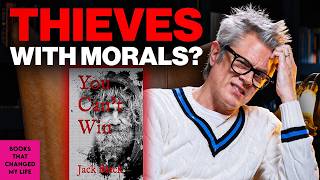
Johnny Knoxville traces how he built a career on failure, from a prank-loving childhood in Tennessee to co-creating Jackass. He credits Jack Black's You Can't Win, Kerouac's On the Road, and Hunter S. Thompson's Fear and Loathing in Las Vegas for shaping his "honor among thieves" ethic, and reflects on the line between violence and funny violence in his stunt work.
Chapters
So we're shooting, and I have a sword. So I ran to the back and stabbed the wall, and the sword bounces off the wall and straight into Steve O's back. My name is Johnny Knoxville, and this is the High Five. Do something you're good at. And since I suck at everything, why not try stunts? Because nobody wants to see someone make a stunt. They're only good when they fail. So, yes, I made a career out of failing. Please welcome Gianni Knoxville. Society was a machine geared to grind me to pieces. There was a high wall between me and society, a wall reared by myself.
It's crazy how much of this you know by heart.
It just blew me away. I didn't know people lived like that.
Who was the genius that decided to put you in the new Fear Factor?
You know, I was looking at it kind of like jackass. Like, I can really.
Do you have a general sense of how many times you've been to the er?
Yeah, I don't have access to that. Too many concussions. I've read it so many times, you
can't put it down once you start.
Yeah, I feel really close to everyone in that book.
So the big question, how did you can't Win by Jack Black change your life? Please welcome to the show, Johnny Knoxville.
Thank you. Thank you.
This is not by Jack Black, the actor. This is by Jack Black, the outlaw.
Yes, yes, correct. You have to explain that to people.
I think actually Jack Black, the actor's name is like Thomas Black. It's not his name.
I, I, I do not know. But, yeah, that is one of my favorite books of all time. Like, one of the books that changed my life, aside from this, was on the Road by Jack Kerouac and, and he and Jack Black inspired a lot of the beats, and specifically William S. Burroughs, who did, who does the introduction? I don't know if he did it in this one, but he's. He, he does the introduction in one of the books of versions of you Can't Win, and he talked about them a lot in Junkie Jack Black, you know, he just started out, his mom died, he got shipped to a Catholic school and was thinking about becoming a priest. That didn't work out, and he became fascinated. His heroes were like, Jesse James and all the Thomas the Coachman who made his living outside of the law, and he kind of just. That's the path he took. And he just hopped trains all over America and Canada and would get thrown in jail, was escaped jail, eventually got hooked on opium and all kinds of things. But he had respect in the underworld. He treated people with respect. And he's a wonderful, wonderful writer. You know, I grew up. My father had all these characters that worked for him, like Big George and Ask Hick and Robert and Woodrow Wilson, Boxcar Johnson Jr. And. And he was, like, the fence for a lot of these guys. My father, like, he'd come home with, like, a box of 80 calculators or weird. That would just go in the garage. You know, we never. He never tried to move. Just. The guy needed some money. One of his employees stole a bunch of. And dad would buy it from him. And there's a lot of that in here. And so I love wonderful, like, rich characters like that I grew up with. That's in this book.
Where did you grow up?
Knoxville, Tennessee.
What did your dad do?
He owned a tire company.
Like a tire shop or manufactured them or something?
No, no, he sold them and repaired them. And he definitely should have been in show business. He would just take over a room when he walked in and was really funny. And he was always pranking his employees, making them Ex Lax milkshakes and sending them letters from. Not from the health department, but from the VD clinic saying they had contracted a venereal disease and they have to come in and last list their last ten partners. Signed Dr. Harlan C. Titmore. And some people would get this. The wives. That's the problem. The wives would get the letter and open it, and it was just like a crude rubber stamp. VD clinic. But it caused a lot of trouble for some certain marriages.
Did he prank you like that?
No, not as much. He did little things. Like, he. He would want me to get up in the morning, and I'd be sleeping, and I hear just a. Like, a bunch of water would hit me in the face. And I'd be like, what? And then he would just light into some story, and I'd be like, give me a second. And when I got older, like, in, like, high school, junior senior or something, remember I was sleeping on the couch, taking a nap, and he went to the microwave and, like, heated up a hot dog to, like, room temperature. And I sleep, and he brought it through my lips, and I woke up, and he acted like he was fixing his shorts. Yeah.
What did mom do?
Feel. Don't do that to that boy.
Did you have siblings?
Yeah, two older sisters. And my father told me that I was one of them Eminem babies. You came between menstruation and menopause. The best part of you. Best part of you ran down your mama's crack and mom. The worst part, mom would go, oh, honey, it did not. And by defending that, it like, made me think that I wouldn't have been born with knock knees and asthma and all that.
So the pranking is genetic, I guess.
Yeah, yeah, yeah.
The apple doesn't far fall too far from the trees.
Yeah. I just looked up to him and all the characters he had working for him.
Very similar to what you've built. Like you're kind of a curator of characters.
Yeah, yeah. You're the ringleader, right? Yeah, I kind of did the same thing.
What kind of a student were you?
Until sixth grade, I made straight A's. And then in seventh grade I just like, what am I doing? I don't really care about any of this. And after that, it was just. It was a social thing. School. I didn't. I just. I don't know, it stopped making sense to me.
Making sense? Why?
I don't know. I don't know why. I just had this epiphany that I don't like any of this and just kind of. It was no longer important.
Did you get in trouble? Did you start acting out?
Yeah, I mean, I was reasonably rowdy, but not.
How does that get handled at home if your dad is such a prankster? Like, do you get in trouble or is he proud of you?
Well, it depends on what I did. If I get in a fight in school and get suspended, nobody cares. But if I was disrespectful or something like that, if someone would have slapped me around and I didn't stand up for myself, I would be in so much trouble by my mom. Not my dad would say something, but my mom would. So it was tough for me growing up because my mom was a disciplinarian and she wanted me to behave, but all she liked was misbehaving men. I mean, you met my father. And so I had these mixed messages of like, well, I want to be good because of her, but then it's like she likes everyone who misbehaves. But I never was disrespectful to either my mom or my dad. Like, I never talked back or. But I would go out and get in trouble on the weekends, but not. I wasn't disrespectful.
What were your interests in high school? Did you play sports?
Baseball.
Baseball.
Well, reading, baseball and pretty much drinking on the weekends. And it sounds so bad, but just drinking and hoping you can get in a fight that weekend. It was that kind of nothing to do town or I wasn't creative enough to find something to do.
Yeah. Do you remember the first book you read? Because you wanted to read it. It wasn't assigned.
Oh, God. When I was real little, I loved going to the library and getting biographies on athletes. I really liked that. But I can't. I don't, I don't have access to that. Too many concussions.
So you're in a couple books in here. Did you ever think when you were younger you would be in books?
Maybe like, I don't know, some arrest ledger or something? What books am I in? Well, you.
You wrote the forward for Hunter in the reissue of Fear and Loathing on the campaign trail. Yeah. Which is hilarious.
I love that. Yeah, he. That was a wonderful book.
Let me, Let me read it. What? Just the beginning. We were just sitting here talking about you, and even then we started talking about my needs. And I wanted to. 40,000 candle power, illuminating grenade. Big bright bastards. That's what I need. So if you can get them for me, I might be coming to Baton Rouge to interview imprisoned former Louisiana governor Edwin Edwards. And if I do, I will call you because I will be looking to have some fun, which, as you know, usually means violence. Hunter left me this phone message in the winter of 2004.
Yeah, that was. And I really looked around for those illumination grenades, but it's kind of.
You did.
Yeah. But there. It's like the military has those. I can't really get my hands on those. Yeah. That's another book that changed my life was Fear and Loathing in Las Vegas. Like, I guess with on the Road. I didn't know people lived like that. You know, I was 14. My. I was in a bar with my older cousin, Roger Allen White. He's a singer. I do a radio show with him. And he gave me on the Road, and it just blew me away, and it just gave me this crazy desire to leave. There's a lot of other things out there, you know, just this. I wanted to get out and see what I could muster up.
The adventure and just the, the vastness of the world and opportunity.
Yeah. And just how free they were in free thinking.
Yeah. There's this.
And it opened my mind a lot. And then when I, I think I was around 18 or 19 when I read Fear and Loathing Las Vegas and that book. I didn't know people could write like that. That opened my mind up even more. Those books were very important to me. And then eventually getting to meet Hunter. Well, at first, I, I, I knew a guy who knew him, and I I had done. I guess I was in late 20s, 27, and I had written a thing for Big Brother magazine, a thing on self defense equipment. So I tested a bunch of. On myself. It was in one of the jackasses there. Taser gun, stun gun, pepper spray. And then I shot myself in the chest with a bulletproof vest and that tape. I was like, oh, Hunter might like this. And so I had my friend send it to him and he called me. And I mean, I like the rush of blood that went through me and the excitement. That was a really big moment.
Do you remember what he said?
I don't have access to that. It was very complimentary. And in the thrill of it all, it's jumbled. Precisely what he said. But it was a wonderful conversation.
Yeah.
The second time I met him, he was just, get this guy away from me. I didn't frighten him. You're not going to frighten Hunter. I just annoyed him. And like I had a Muhammad Ali doll and a Joe Frazier doll, like the Viper Room. I forget like 91 just. I was just drunk and annoying and he's like, just get this guy away from me. But then I ran into him years later and it was, was. It was good again.
Well, he's been the guy that people say, get this guy away from me too.
Yeah. I was drunk and pilled up and like, it was totally.
Language he speaks.
It was totally fair what he said. I.
How would you describe his style of writing, though? I know that people say gonzo, but that, that kind of like isn't really enough.
Yeah.
Cause you can't put it down once you start. It's like he puts you in a. In a place and then it just keeps you.
Yeah. He creates such a wonderful world and that participatory journalism style, he just puts himself right in the center of it and he's completely mad. But he surrounds himself with monsters as well. And enough drugs to get you through the day.
Do you think you have to torture yourself to be able to write like that?
No. But I think he was all in. He was very method. Not everyone.
You're in this book.
Oh, yes. Yeah. We had some crazy photo shoots with Terry.
Yeah. What's it like working with Terry? I. I keep these books at home because I'm always afraid an employee is gonna open them up and like, my
God, one time we were shooting with Terry and it was me. Yeah, that was it.
You're on the. You're on the COVID That would.
Is it. That was at his house or his Apartment in New York.
And these aren't like regular nipple clamps. This is like you went to Home Depot and got the things that you hold boards together.
Yeah, he had those sitting around. It doesn't really work with closed pins now, does it?
Not now. After this, no.
But I don't know, it's just like, I. I probably was pretty well oiled in that photo too, and just saw something lying on the ground. But, I mean, he. He recommended things too. But I remember I was. We were. We had. For the second movie Jackass. We were. Terry did some photos for us, and that's when everyone was on their worst behavior. At the end of that film, we. We put. We took. We put Steve O. Away not long after that. But everyone was rather inebriated and pilled up. And for some reason, I was dressed like General Patton from the waist up, in boxers from the waist down. And Steve O. Was huffing nitrous. Knee it. That was the time when you would walk in his apartment and the whole floor would be covered with the cylinders. Was just one after another. It was very unhealthy. He did the worst, most unhealthy drugs when he was. And so we're shooting. I have had a. I'm more than halfway through a bottle of whiskey, and I have a sword on me. And I remember trying at the time, I was wanting to secure a perimeter around Steve O and I. So I ran to the back and stabbed the wall. And the sword bounces off the wall and straight into Steve O's back, like, this far from his spine. And Steve O. Looks up at me and goes, ow. And I was like, oh, no. Because it went in, like, that far. I could see, like, down into his back. And I'm like, man, I got. I got to get out of here. I got to get out of here. And like, I was going to get arrested, but I was so disjointed at the time. Nothing ever came of it. Aside from the story. He was fine. But it could. It almost was really bad. We have a lot of almost those stories that were just this close from total disaster.
Do you have a general sense of how many times you've been to the er? No. There aren't too many people that would be able to say no to that. You stopped counting at some point.
I should. I should have stayed in school. Maybe things would have turned out differently for me. I could have named how many times I've been to the ER.
How old were you when you read this?
25. Ish. My friend John Lenson gave me that book. He turned me on to a few great books. Ask the Dust. Gian Fonte. A book called My Friends by Emmanuel Bove. Thank you, John, for a lot of things, but that one, I just. I. I can't. I've read it so many times. You know, it's one of those books that you just. Or me, at least I'll go back and reread just because I want to be with those characters again. I want to hang out with Jack again and hang out with Foot and a Half George and the Sanctimonious Kid and Salt Chunk Mary, who could say no quicker than anyone, and none of her nos ever meant yes when she sold everything from a barrel of whiskey to a baby carriage.
When he told you about it, did he have a specific reason why he thought you would like it, or it was just, hey, I read this and I liked it.
Well, he knew I read a lot, and we had similar taste in who doesn't love an outlaw?
Yeah. So that's kind of the story, right? He's an outlaw.
He didn't start out that way, but, yeah, he ended up living outside of the law for his entire life until this guy, Fremont Older, who ran a newspaper, just came in and really helped him. This guy helped him for, like, went out of his way to help Jack. And Jack's like, all right, I'm going to go beyond the straight and narrow for the rest of my life because of this man's kindness. He was. He lived out his life on the straight. He ended up getting shot because he went to work at Fremont Older's newspaper. Was it the Call? I forget the newspaper he owned, but there was a war. There was a. Like, a friction between the two newspapers in San Francisco. And Jack Black worked for Fremont, and some guy came up and from the other newspaper, rival newspaper, shot him. And then. But when the cops came to ask, who shot you? Jack said, I don't know. They brought. He was in the hospital. They brought the guy that shot him to his room and said, can you identify this man? And they brought him up close. And Jack said, no, sir, I can't. The cop was, like, pissed, you know. But Jack did lean up and punch the guy in the nose.
So he dedicates the book to Fremont
Older and Stick Sullivan, that old judge, Frank H. Doon.
To the unnamed friend who sawed me out of a San Francisco jail to
that dirty, drunken, disreputable beggar, Stick Sullivan, who picked the buckshot out of my hide in Baraboo, Wisconsin.
Yep.
Yeah. And then. Is that the one with William S. Burroughs forward? I brought one that has the forward. It's. It's wonderful. He loves. Loves Jack Black's writing. And he ends the forward with, like, something like in the words of poets and writers and the pictures of painters, which I thought was really pretty. Joe Coleman, the great artist. My friend John has a copy of. Of you Can't Win. And Joel Coleman did a painting that was the COVID of the book. That's when I was thinking. I was thinking about that today. I'm like, why don't I have that? It's like, because I love Joel Coleman's paintings and Jack Black. So it's a great error I've made.
Do you think Jack could exist today?
Man, it's hard doing what he did because they would, like, go get some dynamite and blow up a safe or crack it, and they would just leave their tools right there, you know, and then they would get away by taking a John o', Brien, as they called it, which was stealing a hand cart, because all the guys that ran the railroads, the yards. But. Yeah, but it's like, there's so many ways he could be caught today. But if you. I think if you have that in you, you're going to find a way to do. You know, I think he just liked adventure. He just really loved adventure. You know, someone who is kind of like Jack Black, but kind of a more extreme and more violent. But a wonderful writer as well is Edward Bunkard. You know, he wrote Education of a Felon and no Beast so Fierce. And he's a wonderful writer. And he just was getting pinched all the time for this and that. And incredibly smart man. He would sell capers, too, whoever needed a job for. Actually, he. He knew Danny Trejo, and Danny Trejo got his first job because of Edward Bunker. He went. He went down to a film set that Edward Bunker was riding on. He didn't know it was Edward Bunker's. Forgot what he was there for, maybe. I think Danny Trail was sober and he was. Someone on the set, an actress or an actor needed a sober companion. And so he went down there and Eddie Bunker saw him. He's like, hey, what are you doing? Great to see. Because they were in prison together. And he's like, do you. Do you need a gig or. I think it was on an Eric Roberts film because he ended up working on it and teaching Eric Roberts how to box. And then they ended up giving him a role in the film with Eric Roberts. And then it kind of. He got in that in the film world. And he kind of stayed. I'm jumping around, but it is connected. The Edward Bunker, Edward Bunker books is kind of like a modern day Jack Black.
If you could meet Jack Black, what would you ask him?
I want to hear about the conventions. It's where he is in the book. He called them. He called them bums. But it was like the criminal underworld. And they would all meet. The conventions only happened every now and then, take place out. Because, you know, a lot of times the people who lived that life would congregate outside of town in this little clearing in the woods and, you know, shave and drink their coffee and kind of display whatever they'd stolen. And, you know, there'd be beggars there. There would be the tappera tills, the street thieves. Just all these guys would come together. But every now and then it would be a huge convention of them. And he describes those in the book and those sound like those would be amazing to be at and witness.
You wonder how they would organize that.
It just. No, they just. There was no organization. It was just. They just happened. It was just.
How would you get invited to it? Or how would.
You know. It's just like you outside of some town, you know, there was always like they would congregate outside of town. And a lot of these in this wooded area, you know, just five or six or seven of them. Four, three. But every now and then, for whatever the reason, it would just be a whole forest of them. And sometimes they ended. Rarely did they end well. You know, sometimes they ended with someone getting shot or fights were common. But I don't know, I mean, he lived such a life. He would just, you know, he would prowl a house or blow a safe, hop on a train to the next town, or he'd stash his stuff before he left and then hop a train the next town when he cooled off, come back and get his stuff. It's like there's so much to talk to him about.
There's a funny story in there where he escapes and then gets caught again. And then somebody gives him an article in the paper and he's reading it and then he was actually let off the hook.
Yeah, that was. That was when he first met Foot and a Half George. Sanctimonious kid. And like Soldier Johnny. That was wonderful. That was for the. When Smiler, his friend Smiler got killed, they were prowling a house and Smiler got shot and killed. They ended up pinching him because he was staying in a hotel room in town. And they found that address in his Smiler's pocket. But there was a great moment in the book when he just met those guys and he had, he had been a stand up guy in some other. He had known someone there. Like, Jack's a standup guy. So those guys took him under their wing and he told them what happened in their case. And they all looked at him, they're like, you're gonna beat this kid. And he's like. And he felt so good because he felt he had been tried and had been exonerated by these three guys. And it turns out he was going to get out, but he, he jumped, he took off before the, before the judge could give his verdict. So good. It's so good. It's such a wonderful book.
Do you also think there's an element about the book that's, that's speaking to prison reform?
Yeah, because he, he, he talks a lot about the terrible experiences he had and he has a definite sense of right and wrong. And he, he lived, I know he, he lived outside of the law, but he treated the purple people a certain way and. Yeah, yeah.
He also kind of like talks about the difference between Canadian prisons and American prisons. And he, he liked Canada better.
Yeah.
Even though you got the lashings.
Oh, the lashings really did his head in.
That's an interesting thing that, what do you think about that? Do you think that works?
I know because he got like, he
got sentenced to 30 lashings, but they give you 15 up front.
No, that I don't think, I don't think that works. That's like the same thing as violence begets violence, I believe.
You know, but he describes like waiting for the other 15 lashes and what, what kind of a mind that was.
Yeah, yeah, he describes that in great detail. It sounds absolutely horrible. Maybe we'll do that to Aaron in the next movie.
Yeah. It's funny that you're the one saying violence begets violence.
Well, there's violence and then there's funny violence.
Yeah. So there's a funny part in here about honor amongst thieves. And he also talks about empathy and that if you are somebody who commits crimes but you can't see it from the person you're committing the crime against, or you can't see it from the judge's point of view and you can't kind of understand everybody's perspective in the situation. Yeah, you, you're, you're too far gone.
The sanctimonious kid walked him through the rules. They, they robbed a house together and Jack got Held by a few people for a couple of people from the house. And he couldn't. He didn't know where the sanctimonious kid went. And he was about to just give in to the guys and let him pull him back in the house. But then the sanctimonious kid, like, had a. Got a bottle from off the front porch and put it in his coat and said, hey, you know, let the kid go. It's like, you can grab us. You can grab us tomorrow and you can just go call whoever you want. You can just call us tomorrow. And he's like, what are you going to do? Make a big deal out of stuff that's insured? And he was saying all these things, and Jack's like, I didn't know why he was saying all those things. And sanctimonious kid kind of walked him through it, said, look, those people are scared and terrified. You got to think for yourself and them. You know, you plant the seed that's like your stuff is insured. And he said, I told him to go call so they wouldn't come running after us. He also would only rob places and people that were insured. Yeah.
He says a thing about if you don't, if you stiff your landlord, that's wrong. But if you steal to then pay the landlord, he kind of goes through a list.
Yeah, things like that. He had a lot of ways to justify it, but I. I believe he did live that way, though, with that, his outlaw sense of right and wrong.
What do you, what do you personally think about that?
He wasn't violent, you know, and I think he lived the way he lived and you know, it. I. I don't. I'm not judging him. I'm not judging them. As a matter of fact, I love them. I don't know. Some people get by that way, some people get by other ways. As long as you're not hurting anybody. And I know you can argue, well, you know, all kinds of sides of it, but I'm okay with chat.
Yeah, but arguing all, you know, all the sides of really is, at the end of the day, kind of perspective, isn't it? Like, everybody has their own perspective and their own kind of desire in a situation. But a lot of the rules that we live by have been created by us. And power is kind of an interesting part of that, I think.
Yeah, well, Jack didn't live amongst us, you know, he lived in a whole other world.
But that's what's attractive about it, is somebody that breaks out of that mold and doesn't just conform. I mean, I just think there's commonalities,
like just ask the Beat Generation, you know, that this guy is a big inspiration.
But your path is very similar to that in the sense that you didn't follow a normal trajectory and follow the rules, in a sense.
Oh, man, I. I don't know how it happened for me. I did what I thought I. I could do, you know, do something you're good at. And since I suck at everything, why not try stunts? Because nobody wants to see us. Someone make a stunt, at least. I didn't. They're only good when they fail. So, yes, I made a career out of failing. You mentioned the Dukes of Hazzard earlier. There you go.
You're not proud of that one. Don't you think the timing was good?
I don't think so, no. No, I don't think so. But.
But I mean, just in. In society, there's people that kind of follow the direct path and do what they're told and are kind of a medic. And then there's. There's individuals that are more curious and explore more and question things. Right. Don't you think you're. You're the type of person that questions why things are the way they are?
Yeah, I'm a pain in the ass, too. Yeah.
Well, yeah, of course, you become a pain in the ass really quick when you don't follow what everybody else is doing. Right?
Yeah. Yeah. And I have a terrible problem of. I hate if someone tells me what to do. I just hate it.
Do you remember when that started?
Like, childhood.
You know what mine was when. Because I grew up in a. I grew up a missionary's kid in Mexico. And what my parents were telling me to do in the, you know, don't have sex until you're married. Like, all these rules and what they were actually doing and how miserable they were. Even at eight years old, I could just see that they were saying the thing they were supposed to say. But none of it really was lived the way that it was promised. Everybody was miserable. Everybody's lying, cheating. And so to me, it just never built trust. I didn't trust it.
Yeah, I was forced to go to church. A lot of my friends and family are religious. That's. That's. They live that way. It's wonderful. But I remember just not like I just hated it. Yeah, it really. Maybe it started there, like, being forced to go and being told I was going to burn in hell forever. I'm like, am I?
Yeah.
Is that. Is that Is that what's happened? Is that what's going to happen?
Yeah, it just ends up that if you don't have hell, you don't have conformity. Right?
Yeah.
You gotta have the. The consequence, the imaginary consequence to get everybody to toe the line. Yeah, that never added up for me either. The hell, Forever in a lake of Fire was like, seems a little rich. Sucks.
Seems a little rich.
Yeah. But then the love, like,
I don't know.
You had that pretty early, right? That kind of distrust of the mimetic behavior of everybody else.
I don't know, I just didn't like being told things that kind of force fed. Things like that seem kind of big, seem kind of important. Like, I'm seven, you know what the. I don't want. That's heavy.
Getting you early.
Yeah.
Like, hey, get them early.
Yeah.
That was another thing in here. The not, I'm not gonna rob Mormons anymore.
Oh, yeah, that was, that was that. Who said that? Was it Smiler who was like, handle my heart? I'll never rob another Mormon? I think he did that a couple times.
Yeah.
Chinese and Englishman, I never rob. Do you say that about the Chinese guy too?
Yeah.
Did you just say that?
Yeah, yeah, it says, I'll read you the exact quote. I got it tapped right here. He says, when Smiler's good humor returned, he held up his hand. Kid, I'll never try and rob another Mormon. I'll go to work first.
God, the characters, just so amazing. Society was a machine geared to grind me to pieces. Society was an enemy. There was a high wall between me and society. A wall reared by myself maybe, But I wasn't gonna jump the fence and join the other side because I'd taken a few jolts of hard luck. I had that thumbtack to my wall for a long time. Probably misquoted it, but it was close. Yeah.
It's crazy how much of this you know by heart.
Yeah, I love it.
How many times do you think you've read it?
Five times, maybe. Yeah, I feel really close to everyone in that book.
Okay.
I don't know what that means, but.
Well, it means that it made an impression on you.
Yeah.
So the big question, how did you Can't Win by Jack Black change your life?
You know, I feel like on the Road changed my life. Fear and Lowly in Las Vegas changed my life. But in relation to on the Road, like, he helped inspire the Beat Generation, which made it all that possible. And it just kind of stoked my love of those characters and rich characters and the adventure of it all. You know, there's a great book on Knoxville, my Hometown, by Cormac McCarthy called Sudtree. And it's filled with all the same type of characters and characters that my father grew up with. You know, he talks about Chester Holmes and all these guys, and I just. They all remind me of my father and Ass Kicking Robert and Super Dick and Woodrow Wilson, Boxcar Johnson Jr. And Leroy White. And I guess it all reminds me of my childhood and with all those characters. So. Yeah, I don't know if I answered your question, but hopefully I hovered around it.
Yeah. The one thing is, we need to bring back nicknames.
Oh, yeah, yeah. There's always some. A lot of characters hanging around my house growing up. So SD they called him SD for Super Dick.
Did he have a big dick?
Yeah, but so did Big George. He was this big old dude who worked for my dad. And he would drive me around town sometimes. And he was. Big George was also narcoleptic. So he smoked these big cigars. And we'd be at a red light and he'd fall asleep. I'd be with my buddy, would be like 11, and we'd let him sleep through a red light or so, and people would be blaring, and eventually he'd hit on the side of the door and he'd wake up and no matter if it was green or red, he just went back to driving. But he got in a fight with someone over there. Oh, he got in a fight with Ass Kicking Robert over something. And Big George hit him. And you don't want to be hit by Big George and ask. Robert took off running. Big George picks up this 10 foot piece of plastic tubing and starts hitting Ass Kicking Robert with it as he ran. But then the belt on his pants broke and fell down to his ankles. Dad said, you never seen a pecker like that in your whole life. And Dad's like, you should get someone. He goes, you get someone to draw that. And I remember going to. I was like, 6th, 5th, or 6th grade? 6th, 7th grade. And I went to the best artist in our class, Sammy Hill. And I'm like, hey, Sam, will you draw this picture? And I told him, it's like, Big George, his pants fell down, his pecker went down to his knee. Can they could draw that for my dad? So, yeah, he drew it.
What did your dad think?
He didn't make the belly big enough.
Yeah, it's funny, too. Like, so growing up, my grandfather's name was Richard, which then was, you know, you'd Call him Dick. And for some reason, my uncle, he didn't name him Junior. He changed his middle name, but his first name was Richard. And when I was a little kid, you know, when you're a kid, you love to answer the phone, you know, and people would call and they'd say, is Dick there? And I would say little Dick or Big Dick? And people would pause. Like, I never understood why that was so weird.
You weren't being.
I was a little kid. I was just like. To me, it was like big Dick or Little Dick. And adults would, like. It would get real quiet and they
would go to the. That's so good.
We don't call anybody Dick anymore. Like, we don't have that. It's funny.
I don't know what world you're living in.
Well, not that one. Because it is. It is. Like, how do you get Dick out of Richard and all that stuff? It's just funny.
Well, he just rub his leg.
So the. Who was the genius that decided to put you in the new Fear Factor?
I Not sure, but I will say Sharon Levy, who runs Endemall. Like, I was on the fence. I didn't know. And then I met with her, and she's great. Like, she used to be Jimmy Kimmel's publicist, and she was telling me all these funny stories. And it's like the kind of a. She's the kind of woman who, like, she's run this. Running this big company. And you're like, man, how did someone so awesome get in that position? You know? So after that, I'm like, yeah, I'm in. And it's something I think I'm decent at, you know, that kind of thing.
Perfect. Can you tell us any of the stuff that's gonna happen?
Well, you know, I thought when I took the show, I'm like, oh, I can just. These people are gonna be scared, and I can just make things a lot worse for them. Right. You know, I was looking at it kind of like jackass. Like, I can really make that. But then I get there and it's like they were. They're playing for money and. And I ended up, like, bonding with them more than I thought and trying to help them through their fears. I mean, I still with them a little, but I ended up like, guys, what? I just. Whatever you do, don't quit. At least try it. At least do it. Don't. And after we had one person quit, but after that, I said, please don't, and everyone at least gave it a go.
So you're more Like a life coach. You're helping.
I became like a really perverted life coach. Like, here I'm trying to scare him one time, and then it's like, oh,
and I'm trying to go ahead, try the goat semen. It's fine.
Yeah, it's fine. A little salty, but, you know, but I end up really liking the people on the. The contestants on the show. And so, yeah, it was. It was. I had a. More fun than I had anticipated.
I can't. I can't.
I was totally invested with the what. The action and the gameplay and, you know, you watch these shows and like these reality shows and see someone, like, they're leaving the show and they get teared up. I'm like, what? The. Things are, okay, you're going home. It's your. Everyone's fine. But sure enough, a couple contestants left, and I was like, it.
I had.
It was. Had a lot of fun with you. And I was becoming that asshole. I couldn't help it. You know, you get. You develop a feeling for these forever.
You've developed empathy.
I think I always had it. Like, I didn't develop it. I'm not a monster. And you still. You don't see it a lot in Jackass.
That's what Jack said. I was. I almost read you the quote about empathy in there.
Yeah. So, yeah, it was. It was. Yeah, it was a lot of fun.
And then you're doing another Jackass movie.
Yeah. Just. And we just announced that last night, and, boy, has my phone been ringing. Been like, maybe I shouldn't have announced it.
Are you. Are you allowed to do stunts anymore?
I can't do anything where I can get another concussion. Right. I can't. Way over my limit for concussions, so. But I don't care about anything else. I just can't get hit in the head anymore, so. But a lot of other guys can.
You can supervise.
Yeah, yeah. No, it's. They're so fun. They're pure hell for the cast. But they're. They're a lot of fun for me. They're having fun too, so. Yeah, I'm very excited about that. Very excited.
It was great. Well, we really appreciate you doing this. I know you got a hard out, but it was a hard.
What? Hard.
Hard out.
Hey, ho.
But it was fun to talk about this.
Yeah. I. I don't know if I did it justice because I found myself rambling a little, but I. It's. There's no bells and whistles in his writing. It's like, you know, there's no bells and whistles in Hemingway's writing there. It's just simple, yet incredibly smart. And what a life. Holy, there's that old Beverly Shannon, sober and sorry for it. I felt that way. I think I feel that way right now.
We are so excited to announce the Books that Change My Life website. We made a way for you to show your book pride and that you love books. Hats, tees, hoodies. Check it out. Link in the description. Everybody needs a self help hat.







