Kal Penn on "The Amazing Adventures of Kavalier & Clay" || Books That Changed My Life
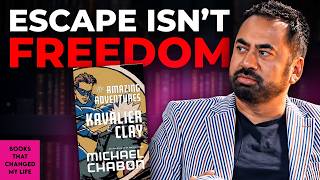
In this interview, actor and former White House staffer Kal Penn talks about how Michael Chabon’s novel The Amazing Adventures of Kavalier & Clay profoundly affected him at a pivotal moment in his career. He describes a visceral reading experience that left him in tears, noting how the book’s blend of early‑era comic‑book culture, World War II history, and themes of human rights resonated with his work on a superhero film and his own artistic identity. Penn also shares his recent foray into stand‑up comedy, explaining how live performance forces a different kind of storytelling compared to scripted roles. He reflects on the timing of the novel’s impact, the lasting relevance of its themes, and how it inspired him to feel “seen” as a young actor navigating comedy, drama, and political work. The conversation closes with Penn mentioning his role on HBO’s Industry and his enjoyment of playing a darker character, tying his evolving career back to the novel’s exploration of complex identities.
Chapters
I sat on the stairs in this apartment that I was sharing with a couple of the other cast members, and I was the only one home, and the sun was kind of coming in. And I remember just like, I couldn't see the words anymore because I was just bawling. And I'm generally not a crier when I read. Like, I love a good movie cry, but I'm not a crier when I, when I read. And so it was a— viscerally, it was a very new experience for me.
Okay, the big question.
Yeah.
How did The Amazing Adventures of Kavalier and Clay change your life?
Oh man.
I'm Chris Collins and you're watching Books That Changed My Life. This week we're joined by actor and author Cal Penn, and he's here to talk about the book that changed his life, The Amazing Adventures of Kavalier and Clay by Michael Chabon. What's your library like at home?
Uh, I live in New York, so it's nowhere near as massive as this. It's a couple art books. It's definitely like the favorites. I also do this weird thing where I keep multiple copies of just a handful of books that I love that I want to gift to people. So like when somebody comes over and you know, you start talking about books, like, "You gotta leave with this." So what are those books? So "The Amazing Adventures of Kevlar and Clay" is definitely one of them. I've got 3 or 4 copies at any given time on a shelf. "The Namesake," which is a novel that It was sort of tied with Cavalier and Clay for my favorite novel. I also did the film adaptation of it, so I'm a little biased. And I actually love the original cover better because my face isn't on it. And then after the movie came out, every paperback after that has your face on it. So it feels a little self-indulgent to gift that one.
That's funny.
But I'm a little self-conscious about that. There's a nonfiction book called The Mole People by Jennifer Toth. It's older too. It's maybe 20-plus years old about people who live underground in New York City, like in abandoned subway tunnels and things like that. What else? Those are probably the top 3 that I've got. Oh, and then my book, my memoir. There's like 50 copies of that that you have to leave with. That's just the shameless like, oh, Oh, this one? This one that I wrote?
Yeah. So this is the book we're here to talk about today.
Yes.
The Amazing Adventures of Cavalier Clay by Michael Chabon.
Michael Chabon. Yeah.
It's a girthy book.
Oh, dude, it's a thick— it is a thick, thick book.
Yeah. So I pulled a couple books, just curiosity.
Yeah.
What is Obama like?
Oh, great.
I have no idea why they did this book.
Sure.
But I bought it because it's signed by both Springsteen and Obama.
Okay.
Yeah, I, I have looked at it briefly. I don't really know what it's about, but one of my favorite books that isn't by Obama but he stars in it is Pete's book. Pete's book.
It's his book.
Have you looked at that?
Uh, I haven't seen the— I have a— he's got a couple of them, right?
Yeah, but this one's like, it comes with a print and it's signed.
I do not have this one.
Pete and Obama had a relationship. Yeah, no, nothing in here is sacred. Look at anything. I don't have coasters at my house.
I've seen a bunch of these pictures before.
But the relationship between Pete and Obama was pretty special.
Yeah, I think they had a friendship.
To make that sort of body of work, you would have to really have some sort of intimacy with the person.
Yeah, I would say so. A trust and Pete Souza's a great guy, like, yeah, incredible, incredible photographer, um, but also a great human, um, who I think was very attuned. I assume he writes about this too, but just very attuned to the history that he was capturing, but also the story and emotion behind it. So when I, when I worked in the White House, there were, um, I assume they still do this, but there are, uh, jumbo prints from the White House photographer for the previous week, basically. I think they rotate. Yeah, they rotate every week.
So the photographer prints some of these photographs.
Yeah, they're called jumbos. They're like maybe 11 by 14, like massive prints all over the West Wing framed. And the idea there is that obviously for staff, but any visitors that come through, you're just kind of always reminded of, oh yeah, this was last week or this was a big, you know, some of it is big moments like signing a massive bill or having a state visit. But then there are others. And Pete was especially really good at this, I think. That were just really human stories. So maybe you had a kid, you know, like a 7-year-old who happened to come in on a tour of the West Wing and happened to run into like the First Lady or the President, and there would be a story behind that. I remember, I'm going to paraphrase this wrong, but there's a beautiful photo of a young kid in the Oval Office. I can't remember how he came in. I think it was in the Oval. Young Black kid and said to the president something like, "Oh, your hair's like mine." And so he's like kind of touching his hair, which, you know, usually you hear those stories in ways that aren't great. And so the visual of what that actually meant, not just for that kid, but really for anybody that you're coming into the Oval Office and you can have that conversation and that reassurance was something that Pete, you know, Pete could capture in a way that, He doesn't set up those stories, but to be able to capture that in a particular way I thought was really, really special.
I mean, Pete's a storyteller.
Yeah, yeah.
Through and through. Yeah. What, what did you learn from Obama?
Um, oh man, I've never been asked that. Thank you. What did I learn from Obama? Uh, probably, um, patience. I don't know if that was directly from him, but you know, uh, why patience? Because I'm an actor first and foremost, right? Um, I mostly do— I'm either writing, pitching, producing, doing things that are commercially viable generally. Love theater, love smaller independent projects, but generally I've made my career out of doing things that are commercial, which means like you're aggressive at getting something done that you want to get done, and you're generally in the driver's seat enough. Like, you need a studio or an executive to say yes or no if you're pitching a project. I took a 2-year sabbatical and I worked in DC. I was a presidential aide to Obama, and that was the first time that you're met with, like, you know, in a healthy democracy, government is actually supposed to move relatively slowly. There are checks and balances, you know, there are 3 branches of government. You can't— it's not a light switch. It's not like selling a pitch for a TV show because people feel like this idea is super hot right and we want it on the air in 6 months. It's not that. It's actually the opposite of that where you need to build consensus and you need to work within a system. All of which, by the way, incredibly frustrating if you're not used to that, but also super eye-opening. So that's why I say I feel like I had to learn a certain amount of patience in a job like that.
One of my friends from the CIA kind of explained that from their perspective is other countries like China and Russia will have a 20-year plan. And in the CIA, because the president sets the agenda, it's new every 4 years and we don't play the long game even though the long game is the game.
Yeah.
And so our democracy is kind of interesting where you only have 4 years, but it's a long tail kind of situation in that way too. Yeah. That's interesting.
Institutional memory is different. Also, you're comparing Russia and China to a democracy like ours, so it's automatically going to be different. But you're right.
But it is a disadvantage when it's head to ahead with somebody who's playing a longer— they just got to wait 4 years.
Yeah, yeah, yeah, yeah, yeah, yeah. And that's why, I mean, traditionally we don't— we tend to not rip up agreements that previous presidents have made. The, you know, the last 8 years is a very different scenario, but historically you kind of don't because then you ruin American credibility knowing that it politically can change every so often, right? So you kind of adapt things, but you don't just outright necessarily erase them. It was interesting, dude. I loved my 2 years there.
And how did it change you?
Um, I think it made me more patient for sure. I think it made me— this is going to sound super hokey, especially in a world that's as polarizing as ours right now, but it really made me hopeful at the possibility of things. Because, you know, the things that we all know are whatever you see trending on social media, if you still watch cable news or anything, you know, the doom and gloom, all of it is clickbait. As people who work in the media, you gotta send something out there that's gonna make somebody click on it so you can make your ad revenue. That's generally what they do. It's not a conspiracy theory, it's just the business model of a privatized news stream, right? So I was working in the public engagement office, not in the communications office, not in like high-level policy. I mostly worked on outreach to young Americans. So what that meant was that I got to meet with and see people who might have disagreed with the president, but were coming into the White House to either air a grievance or to talk about a policy thing they cared about in a way that you just don't see in social media or on the news. And that was really reassuring. And I'll give you a couple of examples, like, you know, again, this is a long time ago, but, um, we had young evangelical conservative Christians who had come in to meet with the White House about climate change. Now they disagreed with Obama on like 99% of everything else, but their view was God put us here to take care of his planet. And so we agree, the liberal president, on climate change stuff. So it was like, great, well, come on in. Let's have that conversation about the thing that we agree on. Something like the repeal of Don't Ask, Don't Tell. Young Republicans at the time really agreed with young progressives on wanting to repeal Don't Ask, Don't Tell. You should be able to serve your country regardless of your orientation. Older people were the ones who had a problem with it. Like in both parties, obviously older Republicans more so than older Democrats. But so I thought it was like just very interesting. And, and the end result of that was I kind of felt like, oh, this is a really cool driver's seat view of what can happen when people actually try to do the right thing and have a conversation with people they disagree with in a way that isn't combative.
How old are you?
I'm older than you think I am.
Well, I'm 54.
Okay, I'm 49.
49. When I grew up, you could have conversations about politics and the issues without having to join a cult.
Yeah.
And now it's like, you— if you, if you have an opinion that sides or, uh, is counter to, uh, you know, one of the sides, you're automatically in that cult, even though you might not agree with anything else.
Yeah.
You know, and if, if you're issues-based I was raised in a household where it was vote for the person, not the party. And that's interesting that that was your experience is really the thing that stuck out to you is the commonalities that we have more than the differences. Yeah.
And I mean, to your point, I'm also of that generation, right? I don't identify as a Democrat even though I worked for a Democratic president.. And I think my, my view is very similar to kind of what you described. It's not very tribal. It's, I'm generally pretty open to like, actually what that woman is saying has some merit, you know, just cause we disagree with the other stuff she is talking about. Like we shouldn't completely abandon that. Maybe there's an idea in there. So I think you're right.
It's pro, you know, I'm always just fascinated why people think the way that they think. Same.
Yeah. I also think less people necessarily do. One of the big differences now I think is, I do a lot of college guest lectures and stuff and people will ask a question like, "Do you have any advice on talking to somebody who's like completely disagrees with me politically?" And I think it's relatively easy. Look, I'm an actor. I'm in a position of privilege financially and otherwise. It's very easy for me to be like, have 2 beers with somebody you disagree with. Usually this is my answer. Have 2 beers with somebody you disagree with. Don't have more than 7. Because like, that's when you'll actually get into a terrible fight. Right? But that said, I think it's easy for somebody like me to say that because if the person that you're disagreeing with doesn't believe in your right to exist or wants you put in a cage and removed from our country with your family, You can't really have two beers with that person to like talk it out, right? It's a really, the idea of privilege goes a long way in being able to have those conversations. Generally, if I'm speaking to a group of college kids, they also share some of that privilege. So I think sometimes the onus is on those of us who have access to those conversations to kind of help build some bridges and maybe move the needle a little bit. I might be super naive about this, but you know, I am old enough to think that maybe that's, maybe that's a path forward.
That's how I, I will, you know, I would like it to be. I'm always surprised that people will throw me into one side or the other based on a conversation that we'll have. Yeah. And how wrong they get my opinion. It's just funny.
Yeah. It's— I mean, especially in what we do, somebody will take a little clip of something or—
I mean, I have, I have the Shepard Fairey Hope signed and we have a building on it on Hope Street a couple of blocks away. And so I call it the Hope Building. I have that Obama. But I also have a signed MAGA hat.
Yeah, yeah.
Like, I'm a, I'm a fan of presidents in America and, you know, and then issues are a secondary sort of thing. But people will, if they saw one, they would assume if they saw the other, they would assume.
Yes.
It's like you have no idea what this poster meant at this time during society. Yeah, it's, it's one of the best pieces of propaganda we've had as a country.
Right. For sure.
That Shepard Fairey did.
Yeah. Yeah. I have a signed Dick Cheney book on my shelf that often also gets a similar like, "Oh, these are— Whoa, why do you have—" I'm like, "It's a signed Dick Cheney original. What do you mean why do I have it?" No, I'm not a Dick Cheney fan, but it's an interesting book to have on your shelf.
Did you see this Chris Anderson? No. You're a fan of photography, right? Yeah. So I don't know how this got approved, how they let this happen, but Chris Anderson was not a fan of Trump and they— he took these pictures that make them literally look— so just thumb through it, but it literally makes them look like criminals, like they look like a mafia. But the power of photography and Like, just how you didn't see any of this in the news. No, these are for like a, you know, for a week it was in the headlines and then like anything, it passes.
But I mean, the Rubio one is the only one that's— I'm a fan of both in photography and then also in, in film and TV characters. Like, characters have to be flawed to be human, you know, they can't just be just to be interesting, they have to be flawed, right?
Yeah.
So these are obviously, these flaws are interesting. I mean, the Stephen Miller one looks—
not sure. Bizarre. Yeah, it looks like an—
I'm just gonna say bizarre, but the Rubio one so far is the only one that kind of looks vulnerable. The others just look insane. But how does this happen?
How do they let this happen?
I don't know. You should ask them. Yeah. Trump books, but the photographer.
Well, and I'm a fan of his work. One of his books, which is his daughter and his wife, and they're both beautiful, but he kind of documents her and then he writes this thing at the end that is just beautiful.
Very cool. The stopping of time idea is really cool.
Isn't that beautiful? Very. That's the same. Interesting. Same.
So what's his, what's his note after that shoot?
Um, I, I mean, I'm just reading it in the news, right? So he's— I'm not texting him directly or anything, but, um, I think he was surprised I let him do it. Like, he was like, no, I got a weapon in my hand, and if you're going to let me use it, I'm going to use it. Yeah. He wasn't apologetic. Great. Yeah. And, you know, it's, it's art. It's high art.
Yeah.
He's really talented.
Yeah. It's interesting, dude. There was, when I guest hosted The Daily Show for a couple of weeks after Trevor Noah left, And, uh, my first guest was President Biden, who was still president at the time. And my goal in that interview was not politics, but it was process. So I thought it would be interesting to ask a sitting president about who, what, where the political pressure lies behind the scenes to get you to do things or to pressure you to do certain things that either you didn't want to do or that you wanted to do and needed political capital to spend. I didn't articulate this before the interview. So the interview comes out and half the people love it. The other half are like, what is this softball nonsense for this interview? Which by the way, very fair. I went back and I watched it and I was like, yeah, I think I needed to set up the purpose of this interview. This was not a New York Times, Politico, CNN, what about the time you said this and this? And obviously Biden was old and not fully with it, I think. And you can tell there are inconsistencies in what he's saying anyway. You've got, you know, 14 minutes with him. So as somebody who's not a journalist who wants process, in my head I'm like, oh, I should push back on that. I should push back on that. I should push back on that. And if I do that, I lose 6 questions about process, which is the point of the interview. So I also think with a lot of like, now that so many people are doing, you know, podcasts are where we meet a lot of people in elected office or in the arts. It's not just with people who are trained journalists. Journalists, it's opened up this whole thing of, do we know what the purpose of the interview is? Are there any checks and balances? There were none in the Daily Show thing I did, but that also wasn't the purpose of my interview. So in hindsight, obviously if I had to do it again, I probably would've split the difference and A, got, you know, guided the audience through what I was doing and B, pushed back a little bit, a little bit more. But those are such interesting things now compared to like you were saying when, when we were younger, or when we were kids, and it's really you're getting your source of information through one general lens or one scope and not really direct, not necessarily through people we trust in video pods or audio podcasts or any of that, right? It's not— it wasn't really cultural tastemakers who were necessarily the filter through which we were watching things. And I think it brings around questions of purpose and trust and stuff that I think of. I'm really interested in in all of that.
Yeah, well, it's changed so much too, right? Because a lot of people watch their news by watching somebody else tell them about the news. Yeah, it's a personality-driven industry now. And so like if you're, you know, well, let's say just Megyn Kelly or whatever, you're watching Megyn Kelly tell you about the news. Yes. Where like when we were growing up, you would read The Wall Street Journal And it was journalism. Now you read the Wall Street Journal and you're 3 paragraphs in, you already know the writer's opinion and which way they lean.
Same with the New York Times. I mean, it's been disappointing the last couple of years.
It's rare I'll finish an article because I'm like, I get it. You don't like this thing.
You are really pushing hard on this opinion disguised as news.
And we're 3 paragraphs in. Yeah, yeah, yeah. It's not storytelling like it used to be. Yeah. Yeah. And so with that experience with Biden is in a sense it's the form driving the function, right? It's like you only got 14 minutes. Yeah. And then you're curious about the process and the system, but that is suited more for a long tail, hour-long conversation like we're having.
Yeah, I think that's right. I also just think, you know, like I've hosted a bunch of stuff and my strong suit can be interviews, but not— I generally try to do firsthand things. So for example, I'd rather try to interview, like on my podcast, for example, I try to interview an expert in the thing that we're talking about, not somebody who's a talented writer who researched the thing we're talking about. And one of the challenges that I've faced with that is not everybody who's excellent at the actual job is good at this. No, they'll just say yes, no.
And you're like, well, Yeah.
And I, I think with politicians, or at least with the Biden interview, one of the things that was very apparent as we were doing it is you don't become president because you're not skilled in something like, you know, love him or hate him. And I have complicated feelings as well, but you're, you're good at deflection. You're good at answering a question that you want to answer, even if it's not the question that was asked. Um, you're good at wasting time by being charming. Because you know that the person asking you questions only has 15 minutes or whatever. So there's a whole skill that really made me, A, respect traditional journalists a lot more because they just sort of get into it unapologetically. But it also made me kind of think, to your point, like I'm a big fan of process. I like to look at something and go, you know, I alluded to the way that government's working today is not normal in a healthy democracy. Things shouldn't happen only through executive order and shouldn't happen as quickly as they're happening, there need to be checks and balances. I'm the first one to say it oftentimes also moves way too slowly when something actually needs to get done. But I look at that and I think like, well, what's the, uh, what's the way to explain to somebody, um, why certain things are happening the way they are right now versus why were things happening slowly back in the day? That's not something you're getting from a very talented combative political journalist who would do that interview and get information out of it, but you wouldn't get the institutional memory out of it. And I think a lot of presidents have been quite good at describing that institutional knowledge afterwards when they write books, you know, and, and those— they have a chance to reflect and look back and say, here are the things that worked and didn't work, and they can be a little bit self-critical. That happens less in the moment, but And I guess it probably happens less kind of unless you're getting a long-form conversation.
Ryan here showed me a quote that I think you'll like about systems and process that has really stuck with me. And it's by— he was a Canadian guy, Anthony Stafford Beer. And he says, the purpose of a system is what it does. The purpose of a system is what it does. There is, after all, no point in claiming that the purpose of a system is to do what it constantly fails to do.
Say that again.
There is, after all, no point in claiming that the purpose of a system is to do what it constantly fails to do. Oh, yeah. Yeah, sure. The purpose of a system is what it does. Sure. I mean, I'm, you know, my background is fixing businesses and it's all process and systems. And so I'm fascinated by that too.
It's not to say it's not malleable though. You know, you can— I guess that question though is what are the guardrails on the system to be able to change it and work within it versus this thing just needs to be scrapped?
And well, I mean, my context is I live in L.A. Yeah. And in L.A., we're taxed and people are politically, you know, crazy about different things. Yeah, but you call the police and they don't come. We don't have water to put out a fire. Yeah, the homeless guy steals wires off of, you know, from, from a power pole and the power pole doesn't get fixed. Yeah. And the lights are out on the street for a year. Yeah. Like just the basic stuff. Yeah. Yeah. And so we can't pretend that it's working when it's not working. Yeah. And you want to— I mean, I don't know what they want to distract me with, but I just keep coming back to, you know, the basics need to— there needs to be water for the fire department. We need more police. Yeah. Like, whatever you're doing spending money on homeless isn't working, but you got 8,600 police to police 12 million of us.
The numbers don't work. That's not the system as much as the will or lack of will to allocate the funding within the system. Like, it's broken.
Well, yeah, but what happens is when the system breaks, they treat the symptom— not the— they're treating the symptom, not the cause. And that's what we're dealing with, is everybody's polarized by the system, and it's like, hey, if we all just stood back a little, nobody here would disagree that when you call the police, they should come, right? Yeah. Yeah. No. Right. Okay. Right. Nobody would disagree that the fire department should have water. Yeah. And if the insurance companies knew that it was a risk, we should know it's a risk.
For sure. Right? Yes. I thought you were talking about, so there's, I'm going to paraphrase this because it's been a while since I read this book, but there's a book about Dick Cheney called Angler, which was his Secret Service code name. Real super interesting book. Again, whenever I mentioned this to friends, they're like, you read a book about Dick Cheney? I'm like, yes, you should read things that you don't agree with. You know, you shouldn't just read things that are in your little bubble of this makes me feel good. Anyway, the interesting thing about this book, and again, I'm paraphrasing, it's been forever since I read this, but in, in government there's a, or in the executive branch, there's a thing called the Hatch Act, which essentially says, let's say you're a staffer who works for a president like I was. You're not allowed to tell somebody to lobby a different branch of government in a specific way because it's against this thing, this law called the Hatch Act. So for instance, I would have young people who I would meet with and they would say, we really want the DREAM Act, which was a bill that would've provided pathway, a pathway to undocumented young people to get status. They would say, we really need the president to push hard on getting that bill passed. What I couldn't say was, here's a list of the 7 Democratic senators who are probably gonna hold up this bill. You should go protest outside their office and lobby them because the president's already on your side. All I could say from that is the president is on your side. There are other pressure points in this town where you should make your voice heard. That was all I could say, which is honestly ridiculous if you don't know politics well, right? Yeah. How are you gonna decipher that? One of the interesting things about Angler was apparently Cheney would say something like, you know, because of the Hatch Act, I can't tell you to call these 7 senators who are probably gonna hold up this bill because I wouldn't be allowed to do that. So I won't tell you to do that. Instead, I'll just say there are other places in town where you should make your voice heard. And I read that after I worked in government. I'm like, that was a thing I could have done? My job would've been so much easier. We could've gotten so much more done. Now the answer to that question, if you had like, Obama had a whole bunch of ethics rules that neither Biden nor Trump had. Among them was take this seriously and don't violate the Hatch Act. There's no real enforcement mechanism for the Hatch Act. It's basically up to the president how you're gonna penalize somebody who violated it in your name. The kind of the culture of your administration, right? So like, this is sort of to your point about a system. It's like, well, if there's no actual consequence and it's just based on the ethics of the person who's your boss, then it's pretty rare that you're going to have a boss who's going to want you to follow the rules. You're just going to have bosses who are in various stages of, I'm going to look the other way kind of a thing, which is why the Cheney thing made a lot of sense to me because it was like, well, here's the loophole. I'm just going to use this loophole. And so within systems, I'm also very interested in kind of that whole thing. And it's also, I think, tough to explain to somebody who goes, how come, you know, the current administration is able to do things so rapidly and the one that you worked for refused to do things that rapidly? And there are sometimes reasons like a thing like the Hatch Act and sometimes, you know, various other simple or complicated answers based on these obscure rules that where— because we don't really have civics education in our, you know, in our country. I certainly didn't really. We don't know all of these things.
Yeah, that's fascinating. I thought it was interesting. Did you read Jared Kushner's book?
No, I would if it was provided for free. I guess I could go to a library.
No, it's worth it. It's worth it. Yeah. No, kind of to your point, like, yeah, there's— he has a different perspective on things. And he was used a lot, like he, he was doing a lot of heavy lifting, which— oh, interesting. You never knew from the outside looking in. Yeah. Yeah. I will. It's fascinating. Yeah. No, I've recommended it to so many people and I've yet to have anybody actually read it and talk to me about it.
Because when did it come out?
It's probably like 3 years old. Okay. So I don't know, it's been a minute. It's good though. Cool. I would read that Cheney one too.
Angler is excellent.
It's a great read. Fascinating. Okay, let's talk about The Amazing Adventures of Cavalier and Clay. So for somebody who hasn't read this book, doesn't know anything about it, spoiler, spoil it. What is it about?
It's basically, it's about two cousins who start a comic book comic book line towards the end of World War II, middle, middle and end of World War II. And so if you, if you like history, if you like comic books, great love stories and relationship stuff in there, they're in their, you know, early 20s, I'm guessing from, from what I remember. It's just an epic, epic novel. Now I will say I'm, I am less of a history buff in the sense that some of the— the first, like, I mean, it's a thick book, like you said. Whenever I give this to people, I'm always like, you got to get through the first 140 pages. Just promise me you won't put it down for 140 pages. It can be a lot if you're not— you—
but the setup is— is what happens in the first 140. He didn't reread the first 140.
I just got, got into it. No, uh, it's—
but so Joe Cavalier grows up in what country?
In Prague. In Prague.
And then escapes. Escapes. Which is a metaphor kind of throughout the thing, the magic in escaping.
Exactly. And what are we escaping and what are you escaping from? And so he leaves, comes to Brooklyn where he lives with his cousin, Sammy Clay. And Sammy realizes that Joe is very good at art and they decide to pitch a comic book to Sammy's boss because he was working, essentially working for a comic book company at the time. And they give him a shot and they write all of this, all these, they write this comic, The Escapists, together. Meanwhile, Joseph is trying to get his brother out of Prague. He falls in love with a woman who you find out later he has a kid with. Sammy is trying to figure out his place in the world. He ends up falling in love with a radio actor who plays the lead character in the radio adaptation of the comic book that they end up writing. Like, it's truly this crazy epic.
But, uh, when Joe goes off to World War II because he signs up for the Navy—
Joe signs up for the Navy because— so Joe's, uh, Joe's lady Rosa, um, finds a way for Joe's brother to get on a boat and escape Prague. And Joe finds out that the Nazis sunk the boat and his brother died. So he kind of loses it and enlists in the Navy and just goes off.
And so then Sammy marries her. Yeah, Sammy marries her. Raises his kid in a sense. Exactly. But then Sammy really truly in the end is gay. Yeah. And they end up kind of like getting back together in the end, right? Yeah, yeah, yeah, yeah.
It's a— and there's a lot of— without the— it's not a full circle feel-good by the end of it thing either, you know. Um, Sammy and, and, uh, Tracy break up at a certain point, um, and then at the end he kind of goes— Sammy goes off to LA to become, I think, a TV writer. So there's a lot of loss in the book too, but in a way that I thought was very, just very human. The joys and the sorrows in that are gut-punchy in some ways.
Yeah. And so there's some big themes in this. Yeah. Right? So one is family and belonging. For sure. Right? Then you have identity and persecution.
This book was recommended to me at it was kind of a, a crazy confluence of things. So I was filming, I had a very small part, I got cut out of most of it, but I had a part in, uh, Superman Returns, the, um, I think it was 2006, uh, Superman movie where I played one of Lex Luthor's henchmen. So I'm down in Australia for like 4 months shooting this thing. There was a whole subplot to my character. And, uh, um, anyway, ended up getting cut from the final version, but I had a great time on the movie. I think I have 2 lines left in the, in the film. So this audition comes through, and my manager at the time said, you're, you're going in to meet for the new Superman movie. They love your work from the comedies you've done and are interested in you as a choice for one of the bad guys. We don't know who. You have to go into Warner Brothers you'll meet with the assistants in this outside office, you'll sign an NDA, and then you'll wait, and they'll probably either give you the script or bring you in to meet with the writers and the director to really talk about what, what they've envisioned. It's one of those two things. I'm like, okay, cool. So I drive to Warner Brothers, I, I go into this office, there are three super young guys in the, you know, in the assistant room. I signed an NDA, and then these three guys start just casually asking me about comic books. And one of the things I've always been kind of infatuated with, with comic books, like jazz music, like rap, like a whole bunch of other things, is that historically, you know, when this stuff first came out, it's the first thing that parents and churches and leaders would say, this is the reason our kids are dysfunctional. It's 'cause they're reading these comic books and these comic books are putting ideas in their heads. Right? There's a long list of things that we point to throughout history. So that was something that I really thought was cool. And one of the things that I was geeked out about, like, I get to audition for a Superman movie, and I secretly, like, really like the history of comic books and how that ties into Warner Brothers making a new one that I happen to be the right age to audition for. Anyway, for an hour I'm talking to these guys, and I'm thinking, like, at some point the writers are going to come in, right? And then the meeting wraps up and I'm like, oh, you guys were the writers. There was no— I didn't like IMDb what these guys looked like, which was stupid. Like, you should always do your research before a big meeting. And I walk out to the car and I just call my manager and he goes, what just happened? I was like, I'm so sorry. I really screwed this up. I didn't even— I spent an hour talking to them about comic book history and like my love of Superman and the earlier movies from when we were kids. I didn't look up what they looked like. And he goes, okay, well, in the future you should do exactly this because they just immediately called with an offer for this movie as you walked out the door. I was like, what? That's not possible. I screwed this thing up. So coming back to this book, I go to Sydney, I'm shooting this thing. Uh, Dan Harris and Mike Doherty are the two guys who wrote, uh, Superman Returns along with a whole bunch of other, you know, X-Men and a bunch of other great movies. But Dan especially said, "What did you think of Cavalier and Clay?" I can't remember how it came up, but I said, "I haven't read it." And he's like, "You haven't read it? Especially now when you're filming Superman Returns? Like, you should really read this book." And I think he gifted me a copy of it. And I read it, first 140 pages, I was like, "I don't know." And then it like, immediately you turn the page after that, that first couple sections and it flies. And I, I just, I loved it. I loved it for the comic book reasons, for the, for the history, like you said, for the, what are they escaping and fighting against? Um, I sort of figured my sexuality out later in life. And so I remember reading the like Sammy Clay, Tracy Bacon stuff. I was like, oh, this is so cool. Like it was just at the right time in my life. Personally, artistically, you know, fighting bad guys kind of a thing. It was, you know, I guess 2 years after that that I started volunteering in the Obama campaign. Now, just to be clear, because I know how clips get used, I'm not gay because of this book. I didn't go work for Obama because of this book.
It just so happened that, like, how would we edit that together?
Didn't do the superhero movie because of this book, but It just so happens that around that time in my life, it was this perfect storm.
Oh, it's just a great book.
Of an awesome book that resonated with me for all of these different reasons. And there's a lot going on. There's a lot. There's a lot. And just to state the obvious with books like this, you know, I mentioned The Namesake to you when we came in. And one of the reasons that's always at the top of my list also is the writing is super intimate. And, you know, It weirdly reminded me of when I applied to drama schools, one of the monologues I would do was the beginning of Chapter 3 of The Catcher in the Rye. And I know people have strong feelings on this book one way or the other, but the whole thing's a monologue from Holden Caulfield's perspective. And so I didn't grow up a rich, white, New England boarding school kid, but the writing is intimate enough when you're 16 that you like feel like you did when you're reading this thing. So it was a great monologue. The Namesake, I felt, was that intimate. Jhumpa Lahiri's writing just made you feel like you were that person. This isn't in first person in that sense, but Michael Chabon's writing is so intimate that it doesn't matter where you are, what walk of life you come from. I did not grow up in the 1940s. I'm not Jewish. I do live in Brooklyn.
You weren't in the Navy.
You know, I wasn't in the Navy.
You didn't write a comic book.
Yeah, didn't write a comic, but like scenes like things that would never happen to you in real life. There's a scene where, um, Sammy is, uh, he works at the top of the Empire State Building, um, I think on like a night shift, looking through binoculars for, um, for German planes that might come in and bomb New York City. Um, that in and of itself is such an epic thing where you're reading that going, wow, in my early 20s, if I had a job like that, like simultaneously isolating and amazing with an incredible view. You're doing something that is critically important to your city and your country. And then one day Tracy brings him dinner. Like, it's like a pseudo-date at the top of the Empire State Building when nobody else is there. It's just one of those things that you're like, oh wow, Michael Chabon, how did this— how was this in your brain? You know, um, it's, it's filmic. It was— it, it's so, so well done. There's, there's another one with Joseph Cavalier, where he gets sent to Antarctica and only 3— as part of his Navy thing, I think— and only 3 people in the place he's living survive a— not a gas leak, but a— what's the thing that you— Carbon monoxide. Thank you. 3 of them survive a carbon monoxide poisoning, 2 or 3 of them. He gets word that there's a German scientist— German base.
German base on Antarctica on the other side.
Yes.
And decides he wants to go kill the guy. Yes. And he does. And so one of the surviving guys is a pilot, flies him there, kind of dies in the process. And it's him. So this is— this is actually one of the— one of the tabs that we tabbed here. Okay. Because he kills the guy. Yeah. And then instantly regrets it.
Yes. So just the rage, anger, humanity, Antarctica. Really? You're taking us from the top of the Empire State Building to Antarctica, but it feels real and believable.
And then you're talking about somebody who escaped this and came to America, and then his brother dies trying to escape. His mother and grandmother are basically killed in a concentration camp. And something happens with his grandfather, but basically he loses everything. Yeah. And this person on the other side of Antarctica is the holder of that. Yeah. But then when he kills the guy, he has instant regret. Yeah.
There's no satisfaction in having—
Well, how do you unpack that? Like the thing you want more than anything, the revenge, the, the goal, the, you know, whatever it is. And then you get it and there's instant regret.
I, to me, this made me think of, of a couple of scenarios. One, um, I grew up in a prominently Jewish town, so a lot of my friends' grandparents were Holocaust survivors in 7th and 8th grade. And those are unmistakable memories of going to your friend's house and, and hearing stories from them about what it was like escaping the kind of thing that Michael Chabon writes about in the novel. The second is my grandparents, especially on my mom's side, were really active in the nonviolent independence movement against the British in India, which is why I have strong feelings about your Churchill painting around the corner. Churchill in a wedding dress? Yeah, it's great. So the only thing missing is put a bindi on his head to just make it a little But, uh, but so my, my grandfather especially, you know, um, told us stories about being beaten by British soldiers for going to protests, uh, with Gandhi and being thrown in jail multiple times. And I was always fat— really curious about the nonviolent civil disobedience aspect of that, right? Imagine you're 13 years old hearing the story, just going I would have tried to get a gun and shot him in the head.
Like, okay, you think though, okay, you're like, right, our own civil rights movement.
That's it.
Yeah. How do you do that?
So it's just the idea that revenge doesn't— at least the way that I'll paraphrase some of the stuff that I think my grandparents' generation had said was that revenge in that sense makes you no better than the person that you're up against, right? It's the eye for an eye kind of a thing. Um, but that said, you have to be a way bigger person to not feel that revenge and not act on it, I think. So that chapter, I think, like when he, when he does it and then realizes how he feels about it, made me think of, of those conversations.
Yeah, it's a, it's a in Humans are interesting and fascinating. Yeah, but it's interesting too that you would want something so bad and then when you get it, it does— it doesn't change anything. Like, for example, like you want to be successful and have money. Yeah. And I mean, I have lots of friends that have lots of money that are miserable. Yeah, yeah, yeah. And like, just having money doesn't make you— I mean, it solves problems. But it doesn't change who you are inside. Yeah, sure.
Or think about how many friends you have who will say, "I'm moving to this city because I got to change this about my life." It's like, well, if you're not changing the thing about your life inside, which is harder to do than packing up and moving, even for people with the means to pack up and move, yeah, having money makes your life a little easier, but it's not going to change that fundamental thing that you haven't reconciled or fixed yet. That's a great example.
Yeah. So the kind of the themes in there, we talked about family and belonging, Identity and persecution, escape and acceptance. Yeah. Yeah.
The, the, and there are, there are layers of escape and acceptance in that, in the book that, um, a lot of, a lot of Joe's stuff, you know, from the, the loss of his brother, then the complicated relationship with Rosa, you know, who he has the son with, then the relationship with the son himself, then obviously the he's, you know, he, he was a talented escapist. And then the, the comic book within the book is about escape. So you've got the actual human aspect of it, the, um, the literary or comic book within the novel aspect of it. And then there was, um, who was it? It was— who's, who's the, the comic book that in real life that had— it was Captain America punching Hitler in the face, right? Yeah, Captain America punching Hitler in the face for real. So this version of, you know, there are obviously hat tips to, to that. There are hat tips to Stan Lee, um, all of whom have a huge body of work around not fitting in, around escapism, around the pressure that you feel when you're, um, when you're a fish out of water, which applies to, I think, you know, almost every character in that book.
Grab that one and go to the— I think it's the last tab. Let me see. Yeah. So read this last one. So it's on page, is that 623?
Yep. "I have been in the secret business for a long time now, Clay," DC said. "Take it from me, a secret is a heavy kind of chain. I don't cotton very well to these proclivities of yours. In fact, I find them fairly revolting, particularly when I picture you personally indulging in them." Thanks a lot. But I wouldn't be surprised if it turned out in the end that Senator C. Estes, how do you say this? Kefauver? Roll by it. And his pals just handed you your own golden key.
So he'd been outed as gay, right? Yeah. In front of the whole world. Right. And I mean, that's the fascinating part about escape and acceptance in here. Is that at the end of the day, that might have been a gift.
Oh, totally. I mean, there are a lot of those that— right. And the layers of, okay, it shouldn't have gone down that way for him objectively, period. But since it did, what does that unlock for him? You know, what does that open up and why? Yeah.
Do you have a similar experience?
I don't really. And it's a different time that we live in now. Totally different time. Totally different time. I think the— in fact, what's funny is when— it's such a different time that when I wrote my memoir, which is now 4 years old, and I narrate the audiobook, so it's available if you like my voice. But that book mostly is— I wanted to write something that was fun. That you can read when you're at the beach or at the pool or listen to when you're stuck in traffic. The subtext is about systemic change in Hollywood, particularly in comedy, and then in public service. So there's like serious subtext, but really it's a bunch of like dumb dick jokes in the book. There's one chapter, there are two chapters that editors call palate cleansers, which are just like, just write a funny chapter because the chapter before was a little, a little dense. So one was about a buddy's bachelor party at a strip club in Vegas. Short chapter. The other one, equally short, was about how my partner and I met. And it's basically like a bad first date, like first date gone wrong. It's a story about NASCAR and Coors Light, like the least gay chapter that you could probably think of, right? So I put them both in there because I thought they were funny stories. Naively, you know, the book comes out and it's like every article about the book, I spent like 4 years writing this book. Every article about the book is some version of, "Cal Penn writes hilarious memoir about acting gay. Did you know he was gay?" And I'm like, "Oh, that's a thing for you guys, right?" Had I known that, I would've given that chapter to The New Yorker like 6 months ahead of time, been like, "You can get the gay shit outta your system." But jokes aside, we, we do live in a world where if you're in the public eye, even if you've been living your life openly, professionally, personally for a decade or more, it matters to people whether it's the clickbait side of things or genuinely if people feel like, oh, I didn't know that about this person who's already in the public eye. I respect the fact that I was very naive about how that chapter would be received. And what's also funny about it is then the because that got more press than the actual book. Unlike my Goodreads, it's not— I don't have a 5, and the ones who voted it down are like, oh, it's like gay dudes who wanted a gay book. Like, I was told this was a gay book and it is not. It is not a gay book. I'm like, no, it's not a gay book. I can write one of those if you guys want, but this is definitely not right.
Ends up the least interesting thing, the least interesting thing.
But so the point is, I think what But since you asked about the comparison, I think what happens to Sammy in that chapter is such a different time. And my experience is literally the opposite where we get to live in a world where you can choose your narrative and you can, you know, I'm so grateful if I'm obviously not this person, but I'm very grateful for people who have been very dedicated to LGBT rights who've done the real work. I mean, I'm just an actor. I really revere a lot of those folks. Um, I live in New York City, you know, the, the birthplace of a lot of these movements that started with, with trans protests against the NYPD at the time. Not that different than the sting that happens in a book like this. So, um, so kind of a joke answer, like, in real life my experience is the opposite of happens to Sammy. But it's interesting that we still— there are still plenty of people with— without, like I was saying, without the privilege that somebody like me has, um, whose story is quite different from mine. And I'm, I'm glad that we get to support and tell their stories too. Yeah.
Another theme in here is the role of art and, you know, using the comic book. Yeah. As a weapon, kind of like I was talking about with Chris. Yeah, and his photography, right?
Yeah, I, uh, that's, that's one of the things I loved about comic books to begin with, is just the— I'm generally a fan of, like I said, whether it's jazz, rap, comic books, any number of things. The, the thing that we blame video games, the thing that we blame for something else and the line between that. Like for instance, if you're talking about desensitization to realistic violence, there are longitudinal studies about that. And that's a very real conversation you can have about whether Hollywood glorifies gun violence, whether there are more realistic video games that we should put a rating on and put some checks and balances for kids. Great, that's a real thing. Things historically are like, "Nope, jazz is corrupting our kids." Yeah. Why? 'Cause the musicians are Black. Comic books, they're the reason our kids have crazy ideas. Why? Because you're questioning people in positions of power. Like the thematic ones are the ones that I always think are super, super fascinating. And where that line lives is also kind of cool.
Do you remember as a kid when you realized that comedy could be a weapon?
Yes. And I don't think I viewed it as a weapon as much as the opposite. I viewed it as bringing people together. It's such a stupid, fun but stupid story. In 8th grade, I played the Tin Man in The Wiz. You're welcome. And when you were in drama club, this is still the case today. You're not really like, it's not like the coolest thing you can do in middle school. So the soccer players would practice at the same time that we would rehearse for a play and you would see each other. And this is really like 13-year-old hell when like the jocks are kind of making fun of you for being in The Wiz. Anyway, all the students in our middle school were forced to watch 3 scenes from The Wiz in the school play, in a special assembly before the school play went up. And there's a line that the Tin Man has when he gets his heart and he looks at the audience and he says, "All you fine ladies out there, watch out." And it's meant to just be this like sweet kind of thing. For whatever reason, because I was so nervous, you've heard this phrase, actors are like in the zone. So it's packed, 500 kids, all of whom were gonna make fun of me. Later on that day. And I walked to the edge of the stage and I go, all you fine ladies out there. And with this like weird bravado, I did a pelvic thrust and then I go, watch out. And the crowd went wild and people were applauding. And on the bus on the way home, all of these, all these kids were like, that was so awesome. That was so good. You guys were also really funny. We didn't know you were doing that. Now, even at 13, I have the words to describe it now, but like in my head, I remember thinking, sorry, the onus was on me to not get bullied. Like, fuck no, the onus should not be on the person getting bullied to not get bullied. That said, it definitely also showed me like, you had such preconceived notions going into this and all I had to do was suspend your disbelief and make you laugh and it changed your mind about 25 13-year-olds, it just changed your mind completely. So there was a magic there that I experienced that I really felt got bigger and bigger when I had the chance to do comedies. And the types of comedy that I do tend to not be— they don't really punch down. They tend to not make fun of other people. And what I like about that, like Harold and Kumar Go to White Castle came out 20 years ago, and when it came out, the traditional studio thinking was Uh, guys who look like me and John Cho can't open a studio comedy. And the movie tanked at the box office. And so all these guys were like, see, we told you. Um, then people start watching the movie all over the country, not just the coasts, but Alabama and Nebraska and Arkansas and LA and New York. And it gets this cult popularity. Why? Because we were past the point of underestimating the audience. So audiences went out and found it on their own. They really loved the comedy. Now, in the middle of Arkansas, there may be less people who look like me and Jon than there are in New York, but it didn't matter because it was the content of the comedy that they really gravitated towards. There's a magic and a beauty to that that I always love about, about comedy, period. So it's less about— as much as I respect this photo spread you showed me, my view on that is less about doing things that are kind of throwing a satirical punch, although we certainly did that when I, when I guest hosted The Daily Show and I, and I loved it. But I also like the flip side of it where you can bring people together through humor.
Yeah, I would just describe that as it's how you use the weapon. Oh, you're choosing to use the weapon not to punch down. Yeah, good point. But the weapon is the weapon. I mean, in a sense too, like a theme in here is magic in Houdini. How would you describe magic?
Yes, I mean, a misdirect, a suspension of disbelief. Suspension of disbelief. It's not that different than comedy. So maybe instead of weapon, I'd probably say magic wand. So it definitely goes into— it's also magic is you're buying into the belief of something you want to believe, which is very cool. You know the woman's not getting sawed in half, but you're believing that some of your senses are telling you that it is.
Yeah. The best definition, I've never been able to find who said it, but my favorite definition of magic is it's the initial and the final solution and the casualty between. Oh, that's cool. Like, you know, she's not getting sawed in half, but the casualty between the beginning and the end is where the magic is. Sure. And Marcel Duchamp famously said, "There is no solution because there's no problem." Oh, yeah, it's kind of one and the same, but it's that casualty between— like, I'm sure that's part of the magic of, of comedy and writing too, is it's, you know, comedians have gift of taking something that we overlook every day and just experience on automatic pilot. And they're like, no, there's something really cool about this little thing that you're missing.
Yeah, I've just started doing stand-up comedy the last couple of months, and it's a thing that I really want to get good at because it's different than when you're writing something that's fiction start to finish. Um, so it's, it's the way that you're seeing the world and how you're kind how you're deciphering it. Yeah.
And then your unique perspective on it is what makes it so fun. Okay. So then the big question, how did The Amazing Adventures of Cavalier and Clay change your life?
Oh man. I mean, I think whenever you have a favorite book that you have multiple copies of on your bookshelf because you love it so much that you want to share it with other people, I think it changed my life in a bunch of ways. It made me feel— probably made me feel seen at a particular time in my life, right? I'm working on a superhero movie, I'm a young actor, I had done a couple of comedies before, but it, it made me feel seen in the sense that there was this artistic connection I suddenly felt between early era comic books, the thing that I got to work on, and then a novel that tied all of that into World War II, a fight for what human rights should look like, all of those complexities. And it was just beautiful. I remember reading this book very fast, and I'm a really slow reader. I also remember I had 4 days off, and that's when I finished the book. I probably read the last 150 pages. I sat on the stairs in this apartment that I was sharing with a a couple of the other cast members, and I was the only one home, and the sun was kind of coming in. And I remember just like, I couldn't see the words anymore because I was just bawling. And I'm generally not a crier when I read. Like, I love a good movie cry, but I'm not a crier when I read. And so it was a— viscerally, it was a very new experience for me because it made me feel very connected to the characters. And I think, changed your life in that sense. Was I probably already more tapped into emotion than usual because I was working on a film? Yes, of course. Was it the nature of the characters and what they were dealing with and the comic book stuff? Also, yes. But it was, it, it wasn't just the book. It was the book at that particular time in my life, professionally, personally, whatever was happening in the world. Um, it was just the perfect book at the perfect time. And what I love about it is it still holds up.
Yeah, yeah, that's great. That's a good— that's a great, great answer. Thank you for picking this.
Yeah, sure, man. Thank you. It's really— I sent it in. I was like, has anyone done it before? I hope not. No, I have alts, but you know, that's what—
that's what's really fun about this show is, you know, you— we may never have come into contact with this unless you, you know, you highlighted it. Yeah. Awesome. So it's really, really fun. Anything else you want to talk about?
Um, no, I think that's it. I was gonna shamelessly plug my book. Um, I mean, uh, if, if we're plugging stuff, um, I, uh, as much as I love comedy, I, I loved, um, I'm on season 4 of the HBO show Industry playing a horrible person, which it turns out is much more fun than playing a nice guy. Um, I don't know how much that has to do with literature, but boy did it feel good playing, playing one of these. Your dark side. Playing, playing somebody with a real— yeah, real dark side. That's fun.
That's really fun. Thank you. Thanks guys. We are so excited to announce the Books That Changed My Life website. We made a way for you to show your book pride and that you love books. Hats, tees, hoodies. Check it Check it out, link in the description. Everybody needs a self-help hat.







