Lachi Identified as Blind and the Internet Exploded
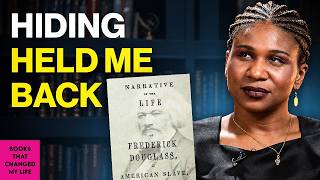
In this conversational interview, host (Speaker A) and guest Lachi—a blind, neurodivergent musician, author, and disability advocate— discuss a wide range of topics. They begin with playful banter about braille Playboy magazines and Lachi’s glam canes, then move into Lachi’s personal background: growing up as the child of Nigerian immigrant professors, navigating low vision, ADHD, OCD, and anxiety, and finding confidence by embracing her disability identity. Lachi explains how reading Frederick Douglass’s Narrative in high school sparked a lifelong commitment to self‑reinvention, knowledge as liberation, and the power of first‑person accounts of oppression. She describes how this book inspired her move to New York, her music career, and the creation of her book Identity as Blind, which blends humor, disability advocacy, and interviews with artists. The conversation also covers Lachi’s work designing accessible fashion (glam canes, mobility aids), founding the RAMPED organization for disabled music professionals, consulting for the recording industry, serving as a Recording Academy trustee, and upcoming projects including a Grammy‑nominated neo‑soul album, a children’s album, and a book tour. Throughout, Lachi emphasizes the importance of confronting internalized ableism, celebrating neurodivergence, and using art to challenge societal norms about disability.
Chapters
Okay, so I have these in braille, and I've always been curious what they say.
Capital E. Play.
Ball, playboy.
Okay.
There'S a bunch of people out there that are reading it for the article.
More like the lack of articles of clothing.
It would be injustice to Frederick Douglass to say that he was great simply because of environment, and he was great in spite of environment.
This is how an enslaved person looks, acts, behaves, does he? Had to go against the grain in every single way while having mental liberation. So, like a big music industry, I was doing stuff like tripping over wires or like missing a handshake that would make me lose out on a deal. When I started to lean into celebrating and embracing my disability, that's when I stopped being super shy, stopped being super quiet, stopped tripping on wires, started getting more opportunities.
Do you think the confidence comes from the fact that you have to work harder at it than somebody else might have to?
You are the controller of your liberation, and it is within your own mind.
Okay, so the big question. How did the narrative of the life of Frederick Douglass, an American slave, change your life? Please welcome to the show. Lachi.
Did I make it to the chair? Perfect. I made it to the chair.
You're good at this.
It's almost as if I knew how to do this. Boom. Hello.
I love how beautiful that is.
The old glam cane. So it's a cane.
Did you make those?
Yeah, we make them. We sell them. So there's.
I saw that on your website.
There are swifties everywhere with these canes. So, you know, are you a swifty? I don't want to answer that.
Why?
I feel like that's a divisive question.
Why is it divisive?
Well, because if I say yes, people will come after me, and if I say no, people will come after me.
Who are these people?
Swifties. Why would they come after anti swifties?
Oh, there you go.
There you go.
There's anti swifties.
Have you left this place before? I know. It's a library.
That's funny. The just. If I was to bet, I would bet on the swifties versus the anti swifties.
I would bet on the swifties also because, a, they're higher in number and they're a lot more rabid. Yeah, like, anti swifties are just like, oh, me. If you say, I don't mind Taylor, she's all right, then you're considered an anti swiftie. Like, a swiftie is someone who will stab for the cause.
So you brought a version of your book Identity as Blind, and it Has Braille on the COVID Yeah, it's.
I identify as blind.
I identify as blind, and it's got.
Braille on the COVID Just to kind of give a nod and shout out to the culture of disability and also teach people how to, I guess, read about 17 letters in braille.
Can you read Braille?
I can read grade one braille, so yes, I can read Braille.
How many grades are there?
2.
2. And so there's one's good.
Well, there's the Alphabet, and so being able to read, like, sort of one letter at a time. And then grade two is where they kind of combine things so that words can be a little easier to read and faster to read. So. Yeah.
You ordered mezcal. That was your.
I am a mezcal gal. Oh, my gosh. Yes. And you get to keep your shot glass, by the way.
Oh, thank you. We will remember you forever.
Oh, you will. Every time you drink.
Cheers.
Cheers. Boop. Oh, is this vita?
That's so good.
I think this is. You guys got my favorite mezcal, too, as well. Thank you.
Okay, so I have these in Braille, and I've always been curious what they say.
Oh, no, this isn't going to work.
It's not.
Well, a. I've been playing guitar, so my fingers are callous. Oh.
Oh, I never thought of that. That. That would have an effect.
Okay. Capital P, L. Play. Ball. Play ball.
Play boy.
Okay.
But could you read me the articles inside?
You know, what is this PG or not? Like, is.
I don't know. That's what I'm always curious about, like, why did they make Playboy in Braille?
Well, you know what? First and foremost, when it's lights out and you want to read sexy things, you still get to read while everybody else has to sleep.
Funny when guys would tell their wives, like, oh, I read it for the articles, but there's a bunch of people out there that are reading it for the articles.
Yeah, no, more like the lack of articles of clothing.
That's so funny.
I'm here all week.
Tell me. Tell me about where you grew up.
I grew up in a combination of upstate New York, West Philly, and Southern Beldit in North Carolina for a bit. So my parents are Nigerian immigrants, so I've got the Nigerian thing. And then I'm also Aries, and, like, I'm a New Yorker, so just there's a whole lot going on.
Where were you born?
I was born in Maryland, and. But I was only there for, like, two months, and then we moved to Philadelphia. That was I spent, like, the majority of my life in upstate New York, North Carolina, and then New York City.
And what did your parents do when you were growing up?
My parents are both professors, and they're also chiefs back home in Nigeria. And my mom teaches sociology, and she was a dean, and then my dad did sort of finance and things of that nature, accounting and stuff like that. So they wanted all of us to be doctors, lawyers. And when I told them I wanted to be a singer, musician, writer, they were like, that's not how you spell doctor.
So wasn't popular.
It wasn't popular in our house. And, like, everybody. I'm the sixth of seven, so there's about a million Catholic, right? So they don't know Catholic, just. My parents were Catholic, so they didn't know that you could, you know, you could wear a condom and not have so many kids. You're not. Yeah, but. Yeah, so six of seven. And they're all my sisters and sort of brothers are super accomplished. So I was like, if I'm gonna do this music thing, I guess I have to win at it.
What kind of kid were you?
I was super quiet, super shy. Like, right now, I'm a huge social butterfly, but I had all these terrible jokes and, like, all these quippy, witty things in my head. I was just too shy to say them. So I would kind of, like, laugh at my own little jokes, and I'd play the piano and make my own songs and write little things and just be my own entertainment kind of kid.
That's funny. But you just kind of kept it inside.
But I kind of kept it inside. Is this a whole glass? I'm a skull. Wow, you guys are really trying to get this. Get this going. But, yeah, I mean, I was being blind, I was different. So it was kind of hard to make friends. And then I was legally blind. I had a little bit more vision when I was younger, so I wasn't. How do I put this? I wasn't disabled enough for, like, the disabled kids and the. And I wasn't, like, non disabled enough for the not disabled kids. And I didn't feel like figuring it out, so I just played the piano and wrote books.
What early influences did you have in music? Like, who was the first person that you were like, oh, my gosh, like, I want to do this.
Oh, where? I was like, I want to do this. I don't know. I know when I was super young, my mom was like, oh, my God, she's blind. So let's get her, like, a bunch of you Know Chopin and Mozart and Beethoven because she's going to be one of them. Right. And I ended up really listening to and being influenced by folks like Lauryn Hill. And I really liked Alicia Keys growing up. But also I was into like Smashing Pumpkins and Bjork and like really weird, sort of off the cuff, avant garde slash, you know, angry at the man type, early aughts, late 90s music. So really a deep combination of different things. I think that what was in common was someone kind of railing against authority or railing against, you know, having to, you know, work within this tapestry of conformity.
Have you. Have you always kind of had this feeling about authority and conformity?
About. About conformity? For sure. Namely because I'm super adhd. And I remember we'd be in class and I recently found out that ADHD is not. It's nurture, not nature. Right. So it's generally how you were raised. So society, it's your fault that we're all adhd. But I was a highly ADHD kid and the teacher would be writing stuff on the board and going through whatever in class and I couldn't see anyway, so I would just daydream and I would just not have anything to do with whatever was going on around me at school. And that was just pretty much how I wafted through pretty much all of my life. And even kind of to like till now, I always kind of waft outside of the system because I just, I feel like the less the more I unnormal, the higher my quality of life. So.
So the book that you chose that changed her life, Narrative of the Life of Frederick Douglass.
Yes.
When did this come into your life? How old were you?
I read it in high school. And I remember we were reading a book called Black Boy by Richard Wright. And it's this story of a young black man growing up in the sort of 20th century and going through. It's Richard Wright's biography. And I remember when we were talking about it in class, it was just such a tepid conversation of like, I wanted to talk so much more about it. But it was like a super like white neighborhood, sort of upper crusty school. And so we just kind of read it and then moved on. But it had touched me so deeply. So I went home and I started reading other Richard Wright books like Native Son. And then I started reading like Uncle Tom's Cabin. And then I eventually landed on the Frederick Douglass biography. And you know, I'm just like some kid and I'm just like delving deeply into these Topics and having no one to talk about it because, again, my parents were immigrants, so they were just like, not really. They don't know it either. So I was, Yeah, a young kid just diving into, like, what it meant to be a black American as a daughter of immigrants American and going like, wow, this is. This is such an experience and something I'm learning separately than, you know, the way that the rest of sort of white America is learning it.
So for somebody who hasn't read the book, just kind of give him a general sense of what the book's about.
Well, it's essentially Frederick Douglass talking about his navigation through enslavement in sort of the early 19th century. And he really gets into the very. The beauty of it is that he gets into the nitty gritty of, like, the selling and the, you know, how folks rent folks out and this and that. He also gets really deeply into this discussion of the dehumanizing narrative of why things were happening. And he talks a lot about the dehumanization of the other side. Right. The enslaver, more so of, like, enslavement doesn't only dehumanize the enslaved, but dehumanizes the enslaver. And so he talks a lot about that. The thing that resonated with me about the book, though, is just how cunning and conniving he'd become after learning how to read and after recognizing, you know, oh, I can read, I understand a bunch of stuff. He's inhaling books. He's secretly teaching other people how to read. And then by the end of the book, he kind of escapes to New York and reinvents himself. And the reason that that whole thing touches on me is just this idea of, even though I'm enslaved, I'm liberated. Like, even though I'm trapped in this system, I'm completely liberated. I'm running around. I'm teaching people stuff. He made friends with a bunch of the folks around town and would offer them bread and food. Like, so let's say he was enslaved under, like, a rich sort of person, but there were just a bunch of, like, poor whites where he lived. So he would actually give bread to. To the poor whites in exchange for school lessons, right? And so little things like that. And then myself as a Nigerian, I'm like, that's the kind of stuff we be doing out here hustling as an Aries. Like, I'm like, this the kind of stuff I'd be doing out here, just running into the fire and just being like, hey, yo, I'll Give you this. You gimme that. And so I really. The story really resonated with me in that sense, and I think it's super duper poetic. The last thing I'll say too, is, is he talks a lot about, like, how religion is not that great of a thing. Like how religion holds up these. These difficult and, like, terrible systems. And it's really interesting because I just. I see a lot of people who are heavily religious also run around quoting the book. And I'm like, well, did you read it or are you actually quoting it? Because big chunk of the book is just, like, against, you know, organized religion and Christianity specifically. But that is the book in a nutshell. Tough topic, but it is one of my. It is just a book that changed my life. If I were going to talk about a book that changed my life.
Who is Frederick Douglass?
Frederick Douglass is a. Oh, gosh. I guess the best way to put it is that he's actually an abolitionist. I would say. I think the best way to put who Frederick Douglass is is to say that he's an abolitionist. He's a poet, he's a teacher. He is an enslaved man who found his own freedom, reinvented himself, and decided to turn back and allow folks to know how to free themselves as well. He is also one of the first people to write a lived experience account of enslavement. Another fun fact is he's actually one of the most, if not the most photographed and drawn enslaved person. I read that recently, and I laugh at that because every time I see his picture, I feel like it's the same picture.
Well, most drawing is copying a picture. Yeah, sure, sure. That's funny, though. Okay, I'm gonna read some. I'm gonna read some excerpts from the book, and then you kind of tell me what you think this one is. You know, being great in spite of environment. This country will never again see another Douglas. This country will never again see another Douglas. For in all probability, there will never again exist that particular combination of circumstances to produce exactly such a type of manhood. Man is, in a measure, the product of environment. Yet it would be injustice to Frederick Douglass to say that he was great simply because of environment. He was great in spite of environment.
I love that. I mean, I feel like that's almost the epitome of what I stand for. So I feel like a lot of folks are doing everything they can to kind of be some kind of reference person, right? They're like, okay, what's the definition of great? What's the definition of good? Looking. What's the definition of a winner? What's the definition of healthy? And there's this thing called the reference man, which in, I guess, like radiology, you know, those pictures of like, a man on the back of like, a science lab door, and it's just like an outline. And he's probably like in his 20s. He's like maybe 6 foot. It's like this idea of the perfect man, the perfect human right for reference. And anyone who kind of deviates from that, then those are what their issues are. If you're deviating from color, if you're bigger, if you're older, if you're shorter, if you don't have as much hair or whatever or this and that. And when people go to try to get a job and you're trying to hire someone, you may not even realize that you're pitting folks against this reference man. Hollywood, when they're trying to put together who's going to be their superhero, you know, how does the jaw look, et cetera, they're pitting. Everyone is pitting everyone else against this reference man. And so everyone is doing everything they can to try to be this reference man. The problem with that is, is that those who are great always end up being the furthest from the reference man, right? They always end up being somebody that went against the grain, that started a trend, that was a visionary, that was, you know, went beyond the. Went beyond the pall, against the grain, et cetera, et cetera. And so I say this because what Frederick Douglass did was a combination of a ton of things that had to really come together and squish, in a way, to make a diamond out of that rough, to make him have to overcompensate in so many different ways to survive and find liberation in a world that wasn't built for his humanity. So he had to, you know, even though his existence, the painting of his existence was seen, you know, this is how an enslaved person looks, acts, behaves, does. He had to go against the grain in every single way in order to be able to remain enslaved while having mental liberation. So, like, a big quote of his that I love is, I am a slave in form, but not in fact. And so it's essentially talking about the feats he had to overcome and in order to find mental liberation. And those feats that you have to overcome are going to 100% be specific to yourself, are gonna be specific to you. Everybody is going. Everyone is in a closet, per se. Everyone is imprisoned by their own, by whatever, and they will have to navigate their own over compensations, accommodations, and the locks that they've put on themselves in order to find that liberation. That's what I get from that statement.
Wow, that's beautiful. How have you done that in your life?
Well, so I think for me, it's why I wrote the book. I identify as blind because it was me finding joy and pride in the deepest parts of myself that society was telling me to hide, was telling me was a flaw, which was my blindness, right? And all my other neurodivergences, right? My adhd, my ocd, my general anxiety, all of those things. And I navigated most of my life. Like I told you, I had much better sight when I was younger. And now I'm essentially, for all intents and purposes, I'm blind. I'm blind in one eye here and then have a teeny bit of vision in this eye here. But I spent so much of my life masking and being what someone would probably call sighted, passing, I guess, in order to fit in, right? But the problem with that was, like, I would not use a cane, right? I would do everything I can to be everyone but myself. And the problem with that is that a. That takes up a lot of energy, like brain space, right? So I'm, like, not using the energy to be the best I could be. And, you know, when I was getting into the music industry, I was doing stuff like tripping over wires or, like missing a handshake that would. Or a hand wave that would make me lose out on a deal or something like that. And I realized I need to get in front of this whole blind thing and stop hiding and stop masking, because just to be more confident, be better at my job, to be able to alert people to how they can accommodate me for me, to be best for them. And so when I started to lean into celebrating and embracing my disability, that's when all the masks started coming off. And that's when I stopped being super shy, stopped being super quiet, stopped tripping on wires, started getting those handshakes, started getting more opportunities, right? Fortune favors the authentic. Fortune favors the bold. Fortune favors the visionary. Everything kind of just changed for me. I became like a happy jokester. I started saying all of the things that I wanted to say, and they turned out to be all of the right things, always at the right time, because I was just being completely authentic and I wasn't really hiding anything. My music career started to take off my. I got a book deal, like. And it all really happened because I began to embrace the Deepest part of myself that I'd been masking due to fear of being pathologized.
Did you start to see your blindness as an advantage?
It's hard to. How do I say it? It's not the blindness itself, right? So, like, I love to tell people, like, when I was younger, I was blind and neurodivergent and I had a lot of shame because of it. And today I'm super, you know, confident social butterfly, but I'm still blind and neurodivergent, right? So the blindness and neurodivergence is not part of it. It's not the issue. I think really, honestly, what it is is me recognizing that I'm not the issue. The societal is, right? So it's not my condition isn't the issue. It's the conditioning. So I don't necessarily see the blindness as an advantage. I see the fact that I recognize my own internalized ableism and fight against that as like, the boon. I know that sounds like super, like, academic, but so like, I'll put it like this when. Because I know that because I was able to really embrace things, it allowed me to recognize how I need to accommodate myself, right? Instead of just being like a victim of all of my circumstances. So my ADHD gives me 1 million ideas and counting. When accommodated, my OCD makes me carry out those 1 million ideas and counting. My general anxiety gives me, you know, empathy and excitement. And then my blindness, it gives me focus, it gives me drive, it gives me determination. It gives me these cute ass glam canes, okay?
And the shot glasses.
And the shot glasses. And they're not like silver linings. I feel like they're just facts. They're just things that happen because I accommodate myself and I'm no longer a victim of the issue because I feel comfortable, A, with myself, but B, with just telling people like, hey, this is me. And it just makes me who I am.
I got chills when you were talking earlier and I just want to read this to you and get your perspective just to understand. But my favorite book of all time is this. This book, and it's an art book. And it's called for the Blind man in A, in the Dark Room Looking for the Black cat that isn't there. Have you ever heard of the book?
No.
There's just this part of the book that hit me pretty hard.
Okay.
And so this is. It's early on in the book and I. I will just read this brief, brief part here. So it says in his letter on the blind in 1749 D Roy embraced the confusion of the blind man. For if understanding the world required breaking down any subject into its original, elemental components and then putting them back together again in an orderly fashion without skipping any steps, the blind man, with his superior powers of abstraction and speculation, can do it best.
You know, I remember I did a show, and I got on the stage. I had to. Before the show, I had to walk around the stage to kind of, like, feel everything and figure it all out. And then I get on the stage, and I'm running around and I'm dancing and I'm singing because now I understand how the stage looks. And then another act that went after me went on the stage, and then somebody, like, in the act, like, fell over, which was. It was kind of comedic and funny at the time, but, I mean, like. But. Sorry. But it was really interesting because they came and they were like, wow, you really navigated that stage. How could you. How did you. Exactly. Where everything was. Like, you were able to get around the drum set and et cetera and et cetera. And I think of that because it's kind of like when you're blind, you know, you process things very differently. Everything is like Legos, like, puzzle pieces of like, okay, you know, this is here, like, for me, at this point, you know, I know there's like a. There was a wire right there. There's probably a human here from laughter. Like, there's. You know what I mean? And so we have to. The way we have to process things are different. That doesn't make them, like, superpowers or anything, because I'm not an oracle, or else I would have won the lotto several times by now. But essentially what it does is it allows us to be able to think and map in a. I don't want to say super superior way, but for the lack of a better word, a superior way. Because a lot of folks take their vision for granted. You know, you see all of the things, and then you kind of dismiss everything because you just assume your eyes are gonna catch it for you. But then what ends up happening is because of our reticulum, we only really care about the things we care about. So if you cared about, like, you know, there being, like, a red couch, you were like, make sure the red couch is in the middle of the room, and you walk into the pink doors, and all you see is the red couch, and then you trip on all the wires, right? Meanwhile, I come into the room, and I don't trip on any of the wires because I'm not so focused on this red couch. I don't know if any of this makes sense, but it's just. I feel like people with vision just process differently and take a lot of the little things for granted that blind folks can't afford to take for granted. And so we just map things much differently.
But do you think that that comes out in your art? Because when I was watching some of your videos on YouTube, like, you have a unique, original perspective on things that is very original to you in a different way of communicating that I've never seen before. And isn't that an advantage as an artist? It doesn't feel like an advantage.
I feel like it's an advantage because of the confidence that I bring with it. So many people have not seen a person with a disability or a blind or a person who's blind just get out on the stage and just out here telling jokes, having a good time, being really comfortable in their skin. And that's part of, like, why I do all of this stuff, to be like, hey, if you ever went blind or lost your vision or a limb or whatever, that you will still live an awesome life. It's all about your internal perspective. That's what I try to showcase in. In my music and my performances and my fashion and all of the things. And folks just never have seen that. And so when they see the joy that comes out in my performances, they're like, wow, this is, you know, maybe they've seen, you know, Ray Charles or Stevie Wonder. Another element that I add, too, is also community. So everywhere I go, I bring sort of the community with me through my organization, ramped or through. Just even in this book, we spend. Spoke to, gosh, like, 40 different interviews in this book, so I could get different stories and perspectives and different, like, disability perspectives. And a lot of times, people just don't see disability and joy. And they're like, wow, this is so unique and different. And it's like. It is. It's a disabled person that's having a good time.
Do you think the confidence comes from the fact that you have to work harder at it than somebody else might have to? And that builds a certain. Yeah. Confidence that other people wouldn't have.
I think my confidence comes. I think I'm cocky because I'm Nigerian. I think I'm bold because I'm Aries. And I think I don't give a crap because I'm a New Yorker. Now, the blindness part, and then you just kind of throw the blindness tarp over that. Right. But honestly, I recently like, released this song called Life on Hard, which is essentially a song going, like, you know, I'm playing the game of life on hard, and I'm still winning, right? And it's just this showcase of everyone has their thing that is hard for them, right? Like, a lot of folks will look at me and they'll be like, oh, you know, it may not even be that hard for her. And the truth of the matter is, is that I am privileged in several ways. Like, you know, my parents prioritized education. I grew up in good neighborhoods and stuff like that, and blessed with a talent, like a musical talent, and had the ability to go pursue it. So there are a lot of, like, positives and sort of things that I got to have in my life that led me here that made things not as hard for me, even regardless of being blind, but the things that are hard. So being blind isn't hard, and having ADHD is not hard. Well, and then ocd, I think the things that are hard is navigating an inaccessible society. Like, what's hard is the uninclusion. Like, the thing that's hard is not the being blind part, but the part where somebody is a dick because I'm blind, if that makes sense. You know what I mean? Or, like, you know, having ADHD is not hard, but someone being super duper impatient with me because I am is what's hard. And so I don't know that being blind itself makes it harder. Frankly, I think it kind of makes a lot of things easier. Like, let's say, for instance, I love to just walk into a place and just go to the front of the line and then just be slightly confused. And they're like, well, I guess she's next. So there are some advantages. But, yeah.
Yeah, I love that. Okay, back to the book. So I'm gonna. I'm gonna read you this passage. This. They would sing as a chorus to words which too many would seem unmeaning jargon, but which nevertheless were full of meaning to themselves. I have some sometimes thought that the mere hearing of those songs would do more to impress some minds with the horrible character of slavery than the reading of whole volumes of philosophy on the subject could do. Every tone was a testimony against slavery and a prayer to God for deliverance from chains. The hearing of those wild notes also depressed my spirit and filled me with ineffable sadness.
So here he's talking about the enslaved folks kind of singing songs, whether the sort of the chain gangs or whatever singing songs, and how he really didn't understand dehumanization until he heard those songs and that passage itself. He's super young. I think he's like 7 or 8. And he's just hearing the songs and realizing, like, oh, wow, this is sort of like a pouring out of the soul. And what I got from him, like, just for the first time, understanding what dehumanization means. Understanding that, you know, these sort of enslavement songs are cries of, you know, soulful cries of like, help, or I don't want this anymore or I need to be liberated or I wanna go home. Is him starting to recognize that these are humans and they have souls and this is what they're showcasing. I think it was his first recognition of the fact that these folks are unliberated and want to be liberated. It was a pretty. And I remember. And the reason why I. That part touched me was because of the musicality of it all. And I'm a musician. And just this recognition of it sounds like jargon. It sounds like, who knows what they're saying, but you can hear the soul of it. Sort of the communication that music brings. Sort of universally is this understanding of what you're saying, even though we don't. We may not understand the words.
How do you think that affected what music is today?
So today music is really a cultural statement of. In a lot of ways, especially pop music, American music, maybe hip hop music, K pop. A lot of the music today stems from black culture, which stems from the struggles that came out of, you know, that time period. And I think the reason why there is so much. There's so much want, love and joy for black music is it is such a opaque. What's that word I'm looking for? What's the opposite of transparent, where you can't see through it because it's so solid. Okay. So opaque. Well, I was right, right. Okay. But it's. It's such a. Basically, it's such an epitome of unbreakable spirit. Like, it's an epitome of unbreakable spirit. This happened, this happened, this happened. And through all of it, I am still liberated in my own mind. I have so many struggles against me. I have the most struggles against me. And I still am doing this. I'm still winning, I'm still flying, I'm still this, I'm still that. And that is such a thing to have. And so everybody wants, like, a little piece of that. And so that's why I think there's a lot of that in music today. There's a Lot of folks wanting that, like, deep swagger and unbreakable spirit in their music because a soul hears that. And then a soul is like, wow, I am not a full soul until my soul. Is that so?
So this comes in the book after Douglas fights Mr. Covey, the slave breaker.
Sure.
It says, I felt as I never felt before. It was a glorious, glorious resurrection from the tomb of slavery to the heaven of freedom. My long crushed spirit rose, cowardice departed, bold defiance took its place. And I now resolved that however long I might remain a slave in form, the day had passed forever when I could be a slave. In fact, I did not hesitate to let it be known of me that the white man who expected to succeed in whipping must also succeed in killing. Killing me.
I think that was the day that he realized, wait, who is this guy? You know what I mean? Like, you know, you ever watch those? I'm sure there's a sitcom somewhere where like a guy gets fired and then, I don't know, says like F you to his boss, whom he was, you know, reverent towards the whole time. Then it turns into a, like, who the hell is this guy? Who are you to fire me? I quit. It was kind of a realization of like, wait, we're just two dudes in a barn, right? At this point, we're two dudes in a barn. So I'm gonna go ahead and kick your real quick and then we'll see what happens in the morning is what I got from that scene. And I feel like that was when he was. That was the pinpoint of when he was, you know, regained his liberation. Cause when he was younger, he learned how to read and there was this liberal, it liberated spirit in him. Then he was broken as a. By. By Doc. By slave, slave owner, Covey or whatever. And then on the other side of it, he, you know, beats up his. He beats the guy up and then recognizes we're just two guys. And so he is, then again, liberated. That's probably one of the more powerful points in the book because I think I really resonate, I really connect with that because a lot of people talk about like, oh, woe is me, right? Oh, this, that I'm having this problem, I'm having that problem. I hate my job, my ex wife is up my ass or whatever, I don't know. And we give ourselves these prisons or we're navigating this social, you know, system that is keeping us down when really it is internalized to our own mind, right? You can be liberated. Even if someone comes up to you and like, literally put points a gun to your head and says, either do this or you're gone. You can say, well, I still don't want to do it. So it's up to you if you want to do the next thing you want to do. You are the controller of your liberation, and it is within your own mind. And I. I feel like that's the point. He makes very well there. Yeah, you pick some good little spots.
Okay, this. This one's, you know, the question is, what. What kind of Christianity are we seeing here? So it was understood among all who came that there must be a little display about it as possible. It was necessary to keep our religious masters at St. Michael's unacquainted with the fact that instead of spending the Sabbath in wrestling, boxing and drinking whiskey, we were trying to learn how to read the will of God. For they had much rather. They had much rather see us engaged in those degrading sports than to see us behaving like intellectual, moral and. And accountable beings.
Yeah, I mean, I honestly, I think this goes back to just the discussion of education and reading. Folks really didn't want, you know, the enslaved folks to have knowledge, because when you have. When you're. When you have knowledge, you're liberated. I mean, it's back to liberation. It's like when you. If you understand your condition, then you can change it. When you. When you figure out your situation, you can make it better for yourself. And so they wanted to keep folks from reading, reading the will of God. And they wanted to keep them engaged in really, honestly entertaining, you know, the enslavers. I am always of a mindset that we need to be talking about whatever folks want unsaid. Right. If they. There was. There's something else he says where he goes. When he was being taught how to read. Early on, uh, the. The husband of the woman who was teaching him how to read, he goes, you know, stop teaching him how to read or else he's gonna be difficult. And when he heard that, he was like, oh, I gotta learn how to read now. I gotta figure this stuff out. Because if they don't want you to have it, then you need to figure out a way to get it because they're trying to keep you down. And I feel like that's true about, like, a lot of the taboo things that we're not allowed to talk about, like, in life and in the world. So it'll be like, you know, let's. A great example is I'll be walking down the street And I've been in situations where a mom will be walking with their kid towards me and then the kid will say like, mommy, mommy, what's, you know, what's going on there? And the mom will say, shush, you know, don't, don't, don't say anything. And I'm like, no, say something. I mean, talk to me like, this could be you. So don't you want to know what's going on? What the mother is teaching the daughter is, you know, we don't want to talk about blindness. We don't want to talk about disability or it's bad, or it's ugly, or it's, you know, let's shush it. Right, yeah.
Almost implying shame of some sort.
Implying shame. Also, like down downing the child's curiosity as well. And so my whole thing is like, actually, no, I think we should know, not stigmatize it. I think we should be talking about it. And we should always talk about the things that folks think we shouldn't be talking about. Because at the end of the day, if that child loses her vision, her first thought is going to be, oh my gosh, everyone's going to be shushed around me. Right. As opposed to thinking, yo, I can get a glam cane and go to a Swift concert. So there you have it.
Yeah, let's talk.
Let's say what shouldn't be said.
So he wrote, I deeply regret the necessity that impels me to suppress anything of importance connected to my experience in slavery. It would afford me great pleasure indeed, as well as material. Add to the interest of my narrative where I am liberty to great defy a curiosity with which I know exists in the minds of many by an accurate statement of all the facts pertaining to my most fortunate escape.
Oh, okay.
But I must derive myself of this pleasure and the curious of the gratification which such a statement would afford. I would allow myself to suffer under the greatest imputations which evil minded men might suggest, rather than exculpate myself and thereby run the hazard of closing the slightest avenue by which a brother slave might clear himself of the chain.
He doesn't have to say like this, like he's.
It's Old English.
I'm an Old English.
When was this written?
Written 1845. It's not that.
Yeah, it's Old English. I got books in here that are written in the 1900s that read like that.
He's basically just saying, like, I don't want to tell y' all how I got free. Like that was literally a clause. But his point is, he's trying to say, like, I would tell you how I got free, but if I. Then people are gonna. Like, other enslaved people won't be able to use that and this and that. But here's the really fun part about that. He spends like what you just read. He goes on like for a very long time with that whole, like, I wanna tell you, but I can't. And the funny thing is he actually does tell us in the book. So earlier in the book, he talks about how he got a bunch of his buddies and taught them how to read. And then they all wrote these little notes that were like something like, oh, you know, we're needed at a shipyard. And so they were gonna like escape to the water and then try to get on a boat with these fake notes that they wrote of being needed on the boat to go to another fudge. My bad. I'm very vivacious. And then it doesn't work. They write all the notes, they try to escape, they get caught, and then, you know, the enslavers bring em back and this and that. But then later he just does that same thing and it works. So he does actually say in the book how he's free, but he just doesn't say how he himself later actually got free. So I don't know. Listen, there's a lot of folks saying like, I don't know how much flour and fluff Frederick Douglass put into this book, but one thing I will say is that if it was like some kind of code of like, I don't want to tell you how I got free, but like, go back to chapter four and just kind of reread that and then try that out. But that's not how I did it. Even though it was what I'm thinking there is what he's. And then he also kind of comes at like the Underground Railroad. He's like, why is the people. Why are the people of the Underground Railroad like telling everybody about it? Like, it's not really underground, is it? And I'm like, bruh. Like, come on, man.
Like the first rule of Fight Club.
Right? You're absolutely right. Like, but you know, okay, this is.
The second to last paragraph in the book. He says, the paper came and I read it from week to week, which with such feelings as it would be quite idle for me to attempt to describe the paper became my meat and my drink, but my soul was set all on fire, its symphony for my brethren in bonds. It's scathing denunciations of slaveholders, its faithful Exposures of slavery and its powerful attacks upon the upholders of the institution sent a thrill of joy through my soul such as I had never felt before.
What's that German word? Schadenfreud? Right? Is that the word where it's like. Like pleasure in seeing other people's pain? I feel like that's what he's describing there. So he's talking about the Lib. I think it's called the Liberator. He started actually getting to read when he finally escaped over to New York, and I think Connecticut was eventually where he ended up. He started seeing things like, you know, black folk that were just, like, living in apartments and stuff like that. And he was just blown away. Started reading the Liberator, which is a paper that was coming in that was a very, like, abolitionist paper. And he was like, are you kidding me? This exists? And just like last week, I was down over there, started to recognize the two different worlds that existed and how he was just able to reinvent himself in this sort of liberated world and then, you know, pursue what he pursued. And he actually ended up becoming really great friends with all of the abolitionists and a ton of at least two or three, I believe, abolitionists wrote the forewords for his book. So he. I think that that sort of set him on the path of like, okay, I am going to be a part of whatever this movement is.
So, yeah, okay. So the big question, how did the narrative of the life of Frederick Douglass, an American slave, change your life?
Well, I read it in high school as a book outside of what was required, which is not normally something I did. And so it just opened my eyes as a daughter of immigrants, as a black daughter of Nigerian immigrants, as to what was really going on here. I began to start to understand almost the generational discussion, like the generational trauma of what was going on. And I was reading this sort of like, during a time when we were calling ourselves sort of like post racial America. And it made me realize, like, okay, this is very, like a deep rooted discussion that we're not really having right now that I'm getting to have with this book. I started to recognize the difference between, you know, my blackness as a daughter of pretty, relatively sheltering immigrant parents. And, you know, when I step outside the door, the experience I get as just a black person in America. I started to really understand what that was. And I really had no idea, to be completely honest, until I really. Cause like I said, I was reading some of the, like, Richard Wright stuff. I was reading some other things but it wasn't until I read the lived experience of an enslaved person written by an enslaved person. It wasn't like an account of. It wasn't a fiction. It was like him telling us from his own words. And it's written in first person. And so, you know, there's this thing about when books are written in first person and you can kind of like, sit in it, in their head and in their clothing, and really understand what was going on. It was just such a. Like a epiphany of a book for me about just the black American experience. And then also, it really made me. It was really one of the first books that made me want to go to New York. So I was living in North Carolina when I read that book, and it really made me want to, like, move to New York and reinvent myself and be like, you know, I. You know, this person was going through a certain thing, moved to New York, reinvented themselves, and found, you know, liberation. And this book kind of seeded this. Like, I want to get. I got to get to New York. I don't know how, I don't know why, but I got to get to New York. And I remember when I was in college, I told my guidance counselor that I wanted to do music. What classes should I take? And he had said, just moved to New York, which, I don't know. He's a Beatles cover band guy, I guess. So I did. I applied to nyu, didn't get in, moved anyway and never looked back. I ended up applying to NYU later and getting in later, but that's neither here nor there. Just wanted to make sure people know that I did eventually get in. But this book kind of sparked that seed of, like, reinventing yourself and then also the idea of knowledge kind of being power. That's a theme that continues on through this book of, like, knowledge and reading and whatever is how you're liberated. So it also set me on a path of really wanting to read more books about the lived experiences of, like, folks I didn't understand or things I didn't understand. So I'd read books about, like. I remember I read a book about a young Hmong girl that had epilepsy and just learned a lot about, like, Hmong culture and a lot about epilepsy and things like that that eventually led me to really start to, I guess, empathize with so many more experiences that are not my own and allowed me to realize, like, you know, when I talk about, I identify as blind, and people say, like, how do you become an ally To a person with a disability or blindness or whatever, I always tend to say, like, recognize the disability identity within yourself. Like, recognize, you know, what it is you're overcompensating for. Recognize, you know, what it is that you need accommodation for, because the world wasn't actually built exactly for you either. And so when you can recognize the disability identity within yourself, then you can truly empathize with disability. And so it's really just a discussion of being able to empathize with different folks, keep yourself knowledgeable, keep your brain open, and stay liberated. And recognize you can always reinvent yourself. And I pretty much got started on the path of those ideas with that book.
So tell me about the process for writing this book. When did you have the idea?
Yeah, it was so funny. I was on. I got called to be on PBS Historians take. And it was pretty early in my, like, sort of artist journey. It was like, 2020 or 2021 or something like that. I don't know. So. But I got called to be on pbs and I was like, oh, my God, I am famous now. PBS just called me to be an expert. And they were like, we want you to come and talk about Ray Charles. And I was like, oh, okay. So I get on there and I start. I go, we. I go. She goes, you know, tell us who you are. I say, my name is Lachi. I'm a black woman with cornrows. And I identify as blind. And then we have this great talk about Ray Charles and about, like, the black blind piano trope and all that stuff. And they post it on YouTube. And then after they post it on YouTube, tons of comments come after it, like, come on it. And I'm reading through the comments, and a few are about Ray Charles or whatever. But most of the comments are like, what does she mean by I identify as blind? And, like, you're. You can't identify as blind. It's either a medical condition or whatever, or they're like, do you read Braille? Do you not read Braille? Or, like, I don't want people to think trans blindness is a thing. And I'm like, trans blindness. And so everybody was, like, pissed off. I was like, what? We just. We're talking about Ray Charles. How can you be mad? Then I went into the comments like, you're absolutely not supposed to do, and tried to, like, convince people of things and then was, like, completely excoriated. So I was like, oh, my God, I'm getting, like, normies to talk about disability. I'm getting, like, Internet types to Talk about disability. So then later, I get called by Google to do, like, an interview for one of the products that they had where they're like, some kind of glasses you can put on that'll help you center what you're trying to take a picture of for if you're blind. And so the ad was going to play on TikTok and Instagram during the super bowl, and I was like, the subject matter of the ad, and I'm like, oh, are you kidding me? And so they're like, okay, just say who you are and we're going to put it in. And I say, my name is Lachi and I'm a black woman with cornrows. I identify as blind. It goes on TikTok and Instagram. It gets millions. I mean, millions and millions and millions of streams and views and hits and tens of thousands of comments. And they're all saying, what the hell does she mean by I identify as blind? And I'm like, sorry, Google, no one's talking about your product. So. And that's when I realized, like, I'm hitting some kind of nerve of like, you know, a fun, spunky girl talking about disability and then mainstream normies, like, wrangling with it. Because it's not like your typical oh, woe is me, you know, Shriners ad, right? And so it's a fun, spunky, you and me girl talking about, I identify as blind. And so of course you're going to be like, well, what the hell is she saying? As opposed to like, oh, guys, you can't say that she's blind type joint, right? So I decided I wanted to write a book that was fun, that talks about disability in a way that folks can relate to whether you have a disability or not. Because I feel like the problem, like I told you earlier, the problem with all of this stuff is the fact that we're not talking about it, right? The fact that we're masking and we're so afraid to, like, touch on such taboo topics that we all have. Everybody has some form of neurodivergence or neuro disability identity or whatever. Like, for instance, disability includes, like, asthma, arthritis, chronic back pain, tinnitus, like a broken elbow that's temporary. And even just in me saying just those five things, like, everybody in here has one, right? And so it's not even about wheelchairs, walkers, and, you know, canes. And so I want folks to be able to feel the power, pride and dignity and autonomy that they have still, regardless as to whether or not they identify with their disability. Or not. Like, I have a bunch of dad jokes. I have a bunch of great stories in here from a ton of the celebrity and sort of like artists and folks that I interview to get their stories as well. And so it's really a humorous book of 10 essays where we go through talking about these taboo topics in a very empowered and really, honestly, full of dad jokesy way so that folks can just feel comfortable talking about it and not be so afraid of being pathologized. Because you know what? I feel like people are always like, I don't want to be too much. I don't want to be seen as too weak or less than. And I'm like, listen, people can pathologize you for your race, for being a woman, for your height, for how much hair you have, right? People can pathologize you trans folks, queer folks. People can pathologize you for women, whatever reason. So I say, you may as well be proud of the deepest parts of yourself that society tells you is weak or that society tries to convince you is a flaw. Because it's essentially saying your pathology. Like, that kryptonite doesn't work on me. And that's what this book is.
I love that. What has surprised you since you put the book out?
Well, the book is out in, like, eight days. No, seven days. The book is out in a week from today. Is it Wednesday? Yes, the book is out in a week from today.
Have you had anybody read it?
Yeah, we've had a ton of people read it. In fact, Temple Grandin said she liked it. But, yeah, we had a ton of people read it. We've got a bunch of really great reviews on the back, I think here. I don't know. I believe Temple's on the back. Imani's on the back. Imani Barberin, who's a really great influencer. Gillian Marcato, she's a model and an influencer. And we've also sent, you know, galleys out to a ton of folks. We're already getting some reviews in and. Goodreads. Publishers Publishers Weekly. Publishers Weekly has given us some reviews. Book Riot, Kirkus. So we've had some reviews come out. So far so good. And I feel like not enough people have read it. Like, I'm waiting for the, like, this book sucks. I hate you. Like, ones that are going to eventually come. So I don't feel like I don't have enough reviews because I don't have any. Although I got a two star on Goodreads with no, like, written review. So I'm like, wait, who? Hey, like who? Come on. You know what I mean? Put your face to it. Put 10 toes on it. You want to give a two stars, say your name. But. But it's been, it's been a really positive response so far.
Well, we, we will support it and buy them and maybe we can post some reviews too.
Please. Yes, absolutely. It starts with me talking about the day I woke up total blind. Like, I'd always been low vision, but I wake up one day and it's just gone and it's just wacky. Like, ends up going in a totally different direction than you think. Like I end up trying to walk to the clinic that's 85 blocks away by myself with no cane because like I said, Nigerian, Aries, New Yorker. And I talk about all the wacky, goofy things that happen along the way. So that's how it all starts. Really excited for you guys to read it.
That's fun. What else do you have going on?
Oh, well, I am a musician, so I have all of the musicy things I just recently produced. I'm a recording artist, a songwriter and a producer. And so I recently produced the album of this neurodivergent gentleman named Chris. Reading the Colors of My Mind is the name of the project and it was really a project celebrating different neurodivergencies and it's sort of neo soul meets new age. And we put that out last August and it is Grammy nominated for the new age category. And then the Grammys is in a week and a half. So if you call me in a week and a half, I'll tell you if I won't.
Congratulations.
Thank you so much. And then after we leave, the Grammys is on February 1st. So after we leave LA, we're gonna go on tour, doing the book tour for here, hitting nine cities or so. So it's gonna be really fun. And then I am also working on a children's album with a couple of Grammy winning sort of children's artists. It's a pop album that really will celebrate difference and accepting yourself and neurodivergence, but set to bops. And so we're really excited about that. We're working on that and we're bringing a bunch of folks from the Ramped community in on that. And then there's Ramped, which is my organization, recording artists and music professionals with disabilities, of which I am the founder and CEO. And then we train and we consult music and entertainment. I don't know firms and organizations on how to get it right, how to Be more disability inclusive on accessible design, on accommodating spaces for venues. And then we also cultivate a global network of music artists and professionals and industry professionals with disabilities and neurodivergence who are looking for opportunities and stuff like that. So that takes up a lot of my time. And then finally I am a trustee for the recording academy which runs the Grammys. And so I do a lot of sort of disability inclusion work on different music industry boards. So that's where I do a lot of my service. Man. What else do I do? Glam canes. We. Oh, we have extended beyond blind canes and now we're doing mobility canes, we're doing walkers. And then folks are like, do you have T shirts? So now we're doing glam tees. And it's just so much fun to see like, you know, like an 80 year old baddie just with a glam cane. Just saying like, you know, hailing a cat. No, you. You know what I mean? And it's just, it just brings tears of joy to my eyes.
And I love New York.
So those are the.
That was when my, my better half and I went not that long ago. And we just came over the bridge. We're at a stoplight and like a cab hits a pedestrian in the, in the crosswalk and you know, they start yelling at each other and then the person just walks off. Like you're like, this is New York. Like, okay, we're here.
Yeah. I mean that's, that is probably like the most typical experience.
Like here if a cab hits somebody, they'd roll on the ground and there'd be an ambulance in a lawsuit. And New York, they just yell at each other.
Screw you. Where you going?
So funny. It's the best. New York's the best city.
Listen, if the problem is if somebody's kicking your, no one will help you. But if you're the one doing the kicking, no one will stop you.
It's very New York. I like it.
Exactly.
Well, thank you so much for doing this.
Sure.
It was incredible.
Yeah, this has been really great. Thank you guys. Woo. Awesome.
Yeah. Really fun. We are so excited to announce the Books that Change My Life website. We made a way for you to show your book pride and that you love books. Hats, tees, hoodies. Check it out. Link in the description. Everybody needs a self help hat.







