Laura Marano on "Outliers: The Story of Success" || Books That Changed My Life
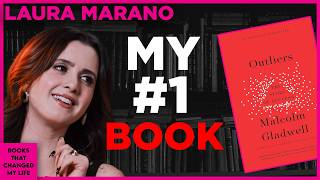
In this conversational interview, host Chris Collins asks actress‑singer Laura Marano how Malcolm Gladwell’s Outliers shaped her outlook on success. Laura explains that reading the book during her teenage years on the Disney Channel helped calm the pressure she felt about fame, offering a pragmatic view that success comes from timing, opportunity, and loving what you do. She revisits the book later when launching her music career, noting its accessible writing and reassurance during moments of overwhelm. Laura connects the book’s themes to a recent film role where her character, pressured by success, makes poor choices, and she reflects on how Outliers might have guided a different path. The conversation then shifts to her love of blending acting and music, her involvement in writing the film’s soundtrack, and her personal reading habits. They discuss favorite books, including a rare art‑book For the Blind Man in a Dark Room…, the experimental novel House of Leaves, and Laura’s dislike for A Portrait of the Artist as a Young Man. The interview concludes with a playful “F‑Marry‑Kill” game where Laura categorises three books, revealing her humor, preferences, and a wish to be more punctual. Throughout, Laura’s tone is reflective, enthusiastic, and candid, offering insights into her creative process, attitudes toward success, and relationship with literature.
Chapters
Do you feel like we over-personalize success?
I think success can be very subjective. Not only do we like over-personalize it with, with the individual and maybe like over-glorify individuals who have reached our societal terms of what that success means, too much emphasis can be sometimes on like the destination rather than the journey. And then in that same token, that's a really good one, a person rather than like the situation.
It's a big question. Are you ready?
Okay, what?
Take your drink.
Why am I nervous? Okay, why is my like heart beating?
Okay, how did Outliers by Malcolm Gladwell change your life?
So it is the big question. It's why we're here. Um, I think—
I'm your host Chris Collins, and you are watching Books That Changed My Life. Today we're joined by actress and singer Laura Marano. She's here to talk about the book that changed her life Outliers by Malcolm Gladwell. How would you analyze me looking at my book collection?
Um, I, I think you're a person who loves art. You— and I, I don't know what the art books that you have are. They like, uh, I was about to say picture books, but I feel like that's like the wrong phrase. But, or, or do they analyze the art as well?
Probably a little bit both mixture. Yeah.
Okay, so I feel like a lot of photography in that front room. Okay, so I didn't get that. I feel like I didn't— I need to— after this is done, I'm going in the front room and like—
It's all photography.
Okay, I'm obsessed with that. Yeah, yeah. And I heard maybe a section that also like books, prior books that have changed people's lives in that section as well, which I love. I think that's super fun. How did you get this idea? Like, did you— have you always loved reading and been a reader?
Oh yeah. In our old office, what they would do behind my back is because there would be so many stacks of books, I was just always buying books. Yeah, they would box them up and put them in storage. And so I was like, I want my books in one place, like, because then I'd be like, where's that book? And then you got to go to a storage unit. You're like, no, it's just easier to buy it again.
Yeah, yeah, you're like, hold on, hold on, hold on. You're like, I need my books present here. So a stupid question, so all of our— all of these, these are all your books?
Yeah, well, we have another building full of books too.
That is insane.
What's the count? Josh, are we at— so, uh, oh, he left. 26,000? We've tried to scan them all. We're trying to do an inventory.
Wait, this is a dangerous thing for me to be at because I have— I don't have 26,000, not even close, but I have so many books that I've been in the place of like trying to figure out, okay, where should I donate them to? A library? Should I donate them to like— I— there's a bunch of, um, little neighborhood, like small library things. Do you know what I'm talking about? Like in front of houses? Yeah, I love those. Yeah, yeah, exactly. Like, should I give some of those? And part of me always is like, no, but I need this book. Like, I need this book to stay here, blah, blah, blah. And I've been convinced by external forces that I might need to let go of some.
Who are these external forces and how do we kill 'em?
Thank you. I don't know if I want them to die 'cause they are family and friends, but I do think that they need some words of warning. Yeah. Just a little bit of external criticism, not that's coming from me, because I'm like, but I need these books. I can't let go of these books. And now I'm realizing I—
Your problems are very small compared to mine.
Yeah, I have a place that can confirm that you can keep your books if you want. You just need a big space for it. Yeah.
Yeah. You just got to prioritize it a little bit.
Exactly. Just a place dedicated for it.
True story. There's one of those little lending libraries in my neighborhood.
Okay.
It's like a big birdhouse, basically.
Okay.
Adorable. And I took two books a couple of months ago.
Did you put any books in?
I'm riddled with guilt, but I don't know what to put in there. Like, I think, like, I'm going to put— I don't want to give that one. And like, it's hard.
It is hard to talk.
And then if there's one I want to give, I'm like, well, that's not good enough.
Well, because, okay, that was my question. Oh my gosh, thank you so much. Thank you. Well, that was my question. So of course you want to put a good one. Well, and I was going to say, I'm assuming, as we all have, you have read books in your life that you did not enjoy.
Yeah.
So what do you do? Do you keep those books as well?
There's probably some.
Okay, interesting.
See, yeah, that's an interesting thing because keeping them seems less relevant than not reading. I never feel obligated to finish a book if I'm not connecting with it.
Okay, okay, fair.
But I wouldn't necessarily get rid of it.
Okay. Yeah.
Because I've come back to books years later.
And then reread them and been like—
And then I'm like, what was I missing? This is so great.
Yeah, I've had that too, actually. I also, I love rereading books. I really had, I was saying earlier, I had a hard time picking my one book that has changed my life because I was—
So you picked Outliers by Malcolm Gladwell.
Yes.
What were the other books on the list?
Okay. Well, two of the books had already been done. So I was going to do classic, The Alchemist or Siddhartha. Both books that I really love. And I was like, okay, I can't do those. Someone has already done them.
Would you have done them if somebody hadn't already done them?
I know it feels like a basic answer, but The Alchemist is— either one of them. Siddhartha also, I read it in high school, my freshman year. And I remember feeling like, I think I'm really fascinated by— I'm not finishing sentences, but I'm getting excited. I think I'm really fascinated by patterns and by cycles and potentially breaking the cycle versus not breaking the cycle, which one of the books I almost did was East of Eden, which is one of my favorite books that I feel so much about generational trauma and how again, you can repeat certain patterns, which in a lot of ways Outliers is also ironically really about patterns. Pride and Prejudice was the other one I was thinking about because I just know that book through and through. I had to reread Outliers and I The idea of rereading East of Eden, as much as I have been wanting to do it in recent years, I'm like, that's a lot of book to reread in 3 weeks.
Short amount of time.
In a short amount of time. But either one of those books, I was like, ugh, I love East of Eden for sure felt like, oh, this is a— I remember reading in high school and being like, oh my God, my last year of high school and really connecting with it. Pride and Prejudice has been a book that I read literally twice a year because I just love Jane Austen and I love, love, love that book. But Outliers for me was an interesting one because one, out of the three, it's nonfiction. And two, I just remember reading it in a time where I was toying with the definition of success and kind of being like, what does even success even mean? And though this book doesn't necessarily dive in into the existential crisis that can be determining what success is, I feel like the way it deals with the context, contextualizing success, I find really, really interesting. And I found it really, really interesting the first time I read it, but then the second time I read it when I was kind of deciding if I should stay with trying to release music under a record label or if I should release it independently. And I just, I don't know, I remember reading it in a being very inspired and taken by it.
Uh, what book have you read the most times?
Out of those three?
Out of any books?
Oh, out of any book. Um, Pride and Prejudice is very up there. I think, um, I do feel like the Harry Potter series I've read like an extreme amount of times. I feel like The Emma as well. I'm such a Jane Austen fan. So Emma, Pride and Prejudice. I've actually never read Sense and Sensibility, which I think is shocking, but I've seen the movie many, many times. Not the same, but I think I would say Pride and Prejudice. I'm trying to go back if there's any other book that—
And so do you have a copy of it that's very dear to you? Like a special copy?
I have a copy that I read in high school. So in high school, you were forced in summer reading to actively read. So it's underlined and highlighted and has little notes of when Mr. Darcy does something that's like, is this foreshadowing? Because I was really doing it more for, even though teachers didn't necessarily check, I don't like writing in my books. I feel guilty. I feel like I'm intruding on what the book should— I don't know, the original format of the book. I know I'm alone in this mentality.
No, you're not. You're not alone. It's a common thing that I hear. I feel the opposite. I feel I'm—
You're engaging in it?
Yeah. Yeah. Like I'm participating. Especially if I really like it. Like, I want to consume it. I want to—
and I will say there's a part of it— there is something special about rereading a book that you've actively read and like seeing your notes from before.
Um, or even more fun, seeing somebody else's notes.
Oh, totally.
See, I would love that.
I would love, love that. Like, that I actually would find really interesting. I think when I was, um, I don't know, I would have— it must have been like 12, maybe I was even younger, maybe I was older. I have this memory of, I think there was a book that Disney released that was like, I wanna say like Lizzie McGuire actively read the book. So you're reading the book, but then you're also reading like this character, this fictional character's like actively like read notes. And I think it was Lizzie McGuire. And I loved that. Like reading someone else's notes I think is really fascinating. But for me, I almost like it sometimes takes me out because I'm like, I feel like I just wrote really not stupid stuff, but just kind of like you could tell the point where I'm getting more into the book because I'm saying different literary terms. And then I'm talking about how I'm like, Mr. Darcy shouldn't have said that. I'm like fully like— You're making little commentary. Yes, 100%. So I like reread that, it like makes me chuckle because I—
Yeah, it's funny.
I'm like, she was in.
Laura's in. What is your style of reading? Like, do you read at night before you go to sleep? Do you have a place? Good question.
Good question. Probably most commonly I'll read at night before I go to sleep. I think also, really sad to say, and I feel like I'm getting back into it, but there was definitely a few years where I wasn't reading as much. I was like on my phone before sleeping, or there was other things that was taking over that time. But always it has been like night before bed. And then when I'm really into a book, it's like all bets are off. Like I'm reading throughout the day, I'm reading when I should be doing other things. I'm like, I'm on the couch, I'm at the kitchen table, I'm in bed, I'm in a car, I'm on an airplane. Like I'm just kind of in. But I think most, Most commonly I'm reading at night before bed and just kind of like getting a chapter in.
If you go on a trip, do you take like 1 or 2 books with you?
Yes. So I have not gotten on the train of like virtual books. I love—
What's a virtual book?
Like a, like an ebook or a Kindle.
Oh, that's the devil.
Right? Okay. I, again, we are—
No, you gotta, you gotta—
You have to feel it. I feel the same way. Now, does it make traveling a little more complex, we'll say, potentially.
You have room in your bag?
You know what? Yeah, I'll make room.
Get a bigger bag.
Or I'll just truly— I've been in the situation where I'll like travel to the airport and just like have it in like underneath my arm. So yeah, I usually will do just bring one, which can be dangerous because if I'm really into it, then My one is gone. I went to Bali last year and I brought Siddhartha to reread, and then I brought The Alchemist actually to reread, and I didn't actually get to it. And then I brought this other book I hadn't read before that is more of a nonfiction about energy and about certain things that I kind of was into, but I feel like I'm waiting for the moment in my life where that's going to grab me.
I'm waiting for somebody to write a good book about energy. I have so many books on energy and nobody nails it.
I kind of agree. I kind of like, maybe there's a couple comments that will be there that I'm like, okay, that's interesting, but then it'll lose me again.
Yeah, I'm like, uh, I wish somebody would write a good book on that. It needs to exist.
I wonder if it's because it's such a topic that really exists in a great way in conversation, like much like Four Meets Function in some way, like energy reading about energy isn't the same thing as talking about with another person. So maybe that is one of the struggles. I don't know, but I agree with you 100%.
It's fascinating.
100%. Yeah, yeah, I'm very into it.
You have incredible energy, baby.
Oh, get out of here. You have incredible energy. I think this place also has incredible energy.
It's built for that.
You know what I mean? Yeah. It feels very intentional and just like a beautiful, and everyone here is just so lovely and wonderful. So it's like a really, really beautiful space.
We want it to feel like an escape in a way, like our little Narnia.
Do you— stupid question, but do you come here every day?
Uh, pretty— well, I don't come on the weekends.
Okay, okay. But do you at home, do you also have like a pretty big library?
Stacks.
I love—
on Monday I brought, I brought in boxes of books, and I still have more boxes, but I don't want to overwhelm the system because we're trying to scan everything.
I'm obsessed with that. I love that.
We're figuring it out.
It is the scene, it sounds like, from Beauty and the Beast when Belle comes into the library and she's like, "Oh my God, this is amazing." It's the dream.
That's the intention. Yeah. So where did you grow up?
I grew up in LA. I grew up in—
What? I know.
I'm a unicorn.
Nobody here ever grew up here.
I know. I know. I'm a unicorn. I grew up in LA. My dad is from Italy. And then my mom is basically from LA. Her parents are from Rhode Island. She was technically born in El Paso as they were driving to go out west, but basically lived in LA. But I—
How did your parents meet?
They met, my mom was 30, there's a 10-year age gap, my dad was 40. And okay, so I actually love this story. They're going to kill me for telling this story, but I love it. I think it is very telling of, for them, like just they met I think at a perfect time in their lives. 'Cause neither one of them I think thought that they were necessarily gonna get married or have kids. And then, you know, they met each other and had that decision. But my mom had come back from Italy. She went to Italy to be with a family member And then she ended up getting on an Italian variety show on an Italian channel called Rai. And so she was there for a year and a half. And then when she came back to LA, she was like fully like, I have no idea what I wanna do with my life. She was 30 and she was like, I don't know. I was doing this thing in my 20s. She was like in the entertainment industry. She was behind the camera and in front of the camera and like didn't hate it, but had a, she was I think in the industry at a time where it was especially hard for women. And so she was very much like, I don't know if I wanna be in this industry at all, but I love like acting and I love this. And so she was like thinking about maybe going back to school to get some credits to like become a teacher, but she still wasn't convinced. And she's like, okay, I have to do something with my time. I have to do something. I'm gonna take an Italian class at, the local community college. And who was her professor but a professor, Damiano Marano, who is my dad. And of course they're always like, nothing happened, okay, until the class was over.
They have to say that?
Nothing happened. But I do believe it because one, I really don't think my dad would be interested in her if she didn't really know Italian and earn her A. In an ethical way. And two, I guess how, 'cause I'm like, well, how did it happen? Like how did you get together? Like what an interesting dynamic, like that would've been complex and blah, blah. And so I guess after the class was over and the semester was over, whatever, my dad would take his students occasionally to like an Italian culture thing. So he would like take them to the opera. And so this class went to like the opera and I'm like, I don't know what this means, but I love it. Talk about energy. You know, I'm like, so what happened? How did you know? How did it happen? Blah, blah. And I guess his students and everyone were in the lobby and the opera was about to start. And so all the students were like going and my mom was lagging for some reason. And he said, you know, I put my hand on her shoulder to let her know that like the opera's starting and we need to go. And she was receptive to my touch. But imagine like an older Italian man with an Italian accent is like saying this. Like, I was like, but what do you mean receptive to your touch? Like, what does that mean? He's like, she was, you know, receptive to my touch. And I'm like, what does that mean? And I guess sparks, I guess energy. And I guess Um, from there, she— he was like, the opera's starting. Oh, and by the way, would you ever like be interested in like going out? And she was like, yes, I would. And then the rest is history.
They slipped on a banana peel, and who would—
and who would have thought, two children came from that.
So are you older or younger?
Younger. I'm the youngest.
Yeah, younger. And so older sister or brother?
Sister. Sister's older. She's an actress as well.
She, um So does that all come from mom?
So what's really ironic about it, it's almost like, this sounds funny to say and I'll explain, but it's almost like in spite of mom in some ways. Meaning my mom from there ended up teaching, like taught drama at a high school and then had her own children's theater. And so my sister and I grew up in this children's theater and young, like young, young, young and around it and like loved it. I mean, I think I was just obnoxious and outgoing and loved like people looking at me and performing. But I think my sister, like at a really early age, like really, really loved the craft. And if you knew my sister, what I'm about to say would resonate. If you don't, you're like, really? But it's true. And I think she knew at an early age that she could, it can like, she could do it professionally and make money out of it. So at 6, she asked my mom, you know, she was like, I wanna do this professionally. Like I wanna be an actress. And my mom was like, no, like, no, you're 6 years old. Cute. That's— this is cute. Like, you know, this is adorable, but like, no, not gonna happen. And then my sister started asking my mom every single day for 2 years, hey, I can— I want to act professionally. Like, can you help me out professionally? My mom was like, no. I was— it went from like, I think, being cute to being like really annoying. And my mom was like, this is No, it's not gonna— it's a terrible business. It's such a hard business. I went through it. It's, it's, it's really— there's so much rejection. There's so many struggles with it. No, just have fun, be in the theater, enjoy the craft, and like go from there. And one day my sister asked my mom in front of a friend of my mom who was actually an actress as well, and she was a child actress. And this friend, you know, started guilt-tripping my mom. And saying, "Vanessa, my sister, she's gonna resent you when she's older because she's gonna think that you just didn't support her dreams." And my mom's thinking, "No, I'm trying to do this to be a good mom, to not have them in this industry. This feels not what I should be doing." And she had to figure it out. And so my mom, in a slightly sociopathic way, and I say this with love, decide to look up agents and found an agent that turned down children 95% of the time. Like most of the time. So my mom is thinking, my mom's thinking, this is great. Okay, I'll take Vanessa. She's gonna get rejected, which is very much part of the industry. She's gonna realize how hard it is. She'll think that I like try to support her, but you know, it just didn't work out. And hey, you could try again when you're 18. So, you know, Vanessa— uh, my mom takes Vanessa and she takes me. My dad is a teacher and he was teaching night classes at that time. And I guess you shouldn't leave a 5-year-old alone. Who would have thought? So my mom took me as well to the, the agency, but not to go in and do any audition. It was just because she had to, right? So my sister goes in, my mom doesn't even work on it with her. She's like, you'll be fine, kid. Vanessa goes in, comes out, the agent asked to see my mom. I follow my mom because again, I am obnoxious. I am so— you know those 5-year-olds? I was that 5-year-old that I just was loud and singing and annoying. And the agent says to my mom, "We want to take Vanessa." And my mom just stands there aghast and is thinking, "Wait, what?" And then I'm there and I say, 'But I don't have an agent.' And they're like, 'Oh honey, we'll take you too.' And my mom was like, 'What? What do you mean?' And we were with those same agents for 20 years. So we were— it really became this very long relationship. And Vanessa, my sister, always likes to remind me that she did the work and I just went in and said, 'I don't have an agent.' Got an agent. Um, but I feel like I lucked out because I really do love it and I really do enjoy it. And I didn't know that at 5. Like, at 5, I think I just wanted to do what my big sister did. Like, I, I liked performing, I guess, and I liked that idea of it, but I didn't know. And then I started working and my sister started working. And I think what was really helpful is I still went to school, and I'm really grateful for that because I think if I was homeschooled like a lot of kids are, by the way, my sister was too and I think she's the best person ever. But I think for me personality-wise, I needed to be around other kids. I needed to have that feeling in a classroom. That is when you, you know, they ask a question and you raise your hand and you don't know if you have the right answer and, you know, all of that. I needed that adrenaline rush in that way. But I'm grateful. Ironically, for the most part, that I started so young, because by the time I was 15 and I, you know, gotten a lead on a Disney show, I'd kind of already been doing it for 10 years.
And, you know, what's the first thing you did that kind of like got you recognized?
Okay, well, that's an interesting question because I would say I did a lot of things before I got recognized. Like, I think A lot of my friends in school didn't believe that I was an actress 'cause, you know, I was in like Dexter, the first season of Dexter. And I was in a show called Without a Trace. And, you know, I was in all these kind of like older adult shows, The Sarah Silverman Program. So all these shows that I loved and worked with amazing people, but, you know, nothing that I was like getting recognized off the street for. And then when I was in 5th grade, I was on the first season of Are You Smarter Than a 5th Grader? So that was the first time that my friends were like, wait, you really do act? But that wasn't even acting, that was me on a game show. Um, and fun story, uh, I remember like no contestant ever picking me until I put my glasses on, and all of a sudden you put glasses on and everyone's like, she must be smart. Um, and but I was recognized for that, and then I did a couple more things that again, I don't know, people wouldn't necessarily recognize me from, um, whether I had a small part or they weren't that successful or whatever it was. And then I think when I got Austin Ally, which was the show I was on on Disney Channel, and I got the lead, you know, one of the leads, I got Ally, that was definitely a life-changing thing. And all of a sudden you get recognized way more than I ever had before. So that was a different thing to deal with.
How do you process that shift?
Um, again, I think for me, like, being able to go to school was great, and how it worked was amazing, where I did my first year of high school and I wasn't, you know, again, I had done a bunch of things, but no one— none of the people I met in my high school— it was a new high school, new people. Um, no one knew me as like an actress. They just got to know me, you know, as, as me, as Laura. And so then when I got Austin and Ally, it wasn't like, oh, this Disney kid is like going to our school. It was like, Laura got a Disney show. Like that, that's so wild and crazy and whoa, this is so— I remember getting verified on Twitter and Instagram and everyone being like, that's so— you have a blue check mark. This is so weird. So that was, I think, helpful in, again, pretty early on. I didn't necessarily in my day-to-day have an issue with like, oh, feeling like nobody knows me and they only know me from the show, which I think would have added a different layer of, I don't know, pressure or not feeling super authentic or genuine at a really, you know, early age of being like, oh, I have to kind of present my way in a certain way, which I didn't feel in high school. I felt like I knew these people and they knew me and And as I got older in high school, like when I was a senior, you know, all of a sudden like the incoming freshmen and sophomores, you know, would come in and recognize me and be like, "Oh my God, are you, you know, Laura?" And, you know, whatever. And I would look disgusting at school. I was like hair in a bun, uniform that was very oversized for me. And so I, you know, people would ask like to take photos sometimes in the bathroom and I was just like, "I look so gross right now." I didn't really mind necessarily. Um, and then yeah, I think as I've gotten older, in a weird way, it's been— in a weird way, actually, I think after the pandemic, I remember being— I don't know if I'd like forgot about it because, you know, we're— we were all like quarantined or in our house or whatever. But when I started going out again, as all all of us people were doing, I started getting recognized and I like almost forgot about it where I would be like, oh yeah, I sometimes get recognized. And that was actually a harder transition for me in some ways than I feel like it felt like very organic the more and more it happened from high school to like my early 20s. Whereas I don't know, because I took a break and I like forgot about it. I just remember feeling very jarred by that, and it was almost harder in my mid-20s in a weird way.
How did Mom help through that process, or what, what was Mom's role?
Oh, good question. I would say both my parents' role. I would say for both Vanessa and I, one of the things I'm so grateful for is I have a mom who's in the industry, who knows— she knows about the industry. She has, you know, I think if anything, a more harsh view of it because she, of her experiences when she was in her 20s. But because of that, she has like her protective armor on and she's, I'm very happy that I had a parent who had that. But she like, you know, it can sometimes be easy I think with that to just be in the bubble of industry. Whereas my dad, not in the industry at all, never has been, doesn't wanna be. He is an Italian professor, right? He is like, as far away from the industry as you can get. And I think having both those elements for me, and I think for my sister, was really helpful in, you know, being protected. Because I think sometimes when you have parents who aren't in the industry at all and they don't know anything, that can be a little tricky because there are a lot of tough things, uh, especially when you're a kid doing it. But having a parent who is not in the industry at all, I think was really important in remembering, oh my God, there's so many more important things than the entertainment industry and there's a whole world out there. So I feel like I really did have the best of both worlds in terms of like, not to quote Hannah Montana, but to always quote Hannah Montana, in that I'm like, oh, I had someone who knew the industry and knew kind of how to navigate a little bit, maybe not necessarily that level of, um, you know, success at that time, or like being recognized or anything. Like, my mom never had to deal with that, and I think she was learning on the go as well as I was learning, but she still always had kind of like protection in her mind, and she had the proximity to the industry enough to navigate it. Yeah, Exactly, exactly. Like, I think that she was, if anything, very aware of my sister and I being young women in this industry and like having her protective lens on from that, um, which I, I'm so thankful for. And, you know, I think there are times that I look back that I, you know, took for granted where I, you know, I started doing co-writing sessions as a, a songwriter you know, when I was like 16, which basically means my, you know, team would set up like co-writing sessions with people I've never met before, and I would go in and, you know, write with them and, you know, record. And I think that when I was 16, I got my license. I'm like, I can drive. I didn't want my like parents to take me. I'm like, that's so uncool. Like, I want to write by myself. I'm basically an adult. And my parents, you know, both either my mom or my dad would really, they would not let up and they're like, "No, we're gonna be at that session with you." And I'm gonna be honest, I didn't write great music as a teenager, maybe 'cause I was also a teenager, maybe it was also 'cause like sometimes we would be in a small room and my parent would like have to be there. Sometimes, you know, they could be like outside and we were like in a studio. But yeah, I don't think I necessarily was my most creatively, experimental with my parents being there. But I look back and I'm like, that would've been a little bit crazy being like a 16-year-old girl, just like consistently going to so many different sessions of so many different people. And I never had a like untoward or, you know, scary or any sort of interaction that would make me think that any of these collaborators I worked with were shady people. But I also am like, I think it probably helped that my parent was like right there, you know what I mean? Yeah, yeah. And I think that— I think again, like at 16 I was like, I, I was quite mature, so I definitely— I also look back and I understand why I thought that. But I think I took for granted how much both my parents were like, no, we're gonna be there and we're gonna you know, very much be present to make sure like nothing happens.
Yeah, great parenting. Yeah. Who's the better cook, dad or mom?
Dad, without a doubt. Oh yeah, my mom. My mom, like, my mom's cooking now, which I think shows that people can grow, um, because she was not the cook. Like, she was— my dad was the cook, and she, and she would like, she, you know, I thought the dynamics in a family was like dads cook and moms would help wash dishes. That was in kindergarten when people were like, oh yeah, my mom cooked this. I was like, your mom cooks? Weird. No one does that. Yeah, my dad was so the cook. He's Italian. He has— I don't know if it's—
What's your favorite dish he makes?
I mean, it feels Basic, but just his tomato sauce, his pasta and tomato sauce.
The real deal?
Yes. And it's just simple and wonderful.
That's so incredible.
Oh my God. We have Sunday dinner every Sunday.
Oh, really?
Yes. Which is really cute.
Your sister comes?
Yes. I know. I think my parents have a warped understanding of how often kids see parents because we see them pretty regularly and they're like, "We never see you." And I'm like, "Guys, kids move away." My dad moved away from his parents. I'm like, "You didn't see your parents once a week like we do." But I do love that about us. We're very, very close.
That's very fun. Yeah. Who's the reader?
My mom. You know what, actually both my parents are. I would say my mom more because I think she gets a lot of joy from it. I think my dad does too. My dad reads to learn. Like, he's like, that is his purpose to read, um, and he enjoys it. But my mom reads to learn and because she just like loves it. Like, she loves, loves, loves reading. Um, so yeah, both of them read. I love reading, and then my sister is not a reader at all.
So Mom introduced you to this book?
Yes.
So kind What did mom see in you that she thought you needed this book?
Oh, good question. I think that, listen, I think with this book, the chapter that always gets people is the 10,000-hour chapter, which, you know, I feel like since it's been published, like, it's, you know, people have been like, oh, it's not, it's been like disproven in some ways or blah, blah. But I do think.
But it makes sense.
It makes sense. And I think the very idea of it, is the idea of hard work behind a craft, which is something that, you know, I think my mom saw that I very much resonated with that.
Because you worked hard?
Yes. I feel like I— my work ethic, I think for me is more— I feel more confident about my work ethic sometimes than I do my talent. Necessarily, if that makes any sense. Yeah. So I feel like that chapter for sure, she was like, "You would love this. You have to read it." And for sure, I was super, super interested and fascinated by that chapter. I was fascinated also because of the way that he utilized it in certain crafts that you wouldn't necessarily expect. You wouldn't look at computer programming necessarily, at least for me, in the same way that I would look at like playing an instrument or, um, singing or playing a sport. So I actually loved that comparison in a lot of ways of like, oh, just spending that amount of time and working hard at something. Um, in a lot of ways also at what you love doing. Like, I think in that chapter, it's about people who like loved what they were doing and they had also access to work hard at it and have the ability. And so those different variables equaled, I think, someone being an expert at something and being successful in it, which I found really, really interesting.
Yeah, in a sense, he's, uh, he's giving you a roadmap.
Yeah, yeah.
But he's also kind of telling like there is an element there always is of a little bit of something, of that opportunity, timing.
Totally. Like, it is— yes, I agree. Like, we're— I don't think it's not just a blanket rule. If you spend 10,000 hours at something, you're gonna, you know— and also vice versa in terms of like, you don't have to necessarily meet that number to be successful in something. But I think he does a really good job in that timing element plus the work ethic. Plus like the joy that I think like these people felt in doing what they were doing.
Which is a part of the recipe.
Yes, 100%.
You have to love what you do.
You have to love what you do, 100%. And I think that can sometimes be lost a little bit, sometimes even in like chasing success, which again, I don't know if necessarily the book like fully dives in. In a lot of ways, the book also dives in into like patterns and cycles and, you know, uh, basically like how they're influenced by their family and their family's, you know, family and parents, parents, parents, parents, which I also really find interesting, interesting and, uh, insightful. Um, but yeah, no, I think that the idea of, oh, you're in the right place at the right time, you're loving what you're doing, and yes, you're working working hard at it are all these like different variables that lead to success.
So his, his formula in the book for success is talent plus hard work plus family culture plus external circumstances.
Yeah, I'd say so. I think he definitely downplays talent a little bit, for better or for worse, sometimes.
Yeah. Well, okay, so, um, have you— how many of his books have you read?
Okay, I've read this and I've read, um, The Tipping Point.
Okay. Um, yeah, so he has a style.
Yes, for sure.
So have you ever heard of the person in the situation?
No.
So just read that.
Okay. Do you want to read out loud?
Yeah, read it out loud.
Okay. All of my books have been in some sense intellectual godchildren of the person in the situation. This book has been a constant companion over the past 10 years.
Okay, so before he wrote his first book, The Tipping Point, he copied that book in the library because he couldn't board it in the New York Library. He literally photocopies it. So he writes the, the intro. But so that book is written by two Stanford professors, and the premise of the book is that people will put too much on the people because we're people, we're biased. Yes, we think it's, it's us that creates the thing. Yeah, but it's the situation.
Totally.
And he gives the analogy in in his intro, Malcolm Gladwell does, of NFL football players getting drafted. And like, if Tom Brady would have been drafted to the Browns, he would— he got drafted into a situation. The situation and the coaches around him had way more to do with his success than his— if he would have been in the wrong system with the wrong people, he wouldn't have—
100%. I mean, I, again, In that context, it's like, I love that you brought up football because I'm like, I know next to— I'm like, I know Tom Brady, but, but I'm like, here's all you need to know.
You're a Seahawks fan and you love the Seahawks forever.
Okay. Love. Yes. Go Seahawks. Go Seahawks. But I feel I even look at my situation of like, oh, I was in again, like the right place.
And, and, well, mom and dad, totally.
Totally. Like, it's like all of these things that I actually find really inspiring in terms of like, and I don't know, a little bit of magic where you're kind of like, oh, I feel like I would not— I don't know what my life would look like or if I would've found this industry in this, you know, obviously not in the same way, but in a different way if I hadn't gotten in the way I got in. You know what I mean? Like, I—
Which is so much what he explains in here.
Totally. Yeah. So I'm like, I also love that I— now this is my book I'm keeping. I'm not, but I'm like, um, wait, don't—
no, you have, you have to.
Really?
If you— if this book will make so much more sense.
Really?
Because it's just— he has a story. I have the feeling that you like understanding systems and connecting things.
Totally.
That will explain his style because he has a style.
Okay. Oh, he definitely has style. So I'm okay, I'm very excited.
No, it's very fun.
But yeah, I mean, I look at, I look at all the different things for me where I'm like, okay, at Five also, you know, I say this a lot where I look at my acting career and I look at my music career, where acting I really fell into, music I like, music for me, I was like, I always loved music. I always was like, this is what I want, this is what I want to do. I've loved it. Like, I as a super, super, super young girl. And I didn't really pursue it until probably after, like while I was on Austin Ally. Like I was doing some things when I was a tween, but I had no idea how to get into that industry. I was so lucky to be in the entertainment industry or the film and television industry from my mom, like knew that you needed an agent, you know? For music, I was like, I don't even know what you need. I just wanna sing and write songs. But I say all this because I'm like, okay, at 5, I was— I had like no insecurities. I was like thinking of like, I was just kind of like myself and was not afraid to just go in and be like, I really didn't care at a young age when I didn't get a part. I was like, that's okay. If anything, sometimes for better or for worse, I would be like bummed if I got a part. Like, I, I, I feel like I've referenced this a little bit, um, you know, out where I want to go to like a third grade whale watching field trip. And because we had that, we only had it the one grade and the one time, and I got a commercial and I was so bummed that I had to miss it for the commercial. I was like, "This sucks." And I remember I had to miss a winter music recital at school because I got something or there's all these things that I had to miss. So I when I didn't get something, I was like, "I don't care, like this is fine." And again, I got more comfortable with acting. And so by the time you're a teenager when insecurities are very real and very raw, at least from the acting side, sure, things would still kind of get to me. But I think I still felt quite comfortable in what I was doing 'cause I'd done it for so many years. Whereas for music, you know, I really started pursuing it professionally as I was like in some ways my most insecure. So you— I didn't have necessarily the, you know, fearlessness that I think I had when I would like— when I was pursuing acting at a young age. So, you know, again, I look back and I'm like, oh, for acting, I was— it was that right timing of me being there and me being at a time in my life where I was like, couldn't care less. And I think I pursued it quite fearlessly. Fearlessly. Yeah, yeah, yeah.
There's an innocence to it.
100%. Whereas for music, it was like, oh, oh my God, everyone's looking at me and I want to do a good job. And I don't know if I'm ready and I don't know if this is good enough and blah, blah, blah. And oh, this person says this, I'm going to listen to this. Or even if in my gut I feel something different or blah, blah, blah. You know, it's like genuinely one of the things that kind of resonated even with this movie I have coming out, the character is in a time of life where she's, you know, feeling one way but is being told to do something else and not sure, like, how she should essentially make that decision of what she should do. And I resonate with that so much when I was, like, first signed and just in music industry in general. You're like, oh, this person is saying this, so I should do this, even if I feel like I should be doing this, or blah, blah, blah, blah, blah, blah. Blah, blah, blah. And again, with acting, I was like, I'm gonna do what I want. This is how I feel. This is what I think of the character. Again, I'm 5, I'm 6, I'm 7, I'm 8. Like, I, I think I was very confident. Um, I certainly didn't know everything. Like, I certainly was like, oh, there's so much, especially with acting. There's— it's such a craft that's like ever-changing and you're ever learning. Um, you could say, I guess, the same about any craft, but Yeah, I think I, I— there was a confidence there in my choices and what I was doing that I didn't quite have when I was really first seriously, you know, pursuing and approaching music.
Yeah, there's a magic to that.
Yeah, the timing. Yeah, exactly.
Yeah, like if you just make the parallel of Bill Gates programming, like he just didn't— he didn't know better.
No.
Yeah, it was just interesting and fun.
Yeah. And he was like, this is cool, I get to do it.
Never thought it would turn into—
No.
Okay, let's kind of go through.
Okay, okay, I'm excited.
Okay, one question before, before we go through some of this. You recently reread this? Yes.
Yeah, yeah.
Was there anything different about it to you? Did it, did it land in a different way?
You know, well, it, in a weird way, I read it in the context that I was saying a little bit earlier that I almost picked East of Eden. And I never really looked at Outliers fully as like a— I think that last chapter when he's talking about his mother and his grandmother and the epilogue about the Jamaica story or whatever that you find out it's actually about his mom and his family, I think that kind of hit in a different— I don't know why, but it kind of got me emotional this time reading it where I was like, oh, it did. Because I was just like, ah, so many things had to happen for him to now be in the place that he's writing this book and the different patterns in his family and for generations and generations. And yeah, that hit me in a different way for some reason. And then also I joke, but truly the first chapter about hockey. After watching Heated Rivalry, I was like, oh, I'm thinking about this in a totally different way now. Um, but yeah, I think those were my big things.
Let, let's— so let's just go to chapter 1. I don't— it's not tabbed, but—
oh, it's not tab— okay, okay.
The, um—
okay, but not the prologue, the chapter 1.
Math— it says the Matthew effect.
Yes.
Okay, read that Bible verse.
Okay, the Matthew effect: for unto everyone that hath shall be given, and he shall have abundance. But from him that hath not shall be taken away even that which he hath. Matthew 25:29.
The rich get richer.
The, the rich get richer. And I think the— yeah, when you're given, when you're already in a situation that you have a benefit, you're going to just keep benefiting, right?
Yeah.
Whereas if you don't have that benefit, you also will keep not being benefited.
Why do you think he starts with that?
I think it's a great way in setting the stage of shaking us in terms of how we think about talent, right? How we think about like, oh, these people are just more talented than the others. That's where they're there. Whereas he's setting the stage of, oh, it's also the tools that they were given at a very young age that kind of led to that quote unquote talent. But I do appreciate the verse, obviously, that he uses isn't necessarily referencing that at all. It's just kind of about, yeah, benefits. So I think it's kind of like turning on its head a bit, which is fun. He, he starts fun.
Yeah, it feels a little too to me, just like, hey, life isn't fair. Yeah, let's get this out of the way. It's not fair. If you, if you think it's gonna be fair It's not fair. We're going for a ride.
Yeah, yeah, get ready.
Life isn't fair.
Yeah, which is again, country. Like, some of these people are in these opportunities because they were just in these opportunities.
It just happened. Which is the last thing we'll talk about, is how he closes the book, kind of answers that in a way.
100%. Yes. Yeah, yeah, yeah.
It's funny. Okay, let's go to page 19.
Okay, I'm here.
So he says, the people who stand before kings may look like they did it all by themselves, but in fact, they are invariably the beneficiaries of hidden advantages and extraordinary opportunities and cultural legacies that allow them to learn and work hard and make sense of the world in ways others cannot.
Mm-hmm. Well, Right. He was just— the paragraph before is about Benjamin Franklin and this grand speech about Benjamin Franklin. And yeah, I think it's— I definitely feel like— and I don't think he's doing it maliciously at all. I do think he is establishing, knocking down these figures of Hegel, just being like, this Of course we have glorified and even at times idolized some of these figures or really successful people or this or that. Yeah, and I think he's very much setting up quite early that they're maybe not to be glorified or idolized in the way that we have.
Yeah, the next one about hockey is kind of like, hey, it's math.
Yeah, or, and birthdays. It's just like literally it's like, Okay, when you were born, 100%.
And do you, do you wanna have kids?
Yes.
Would you be that mom that holds their kids back?
You know what? I, when I was reading it, um, and I read, I thought about this the first time, I was like the kid who, Vanessa is born in October, I'm born in November. So my parents had Vanessa start kindergarten at age 4 turning 5. Um, And she was not a school fan. That was not her thing. By the way, she is one of the smartest people I've ever met, so it's not anything to do with intelligence. It's more like she did not love school the way that I ended up loving school. And for me, my parents changed their tactic and I started school at 5 turning 6 in kindergarten. So I was one of the older kids and I don't know, I mean, but it resonated because I was like, oh, just even from a school school perspective.
Yeah, you were a little more mature. Like, there's a big difference between a 4-year-old and a 5-year-old.
100%. Yes, you grow.
Yeah, you know, tremendously.
And it's like a couple months, obviously, but, you know, I'm 5, 4, 3 of the first few months of, you know, if you start like late August or early September, like September, October, and late November is my birthday.
Um, and then the rest of the year I'm So to answer the question, you're definitely holding your kids back.
Absolutely. Yeah, absolutely.
Which is a funny thing because schools like fight that, like, oh, and I think also like parents are like, you know, well, I also think the idea is in school, like, I, I'm like, did I feel embarrassed about it?
And I'm like, I don't know if I did or not. Maybe there were times where I did, because I think that's the thing is like there's a, I don't know, a context, or not a context, there's a way of being held back is looked at, where you're like, oh, you weren't smart enough, you were this, you were that.
Put that together. Johnny Depp was undercover in high school. You're 42.
Everyone's like, this is fine, normal. Channing Tatum and Jonah Hill. Exactly.
So, uh, on the next tab on page 24, he's talking about kids that excel at hockey.
Yeah.
And, uh, he says the explanation for this is quite simple. It has nothing to do with astrology, nor is there anything magical about the first 3 months of the year. It's simply that in Canada, the eligibility cutoff for age class hockey is January 1st.
And it feels like it would've been something that people would've seen earlier, that pattern. So it is kind of wild that it, no one really has clocked that. I mean, obviously now people have, but yeah, it's fascinating.
But holding the kids back gave them an unfair advantage.
100%. Yeah.
Because they were a year older than the competition. Competition. So they got better coaches, but more time, everything.
Hence the, the Matthew quote, right? You get more opportunities by just having that like little stroke of luck in some ways. Yeah, where you're born and having your parent also, yeah, hold you back.
But starting and being in the game ends up being valuable.
Absolutely.
Because you have more, you gain more experience, more attention.
Yeah. And I think that But yeah, I remember first reading this in high school and finding it so interesting because you're like, oh, again, it's that little element of luck that we're talking about. And of course, these people are talented. I don't think he means to, I do think sometimes he does take away a little bit of that extra sauce that is in the talent aspect.
But I do think, But the premise is the situation. Yes, not the person.
Exactly, exactly.
He's doing the math in the system.
Yeah, it's the pattern. Yeah, exactly.
And the people, well, they're a part of it.
They're a part of the situation. Yeah, yeah.
Okay, the next one. Okay, the question I have for you is, do you feel like we over-personalize success?
Okay. So I was about to say for sure, like absolutely 100% confidently. I do think, I think we do. I think that I also think we sometimes look at success in maybe the wrong ways as well, where, um, I think success can be very subjective. And I think I not only do we like over personalize it with the individual and maybe over-glorify individuals who have reached our societal terms of what that success means. But I also think, yeah, I loved Michelle Obama's book Becoming when she also referenced about failure and how failures are not the opposite of success. They are on your way to success. Like they're part of the processes of success. And I think that that sometimes can be lost because again, with all these people that even Gladwell references, it's like, oh, there's so much failure that's like baked into their path of success, which he references as like the 10,000 hours or the work ethic or the like amount of time that someone is doing something. But, Yeah, I think too much emphasis can be sometimes on the destination rather than the journey. And then in that same token, often the person rather than the situation.
Yeah, and the thing that you remember more is the journey.
Yes.
The destination almost is a letdown.
Yeah, for sure. And I think that actually messes with a lot of people where you're like, wait, I should be. This is what I've been working towards. This is the, the pinnacle. And then you're like, wait, but I— am I even that much happier than I was now reaching this quote-unquote pinnacle? I think it's really, uh, telling.
I think the other thing that we do is we mix happiness with success.
100%.
And I mean, I know a lot of people that would be categorized as successful that miserable.
Totally. And a lot of people who have so much happiness and joy in their life who maybe people wouldn't say successful. Totally.
Yeah.
And again, I think that's even my point of like, I think how we determine or define success is really, I hate the way that it can almost get in the way or seem to like be a better, destination than happiness or joy.
Like, to me, or just human connection too.
Totally, 100%.
Like, to me, that is, I think, the more successful you are, a lot of times the less people you trust.
For sure.
The more isolated you are. That's not a great human existence. Like, oh no, a successful life would be being a part of a community, having friends.
The more successful, sometimes the more stress you're welcoming into your life as well. Like, it's like, okay, reach a threshold and you're like, okay, now I have to beat that. Or yeah, yeah, it's, it's like not letting you— it's not allowing you to just be in that, be in that moment, be in that like time of connection with other people and within even yourself.
Yeah. Okay, the next one on 61 is basically Gladwell has the list of the 75 richest humans in history.
Okay, yeah.
And how you can how you compare, but basically there's a pretty big group of them that came from a part of time post-Civil War in the economic boom.
Totally.
And just the point being that it was more about the timing.
Yeah.
And the opportunity than anything else.
Yeah, it was like the 1830s.
Yeah, something. Or 1830.
Yeah, it was 1830 because I was For a second, I'm like getting the dates confused because he also talks a lot about like the 1930s. And I was like, wait, no, yeah, I know. I think, um, again, it's what we're talking about, it's the situation. It's like the— and in a lot of ways it kind of goes back to the hockey thing. Like, they couldn't help that they were born in a certain time.
Yeah, no, they— but they worked hard and they took advantage of the opportunity.
Yes, for sure. Exactly. Yeah, I know. I thought that was really really interesting. There were some things that I forgot about when I was rereading it. I was like, "Oh yeah, that was an interesting thought." And that was one that I actually had forgotten a little bit about.
Let's go to 90 and read this one. So this is about the kids that are the termites, the gifted kids.
Yeah. By the way, horrible name. Like, I know, I'm like, like, ter—
I know, like, if you were a kid and you're like, hey, you're now a termite, you'd be like, what?
Be like, well, now I don't want to succeed. Yeah, totally. I was like, really? Couldn't have thought of like a slightly different name? I don't know. But yeah, horrific name. Um, okay, yeah, do you want me to read? Okay. In a devastating critique, the sociologist Petrium— Petrium Sorokin once showed that if Terman had simply put together a randomly selected group of children from from the same kinds of family backgrounds as the termites and dispense with IQs altogether, he would've ended up with a group doing almost as many impressive things as his painstakingly selected group of geniuses.
And so, uh, basically he went around and selected kids. He would ask school teachers who's the smartest.
Yes.
He would IQ test them.
Yes.
And then if you scored really high, you were a termite, and then he followed those kids.
Yes, exactly. And, uh, I didn't take into account— yeah, like background, didn't take into account like socioeconomic status, didn't take into account like a lot of other elements, and just was like brain level only. And his hypothesis was like, these people, because of their IQ, um, score, and, you know, all these, you know, that they were on paper the smartest of the smartest are going to be the most successful.
You, you would just assume.
Yes, yes. And he certainly did.
Yeah, yeah, it didn't happen.
Yeah, yeah.
It's not about IQ.
No.
And I think it's also, again, they're saying like if you randomly would have just picked kids, it would have been the same outcome.
Well, again, I think it even goes back to the quote he starts on chapter 1, the Matthew put, where it's like, because of some of these kids of their background and the opportunities that they're given, they just are— the resources are unmatched in terms of the opportunities that they can then have more for. The more opportunities they're given at a young age, the better opportunities the next age and the better opportunities and just the better place that they can be when they're a young adult, when they're finally looking for a job. And it's, it's, it's sad to think. It's very sobering, I think, to think of all the kids who don't get those chances, you know what I mean? Or they just have to work different enough, twice as hard. Or even sometimes that, like, I think it can be depressing to a group of people when they hear like, oh, hard work work will lead to your success. Because I think for some people, of course, yes, I think success and hard work are linked, but not having certain opportunities changes the game for you. It just does. Like, if you are not given the same type of resources, it is that much harder for you to, you know, quote unquote, succeed in a financial way that you want to, or in a job that you want to because you're just not given the same amount of help.
Yeah. I also too, like, I've, I've known a lot of people that are really smart.
Yeah.
And they're socially awkward.
Yeah.
And it ends up being attractive and charismatic gets you further than being smart.
Oh, for sure. 100%. I know, I know so many people who I would still categorize smart, but like, I think their charisma very much—
mm, goes a long ways.
100%. Where I remember someone I knew, I was at like a Golden Globes party, and, you know, I went with him, and, you know, I'd kind of been taken away, and I was like, oh, I hope he's okay. And like, you know, it can be— I feel bad being separated sometimes at those parties. And I was like, after I was done, I was like looking for him, like, where are you? And he's like, oh, I'm like downstairs in the bar with like 3 members of like the Hollywood Foreign Press. And I was like, what? Like, why? But it was just, he was a very charismatic person, and I think it, it can get you very far in life for sure.
Yeah. I mean, and there are people that have it. Like, take for example Bill Clinton, Rhodes Scholar and very charismatic.
Yeah.
Uh, Obama would be another example.
100% of Donnie, I feel like, is that super charismatic, but it's also super, super smart. 100%.
Yeah, that's a rare thing.
Rare combination, yeah, to have both elements. And again, I hope can lead to happiness and joy, but I can imagine is a lot to have those two aspects balancing constantly.
They seem pretty happy. Well, I don't know.
I hope they are. I hope they are. Yeah, yeah. But I would think it's— your brain is now going 24/7 because you're not only thinking of like, I don't know, the left brain side, but you're thinking of the right brain side. You're thinking of, okay, what are the things on paper I can do versus what are the things in person I can do? I think it's like it would be a nonstop— there is no vacation, I feel like, for that brain.
Yeah.
Okay.
Okay. Page 150. And so he's talking about Bill Gates here, and he says, uh, because the prospect of those endless years of hard labor did not seem like a burden to him, Bill Gates had the same feeling when he first sat down at the keyboard at Lakeside, which— Lakeside was a high school up in, I think, Bellevue, Washington. That was what the moms like raised money, and it's like one of schools to have a computer.
100%. Yes. So to give that context.
Yeah. And then he ended up using one at the University of Washington also.
But he was in a great situation and he was there from like 3 a.m. to 6 a.m., like he was there because he wanted to be there.
And the Beatles didn't recoil in horror when they were told that they had to play 8 hours a night, 7 days a week. They jumped at the chance. Hard work is a prison sentence Dance only if it does not have meaning. Once it does, it becomes the kind of thing that makes you grab your wife around the waist and dance a jig. Okay, also, it's great writing.
I know, see, he's great. Um, did you— when you were reading, uh, because he references that obviously earlier as well, uh, the 8 hours a night, 7 days a week, instantly my brain just went to like the Beatles song 8 Days a Week. And I thought, for my first time reading it, when he you know, he italicizes like 8 hours a night, 7 days a week. I thought he was like gonna lead to like that, uh, intention, and he doesn't because they're not really related. But instantly had that song stuck in my head every time. And when you were just reading again, I was like, it's there, it just is.
Well, also the other thing about that is too is that it was a strip club. Like, what band wants to play? Your, your competition is beautiful beautiful women.
Like, but it's like, they just want—
who's paying attention to the band?
They just wanted to perform. Yeah, right.
No, that's a part of it. They just put in the work. And also, like, there, there had to be some sort of element of, hey, when we do this thing, people pay attention, and we'll do more of that thing.
Totally. It's like you're also learning on the job in a fun way.
Like, iron is sharpening iron.
Yes, exactly. Yeah, but it's exactly, I think, what we were saying before, which is, yeah, when they're when you actually also have that joy in what you're doing, the hard work becomes part of it in terms of you're like, okay, it doesn't dismiss the hard work by any means, but it contributes to it in a way where you think, oh, I get to now do the thing that I love to do and I get to do it more and it just incentivizes it.
Yeah, I love the Bill Gates. I remember the first time I read this, the Bill Gates, I was I was like, whoa.
Yeah, Bill Joy and like, yeah.
'Cause you just assume like, oh. Sonic Pulse, yeah.
I was like, my God, who knew all the Bills were tech geniuses?
Okay, 175.
Yes.
Do you wanna read this one?
Yes, okay, I'm trying to also, okay, this is about Harlan, Kentucky. Cultural legacies are powerful forces. They have deep roots and long lives. They persist generation after generation virtually intact even as the economic and social and demographic conditions that spawned them have vanished. And they play such a role in directing attitudes and behavior that we cannot make sense of our world without them. And I'm trying to think, oh yes, and I remember actually reading this and getting lost in what he annotated in the point before and then being like, oh yeah, yeah, this is a different point. Yeah. Again, it's about the situation rather than the person, and the situation here is about cultural legacy, which I think is really interesting. And again, when I was reading it this time with the context that I almost maybe picked East of Eden, it hit a little bit differently because I was like, ah, it is what we take from our family and what they take from the families before them because of cultural differences or because— I look at my father and I look at how him being Italian growing up in Italy, but also just when he moved to the Bronx and it was in Little Italy in the Bronx, 100% the cultural details and aspects that resonate with an Italian are very much part of him and in turn, can sometimes be very part of me, whether it's even sometimes arriving late to some things. But having this level of being in that moment and philosophizing and having that human connection and in a way where I think my mom, who also has a little Italian in her, but she grew grew up from her family. Her parents are from Rhode Island, you know, from the East Coast. And then, you know, her— my grandfather is Scottish and Irish, my grandmother is English and a little bit of French. And, you know, she has, I think, a different mentality of, no, no, we don't have time to like stop to talk or stop to chat. Like, this, this is what we're doing, this is what we have to do, we have to do it now, blah, blah, blah. And it is really interesting.
They're made for each other.
Yes, they really are. They really, really are.
But you take more— you're more after dad. You love the moment. You can sit in the moment.
Someone said this once and I think it's brilliant and I hope I don't mess it up, but someone said that my sister is my dad with my mom's energy and I'm my mom with my dad's energy. And that really resonates with me.
Yeah, that's fun.
Yeah.
You know, that's one reason why I love photography. Even though I'm not great at it, is it forces you to be in the moment.
Yeah, for sure.
Like, you, you're like, you're paying attention.
Totally. Yeah. Are you more of— you like to take like candids, or are you kind of like, do you warn people before you take photos?
I love, I love looking at candids or like street photography, but I'm always too chicken to just take a shot.
Yeah, I actually appreciate that. I know you're not getting the exact moment. Maybe you're wanting that candid offers.
But, but I do respect the people that just—
brutal sometimes.
Yeah, brutal. But I can't do— I, I want to do it, but I can't do it.
I'm very animated with my face and my hands, so every time I see a cam of myself, it is always me being like— and I'm like, how did that happen? But it is because I know exactly how it happened. That's funny how I talk.
Okay, there, there's, uh an interesting one here on 248 that basically he's just pointing out that in the Math Olympics they did a test on the kids and they, uh, had them fill out a 50-question, 50-question questionnaire.
Yeah.
And a lot of the kids like didn't finish it, and there was a varying degree of participation in the questionnaire.
Yes.
And what they found was when they ranked the kids' performance in the Math Olympics and their participation in the questionnaire, which actually represents doing the work, yeah, they correlated exactly. So the kid that only would answer 5 questions in the questionnaire and didn't finish it was usually at the bottom.
Yes.
Of the Math Olympics. And the kid that finished the questionnaires the one that won the Math Olympics.
Yeah, because, yeah, he's referencing like the international test, or maybe it was a national test, right, that like people would take. Um, I think it was international. Um, and, or kids would take, uh, that, or like standardized testing. And then, yeah, I would have this like questionnaire. Um, and yeah, I remember reading that and being like, Oh, I'm not surprised because I think math is so much of that hard work element where it's like you stay with it. And again, there's a little bit of joy in like, oh, finding— I know this work is going to lead to an answer in some ways, so I don't almost care how long it takes, but I know I just have to do it. Yeah, there was an exact correlation with how many people did then this questionnaire of what is your relationship with math? What is your this? What is it? It was like a personality questionnaire and also not an easy questionnaire. You had to write it down, really take your time into it. And there was, yeah, that exact correlation of people who finished the questionnaire did very well on the math side of the test, which is, again, not super surprising, but just interesting how exact the correlation is.
It just reinforces hard work.
Yeah. And again, what I really do like that Gladwell emphasizes on with hard work is it's like the knowledge of hard work leads to the means, leads to a successful end, right? Like, oh, I'm not just doing this for nothing, where I think a lot of people can be disillusioned with the state of the world, understandably, and their place in the world. The— this idea of like, they're— they are working hard, they're working so, so hard, and it's like not amounting to anything. They saw it with parents or family members, they've seen it before. And so it is like, why, why would that inspire anyone to work as hard as they possibly can if they're constantly being shown that it's not amounting to anything? Whereas Gladwell like shows over and over in the book that people who are put in situations of having this hard work, doing things more times now that they actually are enjoying, but also more importantly showing that, oh yes, they know this hard work is going to lead to a successful end. Like, obviously just inspires people more to do it, you know what I mean?
Yeah.
Which I think is a really good point.
Yeah, really good. So read this one. So this kind of summarizes everything.
Yes. Okay. Yes. Everything we've learned in Outliers says that success follows a predictable course. It is not the brightest who succeed. If it were, Chris Langan would be up there with Einstein. Nor is success simply the sum of the decisions and efforts we make on our own behalf. It is rather a gift. Outliers are those who have been given opportunities and who have had the strength and presence of mind to seize them. It feels like a good place to be. And then he goes into the epilogue, which is sweet.
Yeah. Fun. Anything we missed in the book?
I'm trying to think. I mean, I do love that epilogue. Again, I just had a different appreciation for it this time. Where he's basically, yeah, talking about— oh, oh, I had this thought. Um, in the epilogue, something that I thought was really interesting was even his own— he obviously does it purposefully— where when he's telling the story of his grandparents and his mother, he doesn't at first reference that it's, you know, his mother or his grandparents, and he almost tells it in a way that it's like how someone else would say it objectively, of not knowing these people, and yada yada. And then when he reveals it's his mother, he goes back and almost references himself from a page before, a couple pages before, about how he didn't really say the full history. He didn't give the full context. If in some ways he really, um, the history is different because of the way he decided to tell it. And I thought that was really interesting and made me think of this other book, uh, that's called, um, Silencing of the Past, I think. I read it for a class in college that is essentially— it's, you know, kind of about like the Haitian Revolution and, you know, kind of dives into that. But the almost general statement besides what it's like specifically about is about history and about how The version of history that we read is obviously, there's a skewed layer to it, of course. For more often than not, it's like the winner writes the history, or it's— reading it again with this perspective, I was like, "Oh, even reading about some of these people and their stories and blah, blah, blah and blah, blah, blah," the fact that we are never going to be given that full story. We're never going to be given— even we were just talking about, you know, some of the politicians you're talking about, like, we don't know the internal struggles that they're going with. Maybe years from now someone will write a biography and point it out, and, you know, someone be like, I had no idea. But who even knows how true that is and how skewed that can be? And I just— it— I don't know, it made me appreciate in a way personal anecdotes, anecdotes sometimes from even again the context of talking about my parents today and giving, you know, the different context that I've been given of their short versions of their histories and how they met and contextualizes me a little bit. There's just, there's still so much that's just not said and still so much more that you don't know. Um, and I think that's a compelling thing to remember when you are thinking of someone's success story, because you're being given certain facts about their life and you're being given maybe certain facts about their situation. But I also think, yeah, there's a little bit of an element of the unknown that we'll never be privy to. And that's okay. But I think for me is interesting of thinking about my own life and being like, oh, the things that people don't know about me that aren't even that interesting but have contributed to how I feel about my life now and where I am now. And I just thought there was— I don't know. I don't know. I want to say— It's not beautiful or magical, but if anything, it just made me think a little bit more, if that makes any sense.
Yeah, that's fun.
Yeah, I just love that.
The big question. Are you ready?
Okay.
What? Take your drink.
Why am I nervous?
You should have been.
Okay. Why is my heart beating fast? Okay.
How did Outliers by Malcolm Gladwell change your life?
Okay. So it is the big question. It's why we're here. I think I read it in a time— I first read it when I was in the meat of doing the Disney Channel show that I was doing. And I think at that time— I want to talk about two different times that I felt like it felt very impactful to me. So that specific time, I think what we had talked about before was there was a lot of new pressure introduced to my life, especially in the context of success, right? Of what that means and what that meant at that time for me. And I think I remember feeling a bit overwhelmed, I think, by the sheer not force, but the bigness of how that felt, of the potential of certain types of success. And just felt, again, I'm a teenager, I'm 16, I'm 16 or 17, I'm in a time where insecurities are raw and there and coming up to the surface. And I think for my brain, having this pragmatic way of looking at success in a lens that contextualized it really was reassuring in some ways. I just remember feeling calmed down by reading this book, and I don't know if it was the different points that fascinated me that helped contribute to that calming feeling, or if it just was the way that it, like, in a lot of ways made me feel it is— again, it doesn't dive into this, but for some reason what always resonated with me was like, oh, there's different types of success that are measured in a different way, that I, I held on to that idea for a really long time. And then years later When I was about to go independent for my music, I again just remember rereading it and having that context again of like, oh, for me, it was a book that really calmed me when sometimes the idea of success would overwhelm or the idea of pursuing, quote unquote, success. I loved— the way it analyzed it and just dumbed it down in some ways. And when I say dumbed it down, I feel like how he writes is very accessible. And it just felt like, oh, there's a whole context to, quote unquote, success that is helpful to remember.
Yeah.
You know what I mean?
Mm-hmm.
And I think for this in particular, I was excited to talk about it also in the lens of having just done this movie where in a lot of ways I play this character that I have been in, in some ways, where you're— the pressure of success can lead you to make wrong choices sometimes. Innocent wrong choices and sometimes stronger wrong choices. And I felt like I thought about this book a little bit actually while I was filming the movie too. So I was like, "Oh, this feels perfect." Is that the movie original sounds? Yes. Yeah, yeah, yeah. Exactly. Yeah. This character I think is so burdened by the idea of success and how she feels like she needs to chase it, that she ends up just making some bad decisions. And I wonder if she had read this book, if she had that context of letting the context of your situation almost guide you rather than feeling the urgency to do something. I don't know. I thought about it actually quite a bit while I was filming the movie.
In the sense that you wouldn't do it that way?
Yeah. I mean, in the movie, this isn't a full spoiler because it happens within the first 5 minutes, but she essentially, she's in this pressure cooker of feeling like, "Oh, the label's wanting something from me. I'm not delivering. What should I do?" And she ends up stealing the other character's song and calling it her own. And again, I think it was because it was just that urgency of, "I have to do something," rather than I think looking at the context of what she already had and what—
Being true to herself.
Yeah, yeah. Sometimes as basic as that can sound, but I think true. Yeah.
Yeah, that's fun.
Yeah, because I think in a lot of ways, I don't know, The book makes me feel, yes, it talks about opportunities and timing and luck, but in a lot of ways, it also is like, "Oh, but these people did—" Yes, they were in the right place at the right time, but even more importantly, they loved what they were doing in the right place at the right time. It was their most true form to themselves. And yes, of course, there's a lot of help from situation and from things that were totally out of their control, but the things that were in their control, it was just— it truly was like their truest form of themselves pursuing it.
What, what, what was it like for you mixing acting and being a musician?
Um, I loved it because I love both so much, and I got to write, um, some of the music for the movie as well, like all the music that was pertaining to my character. Um, I loved it, and I felt really cathartic actually to do this movie because I felt like any of the unfinished feelings I had about myself and my experience when I was at a record label, I like kind of like put into the character and her experience. Um, so yeah, I really, I love mixing acting and music, and I try to do it as often as I can.
That's fun. That's great. Anything else you want to talk about that we missed? Oh my God, um It's a great conversation.
What is your favorite? The most basic of basic, because I bet you have many, but what is today? If someone asked, what's your favorite book?
What would you say? Oh, favorite book? Not a book that changed your life necessarily, just your favorite book. For the— Joey, can you grab it right there? There's two of them stacked right there. For the Blind Man in a Dark Room. Ooh, great title. Whenever I see this book for sale, I buy it if it's under $1,000. So how many do you— I probably have like 10. There's only 1,000 in existence.
Oh my God.
I want to have all of them. And it's art. So it's called For the Blind Man in a Dark Room Looking for a Black Cat That Isn't There, written by a— What a title. Kind of art museum curator. Okay. And it was a show. And basically there's a lot in there.
Okay.
Kind of like premise is that the blind man actually has the advantage because he has to do the work. He has to feel things. He has to be in the moment. He has to visualize. So even though he's at a disadvantage, he has an advantage. And that's a summary. But the other thing I love about that book is how he says a lot without a lot of words. Okay. So the design and the way that it, it is, um, kind of unveiled is also— I'm already so in.
I'm already like—
fun to me.
I'm not even— I don't think I've actually even started the book yet and I'm already like, oh my God, this is—
I mean, it kind of redefines how a book needs to be formatted. Like, you— it doesn't have to just be words on a page. It can be an experience.
Why am I totally blanking on the title of That book that is like, I never read it. Um, it's like, you, you know the book, it's the book that it's multiple pages. It's written very weirdly. It's like that. Say again?
Oh yeah. The House of Leaves.
Yeah. The House of Leaves. Is it House of Leaves or is it—
there's a bunch of 'em like that, but yeah.
Okay. It might be House of Leaves. That is like, have you read that book?
I tried to, but it's a little dark for me.
I couldn't stand, and I hate to say it, but I have to say it because I just feel strong in my truth. I had to read A Portrait of the Artist as a Young Man in school. Can't stand that book. I feel like James Joyce has way better ones. I was like, the stream of consciousness did not do it for me. I'm like, what are we— ah, did I— I'm actually getting upset. Upset talking about it. Like, it just made me angry. And I read it, I read the whole thing because I had to for school. I actively read it, but oh man, it made me angry. Oh yeah, this is awesome.
Okay, thank you. Yeah, that probably makes you think I'm even crazier.
No, you can have that. No, I cannot. No, I cannot. Stop it. No, I cannot. Wait, I'm getting too many You know, I'm going to come back with—
Can we, can we play a little game? Yes. Have you ever played F, Marry, Kill? Yes. Okay. So the premise is you're going to have a one-night stand with a book. Okay. You're going to marry a book and you're going to throw one out the window going 90 on the 405. Well, maybe the 5. You would never get 90 on the 405. There's too much traffic.
Yeah, that's true. Okay. Very true.
So the first book is— Okay, but what if I don't know the book? I'm hoping you don't.
Okay. Okay. Okay. Okay.
So the first book is I Don't Think of Myself as Sexy. It's Just That I Look in the Mirror and See Mick Jagger. Okay.
Incredible title.
So go ahead, look at that. Okay. Is this a one-night stand? Is this— do I have— are you going to marry this one?
Just do I get— okay. Okay. Wait, I have two questions. One, do I get all three before I make my decision? Okay. Okay. Yeah. Okay, okay.
Does that give you one-night stand vibes?
I feel like— I feel like you think it gives one-night stand vibes. I do. Um, no, you would marry that. I love— that's— I'm actually not a— well, I mean, I love some classic rock and roll.
Um, but it's just pictures of Mick Jagger.
Okay, okay, okay. I'm not— I'm reserved the right to not say a damn thing right now.
Is there anything about yourself you would like to change?
That's what the title— that's in general. Oh, um, I think I would love to be more on time to things. Um, perfect.
Self-hypnosis, the technique and its use in daily living. You could hypnotize yourself to be on time.
Okay, the only thing I'll say, and again, I don't know if this would be true to me, is I guess my father tried to be hypnotized once and he couldn't be hypnotized.
Well, that's because somebody else did it. You would hypnotize yourself.
Myself. Self. Okay, good point. There's no way that it wouldn't work because it's you. Okay. I don't know if that's true. Okay, okay, okay, okay.
Well, for the purposes of this, we need to assume it's true.
It's true. It's absolutely true. Yes. Okay, okay, okay, okay, okay, okay.
Have you ever read Dandelion Wine? No. By Ray Bradbury? Okay? So this is a great book.
Okay. And there's no context at all. I can't even— Yeah, check it out.
It's a great book.
Aw, "For Walter I. Bradbury." Oh no, "For Walter I. Bradbury. Neither uncle nor cousin, but most decidedly editor and friend." That's sweet. Ooh. I have no idea what it's about. Is it fiction? Yes. Okay. I do love fiction. Okay. Okay. He has an introduction. Oh my gosh. But I'm not allowed to know anything about it? No, I'm just looking at it. Okay. Hold on. Hold on. Hold on.
Hold on. I have a feeling that one's getting thrown out the window.
Uh-uh. Hold on. Hold on. What would you do if I just stopped talking and read the rest of this book right now?
We would get in trouble because I think you have to listen.
Okay. OK, OK, OK. And I know nothing else. I just know— OK, I make my decision?
Yeah.
I think I would— I think I would have a one-night stand with Mick Jagger. I think— and let me clarify, the book. The book. Thank you. OK, I genuinely think— I kind of think I would— maybe throw this out the window, potentially. So you're not committed to being on time? I'm not, I guess. Well, I don't know. I don't believe that this is gonna actually make me be more on time, but I'm intrigued by this. So you'd marry it? I think it'd be like a— what's it called? Um, a marriage. Yeah, we hadn't met. We'd be, uh, an arranged marriage. That's what I was thinking of. This has worked Great.
I know. So, so take that also. So you're leaving here with 3 books.
This is— I'm gonna get so yelled at, and I'm so excited. What do you mean? I don't think you understand how many— like, I'm— it's an issue how many books I have, but I can always have more. You need new friends. Thank you, thank you.
Okay, start a revolution today that new influences—
wait, I'm really excited to read this. Why am I so excited to read it? Okay. What do you think is a good choice?
Yeah, you made the right choice. Really? Yeah. I thought I would get you with the hypnosis, but yeah, who knows?
No, who knows?
But I'm not gonna marry— you're not gonna marry that book. This might have been the one-night stand. Read it once. Totally.
Oh, that is true. That is true. Actually, that is a good point. I could have— you're right. But great job. Oh, thank you. Thank you. Thank you, guys.
We are so excited to announce the Books That Changed My Life website. We made a way for you to show your book pride and that you love books. Hats, tees, hoodies— check it out, link in the description. Everybody needs a self-help hat.







