Leadership Therapy: Military vs. Corporate Leadership In The Office
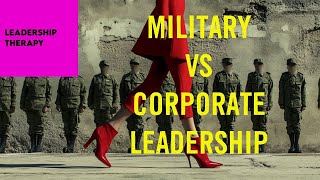
Chris Collins answers a community question from a Marine about translating military leadership to civilian corporate settings. He contrasts rank-based military authority and boot-camp socialization with the choice-driven corporate environment. Collins outlines five core areas for success in business leadership: study psychology and human behavior; develop charisma; master storytelling; recruit and surround yourself with the right talent; and outwork others by understanding the broader business (including financials).
Chapters
Welcome to the Syndicate X Library where we train people how to be effective leaders. Today we're going to talk about the difference between military leadership and traditional business entrepreneurial corporate leadership. Now in my new book set I am Leader. When you get this and you're going to want to get it, if you don't have it, it comes with a activation QR code. When you activate that QR code, you get access to online training and even better, a community. And in the community that we have in there, there is a thread where members are asking questions about leadership. I'm hand grabbing some of those questions and going to answer them here because I think they're, they're interesting. I will say one of the best outcomes of me putting this book out is this community and that is by design. I wanted to att a certain type of person that wanted to have an elevated conversation about leadership and really wanted to grow and get better. And I think the price point and the way that we're marketing this has achieved that and it's, it's really, really fun. There's so many great people in there and the, and the interaction that we're having is something I've been craving for a long time on the subject of leadership. Now I have a question today from David. I'm going to tell you, David, I broke out this cigar for this and it's a davidoff anniversario number one. It's incredible. I've smoked them before and I probably haven't had a, you know, a real cigar in a couple months. So this is a treat for me. His question is, as a marine that has now worked in and we'll eliminate the industry, I would like to see some content on how to cross military leadership over to the civilian side. I've worked my way up with an awesome company but sometimes I fall back into my military leadership mindset of just do what I say and I will explain it later. Unfortunately, sometimes being a leader means catching yourself and stopping mid sentence when you realize we work with people that need the complete instruction, including the why and the how it's done. Also awesome book. I'm almost all the way through. I am and I'm looking forward to the leadership book. It's a great, great question.
You know, some of our best leaders have come out of the military and having a military background as it, you know, pertains to leadership is a huge advantage. But there is a side of it that can be a disadvantage and that's kind of what we're going to talk about here. Is that. That gap in between the two? Because.
The. The thing with the military, if we're just kind of analyzing how the leadership structure works, is it's very much determined by rank. And so I'm in the military. I might be reporting to somebody who's less talented than me.
In every stretch of the imagination. Like, they just might not be that great. But because of their rank, I'm going to do what they're telling me to do. My success is determined on that. In the corporate business world or entrepreneurial world, that is not the case. People have many choices. They can go work somewhere else. There. There isn't a rank system like that. They. They have more options. And so it's a different approach, which, which we'll get into now. The one thing that the military has that we don't really spend a lot of time on or develop in the. In the corporate world, is this ability to take people from all over the country. Different economic statuses, backgrounds, race, doesn't matter. None of it matters. We enlist them and we send them to.
Some form of boot camp. The whole purpose of boot camp is to break them down to the lowest common denominator. Like, you're stripping away identity.
Putting everybody in the same uniform.
Shaved head. Like, I can't imagine shaving my head. Like, my hairline is receding. I'm not in any hurry to be bald. I'm trying to fight it as long as I can, but that's just what happens. Like, there's a. There's a little bit. For some of us, there's a little bit of humiliation even to that. But you're. You're broken down to the lowest common denominator, and then you're rebuilt. The outcome of that is you. You have soldiers that are conditioned to follow authority. Like the system now is to succeed in the military. You're just walking up the stairs of rank. Like the person in front of you is the one in charge. And like I said, at the top of this, their talent is irrelevant. You're just gonna. You're gonna follow the orders of your superiors. It's just a different style of leadership. The, you know, the outcome of the boot camp is incredible because you have very patriotic, focused individuals coming out of that. In the. In the business world, we're hiring people to fill roles. Most of the onboarding process in most companies is, you know, here's what the job is. Go ahead and go. There isn't any sort of attention to the person in their identity whatsoever. Our hiring practices are very inconsistent. Most people aren't familiar with how to hire or, you know, who to hire. And so that part of it very much creates these inconsistencies.
And then in the corporate world, most people aren't leaders, they're managers. There's just a level of management that, that, you know, you can go out and buy books on leadership, but really, if we're being honest, those books are for middle managers. That's how the, this, you know, business world, especially in America, has been built, is on middle management. Middle management is just babysitting a system that somebody else created. I mean, I say it in, and I am at the kind of sort of beginning of the book is leaders are one in a million. Like managers are everywhere. Leaders are, are very, very rare. But that's what we're going to talk about is how, how to be a leader in that environment different from the military environment. And I came up with kind of five things that I, that I think are very different. So now the first one is that you don't really have to understand psychology in the military world to be a leader because the rank system does a lot of it for you. Like, you have to take orders from your superior. Not, you know, not at the highest levels like in special ops. They're trained to think for themselves and, and create their own plans or whatever, but they're still given a mission from somebody who's a superior. Even if it's all the way up to the president, they're getting their orders from a superior. In the entrepreneurial business world, you have to understand psychology and human behavior. You just have to, you have to be a student of it. You have to be paying attention to it. Most of what you're doing is based on psychology and human behavior. Because people just aren't going to follow a rank system just because you're paying them or you're giving them a job or an opportunity. It just, it isn't how it works. Like, most of the time you find yourself in a situation where you're, you're herding wild animals. And a lot of times, you know, I've noticed this a lot, people will take a job not even understanding what the job is. Like you could like, let me give you an example. Like, let's say here, here at the office, we're looking for somebody who can, can make videos. And so we run an ad for somebody who has a background making, making videos. The peop. Sometimes people apply, they're like, from the insurance industry, they're selling real estate. Like it's, you know, they have no concern whatsoever for what it actually is. Like, that's just, you know, if you've ran ads and tried to hire you, just sometimes you're just blown away by the people that are very aggressive in trying to, to obtain a position that they're one, not qualified for. And two, have no, you know, no interest in it. Just it, it lacks a lot of, a lot of common sense. So number one is you have to understand psychology and human behavior because the ranks, you know, the. Just do as I say. And you mentioned that in the question. That just doesn't, it doesn't work in, in.
The other side. The next one. Number two is you have to work on your charisma. You have to be likable. You have to be authentic and believable.
Nobody wants to follow somebody that they don't believe in or like. If you can't lean on the fact that it's a rank system and you do it because I'm your superior, then you have to very quickly develop a charisma that makes people attracted to you and makes them want to follow you. And, and in that process, you, you have to kind of be authentic and you have to, you have to radiate an energy that people want to be around. You know, charisma also kind of insinuates that you got to have a little bit of a positive twist on things because people are attracted to that. People are attracted to people who believe that things can get better, that we can do better, and are always trying to improve.
And so charisma is a big part of it. Number three, that is a second cousin to charisma is you have to learn how to tell a story. You have to be able to tell a better story than everybody else. And you know, if, if you want to be a leader, that means that you are, you are leading people after a mission or a cause. You have to be able to tell a better story about the mission and cause and why you're doing it. You have to tell about a better story about why, how, all of it. You have to be a good storyteller because people think in stories it's, you know, if you, if you just pay attention to really, really effective leaders. They were incredible storytellers and orators and they had tons of charisma. It's very, very rare that you see a leader that isn't charismatic. There are leaders that.
Aren'T that charismatic that are behind the scenes people that you would never know about. But they're the, you know, they're the money guys or the Investors, they, they're in the background, but they're in the background because they're not real charismatic.
And they know that and they understand that. But that's a really hard position to get. Like those, those, those types are very rare and they're hard to study because most people don't even know they exist.
Number four is you have to surround yourself with talent and like minded individuals. You have to be a people collector. Where in the military we break everybody down and rebuild them. You, you have to be able to attract the right sort of person for the mission that you're trying to accomplish in the corporate or business world. One of the biggest mistakes that we make, and we've all made it, I've made it, is we try to fix people that don't want to be fixed. That's not leadership, that's insanity. And so if we go back to number one with the psychology and understanding human behavior, you have to use that to be able to pick the right people. Because that saves you a lot of dead energy, dead time. Like it's just a, it's a time bandit and you end up feeling like you're going insane a lot of times when you have the wrong people because you're in a sense you're just gaslighting yourself. Like you assume that they want to improve and get better because they're in that job, but the whole time their actions are telling you that they don't. And they just want to be entitled and left alone. And they have no desire to get better personally, let alone contribute to a bigger cause. But we'll double down and we'll spend a lot of our time trying to fix people, you know, but the best people learn and figure it out on their own and they're, they're bringing a certain magic to the situation. And so you gotta be really good at collecting the right, the right, you know, collaborators in your, you know, in your business. I would even say employees because, you know, it isn't really about employees. It's about collaborating with the right people that have a shared, you know, mindset and sensibility. And then number five is.
That you have to work harder than everybody else. Like you have to be in two places at one time. You have to know more about whatever it is that you're trying to do than anybody else. Like I'll tell you, one of the things that helped me leapfrog.
In business.
Was that I knew the financial statements and how the money was made when everybody else was just doing their job. So just think about this for A second, if, if you work in a company and you're a middle manager, most of the time they don't understand how the money's made. They understand what their, you know, what their thing is in, in the overall scope, but they're not, they're not understanding the other parts that are connected to what they're doing. And two things happen when you understand the bigger picture. Like if you understand the purpose of the business in a, in a bigger way is you transcend your department or whatever your responsibility is as a manager, and you become a leader because you start developing and thinking about things in a way that affects the overall scope and you're making everybody else better by your contribution. And so you have to work harder, study more.
You know, be in two places at one time. Like, it. It often, it often surprises me in situations that I find myself in where I'm with industry experts on something and I know more about certain parts of their business than they do. That always blows me away. But it's just true. Like, it just is, like, and it's sad, but it also will make me the leader in those situations. You have to give a piece of yourself. You're going to give a piece of your soul. In order to be a leader, just in the effort, in the amount of learning and understanding and listening, you got to ask way more questions.
Like, you know, the best leaders are asking questions. They're. They're not so sure about anything because it can change really, really quick. You understand psychology. You work on your charisma. You tell, you tell a better story, Surround yourself with the right people and you work harder than everybody else. When you walk in the room, the energy and what you will project will naturally make you the leader without you having to have the title. And that's really the difference, right? In military, people follow you because you have the patch on your shirt. In the rest of the world, people follow you because there's something about you different than everybody else. And that something about you is that you know more. You, you're better at communicating it and telling a story. And you're charismatic. You. There's just a different energy that's coming from you when you're interacting with people. You're authentic, like, you're not. You're not. You're not trying to bully people. You're not trying to get over on them. You don't have any sort of blackmail in the situation. In. Blackmail maybe isn't the right term for it, but they're following you because they want to, not because they have to.
It's a great question. Thank you.







