Lisa Copeland: Follow the Money (Service Drive Revolution)
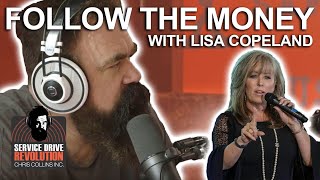
YouTube interview (April 15, 2019) of Lisa Copeland on Service Drive Revolution. Lisa recounts her path from fashion school into high-volume car sales, F&I and dealership leadership, describes innovative retail experiments (mall showroom, $30k runway, concierge delivery, referral pay plans, events), and explains a strategic pivot to focus on service and female consumers (“follow the money”). She discusses industry pressures (compressed margins, inventory/floorplan costs, declining SAAR, subscriptions, rideshare) and advocates cross-training, customer-experience design, and women in leadership. Contact details and media projects (lisacopeland.com, carsherway.com, radio/show "Cars Her Way") are provided.
Chapters
Foreign.
Welcome everybody to Service Drive Revolution. Today we have a very special guest, the talented and beautiful Lisa Copeland. She has received the Walter P. Chrysler Award for Sales and service excellence, was named one of the five most powerful women, and in Austin by Austin Business Journal, broke the sales record for Fiat for cars sold in a month and is the author of Crushing Mediocrity. How are you doing, Lisa?
I'm doing great. How are you?
Great. And I think you have four kids, right?
No, no, I have two kids and two grandkids.
Oh, grandkids. It's your job to spoil them.
I think it is. Spoil them and then hand them back.
Give them sugar and hand them back.
That is the ultimate parental revenge.
I love that. So this is Service Drive Revolution where we help managers and advisors understand customer service systems, how they can perform better in their service drives. And so I'm excited to talk to you today and pick your brain and get some of your insights in reading your bio. The thing that fascinated me is that you started off going to fashion school, right?
I did, I did. I was a fashion major.
So you're going to be a designer?
Yes, that was my dream. Just like every other 18 year old girl.
Do all 18 year old girls want to be designers?
A lot of them at least. At least back then I was Dallas, Texas and it was the 80s and it was very cool to be in fashion. I'm not, I'm not sure so much anymore.
It'd be much cooler to be in STEM in la. I don't think that they call it FIDM here, the Fashion Institute of Technology. I don't think they're hurting for, for students because it's a big campus here in downtown la.
Yeah.
So how do you go from, from wanting to be in fashion to automotive?
Well, I was in college and I wrecked my car. And like any good fashion major, I was not paying my car insurance. So I called my dad who was in. It was in California. Dad, I wrecked my car and I haven't been paying my car insurance. Of course he had been giving me the money to pay it and he said, you need to figure it out, kid, so figure it out. I did. And back then in the 80s, you could sell cars and get a demo to drive.
Yeah, everybody had a demo.
I begged my way into a car sales job at the number one dealership in the country, which at the time.
I didn't even realize the magnitude of it.
And so a career was born out of necessity.
So what was your impression when you started selling cars? What kind of cars? Were you selling Chevy? Chevy.
Chevy's in Dallas.
What was your impression?
Well, so I had never even been in a car dealership in my entire life, not one time. So going into it was pretty overwhelming. They did not want me there. They considered me a lightweight. I was.
But it was survival. It was like I had to sell cars because I had to keep my blood. There was. There wasn't. And there still isn't much public transportation in Dallas.
Yeah, Dallas is very spread out, kind of like Los Angeles, where you kind of have to have a car.
And so how many cars did you sell your first month?
I don't remember, but not a lot. But my second month, I know that I got to 15, and. And I just. I kind of kept going from there.
What was. What was your system for selling cars? Do you remember back then? Was it like, making friends? Was it listening? Like, what was your superpower, your magic?
I think the customers really rooted for me. I was the only female on the sales floor. I was very young. Of course, we had. I mean, we were the number one domestic dealer in the country.
So, I mean, so there was. There was Longo, Toyota for overall and import, and then we were the number one domestic dealer in the country at the time. So we were selling about 1200 new cars a month.
So there were. There were plenty of ops to go around, you know, and I think that. I think people liked my innocence, and they liked what I didn't know, and they trusted me because I wasn't smart enough to pull anything over on them.
How many salespeople were there.
In the new car department?
There was a hundred. Holy cow.
So averaging 12. A salesperson?
Yeah.
Yeah. That's funny.
100.
It was unbelievable.
So then how long did you do that?
I'm trying to think about almost two years.
And then. And then I decided to move back to California, where I was from, and my parents had talked me into it, so I went to work for Dior out there, who happened to be the number one master store in the country.
Boulevard. And within about six months, they promoted me and put me in F and I.
And then did you thrive in F and I just like you did in sales?
I did. I did, Yeah. I mean, I spent. You know, I mean, I probably spent more of my career in F and I than I ever did in as an owner. I did a principal, a general manager. You know, I was. I've been f and I F and I director, platform director of multiple stores. I spent a lot of years in fi.
Yeah, the. You know, the thing That I know about F and I, that I learned from somebody who actually works for me now, Lori. Lori Clinton. I don't know if you know her, but I hired her to come in and fix my F and I department once, and.
She pointed out that a good fi manager has to have worked on the desk almost because they unwind and rewind deals in the box. And it's almost harder than the desk in a lot of ways because you got them sitting right in front of you.
Yeah, I personally think it's a lot harder than the desk. I think the F and I department is the most important department besides fixed ops and in the dealership. But I didn't understand the importance of fixed until I became a general manager and then later a dealer principal. Then I understood the importance of fixed ops.
Yeah, it's. I actually, I had a policy that you had to work the desk before you could be in F and I, just because of, you know, learning. Learning that. So how do you go from F and I to then a dealer principal?
Well, a lot of steps along the way. So I. I was a sales manager, used car manager. I mean, I held every job in the dealership with the exception of service manager.
Were you a parts manager?
So what? I. Pardon me? No, no, no. I, I'm. I. So I. I never did anything in fixed operations. So when I became a general manager, that was. That was my most.
The toughest thing I had to learn was the fixed. Was the fixed operations and the importance of fixed. And, you know, when you're in the sales department, you know, you just, you know, you just don't think about it. But as a dealer or a gm, reading a financial statement, it's all about your fixed operation.
Yeah. It's the fixed absorption, Right?
Yep.
So looking back, what were the biggest takeaways when you were green and just starting to learn fixed ops? If you could go back and give yourself advice, what would you tell yourself about fixed ops?
I should have learned it sooner. I should have had an appreciation for it when I was a sales manager, even in the finance department. You know, I think that if myself and my department would have had a better clue as to the importance of it, I think that we would have been better at selling warranties and selling aftermarket products. Product.
It's funny how we run car dealerships like silos, right? Like that, yes. Like, if you had to go back and do it again, would you make the F and I managers work in service for a week?
If I had it to do again, I would. I would Rotate all of my managers around. Yeah, Sales, F and I parts, service.
Everybody.
That'd be powerful.
I would make the new car and the used car manager swap for more than just their afternoons off.
Because I think that that's the way that you really grow an appreciation for your brethren and then really start to understand the importance of every department.
So do you remember when you took over as general manager what your net to gross was in fixed ops and what your, you know, if there was csi, like what the general condition was of the department when you first took it over.
You know, net to gross? No, I could not tell you that. I can tell you we always had good csi. And one of the proudest things as a dealer that we won was the Wall Street Chrysler, which of course is very, very weighted on service and parts. And it's very rare, I think, that they give out 10 a year, something like that, for all of their dealers in the network.
And so how do you, how do you transition?
Was always exemplary. I mean, always. I mean, that was not an option. Too much is weighted on it. So, I mean, every pay plan that I designed in the store for everybody was tied to cei.
So how do you transition from general manager to dealer?
We launched Fiat brand back to America and I was the first non factory store in the country to open. And so after writing the big proposal to Fiat brand, they adopted quite a bit of it. And I just felt a lot of ownership toward the brand.
I brought in a business partner and.
We rocked and rolled. It was a lot of fun. I'm very grateful to that brand.
So what was your approach that made you so successful?
We wanted to revolutionize the auto industry. So we opened up in a high end shopping center in Austin. Tesla followed us. Just for the record.
We turned it into an experience. So I built a $30,000 Runway down the middle of my showroom floor because this is my fashion. I wanted to be the delivery, to be the best cart, best part of the car buying experience. Just like the finale in a fashion show.
I hired women, a lot of women, millennials and minorities. And so I just, I just really took a different lens to the auto industry and I said, you know, we're going to do things differently. And so I had the buy in of my team because they wanted to revolutionize the auto industry too.
And so literally, you have a Runway, like a fashion Runway in the middle of the showroom.
Yes, we did, we did. I spent $30,000 on it. I had it built, engineered everything.
And how often would you have a fashion Show.
Well, in the very beginning, when we were selling, you know, 20 cars a month, every car got delivered on the Runway. I mean, I mean, we invited people to bring their friends. We set seats up alongside of it, just like you would on Fashion Week. And the beautiful thing was, is that that really helped us launch the brand. You know, the friends were tweeting and on Facebook with it, they're like, oh, my gosh, if, you know, buying a car is like this, I want to look at one of those cars too. Then when we started hitting volume, you know, it was impossible, but the Runway stayed because it was great to park cars on for display on the showroom. And plus, it's just a great story to tell.
What other retailers were in there in that mall?
Let's see, Neiman Marcus, Apple. I mean, it's a very, very high end, aspirational outdoor mall with apartments, outdoor community. Tiffany's was in there. I mean, it's very high end. Everything was high. Probably the lowest end store in there was Macy's.
That's. That's a perfect place for a dealership.
It was, it was, except. But then when we started doing, you know, volume and then. So then we had to, you know, so then of course, you know, the first year we sold 972 cars out of a shopping mall. So then now you get into the service. So we were having the Fiat serviced over at the Chrysler store, and I did not have any ownership with the Chrysler store. And the service was a terrible experience for my customers. So that was a huge, huge problem. So my customers would have this like white glove experience. And then all of a sudden, now they get thrown into the Chrysler store under, you know, not. Not as good of management as what I had. So.
And now all of a sudden, the customer experience starts to wane. So that was really tough. So let's see, what year do we build it in 2015, we built a new state. We built a new dealership in Austin that had its own service department.
Oh, so you started out without a service department?
I did, I did. But I had access to our Chrysler department.
How do you think your original love of fashion and your experience in fashion helped you on the retail side of automotive? Besides the Runway, I'm the number one.
Gucci Fiat retailer in the world.
That's on tape from Mr. Sergio Marchioni, the chairman of the board.
You know, I think that the fashion piece was all about having it at the mall, having it be experiential. Me understanding that female consumers purchase and experience, you know, women. Women Shop together. I mean, you know, dinner, you know, you know, going to buy a new dress for a wedding, you know, you grab a bunch of your friends, you go to dinner, you have a couple glasses of wine, you shop. I mean, it's an experience. And so, and that's just for a dress or a pair of shoes. So imagine what, what happens when you turn the biggest, second biggest purchase of her life into an experience. You build raving fans and brand advocates for sure.
Why do you think our industry gets that wrong? Most of the time it's run by men. You think that's really it?
Yeah, million percent.
What's the difference? Like, break that down for me. Why are we as men so bad at that?
Because shopping to men is not experiential. Men are conquerors. Women are gatherers, you know, and so, you know, men, men don't like to shop. They're, you know, they're, they're not experiential in their shopping, you know. You know, I don't know about you, but if my husband needs a new shirt, well, typically I would go buy it. But if for some odd reason he would go buy, you know, he'll walk into Nordstrom, he'll buy the shirt and turn around and walk out, whereas I walk into Nordstrom, I'm going to go look in this department, that department, the shoe department. Well, I'm, you know, I'm already at the mall anyways. I may as well jump over here to and see what's going on. And you know, that's just, that's just how we shop.
And that's a nightmare for your husband.
Yeah, it's a complete. So, so I recreated the shopping experience, you know, I mean, salespeople would get mad. They're like, oh my God, she's coming in again. And I said, women gather information. Just because it takes her longer to make a purchase doesn't mean that she's not going to purchase. And when she does purchase, if you take good care of her, she's going to send you 15 people to come buy a car. All he's going to do is go to work, say that he, you know, someone's going to see the new car out in the parking lot. He's going to go, yeah, I beat the salesman up on the deal. I killed it over there. And that's about it. She's going to have it on social media, she's going to tell her friends. So, you know, it is worth building the experience.
For the female consumer. It may take you a little longer to get to the finish line. But she will be a better customer overall. And so that's where I don't think that men understand.
They don't understand the psychology of sales, number one. Number two, they've all been in it since 80s and 70s. A lot of the guys that I know, and that is not how things were done back then because there were no women in leadership.
What were the changes to the steps to the sale that you made that you think impacted the positive end result compared to the average car dealership?
Right. So I had a concierge service back before anybody had concierge services. So if my Internet or BDC was on the phone, like, oh, yeah, we can't get in until tomorrow. Okay, great. Well, Mrs. Jones, why don't we bring the car to you? Because again, we were low volume. Volume enough that I have the staff to do that. So, you know, the concierge service, you know, we weren't, we weren't mega pushy. I mean, don't, don't think that we didn't try to sell a car. That's why we were number one in the world. But, you know, but it wasn't the old back and forth, you know, you know, vendor trading. You know, we really built the value in the experience and we built the value in doing business with us. And so our customers just didn't come in with the mindset, oh, we're just going to beat you up. We worked very hard for referrals. I mean, the referrals and all of my pay plans were based on that. The referrals were just as important to me as the salesperson selling the car.
How would you write that pay plan? Break it down for me.
Yeah. So if somebody sold a referral within 30 days, they got an extra 2% on their pay.
So on the commission, they would get another 2% if it was a referral from something they sold.
Yep. Yep. Well, yes, within the last 30 days.
And what was the percentage of sales that were referral? Do you know?
Oh, gosh, I don't remember, but a lot. 30 or 40% probably.
Nice. Okay, so that referrals, what else did you do that was different than the average?
Oh, my God. I mean, we, I mean, I mean, I started a Fiat Alfa Romeo club. We had events at my store almost every single month. I was the chair for Go Red. So I mean, I chaired girl Scouts. I mean, all kinds of things I chaired. So I always had events at the store where, you know, where I brought women in and business owners and entrepreneurs and leaders in the community. So, you know, I mean, I just made the community part of our journey.
What do you, what do you see now that kind of like separates the like. What consistent problems do you see when you're working with dealerships or businesses now that are power.
People? I mean, I mean people, I mean most of them are good people. They really are. They're just uninspired.
The cultures are bad. Dealers still think that they can do things like they did in 2000. Whatever. That's why they have high turnover on the showroom floor.
Isn't it crazy?
It is crazy.
It always still surprises me.
The problem is, is that, is that they are making plenty of money. And until, until they're not making money, they're just going to, it'll just be business as usual. So I have a lot of really amazing clients and some of the biggest dealers in the country and they're all about it. So it's just, it's interesting. So I've said forever that when, and I tell this to female consumers, you know, the only way to get to a car dealer is in their pocketbook. You know, you can't just, you know, lay down and take that bad behavior. You need to take your purse and walk out. I mean, that's the only thing that matters to them is you not giving them your hard earned dollars.
Yeah. What kind of patterns do you see between the performers and the non performers?
I would say the performers really do care about people. They really care about their clients. They really are experiential based, you know.
And I would say the non performers are just in it for a paycheck. And so, you know, it's hit or miss. I mean they might hit a home run.
And that's just because they got lucky that day. The successful ones know how to work their current client base so that they can build a great referral network. And the non performers don't they just wait for the next person to walk in the front door?
Yeah, I agree, I agree with you there. So you grew up, your father was in Silicon Valley?
Yes.
What did he do there?
He was in the high tech business. He, he has started several software manufacturing companies.
And did you take anything away? He was an entrepreneur, right?
Yes, yes.
Did you take anything away from his struggles and successes with that?
Yeah, I think I took away that. You know, if, if you don't try, then nothing will ever happen. And I took away. If the guy or gal standing next to you can do it, so can you.
Yeah.
So I've just always, I've always believed that you just, you know, you have to give it all you've got. You have to outwork everyone else. You've got to have more passion and, and compassion. And people have to be your driving force, whether it's your employees or it's your customers.
What is it you, you feel being a woman in the automotive industry today? Do you think that it's changed for the positive or do you still feel like it's a boys club?
Oh, it's an absolute boys club. And I think that there are some good dealers out there that are trying to make a difference. I've got some clients that are just, they're fantastic and they're trying, you know, nothing is appealing to women coming out of school at all about working at the car dealership. Let's see, you can come to work, you can be on commission, you can work six days a week, you're going to work holidays. We don't have flex time. I mean, all of the things that other employees, years old. So it is not always 100% the dealer's fault that they cannot hire and retain great female talent. Part of it's just, you know, part of it's the industry itself and the, the lack of willingness to change. And I think that's, that's why we see the carmaxes, carvana, you know, places like that who, who were not car people. They just came in as entrepreneurs and tech guys and gals, and then they got into the car business. And so, you know, they, they run it just like more like a tech business. So, and so, you know, their ratio of salespeople is, is much more status quo than.
At parity than, you know, the retail auto dealers.
So how would you change it? Like, what advice would you give to be able to hire?
Well, I would do, I would do what I did. I mean, I mean, most of the time, not always, I was at a 50, 50 ratio, men and women. And. But that's because I was intentional about hiring women. I looked for women to hire. I made it. I mean, it was in my thoughts every single day. I need to hire two more women, I need to hire three more women. I'm gonna go out and I'm gonna go meet waitresses or bartenders or people that, you know, that, that work at the mall that, you know, sell me shoes and they're, you know, whatever. And so I was very intentional about hiring women.
Yeah. And would you agree that the two positions where it's most crucial is sales and service advisors?
I think it's. No, I don't I think it's the most crucial is leadership because women have to see it to be it. And if, and if they walk in and they don't see a career track that there are not women in leadership, then why, why is she there? It's obviously not something that the company cares very much about.
That's a great answer. Yeah, I didn't think of that, but you got me good there. I agree.
I always do. And again, I do think it's uber important to have women on sales and service drive. Absolutely. But that's typically where they stop and then maybe occasionally they get into F and I. That's kind of where women go to die in the core business is finance.
I actually have quite a few female service managers in my coaching groups. So.
Yeah, yeah, no, I would explain that.
Than you would think. But I agree with. They need to be in leadership because then they see the career path.
Yes. Sales management.
General manager, general sales manager, all of that.
Where do you see the automotive industry going? All that being said.
We have a bumpy ride ahead of us in 2019. Just read an automotive news that the Saar is going to decrease and so we're going to sell less cars in 2019 and there's still the same amount of rooftops that are open and the same kind of overhead and there's going to be less cars sold. And so, you know, we're going to start.
It'll get tougher, so it'll be interesting. And so if less cars are sold, that means there's salespeople out there that won't sell as many cars. You know, dealers, dealers will start getting desperate. They'll start, you know, trying to pick off their competitors.
It's, you know, margins will drop even more, right?
Oh yeah. I mean, I mean the margins are so compressed right now. You know, you have that going on. You've got your margins that are compressed and then you've got rising interest rates. So, you know, I sold my store when I was 16 and so back then I used to make money on my floor plan credit from the factory. I mean, it was actually a profit item on my P and L on my financial statement and now it's a cost. So dealers are reducing their inventories and salespeople are going to have to learn to sell differently. They're going to have to learn to sell what's on the lot because any good and fiscally smart dealer is going to reduce or should have already reduced their on lot inventory by 25%.
So that being said, you know, salespeople are going to have to learn to sell on a smaller lot and sell what they've got in stock.
Yeah, no, I read recently that the inventories are an all time high, though.
Yeah, well, that's, Yeah, I mean, I would not argue with that. It's just that that's terrible with interest rates. You know, I mean, every dealer in the country has gone from a floor plan credit, now a deficit.
Yeah.
And I have dealers that are clients that are went from making 100 grand a month on it to spending a hundred grand a month. It's that kind of swing with, with the rise of interest rates.
See, I think it's, it's funny because most dealers came up through the front, so most of them were in, were in sales. And they don't, they don't emotionally attach themselves to fix ops. But with margins shrinking and the, you know, consumers changing, fixed ops is where the whole game is. And the cars more and more commodity and so.
Well, and then the other thing is, is that you have dealers that are.
I agree with you, your margins are compressing on the front. But then, you know, you have so many customers.
Defecting after their warranties are up and going to the independents. And so, you know, either retaining those customers or, you know, bringing them back in, you know, the defectors back in. So it's like, it's going to be interesting. I had the opportunity to buy a dealership about six months ago and I chose to pass. You know, I just, I like what I do better than trying to get back into the bowling. It's, it's tough out there.
Yeah, it's, it's a, interesting thing to, to watch our industry evolve because in.
A lot of ways.
We kind of evolve or dissolve.
Yeah, it was interesting. I saw an interview with Roger Penske from the Detroit Auto show and he, he was like, no, everything's great. The auto industry is great. We're buying dealerships. And I was, I was like, man, he doesn't, he doesn't get the. It felt like he was very disconnected from what's really happening. And I don't know.
Well, I think that Penske was, I saw that interview. I think he was doing it to keep the confidence with his shareholders.
Yeah, it felt very propaganda, but not based in any truth.
None. None. None. But I mean, you know, but, you know, last week Auto Nation announced that they were laying off what, four or six of there are senior leaders in the C suite. There's cio, there's coo. I know that those are two of them going from Three regions down to two. So, I mean, we are seeing consolidation all over the markets.
Yeah. And whenever this happens, the strong survive and new opportunities come. It's not all doom and gloom, but it's, are you open to the new opportunities and to the change? Are you going to thrive and find it? Are you going to create a better customer experience, do business better, or are you going to sit and just watch it kind of melt away?
Yeah, no, it's really interesting. We're actually doing our business model. We're a digital strategy company and we're redoing our business model to go after. To work in the service department and bring in female consumers to service that have defected or that are doing business elsewhere versus trying to bring them into the sales department. Because. Because I feel like that's the biggest opportunity for the deal.
How do you find those? So are these females that currently aren't coming into the service department?
Yes.
And how do you find them without giving away your magic?
I was about to say if I told you that, I'd have to kill you, but.
I've got some of the biggest digital strategy partners in the country. And so that's what we do. And so. But what's funny, Chris, that we, we absolutely were all about bringing him into the showroom the last two years. But see, you know, Michael Dell says, I live in Round. Well, I live in Round Rock, Texas. So home of Dell Computers. So I follow Michael very huskily, and Michael says, follow the money. And so back when President Bush was president, Dell computers sold heavily into military and armed forces and defense. And then after Obama became president, they shifted their whole business focus to healthcare. You follow the money. And so I told my team, I said, we're gonna follow the money in 2019, and it's not gonna be in sales. It's gonna get dicey in sales.
And it's very crowded space. So we're gonna follow the money into the service department and we're gonna, we're gonna go after all of those, all of those mom and pops and the big chains and then the people that are not our customers, we're gonna pull them out of their service drives and pull them into our customers. Service drive, the female consumers. Because I don't, you know, the staff vary depending on, you know, who you look at in APA or various states, but it's between 60 and 80% depending on, again, what stat you look at. But I can tell you, for me, it was probably about 70% of the women bring in cars more than men.
For various Reasons she stays at home, the husband is here, baby, and take the car in. I've already talked to the service director, blah, blah, blah, blah. Half the women in the country now are, you know, single. Just various reasons. So we're following the money and we're moving all of our strategies.
But, you know, regardless, it works, it works. You know, women, women are the ones who tend to look at what we do and they want to do business with retailers and dealers that are, that are dedicated to providing excellent service. You know, CEI scores, you know, things like that matter to female consumers. Convenience, drop off, pickup. One of my, I have one of the biggest clients, the biggest Honda dealer in the country is my client Paragon. And you know, they, you know, their, their ros have doubled and it's because they pick up cars. I mean, most, 40% of the people that bought cars for them from them in the last 12 months have never seen their service department and are never going to because they're using Paragon direct.
So those that change and understand what change looks like are going to be great. And those that want to be dinosaurs are going to be run out by the Paragons of the world. That's my personal.
Prediction.
Yeah, I agree there's opportunity right now, but you just got to find it.
It's rampant. Yeah, yeah.
That'S, that's, that's fun. So if Dell sold to the military during Bush and during Obama, he sold the health care. Who's he selling to during Trump?
Business.
Business.
They're going after businesses again, heavily. Yeah. And again, I mean, I mean, you know, federal was just like, you know, defense and federal was again under Bush because, you know, we were all things about national security. And then under Obama, of course, health care, trying to revamp that nightmare system. And. Yeah, but the cool thing about Michael is that, I mean, he's very transparent about the trends and, you know, what Dell is doing. And it stuck with me back when Bush was president, but it stuck with me when I went to one of his speeches. Both of my kids worked there at one point in sales, but I went to a town hall meeting of those and he said, you know, as a company, we will follow the money. And as entrepreneurs, all of you sitting in this audience, you need to follow the money. And it has never left me. And that was back when Bush was president, so.
A long time ago. And so that's when I made the decision in 17 that we would pivot and my team would follow the money, which is service.
Yeah, I think every business needs a pivot every 10 years at least, if not sooner. It's interesting to see Apple pivot to a services business from hardware. That fascinates me.
Yeah, it's super interesting. You know, Apple's building a huge, huge new campus here in Austin. It's like a billion or 2 billion or whatever. I mean they're coming here in four force. It's going to be crazy. They bought all this land. It's just the biggest news here. Like real estate's booming and everything and they're bringing like 3,000 employees.
Yeah. Then it's, you know, services. It's not hardware. They, they don't care if you upgrade your phone as long as you're in the ecosystem and you're on itunes and in the app store and using their stuff.
There's a whole lot more money in that. Taking our money every month on a subscription based product.
Yeah, that's interesting.
And so all of that's coming, you know, and I'll tell you, so that's some of the things we see in the, in the industry is that you know me, really, the dealers I work with, talking and like you are more than a car dealer. You are a transportation solution. You know, whether it's subscription or I mean, I mean I actually have one dealer who is Vespa business that he, he leases out Vespas. He's like, why not? People need transportation. They're coming into my store and you know, so it's, you know, the mindset.
Has got to change doing that in bigger cities. So like here in Los Angeles you can join a Porsche subscription and there's two levels.
Yeah.
And then you just, they'll bring you, you get a menu and you're like, I want the Carrera or I want the, you know, whatever.
Yeah, yeah, no, I was just with the head of Porsche in fact. Or number two maybe I was at the automotive summit out at Google right before nada. And they talked about it, you know, but you know, so in 2014, I launched with Cox Automotive as my partner. I launched the first subscription base and Flex Drive. It was Flex Drive, myself and Cox Automotive. And it was the first subscription base ever in the history of this country. We launched it and I say we. I mean they were the technology, they were the software. I provided the cars and the location. But it was a test to see how it worked. And so we did weekly subscriptions. I had 200 cars in my fleet and really who our target was was Uber drivers. And because if you think about it, you know, an Uber driver, like today they Might need a Corolla because they're making airport runs. But then when south by comes to town, you know, they need a Suburban. So it worked really well. And that was really the first taste of subscription.
And then many other, like Cadillac, the book came after it. And again I was just the facility for it. So I'm not trying to take credit for launching it, but I was the first to open with a subscription based product. And then a lot of the OEMs follow flex drive and Cox Automotive into the subscription business. Volvo, they've got a great one on the XC40 and you know, it's a good model in the right market with the right customer.
Yeah, it's interesting too to see how that's going to work because those sort of programs seem to pull better in big cities like la, Dallas, New York, Atlanta. But then you're still going to sell trucks out in farmland and it's still the local dealer that, you know, kids went to the school there's on the chamber of commerce, a million percent.
But the other disruption we have coming down the road like a straight train is that, you know, kids, kids don't want to get driver's license anymore. I mean, how old you are. But I mean, I was waiting at DMV the morning of my 16th birthday, like I just had to get a driver's license. I flunked. But for the record, I could not pass parallel parking. So I was devastated at my 16th birthday party that night. But that was a really big deal. But now because of rideshare, I mean, kids don't care anything about having a driver's license. Not near as many as they used to. I mean, they're falling off like rides because mom and dad say, oh, just take Uber, you know, they feel like it's safer. So, you know, so all of those and people living in cities, you know, I mean, I mean they're relying on rideshare much more than buying a car. It's much, it's much more economical. So that's going to contribute to a declining saar. So it's just, it's interesting. It's like a science project. If you've been in as long as I have, it's fun to watch it change.
Yeah, it's kind of like the perfect storm you have. Yeah, it is Tesla creating.
Service. Yeah, they're still gonna need service no matter what.
Well, that's just it. I mean, I mean whether, whether a ride share owns it, factory owns it, and it's a subscription car. The dealer owns a subscription Car. It's an Uber. It doesn't matter. It still breaks. So it's just. Who is the lucky dealer that is gonna earn their business?
Yeah, I like that.
And that is the opportunity.
So where can people find you?
The easiest way to find me is my website, lisacopeland.com.
That'S really easy.
And we're getting ready. Yeah. And we're getting ready to launch our consumer site. It'll be up in the next few days. And it's just, it's carsherway.com.
Oh, that's great.
Yeah, I'm excited. We have a show coming out on Fox, a consumer, a show geared toward female consumers, which I'm the host of. So that's exciting. I've got a radio show. It's been, right, a lot, a lot of stuff. I mean, it's just, you know, it's very, very top of mind. And female consumers have really taken their power in this space and they're demanding a different level of service. And I'm, myself and my team and other great women in the industry, we're advocating all the time that boys, if you don't take care of her, then we're going to send her somewhere else because there are enough good dealers in the world that, that are willing to play by the rules.
It's sad.
That you said, yeah, I.
I, I, I keep threatening. I'm gonna have two websites. The car's her way and the car's not her way. It's like, which list do you want to make? Naughty or nice?
Exactly. That's funny. Yeah.
Right?
It'll, yeah, it's got a flip at some point. It's crazy what some guys trying to get away with, but it'll, it's changing better than it was actually.
Still getting away with.
Oh, some days I believe that, and some days I get phone calls and I'm just like, this could not have really happened in the year 2019.
So just like the commercial says, we have a long way to go, baby. But, you know, we're going to, we're going to keep our feet on the gas and, you know, just continue to keep people aware and more importantly, consumers aware. And that's, that's a big part of our platform in 2019. But from the business side, the pivot is concentrating on driving female consumers into the best automotive service facilities.
Great. Well, thank you, Lisa. Everybody go to lisacopeland.com and watch out for her show on Fox. Where's your radio show that they can listen?
It's Cars Her Way.
Cars Her Way.
And yes. And we just did the first few of them. And so on the website where we're what cities we're syndicating in.
Awesome. Well, thank you so much for doing this, Lisa. I appreciate it. It was a great conversation.
Yeah, absolutely.
Interesting that.
You have that conversation about female consumers and female leadership. And it seems to me like so archaic that we're still talking about that. But it obviously is a big deal. I think too, like this might not be.
The, I don't know, this might not resonate with everybody, but I feel like it's better on the two coasts than it is in the center of our country. With that, it's just a little different. I think I get a little lost in that sometimes being here in la and then I'll go to the Midwest and it definitely is still more male oriented. And we've known the stats for a long time that females make the buying decisions and they influence them. But we haven't adapted to that or really taken that to heart. And.
You know, it's something that everybody should probably think about and do an inventory and especially encouraging to have female advisors.
Female leaders, but just, you know, doing away with the boys club as much as you can and making about the customer and a comfortable place for customers to come and do business that's focused on their experience and the outcome for them.
Is that's where the gold is in the magic. So we appreciate Lisa coming on. That is your service Drive revolution for this week. And I will see you again in a couple weeks. I hope you have a great one. Remember, we have the.







