LISA RINNA: Growing Up an Outcast, Finding Yourself, and The Power of Positive Thinking
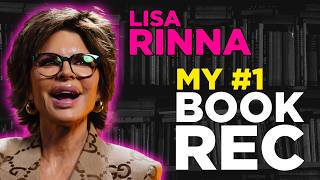
Lisa Rinna moved from Newport Beach to rainy Medford, Oregon as a kid and felt like an outsider because of her darker skin and fashion sense. Norman Vincent Peale's The Power of Positive Thinking changed her life, leading her to daily rituals like candles, baths, and gratitude journals. She's releasing a memoir called You Better Believe.
Chapters
My crash course in acting. I really had to learn who I was first. I mean, I had really no confidence at this point. I had no idea who I was, what I thought, how I felt. Because when I grew up, you don't feel things and you certainly don't say how you feel.
How long of a process is that for you to work through it?
Forever. I'm still in it. Chris.
One of the things I love about books is like this book will mean something different to you than it did in your 20s.
Right.
Equally as powerful.
I'm like a Spongebob and I'm constantly evolving. Attitudes are more important than facts. Isn't that good?
So good.
Isn't that so good?
I want to focus on things I can affect. I know things that I have agency over.
We get so caught up in the little minutia. You forget about your curiosity, you forget about your drive.
You can't just live by cause and effect. You have to believe in something bigger.
Absolutely. That's why I'm an actor. That's why I am a performer. I want to move people, make them feel something and bring joy.
It's beautiful. So now.
Yes.
The big question.
Oh, geez.
Are you ready?
I don't know.
How did the Power of Positive Thinking by Norman Vincent Peale change your life?
Well,
hey, really quick. You're about to enjoy an incredible conversation with a fellow book lover, Lisa. But I got 50 copies of her new book, you better believe I'm going to talk about it. And I want to give them to you and have you join the conversation. So all you have to do is go to the link in the description. You just have to subscribe like and comment. That's it. We'll pay for shipping and everything and get this out to you right away. And some of them are going to be signed. She was nice enough to do that for us. So enjoy the conversation, please. Welcome to the show, Lisa Rinna.
Hi. Hi. Thanks for having me.
Thank you for coming.
Pleasure.
So, the Power of Positive Thinking. This is one of the best selling books of all time.
Is it?
Yeah.
I did not know that. It's just one of my favorite books because it really changed my life and I don't know how it came to me. I don't remember that. Isn't that funny? No. I don't remember how I got ahold of this book. Cause my friends at the time, it was quite early on, I was in my twenties and my friends at the time, you know, were not avid readers. But I had moved to Los Angeles. I was with a boyfriend, that the relationship was ending. And, you know, I was starting to really feel that I was in the wrong place and I needed help to find my way out. And that is how it came to me. And that was the first one. And then it was the Road Less Traveled. So those two books somehow got me out of the situation that I was in, which was quite negative at that point, and saved me and got me to keep moving forward.
Where did you move here from?
San Francisco, via Medford, Oregon. So I was in Medford, Oregon. Went to San Francisco cause my grandmother lived there. Now is also a pretty bleak time. Still with a boyfriend, but very lonely. It was really lonely.
Did the boyfriend originate in Oregon?
Yeah, he was my high school boyfriend.
So you. Did you grow up in Oregon?
Yeah, Medford, Oregon.
What did your parents do?
My dad was an artist and he worked for the company called Harry and David. They do like all the mail order.
The Pears.
The Pears, yes.
Send those to people every Christmas.
Yes. My dad was the art director there.
Oh, wow.
For 25 years. So we had moved originally from Newport Beach. That's where I was born. And they had an office in Newport beach and then an office in Medford, and they decided to close the office in Newport Beach. Henceforth, my mom's rude awakening to move from Newport beach to Medford, Oregon, which was quite a culture shock for her.
How old were you?
Seven.
Seven. And did you have siblings?
No, I'm an only child, but I had half siblings. I had a half sister, but she didn't live with us. So basically an only child.
Do you find it difficult to share?
I do.
Me too. I'm an only child. Are you people are. You know when you order fries and they're like, oh, I'll take a couple. You're like, no, order your own fries.
Trust me, I have had to learn. That's the biggest thing I've had to learn with my children. Because they want to borrow my clothing and my shoes and my everything. That's been the biggest challenge because as an only child, you did not have to share inside.
You're just in knots all the time. But what you say is the. The right thing?
Probably, yeah. And I tell them, oh, it's so hard for me to share this with you, but I'm going to do it, like happens every time.
And then you go and look for it and it's not there. And you're like, see?
Exactly.
Shouldn't have done it.
Exactly. And I put rules in to where if you're going to borrow it, you have to put it right back where it belongs, of course. And they're still scared to death of me because of it. Like, if they don't put it back, they're like, oh, my God, I got to put that back.
That's good.
Yeah, parenting well. Threats work. Yeah, threats do work, guys.
Okay, so you're seven and you go to Oregon. So.
Yeah.
When you're seven, what grade are you in?
Second grade.
What was that change like? Because Newport Beach. I'm from the northwest, so. Okay, I understand Oregon very well. I'm from Washington, but very similar north,
rainy, cold northwest, Newport Beach. I was running around in little short, short mini dresses out in the sun. My skin was quite dark because I have Italian and Portuguese. I mean, this is all part of the story. I have Italian and Portuguese in my blood. So by the time I moved to Medford, I was as dark as your chair. I was really tan. Played tennis outside all the time. So I looked very different from everyone in Medford, Oregon.
And fashion in Medford, Oregon, is survival. Not trying to make any sort of statement.
And I'm making a statement in my little Flores, Florence Eisenman, and Izod mini dresses that my mom dressed me in. And, like, my hair slicked back with barrettes. Like, I am styled without knowing I'm styled. So I show up and they're like, oh, my God, you know, just because I was different. Of course, you know, you become a target in school. So I really had never been through that. You know, I was only 7, but I still never had been through that in Newport Beach.
Kids are mean.
Kids are mean. And they were mean from the second grade all the way through the. I would say, seventh grade.
How far into that experience did you start dressing like REI and for the weather?
Never.
Never? Well, how did you even shop for cool clothes there?
Well, there weren't any. We would travel to San Francisco to see my grandmother.
You'd load up.
And my parents were professional shoppers. That's what we did as a sport in my family. They loved to shop. So we'd go to travel somewhere where they had, like, a department store or a mall, and we would go shopping. And so that's how I got that fixed. I never did the rei. I mean, I had coats and things, but I don't ever remember looking like I lived in Medford, Oregon.
That's the worst. Growing up there, I used to go to Vancouver, Canada. To Holt Renfrew.
Yeah, of course.
Or to, you know, or to la. How many times have you Gone somewhere and shopped so much you had to buy another suitcase to get back?
Not as much as now. That happens now. Not then. Back then was still pretty frugal. That happened recently. Actually it's only happened recently, but yes, that has happened.
Last time it happened to me was London.
Yeah, it happens to me in Paris. Yeah, for sure.
You can get in trouble.
Yes.
So fun, though.
So fun.
Okay. So do you kind of become popular? You start to fit in?
In seventh grade, I finally get on the cheerleading squad. And that's when I start to become popular. People start to like me, but not until then. I was ruthlessly teased until the seventh grade. And I just thought that that's how life went. I just thought that that was sort of what happened to everybody. So I didn't necessarily feel like it was just happening to me. I just thought, well, this is life. This is what happens to you. But then when I became popular, I was like, oh, that was for the birds. Like, this is what I like. I love to be the center of attention. I love to be popular. So I had found my niche as a cheerleader up until then.
Had you started reading books? Were you ever into reading that young?
I don't think so, no.
Not just little, like nothing you remember?
No. My mom used to read to me. I remember. And I had books in my room. But I do not remember a book at that time, to be honest.
So cheerleading. Did you have any other interests in high school?
I skied and I played tennis. I was very, very athletic. My mom and dad started me playing tennis when I was like four. So I was playing tennis all the time because they were tennis players. And then we lived about 40 minutes from the mountain, Mount Ashland. So we started going there every weekend. So I started skiing. And I've just always been athletic.
What did you think you wanted to do when you were in high school?
Be a veterinarian.
Which would have been terrible.
Horrible.
Can you imagine having a little sister in law and she wanted to do that for a while and then you. It's sad. That's a hard.
I would not have bless them. That would not have been a good job for me. Bless them is right.
You're too big of a baby.
Me too. You know who knows where that dogs
don't live long enough to begin with.
Yeah. Are you kidding? That would have really been bad. So then I wanted to be a veterinarian. But then I started getting like Seventeen magazine and Mademoiselle. And then I got a Vogue magazine when I was 16 and that was that then I was gonna be doing something in fashion. I didn't know what, but something. That's where my brain went to that creativity of fashion and art, because you got some art in the Vogue magazines and some interesting things that I certainly didn't see in Medford, Oregon. So that was kind of my window into the world, I would say.
So you finish high school and at that point you're thinking, I want to do something in fashion, but you don't really know.
Well, I'm thinking, I get the hell out of here quick. Like, I got to get out. Right. And so in high school, I had started doing musical theater, and I really liked that a lot. I was too scared to do. Do any of the acting stuff because they were called thespians and they were. They were clicky. And so I didn't feel comfortable there. But because I was singing and I was in chorus, I felt comfortable doing musicals. So then I thought, well, I'm going to go to college and I'm going to study acting. That then trans. The fashion transitioned more into, I'm going to be an actor. I'm going to go to acting class at college.
So that was a pretty clear decision. Like, it.
Yeah.
Felt like a straight line.
Yeah.
So you do you go to college in San Francisco?
I go to college in the University of Oregon. Oh, I go there. I haven't. And we're not at. We're not in San Francisco yet. So I go to U of O and I get into this acting class. Acting One. So great. I mean, I've never even read an acting book. I've never read a play. Nothing. So the teachers really were assuming that everybody in the class had read all the classics, had known, you know, major plays. I knew nothing. Zero. That was a little bit of a problem for me because at the very end of the class, we were told to do a contemporary play. I didn't even know what that was. So the girl that I was partnered with, we chose the Importance of Being Earnest. And that was not contemporary. Okay. It was great. We did a great job. We had fun. We sat in front of the two teachers or two male teachers, and they just ripped us apart. I never experienced that in my life. And they were like, you chose a contemporary play. I mean, you didn't choose a contemporary play, basically, you idiots. And I was so, like, horrified by it. I was like, I just didn't know any different. And so by the end of it, you had to be accepted into acting too, you know, and you wait and wait and wait and you go to the board the day that it's time to see if your name's on the list. My name is not on the list, but my partner's name is on the list who did the non contemporary play with me. And that was devastating to me because I thought, well, it's over. I can't be an actor that just like, if I can't get into acting too, you know, it's over for me. So I was like, what do I do? What do I do? And I. I don't know exactly how I did it, but my sister was living in Beaverton and I somehow I left school, I quit college. That's how devastating it was, because I was like, I'm here to take acting class. I don't want to do anything else. So I leave school, I go and stay with my sister in Beaverton and somehow get photos taken and create a Zed card and get a modeling agency and then start working for Nike and shooting their catalogs. So funny. And like traveling around with this group of models and we would go to like the magic show in Vegas and dance around and do aerobics for Nike. Big claim to fame there. Right there. Big claim to fame.
How long did you do that for?
Like maybe a year or two. Until I moved to San Francisco with Bob, because Bob, my boyfriend at the time, got a job at Esprit, the Esprit company. And I thought, well, I'll go with Bob to go to San Francisco and I'll do it there too. Harder. In San Francisco?
Yeah. Did you meet Bob at Nike?
I met Bob in high school.
Oh, was he in your high school sweetheart?
Yeah, he was a year older. And I, you know, Bob. Bob got me out of Oregon and got me to LA eventually. And without Bob, I probably wouldn't have done it. I would have been too scared. So kudos to Bob, because Bob help me get out.
So you, you move to San Francisco following him?
Yeah.
And then what happens?
Well, I'm too scared at this point to take an acting class, but I need to and I want to, but I'm too scared to. So I keep modeling. I signed with the Gourmet Agency. His name was Jimmy Gourmet. There were two agencies there. I signed with Jimmy Gourmet. Christy Turlington, the supermodel, is there. She lives there. She's doing like Emporium and Macy's ads. And so I'm able to somehow work because I start to get commercials at this point, which gave me a SAG card. I do a Mervyn's commercial, which then leads to my SAG card. And then I start doing, like, car commercials. And then I get like a coat commercial. And I'm getting residuals, so I'm able to continue to live, but I'm too scared to take acting. So we lived there for three years. And then Bob gets a job at another clothing company here in Los Angeles. And, you know, it was kind of depressing living in San Francisco. We lived, first of all in Daly City, which is never sunny, it's always foggy. And I became an aerobics instructor for extra money at Richard Simmons Studios. He had a studio at the mall. So I was teaching aerobics while I was doing commercials. And we were living in this big 900 unit apartment building in Daly City that had roaches everywhere. That's all I remember. Brown shag carpet, studio. Little tiny, tiny apartment and roaches. And I'd never seen a roach in my life. And I was like, this is not okay. This is not good. This is not good. So he's.
What's your impression of Richard Simmons at that point?
Oh, he's. I. He's an icon. He's like, major.
Do you feel like he's really helping people?
Yeah. Oh, yeah. And he's gay icon. I don't even know really what gay is at this point. Like, I. I'd never even been around a gay person, so I just thought he was flamboyant and fun and fabulous. So that was a fun moment. And then, you know, it was foggy all the time. It was pretty depressing. I have to say. Bob was working all the time. I think by this point he was like, cheating on me, and I didn't really know it. So a lot of guys.
Why do you think he was cheating on you?
I don't know. You just have a sixth sense. I had a sixth sense. So anyway, we move to Los Angeles. I go with him. We get a place in Marina Del Rey. Why? Who knows? And I can't remember the company he worked for. It's not around anymore. So I don't remember the name of it, but it's clothing still. So I am just a little misdetermined. And where we're living in Marina Del Rey. Behind us, we meet a couple. He's an agent at Abrams Artists, and we become friendly with them. So I basically somehow say to him, you know, I want to be an actor. So he introduces me to the agency, and they're like, well, you're too green and you don't have anything. And I'm Like, I know, but how do I start if I don't have an agent? They. Hip Pocket me, it's called. So they don't really sign you on as a major client, but they just kind of put you in their hip pocket and send you out for things if they feel it's right. So when I first met. Who's Harry Abrams? I first meet Harry Abrams, the head of the agency. And he basically says to me, well, did you study at Juilliard or Yale? I'm like, no. You know, you really want somebody who's had major, major training. And of course, at this point, I haven't had any because I dropped out of the class. I had three months of training. Dropped out of the class at U of O. And I'm like, no. And I'd never even heard of Juilliard at this point. I had heard of Yale anyway, so I was like, no, but I'm willing to work hard, and I would just love a shot. So they take me on and they start sending me out, and I get this really bad, like, B movie in South Africa called. Oh, shit, what was it called? I can't remember the name of it right now. Oh. Anyway, that's what happens when you. I'll figure it out. Anyway, I go to South Africa. It's with Oliver Reed and Robert Vaughn are the stars that are getting money, right? And then, like, us girls that go. And we're, like, in army fatigue shorts, scrunchy socks and, like, combat boots.
Like, aerobics teacher, Military.
Yes, yes, yes.
Like, you hope that that's what invades when the war comes.
Yeah, exactly. And then we're, like, captured. And somehow I have to do a scene with Oliver Reed where he needs to slap me. He actually slaps me. I am so shocked and horrified. I'm supposed to cry in the scene. Well, no problem. Tears are just streaming like, I've never worked in my life. Oliver Reed slaps me across the face.
There's no conversation before that. This is coming.
No, not like.
Does it say it in the script?
Yeah, but I mean.
But you think it's gonna be like, yes.
And we practiced.
It's a B movie. It should be like.
We practiced it that way. But when the takes happened. When the take happened, he hauls off and hits me. And I'm so traumatized by it. I mean, I'm just bawling. It was really. Actually, it was really scary and traumatizing because, you know, he was drinking at the time, and I just had never been around somebody quite like that. It was very impactful.
Did that make the cut?
It did. Oh, yeah, of course. It was real. I'm crying. He got ex. I mean, I get it. I understand why he did it. But as actors, you know, now that I've been one for many, many years, you just. You don't do that. You know, you just don't do it. So that was eye opening. So from there I started.
Things are still good with Bob?
Things are still okay with Bob. They're still okay with Bob. Bob. You know, it's. It's not great. It's been eight years now.
How long are you in South Africa?
Six weeks. And this is literally in the middle of apartheid. It's 19. I want to say 83. 84. 84. 1984. We're in Johannesburg and they're telling us, you can't. You really shouldn't walk outside. You shouldn't go anywhere. So we're in this hotel. I remember working out in the gym, listening to Rick Astley at the time. I do remember walking a little bit down the street. It was freaky. I mean, to go from like Medford, Oregon to Johannesburg, you know, I'm like 24, 23 at the time. Freaky, freaky.
So after that experience, do you still want to act?
I do.
Oh.
Oh, yeah. Oh, sure. Oh, it was fun because I had the camaraderie with the girls, so there were like six of us. So I enjoyed myself. And, you know, when I set my mind to something, I do it. So I'm like, okay, that was that. What's next? You know, Here we go. So I think I did A Murder She Wrote. I think that was next. And I was pretty much an extra. Maybe I had five words or something, but I just remember being transfixed by Angela Lansbury and just watching everything she did and that those kinds of things are really valuable.
What did you learn by watching her?
She was confident and she was kind and she seemed really, you know, trained. And so she was one of my first female role models as an actor. And so, you know, you take that in like your DNA takes that in.
Did you get to spend time with her and talk to her?
No, no, not at all. It was just all by watching.
Have you always been really observant, like a people watcher?
I think so, yes, I do. I watch a lot, and I think being an only child, you just are. You're positioned to watch people because you're alone a lot. You know, you don't have somebody to play with, fight with, kind of learn all the dynamics that you would with a sibling. So, yes. I think I've studied people much more than I ever realized.
Did you talk to yourself?
Yeah.
Yeah, I did, too.
I played, you know, imaginary games with myself.
There were times where there were meetings with adults discussing that it might not be healthy that I talk to myself so much, really, But I'd create worlds.
Oh, me too.
But what else was I gonna do?
Well, you're in your room by yourself. I mean, I had a lot of friends. Like, my mom always had me going down the street playing with, you know, the boys, the girls, everybody. So I was always very busy. But the times I was home, you're in your room alone or watching tv, you know, with your parents, who are really not paying much attention to you.
Right. So Angela makes quite an impression. And that inspires you.
Yeah.
Does something happen to your confidence from that?
I think little bits of it, yeah. I mean, I had.
You borrowed little pieces.
Little pieces. I mean, I had really no confidence at this point. Like, no point of view, no opinion, no. No sense of how I felt about anything. Because when. When we grew up. When I grew up, you don't feel things, and you certainly don't say how you feel. You just don't. Not. Not the way I was brought up. So I think, you know, my crash course in acting, I really had to learn who I was first, hence the books I chose. I think I needed to find myself because I had no idea who I was, what I thought, how I felt. And if you can't do that, you can't act. You can't become somebody else if you don't even know who the you are.
Mm. Yeah.
You know, that makes sense. Yeah. So I then end up in an acting class through some suggestion of somebody at Abrams. His name was Bill Kakmas, and it was at the Beverly Hills Playhouse. And he was very, very, very cool with me and giving and not like the teachers in Eugene, who were just judgmental, I thought. And he really taught me a lot. So one of the first times I got up to get a critique, he said to me, you have no opinion. You have no point of view. You have no idea how you feel. You better figure that out, or you can never be an actor. And I was like, wow, that was so valuable. Cause I didn't even. I never even thought about that.
Like, I did it hurt?
Of course it did. It was a critique. But, you know, they can be painful. But I needed to hear it. You know, it was one of the most valuable things I was ever to hear, because Then I was like, okay, I need to figure this out. I have no idea how I feel. I have no idea my point of view on anything, really.
And so how long of a process is that for you to kind of work through it or forever?
I'm still in it, Chris. I'm still in it.
Really? You don't feel like you have an opinion or an intention?
Oh, yeah. Oh, no. Yes. But I'm like a sponge and I'm constantly evolving out of where I was earlier. Now I feel differently. My opinions change, my point of view changes, my feelings change. So I think it's happening at all times. I mean, I had nothing, and now, of course, I have a sense of self.
One of the things I love about books is like, this book today will mean something different to you than it did in your 20s. Equally as powerful.
Absolutely.
But a completely different context. Cause you're a different person.
Absolutely. That's why I constantly pick it up from time to time and look at the books that really, you know, felt like something to me because they. They've helped me all the way through, you know, for years now.
So for. For somebody watching this who is kind of in that place where they want to belong, they want people to like them, but they don't really know how to find themselves and, you know, figure that part out. What are the steps or what were the steps for you?
Well, for me, somehow I just went to the library and started to. You know, I was not a heavy reader, but I knew that I needed to read and do something, so I started to read plays. That's kind of how it began. You know, I started to read, so I knew what the fuck was going on in theater and in my acting. So that began. And then somehow this book came along the Road Less Traveled. And then it started to really open up my mind. Sid Arthur, when I was with another boyfriend, he suggested I read that. So it became a road to self reflection and figuring out who am I.
What happens to Bob? Oh, is Bob over by the time this comes into your life?
Yeah. So Bob and I split up. Bob. Bob has definitely cheated on me at this point. And then I meet somebody that helps me get out of the relationship with Bob. So I basically cheat on Bob after he's cheated on me, basically. I would say if I'm honest. And then I move to Marina Del Rey is pretty far when you're driving like into Hollywood every day. It's horrible. So I moved to an apartment on Burton Way. And I'm with Wilhelmina Modeling Agency at the Time also. So I'm still doing commercials and doing a little modeling here. And I say, I need a roommate, because, you know, there's no more Bob. So they send over this boy from Minnesota, this cute blonde boy named Joel Gretsch from Minnesota. And I meet him and I think he seems really nice. And he's with the agency and so we move in together. He shares the apartment with me. Totally platonic. I should have slept with him. He was so cute. I regret that. Looking back, I was like, God, I was just too good. And it worked out for like two years. Two years. And then we moved to another place together. So he was a great roommate for me. Very separate. He was doing his thing, I was doing mine. I felt safe with him. So that worked out really well.
And was he into reading books?
No, I don't remember at the time. You know, I was definitely reading all these self help books at that point. Lighting candles, meditating, kind of trying to figure it all out. Like, who the hell am I?
What, what did the candles do?
I don't know. I lit a lot of candles during that time. They just set the. They set the stage and they set the mood.
It's like a trigger.
Maybe I just remember being in my little apartment in on Burton Way. A lot of lighting of candles. Maybe it calmed me down. I don't know.
So for somebody who hasn't read this book, how would you explain the book?
Well, it's much more. There's much more religion in it than I had realized at the time.
And are you religious?
You know, I'm a believer in a higher power, certainly. And when I was growing up, my parents didn't really go to church, but I would go to church with my friends, families, and I felt such a sense of belonging. I loved it. I went to the Catholic Church with my friends who had six kids. I was at their house all the time. I marched up when I was 8 years old and took communion without anybody knowing at the time. And they saw me go up to take it and they were like, oh my God, someone's gonna go get Lisa. She's not Catholic. She's gonna take communion. I marched myself up there, I took communion. I loved it. Cause I felt. Felt such a sense of belonging. I love church. I loved it. So am I religious? I don't know. I love the sense of what? The positivity and the belonging of the message I got when I was in church.
If you picked a team, would it be Catholic?
No, no, not, not. I mean, at the time, yes, because it's all I knew. But then I started to go to the. The Presbyterian church with the Joneses. And that was really fun because then we would go to Jacksonville and get Chocolaty Claire's after. So it was really about belonging and the experience of this tradition. It created community. Community and tradition. That's why I was so drawn to this because it does have quite a lot of religion in it. And that felt okay to me. When I look back on it now and pick up the book, I'm like, wow, he's preaching a lot in this book. But the positivity of it and how to change when you're in a really negative, dark place. This book is genius.
And so would you say you were in a dark place or you were in a dark place, but you knew that wasn't you?
I mean, I was just in limbo. I don't know if I would call it a dark place that I was in. I was in a dark hole of limbo. How about that?
Yeah.
You know what I mean?
The Catholics would call it Purgatory.
Exactly. I had my own purgatory. Purgatory going on. Self inflicted maybe, I don't know, but I had it going on.
So you're lighting candles. What kind of meditation are you doing?
Oh, I don't. No, real meditation. Just like calmness. Just like the house is darker. There's not just a lot of stimulation coming at me trying to. Not trying to put myself in a different place.
I think be in the moment maybe.
Without knowing that. Yes.
Yeah. Okay. Can we go through the book?
Sure.
So I have. We have some sections highlighted.
Great.
And I'm gonna hand it to you.
Okay.
And then I should.
Brought my glasses. I'll do my best.
That's the best part of getting old. Is that you.
I'll do my best. Chris, Anything? Oopsie. Yeah, no, it's. I'm pretty good, though. I'm only at a one. Oh.
I'm a two.
I'm only at a one. So I just. I keep it there.
You can almost cheat it by doing this.
Yeah. And I only do it when I'm reading. I take them off because I don't want to get that addicted. So anyway, I'll just make it a little quicker and easier. Thank you. All right. All right, Per. Oh, fantastic. Thank you. All right. Are we going the first one?
Well, first I was going to say something the. Do you know that he was going to call the book the Power of Prayer?
No, but it certainly could be.
Yeah, that was the original title. And then they.
And why did they change it?
They didn't think it would sell.
Are you kidding? They didn't think it would sell.
Somebody in a room was like, you gotta call it something else. Wow.
All right. I probably wouldn't have bought it if it was called the Power Prayer.
You wouldn't have.
You probably wouldn't have.
Yeah.
You know. Yeah. That's honest.
A name means a lot. Okay, let's go to page five.
Yep. One of my most inspiring friends was Harlow B. Andrews of Syracuse, New York. One of the best businessmen and competent spiritual experts I ever knew. He said the trouble with most prayers is that they aren't big enough to get anywhere with faith. Said he learn to pray big prayers. God will rate you according to the size of your prayers.
Does size matter when it comes to prayers?
Well, I mean, he's teaching me that they do. I don't know this. I think prayers are prayers at this point. But it made me think. This book made me think. Oh, I would have never thought of that. Oh, it gave me thoughts that I'd never contemplated. So I was really excited about that.
What do you think about that now, though?
I think it's great because I really think there's so much about faith, you know, if you can live in a place of having faith, I think that is super, super powerful.
How would you define faith?
Great. Belief in the good.
Yeah.
Well, how would you describe it?
Same like having a believing in something
positive and something that's even bigger than us.
Yeah.
You know, faith feels very large to me.
That's good. Okay, page 10. This one's really good.
Okay. This is fun. This incident illustrates a profound truth which is expressed in a very important statement made by the famous psychiatrist, Dr. Carl Menninger. He said, attitudes are more important than facts. Isn't that good?
So good.
Isn't that so good? See, there's so many pearls of wisdom in this book, it's amazing. Yeah, that's a pearl. Wow. Attitudes are more important than facts. What does that mean to you?
Interestingly enough, going through this made me think of this, which this book is about.
Oh, I need to read that.
It's about prophecy and can you create your own outcomes? Basically.
Wow.
And there's this quote in here by Carl Jung.
Oh, I wanted this book.
Let me find it really quick. But it's so good. Our present day science is based wholly on casuality. So cause and effect. So science is based on cause and effect, but casuality is only one principle. And psychology cannot be exhausted by casual method. Only because the mind lives by aims as well.
Wow, that's deep.
Yeah, that's what that makes me think of.
Yeah. Wow.
You can't just live by cause and effect. You have to believe in something bigger. Faith.
Absolutely. And I think my childhood was, I was taught cause and effect. That's how you gotta live. Cause and effect. So I was so drawn to this faith based idea of life.
Yeah. You have to believe in something bigger, bigger that you don't understand. And you have to be okay with that too. Like you were kind of describing earlier, just that curiosity.
Yes.
Of like, I don't know. But let's see. Like.
Yeah, like I'm open. There has to be something bigger than us. There has to be.
Yeah. And then. So this book really is about the Pygmalion effect. Are you familiar with that?
Tell me again, because I kind of forget what it is.
So Pygmy is like a Greek myth of this artist.
Yes.
Who was a sculpture.
Yes.
And he'd sworn off women.
Okay.
He'd had no luck with women. Sworn him off. Dedicated himself to his art. Very successful, well known, and you know, kind of deep into his career, this piece of marble shows up. And he just feels something different about that piece of marble. Like he doesn't know what it is, but there's just something about it that is making him feel a certain way. And he decides to carve his perfect woman into the marble.
Yes.
And so he falls in love with this statue of the perfect woman.
Ideal love object.
Yeah.
In marble.
And so he's, you know, he's tortured because he's in. I don't know what you call that as a fetish, being in love with a statue, but it's something, there must
be a name for it.
But he's like, I can't, you know, this is embarrassing. And so he goes to the goddess Athena and he says, I know I've sworn off women, but please would you grant me this one wish? Would you make right her real right. And she does. And then of happily ever after. And the idea being that you create your. Your own outcomes. And famously there's a study in the New York school system that they, you know, title the Pig Million Effect.
Right.
Which is they, they told these teachers, they're like, listen, you guys are the best teachers, but we can't give you a raise. So what we're going to do is next year we're going to handpick the best students with the most potential, you know, to kind of as like because you care about teaching and you're so into it sort of thing. So they, they do that. And at the end of the year, those teachers and those students outperform the benchmarks by a huge margin.
Really?
Then at the end, they told them you weren't special. And we picked the kids out of a hat. The only thing was that you thought the kids had potential.
What, are you kidding?
It's a real. And that's been, you know, that's been duplicated many times over. But that's. The Pygmillion effect is if you believe something, it becomes reality.
Yes. Powerful.
Yeah. And so that's kind of the premise of this book. The prophecy and the Pygmillion effect is how do you create your, your own outcomes? And it, you know, is exactly what is in the book is. It's, it's based on the belief, the faith and the positivity.
That's right. And I'll tell you, this changed my life more than anything. Truly.
Okay. 17. And he's, he's talking about emptying your mind. Yes, like the importance of emptying your mind.
Of course, emptying the mind is not enough. When the mind is emptied, something is bound to enter. The mind cannot long remain a vacuum. You cannot go around permanently with an empty mind. I admit that some people seem to accomplish that feat. But by and large, it is necessary to refill the emptied mind or the old unhappy thoughts which you have cast out will come sneaking in again. I mean, that concept alone, I would have never come up with that ever in my life. Just that one paragraph. Empty your mind so, like, good things can come in.
So how do you do that in practice? How do you empty your mind?
Well, that's a very challenging thing to do. It's a very hard thing to do for me. I have to try and meditate, which is very difficult, but you have to just try to empty it. But I think it's one of the hardest things to do.
Do you devote time just to yourself and like, self care?
I certainly do. Probably too much.
What is that? What does that look like?
I mean, I'll take a bath. Just taking a bath.
I mean, that's a form of meditation.
Yeah. Taking a bath, doing yoga. You know, I'm an avid yoga practicer and that probably empties my mind more than anything. I need something to focus on in order to empty my mind. So exercise has done that probably the most for me. Hiking, going to a class for an hour, whatever it is, I'm able to focus on that one thing now that might not be emptying my mind completely, but it helps me to not have 5,000 things going on in my mind.
And so when you're really busy and your schedule is packed, do you force that into your schedule? Some me time?
Always.
Yeah.
And that's why taking a bath every night, if I had no time at all, that will do it for me. 15, 20 minutes in the bath, I need to get off, like, what the day was and, like, clean myself. And that'll do it. Just that alone will do it.
Yeah. I think that's an important ingredient, is you gotta make space. Because if you're always running in the
red, ain't no space.
Yeah.
You have to create. Whether it's the bath, whether it's yoga, whether it's just getting into bed and taking that five minutes with the TV off and just letting it be. Like, it doesn't have to be a long period of time.
Yeah. I find in the times where I'm not doing that, my life is very reactive.
Me too.
I'm reacting.
Oh, my gosh, me too. Like, all over the place. And it's not cute. I don't like that.
Okay, page 33. And just talking about people lacking a mission or an intention.
Of course, many people are tired simply because they are not interested in anything. Nothing ever moves them deeply. To some people, it makes no difference what's going on or how things go. Their personal concerns are superior even to all crisis. Crises in human history. That's pretty powerful. Nothing makes any real difference to them except their own little worries, their desires and their hates. They wear themselves out stewing around about a lot of inconsequential things that amount to nothing. So they become tired. They even become sick. The surest way not to become tired is to lose yourself in something in which you have a profound conviction. Now, listen, I didn't even have a thought, let alone a conviction. So this is so powerful to me at the time. Like, every single chapter, every single paragraph, I'm like, wait, what was, like, mind blowing?
How do you feel about that now?
I feel great about it. I think it's right on the money. I mean, it's simple, but I believe it to be true. We get so caught up in the little minutiae of daily life and what's going on, and you get so caught up in it, you forget about your curiosity, you forget about your drive and things that matter in your life. I think it's so easy to get to that place, and then you're tired and then you give up.
Yeah. And then you don't see the beautiful things anymore.
That's right. It's a really sad place to be.
Yeah. There's people out there that don't enjoy shopping, I believe.
I can't hardly believe it, but I know my husband, one of them.
Oh, really?
Oh, he hates to shop. He hates it.
So do you just shop for him?
Yeah, if I'm able to. Like, I have to beg him. I have to, like, please let me go shopping for you. He just likes to wear whatever. Whatever's in there. Like, oh, I'm fine. We buy him presents a lot because that's how we shop for him, you know, so we know what to get him. And he's got his little stash. But he is very opposite of you.
He's lucky to have you.
Very.
Okay, 41.
So lucky. Sorry. Okay. One day, Walter Houston, the actor, sat by Jack Smith's desk. He noted a big sign on the wall, on which was penciled the following letters. A, P, R, P, B, W, P, R, A. In surprise hast Houston asked, what do those letters mean? Smith laughed and said, they stand for affirmative prayers Release powers by which positive results are accomplished.
It's a good acronym, right?
Powerful, powerful reminder to have that on your wall. Little. Oh, yeah, right. Okay.
Page 57. Beautiful. And what? You know, the question is, what things make you happiest?
A group of boys and girls were asked to list the things that made them happiest. Their answers were rather touching. Here's the boys list. A swallow flying. Looking into deep, clear water. Water being cut at the bow of a boat. A fast train rushing. A builder's crane lifting something heavy. My dog's eyes. And here's what the girls said made them happy. Street lights on the river. Red roofs in the trees. Smoke rising from a chimney. Red velvet. The moon in the clouds. Wow.
I mean, this is written in 1952.
Wow.
How sweet are those kids? I mean, we'd get some different answers today, I think, wouldn't we?
No, we would get completely different answers.
If we asked your kids that, what would they say?
What age is this? Probably boys and girls. So they're probably like, what, 10, 11. Spongebob, slime, nickelodeon, dora the Explorer, the Trampoline and the swing set out on the lawn. Yeah, that's what comes up first.
But there is a power in, like, acknowledging the things that make you the happiest.
Well, because then there's gratitude. Gratitude can come in because you're acknowledging the things that are making you happy.
Yeah. Do you have, like, a ritual that you do with gratitude every day. What is it?
Well, I mean, how about I just. The saying of. I thank you, the angels, I thank God, I thank everyone for my life, and I do a lot of thanking and praying. And, you know, because I have children, I think prayer has. Has helped me not be a psycho helicopter mom. Because you have to have faith. You have to. I've. I've struggled with that because it's scary raising girls in Los Angeles, you know, so having faith and having gratitude has helped keep my mind positive because, you know, I truly believe that what you put out comes back. So if you're positive, you bring back positivity. If you're negative, you bring back negativity and fear. So I work on that daily. Daily. Daily.
So you're setting the context.
Oh, yeah, yeah. Trying to. You know, I'll write in the gratitude book. I'll. I just constantly fill myself with, you know, we have something in our bathroom that we turn over every day that is a. A gratitude saying. Like little things like that we have the power of positive thinking daily on the back of the toilet that you can read every day. That's. You just constantly have to fill yourself and remind yourself. Or you don't do it. Yeah. Or you fall into negativity and despair
as you sit here today, right now. What are the things that you're most grateful for?
My family, my children and my husband. My life, my house, my dogs, where I get to live, my people that I work with in my career, my friends, a roof over our heads, you know, food, clean water. I mean, I just am grateful for everything. My closet, you know, everything. But mostly my children and my husband.
That suit.
You're wearing this suit, these shoes, your jacket. Was really happy about that.
We're having fun.
Yeah.
Okay, let's jump to 163. Okay, so there is a part of this book where he's talking about death, but embracing death, but we'll skip that.
Okay.
If that's okay.
163. Yeah, he goes to a lot of places in this book. The great law, briefly and simply stated, is that if you think in negative terms, you will get negative results. If you think in positive terms, you'll achieve positive results. This is the simple fact which is at the basis of an astonishing law of prosperity and success in three words. Believe and succeed. That's how I live my life. Right there.
Why do you think it's so hard for people to be open to that concept?
You know, that's a really good question. Because I just don't Think we're taught it. I don't think it comes naturally. I think fear, it's because of fear. I think we are so fear based, you know, it's not our fault. It's just I think evolution and everything, we're just, we're in based in fear. So it's very hard to come up with this one simple thought process of believe and succeed. Positivity will bring positivity. I mean it's so simple, isn't it?
Yeah.
Why do you think people hard to get to this?
Like I'm, I'm a people watcher. Like I try to pay attention to patterns. One pattern that I see a lot is people that are inherently negative or you know, have low energy, kind of that dark energy when, when you kind of talk to them and try to unpack that they watch a lot of news. Social media is a big deal. A lot of video games. Like all stuff that I, I don't enjoy. Like if I'm looking at the news too long, I mean it's just stacks of negativity.
That's all it is.
And it, it starts to feel hopeless
and it, it triggers your fight or
flight and I can't really change that stuff. You can't change that somebody was murdered or you can't.
So why take it in all the time?
I want to focus on things I can affect. I know things that I have agency over.
Right.
And then if that's my world, it's easier to be positive.
I totally agree.
Even if they're small.
I totally agree. It doesn't take much.
No. I can get up and go to the gym. I can, you know, make friends with a stranger. There's little things in my world I can do that are obtainable.
Absolutely agree.
So I think the news is a big, big part of it.
I think the news is a huge part of it. And I do think social media, you know, if you're living in those two areas, you're not in a great place.
How did you handle social media with your daughters?
It was really difficult. I mean, I'll never forget when they all wanted phones and I was like, nope.
How old?
Eight probably. It was just coming out and I was like, no, I think they finally got them at 13. Maybe it was 11, but I'm gonna say it was 13, but it's probably 11. But it wasn't as prevalent. You know, they still skirted through. So let's say they're 13. There was no social media at that point. It was just the phones. So when the social Media came around, they were a little more developed. So I think they were the last group to kind of scoot through before. I mean, these kids are just, like, seeped in it now. So I think what started to happen for the girls, they get so into it, and then they feel and see the negativity of it. That hits them so hard that to the point now they're barely on their phones, which I find really fascinating. Like, I'm on my phone more than they are. Like, they kind of went through it. It got really high, then it got really low, and then they were like, yuck, I don't want that. So I think that was a good. It was good for them. Yeah, I think they survived it. And, you know, there was so much negativity at the time because I was doing a show that created a lot of negativity, and they were on the show, and I think they just were like, that's not good. That is not good to see. That is not good for me to read. That makes me feel bad, so I'm not gonna do that. And I think it was a blessing, in a sense, that they got that early on. And they were like, I don't want that in my life. That's really ugly.
Yeah. Okay. 169. This is about energy. And this is a fascinating. If I was to write another book, I would love to write a book about energy. I don't think anybody's ever.
I agree.
I think explained it the way I wish it was explained.
And energy is everything. I'd like you to write a book on energy.
What are your thoughts on energy?
Well, I've learned a lot over the years about it. And I think that energy is everything. It's just everything. It creates everything. It is everything. It's what we all are. It never goes away. I believe you still have energy is still there when you die. I just think we are energy. That's what we are.
Is your energy intentional? Like when we met earlier, was your energy intentional?
Probably more subconsciously intentional, but I mean, I would imagine it's intentional. I mean, I could have been, like. I could have dissed you or like, you know, been. Been. You know, I could have had an attitude. There's many ways I could have been. So I think my energy was intentional.
Yeah. I mean, just how great you look, how prepared, like, all of that is intentional, right?
I think so.
And then that has an energy.
Yes.
Cause it makes other people attracted to that or feel comfortable.
I agree with that. I absolutely agree. Like, we are in charge of the energy we put out. And you can see when you put out negative energy or if you're in a bad mood or like you stubbed your toe on your bed in the morning and you're in a bad mood all day, it started there, and it just kind of spirals because that energy started first thing. I mean, how often does that happen to you? And you're like, I got to change this energy because I am a. Today.
Yeah.
And I don't like it. Right.
Just yesterday my coffee grinder broke and I couldn't make coffee before the gym.
Okay.
So you got to go to the gym with no coffee.
So how'd your whole day go? Probably a little.
Thank goodness it was fixed by the time I got home. And so it was. But it is a choice.
Yeah.
You can reframe or you can sit
in it, which I think there are times we all do and have a little bit of a pity party and get angry. And maybe that's okay because maybe we need to get that energy out, but it's never great for us. No.
I made green tea.
Okay.
Which is a. It gets you by.
It does get you by.
And actually, I was like, oh, this is kind of fun. I should do this.
I like green tea.
Yeah.
Yeah. Well, see? So then you learn something.
Yeah.
Or something positive that comes out of a, you know, negative situation.
But it is a decision.
Yes. Oh, I'm. I'm reading this. Yes. Yeah. Okay. We have seen the demonstration of atomic energy. Yes. We have. We know that astonishing and enormous energy exists in the universe. This same force of energy is resident in the human mind. Take that in for a second. Nothing on Earth is greater than the human mind in potential power. The average individual is capable of much greater achievement than he has ever realized. I totally believe that and agree. We use probably 1% of our power.
Yeah. We don't even understand it.
No. But we're so much more powerful. And maybe that's how they keep us down and quiet and not. You know what I mean? Who knows? There's reasoning behind it. But I know that we do not harness very much of our power. Don't you think?
For sure. And I think it's important to try to be open to that. And that's part of thinking positive and being curious.
Yeah.
And paying attention to energy.
Yeah.
Your energy. Like, how does your energy affect a room? And then watching other people that you want to model and, like, what is it they're doing that makes their energy make everybody else around them better?
Right. And then what is the Energy that isn't so great. And the way that maybe somebody's treating a waiter, that is really rude and how that makes you feel like if you pay attention all day long. Yeah, it's a lot of energy coming at you all day long.
Okay, let's go to 206. This book gets a little abstract towards the end.
Yes.
And he starts talking about afterlife.
Oh, yes. Oh, yes.
I'm so curious about your thoughts on this.
Yes, yes, I forgot.
206.
All right. I believe there are two sides to the phenomenon known as death. This side, where we live now, and the other side, where we. We shall continue to live. Eternity does not start with death. We are in eternity now. We are citizens of eternity. We merely change the form of the experience called life. And that change, I am persuaded, is for the better. I think that's a positive way to look at death and what happens to us. Because we clearly don't know. It's clearly unknown. And I think I'm drawn to this because it's nice to think of eternity. It's nice to think that. I mean, I don't necessarily believe that we rise up to heaven or go to hell and you have a whole nother life there. I don't necessarily believe that, but I do believe that energy is eternal. And I like the thought of this.
Yeah.
But none of us know. Like, it's unknown. No one will ever know. This is just kind of a nice way to think about it so that you're not living in fear so that you can. I think we're all trying to find a way to live our life fully without the fear of death constantly knocking. Because I think that you don't live because you're afraid of dying. How many people actually live because they're afraid of dying? So I'm thinking at this point in my life, with morality and such, how do I live my life to the fullest without the fear of death?
And what have you figured out?
I haven't figured it out yet, but I'm thinking about it. I'm contemplating how do I live fully? Not, oh, my God, I'm going to die, but how do I live fully in this moment? What about you? What does this make you feel like?
Well, I think that part of that probably is if what you're doing is making a difference for others or you're contributing to others, that's living beyond yourself. And so even when you do pass, if you can leave something that makes a positive difference.
Yes.
That maybe is touching God.
Yes.
Oh, then I also Think that if any living thing wants to go to heaven, it would be dogs. And I hope I see my dogs in heaven.
I love that thought. Me too. I'm with you. Oh, that's a lovely thought.
Because dogs are too good.
Dogs are too good, and they just are not with us long enough. Yeah, I agree with that.
Whenever I debate the heaven thing, I'm like, okay, I want to believe in heaven because I want to see my
dogs again at the Rainbow Bridge. That's where they are. So sweet.
So sweet. Okay, so now.
Yes.
The big question.
Oh, geez. Oh, my nerves.
Are you ready?
I don't know.
How did the Power of Positive Thinking by Norman Vincent Peale change your life?
Well, it changed it in so many ways. It made me think. It made me figure out that you have to be positive and you have to have faith. And if you have those two things, you'll be okay.
And those might be the ingredients to success, fulfillment.
They might be the ingredients to success and fulfillment. Yes. They brought me closer to a way of life that I did not have before. I picked up that book, and that has been like, kind of if you're building a house, that is the brick layer of my life, I would say. And I think it's a good layer. It's a good foundation.
Yeah.
It helped with my foundation of living a fulfilling life.
Well, I'm so glad you picked this book.
Oh, I'm so glad.
And I hope it inspires others to
pick it up, too, because it's such an old book. You know, it was written so long
ago, but these lessons don't change. It doesn't matter.
It's so valuable. And it was the first. I mean, I have a lot of. Obviously, we all have so many books we love, but I was just like, that's the one that changed my life.
It's amazing.
What a great show this is. Thank you for having me. I love it.
Okay. You have a book coming out.
I do.
It's called you better Believe. I'm gonna talk about it. Very provocative. What is it? What is.
Well, let me just preface it with I was on a show, and I said that on a show. I said that sentence on the show. So it became a very iconic phrase. And I thought, at this juncture in my life, that's just the perfect title for a book. So it has energy behind it, and I like that.
And so what's in the book?
Well, it's a lot of things. You know, they're calling it a memoir. It's not a complete memoir. Of my life. It is flash, flash, flashpoints. Moments that are valuable and meaningful to me at this juncture, at this age. And it's great, it's funny, it's insightful. There's pearls in there of wisdom that I have picked up along the way. It's vulnerable, it's raw. And I had a really good time writing it, so there you go.
Are you a little nervous?
Oh, I'm always nervous because, you know, when you open yourself up and you're vulnerable and you show parts of yourself that you don't normally show? That's scary.
Yeah. Have you had anybody read it?
Yeah.
And the feedback was good?
Yeah. Yeah. My publicist read it, and he's an avid, avid reader. And I was most nervous for him to read it because he. He knows his books, and I thought, oh, God. Because you're just so nervous when you write a book. You just don't know if it's gonna be good. You don't know if it's.
People don't understand how hard that. The time you're in right now from when it's done and when it goes out is like purgatory.
It takes two years, too. It takes a long time. And I was nervous that he was gonna be like, oh, girl, this sucks. Oh, man. And, I mean, I'm not. I don't think he would have said that, but I could have. I would have been able to tell. His energy was like, oh, geez, I gotta figure out a way to promote this.
It's like he knew Bob was cheating. You would know he was.
That's right. I knew it. Exactly. So when he told me that he read it in two days and loved it and thought it was really great, I was like, okay, I'll be all right.
Did you cut anything out that was too vulnerable?
No.
Wow. That's why you just went for it.
That's why it's so scary, Chris, Because I went for it, and I knew I was going for it, but I knew I had to. So, yeah, it's gonna be. You know, my body starts to, like, shake, and I'll twitch. My eye will probably start twitching because it's vulnerable. And for me, being vulnerable is the hardest thing, so I knew I had to do it.
The great thing about that, though, is you're giving to get. Because when you're vulnerable, then people feel like you're similar to them, and then they're more willing to hear the message or.
But why is that so scary? Because if you talk about it like that, it's terrible.
Judgmental.
That's what it is.
Yeah.
You're afraid that people are just going to judge you for your part of your life.
We all have that girl in the skirt that went to Medford that didn't fit in in us somewhere. We all have that.
So hopefully in my vulnerability, I will connect to people and it will somehow either change them, make them think, make them curious, move them. That was my goal in writing it. Not to be salacious, not to like drag people, though I do at times, which is fun. I tried not to, but sometimes you just can't help it. But mostly I wanted to move people because that's why I'm an actor, that's why I am a performer. I want to move people, make them feel something and bring joy.
It's beautiful.
This was fun, really fun. I didn't have any idea what I was doing and I love that when it turns out to be just such a great, thoughtful, deep experience. So thank you.
We are so excited to announce the Books that Change My Life website. We made a way for you to show your book pride and that you love books. Hats, tees, hoodies. Check it out. Out link in the description. Everybody needs a self help hat.







