Margaret Cho (and dog) on "I'm With The Band: Confessions of a Groupie" | Books That Changed My Life
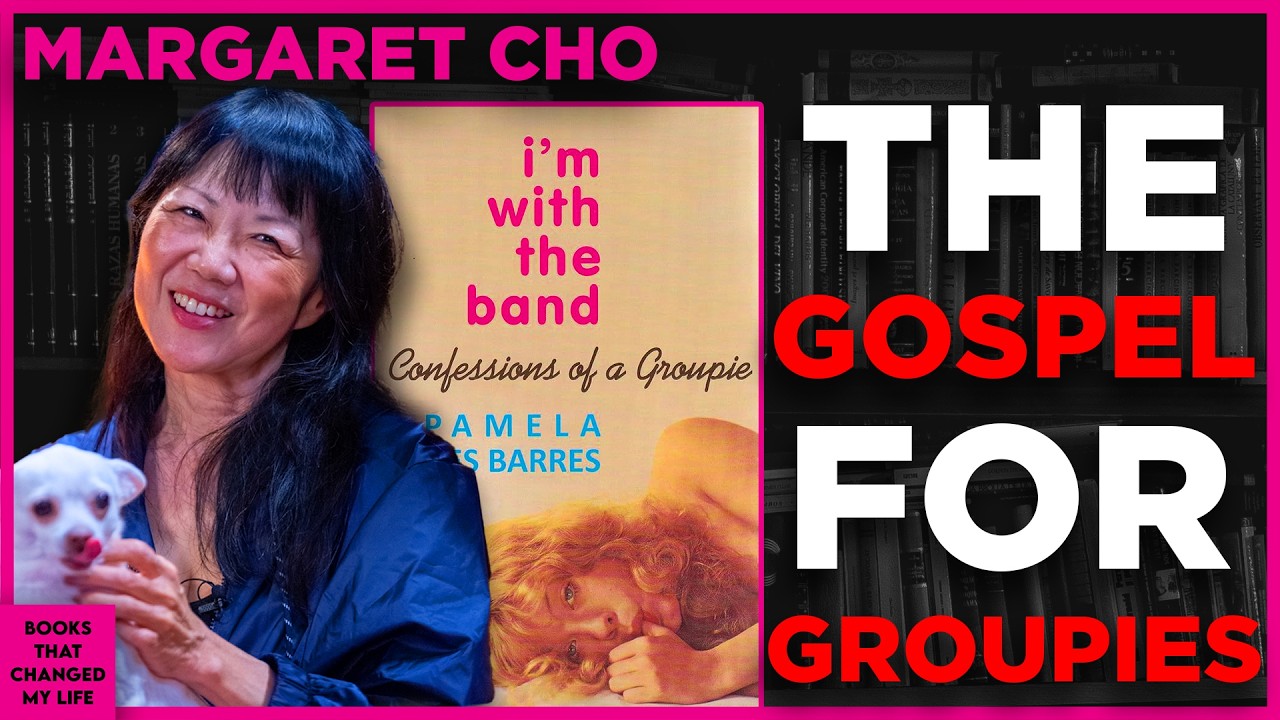
In this YouTube interview for the Books That Changed My Life series, host Chris Collins talks with comedian and actress Margaret Cho about Pamela Des Barres' memoir I'm With The Band: Confessions of a Groupie. Cho explains how the book shaped her teenage worldview, inspired her writing, and gave her a lens to view fame, rock‑and‑roll history, and groupie culture. The conversation weaves through the aesthetics of 1960s groupies (the GTOs), the power of global rock fame, Cho’s own backstage experiences with bands like Fishbone, Chris Isaak, Gwar, and Red Cross, and her early life growing up in a gay bookstore in San Francisco. She reflects on her transition from an introverted child to a stage performer, her evolving musical tastes (goth, new wave, grunge), and current favorite acts. The interview also touches on the nature of fame then versus now, the spiritual side of rock, her thoughts on cults, psychedelics, and a humorous imagined modern cult. Throughout, Cho shares personal anecdotes, cultural commentary, and insights into how Des Barres’ candid memoir continues to resonate.
Chapters
Who else can say that they've fucked Mick Jagger, Keith Moon, Jim Morrison, Frank Zappa, Jimmy Page, Don Johnson, Chris Hillman, Marlon Brando? She has this amazing, like, roster of lovers, yet nobody in the world could lay claim to all of that. That's, like, pretty impressive.
So the big question.
Yes.
How did I'm with the Band: Confessions of a Groupie by Pamela DeBarrs change your life? It showed me that I'm Chris Collins, and you're watching Books That Changed My Life. Get ready for some sex, drugs, and rock and roll, because this week we're joined by comedian and actress Margaret Cho. She's here to talk about the book that changed her life, I'm with the Band by Pamela DeBarr. We're here to talk about I'm with the Band: Confessions of a Groupie by Pamela DeBarr.
Yes.
And it was groundbreaking for so many reasons. One of which was she tells the stories.
Yes.
Where previously, I think there was an assumption that nobody would ever talk about what happened in backstage, I guess. Right. And she, she broke that.
She spilled the tea. Yeah. The first person historically to spill tea in, in, in the world. And, um, she's a friend of mine, and she's somebody that's encouraged my writing and helped me with my writing. You know, she worked with me as an editor at one point. And so, you know, but this book, when I got it as literally a teenager, really changed my life. And I think that culture owes a lot to her. And this book is really like, now that I go back and look at it, I get something completely different from what people got initially. I think people got it for, the lurid aspect of all these celebrities that she had relationships with. But I read it as a woman who is so in love with life, a young girl who's so bubbling over with life. And I think that in recent rereading, that's really what stands out to me.
Yeah. She's a great writer. She's funny. I'm also kind of taken with the aspect of fame. And how powerful fame can be in, in that sense too, which is, is, is a part of it also. It's fascinating. It's human nature in, in the most honest way.
Well, fame in a very, um, it's in a— her— the fame is in a very like grassroots way because it was almost like the first blush of this idea of worldwide fame from rock and roll. 'Cause this was like the first time that we had almost a global monoculture where people— everybody was obsessed with the Beatles globally. And so, it really— that sort of turned on her awareness to this idea of power and power because of art. And she became obsessively like this Beatle maniac, and then carried out onto, of course, all of these amazing other rock stars, whether it's Jim Morrison or Jimmy Page or Keith Moon. You know, she has experience with every major rock band. I mean, the Rolling Stones. It's, it's pretty phenomenal.
No, it really is. Well, I love it that you picked this book because it is such a cultural phenomenon, really, and broke a lot of rules when it came out. And just kind of a tribute to the power of word. In a book and how incredible books can be.
Right, right.
And, um, you know, just like, also, like, there's this kind of taboo element to, like, reading her stories and, you know, having access to, to that world for a lot of people.
Yes, yes. And she was a rock star in her own right with the GTOs, which was Girls Together Outrageously, or Organically, or however they wanted to do it. But it was Frank Zappa's sort of dream project. It would— it's like, um, equivalent to Cat's Eye, you know, for today's K-pop audience or pop audience. So it was a girl group that Frank Zappa put together. He wanted to like market them, and he made an album and everything. And so I think, um, she would have been a formidable rock star had that really worked out for them. Um, but I think like, yeah, she just had so much going for her in that time, and You get this really, really amazing snapshot of all of the historical events. Even part of it is she sort of dips in on John Lennon and May Pang and Harry Nilsson's lost weekend, when they were sort of like— when John and Yoko had separated, and she sent them off with their assistant, May Pang, to have this very decadent lost time in LA. And Pamela just sort of like— is a little bystander there, which I think is just so incredible.
Yeah. So being famous yourself, have you experienced groupies?
Um, no, we don't— women don't really get as many groupies as the, the males do. Like, male comics—
what do you think that is?
I don't know. Male comics get a lot more groupies.
I—
maybe I'm not aware of it. I maybe also No, that's— What is true is there are women who love a female comedian. There are some lesbians out there who just absolutely adore a female comedian. And so, I always get in trouble with my friends' wives because they're always interested in me, but it's because they have a type. You know, there are just some women out there who just go mad. For female comedians. And so that, that's not— I wouldn't consider that a groupie, but that's sort of— there's a type, archetype. There's just a woman who loves another woman who makes them laugh. So that, that exists. But I haven't had an experience, or I haven't had a relationship with a woman like that. Um, I have, I guess, sort of not been a groupie, but I've been around rock and roll since I was a child as well. And this book is one of the inspirational tomes. Like, it was one of those ones that made me want to go to rock shows and figure out how to get backstage. So I do know how to do that, but now I do because I have some level of notoriety myself. So backstage is a very easy place for me to be. I love watching a rock show from the side of the stage, and I've done it, whether it's Cypress Hill or Bob Dylan, you know, I've gotten to be able to do that. And I feel the energy of the player. I feel the— energy of the artist in a different way because you're on stage with them as the audience is watching them. And you can feel all of the waves of excitement and encouragement and glory, like, just once removed. So it's like, in a way, it's fame by proxy. You know, you feel like the— it's like the backwash of fame of that, that The afterglow.
Do you see a difference between the audience when it's comedy versus music?
I think, oh yes, there's a, there's a definite difference between a comedy audience and music. I think with comedy, the, uh, it's, it's more cerebral and the audience is more focused on comedian's ideas and words and their finesse and, you know, their charisma. And with music, it's actually even more of a spiritual experience because I think music can be a really transformative art form. And so people have a real visceral reaction to it. I mean, people have a visceral reaction to comedy, but with music, it's almost transcendental. So there is almost more of a sense of like group worship. It's more spiritual. Whereas with comedy, you're really in the life of the mind. I mean, it depends on the artist, and there have been some comedians where it does reach those levels of like spiritual, like, wonder and excitement and grandeur. But it, it's, it's still not as like sensual as like a Prince concert or, you know, some— something that just like draws you out of your root chakra.
What was the first concert that you got backstage?
Oh, I think it may have been Fishbone.
And how old were you?
I was probably about 17.
And how did you do it?
I just walked back there because like at that point there wasn't, um, a ton of like security. They were still, they were still kind of a young band. And so it wasn't a, there wasn't a real separation between the audience and the artist. So you could, you sort of had access. And of course if you're like a young girl, it was always accessible. I think I didn't do anything that Pamela would do back there, but I was at back there.
What's the, before you had access and you were famous, what's the, the proudest moment getting backstage for a band?
Um, it might have been Chris Isaak. That was a good one. But I was also sort of like in beginning— the beginning clutches of like being in show business. So I got back there and—
didn't you date Chris?
Yeah, that was a good one.
So tell me that story.
So you got backstage, backstage, and I don't even know how it happened, but we met and then we, uh, we just got along. And then we saw each other again at an MTV event, and he asked me for my phone number, and it was like the most exciting thing that ever happened in my life. And, um, yeah, we, we were dating for quite a while. It was really nice.
For like quite a while, like as in a year, or less than a year? Less than a year.
Yeah, but he was a good guy.
But it started by you going backstage and meeting him?
Yes.
Oh, that's kind of romantic.
It's kind of romantic, but it's also like, you know, when you meet somebody backstage, it's like, they're— it's like such an elevated experience. And, and you— I put so much worth into it. But then when somebody meets me backstage, I think, oh, they must be disappointed because there's nothing— like, there's nobody partying. Like, my backstage for my shows, there's no white lilies, there's no— there's nothing grand, there's no champagne, there's nothing.
There's just a Pellegrino and a fruit plate.
Barely. There's like, yeah, maybe a couple of strawberries, a maybe a towel. There's like really nothing back there.
What do you put on your rider when you, when you tour?
Coca-Cola or, uh, Coke Zero nowadays. And, um, there's not— yeah, nothing good, nothing, because you pay for all that. The artist pays for all that.
Yeah, that makes sense. Not very fun though.
It's not very fun, but it's also— what do you need it for? I, you know, I'm curious about, uh, Jack White's guacamole. It must be very good with— he has a recipe and everything on his rider.
Yeah, riders are kind of interesting because it does tell you something about the person sometimes.
Well, I think they're, they're created so that the promoter pays attention, you know, to the details. And so they want to make sure that the artist is fully taken care of. Like, there was a whole thing about— I think, um, was Van Halen who asked them to take the brown M&M's out of the bowl of M&M's. And it's really because you want the promoter to have read everything in your contract to make sure that they understood all the things that you needed when it came to sound, when it came to security, all those kinds of stuff. Like, that's important.
Yeah. And the thing that Van Halen was worried about was getting shocked because of the size of the sound systems and kind of how new that was. Yeah. And the grounding of the wires and all that. And so, I mean, I remember I was in a band that toured and we had a pretty specific thing in our contract, and one of the things we didn't want was pizza because you just get tired of pizza.
Yeah.
And when we would show up and there was pizza, you're like, oh, these guys didn't even read our thing, right?
Yeah. And it— I don't know, it's disappointing. Yeah, it's disappointing. My favorite backstage experience was with Gwar. That's the ultimate because you're back there with like these fantastical creatures. They were all in these— they're all kind of like made out of silicone and they're soft. You don't— they don't look soft, but they're kind of puffy and soft. They're almost like fursuits but without fur. And it was so impressive to be back there. And we were at Bonnaroo and, you know, in Tennessee in the middle of the summer, it's like really, really hot. And they're wearing these like really heavy outfits. And so they're eating Altoids to keep their bodies cool. The menthol and the spearmint somehow keeps them— their mood kind of elevated and doesn't feel as hot inside. So they're breathing clouds of spearmint. It's very refreshing.
Hmm. Because they probably get pretty dehydrated, right?
Yeah. And hot in there.
Does it smell to you?
Not at all. It smells like peppermint.
Hmm.
But they're, they're a really great band.
Who are the bands you're listening to right now or artists?
People that I love, like, I love The Beths. That's probably my favorite band right now. They're an incredible band from New Zealand, and I got to open for them at Bob Baker's Marionette Theatre last year when their new album released. And so I was able to do a show with them and I was so, so excited. Sometimes bands ask me to do things and I'm just like, so elated. So I, Absolutely love them. There's a wonderful artist named Caroline Kingsbury who I'm obsessed with. She's kind of like a little— she reminds me of Scandal, Patti Smyth band. It's very '80s. It's a little Laura Branigan. It's really, really beautiful. She's just a great, amazing singer-songwriter, but it's very '80s to me. I often just sort of vibe with female voices. Like, that's kind of what I'm always searching for. And They're my obsessions right now.
Oh, that's good. Okay, so take me back a little bit. Where did you grow up?
I grew up in San Francisco.
San Francisco?
Yes.
And what did your parents do?
They had a bookstore called Paperback Traffic, and it was on Polk in California, and it was a gay bookstore. So we bought that in 1978. And so I basically grew up there, and that's where I first came in contact with this book a little bit later in the '80s when it came out. It was such an enormous sort of like experience to read it. It's probably like the first adult book that I have read. And, you know, I just became obsessed with her and her life.
So how old were you when they bought the bookstore?
I was 9 years old.
9? And what do you remember about that?
I just remember that it— everybody that worked for my father was gay and they all were in love with him because my father is very handsome. So they were just obsessed with his looks and they were, some of them were painters and they would draw, like paint, make drawings of him, make paintings of him. And he still has them in his house. He hangs them up proudly.
How did your mom handle that?
Oh, she loved it. She, they were like very, they were so incredibly progressive, you know, especially for an immigrant Korean family. And Korea is a very patriarchal country and You know, so it's a very shocking thing to even interface with homosexuality at all. But they had a business that was catering to the gay community.
How did they end up buying that? They were entrepreneurial?
They were. Well, my father is a writer and he had a dream to create a bookstore like City Lights. He wanted a place that was central for a community where they would have poetry readings, maybe at some point launch a publishing house There was sort of like all of these ideas that he had about a place that would have window displays displaying authors. So they have author talks. Armistead Maupin, who wrote "Tales of the City," would do book signings at the store, things like that, which, you know, was, we never quite met that City Lights ideal partially because AIDS, AIDS totally decimated the community and that neighborhood in particular was hit really, really hard. Was, you know, in San Francisco at the time, it was the Polk District and Castro. And the Polk District did not survive AIDS. You know, all of the men who lived in and around there passed away, and then the businesses completely collapsed. So that was part of it.
And so at 9, what are you doing in the bookstore as free labor?
I'm stacking books, putting things back. I'm reading John Waters and not quite not quite understanding what was all about, what it was all about. I was reading Philip K. Dick and also not understanding what it was all about. I was just learning and growing and in, in the company of people who were early supporters of Harvey Milk. And that same year in 1978, Harvey Milk was assassinated, which was a huge, just such a huge trauma for all of us at that point, you know, because this is the first openly gay elected official ever. And, and we had so many hopes tacked onto him. It was very, very difficult. But I also got to attend my first Gay Pride celebration. Um, it was very small compared to what it is now.
And what are the stresses of owning a bookstore? Like, as a kid, what was your impression of the pressure of running a business?
But the pressure of running the business was more just like trying to figure out what made sense for consumers. And we had just so many specialized things that nobody else had. Like, we had rolling racks of gay romance novels, you know, these things that nobody else were going to get anywhere. We also had, um, a newsstand that was filled with books like— or not books, but periodicals like Blue Boy and Honcho, which are, you know, like the equivalent to Penthouse or Playboy for men. Um, there was also one periodical that, uh, I forgot the name of it, but it was really all for, um, trans women who were transitioning at that point. And so it had a lot of ads for shoes that you could get in very large sizes. Like high heels.
So very niche.
Very niche. Very. So in that it was the business was very successful. But then at the same time, how many people are going to buy those things that are so specialized? So it was trying to find the balance because it wasn't a bookstore that people would go to to buy their bestsellers necessarily. And so my parents were always trying to curate the store to become more like that.
And so, and they probably had more events and things like that too, right?
Yeah, more like book signings. And then like the store windows became more of a thing, you know, like having, um, displays and which I don't really know how good we were at that, but it was very, it was always sort of a project.
And so what kind of kid were you?
I was a very, uh, introverted kid. So bookstore's perfect. Like, a bookstore is like— if you're, if you're introverted, it's just— my life was like so made when I was just like able to just be in a bookstore and I could just be there all day reading. And for me, that was just so special.
And what, what did you, uh, take interest in in school?
I was interested in writing. I was interested in English. I was terrible in math, but I still was able to, um, go to a pretty competitive high school, like, for smart kids. I think that, like, I had intelligence, but I, I didn't apply it really. Um, and then I went to a theater school, which was a lot better. Then I was able to do theater, and I was really involved in that. And it really taught me to get very excited about performing as an extrovert, which I'm not. But I was— I learned that I had that capacity or capability. And so that's what led me to comedy.
Unpack that for me. Like, what is that discovery like?
Like, when you realize, like, you're an introvert, but then when you have a spot where you're on stage you can perform extroversion and like actually be believable. Like I think when I do comedy shows, it's like a performative extrovert. Like I'm not that extroverted at all, but it comes across, it's like a role that I can play and it's an aspect of myself that I have to really encourage myself to do.
And so does that create an issue when people meet you that they think you're the extrovert? Yeah.
Yeah, they're always a little bit surprised that I'm not.
You're more shy.
I'm very shy and I'm very, I don't know, I'm just more like interested in observing and interested in like kind of taking things in. And so I'm not a great party guest.
You are, if you want, a people watcher.
That's right.
Do you love to people watch?
I do.
Yeah, me too.
I do.
Where's your favorite place to people watch?
I like to people watch at Like the Folsom Street Fair. That's a good one, which is like the biggest, uh, gay leather BDSM Pride festival in the world. The best one was I got to host it online during the pandemic, so they actually moved the Folsom Street Fair like onto the internet, and it was just videos from everywhere, people playing and doing all kinds of really innovative stuff. Um, it was really mind-blowing.
Yeah, that's, that's always a fascinating thing to me when— and just kind of to this point too of the book about fame— is like when you're famous for something, people assume a lot of things about you.
Yeah.
And then when they actually meet you, they're, they're either disappointed or surprised that you're not that that is only one part of you, that you have more depth.
Yeah.
Than just that.
It's true. It's true. Like fame is like a projection. It's a curated projection that is created and marketed kind of, you know, and maybe nowadays it's more personally marketed and created, created and curated through social media because you put out your content and that's just, it's just you putting it out there. So people have more of an idea of who you are, whereas back then What, what did we have? We had fan clubs, we had sort of, you know, your records that would come out or your movies that would come out. But really people didn't know much more than the press that they were given or, you know, your art. Mm-hmm.
Yeah. And so at what age does this book come into your life?
I think I was probably around 16 or 17, something like that. You know, I was a young teenager and I just was obsessed with it. And I think I was connecting to her voice. And there's a lot of diary entries too that kind of make up the book that are her, like, just talking to herself during that time. And there was so much longing, which I think is really what groupie-ism is all about. It's like this longing to connect with that artist that you're just so— you created a whole fantasy life around. And so it— most of that is her longing, and she's done it with every different person, and it's kind of the same depth of longing. It's just kind of personalized to each guy.
Did you experience that longing?
I don't know if I experienced that kind of longing so much, and there's shows that I I have disappointments that I didn't go to. Like, I remember the one show that I missed that I was so disappointed. It was the first time Nirvana played in San Francisco, and I was just— I didn't want to go. I was— I didn't care. I don't think I even heard that song yet. I hadn't heard "Teen Spirit" yet. And I just was like, I don't know about this grunge thing. I don't know. It's just so heavy. I'm not sure. And I really regretted that.
That's funny. I grew up in Seattle, so I'd seen Nirvana way before that because, you know, they'd been around a little while. But yeah, so that, um, was music a big part of your life growing up?
Yes, yes. I think, um, I think—
walk me through the, the stages. Like, did you go through a Cure stage?
I went through a Cure. I went through a heavy goth. I was like more Mission, the Mission UK. I was more like a Susie. Susie and the Banshees was like major, like Susie and the Banshees with everything, like, so I just love them and I loved her and I just was upset, obsessed with them. And then the Mission UK. And then I was able to, I was able to go to England in the, during the '80s, and I went to, um, the south of England to Bournemouth, and my friends and I went to a a goth club called the Third Side. And this was like the period of goth where, you know, it's like the '80s. So, you know, all of the people didn't have Hot Topic. They didn't have like people making their— so they're wearing their like grandmother's clothes. And it's so funny, like they're just wearing all this lace and velvet and like bows, but they're just old women's clothes. And it was really funny.
Yeah, well, it's really funny too, in the Seattle thing with the grunge, is like flannel became something popular, but we wore flannel because we were cold.
Freezing cold.
Yeah, yeah. It wasn't a fashion thing at all.
Yeah, the waffle knit, like, um, long underwear shirts and all of that, and the beanies were out of necessity. And then Marc Jacobs took it and put it on the runway.
Have you seen the new, uh, Sofia and Marc documentary.
I haven't seen it.
It's great.
I got to see it. I love them.
It's really great. They actually made a book too, which we, we got.
But that's really cool. I used to love Sophia, um, when she was with Steve McDonald. So I hung out with, uh, Red Cross. I was living with one of the members of Red Cross in the very early '90s, um, and so, uh, that was one of the bands that we got. We would got backstage a lot to go see Red Cross and I remember coming through with Steve, coming out and going back in, and there would be all of these girls who had come from Japan just standing by the stage door, just weeping and weeping. And it was this feeling of this religious figure walking through, like Steve McDonald walking through. It was just so incredible to witness.
Yeah. That's crazy. It's crazy how that happens. That's— yeah. Um, okay, so let's talk about the, the book I'm with the Band. So could you just explain for the audience that hasn't read the book, what is a groupie?
A groupie is, um, a person who is essential to rock and roll. There are sometimes people who get backstage and will have sex with the artist, have relationships with the artist. But also there are people who are friends with the artist. There are people who document what's happening in the artist's life. There's one famous groupie who's Cynthia Plaster Caster, who would bring plaster to memorialize the artist's private parts. And so she had a collection of like something like 60 different rock stars' penises, um, let she cast in plaster. So, you know, uh, that was a whole thing. But, um, you know, groupies have been depicted in films like, uh, Almost Famous is probably the most well-known, where Kate Hudson plays a young woman who has a relationship with a rock star. And, you know, it's, it's very bittersweet, but it's also an aesthetic, you know. It's like the— it's the Penny Lane coat, it's the embroidered coat with a big fur collar. That's the sort of classic groupie look.
Kind of peacocking a little bit.
Peacocking a little bit. It's like a, it's like a very, it's a beautiful, like '60s kind of iconic look. But it's also somebody who has kind of an ease to their body. There's a sensuality to it. There's a kind of a nature, like goddessy feel. You know, it's a woman who, and there can be men groupies too, but it's generally a woman who is just there for the pleasure of the artist. It's one of the great perks of, of being in a band is you get these beautiful women by your side.
And also, when you're a young boy, the choice to be in a band is to get girls.
Yes, yes. You get noticed.
Kind of goes both ways.
Yes, that's part of it. I mean, that's like—
you want that attention.
A lot of guys get in bands because they want The easiest comfort for, you know, getting girls. It's great.
It's easier.
It's easier.
It's a great icebreaker.
It's a great icebreaker. And it's like you have— it's like the— it's, it's an aphrodisiac for like a girl to like, we love a guy who's like a great musician or a great singer or whatever, you know, like it's just, it puts you on a pedestal automatically.
So in, in the book on this, in this version of it on page 176, is kind of a definition of a groupie.
Groupies in Los Angeles are crass, supercilious, pretentious, beautiful beyond description or reason, freakish, cultish, aggressive, mad, and young. Groupies in Los Angeles are extreme. The GTOs epitomize an international groupie type, the freak. It is fitting that these 5 young women record for a record company called Bizarre, for that is what they really are. Bizarre. They travel in a pack looking much like that section of the Goodwill store where clothing is sold by weight. Worn cowboy boots, rotting 30-year-old blouses and acres-large skirts and dresses, limp boas, pink tights, 75-cent army belts. And on top of everything sartorial is an amazing display of the cosmetic arts. Mascara and rouge looking as if it were applied from a toy sand bucket with a small shovel. She's so good. She's so descriptive, and she's just so, um, it's so complete. Like, I see the, I see the image and I see them in my mind's eye.
Yeah. And part of the tension of this book, I think, is how good she is at writing and how talented she is. And you could discount being a groupie as, you know, not something that is acceptable. I don't know, you could discount her easily, but it's really hard to discount her when you read the book.
Her writing is so extraordinary. And it's like, I think that there was a lot of slut-shaming when the book came out. Like, there was a lot of, like, kind of lurid interest in, in this book about somebody's sex life. But it's really so much more. I mean, it's about a period of time. It's a really historical document of the '60s and how much rock and roll ruled then. I mean, I don't think that even now we have an understanding of how important music was then, how important music was to the culture, how much these sounds that were coming, especially from England, were affecting everyone.
Yeah, it's good. Okay, so then explain to the audience the GTO Girls.
The GTO Girls, they were already friends. These were all girls who were kind of roaming around LA in a pact who, who were like found backstage anyway, and they were all sort of eccentric. They all had their own style, and they, they just looked like an impressive little clique. And they were hanging around with Frank Zappa. Frank Zappa was always interested in kind of like unique young people who were doing something different because he was doing something very different, and he wanted to make them into a group, which he did.
And so it's— it stands for, or it originally did, Girls Together Outrageously, but then they would change the O every once in a while.
It would change the O. Was that Girls Together Organically, Girls Together Orgasmically, Girls Together Originally? They would, you know, just sort of play with that, but in general it was just the GTOs.
Yeah, and she was kind of the leader of that, right?
She was, yes.
So, um, In any way, was Pamela an inspiration for your comedy?
Pamela was always an inspiration in everything. I mean, not just comedy, but in life also. Like, I've also— I have grown out of the Afghan coat period. I was definitely heavy into like an embroidered boot and an Afghan coat and kind of like the Penny Lane look. And I've transitioned out of that, I think mostly because it's just It's too, um, I think it's too young for me, but she still wears it and she has a lot of, uh, events where she, you know, shows all of her outfits on, on social media. And I think it's really, really fabulous. But, um, yeah, Pamela was influencing everything and especially my writing and getting to work with her as, um, she was editing for me and she just was so informative and such a good teacher. You know, she's just really somebody that I, I really am so grateful for.
Can you think of anything specific that you learned from her?
I think it was really just like she was always encouraging me to just let it all out there, just put it all out there, it's fine. Just to be very, very blatant about what I wanted to say and not to be afraid of anything. And I think that— I think she also shows that by example. She does not hold back at all.
Do you have any sort of insight into how she figured that out? Because she did that in a time where it wasn't normal.
I know, it's really incredible.
It's very brave.
It's very brave, but it's just also really business-minded. I mean, it's really like, you know, she was smart to know like, this is where I can actually stake my claim. Like, who else can say that they've Mick Jagger Keith Moon, Jim Morrison, Frank Zappa, Jimmy Page, Mick Jagger, Don Johnson, Chris Hillman, Marlon Brando. Um, I think Woody Allen's in there too, I think.
And then she never did The Beatles, but The Beatles are kind of a big focus.
The Beatles were like her young focus, like the Beatles. She was like in a Beatles fan club, and she was like a Beatle, like, maniac. She was gonna marry Paul, like, all this stuff. And then she branched out. Oh yeah, all of this other stuff. But yeah, who else can say that she had— she's this amazing, like, rock roster of lovers. So yeah, nobody in the world could lay claim to all of that. That's like pretty impressive.
Yeah. And so would this book work today?
I think this book would work today. I mean, I think the book continues to work. I think it's also a classic. Like, it's one of these things that I keep returning to. I think that people have not forgotten it. I think that the— this is this— the idea, I'm with the band, It's still written on t-shirts. It's still an ethos out there. It's an aesthetic. It's an idea. It's an ideal. So yeah, I think it would definitely work today. I think it would work differently because so much of social media, we always put stuff out there anyway. But with this, it was really groundbreaking because it was just, it's unheard of. And also rock and roll in the '80s when this came out was a kind of, you didn't, you had like a little bit of a distance 'cause we weren't like sweating and playing guitars anymore. We were all on synthesizers. So there was a distance to that. There was a kind of a mechanical, like one step over. Rock and roll was less visceral as where her era was very visceral. And so that's what makes this book so phenomenal.
Yeah, what would be the equivalent today of rock and roll in that time?
I think like what today— I mean, I wonder like what is—
I can't think of—
I can't think of somebody who—
it's kind of special.
Yeah, there's not anybody who unites an audience like somebody like, you know, back then, like the Rolling Stones. There's not anybody that's like The Who or The Beatles. Even. So I couldn't imagine, yeah, who would that be the equivalent of today?
Yeah, because a lot of that energy has been replaced by video games, by social media, but none of that really stands for anything like rock and roll did. Yeah, rock and roll stood for something.
It's different.
Like, I've thought in, in the world that we live in today with the politics and all that, how much we need a John Lennon.
Yeah. We really do.
We need somebody talking about love and peace. And we— it doesn't— like, that path doesn't exist.
No, there's nobody that's out there that's like about transcendence. Let's transcend this. Yeah. Like, which is what John Lennon was all about. Let's get— let's imagine that we're above it. Right. And that we don't have somebody that is that sort of like dream maker in the same way.
Yeah, it just feels like artists now just comply. Yeah. Like, they don't want to get banned from YouTube, where John would have cared less about that.
Right.
It didn't matter. I mean, I just remember it being such a big deal when I was growing up that he said that the Beatles are bigger than Jesus or whatever he said.
It was such a big deal.
Huge deal. Growing up in a Christian household, that was like—
That's really shocking.
Yeah, that didn't fly. Yeah, kind of, kind of funny. Um, okay, let's, um, let's kind of go through the book and look at some of these highlights in here. So the first one, this is Pamela reacting to her critics, and she says, the Beatles chanted 'All You Need Is Love,' and I proceeded to prove them right. I was unprepared, however, for the reactions to 'I'm with the band.' when it was initially published, when uptight women on talk shows chided me for being too free-spirited and sexually open. I told them I was sorry they missed out on the good times and didn't get to sleep with Mick Jagger.
So funny. It's true. Like, because they're also— when she's coming out, there was all that sort of finger wagging. This is the time of like Donahue where you had like panel shows where people are just like coming with their opinions. And like very, you know, a lot of people, very judgmental, very finger wagging. It was a really sort of morally conscious time and also a morally conscious time where we wanted to see people argue it out on like talk shows and like, you know, bring their opinions forward just to be shamed.
And, and interesting too, the, the contradiction in society with this sort of thing that I, that I always think is funny. I had an experience once where I was running a pretty big business and we would advertise on Howard Stern. And people would write us letters and say they were going to boycott us because we advertised on Howard Stern. Christians mostly. And it was always funny to me because I'm like, but you're listening to Howard Stern. Yeah, you had to be listening to know that.
Would you know?
And it's just the contradictions of, you know, and how she puts it, like, but you didn't get to sleep with Mick Jagger. Like, a lot of these women grew up fans of bands and wanting to be backstage and wanting that. Yeah, but they didn't get it so it's easier to judge, right? And that contradiction is funny to me.
It's so funny, and it's human.
Very human.
Yes.
Okay, so the next one here on 26, this is her fixation with Paul from the Beatles, and this is hilarious. You want to read this one?
It's enough to make you throw up. I developed a series of rituals that I had to perform every night or I would never meet Paul. Write one— write I love Paul at the top of my diary in my most perfect handwriting. 2. Listen to a Beatles record before sleep. No other sound could assault my eardrums after the sacred sound. If the dog barked, I had to climb out of bed and start over. 3. Put a sweet tart under my tongue as my head hit the pillow and let it dissolve as I pictured myself in his arms. In addition to these rituals, I had to write his name down every time I farted, and I carried the list around with me until it reached well into the thousands before I became embarrassed and hid it underneath the clothes hamper. The serious OCD. I mean, neurodivergence and OCD before we even knew what those terms meant. But I remember reading this recently and thinking, wow, OCD.
Oh, that's funny. So that isn't what I thought. I thought she was just very much visualizing an outcome. Yeah, like a very driven, focused, right, outcome that you would do if you were an athlete, right? If you were trying to get accepted to Harvard. Yeah, like whatever it is. Yeah, like a very clear vision of I want to meet Paul. And then like in the, the hit of the candy—
it's so funny—
as you, as your head hits the pillow.
Yeah, I love it.
But she's, she's like visualizing an outcome, manifesting it, and And the other thing too is like a lot of times we'll visualize an outcome and the outcome doesn't happen, but things way better happen, right? And that's kind of her life is like— it's true, it ended up probably better, way better in the end, but it's not a straight line. Yeah, but it started with that. She says, um, so this is from her diary, April 26th, 1965: Vic asked me to be the local president of the Beefhearts fan club. If nobody's heard Beefhearts, you should. It will make no sense, but you should.
It's really great.
Out of a million girls, he picked me. He tells me that he is superhuman and in the fourth dimension. Who knows? No matter how much he keeps asking me, I'm not going to take marijuana. He was reading Sigmund Freud today. I just think that's so funny.
It's so funny. I mean, it's like, yeah, she has a couple of different attitudes. I mean, her drug attitudes really change also throughout this. And, um, but she never really responds to any of this. Like, she, she got out pretty unscathed. Not like, you know, she never seems to be an addict or prone to that.
She kind of knows who she is.
Yeah, yeah. So she's lucky.
Yeah, she doesn't seem like she's, you know, I mean, we're all a little broken, but she doesn't seem like—
no.
She's not broken. So this, this diary entry on page 47 is about Chris Hillman. April 6th: Chris messed up a song because of me. I know it. He was watching me very avidly and he made a wrong chord. I'm not digging his youth, virile, stocky body too much. Slurp. Then the next entry, April 26th: Operation Chris has now gone into effect. I think it's so funny how she's flipped.
Yes.
I am preparing for the future. I must have a smaller waist and bigger hips, longer nails and prettier hair. I must grow spiritually. I must obtain Mr. Hillman. I think that that's so funny, is she's saying like, I got to be more, more attractive to him, but then I must grow spiritually.
Right, right.
And then May 12th, I'm in love with a 21-year-old man who loves others. Is that a joke? I'll be seeing him tomorrow with my youth glaring up at him. Is that a joke? Pretending to care less about him as I watch Mike or David, painfully hoping that perhaps he will take notice. Is that a joke? Pain and anguish. It's all a joke. It is painful to the point of lonesome, glistening tears making their way down my pink and flushed cheeks. Who will have the last name Hillman?
She loved him. She really, really loved him.
Yeah. So, I mean, I just love how honest all of that is and how all over the place.
Well, which is— it's just so much of— it's like all about that same longing, you know? It really is that longing of like, how can I make this happen? Like, just thinking that all— putting all of her hopes and dreams on this idea of a person. But she ends up doing this again with so many other people in the book. So it's more like she just latches on to this idea of a person and really makes it her, like, life's journey to make— it's a conquest, you know? And it's things that she's like, tests that she's giving herself. So it's really interesting. I mean, it's what I love about, I think, all of the diary entries is 'cause they're just full of this like youthful longing. It's just so beautiful that you used to have that. Like, I used to have that and I really don't have it anymore.
Did you keep a diary?
I never kept a diary like this. Like, I never kept one that was as detailed or that— I mean, there, as a comedian, that you're always like writing stuff every day. Maybe something would come out like that. But, um, I, I missed out on doing something like this. I wish I had when I had those feelings.
Did you ever have that longing for your career of wishing you'd get a break or wishing that you'd get discovered?
Yeah, of course, of course. I still do. I still do. I think there—
You still are waiting to get discovered?
I'm still waiting to get discovered. I'm still waiting for those breakthroughs. And because there's like, it's like an addiction. You always need more. Like I have that relationship with my work where I just wanna strive for better and do better and have something new and exciting to like come in. So yeah, there's always that hope.
Do you, do you like, uh, having those sort of goals? Do you torture yourself?
It's not torturous, I think, because I've reached really— I do live a very comfortable life and I have achieved a kind of success that's pretty rare and really exciting. So it's satisfying, you know, but for me it's always— there's always more, there's, there's always something that, that could happen. Okay.
The next one on page 59, this is her experience with this San Francisco commune, which, like I, uh, was telling you, and I don't know if you saw, like, I have a huge collection of both books on cults and cults and how to, you know, people who experience that.
So yeah, I love it.
Fascinates me.
So interesting. It's so interesting. I'm obsessed with the— was the Ant Hill Kids They're like, what, one from like— I think they're from Quebec, and they— it was like a weird castration cult. Like, it just— they— the leader would do surgeries on people and castrate them. And like, it's just so— I, I both am so, uh, terrified of cults, and then I also kind of want to join one or start one. Or start one.
You could be a cult leader.
That would be good. I love— I love, um, Heaven's Gate too.
Well, so castration, that's what I thought of because they went to Mexico.
Yeah.
So they tried it on their own and it didn't work. So they got a doctor in Mexico to castrate the men.
Yeah.
Which is fascinating.
So fascinating. And they were really happy.
Yeah. Like when you watch those videos they did before their ascension or whatever you call it, they were so happy. They're so happy living in that house, all 38 of them or whatever.
It's, it's really— there— it's just really tragic. But I also— I'm always looking for those Nikes, you know. They had those special Nikes that they— I'm like always looking for that, trying to buy it online vintage.
Wasn't it the Cortez?
Yeah, yeah, yeah. They're like black, like they're just— it— yeah, they're, um—
is that the uniform of the cult you're gonna start?
I think so.
What would be going on with the rest of it?
I do like a a bit of a sort of a Bruce Lee kind of very severe, um, almost like a Mao one suit, like, you know, but just a two-piece thing that but looks like a unis— like, like a, you know, a boiler suit or something. But yeah, like a Bruce Lee, a kind of Mao, very easy to put on and off, kind of androgynous, can work. Kind of like a, like a— would it like a gi, you know, very jiu-jitsu, very Asian kind of martial arts looking, you know, but also there's an elegance to it.
Yeah.
So that would be it. And then the Cortez or maybe sambas.
And then what would be on the menu for dinner in your cult?
Applesauce. I do like a bit—
Applesauce was the end for me.
I know, it draws me to it.
But this would be the beginning?
I do like a bit of applesauce. So that to me, but I also like the Source fam— the Source restaurant. That they, uh, that cult, they had a restaurant on Sunset Boulevard that's kind of near the Comedy Store. Um, they had a very good salad dressing that they used to actually sell in Gelson's, a sort of a lemon poppy seed that you would put on top of alfalfa sprouts.
It's very good, very California.
Yeah, very California.
What are the first like 3 rules of your cult?
I think, um, does the cult need to have a purpose? The cult doesn't necessarily need to have a purpose. I don't know. I think we would just hang out and then— but we have really early bedtime, so we have to go to bed at like 8 PM.
Um, that's extreme.
Yeah, pretty extreme.
How are you going to get people to do that? Um, I think what's the punishment going to be if they don't?
They don't— if they don't go to sleep, well, they have— they don't go to sleep, then they don't sleep. But, you know, it doesn't really matter. But we have an early bedtime and an early rising So we would rise around 4, and, um, I don't know, maybe it would involve cat rescue, like cat and animal care, like cat and dog care. Um, the rules would be you have to have a cat and you have to have a dog.
Okay, how many cats do you have?
I have 3.
3. And how many dogs?
1.
Just 1?
When she's the boss of everyone.
Does she get along with the cats?
Yeah, yeah, but she humps them. Which is really funny. So she dominates them, or is trying to. Yeah, they don't know what's going on. They think it's weird. But, uh, yeah, you just have to have a cat and a dog. That's it.
It's a fun cult. Yeah. Have you thought of a name?
I haven't. I haven't even thought about having a cult.
Oh, well, if the name comes to you during this, please let me know.
The Chosen.
The Chosen? Yeah, that's a good one.
That's a good one.
That makes me think of a logo already.
Yeah.
Would you have the logo on?
I think it would have to be. Yeah, it would have to be very subtle and small. And then I want to have my— mine is like a diamond pin.
Hmm. Kind of formal. Yeah, I like it.
Okay.
I didn't want to go alone, especially since my '59 Chevy convertible bit the dust. So I invited my one remaining Beatle friend Linda to make the trip with me. I was hoping she might want to expand her horizons about 400 miles and accompany me to San Francisco. As it turns out, she moved into the first commune we entered and became house mother, which means she did all the cooking and cleaning. Very communal.
I mean, that's what happened to the women in the '60s, just like when we think, oh, like, oh, hippie free love, it was— but the women did all the work. It's not cool.
Yeah, I thought that was kind of— it's very, you know, insightful. Passage.
They were the tradwives of their time. Not cool.
In the previous passage we read, she wasn't pro-marijuana, but things take a drastic turn here.
I took mescaline and went to Disneyland. Walt and I always had a very special relationship. I sat in front of the robot version of Abraham Lincoln and startled the lady next to me by asking what year it was. I was chased through the House of Tomorrow by 3 horny little pigs. And I trailed behind Mickey Mouse like he had a British accent. In fact, I had such a good time that I decided it was time for me to take LSD and find out what was really going on. So, you know, she was a bit of, you know, curious. I think mescaline is kind of a scary drug. I don't know. I've never taken it, but I would do LSD before I would do mescaline. I think.
Have you tried LSD?
Yes.
You have?
Yeah.
I think the line Time for me to take LSD and find out what is really going on. Yeah, it's pretty insightful. So when you took LSD, what is really going on?
What is really going on? Well, it's, it's like, what's fun about LSD is that you do laugh a lot, like, if you are inclined to laughter. That I've, I've never laughed as hard as— but it's the problem with LSD is it lasts for too long. So like, you, you go, I get it, like, I get it, like, I get the sort of visual hallucinations, I get this idea of a suspension of reality, and now I'm tired of it. So it's a long thing. It can last like 12 hours or even longer. So I think it's—
you want it to be like a couple hours?
I want it to be like maybe 2 hours. That would be my ideal drug experience. Have you—
so a lot of people that I've asked this question to say that what they discover is that everything's connected. Yeah, I think that's true. Was that your experience?
I think that it is. Like, you have— you become very empathetic to this idea of humanity and empathetic to other people just because there's a vulnerability that really starts to emerge when you take a drug like that, that clues you into a kind of humanity. So it's very hippie and you want sort of everything to be one. So I like that.
Do you still live in San Francisco?
No, I—
Do you miss it?
I do miss it. I go back. Pretty often. I'll go back at the end of the summer, which is really cool. But yeah, I don't live there anymore. I think, you know, for me, I also, I love LA, like I'm obsessed with Los Angeles and I've always been. When I came from San Francisco, I was longing for LA. That's why I love this book. It's such an LA book.
So LA, yeah.
It's so, she comes from Reseda, goes right to Laurel Canyon and, You know, I have never lived in Laurel Canyon. I've always wanted to. That's something that I will do in my lifetime, I hope.
A lot of crazy things have happened.
Yeah, Laurel Canyon is—
A lot of songs have been written there.
A lot of songs, a lot of music, a lot of dastardly things, scary things. Cults. Cults, murders.
There's a vibe.
It's a vibe. It's supposed to be bad luck. Also, like when I go to certain places, No phone reception. Whatever you do, it's a black hole. Like, if you go to, um, Ione Skye's house, black hole. You're not talking to anybody except for Ione Skye, which is great.
I like that.
Yeah.
Okay, the next one. So she has a little bit of a spiritual crisis here. You want to read this one on page 148?
Yes. I went deep into a lush Kentucky rainforest and sat down in a thick pile of leaves and tried to figure out why I didn't like going to church. As I sat still and quiet, watching the mist glimmer through the 10 million shades of green, I realized for a flickering instant that the whole planet Earth was my place of worship. And then the night before I left, Aunt Mildred and Uncle Edwin called me into the living room and I got down on my knees with them in front of their TV set to pray with Billy Graham. And afterward, I wondered if all the acid trips in the world could help me make sense of it all. I mean, the thing is, is that her religion is rock and roll. Like, she does have a spirituality and it's deeply connected to the music. It's deeply connected to the people making the music. And she has an awestruck feeling that's almost— that is, it's not almost, it is religious, it is spiritual when she's at these rock concerts. So she's at this sort of like the church is these shows.
Yeah. Have you ever watched a Billy Graham crusade?
I have.
And so he's an incredible orator.
Yeah.
And it is— it's a spiritual experience too, in a, in a way.
Yeah.
What is your thought on that and just religion as a whole?
I mean, I think it's, I, it's attractive to me because I do love transcendence. I do love the idea of escaping your humanity even for just a brief moment and believing in something or someone so much that you just feel beyond the limits of your own body, beyond the limits of your own life, you know, to me that's very attractive. So all cults, all religions have that sort of excitement of like this separation from the dailiness of life. I, I think it's amazing.
What is your go-to? Like, what do you believe in?
I kind of believe in a little bit of everything. Like, I don't have a a one sort of— I don't have a sort of like not monogamous with any religion. I think it's all—
which one feels the most authentic?
Which one feels authentic to me is like, what I really like is like a Muslim call to prayer. Like, I love 5 days, 5 times a day.
Yeah, you gotta stop in a certain direction and talk to God.
Like, that to me is like—
do that.
I don't do it, but I'm like, I like it. That to me is like really cool. I'm like, oh, that's There's something to that where you have to be reminded of your spirituality 5 times a day.
It's a ritual.
It's a ritual. And it to me is really beautiful. And like, I'm not Muslim. I've never, you know, learned anything about that stuff. But that, I remember like being in like Morocco or being in Egypt and hearing that and thinking everybody's doing that right now. And that is so amazing. So that's one of the things that I'm like, oh, you know, that, that would be a great thing to, to learn more about.
Or do you have rituals in your personal life?
I guess I have some rituals. Like I get up in the morning, I get up super early and I, I write a joke. And then, um, every day. Every day.
Not funny. Is it the first thing you do?
It's the first thing I do. Not funny, but sometimes funny. Sometimes it's usable, sometimes it's something that, but that's the first. 'Cause it reminds me of my purpose in life was to be a comedian. So the first thing I do is I write something that's funny, and then I have different kinds of readings that I'll go to, which change whatever, you know, whether it's poetry or, you know, different kinds of spiritual texts that maybe you're not spiritual, just stuff. And then I meditate for an hour.
And what kind of meditation?
Just sit there. Or sometimes if I can't be patient, I'll do the box breathing where you breathe in for 4 counts and you hold it for 7 and breathe out for 8. But that's only if I cannot focus or I can't quiet down the— yeah, that's like the emergency. But usually I just sit there for an hour.
Um, any music playing or bells or anything?
No, no. And I always know when it's over, like, because I can— I really get impatient. But I built that up for— it's been years, but I built it up from doing it for a minute, and then I grew over time, but that's helped me the most, is like just stopping my thought, being in the moment. Yeah.
And then what?
And then it's just the day. Then it's just like work, and I have to feed the cats, feed her, or take her for a walk, you know, those kinds of things.
Then life starts.
Then life starts.
But that's the coffee, tea? No, no, water.
Oh, water. You know, breakfast, whatever.
Do you remember the joke you wrote this morning?
Oh, it, it, this week it's all about pubic hair and my pubic hair grows so fast. It's, I am my own kudzu. So it's like I'm my own invasive species. Like I am, I've become invasive.
How often do you have to trim it?
Every day. And sometimes I, and I get a legitimate vibe.
Like is the goal for it to be bald?
No, but the goal for it is just to be contained.
Contained.
Because it's like so crazy that it goes beyond like underwear. Like, I have like a handlebar mustache, like it's growing down my legs, and I just think that's a little much.
So what was the joke you wrote?
That was the joke. It's all—
it's—
this whole week is being about that.
How does that change your context throughout the day that you start with that sort of like I don't know, you know, being funny. So there's a lightness to it.
You can add, you know, you add to it or you take away from it, but it's just at least it's like the first thing that reminds me, oh, this is my purpose. So what I'm here in this world to make jokes. And so that's what I try to greet the day with.
So funny. That's great.
Thank you.
But one thing too, I thought we thought about this is it kind of feels like Hunter S. Thompson in a, in a way, the way she's describing Disneyland. Yes, it's like leaving Las Vegas.
Yes, I love that. I look— I love Hunter S. Thompson. Oh yeah, I love his like drug use, like every day, like all of the things that the list of drugs that he would do in a day, like it's just so impressive.
Okay, this one's about Jimmy Page on 152.
I ran into Jimmy Page and he wants Miss Pamela from across the ocean. This sweet, scary news found its way into my delicious dining room boudoir, where I reclined onto my handmade quilt and pondered this brand new hair-raising possibility. July 31st. Jimmy Page is coming to town today. I don't know whether I want to be with him or not. Who knows what diseases I'd get? Such a sweet and lovely, precious looking cherub. Why is it that he's perverted? Maybe he's not. Perhaps I'll find out. Also, like, the way that she talks about Jimmy Page, like, I would hate to be in a relationship with him. He's just so, like, hot and cold. You don't really know what's going on. He, you know, he's, he's English. He's English. He's, he's not communicative. He loves bombs her but then abandons her, and then he's, you know, kind of like marry somebody else. It's very infuriating. So I, um Yeah, didn't like him.
Explain the Marlon Brando stuff in here where she kind of stalks Marlon Brando.
She gets, uh, she's a good stalker. She's a good stalker. She, she gets Marlon Brando's phone number, and he had an answering service at the time, which I think is like a big deal because nobody had that. But so you could actually leave a message for somebody, um, back then it was very unique.
Yeah, are you old enough to remember when people didn't even have voice— they didn't have answering machine? Yeah, you just— it just rang, and if nobody answered, you had to call back.
Yeah, that nobody, nobody would— they'd be there to catch them. There was no machine, there was nothing. And so, yeah, she would call his answering service and she would leave him like long messages about herself and then she would send him nude photographs. And she did this for years until one day he actually picked up the phone and like said, "Look," like he had been listening the whole time. Which is so incredible. So she also manifested that.
Is there a lesson in that?
I guess if you sort of look at Marlon Brando in, in the way that she positions him, he's almost like a god figure. He's like a godhead, like a godhead of sort of everything. So it is almost that thing of like it's her talking to God and God responds. Yeah.
So she doesn't— she have this LSD trip or whatever, and she thinks like, oh, I gotta tell Marlon about this.
Yeah.
And she hadn't even met him.
Yeah.
Not yet, but she's thinking about him.
She'd been talking to him, you know, and, and using him like a father confessor, using him like a church, you know. It's very, it's very interesting.
So she says, dear Marlon, I just realized something and I wanted to share it with you. Trying is nothing. You can't say, well, I'm going to try to do it. You do it or you don't. If you're not doing it, you're doing something else. Trying is a limbo state of nothingness, which I love that because I always think when somebody says try, they're telling you to go screw yourself. Yeah, like, I'll try.
What are you gonna do?
Try.
It's about do. Yeah, do, do, do. I agree.
That was great. Okay, I think this, this last one is a great way to, to wrap it all up about Elvis, and I found this pretty interesting.
This is so Amazing. 3 days before Michael was supposed to arrive, Michael DeBarr, who she would marry eventually, I got a call from Michelle. She told me that Larry Geller was looking for me because, get this, Elvis was having a few friends over to watch TV and he, he didn't have a date. He is capitalized. Larry was Elvis's hairdresser and spiritual confidant. I guess he was appointed official date finder on this particular night. So he described me to Elvis and the King said, get her over here. My name was spoken in the presence of Elvis Aaron Presley. Larry wanted to come over and pick me up right away. He wanted to take me up to Elvis's house so I could sit next to him on his humongous couch and watch his king-size TV. I said no. I said no because I was in love with Michael DeBarr. I can't believe this. I know that she was in love. I get it, but I can't believe that she would— I mean, it's Elvis. It's Elvis. How could you say— I mean, that truly means that she had transformed, um, through her love of Michael Tobar. But I don't know if I could do the same. I've never been in love with anybody as much to be able to truthfully I would say that if that was me, I would deny Elvis Presley. Really? I think so, yeah.
So who else is on that list with Elvis that you wouldn't—
I wouldn't deny? Yeah. I mean, anybody from this book, with the exception of Jimmy Page. I think he's annoying. Also Keith Moon, I think is kind of annoying too.
What a great drummer though.
He was a great, of course, and such a legendary person, like such an incredibly, like, a true British eccentric, a true sort of—
you can hear it in his drums. Yeah, it's crazy.
He's totally crazy.
But life of the party.
I think it would be draining to be around him. She talks about his, his presence being very draining.
So I think he would be a lot, you know, kind of, uh, something that I got from this is that she almost is famous in her own right. Like, you know how in comedy when you talk to comedians, there'll be this comedian that everybody's obsessed with that nobody knows in the outside world. They haven't been on Netflix or whatever, but they're just killing it in the, in the room.
Of course. Yeah.
And everybody's like, oh, you gotta see, you know, like an early Sam Kinison, or yeah, like when they were just legendary but nobody, you know, he wasn't a household name, right? Whatever. Same thing in music. There'll be this band that everybody loves, but, you know, they're not famous, but their music is incredible, right? She's, she's kind of famous.
She is.
And now she's, now she's deciding, right?
That's true. And it's kind of empowering, like totally empowering. She's achieved that, the fame of everybody knowing that she's the ultimate—
saying no to Elvis, that she can say no to Elvis.
It's amazing. Yeah, it's true.
And I think this is a bookend to the intro of Paul in the sense that the Beatles and Elvis— and I wonder, would she have said no to Paul?
I know, I don't know. I wonder.
I'll have to ask her because that's a different—
it's different because she has such— but she has very much in, in the beginning of the book, she also talks about her devotion to Elvis. As well, you know, and, and being in— watching the newsreel footage of him getting his blue-black hair cut off to go join the Army. So it's very—
yeah, but every time she farted, she didn't write Elvis.
No, that's true. That's true.
Thousands of times.
It's a lot. It's a lot.
So funny. It's great.
It's so great.
So the big question.
Yes.
How did I'm with the Band: Confessions of a Groupie by Pamela DeBarrs change your life?
It showed me that longing and bubbling over with life is a lifestyle that you can enjoy and be so excited about living that it just comes out of you, that it pours out of you, and that you can share that with others. And rock and roll is a religion. And yeah, she showed me the way to live.
Rock and roll is a religion.
Yeah.
I love it. Well, thank you for picking this book.
Thank you.
So fun.
Thank you.
And, um, so tell me a little bit about what you have going on. So are you working on a special right now?
Yes, I'm working on a special right now. Um, I'll film it in Palm Springs on November 7th. It's called Cho Le Gargi. That's my current tour, which is, uh, my plan to overthrow the government. And I am, uh, really excited about it. I'm traveling all over with it and people can find out on margaretcho.com where I'm performing.
So will we be able to overthrow the government?
I hope so. Yeah, I believe so. Yes.
Could that be the, the secondary purpose of the cult that you start?
Yes, that's, that's probably what the, the cult is really about. It is really about overthrowing the government through care of cats and dogs.
I love that. And then you're also, uh, in a movie that's coming out, right? I Want Your Sex.
I Want Your Sex, which is a great George Michael song. Great George Michael song. And, um, it's Greg Araki's, uh, newest film, and it's so phenomenal, and I, I'm really excited to be a part of it.
What's the, what's the movie about? I watched the trailer, it looks pretty interesting.
It's a very— it's like a—
I—
for me, it's like a very, like, it's one of those like '90s erotic thrillers, but it's also a comedy, and it's just about a very intense, um, power exchange relationship, um, between a very alluring, mysterious older dominatrix and a younger man played by Cooper Hoffman, who's just extraordinary. And Olivia Wilde is amazing also as the elusive dom. It's very cool.
Have you ever played that role in real life?
Yeah, I'm not a very good dominatrix. I'm much too like flaky and I'm much too like not very demanding of people. So I think people like want me to be. I wanna work on that. I wish I had better qualities. These people always want me to top them, but I'm never good at it.
You're a better bottom?
I'm better bottom. Much better.
It's a lot of work to me, that's all.
It's too much work.
Yeah. Well, thank you so much for—
thank you.
We are so excited to announce the Books That Changed My Life website. We made a way for you to show your book pride and that you love books. Hats, tees, hoodies. Check it out, link in the description. Everybody needs a self-help hat.







