My HiFi Audiophile Journey. Mistakes and Lessons. Wilson Alexis V Speakers.
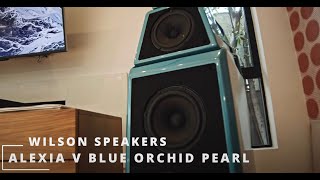
A conversational YouTube video (Chris Collins with Ian and Brian) recounting Collins' hi‑fi journey, equipment changes, and lessons learned while installing Wilson Alexia V speakers. The discussion covers gear history (turntables, amplifiers, DACs), the current system (Dan D'Agostino Momentum S250 amp, VTL preamps, dCS Lina DAC and master clock, Grand Prix Parabolica turntable with Hana cartridge, Transparent cabling), setup tradeoffs (measurements vs. feel, time alignment, room interaction), reference tracks used for tuning, and the emotional effect of getting the speaker/setup "right."
Chapters
When we're doing speaker setups or any setup, it's really kind of part art and part science. So part of it is literally like measurements how far apart we're doing something moving the tweeter closer or further back or up or down. That's a scientific process really. But there's the art side of it where it's more feel.
Let me introduce you to Brian and Ian.
Hello. Hello.
I got my Alexia V's that have been on order for a little over four months. They have been partners in what we're doing in the library. So we had a very lofty goal of having that be interactive. We have basically two systems in the library. And we made a video that we'll put in the description kind of explaining that. So we're here at home. And this system maybe is a little more personal. And I actually use it more because I'm home.
Right.
The library is for events. And when people are there, let's kind of go through the equipment that has got us to where we are. We first met, I had a project that I was really happy with, but the needle broke.
Yeah. Instead of getting a new stylus on the project, I think we ended up with the clear audio concept, which is.
Which project.
It's a great table.
Way above its weight.
Yeah. The concept is certainly at a different level.
Then I was running. I was running a moon.
That's right.
Integrated into Fleetwoods, I think.
Into the Fleetwoods. Yeah.
Those Fleetwoods were great. They're. They're kind of one dimensional in a way. I ended up with clipshorn speakers. Right. The AK6 got rid of the Fleetwoods, went to the clips horns. That's what I had in here.
Yeah. And then eventually I think we upgraded to the DCS at that point.
Yeah. So you brought over the DCS and you hooked it up and instantly I was like, holy cow. It's magical in a way. Then we kind of went through a little bit of trial and error in a second sense where I tried some avant garde speakers against the better judgment. But I. I like the look of them. And then that was a nightmare. Those were. I don't know. Can't sell them either. Nobody wants to buy them. They're paperweights.
Honestly. Speakers.
Just. What?
Not the right.
Listen. Being nice because you're in the industry. I don't. I don't have to be nice.
They're paperweights.
They.
They really are like. I don't get it. They're fatiguing. They're very fatiguing. So I did that in the meantime, we went to a d' Agostino integrated.
Yeah. We swapped the Mac out and we got the Dagostino progression series integrated amplifier.
And even though that sounded really well, I had an issue. And you said, I'm the only one in the world that had an issue with the remote. But I went through a couple remotes.
I used to have to get up, reset it.
Yeah, well, that was justification for an upgrade, right?
Yeah, exactly. We decided to try some Wilsons. And there was a pair of Wilson's that you had traded in. And I said, I'll take them. And then Ian sells them out from under me.
Right.
Isn't that what happened?
We got to do what we got to do sometimes.
Yes.
Yeah.
So he calls me, goes, I'm sorry, when I was gone, somebody sold them or something. There was some story like that. So then you went to work and you found.
We made some calls.
Made some calls. And you got a set of. Would you call them like certified.
Certified pre owned. Yeah, that's what they are.
By Wilson.
Right.
So they take them back, they redo them.
What.
What speakers were those?
That was the Daws.
The Sasha Daws.
Yeah.
So we put those here. And then I pretty quickly knew that I wanted these. And I asked you about these and I said, how much difference? And one thing about Ian that is funny is when you ask him that question, he will never answer it. So if I say, like, is it 20% better? Is it 50% better? He won't. He'll go, well, you just kind of hear it like. And then this is the only time you've ever said, oh, it's a dramatic difference. And I'm like, yeah, 50%. You go, @ least as we sit right now, what are we powering it.
With? The amplifiers. The Dan D' Agostino Momentum S250 stereo amplifier, solid state super cool amp. And that's running the Alexia V's that you have here now in the Blue Orchid Pearl color. It's a very beautiful finish for the room. Matches everything perfectly. Cabling we're using all transparent, mostly XL in the system, which is a little bit more advanced than the stuff we have in the Library. Powering the D', Agostino, or what's giving the signal to the D', Agostino, is the VTL 7.5 preamplifier. And that's being fed sources from the Grand Prix audio turntable, which is the Parabolica. Same turntable you have in the library, the same cartridge, which is the Hono. Umami, red that's going into the phono stage, also made by VTL. It's their TP 6.5 Series 2. Just like the library. And also like the library, you've got the dcs, Lina, DAC and Master Clock to run the digital side of.
Things. I would just say, like, I don't know how I could go up much further from here. Any jumps from here would be.
Incremental but not seismic in some capacity. Yes. It would be in perspective of drag coefficiency and horsepower in the car. So to. At a certain point it'll go up and what you're going to spend in the performance. So what we've put together in our process through all of this is a fundamentally beautiful system in terms of performance dollars spent. But at the end of the day, we know and we discovered your tonal preference, your sound. So it's important that we work through the.
Process.
I've had these for a couple weeks because I had to break them in. So you set them up and I was breaking them in and right away I was. Yeah. I don't know. I can't even explain. I haven't played it for anybody that didn't just get.
Quiet. Literally.
Speechless.
Yeah.
Yeah. You're trying to put it into words, but maybe you don't need to. Maybe. Maybe that's.
Enough. That emotional reaction. Goosebumps, bumps, tears.
Yeah. Music is so important to all of us. Right. I think it's in our DNA. The earliest peoples were musicians and they made music and. And it's so important to the human experience. People don't even realize that it can sound like.
This. When you get the speaker right, you feel it. I don't think it's right. It feels right. So that. That to me is like when it locks in, you're like, okay. And this is feeling right. And if it doesn't feel right, feel right. And that's what music.
Is. Yeah. What's interesting about the word feel right is it's not sound. Right. So you think about speakers in the sense of.
Sound.
Yeah. You know, Neve kind of had this theory that there's frequencies that you feel and it's more than just.
Sound.
Right. There's. There's a feeling, there's more dimensions there that you didn't know.
Existed.
Yeah. I don't know if I'm explaining it right. It.
Feels. Yeah. I think, you know, we. The common phrase that's said is that humans can hear from 20Hz to 20 000Hz and it's. That's just not true. You can't hear all that, but you can feel it, you can detect it, you can perceive it. And that certainly I think Neva's onto something when he said that when we're doing speaker setups or any setup, it's really kind of part of art and part science. So part of it is literally like measurements how far apart we're doing something moving the tweeter closer or further back or up or down or anything like.
That.
Once the time alignment set on a Wilson, starting with that parameter and moving it throughout the room, seeing how they actually interact with each other, how they interact in the room, how they carry all those little little.
Things. That's a scientific pro process really. But there's the art side of it where it's more.
Feel. Okay. One thing that, that is always interesting to me and I think I. I amuse you guys sometimes by the songs that I use as reference. So what are what are like three songs songs that you used to reference and why. So what are those top three that if you really want to understand the system. What do you go.
To? Well, the first thing for me is. Is a. What particular album? Produced by Allison Krauss, Nickel Creek. I think it's a self titled album. I believe there's two or three tracks in there and the production is not perfect. But there are aspects of about it that I'm looking for and I'm familiar with it that I actually like the music a lot. But I'm looking for things to happen within the vocal structure. The image, palatability and tonality of the instruments, colorations of the instruments, placement of the instruments. All those little things that I think that album got quite right. There's again, there's some errors with it, but I know that's one of the steps that we.
Use. That's where you.
Start. That's kind of one of my start starting points. Again, it's like that's what we use today. Yeah, we did use that.
Today. That is interesting because it has a lot of.
Space.
Yeah. And it has like a smack on the drums and the, the guitar is, you know, very sparse but.
There. Yeah, it's funny, it's as Brian said, it's not a perfect recording but no recording is. But it's. It's a great setup tool and good.
Music. And then we'll use a really simple recording like an RL Burnside or just guitar Muddy Waters, something of that. That nature. Just try and keep it as. As minimal as possible. It. Some of those basic, basic recordings are very pure. And yes, they have. There's some issues with them within itself, but that purity of that recording is very palatable. And then we played some Shabriar espanya, which just gave massive range and scale instruments and the wall. Because we can't, like, stuff a hole or orchestra in this room. But if we have a perception that you're at the event, then we're. We're on to something that we have it right. So that's another one of the things. So we use a lot of different.
Things. A track I use a lot is Glass Animals, Black.
Mumbo. Oh, that's a.
Great. Because that. It's so spacious. And if. If it's sounding a little concentrated, maybe then we know we did something wrong. But there's a lot of space going on. Great dynamics in that track, really a lot of texture in the voice, vocals and. And guitar and some of the more synthesized instruments that they're using. That's a great.
Track. There's no, like, I say, no system, no matter what the price point is. It's not like, oh, this is, you know, oh, can't. Can't enjoy it. It's like, okay, it's a 5K audio element system. It's a 10K, you know, on and on and on. It's like if you're connecting with it, then something's right. Placement music. That's. That's what we're.
About. We're about how much of that is. Is being familiar with the song. Like, for me, the songs that I use, I'm just very familiar with.
Them. Yeah. Every time we make a change for the better, you're like, here, wait, I never heard that before. Or what's going on over there? Or someone's coughing in the back. It's like, not that you want to hear somebody coughing, but that whole, like, I never heard that.
Before. You hear that for the first time after listening to that track probably hundreds of times. It's pretty.
Special. I just discovered my favorite tequila. But then I was able to taste and, you know, even deeper into it, or something of that nature makes it fun. And that's what a large part of this is about, you know, is. Is that discovery. And why, if we do an upgrade, what it is, what is it we're doing, we're not doing better laterally. It's about better for hearing deeper into the music, so. Which invokes the.
Emotion.
One thing that I've noticed about this system is the stuff that I would have previously discounted as being digital. And you Know, it just didn't sound good. There's no reason to have it on vinyl. Like, for example, Bony Bear. There's no reason to have it on vinyl, really, because it doesn't. It's digital to digital to then analog. It doesn't even really make sense. But there's something about this system, and especially through the Lena. But it does happen a little bit on vinyl also, that it's making that sound analog in a way where Bony Bear now all of a sudden sounds like he cares about hi fi in the recording, which isn't, you know, isn't something he's not making vinyl for. Hi.
Fi.
Right. What is it that. That Lena or this system is doing that's making it sound.
Analog? It's bringing you as close to the music as you can get. It's making it natural. It's taking some of the artificialness out of.
It. But how is it doing that? What is Lena, what is that DCS doing? Why is it so.
Different? It's. Well, its ability to convert. I mean, with the ring DAC that it's using, its ability to convert a digital signal into analog and its.
Process of how it does it, but it really sounds.
Analog. Even tubes in solid state, same as they're trying to go into the same point is like tubes, they want more dynamic. Solid state wants to be more analog. Same thing like turntable vinyl with. With digital, like digital wants to be a bit more analog and natural. So how does DCS do it? They. I mean, it's their. Their engineering, their science, you know, a lot of it. Like, they. They throw us through all the training and we were very, very involved with dcs. But the total intricate ways of how they do it, you know, it's still a little bit of like, okay, how does this work? We're still learning that process too. I think they're still learning the.
Process and working at this technology for a long.
Time. Oh.
Yeah. Very noticeable, though, like how it can take something that's a little bit of a disappointment and kind of give it that. That analog.
Magic. Yeah, well, it's not just analog, but just connective magic. I'd say there's. That just speaks.
To. Just breathing a little more life into.
It. Yeah. Any. Any closing.
Thoughts. That thing I keep telling everybody, it's like for audio, if we just clerked someone a box, clerked you a box and never saw you again, that's a huge fail. Like, this is not just a. Okay, bye. This is a relationship. You know, we've become good friends and I appreciate that too. More than anything. I'll take all this away, but the friendship, I really appreciate, but the. The. The whole aspect of. Of, like, okay, this is what we're doing and providing, you know, the music that changes your life, it creates a heartbeat in your home. That's. That's.
Huge. Oh, yeah, it is. It is like.
Therapy.
Yeah. Like, you find yourself watching way less tv. I read, you know, because I read a lot. I read a lot of books. And so for me, it is like therapy. Like, and then that magical element of, you know, you're feeling the music more than hearing. Hearing it.
Is. Is pretty special. Yeah. Goosebumps and tears. Yeah. I love it. Beautiful. Well, thanks for having us. Appreciate.
It. Yeah. Thank you so much. Chris.







