Ntare Guma Mbaho Mwine on Gandhi's Autobiography
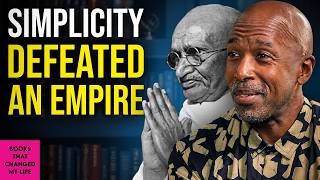
Recorded interview in which actor/filmmaker Ntare Guma Mbaho Mwine discusses how Gandhi’s autobiography The Story of My Experiments with Truth shaped his life. Central takeaways: simplicity and self-restraint (in diet, dress, and values) became enduring practices for Ntare; Gandhi’s methods of nonviolent mass empowerment are linked to later civil-rights movements; the guests relate Gandhi’s lessons to modern issues—consumerism, platforms/AI, digital ephemerality, and institutional power. Ntare also connects these themes to his creative work and current projects (a book and a documentary).
Chapters
This time on books that changed my life. We probably could talk about this book for days.
Yes. Yeah.
It really changed you. Right.
He basically took down the British Empire by resorting to simplicity. The successes that he had led to the shifts that happened in the civil rights movement in the United States.
It's crazy to think how he affected Martin Luther King and like that selflessness.
And sacrifice and the fact that both able to affect change through peaceful protest speaks volumes in and of itself. But both men lives were taken by bullets.
We celebrate being able to dominate or have power over others. That's the corruption of leadership.
Yeah. And I think that's what Gandhi was so radical about at the time because these were massive empires that he was trying to deconstruct. He spoke to those people who felt powerless and said, you have way more power than you recognize.
When leadership is about collaboration and inviting people on a journey or a mission, then it's healthy.
He took a vow of not eating until society changed its ways. I don't think any leader now could take a vow of saying, I'm not gonna eat and that we wouldn't just watch them starve to death. But that's getting back to the simplicity, core essence. Like, what do we need to survive? We need to eat to survive. What if I take all that away? Will that change the way people think? I don't think that could happen now. But he did that. People came down and laid their swords and their weapons down and said, peace is the way.
Okay, so then the big question, how did the story of my experiments with truth, Gandhi's autobiography, change your life?
I.
Foreign.
Welcome to the Sydney Cadets Library where we love books, especially books that have changed people's lives. We are joined by a very talented and special guest today. He's an actor, a playwright, a documentary filmmaker, a photographer, and he's working on his first book. He's here to talk about the book that changed his life, an autobiography. The Story of My Experiments with Truth by Gandhi. Please welcome Natare Guma Mbaho wine. I'm excited to talk about this book.
Yeah.
And we have this book, but it's not a book I'd read.
Yeah. Like, I hadn't read it in over three decades, I think. So I recently reread it and was just blown away by how much a part of my life it still is, like, in terms of day to day, like, it still has an impact. So I was grateful to have a chance to revisit this. Oh, wow. Thank you.
Thank you.
Cheers.
Cheers. And to the degree that it really changed you.
Right?
Like, it changed how you eat, how you dress, the way that you think, everything.
Yeah, for sure. And I even hadn't really thought about it in terms of like my most recent performance on this Apple TV series, Smoke. But after rereading it, I was like, oh man, this played a part even in my preparation for the role in a way I hadn't thought of consciously. So happy to dive into all of that.
Yeah, yeah, we. We probably could talk about this book for days.
Yes.
Yeah, there's a lot of substance there and, you know, a lot of it leads to, you know, other conversations. I am curious about your take on some of it too, and just how it applies to society today.
Yeah, I thought about that just on the way over, like, what would Gandhi think about, you know, the way we. The way society is now and how much, you know, because he basically took down the British Empire by resorting to simplicity, asking people not to be spending all their money on European clothing. He was like, we have. We grow our own cotton, we can make our own clothes. We don't have to be buying British wool and wearing British outfits and propping up the British Empire and systematically took them down that way by resorting to simplicity and self realization, basically. And how now in present day, we've basically funded Bezos to go to space and finance his extravagant wedding. But we're all doing that in our own small little ways by being Amazon prime subscribers. But there's so many different iterations of that. How the masses have created these billionaires and these empires, but the power lies with the people.
How do you think that's connected to violence in the sense of. Ultimately people have the power through spending and through habits. Right. Like we. We're all walking around with phones and. But we're get. We're giving power to someone in that exchange and we're losing freedom in that exchange in a sense also. But we don't use that power. And you know, the thing with Gandhi and nonviolence in a sense is it seems like in the frustration of that or the learned helplessness of that, there's a group of people, and it's always been that way, that resolve it or attempt to resolve it through violence instead of embracing. They have the power, they're losing their power by not using it, in a sense. I don't know. What are your thoughts on that?
I think that's a great point because in the case of India, the British were a minority, but they had convinced the masses that they were the rightful people in power. And Basically suppressed the masses. And one of the things that Gandhi did was awaken the masses to their own power, the individual power, through peaceful protest. And that by peacefully protesting you can affect change. You don't necessarily have to resort to violence to be able to affect change. And the successes that he had led to the shifts that happened in the civil rights movement in the United States, Martin Luther King saw that the change that was brought into effect through Gandhi's peaceful protest that inspired Martin Luther King to.
You went over that, right?
Yeah.
What are your personal feelings on that?
Well, I think if you look at the success, India gained its independence as a result from that peaceful protest, not partly inspired by that. I think there's power to the people. It speaks to power to the people. And the fact that Martin Luther King both able to affect change through peaceful protest was also speaks volumes in and of itself. But both men lives were taken by bullets. You know, there's profound irony in that, that these people whose lives were taken through violence but were basically advocating peaceful change.
How do you see it today though? Like just the Bezos thing. And that can mean many things. But let's just take for example, just like Henry Ford and a lot of very powerful rich people, their wealth was built on a workforce. And there's points in time where that workforce felt like they were undercompensated for the sacrifices they were making. Right. And then at the same time, if you have a lot of people looking for jobs, that gives the people that own the companies an advantage. If there weren't people looking for the jobs and unemployment was low, you'd have to pay more in order to get people right. It's the abundance of people needing jobs. And if you think about it, you can make a case on both sides, right?
I mean, I don't know how deep of a dive we want to go into this. Let's go. But sometimes it's not just about people needing jobs. I mean, this whole country is built on the back of slaves and exploiting the masses, exploiting people. So in the case of what was happening in India is people were being exploited for the sake of the ruling class. They were benefiting from that. And in a way we could say we're currently presently being exploited in a way to have these sort of comforts that we have. My photos that I take of care of my child.
To back them up are now on a cloud server somewhere. You know, they're no longer in my possession. But I've done this because I don't have any other ways to Back up my things. They've made it almost difficult to back up your stuff on your drive. It's now for convenience. We're being exploited for convenience sake.
But that's a subscription thing. If you didn't pay for it, you would lose.
Of course. And also, what happens if I pass away? Will my kids have access to all those files? No. My credit card will stop. The files will be erased. And, you know, they don't exist for future generations.
Part of the reason why I love real books.
Yeah, yeah. It's really. It's to have something tangible and that, like, it comes with a sense of smell and history and you can look back on. You were asking me about, did I take notes in my books. I mean, all that is a documentation, a physical documentation that you can pass on. We're sort of losing that now. I don't know that Instagram or the Facebooks will have the same sort of social relevance decades from now. All those records will be wiped out and they're sort of irrelevant already. Some people don't even use those anymore. But that's all things that I wonder what Gandhi would think about now. He would just be saying, we just sent a man up to space to just have a look around. We have all these people who are still in need. Could that money have been better spent? What could we do as a. As the people to demand change or ask for.
A piece of the pie that we helped build?
What do you think we could do?
Currently, I'm not a politician, so I don't know if I can just put human. No, but I don't know if there's. Maybe this already exists and I'm not aware about it. I'm not aware of it. But there's, you know, there's the equivalent of.
There's boycotts about Target right now because of some of them. My wife won't go to Target because of some of the policies that they've sort of been behind. So there are means to affect change. And I don't know if there's already things at play, so I don't want to sound like I'm totally ignorant, but I'm sure there's something about the equivalent of the opposite of Amazon Prime Day where there's a. I hope there is. There must be something where.
I haven't heard of it. I've heard about Target.
Okay. But I can imagine, like, if. If there was one day where everyone said, we're not going to.
I know Amazon prime sales were down, but that was more to do with people Spending, not boycotting.
One and the same. Yeah, but if there was one day where everyone said, we're not going to do this. We're not going to spend this on whatever company it is, whatever billionaire we've helped.
If we're going to take one day, one week, one month, I guarantee you their policies would change. If we all said we're not going to do anything for this period of time, something would come about. Because we're the bottom line.
No, we have more power than I think we. But like you said, we give it.
Away because it's become so convenient. And that was the equivalent of Gandhi, a European suit made of wool being presented in a nice box and display. You get seduced by that and say, why shouldn't I just have that? I would love to have that. Forgetting that there's cotton that's grown right in your backyard and you could weave your own fabrics. And so for me, even now, like, I've made it a conscious effort to, like, focus on giving back to African designers, because there's so many great designers on the continent, and this is something by a Lego space designer, Obida culture that I. When I was in Nigeria a few months ago, I came to a studio and I was like, oh, I love this stuff. And so now I'm wearing it, talking to you. And maybe someone who's watching might say, how can I find a LEGO space designer? They spot this and maybe they'll support. So, yeah, I try to give back towards the local designers. Local. Give back to local communities in a way, instead of feeding the machine as much as possible. But you just had to black out a.
Label, a logo for a logo. But I'm promoting, so I'm not perfect. I still have the.
It's hard.
It's impossible.
Yeah, it's impossible. The title of the book is the Story of My Experiments with Truth, Gandhi's Autobiography. Kind of give me a sense of where you were at in life when this came into the picture.
Yeah, I was in grad school at nyu, in the graduate acting program at New York University's Tisch School of the Arts. And those three years were some of the most intense, sort of introspective, you know, self process, introspective self discovery, expansion. I think, like a really intense focus time. And I think that's when I discovered Gandhi's autobiography. I was working on a play, the Lower depths by Max McCorky, and I was playing a character named Luca, who's sort of like a spiritual, I guess, center of the play of the story. And I think for fun, I just started reading Gandhi and came across this book, this autobiography. And I think from that point on my life transformed in a way. I had not thought about.
How like simplicity, there's power in simplicity. Like that's one of the core tenets, I guess, of his life is.
Goes counter towards the commercial world that we live in where the more you have, the better you off you are, you know.
And is that how you felt before that?
I don't think so, not to that extent.
How did you feel? What was your perspective before that was really changed?
I think the virtue and simplicity. Simplicity is a virtue, really. I really hadn't thought about boiling things down to the simplest, to the core. The simplest core. Like, what if you can strip away everything? What's the essence? What's the like ultimate essence of whatever it is that you're dealing with? And if we stripped everything away, it would just be like a single book. Like if we stripped, like, it would just be the single element of this book. Or like, how do you get to the basic core of something?
So is it. But as a young kid, you know, figuring things out, like if you're going to NYU and you're studying acting, a measurement of success would be to be famous, a list award winning actor. After reading the book, does the idea of success change?
No. It's so funny. At the time there was, in Washington Square park, there was a comedian, I wish I could remember his name, who hit it really big but had a drug problem, which he never sort of recovered, never sort of got back in the same footing with. But he would always be in Washington Square park and telling jokes. And he had like hundreds of people around. A couple times a week he was there and like hundreds of people would be around, he'd be telling jokes. I was like, that's it. At this core, this is what this guy has to do. Whether he has critical acclaim or whether he's at the corner like in Washington Square park. That's his essence, you know. And for me, I felt like that was just a reminder about that. What is successful and success really was about living up to your potential in some way, whether it's on a grand scale or if you're just talking to a few hundred people. Like he was living at his pure, he was tapping into his true voice in a way.
Are there kind of two simple elements to that? One is the craft and the second is the connection with people.
I guess also there's like some people can't handle success too. Like getting to that point and maintaining it is also another beast in and of itself.
And the more you want it, the more you mess it up.
I think sustaining something, sustaining successes as anything in any relationships or sustaining, you know, is, is half the battle because you can get there. But maintenance is, is also a challenge.
I was talking to somebody about that the other day about cults, and it's like the thing that usually happens with successful cult leaders is they implode.
Yeah.
Because they become paranoid. They become their own worst enemy, in a sense.
Yeah.
So it's hard to find a good cult leader.
I'm sure we tap into some of your books. We might.
Well, that's, that's actually a common theme.
Yeah.
Is that they all kind of become paranoid and they go too far.
Yeah. Well, that was one of the things that Gandhi said was, you know, we can live under extreme leaders, people who are, who've murdered people who are totalitarian, but in the end they always fall. And he says, just think about it, in the end they always will fall. So perseverance is the key. And that's the challenge with success.
There is a point in here, he's talking about power in that way too. And that what is it that we need celebrate the humiliation of others or we celebrate being able to dominate or have power over others in the end? I think my observation is that that's the corruption of leadership. When leadership is about power, it no longer is effective. When leadership is about collaboration and inviting people on a journey or a mission, then it's. It's healthy. But to have power, you have to, you have to push the people that don't agree with you or you have to be pretty heavy handed. Yeah, often.
Yeah. I mean there's, I mean there's different ways to look at it. I think power also comes from the ability to. To assemble, to sway the masses, you know, and just to pivot in terms of like music, the power of music, or the power of book, its ability to affect change. So sometimes it's not about domination, but sometimes it's about sort of the zeitgeist, the ability to sort of speak for the masses or to give voice to the things that everyone's struggling to articulate and to rally around. And I think that's what Gandhi did. He awoke the masses to their power, which is a great reminder, I think.
The first part that's interesting to me is the title of the book. How do you interpret experiments? So the title is the story of my experiments with Truth. What does Experiments with truth kind of.
Mean to you when you try to be truthful, there will be trial and error. You can only succeed. So it's an experiment where you try to be truthful. And I think one of the things that he talked about that sort of spoke to me was not just this experiments with truth, both in the physical realm and then sort of spiritual realm. He talked about spiritual enlightenment can also not. Can't also happen without physical enlightenment or trying to do physical. Like if you're trying to gain spiritual enlightenment, but you're eating bad foods and, you know, feeding yourself with junk that you can't attain. What he called enlightenment. I don't know if that's true or not, but that was his sort of outlook, that physical and spiritual are intertwined. And I'd never heard about fasting before until I had read his book. And I'd never heard about, you know, I didn't know. My family's from Uganda, and we're basically meat and potatoes. You know, culture and meat is a big part of our livelihood. Cows are a big part. The milk from a cow, the meat from a cow are all things that we ingest from early childhood, too, and celebrated rituals, family events. But after I read Gandhi's book, I became a vegetarian. And I no longer sort of adhere to the tenets that it sort of. I mean, you have to kill everything to eat. So I don't adhere to the think that it's sort of some higher thing, but the idea of restraint, how his sort of philosophy on food changed my life in that way that I became vegetarian. I mean, I still can't believe to this day I'm still adhering to that and have come, like, even more strict to become vegan and not eating dairy as well. That was all inspired by reading his book.
And so kind of connecting that to what you said earlier. How did that affect you spiritually?
I don't know that I'm a spiritual. Like, if it's a spectrum spiritually. I just felt like I was never crazy about meat when I ate it, and so I just cut it out. Yeah, I think initially I thought, you know, that somehow elevated that I was not killing animals because I was not eating meat. But, you know, the reality is you have to kill something to survive, whether it's a plant or an animal.
Religion is kind of a through line. But would you classify Gandhi as religious?
I think he would definitely classify himself as a religious person, considered himself. There's a quote where I think he says he's Christian, he's Muslim, he's Hindu, he's all of These different faiths, like, he studied them and understood them, the power of them. But I do think he practiced faith. Yeah. I don't have a particular religious faith that I follow or practice, though.
Do you believe in God or a higher power?
I believe in a higher power or that things are far more complicated and intertwined than I could ever imagine and comprehend and try to give over to that.
You don't have a face or a name or a no.
And don't have a particular practice that I follow. Yeah. But my grandfather was first African archbishop of Uganda over East Africa.
So I'm sure he's looking down upon me going, no, no, my son.
How do you think of Gandhi as a. As a husband and a father and you being a father. Yeah, that was one part that kind of surprised me.
Yeah. I don't know that he's. Was the best.
And he says that, right?
Yeah, he was the best husband. I mean, he got married when he was a kid.
An arranged marriage, too.
An arranged marriage at 13 years old.
Isn't it funny that in arranged marriage the divorce rate is way lower, but I guess it's arranged.
So you don't have a way out.
Yeah. You don't see divorce as an option.
Maybe you might not have as easy a way out because there's a whole lot of people depending on it. But yeah, he says himself that he wasn't the best spouse. And I think anyone at that level of who's basically given themselves over to the people that it's hard to the family. The family paid the price, takes the price. Anyone sort of at that level, always there's a cost that is incurred. I'm nowhere at that point. But I do realize that I've been. I mean, I'm on my second marriage and I know that my focus on my work. Another book that I've read a lot or one of my favorite was Duke Ellington's Music is My Mistress, where he just talks about how music is his. Like, that's his love. Anything is almost secondary, in a way. And I noticed that, you know, early in my career when I was starting out, how my work was my mistress. And that took its toll on personal relationships and my first marriage. And I've tried to create a healthy balance so that I'm there for my family.
Does the work suffer because of that?
You know what I would say my work suffers more as a result of what we were talking about, the distractions that were thrown.
I mean, I'm embarrassed about how much time when I look at my phone at the end of the week. And it says you spent five hours a day or four, whatever it is, hours a day on your phone. I'm like, how is that? I don't even know how that happened.
That's taken more of a toll on my creative output. Is it TikTok, anybody? No, not on TikTok. I'm on Instagram or Facebook. You know, one of the few people still on Facebook or reading the news.
I love reading the Washington Post and New York Times, Variety. Just trying to keep abreast of the world. So I'd say family hasn't been a distraction. It's all these other distractions that we have thrown away, thrown at us through our gadgets that has probably taken more of a. Has cost me more creatively than anything else.
I think that's pretty common in a thing. Everybody is trying to figure out how to deal with it.
And I think I look back at, like, you know, James Baldwin or all these great authors from back in the day and, like, wondering what their output would have been now. Like, would they have created some of the great works, had the time to reflect, or would they have been as equally distracted as we are with our massive computers that we walk around in, our phone in our hand?
Yeah, I think about that too. With music.
Yeah.
Like, music isn't getting better. And there's more access to recording. Like, when I was a kid, if you wanted to record, you had to go buy time in a studio that was expensive. You were on analog tape. So if you messed up. Yeah, it was a big deal. Now you can do it in your bedroom.
And it's not getting better. No, but there was just this thing.
But the songwriting and the performance isn't getting better.
And I just read. I think last week or two weeks ago, me losing time, just reading the headlines, there was some music thing that hit the. That was making a huge splash, and they just discovered it was actually. Was AI.
Yeah, I read that. I haven't heard it, but I read it too.
Yeah. That it was all AI General.
I really had no interest in listening because it just bums me out.
But once you knew that. But that was wild to see that. That was like, the buzz for a little while.
But do you think movies. I mean, I don't think movies are better, I don't think. I think everything's very formulaic. There isn't a lot of independent new thought going into the movie.
And you think that's as a result of the distractions?
I do, but I don't.
Independent minds are being Distracted. What's left is the corporate ones that are focusing on.
Well, it's rare you have a conversation with anybody anymore that you. You walk away from the conversation going, oh, that person has, like a new perspective. Like, most people are just left or right or middle. For me, anyways, it's rare that somebody really is thinking about things originally.
Yeah. And I think that's what Gandhi was so radical about at the time, because these were massive empires that he was trying to deconstruct. Massive, like incredibly complex ways of systems of society that were structured to take advantage of the masses. And he systematically disassembled that in the simplest, not through means of violence, but through simplicity, getting back to simplicity. And I think that's what we're, in essence. What's so hard, what we're talking about, in essence, is how we're trying to get back to simplicity.
So that's the quote I was going to read you kind of to that point too, about music is. He says, experience has taught me that silence is part of the spiritual discipline and truth. But I think there's just so much noise. I think a lot of healthy ideas come from reflection. And the more noise there is, the more reactive people are in their decisions. When in silence, you're not reactive. You can. You can kind of think it through in a sense and reflect.
Yeah, yeah. So should we have a moment of silence?
We certainly can. I. I mean, I think I do a good job of. Of. I mean, if you looked at my phone, it would be less than an hour. I'm not.
That's great.
I'm not on any of that. I'm not on social media.
That's great.
At all. Now I have a team that does it, but it's not me.
Yeah. That's incredible. I'm still trying to get to that point. And I feel bad. I feel bad because my kids see me on the phone and have said at times like, daddy, get off your phone.
Your kids say that? Yeah, they've said that because that's another thing. So I just had a family event up my place on a lake, and my whole family was there. And it was interesting to me. I was talking to a friend about this yesterday. It was interesting to me that it wasn't just the kids on their. Like, there's a lake with jet skis and paddle boards. Like, there's. And it's summer in the Northwest, which is beautiful. And you don't get it. Like, that window closes very quick. People are on their phones. But the worst of all of them Was the adults.
Yeah. Well, it just shows the power of addiction. I mean, just getting back to Gandhi, he sort of called people to wean themselves off of the breast of the British Empire.
Stand up for yourself, make things yourself, be independent. And I think that's something that sort of speaks to us now, like, getting back to independence.
And what I kind of think about that, too, is, like, judgment. Like, there's this thing in us that if we judge something, we are rewarded with dopamine because it's, oh, that person is a 49ers fan and I'm a Seahawks fan if I get a little dopamine. But I've also. I've in the process of judging, like, every five years.
It's extinct sometimes. You know, we've all lost photos on our gadgets.
The other thing is just. It's a volume thing too. Like, right.
You can. Creatures.
The photos that I've inherited from my grandparents is like a couple dozen.
Yeah.
Not thousands.
Yeah, yeah.
And so the volume makes it. I mean, you're not going to print out your photo library. I mean, you could select some to print out.
Yeah. But if you think about that, like, what. What will survive? Like, what for generations to come? Like, now that so much is existing in the digital realm, maybe the case will be, like, if you've lost your family photo, you can just tell AI to reconstruct a picture of my grandmother based on this, based on looking at me, and it'll do that in the.
Pyramids in Mexico City or some vacation. You just recreate it.
So give me your thoughts on this one. So Gandhi said, I had in my speech described Western civilization as being unlike Eastern, predominantly based on force.
Oh, wow. Well, given the time he was living in, that was what the reality that they were dealing with. He lived in apartheid air South Africa, and that was put in place by force in India, the British, where there's a great massacre that occurred when he was. So many things that were done through brute force. We look at this history through the United States, how much the. This country was built on brute force. And that's what makes it all the more remarkable, that his peaceful protest and the peaceful protests that happened during the civil rights era brought about change. You never would have guessed that that would be the case. So I think he saw the Achilles heel, the David and the Goliath, you.
Know, that at a, you know, job at Trader Joe's or something, a cab driver. You can't. There's a learned helplessness that sets in. People are not voting for these politicians because they want communism. They're voting for these politicians because they want to survive and not struggle. And it's a learned helplessness. And the, you know, the flip side of this is if that group of people can't survive and have a healthy wage, they're not going to have kids. Like it. Society starts to die. And so no, it's not, it's not people going, hey, we want to be socialists, we want to be communist. What they're saying is we want to feel like this is more fair.
If we're going to work 8 hour or 12 hour days, we should be able to afford rent.
But the algorithm on YouTube isn't going to feed her that. No, it's going to feed her more of the fear in the. Oh, communism is come, you know, and, and it's like, well, no, that's, that's a, that's a judgment. But that isn't really what the story is.
Yeah, no, it's so hard because we're part of like this assembly line.
That keeps us.
Well, if I have friends over and they click on my YouTube and then now I'm going to watch videos on how to sew. Oh, sunflowers for, you know, and then it's gonna come up a month from now, they'll reintroduce that thing. And I'm like, oh, you just ruined my algorithm. Now I gotta watch, you know, reggaeton.
Yeah, so yeah, it's assembly line.
That's the only way to put it.
And my wife was just joking that the other day she hadn't typed anything into her phone or whatever, but she was thinking about something and for some reason when she popped up her phone, it was there, presented to her and she was like, but I hadn't even searched for this yet or put it in anywhere, but it was fed to me as if they're now reading my mind. So they're beyond. They already are reading our minds. No, because we've given them so much information.
Yeah.
Anytime we do a Google search, we've given them information. Every time, you know, you search for anything, we basically give them.
All of our emails, everything we're handing AI to.
Tell us what Ganti.
Somebody'S watching this.
For him to tell us he would be against AI.
Yeah.
We look back on the time of that period and like.
How could people have lived in that time? Like when world wars were happening and there was a Hitler on the, you know, people were fearing. And you just think like, that's crazy. The amount of change that was happening at that time. And we look at our present situation and, like, the radical shifts that are happening with technology. We're like. We're the guinea pigs of right now. And we're just hard to fathom. We're in the eye of this incredible storm, like, literally the center.
Where it might be still. And you don't realize, like, the sort of.
You're in the midst of this whirlwind of change.
Yeah. But I think just my personal opinion is, I think it's overhyped.
Yeah.
When I use AI, it doesn't do much for me. Like, it's not. It can write code, but it doesn't help me with things.
No, but it's going to affect, like, my. I can't imagine how it's affecting the whole. I teach at USC and how it's affecting the education system, students, teachers. Like, how it's radically transforming education. Like, how it'll affect my kids.
Did you listen to the AI song or music that you were referencing?
No, No, I didn't. I just saw the headline. I would.
I would bet if we put it on right now, we would be underwhelmed.
Yeah. All right.
Don't you think?
Yeah, possibly. But a lot of people weren't.
But a lot of people don't have taste.
That's true.
Like, if we went through the top 10 songs right now, how many of those songs do you think you would love?
Yeah.
But I'm sure there will be an AI that speaks to us, not just to the masses.
Only if we engage with it. If we don't give it access, when we keep our distance, we can still judge it for what it is.
It's only a matter of time before.
How will that affect museums and art? Right. Like, that will affect curation.
Because people will curate to the masses, not to the message.
No, I think my big concern really is going back to what you have here. An incredibly amassed physical library.
We're anti Kindle.
And how so much is now existing in the digital realm. And that requires electricity, generators, power. You know, the lights go out, you still have your books, and you can still read by candlelight. And these books will be passed down from generations. And I just wonder about all the photos that I have on my phone for my kids. Like, there's no way my grandkids will ever see those photos that are on my phone. Like, I doubt it. Yeah, because your phone, like, every five years, it's. It's extinct sometimes. You know, we've all lost photos on our gadgets.
The other thing is just. It's a Volume thing too. Like.
Right.
You can create the photos that I've inherited from my grandparents is like a couple dozen.
Yeah.
Not thousands.
Yes. Yeah.
And so the volume makes it. I mean, you're not going to print out your photo library. I mean, you could select some to print out.
But if you think about that, like what will survive, like what for generations to come, like, now that so much is existing in the digital realm, maybe the case will be like, if you've lost your family photo, you can just tell AI to reconstruct a picture of my grandmother.
Yeah.
Based on this, based on looking at me. And it'll do that in the pyramids.
In Mexico City or some vacation. You just recreate it.
Yeah.
So give me your thoughts on. On this one. So Gandhi said I had in my speech described Western civilization as being unlike Eastern, predominantly based on force.
Oh, wow. Well, given the time he was living in, that was what the reality that they were dealing with. He lived in apartheid air South Africa and that was put in place by force in India, the British, where there's a great massacre that occurred when he was. So many things that were done through brute force. We look at this history through the United States, how much this country is built on brute force. And that's what makes it all the more remarkable that his peaceful protest and the peaceful protest that happened during the civil rights era brought about change. You never would have guessed that that would be the case. So I think he saw the Achilles heel, the David and the Goliath. You know, that is an incredible story, that folklore, and it played out in real life with him.
Are there any other differences between Eastern and Western. Western philosophy or approaches that come to mind?
There's so many. I'm certainly not an expert in any way, shape or form to be able to speak to the volume. That's the whole thesis that could be written on that. But yeah, I think one of the things that turned me onto was Leo Tolstoy's book the Kingdom of God is within you. And I think that's one of the things about Eastern religion I think sort of taps into. But yeah, I'm certainly no expert in terms of Eastern, Western religion to be.
Able to speak not religion, just approach. Like for me, one thing with the books that I have here that's interesting is that kind of in an Eastern philosophy, if you have an issue and you know what the solution is, then you have the fix. So knowing what the problem is is also being able to reverse engineer the fix. In Western philosophy, having a problem means years in Therapy.
I mean, there's a difference in that way where it's like, no, the problem is the solution.
If you had a certain experience that created a certain feeling or whatever, you have the ability to. Yeah, reverse engineer that. Or just acknowledging it makes it have less power versus giving it power and putting it on an altar and worshiping it by giving it a name like anxiety or and writing a prescription for it and you know, it becomes this God in a sense.
No, that's. It's feeding the machine rather than putting it to rest, as you say.
So this is about institutions. And he said, and now after considerable experience with many public institutions which I have managed, it has become my firm conviction that it is not good to run public institutions on permanent funds. A permanent fund carries in itself the seed of the moral fall of the institution. A public institution means an institution conducted with the approval and from the funds of the public. When such an institution ceases to have public support, it forfeits its right to exist.
Wow. Wow. So what would, how would that speak to our present day.
Comes right through.
The front door and it just goes back to power. Like we have all of all of these elected officials that want to maintain power and by maintaining power they want these programs that have all this fluff that aren't actually like for example, and back to a point you made earlier, like, probably if you want the world to be a fair place, and I guess by fair, what I think of is like every kid that's born in the US to our best ability starts at the same line. No matter what their race is, how tall they are, whatever it is, they all kind of have the same starting point, Right. In order to do that, you would have to have the schools in Compton be as good as the schools in Brentwood and you would have to have after school programs and you would almost have to overfund the schools in the areas where the kids are less privileged.
Right.
So if there was a priority economically, that would be a priority. So that would require paying teachers more, spending more on the school, spending more on programs that interest the kids. Because kids that, you know, find the arts or find music or find sports or find engineering, whatever it is that interests them. And then there's a system for them to become, you know, familiar and good at it. It's going to raise their self esteem, which makes them think the American dream is possible. If, if we cut the after school programs and mom's working two jobs and dad isn't home, like the, there's all kinds of, you know, things that have to be addressed. To me, that would be a bigger priority over, I don't know, 80% of the other things we're spending money on. Yeah, but we have things that exist. Because.
The other thing that he's not really saying here, but kind of I guess is that it becomes an entitlement. And when something becomes an entitlement, it's not about the effectiveness of the program anymore, it's about the entitlement of it.
No, I think that gets to the crux of it. Yeah. About entitlement and who gets entitlements and who's able to hold on to them and at what expense is it for the other.
And are we really measuring it by the outcome? Like are we raising patriotic high self esteem kids that feel like the system is fair or are half the kids suffering from learned helplessness and they think that there's no chance they could ever achieve anything, so they give up. Yeah, that, that measurement is not something that we talk about.
No, not at all.
And I think it's not even something we measure.
No. And I think that's what was so remarkable about Gandhi was that he spoke to those people who were the underrepresented, who felt powerless, who were exploited, who were not given the safety net and said, you have way more power than you recognize. This is the simple things that you can do to claim that power. I think that was so radical at that time and it's, I think even more radical even now to think about like a reminder.
How many kids grow up and they never have somebody tell them.
Yeah.
That they believe in them or that they're good at something. Right. Yeah, like, I mean, that's a failure of society in a big way, I think.
But I think about another person who, whose book changed my life in a way was Malcolm X, the autobiography, Malcolm X and how he was a child who was discarded, who saw his parent murdered, whose mother was put in a sane asylum, who became a street hustler, drug dealer, criminal, who went to jail and then became this voice for the oppressed. So it's wild when you think about how certain circumstances can carve somebody out and leave them completely, you know, destitute and hopeless, and how some people can be in those same circumstances and be honed and sharpened into the incredible voice and power that speaks to a moment in time that others were wrestling to figure out how to do. So it's, you know, you never know, like what gems will come from.
Hardships as, you know, the heart, the sort of overused motto about diamonds Being shaped out of.
So great. Change also comes from great difficulties and difficult times. And so I'm still hopeful that change can come and that not everything will fall through the cracks.
Okay, he's talking about vows here, and he says, the importance of vows grew upon me more clearly than ever before. I realized that a vow, far from closing the door to real freedom, opened it. And I think of that in the sense of responsibility, is that if you're owning responsibility for your actions, for your behavior, in a sense, making a vow, there's a freedom in that.
Yeah. What's remarkable, what he did at his time, which I don't think could exist now, was he was a leader who publicly stated he was taking a vow of celibacy. Like publicly stated he would take a vow of not eating food until society changed its ways. He would go on a hunger strike and would only until the violence was. That was precipitating at the time. He won several hunger strikes, but he was. He took a vow of not eating. I don't think that. I don't think any leader now could take a vow of saying, I'm not going to eat and that we wouldn't just watch them starve to death.
Who would be somebody you would like to see do that?
I'll leave that to you. To the comments in the YouTube section, but I can't imagine, really, the couple.
Came to mind for me right away.
I can't imagine a leader now saying, you know what? Things are so messed up. I'm going to stop eating until everyone wakes up and says, we got to be in this together. But that's getting back to the simplicity, like the core essence. Like, what do we need to survive? We need to eat to survive. What if I take all that away? Will that change the way people think? I don't think that could happen now because, yeah, but he did that, and it affected people. Came down and laid their swords and their weapons down and said, peace is the way. We should try to find a peaceful way. One of the things he mentioned in his book, that's something I still wrestle with, is like, how he says enlightenment comes for most people, the end of life. But at that point, it's almost like too late at that point. Sometimes you're dependent on others to think.
About that all the time, though.
But that's what he's trying to get to. He's like, how can I get that enlightenment present day at earlier points? And he said that enlightenment comes from self restraint, you know, not living in excess. And I think, as when we're younger. It was all about excess, like how can I get more of this? How can I get more of that? And his core message really was what happens if we get back to the basics and living in the simplest means and what enlightenment will come from that.
Funny thing in here too is how he freaked out about life insurance.
Yes.
And I don't know necessarily how to take it, but he says, but I had insured myself to an uncertain life. I think that it's wrong to expect certainties in this world where all else but God, that is truth, is an uncertainty. And he said that by buying life insurance he was stealing the ability for his children and wife to self sustain.
That's hardcore. I don't know if the wife would agree with that.
No, I don't think I agree with that.
Yeah. But I think that also came at a point where he had this ashram when he was in South Africa and there was people who would. There was somebody who had, I don't know, it was a European person, businesswoman. I might be getting this wrong, but who needed investments to sustain their company. And he had this ashram. He had these people who were living in this community with him and they had given. I might be getting this wrong, but who needed investments to sustain their company. And he had this ashram, he had these people who were living in this community with him and they had given me a bank. And he knew that this woman or this person needed an investment. So he asked one of the people living in the ashram if it would be okay to give the money to this person to invest. And he gave $1,000 or whatever the equivalent was to this person, the investor, and the money was lost. And he had basically taken this other person's life savings who had believed and trusted in him and gave it away to somebody who had a business venture that flat in his face. And he felt this responsibility because people believed in him, other people wanted to take advantage of him and he got caught in between. And I think that's where, maybe if I'm wrong, but that's where this sort of life insurance question came up. And he felt susceptible to subscribing to it, but also felt that at his core, self sustenance was what he felt was the best way to go forward. Yeah, but I think that was the bigger picture in terms of what happened at that point. If I'm recalling correctly, man and his.
Deed are two distinct things. Whereas a good deed should call forth approbation and a wicked deed disapprobation. But Basically he's saying like separating the sin from the sinner, which is tough.
We don't really do that nowadays. It's like a scarlet letter. If you've done anything, I mean we advertise that you had to wear this badge. So it's hard for people to let go of that. And just thinking about it in a present day context where it's one's wrongdoings are overshadowing or we look for those wrongdoings to take someone out. So I think what he was getting to was we all make mistakes.
Yeah. I mean there's a certain lack of empathy. Right. To try to understand what created the person versus the actions. There's, you know, people are in a sense a story. And if you're just reacting to the thing they're doing in the moment.
Yeah.
It's very one dimensional.
Yeah.
And we're all that.
Yeah. More complicated than we can sometimes handle.
So this one's pretty good for our thoughts on social media. And.
He'S talking about the printing press and he says the newspaper press is a great power. But just as an unchained torrent of water submerges whole countrysides and, and devastates crops even, so an uncontrollable pen serves but to destroy. If the control is from without, it proves more poisonous than want of control. It can be profitable only when exercised from within.
That's wild. I mean, just thinking about how like things that he said, I don't even remember what the. What year this book was written, how relevant they are even more so now because that speaks exactly to the present day dilemma where it's a torrent, it's an overflow.
So very prescient on his part.
Yeah. It's crazy to think how he affected Martin Luther King and like just that selflessness and sacrifice.
Yeah. And just thinking about my experiments with truth, like what is the truth? Like at the continual overflow of information that we're getting, we're now at a point where it's so hard to disseminate what's true and what's not, what's false, what's real and what's not, what's AI generated and what's not. And that's like the big challenge going forward.
Yeah. What's meant to get us to react versus to get us to understand.
Right. Yeah.
Okay. So then the big question. How did the story of my experiments with truth, Gandhi's autobiography changed your life.
I try to. Moments of difficulty try to think. What's the simplest form? What's the simplest way to deal with the situation. What's the simplest way?
Simplicity is a virtue, I think, is the key thing, the key takeaway for me. And supporting local industries as opposed to feeding the big machine that we're sort of putting Local industries as opposed to feeding the big machine that we sort of get swept into is also big and big thing for me. It's changed my outlook in terms of what I put in my. My body and what I wear on my body has been something that's been affected in profound ways. 30 going on 40 years now. Yeah. So that all changed through his book.
What are you working on right now?
I am actually trying to write a book as well on and get swept into is also big and big thing for me. It's changed my outlook in terms of A Ugandan photographer, Chibate Aloysi Salongo, whose work spanned from the 1950s up until 2006 when he passed away. I made a documentary film on him. It's titled Memories of Love Returned and the book will have the same title. I'm in the process of about halfway through putting it together, so hopefully it'll be done before the end of the year. I also had the good fortune as an actor to be on the new Apple TV series Smoke, which is currently streaming on Apple tv, and on Dexter Resurrection, which is currently streaming on Paramount Plus.
Is there a process that you've kind of fallen into for writing the book? Do you spend so much time every day doing it?
I haven't spent as much time as I needed to the last few because I've been filming on production. I haven't had the time to focus as much. But I have a window right now that I'm going to be spending several hours a day just tuning in on, just trying to put that together and get that out. That's the first and foremost thing on my mind right now.
Well, when you finish it, we'd love to have it in the library.
That would be great. I would have to bring a signed copy for you to include in the library.
That would be amazing and really fun. Other books that you love or that have influenced you, what are your the.
Ones that I've already mentioned today so far. Music Is My Mistress by Duke Ellington, Autobiography of Malcolm X Leo Tolstoy's the Kingdom of God Is within youn. I'm currently reading all of. Another extreme is Dennis Lehane's novels. I'm trying to pore through all of them. He's such a master storyteller that I've just been fascinated by how he weaves these incredible tales and gets into the darkest psyches of people's minds. Akira Kurosawa's An Attempt at a Biography, Autobiography. I like to read a lot of filmmakers writings because I love telling stories through the visual lens. So it's always great to hear some of those. Their windows into the world. Yeah. And I've gotten into audiobooks, which is. I don't know if you do audiobooks, but that's been my window into being able to get through a lot. Are you an audiobook guy or no?
I am. I would say half of the time though, I don't like the person reading it, but if, If I connect with the person reading it. Yeah, there's. It's a great experience.
Yeah. So that's been my.
I like how some people are doing a production of an audiobook now too.
Yeah, it's become a big thing now. So thanks to technology for making that possible as much as we were bashing it. Oh yeah.
It's all a contradiction.
It is, totally.
I'm sitting here looking at my phone right now.
What are your top five movies?
Oh, wow, that's a great question. I have a five, a six and an eight year old. So I feel like my mind has been, you know, washed of anything.
Besides kids movies.
Some of those kids movies though, they have great storytelling.
Oh yeah. Toy Story. Toy Story was like. That was a movie that came out a while ago that I watched with my kids and they were just blown away, like the original Toy Story. So I feel like there's. I'm drawing a blank right now in terms of. Oh, On Becoming a Guinea Fowl. That was a film that came out this year that I think was my favorite film of the year. I was blown away by that film. So, yeah, that's my number one. Number one film of the year. On Becoming a Guinea Fowl.
That's good.
Yeah. Thank you.







