Problem Solving, The Ideal Client & Understanding Your Pain Points
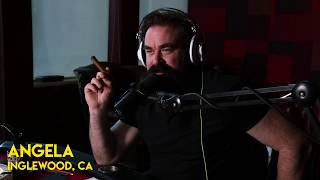
Chris Collins and Angela discuss scaling a freight business by identifying ideal clients and understanding what problems they're trying to solve. They cover building personal connections and using Southern charm as a business tool.
Questions this video answers
600 or more shipments per year.
Approximately 40% to 60% on annual transportation costs.
Two employees (Angela and her son).
19 years old.
Chapters
Angela.
Hi, how are you, Angela?
I'm fine. How are you?
I'm amazing. What's going on?
I wanted to ask a question about.
What'S the best advice that you could give if you're trying to go from a small business that A small business.
Great business in Georgia. And I kind of of am reorganizing and moving here to California. And I just wanted to see how you get some advice on what you believe are some steps I can take to go from take. To take it from a small business to a mid size or mid level.
What kind of business is it?
I'm sorry?
What kind of business is it?
It's a freight business.
Freight.
So yeah, freight, freight brokerage, freight forwarding, anything to do with shipments and how things move.
And so you're moving the entire business from Georgia to here?
Yes.
And how many employees and kind of what is your infrastructure that you're moving?
Well, we're starting over, so we're a small business. It was open before and we kind of disbanded. Now I'm reorganizing it and opening it again here. And there's two employees, myself and my son. So we're totally revamping everything.
How old's your son?
19.
19. Okay. And so what. What is it that. What is the big problem that you solve being a freight broker?
What is the problem that I can.
Solve if I use your services? What is the big problem you solve for me?
Transportation. It's cheaper to use third party brokerage and for transportation. So you can control your transportation cost by 40% by using a freight broker as opposed to doing it yourself and not knowing the culture and the climate, just knowing your shipment and how for your company. But when you use a brokerage, they take more of an average and able to save you anywhere from 40 to 60% on your whole transportation cost for the year.
Okay, and what is your ideal client? What kind of freight?
Ideally.
You can move anything, but ideally I do a lot of refrigerators. So my ideal client would have.
Four to six loads per day going various places internationally. So we have a high volume of 600 or more shipments.
So what. What kind of companies ship refrigerated items internationally?
Mostly like.
Sometimes chicken, sometimes.
Not. International though, that's more of a domestic product. When they're doing it international, it is more dry goods or electronics or things like that. When it's going international sometimes.
Okay, Angela, the first thing is like you have to kind of like think through this stuff because you're telling me an answer that gives me two ways to Go. But it's not real precise. So I'm going to ask you one more time, and I'm only doing this because I want to condition how you think and it will help in the long run. So it might hurt your head right now and you might be a little offended, but I'm going to ask you the question again and I want you to answer it in very simple terms. Like I'm like a 7 year old so I can understand. So what's your ideal client?
My ideal client is an international shipper that has a volume of 600 or more shipments per year.
Okay, good. And what kind of products are they shipping?
Dry goods.
Non perishable items. Okay, sorry, that's not a seven year old word, but.
Well, that's okay. It's way clearer to me now. And so what are the pain points of an international shipper shipping 600 or more dry good items a year? What are the. What's the pain?
What do you mean what's the pain? When you say that, what do you mean what the pain to a small business?
No, I'm kind of clear to those questions.
Well, if they're, if your ideal client is an international shipper. Right.
What are their pain points with shipping?
Are you saying pain or pain? Pain. P a I n or pain point?
P a I n pain.
I guess the competition with the larger company.
Because larger asset based companies can have, can offer more of a.
More access. I guess that's. I hear your question. I don't know how to answer.
Okay, well I can't help you scale if we don't know what their pain is. So I'll give you an example. Like maybe it's a company that makes tennis shoes here in Los Angeles and they want to ship their stuff to Spain and Brazil and somewhere else. And their pain is that sometimes the shipments are late or their pain is the shipments aren't insured and sometimes their shipments get lost. What is their pain? Their biggest pain.
Oh, okay, okay, that makes more sense. The pain would be.
Time. Sometimes they, when you have a large quantity, you have to ship in different ways, like ocean. And it's a time factor. So to ship massive amounts of product by air is too expensive. But to do the same thing for by ocean, too long of a time frame. So the pain I guess is the in between.
Now could we say that we can ship on a plane for the cost of shipping it on a boat?
Could say that, yeah.
Okay, so is that our. Now is that a benefit that would scale.
Got it.
Because a lot of the big companies kind of.
Don'T have a scale, and a lot of it's per shipment instead of by contract. So if you're a larger company, you have a contract, your prices stay the same. But if you have a smaller vehicle, then you're paying for whatever shipment is that day, fuel and all. So there's a lot of variant.
Okay, so we could say that we can ship on an airplane for the price of a ship with no contract.
Yes.
Okay, so is this. Is this adding up to something that people would want?
I think so, yes. Because there's more people, there's more companies now that are doing things internationally, I believe so. It's the opening. It's a market that's opening. And if they can control their transportation costs, which at times can be very sporadic if you don't know the industry. So I think it's a. Actually, I know it's a product that would be of the smaller.
Okay, so who. My next question is, who makes the decision about shipping at these international Companies that ship 600 or more dry goods?
Oh, the logistics team.
And what. What do they like?
They like paperwork. They like to know.
They. They like to have bet pricing the bigger company so that they can put it into their budget.
No. Do they like. Do they like tickets to football games? Do they like lunch? What do they. What.
What.
What gets them to have a personal connection with you?
They do like her. They like customer service, quality.
Okay, so if your son set up an appointment for you every other day for you to take somebody to lunch and slide them some Rams tickets, and you can ship internationally on an airplane for the price of a cargo ship with no contracting, saving 40 or 60%. If you had two or three appointments a week, how many would you get business from?
Oh, if I have two or three.
Angela, you're killing me with. With whatever you're sweeping or chiseling.
Sorry, sorry, sorry, sorry, sorry, sorry. Okay.
What are you. What are you doing?
I'm leaving the store now. Sorry.
Sounded like you were dragging your son by his shoes.
No, sorry. You were hearing the store.
What did you. Are you grocery shopping?
Yes.
What's for dinner?
Homemade. I can bring you some.
Some of that Southern. Some of that Southern comfort food.
Yes.
Okay. So what do you. What do you think about what I said? So if your son got on the phone, you take them to lunch, it's going to cost you a little money. You offer them tickets to a Rams game, you tell them what you can do. But this isn't to me in. In the kind of business you're going into, this isn't the thing that you sell on the phone. It's personal connections. So you got to get out. You got to go to lunch, you got to offer them perks, and then, you know you're going to get one out of three, and they're going to start using you, and that's how you scale. And if you did that every week for a month, you'd have three or four new clients. And if you kept doing it, you. You would scale pretty quick.
Okay, so you're saying, okay, out here is more of a. Because I need. In Georgia, that was the difference. Everything I did was over the phone. But here.
Have more traction.
Well, you had roots in Georgia, though. You don't have roots here. And so the best way to do it is looking people in the eye and them getting to know you. And there's a lot of trust involved in me handing my products over to you to ship. So I think you got to get in front of them and show them that Southern charm and get them to like you.
Okay, so you can just have him set up the appointment setter to kind of set up the claims, and then let me do the talking. That actually, you know. Did you say the outside of you.
Say that again? I lost you.
I said sometimes you just need to out. Because it just didn't occur to me. Sorry. Have him do. Have my son do.
The sales portion of it, The. The appointment setting.
Yeah, it's good experience for him, too, because it's hard.
He's gonna have to make a lot of calls. Okay, well, good luck, Angela. Thank you for calling.
Thank you. All right, thanks.
Bye.







